Identification
- Summary
Losartan is an angiotensin receptor blocker used to treat hypertension and diabetic nephropathy, and is used to reduce the risk of stroke.
- Brand Names
- Cozaar, Hyzaar
- Generic Name
- Losartan
- DrugBank Accession Number
- DB00678
- Background
Losartan is an angiotensin II receptor blocker (ARB) used to treat hypertension.3 Angiotensin-converting enzyme (ACE) inhibitors are used for a similar indication but are associated with a cough.3 When patients with ACE inhibitor associated coughs are switched to ARBs like losartan, they have an incidence of cough similar to placebo or hydrochlorothiazide.3 Losartan is available as losartan potassium oral tablets as well as a combination tablet of losartan potassium and hydrochlorothiazide.3,4 Patients taking losartan should have their renal function and potassium levels monitored.3 Losartan was granted FDA approval on 14 April 1995.3
- Type
- Small Molecule
- Groups
- Approved
- Structure
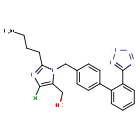
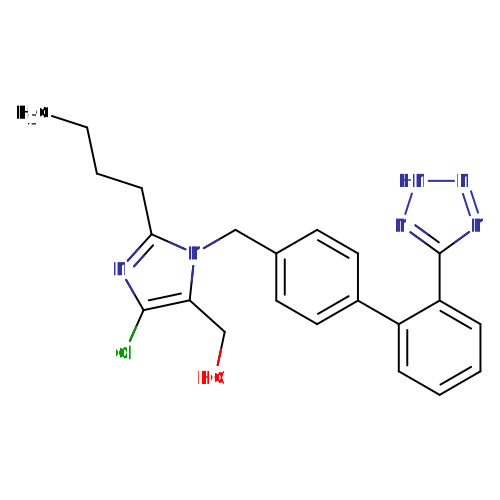
Structure for Losartan (DB00678)
- Weight
- Average: 422.911
Monoisotopic: 422.162187095 - Chemical Formula
- C22H23ClN6O
- Synonyms
- (2-butyl-4-chloro-1-{[2'-(1H-tetrazol-5-yl)biphenyl-4-yl]methyl}-1H-imidazol-5-yl)methanol
- 2-n-butyl-4-chloro-5-hydroxymethyl-1-[(2'-(1H-tetrazol-5-yl)biphenyl-4-yl)methyl]imidazole
- Losartan
- External IDs
- DUP 89
- HGP-1405
- HGP1405
- MK594

Pharmacology
- Indication
Losartan is indicated to treat hypertension in patients older than 6 years, reduce the risk of stroke in patients with hypertension and left ventricular hypertrophy (though this benefit may not extend to patients with African heritage), and to treat diabetic nephropathy with elevated serum creatinine and proteinuria in patients with type 2 diabetes and hypertension.3 Losartan with hydrochlorothiazide is indicated to treat hypertension and to reduce the risk of stroke in patients with hypertension and left ventricular hypertrophy (though this benefit may not extend to patients with African heritage).4,6
 Reduce drug development failure ratesBuild, train, & validate machine-learning modelswith evidence-based and structured datasets.Build, train, & validate predictive machine-learning models with structured datasets.
- Associated Conditions
Indication Type Indication Combined Product Details Approval Level Age Group Patient Characteristics Dose Form Management of Diabetic nephropathy •••••••••••• •••• • •••••••• ••••••••• ••••••••• ••••• ••••••••••• •••• ••••• •••••••• ••••••••••••••• ••••••••••• •••••••• ••••••• ••• ••••••••••• •••••• Used in combination to manage High blood pressure (hypertension) Combination Product in combination with: Hydrochlorothiazide (DB00999) •••••••••••• •••••• Management of High blood pressure (hypertension) •••••••••••• •••••••• ••••••• ••• ••••••••••• •••••• Management of Marfan syndrome ••• ••••• Used in combination to prevent Stroke, ischemic Combination Product in combination with: Hydrochlorothiazide (DB00999) •••••••••••• •••• ••••••••••• •••••••••••• •••• ••••• •••••••• •••••••••••••• •••••• - Contraindications & Blackbox Warnings
 Prevent Adverse Drug Events TodayTap into our Clinical API for life-saving information on contraindications & blackbox warnings, population restrictions, harmful risks, & more.Avoid life-threatening adverse drug events with our Clinical API
- Pharmacodynamics
Losartan is an angiotensin II receptor blocker used to treat hypertension, diabetic nephropathy, and to reduce the risk of stroke.1,3,4 Losartan has a long duration of action as it is given once daily.3,4 Patients taking losartan should be regularly monitored for hypotension, renal function, and potassium levels.3,4
- Mechanism of action
Losartan reversibly and competitively prevents angiotensin II binding to the AT1 receptor in tissues like vascular smooth muscle and the adrenal gland.3,4 Losartan and its active metabolite bind the AT1 receptor with 1000 times more affinity than they bind to the AT2 receptor.3,4 The active metabolite of losartan is 10-40 times more potent by weight than unmetabolized losartan as an inhibitor of AT1 and is a non-competitive inhibitor.3,4 Losartan's prevention of angiotensin II binding causes vascular smooth muscle relaxation, lowering blood pressure.3,4
Angiotensin II would otherwise bind to the AT1 receptor and induce vasoconstriction, raising blood pressure.3,4
Target Actions Organism AType-1 angiotensin II receptor antagonistHumans - Absorption
Losartan is approximately 33% orally bioavailable.1,3,4 Losartan has a Tmax of 1 hour and the active metabolite has a Tmax of 3-4 hours.1,3,4 Taking losartan with food decreases the Cmax but does only results in a 10% decrease in the AUC of losartan and its active metabolite.1,3,4 A 50-80mg oral dose of losartan leads to a Cmax of 200-250ng/mL.1
- Volume of distribution
The volume of distribution of losartan is 34.4±17.9L and 10.3±1.1L for the active metabolite (E-3174).1
- Protein binding
Losartan is 98.6-98.8% protein bound and the active metabolite (E-3174) is 99.7% protein bound in serum.1
- Metabolism
Losartan is metabolized to an aldehyde intermediate, E-3179, which is further metabolized to a carboxylic acid, E-3174, by cytochrome P450s like CYP2C9.1 Losartan can also be hydroxylated to an inactive metabolite, P1.1 Approximately 14% of losartan is metabolized to E-3174.1 Losartan can be metabolized by CYP3A4, CYP2C9, and CYP2C10.1 Losartan can also be glucuronidated by UGT1A1, UGT1A3, UGT1A10, UGT2B7, and UGT 2B17.2
Hover over products below to view reaction partners
- Route of elimination
A single oral dose of losartan leads to 4% recovery in the urine as unchanged losartan, 6% in the urine as the active metabolite.3,4 Oral radiolabelled losartan is 35% recovered in urine and 60% in feces.3,4 Intravenous radiolabelled losartan is 45% recovered in urine and 50% in feces.3,4
- Half-life
The terminal elimination half life of losartan is 1.5-2.5 hours while the active metabolite has a half life of 6-9 hours.1
- Clearance
Losartan has a total plasma clearance of 600mL/min and a renal clearance of 75mL/min.1 E-3174, the active metabolite, has a total plasma clearance of 50mL/min and a renal clearance of 25mL/min.1
- Adverse Effects
 Improve decision support & research outcomesWith structured adverse effects data, including: blackbox warnings, adverse reactions, warning & precautions, & incidence rates. View sample adverse effects data in our new Data Library!Improve decision support & research outcomes with our structured adverse effects data.
- Toxicity
The oral TDLO in mice is 1000mg/kg and in rats is 2000mg/kg.3,4 In humans the TDLO for men is 10mg/kg/2W and for women is 1mg/kg/1D.5
Symptoms of overdose are likely to include hypotension, tachycardia, or bradycardia due to vagal stimulation.3,4 Supportive treatment should be instituted for symptomatic hypotension.3,4 Hemodialysis will not remove losartan or its active metabolite due to their high rates of protein binding.3,4
- Pathways
Pathway Category Losartan Action Pathway Drug action - Pharmacogenomic Effects/ADRs
- Not Available
Interactions
- Drug Interactions
- This information should not be interpreted without the help of a healthcare provider. If you believe you are experiencing an interaction, contact a healthcare provider immediately. The absence of an interaction does not necessarily mean no interactions exist.
Drug Interaction Integrate drug-drug
interactions in your softwareAbaloparatide The risk or severity of adverse effects can be increased when Losartan is combined with Abaloparatide. Abametapir The serum concentration of Losartan can be increased when it is combined with Abametapir. Abatacept The metabolism of Losartan can be increased when combined with Abatacept. Abemaciclib The serum concentration of Abemaciclib can be increased when it is combined with Losartan. Abrocitinib The metabolism of Abrocitinib can be decreased when combined with Losartan. - Food Interactions
- Take at the same time every day.
- Take with or without food. Food delays absorption, but does not affect the extent of absorption.
Products
 Drug product information from 10+ global regionsOur datasets provide approved product information including:dosage, form, labeller, route of administration, and marketing period.Access drug product information from over 10 global regions.
- Product Ingredients
Ingredient UNII CAS InChI Key Losartan potassium 3ST302B24A 124750-99-8 OXCMYAYHXIHQOA-UHFFFAOYSA-N - Product Images
- International/Other Brands
- Lortaan
- Brand Name Prescription Products
Name Dosage Strength Route Labeller Marketing Start Marketing End Region Image Act Losartan Tablet 50 mg Oral Actavis Pharma Company 2012-01-25 2019-08-07 Canada 
Act Losartan Tablet 25 mg Oral Actavis Pharma Company 2012-01-25 2019-08-07 Canada Act Losartan Tablet 100 mg Oral Actavis Pharma Company 2012-01-25 2019-08-07 Canada Cozaar Tablet, film coated 100 mg/1 Oral PD-Rx Pharmaceuticals, Inc. 1995-04-14 Not applicable US 

Cozaar Tablet, film coated 25 mg/1 Oral Cardinal Health 1995-04-14 2011-10-31 US - Generic Prescription Products
Name Dosage Strength Route Labeller Marketing Start Marketing End Region Image Ag-losartan Tablet 50 mg Oral Angita Pharma Inc. 2018-06-27 Not applicable Canada Ag-losartan Tablet 25 mg Oral Angita Pharma Inc. 2018-06-27 Not applicable Canada Ag-losartan Tablet 100 mg Oral Angita Pharma Inc. 2018-06-27 Not applicable Canada Apo-losartan Tablet 50 mg Oral Apotex Corporation 2012-01-25 Not applicable Canada Apo-losartan Tablet 25 mg Oral Apotex Corporation 2012-04-13 Not applicable Canada - Over the Counter Products
Name Dosage Strength Route Labeller Marketing Start Marketing End Region Image ลอแรนต้า 50 มก. ชนิดเม็ด Tablet, coated 50 mg Oral บริษัท สยามเภสัช จำกัด 2007-03-28 Not applicable Thailand 
- Mixture Products
Name Ingredients Dosage Route Labeller Marketing Start Marketing End Region Image Acetan HCT Tablet 100/25mg Losartan potassium (100 mg) + Hydrochlorothiazide (25 mg) Tablet Oral Duopharma Marketing Sdn. Bhd. 2020-09-08 Not applicable Malaysia 
Act Losartan/hct Losartan potassium (50 mg) + Hydrochlorothiazide (12.5 mg) Tablet Oral Actavis Pharma Company 2012-07-03 2018-06-25 Canada Act Losartan/hct Losartan potassium (100 mg) + Hydrochlorothiazide (12.5 mg) Tablet Oral Actavis Pharma Company 2012-07-03 2018-06-25 Canada Act Losartan/hct Losartan potassium (100 mg) + Hydrochlorothiazide (25 mg) Tablet Oral Actavis Pharma Company 2012-07-03 2018-06-25 Canada Ag-losartan Hctz Losartan potassium (50 mg) + Hydrochlorothiazide (12.5 mg) Tablet Oral Angita Pharma Inc. Not applicable Not applicable Canada


Categories
- ATC Codes
- C09CA01 — Losartan
- C09CA — Angiotensin II receptor blockers (ARBs), plain
- C09C — ANGIOTENSIN II RECEPTOR BLOCKERS (ARBs), PLAIN
- C09 — AGENTS ACTING ON THE RENIN-ANGIOTENSIN SYSTEM
- C — CARDIOVASCULAR SYSTEM
- C09DA — Angiotensin II receptor blockers (ARBs) and diuretics
- C09D — ANGIOTENSIN II RECEPTOR BLOCKERS (ARBs), COMBINATIONS
- C09 — AGENTS ACTING ON THE RENIN-ANGIOTENSIN SYSTEM
- C — CARDIOVASCULAR SYSTEM
- Drug Categories
- Agents Acting on the Renin-Angiotensin System
- Agents causing angioedema
- Agents causing hyperkalemia
- Angiotensin 2 Receptor Blocker
- Angiotensin II receptor antagonists
- Angiotensin II receptor blockers (ARBs) and calcium channel blockers
- Angiotensin II receptor blockers (ARBs) and diuretics
- Angiotensin II receptor blockers (ARBs), plain
- Angiotensin II Type 1 Receptor Blockers
- Angiotensin II Type 2 Receptor Blockers
- Angiotensin Receptor Antagonists
- Antiarrhythmic agents
- Antihypertensive Agents
- Antihypertensive Agents Indicated for Hypertension
- Benzene Derivatives
- Biphenyl Compounds
- BSEP/ABCB11 Substrates
- Cardiovascular Agents
- Cytochrome P-450 CYP2C19 Inhibitors
- Cytochrome P-450 CYP2C19 inhibitors (strength unknown)
- Cytochrome P-450 CYP2C8 Inhibitors
- Cytochrome P-450 CYP2C8 Inhibitors (strength unknown)
- Cytochrome P-450 CYP2C9 Substrates
- Cytochrome P-450 CYP3A Inhibitors
- Cytochrome P-450 CYP3A Substrates
- Cytochrome P-450 CYP3A4 Inhibitors
- Cytochrome P-450 CYP3A4 Inhibitors (strength unknown)
- Cytochrome P-450 CYP3A4 Substrates
- Cytochrome P-450 Enzyme Inhibitors
- Cytochrome P-450 Substrates
- Drugs causing inadvertant photosensitivity
- Hypotensive Agents
- Imidazoles
- OAT1/SLC22A6 inhibitors
- P-glycoprotein inhibitors
- P-glycoprotein substrates
- Photosensitizing Agents
- Potential QTc-Prolonging Agents
- QTc Prolonging Agents
- Tetrazoles
- UGT1A1 Substrates
- UGT1A3 substrates
- UGT2B17 substrates
- UGT2B7 substrates
- Chemical TaxonomyProvided by Classyfire
- Description
- This compound belongs to the class of organic compounds known as biphenyls and derivatives. These are organic compounds containing to benzene rings linked together by a C-C bond.
- Kingdom
- Organic compounds
- Super Class
- Benzenoids
- Class
- Benzene and substituted derivatives
- Sub Class
- Biphenyls and derivatives
- Direct Parent
- Biphenyls and derivatives
- Alternative Parents
- Phenyltetrazoles and derivatives / 1,2,4,5-tetrasubstituted imidazoles / N-substituted imidazoles / Aryl chlorides / Heteroaromatic compounds / Azacyclic compounds / Primary alcohols / Organopnictogen compounds / Organonitrogen compounds / Organochlorides show 2 more
- Substituents
- 1,2,4,5-tetrasubstituted imidazole / Alcohol / Aromatic alcohol / Aromatic heteromonocyclic compound / Aryl chloride / Aryl halide / Azacycle / Azole / Biphenyl / Heteroaromatic compound show 14 more
- Molecular Framework
- Aromatic heteromonocyclic compounds
- External Descriptors
- imidazoles, biphenylyltetrazole (CHEBI:6541)
- Affected organisms
- Humans and other mammals
Chemical Identifiers
- UNII
- JMS50MPO89
- CAS number
- 114798-26-4
- InChI Key
- PSIFNNKUMBGKDQ-UHFFFAOYSA-N
- InChI
- InChI=1S/C22H23ClN6O/c1-2-3-8-20-24-21(23)19(14-30)29(20)13-15-9-11-16(12-10-15)17-6-4-5-7-18(17)22-25-27-28-26-22/h4-7,9-12,30H,2-3,8,13-14H2,1H3,(H,25,26,27,28)
- IUPAC Name
- (2-butyl-4-chloro-1-{[2'-(2H-1,2,3,4-tetrazol-5-yl)-[1,1'-biphenyl]-4-yl]methyl}-1H-imidazol-5-yl)methanol
- SMILES
- CCCCC1=NC(Cl)=C(CO)N1CC1=CC=C(C=C1)C1=CC=CC=C1C1=NNN=N1
References
- Synthesis Reference
Gordon C. Campbell, Jr., Anil M. Dwivedi, Dorothy A. Levorse, James A. McCauley, Krishnaswamy S. Raghavan, "Polymorphs of losartan and the process for the preparation of form II of losartan." U.S. Patent US5608075, issued May, 1994.
US5608075- General References
- Sica DA, Gehr TW, Ghosh S: Clinical pharmacokinetics of losartan. Clin Pharmacokinet. 2005;44(8):797-814. [Article]
- Zhou SF, Zhou ZW, Yang LP, Cai JP: Substrates, inducers, inhibitors and structure-activity relationships of human Cytochrome P450 2C9 and implications in drug development. Curr Med Chem. 2009;16(27):3480-675. Epub 2009 Sep 1. [Article]
- FDA Approved Drug Products: Losartan Oral Tablets [Link]
- FDA Approved Drug Products: Losartan and Hydrochlorothiazide Oral Tablets [Link]
- Cayman Chemicals: Losartan Potassium MSDS [Link]
- FDA Approved Drug Products: HYZAAR (losartan potassium and hydrochlorothiazide) tablets for oral use (March 2023) [Link]
- External Links
- Human Metabolome Database
- HMDB0014816
- KEGG Drug
- D08146
- KEGG Compound
- C07072
- PubChem Compound
- 3961
- PubChem Substance
- 46506538
- ChemSpider
- 3824
- BindingDB
- 318822
- 52175
- ChEBI
- 6541
- ChEMBL
- CHEMBL191
- ZINC
- ZINC000003873160
- Therapeutic Targets Database
- DAP000523
- PharmGKB
- PA450268
- Guide to Pharmacology
- GtP Drug Page
- PDBe Ligand
- LSN
- RxList
- RxList Drug Page
- Drugs.com
- Drugs.com Drug Page
- Wikipedia
- Losartan
- PDB Entries
- 5x23 / 5x24 / 5xxi / 6vlt / 7rl2
- FDA label
- Download (212 KB)
- MSDS
- Download (19 KB)
Clinical Trials
- Clinical Trials
Phase Status Purpose Conditions Count 4 Active Not Recruiting Treatment Coronary Artery Disease (CAD) 1 4 Completed Not Available Hypertension 1 4 Completed Basic Science Chemoreceptor Apnea / Hypoxia / Respiration; Sleep Disorder / Sleep Disordered Breathing (SDB) 1 4 Completed Basic Science Transplanted Organ Rejection 1 4 Completed Diagnostic Hyperaldosteronism 1
Pharmacoeconomics
- Manufacturers
- Merck research laboratories div merck co inc
- Teva pharmaceuticals usa inc
- Merck & Co., Inc.
- Packagers
- AQ Pharmaceuticals Inc.
- A-S Medication Solutions LLC
- Bristol-Myers Squibb Co.
- Cardinal Health
- Dispensing Solutions
- Ipca Laboratories Ltd.
- Kaiser Foundation Hospital
- Lake Erie Medical and Surgical Supply
- Merck & Co.
- Mylan
- Neuman Distributors Inc.
- PD-Rx Pharmaceuticals Inc.
- Physicians Total Care Inc.
- Prepak Systems Inc.
- Remedy Repack
- Roxane Labs
- Sandhills Packaging Inc.
- Sandoz
- Southwood Pharmaceuticals
- Stat Rx Usa
- Teva Pharmaceutical Industries Ltd.
- Torrent Pharmaceuticals
- Vangard Labs Inc.
- Dosage Forms
Form Route Strength Tablet Oral 100 mg Capsule, coated Oral Tablet Oral 100.0 mg Tablet Oral 25.0 mg Tablet Oral 50.0 mg Capsule Oral Tablet, coated Oral 25 mg Tablet Oral 50.000 mg Tablet Oral 100 mg Tablet Oral 12.500 mg Tablet Oral 25 mg Tablet Oral 50 mg Tablet Oral 12.5 mg Tablet Oral Tablet, film coated Oral 100 mg Tablet, film coated Oral 100.00 mg Tablet, film coated Oral 50.00 mg Tablet, film coated Oral Tablet, film coated Oral 12.5 MG Tablet Oral 100.00 mg Tablet Oral 50.00 mg Tablet, coated Oral Tablet, film coated Oral 25 mg Tablet, film coated Oral 5000000 mg Tablet, film coated Oral 75 MG Tablet, coated Oral Tablet Oral 10000000 mg Tablet, film coated Oral 50 mg Tablet Oral 5000000 mg Tablet Oral 100 mg/1 Tablet Oral 25 mg/1 Tablet Oral 50 mg/1 Tablet, film coated Oral 50 mg/1 Tablet Oral Tablet, film coated Oral Tablet, coated Oral 5000000 mg Tablet, film coated Oral 12.5 mg Tablet, film coated Oral 25 mg Tablet, coated Oral 0.1 g Tablet, film coated Oral 100 mg/1 Tablet, film coated Oral 25 mg/1 Tablet Oral 500.000 mg Powder, for suspension Oral 2.5 MG/ML Tablet, film coated Oral 25.0 mg Tablet, film coated Oral 50.0 mg Tablet Oral 25.000 MG Tablet, coated Oral 25 mg Tablet Oral 100.000 mg Tablet, coated Oral 100 mg Tablet, coated Oral 50 mg - Prices
Unit description Cost Unit Losartan Potassium 90 50 mg tablet Bottle 211.78USD bottle Losartan Potassium-HCTZ 30 50-12.5 mg tablet Bottle 78.05USD bottle Hyzaar 100-25 mg tablet 3.91USD tablet Hyzaar 100-12.5 mg tablet 3.87USD tablet Hyzaar 100-12.5 tablet 3.61USD tablet Hyzaar 100-25 tablet 3.61USD tablet Losartan Potassium-HCTZ 100-12.5 mg tablet 3.54USD tablet Losartan Potassium-HCTZ 100-25 mg tablet 3.54USD tablet Cozaar 100 mg tablet 3.41USD tablet Losartan potassium 100 mg tablet 3.14USD tablet Hyzaar 50-12.5 mg tablet 2.97USD tablet Hyzaar 50-12.5 tablet 2.65USD tablet Cozaar 50 mg tablet 2.5USD tablet Losartan potassium 50 mg tablet 2.26USD tablet Cozaar 25 mg tablet 1.92USD tablet Losartan potassium 25 mg tablet 1.72USD tablet Cozaar 100 mg Tablet 1.31USD tablet Cozaar 25 mg Tablet 1.31USD tablet Cozaar 50 mg Tablet 1.31USD tablet DrugBank does not sell nor buy drugs. Pricing information is supplied for informational purposes only.- Patents
Patent Number Pediatric Extension Approved Expires (estimated) Region US5210079 No 1993-05-11 2010-11-11 US US5608075 No 1997-03-04 2009-03-04 US CA2085584 No 2003-02-11 2011-06-07 Canada CA1334092 No 1995-01-24 2012-01-24 Canada
Properties
- State
- Solid
- Experimental Properties
Property Value Source melting point (°C) 178-184 http://www.chemspider.com/Chemical-Structure.3824.html boiling point (°C) 682 http://www.chemspider.com/Chemical-Structure.3824.html water solubility <1mg/mL http://www.chemspider.com/Chemical-Structure.3824.html logP 1.19 https://www.accessdata.fda.gov/drugsatfda_docs/nda/2004/20-386S019_Cozaar_EAFONSI.pdf pKa 5.5 MERCK INDEX (1996); approx. - Predicted Properties
Property Value Source Water Solubility 0.0047 mg/mL ALOGPS logP 4.5 ALOGPS logP 5 Chemaxon logS -5 ALOGPS pKa (Strongest Acidic) 5.85 Chemaxon pKa (Strongest Basic) 3.85 Chemaxon Physiological Charge -1 Chemaxon Hydrogen Acceptor Count 5 Chemaxon Hydrogen Donor Count 2 Chemaxon Polar Surface Area 92.51 Å2 Chemaxon Rotatable Bond Count 8 Chemaxon Refractivity 131.85 m3·mol-1 Chemaxon Polarizability 44.86 Å3 Chemaxon Number of Rings 4 Chemaxon Bioavailability 1 Chemaxon Rule of Five No Chemaxon Ghose Filter No Chemaxon Veber's Rule No Chemaxon MDDR-like Rule Yes Chemaxon - Predicted ADMET Features
Property Value Probability Human Intestinal Absorption + 1.0 Blood Brain Barrier - 0.7812 Caco-2 permeable - 0.8957 P-glycoprotein substrate Substrate 0.6993 P-glycoprotein inhibitor I Non-inhibitor 0.8782 P-glycoprotein inhibitor II Inhibitor 0.5309 Renal organic cation transporter Non-inhibitor 0.5689 CYP450 2C9 substrate Non-substrate 0.6839 CYP450 2D6 substrate Non-substrate 0.9115 CYP450 3A4 substrate Non-substrate 0.6226 CYP450 1A2 substrate Inhibitor 0.5514 CYP450 2C9 inhibitor Non-inhibitor 0.5423 CYP450 2D6 inhibitor Non-inhibitor 0.8102 CYP450 2C19 inhibitor Inhibitor 0.6288 CYP450 3A4 inhibitor Inhibitor 0.796 CYP450 inhibitory promiscuity High CYP Inhibitory Promiscuity 0.7049 Ames test Non AMES toxic 0.5382 Carcinogenicity Non-carcinogens 0.6595 Biodegradation Not ready biodegradable 1.0 Rat acute toxicity 2.6055 LD50, mol/kg Not applicable hERG inhibition (predictor I) Strong inhibitor 0.5781 hERG inhibition (predictor II) Inhibitor 0.8084
Spectra
- Mass Spec (NIST)
- Not Available
- Spectra
- Chromatographic Properties
Collision Cross Sections (CCS)
Adduct CCS Value (Å2) Source type Source [M-H]- 213.7287188 predictedDarkChem Lite v0.1.0 [M-H]- 194.84657 predictedDeepCCS 1.0 (2019) [M+H]+ 213.2744188 predictedDarkChem Lite v0.1.0 [M+H]+ 197.22203 predictedDeepCCS 1.0 (2019) [M+Na]+ 214.0437188 predictedDarkChem Lite v0.1.0 [M+Na]+ 204.8881 predictedDeepCCS 1.0 (2019)
Targets

- Kind
- Protein
- Organism
- Humans
- Pharmacological action
- Yes
- Actions
- Antagonist
- General Function
- Protein heterodimerization activity
- Specific Function
- Receptor for angiotensin II. Mediates its action by association with G proteins that activate a phosphatidylinositol-calcium second messenger system.
- Gene Name
- AGTR1
- Uniprot ID
- P30556
- Uniprot Name
- Type-1 angiotensin II receptor
- Molecular Weight
- 41060.53 Da
References
- Chen X, Ji ZL, Chen YZ: TTD: Therapeutic Target Database. Nucleic Acids Res. 2002 Jan 1;30(1):412-5. [Article]
- Sardo MA, Castaldo M, Cinquegrani M, Bonaiuto M, Fontana L, Campo S, Campo GM, Altavilla D, Saitta A: Effects of AT1 receptor antagonist losartan on sICAM-1 and TNF-alpha levels in uncomplicated hypertensive patients. Angiology. 2004 Mar-Apr;55(2):195-203. [Article]
- Dickstein K, Timmermans P, Segal R: Losartan: a selective angiotensin II type 1 (AT1) receptor antagonist for the treatment of heart failure. Expert Opin Investig Drugs. 1998 Nov;7(11):1897-914. [Article]
- Anand-Srivastava MB, Palaparti A: Angiotensin-II-induced enhanced expression of Gi proteins is attenuated by losartan in A10 vascular smooth muscle cells: role of AT1 receptors. Can J Physiol Pharmacol. 2003 Feb;81(2):150-8. [Article]
- Rocha I, Bras-Rosario L, Amparo-Barros M, Silva-Carvalho L: Angiotensin AT1 receptor antagonist losartan and the defence reaction in the anaesthetised rat. Effect on the carotid chemoreflex. Exp Physiol. 2003 May;88(3):309-14. [Article]
- Guan J, Cheng DY, Chen XJ, Zhang Y, Wang H, Su QL: [The effects of losartan on pulmonary arterial collagen and AT1 in chronic hypoxic rats]. Sichuan Da Xue Xue Bao Yi Xue Ban. 2004 Nov;35(6):774-7. [Article]
Enzymes
- Kind
- Protein
- Organism
- Humans
- Pharmacological action
- Unknown
- Actions
- Substrate
- General Function
- Steroid hydroxylase activity
- Specific Function
- Cytochromes P450 are a group of heme-thiolate monooxygenases. In liver microsomes, this enzyme is involved in an NADPH-dependent electron transport pathway. It oxidizes a variety of structurally un...
- Gene Name
- CYP2C9
- Uniprot ID
- P11712
- Uniprot Name
- Cytochrome P450 2C9
- Molecular Weight
- 55627.365 Da
References
- Song JC, White CM: Pharmacologic, pharmacokinetic, and therapeutic differences among angiotensin II receptor antagonists. Pharmacotherapy. 2000 Feb;20(2):130-9. [Article]
- Sica DA, Gehr TW, Ghosh S: Clinical pharmacokinetics of losartan. Clin Pharmacokinet. 2005;44(8):797-814. [Article]
- Zhou SF, Zhou ZW, Yang LP, Cai JP: Substrates, inducers, inhibitors and structure-activity relationships of human Cytochrome P450 2C9 and implications in drug development. Curr Med Chem. 2009;16(27):3480-675. Epub 2009 Sep 1. [Article]
- Yasar U, Forslund-Bergengren C, Tybring G, Dorado P, Llerena A, Sjoqvist F, Eliasson E, Dahl ML: Pharmacokinetics of losartan and its metabolite E-3174 in relation to the CYP2C9 genotype. Clin Pharmacol Ther. 2002 Jan;71(1):89-98. [Article]
- Flockhart Table of Drug Interactions [Link]
- FDA label Losartan [File]
- Kind
- Protein
- Organism
- Humans
- Pharmacological action
- Unknown
- Actions
- SubstrateInhibitor
- General Function
- Vitamin d3 25-hydroxylase activity
- Specific Function
- Cytochromes P450 are a group of heme-thiolate monooxygenases. In liver microsomes, this enzyme is involved in an NADPH-dependent electron transport pathway. It performs a variety of oxidation react...
- Gene Name
- CYP3A4
- Uniprot ID
- P08684
- Uniprot Name
- Cytochrome P450 3A4
- Molecular Weight
- 57342.67 Da
References
- Song JC, White CM: Pharmacologic, pharmacokinetic, and therapeutic differences among angiotensin II receptor antagonists. Pharmacotherapy. 2000 Feb;20(2):130-9. [Article]
- Sica DA, Gehr TW, Ghosh S: Clinical pharmacokinetics of losartan. Clin Pharmacokinet. 2005;44(8):797-814. [Article]
- Zhou SF, Zhou ZW, Yang LP, Cai JP: Substrates, inducers, inhibitors and structure-activity relationships of human Cytochrome P450 2C9 and implications in drug development. Curr Med Chem. 2009;16(27):3480-675. Epub 2009 Sep 1. [Article]
- Mukai Y, Senda A, Toda T, Hayakawa T, Eliasson E, Rane A, Inotsume N: Drug-drug Interaction between Losartan and Paclitaxel in Human Liver Microsomes with Different CYP2C8 Genotypes. Basic Clin Pharmacol Toxicol. 2015 Jun;116(6):493-8. doi: 10.1111/bcpt.12355. Epub 2014 Dec 23. [Article]
- Kind
- Protein
- Organism
- Humans
- Pharmacological action
- Unknown
- Actions
- Inhibitor
- Curator comments
- The current evidence available for this enzyme inhibition is limited to one in vitro study.
- General Function
- Steroid hydroxylase activity
- Specific Function
- Responsible for the metabolism of a number of therapeutic agents such as the anticonvulsant drug S-mephenytoin, omeprazole, proguanil, certain barbiturates, diazepam, propranolol, citalopram and im...
- Gene Name
- CYP2C19
- Uniprot ID
- P33261
- Uniprot Name
- Cytochrome P450 2C19
- Molecular Weight
- 55930.545 Da
References
- Taavitsainen P, Kiukaanniemi K, Pelkonen O: In vitro inhibition screening of human hepatic P450 enzymes by five angiotensin-II receptor antagonists. Eur J Clin Pharmacol. 2000 May;56(2):135-40. [Article]
- Kind
- Protein
- Organism
- Humans
- Pharmacological action
- Unknown
- Actions
- Substrate
- General Function
- Steroid binding
- Specific Function
- UDPGT is of major importance in the conjugation and subsequent elimination of potentially toxic xenobiotics and endogenous compounds. This isoform glucuronidates bilirubin IX-alpha to form both the...
- Gene Name
- UGT1A1
- Uniprot ID
- P22309
- Uniprot Name
- UDP-glucuronosyltransferase 1-1
- Molecular Weight
- 59590.91 Da
References
- Zhou SF, Zhou ZW, Yang LP, Cai JP: Substrates, inducers, inhibitors and structure-activity relationships of human Cytochrome P450 2C9 and implications in drug development. Curr Med Chem. 2009;16(27):3480-675. Epub 2009 Sep 1. [Article]
- Kind
- Protein
- Organism
- Humans
- Pharmacological action
- Unknown
- Actions
- Substrate
- General Function
- Retinoic acid binding
- Specific Function
- UDPGT is of major importance in the conjugation and subsequent elimination of potentially toxic xenobiotics and endogenous compounds. Isoform 2 lacks transferase activity but acts as a negative reg...
- Gene Name
- UGT1A3
- Uniprot ID
- P35503
- Uniprot Name
- UDP-glucuronosyltransferase 1-3
- Molecular Weight
- 60337.835 Da
References
- Zhou SF, Zhou ZW, Yang LP, Cai JP: Substrates, inducers, inhibitors and structure-activity relationships of human Cytochrome P450 2C9 and implications in drug development. Curr Med Chem. 2009;16(27):3480-675. Epub 2009 Sep 1. [Article]
- Kind
- Protein
- Organism
- Humans
- Pharmacological action
- Unknown
- Actions
- Substrate
- General Function
- Protein kinase c binding
- Specific Function
- UDPGT is of major importance in the conjugation and subsequent elimination of potentially toxic xenobiotics and endogenous compounds. Isoform 2 lacks transferase activity but acts as a negative reg...
- Gene Name
- UGT1A10
- Uniprot ID
- Q9HAW8
- Uniprot Name
- UDP-glucuronosyltransferase 1-10
- Molecular Weight
- 59809.075 Da
References
- Zhou SF, Zhou ZW, Yang LP, Cai JP: Substrates, inducers, inhibitors and structure-activity relationships of human Cytochrome P450 2C9 and implications in drug development. Curr Med Chem. 2009;16(27):3480-675. Epub 2009 Sep 1. [Article]
- Kind
- Protein
- Organism
- Humans
- Pharmacological action
- Unknown
- Actions
- Substrate
- General Function
- Glucuronosyltransferase activity
- Specific Function
- UDPGT is of major importance in the conjugation and subsequent elimination of potentially toxic xenobiotics and endogenous compounds.Its unique specificity for 3,4-catechol estrogens and estriol su...
- Gene Name
- UGT2B7
- Uniprot ID
- P16662
- Uniprot Name
- UDP-glucuronosyltransferase 2B7
- Molecular Weight
- 60694.12 Da
References
- Zhou SF, Zhou ZW, Yang LP, Cai JP: Substrates, inducers, inhibitors and structure-activity relationships of human Cytochrome P450 2C9 and implications in drug development. Curr Med Chem. 2009;16(27):3480-675. Epub 2009 Sep 1. [Article]
- Kind
- Protein
- Organism
- Humans
- Pharmacological action
- Unknown
- Actions
- Substrate
- General Function
- Glucuronosyltransferase activity
- Specific Function
- UDPGT is of major importance in the conjugation and subsequent elimination of potentially toxic xenobiotics and endogenous compounds. The major substrates of this isozyme are eugenol > 4-methylumbe...
- Gene Name
- UGT2B17
- Uniprot ID
- O75795
- Uniprot Name
- UDP-glucuronosyltransferase 2B17
- Molecular Weight
- 61094.915 Da
References
- Zhou SF, Zhou ZW, Yang LP, Cai JP: Substrates, inducers, inhibitors and structure-activity relationships of human Cytochrome P450 2C9 and implications in drug development. Curr Med Chem. 2009;16(27):3480-675. Epub 2009 Sep 1. [Article]
- Kind
- Protein
- Organism
- Humans
- Pharmacological action
- No
- Actions
- Inhibitor
- General Function
- Steroid hydroxylase activity
- Specific Function
- Cytochromes P450 are a group of heme-thiolate monooxygenases. In liver microsomes, this enzyme is involved in an NADPH-dependent electron transport pathway. It oxidizes a variety of structurally un...
- Gene Name
- CYP2C8
- Uniprot ID
- P10632
- Uniprot Name
- Cytochrome P450 2C8
- Molecular Weight
- 55824.275 Da
References
- Mukai Y, Senda A, Toda T, Hayakawa T, Eliasson E, Rane A, Inotsume N: Drug-drug Interaction between Losartan and Paclitaxel in Human Liver Microsomes with Different CYP2C8 Genotypes. Basic Clin Pharmacol Toxicol. 2015 Jun;116(6):493-8. doi: 10.1111/bcpt.12355. Epub 2014 Dec 23. [Article]
Carriers
- Kind
- Protein
- Organism
- Humans
- Pharmacological action
- Unknown
- Actions
- Substrate
- General Function
- Toxic substance binding
- Specific Function
- Serum albumin, the main protein of plasma, has a good binding capacity for water, Ca(2+), Na(+), K(+), fatty acids, hormones, bilirubin and drugs. Its main function is the regulation of the colloid...
- Gene Name
- ALB
- Uniprot ID
- P02768
- Uniprot Name
- Serum albumin
- Molecular Weight
- 69365.94 Da
References
- Sica DA, Gehr TW, Ghosh S: Clinical pharmacokinetics of losartan. Clin Pharmacokinet. 2005;44(8):797-814. [Article]
Transporters
- Kind
- Protein
- Organism
- Humans
- Pharmacological action
- Unknown
- Actions
- SubstrateInhibitor
- General Function
- Xenobiotic-transporting atpase activity
- Specific Function
- Energy-dependent efflux pump responsible for decreased drug accumulation in multidrug-resistant cells.
- Gene Name
- ABCB1
- Uniprot ID
- P08183
- Uniprot Name
- Multidrug resistance protein 1
- Molecular Weight
- 141477.255 Da
References
- Takara K, Kakumoto M, Tanigawara Y, Funakoshi J, Sakaeda T, Okumura K: Interaction of digoxin with antihypertensive drugs via MDR1. Life Sci. 2002 Feb 15;70(13):1491-500. [Article]
- Borgnia MJ, Eytan GD, Assaraf YG: Competition of hydrophobic peptides, cytotoxic drugs, and chemosensitizers on a common P-glycoprotein pharmacophore as revealed by its ATPase activity. J Biol Chem. 1996 Feb 9;271(6):3163-71. [Article]
- Soldner A, Benet LZ, Mutschler E, Christians U: Active transport of the angiotensin-II antagonist losartan and its main metabolite EXP 3174 across MDCK-MDR1 and caco-2 cell monolayers. Br J Pharmacol. 2000 Mar;129(6):1235-43. [Article]
- Kind
- Protein
- Organism
- Humans
- Pharmacological action
- Unknown
- Actions
- Inhibitor
- General Function
- Sodium-independent organic anion transmembrane transporter activity
- Specific Function
- Involved in the renal elimination of endogenous and exogenous organic anions. Functions as organic anion exchanger when the uptake of one molecule of organic anion is coupled with an efflux of one ...
- Gene Name
- SLC22A6
- Uniprot ID
- Q4U2R8
- Uniprot Name
- Solute carrier family 22 member 6
- Molecular Weight
- 61815.78 Da
References
- Race JE, Grassl SM, Williams WJ, Holtzman EJ: Molecular cloning and characterization of two novel human renal organic anion transporters (hOAT1 and hOAT3). Biochem Biophys Res Commun. 1999 Feb 16;255(2):508-14. [Article]
- Kind
- Protein
- Organism
- Humans
- Pharmacological action
- Unknown
- Actions
- Inhibitor
- General Function
- Urate transmembrane transporter activity
- Specific Function
- Required for efficient urate re-absorption in the kidney. Regulates blood urate levels. Mediates saturable urate uptake by facilitating the exchange of urate against organic anions.
- Gene Name
- SLC22A12
- Uniprot ID
- Q96S37
- Uniprot Name
- Solute carrier family 22 member 12
- Molecular Weight
- 59629.57 Da
References
- Lipkowitz MS: Regulation of uric acid excretion by the kidney. Curr Rheumatol Rep. 2012 Apr;14(2):179-88. doi: 10.1007/s11926-012-0240-z. [Article]
- Burnier M, Roch-Ramel F, Brunner HR: Renal effects of angiotensin II receptor blockade in normotensive subjects. Kidney Int. 1996 Jun;49(6):1787-90. [Article]
- Kind
- Protein
- Organism
- Humans
- Pharmacological action
- Unknown
- Actions
- Inhibitor
- General Function
- Sugar:proton symporter activity
- Specific Function
- Transport urate and fructose. May have a role in the urate reabsorption by proximal tubules. Also transports glucose at low rate.
- Gene Name
- SLC2A9
- Uniprot ID
- Q9NRM0
- Uniprot Name
- Solute carrier family 2, facilitated glucose transporter member 9
- Molecular Weight
- 58701.205 Da
References
- Lipkowitz MS: Regulation of uric acid excretion by the kidney. Curr Rheumatol Rep. 2012 Apr;14(2):179-88. doi: 10.1007/s11926-012-0240-z. [Article]
- Burnier M, Roch-Ramel F, Brunner HR: Renal effects of angiotensin II receptor blockade in normotensive subjects. Kidney Int. 1996 Jun;49(6):1787-90. [Article]
- Kind
- Protein
- Organism
- Humans
- Pharmacological action
- No
- Actions
- Substrate
- General Function
- Transporter activity
- Specific Function
- Involved in the ATP-dependent secretion of bile salts into the canaliculus of hepatocytes.
- Gene Name
- ABCB11
- Uniprot ID
- O95342
- Uniprot Name
- Bile salt export pump
- Molecular Weight
- 146405.83 Da
References
- Pedersen JM, Matsson P, Bergstrom CA, Hoogstraate J, Noren A, LeCluyse EL, Artursson P: Early identification of clinically relevant drug interactions with the human bile salt export pump (BSEP/ABCB11). Toxicol Sci. 2013 Dec;136(2):328-43. doi: 10.1093/toxsci/kft197. Epub 2013 Sep 6. [Article]

Drug created at June 13, 2005 13:24 / Updated at April 26, 2024 00:45