Identification
- Summary
Adefovir dipivoxil is a nucleotide analog used to treat chronic hepatitis B.
- Brand Names
- Hepsera
- Generic Name
- Adefovir dipivoxil
- DrugBank Accession Number
- DB00718
- Background
Adefovir dipivoxil, previously called bis-POM PMEA, with trade names Preveon and Hepsera, is an orally-administered acyclic nucleotide analog reverse transcriptase inhibitor (ntRTI) used for treatment of hepatitis B. It is ineffective against HIV-1. Adefovir dipivoxil is the diester prodrug of adefovir.
- Type
- Small Molecule
- Groups
- Approved, Investigational
- Structure
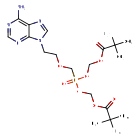
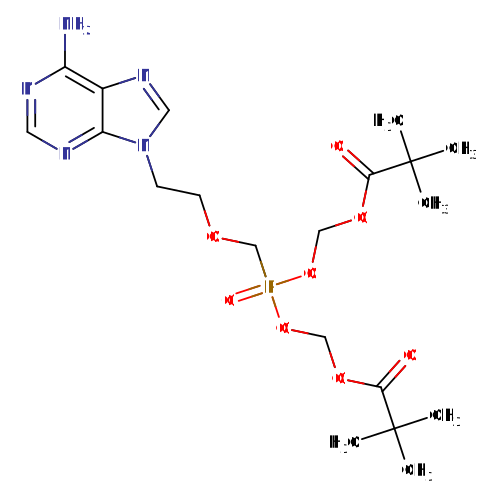
Structure for Adefovir dipivoxil (DB00718)
- Weight
- Average: 501.4705
Monoisotopic: 501.198849537 - Chemical Formula
- C20H32N5O8P
- Synonyms
- Adefovir di(pivaloyloxymethyl) ester
- Adefovir dipivoxil
- Adefovir pivoxil
- bis-POM PMEA
- External IDs
- GS 0840
- GS-0840

Pharmacology
- Indication
Indicated for the treatment of chronic hepatitis B in adult patients with evidence of active viral replication and either evidence of persistent elevations in serum aminotransferases (ALT or AST) or histologically active disease; this is based on histological, virological, biochemical, and serological responses in adult patients with HBeAg+ and HBeAg- chronic hepatitis B with compensated liver function, and in adult patients with clinical evidence of lamivudine-resistant hepatitis B virus with either compensated or decompensated liver function.
 Reduce drug development failure ratesBuild, train, & validate machine-learning modelswith evidence-based and structured datasets.Build, train, & validate predictive machine-learning models with structured datasets.
- Associated Conditions
Indication Type Indication Combined Product Details Approval Level Age Group Patient Characteristics Dose Form Management of Chronic hepatitis b •••••••••••• - Contraindications & Blackbox Warnings
 Prevent Adverse Drug Events TodayTap into our Clinical API for life-saving information on contraindications & blackbox warnings, population restrictions, harmful risks, & more.Avoid life-threatening adverse drug events with our Clinical API
- Pharmacodynamics
Adefovir dipivoxil a diester prodrug of adefovir. Adefovir is an acyclic nucleotide analog with activity against human hepatitis B virus (HBV). The concentration of adefovir that inhibited 50% of viral DNA synthesis (IC50) in vitro ranged from 0.2 to 2.5 μM in HBV transfected human hepatoma cell lines. The combination of adefovir with lamivudine showed additive anti-HBV activity.
- Mechanism of action
Adefovir dipivoxil is a prodrug of adefovir. Adefovir is an acyclic nucleotide analog of adenosine monophosphate which is phosphorylated to the active metabolite adefovir diphosphate by cellular kinases. Adefovir diphosphate inhibits HBV DNA polymerase (reverse transcriptase) by competing with the natural substrate deoxyadenosine triphosphate and by causing DNA chain termination after its incorporation into viral DNA. The inhibition constant (Ki) for adefovir diphosphate for HBV DNA polymerase was 0.1 μM. Adefovir diphosphate is a weak inhibitor of human DNA polymerases α and γ with Ki values of 1.18 μM and 0.97μM, respectively.
Target Actions Organism ADNA polymerase/reverse transcriptase otherHBV-D - Absorption
The approximate oral bioavailability of adefovir from HEPSERA is 59%. When a single oral 10 mg dose is given to chronic hepatitis B patients, the peak plasma concentration (Cmax) of adefovir was 18.4 ± 6.26 ng/mL. This occurred between 0.58 - 4 hours post dose (Tmax). The adefovir area under the plasma concentration-time curve (AUC0–∞) was 220 ± 70.0 ng∙h/mL. Food does not affect the exposure of adeforvir.
- Volume of distribution
- 392 ± 75 mL/kg [Vd at steady state, intravenous administration of 1.0 mg/kg/day]
- 352 ± 9 mL/kg [Vd at steady state, intravenous administration of 3.0 mg/kg/day]
- Protein binding
≤4% over the adefovir concentration range of 0.1 to 25 μg/mL
- Metabolism
Following oral administration, adefovir dipivoxil is rapidly converted to adefovir. 45% of the dose is recovered as adefovir in the urine over 24 hours at steady state following 10 mg oral doses. Adefovir is not a substrate of the cytochrome P450 enzymes.
Hover over products below to view reaction partners
- Route of elimination
Adefovir is renally excreted by a combination of glomerular filtration and active tubular secretion.
- Half-life
Plasma adefovir concentrations declined in a biexponential manner with a terminal elimination half-life of 7.48 ± 1.65 hours.
- Clearance
- 469 ± 99.0 mL/min [Patients with Unimpaired renal Function receiving a 10 mg single dose]
- 356 ± 85.6 mL/min [Patients with mild renal impairement receiving a 10 mg single dose]
- 237 ± 118 mL/min [Patients with moderate renal impairement receiving a 10 mg single dose]
- 91.7 ± 51.3 mL/min [Patients with severe renal impairement receiving a 10 mg single dose]
- Adverse Effects
 Improve decision support & research outcomesWith structured adverse effects data, including: blackbox warnings, adverse reactions, warning & precautions, & incidence rates. View sample adverse effects data in our new Data Library!Improve decision support & research outcomes with our structured adverse effects data.
- Toxicity
Renal tubular nephropathy characterized by histological alterations and/or increases in BUN and serum creatinine was the primary dose-limiting toxicity associated with administration of adefovir dipivoxil in animals. Nephrotoxicity was observed in animals at systemic exposures approximately 3–10 times higher than those in humans at the recommended therapeutic dose of 10 mg/day.
- Pathways
Pathway Category Adefovir Dipivoxil Metabolism Pathway Drug metabolism - Pharmacogenomic Effects/ADRs
- Not Available
Interactions
- Drug Interactions
- This information should not be interpreted without the help of a healthcare provider. If you believe you are experiencing an interaction, contact a healthcare provider immediately. The absence of an interaction does not necessarily mean no interactions exist.
Drug Interaction Integrate drug-drug
interactions in your softwareAbacavir Adefovir dipivoxil may decrease the excretion rate of Abacavir which could result in a higher serum level. Aceclofenac The risk or severity of nephrotoxicity can be increased when Adefovir dipivoxil is combined with Aceclofenac. Acemetacin The risk or severity of nephrotoxicity can be increased when Adefovir dipivoxil is combined with Acemetacin. Acetaminophen Adefovir dipivoxil may decrease the excretion rate of Acetaminophen which could result in a higher serum level. Acetazolamide The excretion of Adefovir dipivoxil can be decreased when combined with Acetazolamide. - Food Interactions
- Take with or without food. The absorption is unaffected by food.
Products
 Drug product information from 10+ global regionsOur datasets provide approved product information including:dosage, form, labeller, route of administration, and marketing period.Access drug product information from over 10 global regions.
- Active Moieties
Name Kind UNII CAS InChI Key Adefovir prodrug 6GQP90I798 106941-25-7 SUPKOOSCJHTBAH-UHFFFAOYSA-N - International/Other Brands
- A Di Xian (The United Laboratories Ltd) / A Gan Ding (Fujian Guangsheng Tang) / Adesera (Cipla) / Adfovir (Sun Pharmaceutical Industries Ltd.) / Ailuwei (Changzheng-Xinkai) / Antiva (Square) / Biovir (Ivax) / Dai Ding (Tianjin Institute of Pharmaceutical Research) / Dinghe (Lukang) / Infovir (Incepta) / Jiule (Fovir Pharm) / Lifuzhi (Jiangsu TianShiLi BeiTe Pharmaceutical Co., Ltd.) / Ming Zheng (Chia Tai Tianqing) / Nafasera (Vidipha) / Preveon (Gilead Sciences, Inc.) / Pymefovir (PMP) / Xinfunuo (SL Pharm) / Yilaifen (Qilu)
- Brand Name Prescription Products
Name Dosage Strength Route Labeller Marketing Start Marketing End Region Image Hepsera Tablet 10 mg/1 Oral Excella Gmb H 2002-09-20 Not applicable US 
Hepsera Tablet 10 mg Oral Gilead Sciences 2006-04-18 2022-12-21 Canada 
Hepsera Tablet 10 mg Oral Gilead Sciences Ireland Uc 2016-09-08 2023-03-06 EU 
Hepsera Tablet 10 mg/1 Oral Gilead Sciences, Inc. 2002-09-20 2023-10-31 US Hepsera Tablet 10 mg Oral Gilead Sciences Ireland Uc 2016-09-08 2023-03-06 EU - Generic Prescription Products
Name Dosage Strength Route Labeller Marketing Start Marketing End Region Image Aa-adefovir Tablet 10 mg Oral Aa Pharma Inc 2014-08-07 Not applicable Canada Adefovir Dipivoxil Tablet 10 mg/1 Oral Sigmapharm Laboratories, LLC 2013-09-03 Not applicable US Adefovir dipivoxil Tablet 10 mg/1 Oral Apotex Corp. 2018-09-25 Not applicable US
Categories
- ATC Codes
- J05AF08 — Adefovir dipivoxil
- Drug Categories
- Anti-Infective Agents
- Antiinfectives for Systemic Use
- Antiviral Agents
- Antivirals for Systemic Use
- Direct Acting Antivirals
- Enzyme Inhibitors
- Hepatitis B Virus Nucleoside Analog Reverse Transcriptase Inhibitor
- Heterocyclic Compounds, Fused-Ring
- Nephrotoxic agents
- Nucleic Acid Synthesis Inhibitors
- Nucleoside and Nucleotide Reverse Transcriptase Inhibitors
- Nucleosides and Nucleotides
- OAT1/SLC22A6 inhibitors
- OAT1/SLC22A6 Substrates
- Organophosphorus Compounds
- Purines
- Reverse Transcriptase Inhibitors
- Chemical TaxonomyProvided by Classyfire
- Description
- This compound belongs to the class of organic compounds known as 6-aminopurines. These are purines that carry an amino group at position 6. Purine is a bicyclic aromatic compound made up of a pyrimidine ring fused to an imidazole ring.
- Kingdom
- Organic compounds
- Super Class
- Organoheterocyclic compounds
- Class
- Imidazopyrimidines
- Sub Class
- Purines and purine derivatives
- Direct Parent
- 6-aminopurines
- Alternative Parents
- Aminopyrimidines and derivatives / Dialkyl alkylphosphonates / Phosphonic acid esters / N-substituted imidazoles / Imidolactams / Dicarboxylic acids and derivatives / Heteroaromatic compounds / Amino acids and derivatives / Carboxylic acid esters / Azacyclic compounds show 6 more
- Substituents
- 6-aminopurine / Amine / Amino acid or derivatives / Aminopyrimidine / Aromatic heteropolycyclic compound / Azacycle / Azole / Carbonyl group / Carboxylic acid derivative / Carboxylic acid ester show 19 more
- Molecular Framework
- Aromatic heteropolycyclic compounds
- External Descriptors
- Not Available
- Affected organisms
- Hepatitis B virus
Chemical Identifiers
- UNII
- U6Q8Z01514
- CAS number
- 142340-99-6
- InChI Key
- WOZSCQDILHKSGG-UHFFFAOYSA-N
- InChI
- InChI=1S/C20H32N5O8P/c1-19(2,3)17(26)30-11-32-34(28,33-12-31-18(27)20(4,5)6)13-29-8-7-25-10-24-14-15(21)22-9-23-16(14)25/h9-10H,7-8,11-13H2,1-6H3,(H2,21,22,23)
- IUPAC Name
- [({[2-(6-amino-9H-purin-9-yl)ethoxy]methyl}({[(2,2-dimethylpropanoyl)oxy]methoxy})phosphoryl)oxy]methyl 2,2-dimethylpropanoate
- SMILES
- CC(C)(C)C(=O)OCOP(=O)(COCCN1C=NC2=C(N)N=CN=C12)OCOC(=O)C(C)(C)C
References
- Synthesis Reference
- US4808716
- General References
- Not Available
- External Links
- Human Metabolome Database
- HMDB0014856
- KEGG Drug
- D01655
- KEGG Compound
- C11277
- PubChem Compound
- 60871
- PubChem Substance
- 46507520
- ChemSpider
- 54855
- BindingDB
- 50248359
- 141400
- ChEBI
- 31175
- ChEMBL
- CHEMBL922
- ZINC
- ZINC000003930376
- Therapeutic Targets Database
- DNC001135
- PharmGKB
- PA10005
- RxList
- RxList Drug Page
- Drugs.com
- Drugs.com Drug Page
- Wikipedia
- Adefovir
- FDA label
- Download (293 KB)
- MSDS
- Download (57 KB)
Clinical Trials
- Clinical Trials
Phase Status Purpose Conditions Count 4 Completed Basic Science Healthy Volunteers (HV) 1 4 Completed Treatment Chronic Hepatitis B Infection 12 4 Completed Treatment Chronic Hepatitis B Infection / Cirrhosis of the Liver / Fibrosis 1 4 Completed Treatment HBeAg(-) Chronic Hepatitis B With Compensated Liver Function 1 4 Completed Treatment Viral Hepatitis B 1
Pharmacoeconomics
- Manufacturers
- Gilead sciences inc
- Packagers
- A-S Medication Solutions LLC
- Excella GmbH
- Gilead Sciences Inc.
- Patheon Inc.
- Dosage Forms
Form Route Strength Tablet Oral Tablet Oral 10 mg/1 Tablet Oral 10 mg - Prices
Unit description Cost Unit Hepsera 10 mg tablet 30.32USD tablet DrugBank does not sell nor buy drugs. Pricing information is supplied for informational purposes only.- Patents
Patent Number Pediatric Extension Approved Expires (estimated) Region US5663159 No 1997-09-02 2014-09-02 US CA2298057 No 2008-11-18 2018-07-23 Canada CA2051239 No 2003-03-25 2011-09-12 Canada US6451340 No 2002-09-17 2018-07-23 US
Properties
- State
- Solid
- Experimental Properties
Property Value Source water solubility 19 mg/mL at pH 2.0 and 0.4 mg/mL at pH 7.2. FDA label logP 1.91 FDA label - Predicted Properties
Property Value Source Water Solubility 0.633 mg/mL ALOGPS logP 1.49 ALOGPS logP 3.06 Chemaxon logS -2.9 ALOGPS pKa (Strongest Acidic) 18.55 Chemaxon pKa (Strongest Basic) 3.75 Chemaxon Physiological Charge 0 Chemaxon Hydrogen Acceptor Count 8 Chemaxon Hydrogen Donor Count 1 Chemaxon Polar Surface Area 166.98 Å2 Chemaxon Rotatable Bond Count 15 Chemaxon Refractivity 119.99 m3·mol-1 Chemaxon Polarizability 49.01 Å3 Chemaxon Number of Rings 2 Chemaxon Bioavailability 0 Chemaxon Rule of Five No Chemaxon Ghose Filter No Chemaxon Veber's Rule No Chemaxon MDDR-like Rule No Chemaxon - Predicted ADMET Features
Property Value Probability Human Intestinal Absorption + 0.9023 Blood Brain Barrier + 0.8905 Caco-2 permeable - 0.6281 P-glycoprotein substrate Substrate 0.7113 P-glycoprotein inhibitor I Non-inhibitor 0.5465 P-glycoprotein inhibitor II Non-inhibitor 0.896 Renal organic cation transporter Non-inhibitor 0.8273 CYP450 2C9 substrate Non-substrate 0.9234 CYP450 2D6 substrate Non-substrate 0.8305 CYP450 3A4 substrate Substrate 0.5584 CYP450 1A2 substrate Non-inhibitor 0.7508 CYP450 2C9 inhibitor Non-inhibitor 0.725 CYP450 2D6 inhibitor Non-inhibitor 0.7985 CYP450 2C19 inhibitor Non-inhibitor 0.7005 CYP450 3A4 inhibitor Non-inhibitor 0.7139 CYP450 inhibitory promiscuity Low CYP Inhibitory Promiscuity 0.8392 Ames test Non AMES toxic 0.5535 Carcinogenicity Non-carcinogens 0.828 Biodegradation Not ready biodegradable 0.9762 Rat acute toxicity 2.6261 LD50, mol/kg Not applicable hERG inhibition (predictor I) Weak inhibitor 0.6903 hERG inhibition (predictor II) Non-inhibitor 0.7412
Spectra
- Mass Spec (NIST)
- Not Available
- Spectra
- Chromatographic Properties
Collision Cross Sections (CCS)
Adduct CCS Value (Å2) Source type Source [M-H]- 216.521551 predictedDarkChem Lite v0.1.0 [M-H]- 217.473651 predictedDarkChem Lite v0.1.0 [M-H]- 209.50208 predictedDeepCCS 1.0 (2019) [M+H]+ 217.410751 predictedDarkChem Lite v0.1.0 [M+H]+ 218.034851 predictedDarkChem Lite v0.1.0 [M+H]+ 211.89763 predictedDeepCCS 1.0 (2019) [M+Na]+ 216.307651 predictedDarkChem Lite v0.1.0 [M+Na]+ 217.727951 predictedDarkChem Lite v0.1.0 [M+Na]+ 217.81017 predictedDeepCCS 1.0 (2019)
Targets

- Kind
- Protein
- Organism
- HBV-D
- Pharmacological action
- Yes
- Actions
- Other
- General Function
- Rna-dna hybrid ribonuclease activity
- Specific Function
- Multifunctional enzyme that converts the viral RNA genome into dsDNA in viral cytoplasmic capsids. This enzyme displays a DNA polymerase activity that can copy either DNA or RNA templates, and a ri...
- Gene Name
- P
- Uniprot ID
- P24024
- Uniprot Name
- Protein P
- Molecular Weight
- 93588.765 Da
References
- Chien RN, Liaw YF: Nucleos(t)ide analogues for hepatitis B virus: strategies for long-term success. Best Pract Res Clin Gastroenterol. 2008;22(6):1081-92. doi: 10.1016/j.bpg.2008.11.003. [Article]
- Kock J, Baumert TF, Delaney WE 4th, Blum HE, von Weizsacker F: Inhibitory effect of adefovir and lamivudine on the initiation of hepatitis B virus infection in primary tupaia hepatocytes. Hepatology. 2003 Dec;38(6):1410-8. [Article]
Enzymes
- Kind
- Protein
- Organism
- Humans
- Pharmacological action
- Unknown
- Actions
- Substrate
- General Function
- Atp binding
- Specific Function
- Catalyzes the reversible transfer of the terminal phosphate group between ATP and AMP. Plays an important role in cellular energy homeostasis and in adenine nucleotide metabolism. Adenylate kinase ...
- Gene Name
- AK2
- Uniprot ID
- P54819
- Uniprot Name
- Adenylate kinase 2, mitochondrial
- Molecular Weight
- 26477.44 Da
References
- Link [Link]
- Kind
- Protein
- Organism
- Humans
- Pharmacological action
- Unknown
- Actions
- Substrate
- General Function
- Nucleoside triphosphate adenylate kinase activity
- Specific Function
- Involved in maintaining the homeostasis of cellular nucleotides by catalyzing the interconversion of nucleoside phosphates. Efficiently phosphorylates AMP and dAMP using ATP as phosphate donor, but...
- Gene Name
- AK4
- Uniprot ID
- P27144
- Uniprot Name
- Adenylate kinase 4, mitochondrial
- Molecular Weight
- 25267.83 Da
References
- Link [Link]
- Kind
- Protein
- Organism
- Humans
- Pharmacological action
- Unknown
- Actions
- Substrate
- General Function
- Ribosomal small subunit binding
- Specific Function
- Major role in the synthesis of nucleoside triphosphates other than ATP. The ATP gamma phosphate is transferred to the NDP beta phosphate via a ping-pong mechanism, using a phosphorylated active-sit...
- Gene Name
- NME1
- Uniprot ID
- P15531
- Uniprot Name
- Nucleoside diphosphate kinase A
- Molecular Weight
- 17148.635 Da
References
- Link [Link]
- Kind
- Protein
- Organism
- Humans
- Pharmacological action
- Unknown
- Actions
- Substrate
- General Function
- Transcription factor activity, sequence-specific dna binding
- Specific Function
- Major role in the synthesis of nucleoside triphosphates other than ATP. Negatively regulates Rho activity by interacting with AKAP13/LBC. Acts as a transcriptional activator of the MYC gene; binds ...
- Gene Name
- NME2
- Uniprot ID
- P22392
- Uniprot Name
- Nucleoside diphosphate kinase B
- Molecular Weight
- 17297.935 Da
References
- Link [Link]
Transporters
- Kind
- Protein
- Organism
- Humans
- Pharmacological action
- Unknown
- Actions
- SubstrateInhibitor
- General Function
- Sodium-independent organic anion transmembrane transporter activity
- Specific Function
- Involved in the renal elimination of endogenous and exogenous organic anions. Functions as organic anion exchanger when the uptake of one molecule of organic anion is coupled with an efflux of one ...
- Gene Name
- SLC22A6
- Uniprot ID
- Q4U2R8
- Uniprot Name
- Solute carrier family 22 member 6
- Molecular Weight
- 61815.78 Da
References
- Cihlar T, Ho ES: Fluorescence-based assay for the interaction of small molecules with the human renal organic anion transporter 1. Anal Biochem. 2000 Jul 15;283(1):49-55. [Article]
- Cihlar T, Lin DC, Pritchard JB, Fuller MD, Mendel DB, Sweet DH: The antiviral nucleotide analogs cidofovir and adefovir are novel substrates for human and rat renal organic anion transporter 1. Mol Pharmacol. 1999 Sep;56(3):570-80. [Article]
- Ho ES, Lin DC, Mendel DB, Cihlar T: Cytotoxicity of antiviral nucleotides adefovir and cidofovir is induced by the expression of human renal organic anion transporter 1. J Am Soc Nephrol. 2000 Mar;11(3):383-93. [Article]
- Kind
- Protein
- Organism
- Humans
- Pharmacological action
- Unknown
- Actions
- Substrate
- General Function
- Atpase activity, coupled to transmembrane movement of substances
- Specific Function
- May be an organic anion pump relevant to cellular detoxification.
- Gene Name
- ABCC4
- Uniprot ID
- O15439
- Uniprot Name
- Multidrug resistance-associated protein 4
- Molecular Weight
- 149525.33 Da
References
- Schuetz JD, Connelly MC, Sun D, Paibir SG, Flynn PM, Srinivas RV, Kumar A, Fridland A: MRP4: A previously unidentified factor in resistance to nucleoside-based antiviral drugs. Nat Med. 1999 Sep;5(9):1048-51. [Article]
- Kind
- Protein
- Organism
- Humans
- Pharmacological action
- Unknown
- Actions
- Substrate
- General Function
- Organic anion transmembrane transporter activity
- Specific Function
- Acts as a multispecific organic anion pump which can transport nucleotide analogs.
- Gene Name
- ABCC5
- Uniprot ID
- O15440
- Uniprot Name
- Multidrug resistance-associated protein 5
- Molecular Weight
- 160658.8 Da
References
- Wijnholds J, Mol CA, van Deemter L, de Haas M, Scheffer GL, Baas F, Beijnen JH, Scheper RJ, Hatse S, De Clercq E, Balzarini J, Borst P: Multidrug-resistance protein 5 is a multispecific organic anion transporter able to transport nucleotide analogs. Proc Natl Acad Sci U S A. 2000 Jun 20;97(13):7476-81. [Article]
- Kind
- Protein
- Organism
- Humans
- Pharmacological action
- Unknown
- Actions
- Substrate
- General Function
- Toxin transporter activity
- Specific Function
- Mediates potential-dependent transport of a variety of organic cations. May play a significant role in the disposition of cationic neurotoxins and neurotransmitters in the brain.
- Gene Name
- SLC22A3
- Uniprot ID
- O75751
- Uniprot Name
- Solute carrier family 22 member 3
- Molecular Weight
- 61279.485 Da
References
- Grundemann D, Schechinger B, Rappold GA, Schomig E: Molecular identification of the corticosterone-sensitive extraneuronal catecholamine transporter. Nat Neurosci. 1998 Sep;1(5):349-51. [Article]

Drug created at June 13, 2005 13:24 / Updated at April 23, 2024 11:38