Identification
- Summary
Dolasetron is an antinauseant and antiemetic used in chemotherapy and postoperatively.
- Brand Names
- Anzemet
- Generic Name
- Dolasetron
- DrugBank Accession Number
- DB00757
- Background
Dolasetron is an antinauseant and antiemetic agent indicated for the prevention of nausea and vomiting associated with moderately-emetogenic cancer chemotherapy and for the prevention of postoperative nausea and vomiting. Dolasetron is a highly specific and selective serotonin 5-HT3 receptor antagonist. This drug is not shown to have activity at other known serotonin receptors, and has low affinity for dopamine receptors.
- Type
- Small Molecule
- Groups
- Approved, Investigational
- Structure
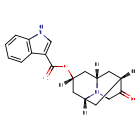
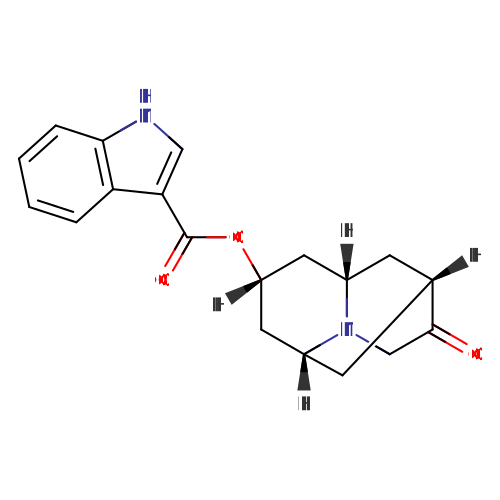
Structure for Dolasetron (DB00757)
- Weight
- Average: 324.38
Monoisotopic: 324.147392512 - Chemical Formula
- C19H20N2O3
- Synonyms
- Dolasetron
- Dolasétron
- Dolasetronum
- External IDs
- MDL 73147 EF

Pharmacology
- Indication
For the prevention of nausea and vomiting associated with emetogenic cancer chemotherapy, including initial and repeat courses of chemotherapy. Also used for the prevention of postoperative nausea and vomiting. This drug can be used intravenously for the treatment of postoperative nausea and vomiting.
 Reduce drug development failure ratesBuild, train, & validate machine-learning modelswith evidence-based and structured datasets.Build, train, & validate predictive machine-learning models with structured datasets.
- Associated Conditions
Indication Type Indication Combined Product Details Approval Level Age Group Patient Characteristics Dose Form Prophylaxis of Chemotherapy-induced nausea and vomiting •••••••••••• Prophylaxis of Post-operative nausea and vomiting •••••••••••• ••••••••• Treatment of Postoperative nausea and vomiting •••••••••••• ••••••••• - Contraindications & Blackbox Warnings
 Prevent Adverse Drug Events TodayTap into our Clinical API for life-saving information on contraindications & blackbox warnings, population restrictions, harmful risks, & more.Avoid life-threatening adverse drug events with our Clinical API
- Pharmacodynamics
Dolasetron is a highly specific and selective serotonin 5-HT3 receptor antagonist, not shown to have activity at other known serotonin receptors and with low affinity for dopamine receptors. It is structurally and pharmacologically related to other 5-HT3 receptor agonists. The serontonin 5-HT3 receptors are located on the nerve terminals of the vagus in the periphery, and centrally in the chemoreceptor trigger zone of the area postrema. It is suggested that chemotherapeutic agents release serotonin from the enterochromaffin cells of the small intestine by causing degenerative changes in the GI tract. The serotonin then stimulates the vagal and splanchnic nerve receptors that project to the medullary vomiting center, as well as the 5-HT3 receptors in the area postrema, thus initiating the vomiting reflex, causing nausea and vomiting.
- Mechanism of action
Dolasetron is a selective serotonin 5-HT3 receptor antagonist. In vivo, the drug is rapidly converted into its major active metabolite, hydrodolasetron, which seems to be largely responsible for the drug's pharmacological activity. The antiemetic activity of the drug is brought about through the inhibition of 5-HT3 receptors present both centrally (medullary chemoreceptor zone) and peripherally (GI tract). This inhibition of 5-HT3 receptors in turn inhibits the visceral afferent stimulation of the vomiting center, likely indirectly at the level of the area postrema, as well as through direct inhibition of serotonin activity within the area postrema and the chemoreceptor trigger zone.
Target Actions Organism A5-hydroxytryptamine receptor 3A antagonistHumans - Absorption
Orally-administered dolasetron is well absorbed
- Volume of distribution
- 5.8 L/kg [adults]
- Protein binding
69-77%
- Metabolism
Hepatic
- Route of elimination
Hydrodolasetron is eliminated by multiple routes, including renal excretion and, after metabolism, mainly glucuronidation, and hydroxylation.
- Half-life
8.1 hours
- Clearance
- Apparent cl=9.4 mL/min/kg [Healthy volunteers with IV treatment dose up to 5 mg/kg]
- Adverse Effects
 Improve decision support & research outcomesWith structured adverse effects data, including: blackbox warnings, adverse reactions, warning & precautions, & incidence rates. View sample adverse effects data in our new Data Library!Improve decision support & research outcomes with our structured adverse effects data.
- Toxicity
Not Available
- Pathways
- Not Available
- Pharmacogenomic Effects/ADRs
- Not Available
Interactions
- Drug Interactions
- This information should not be interpreted without the help of a healthcare provider. If you believe you are experiencing an interaction, contact a healthcare provider immediately. The absence of an interaction does not necessarily mean no interactions exist.
Drug Interaction Integrate drug-drug
interactions in your software1,2-Benzodiazepine The risk or severity of CNS depression can be increased when Dolasetron is combined with 1,2-Benzodiazepine. Abametapir The serum concentration of Dolasetron can be increased when it is combined with Abametapir. Abatacept The metabolism of Dolasetron can be increased when combined with Abatacept. Abiraterone The metabolism of Dolasetron can be decreased when combined with Abiraterone. Acebutolol The metabolism of Dolasetron can be decreased when combined with Acebutolol. - Food Interactions
- Take with or without food. The absorption is unaffected by food.
Products
 Drug product information from 10+ global regionsOur datasets provide approved product information including:dosage, form, labeller, route of administration, and marketing period.Access drug product information from over 10 global regions.
- Product Ingredients
Ingredient UNII CAS InChI Key Dolasetron mesylate U3C8E5BWKR 878143-33-0 QTFFGPOXNNGTGZ-LIFGOUTFSA-N - International/Other Brands
- Anemet (Sanofi-Aventis) / Zamanon (Sanofi-Aventis)
- Brand Name Prescription Products
Name Dosage Strength Route Labeller Marketing Start Marketing End Region Image Anzemet Tablet, film coated 100 mg/1 Oral Validus Pharmaceuticals LLC 1997-09-11 Not applicable US 
Anzemet Injection 500 mg/25mL Intravenous sanofi-aventis U.S. LLC 1997-09-11 2016-06-30 US Anzemet Tablet 100 mg Oral Sanofi Aventis 1997-08-26 2014-04-21 Canada 
Anzemet Tablet, film coated 50 mg/1 Oral sanofi-aventis U.S. LLC 1997-09-11 2017-06-30 US Anzemet Tablet, film coated 50 mg/1 Oral Validus Pharmaceuticals LLC 1997-09-11 Not applicable US
Categories
- ATC Codes
- A04AA04 — Dolasetron
- Drug Categories
- Alimentary Tract and Metabolism
- Antidepressive Agents
- Antiemetic Serotonin 5-HT3 Receptor Antagonists
- Antiemetics
- Antiemetics and Antinauseants
- Autonomic Agents
- Central Nervous System Agents
- Central Nervous System Depressants
- Cytochrome P-450 CYP2C9 Substrates
- Cytochrome P-450 CYP2D6 Substrates
- Cytochrome P-450 CYP3A Substrates
- Cytochrome P-450 CYP3A4 Substrates
- Cytochrome P-450 Substrates
- Gastrointestinal Agents
- Heterocyclic Compounds, Fused-Ring
- Moderate Risk QTc-Prolonging Agents
- Neurotransmitter Agents
- Peripheral Nervous System Agents
- QTc Prolonging Agents
- Serotonergic Drugs Shown to Increase Risk of Serotonin Syndrome
- Serotonin 3 Receptor Antagonists
- Serotonin 5-HT3 Receptor Antagonists
- Serotonin Agents
- Serotonin Receptor Antagonists
- Chemical TaxonomyProvided by Classyfire
- Description
- This compound belongs to the class of organic compounds known as indolecarboxylic acids and derivatives. These are compounds containing a carboxylic acid group (or a derivative thereof) linked to an indole.
- Kingdom
- Organic compounds
- Super Class
- Organoheterocyclic compounds
- Class
- Indoles and derivatives
- Sub Class
- Indolecarboxylic acids and derivatives
- Direct Parent
- Indolecarboxylic acids and derivatives
- Alternative Parents
- Quinolizidines / Indoles / Quinuclidones / Pyrrole carboxylic acids and derivatives / Piperidinones / Benzenoids / Substituted pyrroles / Vinylogous amides / Heteroaromatic compounds / Ketones show 8 more
- Substituents
- Amine / Amino acid or derivatives / Aromatic heteropolycyclic compound / Azacycle / Benzenoid / Carbonyl group / Carboxylic acid derivative / Carboxylic acid ester / Heteroaromatic compound / Hydrocarbon derivative show 21 more
- Molecular Framework
- Aromatic heteropolycyclic compounds
- External Descriptors
- Not Available
- Affected organisms
- Humans and other mammals
Chemical Identifiers
- UNII
- 82WI2L7Q6E
- CAS number
- 115956-12-2
- InChI Key
- UKTAZPQNNNJVKR-KJGYPYNMSA-N
- InChI
- InChI=1S/C19H20N2O3/c22-18-10-21-12-5-11(18)6-13(21)8-14(7-12)24-19(23)16-9-20-17-4-2-1-3-15(16)17/h1-4,9,11-14,20H,5-8,10H2/t11-,12-,13+,14+
- IUPAC Name
- (1s,3R,5r,7S)-10-oxo-8-azatricyclo[5.3.1.0³,⁸]undecan-5-yl 1H-indole-3-carboxylate
- SMILES
- [H][C@@]1(C[C@@]2([H])C[C@]3([H])C[C@@]([H])(C1)N2CC3=O)OC(=O)C1=CNC2=C1C=CC=C2
References
- Synthesis Reference
Janos Hajko, Tivadar Tamas, Adrienne Kovacsne-Mezei, Erika Molnarne, Csaba Peto, Csaba Szabo, "Production of dolasetron." U.S. Patent US20070203219, issued August 30, 2007.
US20070203219- General References
- Balfour JA, Goa KL: Dolasetron. A review of its pharmacology and therapeutic potential in the management of nausea and vomiting induced by chemotherapy, radiotherapy or surgery. Drugs. 1997 Aug;54(2):273-98. [Article]
- Gregory RE, Ettinger DS: 5-HT3 receptor antagonists for the prevention of chemotherapy-induced nausea and vomiting. A comparison of their pharmacology and clinical efficacy. Drugs. 1998 Feb;55(2):173-89. [Article]
- Gan TJ: Selective serotonin 5-HT3 receptor antagonists for postoperative nausea and vomiting: are they all the same? CNS Drugs. 2005;19(3):225-38. [Article]
- FDA Approved Drug Products: ANZEMET (dolasetron mesylate) injection [Link]
- FDA Approved Drug Products: ANZEMET (dolasetron mesylate) tablets [Link]
- External Links
- KEGG Compound
- C07866
- PubChem Compound
- 3033818
- PubChem Substance
- 46505209
- ChemSpider
- 30845229
- BindingDB
- 50451546
- 68091
- ChEMBL
- CHEMBL2368925
- ZINC
- ZINC000103105084
- Therapeutic Targets Database
- DAP000368
- PharmGKB
- PA449390
- RxList
- RxList Drug Page
- Drugs.com
- Drugs.com Drug Page
- Wikipedia
- Dolasetron
- FDA label
- Download (93.3 KB)
Clinical Trials
- Clinical Trials
Phase Status Purpose Conditions Count 4 Active Not Recruiting Supportive Care Chemotherapy-Induced Nausea and Vomiting 1 4 Completed Treatment Nausea / Vomiting 1 3 Completed Supportive Care Nausea and vomiting / Unspecified Adult Solid Tumor, Protocol Specific 1 3 Completed Treatment Fibromyalgia 1 2 Completed Supportive Care Nausea and vomiting / Unspecified Adult Solid Tumor, Protocol Specific 1
Pharmacoeconomics
- Manufacturers
- Sanofi aventis us llc
- Packagers
- Cardinal Health
- Gruppo Lepetit SPA
- Hospira Inc.
- Merrell Pharmaceuticals Inc.
- Patheon Inc.
- Physicians Total Care Inc.
- Sanofi-Aventis Inc.
- Dosage Forms
Form Route Strength Injection Intravenous 100 mg/5mL Injection Intravenous 12.5 mg/0.625mL Injection Intravenous 500 mg/25mL Tablet Oral Tablet Oral 100 mg Tablet Oral 50 mg Tablet, film coated Oral 100 mg/1 Tablet, film coated Oral 50 mg/1 Solution Intravenous 20 mg / mL - Prices
Unit description Cost Unit Anzemet 100 mg tablet 77.77USD tablet Anzemet 50 mg tablet 58.67USD tablet Anzemet 100 mg Tablet 32.16USD tablet Anzemet 12.5 mg carpuject 18.74USD syringe Anzemet 20 mg/ml 2.66USD ml DrugBank does not sell nor buy drugs. Pricing information is supplied for informational purposes only.- Patents
Patent Number Pediatric Extension Approved Expires (estimated) Region US4906755 No 1990-03-06 2011-07-02 US CA1329203 No 1994-05-03 2011-05-03 Canada
Properties
- State
- Solid
- Experimental Properties
Property Value Source melting point (°C) 278 °C Not Available water solubility Freely soluble in water Not Available logP 2.1 Not Available - Predicted Properties
Property Value Source Water Solubility 0.261 mg/mL ALOGPS logP 2.41 ALOGPS logP 2.33 Chemaxon logS -3.1 ALOGPS pKa (Strongest Acidic) 12.18 Chemaxon pKa (Strongest Basic) 5.68 Chemaxon Physiological Charge 0 Chemaxon Hydrogen Acceptor Count 3 Chemaxon Hydrogen Donor Count 1 Chemaxon Polar Surface Area 62.4 Å2 Chemaxon Rotatable Bond Count 3 Chemaxon Refractivity 89.34 m3·mol-1 Chemaxon Polarizability 35.02 Å3 Chemaxon Number of Rings 5 Chemaxon Bioavailability 1 Chemaxon Rule of Five Yes Chemaxon Ghose Filter Yes Chemaxon Veber's Rule No Chemaxon MDDR-like Rule No Chemaxon - Predicted ADMET Features
Property Value Probability Human Intestinal Absorption + 0.9956 Blood Brain Barrier + 0.9403 Caco-2 permeable + 0.5119 P-glycoprotein substrate Non-substrate 0.5833 P-glycoprotein inhibitor I Inhibitor 0.5344 P-glycoprotein inhibitor II Non-inhibitor 0.5225 Renal organic cation transporter Inhibitor 0.5 CYP450 2C9 substrate Non-substrate 0.8569 CYP450 2D6 substrate Substrate 0.8919 CYP450 3A4 substrate Non-substrate 0.5387 CYP450 1A2 substrate Inhibitor 0.5293 CYP450 2C9 inhibitor Non-inhibitor 0.6846 CYP450 2D6 inhibitor Non-inhibitor 0.9093 CYP450 2C19 inhibitor Non-inhibitor 0.7741 CYP450 3A4 inhibitor Non-inhibitor 0.8272 CYP450 inhibitory promiscuity High CYP Inhibitory Promiscuity 0.5698 Ames test Non AMES toxic 0.6931 Carcinogenicity Non-carcinogens 0.9407 Biodegradation Not ready biodegradable 0.9963 Rat acute toxicity 2.5853 LD50, mol/kg Not applicable hERG inhibition (predictor I) Weak inhibitor 0.8902 hERG inhibition (predictor II) Non-inhibitor 0.7459
Spectra
- Mass Spec (NIST)
- Not Available
- Spectra
- Chromatographic Properties
Collision Cross Sections (CCS)
Adduct CCS Value (Å2) Source type Source [M-H]- 166.4515 predictedDeepCCS 1.0 (2019) [M+H]+ 168.74846 predictedDeepCCS 1.0 (2019) [M+Na]+ 174.661 predictedDeepCCS 1.0 (2019)
Targets

- Kind
- Protein
- Organism
- Humans
- Pharmacological action
- Yes
- Actions
- Antagonist
- General Function
- Voltage-gated potassium channel activity
- Specific Function
- This is one of the several different receptors for 5-hydroxytryptamine (serotonin), a biogenic hormone that functions as a neurotransmitter, a hormone, and a mitogen. This receptor is a ligand-gate...
- Gene Name
- HTR3A
- Uniprot ID
- P46098
- Uniprot Name
- 5-hydroxytryptamine receptor 3A
- Molecular Weight
- 55279.835 Da
References
- Chen X, Ji ZL, Chen YZ: TTD: Therapeutic Target Database. Nucleic Acids Res. 2002 Jan 1;30(1):412-5. [Article]
- Conroy T, Cappelaere P, Fabbro M, Fauser AA, Splinter TA, Spielmann M, Schneider M, Chevallier B, Goupil A, Chauvergne J, et al.: Acute antiemetic efficacy and safety of dolasetron mesylate, a 5-HT3 antagonist, in cancer patients treated with cisplatin. European Dolasetron Study Group. Am J Clin Oncol. 1994 Apr;17(2):97-102. [Article]
- Reith MK, Sproles GD, Cheng LK: Human metabolism of dolasetron mesylate, a 5-HT3 receptor antagonist. Drug Metab Dispos. 1995 Aug;23(8):806-12. [Article]
- Eisenberg P, Figueroa-Vadillo J, Zamora R, Charu V, Hajdenberg J, Cartmell A, Macciocchi A, Grunberg S: Improved prevention of moderately emetogenic chemotherapy-induced nausea and vomiting with palonosetron, a pharmacologically novel 5-HT3 receptor antagonist: results of a phase III, single-dose trial versus dolasetron. Cancer. 2003 Dec 1;98(11):2473-82. [Article]
- Monaca-Charley C, Stojkovic T, Duhamel A, De Seze J, Ferriby D, Vermersch P: Double-blind crossover study with dolasetron mesilate, a 5-HT3 receptor antagonist in cerebellar syndrome secondary to multiple sclerosis. J Neurol. 2003 Oct;250(10):1190-4. [Article]
- Boeijinga PH, Galvan M, Baron BM, Dudley MW, Siegel BW, Slone AL: Characterization of the novel 5-HT3 antagonists MDL 73147EF (dolasetron mesilate) and MDL 74156 in NG108-15 neuroblastoma x glioma cells. Eur J Pharmacol. 1992 Aug 14;219(1):9-13. [Article]
- Balfour JA, Goa KL: Dolasetron. A review of its pharmacology and therapeutic potential in the management of nausea and vomiting induced by chemotherapy, radiotherapy or surgery. Drugs. 1997 Aug;54(2):273-98. [Article]
- Hui YF, Ignoffo RJ: Dolasetron. A new 5-hydroxytryptamine3 receptor antagonist. Cancer Pract. 1997 Sep-Oct;5(5):324-8. [Article]
- Gregory RE, Ettinger DS: 5-HT3 receptor antagonists for the prevention of chemotherapy-induced nausea and vomiting. A comparison of their pharmacology and clinical efficacy. Drugs. 1998 Feb;55(2):173-89. [Article]
- Gan TJ: Selective serotonin 5-HT3 receptor antagonists for postoperative nausea and vomiting: are they all the same? CNS Drugs. 2005;19(3):225-38. [Article]
Enzymes
- Kind
- Protein
- Organism
- Humans
- Pharmacological action
- Unknown
- Actions
- Substrate
- General Function
- Steroid hydroxylase activity
- Specific Function
- Cytochromes P450 are a group of heme-thiolate monooxygenases. In liver microsomes, this enzyme is involved in an NADPH-dependent electron transport pathway. It oxidizes a variety of structurally un...
- Gene Name
- CYP2C9
- Uniprot ID
- P11712
- Uniprot Name
- Cytochrome P450 2C9
- Molecular Weight
- 55627.365 Da
References
- Rendic S: Summary of information on human CYP enzymes: human P450 metabolism data. Drug Metab Rev. 2002 Feb-May;34(1-2):83-448. [Article]
- Kind
- Protein
- Organism
- Humans
- Pharmacological action
- Unknown
- Actions
- Substrate
- General Function
- Vitamin d3 25-hydroxylase activity
- Specific Function
- Cytochromes P450 are a group of heme-thiolate monooxygenases. In liver microsomes, this enzyme is involved in an NADPH-dependent electron transport pathway. It performs a variety of oxidation react...
- Gene Name
- CYP3A4
- Uniprot ID
- P08684
- Uniprot Name
- Cytochrome P450 3A4
- Molecular Weight
- 57342.67 Da
References
- Sanwald P, David M, Dow J: Characterization of the cytochrome P450 enzymes involved in the in vitro metabolism of dolasetron. Comparison with other indole-containing 5-HT3 antagonists. Drug Metab Dispos. 1996 May;24(5):602-9. [Article]
- Kind
- Protein
- Organism
- Humans
- Pharmacological action
- Unknown
- Actions
- Substrate
- General Function
- Steroid hydroxylase activity
- Specific Function
- Responsible for the metabolism of many drugs and environmental chemicals that it oxidizes. It is involved in the metabolism of drugs such as antiarrhythmics, adrenoceptor antagonists, and tricyclic...
- Gene Name
- CYP2D6
- Uniprot ID
- P10635
- Uniprot Name
- Cytochrome P450 2D6
- Molecular Weight
- 55768.94 Da
References
- Janicki PK: Cytochrome P450 2D6 metabolism and 5-hydroxytryptamine type 3 receptor antagonists for postoperative nausea and vomiting. Med Sci Monit. 2005 Oct;11(10):RA322-8. Epub 2005 Sep 26. [Article]
- Sanwald P, David M, Dow J: Characterization of the cytochrome P450 enzymes involved in the in vitro metabolism of dolasetron. Comparison with other indole-containing 5-HT3 antagonists. Drug Metab Dispos. 1996 May;24(5):602-9. [Article]
- Roberts SM, Bezinover DS, Janicki PK: Reappraisal of the role of dolasetron in prevention and treatment of nausea and vomiting associated with surgery or chemotherapy. Cancer Manag Res. 2012;4:67-73. doi: 10.2147/JEP.S23105. Epub 2012 Feb 24. [Article]

Drug created at June 13, 2005 13:24 / Updated at April 26, 2024 00:45