Identification
- Summary
Irinotecan is a topoisomerase inhibitor used to treat metastatic carcinoma of the colon or rectum and pancreatic adenocarcinoma.
- Brand Names
- Camptosar, Onivyde
- Generic Name
- Irinotecan
- DrugBank Accession Number
- DB00762
- Background
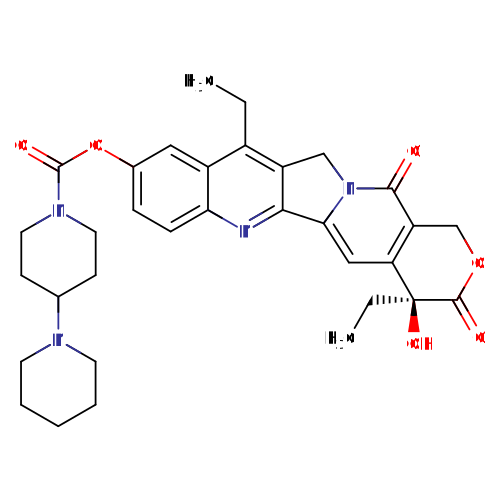
Irinotecan is a topoisomerase inhibitor used for chemotherapy. It is a water-soluble analogue of camptothecin, which is extracted from the Chinese tree Camptotheca acuminate.5 The bis-piperidine side chain in the structure of irinotecan bestows enhanced water solubility.6 As an anticancer drug, irinotecan was first commercially available in Japan in 1994 to treat various cancers such as lung, cervical and ovarian cancer.5 Approved by the FDA in 1996,3 irinotecan is used to treat colorectal cancer and pancreatic adenocarcinoma.7,8,10 Irinotecan liposome was approved by the FDA in February 2024.8
The active metabolite SN-38 is also a potent inhibitor of DNA topoisomerase I. Both irinotecan and SN-38 mediate antitumor activity by forming a complex with topoisomerase I and blocking its enzymatic activity, thereby interfering with DNA synthesis. This leads to the arrest of the cell cycle in the S-G2 phase and cancer cell death.5
- Type
- Small Molecule
- Groups
- Approved, Investigational
- Structure
Structure for Irinotecan (DB00762)
- Weight
- Average: 586.678
Monoisotopic: 586.279134968 - Chemical Formula
- C33H38N4O6
- Synonyms
- (+)-Irinotecan
- (S)-4,11-diethyl-4-hydroxy-3,14-dioxo-3,4,12,14-tetrahydro-1H-pyrano[3',4':6,7]indolizino[1,2-b]quinolin-9-yl 4-(2-(5-(3-(2,4-dihydroxy-5-isopropylphenyl)-5-hydroxy-4H-1,2,4-triazol-4-yl)-1H-indol-1-yl)ethyl)piperidine-1-carboxylate
- Irinotecan
- Irinotecan lactone
- Irinotecan liposome injection
- Irinotecanum
- External IDs
- CPT 11
- CPT-11
- CPT11
- NSC-728073

Pharmacology
- Indication
Irinotecan is indicated for the treatment of: - Metastatic carcinoma of the colon or rectum as first-line treatment in combination with fluorouracil and leucovorin.7,10 - Metastatic carcinoma of the colon or rectum whose disease has recurred or progressed following initial fluorouracil-based therapy, as monotherapy 10 or in combination with fluorouracil and leucovorin.7
Irinotecan liposome injection is used in adults for the treatment of: - Metastatic pancreatic adenocarcinoma in combination with oxaliplatin, fluorouracil, and leucovorin as first-line treatment.8 - Metastatic pancreatic adenocarcinoma in combination with fluorouracil and leucovorin after disease progression following gemcitabine-based therapy.8
 Reduce drug development failure ratesBuild, train, & validate machine-learning modelswith evidence-based and structured datasets.Build, train, & validate predictive machine-learning models with structured datasets.
- Associated Conditions
Indication Type Indication Combined Product Details Approval Level Age Group Patient Characteristics Dose Form Used in combination to treat Esophageal cancer ••• ••••• Used in combination to treat Gastric cancer ••• ••••• Used in combination to treat Glioblastoma ••• ••••• Treatment of Metastatic cervical cancer ••• ••••• Treatment of Metastatic colorectal cancer (crc) •••••••••••• •••••••••• ••••••• •••• •••••••••••• ••••••••••••• ••••••• ••••••••••• ••••• •••••••• ••••••••• ••••••••• •••••••••• - Associated Therapies
- Contraindications & Blackbox Warnings
 Prevent Adverse Drug Events TodayTap into our Clinical API for life-saving information on contraindications & blackbox warnings, population restrictions, harmful risks, & more.Avoid life-threatening adverse drug events with our Clinical API
- Pharmacodynamics
Irinotecan is an antineoplastic agent. The administration of irinotecan has resulted in antitumor activity in mice bearing cancers of rodent origin and in human carcinoma xenografts of various histological types.7
- Mechanism of action
DNA topoisomerase I is a nuclear enzyme that ensures proper DNA topology during replication and transcription.6 It relieves torsional strain in the DNA double helix during replication and transcription by creating reversible single-strand breaks.4,7
Upon administration, irinotecan is converted into its active metabolite, SN-38, by carboxylesterase in the liver and gastrointestinal tract.3 Irinotecan and SN-38 both inhibit DNA topoisomerase I, acting on the S and G2 phases of the cell cycle.4,7 Irinotecan and SN-38 bind to the topoisomerase I-DNA complex and prevent the religation of single-strand breaks.7 The ternary complex formed by topoisomerase I, DNA, and either irinotecan or SN-38 interferes with the moving replication fork, inducing replication arrest and lethal double-stranded breaks in DNA. Because double-stranded breaks cannot be efficiently repaired by mammalian cells, apoptosis of cancer cells occurs.7
Target Actions Organism ADNA topoisomerase I, mitochondrial inhibitorHumans ADNA topoisomerase 1 inhibitorHumans - Absorption
Over the recommended dose range of 50 to 350 mg/m2, the AUC of irinotecan increases linearly with dose; the AUC of SN-38 increases less than proportionally with dose. Maximum concentrations of the active metabolite SN-38 are generally seen within 1 hour following the end of a 90-minute infusion of irinotecan.7 The plasma levels of SN-38 are much lower than that of irinotecan.2,7
Following intravenous infusion in patients with solid tumours, the mean (± standard deviation) Cmax was 1,660 ± 797 ng/mL at a dose of 125 mg/m2 and 3,392 ± 874 ng/mL at a dose of 340 mg/m2. The AUC0–24 was 10,200 ± 3,270 ng x h/mL at a dose of 125 mg/m2 and 20,604 ± 6,027 ng x h/mL at a dose of 340 mg/m2.7
- Volume of distribution
Following intravenous infusion in patients with solid tumours, the mean (± standard deviation) volume of distribution of terminal elimination phase was 110 ± 48.5 L/m2 at a dose of 125 mg/m2 and 234 ± 69.6 L/m2 at a dose of 340 mg/m2.7
- Protein binding
Irinotecan is about 30% to 68% bound to plasma proteins. SN-38 is approximately 95% bound to plasma proteins. Irinotecan and SN-38 are mainly bound to albumin.7
- Metabolism
Upon administration, irinotecan is converted primarily in the liver into its active metabolite, SN-38, by carboxylesterase.3 SN-38 is formed by cleavage of the carbamate bond between the camptothecin moiety and the dipiperidino side chain.7 While in vitro cytotoxicity assays show that the potency of SN-38 relative to irinotecan varies, SN-38 is approximately 1000 times as potent as irinotecan as an inhibitor of topoisomerase I.2,7 SN-38 can further be glucuronidated by UGT1A1 to form SN-38G.1,3,7
Irinotecan can also undergo CYP3A4-mediated oxidation to form NPC and APC. While some sources state that NPC and APC are weak inhibitors of topoisomerase I,1,2 they are unlikely to contribute to the pharmacological activity of irinotecan.
Hover over products below to view reaction partners
- Route of elimination
The disposition of irinotecan has not been fully elucidated in humans. The urinary excretion of irinotecan, SN-38, and SN-38 glucuronide are 11% to 20%, <1%, and 3%, respectively. The cumulative biliary and urinary excretion of irinotecan and its metabolites (SN-38 and SN-38 glucuronide) over a period of 48 hours in two patients ranged from approximately 25% (100 mg/m2) to 50% (300 mg/m2).7
- Half-life
After intravenous infusion of irinotecan in humans, the mean terminal elimination half-life of irinotecan is about 6 to 12 hours. The mean terminal elimination half-life of the active metabolite SN-38 is about 10 to 20 hours.7
- Clearance
The mean (± standard deviation) total systemic clearance of irinotecan in patients with solid tumours was 13.3 ± 6.01 L/h/m2 at a dose of 125 mg/m2 and 13.9 ± 4.0 L/h/m2 at a dose of 340 mg/m2.7
- Adverse Effects
 Improve decision support & research outcomesWith structured adverse effects data, including: blackbox warnings, adverse reactions, warning & precautions, & incidence rates. View sample adverse effects data in our new Data Library!Improve decision support & research outcomes with our structured adverse effects data.
- Toxicity
The oral LD50 is 1045 mg/kg in mice and 867 mg/kg in rats.9
In clinical trials involving patients with various cancers, single doses of up to 750 mg/m2 of irinotecan were associated with similar adverse events reported with the recommended dosage and regimen. There have been reports of overdosage at doses up to approximately twice the recommended therapeutic dose, which may be fatal. The most significant adverse reactions reported were severe neutropenia and severe diarrhea. Because there is no known antidote for overdosage of irinotecan, maximum supportive care should be instituted to prevent dehydration due to diarrhea and to treat any infectious complications.7
- Pathways
Pathway Category Irinotecan Metabolism Pathway Drug metabolism Irinotecan Action Pathway Drug action - Pharmacogenomic Effects/ADRs
Interacting Gene/Enzyme Allele name Genotype(s) Defining Change(s) Type(s) Description Details Solute carrier organic anion transporter family member 1B1 SLCO1B1*15 (C;C) / (C;T) C Allele / G Allele Directly Studied Effect Patients with this genotype have reduced transport of the active metabolite of irinotecan resulting in increased plasma concentrations. Details UDP-glucuronosyltransferase 1-1 UGT1A1*28 or UGT1A 7/7 Not Available extra TA in promoter ADR Directly Studied The presence of this genotype in UGT1A1 may indicate an increased risk of bone marrow toxicity when treated with irinotecan. Details UDP-glucuronosyltransferase 1-7 UGT1A7*2/*2 (G;G) / (G;T) / (A;C) / (A;A) / (A;G) G allele / A allele … show all ADR Directly Studied The presence of this genotype in UGT1A1 may indicate an increased risk of bone marrow toxicity when treated with irinotecan. Details UDP-glucuronosyltransferase 1-1 UGT1A1*93 (A;A) / (A;G) A Allele ADR Directly Studied The presence of this genotype in UGT1A1 may indicate an increased risk of bone marrow toxicity when treated with irinotecan. Details UDP-glucuronosyltransferase 1-1 UGT1A1*28 Not Available extra TA in promoter, homozygous ADR Directly Studied Patients who carry this genotype in UGT1A1 are at increased risk for neutropenia following initiation of irinotecan treatment. Details
Interactions
- Drug Interactions
- This information should not be interpreted without the help of a healthcare provider. If you believe you are experiencing an interaction, contact a healthcare provider immediately. The absence of an interaction does not necessarily mean no interactions exist.
Drug Interaction Integrate drug-drug
interactions in your softwareAbametapir The serum concentration of Irinotecan can be increased when it is combined with Abametapir. Abatacept The metabolism of Irinotecan can be increased when combined with Abatacept. Abciximab The risk or severity of bleeding can be increased when Abciximab is combined with Irinotecan. Abemaciclib Abemaciclib may decrease the excretion rate of Irinotecan which could result in a higher serum level. Acalabrutinib The metabolism of Irinotecan can be decreased when combined with Acalabrutinib. - Food Interactions
- No interactions found.
Products
 Drug product information from 10+ global regionsOur datasets provide approved product information including:dosage, form, labeller, route of administration, and marketing period.Access drug product information from over 10 global regions.
- Product Ingredients
Ingredient UNII CAS InChI Key Irinotecan hydrochloride 06X131E4OE 100286-90-6 GURKHSYORGJETM-WAQYZQTGSA-N Irinotecan hydrochloride hydrate 042LAQ1IIS 136572-09-3 KLEAIHJJLUAXIQ-JDRGBKBRSA-N Irinotecan sucrosofate OL741S3N8B 1361317-83-0 BCPSLKYBXGKPIW-RTXWKGGWSA-N - Product Images

- International/Other Brands
- Biotecan / Campto (YakultHonsha Co. Ltd.)
- Brand Name Prescription Products
Name Dosage Strength Route Labeller Marketing Start Marketing End Region Image Camptosar Solution 20 mg / mL Intravenous Pfizer Canada Ulc 1997-08-27 2022-06-02 Canada 
Camptosar Injection, solution 20 mg/1mL Intravenous Pharmacia & Upjohn Company LLC 1996-06-14 Not applicable US 
Camptosar Injection, solution 20 mg/1mL Intravenous Pharmacia and Upjohn Company LLC 1996-06-14 2018-05-31 US Irinotecan Solution 20 mg / mL Intravenous Pfizer Canada Ulc 2014-03-07 2022-06-03 Canada Irinotecan for Injection Solution 20 mg / mL Intravenous TEVA Canada Limited 2008-10-31 Not applicable Canada - Generic Prescription Products
Name Dosage Strength Route Labeller Marketing Start Marketing End Region Image Irinotecan hydrochloide Injection 20 mg/1mL Intravenous Gland Pharma Limited 2019-11-18 Not applicable US Irinotecan hydrochloide Injection 20 mg/1mL Intravenous BluePoint Laboratories 2020-12-14 Not applicable US Irinotecan hydrochloide Injection 20 mg/1mL Intravenous Xiromed Llc 2019-11-18 Not applicable US Irinotecan Hydrochloride Injection, solution 20 mg/1mL Intravenous Apotex Corp. 2017-11-30 Not applicable US Irinotecan Hydrochloride Injection 20 mg/1mL Intravenous Intas Pharmaceuticals 2024-01-01 Not applicable US - Unapproved/Other Products
Name Ingredients Dosage Route Labeller Marketing Start Marketing End Region Image IRINOTEKAN HYDROCHLORIDE DBL HOSPIRA 100 MG/5 ML IV INFUZYON COZ.ICEREN FLAKON, 1 ADET Irinotecan (100 mg/5ml) Injection Intravenous ORNA İLAÇ TEKSTİL KİMYEVİ MAD. SAN. VE DIŞ TİC. LTD. ŞTİ. 2020-03-17 Not applicable Turkey 
IRINOTEKAN HYDROCHLORIDE DBL HOSPIRA 40 MG/2 ML IV INFUZYON COZ.ICEREN FLAKON, 1 ADET Irinotecan (40 mg/2ml) Injection Intravenous ORNA İLAÇ TEKSTİL KİMYEVİ MAD. SAN. VE DIŞ TİC. LTD. ŞTİ. 2020-03-17 Not applicable Turkey

Categories
- ATC Codes
- L01CE02 — Irinotecan
- Drug Categories
- Alkaloids
- Antineoplastic Agents
- Antineoplastic and Immunomodulating Agents
- BCRP/ABCG2 Substrates
- Cholinesterase substrates
- Cytochrome P-450 CYP2B6 Substrates
- Cytochrome P-450 CYP2B6 Substrates with a Narrow Therapeutic Index
- Cytochrome P-450 CYP3A Inhibitors
- Cytochrome P-450 CYP3A Substrates
- Cytochrome P-450 CYP3A4 Inhibitors
- Cytochrome P-450 CYP3A4 Inhibitors (strength unknown)
- Cytochrome P-450 CYP3A4 Substrates
- Cytochrome P-450 CYP3A4 Substrates with a Narrow Therapeutic Index
- Cytochrome P-450 CYP3A5 Substrates
- Cytochrome P-450 CYP3A5 Substrates with a Narrow Therapeutic Index
- Cytochrome P-450 CYP3A7 Substrates
- Cytochrome P-450 CYP3A7 Substrates with a Narrow Therapeutic Index
- Cytochrome P-450 Enzyme Inhibitors
- Cytochrome P-450 Substrates
- Enzyme Inhibitors
- Immunosuppressive Agents
- Myelosuppressive Agents
- Narrow Therapeutic Index Drugs
- OATP1B1/SLCO1B1 Inhibitors
- P-glycoprotein substrates
- P-glycoprotein substrates with a Narrow Therapeutic Index
- Pharmaceutical Preparations
- Topoisomerase 1 (TOP1) inhibitors
- Topoisomerase I Inhibitors
- Topoisomerase Inhibitors
- UGT1A1 Substrates
- UGT1A1 Substrates with a Narrow Therapeutic Index
- UGT1A9 Substrates
- UGT1A9 Substrates with a Narrow Therapeutic Index
- Chemical TaxonomyProvided by Classyfire
- Description
- This compound belongs to the class of organic compounds known as camptothecins. These are heterocyclic compounds comprising a planar pentacyclic ring structure, that includes a pyrrolo[3,4-beta]-quinoline moiety (rings A, B and C), conjugated pyridone moiety (ring D) and one chiral center at position 20 within the alpha-hydroxy lactone ring with (S) configuration (the E-ring).
- Kingdom
- Organic compounds
- Super Class
- Alkaloids and derivatives
- Class
- Camptothecins
- Sub Class
- Not Available
- Direct Parent
- Camptothecins
- Alternative Parents
- Quinolines and derivatives / Pyranopyridines / Piperidinecarboxylic acids / Aminopiperidines / Pyridinones / Benzenoids / Tertiary alcohols / Carbamate esters / Heteroaromatic compounds / Trialkylamines show 11 more
- Substituents
- 4-aminopiperidine / Alcohol / Amine / Amino acid or derivatives / Aromatic heteropolycyclic compound / Azacycle / Benzenoid / Camptothecin / Carbamic acid ester / Carbonic acid derivative show 25 more
- Molecular Framework
- Aromatic heteropolycyclic compounds
- External Descriptors
- pyranoindolizinoquinoline (CHEBI:80630) / Quinoline alkaloids (C16641)
- Affected organisms
- Humans and other mammals
Chemical Identifiers
- UNII
- 7673326042
- CAS number
- 97682-44-5
- InChI Key
- UWKQSNNFCGGAFS-XIFFEERXSA-N
- InChI
- InChI=1S/C33H38N4O6/c1-3-22-23-16-21(43-32(40)36-14-10-20(11-15-36)35-12-6-5-7-13-35)8-9-27(23)34-29-24(22)18-37-28(29)17-26-25(30(37)38)19-42-31(39)33(26,41)4-2/h8-9,16-17,20,41H,3-7,10-15,18-19H2,1-2H3/t33-/m0/s1
- IUPAC Name
- (19S)-10,19-diethyl-19-hydroxy-14,18-dioxo-17-oxa-3,13-diazapentacyclo[11.8.0.0^{2,11}.0^{4,9}.0^{15,20}]henicosa-1(21),2,4(9),5,7,10,15(20)-heptaen-7-yl [1,4'-bipiperidine]-1'-carboxylate
- SMILES
- CCC1=C2CN3C(=CC4=C(COC(=O)[C@]4(O)CC)C3=O)C2=NC2=CC=C(OC(=O)N3CCC(CC3)N3CCCCC3)C=C12
References
- Synthesis Reference
- US4604463
- General References
- Ramesh M, Ahlawat P, Srinivas NR: Irinotecan and its active metabolite, SN-38: review of bioanalytical methods and recent update from clinical pharmacology perspectives. Biomed Chromatogr. 2010 Jan;24(1):104-23. doi: 10.1002/bmc.1345. [Article]
- Chabot GG: Clinical pharmacokinetics of irinotecan. Clin Pharmacokinet. 1997 Oct;33(4):245-59. [Article]
- Rothenberg ML: Irinotecan (CPT-11): recent developments and future directions--colorectal cancer and beyond. Oncologist. 2001;6(1):66-80. doi: 10.1634/theoncologist.6-1-66. [Article]
- Reyhanoglu G, Smith T: Irinotecan. . [Article]
- Fujita K, Kubota Y, Ishida H, Sasaki Y: Irinotecan, a key chemotherapeutic drug for metastatic colorectal cancer. World J Gastroenterol. 2015 Nov 21;21(43):12234-48. doi: 10.3748/wjg.v21.i43.12234. [Article]
- Kciuk M, Marciniak B, Kontek R: Irinotecan-Still an Important Player in Cancer Chemotherapy: A Comprehensive Overview. Int J Mol Sci. 2020 Jul 12;21(14):4919. doi: 10.3390/ijms21144919. [Article]
- FDA Approved Drug Products: CAMPTOSAR (irinotecan hydrochloride) injection, for intravenous use (January 2022) [Link]
- FDA Approved Drug Products: ONIVYDE (irinotecan liposome injection), for intravenous use (February 2024) [Link]
- Cayman Chemical: Irinotecan (hydrochloride hydrate) MSDS [Link]
- Health Canada Approved Drug Products: Irinotecan Hydrochloride Intravenous Injection [Link]
- External Links
- Human Metabolome Database
- HMDB0014900
- KEGG Drug
- D08086
- KEGG Compound
- C16641
- PubChem Compound
- 60838
- PubChem Substance
- 46505871
- ChemSpider
- 54825
- BindingDB
- 50128267
- 51499
- ChEBI
- 80630
- ChEMBL
- CHEMBL481
- ZINC
- ZINC000001612996
- Therapeutic Targets Database
- DAP001339
- PharmGKB
- PA450085
- PDBe Ligand
- CP0
- RxList
- RxList Drug Page
- Drugs.com
- Drugs.com Drug Page
- Wikipedia
- Irinotecan
- PDB Entries
- 1u65
Clinical Trials
- Clinical Trials
Phase Status Purpose Conditions Count 4 Completed Treatment Colorectal Cancer 2 4 Completed Treatment Colorectal Neoplasms 1 4 Completed Treatment Metastatic Colorectal Cancer (CRC) 1 4 Completed Treatment Solid Tumors 1 4 Completed Treatment Upper Gastrointestinal Tumours 1
Pharmacoeconomics
- Manufacturers
- Pfizer inc
- Accord healthcare inc
- Actavis totowa llc
- Akorn inc
- App pharmaceuticals
- Bedford laboratories
- Dr reddys laboratories ltd
- Ebewe pharma ges mbh nfg kg
- Fresenius kabi oncology plc
- Hospira inc
- Pharmaforce inc
- Pliva lachema as
- Sandoz inc
- Sun pharma global inc
- Teva parenteral medicines inc
- Watson laboratories inc
- Packagers
- Actavis Group
- APP Pharmaceuticals
- Barr Pharmaceuticals
- Baxter International Inc.
- Bedford Labs
- Ben Venue Laboratories Inc.
- Cipla Ltd.
- Ebewe Pharma
- Fresenius Kabi AB
- Greenstone LLC
- Hospira Inc.
- Jiangsu Hengrui Medicine Co. Ltd.
- Pfizer Inc.
- Pharmacia Inc.
- Pliva Inc.
- Sagent Pharmaceuticals
- Sandoz
- SC Sindan Pharma SRL
- Sicor Pharmaceuticals
- Sun Pharmaceutical Industries Ltd.
- Teva Pharmaceutical Industries Ltd.
- Watson Pharmaceuticals
- Dosage Forms
Form Route Strength Injection; injection, solution, concentrate Intravenous Solution Intravenous 20.00 mg Injection Parenteral Injection Intravenous 20 mg/ml Solution Parenteral 100.000 mg Solution Parenteral 40 mg Solution Intravenous 20 mg Injection, solution, concentrate Intravenous 40 mg/2ml Solution Intravenous 40.000 mg Injection, solution, concentrate Intravenous 20 mg/1ml Solution Intravenous 100.000 mg Solution Intravenous 100.0 mg Solution Intravenous 20 mg/1ml Injection, solution, concentrate Intravenous 20 mg/mL Injection, solution Intravenous 20.0 mg/ml Solution Parenteral 100 mg Solution Intravenous 20 mg/ml Solution Intravenous 100 mg/5ml Solution Intravenous 150 mg/7.5ml Solution Intravenous 40 mg/2ml Solution, concentrate Intravenous 100 mg Solution Intravenous 20 mg / mL Injection, solution, concentrate Intravenous; Parenteral 20 MG/ML Injection, solution, concentrate Intravenous Injection Intravenous Injection Intravenous 100 mg/5mL Injection Intravenous 20 mg/1mL Injection Intravenous 40 mg/2mL Injection Intravenous 500 mg/25mL Injection, solution Intravenous 100 mg/5mL Injection, solution Intravenous 20 mg/1mL Injection, solution Intravenous 40 mg/2mL Solution Intravenous 100 mg / 5 mL Solution Intravenous 300 mg / 15 mL Solution Intravenous 40 mg / 2 mL Solution Intravenous 500 mg / 25 mL Injection, solution Intravenous 1.5 MG/ML Injection, solution Intravenous 20 MG/ML Solution Intravenous 100 mg Solution Intravenous Solution Intravenous 300 mg/15ml Solution Intravenous 40 mg Injection, solution Intravenous 300 mg/15ml Injection, solution Intravenous 500 mg/25ml Injection, solution, concentrate Intravenous 100 mg/5ml Injection, solution, concentrate Intravenous 300 mg/15ml Injection, solution, concentrate Intravenous 500 mg/25ml Injection Intravenous 4.3 mg/1mL Injection, powder, for solution Intravenous 4.3 mg/1mL Suspension Intravenous 43 mg Injection Intravenous 4.3 MG/ML Solution Intravenous 4.33 mg/mL Injection, solution Intravenous Solution 20 mg/1ml - Prices
Unit description Cost Unit Irinotecan hcl 40 mg/2 ml inj 138.07USD ml Camptosar 20 mg/ml vial 36.0USD ml Irinotecan hcl 40 mg/2 ml vial 22.2USD ml DrugBank does not sell nor buy drugs. Pricing information is supplied for informational purposes only.- Patents
Patent Number Pediatric Extension Approved Expires (estimated) Region CA2202531 No 2005-05-03 2015-10-11 Canada CA2294031 No 2005-01-18 2018-07-27 Canada US6403569 Yes 2002-06-11 2020-10-28 US US6794370 Yes 2004-09-21 2020-11-01 US US8703181 No 2014-04-22 2025-05-02 US US8329213 No 2012-12-11 2025-05-02 US US8992970 No 2015-03-31 2025-05-02 US US8147867 No 2012-04-03 2028-08-29 US US9364473 No 2016-06-14 2033-06-12 US US9492442 No 2016-11-15 2033-06-12 US US9339497 No 2016-05-17 2033-06-12 US US9452162 No 2016-09-27 2033-06-12 US US9717724 No 2017-08-01 2033-06-12 US US9730891 No 2017-08-15 2025-05-02 US US9724303 No 2017-08-08 2025-05-02 US US9782349 No 2017-10-10 2025-05-02 US US10456360 No 2019-10-29 2036-10-15 US US10722508 No 2020-07-28 2025-05-02 US US10980795 No 2021-04-20 2033-06-12 US US10993914 No 2021-05-04 2036-10-15 US US11369597 No 2013-06-12 2033-06-12 US
Properties
- State
- Solid
- Experimental Properties
- Not Available
- Predicted Properties
Property Value Source Water Solubility 0.107 mg/mL ALOGPS logP 3.94 ALOGPS logP 2.78 Chemaxon logS -3.7 ALOGPS pKa (Strongest Acidic) 11.71 Chemaxon pKa (Strongest Basic) 9.47 Chemaxon Physiological Charge 1 Chemaxon Hydrogen Acceptor Count 6 Chemaxon Hydrogen Donor Count 1 Chemaxon Polar Surface Area 112.51 Å2 Chemaxon Rotatable Bond Count 5 Chemaxon Refractivity 161.33 m3·mol-1 Chemaxon Polarizability 65.27 Å3 Chemaxon Number of Rings 7 Chemaxon Bioavailability 1 Chemaxon Rule of Five No Chemaxon Ghose Filter No Chemaxon Veber's Rule No Chemaxon MDDR-like Rule No Chemaxon - Predicted ADMET Features
Property Value Probability Human Intestinal Absorption + 0.969 Blood Brain Barrier + 0.6284 Caco-2 permeable - 0.6065 P-glycoprotein substrate Substrate 0.7861 P-glycoprotein inhibitor I Inhibitor 0.7092 P-glycoprotein inhibitor II Non-inhibitor 0.5337 Renal organic cation transporter Non-inhibitor 0.8178 CYP450 2C9 substrate Non-substrate 0.8174 CYP450 2D6 substrate Non-substrate 0.9115 CYP450 3A4 substrate Substrate 0.7407 CYP450 1A2 substrate Non-inhibitor 0.8564 CYP450 2C9 inhibitor Non-inhibitor 0.7377 CYP450 2D6 inhibitor Non-inhibitor 0.7779 CYP450 2C19 inhibitor Non-inhibitor 0.6625 CYP450 3A4 inhibitor Inhibitor 0.8295 CYP450 inhibitory promiscuity High CYP Inhibitory Promiscuity 0.5081 Ames test Non AMES toxic 0.6977 Carcinogenicity Non-carcinogens 0.8045 Biodegradation Not ready biodegradable 0.9956 Rat acute toxicity 2.7960 LD50, mol/kg Not applicable hERG inhibition (predictor I) Weak inhibitor 0.9457 hERG inhibition (predictor II) Inhibitor 0.5413
Spectra
- Mass Spec (NIST)
- Not Available
- Spectra
- Chromatographic Properties
Collision Cross Sections (CCS)
Adduct CCS Value (Å2) Source type Source [M-H]- 263.1305005 predictedDarkChem Lite v0.1.0 [M-H]- 263.7708005 predictedDarkChem Lite v0.1.0 [M-H]- 234.96065 predictedDeepCCS 1.0 (2019) [M+H]+ 263.0239005 predictedDarkChem Lite v0.1.0 [M+H]+ 265.0358005 predictedDarkChem Lite v0.1.0 [M+H]+ 236.85606 predictedDeepCCS 1.0 (2019) [M+Na]+ 262.8313005 predictedDarkChem Lite v0.1.0 [M+Na]+ 264.0576005 predictedDarkChem Lite v0.1.0 [M+Na]+ 242.63426 predictedDeepCCS 1.0 (2019)
Targets

- Kind
- Protein
- Organism
- Humans
- Pharmacological action
- Yes
- Actions
- Inhibitor
- General Function
- Dna topoisomerase type ii (atp-hydrolyzing) activity
- Specific Function
- Releases the supercoiling and torsional tension of DNA introduced during duplication of mitochondrial DNA by transiently cleaving and rejoining one strand of the DNA duplex. Introduces a single-str...
- Gene Name
- TOP1MT
- Uniprot ID
- Q969P6
- Uniprot Name
- DNA topoisomerase I, mitochondrial
- Molecular Weight
- 69871.39 Da
References
- Overington JP, Al-Lazikani B, Hopkins AL: How many drug targets are there? Nat Rev Drug Discov. 2006 Dec;5(12):993-6. [Article]
- Imming P, Sinning C, Meyer A: Drugs, their targets and the nature and number of drug targets. Nat Rev Drug Discov. 2006 Oct;5(10):821-34. [Article]
- Yoshikawa M, Ikegami Y, Hayasaka S, Ishii K, Ito A, Sano K, Suzuki T, Togawa T, Yoshida H, Soda H, Oka M, Kohno S, Sawada S, Ishikawa T, Tanabe S: Novel camptothecin analogues that circumvent ABCG2-associated drug resistance in human tumor cells. Int J Cancer. 2004 Jul 20;110(6):921-7. [Article]
- Yoshikawa M, Ikegami Y, Sano K, Yoshida H, Mitomo H, Sawada S, Ishikawa T: Transport of SN-38 by the wild type of human ABC transporter ABCG2 and its inhibition by quercetin, a natural flavonoid. J Exp Ther Oncol. 2004 Apr;4(1):25-35. [Article]
- Yang X, Hu Z, Chan SY, Chan E, Goh BC, Duan W, Zhou S: Novel agents that potentially inhibit irinotecan-induced diarrhea. Curr Med Chem. 2005;12(11):1343-58. [Article]
- Nakagawa H, Saito H, Ikegami Y, Aida-Hyugaji S, Sawada S, Ishikawa T: Molecular modeling of new camptothecin analogues to circumvent ABCG2-mediated drug resistance in cancer. Cancer Lett. 2006 Mar 8;234(1):81-9. Epub 2005 Nov 23. [Article]
- Ishikawa T, Ikegami Y, Sano K, Nakagawa H, Sawada S: Transport mechanism-based drug molecular design: novel camptothecin analogues to circumvent ABCG2-associated drug resistance of human tumor cells. Curr Pharm Des. 2006;12(3):313-25. [Article]
- Chen X, Ji ZL, Chen YZ: TTD: Therapeutic Target Database. Nucleic Acids Res. 2002 Jan 1;30(1):412-5. [Article]
- Ramesh M, Ahlawat P, Srinivas NR: Irinotecan and its active metabolite, SN-38: review of bioanalytical methods and recent update from clinical pharmacology perspectives. Biomed Chromatogr. 2010 Jan;24(1):104-23. doi: 10.1002/bmc.1345. [Article]
- Chabot GG: Clinical pharmacokinetics of irinotecan. Clin Pharmacokinet. 1997 Oct;33(4):245-59. [Article]
- Kind
- Protein
- Organism
- Humans
- Pharmacological action
- Yes
- Actions
- Inhibitor
- General Function
- Poly(a) rna binding
- Specific Function
- Releases the supercoiling and torsional tension of DNA introduced during the DNA replication and transcription by transiently cleaving and rejoining one strand of the DNA duplex. Introduces a singl...
- Gene Name
- TOP1
- Uniprot ID
- P11387
- Uniprot Name
- DNA topoisomerase 1
- Molecular Weight
- 90725.19 Da
References
- Yoshikawa M, Ikegami Y, Hayasaka S, Ishii K, Ito A, Sano K, Suzuki T, Togawa T, Yoshida H, Soda H, Oka M, Kohno S, Sawada S, Ishikawa T, Tanabe S: Novel camptothecin analogues that circumvent ABCG2-associated drug resistance in human tumor cells. Int J Cancer. 2004 Jul 20;110(6):921-7. [Article]
- Yoshikawa M, Ikegami Y, Sano K, Yoshida H, Mitomo H, Sawada S, Ishikawa T: Transport of SN-38 by the wild type of human ABC transporter ABCG2 and its inhibition by quercetin, a natural flavonoid. J Exp Ther Oncol. 2004 Apr;4(1):25-35. [Article]
- Yang X, Hu Z, Chan SY, Chan E, Goh BC, Duan W, Zhou S: Novel agents that potentially inhibit irinotecan-induced diarrhea. Curr Med Chem. 2005;12(11):1343-58. [Article]
- Nakagawa H, Saito H, Ikegami Y, Aida-Hyugaji S, Sawada S, Ishikawa T: Molecular modeling of new camptothecin analogues to circumvent ABCG2-mediated drug resistance in cancer. Cancer Lett. 2006 Mar 8;234(1):81-9. Epub 2005 Nov 23. [Article]
- Ishikawa T, Ikegami Y, Sano K, Nakagawa H, Sawada S: Transport mechanism-based drug molecular design: novel camptothecin analogues to circumvent ABCG2-associated drug resistance of human tumor cells. Curr Pharm Des. 2006;12(3):313-25. [Article]
- Chen X, Ji ZL, Chen YZ: TTD: Therapeutic Target Database. Nucleic Acids Res. 2002 Jan 1;30(1):412-5. [Article]
- Ramesh M, Ahlawat P, Srinivas NR: Irinotecan and its active metabolite, SN-38: review of bioanalytical methods and recent update from clinical pharmacology perspectives. Biomed Chromatogr. 2010 Jan;24(1):104-23. doi: 10.1002/bmc.1345. [Article]
- Chabot GG: Clinical pharmacokinetics of irinotecan. Clin Pharmacokinet. 1997 Oct;33(4):245-59. [Article]
Enzymes
- Kind
- Protein
- Organism
- Humans
- Pharmacological action
- Unknown
- Actions
- SubstrateInhibitor
- General Function
- Vitamin d3 25-hydroxylase activity
- Specific Function
- Cytochromes P450 are a group of heme-thiolate monooxygenases. In liver microsomes, this enzyme is involved in an NADPH-dependent electron transport pathway. It performs a variety of oxidation react...
- Gene Name
- CYP3A4
- Uniprot ID
- P08684
- Uniprot Name
- Cytochrome P450 3A4
- Molecular Weight
- 57342.67 Da
References
- Ramesh M, Ahlawat P, Srinivas NR: Irinotecan and its active metabolite, SN-38: review of bioanalytical methods and recent update from clinical pharmacology perspectives. Biomed Chromatogr. 2010 Jan;24(1):104-23. doi: 10.1002/bmc.1345. [Article]
- Kuhn JG: Pharmacology of irinotecan. Oncology (Williston Park). 1998 Aug;12(8 Suppl 6):39-42. [Article]
- Santos A, Zanetta S, Cresteil T, Deroussent A, Pein F, Raymond E, Vernillet L, Risse ML, Boige V, Gouyette A, Vassal G: Metabolism of irinotecan (CPT-11) by CYP3A4 and CYP3A5 in humans. Clin Cancer Res. 2000 May;6(5):2012-20. [Article]
- Zhou S, Yung Chan S, Cher Goh B, Chan E, Duan W, Huang M, McLeod HL: Mechanism-based inhibition of cytochrome P450 3A4 by therapeutic drugs. Clin Pharmacokinet. 2005;44(3):279-304. doi: 10.2165/00003088-200544030-00005. [Article]
- Smith NF, Figg WD, Sparreboom A: Pharmacogenetics of irinotecan metabolism and transport: an update. Toxicol In Vitro. 2006 Mar;20(2):163-75. doi: 10.1016/j.tiv.2005.06.045. Epub 2005 Nov 3. [Article]
- Flockhart Table of Drug Interactions [Link]
- FDA Approved Drug Products: CAMPTOSAR (irinotecan hydrochloride) injection, for intravenous use (January 2022) [Link]
- Kind
- Protein
- Organism
- Humans
- Pharmacological action
- Unknown
- Actions
- Substrate
- General Function
- Oxygen binding
- Specific Function
- Cytochromes P450 are a group of heme-thiolate monooxygenases. In liver microsomes, this enzyme is involved in an NADPH-dependent electron transport pathway. It oxidizes a variety of structurally un...
- Gene Name
- CYP3A5
- Uniprot ID
- P20815
- Uniprot Name
- Cytochrome P450 3A5
- Molecular Weight
- 57108.065 Da
References
- Santos A, Zanetta S, Cresteil T, Deroussent A, Pein F, Raymond E, Vernillet L, Risse ML, Boige V, Gouyette A, Vassal G: Metabolism of irinotecan (CPT-11) by CYP3A4 and CYP3A5 in humans. Clin Cancer Res. 2000 May;6(5):2012-20. [Article]
- Smith NF, Figg WD, Sparreboom A: Pharmacogenetics of irinotecan metabolism and transport: an update. Toxicol In Vitro. 2006 Mar;20(2):163-75. doi: 10.1016/j.tiv.2005.06.045. Epub 2005 Nov 3. [Article]
- Flockhart Table of Drug Interactions [Link]
- Kind
- Protein
- Organism
- Humans
- Pharmacological action
- Unknown
- Actions
- Substrate
- General Function
- Oxygen binding
- Specific Function
- Cytochromes P450 are a group of heme-thiolate monooxygenases. In liver microsomes, this enzyme is involved in an NADPH-dependent electron transport pathway. It oxidizes a variety of structurally un...
- Gene Name
- CYP3A7
- Uniprot ID
- P24462
- Uniprot Name
- Cytochrome P450 3A7
- Molecular Weight
- 57525.03 Da
References
- Flockhart Table of Drug Interactions [Link]
- Kind
- Protein
- Organism
- Humans
- Pharmacological action
- Unknown
- Actions
- Substrate
- General Function
- Steroid binding
- Specific Function
- UDPGT is of major importance in the conjugation and subsequent elimination of potentially toxic xenobiotics and endogenous compounds. This isoform glucuronidates bilirubin IX-alpha to form both the...
- Gene Name
- UGT1A1
- Uniprot ID
- P22309
- Uniprot Name
- UDP-glucuronosyltransferase 1-1
- Molecular Weight
- 59590.91 Da
References
- Kuhn JG: Pharmacology of irinotecan. Oncology (Williston Park). 1998 Aug;12(8 Suppl 6):39-42. [Article]
- Smith NF, Figg WD, Sparreboom A: Pharmacogenetics of irinotecan metabolism and transport: an update. Toxicol In Vitro. 2006 Mar;20(2):163-75. doi: 10.1016/j.tiv.2005.06.045. Epub 2005 Nov 3. [Article]
- Innocenti F, Undevia SD, Iyer L, Chen PX, Das S, Kocherginsky M, Karrison T, Janisch L, Ramirez J, Rudin CM, Vokes EE, Ratain MJ: Genetic variants in the UDP-glucuronosyltransferase 1A1 gene predict the risk of severe neutropenia of irinotecan. J Clin Oncol. 2004 Apr 15;22(8):1382-8. Epub 2004 Mar 8. [Article]
- O'Dwyer PJ, Catalano RB: Uridine diphosphate glucuronosyltransferase (UGT) 1A1 and irinotecan: practical pharmacogenomics arrives in cancer therapy. J Clin Oncol. 2006 Oct 1;24(28):4534-8. [Article]
- FDA Approved Drug Products: CAMPTOSAR (irinotecan hydrochloride) injection, for intravenous use (January 2022) [Link]
- Kind
- Protein
- Organism
- Humans
- Pharmacological action
- Unknown
- Actions
- Substrate
- General Function
- Retinoic acid binding
- Specific Function
- UDPGT is of major importance in the conjugation and subsequent elimination of potentially toxic xenobiotics and endogenous compounds. This isoform has specificity for phenols. Isoform 2 lacks trans...
- Gene Name
- UGT1A9
- Uniprot ID
- O60656
- Uniprot Name
- UDP-glucuronosyltransferase 1-9
- Molecular Weight
- 59940.495 Da
References
- Chabot GG: Clinical pharmacokinetics of irinotecan. Clin Pharmacokinet. 1997 Oct;33(4):245-59. [Article]
- Smith NF, Figg WD, Sparreboom A: Pharmacogenetics of irinotecan metabolism and transport: an update. Toxicol In Vitro. 2006 Mar;20(2):163-75. doi: 10.1016/j.tiv.2005.06.045. Epub 2005 Nov 3. [Article]
- Kind
- Protein group
- Organism
- Humans
- Pharmacological action
- Unknown
- Actions
- Substrate
- General Function
- Methylumbelliferyl-acetate deacetylase activity
- Specific Function
- Involved in the detoxification of xenobiotics and in the activation of ester and amide prodrugs. Shows high catalytic efficiency for hydrolysis of cocaine, 4-methylumbelliferyl acetate, heroin and ...
Components:
| Name | UniProt ID |
|---|---|
| Cocaine esterase | O00748 |
| Liver carboxylesterase 1 | P23141 |
References
- Rothenberg ML: Irinotecan (CPT-11): recent developments and future directions--colorectal cancer and beyond. Oncologist. 2001;6(1):66-80. doi: 10.1634/theoncologist.6-1-66. [Article]
- Sanghani SP, Quinney SK, Fredenburg TB, Davis WI, Murry DJ, Bosron WF: Hydrolysis of irinotecan and its oxidative metabolites, 7-ethyl-10-[4-N-(5-aminopentanoic acid)-1-piperidino] carbonyloxycamptothecin and 7-ethyl-10-[4-(1-piperidino)-1-amino]-carbonyloxycamptothecin, by human carboxylesterases CES1A1, CES2, and a newly expressed carboxylesterase isoenzyme, CES3. Drug Metab Dispos. 2004 May;32(5):505-11. [Article]
Carriers
- Kind
- Protein
- Organism
- Humans
- Pharmacological action
- Unknown
- Actions
- SubstrateBinder
- General Function
- Toxic substance binding
- Specific Function
- Serum albumin, the main protein of plasma, has a good binding capacity for water, Ca(2+), Na(+), K(+), fatty acids, hormones, bilirubin and drugs. Its main function is the regulation of the colloid...
- Gene Name
- ALB
- Uniprot ID
- P02768
- Uniprot Name
- Serum albumin
- Molecular Weight
- 69365.94 Da
References
- FDA Approved Drug Products: CAMPTOSAR (irinotecan hydrochloride) injection, for intravenous use (January 2022) [Link]
Transporters
- Kind
- Protein
- Organism
- Humans
- Pharmacological action
- Unknown
- Actions
- Inhibitor
- General Function
- Toxin transporter activity
- Specific Function
- Mediates potential-dependent transport of a variety of organic cations. May play a significant role in the disposition of cationic neurotoxins and neurotransmitters in the brain.
- Gene Name
- SLC22A3
- Uniprot ID
- O75751
- Uniprot Name
- Solute carrier family 22 member 3
- Molecular Weight
- 61279.485 Da
References
- Shnitsar V, Eckardt R, Gupta S, Grottker J, Muller GA, Koepsell H, Burckhardt G, Hagos Y: Expression of human organic cation transporter 3 in kidney carcinoma cell lines increases chemosensitivity to melphalan, irinotecan, and vincristine. Cancer Res. 2009 Feb 15;69(4):1494-501. doi: 10.1158/0008-5472.CAN-08-2483. Epub 2009 Feb 3. [Article]
- Kind
- Protein
- Organism
- Humans
- Pharmacological action
- Unknown
- Actions
- Inhibitor
- General Function
- Sodium-independent organic anion transmembrane transporter activity
- Specific Function
- Mediates the Na(+)-independent uptake of organic anions such as pravastatin, taurocholate, methotrexate, dehydroepiandrosterone sulfate, 17-beta-glucuronosyl estradiol, estrone sulfate, prostagland...
- Gene Name
- SLCO1B1
- Uniprot ID
- Q9Y6L6
- Uniprot Name
- Solute carrier organic anion transporter family member 1B1
- Molecular Weight
- 76447.99 Da
References
- Nozawa T, Minami H, Sugiura S, Tsuji A, Tamai I: Role of organic anion transporter OATP1B1 (OATP-C) in hepatic uptake of irinotecan and its active metabolite, 7-ethyl-10-hydroxycamptothecin: in vitro evidence and effect of single nucleotide polymorphisms. Drug Metab Dispos. 2005 Mar;33(3):434-9. Epub 2004 Dec 17. [Article]
- Kind
- Protein
- Organism
- Humans
- Pharmacological action
- Unknown
- Actions
- Substrate
- General Function
- Transporter activity
- Specific Function
- Mediates export of organic anions and drugs from the cytoplasm. Mediates ATP-dependent transport of glutathione and glutathione conjugates, leukotriene C4, estradiol-17-beta-o-glucuronide, methotre...
- Gene Name
- ABCC1
- Uniprot ID
- P33527
- Uniprot Name
- Multidrug resistance-associated protein 1
- Molecular Weight
- 171589.5 Da
References
- Chen ZS, Furukawa T, Sumizawa T, Ono K, Ueda K, Seto K, Akiyama SI: ATP-Dependent efflux of CPT-11 and SN-38 by the multidrug resistance protein (MRP) and its inhibition by PAK-104P. Mol Pharmacol. 1999 May;55(5):921-8. [Article]
- Kind
- Protein
- Organism
- Humans
- Pharmacological action
- Unknown
- Actions
- Substrate
- General Function
- Xenobiotic-transporting atpase activity
- Specific Function
- High-capacity urate exporter functioning in both renal and extrarenal urate excretion. Plays a role in porphyrin homeostasis as it is able to mediates the export of protoporhyrin IX (PPIX) both fro...
- Gene Name
- ABCG2
- Uniprot ID
- Q9UNQ0
- Uniprot Name
- ATP-binding cassette sub-family G member 2
- Molecular Weight
- 72313.47 Da
References
- Wang X, Furukawa T, Nitanda T, Okamoto M, Sugimoto Y, Akiyama S, Baba M: Breast cancer resistance protein (BCRP/ABCG2) induces cellular resistance to HIV-1 nucleoside reverse transcriptase inhibitors. Mol Pharmacol. 2003 Jan;63(1):65-72. [Article]
- Maliepaard M, van Gastelen MA, Tohgo A, Hausheer FH, van Waardenburg RC, de Jong LA, Pluim D, Beijnen JH, Schellens JH: Circumvention of breast cancer resistance protein (BCRP)-mediated resistance to camptothecins in vitro using non-substrate drugs or the BCRP inhibitor GF120918. Clin Cancer Res. 2001 Apr;7(4):935-41. [Article]
- Smith NF, Figg WD, Sparreboom A: Pharmacogenetics of irinotecan metabolism and transport: an update. Toxicol In Vitro. 2006 Mar;20(2):163-75. doi: 10.1016/j.tiv.2005.06.045. Epub 2005 Nov 3. [Article]
- Kind
- Protein
- Organism
- Humans
- Pharmacological action
- Unknown
- Actions
- Substrate
- General Function
- Xenobiotic-transporting atpase activity
- Specific Function
- Energy-dependent efflux pump responsible for decreased drug accumulation in multidrug-resistant cells.
- Gene Name
- ABCB1
- Uniprot ID
- P08183
- Uniprot Name
- Multidrug resistance protein 1
- Molecular Weight
- 141477.255 Da
References
- Kroetz DL: Role for drug transporters beyond tumor resistance: hepatic functional imaging and genotyping of multidrug resistance transporters for the prediction of irinotecan toxicity. J Clin Oncol. 2006 Sep 10;24(26):4225-7. Epub 2006 Aug 8. [Article]
- Han JY, Lim HS, Park YH, Lee SY, Lee JS: Integrated pharmacogenetic prediction of irinotecan pharmacokinetics and toxicity in patients with advanced non-small cell lung cancer. Lung Cancer. 2009 Jan;63(1):115-20. doi: 10.1016/j.lungcan.2007.12.003. Epub 2008 Jan 24. [Article]
- Smith NF, Figg WD, Sparreboom A: Pharmacogenetics of irinotecan metabolism and transport: an update. Toxicol In Vitro. 2006 Mar;20(2):163-75. doi: 10.1016/j.tiv.2005.06.045. Epub 2005 Nov 3. [Article]
- Kind
- Protein
- Organism
- Humans
- Pharmacological action
- Unknown
- Actions
- Substrate
- General Function
- Organic anion transmembrane transporter activity
- Specific Function
- Mediates hepatobiliary excretion of numerous organic anions. May function as a cellular cisplatin transporter.
- Gene Name
- ABCC2
- Uniprot ID
- Q92887
- Uniprot Name
- Canalicular multispecific organic anion transporter 1
- Molecular Weight
- 174205.64 Da
References
- Kroetz DL: Role for drug transporters beyond tumor resistance: hepatic functional imaging and genotyping of multidrug resistance transporters for the prediction of irinotecan toxicity. J Clin Oncol. 2006 Sep 10;24(26):4225-7. Epub 2006 Aug 8. [Article]
- Han JY, Lim HS, Park YH, Lee SY, Lee JS: Integrated pharmacogenetic prediction of irinotecan pharmacokinetics and toxicity in patients with advanced non-small cell lung cancer. Lung Cancer. 2009 Jan;63(1):115-20. doi: 10.1016/j.lungcan.2007.12.003. Epub 2008 Jan 24. [Article]
- Smith NF, Figg WD, Sparreboom A: Pharmacogenetics of irinotecan metabolism and transport: an update. Toxicol In Vitro. 2006 Mar;20(2):163-75. doi: 10.1016/j.tiv.2005.06.045. Epub 2005 Nov 3. [Article]

Drug created at June 13, 2005 13:24 / Updated at April 26, 2024 00:45