Identification
- Summary
Vardenafil is a phosphodiesterase 5 inhibitor used to treat erectile dysfunction.
- Brand Names
- Levitra, Staxyn
- Generic Name
- Vardenafil
- DrugBank Accession Number
- DB00862
- Background
Vardenafil is a selective inhibitor of cyclic guanosine monophosphate (cGMP)-specific phosphodiesterase type 5 (PDE5) and an oral therapy for the treatment of erectile dysfunction.5,6 During sexual stimulation, nitric oxide (NO) is released from nerve endings and endothelial cells in the corpus cavernosum, activating the enzyme guanylate cyclase and increasing the synthesis of cGMP in the smooth muscle cells of the corpus cavernosum. PDE5 inhibitors, such as vardenafil, inhibit the degradation of cGMP and allow increased blood flow into the penis, resulting in an erection.1,5,6. Compared to sildenafil and tadalafil, vardenafil is a more potent inhibitor of PDE5; however, its selectivity for other PDE isoforms is lower than the one detected for tadalafil.4
The FDA approved the use of vardenafil for the treatment of erectile dysfunction in 2003. Although other PDE5 inhibitors such as sildenafil and tadalafil have been associated with rare cases of acute liver injury, the use of vardenafil has not been linked to hepatotoxic effects.3 The use of vardenafil as a monotherapy for the treatment of pulmonary arterial hypertension has also been evaluated.2
- Type
- Small Molecule
- Groups
- Approved
- Structure
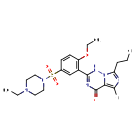
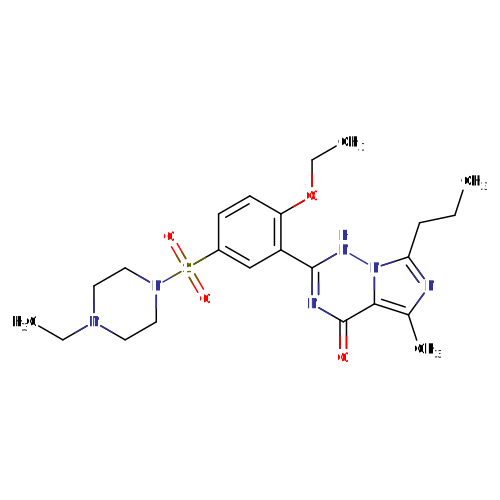
Structure for Vardenafil (DB00862)
- Weight
- Average: 488.603
Monoisotopic: 488.220574232 - Chemical Formula
- C23H32N6O4S
- Synonyms
- Vardénafil
- Vardenafil
- Vardenafilo
- Vardenafilum
- External IDs
- BAY 389456
- BAY-389456
- BAY38-9456
- DE 19750085 1997
- WO 99/24433 1999

Pharmacology
- Indication
Vardenafil is indicated for the treatment of erectile dysfunction.5,6,7
 Reduce drug development failure ratesBuild, train, & validate machine-learning modelswith evidence-based and structured datasets.Build, train, & validate predictive machine-learning models with structured datasets.
- Associated Conditions
Indication Type Indication Combined Product Details Approval Level Age Group Patient Characteristics Dose Form Management of Erectile dysfunction •••••••••••• ••••••• ••••••• •••••• •••••••••••••• - Contraindications & Blackbox Warnings
 Prevent Adverse Drug Events TodayTap into our Clinical API for life-saving information on contraindications & blackbox warnings, population restrictions, harmful risks, & more.Avoid life-threatening adverse drug events with our Clinical API
- Pharmacodynamics
Vardenafil is a potent and selective inhibitor of cyclic guanosine monophosphate (cGMP)-specific phosphodiesterase type 5 (PDE5), an enzyme responsible for the degradation of cGMP in the corpus cavernosum. The presence of cGMP in the corpus cavernosum leads to smooth muscle relaxation, an increased inflow of blood and an erection. Therefore, in patients with erectile dysfunction given vardenafil, normal sexual stimulation will increase cGMP levels in the corpus cavernosum. Without sexual stimulation and no cGMP production, vardenafil should not cause an erection.5,6
Vardenafil should not be used in men for whom sexual activity is not recommended due to their underlying cardiovascular status. There is also a risk of developing prolonged erections that last longer than 4 hours, as well as priapism. In the event of a sudden loss of vision in one or both eyes, patients should stop using vardenafil. Patients taking PDE5 inhibitors, such as vardenafil, may also develop sudden hearing loss and experience a prolonged QT interval.5,6
- Mechanism of action
Vardenafil inhibits cyclic guanosine monophosphate (GMP) specific phosphodiesterase type 5 (PDE5), which is responsible for the degradation of cyclic GMP in the corpus cavernosum located around the penis. Penile erection during sexual stimulation is caused by increased penile blood flow resulting from the relaxation of penile arteries and corpus cavernosal smooth muscle. This response is mediated by the release of nitric oxide (NO) from nerve terminals and endothelial cells, which stimulates the synthesis of cyclic GMP in smooth muscle cells. Cyclic GMP causes smooth muscle relaxation and increased blood flow into the corpus cavernosum. The tissue concentration of cyclic GMP is regulated by both the rates of synthesis and degradation via phosphodiesterases (PDEs), and the most abundant PDE in the human corpus cavernosum is PDE5. Therefore, the inhibition of PDE5 by vardenafil enhances erectile function by increasing the amount of cyclic GMP.5
Target Actions Organism AcGMP-specific 3',5'-cyclic phosphodiesterase inhibitorHumans URetinal rod rhodopsin-sensitive cGMP 3',5'-cyclic phosphodiesterase subunit gamma inhibitorallosteric modulatorHumans URetinal cone rhodopsin-sensitive cGMP 3',5'-cyclic phosphodiesterase subunit gamma inhibitorallosteric modulatorHumans - Absorption
Over the recommended dose range, vardenafil has a dose-proportional pharmacokinetics profile. In healthy male volunteers given a single oral dose of 20 mg of vardenafil, maximum plasma concentrations were reached between 30 minutes and 2 hours (median 60 minutes) after oral dosing in the fasted state, and 0.00018% of the dose was detected in semen 1.5 hours after dosing. Vardenafil has a bioavailability of approximately 15%.5 High-fat meals cause a Cmax reduction of 18%-50%; however, no changes were detected in AUC or Tmax.5,6
- Volume of distribution
Vardenafil has a steady-state volume of distribution of 208 L.5
- Protein binding
Approximately 95% of vardenafil and its major circulating metabolite is bound to plasma proteins. Their protein binding is reversible and independent of total drug concentrations.5
- Metabolism
Vardenafil is mainly metabolized by CYP3A4 in the liver, although CYP3A5 and CYP2C isoforms also contribute to its metabolism. The major circulating metabolite, M1 (N-desethylvardenafil), results from desethylation at the piperazine moiety of vardenafil, and has a plasma concentration of approximately 26% of that of the parent compound. M1 has a phosphodiesterase selectivity profile similar to that of vardenafil and an in vitro inhibitory potency for PDE5 28% of that of vardenafil.5
Hover over products below to view reaction partners
- Route of elimination
Vardenafil is excreted as metabolites mainly through feces and urine. Approximately 91-95% of administered oral dose is found in feces, while 2-6% of administered oral dose is found in urine.5
- Half-life
Vardenafil and its primary metabolite (M1) have a terminal half-life of 4-5 hours.5
- Clearance
Vardenafil has a total body clearance of 56 L/h.5
- Adverse Effects
 Improve decision support & research outcomesWith structured adverse effects data, including: blackbox warnings, adverse reactions, warning & precautions, & incidence rates. View sample adverse effects data in our new Data Library!Improve decision support & research outcomes with our structured adverse effects data.
- Toxicity
Healthy male volunteers given a single dose of 120 mg of vardenafil experienced reversible back pain, myalgia and abnormal vision. Patients given vardenafil once daily over 4 weeks in single doses up to 80 mg and multiple doses up to 40 mg did not present serious adverse side effects. Cases of severe back pain were observed when 40 mg of vardenafil was administered twice daily; however patients did not present muscle or neurological toxicity. In cases of overdose, standard supportive measures should be taken as required. Renal dialysis is not expected to accelerate clearance as vardenafil is highly bound to plasma proteins and not significantly eliminated in the urine.5,6
No carcinogenic effects were detected in rats and mice given vardenafil daily for 24 months. Vardenafil was not mutagenic or clastogenic, and did not have an effect in fertility in male and female rats given up to 100 mg/kg/day for 28 days prior to mating in males, and for 14 days prior to mating and through day 7 of gestation in females.5,6
- Pathways
- Not Available
- Pharmacogenomic Effects/ADRs
- Not Available
Interactions
- Drug Interactions
- This information should not be interpreted without the help of a healthcare provider. If you believe you are experiencing an interaction, contact a healthcare provider immediately. The absence of an interaction does not necessarily mean no interactions exist.
Drug Interaction Integrate drug-drug
interactions in your softwareAbaloparatide The risk or severity of hypotension can be increased when Vardenafil is combined with Abaloparatide. Abametapir The serum concentration of Vardenafil can be increased when it is combined with Abametapir. Abatacept The metabolism of Vardenafil can be increased when combined with Abatacept. Abemaciclib The serum concentration of Abemaciclib can be increased when it is combined with Vardenafil. Abrocitinib The serum concentration of Vardenafil can be increased when it is combined with Abrocitinib. - Food Interactions
- Avoid grapefruit products. Vardenafil is metabolized by CYP3A4, and grapefruit products are CYP3A4 inhibitors; therefore, coadministration may increase serum levels of vardenafil and result in increased hypotension. .
- Take with or without food. High-fat meals reduce the Cmax of vardenafil; however, there are no changes in AUC or Tmax.
Products
 Drug product information from 10+ global regionsOur datasets provide approved product information including:dosage, form, labeller, route of administration, and marketing period.Access drug product information from over 10 global regions.
- Product Ingredients
Ingredient UNII CAS InChI Key Vardenafil hydrochloride 5M8S2CU0TS 330808-88-3 FBCDRHDULQYRTB-UHFFFAOYSA-N - Product Images
- International/Other Brands
- Levitra (Bayer) / Staxyn (GlaxoSmithKline)
- Brand Name Prescription Products
Name Dosage Strength Route Labeller Marketing Start Marketing End Region Image Levitra Tablet, film coated 2.5 mg/1 Oral GlaxoSmithKline LLC 2003-08-25 2019-01-31 US 
Levitra Tablet, film coated 5 mg/1 Oral Aphena Pharma Solutions Tennessee, Inc. 2008-05-15 Not applicable US Levitra Tablet, film coated 10 mg Oral Bayer Ag 2016-09-08 Not applicable EU 
Levitra Tablet, orally disintegrating 10 mg Oral Bayer Ag 2016-09-08 Not applicable EU Levitra Tablet, film coated 5 mg Oral Bayer Ag 2016-09-08 Not applicable EU - Generic Prescription Products
Name Dosage Strength Route Labeller Marketing Start Marketing End Region Image Ag-vardenafil Tablet 5 mg Oral Angita Pharma Inc. Not applicable Not applicable Canada 
Ag-vardenafil Tablet 20 mg Oral Angita Pharma Inc. Not applicable Not applicable Canada Ag-vardenafil Tablet 10 mg Oral Angita Pharma Inc. Not applicable Not applicable Canada Apo-vardenafil Tablet 10 mg Oral Apotex Corporation 2018-12-21 Not applicable Canada Apo-vardenafil Tablet 5 mg Oral Apotex Corporation 2018-12-21 Not applicable Canada


Categories
- ATC Codes
- G04BE09 — Vardenafil
- Drug Categories
- Cardiovascular Agents
- Cytochrome P-450 CYP2C19 Inhibitors
- Cytochrome P-450 CYP2C19 Inhibitors (weak)
- Cytochrome P-450 CYP2C8 Inhibitors
- Cytochrome P-450 CYP2C8 Inhibitors (weak)
- Cytochrome P-450 CYP2C9 Inhibitors
- Cytochrome P-450 CYP2C9 Inhibitors (weak)
- Cytochrome P-450 CYP2C9 Substrates
- Cytochrome P-450 CYP2D6 Inhibitors
- Cytochrome P-450 CYP2D6 Inhibitors (weak)
- Cytochrome P-450 CYP3A Inhibitors
- Cytochrome P-450 CYP3A Substrates
- Cytochrome P-450 CYP3A4 Inhibitors
- Cytochrome P-450 CYP3A4 Inhibitors (weak)
- Cytochrome P-450 CYP3A4 Substrates
- Cytochrome P-450 CYP3A5 Substrates
- Cytochrome P-450 Enzyme Inhibitors
- Cytochrome P-450 Substrates
- Drugs Used in Erectile Dysfunction
- Enzyme Inhibitors
- Genito Urinary System and Sex Hormones
- Genitourinary Agents
- Imidazoles
- P-glycoprotein inhibitors
- P-glycoprotein substrates
- Phosphodiesterase 5 Inhibitors
- Phosphodiesterase Inhibitors
- Piperazines
- Potential QTc-Prolonging Agents
- QTc Prolonging Agents
- Urological Agents
- Urologicals
- Vasodilating Agents
- Chemical TaxonomyProvided by Classyfire
- Description
- This compound belongs to the class of organic compounds known as benzenesulfonamides. These are organic compounds containing a sulfonamide group that is S-linked to a benzene ring.
- Kingdom
- Organic compounds
- Super Class
- Benzenoids
- Class
- Benzene and substituted derivatives
- Sub Class
- Benzenesulfonamides
- Direct Parent
- Benzenesulfonamides
- Alternative Parents
- Benzenesulfonyl compounds / Phenoxy compounds / Phenol ethers / N-alkylpiperazines / Alkyl aryl ethers / Organosulfonamides / N-substituted imidazoles / 1,2,4-triazines / Sulfonyls / Heteroaromatic compounds show 5 more
- Substituents
- 1,2,4-triazine / 1,4-diazinane / Alkyl aryl ether / Amine / Aromatic heteropolycyclic compound / Azacycle / Azole / Benzenesulfonamide / Benzenesulfonyl group / Ether show 23 more
- Molecular Framework
- Aromatic heteropolycyclic compounds
- External Descriptors
- N-alkylpiperazine, imidazotriazine, N-sulfonylpiperazine (CHEBI:46295)
- Affected organisms
- Humans and other mammals
Chemical Identifiers
- UNII
- UCE6F4125H
- CAS number
- 224785-90-4
- InChI Key
- SECKRCOLJRRGGV-UHFFFAOYSA-N
- InChI
- InChI=1S/C23H32N6O4S/c1-5-8-20-24-16(4)21-23(30)25-22(26-29(20)21)18-15-17(9-10-19(18)33-7-3)34(31,32)28-13-11-27(6-2)12-14-28/h9-10,15H,5-8,11-14H2,1-4H3,(H,25,26,30)
- IUPAC Name
- 2-{2-ethoxy-5-[(4-ethylpiperazin-1-yl)sulfonyl]phenyl}-5-methyl-7-propyl-1H,4H-imidazo[4,3-f][1,2,4]triazin-4-one
- SMILES
- CCCC1=NC(C)=C2N1NC(=NC2=O)C1=C(OCC)C=CC(=C1)S(=O)(=O)N1CCN(CC)CC1
References
- Synthesis Reference
Yogesh S. Deshpande, Sandra Brueck, Julia Schulze Nahrup, Birgit Schnitter, Ganesh Gat, Javed Hussain, "PROCESS FOR THE PREPARATION OF A MEDICAMENT COMPRISING VARDENAFIL HYDROCHLORIDE TRIHYDRATE." U.S. Patent US20100159003, issued June 24, 2010.
US20100159003- General References
- Forstermann U, Sessa WC: Nitric oxide synthases: regulation and function. Eur Heart J. 2012 Apr;33(7):829-37, 837a-837d. doi: 10.1093/eurheartj/ehr304. Epub 2011 Sep 1. [Article]
- Jing ZC, Yu ZX, Shen JY, Wu BX, Xu KF, Zhu XY, Pan L, Zhang ZL, Liu XQ, Zhang YS, Jiang X, Galie N: Vardenafil in pulmonary arterial hypertension: a randomized, double-blind, placebo-controlled study. Am J Respir Crit Care Med. 2011 Jun 15;183(12):1723-9. doi: 10.1164/rccm.201101-0093OC. Epub 2011 Mar 11. [Article]
- Authors unspecified: Vardenafil. . [Article]
- Rosen RC, Kostis JB: Overview of phosphodiesterase 5 inhibition in erectile dysfunction. Am J Cardiol. 2003 Nov 6;92(9A):9M-18M. doi: 10.1016/s0002-9149(03)00824-5. [Article]
- FDA Approved Drug Products: LEVITRA (vardenafil hydrochloride) tablets for oral use (March 2023) [Link]
- FDA Approved Drug Products: STAXYN (vardenafil hydrochloride) orally disintegrating tablets (March 2023) [Link]
- Health Canada Approved Drug Products: STAXYN (vardenafil) orally disintegrating tablets (February 2020) [Link]
- External Links
- Human Metabolome Database
- HMDB0015000
- KEGG Drug
- D08668
- PubChem Compound
- 110634
- PubChem Substance
- 46506777
- ChemSpider
- 99300
- BindingDB
- 14776
- 306674
- ChEBI
- 46295
- ChEMBL
- CHEMBL1520
- ZINC
- ZINC000018324776
- Therapeutic Targets Database
- DAP000414
- PharmGKB
- PA10229
- PDBe Ligand
- VDN
- RxList
- RxList Drug Page
- Drugs.com
- Drugs.com Drug Page
- PDRhealth
- PDRhealth Drug Page
- Wikipedia
- Vardenafil
- PDB Entries
- 1uho / 1xot / 1xp0 / 3b2r / 7jsn
Clinical Trials
- Clinical Trials
Phase Status Purpose Conditions Count 4 Completed Treatment Acquired Immune Deficiency Syndrome (AIDS) 1 4 Completed Treatment Endothelial Dysfunction / Erectile Dysfunction / Hypertension Arterial 1 4 Completed Treatment Erectile Dysfunction 15 4 Completed Treatment Erectile Dysfunction / Sexual Dysfunctions 1 4 Completed Treatment Erectile Dysfunction / Spinal Cord Injuries 1
Pharmacoeconomics
- Manufacturers
- Bayer healthcare pharmaceuticals inc
- Packagers
- A-S Medication Solutions LLC
- Bayer Healthcare
- Bryant Ranch Prepack
- Kaiser Foundation Hospital
- Lake Erie Medical and Surgical Supply
- Murfreesboro Pharmaceutical Nursing Supply
- Physicians Total Care Inc.
- Prepak Systems Inc.
- Redpharm Drug
- Schering Corp.
- Va Cmop Dallas
- Dosage Forms
Form Route Strength Tablet, film coated Oral 20 MG Tablet Oral 20 mg Tablet Oral 5 mg Tablet, coated Oral Tablet, film coated Oral 10 mg/1 Tablet, film coated Oral 2.5 mg/1 Tablet, film coated Oral 20 mg/1 Tablet, film coated Oral 5 mg/1 Tablet, soluble Oral Tablet, orally disintegrating Oral 10.0 mg Tablet, film coated Oral 11.852 mg Tablet, film coated Oral 23.705 mg Tablet, film coated Oral 5.926 mg Tablet, orally disintegrating Oral 10 mg/1 Tablet, orally disintegrating Oral 11.85 mg/1 Tablet Oral 11.85 mg/1 Tablet, film coated Oral Tablet, orally disintegrating Oral 10 MG Tablet Oral 10 mg/1 Tablet Oral 2.5 mg/1 Tablet Oral 20 mg/1 Tablet Oral 5 mg/1 Tablet, film coated Oral 10 MG Tablet, film coated Oral 5 MG Tablet, orally disintegrating Oral Tablet, coated Oral 10 MG Tablet Oral 10 mg Tablet, coated Oral 20 mg Tablet, coated Oral 5 mg - Prices
Unit description Cost Unit Levitra 10 mg tablet 19.04USD tablet Levitra 20 mg tablet 19.04USD tablet Levitra 5 mg tablet 19.04USD tablet Levitra 2.5 mg tablet 18.66USD tablet DrugBank does not sell nor buy drugs. Pricing information is supplied for informational purposes only.- Patents
Patent Number Pediatric Extension Approved Expires (estimated) Region CA2309332 No 2002-12-03 2018-10-31 Canada US6362178 No 2002-03-26 2018-10-31 US US7696206 No 2010-04-13 2018-10-31 US US8273876 No 2012-09-25 2027-07-23 US US8841446 No 2014-09-23 2023-07-03 US US8613950 No 2013-12-24 2028-12-23 US
Properties
- State
- Solid
- Experimental Properties
Property Value Source melting point (°C) 192 °C Patent US 9,845,328 B2 water solubility 0.11 mg/mL (HCl salt) FDA label logP 1.4 Not Available - Predicted Properties
Property Value Source Water Solubility 0.325 mg/mL ALOGPS logP 2.18 ALOGPS logP 1.43 Chemaxon logS -3.2 ALOGPS pKa (Strongest Acidic) 11.75 Chemaxon pKa (Strongest Basic) 6.21 Chemaxon Physiological Charge 0 Chemaxon Hydrogen Acceptor Count 8 Chemaxon Hydrogen Donor Count 1 Chemaxon Polar Surface Area 109.13 Å2 Chemaxon Rotatable Bond Count 7 Chemaxon Refractivity 142.71 m3·mol-1 Chemaxon Polarizability 53.22 Å3 Chemaxon Number of Rings 4 Chemaxon Bioavailability 1 Chemaxon Rule of Five Yes Chemaxon Ghose Filter No Chemaxon Veber's Rule No Chemaxon MDDR-like Rule Yes Chemaxon - Predicted ADMET Features
Property Value Probability Human Intestinal Absorption + 1.0 Blood Brain Barrier + 0.6682 Caco-2 permeable + 0.5502 P-glycoprotein substrate Substrate 0.7415 P-glycoprotein inhibitor I Inhibitor 0.6976 P-glycoprotein inhibitor II Inhibitor 0.8552 Renal organic cation transporter Non-inhibitor 0.6975 CYP450 2C9 substrate Non-substrate 0.6386 CYP450 2D6 substrate Substrate 0.7909 CYP450 3A4 substrate Substrate 0.697 CYP450 1A2 substrate Non-inhibitor 0.8215 CYP450 2C9 inhibitor Inhibitor 0.7426 CYP450 2D6 inhibitor Non-inhibitor 0.8464 CYP450 2C19 inhibitor Non-inhibitor 0.7472 CYP450 3A4 inhibitor Inhibitor 0.8857 CYP450 inhibitory promiscuity High CYP Inhibitory Promiscuity 0.7205 Ames test Non AMES toxic 0.5748 Carcinogenicity Non-carcinogens 0.6141 Biodegradation Not ready biodegradable 0.8875 Rat acute toxicity 2.6208 LD50, mol/kg Not applicable hERG inhibition (predictor I) Weak inhibitor 0.8367 hERG inhibition (predictor II) Inhibitor 0.7696
Spectra
- Mass Spec (NIST)
- Not Available
- Spectra
- Chromatographic Properties
Collision Cross Sections (CCS)
Adduct CCS Value (Å2) Source type Source [M-H]- 240.2311048 predictedDarkChem Lite v0.1.0 [M-H]- 213.71483 predictedDeepCCS 1.0 (2019) [M+H]+ 240.7878048 predictedDarkChem Lite v0.1.0 [M+H]+ 216.1104 predictedDeepCCS 1.0 (2019) [M+Na]+ 239.8316048 predictedDarkChem Lite v0.1.0 [M+Na]+ 222.02293 predictedDeepCCS 1.0 (2019)
Targets

- Kind
- Protein
- Organism
- Humans
- Pharmacological action
- Yes
- Actions
- Inhibitor
- General Function
- Metal ion binding
- Specific Function
- Plays a role in signal transduction by regulating the intracellular concentration of cyclic nucleotides. This phosphodiesterase catalyzes the specific hydrolysis of cGMP to 5'-GMP (PubMed:9714779, ...
- Gene Name
- PDE5A
- Uniprot ID
- O76074
- Uniprot Name
- cGMP-specific 3',5'-cyclic phosphodiesterase
- Molecular Weight
- 99984.14 Da
References
- Blount MA, Zoraghi R, Ke H, Bessay EP, Corbin JD, Francis SH: A 46-amino acid segment in phosphodiesterase-5 GAF-B domain provides for high vardenafil potency over sildenafil and tadalafil and is involved in phosphodiesterase-5 dimerization. Mol Pharmacol. 2006 Nov;70(5):1822-31. Epub 2006 Aug 22. [Article]
- Carrier S: Pharmacology of phosphodiesterase 5 inhibitors. Can J Urol. 2003 Feb;10 Suppl 1:12-6. [Article]
- Kim NN, Huang YH, Goldstein I, Bischoff E, Traish AM: Inhibition of cyclic GMP hydrolysis in human corpus cavernosum smooth muscle cells by vardenafil, a novel, selective phosphodiesterase type 5 inhibitor. Life Sci. 2001 Sep 28;69(19):2249-56. [Article]
- Saenz de Tejada I, Angulo J, Cuevas P, Fernandez A, Moncada I, Allona A, Lledo E, Korschen HG, Niewohner U, Haning H, Pages E, Bischoff E: The phosphodiesterase inhibitory selectivity and the in vitro and in vivo potency of the new PDE5 inhibitor vardenafil. Int J Impot Res. 2001 Oct;13(5):282-90. [Article]
- Scheen AJ: [Medication of the month. Vardenafil (Levitra)]. Rev Med Liege. 2003 Sep;58(9):576-9. [Article]
- Sung BJ, Hwang KY, Jeon YH, Lee JI, Heo YS, Kim JH, Moon J, Yoon JM, Hyun YL, Kim E, Eum SJ, Park SY, Lee JO, Lee TG, Ro S, Cho JM: Structure of the catalytic domain of human phosphodiesterase 5 with bound drug molecules. Nature. 2003 Sep 4;425(6953):98-102. [Article]
- Wang H, Ye M, Robinson H, Francis SH, Ke H: Conformational variations of both phosphodiesterase-5 and inhibitors provide the structural basis for the physiological effects of vardenafil and sildenafil. Mol Pharmacol. 2008 Jan;73(1):104-10. Epub 2007 Oct 24. [Article]
- Zoraghi R, Francis SH, Corbin JD: Critical amino acids in phosphodiesterase-5 catalytic site that provide for high-affinity interaction with cyclic guanosine monophosphate and inhibitors. Biochemistry. 2007 Nov 27;46(47):13554-63. Epub 2007 Nov 3. [Article]
- FDA Approved Drug Products: LEVITRA (vardenafil hydrochloride) tablets for oral use (March 2023) [Link]
- FDA Approved Drug Products: STAXYN (vardenafil hydrochloride) orally disintegrating tablets (March 2023) [Link]
- Kind
- Protein
- Organism
- Humans
- Pharmacological action
- Unknown
- Actions
- InhibitorAllosteric modulator
- General Function
- Enzyme inhibitor activity
- Specific Function
- Participates in processes of transmission and amplification of the visual signal. cGMP-PDEs are the effector molecules in G-protein-mediated phototransduction in vertebrate rods and cones.
- Gene Name
- PDE6G
- Uniprot ID
- P18545
- Uniprot Name
- Retinal rod rhodopsin-sensitive cGMP 3',5'-cyclic phosphodiesterase subunit gamma
- Molecular Weight
- 9643.09 Da
References
- Zhang XJ, Cahill KB, Elfenbein A, Arshavsky VY, Cote RH: Direct allosteric regulation between the GAF domain and catalytic domain of photoreceptor phosphodiesterase PDE6. J Biol Chem. 2008 Oct 31;283(44):29699-705. doi: 10.1074/jbc.M803948200. Epub 2008 Sep 8. [Article]
- FDA Approved Drug Products: LEVITRA (vardenafil hydrochloride) tablets for oral use (March 2023) [Link]
- FDA Approved Drug Products: STAXYN (vardenafil hydrochloride) orally disintegrating tablets (March 2023) [Link]
- Kind
- Protein
- Organism
- Humans
- Pharmacological action
- Unknown
- Actions
- InhibitorAllosteric modulator
- General Function
- Enzyme inhibitor activity
- Specific Function
- Participates in processes of transmission and amplification of the visual signal. cGMP-PDEs are the effector molecules in G-protein-mediated phototransduction in vertebrate rods and cones.
- Gene Name
- PDE6H
- Uniprot ID
- Q13956
- Uniprot Name
- Retinal cone rhodopsin-sensitive cGMP 3',5'-cyclic phosphodiesterase subunit gamma
- Molecular Weight
- 9074.36 Da
References
- Zhang XJ, Cahill KB, Elfenbein A, Arshavsky VY, Cote RH: Direct allosteric regulation between the GAF domain and catalytic domain of photoreceptor phosphodiesterase PDE6. J Biol Chem. 2008 Oct 31;283(44):29699-705. doi: 10.1074/jbc.M803948200. Epub 2008 Sep 8. [Article]
- FDA Approved Drug Products: LEVITRA (vardenafil hydrochloride) tablets for oral use (March 2023) [Link]
- FDA Approved Drug Products: STAXYN (vardenafil hydrochloride) orally disintegrating tablets (March 2023) [Link]
Enzymes
- Kind
- Protein
- Organism
- Humans
- Pharmacological action
- Unknown
- Actions
- SubstrateInhibitor
- General Function
- Vitamin d3 25-hydroxylase activity
- Specific Function
- Cytochromes P450 are a group of heme-thiolate monooxygenases. In liver microsomes, this enzyme is involved in an NADPH-dependent electron transport pathway. It performs a variety of oxidation react...
- Gene Name
- CYP3A4
- Uniprot ID
- P08684
- Uniprot Name
- Cytochrome P450 3A4
- Molecular Weight
- 57342.67 Da
References
- Sheweita SA, Wally M, Hassan M: Erectile Dysfunction Drugs Changed the Protein Expressions and Activities of Drug-Metabolising Enzymes in the Liver of Male Rats. Oxid Med Cell Longev. 2016;2016:4970906. doi: 10.1155/2016/4970906. Epub 2016 Oct 9. [Article]
- Huang SA, Lie JD: Phosphodiesterase-5 (PDE5) Inhibitors In the Management of Erectile Dysfunction. P T. 2013 Jul;38(7):407-19. [Article]
- Ku HY, Ahn HJ, Seo KA, Kim H, Oh M, Bae SK, Shin JG, Shon JH, Liu KH: The contributions of cytochromes P450 3A4 and 3A5 to the metabolism of the phosphodiesterase type 5 inhibitors sildenafil, udenafil, and vardenafil. Drug Metab Dispos. 2008 Jun;36(6):986-90. doi: 10.1124/dmd.107.020099. Epub 2008 Feb 28. [Article]
- FDA Approved Drug Products: LEVITRA (vardenafil hydrochloride) tablets for oral use (March 2023) [Link]
- FDA Approved Drug Products: STAXYN (vardenafil hydrochloride) orally disintegrating tablets (March 2023) [Link]
- Kind
- Protein
- Organism
- Humans
- Pharmacological action
- Unknown
- Actions
- Substrate
- General Function
- Oxygen binding
- Specific Function
- Cytochromes P450 are a group of heme-thiolate monooxygenases. In liver microsomes, this enzyme is involved in an NADPH-dependent electron transport pathway. It oxidizes a variety of structurally un...
- Gene Name
- CYP3A5
- Uniprot ID
- P20815
- Uniprot Name
- Cytochrome P450 3A5
- Molecular Weight
- 57108.065 Da
References
- Huang SA, Lie JD: Phosphodiesterase-5 (PDE5) Inhibitors In the Management of Erectile Dysfunction. P T. 2013 Jul;38(7):407-19. [Article]
- Ku HY, Ahn HJ, Seo KA, Kim H, Oh M, Bae SK, Shin JG, Shon JH, Liu KH: The contributions of cytochromes P450 3A4 and 3A5 to the metabolism of the phosphodiesterase type 5 inhibitors sildenafil, udenafil, and vardenafil. Drug Metab Dispos. 2008 Jun;36(6):986-90. doi: 10.1124/dmd.107.020099. Epub 2008 Feb 28. [Article]
- FDA Approved Drug Products: LEVITRA (vardenafil hydrochloride) tablets for oral use (March 2023) [Link]
- FDA Approved Drug Products: STAXYN (vardenafil hydrochloride) orally disintegrating tablets (March 2023) [Link]
- Kind
- Protein
- Organism
- Humans
- Pharmacological action
- Unknown
- Actions
- SubstrateInhibitor
- General Function
- Steroid hydroxylase activity
- Specific Function
- Cytochromes P450 are a group of heme-thiolate monooxygenases. In liver microsomes, this enzyme is involved in an NADPH-dependent electron transport pathway. It oxidizes a variety of structurally un...
- Gene Name
- CYP2C9
- Uniprot ID
- P11712
- Uniprot Name
- Cytochrome P450 2C9
- Molecular Weight
- 55627.365 Da
References
- Kind
- Protein
- Organism
- Humans
- Pharmacological action
- Unknown
- Actions
- Inhibitor
- General Function
- Steroid hydroxylase activity
- Specific Function
- Cytochromes P450 are a group of heme-thiolate monooxygenases. In liver microsomes, this enzyme is involved in an NADPH-dependent electron transport pathway. It oxidizes a variety of structurally un...
- Gene Name
- CYP2C8
- Uniprot ID
- P10632
- Uniprot Name
- Cytochrome P450 2C8
- Molecular Weight
- 55824.275 Da
References
- Kind
- Protein
- Organism
- Humans
- Pharmacological action
- Unknown
- Actions
- Inhibitor
- General Function
- Steroid hydroxylase activity
- Specific Function
- Responsible for the metabolism of a number of therapeutic agents such as the anticonvulsant drug S-mephenytoin, omeprazole, proguanil, certain barbiturates, diazepam, propranolol, citalopram and im...
- Gene Name
- CYP2C19
- Uniprot ID
- P33261
- Uniprot Name
- Cytochrome P450 2C19
- Molecular Weight
- 55930.545 Da
References
- Kind
- Protein
- Organism
- Humans
- Pharmacological action
- Unknown
- Actions
- Inhibitor
- General Function
- Steroid hydroxylase activity
- Specific Function
- Responsible for the metabolism of many drugs and environmental chemicals that it oxidizes. It is involved in the metabolism of drugs such as antiarrhythmics, adrenoceptor antagonists, and tricyclic...
- Gene Name
- CYP2D6
- Uniprot ID
- P10635
- Uniprot Name
- Cytochrome P450 2D6
- Molecular Weight
- 55768.94 Da
References
Transporters
- Kind
- Protein
- Organism
- Humans
- Pharmacological action
- Unknown
- Actions
- SubstrateInhibitor
- General Function
- Xenobiotic-transporting atpase activity
- Specific Function
- Energy-dependent efflux pump responsible for decreased drug accumulation in multidrug-resistant cells.
- Gene Name
- ABCB1
- Uniprot ID
- P08183
- Uniprot Name
- Multidrug resistance protein 1
- Molecular Weight
- 141477.255 Da
References
- Ding PR, Tiwari AK, Ohnuma S, Lee JW, An X, Dai CL, Lu QS, Singh S, Yang DH, Talele TT, Ambudkar SV, Chen ZS: The phosphodiesterase-5 inhibitor vardenafil is a potent inhibitor of ABCB1/P-glycoprotein transporter. PLoS One. 2011 Apr 28;6(4):e19329. doi: 10.1371/journal.pone.0019329. [Article]
- Choi MK, Song IS: Characterization of efflux transport of the PDE5 inhibitors, vardenafil and sildenafil. J Pharm Pharmacol. 2012 Aug;64(8):1074-83. doi: 10.1111/j.2042-7158.2012.01498.x. Epub 2012 Mar 16. [Article]
- Chen JJ, Sun YL, Tiwari AK, Xiao ZJ, Sodani K, Yang DH, Vispute SG, Jiang WQ, Chen SD, Chen ZS: PDE5 inhibitors, sildenafil and vardenafil, reverse multidrug resistance by inhibiting the efflux function of multidrug resistance protein 7 (ATP-binding Cassette C10) transporter. Cancer Sci. 2012 Aug;103(8):1531-7. doi: 10.1111/j.1349-7006.2012.02328.x. Epub 2012 Jul 6. [Article]
- Tiwari AK, Chen ZS: Repurposing phosphodiesterase-5 inhibitors as chemoadjuvants. Front Pharmacol. 2013 Jun 25;4:82. doi: 10.3389/fphar.2013.00082. eCollection 2013. [Article]
- FDA Approved Drug Products: LEVITRA (vardenafil hydrochloride) tablets for oral use (March 2023) [Link]
- FDA Approved Drug Products: STAXYN (vardenafil hydrochloride) orally disintegrating tablets (March 2023) [Link]

Drug created at June 13, 2005 13:24 / Updated at April 26, 2024 00:45