Identification
- Summary
Busulfan is an alkylating agent used to treat chronic myelogenous leukemia.
- Brand Names
- Busulfex, Myleran
- Generic Name
- Busulfan
- DrugBank Accession Number
- DB01008
- Background
Busulfan is a bifunctional alkylating agent, having a selective immunosuppressive effect on bone marrow. It is not a structural analog of the nitrogen mustards. It has been used in the palliative treatment of chronic myeloid leukemia (myeloid leukemia, chronic), but although symptomatic relief is provided, no permanent remission is brought about. According to the Fourth Annual Report on Carcinogens (NTP 85-002, 1985), busulfan is listed as a known carcinogen.
- Type
- Small Molecule
- Groups
- Approved, Investigational
- Structure
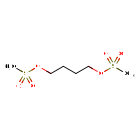
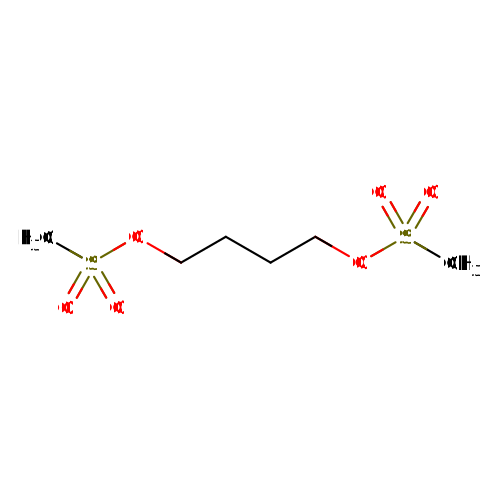
Structure for Busulfan (DB01008)
- Weight
- Average: 246.302
Monoisotopic: 246.02317956 - Chemical Formula
- C6H14O6S2
- Synonyms
- 1,4-Bis(methanesulfonoxy)butane
- 1,4-Butanediol dimethanesulfonate
- 1,4-Dimesyloxybutane
- 1,4-Dimethanesulfonoxybutane
- Busulfan
- Busulfano
- Busulfanum
- Busulphan
- Tetramethylene bis(methanesulfonate)
- External IDs
- NCI-C01592
- NSC-750

Pharmacology
- Indication
For use in combination with cyclophosphamide as a conditioning regimen prior to allogeneic hematopoietic progenitor cell transplantation for chronic myelogenous (myeloid, myelocytic, granulocytic) leukemia (FDA has designated busulfan as an orphan drug for this use). It is also used as a component of pretransplant conditioning regimens in patients undergoing bone marrow transplantation for acute myeloid leukemia and nonmalignant diseases.
 Reduce drug development failure ratesBuild, train, & validate machine-learning modelswith evidence-based and structured datasets.Build, train, & validate predictive machine-learning models with structured datasets.
- Associated Conditions
Indication Type Indication Combined Product Details Approval Level Age Group Patient Characteristics Dose Form Symptomatic treatment of Chronic myelogenous leukemia •••••••••••• Treatment of Essential thrombocythemia ••• ••••• Treatment of Polycythemia vera ••• ••••• - Associated Therapies
- Contraindications & Blackbox Warnings
 Prevent Adverse Drug Events TodayTap into our Clinical API for life-saving information on contraindications & blackbox warnings, population restrictions, harmful risks, & more.Avoid life-threatening adverse drug events with our Clinical API
- Pharmacodynamics
Busulfan is an antineoplastic in the class of alkylating agents and is used to treat various forms of cancer. Alkylating agents are so named because of their ability to add alkyl groups to many electronegative groups under conditions present in cells. They stop tumor growth by cross-linking guanine bases in DNA double-helix strands - directly attacking DNA. This makes the strands unable to uncoil and separate. As this is necessary in DNA replication, the cells can no longer divide. In addition, these drugs add methyl or other alkyl groups onto molecules where they do not belong which in turn leads to a miscoding of DNA. Alkylating agents are cell cycle-nonspecific and work by three different mechanisms, all of which achieve the same end result - disruption of DNA function and cell death. Overexpression of MGST2, a glutathione s-transferase, is thought to confer resistance to busulfan. The role of MGST2 in the metabolism of busulfan is unknown however.
- Mechanism of action
Busulfan is an alkylating agent that contains 2 labile methanesulfonate groups attached to opposite ends of a 4-carbon alkyl chain. Once busulfan is hydrolyzed, the methanesulfonate groups are released and carbonium ions are produced. These carbonium ions alkylate DNA, which results in the interference of DNA replication and RNA transcription, ultimately leading to the disruption of nucleic acid function. Specifically, its mechanism of action through alkylation produces guanine-adenine intrastrand crosslinks. These crosslinks occur through a SN2 reaction guanine N7 nucleophilically attacks the carbon adjacent to the mesylate leaving group. This kind of damage cannot be repaired by cellular machinery and thus the cell undergoes apoptosis.
Target Actions Organism ADNA cross-linking/alkylationHumans - Absorption
Completely absorbed from the gastrointestinal tract. Busulfan is a small, highly lipophilic molecule that crosses the blood-brain-barrier. The absolute bioavailability, if a single 2 mg IV bolus injection is given to adult patients, is 80% ± 20%. In children (1.5 - 6 years old), the absolute bioavailability was 68% ± 31%. When a single oral dose is given to patients, the area under the curve (AUC) was 130 ng•hr/mL. The peak plasma concentration when given orally is 30 ng/mL (after dose normalization to 2 mg). It takes 0.9 hours to reach peak plasma concentration after dose normalization to 4 mg.
- Volume of distribution
Not Available
- Protein binding
32% bound to plasma proteins and 47% bound to red blood cells.
- Metabolism
Busulfan is extensively metabolizes in the hepatic. Busulfan is predominantly metabolized by conjugation with glutathione, both spontaneously and by glutathione S-transferase (GST) catalysis. GSTA1 is the primary GST isoform that facilitates the the metabolism of busulfan. Other GST isoforms that are also involved are GSTM1 and GSTP1. At least 12 metabolites have been identified among which tetrahydrothiophene, tetrahydrothiophene 12-oxide, sulfolane, and 3-hydroxysulfolane were identified. These metabolites do not have cytotoxic activity.
- Route of elimination
Following administration of 14C- labeled busulfan to humans, approximately 30% of the radioactivity was excreted into the urine over 48 hours; negligible amounts were recovered in feces. Less than 2% of the administered dose is excreted in the urine unchanged within 24 hours. Elimination of busulfan is independent of renal function.
- Half-life
2.6 hours
- Clearance
- 2.52 ml/min/kg [Following an infusion of dose of 0.8 mg/kg every six hours, for a total of 16 doses over four days]
- Adverse Effects
 Improve decision support & research outcomesWith structured adverse effects data, including: blackbox warnings, adverse reactions, warning & precautions, & incidence rates. View sample adverse effects data in our new Data Library!Improve decision support & research outcomes with our structured adverse effects data.
- Toxicity
Signs of overdose include allergic reaction, unusual bleeding or bruising, sudden weakness or unusual fatigue, persistent cough, congestion, or shortness of breath; flank, stomach or joint pain; pronounced nausea, vomiting, diarrhea, dizziness, confusion, or darkening of the skin, chills, fever, collapse, and loss of consciousness.
- Pathways
- Not Available
- Pharmacogenomic Effects/ADRs
- Not Available
Interactions
- Drug Interactions
- This information should not be interpreted without the help of a healthcare provider. If you believe you are experiencing an interaction, contact a healthcare provider immediately. The absence of an interaction does not necessarily mean no interactions exist.
Drug Interaction Integrate drug-drug
interactions in your softwareAbametapir The serum concentration of Busulfan can be increased when it is combined with Abametapir. Abatacept The metabolism of Busulfan can be increased when combined with Abatacept. Abciximab The risk or severity of bleeding can be increased when Abciximab is combined with Busulfan. Acalabrutinib The metabolism of Busulfan can be decreased when combined with Acalabrutinib. Acenocoumarol The risk or severity of bleeding can be increased when Acenocoumarol is combined with Busulfan. - Food Interactions
- Drink plenty of fluids.
- Exercise caution with grapefruit products.
- Exercise caution with St. John's Wort.
- Take at the same time every day.
Products
 Drug product information from 10+ global regionsOur datasets provide approved product information including:dosage, form, labeller, route of administration, and marketing period.Access drug product information from over 10 global regions.
- Product Images

- International/Other Brands
- Bisulfex / Busilvex (Pierre Fabre) / Leucosulfan / Mablin / Mielucin / Misulban / Mitostan / Myeloleukon
- Brand Name Prescription Products
Name Dosage Strength Route Labeller Marketing Start Marketing End Region Image Busilvex Injection, solution, concentrate 6 mg/ml Intravenous Pierre Fabre Médicament 2020-12-22 2023-08-04 EU 
Busulfan for Injection Solution 60 mg / 10 mL Intravenous Auro Pharma Inc Not applicable Not applicable Canada 
Busulfan for Injection Solution 60 mg / 10 mL Intravenous Sterimax Inc 2017-10-04 Not applicable Canada Busulfan for Injection Solution 60 mg / 10 mL Intravenous Marcan Pharmaceuticals Inc Not applicable Not applicable Canada Busulfan for Injection Solution 60 mg / 10 mL Intravenous Eugia Pharma Inc. Not applicable Not applicable Canada - Generic Prescription Products
Name Dosage Strength Route Labeller Marketing Start Marketing End Region Image Busulfan Injection, solution 6 mg/1mL Intravenous Hospira, Inc. 2019-02-28 Not applicable US 
Busulfan Injection 6 mg/1mL Intravenous Accord Healthcare, Inc 2019-07-22 Not applicable US Busulfan Injection, solution, concentrate 6 mg/1mL Intravenous Athenex Pharmaceutical Division, Llc. 2019-02-10 2021-07-31 US Busulfan Injection 6 mg/1mL Intravenous Amneal Pharmaceuticals LLC 2017-12-18 Not applicable US Busulfan Injection, solution, concentrate 6 mg/1mL Intravenous Actavis Pharma, Inc. 2018-01-04 2021-01-31 US - Unapproved/Other Products
Name Ingredients Dosage Route Labeller Marketing Start Marketing End Region Image MYLERAN 2 MG TABLET, 100 ADET Busulfan (2 mg) Tablet Oral VLD DANIŞMANLIK TIBBİ ÜRÜNLER VE TANITIM HİZMETLERİ LTD. ŞTİ. 2020-08-14 2022-12-01 Turkey 

Categories
- ATC Codes
- L01AB01 — Busulfan
- Drug Categories
- Alcohols
- Alkanes
- Alkanesulfonates
- Alkanesulfonic Acids
- Alkylating Activity
- Alkylating Drugs
- Antineoplastic Agents
- Antineoplastic Agents, Alkylating
- Antineoplastic and Immunomodulating Agents
- Butylene Glycols
- Cardiotoxic antineoplastic agents
- Cytochrome P-450 CYP3A Substrates
- Cytochrome P-450 CYP3A4 Substrates
- Cytochrome P-450 CYP3A4 Substrates with a Narrow Therapeutic Index
- Cytochrome P-450 Substrates
- Glycols
- Hydrocarbons, Acyclic
- Immunologic Factors
- Immunosuppressive Agents
- Mesylates
- Myeloablative Agonists
- Myelosuppressive Agents
- Narrow Therapeutic Index Drugs
- Noxae
- Sulfonic Acids
- Sulfur Acids
- Sulfur Compounds
- Toxic Actions
- Chemical TaxonomyProvided by Classyfire
- Description
- This compound belongs to the class of organic compounds known as organosulfonic acid esters. These are esters of sulfonic acid, which have the general structure RS(=O)2OR' (R,R' = organyl, not H).
- Kingdom
- Organic compounds
- Super Class
- Organic acids and derivatives
- Class
- Organic sulfonic acids and derivatives
- Sub Class
- Organosulfonic acids and derivatives
- Direct Parent
- Organosulfonic acid esters
- Alternative Parents
- Sulfonic acid esters / Sulfonyls / Methanesulfonates / Organooxygen compounds / Organic oxides / Hydrocarbon derivatives
- Substituents
- Aliphatic acyclic compound / Hydrocarbon derivative / Methanesulfonate / Organic oxide / Organic oxygen compound / Organooxygen compound / Organosulfonic acid ester / Organosulfur compound / Sulfonic acid ester / Sulfonyl
- Molecular Framework
- Aliphatic acyclic compounds
- External Descriptors
- methanesulfonate ester (CHEBI:28901)
- Affected organisms
- Humans and other mammals
Chemical Identifiers
- UNII
- G1LN9045DK
- CAS number
- 55-98-1
- InChI Key
- COVZYZSDYWQREU-UHFFFAOYSA-N
- InChI
- InChI=1S/C6H14O6S2/c1-13(7,8)11-5-3-4-6-12-14(2,9)10/h3-6H2,1-2H3
- IUPAC Name
- 4-(methanesulfonyloxy)butyl methanesulfonate
- SMILES
- CS(=O)(=O)OCCCCOS(C)(=O)=O
References
- Synthesis Reference
Timmis, G.M.; U S . Patent 2,917,432; December 15, 1959; assigned to Burroughs Wellcome & Co., Inc.
US2917432- General References
- Lesurtel M, Graf R, Aleil B, Walther DJ, Tian Y, Jochum W, Gachet C, Bader M, Clavien PA: Platelet-derived serotonin mediates liver regeneration. Science. 2006 Apr 7;312(5770):104-7. [Article]
- Valdez BC, Andersson BS: Interstrand crosslink inducing agents in pretransplant conditioning therapy for hematologic malignancies. Environ Mol Mutagen. 2010 Jul;51(6):659-68. doi: 10.1002/em.20603. [Article]
- Hall AG, Tilby MJ: Mechanisms of action of, and modes of resistance to, alkylating agents used in the treatment of haematological malignancies. Blood Rev. 1992 Sep;6(3):163-73. [Article]
- Ciurea SO, Andersson BS: Busulfan in hematopoietic stem cell transplantation. Biol Blood Marrow Transplant. 2009 May;15(5):523-36. doi: 10.1016/j.bbmt.2008.12.489. Epub 2009 Feb 12. [Article]
- McCune JS, Holmberg LA: Busulfan in hematopoietic stem cell transplant setting. Expert Opin Drug Metab Toxicol. 2009 Aug;5(8):957-69. doi: 10.1517/17425250903107764. [Article]
- Krivoy N, Hoffer E, Lurie Y, Bentur Y, Rowe JM: Busulfan use in hematopoietic stem cell transplantation: pharmacology, dose adjustment, safety and efficacy in adults and children. Curr Drug Saf. 2008 Jan;3(1):60-6. [Article]
- Nath CE, Shaw PJ: Busulphan in blood and marrow transplantation: dose, route, frequency and role of therapeutic drug monitoring. Curr Clin Pharmacol. 2007 Jan;2(1):75-91. [Article]
- External Links
- Human Metabolome Database
- HMDB0015143
- KEGG Drug
- D00248
- KEGG Compound
- C06862
- PubChem Compound
- 2478
- PubChem Substance
- 46506234
- ChemSpider
- 2384
- BindingDB
- 50237623
- 1828
- ChEBI
- 28901
- ChEMBL
- CHEMBL820
- ZINC
- ZINC000001530572
- PharmGKB
- PA448691
- RxList
- RxList Drug Page
- Drugs.com
- Drugs.com Drug Page
- Wikipedia
- Busulfan
- FDA label
- Download (50.7 KB)
- MSDS
- Download (67.5 KB)
Clinical Trials
- Clinical Trials
Phase Status Purpose Conditions Count 4 Completed Treatment Lymphocytic Leukemia / Lymphoma / Multiple Myeloma (MM) / Myelodysplastic Syndrome / Myeloproliferative Disorders (MPD) 1 4 Recruiting Treatment Severe Aplastic Anemia (SAA) 1 4 Recruiting Treatment Thalassemia Major 1 4 Unknown Status Treatment Acute Leukemia / Chronic Leukemia / Juvenile chronic myelomonocytic leukaemia / Myelodysplastic Syndrome 1 4 Unknown Status Treatment Leukemias 1
Pharmacoeconomics
- Manufacturers
- Otsuka pharmaceutical co ltd
- Glaxosmithkline
- Packagers
- GlaxoSmithKline Inc.
- Otsuka America
- PDL BioPharma Inc.
- Dosage Forms
Form Route Strength Solution, concentrate Intravenous 60 mg Injection, solution, concentrate Intravenous 60 mg/10ml Injection Intravenous 6 mg/1mL Injection, solution Intravenous 6 mg/1mL Injection, solution, concentrate Intravenous 6 mg/1mL Injection, solution, concentrate Intravenous Solution Intravenous 60 mg Injection, solution, concentrate Intravenous; Parenteral 6 MG/ML Injection Intravenous Injection Intravenous 60 mg/10mL Injection, powder, for solution Intravenous 60 mg/1 Solution Intravenous 60 mg / 10 mL Injection Intravenous 6 mg/ml Injection, solution, concentrate Intravenous 60 mg Solution Intravenous 6 mg Injection, solution, concentrate Intravenous 6 MG/ML Tablet Oral 2.000 mg Tablet, film coated Oral 2 mg/1 Tablet, film coated Oral Tablet, film coated Oral 200000 mg Tablet Oral 2 mg Solution Intravenous 6 mg / mL - Prices
Unit description Cost Unit Busulfex 6 mg/ml vial 115.08USD ml Myleran 2 mg tablet 4.55USD tablet DrugBank does not sell nor buy drugs. Pricing information is supplied for informational purposes only.- Patents
Patent Number Pediatric Extension Approved Expires (estimated) Region US5430057 No 1995-07-04 2014-03-30 US
Properties
- State
- Solid
- Experimental Properties
Property Value Source melting point (°C) 106-107 Timmis, G.M.; U S . Patent 2,917,432; December 15, 1959; assigned to Burroughs Wellcome & Co., Inc. water solubility 6.9E+004 mg/L Not Available logP -0.52 HANSCH,C ET AL. (1995) - Predicted Properties
Property Value Source Water Solubility 5.16 mg/mL ALOGPS logP -0.9 ALOGPS logP -0.76 Chemaxon logS -1.7 ALOGPS Physiological Charge 0 Chemaxon Hydrogen Acceptor Count 4 Chemaxon Hydrogen Donor Count 0 Chemaxon Polar Surface Area 86.74 Å2 Chemaxon Rotatable Bond Count 7 Chemaxon Refractivity 49.57 m3·mol-1 Chemaxon Polarizability 23.64 Å3 Chemaxon Number of Rings 0 Chemaxon Bioavailability 1 Chemaxon Rule of Five Yes Chemaxon Ghose Filter No Chemaxon Veber's Rule No Chemaxon MDDR-like Rule No Chemaxon - Predicted ADMET Features
Property Value Probability Human Intestinal Absorption + 0.9059 Blood Brain Barrier + 0.9674 Caco-2 permeable - 0.5956 P-glycoprotein substrate Non-substrate 0.7556 P-glycoprotein inhibitor I Non-inhibitor 0.7224 P-glycoprotein inhibitor II Non-inhibitor 0.9651 Renal organic cation transporter Non-inhibitor 0.8617 CYP450 2C9 substrate Non-substrate 0.8656 CYP450 2D6 substrate Non-substrate 0.9115 CYP450 3A4 substrate Non-substrate 0.5 CYP450 1A2 substrate Non-inhibitor 0.8678 CYP450 2C9 inhibitor Non-inhibitor 0.85 CYP450 2D6 inhibitor Non-inhibitor 0.9159 CYP450 2C19 inhibitor Non-inhibitor 0.7723 CYP450 3A4 inhibitor Non-inhibitor 0.9855 CYP450 inhibitory promiscuity Low CYP Inhibitory Promiscuity 0.9069 Ames test AMES toxic 0.9305 Carcinogenicity Carcinogens 0.7585 Biodegradation Ready biodegradable 0.5 Rat acute toxicity 2.3207 LD50, mol/kg Not applicable hERG inhibition (predictor I) Weak inhibitor 0.6005 hERG inhibition (predictor II) Non-inhibitor 0.8734
Spectra
- Mass Spec (NIST)
- Not Available
- Spectra
- Chromatographic Properties
Collision Cross Sections (CCS)
Adduct CCS Value (Å2) Source type Source [M-H]- 156.6906678 predictedDarkChem Lite v0.1.0 [M-H]- 156.9401678 predictedDarkChem Lite v0.1.0 [M-H]- 157.1119678 predictedDarkChem Lite v0.1.0 [M-H]- 147.5012 predictedDeepCCS 1.0 (2019) [M+H]+ 158.5605678 predictedDarkChem Lite v0.1.0 [M+H]+ 158.1240678 predictedDarkChem Lite v0.1.0 [M+H]+ 158.4754678 predictedDarkChem Lite v0.1.0 [M+H]+ 151.32855 predictedDeepCCS 1.0 (2019) [M+Na]+ 157.3338678 predictedDarkChem Lite v0.1.0 [M+Na]+ 157.7132678 predictedDarkChem Lite v0.1.0 [M+Na]+ 157.3405678 predictedDarkChem Lite v0.1.0 [M+Na]+ 160.56444 predictedDeepCCS 1.0 (2019)
Targets

References
- Overington JP, Al-Lazikani B, Hopkins AL: How many drug targets are there? Nat Rev Drug Discov. 2006 Dec;5(12):993-6. [Article]
- Imming P, Sinning C, Meyer A: Drugs, their targets and the nature and number of drug targets. Nat Rev Drug Discov. 2006 Oct;5(10):821-34. [Article]
- Morales-Ramirez P, Gonzalez-Beltran F: Different behavior of SCE-eliciting lesions induced by low and high doses of busulfan. Environ Mol Mutagen. 2007 Oct;48(8):706-14. [Article]
- Valdez BC, Andersson BS: Interstrand crosslink inducing agents in pretransplant conditioning therapy for hematologic malignancies. Environ Mol Mutagen. 2010 Jul;51(6):659-68. doi: 10.1002/em.20603. [Article]
- Hall AG, Tilby MJ: Mechanisms of action of, and modes of resistance to, alkylating agents used in the treatment of haematological malignancies. Blood Rev. 1992 Sep;6(3):163-73. [Article]
- Ciurea SO, Andersson BS: Busulfan in hematopoietic stem cell transplantation. Biol Blood Marrow Transplant. 2009 May;15(5):523-36. doi: 10.1016/j.bbmt.2008.12.489. Epub 2009 Feb 12. [Article]
- McCune JS, Holmberg LA: Busulfan in hematopoietic stem cell transplant setting. Expert Opin Drug Metab Toxicol. 2009 Aug;5(8):957-69. doi: 10.1517/17425250903107764. [Article]
Enzymes
- Kind
- Protein
- Organism
- Humans
- Pharmacological action
- Unknown
- Actions
- Substrate
- General Function
- Protein homodimerization activity
- Specific Function
- Conjugation of reduced glutathione to a wide number of exogenous and endogenous hydrophobic electrophiles.
- Gene Name
- GSTM1
- Uniprot ID
- P09488
- Uniprot Name
- Glutathione S-transferase Mu 1
- Molecular Weight
- 25711.555 Da
References
- Czerwinski M, Gibbs JP, Slattery JT: Busulfan conjugation by glutathione S-transferases alpha, mu, and pi. Drug Metab Dispos. 1996 Sep;24(9):1015-9. [Article]
- Kind
- Protein
- Organism
- Humans
- Pharmacological action
- Unknown
- Actions
- Substrate
- General Function
- S-nitrosoglutathione binding
- Specific Function
- Conjugation of reduced glutathione to a wide number of exogenous and endogenous hydrophobic electrophiles. Regulates negatively CDK5 activity via p25/p35 translocation to prevent neurodegeneration.
- Gene Name
- GSTP1
- Uniprot ID
- P09211
- Uniprot Name
- Glutathione S-transferase P
- Molecular Weight
- 23355.625 Da
References
- Czerwinski M, Gibbs JP, Slattery JT: Busulfan conjugation by glutathione S-transferases alpha, mu, and pi. Drug Metab Dispos. 1996 Sep;24(9):1015-9. [Article]
- Kind
- Protein
- Organism
- Humans
- Pharmacological action
- Unknown
- Actions
- Substrate
- General Function
- Leukotriene-c4 synthase activity
- Specific Function
- Can catalyze the production of LTC4 from LTA4 and reduced glutathione. Can catalyze the conjugation of 1-chloro-2,4-dinitrobenzene with reduced glutathione.
- Gene Name
- MGST2
- Uniprot ID
- Q99735
- Uniprot Name
- Microsomal glutathione S-transferase 2
- Molecular Weight
- 16620.4 Da
References
- Harkey MA, Czerwinski M, Slattery J, Kiem HP: Overexpression of glutathione-S-transferase, MGSTII, confers resistance to busulfan and melphalan. Cancer Invest. 2005;23(1):19-25. [Article]
- Kind
- Protein
- Organism
- Humans
- Pharmacological action
- Unknown
- Actions
- Substrate
- General Function
- Vitamin d3 25-hydroxylase activity
- Specific Function
- Cytochromes P450 are a group of heme-thiolate monooxygenases. In liver microsomes, this enzyme is involved in an NADPH-dependent electron transport pathway. It performs a variety of oxidation react...
- Gene Name
- CYP3A4
- Uniprot ID
- P08684
- Uniprot Name
- Cytochrome P450 3A4
- Molecular Weight
- 57342.67 Da
References
- Michalets EL: Update: clinically significant cytochrome P-450 drug interactions. Pharmacotherapy. 1998 Jan-Feb;18(1):84-112. [Article]
- Sweiss K, Quigley JG, Oh A, Lee J, Ye R, Rondelli D, Patel P: A novel drug interaction between busulfan and blinatumomab. J Oncol Pharm Pract. 2017 Jan 1:1078155217729745. doi: 10.1177/1078155217729745. [Article]
- Kind
- Protein
- Organism
- Humans
- Pharmacological action
- Unknown
- Actions
- Substrate
- General Function
- Glutathione transferase activity
- Specific Function
- Conjugation of reduced glutathione to a wide number of exogenous and endogenous hydrophobic electrophiles.
- Gene Name
- GSTA2
- Uniprot ID
- P09210
- Uniprot Name
- Glutathione S-transferase A2
- Molecular Weight
- 25663.675 Da
References
- Vassord C, Lapoumeroulie C, Koumaravelou K, Srivastava A, Krishnamoorthy R: Endothelial cells do not express GSTA1: potential relevance to busulfan-mediated endothelial damage during haematopoietic stem cell transplantation. Eur J Haematol. 2008 Apr;80(4):299-302. doi: 10.1111/j.1600-0609.2008.01031.x. Epub 2008 Jan 14. [Article]
- Kind
- Protein
- Organism
- Humans
- Pharmacological action
- Unknown
- Actions
- Substrate
- General Function
- Glutathione transferase activity
- Specific Function
- Conjugation of reduced glutathione to a wide number of exogenous and endogenous hydrophobic electrophiles.
- Gene Name
- GSTA1
- Uniprot ID
- P08263
- Uniprot Name
- Glutathione S-transferase A1
- Molecular Weight
- 25630.785 Da
References
- Kusama M, Kubota T, Matsukura Y, Matsuno K, Ogawa S, Kanda Y, Iga T: Influence of glutathione S-transferase A1 polymorphism on the pharmacokinetics of busulfan. Clin Chim Acta. 2006 Jun;368(1-2):93-8. Epub 2006 Jan 31. [Article]
- Elhasid R, Krivoy N, Rowe JM, Sprecher E, Adler L, Elkin H, Efrati E: Influence of glutathione S-transferase A1, P1, M1, T1 polymorphisms on oral busulfan pharmacokinetics in children with congenital hemoglobinopathies undergoing hematopoietic stem cell transplantation. Pediatr Blood Cancer. 2010 Dec 1;55(6):1172-9. doi: 10.1002/pbc.22739. [Article]
- Vassord C, Lapoumeroulie C, Koumaravelou K, Srivastava A, Krishnamoorthy R: Endothelial cells do not express GSTA1: potential relevance to busulfan-mediated endothelial damage during haematopoietic stem cell transplantation. Eur J Haematol. 2008 Apr;80(4):299-302. doi: 10.1111/j.1600-0609.2008.01031.x. Epub 2008 Jan 14. [Article]

Drug created at June 13, 2005 13:24 / Updated at April 27, 2024 09:44