Identification
- Summary
Minocycline is a tetracycline analog used to treat a wide variety of infections in the body.
- Brand Names
- Amzeeq, Arestin, Dynacin, Minocin, Minolira, Solodyn, Ximino, Zilxi
- Generic Name
- Minocycline
- DrugBank Accession Number
- DB01017
- Background
Minocycline was first described in the literacture in 1966.1 It is a second generation tetracycline antibiotic that is active against gram-negative and gram-positive bacteria.7 Like other semisynthetic tetracyclines, minocycline has modifications to carbons 7-9 on the D ring to generate higher efficacy than previous tetracyclines.7
Minocycline was granted FDA approval on 30 June 1971.9
- Type
- Small Molecule
- Groups
- Approved, Investigational
- Structure
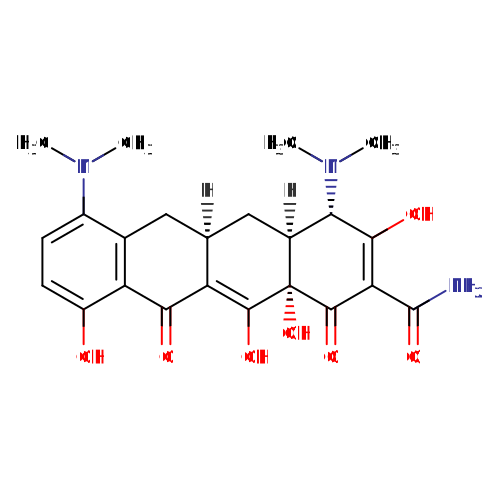
Structure for Minocycline (DB01017)
- Weight
- Average: 457.4764
Monoisotopic: 457.184900233 - Chemical Formula
- C23H27N3O7
- Synonyms
- (4S,4aS,5aR,12aS)-4,7-bis(dimethylamino)-3,10,12,12a-tetrahydroxy-1,11-dioxo-1,4,4a,5,5a,6,11,12a-octahydrotetracene-2-carboxamide
- 7-Dimethylamino-6-demethyl-6-deoxytetracycline
- Minociclina
- Minociclinum
- Minocyclin
- Minocycline
- Minocyclinum
- Minomycin

Pharmacology
- Indication
Oral and topical minocycline are indicated to treat inflammatory lesions of acne vulgaris.10,11,16 Subgingival microspheres are indicated as an adjunct treatment in the reduction of pocket depth in adults with periodontitis.15 Oral and intravenous formulations are indicated to treat infections of susceptible microorganisms.12,13,14 These include rickettsiae, Mycoplasma pneumoniae, Chlamydia trachomatis, Chlamydophila psittaci, Chlamydia trachomatis, Ureaplasma urealyticum, Borrelia recurrentis, Haemophilus ducreyi, Yersinia pestis, Francisella tularensis, Vibrio cholerae, Campylobacter fetus, Brucella species, Bartonella bacilliformis, Klebsiella granulomatis, Escherichia coli, Enterobacter aerogenes, Shigella species, Acinetobacter species, Haemophilus influenzae, and Kelbsiella species.13
 Reduce drug development failure ratesBuild, train, & validate machine-learning modelswith evidence-based and structured datasets.Build, train, & validate predictive machine-learning models with structured datasets.
- Associated Conditions
Indication Type Indication Combined Product Details Approval Level Age Group Patient Characteristics Dose Form Treatment of Bartonellosis •••••••••••• •••••••• •••••••• •••••• •••••••• •••••••••• •••••••••• Treatment of Brucellosis •••••••••••• •••••••• •••••••• •••••• •••••••• •••••••••• •••••••••• Treatment of Campylobacter fetus •••••••••••• •••••••• •••••••• •••••• •••••••• •••••••••• •••••••••• Treatment of Chancroid •••••••••••• •••••••• •••••••• •••••• •••••••• •••••••••• •••••••••• Treatment of Cholera •••••••••••• •••••••• •••••••• •••••• •••••••• •••••••••• •••••••••• - Contraindications & Blackbox Warnings
 Prevent Adverse Drug Events TodayTap into our Clinical API for life-saving information on contraindications & blackbox warnings, population restrictions, harmful risks, & more.Avoid life-threatening adverse drug events with our Clinical API
- Pharmacodynamics
Minocycline is a tetracycline antibiotic that binds to the bacterial 30S ribosomal subunit and interferes with protein synthesis. It is generally given 2-4 times daily, so the duration of action is short.12 Intravenous minocycline should not exceed 400mg in 24 hours.14 Patients should be counselled regarding the risks related to tooth and bone development, pseudomembranous colitis, central nervous system side effects, and pseudotumor cerebri.10
- Mechanism of action
Tetracyclines enter bacterial cells through OmpF and OmpC porins by coordinating with cations like magnesium.8 This allows tetracyclines into the periplasm where they dissociate, allowing the lipophilic tetracycline to diffuse into the bacterial cytoplasm.8 Tetracyclines prevent aminoacyl-tRNA from binding to the 30S ribosome, inhibiting protein synthesis.7,8,13,14
Target Actions Organism A30S ribosomal protein S9 inhibitorEscherichia coli (strain K12) A30S ribosomal protein S4 inhibitorEscherichia coli (strain K12) U16S ribosomal RNA inhibitorEnteric bacteria and other eubacteria UInterleukin-1 beta modulatorHumans UArachidonate 5-lipoxygenase inhibitorHumans UMatrix metalloproteinase-9 inhibitorHumans UVascular endothelial growth factor A inhibitorHumans UCaspase-1 negative modulatorHumans UCaspase-3 negative modulatorHumans UCytochrome c negative modulatorHumans UMitogen-activated Protein Kinases inhibitorHumans UNitric oxide synthase, inducible inhibitorHumans - Absorption
100mg of oral minocycline reaches a Cmax of 1.6mg/L, with a Tmax of 1.9h, and an AUC of 31.6mg/L*h.5 200mg of oral minocycline reaches a Cmax of 3.1mg/L, with a Tmax of 2.5h, and an AUC of 48.3mg/L*h.5
- Volume of distribution
The volume of distribution of minocycline has been reported as 67.5-115L.5
- Protein binding
Minocycline is 76% protein bound in serum.6
- Metabolism
Minocycline is primarily metabolized to 9-hydroxyminocycline.2 It is also metabolized to 2 different N-demethylated metabolites.2
Hover over products below to view reaction partners
- Route of elimination
Minocycline is predominantly eliminated through the biliary route.3 4.5-9% of an intravenous minocycline dose is recovered in the urine.4,5 10-19.5% of an oral dose is recovered in the urine and 20-34% is recovered in the feces.5
- Half-life
The half life of minocycline pellet filled capsules is 11.1-22.1 hours.13 Minocycline intravenous injections have a half live of 15-23 hours.4,14
- Clearance
Intravenous minocycline has a clearance of 3.36-5.7L/h, while oral minocycline has a clearance of 3.42-4.4L/h.5
- Adverse Effects
 Improve decision support & research outcomesWith structured adverse effects data, including: blackbox warnings, adverse reactions, warning & precautions, & incidence rates. View sample adverse effects data in our new Data Library!Improve decision support & research outcomes with our structured adverse effects data.
- Toxicity
The oral LD50 in rats is 2380mg/kg and in mice is 3600mg/kg.17 The intraperitoneal LD50 in rats is 331mg/kg and in mice is 299mg/kg.17 The subcutaneous LD50 in rats is 1700mg/kg and in mice is 2290mg/kg.17
Patients experiencing an overdose may present with dizziness, nausea, and vomiting.13,14 In the event of an overdose, discontinue minocycline and treat patients with symptomatic and supportive measures.10,11,12,13,14
- Pathways
Pathway Category Minocycline Action Pathway Drug action - Pharmacogenomic Effects/ADRs
- Not Available
Interactions
- Drug Interactions
- This information should not be interpreted without the help of a healthcare provider. If you believe you are experiencing an interaction, contact a healthcare provider immediately. The absence of an interaction does not necessarily mean no interactions exist.
Drug Interaction Integrate drug-drug
interactions in your software1,2-Benzodiazepine Minocycline may increase the central nervous system depressant (CNS depressant) activities of 1,2-Benzodiazepine. Acamprosate The excretion of Acamprosate can be decreased when combined with Minocycline. Acenocoumarol Minocycline may increase the anticoagulant activities of Acenocoumarol. Acetazolamide Minocycline may increase the central nervous system depressant (CNS depressant) activities of Acetazolamide. Acetophenazine Minocycline may increase the central nervous system depressant (CNS depressant) activities of Acetophenazine. - Food Interactions
- Avoid multivalent ions. Separate administration of aluminium, calcium, iron and magnesium containing products from medication by at least 2 hours.
- Take with or without food.
Products
 Drug product information from 10+ global regionsOur datasets provide approved product information including:dosage, form, labeller, route of administration, and marketing period.Access drug product information from over 10 global regions.
- Product Ingredients
Ingredient UNII CAS InChI Key Minocycline hydrochloride 0020414E5U 13614-98-7 GLMUAFMGXXHGLU-VQAITOIOSA-N - Product Images
- International/Other Brands
- Aknemin / Apo-Minocycline / Klinomycin / Minoderm / Minopen / Minox / Minoz / Vectrin
- Brand Name Prescription Products
Name Dosage Strength Route Labeller Marketing Start Marketing End Region Image Amzeeq Aerosol, foam 40 mg/1g Topical Journey Medical Corporation 2020-01-02 2024-03-31 US 
Amzeeq Aerosol, foam 40 mg/1g Topical Journey Medical Corporation 2022-03-25 Not applicable US Arestin Powder 1 mg/1 Oral OraPharma, Inc. 2011-03-21 Not applicable US Arestin Microspheres Powder 1 mg / 4 mg Oral Orapharma Inc 2008-07-27 Not applicable Canada 
Dynacin Capsule 100 mg/1 Oral MEDICIS, The Dermatology Company 2006-11-28 Not applicable US - Generic Prescription Products
Name Dosage Strength Route Labeller Marketing Start Marketing End Region Image Ava-minocycline Capsule 50 mg Oral Avanstra Inc Not applicable Not applicable Canada Dom-minocycline Capsules Capsule 50 mg Oral Dominion Pharmacal 2000-11-24 2018-10-10 Canada Dom-minocycline Capsules Capsule 100 mg Oral Dominion Pharmacal 2000-11-24 2018-10-10 Canada Dynacin Tablet, film coated 75 mg/1 Oral Medicis Pharmaceutical Corporation 2003-05-01 2011-06-01 US Dynacin Tablet 100 mg/1 Oral Par Pharmaceutical 2011-06-20 Not applicable US


Categories
- ATC Codes
- D10AF07 — Minocycline
- D10AF — Antiinfectives for treatment of acne
- D10A — ANTI-ACNE PREPARATIONS FOR TOPICAL USE
- D10 — ANTI-ACNE PREPARATIONS
- D — DERMATOLOGICALS
- J01AA — Tetracyclines
- J01A — TETRACYCLINES
- J01 — ANTIBACTERIALS FOR SYSTEMIC USE
- J — ANTIINFECTIVES FOR SYSTEMIC USE
- J01AA — Tetracyclines
- J01A — TETRACYCLINES
- J01 — ANTIBACTERIALS FOR SYSTEMIC USE
- J — ANTIINFECTIVES FOR SYSTEMIC USE
- Drug Categories
- Agents Causing Muscle Toxicity
- Agents that produce neuromuscular block (indirect)
- Alimentary Tract and Metabolism
- Anti-Acne Preparations
- Anti-Acne Preparations for Topical Use
- Anti-Bacterial Agents
- Anti-Infective Agents
- Antibacterials for Systemic Use
- Antiinfectives and Antiseptics for Local Oral Treatment
- Antiinfectives for Systemic Use
- Antiinfectives for Treatment of Acne
- Dermatologicals
- Drugs causing inadvertant photosensitivity
- Naphthacenes
- OAT1/SLC22A6 inhibitors
- OAT3/SLC22A8 Inhibitors
- Photosensitizing Agents
- Stomatological Preparations
- Tetracyclines
- Chemical TaxonomyProvided by Classyfire
- Description
- This compound belongs to the class of organic compounds known as tetracyclines. These are polyketides having an octahydrotetracene-2-carboxamide skeleton, substituted with many hydroxy and other groups.
- Kingdom
- Organic compounds
- Super Class
- Phenylpropanoids and polyketides
- Class
- Tetracyclines
- Sub Class
- Not Available
- Direct Parent
- Tetracyclines
- Alternative Parents
- Naphthacenes / Anthracenecarboxylic acids and derivatives / Tetralins / Aryl ketones / Dialkylarylamines / Cyclohexenones / 1-hydroxy-2-unsubstituted benzenoids / Aralkylamines / Vinylogous acids / Tertiary alcohols show 8 more
- Substituents
- 1-hydroxy-2-unsubstituted benzenoid / Alcohol / Amine / Amino acid or derivatives / Anthracene carboxylic acid or derivatives / Aralkylamine / Aromatic homopolycyclic compound / Aryl ketone / Benzenoid / Carbonyl group show 24 more
- Molecular Framework
- Aromatic homopolycyclic compounds
- External Descriptors
- tetracyclines, tetracenomycin (CHEBI:50694) / Linear tetracyclines (C07225) / Linear tetracyclines (LMPK07000002)
- Affected organisms
- Enteric bacteria and other eubacteria
- Bacillus anthracis
- Treponema pallidum
- Streptococcus pneumoniae
- Neisseria meningitidis
- Listeria monocytogenes
- Haemophilus influenzae
- Chlamydia trachomatis
- Chlamydophila psittaci
- Mycoplasma pneumoniae
- Neisseria gonorrhoeae
- Vibrio cholerae
- Yersinia pestis
- Escherichia coli
- Francisella tularensis
- Staphylococcus aureus
- Acinetobacter
- Klebsiella
- Shigella
- Clostridium
- Propionibacterium acnes
- Enterobacter aerogenes
- Fusobacterium nucleatum
Chemical Identifiers
- UNII
- FYY3R43WGO
- CAS number
- 10118-90-8
- InChI Key
- DYKFCLLONBREIL-KVUCHLLUSA-N
- InChI
- InChI=1S/C23H27N3O7/c1-25(2)12-5-6-13(27)15-10(12)7-9-8-11-17(26(3)4)19(29)16(22(24)32)21(31)23(11,33)20(30)14(9)18(15)28/h5-6,9,11,17,27,29-30,33H,7-8H2,1-4H3,(H2,24,32)/t9-,11-,17-,23-/m0/s1
- IUPAC Name
- (4S,4aS,5aR,12aS)-4,7-bis(dimethylamino)-3,10,12,12a-tetrahydroxy-1,11-dioxo-1,4,4a,5,5a,6,11,12a-octahydrotetracene-2-carboxamide
- SMILES
- [H][C@@]12CC3=C(C(O)=CC=C3N(C)C)C(=O)C1=C(O)[C@]1(O)C(=O)C(C(N)=O)=C(O)[C@@H](N(C)C)[C@]1([H])C2
References
- Synthesis Reference
Zita Mendes, Jose Rafael Antunes, Susana Marto, William Heggie, "Crystalline Minocycline Base and Processes for its Preparation." U.S. Patent US20100286417, issued November 11, 2010.
US20100286417- General References
- Redin GS: Antibacterial activity in mice of minocycline, a new tetracycline. Antimicrob Agents Chemother (Bethesda). 1966;6:371-6. [Article]
- Nelis HJ, De Leenheer AP: Metabolism of minocycline in humans. Drug Metab Dispos. 1982 Mar-Apr;10(2):142-6. [Article]
- Welling PG, Shaw WR, Uman SJ, Tse FL, Craig WA: Pharmacokinetics of minocycline in renal failure. Antimicrob Agents Chemother. 1975 Nov;8(5):532-7. doi: 10.1128/aac.8.5.532. [Article]
- Simon C, Malerczyk V, Preuss I, Schmidt K, Grahmann H: [Activity in vitro and pharmacokinetics of minocycline (author's transl)]. Arzneimittelforschung. 1976 Apr;26(4):556-60. [Article]
- Saivin S, Houin G: Clinical pharmacokinetics of doxycycline and minocycline. Clin Pharmacokinet. 1988 Dec;15(6):355-66. doi: 10.2165/00003088-198815060-00001. [Article]
- Zhou J, Tran BT, Tam VH: The complexity of minocycline serum protein binding. J Antimicrob Chemother. 2017 Jun 1;72(6):1632-1634. doi: 10.1093/jac/dkx039. [Article]
- Garrido-Mesa N, Zarzuelo A, Galvez J: Minocycline: far beyond an antibiotic. Br J Pharmacol. 2013 May;169(2):337-52. doi: 10.1111/bph.12139. [Article]
- Chopra I, Roberts M: Tetracycline antibiotics: mode of action, applications, molecular biology, and epidemiology of bacterial resistance. Microbiol Mol Biol Rev. 2001 Jun;65(2):232-60 ; second page, table of contents. [Article]
- FDA Approved Drug Products: Minocin Minocycline Oral Capsules (Discontinued) [Link]
- FDA Approved Drug Products: Ximino Minocycline Oral Extended Release Capsules [Link]
- FDA Approved Drug Products: Solodyn Minocycline Oral Extended Release Tablets [Link]
- FDA Approved Drug Products: Minocycline Oral Capsules [Link]
- FDA Approved Drug Products: Minocin Minocycline Oral Pellet-Filled Capsules [Link]
- FDA Approved Drug Products: Minocin Minocycline Powder for Intravenous Injection [Link]
- FDA Approved Drug Products: Arestin Minocycline Subgingival Microspheres [Link]
- FDA Approved Drug Products: Amzeeq Minocycline Topical Foam [Link]
- Cayman Chemical: Minocycline MSDS [Link]
- External Links
- Human Metabolome Database
- HMDB0015152
- KEGG Drug
- D05045
- KEGG Compound
- C07225
- PubChem Compound
- 54675783
- PubChem Substance
- 46504772
- ChemSpider
- 16735907
- BindingDB
- 50103599
- 6980
- ChEBI
- 50694
- ChEMBL
- CHEMBL1434
- ZINC
- ZINC000014879992
- Therapeutic Targets Database
- DAP000405
- PharmGKB
- PA450519
- PDBe Ligand
- MIY
- RxList
- RxList Drug Page
- Drugs.com
- Drugs.com Drug Page
- PDRhealth
- PDRhealth Drug Page
- Wikipedia
- Minocycline
- PDB Entries
- 2drd / 2wq5 / 2xpv / 3aod / 3v3n / 4a99 / 4ac0 / 4dx5 / 4u8v / 4u8y … show 8 more
- FDA label
- Download (3.02 MB)
- MSDS
- Download (73.6 KB)
Clinical Trials
- Clinical Trials
Phase Status Purpose Conditions Count 4 Completed Basic Science Motivation / Stress, Psychological 1 4 Completed Basic Science Rosacea 1 4 Completed Health Services Research Antibiotic Resistant Bacteria 1 4 Completed Other Schizophrenia / Tobacco Use 1 4 Completed Prevention Chronic Kidney Disease (CKD) 1
Pharmacoeconomics
- Manufacturers
- Medicis pharmaceutical corp
- Triax pharmaceuticals llc
- Aurobindo pharma ltd
- Impax laboratories inc
- Ranbaxy laboratories ltd
- Teva pharmaceuticals usa inc
- Watson laboratories inc
- Lederle laboratories div american cyanamid co
- Orapharma inc
- Barr laboratories inc
- Matrix laboratories ltd
- Sandoz inc
- Dr reddys laboratories ltd
- Medicis Pharmaceutical Corporation
- Packagers
- AAIPharma Inc.
- Actavis Group
- Amerisource Health Services Corp.
- A-S Medication Solutions LLC
- Aurobindo Pharma Ltd.
- Barr Pharmaceuticals
- Bryant Ranch Prepack
- Cardinal Health
- Dispensing Solutions
- Diversified Healthcare Services Inc.
- Doctor Reddys Laboratories Ltd.
- Global Pharmaceuticals
- Impax Laboratories Inc.
- Johnson & Johnson Healthcare
- Kaiser Foundation Hospital
- Lake Erie Medical and Surgical Supply
- Major Pharmaceuticals
- Mckesson Corp.
- Medicis Pharmaceutical Co.
- Murfreesboro Pharmaceutical Nursing Supply
- Mylan
- Nucare Pharmaceuticals Inc.
- Ohm Laboratories Inc.
- OraPharma
- Par Pharmaceuticals
- Patheon Inc.
- PCA LLC
- PD-Rx Pharmaceuticals Inc.
- Pharmaceutical Utilization Management Program VA Inc.
- Pharmedix
- Physicians Total Care Inc.
- Preferred Pharmaceuticals Inc.
- Prepackage Specialists
- Professional Co.
- Ranbaxy Laboratories
- Rebel Distributors Corp.
- Resource Optimization and Innovation LLC
- Sandhills Packaging Inc.
- Sandoz
- Teva Pharmaceutical Industries Ltd.
- Triax Pharmaceuticals LLC
- United Research Laboratories Inc.
- USV Ltd.
- Watson Pharmaceuticals
- Wellspring Pharmaceutical
- Wyeth Pharmaceuticals
- Dosage Forms
Form Route Strength Aerosol, foam Topical 40 mg/1g Tablet Oral 107.960 mg Powder Oral 1 mg/1 Powder Oral 1 mg / 4 mg Capsule Oral 100 mg/1 Capsule Oral 50 mg/1 Capsule Oral 75 mg/1 Tablet Oral 100 mg/1 Tablet Oral 50 mg/1 Tablet Oral 75 mg/1 Tablet, film coated Oral Capsule, coated pellets Oral 75 mg/1 Injection Intravenous 100 mg/1 Injection, powder, for solution Intravenous 100 mg Kit Oral; Topical 100 mg/1 Kit Oral; Topical 50 mg/1 Syrup 30 ML Syrup 50 MG/5ML Tablet Oral 200 MG Tablet Oral 50.0000 mg Capsule Oral 50 mg / cap Capsule, coated pellets Oral 100 mg/1 Capsule, coated pellets Oral 50 mg/1 Tablet, film coated Oral 50 MG Injection, powder, lyophilized, for solution Intravenous 100 mg/1 Tablet, extended release Oral 105 mg/1 Tablet, extended release Oral 135 mg/1 Tablet, extended release Oral 45 mg/1 Tablet, extended release Oral 55 mg/1 Tablet, extended release Oral 80 mg/1 Tablet, extended release Oral 90 mg/1 Tablet, film coated Oral 100 mg/1 Tablet, film coated Oral 50 mg/1 Tablet, film coated Oral 75 mg/1 Tablet Oral 105 mg/1 Tablet Oral 135 mg/1 Tablet Oral 50.000 mg Powder Oral Capsule Oral 100 mg Ointment Periodontal 2 %w/w Ointment Periodontal 20 mg/g Tablet, film coated Oral 100 mg Tablet, film coated, extended release Oral 105 mg/1 Tablet, film coated, extended release Oral 115 mg/1 Tablet, film coated, extended release Oral 135 mg/1 Tablet, film coated, extended release Oral 45 mg/1 Tablet, film coated, extended release Oral 55 mg/1 Tablet, film coated, extended release Oral 65 mg/1 Tablet, film coated, extended release Oral 80 mg/1 Tablet, film coated, extended release Oral 90 mg/1 Capsule Oral Capsule Oral 50.000 mg Capsule, extended release Oral 135 mg/1 Capsule, extended release Oral 45 mg/1 Capsule, extended release Oral 90 mg/1 Aerosol, foam Topical 15 mg/1g Capsule Oral 50 mg - Prices
Unit description Cost Unit Minocin PAC 100 mg Kit Box 695.5USD box Minocin kit 100 mg combo 668.17USD kit Minocin kit 50 mg combo 334.78USD kit Minocin 100 mg vial 59.64USD vial Arestin 1 mg microsphere 30.0USD each Solodyn 135 mg 24 Hour tablet 24.89USD tablet Solodyn 45 mg 24 Hour tablet 24.89USD tablet Solodyn 65 mg 24 Hour tablet 24.89USD tablet Solodyn 90 mg 24 Hour tablet 24.89USD tablet Solodyn er 115 mg tablet 23.93USD tablet Solodyn er 135 mg tablet 23.93USD tablet Solodyn er 45 mg tablet 23.93USD tablet Solodyn er 65 mg tablet 23.93USD tablet Solodyn er 90 mg tablet 23.93USD tablet Minocycline hcl powder 21.0USD g Minocycline HCl 135 mg 24 Hour tablet 19.21USD tablet Minocycline HCl 45 mg 24 Hour tablet 19.21USD tablet Dynacin 100 mg tablet 13.37USD tablet Dynacin 75 mg tablet 13.12USD tablet Minocin 100 mg capsule 12.05USD capsule Minocin 100 mg pelletized cap 11.11USD pellet Dynacin 50 mg tablet 8.76USD tablet Dynacin 75 mg capsule 7.15USD capsule Minocycline hcl 100 mg tablet 6.15USD tablet Minocin 50 mg pelletized cap 5.56USD pellet Minocin 50 mg capsule 5.24USD capsule Minocycline hcl 75 mg tablet 5.14USD tablet Dynacin 50 mg capsule 3.85USD capsule Minocycline HCl 100 mg capsule 3.53USD capsule Minocycline hcl 50 mg tablet 3.5USD tablet Minocycline HCl 75 mg capsule 2.06USD capsule Minocycline 75 mg capsule 1.98USD capsule Minocycline HCl 50 mg capsule 1.77USD capsule Minocin 100 mg Capsule 1.34USD capsule Apo-Minocycline 100 mg Capsule 1.08USD capsule Minocycline 100 mg Capsule 1.08USD capsule Mylan-Minocycline 100 mg Capsule 1.08USD capsule Novo-Minocycline 100 mg Capsule 1.08USD capsule Pms-Minocycline 100 mg Capsule 1.08USD capsule Ratio-Minocycline 100 mg Capsule 1.08USD capsule Sandoz Minocycline 100 mg Capsule 1.08USD capsule Minocin 50 mg Capsule 0.69USD capsule Apo-Minocycline 50 mg Capsule 0.56USD capsule Minocycline 50 mg Capsule 0.56USD capsule Mylan-Minocycline 50 mg Capsule 0.56USD capsule Novo-Minocycline 50 mg Capsule 0.56USD capsule Pms-Minocycline 50 mg Capsule 0.56USD capsule Ratio-Minocycline 50 mg Capsule 0.56USD capsule Sandoz Minocycline 50 mg Capsule 0.56USD capsule DrugBank does not sell nor buy drugs. Pricing information is supplied for informational purposes only.- Patents
Patent Number Pediatric Extension Approved Expires (estimated) Region CA1330533 No 1994-07-05 2011-07-05 Canada US5908838 No 1999-06-01 2018-02-19 US US7790705 No 2010-09-07 2025-06-24 US US7919483 No 2011-04-05 2027-03-07 US US8252776 No 2012-08-28 2025-06-24 US US8268804 No 2012-09-18 2025-06-24 US US8722650 No 2014-05-13 2025-06-24 US US9192615 No 2015-11-24 2031-11-17 US US7541347 No 2009-06-02 2027-04-02 US US7544373 No 2009-06-09 2027-04-02 US US9278105 No 2016-03-08 2031-05-12 US US9084802 No 2015-07-21 2031-05-12 US US7699609 No 2010-04-20 2022-03-29 US US6682348 No 2004-01-27 2022-03-29 US US10137200 No 2018-11-27 2030-10-01 US US8865139 No 2014-10-21 2030-10-01 US US10398641 No 2019-09-03 2037-09-08 US US9675700 No 2017-06-13 2030-10-01 US US8992896 No 2015-03-31 2030-10-01 US US10086080 No 2018-10-02 2030-10-01 US US10213512 No 2019-02-26 2030-10-01 US US10265404 No 2019-04-23 2030-10-01 US US8945516 No 2015-02-03 2030-10-01 US US10517882 No 2019-12-31 2030-10-01 US US10322186 No 2019-06-18 2030-10-01 US US10849847 No 2020-12-01 2037-09-08 US US10821187 No 2020-11-03 2030-10-01 US US10946101 No 2021-03-16 2030-10-01 US US11103517 No 2021-08-31 2036-04-07 US
Properties
- State
- Solid
- Experimental Properties
Property Value Source boiling point (°C) 753.2 ChemSpider water solubility 5.2E+004 mg/L (at 25 °C) YALKOWSKY,SH & DANNENFELSER,RM (1992) logP 0.05 SANGSTER (1993) - Predicted Properties
Property Value Source Water Solubility 3.07 mg/mL ALOGPS logP -0.03 ALOGPS logP -2.6 Chemaxon logS -2.2 ALOGPS pKa (Strongest Acidic) 3.24 Chemaxon pKa (Strongest Basic) 8.83 Chemaxon Physiological Charge 0 Chemaxon Hydrogen Acceptor Count 9 Chemaxon Hydrogen Donor Count 5 Chemaxon Polar Surface Area 164.63 Å2 Chemaxon Rotatable Bond Count 3 Chemaxon Refractivity 122.54 m3·mol-1 Chemaxon Polarizability 45.84 Å3 Chemaxon Number of Rings 4 Chemaxon Bioavailability 1 Chemaxon Rule of Five Yes Chemaxon Ghose Filter No Chemaxon Veber's Rule No Chemaxon MDDR-like Rule No Chemaxon - Predicted ADMET Features
Property Value Probability Human Intestinal Absorption + 0.7469 Blood Brain Barrier - 0.9783 Caco-2 permeable + 0.5711 P-glycoprotein substrate Substrate 0.7366 P-glycoprotein inhibitor I Non-inhibitor 0.7968 P-glycoprotein inhibitor II Non-inhibitor 0.7036 Renal organic cation transporter Non-inhibitor 0.9536 CYP450 2C9 substrate Non-substrate 0.8145 CYP450 2D6 substrate Non-substrate 0.9036 CYP450 3A4 substrate Substrate 0.6805 CYP450 1A2 substrate Non-inhibitor 0.9088 CYP450 2C9 inhibitor Non-inhibitor 0.9071 CYP450 2D6 inhibitor Non-inhibitor 0.9232 CYP450 2C19 inhibitor Non-inhibitor 0.9081 CYP450 3A4 inhibitor Non-inhibitor 0.9058 CYP450 inhibitory promiscuity Low CYP Inhibitory Promiscuity 0.7561 Ames test Non AMES toxic 0.8909 Carcinogenicity Non-carcinogens 0.9091 Biodegradation Not ready biodegradable 1.0 Rat acute toxicity 2.4354 LD50, mol/kg Not applicable hERG inhibition (predictor I) Weak inhibitor 0.9954 hERG inhibition (predictor II) Non-inhibitor 0.6783
Spectra
- Mass Spec (NIST)
- Not Available
- Spectra
- Chromatographic Properties
Collision Cross Sections (CCS)
Adduct CCS Value (Å2) Source type Source [M-H]- 221.0268681 predictedDarkChem Lite v0.1.0 [M-H]- 221.2561681 predictedDarkChem Lite v0.1.0 [M-H]- 199.93466 predictedDeepCCS 1.0 (2019) [M+H]+ 221.0755681 predictedDarkChem Lite v0.1.0 [M+H]+ 220.5848681 predictedDarkChem Lite v0.1.0 [M+H]+ 202.33025 predictedDeepCCS 1.0 (2019) [M+Na]+ 220.0918681 predictedDarkChem Lite v0.1.0 [M+Na]+ 220.9671681 predictedDarkChem Lite v0.1.0 [M+Na]+ 208.24277 predictedDeepCCS 1.0 (2019)
Targets

- Kind
- Protein
- Organism
- Escherichia coli (strain K12)
- Pharmacological action
- Yes
- Actions
- Inhibitor
- General Function
- Trna binding
- Specific Function
- The C-terminal tail plays a role in the affinity of the 30S P site for different tRNAs. Mutations that decrease this affinity are suppressed in the 70S ribosome.
- Gene Name
- rpsI
- Uniprot ID
- P0A7X3
- Uniprot Name
- 30S ribosomal protein S9
- Molecular Weight
- 14856.105 Da
References
- Zhanel GG, Homenuik K, Nichol K, Noreddin A, Vercaigne L, Embil J, Gin A, Karlowsky JA, Hoban DJ: The glycylcyclines: a comparative review with the tetracyclines. Drugs. 2004;64(1):63-88. [Article]
- Kind
- Protein
- Organism
- Escherichia coli (strain K12)
- Pharmacological action
- Yes
- Actions
- Inhibitor
- General Function
- Translation repressor activity, nucleic acid binding
- Specific Function
- One of two assembly initiator proteins for the 30S subunit, it binds directly to 16S rRNA where it nucleates assembly of the body of the 30S subunit.With S5 and S12 plays an important role in trans...
- Gene Name
- rpsD
- Uniprot ID
- P0A7V8
- Uniprot Name
- 30S ribosomal protein S4
- Molecular Weight
- 23468.915 Da
References
- Zhanel GG, Homenuik K, Nichol K, Noreddin A, Vercaigne L, Embil J, Gin A, Karlowsky JA, Hoban DJ: The glycylcyclines: a comparative review with the tetracyclines. Drugs. 2004;64(1):63-88. [Article]
References
- Overington JP, Al-Lazikani B, Hopkins AL: How many drug targets are there? Nat Rev Drug Discov. 2006 Dec;5(12):993-6. [Article]
- Imming P, Sinning C, Meyer A: Drugs, their targets and the nature and number of drug targets. Nat Rev Drug Discov. 2006 Oct;5(10):821-34. [Article]
- Zhanel GG, Homenuik K, Nichol K, Noreddin A, Vercaigne L, Embil J, Gin A, Karlowsky JA, Hoban DJ: The glycylcyclines: a comparative review with the tetracyclines. Drugs. 2004;64(1):63-88. [Article]
- Chukwudi CU: rRNA Binding Sites and the Molecular Mechanism of Action of the Tetracyclines. Antimicrob Agents Chemother. 2016 Jul 22;60(8):4433-41. doi: 10.1128/AAC.00594-16. Print 2016 Aug. [Article]
- Kind
- Protein
- Organism
- Humans
- Pharmacological action
- Unknown
- Actions
- Modulator
- General Function
- Protein domain specific binding
- Specific Function
- Potent proinflammatory cytokine. Initially discovered as the major endogenous pyrogen, induces prostaglandin synthesis, neutrophil influx and activation, T-cell activation and cytokine production, ...
- Gene Name
- IL1B
- Uniprot ID
- P01584
- Uniprot Name
- Interleukin-1 beta
- Molecular Weight
- 30747.7 Da
References
- Sadowski T, Steinmeyer J: Minocycline inhibits the production of inducible nitric oxide synthase in articular chondrocytes. J Rheumatol. 2001 Feb;28(2):336-40. [Article]
- Oringer RJ, Al-Shammari KF, Aldredge WA, Iacono VJ, Eber RM, Wang HL, Berwald B, Nejat R, Giannobile WV: Effect of locally delivered minocycline microspheres on markers of bone resorption. J Periodontol. 2002 Aug;73(8):835-42. [Article]
- Amin AR, Attur MG, Thakker GD, Patel PD, Vyas PR, Patel RN, Patel IR, Abramson SB: A novel mechanism of action of tetracyclines: effects on nitric oxide synthases. Proc Natl Acad Sci U S A. 1996 Nov 26;93(24):14014-9. [Article]
- Steinmeyer J, Daufeldt S, Taiwo YO: Pharmacological effect of tetracyclines on proteoglycanases from interleukin-1-treated articular cartilage. Biochem Pharmacol. 1998 Jan 1;55(1):93-100. [Article]
- Kind
- Protein
- Organism
- Humans
- Pharmacological action
- Unknown
- Actions
- Inhibitor
- General Function
- Iron ion binding
- Specific Function
- Catalyzes the first step in leukotriene biosynthesis, and thereby plays a role in inflammatory processes.
- Gene Name
- ALOX5
- Uniprot ID
- P09917
- Uniprot Name
- Arachidonate 5-lipoxygenase
- Molecular Weight
- 77982.595 Da
References
- Song Y, Wei EQ, Zhang WP, Zhang L, Liu JR, Chen Z: Minocycline protects PC12 cells from ischemic-like injury and inhibits 5-lipoxygenase activation. Neuroreport. 2004 Oct 5;15(14):2181-4. [Article]
- Song Y, Wei EQ, Zhang WP, Ge QF, Liu JR, Wang ML, Huang XJ, Hu X, Chen Z: Minocycline protects PC12 cells against NMDA-induced injury via inhibiting 5-lipoxygenase activation. Brain Res. 2006 Apr 26;1085(1):57-67. Epub 2006 Mar 30. [Article]
- Chu LS, Fang SH, Zhou Y, Yu GL, Wang ML, Zhang WP, Wei EQ: Minocycline inhibits 5-lipoxygenase activation and brain inflammation after focal cerebral ischemia in rats. Acta Pharmacol Sin. 2007 Jun;28(6):763-72. [Article]
- Kind
- Protein
- Organism
- Humans
- Pharmacological action
- Unknown
- Actions
- Inhibitor
- General Function
- Zinc ion binding
- Specific Function
- May play an essential role in local proteolysis of the extracellular matrix and in leukocyte migration. Could play a role in bone osteoclastic resorption. Cleaves KiSS1 at a Gly-|-Leu bond. Cleaves...
- Gene Name
- MMP9
- Uniprot ID
- P14780
- Uniprot Name
- Matrix metalloproteinase-9
- Molecular Weight
- 78457.51 Da
References
- Brundula V, Rewcastle NB, Metz LM, Bernard CC, Yong VW: Targeting leukocyte MMPs and transmigration: minocycline as a potential therapy for multiple sclerosis. Brain. 2002 Jun;125(Pt 6):1297-308. [Article]
- Sutton TA, Kelly KJ, Mang HE, Plotkin Z, Sandoval RM, Dagher PC: Minocycline reduces renal microvascular leakage in a rat model of ischemic renal injury. Am J Physiol Renal Physiol. 2005 Jan;288(1):F91-7. Epub 2004 Sep 7. [Article]
- Koistinaho M, Malm TM, Kettunen MI, Goldsteins G, Starckx S, Kauppinen RA, Opdenakker G, Koistinaho J: Minocycline protects against permanent cerebral ischemia in wild type but not in matrix metalloprotease-9-deficient mice. J Cereb Blood Flow Metab. 2005 Apr;25(4):460-7. [Article]
- Lee CZ, Yao JS, Huang Y, Zhai W, Liu W, Guglielmo BJ, Lin E, Yang GY, Young WL: Dose-response effect of tetracyclines on cerebral matrix metalloproteinase-9 after vascular endothelial growth factor hyperstimulation. J Cereb Blood Flow Metab. 2006 Sep;26(9):1157-64. Epub 2006 Jan 4. [Article]
- Machado LS, Kozak A, Ergul A, Hess DC, Borlongan CV, Fagan SC: Delayed minocycline inhibits ischemia-activated matrix metalloproteinases 2 and 9 after experimental stroke. BMC Neurosci. 2006 Jul 17;7:56. [Article]
- Kind
- Protein
- Organism
- Humans
- Pharmacological action
- Unknown
- Actions
- Inhibitor
- General Function
- Vascular endothelial growth factor receptor binding
- Specific Function
- Growth factor active in angiogenesis, vasculogenesis and endothelial cell growth. Induces endothelial cell proliferation, promotes cell migration, inhibits apoptosis and induces permeabilization of...
- Gene Name
- VEGFA
- Uniprot ID
- P15692
- Uniprot Name
- Vascular endothelial growth factor A
- Molecular Weight
- 27042.205 Da
References
- Sasamura H, Takahashi A, Miyao N, Yanase M, Masumori N, Kitamura H, Itoh N, Tsukamoto T: Inhibitory effect on expression of angiogenic factors by antiangiogenic agents in renal cell carcinoma. Br J Cancer. 2002 Mar 4;86(5):768-73. [Article]
- Yao JS, Chen Y, Zhai W, Xu K, Young WL, Yang GY: Minocycline exerts multiple inhibitory effects on vascular endothelial growth factor-induced smooth muscle cell migration: the role of ERK1/2, PI3K, and matrix metalloproteinases. Circ Res. 2004 Aug 20;95(4):364-71. Epub 2004 Jul 15. [Article]
- Rocchetti R, Talevi S, Margiotta C, Calza R, Corallini A, Possati L: Antiangiogenic drugs for chemotherapy of bladder tumours. Chemotherapy. 2005 Oct;51(6):291-9. Epub 2005 Oct 13. [Article]
- Kind
- Protein
- Organism
- Humans
- Pharmacological action
- Unknown
- Actions
- Negative modulator
- General Function
- Endopeptidase activity
- Specific Function
- Thiol protease that cleaves IL-1 beta between an Asp and an Ala, releasing the mature cytokine which is involved in a variety of inflammatory processes. Important for defense against pathogens. Cle...
- Gene Name
- CASP1
- Uniprot ID
- P29466
- Uniprot Name
- Caspase-1
- Molecular Weight
- 45158.215 Da
References
- Chen M, Ona VO, Li M, Ferrante RJ, Fink KB, Zhu S, Bian J, Guo L, Farrell LA, Hersch SM, Hobbs W, Vonsattel JP, Cha JH, Friedlander RM: Minocycline inhibits caspase-1 and caspase-3 expression and delays mortality in a transgenic mouse model of Huntington disease. Nat Med. 2000 Jul;6(7):797-801. [Article]
- Sanchez Mejia RO, Ona VO, Li M, Friedlander RM: Minocycline reduces traumatic brain injury-mediated caspase-1 activation, tissue damage, and neurological dysfunction. Neurosurgery. 2001 Jun;48(6):1393-9; discussion 1399-401. [Article]
- Vincent JA, Mohr S: Inhibition of caspase-1/interleukin-1beta signaling prevents degeneration of retinal capillaries in diabetes and galactosemia. Diabetes. 2007 Jan;56(1):224-30. [Article]
- Kim HS, Suh YH: Minocycline and neurodegenerative diseases. Behav Brain Res. 2009 Jan 23;196(2):168-79. doi: 10.1016/j.bbr.2008.09.040. Epub 2008 Oct 11. [Article]
- Kind
- Protein
- Organism
- Humans
- Pharmacological action
- Unknown
- Actions
- Negative modulator
- General Function
- Phospholipase a2 activator activity
- Specific Function
- Involved in the activation cascade of caspases responsible for apoptosis execution. At the onset of apoptosis it proteolytically cleaves poly(ADP-ribose) polymerase (PARP) at a '216-Asp-|-Gly-217' ...
- Gene Name
- CASP3
- Uniprot ID
- P42574
- Uniprot Name
- Caspase-3
- Molecular Weight
- 31607.58 Da
References
- Chen M, Ona VO, Li M, Ferrante RJ, Fink KB, Zhu S, Bian J, Guo L, Farrell LA, Hersch SM, Hobbs W, Vonsattel JP, Cha JH, Friedlander RM: Minocycline inhibits caspase-1 and caspase-3 expression and delays mortality in a transgenic mouse model of Huntington disease. Nat Med. 2000 Jul;6(7):797-801. [Article]
- Arvin KL, Han BH, Du Y, Lin SZ, Paul SM, Holtzman DM: Minocycline markedly protects the neonatal brain against hypoxic-ischemic injury. Ann Neurol. 2002 Jul;52(1):54-61. [Article]
- Dommergues MA, Plaisant F, Verney C, Gressens P: Early microglial activation following neonatal excitotoxic brain damage in mice: a potential target for neuroprotection. Neuroscience. 2003;121(3):619-28. [Article]
- Lee SM, Yune TY, Kim SJ, Park DW, Lee YK, Kim YC, Oh YJ, Markelonis GJ, Oh TH: Minocycline reduces cell death and improves functional recovery after traumatic spinal cord injury in the rat. J Neurotrauma. 2003 Oct;20(10):1017-27. [Article]
- Baptiste DC, Hartwick AT, Jollimore CA, Baldridge WH, Seigel GM, Kelly ME: An investigation of the neuroprotective effects of tetracycline derivatives in experimental models of retinal cell death. Mol Pharmacol. 2004 Nov;66(5):1113-22. Epub 2004 Aug 10. [Article]
- Kim HS, Suh YH: Minocycline and neurodegenerative diseases. Behav Brain Res. 2009 Jan 23;196(2):168-79. doi: 10.1016/j.bbr.2008.09.040. Epub 2008 Oct 11. [Article]
- Kind
- Protein
- Organism
- Humans
- Pharmacological action
- Unknown
- Actions
- Negative modulator
- General Function
- Metal ion binding
- Specific Function
- Electron carrier protein. The oxidized form of the cytochrome c heme group can accept an electron from the heme group of the cytochrome c1 subunit of cytochrome reductase. Cytochrome c then transfe...
- Gene Name
- CYCS
- Uniprot ID
- P99999
- Uniprot Name
- Cytochrome c
- Molecular Weight
- 11748.69 Da
References
- Zhu S, Stavrovskaya IG, Drozda M, Kim BY, Ona V, Li M, Sarang S, Liu AS, Hartley DM, Wu DC, Gullans S, Ferrante RJ, Przedborski S, Kristal BS, Friedlander RM: Minocycline inhibits cytochrome c release and delays progression of amyotrophic lateral sclerosis in mice. Nature. 2002 May 2;417(6884):74-8. [Article]
- Matsuki S, Iuchi Y, Ikeda Y, Sasagawa I, Tomita Y, Fujii J: Suppression of cytochrome c release and apoptosis in testes with heat stress by minocycline. Biochem Biophys Res Commun. 2003 Dec 19;312(3):843-9. [Article]
- Chu HC, Lin YL, Sytwu HK, Lin SH, Liao CL, Chao YC: Effects of minocycline on Fas-mediated fulminant hepatitis in mice. Br J Pharmacol. 2005 Jan;144(2):275-82. [Article]
- Heo K, Cho YJ, Cho KJ, Kim HW, Kim HJ, Shin HY, Lee BI, Kim GW: Minocycline inhibits caspase-dependent and -independent cell death pathways and is neuroprotective against hippocampal damage after treatment with kainic acid in mice. Neurosci Lett. 2006 May 8;398(3):195-200. Epub 2006 Feb 15. [Article]
- Mansson R, Hansson MJ, Morota S, Uchino H, Ekdahl CT, Elmer E: Re-evaluation of mitochondrial permeability transition as a primary neuroprotective target of minocycline. Neurobiol Dis. 2007 Jan;25(1):198-205. Epub 2006 Oct 24. [Article]
- Kim HS, Suh YH: Minocycline and neurodegenerative diseases. Behav Brain Res. 2009 Jan 23;196(2):168-79. doi: 10.1016/j.bbr.2008.09.040. Epub 2008 Oct 11. [Article]
- Kind
- Protein group
- Organism
- Humans
- Pharmacological action
- Unknown
- Actions
- Inhibitor
- General Function
- Rna polymerase ii carboxy-terminal domain kinase activity
- Specific Function
- Serine/threonine kinase which acts as an essential component of the MAP kinase signal transduction pathway. MAPK1/ERK2 and MAPK3/ERK1 are the 2 MAPKs which play an important role in the MAPK/ERK ca...
Components:
References
- Zhu S, Stavrovskaya IG, Drozda M, Kim BY, Ona V, Li M, Sarang S, Liu AS, Hartley DM, Wu DC, Gullans S, Ferrante RJ, Przedborski S, Kristal BS, Friedlander RM: Minocycline inhibits cytochrome c release and delays progression of amyotrophic lateral sclerosis in mice. Nature. 2002 May 2;417(6884):74-8. [Article]
- Kind
- Protein
- Organism
- Humans
- Pharmacological action
- Unknown
- Actions
- Inhibitor
- General Function
- Tetrahydrobiopterin binding
- Specific Function
- Produces nitric oxide (NO) which is a messenger molecule with diverse functions throughout the body. In macrophages, NO mediates tumoricidal and bactericidal actions. Also has nitrosylase activity ...
- Gene Name
- NOS2
- Uniprot ID
- P35228
- Uniprot Name
- Nitric oxide synthase, inducible
- Molecular Weight
- 131116.3 Da
References
- Zhu S, Stavrovskaya IG, Drozda M, Kim BY, Ona V, Li M, Sarang S, Liu AS, Hartley DM, Wu DC, Gullans S, Ferrante RJ, Przedborski S, Kristal BS, Friedlander RM: Minocycline inhibits cytochrome c release and delays progression of amyotrophic lateral sclerosis in mice. Nature. 2002 May 2;417(6884):74-8. [Article]
Transporters
- Kind
- Protein
- Organism
- Escherichia coli (strain K12)
- Pharmacological action
- Unknown
- Actions
- Substrate
- General Function
- Porin activity
- Specific Function
- Forms pores that allow passive diffusion of small molecules across the outer membrane. It is also a receptor for the bacteriophage T2.
- Gene Name
- ompF
- Uniprot ID
- P02931
- Uniprot Name
- Outer membrane protein F
- Molecular Weight
- 39333.105 Da
References
- Chopra I, Roberts M: Tetracycline antibiotics: mode of action, applications, molecular biology, and epidemiology of bacterial resistance. Microbiol Mol Biol Rev. 2001 Jun;65(2):232-60 ; second page, table of contents. [Article]
- Kind
- Protein
- Organism
- Escherichia coli (strain K12)
- Pharmacological action
- Unknown
- Actions
- Substrate
- General Function
- Forms pores that allow passive diffusion of small molecules across the outer membrane.
- Specific Function
- Metal ion binding
- Gene Name
- ompC
- Uniprot ID
- P06996
- Uniprot Name
- Outer membrane porin C
- Molecular Weight
- 40367.94 Da
References
- Chopra I, Roberts M: Tetracycline antibiotics: mode of action, applications, molecular biology, and epidemiology of bacterial resistance. Microbiol Mol Biol Rev. 2001 Jun;65(2):232-60 ; second page, table of contents. [Article]
- Kind
- Protein
- Organism
- Humans
- Pharmacological action
- Unknown
- Actions
- Inhibitor
- General Function
- Sodium-independent organic anion transmembrane transporter activity
- Specific Function
- Involved in the renal elimination of endogenous and exogenous organic anions. Functions as organic anion exchanger when the uptake of one molecule of organic anion is coupled with an efflux of one ...
- Gene Name
- SLC22A6
- Uniprot ID
- Q4U2R8
- Uniprot Name
- Solute carrier family 22 member 6
- Molecular Weight
- 61815.78 Da
References
- Babu E, Takeda M, Narikawa S, Kobayashi Y, Yamamoto T, Cha SH, Sekine T, Sakthisekaran D, Endou H: Human organic anion transporters mediate the transport of tetracycline. Jpn J Pharmacol. 2002 Jan;88(1):69-76. [Article]
- Kind
- Protein
- Organism
- Humans
- Pharmacological action
- Unknown
- Actions
- Inhibitor
- General Function
- Sodium-independent organic anion transmembrane transporter activity
- Specific Function
- Mediates sodium-independent multispecific organic anion transport. Transport of prostaglandin E2, prostaglandin F2, tetracycline, bumetanide, estrone sulfate, glutarate, dehydroepiandrosterone sulf...
- Gene Name
- SLC22A7
- Uniprot ID
- Q9Y694
- Uniprot Name
- Solute carrier family 22 member 7
- Molecular Weight
- 60025.025 Da
References
- Babu E, Takeda M, Narikawa S, Kobayashi Y, Yamamoto T, Cha SH, Sekine T, Sakthisekaran D, Endou H: Human organic anion transporters mediate the transport of tetracycline. Jpn J Pharmacol. 2002 Jan;88(1):69-76. [Article]

Drug created at June 13, 2005 13:24 / Updated at April 26, 2024 00:45