Identification
- Summary
Clonazepam is a long-acting benzodiazepine with intermediate onset commonly used to treat panic disorders, severe anxiety, and seizures.
- Brand Names
- Clonapam, Klonopin, Rivotril
- Generic Name
- Clonazepam
- DrugBank Accession Number
- DB01068
- Background
A benzodiazepine used to treat various seizures, including myotonic or atonic seizures, photosensitive epilepsy, and absence seizures, although tolerance may develop.Label18,22,23,24 The agent has also been indicated for treating panic disorder.Label7,18,22,23,24 The mechanism of action appears to involve the enhancement of gamma-aminobutyric acid receptor responses.Label7,8,18,22,23,24
Since being first patented in 1960 and then released for sale from Roche in the US in 1975,16,17 clonazepam has experienced a storied history in the treatment of the aforementioned medical conditions. Now available as a generic medication, the agent continues to see exceptionally high use as millions of prescriptions are written for the medication internationally every year. Unfortunately, however, like most benzodiazepines, clonazepam use has also been associated with recreational use and drug abuse.Label18,22,23,24
- Type
- Small Molecule
- Groups
- Approved, Illicit
- Structure
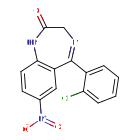
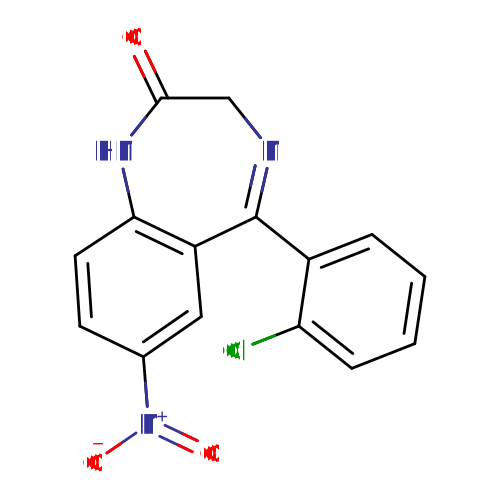
Structure for Clonazepam (DB01068)
- Weight
- Average: 315.711
Monoisotopic: 315.041068908 - Chemical Formula
- C15H10ClN3O3
- Synonyms
- 1,3-dihydro-7-nitro-5-(2-chlorophenyl)-2H-1,4.benzodiazepin-2-one
- 5-(2-chloro-phenyl)-7-nitro-1,3-dihydro-benzo[e][1,4]diazepin-2-one
- 5-(2-chlorophenyl)-7-nitro-1H-benzo[e][1,4]diazepin-2(3H)-one
- 5-(o-chlorophenyl)-7-nitro-1,3-dihydro-2H-1,4-benzodiazepin-2-one
- Clonazepam
- Clonazepamum
- External IDs
- RO 5-4023
- RO-5-4023

Pharmacology
- Indication
Clonazepam is indicated as monotherapy or as an adjunct in the treatment of Lennox-Gastaut syndrome (petit mal variant), akinetic, and myoclonic seizures.Label23 Furthermore, clonazepam may also be of some value in patients with absence spells (petit mal) who have failed to respond to succinimides.Label23 Additionally, clonazepam is also indicated for the treatment of panic disorder, with or without agoraphobia, as defined in the DSM-V.Label
Alternatively, some regional prescribing information note that clonazepam is indicated for all clinical forms of epileptic disease and seizures in adults, especially absence seizures (petit mal) including atypical absence; primary or secondarily generalised tonic-clonic (grand mal), tonic or clonic seizures; partial (focal) seizures with elementary or complex symptomatology; various forms of myoclonic seizures, myoclonus and associated abnormal movements.18,24 Such regional label data also has clonazepam indicated for most types of epilepsy in infants and children, especially absences (petit mal), myoclonic seizures and tonic-clonic fits, whether due to primary generalized epilepsy or to secondary generalization of partial epilepsy.24
 Reduce drug development failure ratesBuild, train, & validate machine-learning modelswith evidence-based and structured datasets.Build, train, & validate predictive machine-learning models with structured datasets.
- Associated Conditions
Indication Type Indication Combined Product Details Approval Level Age Group Patient Characteristics Dose Form Management of Akinetic seizures •••••••••••• •••••• Management of Burning mouth syndrome ••• ••••• Management of Essential tremor ••• ••••• Adjunct therapy in management of Lennox-gastaut syndrome •••••••••••• •••••• Management of Lennox-gastaut syndrome •••••••••••• •••••• - Contraindications & Blackbox Warnings
 Prevent Adverse Drug Events TodayTap into our Clinical API for life-saving information on contraindications & blackbox warnings, population restrictions, harmful risks, & more.Avoid life-threatening adverse drug events with our Clinical API
- Pharmacodynamics
The pharmacodynamic properties of clonazepam are common among benzodiazepines and include anticonvulsive, sedative, muscle relaxing and anxiolytic effects 6,18,22,23. Animal data and electroencephalographic investigations in man have shown that clonazepam rapidly suppresses many types of paroxysmal activity including the spike and wave discharge in absence seizures (petit mal), slow spike wave, generalized spike wave, spikes with temporal or other locations, as well as irregular spikes and waves Label 6,18,22,23. Moreover, the agent can also decrease the frequency, amplitude, duration, and spread of discharge in minor motor seizures Label 22.
Generalized EEG abnormalities are more readily suppressed by clonazepam than are focal EEG abnormalities such as focal spikes 18. Clonazepam has beneficial effects in generalized and focal epilepsies 18.
- Mechanism of action
Gamma-Aminobutyric acid (GABA) is considered the principal inhibitory neurotransmitter in the human body 6,7,8. When GABA binds to GABA(a) receptors found in neuron synapses, chloride ions are conducted across neuron cell membranes via an ion channel in the receptors 6,7,8,23. With enough chloride ions conducted, the local, associated neuron membrane potentials are hyperpolarized - making it more difficult or less likely for action potentials to fire, ultimately resulting in less excitation of the neurons 6,7,8,23.
Subsequently, benzodiazepines like clonazepam can bind to benzodiazepine receptors that are components of various varieties of GABA(a) receptors 6,7,8,23,18,22. This binding acts to enhance the effects of GABA by increasing GABA affinity for the GABA(a) receptor, which ultimately enhances GABA ligand binding at the receptors 6,7,8,23,18,22. This enhanced ligand binding of the inhibitory neurotransmitter GABA to the receptors increases the aforementioned chloride ion conduction (perhaps reportedly via an increase in the frequency of the chloride channel opening), resulting in a hyperpolarized cell membrane that prevents further excitation of the associated neuron cells 6,7,8,23,18,22. Combined with the notion that such benzodiazepine receptor associated GABA(a) receptors exist both peripherally and in the CNS, this activity consequently facilitates various effects like sedation, hypnosis, skeletal muscle relaxation, anticonvulsant activity, and anxiolytic action 6,7,8,23,18,22.
In particular, when out of the ordinary rapid and repetitive electrical signals are released in the CNS, it is proposed that the brain can become over-stimulated and ordinary functions are disrupted - resulting in seizure activity 8. By enhancing the neuro-inhibitory activity of GABA, it is believed that clonazepam can facilitate in decreasing any excessive electrical nerve activity in the CNS that might be contributing to seizures 8. Concurrently, it is also believed that clonazepam's actions in enhancing GABA effects may inhibit neuronal activity proposed to occur in amygdala-centered fear circuits - therefore assisting in the management of anxiety or panic 7.
Target Actions Organism AGABA(A) Receptor positive allosteric modulatorHumans AGABA(A) Receptor Benzodiazepine Binding Site ligandHumans UNuclear receptor subfamily 1 group I member 2 partial agonistHumans - Absorption
Clonazepam is rapidly and almost entirely absorbed after oral administration as tablets Label 22,24. Peak plasma concentrations of clonazepam administered by the oral route are reached within 1-4 hours and the associated absorption half-life is about 25 minutes Label 22,24. The absolute bioavailability is approximately 90% - but with substantially large differences between individuals Label 22,24.
- Volume of distribution
Clonazepam distributes very rapidly to various organs and body tissues with preferential uptake by brain structures 22,24. The apparent volume of distribution has been documented as approximately 3 L/kg 22,24.
- Protein binding
The recorded plasma protein binding of clonazepam ranges between 82–86% 22,24.
- Metabolism
Clonazepam is metabolized principally in the liver 22,24. The metabolic pathways include hydroxylation, reduction of the nitro groups to amine groups, and the addition of acetate to the amino grouping 22,24. In particular, clonazepam is extensively metabolized by reduction to 7-amino-clonazepam and by N-acetylation to 7-acetamido-clonazepam 22,24. Hydroxylation at the C-3 position also occurs 22,24. Hepatic cytochrome P450 3A4 is implicated in the nitroreduction of clonazepam to pharmacologically inactive metabolites 22,24.
Hover over products below to view reaction partners
- Route of elimination
Approximately 50-70% of a clonazepam dose is excreted in the urine and 10-30% is excreted in the feces as metabolites 22,24. The excretion of unchanged clonazepam in the urine is typically less than 2% of the administered dose 22,24. Metabolites of clonazepam are present in urine as both free and conjugated (glucuronide and sulfate) compounds 22,24.
- Half-life
The mean elimination half-life determined for clonazepam is independent of the dose given and has been documented as being about 30-40 hours 22,24.
- Clearance
The documented clearance for clonazepam is approximately 55 ml/min regardless of gender 22. Nevertheless, clearance values normalized by weight decline with increasing body weight 22.
- Adverse Effects
 Improve decision support & research outcomesWith structured adverse effects data, including: blackbox warnings, adverse reactions, warning & precautions, & incidence rates. View sample adverse effects data in our new Data Library!Improve decision support & research outcomes with our structured adverse effects data.
- Toxicity
Benzodiazepines like clonazepam commonly cause drowsiness, ataxia, dysarthria, and nystagmus. Overdose with clonazepam is generally not life-threatening if the drug is taken alone, but may lead to areflexia, apnea, hypotension, cardiorespiratory depression, and coma. Coma, if it does occur, usually lasts a few hours but it can become more protracted and cyclical, especially in elderly patients. Increased frequency of seizures may occur in patients at supratherapeutic plasma concentrations. Benzodiazepine respiratory depressant effects are more serious when compounded in patients with respiratory disease.
An increased risk of congenital malformations associated with the use of benzodiazepine drugs like clonazepam has been suggested in several studies Label 22,24. There may also be non-teratogenic risks associated with the use of benzodiazepines during pregnancy Label 22,24. There have been reports of neonatal flaccidity, respiratory and feeding difficulties, and hypothermia in children born to mothers who have been receiving benzodiazepines late in pregnancy Label 22,24. In addition, children born to mothers receiving benzodiazepines late in pregnancy may be at some risk of experiencing withdrawal symptoms during the postnatal period Label 22,24. In general, it is best for patients who are of childbearing potential and also use benzodiazepines like clonazepam to discuss such matters with their health care professionals as careful consideration must be undertaken regarding the intersection of the risks of untreated seizure potential in the patient and any possible toxicity to the fetus Label 22,24.
Although the active ingredient of clonazepam has been found to pass into the maternal milk in small amounts only, mothers receiving clonazepam should not breast-feed their infants Label 22,24.
Since the possibility that adverse effects on the physical or mental development of the child could become apparent only after a number of years, the risk-benefit consideration of the long-term use of clonazepam in pediatric patients younger than five years of age is important Label 22,24.
The pharmacological effects of benzodiazepines like clonazepam appear to be greater in elderly patients than in younger patients even at similar plasma benzodiazepine concentrations, possibly because of age-related changes in drug-receptor interactions, post-receptor mechanisms, and organ function Label 22,24. In general elderly patients should be started on the lowest possible dose of clonazepam and observed closely Label 22,24. There is an increased risk for falls and fractures among elderly and debilitated benzodiazepine users Label 22,24. The risk is increased in those taking concomitant sedatives, including substances like benzodiazepines, alcoholic beverages, and so on Label 22,24.
Some oral LD50 values documented are >4000 mg/kg for the mouse model, >4000 mg/kg for the adult rat model, and >2000 mg/kg for the rabbit model 22.
- Pathways
- Not Available
- Pharmacogenomic Effects/ADRs
- Not Available
Interactions
- Drug Interactions
- This information should not be interpreted without the help of a healthcare provider. If you believe you are experiencing an interaction, contact a healthcare provider immediately. The absence of an interaction does not necessarily mean no interactions exist.
Drug Interaction Integrate drug-drug
interactions in your software1,2-Benzodiazepine The risk or severity of CNS depression can be increased when Clonazepam is combined with 1,2-Benzodiazepine. Abacavir Abacavir may decrease the excretion rate of Clonazepam which could result in a higher serum level. Abametapir The serum concentration of Clonazepam can be increased when it is combined with Abametapir. Aceclofenac Aceclofenac may decrease the excretion rate of Clonazepam which could result in a higher serum level. Acemetacin Acemetacin may decrease the excretion rate of Clonazepam which could result in a higher serum level. - Food Interactions
- Avoid alcohol.
- Limit caffeine intake.
- Take with or without food. The absorption is unaffected by food.
Products
 Drug product information from 10+ global regionsOur datasets provide approved product information including:dosage, form, labeller, route of administration, and marketing period.Access drug product information from over 10 global regions.
- Product Images
- International/Other Brands
- Antelepsin (AWD) / Iktorivil (Roche) / Rivotril (Roche)
- Brand Name Prescription Products
Name Dosage Strength Route Labeller Marketing Start Marketing End Region Image Clonapam Tablet 0.5 mg Oral Bausch Health, Canada Inc. 1997-01-31 Not applicable Canada 
Clonapam Tablet 2 mg Oral Bausch Health, Canada Inc. 1997-02-28 Not applicable Canada Clonapam Tablet 1 mg Oral Bausch Health, Canada Inc. 1997-01-31 Not applicable Canada Clonazepam Tablet 1 mg Oral Sivem Pharmaceuticals Ulc 2015-07-09 2017-12-19 Canada Clonazepam Tablet 2 mg Oral Meliapharm Inc 2010-10-20 2014-06-25 Canada - Generic Prescription Products
Name Dosage Strength Route Labeller Marketing Start Marketing End Region Image Accel-clonazepam Tablet 0.5 mg Oral Accel Pharma Inc Not applicable Not applicable Canada Accel-clonazepam Tablet 2.0 mg Oral Accel Pharma Inc Not applicable Not applicable Canada Accel-clonazepam Tablet 1.0 mg Oral Accel Pharma Inc Not applicable Not applicable Canada Apo-clonazepam Tablet 0.5 mg Oral Apotex Corporation 1995-12-31 Not applicable Canada Apo-clonazepam Tablet 2 mg Oral Apotex Corporation 1995-12-31 Not applicable Canada


Categories
- ATC Codes
- N03AE01 — Clonazepam
- Drug Categories
- Anticonvulsants
- Benzazepines
- Benzodiazepines and benzodiazepine derivatives
- Benzodiazepinones
- Central Nervous System Agents
- Central Nervous System Depressants
- Cytochrome P-450 CYP2E1 Inhibitors
- Cytochrome P-450 CYP2E1 Inhibitors (strength unknown)
- Cytochrome P-450 CYP3A Substrates
- Cytochrome P-450 CYP3A4 Substrates
- Cytochrome P-450 Enzyme Inhibitors
- Cytochrome P-450 Substrates
- Drugs that are Mainly Renally Excreted
- GABA Agents
- GABA Modulators
- Heterocyclic Compounds, Fused-Ring
- Muscle Relaxants
- Muscle Relaxants, Centrally Acting Agents
- Nervous System
- Chemical TaxonomyProvided by Classyfire
- Description
- This compound belongs to the class of organic compounds known as 1,4-benzodiazepines. These are organic compounds containing a benzene ring fused to a 1,4-azepine.
- Kingdom
- Organic compounds
- Super Class
- Organoheterocyclic compounds
- Class
- Benzodiazepines
- Sub Class
- 1,4-benzodiazepines
- Direct Parent
- 1,4-benzodiazepines
- Alternative Parents
- Nitroaromatic compounds / Chlorobenzenes / Aryl chlorides / Cyclic carboximidic acids / Ketimines / Propargyl-type 1,3-dipolar organic compounds / Organic oxoazanium compounds / Azacyclic compounds / Organopnictogen compounds / Organooxygen compounds show 4 more
- Substituents
- 1,4-benzodiazepine / Allyl-type 1,3-dipolar organic compound / Aromatic heteropolycyclic compound / Aryl chloride / Aryl halide / Azacycle / Benzenoid / C-nitro compound / Chlorobenzene / Cyclic carboximidic acid show 19 more
- Molecular Framework
- Aromatic heteropolycyclic compounds
- External Descriptors
- monochlorobenzenes, 1,4-benzodiazepinone (CHEBI:3756)
- Affected organisms
- Humans and other mammals
Chemical Identifiers
- UNII
- 5PE9FDE8GB
- CAS number
- 1622-61-3
- InChI Key
- DGBIGWXXNGSACT-UHFFFAOYSA-N
- InChI
- InChI=1S/C15H10ClN3O3/c16-12-4-2-1-3-10(12)15-11-7-9(19(21)22)5-6-13(11)18-14(20)8-17-15/h1-7H,8H2,(H,18,20)
- IUPAC Name
- 5-(2-chlorophenyl)-7-nitro-2,3-dihydro-1H-1,4-benzodiazepin-2-one
- SMILES
- [O-][N+](=O)C1=CC2=C(NC(=O)CN=C2C2=CC=CC=C2Cl)C=C1
References
- Synthesis Reference
Kariss, J. and Newmark, H.L.; US. Patents 3,116,203; December 31, 1963; and 3,123,529; March 3, 1964; both assigned to Hoffmann-LaRoche, Inc. Keller, O., Steiger, N. and Sternbach, L.H.; U S . Patents 3,121,114; February 11, 1964; and 3,203990; August 31, 1965; both assigned to Hoffmann-LaRoche, Inc. Focella, A. and Rachlin, A.I.; U.S. Patent 3,335,181; August 8, 1967; assigned to Hoffmann- LaRoche. Inc.
- General References
- Dreifuss FE, Penry JK, Rose SW, Kupferberg HJ, Dyken P, Sato S: Serum clonazepam concentrations in children with absence seizures. Neurology. 1975 Mar;25(3):255-8. [Article]
- Robertson MD, Drummer OH: Postmortem drug metabolism by bacteria. J Forensic Sci. 1995 May;40(3):382-6. [Article]
- Rosen GM, Turner MJ 3rd: Synthesis of spin traps specific for hydroxyl radical. J Med Chem. 1988 Feb;31(2):428-32. [Article]
- Rosen GM, Demos HA, Rauckman EJ: Not all aromatic nitro compounds form free radicals. Toxicol Lett. 1984 Aug;22(2):145-52. [Article]
- Earley JV, Fryer RI, Ning RY: Quinazolines and 1,4-benzodiazepines. LXXXIX: Haptens useful in benzodiazepine immunoassay development. J Pharm Sci. 1979 Jul;68(7):845-50. [Article]
- DeVane CL, Ware MR, Lydiard RB: Pharmacokinetics, pharmacodynamics, and treatment issues of benzodiazepines: alprazolam, adinazolam, and clonazepam. Psychopharmacol Bull. 1991;27(4):463-73. [Article]
- Nardi AE, Machado S, Almada LF, Paes F, Silva AC, Marques RJ, Amrein R, Freire RC, Martin-Santos R, Cosci F, Hallak JE, Crippa JA, Arias-Carrion O: Clonazepam for the treatment of panic disorder. Curr Drug Targets. 2013 Mar;14(3):353-64. [Article]
- Jenner P, Pratt JA, Marsden CD: Mechanism of action of clonazepam in myoclonus in relation to effects on GABA and 5-HT. Adv Neurol. 1986;43:629-43. [Article]
- Grushka M, Epstein J, Mott A: An open-label, dose escalation pilot study of the effect of clonazepam in burning mouth syndrome. Oral Surg Oral Med Oral Pathol Oral Radiol Endod. 1998 Nov;86(5):557-61. doi: 10.1016/s1079-2104(98)90345-6. [Article]
- Thompson C, Lang A, Parkes JD, Marsden CD: A double-blind trial of clonazepam in benign essential tremor. Clin Neuropharmacol. 1984;7(1):83-8. doi: 10.1097/00002826-198403000-00004. [Article]
- Bottai T, Hue B, Hillaire-Buys D, Barbe A, Alric R, Pouget R, Petit P: Clonazepam in acute mania: time-blind evaluation of clinical response and concentrations in plasma. J Affect Disord. 1995 Dec 24;36(1-2):21-7. doi: 10.1016/0165-0327(95)00048-8. [Article]
- Thaker GK, Nguyen JA, Strauss ME, Jacobson R, Kaup BA, Tamminga CA: Clonazepam treatment of tardive dyskinesia: a practical GABAmimetic strategy. Am J Psychiatry. 1990 Apr;147(4):445-51. doi: 10.1176/ajp.147.4.445. [Article]
- Bagheri MM, Kerbeshian J, Burd L: Recognition and management of Tourette's syndrome and tic disorders. Am Fam Physician. 1999 Apr 15;59(8):2263-72, 2274. [Article]
- Roguski A, Rayment D, Whone AL, Jones MW, Rolinski M: A Neurologist's Guide to REM Sleep Behavior Disorder. Front Neurol. 2020 Jul 8;11:610. doi: 10.3389/fneur.2020.00610. eCollection 2020. [Article]
- Carlos K, Prado GF, Teixeira CD, Conti C, de Oliveira MM, Prado LB, Carvalho LB: Benzodiazepines for restless legs syndrome. Cochrane Database Syst Rev. 2017 Mar 20;3(3):CD006939. doi: 10.1002/14651858.CD006939.pub2. [Article]
- Fischer, Jnos; Ganellin, C. Robin (2006). Analogue-based Drug Discovery. John Wiley & Sons. [ISBN:9783527607495]
- Shorter, Edward (2005). A Historical Dictionary of Psychiatry. Oxford University Press. [ISBN:9780190292010]
- Electronic Medicines Compendium: Clonazepam Rosemont 2mg/5ml Oral Solution [Link]
- DailyMed Label: KLONOPIN (clonazepam) Oral Tablets [Link]
- FDA Approved Drug Products: KLONOPIN (clonazepam) tablets, for oral use [Link]
- Health Canada Approved Drug Proucts: Rivotril (Clonazepam) 0.5 mg and 2 mg Tablets, for oral use [Link]
- Rivotril (Clonazepam) 0.5 mg and 2 mg Tablets Canadian Product Monograph [File]
- Clonazepam Fact Sheet from http://cdn.neiglobal.com/content/pg/live/clonazepam.pdf [File]
- Rivotril (Clonazepam) Australian Product Information [File]
- External Links
- Human Metabolome Database
- HMDB0015201
- KEGG Drug
- D00280
- PubChem Compound
- 2802
- PubChem Substance
- 46507677
- ChemSpider
- 2700
- BindingDB
- 50019213
- 2598
- ChEBI
- 3756
- ChEMBL
- CHEMBL452
- ZINC
- ZINC000003813003
- Therapeutic Targets Database
- DAP000259
- PharmGKB
- PA449050
- RxList
- RxList Drug Page
- Drugs.com
- Drugs.com Drug Page
- Wikipedia
- Clonazepam
- FDA label
- Download (513 KB)
- MSDS
- Download (74.3 KB)
Clinical Trials
- Clinical Trials
Phase Status Purpose Conditions Count 4 Completed Supportive Care Cerebral Palsy (CP) / Excessive crying / Pain 1 4 Completed Treatment COVID-19 Vaccine Adverse Reaction 1 4 Completed Treatment Fear of open spaces / Panic Disorder 1 4 Completed Treatment Post Traumatic Stress Disorder (PTSD) 1 4 Completed Treatment Social Phobia 1
Pharmacoeconomics
- Manufacturers
- Not Available
- Packagers
- Actavis Group
- Aidarex Pharmacuticals LLC
- Alphapharm Party Ltd.
- Apotex Inc.
- Apotheca Inc.
- A-S Medication Solutions LLC
- Barr Pharmaceuticals
- Bryant Ranch Prepack
- Caraco Pharmaceutical Labs
- Cardinal Health
- Caremark LLC
- Catalent Pharma Solutions
- Cebert Pharmaceuticals Inc.
- Centaur Pharmaceuticals Pvt Ltd.
- Comprehensive Consultant Services Inc.
- Corepharma LLC
- Coupler Enterprises Inc.
- Direct Dispensing Inc.
- Dispensing Solutions
- Diversified Healthcare Services Inc.
- Eon Labs
- F Hoffmann-La Roche Ltd.
- Golden State Medical Supply Inc.
- Goldline Laboratories Inc.
- H.J. Harkins Co. Inc.
- Heartland Repack Services LLC
- Innoviant Pharmacy Inc.
- Kali Laboratories Inc.
- Keltman Pharmaceuticals Inc.
- Lake Erie Medical and Surgical Supply
- Liberty Pharmaceuticals
- Major Pharmaceuticals
- Mckesson Corp.
- Murfreesboro Pharmaceutical Nursing Supply
- Mylan
- Novopharm Ltd.
- Nucare Pharmaceuticals Inc.
- Palmetto Pharmaceuticals Inc.
- Par Pharmaceuticals
- PD-Rx Pharmaceuticals Inc.
- Physicians Total Care Inc.
- Preferred Pharmaceuticals Inc.
- Prepackage Specialists
- Prepak Systems Inc.
- Qualitest
- Rebel Distributors Corp.
- Recalcine Laboratorios
- Redpharm Drug
- Remedy Repack
- Sandhills Packaging Inc.
- Sanofi-Aventis Inc.
- Southwood Pharmaceuticals
- St Mary's Medical Park Pharmacy
- Stat Rx Usa
- Syntex SA
- Teva Pharmaceutical Industries Ltd.
- Torpharm Inc.
- UDL Laboratories
- Va Cmop Dallas
- Vintage Pharmaceuticals Inc.
- Dosage Forms
Form Route Strength Tablet Oral 1.0 mg Tablet Oral 2.0 mg Solution Oral 0.25 g Tablet Oral 0.100 mg Tablet Oral 0.5 mg/1 Tablet Oral 1 mg/1 Tablet Oral 2 mg/1 Tablet, film coated Oral Tablet, orally disintegrating Oral .25 mg/1 Tablet, orally disintegrating Oral .5 mg/1 Tablet, orally disintegrating Oral 0.125 mg/1 Tablet, orally disintegrating Oral 0.25 mg/1 Tablet, orally disintegrating Oral 0.5 mg/1 Tablet, orally disintegrating Oral 1 mg/1 Tablet, orally disintegrating Oral 2 mg/1 Solution Oral 250000 mg Tablet Oral .5 mg Tablet Oral 2.000 mg Tablet, coated Oral 0.5 mg Tablet, coated Oral 2 mg Tablet Oral .5 mg/1 Wafer Oral 0.125 mg/1 Wafer Oral 0.25 mg/1 Wafer Oral 0.5 mg/1 Wafer Oral 1 mg/1 Wafer Oral 2 mg/1 Solution Oral 2.500 mg Solution Parenteral 1.00 mg Solution Oral 2.50 mg Solution Oral 250.000 mg Tablet Oral 0.25 mg Tablet Oral 1 mg Tablet, film coated Oral 2 MG Tablet Oral 2.00 mg Tablet Oral Solution / drops Oral 2.5 MG/ML Tablet Oral 0.500 mg Tablet Oral 2 mg Injection, solution Intravenous 1 mg/1ml Solution / drops Oral 2.5 mg/1ml Solution Intramuscular; Intravenous 1 mg Tablet Oral 0.5 mg Tablet Oral 200000 mg Solution Oral 2.5 mg - Prices
Unit description Cost Unit Klonopin 2 mg tablet 2.85USD tablet Klonopin 1 mg tablet 2.17USD tablet Klonopin 0.5 mg tablet 1.91USD tablet ClonazePAM ODT 2 mg Dispersible Tablet 1.67USD dispersible tablet ClonazePAM ODT 0.25 mg Dispersible Tablet 1.22USD dispersible tablet ClonazePAM ODT 0.5 mg Dispersible Tablet 1.18USD dispersible tablet ClonazePAM ODT 0.125 mg Dispersible Tablet 1.17USD dispersible tablet ClonazePAM ODT 1 mg Dispersible Tablet 1.1USD dispersible tablet Clonazepam 2 mg tablet 0.81USD tablet Clonazepam 1 mg tablet 0.63USD tablet Clonazepam 0.5 mg tablet 0.61USD tablet Rivotril 2 mg Tablet 0.38USD tablet Rivotril 0.5 mg Tablet 0.22USD tablet Apo-Clonazepam 2 mg Tablet 0.21USD tablet Co Clonazepam 2 mg Tablet 0.21USD tablet Mylan-Clonazepam 2 mg Tablet 0.21USD tablet Novo-Clonazepam 2 mg Tablet 0.21USD tablet Phl-Clonazepam 2 mg Tablet 0.21USD tablet Pms-Clonazepam 2 mg Tablet 0.21USD tablet Ratio-Clonazepam 2 mg Tablet 0.21USD tablet Sandoz Clonazepam 2 mg Tablet 0.21USD tablet Co Clonazepam 1 mg Tablet 0.19USD tablet Phl-Clonazepam 1 mg Tablet 0.19USD tablet Pms-Clonazepam 1 mg Tablet 0.19USD tablet Sandoz Clonazepam 1 mg Tablet 0.19USD tablet Apo-Clonazepam 0.5 mg Tablet 0.12USD tablet Co Clonazepam 0.5 mg Tablet 0.12USD tablet Mylan-Clonazepam 0.5 mg Tablet 0.12USD tablet Novo-Clonazepam 0.5 mg Tablet 0.12USD tablet Phl-Clonazepam 0.5 mg Tablet 0.12USD tablet Phl-Clonazepam-R 0.5 mg Tablet 0.12USD tablet Pms-Clonazepam 0.5 mg Tablet 0.12USD tablet Pms-Clonazepam-R 0.5 mg Tablet 0.12USD tablet Ratio-Clonazepam 0.5 mg Tablet 0.12USD tablet Sandoz Clonazepam 0.5 mg Tablet 0.12USD tablet Pms-Clonazepam 0.25 mg Tablet 0.07USD tablet DrugBank does not sell nor buy drugs. Pricing information is supplied for informational purposes only.- Patents
- Not Available
Properties
- State
- Solid
- Experimental Properties
Property Value Source melting point (°C) 238-240 Kariss, J. and Newmark, H.L.; US. Patents 3,116,203; December 31, 1963; and 3,123,529; March 3, 1964; both assigned to Hoffmann-LaRoche, Inc. Keller, O., Steiger, N. and Sternbach, L.H.; U S . Patents 3,121,114; February 11, 1964; and 3,203990; August 31, 1965; both assigned to Hoffmann-LaRoche, Inc. Focella, A. and Rachlin, A.I.; U.S. Patent 3,335,181; August 8, 1967; assigned to Hoffmann- LaRoche. Inc. water solubility 100 mg/L (at 25 °C) MERCK INDEX (1996) logP 2.41 HANSCH,C ET AL. (1995) - Predicted Properties
Property Value Source Water Solubility 0.0106 mg/mL ALOGPS logP 2.76 ALOGPS logP 3.15 Chemaxon logS -4.5 ALOGPS pKa (Strongest Acidic) 11.65 Chemaxon pKa (Strongest Basic) 1.89 Chemaxon Physiological Charge 0 Chemaxon Hydrogen Acceptor Count 4 Chemaxon Hydrogen Donor Count 1 Chemaxon Polar Surface Area 84.6 Å2 Chemaxon Rotatable Bond Count 2 Chemaxon Refractivity 83.02 m3·mol-1 Chemaxon Polarizability 29.66 Å3 Chemaxon Number of Rings 3 Chemaxon Bioavailability 1 Chemaxon Rule of Five Yes Chemaxon Ghose Filter Yes Chemaxon Veber's Rule No Chemaxon MDDR-like Rule No Chemaxon - Predicted ADMET Features
Property Value Probability Human Intestinal Absorption + 0.9946 Blood Brain Barrier + 0.9718 Caco-2 permeable + 0.5313 P-glycoprotein substrate Substrate 0.5594 P-glycoprotein inhibitor I Non-inhibitor 0.8474 P-glycoprotein inhibitor II Non-inhibitor 0.9157 Renal organic cation transporter Non-inhibitor 0.8179 CYP450 2C9 substrate Non-substrate 0.7777 CYP450 2D6 substrate Non-substrate 0.8934 CYP450 3A4 substrate Substrate 0.7295 CYP450 1A2 substrate Inhibitor 0.7646 CYP450 2C9 inhibitor Inhibitor 0.5213 CYP450 2D6 inhibitor Non-inhibitor 0.8271 CYP450 2C19 inhibitor Inhibitor 0.7441 CYP450 3A4 inhibitor Inhibitor 0.5565 CYP450 inhibitory promiscuity High CYP Inhibitory Promiscuity 0.7255 Ames test Non AMES toxic 0.6778 Carcinogenicity Non-carcinogens 0.6417 Biodegradation Not ready biodegradable 1.0 Rat acute toxicity 1.6422 LD50, mol/kg Not applicable hERG inhibition (predictor I) Weak inhibitor 0.9821 hERG inhibition (predictor II) Non-inhibitor 0.8734
Spectra
- Mass Spec (NIST)
- Not Available
- Spectra
Spectrum Spectrum Type Splash Key Predicted GC-MS Spectrum - GC-MS Predicted GC-MS splash10-02br-1190000000-1354614c337562e212cc Mass Spectrum (Electron Ionization) MS splash10-02a9-2492000000-109e2626e8a128b9e433 Predicted 1H NMR Spectrum 1D NMR Not Applicable Predicted 13C NMR Spectrum 1D NMR Not Applicable - Chromatographic Properties
Collision Cross Sections (CCS)
Adduct CCS Value (Å2) Source type Source [M-H]- 176.7014517 predictedDarkChem Lite v0.1.0 [M-H]- 162.69028 predictedDeepCCS 1.0 (2019) [M+H]+ 176.8900517 predictedDarkChem Lite v0.1.0 [M+H]+ 165.04828 predictedDeepCCS 1.0 (2019) [M+Na]+ 176.7533517 predictedDarkChem Lite v0.1.0 [M+Na]+ 171.59644 predictedDeepCCS 1.0 (2019)
Targets

- Kind
- Protein group
- Organism
- Humans
- Pharmacological action
- Yes
- Actions
- Positive allosteric modulator
- Curator comments
- The GABA(A) receptor is pentameric (i.e. comprising 5 subunit proteins) and therefore has a multitude of potential isoforms. The above target is a collection of all possible GABA(A) subunits that may participate in the formation of the pentameric receptor and is not meant to imply direct a drug-protein interaction for each individual subunit.
- General Function
- Inhibitory extracellular ligand-gated ion channel activity
- Specific Function
- Component of the heteropentameric receptor for GABA, the major inhibitory neurotransmitter in the vertebrate brain. Functions also as histamine receptor and mediates cellular responses to histamine...
Components:
References
- Mohler H, Fritschy JM, Rudolph U: A new benzodiazepine pharmacology. J Pharmacol Exp Ther. 2002 Jan;300(1):2-8. [Article]
- Riss J, Cloyd J, Gates J, Collins S: Benzodiazepines in epilepsy: pharmacology and pharmacokinetics. Acta Neurol Scand. 2008 Aug;118(2):69-86. doi: 10.1111/j.1600-0404.2008.01004.x. Epub 2008 Mar 31. [Article]
- Kind
- Protein group
- Organism
- Humans
- Pharmacological action
- Yes
- Actions
- Ligand
- Curator comments
- Benzodiazepines modulate GABA(A) function by binding at the interface between alpha (α) and gamma (γ) subunits. Of the 6 α-subunits, only 4 (α-1, -2, -3, and -5) participate in the formation of this binding site. The above target is a collection of all α- and γ-subunits that are known to participate in the formation of the benzodiazepine binding site.
- General Function
- Inhibitory extracellular ligand-gated ion channel activity
- Specific Function
- Component of the heteropentameric receptor for GABA, the major inhibitory neurotransmitter in the vertebrate brain. Functions also as histamine receptor and mediates cellular responses to histamine...
Components:
References
- Sigel E, Steinmann ME: Structure, function, and modulation of GABA(A) receptors. J Biol Chem. 2012 Nov 23;287(48):40224-31. doi: 10.1074/jbc.R112.386664. Epub 2012 Oct 4. [Article]
- Zhu S, Noviello CM, Teng J, Walsh RM Jr, Kim JJ, Hibbs RE: Structure of a human synaptic GABAA receptor. Nature. 2018 Jul;559(7712):67-72. doi: 10.1038/s41586-018-0255-3. Epub 2018 Jun 27. [Article]
- Kind
- Protein
- Organism
- Humans
- Pharmacological action
- Unknown
- Actions
- Partial agonist
- General Function
- Zinc ion binding
- Specific Function
- Nuclear receptor that binds and is activated by variety of endogenous and xenobiotic compounds. Transcription factor that activates the transcription of multiple genes involved in the metabolism an...
- Gene Name
- NR1I2
- Uniprot ID
- O75469
- Uniprot Name
- Nuclear receptor subfamily 1 group I member 2
- Molecular Weight
- 49761.245 Da
References
- Creusot N, Kinani S, Balaguer P, Tapie N, LeMenach K, Maillot-Marechal E, Porcher JM, Budzinski H, Ait-Aissa S: Evaluation of an hPXR reporter gene assay for the detection of aquatic emerging pollutants: screening of chemicals and application to water samples. Anal Bioanal Chem. 2010 Jan;396(2):569-83. doi: 10.1007/s00216-009-3310-y. Epub 2009 Nov 29. [Article]
Enzymes
- Kind
- Protein
- Organism
- Humans
- Pharmacological action
- Unknown
- Actions
- Inhibitor
- General Function
- Steroid hydroxylase activity
- Specific Function
- Metabolizes several precarcinogens, drugs, and solvents to reactive metabolites. Inactivates a number of drugs and xenobiotics and also bioactivates many xenobiotic substrates to their hepatotoxic ...
- Gene Name
- CYP2E1
- Uniprot ID
- P05181
- Uniprot Name
- Cytochrome P450 2E1
- Molecular Weight
- 56848.42 Da
References
- Tassaneeyakul W, Birkett DJ, Miners JO: Inhibition of human hepatic cytochrome P4502E1 by azole antifungals, CNS-active drugs and non-steroidal anti-inflammatory agents. Xenobiotica. 1998 Mar;28(3):293-301. doi: 10.1080/004982598239579 . [Article]
- Kind
- Protein
- Organism
- Humans
- Pharmacological action
- Unknown
- Actions
- Substrate
- General Function
- Arylamine n-acetyltransferase activity
- Specific Function
- Participates in the detoxification of a plethora of hydrazine and arylamine drugs. Catalyzes the N- or O-acetylation of various arylamine and heterocyclic amine substrates and is able to bioactivat...
- Gene Name
- NAT2
- Uniprot ID
- P11245
- Uniprot Name
- Arylamine N-acetyltransferase 2
- Molecular Weight
- 33542.235 Da
References
- Olivera M, Martinez C, Gervasini G, Carrillo JA, Ramos S, Benitez J, Garcia-Martin E, Agundez JA: Effect of common NAT2 variant alleles in the acetylation of the major clonazepam metabolite, 7-aminoclonazepam. Drug Metab Lett. 2007 Jan;1(1):3-5. [Article]
- Miller ME, Garland WA, Min BH, Ludwick BT, Ballard RH, Levy RH: Clonazepam acetylation in fast and slow acetylators. Clin Pharmacol Ther. 1981 Sep;30(3):343-7. [Article]
- Kind
- Protein
- Organism
- Humans
- Pharmacological action
- Unknown
- Actions
- Substrate
- General Function
- Vitamin d3 25-hydroxylase activity
- Specific Function
- Cytochromes P450 are a group of heme-thiolate monooxygenases. In liver microsomes, this enzyme is involved in an NADPH-dependent electron transport pathway. It performs a variety of oxidation react...
- Gene Name
- CYP3A4
- Uniprot ID
- P08684
- Uniprot Name
- Cytochrome P450 3A4
- Molecular Weight
- 57342.67 Da
References
- Seree EJ, Pisano PJ, Placidi M, Rahmani R, Barra YA: Identification of the human and animal hepatic cytochromes P450 involved in clonazepam metabolism. Fundam Clin Pharmacol. 1993;7(2):69-75. [Article]
Carriers
- Kind
- Protein
- Organism
- Humans
- Pharmacological action
- No
- General Function
- Toxic substance binding
- Specific Function
- Serum albumin, the main protein of plasma, has a good binding capacity for water, Ca(2+), Na(+), K(+), fatty acids, hormones, bilirubin and drugs. Its main function is the regulation of the colloid...
- Gene Name
- ALB
- Uniprot ID
- P02768
- Uniprot Name
- Serum albumin
- Molecular Weight
- 69365.94 Da
References
- Pacifici GM, Viani A, Rizzo G, Carrai M, Rane A: Plasma protein binding of clonazepam in hepatic and renal insufficiency and after hemodialysis. Ther Drug Monit. 1987 Dec;9(4):369-73. [Article]

Drug created at June 13, 2005 13:24 / Updated at April 27, 2024 09:44