Identification
- Generic Name
- Quinacrine
- DrugBank Accession Number
- DB01103
- Background
An acridine derivative formerly widely used as an antimalarial but superseded by chloroquine in recent years. It has also been used as an anthelmintic and in the treatment of giardiasis and malignant effusions. It is used in cell biological experiments as an inhibitor of phospholipase A2.
- Type
- Small Molecule
- Groups
- Investigational
- Structure
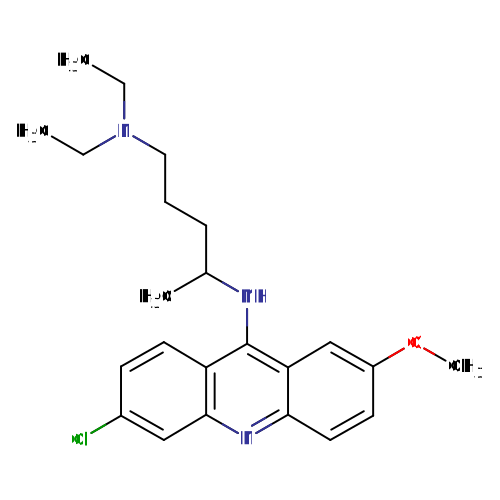
Structure for Quinacrine (DB01103)
- Weight
- Average: 399.957
Monoisotopic: 399.207740304 - Chemical Formula
- C23H30ClN3O
- Synonyms
- 2-methoxy-6-chloro-9-diethylaminopentylaminoacridine
- 3-chloro-7-methoxy-9-(1-methyl-4-diethylaminobutylamino)acridine
- 6-chloro-9-((4-(diethylamino)-1-methylbutyl)amino)-2-methoxyacridine
- Mepacrine
- N4-(6-chloro-2-methoxy-9-acridinyl)-N1,N1-diethyl-1,4-pentanediamine

Pharmacology
- Indication
For the treatment of giardiasis and cutaneous leishmaniasis and the management of malignant effusions.
 Reduce drug development failure ratesBuild, train, & validate machine-learning modelswith evidence-based and structured datasets.Build, train, & validate predictive machine-learning models with structured datasets.
- Contraindications & Blackbox Warnings
 Prevent Adverse Drug Events TodayTap into our Clinical API for life-saving information on contraindications & blackbox warnings, population restrictions, harmful risks, & more.Avoid life-threatening adverse drug events with our Clinical API
- Pharmacodynamics
Quinacrine has been used as an antimalarial drug and as an antibiotic. It is used to treat giardiasis, a protozoal infection of the intestinal tract, and certain types of lupus erythematosus, an inflammatory disease that affects the joints, tendons, and other connective tissues and organs. Quinacrine may be injected into the space surrounding the lungs to prevent reoccurrence of pneumothorax. The exact way in which quinacrine works is unknown. It appears to interfere with the parasite's metabolism.
- Mechanism of action
The exact mechanism of antiparasitic action is unknown; however, quinacrine binds to deoxyribonucleic acid (DNA) in vitro by intercalation between adjacent base pairs, inhibiting transcription and translation to ribonucleic acid (RNA). Quinacrine does not appear to localize to the nucleus of Giaridia trophozoites, suggesting that DNA binding may not be the primary mechanism of its antimicrobial action. Fluorescence studies using Giardia suggest that the outer membranes may be involved. Quinacrine inhibits succinate oxidation and interferes with electron transport. In addition, by binding to nucleoproteins, quinacrine suppress the lupus erythematous cell factor and acts as a strong inhibitor of cholinesterase.
Target Actions Organism ADNA intercalationHumans A85/88 kDa calcium-independent phospholipase A2 inhibitorHumans ACytosolic phospholipase A2 inhibitorHumans AInactive phospholipase C-like protein 1 inhibitorHumans - Absorption
Absorbed rapidly from the gastrointestinal tract following oral administration.
- Volume of distribution
Not Available
- Protein binding
80-90%
- Metabolism
- Not Available
- Route of elimination
Not Available
- Half-life
5 to 14 days
- Clearance
Not Available
- Adverse Effects
 Improve decision support & research outcomesWith structured adverse effects data, including: blackbox warnings, adverse reactions, warning & precautions, & incidence rates. View sample adverse effects data in our new Data Library!Improve decision support & research outcomes with our structured adverse effects data.
- Toxicity
Oral, rat: LD50 = 900 mg/kg; Oral, mouse: LD50 = 1000 mg/kg. Symptoms of overdose include seizures, hypotension, cardiac arrhythmias, and cardiovascular collapse.
- Pathways
- Not Available
- Pharmacogenomic Effects/ADRs
- Not Available
Interactions
- Drug Interactions
- This information should not be interpreted without the help of a healthcare provider. If you believe you are experiencing an interaction, contact a healthcare provider immediately. The absence of an interaction does not necessarily mean no interactions exist.
Drug Interaction Integrate drug-drug
interactions in your softwareAbametapir The serum concentration of Quinacrine can be increased when it is combined with Abametapir. Abatacept The metabolism of Quinacrine can be increased when combined with Abatacept. Acalabrutinib The metabolism of Quinacrine can be decreased when combined with Acalabrutinib. Acetophenazine The risk or severity of QTc prolongation can be increased when Quinacrine is combined with Acetophenazine. Adalimumab The metabolism of Quinacrine can be increased when combined with Adalimumab. - Food Interactions
- Not Available
Products
 Drug product information from 10+ global regionsOur datasets provide approved product information including:dosage, form, labeller, route of administration, and marketing period.Access drug product information from over 10 global regions.
- Product Ingredients
Ingredient UNII CAS InChI Key Quinacrine dihydrochloride 81A613ZZ6X 69-05-6 UDKVBVICMUEIKS-UHFFFAOYSA-N Quinacrine hydrochloride G6242H2NAA 6151-30-0 RZFNKJVCPDLQQA-UHFFFAOYSA-N - International/Other Brands
- Atabrine
Categories
- ATC Codes
- P01AX05 — Mepacrine
- Drug Categories
- Acridines
- Aminoacridines
- Anti-Infective Agents
- Anticestodal Agents
- Antimalarials
- Antinematodal Agents
- Antiparasitic Agents
- Antiparasitic Products, Insecticides and Repellents
- Antiplatyhelmintic Agents
- Antiprotozoals
- Cytochrome P-450 CYP3A Substrates
- Cytochrome P-450 CYP3A4 Substrates
- Cytochrome P-450 CYP3A5 Substrates
- Cytochrome P-450 Substrates
- Enzyme Inhibitors
- Heterocyclic Compounds, Fused-Ring
- OCT2 Inhibitors
- P-glycoprotein inhibitors
- Chemical TaxonomyProvided by Classyfire
- Description
- This compound belongs to the class of organic compounds known as acridines. These are organic compounds containing the acridine moiety, a linear tricyclic heterocycle which consists of two benzene rings joined by a pyridine ring.
- Kingdom
- Organic compounds
- Super Class
- Organoheterocyclic compounds
- Class
- Quinolines and derivatives
- Sub Class
- Benzoquinolines
- Direct Parent
- Acridines
- Alternative Parents
- Chloroquinolines / Anisoles / Alkyl aryl ethers / Pyridines and derivatives / Aryl chlorides / Secondary ketimines / Heteroaromatic compounds / Trialkylamines / Azacyclic compounds / Organopnictogen compounds show 2 more
- Substituents
- Acridine / Alkyl aryl ether / Amine / Anisole / Aromatic heteropolycyclic compound / Aryl chloride / Aryl halide / Azacycle / Benzenoid / Chloroquinoline show 15 more
- Molecular Framework
- Aromatic heteropolycyclic compounds
- External Descriptors
- tertiary amino compound, aromatic ether, organochlorine compound, acridines (CHEBI:8711)
- Affected organisms
- Parasitic protozoa and helminths
Chemical Identifiers
- UNII
- H0C805XYDE
- CAS number
- 83-89-6
- InChI Key
- GPKJTRJOBQGKQK-UHFFFAOYSA-N
- InChI
- InChI=1S/C23H30ClN3O/c1-5-27(6-2)13-7-8-16(3)25-23-19-11-9-17(24)14-22(19)26-21-12-10-18(28-4)15-20(21)23/h9-12,14-16H,5-8,13H2,1-4H3,(H,25,26)
- IUPAC Name
- 6-chloro-N-[5-(diethylamino)pentan-2-yl]-2-methoxyacridin-9-amine
- SMILES
- CCN(CC)CCCC(C)NC1=C2C=C(OC)C=CC2=NC2=C1C=CC(Cl)=C2
References
- Synthesis Reference
- US2113357
- General References
- Canete R, Escobedo AA, Gonzalez ME, Almirall P: Randomized clinical study of five days apostrophe therapy with mebendazole compared to quinacrine in the treatment of symptomatic giardiasis in children. World J Gastroenterol. 2006 Oct 21;12(39):6366-70. [Article]
- Toubi E, Kessel A, Rosner I, Rozenbaum M, Paran D, Shoenfeld Y: The reduction of serum B-lymphocyte activating factor levels following quinacrine add-on therapy in systemic lupus erythematosus. Scand J Immunol. 2006 Apr;63(4):299-303. [Article]
- Zipper J, Cole LP, Goldsmith A, Wheeler R, Rivera M: Quinacrine hydrochloride pellets: preliminary data on a nonsurgical method of female sterilization. Int J Gynaecol Obstet. 1980;18(4):275-9. [Article]
- Bhatt RV: Camp laparoscopic sterilization deaths in Gujarat State, India, 1978-1980. Asia Oceania J Obstet Gynaecol. 1991 Dec;17(4):297-301. [Article]
- Peterson HB, Lubell I, DeStefano F, Ory HW: The safety and efficacy of tubal sterilization: an international overview. Int J Gynaecol Obstet. 1983 Apr;21(2):139-44. [Article]
- External Links
- Human Metabolome Database
- HMDB0015235
- KEGG Drug
- D08179
- KEGG Compound
- C07339
- PubChem Compound
- 237
- PubChem Substance
- 46507828
- ChemSpider
- 232
- BindingDB
- 50015214
- 9061
- ChEBI
- 8711
- ChEMBL
- CHEMBL7568
- Therapeutic Targets Database
- DNC001181
- PharmGKB
- PA164745551
- Wikipedia
- Mepacrine
- MSDS
- Download (73.8 KB)
Clinical Trials
- Clinical Trials
Phase Status Purpose Conditions Count 2 Completed Treatment CJD (Creutzfeldt Jakob Disease) 1 2 Completed Treatment Prostate Cancer 1 2 Withdrawn Treatment Renal Cell Carcinoma (RCC) 1 1 Completed Treatment Recurrent Non-small Cell Lung Cancer / Stage IIIB Non-Small Cell Lung Cancer / Stage IV Non-small Cell Lung Cancer (NSCLC) 1 1, 2 Terminated Treatment Colorectal Adenocarcinoma 1
Pharmacoeconomics
- Manufacturers
- Not Available
- Packagers
- Spectrum Pharmaceuticals
- Dosage Forms
- Not Available
- Prices
Unit description Cost Unit Quinacrine hcl powder 8.11USD g DrugBank does not sell nor buy drugs. Pricing information is supplied for informational purposes only.- Patents
- Not Available
Properties
- State
- Solid
- Experimental Properties
Property Value Source melting point (°C) 248-250 °C Not Available water solubility Slight Not Available logP 5.5 Not Available pKa 10.3 Not Available - Predicted Properties
Property Value Source Water Solubility 0.00239 mg/mL ALOGPS logP 6.13 ALOGPS logP 5.15 Chemaxon logS -5.2 ALOGPS pKa (Strongest Basic) 10.33 Chemaxon Physiological Charge 2 Chemaxon Hydrogen Acceptor Count 4 Chemaxon Hydrogen Donor Count 1 Chemaxon Polar Surface Area 37.39 Å2 Chemaxon Rotatable Bond Count 9 Chemaxon Refractivity 118.96 m3·mol-1 Chemaxon Polarizability 46.32 Å3 Chemaxon Number of Rings 3 Chemaxon Bioavailability 1 Chemaxon Rule of Five No Chemaxon Ghose Filter Yes Chemaxon Veber's Rule Yes Chemaxon MDDR-like Rule Yes Chemaxon - Predicted ADMET Features
Property Value Probability Human Intestinal Absorption + 0.9952 Blood Brain Barrier + 0.9253 Caco-2 permeable + 0.596 P-glycoprotein substrate Substrate 0.8401 P-glycoprotein inhibitor I Inhibitor 0.7537 P-glycoprotein inhibitor II Inhibitor 0.8526 Renal organic cation transporter Inhibitor 0.6497 CYP450 2C9 substrate Non-substrate 0.8442 CYP450 2D6 substrate Non-substrate 0.9116 CYP450 3A4 substrate Substrate 0.701 CYP450 1A2 substrate Inhibitor 0.9107 CYP450 2C9 inhibitor Non-inhibitor 0.9185 CYP450 2D6 inhibitor Inhibitor 0.8932 CYP450 2C19 inhibitor Non-inhibitor 0.9025 CYP450 3A4 inhibitor Non-inhibitor 0.9063 CYP450 inhibitory promiscuity High CYP Inhibitory Promiscuity 0.5494 Ames test AMES toxic 0.9107 Carcinogenicity Non-carcinogens 0.8806 Biodegradation Not ready biodegradable 1.0 Rat acute toxicity 2.8888 LD50, mol/kg Not applicable hERG inhibition (predictor I) Strong inhibitor 0.585 hERG inhibition (predictor II) Inhibitor 0.8622
Spectra
- Mass Spec (NIST)
- Not Available
- Spectra
- Chromatographic Properties
Collision Cross Sections (CCS)
Adduct CCS Value (Å2) Source type Source [M-H]- 211.9348441 predictedDarkChem Lite v0.1.0 [M-H]- 192.37419 predictedDeepCCS 1.0 (2019) [M+H]+ 211.5503441 predictedDarkChem Lite v0.1.0 [M+H]+ 194.81273 predictedDeepCCS 1.0 (2019) [M+Na]+ 212.0402441 predictedDarkChem Lite v0.1.0 [M+Na]+ 203.18483 predictedDeepCCS 1.0 (2019)
Targets

References
- Overington JP, Al-Lazikani B, Hopkins AL: How many drug targets are there? Nat Rev Drug Discov. 2006 Dec;5(12):993-6. [Article]
- Imming P, Sinning C, Meyer A: Drugs, their targets and the nature and number of drug targets. Nat Rev Drug Discov. 2006 Oct;5(10):821-34. [Article]
- Hossain M, Giri P, Kumar GS: DNA intercalation by quinacrine and methylene blue: a comparative binding and thermodynamic characterization study. DNA Cell Biol. 2008 Feb;27(2):81-90. [Article]
- Kind
- Protein
- Organism
- Humans
- Pharmacological action
- Yes
- Actions
- Inhibitor
- General Function
- Phospholipase a2 activity
- Specific Function
- Catalyzes the release of fatty acids from phospholipids. It has been implicated in normal phospholipid remodeling, nitric oxide-induced or vasopressin-induced arachidonic acid release and in leukot...
- Gene Name
- PLA2G6
- Uniprot ID
- O60733
- Uniprot Name
- 85/88 kDa calcium-independent phospholipase A2
- Molecular Weight
- 89902.295 Da
References
- Nuttle LC, Ligon AL, Farrell KR, Hester RL: Inhibition of phospholipase A2 attenuates functional hyperemia in the hamster cremaster muscle. Am J Physiol. 1999 Apr;276(4 Pt 2):H1289-94. [Article]
- Sastry BV, Hemontolor ME, Vidaver PS, Sastry WS, Janson VE: Influence of halothane on phospholipase A2 and enzymatic methylations in the rat retinal membranes. J Ocul Pharmacol Ther. 1999 Apr;15(2):165-78. [Article]
- Lohmann CH, Sagun R Jr, Sylvia VL, Cochran DL, Dean DD, Boyan BD, Schwartz Z: Surface roughness modulates the response of MG63 osteoblast-like cells to 1,25-(OH)(2)D(3) through regulation of phospholipase A(2) activity and activation of protein kinase A. J Biomed Mater Res. 1999 Nov;47(2):139-51. [Article]
- Schwartz Z, Sylvia VL, Del Toro F, Hardin RR, Dean DD, Boyan BD: 24R,25-(OH)(2)D(3) mediates its membrane receptor-dependent effects on protein kinase C and alkaline phosphatase via phospholipase A(2) and cyclooxygenase-1 but not cyclooxygenase-2 in growth plate chondrocytes. J Cell Physiol. 2000 Mar;182(3):390-401. [Article]
- Sylvia VL, Del Toro F, Dean DD, Hardin RR, Schwartz Z, Boyan BD: Effects of 1alpha,25-(OH)(2)D(3) on rat growth zone chondrocytes are mediated via cyclooxygenase-1 and phospholipase A(2). J Cell Biochem Suppl. 2001;Suppl 36:32-45. [Article]
- Kind
- Protein
- Organism
- Humans
- Pharmacological action
- Yes
- Actions
- Inhibitor
- General Function
- Phospholipase a2 activity
- Specific Function
- Selectively hydrolyzes arachidonyl phospholipids in the sn-2 position releasing arachidonic acid. Together with its lysophospholipid activity, it is implicated in the initiation of the inflammatory...
- Gene Name
- PLA2G4A
- Uniprot ID
- P47712
- Uniprot Name
- Cytosolic phospholipase A2
- Molecular Weight
- 85238.2 Da
References
- Hellstrand M, Eriksson E, Nilsson CL: Dopamine D(2) receptor-induced COX-2-mediated production of prostaglandin E(2) in D(2)-transfected Chinese hamster ovary cells without simultaneous administration of a Ca(2+)-mobilizing agent. Biochem Pharmacol. 2002 Jun 15;63(12):2151-8. [Article]
- Ong WY, Lu XR, Ong BK, Horrocks LA, Farooqui AA, Lim SK: Quinacrine abolishes increases in cytoplasmic phospholipase A2 mRNA levels in the rat hippocampus after kainate-induced neuronal injury. Exp Brain Res. 2003 Feb;148(4):521-4. Epub 2002 Dec 11. [Article]
- Kim BC, Kim JH: Exogenous C2-ceramide activates c-fos serum response element via Rac-dependent signalling pathway. Biochem J. 1998 Mar 1;330 ( Pt 2):1009-14. [Article]
- Kind
- Protein
- Organism
- Humans
- Pharmacological action
- Yes
- Actions
- Inhibitor
- General Function
- Signal transducer activity
- Specific Function
- Involved in an inositol phospholipid-based intracellular signaling cascade. Shows no PLC activity to phosphatidylinositol 4,5-bisphosphate and phosphatidylinositol. Component in the phospho-depende...
- Gene Name
- PLCL1
- Uniprot ID
- Q15111
- Uniprot Name
- Inactive phospholipase C-like protein 1
- Molecular Weight
- 122726.98 Da
References
- Biondi C, Pavan B, Ferretti ME, Corradini FG, Neri LM, Vesce F: Formyl-methionyl-leucyl-phenylalanine induces prostaglandin E2 release from human amnion-derived WISH cells by phospholipase C-mediated [Ca+]i rise. Biol Reprod. 2001 Mar;64(3):865-70. [Article]
- Takuwa N, Kumada M, Yamashita K, Takuwa Y: Mechanisms of bombesin-induced arachidonate mobilization in Swiss 3T3 fibroblasts. J Biol Chem. 1991 Aug 5;266(22):14237-43. [Article]
- Otamiri T: Phospholipase C-mediated intestinal mucosal damage is ameliorated by quinacrine. Food Chem Toxicol. 1989 Jun;27(6):399-402. [Article]
- Noveral JP, Grunstein MM: Tachykinin regulation of airway smooth muscle cell proliferation. Am J Physiol. 1995 Sep;269(3 Pt 1):L339-43. [Article]
- Bjoro T, Englund K, Torjesen PA, Haug E: Inhibitors of the arachidonic acid metabolism attenuate the thyroliberin (TRH) stimulated prolactin production without modifying the production of inositolphosphates in GH4C1 pituitary cells. Scand J Clin Lab Invest. 1993 Apr;53(2):111-6. [Article]
Enzymes
- Kind
- Protein
- Organism
- Humans
- Pharmacological action
- Unknown
- Actions
- Substrate
- General Function
- Vitamin d3 25-hydroxylase activity
- Specific Function
- Cytochromes P450 are a group of heme-thiolate monooxygenases. In liver microsomes, this enzyme is involved in an NADPH-dependent electron transport pathway. It performs a variety of oxidation react...
- Gene Name
- CYP3A4
- Uniprot ID
- P08684
- Uniprot Name
- Cytochrome P450 3A4
- Molecular Weight
- 57342.67 Da
References
- Huang Y, Okochi H, May BC, Legname G, Prusiner SB, Benet LZ, Guglielmo BJ, Lin ET: Quinacrine is mainly metabolized to mono-desethyl quinacrine by CYP3A4/5 and its brain accumulation is limited by P-glycoprotein. Drug Metab Dispos. 2006 Jul;34(7):1136-44. doi: 10.1124/dmd.105.008664. Epub 2006 Mar 31. [Article]
- Kind
- Protein
- Organism
- Humans
- Pharmacological action
- No
- Actions
- Substrate
- General Function
- Oxygen binding
- Specific Function
- Cytochromes P450 are a group of heme-thiolate monooxygenases. In liver microsomes, this enzyme is involved in an NADPH-dependent electron transport pathway. It oxidizes a variety of structurally un...
- Gene Name
- CYP3A5
- Uniprot ID
- P20815
- Uniprot Name
- Cytochrome P450 3A5
- Molecular Weight
- 57108.065 Da
References
- Huang Y, Okochi H, May BC, Legname G, Prusiner SB, Benet LZ, Guglielmo BJ, Lin ET: Quinacrine is mainly metabolized to mono-desethyl quinacrine by CYP3A4/5 and its brain accumulation is limited by P-glycoprotein. Drug Metab Dispos. 2006 Jul;34(7):1136-44. doi: 10.1124/dmd.105.008664. Epub 2006 Mar 31. [Article]
- Kind
- Protein
- Organism
- Humans
- Pharmacological action
- Unknown
- Actions
- Inhibitor
- General Function
- Histamine n-methyltransferase activity
- Specific Function
- Inactivates histamine by N-methylation. Plays an important role in degrading histamine and in regulating the airway response to histamine.
- Gene Name
- HNMT
- Uniprot ID
- P50135
- Uniprot Name
- Histamine N-methyltransferase
- Molecular Weight
- 33294.765 Da
References
- Grassmann S, Apelt J, Sippl W, Ligneau X, Pertz HH, Zhao YH, Arrang JM, Ganellin CR, Schwartz JC, Schunack W, Stark H: Imidazole derivatives as a novel class of hybrid compounds with inhibitory histamine N-methyltransferase potencies and histamine hH3 receptor affinities. Bioorg Med Chem. 2003 May 15;11(10):2163-74. [Article]
- Hui JY, Taylor SL: Inhibition of in vivo histamine metabolism in rats by foodborne and pharmacologic inhibitors of diamine oxidase, histamine N-methyltransferase, and monoamine oxidase. Toxicol Appl Pharmacol. 1985 Nov;81(2):241-9. [Article]
Transporters
- Kind
- Protein
- Organism
- Humans
- Pharmacological action
- Unknown
- Actions
- Inhibitor
- General Function
- Quaternary ammonium group transmembrane transporter activity
- Specific Function
- Mediates tubular uptake of organic compounds from circulation. Mediates the influx of agmatine, dopamine, noradrenaline (norepinephrine), serotonin, choline, famotidine, ranitidine, histamin, creat...
- Gene Name
- SLC22A2
- Uniprot ID
- O15244
- Uniprot Name
- Solute carrier family 22 member 2
- Molecular Weight
- 62579.99 Da
References
- Sweet DH, Pritchard JB: rOCT2 is a basolateral potential-driven carrier, not an organic cation/proton exchanger. Am J Physiol. 1999 Dec;277(6 Pt 2):F890-8. [Article]
- Dohgu S, Yamauchi A, Takata F, Sawada Y, Higuchi S, Naito M, Tsuruo T, Shirabe S, Niwa M, Katamine S, Kataoka Y: Uptake and efflux of quinacrine, a candidate for the treatment of prion diseases, at the blood-brain barrier. Cell Mol Neurobiol. 2004 Apr;24(2):205-17. [Article]
- Beck WT, Cirtain MC, Glover CJ, Felsted RL, Safa AR: Effects of indole alkaloids on multidrug resistance and labeling of P-glycoprotein by a photoaffinity analog of vinblastine. Biochem Biophys Res Commun. 1988 Jun 30;153(3):959-66. [Article]
- Kind
- Protein
- Organism
- Humans
- Pharmacological action
- Unknown
- Actions
- Inhibitor
- General Function
- Xenobiotic-transporting atpase activity
- Specific Function
- Energy-dependent efflux pump responsible for decreased drug accumulation in multidrug-resistant cells.
- Gene Name
- ABCB1
- Uniprot ID
- P08183
- Uniprot Name
- Multidrug resistance protein 1
- Molecular Weight
- 141477.255 Da
References
- Tiberghien F, Loor F: Ranking of P-glycoprotein substrates and inhibitors by a calcein-AM fluorometry screening assay. Anticancer Drugs. 1996 Jul;7(5):568-78. [Article]

Drug created at June 13, 2005 13:24 / Updated at September 28, 2023 05:46