Identification
- Summary
Gliclazide is a sulfonylurea used to treat hyperglycemia in patients with type 2 diabetes mellitus.
- Brand Names
- Diamicron
- Generic Name
- Gliclazide
- DrugBank Accession Number
- DB01120
- Background
Gliclazide is an oral antihyperglycemic agent used for the treatment of non-insulin-dependent diabetes mellitus (NIDDM). It has been classified differently according to its drug properties in which based on its chemical structure, gliclazide is considered a first-generation sulfonylurea due to the structural presence of a sulfonamide group able to release a proton and the presence of one aromatic group.1 On the other hand, based on the pharmacological efficacy, gliclazide is considered a second-generation sulfonylurea which presents a higher potency and a shorter half-life.2,3 Gliclazide belongs to the sulfonylurea class of insulin secretagogues, which act by stimulating β cells of the pancreas to release insulin. Sulfonylureas increase both basal insulin secretion and meal-stimulated insulin release. Medications in this class differ in their dose, rate of absorption, duration of action, route of elimination and binding site on their target pancreatic β cell receptor. Sulfonylureas also increase peripheral glucose utilization, decrease hepatic gluconeogenesis and may increase the number and sensitivity of insulin receptors. Sulfonylureas are associated with weight gain, though less so than insulin. Due to their mechanism of action, sulfonylureas may cause hypoglycemia and require consistent food intake to decrease this risk. The risk of hypoglycemia is increased in elderly, debilitated and malnourished individuals. Gliclazide has been shown to decrease fasting plasma glucose, postprandial blood glucose and glycosolated hemoglobin (HbA1c) levels (reflective of the last 8-10 weeks of glucose control). Gliclazide is extensively metabolized by the liver; its metabolites are excreted in both urine (60-70%) and feces (10-20%).
- Type
- Small Molecule
- Groups
- Approved
- Structure
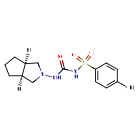
Structure for Gliclazide (DB01120)
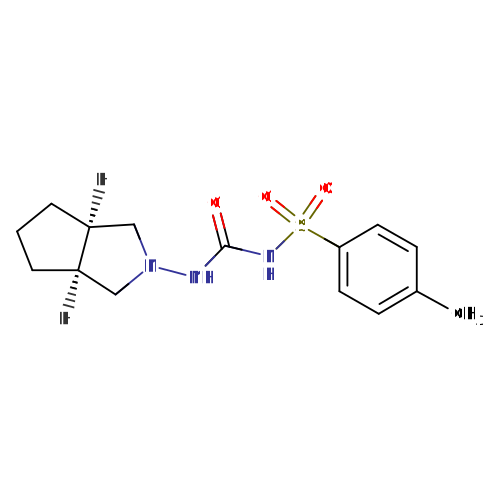
- Weight
- Average: 323.41
Monoisotopic: 323.130362722 - Chemical Formula
- C15H21N3O3S
- Synonyms
- 1-(3-azabicyclo(3.3.0)oct-3-yl)-3-(p-tolylsulfonyl)urea
- 1-(hexahydrocyclopenta(c)pyrrol-2(1H)-yl)-3-(p-tolylsulfonyl)urea
- Gliclazida
- Gliclazide
- Gliclazidum
- External IDs
- J3.151H
- S-1702
- S-852
- SE 1702
- SE-1702

Pharmacology
- Indication
For the treatment of NIDDM in conjunction with diet and exercise.
 Reduce drug development failure ratesBuild, train, & validate machine-learning modelswith evidence-based and structured datasets.Build, train, & validate predictive machine-learning models with structured datasets.
- Associated Conditions
Indication Type Indication Combined Product Details Approval Level Age Group Patient Characteristics Dose Form Management of Type 2 diabetes mellitus •••••••••••• - Contraindications & Blackbox Warnings
 Prevent Adverse Drug Events TodayTap into our Clinical API for life-saving information on contraindications & blackbox warnings, population restrictions, harmful risks, & more.Avoid life-threatening adverse drug events with our Clinical API
- Pharmacodynamics
Based on the pharmacological properties, gliclazide is a second generation sulphonylurea which acts as a hypoglycemic agent. It stimulates β cells of the islet of Langerhans in the pancreas to release insulin. It also enhances peripheral insulin sensitivity. Overall, it potentiates insulin release and improves insulin dynamics.
- Mechanism of action
Gliclazide binds to the β cell sulfonyl urea receptor (SUR1). This binding subsequently blocks the ATP sensitive potassium channels. The binding results in closure of the channels and leads to a resulting decrease in potassium efflux leads to depolarization of the β cells. This opens voltage-dependent calcium channels in the β cell resulting in calmodulin activation, which in turn leads to exocytosis of insulin containing secretorty granules.
Target Actions Organism AATP-binding cassette sub-family C member 8 binderHumans UVascular endothelial growth factor A other/unknownHumans - Absorption
Rapidly and well absorbed but may have wide inter- and intra-individual variability. Peak plasma concentrations occur within 4-6 hours of oral administration.
- Volume of distribution
Not Available
- Protein binding
94%, highly bound to plasma proteins
- Metabolism
Extensively metabolized in the liver. Less than 1% of the orally administered dose appears unchanged in the urine. Metabolites include oxidized and hydroxylated derivates, as well as glucuronic acid conjugates.
Hover over products below to view reaction partners
- Route of elimination
Metabolites and conjugates are eliminated primarily by the kidneys (60-70%) and also in the feces (10-20%).
- Half-life
10.4 hours. Duration of action is 10-24 hours.
- Clearance
Not Available
- Adverse Effects
 Improve decision support & research outcomesWith structured adverse effects data, including: blackbox warnings, adverse reactions, warning & precautions, & incidence rates. View sample adverse effects data in our new Data Library!Improve decision support & research outcomes with our structured adverse effects data.
- Toxicity
LD50=3000 mg/kg (orally in mice). Gliclazide and its metabolites may accumulate in those with severe hepatic and/or renal dysfunction. Symptoms of hypoglycemia include: dizziness, lack of energy, drowsiness, headache and sweating.
- Pathways
Pathway Category Gliclazide Action Pathway Drug action - Pharmacogenomic Effects/ADRs
Interacting Gene/Enzyme Allele name Genotype(s) Defining Change(s) Type(s) Description Details Cytochrome P450 2C19 CYP2C19*2 (A;A) / (A;G) 681G>A Effect Directly Studied The presence of this polymorphism in CYP2C19 is associated with reduction in gliclazide metabolism. Details Cytochrome P450 2C19 CYP2C19*3 Not Available 636G>A Effect Directly Studied The presence of this polymorphism in CYP2C19 is associated with reduction in gliclazide metabolism. Details Cytochrome P450 2C19 CYP2C19*2A Not Available 681G>A Effect Inferred Poor drug metabolizer. Details Cytochrome P450 2C19 CYP2C19*2B Not Available 681G>A Effect Inferred Poor drug metabolizer. Details Cytochrome P450 2C19 CYP2C19*4 Not Available 1A>G Effect Inferred Poor drug metabolizer. Details Cytochrome P450 2C19 CYP2C19*5 Not Available 1297C>T Effect Inferred Poor drug metabolizer. Details Cytochrome P450 2C19 CYP2C19*6 Not Available 395G>A Effect Inferred Poor drug metabolizer. Details Cytochrome P450 2C19 CYP2C19*7 Not Available 19294T>A Effect Inferred Poor drug metabolizer. Details Cytochrome P450 2C19 CYP2C19*22 Not Available 557G>C / 991A>G Effect Inferred Poor drug metabolizer. Details Cytochrome P450 2C19 CYP2C19*24 Not Available 99C>T / 991A>G … show all Effect Inferred Poor drug metabolizer. Details Cytochrome P450 2C19 CYP2C19*35 Not Available 12662A>G Effect Inferred Poor drug metabolizer. Details
Interactions
- Drug Interactions
- This information should not be interpreted without the help of a healthcare provider. If you believe you are experiencing an interaction, contact a healthcare provider immediately. The absence of an interaction does not necessarily mean no interactions exist.
Drug Interaction Integrate drug-drug
interactions in your softwareAbatacept The metabolism of Gliclazide can be increased when combined with Abatacept. Abrocitinib The metabolism of Abrocitinib can be decreased when combined with Gliclazide. Acarbose The risk or severity of hypoglycemia can be increased when Acarbose is combined with Gliclazide. Acebutolol The therapeutic efficacy of Gliclazide can be increased when used in combination with Acebutolol. Aceclofenac The protein binding of Gliclazide can be decreased when combined with Aceclofenac. - Food Interactions
- Avoid alcohol.
- Take with or without food. Consistent food intake reduces the risk of hypoglycemia.
Products
 Drug product information from 10+ global regionsOur datasets provide approved product information including:dosage, form, labeller, route of administration, and marketing period.Access drug product information from over 10 global regions.
- International/Other Brands
- Glimicron / Nordialex
- Brand Name Prescription Products
Name Dosage Strength Route Labeller Marketing Start Marketing End Region Image Diamicron Tablet 80 mg Oral Servier 1990-12-31 2022-10-18 Canada 
Diamicron Mr Tablet, extended release 60 mg Oral Servier 2010-12-09 Not applicable Canada Diamicron Mr Tablet, extended release 30 mg Oral Servier 2001-04-04 Not applicable Canada Glic Tablet 80 mg Oral Prempharm Inc 2003-10-02 2005-08-05 Canada Gliclazide Tablet 80 mg Oral Sanis Health Inc 2010-02-25 Not applicable Canada - Generic Prescription Products
Name Dosage Strength Route Labeller Marketing Start Marketing End Region Image Ag-gliclazide Mr Tablet, extended release 60 mg Oral Angita Pharma Inc. Not applicable Not applicable Canada Ag-gliclazide Mr Tablet, extended release 30 mg Oral Angita Pharma Inc. Not applicable Not applicable Canada Apo-gliclazide Tablet 80 mg Oral Apotex Corporation 2002-07-02 Not applicable Canada Apo-gliclazide Mr Tablet, extended release 30 mg Oral Apotex Corporation 2008-06-04 Not applicable Canada Apo-gliclazide Mr Tablet, extended release 60 mg Oral Apotex Corporation 2015-04-14 Not applicable Canada - Mixture Products
Name Ingredients Dosage Route Labeller Marketing Start Marketing End Region Image DUODİA 80 MG/500 MG TABLET, 30 ADET Gliclazide (80 mg) + Metformin hydrochloride (500 mg) Tablet Oral NEUTEC İLAÇ SAN. TİC. A.Ş. 2020-08-14 Not applicable Turkey 
DUODIA 80/500 MG TABLET, 60 ADET Gliclazide (80 mg) + Metformin hydrochloride (500 mg) Tablet Oral NEUTEC İLAÇ SAN. TİC. A.Ş. 2020-08-14 Not applicable Turkey DUODIA 80/500 MG TABLET, 90 ADET Gliclazide (80 mg) + Metformin hydrochloride (500 mg) Tablet Oral NEUTEC İLAÇ SAN. TİC. A.Ş. 2020-08-14 Not applicable Turkey GLIFOR PLUS 30 MG/1000 MG DEĞIŞTIRILMIŞ SALIMLI TABLET, 30 ADET Gliclazide (30 mg) + Metformin hydrochloride (1000 mg) Tablet, delayed release Oral BİLİM İLAÇ SAN. VE TİC. A.Ş. 2015-05-08 Not applicable Turkey GLIFOR PLUS 30 MG/1000 MG DEĞIŞTIRILMIŞ SALIMLI TABLET, 60 ADET Gliclazide (30 mg) + Metformin hydrochloride (1000 mg) Tablet, delayed release Oral BİLİM İLAÇ SAN. VE TİC. A.Ş. 2015-05-08 Not applicable Turkey
Categories
- ATC Codes
- A10BB09 — Gliclazide
- A10BB — Sulfonylureas
- A10B — BLOOD GLUCOSE LOWERING DRUGS, EXCL. INSULINS
- A10 — DRUGS USED IN DIABETES
- A — ALIMENTARY TRACT AND METABOLISM
- Drug Categories
- Alimentary Tract and Metabolism
- Amides
- Benzene Derivatives
- Benzenesulfonamides
- Blood Glucose Lowering Agents
- Cytochrome P-450 CYP2C19 Substrates
- Cytochrome P-450 CYP2C9 Substrates
- Cytochrome P-450 Substrates
- Drugs Used in Diabetes
- Genito Urinary System and Sex Hormones
- Gynecological Antiinfectives and Antiseptics
- Hypoglycemia-Associated Agents
- Insulin Secretagogues
- Oral Hypoglycemics
- Sulfonamides
- Sulfones
- Sulfonylureas
- Sulfur Compounds
- Classification
- Not classified
- Affected organisms
- Humans and other mammals
Chemical Identifiers
- UNII
- G4PX8C4HKV
- CAS number
- 21187-98-4
- InChI Key
- BOVGTQGAOIONJV-BETUJISGSA-N
- InChI
- InChI=1S/C15H21N3O3S/c1-11-5-7-14(8-6-11)22(20,21)17-15(19)16-18-9-12-3-2-4-13(12)10-18/h5-8,12-13H,2-4,9-10H2,1H3,(H2,16,17,19)/t12-,13+
- IUPAC Name
- 3-[(3aR,6aS)-octahydrocyclopenta[c]pyrrol-2-yl]-1-(4-methylbenzenesulfonyl)urea
- SMILES
- [H][C@@]12CCC[C@]1([H])CN(C2)NC(=O)NS(=O)(=O)C1=CC=C(C)C=C1
References
- Synthesis Reference
U.S. Patent 3,501,495
- General References
- Ballagi-Pordany G, Koszeghy A, Koltai MZ, Aranyi Z, Pogatsa G: Divergent cardiac effects of the first and second generation hypoglycemic sulfonylurea compounds. Diabetes Res Clin Pract. 1990 Jan;8(2):109-14. [Article]
- Scholar E. (2007). XPharm: The comprehensive Pharmacology Reference. Elsevier.
- Ghosh S. and Collier A. (2012). Churchill's pocketbook of diabetes (2nd ed.). Elsevier.
- External Links
- Human Metabolome Database
- HMDB0015252
- KEGG Drug
- D01599
- PubChem Compound
- 3475
- PubChem Substance
- 46505475
- ChemSpider
- 580820
- BindingDB
- 50103512
- 4816
- ChEBI
- 31654
- ChEMBL
- CHEMBL427216
- ZINC
- ZINC000012461841
- Therapeutic Targets Database
- DAP000522
- PharmGKB
- PA10892
- PDBe Ligand
- GCZ
- Wikipedia
- Gliclazide
- PDB Entries
- 4zfc
- MSDS
- Download (57.5 KB)
Clinical Trials
- Clinical Trials
Phase Status Purpose Conditions Count 4 Active Not Recruiting Treatment Type 2 Diabetes Mellitus 1 4 Completed Basic Science Type 2 Diabetes Mellitus 1 4 Completed Prevention Diabetic Nephropathy / Type 2 Diabetes Mellitus 1 4 Completed Treatment Diabetes 2 4 Completed Treatment Diabetes / Type 2 Diabetes Mellitus 1
Pharmacoeconomics
- Manufacturers
- Not Available
- Packagers
- Not Available
- Dosage Forms
Form Route Strength Tablet, extended release Oral 60 mg Tablet, extended release Oral 30.0 mg Tablet Oral Tablet Oral 30 MG Tablet Oral 80 mg Tablet Oral 30.000 mg Tablet, extended release Oral Tablet, film coated, extended release Oral 60 mg Tablet Oral Tablet, delayed release Oral 90 mg Tablet, extended release Oral 60.00 mg Tablet, delayed release Oral Tablet, delayed release Oral 30 MG Tablet Oral 90 MG Tablet, delayed release Oral Tablet Oral 80.00 mg Tablet, film coated Oral 80 mg Tablet Oral 60 mg Tablet, extended release Oral 30 mg Tablet, delayed release Oral 60 mg - Prices
Unit description Cost Unit Diamicron 80 mg Tablet 0.42USD tablet Apo-Gliclazide 80 mg Tablet 0.23USD tablet Gliclazide 80 mg Tablet 0.23USD tablet Mylan-Gliclazide 80 mg Tablet 0.23USD tablet Novo-Gliclazide 80 mg Tablet 0.23USD tablet Pms-Gliclazide 80 mg Tablet 0.23USD tablet Diamicron Mr 30 mg Sustained-Release Tablet 0.16USD tablet Apo-Gliclazide Mr 30 mg Sustained-Release Tablet 0.15USD tablet DrugBank does not sell nor buy drugs. Pricing information is supplied for informational purposes only.- Patents
Patent Number Pediatric Extension Approved Expires (estimated) Region CA2273420 No 2002-07-09 2019-05-27 Canada
Properties
- State
- Solid
- Experimental Properties
Property Value Source melting point (°C) 180-182 U.S. Patent 3,501,495 logP 2.6 Not Available - Predicted Properties
Property Value Source Water Solubility 0.19 mg/mL ALOGPS logP 1.52 ALOGPS logP 1.73 Chemaxon logS -3.2 ALOGPS pKa (Strongest Acidic) 4.07 Chemaxon pKa (Strongest Basic) 1.38 Chemaxon Physiological Charge -1 Chemaxon Hydrogen Acceptor Count 4 Chemaxon Hydrogen Donor Count 2 Chemaxon Polar Surface Area 78.51 Å2 Chemaxon Rotatable Bond Count 2 Chemaxon Refractivity 83.88 m3·mol-1 Chemaxon Polarizability 33.72 Å3 Chemaxon Number of Rings 3 Chemaxon Bioavailability 1 Chemaxon Rule of Five Yes Chemaxon Ghose Filter Yes Chemaxon Veber's Rule No Chemaxon MDDR-like Rule No Chemaxon - Predicted ADMET Features
Property Value Probability Human Intestinal Absorption + 0.9944 Blood Brain Barrier + 0.8445 Caco-2 permeable - 0.6543 P-glycoprotein substrate Substrate 0.6982 P-glycoprotein inhibitor I Non-inhibitor 0.8619 P-glycoprotein inhibitor II Non-inhibitor 0.931 Renal organic cation transporter Non-inhibitor 0.8178 CYP450 2C9 substrate Substrate 0.6226 CYP450 2D6 substrate Non-substrate 0.9116 CYP450 3A4 substrate Non-substrate 0.6925 CYP450 1A2 substrate Non-inhibitor 0.9046 CYP450 2C9 inhibitor Non-inhibitor 0.9071 CYP450 2D6 inhibitor Non-inhibitor 0.9231 CYP450 2C19 inhibitor Non-inhibitor 0.9025 CYP450 3A4 inhibitor Non-inhibitor 0.9218 CYP450 inhibitory promiscuity Low CYP Inhibitory Promiscuity 0.8751 Ames test Non AMES toxic 0.8047 Carcinogenicity Non-carcinogens 0.7944 Biodegradation Not ready biodegradable 0.7997 Rat acute toxicity 2.0016 LD50, mol/kg Not applicable hERG inhibition (predictor I) Weak inhibitor 0.5992 hERG inhibition (predictor II) Non-inhibitor 0.8064
Spectra
- Mass Spec (NIST)
- Not Available
- Spectra
Spectrum Spectrum Type Splash Key Predicted MS/MS Spectrum - 10V, Negative (Annotated) Predicted LC-MS/MS splash10-00di-4629000000-830dbf827893d318a11b Predicted MS/MS Spectrum - 10V, Positive (Annotated) Predicted LC-MS/MS splash10-00fr-0906000000-358d964152ea1500c4f7 Predicted MS/MS Spectrum - 20V, Negative (Annotated) Predicted LC-MS/MS splash10-00di-0900000000-b38368fe09fab4fab36b Predicted MS/MS Spectrum - 20V, Positive (Annotated) Predicted LC-MS/MS splash10-00dl-5709000000-0c2c93a67ae8ab558def Predicted MS/MS Spectrum - 40V, Positive (Annotated) Predicted LC-MS/MS splash10-0006-9121000000-24b36f5954b00c328cec Predicted MS/MS Spectrum - 40V, Negative (Annotated) Predicted LC-MS/MS splash10-00di-3900000000-0697374e89deb0efef5e Predicted 1H NMR Spectrum 1D NMR Not Applicable Predicted 13C NMR Spectrum 1D NMR Not Applicable - Chromatographic Properties
Collision Cross Sections (CCS)
Adduct CCS Value (Å2) Source type Source [M-H]- 175.41734 predictedDeepCCS 1.0 (2019) [M+H]+ 177.77534 predictedDeepCCS 1.0 (2019) [M+Na]+ 184.36327 predictedDeepCCS 1.0 (2019)
Targets

- Kind
- Protein
- Organism
- Humans
- Pharmacological action
- Yes
- Actions
- Binder
- General Function
- Sulfonylurea receptor activity
- Specific Function
- Subunit of the beta-cell ATP-sensitive potassium channel (KATP). Regulator of ATP-sensitive K(+) channels and insulin release.
- Gene Name
- ABCC8
- Uniprot ID
- Q09428
- Uniprot Name
- ATP-binding cassette sub-family C member 8
- Molecular Weight
- 176990.36 Da
References
- Gribble FM, Ashcroft FM: Sulfonylurea sensitivity of adenosine triphosphate-sensitive potassium channels from beta cells and extrapancreatic tissues. Metabolism. 2000 Oct;49(10 Suppl 2):3-6. [Article]
- Harrower A: Gliclazide modified release: from once-daily administration to 24-hour blood glucose control. Metabolism. 2000 Oct;49(10 Suppl 2):7-11. [Article]
- Lawrence CL, Proks P, Rodrigo GC, Jones P, Hayabuchi Y, Standen NB, Ashcroft FM: Gliclazide produces high-affinity block of KATP channels in mouse isolated pancreatic beta cells but not rat heart or arterial smooth muscle cells. Diabetologia. 2001 Aug;44(8):1019-25. [Article]
- Reimann F, Ashcroft FM, Gribble FM: Structural basis for the interference between nicorandil and sulfonylurea action. Diabetes. 2001 Oct;50(10):2253-9. [Article]
- Proks P, Reimann F, Green N, Gribble F, Ashcroft F: Sulfonylurea stimulation of insulin secretion. Diabetes. 2002 Dec;51 Suppl 3:S368-76. [Article]
- Kind
- Protein
- Organism
- Humans
- Pharmacological action
- Unknown
- Actions
- Other/unknown
- General Function
- Vascular endothelial growth factor receptor binding
- Specific Function
- Growth factor active in angiogenesis, vasculogenesis and endothelial cell growth. Induces endothelial cell proliferation, promotes cell migration, inhibits apoptosis and induces permeabilization of...
- Gene Name
- VEGFA
- Uniprot ID
- P15692
- Uniprot Name
- Vascular endothelial growth factor A
- Molecular Weight
- 27042.205 Da
References
- Mamputu JC, Renier G: Advanced glycation end products increase, through a protein kinase C-dependent pathway, vascular endothelial growth factor expression in retinal endothelial cells. Inhibitory effect of gliclazide. J Diabetes Complications. 2002 Jul-Aug;16(4):284-93. [Article]
- Mamputu JC, Renier G: Signalling pathways involved in retinal endothelial cell proliferation induced by advanced glycation end products: inhibitory effect of gliclazide. Diabetes Obes Metab. 2004 Mar;6(2):95-103. [Article]
- Li L, Renier G: Activation of nicotinamide adenine dinucleotide phosphate (reduced form) oxidase by advanced glycation end products links oxidative stress to altered retinal vascular endothelial growth factor expression. Metabolism. 2006 Nov;55(11):1516-23. [Article]
- Kimura T, Takagi H, Suzuma K, Kita M, Watanabe D, Yoshimura N: Comparisons between the beneficial effects of different sulphonylurea treatments on ischemia-induced retinal neovascularization. Free Radic Biol Med. 2007 Aug 1;43(3):454-61. Epub 2007 May 3. [Article]
Enzymes
- Kind
- Protein
- Organism
- Humans
- Pharmacological action
- Unknown
- Actions
- Substrate
- General Function
- Steroid hydroxylase activity
- Specific Function
- Cytochromes P450 are a group of heme-thiolate monooxygenases. In liver microsomes, this enzyme is involved in an NADPH-dependent electron transport pathway. It oxidizes a variety of structurally un...
- Gene Name
- CYP2C9
- Uniprot ID
- P11712
- Uniprot Name
- Cytochrome P450 2C9
- Molecular Weight
- 55627.365 Da
References
- Zhou SF, Zhou ZW, Yang LP, Cai JP: Substrates, inducers, inhibitors and structure-activity relationships of human Cytochrome P450 2C9 and implications in drug development. Curr Med Chem. 2009;16(27):3480-675. Epub 2009 Sep 1. [Article]
- Yao Y, Han WW, Zhou YH, Li ZS, Li Q, Chen XY, Zhong DF: The metabolism of CYP2C9 and CYP2C19 for gliclazide by homology modeling and docking study. Eur J Med Chem. 2009 Feb;44(2):854-61. doi: 10.1016/j.ejmech.2008.04.015. Epub 2008 May 2. [Article]
- Elliot DJ, Suharjono, Lewis BC, Gillam EM, Birkett DJ, Gross AS, Miners JO: Identification of the human cytochromes P450 catalysing the rate-limiting pathways of gliclazide elimination. Br J Clin Pharmacol. 2007 Oct;64(4):450-7. Epub 2007 May 22. [Article]
- Kind
- Protein
- Organism
- Humans
- Pharmacological action
- Unknown
- Actions
- Substrate
- General Function
- Steroid hydroxylase activity
- Specific Function
- Responsible for the metabolism of a number of therapeutic agents such as the anticonvulsant drug S-mephenytoin, omeprazole, proguanil, certain barbiturates, diazepam, propranolol, citalopram and im...
- Gene Name
- CYP2C19
- Uniprot ID
- P33261
- Uniprot Name
- Cytochrome P450 2C19
- Molecular Weight
- 55930.545 Da
References
- Zhang Y, Si D, Chen X, Lin N, Guo Y, Zhou H, Zhong D: Influence of CYP2C9 and CYP2C19 genetic polymorphisms on pharmacokinetics of gliclazide MR in Chinese subjects. Br J Clin Pharmacol. 2007 Jul;64(1):67-74. Epub 2007 Feb 12. [Article]
- Yao Y, Han WW, Zhou YH, Li ZS, Li Q, Chen XY, Zhong DF: The metabolism of CYP2C9 and CYP2C19 for gliclazide by homology modeling and docking study. Eur J Med Chem. 2009 Feb;44(2):854-61. doi: 10.1016/j.ejmech.2008.04.015. Epub 2008 May 2. [Article]
- Elliot DJ, Suharjono, Lewis BC, Gillam EM, Birkett DJ, Gross AS, Miners JO: Identification of the human cytochromes P450 catalysing the rate-limiting pathways of gliclazide elimination. Br J Clin Pharmacol. 2007 Oct;64(4):450-7. Epub 2007 May 22. [Article]
Carriers
- Kind
- Protein
- Organism
- Humans
- Pharmacological action
- Unknown
- General Function
- Toxic substance binding
- Specific Function
- Serum albumin, the main protein of plasma, has a good binding capacity for water, Ca(2+), Na(+), K(+), fatty acids, hormones, bilirubin and drugs. Its main function is the regulation of the colloid...
- Gene Name
- ALB
- Uniprot ID
- P02768
- Uniprot Name
- Serum albumin
- Molecular Weight
- 69365.94 Da
References
- Igaki A, Kobayashi K, Kimura M, Sakoguchi T, Matsuoka A: Influence of blood proteins on biomedical analysis. XII. Effects of glycation on gliclazide (oral hypoglycemic drug)-binding with serum albumin in diabetics. Chem Pharm Bull (Tokyo). 1992 Jan;40(1):255-7. [Article]
- Kobayashi K, Kimura M, Sakoguchi T, Hase A, Matsuoka A: Influence of blood proteins on biomedical analysis. V. Effect of ethyl alcohol on gliclazide-binding with bovine serum albumin. Chem Pharm Bull (Tokyo). 1982 Mar;30(3):1077-80. [Article]

Drug created at June 13, 2005 13:24 / Updated at April 27, 2024 09:44