Identification
- Summary
Chloroprocaine is a local anesthetic agent indicated for intrathecal injection in adults for the production of subarachnoid block, spinal anesthesia, or ocular surface anesthesia.
- Brand Names
- Clorotekal, Iheezo, Nesacaine
- Generic Name
- Chloroprocaine
- DrugBank Accession Number
- DB01161
- Background
Chloroprocaine is an ester local anesthetic commonly available in its salt form, chloroprocaine hydrochloride. Similar to other local anesthetics, it increases the threshold for electrical excitation in nerves by slowing the propagation of the nerve impulse and reducing the rate of rise of the action potential.6 The pharmacological profile of chloroprocaine is characterized by a short latency and duration, similar to the one observed with lidocaine.1 Chloroprocaine can be given as an injection, and is available in formulations with and without methylparaben as a preservative. Both can be given as intrathecal injections for peripheral and central nerve block, but only the preservative-free formulation can be used for lumbar and caudal epidural blocks.1,4 Topical chloroprocaine for ophthalmic use was approved by the FDA in September 2022 for ocular surface anesthesia.5
- Type
- Small Molecule
- Groups
- Approved, Investigational
- Structure
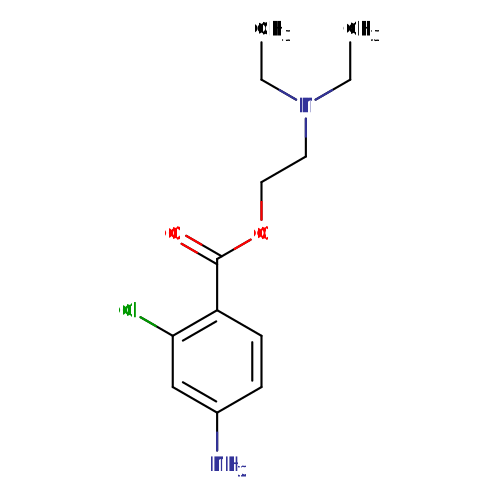
Structure for Chloroprocaine (DB01161)
- Weight
- Average: 270.755
Monoisotopic: 270.113505569 - Chemical Formula
- C13H19ClN2O2
- Synonyms
- 2-(Diethylamino)ethyl 4-amino-2-chlorobenzoate
- 2-chloroprocaine
- 4-amino-2-chlorobenzoic acid 2-(diethylamino)ethyl ester
- Chloroprocain
- Chloroprocaine
- Chloroprocainum
- Chlorprocaine
- Cloroprocaina

Pharmacology
- Indication
Chloroprocaine for intrathecal injection is indicated for the production of subarachnoid block (spinal anesthesia) in adults.3 It is also indicated for the production of local anesthesia by infiltration, peripheral and central nerve block, and a preservative-free form can also be used for lumbar and caudal epidural blocks.4 Topical chloroprocaine for ophthalmic use is indicated for ocular surface anesthesia.5
 Reduce drug development failure ratesBuild, train, & validate machine-learning modelswith evidence-based and structured datasets.Build, train, & validate predictive machine-learning models with structured datasets.
- Associated Therapies
- Contraindications & Blackbox Warnings
 Prevent Adverse Drug Events TodayTap into our Clinical API for life-saving information on contraindications & blackbox warnings, population restrictions, harmful risks, & more.Avoid life-threatening adverse drug events with our Clinical API
- Pharmacodynamics
Chloroprocaine is an ester local anesthetic agent indicated for the production of local or regional anesthesia with effects on the cardiovascular and central nervous systems. Compared with lidocaine and bupivacaine, chloroprocaine has shorter ambulation and discharge times.2 Chloroprocaine has minimal effects on cardiac conduction, excitability, refractoriness, contractility, and peripheral vascular resistance at therapeutic doses.3,4 However, at toxic blood concentrations, chloroprocaine may cause atrioventricular block and cardiac arrest, as well as decreased cardiac output and arterial blood pressure. A high concentration of chloroprocaine in plasma can also lead to central nervous system stimulation, depression, or both. Some signs of central stimulation include restlessness, tremors and shivering, which may progress to convulsions. Depression, coma and respiratory arrest may also occur. As with other local anesthetics, patients may experience depression of the central nervous system without a prior stage of stimulation.3,4
- Mechanism of action
Chloroprocaine acts mainly by binding to the alpha subunit on the cytoplasmic region of voltage-gated sodium channels and inhibiting sodium influx in neuronal cell membranes.6 This lowers the nerve membrane permeability to sodium and decreases the rate of rise of the action potential.3,4 Therefore, chloroprocaine inhibits signal conduction and leads to a reversible nerve conduction blockade.6 The progression of anesthesia depends on the diameter, myelination and conduction velocity of nerve fibers, and the order of loss of nerve function is the following: 1) pain, 2) temperature, 3) touch, 4) proprioception, and 5) skeletal muscle tone.3,4
Target Actions Organism AVoltage-gated sodium channel alpha subunit inhibitorHumans USodium-dependent dopamine transporter inhibitorHumans - Absorption
Thanks to its low risk for systemic toxicity, chloroprocaine has a rapid onset of action that usually ranges between 6 to 12 minutes.3,4,6 The duration of chloroprocaine-induced anesthesia may be up to 60 minutes. The absorption rate of local anesthetics depends on the total dose and concentration of chloroprocaine, as well as the route of administration, the vascularity of the administration site, and the presence or absence of epinephrine in the anesthetic injection. The presence of epinephrine reduces the rate of absorption and plasma concentration of local anesthetics.3,4 The systemic exposure to chloroprocaine following its topical ocular administration has not been evaluated.5
- Volume of distribution
Not Available
- Protein binding
Compared to the other clinically used local anesthetics, chloroprocaine has one of the lowest protein binding percentages.6
- Metabolism
In plasma, chloroprocaine is quickly metabolized by pseudocholinesterases, a group of enzymes that perform the hydrolysis of the ester linkage. In ocular tissues, chloroprocaine is metabolized by nonspecific esterases.5 The hydrolysis of chloroprocaine leads to the production of ß-diethylaminoethanol and 2-chloro-4-aminobenzoic acid, which inhibits the action of the sulfonamides.3,4,5
Hover over products below to view reaction partners
- Route of elimination
Like most local anesthetics and their metabolites, chloroprocaine is mainly excreted by the kidneys. The urinary excretion of chloroprocaine may be affected by urinary perfusion and factors that have an effect on urinary pH.3,4,5
- Half-life
In adults, the average in vitro plasma half-life of chloroprocaine is 21 seconds for males and 25 seconds for females. In neonates, the average in vitro plasma half-life is 43 seconds.4 Following intrapartum epidural anesthesia, the apparent in vivo half-life of chloroprocaine detected in maternal plasma was 3.1 minutes (range from 1.5 to 6.4 minutes).3
- Clearance
Not Available
- Adverse Effects
 Improve decision support & research outcomesWith structured adverse effects data, including: blackbox warnings, adverse reactions, warning & precautions, & incidence rates. View sample adverse effects data in our new Data Library!Improve decision support & research outcomes with our structured adverse effects data.
- Toxicity
Most chloroprocaine overdose cases are related to high plasma levels during its therapeutic use or to the unintended administration of a subarachnoid injection. In mice, the intravenous LD50 of chloroprocaine HCl is 97 mg/kg and the subcutaneous LD50 of chloroprocaine HCl is 950 mg/kg. The first consideration in the management of local anesthetic emergencies is prevention, which can be achieved by carefully monitoring patients’ cardiovascular and respiratory vital signs, as well as their state of consciousness. If there are any changes, oxygen should be administered.3,4
In patients with chloroprocaine overdose with convulsions, underventilation or apnea, the drug label recommends giving immediate attention to maintaining a patent airway, assisted or controlled ventilation with oxygen and a delivery system capable of permitting immediate positive airway pressure by mask. If convulsions persist, provide small increments of an ultra-short acting barbiturate or a benzodiazepine intravenously. Refer to the chloroprocaine drug label for a complete description of the procedures recommended in case of overdose.3,4
- Pathways
Pathway Category Chloroprocaine Action Pathway Drug action - Pharmacogenomic Effects/ADRs
- Not Available
Interactions
- Drug Interactions
- This information should not be interpreted without the help of a healthcare provider. If you believe you are experiencing an interaction, contact a healthcare provider immediately. The absence of an interaction does not necessarily mean no interactions exist.
Drug Interaction Integrate drug-drug
interactions in your software1,2-Benzodiazepine The risk or severity of CNS depression can be increased when Chloroprocaine is combined with 1,2-Benzodiazepine. Abemaciclib The risk or severity of methemoglobinemia can be increased when Abemaciclib is combined with Chloroprocaine. Abiraterone The risk or severity of methemoglobinemia can be increased when Abiraterone is combined with Chloroprocaine. Acetaminophen The risk or severity of methemoglobinemia can be increased when Acetaminophen is combined with Chloroprocaine. Acetazolamide The therapeutic efficacy of Acetazolamide can be decreased when used in combination with Chloroprocaine. - Food Interactions
- No interactions found.
Products
 Drug product information from 10+ global regionsOur datasets provide approved product information including:dosage, form, labeller, route of administration, and marketing period.Access drug product information from over 10 global regions.
- Product Ingredients
Ingredient UNII CAS InChI Key Chloroprocaine hydrochloride LT7Z1YW11H 3858-89-7 SZKQYDBPUCZLRX-UHFFFAOYSA-N - International/Other Brands
- Iheezo (Harrow Eye, LLC) / Nesacaine-CE (AstraZeneca) / Piocaine
- Brand Name Prescription Products
Name Dosage Strength Route Labeller Marketing Start Marketing End Region Image (chloroprocaine Hci Injection, solution 10 mg/1mL Infiltration; Perineural HF Acquisition Co LLC, DBA HealthFirst 2019-10-13 Not applicable US 
Chloroprocaine Hci Injection, solution 20 mg/1mL Epidural; Infiltration; Intracaudal; Perineural HF Acquisition Co LLC, DBA HealthFirst 2019-10-29 Not applicable US Chloroprocaine Hci Injection, solution 20 mg/1mL Infiltration; Perineural HF Acquisition Co LLC, DBA HealthFirst 2019-10-13 Not applicable US Clorotekal Injection, solution 10 mg/1mL Intrathecal Sintetica Sa 2017-10-04 2018-05-09 US Clorotekal Injection, solution 10 mg/1mL Intrathecal B. Braun Medical Inc. 2018-05-01 Not applicable US - Generic Prescription Products
Name Dosage Strength Route Labeller Marketing Start Marketing End Region Image Chloroprocaine Hydrochloride Injection, solution 20 mg/1mL Epidural; Infiltration; Intracaudal Hospira, Inc. 2005-07-08 2013-01-01 US Chloroprocaine Hydrochloride Injection, solution 20 mg/1mL Epidural; Infiltration Bedford Pharmaceuticals 1998-11-01 2012-06-30 US Chloroprocaine Hydrochloride Injection, solution 20 mg/1mL Epidural; Infiltration; Intracaudal; Perineural Hikma Pharmaceuticals USA Inc. 1998-11-01 Not applicable US Chloroprocaine Hydrochloride Injection, solution 30 mg/1mL Epidural; Infiltration; Intracaudal; Perineural Hikma Pharmaceuticals USA Inc. 1998-11-01 Not applicable US Chloroprocaine Hydrochloride Injection, solution 30 mg/1mL Epidural; Infiltration; Intracaudal Hospira, Inc. 2005-05-02 2013-07-01 US
Categories
- ATC Codes
- N01BA04 — Chloroprocaine
- Drug Categories
- Acids, Carbocyclic
- Aminobenzoates
- Anesthetics
- Anesthetics, Local
- Benzene Derivatives
- Benzoates
- Central Nervous System Agents
- Central Nervous System Depressants
- Cholinesterase substrates
- Esters of Aminobenzoic Acid
- Local Anesthesia
- Local Anesthetics (Ester)
- Nervous System
- para-Aminobenzoates
- Peripheral Nervous System Agents
- Sensory System Agents
- Chemical TaxonomyProvided by Classyfire
- Description
- This compound belongs to the class of organic compounds known as benzoic acid esters. These are ester derivatives of benzoic acid.
- Kingdom
- Organic compounds
- Super Class
- Benzenoids
- Class
- Benzene and substituted derivatives
- Sub Class
- Benzoic acids and derivatives
- Direct Parent
- Benzoic acid esters
- Alternative Parents
- 2-halobenzoic acids and derivatives / Aminobenzoic acids and derivatives / Aniline and substituted anilines / Benzoyl derivatives / Chlorobenzenes / Aryl chlorides / Vinylogous halides / Trialkylamines / Amino acids and derivatives / Carboxylic acid esters show 7 more
- Substituents
- 2-halobenzoic acid or derivatives / Amine / Amino acid or derivatives / Aminobenzoic acid or derivatives / Aniline or substituted anilines / Aromatic homomonocyclic compound / Aryl chloride / Aryl halide / Benzoate ester / Benzoyl show 19 more
- Molecular Framework
- Aromatic homomonocyclic compounds
- External Descriptors
- monochlorobenzenes, benzoate ester (CHEBI:3636)
- Affected organisms
- Humans and other mammals
Chemical Identifiers
- UNII
- 5YVB0POT2H
- CAS number
- 133-16-4
- InChI Key
- VDANGULDQQJODZ-UHFFFAOYSA-N
- InChI
- InChI=1S/C13H19ClN2O2/c1-3-16(4-2)7-8-18-13(17)11-6-5-10(15)9-12(11)14/h5-6,9H,3-4,7-8,15H2,1-2H3
- IUPAC Name
- 2-(diethylamino)ethyl 4-amino-2-chlorobenzoate
- SMILES
- CCN(CC)CCOC(=O)C1=C(Cl)C=C(N)C=C1
References
- Synthesis Reference
Marks, HC and Rubin, MI (1949). Alkamine esters of 2-chloro-4-amino benzoic acid. US. Patent 2,460,139 Assigned to Wallace & Tiernan Products, Inc. https://patentimages.storage.googleapis.com/6c/19/84/5af4fc6dc359a3/US2460139.pdf
- General References
- Camponovo C, Wulf H, Ghisi D, Fanelli A, Riva T, Cristina D, Vassiliou T, Leschka K, Fanelli G: Intrathecal 1% 2-chloroprocaine vs. 0.5% bupivacaine in ambulatory surgery: a prospective, observer-blinded, randomised, controlled trial. Acta Anaesthesiol Scand. 2014 May;58(5):560-6. doi: 10.1111/aas.12291. Epub 2014 Mar 6. [Article]
- Wulf H, Hampl K, Steinfeldt T: Speed spinal anesthesia revisited: new drugs and their clinical effects. Curr Opin Anaesthesiol. 2013 Oct;26(5):613-20. doi: 10.1097/ACO.0b013e3283606b71. [Article]
- FDA Approved Drug Products: CLOROTEKAL (chloroprocaine hydrochloride) injection for intrathecal use [Link]
- FDA Approved Drug Products: Nesacaine and Nesacaine-MPF (chloroprocaine HCl) injection, USP [Link]
- FDA Approved Drug Products: IHEEZOTM (chloroprocaine hydrochloride) gel for topical ophthalmic use [Link]
- NIH StatPearls: Chloroprocaine [Link]
- External Links
- Human Metabolome Database
- HMDB0015292
- KEGG Drug
- D07678
- KEGG Compound
- C07877
- PubChem Compound
- 8612
- PubChem Substance
- 46508245
- ChemSpider
- 8293
- BindingDB
- 50239963
- 20859
- ChEBI
- 3636
- ChEMBL
- CHEMBL1179047
- ZINC
- ZINC000001530938
- Therapeutic Targets Database
- DAP000131
- PharmGKB
- PA448946
- RxList
- RxList Drug Page
- Wikipedia
- Chloroprocaine
Clinical Trials
- Clinical Trials
Phase Status Purpose Conditions Count 4 Completed Not Available Anesthesia therapy 1 4 Completed Diagnostic Cerclage, Cervical 1 4 Completed Other Adverse Reaction to Spinal Anesthetic / Maternal Care for Cervical Incompetence 1 4 Completed Treatment Analgesia / Analgesics, Opioids / Central Nervous System Depressants / Morphine / Narcotics / Physiological Effects of Drugs 1 4 Completed Treatment Cervical incompetence 1
Pharmacoeconomics
- Manufacturers
- Not Available
- Packagers
- APP Pharmaceuticals
- Bedford Labs
- Ben Venue Laboratories Inc.
- Hospira Inc.
- Dosage Forms
Form Route Strength Injection, solution Parenteral 10 mg/ml Injection, solution Parenteral 20 mg/ml Injection, solution Epidural; Infiltration 20 mg/1mL Injection, solution Epidural; Infiltration 30 mg/1mL Injection, solution Epidural; Infiltration; Intracaudal 20 mg/1mL Injection, solution Epidural; Infiltration; Intracaudal 30 mg/1mL Injection, solution Epidural; Infiltration; Intracaudal; Perineural 20 mg/1mL Injection, solution Epidural; Infiltration; Intracaudal; Perineural 30 mg/1mL Injection, solution Intrathecal 10 mg/1mL Injection, solution Gel Ophthalmic 24 mg/800mg Injection Intravenous 10 mg/1mL Injection Intravenous 20 mg/1mL Injection Intravenous 30 mg/1mL Injection, solution Infiltration; Perineural 10 mg/1mL Injection, solution Infiltration; Perineural 20 mg/1mL Solution Epidural; Intracaudal 20 mg / mL Solution Epidural; Intracaudal 30 mg / mL - Prices
Unit description Cost Unit Nesacaine-mpf 3% vial 1.34USD ml Nesacaine-mpf 2% vial 1.28USD ml Nesacaine 2% vial 0.74USD ml Nesacaine 1% vial 0.72USD ml Chloroprocaine 3% vial 0.33USD ml Chloroprocaine 2% vial 0.26USD ml DrugBank does not sell nor buy drugs. Pricing information is supplied for informational purposes only.- Patents
Patent Number Pediatric Extension Approved Expires (estimated) Region US8969412 No 2015-03-03 2026-09-05 US US9504666 No 2016-11-29 2033-12-11 US US10792271 No 2020-10-06 2038-09-15 US
Properties
- State
- Solid
- Experimental Properties
Property Value Source melting point (°C) 173-174ºC Marks, HC and Rubin, MI (1949) US. Patent 2,460,139. water solubility 0.665 mg/mL Not Available logP 2.86 HANSCH,C ET AL. (1995) pKa 9.1 Cousins, M. J. (2012). Cousins and Bridenbaugh's Neural Blockade in Clinical Anesthesia and Pain Medicine: Wolters Kluwer Health. - Predicted Properties
Property Value Source Water Solubility 1.3 mg/mL ALOGPS logP 2.72 ALOGPS logP 2.48 Chemaxon logS -2.3 ALOGPS pKa (Strongest Basic) 8.96 Chemaxon Physiological Charge 1 Chemaxon Hydrogen Acceptor Count 3 Chemaxon Hydrogen Donor Count 1 Chemaxon Polar Surface Area 55.56 Å2 Chemaxon Rotatable Bond Count 7 Chemaxon Refractivity 75.1 m3·mol-1 Chemaxon Polarizability 28.74 Å3 Chemaxon Number of Rings 1 Chemaxon Bioavailability 1 Chemaxon Rule of Five Yes Chemaxon Ghose Filter Yes Chemaxon Veber's Rule No Chemaxon MDDR-like Rule No Chemaxon - Predicted ADMET Features
Property Value Probability Human Intestinal Absorption + 0.9772 Blood Brain Barrier + 0.954 Caco-2 permeable + 0.6107 P-glycoprotein substrate Substrate 0.5855 P-glycoprotein inhibitor I Non-inhibitor 0.8563 P-glycoprotein inhibitor II Non-inhibitor 0.9707 Renal organic cation transporter Non-inhibitor 0.6843 CYP450 2C9 substrate Non-substrate 0.8593 CYP450 2D6 substrate Non-substrate 0.6718 CYP450 3A4 substrate Non-substrate 0.5215 CYP450 1A2 substrate Inhibitor 0.7507 CYP450 2C9 inhibitor Non-inhibitor 0.8687 CYP450 2D6 inhibitor Inhibitor 0.7746 CYP450 2C19 inhibitor Non-inhibitor 0.8061 CYP450 3A4 inhibitor Non-inhibitor 0.8334 CYP450 inhibitory promiscuity High CYP Inhibitory Promiscuity 0.6017 Ames test Non AMES toxic 0.6613 Carcinogenicity Non-carcinogens 0.6653 Biodegradation Not ready biodegradable 0.9938 Rat acute toxicity 2.7123 LD50, mol/kg Not applicable hERG inhibition (predictor I) Weak inhibitor 0.8353 hERG inhibition (predictor II) Inhibitor 0.5819
Spectra
- Mass Spec (NIST)
- Not Available
- Spectra
- Chromatographic Properties
Collision Cross Sections (CCS)
Adduct CCS Value (Å2) Source type Source [M-H]- 162.7244124 predictedDarkChem Lite v0.1.0 [M-H]- 163.19975 predictedDeepCCS 1.0 (2019) [M+H]+ 164.3205124 predictedDarkChem Lite v0.1.0 [M+H]+ 165.55775 predictedDeepCCS 1.0 (2019) [M+Na]+ 163.4102124 predictedDarkChem Lite v0.1.0 [M+Na]+ 171.6509 predictedDeepCCS 1.0 (2019)
Targets

- Kind
- Protein group
- Organism
- Humans
- Pharmacological action
- Yes
- Actions
- Inhibitor
- General Function
- Voltage-gated sodium channel activity
- Specific Function
- Mediates the voltage-dependent sodium ion permeability of excitable membranes. Assuming opened or closed conformations in response to the voltage difference across the membrane, the protein forms a...
Components:
References
- Kind
- Protein
- Organism
- Humans
- Pharmacological action
- Unknown
- Actions
- Inhibitor
- General Function
- Monoamine transmembrane transporter activity
- Specific Function
- Amine transporter. Terminates the action of dopamine by its high affinity sodium-dependent reuptake into presynaptic terminals.
- Gene Name
- SLC6A3
- Uniprot ID
- Q01959
- Uniprot Name
- Sodium-dependent dopamine transporter
- Molecular Weight
- 68494.255 Da
References
- Wilcox KM, Paul IA, Ordway GA, Woolverton WL: Role of the dopamine transporter and the sodium channel in the cocaine-like discriminative stimulus effects of local anesthetics in rats. Psychopharmacology (Berl). 2001 Sep;157(3):260-8. [Article]
- Mansbach RS, Jortani SA, Balster RL: Discriminative stimulus effects of esteratic local anesthetics in squirrel monkeys. Eur J Pharmacol. 1995 Feb 14;274(1-3):167-73. [Article]
- Wilcox KM, Paul IA, Woolverton WL: Comparison between dopamine transporter affinity and self-administration potency of local anesthetics in rhesus monkeys. Eur J Pharmacol. 1999 Feb 19;367(2-3):175-81. [Article]
- Wilcox KM, Rowlett JK, Paul IA, Ordway GA, Woolverton WL: On the relationship between the dopamine transporter and the reinforcing effects of local anesthetics in rhesus monkeys: practical and theoretical concerns. Psychopharmacology (Berl). 2000 Dec;153(1):139-47. [Article]
Enzymes
- Kind
- Protein
- Organism
- Humans
- Pharmacological action
- Unknown
- Actions
- Substrate
- General Function
- Identical protein binding
- Specific Function
- Esterase with broad substrate specificity. Contributes to the inactivation of the neurotransmitter acetylcholine. Can degrade neurotoxic organophosphate esters.
- Gene Name
- BCHE
- Uniprot ID
- P06276
- Uniprot Name
- Cholinesterase
- Molecular Weight
- 68417.575 Da
References
- Kuhnert BR, Philipson EH, Pimental R, Kuhnert PM: A prolonged chloroprocaine epidural block in a postpartum patient with abnormal pseudocholinesterase. Anesthesiology. 1982 Jun;56(6):477-8. [Article]
- Tucker GT, Mather LE: Clinical pharmacokinetics of local anaesthetics. Clin Pharmacokinet. 1979 Jul-Aug;4(4):241-78. [Article]
- Monedero P, Hess P: High epidural block with chloroprocaine in a parturient with low pseudocholinesterase activity. Can J Anaesth. 2001 Mar;48(3):318-9. [Article]
- Smith AR, Hur D, Resano F: Grand mal seizures after 2-chloroprocaine epidural anesthesia in a patient with plasma cholinesterase deficiency. Anesth Analg. 1987 Jul;66(7):677-8. [Article]
- Raj PP, Ohlweiler D, Hitt BA, Denson DD: Kinetics of local anesthetic esters and the effects of adjuvant drugs on 2-chloroprocaine hydrolysis. Anesthesiology. 1980 Oct;53(4):307-14. [Article]
- FDA Approved Drug Products: CLOROTEKAL (chloroprocaine hydrochloride) injection for intrathecal use [Link]
- FDA Approved Drug Products: Nesacaine and Nesacaine-MPF (chloroprocaine HCl) injection, USP [Link]
- FDA Approved Drug Products: IHEEZOTM (chloroprocaine hydrochloride) gel for topical ophthalmic use [Link]

Drug created at June 13, 2005 13:24 / Updated at March 03, 2024 02:34