Identification
- Summary
Clomipramine is a tricyclic antidepressant used in the treatment of obsessive-compulsive disorder and disorders with an obsessive-compulsive component, such as depression, schizophrenia, and Tourette’s disorder.
- Brand Names
- Anafranil
- Generic Name
- Clomipramine
- DrugBank Accession Number
- DB01242
- Background
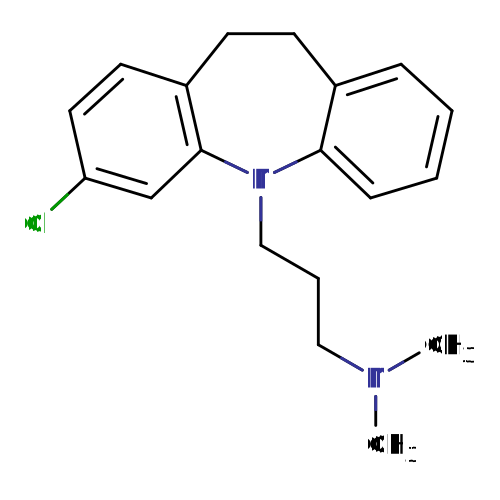
Clomipramine, the 3-chloro analog of imipramine, is a dibenzazepine-derivative tricyclic antidepressant (TCA). TCAs are structurally similar to phenothiazines. They contain a tricyclic ring system with an alkyl amine substituent on the central ring. In non-depressed individuals, clomipramine does not affect mood or arousal, but may cause sedation. In depressed individuals, clomipramine exerts a positive effect on mood. TCAs are potent inhibitors of serotonin and norepinephrine reuptake. Tertiary amine TCAs, such as clomipramine, are more potent inhibitors of serotonin reuptake than secondary amine TCAs, such as nortriptyline and desipramine. TCAs also down-regulate cerebral cortical β-adrenergic receptors and sensitize post-synaptic serotonergic receptors with chronic use. The antidepressant effects of TCAs are thought to be due to an overall increase in serotonergic neurotransmission. TCAs also block histamine-H1 receptors, α1-adrenergic receptors and muscarinic receptors, which accounts for their sedative, hypotensive and anticholinergic effects (e.g. blurred vision, dry mouth, constipation, urinary retention), respectively. See toxicity section below for a complete listing of side effects. Clomipramine may be used to treat obsessive-compulsive disorder and disorders with an obsessive-compulsive component (e.g. depression, schizophrenia, Tourette’s disorder). Unlabeled indications include panic disorder, chronic pain (e.g. central pain, idiopathic pain disorder, tension headache, diabetic peripheral neuropathy, neuropathic pain), cataplexy and associated narcolepsy, autistic disorder, trichotillomania, onchophagia, stuttering, premature ejaculation, and premenstrual syndrome. Clomipramine is rapidly absorbed from the gastrointestinal tract and demethylated in the liver to its primary active metabolite, desmethylclomipramine.
- Type
- Small Molecule
- Groups
- Approved, Investigational, Vet approved
- Structure
Structure for Clomipramine (DB01242)
- Weight
- Average: 314.852
Monoisotopic: 314.154976453 - Chemical Formula
- C19H23ClN2
- Synonyms
- 3-(3-chloro-10,11-dihydro-5H-dibenzo[b,f]azepin-5-yl)-N,N-dimethyl-1-propanamine
- 3-(3-chloro-5H-dibenzo[b,F]azepin-5-yl)-N,N-dimethylpropan-1-amine
- 3-Chloroimipramine
- Chlorimipramine
- Clomipramina
- Clomipramine
- Clomipraminum
- Monochlorimipramine
- External IDs
- NSC-169865

Pharmacology
- Indication
May be used to treat obsessive-compulsive disorder and disorders with an obsessive-compulsive component (e.g. depression, schizophrenia, Tourette’s disorder). Unlabeled indications include: depression, panic disorder, chronic pain (e.g. central pain, idiopathic pain disorder, tension headache, diabetic peripheral neuropathy, neuropathic pain), cataplexy and associated narcolepsy (limited evidence), autistic disorder (limited evidence), trichotillomania (limited evidence), onchophagia (limited evidence), stuttering (limited evidence), premature ejaculation, and premenstrual syndrome.
 Reduce drug development failure ratesBuild, train, & validate machine-learning modelswith evidence-based and structured datasets.Build, train, & validate predictive machine-learning models with structured datasets.
- Associated Conditions
Indication Type Indication Combined Product Details Approval Level Age Group Patient Characteristics Dose Form Treatment of Depression ••• ••••• Management of Obsessive-compulsive disorder •••••••••••• Treatment of Panic disorder ••• ••••• - Contraindications & Blackbox Warnings
 Prevent Adverse Drug Events TodayTap into our Clinical API for life-saving information on contraindications & blackbox warnings, population restrictions, harmful risks, & more.Avoid life-threatening adverse drug events with our Clinical API
- Pharmacodynamics
Clomipramine, a tricyclic antidepressant, is the 3-chloro derivative of Imipramine. It was thought that tricyclic antidepressants work exclusively by inhibiting the re-uptake of the neurotransmitters norepinephrine and serotonin by nerve cells. However, this response occurs immediately, yet mood does not lift for around two weeks. It is now thought that changes occur in receptor sensitivity in the cerebral cortex and hippocampus. The hippocampus is part of the limbic system, a part of the brain involved in emotions. Presynaptic receptors are affected: α1 and β1 receptors are sensitized, α2 receptors are desensitized (leading to increased noradrenaline production). Tricyclics are also known as effective analgesics for different types of pain, especially neuropathic or neuralgic pain.
- Mechanism of action
Clomipramine is a strong, but not completely selective serotonin reuptake inhibitor (SRI), as the active main metabolite desmethyclomipramine acts preferably as an inhibitor of noradrenaline reuptake. α1-receptor blockage and β-down-regulation have been noted and most likely play a role in the short term effects of clomipramine. A blockade of sodium-channels and NDMA-receptors might, as with other tricyclics, account for its effect in chronic pain, in particular the neuropathic type.
Target Actions Organism ASodium-dependent serotonin transporter inhibitorHumans A5-hydroxytryptamine receptor 2A antagonistHumans A5-hydroxytryptamine receptor 2B antagonistHumans A5-hydroxytryptamine receptor 2C antagonistHumans USodium-dependent noradrenaline transporter inhibitorHumans UGlutathione S-transferase P inhibitorHumans - Absorption
Well absorbed from the GI tract following oral administration. Bioavailability is approximately 50% orally due to extensive first-pass metabolism. Bioavailability is not affected by food. Peak plasma concentrations occurred 2-6 hours following oral administration of a single 50 mg dose. The peak plasma concentration ranged from 56 ng/mL to 154 mg/mL (mean, 92 ng/mL). There are large interindividual variations in plasma concentrations occur, partly due to genetic differences in clomipramine metabolism. On average, steady state plasma concentrations are achieved in 1-2 weeks following multiple dose oral administration. Smoking appears to lower the steady-state plasma concentration of clomipramine, but not its active metabolite desmethylclomipramine.
- Volume of distribution
~ 17 L/kg (range: 9-25 L/kg). Clomipramine is capable of distributing into the cerebrospinal fluid, the brain, and into breast milk.
- Protein binding
Clomipramine is approximately 97-98% bound to plasma proteins, principally to albumin and possibly to α1-acid glycoprotein. Desmethylclomipramine is 97-99% bound to plasma proteins.
- Metabolism
Extensively metabolized in the liver. The main active metabolite is desmethylclomipramine, which is formed by N-demethylation of clomipramine via CYP2C19, 3A4 and 1A2. Other metabolites and their glucuronide conjugates are also produced. Other metabolites of clomipramine include 8-hydroxyclomipramine formed via 8-hydroxylation, 2-hydroxyclomipramine formed via 2-hydroxylation, and clomipramine N-oxide formed by N-oxidation. Desmethylclomipramine is further metabolized to 8-hydroxydesmethylclomipramine and didesmethylclomipramine, which are formed by 8-hydroxylation and N-demethylation, respectively. 8-Hydroxyclomipramine and 8-hydroxydesmethylclomipramine are pharmacologically active; however, their clinical relevance remains unknown.
Hover over products below to view reaction partners
- Route of elimination
Urine (51-60%) and feces via biliary elimination (24-32%)
- Half-life
Following oral administration of a single 150 mg dose of clomipramine, the average elimination half-life of clomipramine was 32 hours (range: 19-37 hours) and of desmethylclomipramine was 69 hours (range: 54-77 hours). Elimination half-life may vary substantially with different doses due to saturable kinetics (i.e. metabolism).
- Clearance
Not Available
- Adverse Effects
 Improve decision support & research outcomesWith structured adverse effects data, including: blackbox warnings, adverse reactions, warning & precautions, & incidence rates. View sample adverse effects data in our new Data Library!Improve decision support & research outcomes with our structured adverse effects data.
- Toxicity
Signs and symptoms vary in severity depending upon factors such as the amount of drug absorbed, the age of the patient, and the time elapsed since drug ingestion. Critical manifestations of overdose include cardiac dysrhythmias, severe hypotension, convulsions, and CNS depression including coma. Changes in the electrocardiogram, particularly in QRS axis or width, are clinically significant indicators of tricyclic toxicity. In U.S. clinical trials, 2 deaths occurred in 12 reported cases of acute overdosage with Anafranil either alone or in combination with other drugs. One death involved a patient suspected of ingesting a dose of 7000 mg. The second death involved a patient suspected of ingesting a dose of 5750 mg. Side effects include: sedation, hypotension, blurred vision, dry mouth, constipation, urinary retention, postural hypotension, tachycardia, hypertension, ECG changes, heart failure, impaired memory and delirium, and precipitation of hypomanic or manic episodes in bipolar depression. Withdrawal symptoms include gastrointestinal disturbances, anxiety, and insomnia.
- Pathways
Pathway Category Clomipramine Metabolism Pathway Drug metabolism - Pharmacogenomic Effects/ADRs
Interacting Gene/Enzyme Allele name Genotype(s) Defining Change(s) Type(s) Description Details Cytochrome P450 2D6 CYP2D6*4 (A;A) A Allele Effect Directly Studied Patients with this genotype have reduced metabolism of clomipramine. Details Cytochrome P450 2D6 CYP2D6*3 Not Available 2549delA Effect Directly Studied The presence of this polymorphism in CYP2D6 is associated with reduced or poor metabolism of clomipramine. Details Cytochrome P450 2D6 CYP2D6*4 Not Available A allele Effect Directly Studied The presence of this polymorphism in CYP2D6 is associated with reduced or poor metabolism of clomipramine. Details Cytochrome P450 2D6 CYP2D6*5 Not Available Whole-gene deletion Effect Directly Studied The presence of this polymorphism in CYP2D6 is associated with reduced or poor metabolism of clomipramine. Details Cytochrome P450 2D6 CYP2D6*6 Not Available 1707delT Effect Directly Studied The presence of this polymorphism in CYP2D6 is associated with reduced or poor metabolism of clomipramine. Details Cytochrome P450 2C19 CYP2C19*2 Not Available 681G>A Effect Directly Studied The presence of this polymorphism in CYP2C19 is associated with poor metabolism of clomipramine. Details Cytochrome P450 2C19 CYP2C19*3 Not Available 636G>A Effect Directly Studied The presence of this polymorphism in CYP2C19 is associated with reduced or poor metabolism of clomipramine. Details Cytochrome P450 2D6 CYP2D6*7 Not Available 2935A>C Effect Inferred Poor drug metabolizer. For individual with two non-functional alleles, alternative drug or dose reduction recommended. Details Cytochrome P450 2D6 CYP2D6*8 Not Available 1758G>T Effect Inferred Poor drug metabolizer. For individual with two non-functional alleles, alternative drug or dose reduction recommended. Details Cytochrome P450 2D6 CYP2D6*11 Not Available 883G>C Effect Inferred Poor drug metabolizer. For individual with two non-functional alleles, alternative drug or dose reduction recommended. Details Cytochrome P450 2D6 CYP2D6*12 Not Available 124G>A Effect Inferred Poor drug metabolizer. For individual with two non-functional alleles, alternative drug or dose reduction recommended. Details Cytochrome P450 2D6 CYP2D6*13 Not Available CYP2D7/2D6 hybrid gene structure Effect Inferred Poor drug metabolizer. For individual with two non-functional alleles, alternative drug or dose reduction recommended. Details Cytochrome P450 2D6 CYP2D6*14A Not Available 1758G>A Effect Inferred Poor drug metabolizer. For individual with two non-functional alleles, alternative drug or dose reduction recommended. Details Cytochrome P450 2D6 CYP2D6*15 Not Available 137insT, 137_138insT Effect Inferred Poor drug metabolizer. For individual with two non-functional alleles, alternative drug or dose reduction recommended. Details Cytochrome P450 2D6 CYP2D6*19 Not Available 2539_2542delAACT Effect Inferred Poor drug metabolizer. For individual with two non-functional alleles, alternative drug or dose reduction recommended. Details Cytochrome P450 2D6 CYP2D6*20 Not Available 1973_1974insG Effect Inferred Poor drug metabolizer. For individual with two non-functional alleles, alternative drug or dose reduction recommended. Details Cytochrome P450 2D6 CYP2D6*21 Not Available 2573insC Effect Inferred Poor drug metabolizer. For individual with two non-functional alleles, alternative drug or dose reduction recommended. Details Cytochrome P450 2D6 CYP2D6*31 Not Available -1770G>A / -1584C>G … show all Effect Inferred Poor drug metabolizer. For individual with two non-functional alleles, alternative drug or dose reduction recommended. Details Cytochrome P450 2D6 CYP2D6*36 Not Available 100C>T / -1426C>T … show all Effect Inferred Poor drug metabolizer. For individual with two non-functional alleles, alternative drug or dose reduction recommended. Details Cytochrome P450 2D6 CYP2D6*38 Not Available 2587_2590delGACT Effect Inferred Poor drug metabolizer. For individual with two non-functional alleles, alternative drug or dose reduction recommended. Details Cytochrome P450 2D6 CYP2D6*40 Not Available 1863_1864ins(TTT CGC CCC)2 Effect Inferred Poor drug metabolizer. For individual with two non-functional alleles, alternative drug or dose reduction recommended. Details Cytochrome P450 2D6 CYP2D6*42 Not Available 3259_3260insGT Effect Inferred Poor drug metabolizer. For individual with two non-functional alleles, alternative drug or dose reduction recommended. Details Cytochrome P450 2D6 CYP2D6*44 Not Available 2950G>C Effect Inferred Poor drug metabolizer. For individual with two non-functional alleles, alternative drug or dose reduction recommended. Details Cytochrome P450 2D6 CYP2D6*47 Not Available 100C>T / -1426C>T … show all Effect Inferred Poor drug metabolizer. For individual with two non-functional alleles, alternative drug or dose reduction recommended. Details Cytochrome P450 2D6 CYP2D6*51 Not Available -1584C>G / -1235A>G … show all Effect Inferred Poor drug metabolizer. For individual with two non-functional alleles, alternative drug or dose reduction recommended. Details Cytochrome P450 2D6 CYP2D6*56 Not Available 3201C>T Effect Inferred Poor drug metabolizer. For individual with two non-functional alleles, alternative drug or dose reduction recommended. Details Cytochrome P450 2D6 CYP2D6*57 Not Available 100C>T / 310G>T … show all Effect Inferred Poor drug metabolizer. For individual with two non-functional alleles, alternative drug or dose reduction recommended. Details Cytochrome P450 2D6 CYP2D6*62 Not Available 4044C>T Effect Inferred Poor drug metabolizer. For individual with two non-functional alleles, alternative drug or dose reduction recommended. Details Cytochrome P450 2D6 CYP2D6*68A Not Available -1426C>T / -1235A>G … show all Effect Inferred Poor drug metabolizer. For individual with two non-functional alleles, alternative drug or dose reduction recommended. Details Cytochrome P450 2D6 CYP2D6*68B Not Available Similar but not identical switch region compared to CYP2D6*68A. Found in tandem arrangement with CYP2D6*4. Effect Inferred Poor drug metabolizer. For individual with two non-functional alleles, alternative drug or dose reduction recommended. Details Cytochrome P450 2D6 CYP2D6*69 Not Available 2988G>A / -1426C>T … show all Effect Inferred Poor drug metabolizer. For individual with two non-functional alleles, alternative drug or dose reduction recommended. Details Cytochrome P450 2D6 CYP2D6*92 Not Available 1995delC Effect Inferred Poor drug metabolizer. For individual with two non-functional alleles, alternative drug or dose reduction recommended. Details Cytochrome P450 2D6 CYP2D6*100 Not Available -1426C>T / -1235A>G … show all Effect Inferred Poor drug metabolizer. For individual with two non-functional alleles, alternative drug or dose reduction recommended. Details Cytochrome P450 2D6 CYP2D6*101 Not Available -1426C>T / -1235A>G … show all Effect Inferred Poor drug metabolizer. For individual with two non-functional alleles, alternative drug or dose reduction recommended. Details Cytochrome P450 2C19 CYP2C19*2A Not Available 681G>A Effect Inferred Poor drug metabolizer. For individual with two non-functional alleles, dose reduction recommended. Details Cytochrome P450 2C19 CYP2C19*2B Not Available 681G>A Effect Inferred Poor drug metabolizer. For individual with two non-functional alleles, dose reduction recommended. Details Cytochrome P450 2C19 CYP2C19*4 Not Available 1A>G Effect Inferred Poor drug metabolizer. For individual with two non-functional alleles, dose reduction recommended. Details Cytochrome P450 2C19 CYP2C19*5 Not Available 1297C>T Effect Inferred Poor drug metabolizer. For individual with two non-functional alleles, dose reduction recommended. Details Cytochrome P450 2C19 CYP2C19*6 Not Available 395G>A Effect Inferred Poor drug metabolizer. For individual with two non-functional alleles, dose reduction recommended. Details Cytochrome P450 2C19 CYP2C19*7 Not Available 19294T>A Effect Inferred Poor drug metabolizer. For individual with two non-functional alleles, dose reduction recommended. Details Cytochrome P450 2C19 CYP2C19*22 Not Available 557G>C / 991A>G Effect Inferred Poor drug metabolizer. For individual with two non-functional alleles, dose reduction recommended. Details Cytochrome P450 2C19 CYP2C19*24 Not Available 99C>T / 991A>G … show all Effect Inferred Poor drug metabolizer. For individual with two non-functional alleles, dose reduction recommended. Details Cytochrome P450 2C19 CYP2C19*35 Not Available 12662A>G Effect Inferred Poor drug metabolizer. For individual with two non-functional alleles, dose reduction recommended. Details Cytochrome P450 2D6 CYP2D6*3 Not Available C allele Effect Inferred Poor drug metabolizer, lower dose requirements, higher risk for adverse side effects Details Cytochrome P450 2D6 CYP2D6*5 Not Available Whole-gene deletion Effect Inferred Poor drug metabolizer, lower dose requirements, higher risk for adverse side effects Details Cytochrome P450 2D6 CYP2D6*6 Not Available 1707delT Effect Inferred Poor drug metabolizer, lower dose requirements, higher risk for adverse side effects Details Cytochrome P450 2D6 CYP2D6*7 Not Available 2935A>C Effect Inferred Poor drug metabolizer, lower dose requirements, higher risk for adverse side effects Details Cytochrome P450 2D6 CYP2D6*8 Not Available 1758G>T Effect Inferred Poor drug metabolizer, lower dose requirements, higher risk for adverse side effects Details Cytochrome P450 2D6 CYP2D6*11 Not Available 883G>C Effect Inferred Poor drug metabolizer, lower dose requirements, higher risk for adverse side effects Details Cytochrome P450 2D6 CYP2D6*12 Not Available 124G>A Effect Inferred Poor drug metabolizer, lower dose requirements, higher risk for adverse side effects Details Cytochrome P450 2D6 CYP2D6*13 Not Available CYP2D7/2D6 hybrid gene structure Effect Inferred Poor drug metabolizer, lower dose requirements, higher risk for adverse side effects Details Cytochrome P450 2D6 CYP2D6*14A Not Available 1758G>A Effect Inferred Poor drug metabolizer, lower dose requirements, higher risk for adverse side effects Details Cytochrome P450 2D6 CYP2D6*15 Not Available 137insT, 137_138insT Effect Inferred Poor drug metabolizer, lower dose requirements, higher risk for adverse side effects Details Cytochrome P450 2D6 CYP2D6*19 Not Available 2539_2542delAACT Effect Inferred Poor drug metabolizer, lower dose requirements, higher risk for adverse side effects Details Cytochrome P450 2D6 CYP2D6*20 Not Available 1973_1974insG Effect Inferred Poor drug metabolizer, lower dose requirements, higher risk for adverse side effects Details Cytochrome P450 2D6 CYP2D6*21 Not Available 2573insC Effect Inferred Poor drug metabolizer, lower dose requirements, higher risk for adverse side effects Details Cytochrome P450 2D6 CYP2D6*31 Not Available -1770G>A / -1584C>G … show all Effect Inferred Poor drug metabolizer, lower dose requirements, higher risk for adverse side effects Details Cytochrome P450 2D6 CYP2D6*36 Not Available 100C>T / -1426C>T … show all Effect Inferred Poor drug metabolizer, lower dose requirements, higher risk for adverse side effects Details Cytochrome P450 2D6 CYP2D6*38 Not Available 2587_2590delGACT Effect Inferred Poor drug metabolizer, lower dose requirements, higher risk for adverse side effects Details Cytochrome P450 2D6 CYP2D6*40 Not Available 1863_1864ins(TTT CGC CCC)2 Effect Inferred Poor drug metabolizer, lower dose requirements, higher risk for adverse side effects Details Cytochrome P450 2D6 CYP2D6*42 Not Available 3259_3260insGT Effect Inferred Poor drug metabolizer, lower dose requirements, higher risk for adverse side effects Details Cytochrome P450 2D6 CYP2D6*44 Not Available 2950G>C Effect Inferred Poor drug metabolizer, lower dose requirements, higher risk for adverse side effects Details Cytochrome P450 2D6 CYP2D6*47 Not Available 100C>T / -1426C>T … show all Effect Inferred Poor drug metabolizer, lower dose requirements, higher risk for adverse side effects Details Cytochrome P450 2D6 CYP2D6*51 Not Available -1584C>G / -1235A>G … show all Effect Inferred Poor drug metabolizer, lower dose requirements, higher risk for adverse side effects Details Cytochrome P450 2D6 CYP2D6*56 Not Available 3201C>T Effect Inferred Poor drug metabolizer, lower dose requirements, higher risk for adverse side effects Details Cytochrome P450 2D6 CYP2D6*57 Not Available 100C>T / 310G>T … show all Effect Inferred Poor drug metabolizer, lower dose requirements, higher risk for adverse side effects Details Cytochrome P450 2D6 CYP2D6*62 Not Available 4044C>T Effect Inferred Poor drug metabolizer, lower dose requirements, higher risk for adverse side effects Details Cytochrome P450 2D6 CYP2D6*68A Not Available -1426C>T / -1235A>G … show all Effect Inferred Poor drug metabolizer, lower dose requirements, higher risk for adverse side effects Details Cytochrome P450 2D6 CYP2D6*68B Not Available Similar but not identical switch region compared to CYP2D6*68A. Found in tandem arrangement with CYP2D6*4. Effect Inferred Poor drug metabolizer, lower dose requirements, higher risk for adverse side effects Details Cytochrome P450 2D6 CYP2D6*69 Not Available 2988G>A / -1426C>T … show all Effect Inferred Poor drug metabolizer, lower dose requirements, higher risk for adverse side effects Details Cytochrome P450 2D6 CYP2D6*92 Not Available 1995delC Effect Inferred Poor drug metabolizer, lower dose requirements, higher risk for adverse side effects Details Cytochrome P450 2D6 CYP2D6*100 Not Available -1426C>T / -1235A>G … show all Effect Inferred Poor drug metabolizer, lower dose requirements, higher risk for adverse side effects Details Cytochrome P450 2D6 CYP2D6*101 Not Available -1426C>T / -1235A>G … show all Effect Inferred Poor drug metabolizer, lower dose requirements, higher risk for adverse side effects Details Cytochrome P450 2D6 CYP2D6*3 Not Available G allele Effect Directly Studied The presence of this polymorphism in CYP2D6 is associated with reduced or poor metabolism of clomipramine. Details Cytochrome P450 2D6 CYP2D6*4 Not Available 3877G>A Effect Directly Studied The presence of this polymorphism in CYP2D6 is associated with reduced or poor metabolism of clomipramine. Details
Interactions
- Drug Interactions
- This information should not be interpreted without the help of a healthcare provider. If you believe you are experiencing an interaction, contact a healthcare provider immediately. The absence of an interaction does not necessarily mean no interactions exist.
Drug Interaction Integrate drug-drug
interactions in your software1,2-Benzodiazepine The risk or severity of CNS depression can be increased when Clomipramine is combined with 1,2-Benzodiazepine. Abacavir Abacavir may decrease the excretion rate of Clomipramine which could result in a higher serum level. Abaloparatide The risk or severity of adverse effects can be increased when Clomipramine is combined with Abaloparatide. Abametapir The serum concentration of Clomipramine can be increased when it is combined with Abametapir. Abatacept The metabolism of Clomipramine can be increased when combined with Abatacept. - Food Interactions
- Avoid alcohol.
- Avoid grapefruit products.
- Take with food. Food reduces irritation.
Products
 Drug product information from 10+ global regionsOur datasets provide approved product information including:dosage, form, labeller, route of administration, and marketing period.Access drug product information from over 10 global regions.
- Product Ingredients
Ingredient UNII CAS InChI Key Clomipramine hydrochloride 2LXW0L6GWJ 17321-77-6 WIMWMKZEIBHDTH-UHFFFAOYSA-N - Product Images
- International/Other Brands
- Anapramine / Hydiphen (Arzneimittelwerk Dresden)
- Brand Name Prescription Products
Name Dosage Strength Route Labeller Marketing Start Marketing End Region Image Act Clomipramine Tablet 10 mg Oral Actavis Pharma Company 2003-02-20 2016-02-19 Canada 
Act Clomipramine Tablet 50 mg Oral Actavis Pharma Company 2003-02-20 2016-02-19 Canada Act Clomipramine Tablet 25 mg Oral Actavis Pharma Company 2003-02-20 2016-02-19 Canada Anafranil Capsule 50 mg/1 Oral SpecGx LLC 1989-12-29 Not applicable US 
Anafranil Capsule 50 mg/1 Oral Physicians Total Care, Inc. 1989-09-29 2012-06-30 US - Generic Prescription Products
Name Dosage Strength Route Labeller Marketing Start Marketing End Region Image Altius-clomipramine Tablet 25 mg Oral Aspri Pharma Canada Inc Not applicable Not applicable Canada Altius-clomipramine Tablet 10 mg Oral Aspri Pharma Canada Inc Not applicable Not applicable Canada Altius-clomipramine Tablet 50 mg Oral Aspri Pharma Canada Inc Not applicable Not applicable Canada Apo-clomipramine Tablet 50 mg Oral Apotex Corporation 1993-12-31 Not applicable Canada Apo-clomipramine Tablet 10 mg Oral Apotex Corporation 1993-12-31 Not applicable Canada


Categories
- ATC Codes
- N06AA04 — Clomipramine
- Drug Categories
- Agents that produce hypertension
- Agents that reduce seizure threshold
- Antidepressive Agents
- Antidepressive Agents Indicated for Depression
- Antidepressive Agents, Tricyclic
- Central Nervous System Agents
- Central Nervous System Depressants
- Combined Inhibitors of Serotonin/Norepinephrine Reuptake
- Cytochrome P-450 CYP1A2 Substrates
- Cytochrome P-450 CYP1A2 Substrates with a Narrow Therapeutic Index
- Cytochrome P-450 CYP2C19 Inhibitors
- Cytochrome P-450 CYP2C19 Inhibitors (strong)
- Cytochrome P-450 CYP2C19 Substrates
- Cytochrome P-450 CYP2C19 Substrates with a Narrow Therapeutic Index
- Cytochrome P-450 CYP2D6 Inhibitors
- Cytochrome P-450 CYP2D6 Inhibitors (strength unknown)
- Cytochrome P-450 CYP2D6 Substrates
- Cytochrome P-450 CYP2D6 Substrates with a Narrow Therapeutic Index
- Cytochrome P-450 CYP3A Substrates
- Cytochrome P-450 CYP3A4 Substrates
- Cytochrome P-450 CYP3A4 Substrates with a Narrow Therapeutic Index
- Cytochrome P-450 Enzyme Inhibitors
- Cytochrome P-450 Substrates
- Dibenzazepines
- Drugs that are Mainly Renally Excreted
- Heterocyclic Compounds, Fused-Ring
- Hypotensive Agents
- Membrane Transport Modulators
- Moderate Risk QTc-Prolonging Agents
- Narrow Therapeutic Index Drugs
- Nervous System
- Neurotoxic agents
- Neurotransmitter Agents
- Neurotransmitter Uptake Inhibitors
- Non-Selective Monoamine Reuptake Inhibitors
- P-glycoprotein inhibitors
- Psychoanaleptics
- Psychotropic Drugs
- QTc Prolonging Agents
- Serotonergic Drugs Shown to Increase Risk of Serotonin Syndrome
- Serotonin 5-HT2 Receptor Antagonists
- Serotonin 5-HT2A Receptor Antagonists
- Serotonin 5-HT2C Receptor Antagonists
- Serotonin Agents
- Serotonin Modulators
- Serotonin Receptor Antagonists
- Tertiary amine tricyclic antidepressants
- Tricyclics and Other Norepinephrine-reuptake Inhibitors
- Chemical TaxonomyProvided by Classyfire
- Description
- This compound belongs to the class of organic compounds known as dibenzazepines. These are compounds with two benzene rings connected by an azepine ring. Azepine is an unsaturated seven-member heterocycle with one nitrogen atom replacing a carbon atom.
- Kingdom
- Organic compounds
- Super Class
- Organoheterocyclic compounds
- Class
- Benzazepines
- Sub Class
- Dibenzazepines
- Direct Parent
- Dibenzazepines
- Alternative Parents
- Alkyldiarylamines / Azepines / Benzenoids / Aryl chlorides / Trialkylamines / Azacyclic compounds / Organopnictogen compounds / Organochlorides / Hydrocarbon derivatives
- Substituents
- Alkyldiarylamine / Amine / Aromatic heteropolycyclic compound / Aryl chloride / Aryl halide / Azacycle / Azepine / Benzenoid / Dibenzazepine / Hydrocarbon derivative
- Molecular Framework
- Aromatic heteropolycyclic compounds
- External Descriptors
- dibenzoazepine (CHEBI:47780)
- Affected organisms
- Humans and other mammals
Chemical Identifiers
- UNII
- NUV44L116D
- CAS number
- 303-49-1
- InChI Key
- GDLIGKIOYRNHDA-UHFFFAOYSA-N
- InChI
- InChI=1S/C19H23ClN2/c1-21(2)12-5-13-22-18-7-4-3-6-15(18)8-9-16-10-11-17(20)14-19(16)22/h3-4,6-7,10-11,14H,5,8-9,12-13H2,1-2H3
- IUPAC Name
- (3-{14-chloro-2-azatricyclo[9.4.0.0^{3,8}]pentadeca-1(11),3,5,7,12,14-hexaen-2-yl}propyl)dimethylamine
- SMILES
- CN(C)CCCN1C2=CC=CC=C2CCC2=C1C=C(Cl)C=C2
References
- Synthesis Reference
Schindler, W. and Dietrich, H.; US. Patent 3,515,785; June 2,1970; assigned to Geigy Chemical Corp.
- General References
- Not Available
- External Links
- Human Metabolome Database
- HMDB0015372
- KEGG Drug
- D00811
- KEGG Compound
- C06918
- PubChem Compound
- 2801
- PubChem Substance
- 46505157
- ChemSpider
- 2699
- BindingDB
- 77970
- 2597
- ChEBI
- 47780
- ChEMBL
- CHEMBL415
- ZINC
- ZINC000000020248
- Therapeutic Targets Database
- DAP000742
- PharmGKB
- PA449048
- Guide to Pharmacology
- GtP Drug Page
- PDBe Ligand
- CXX
- RxList
- RxList Drug Page
- Drugs.com
- Drugs.com Drug Page
- PDRhealth
- PDRhealth Drug Page
- Wikipedia
- Clomipramine
- PDB Entries
- 2q6h / 2qei / 4mma / 6g9i
- FDA label
- Download (712 KB)
- MSDS
- Download (74.2 KB)
Clinical Trials
- Clinical Trials
Phase Status Purpose Conditions Count 4 Completed Treatment Obsessive Compulsive Disorder (OCD) 2 4 Not Yet Recruiting Treatment Panic Disorder 1 4 Terminated Prevention Depression 1 3 Completed Treatment Obsessive Compulsive Disorder (OCD) 2 3 Completed Treatment Premature Ejaculation 1
Pharmacoeconomics
- Manufacturers
- Not Available
- Packagers
- Abic Ltd.
- Basel Pharmaceuticals Div Ciba Geigy Corp.
- Comprehensive Consultant Services Inc.
- Dispensing Solutions
- Gallipot
- Heartland Repack Services LLC
- Mallinckrodt Inc.
- Murfreesboro Pharmaceutical Nursing Supply
- Mylan
- Novartis AG
- Novopharm Ltd.
- Nucare Pharmaceuticals Inc.
- Patheon Inc.
- Pharmaceutical Utilization Management Program VA Inc.
- Pharmacy Service Center
- Physicians Total Care Inc.
- Preferred Pharmaceuticals Inc.
- Remedy Repack
- Sandoz
- Taro Pharmaceuticals USA
- Teva Pharmaceutical Industries Ltd.
- Dosage Forms
Form Route Strength Injection, solution Intramuscular; Intravenous 25 MG/2ML Tablet, sugar coated Oral Tablet, coated Oral 10 MG Tablet, extended release Oral 75 MG Injection, solution Intramuscular; Intravenous Tablet, film coated Oral Tablet, film coated Oral 75 mg Tablet Oral Tablet, film coated Oral 25 mg Tablet, sugar coated Oral 25 mg Tablet, film coated Oral 10 MG Tablet, extended release Oral 75 mg/1 Tablet, extended release Oral Capsule Oral 25 mg/1 Capsule Oral 50 mg/1 Capsule Oral 75 mg/1 Tablet Oral 25 mg Tablet Oral 10 mg Tablet Oral 50 mg Capsule Oral 50 mg Tablet Oral 10 mg / tab Tablet Oral 25 mg / tab Tablet Oral 50 mg / tab Tablet, coated Oral 25 mg Capsule Oral 10 mg Capsule Oral 25 mg - Prices
Unit description Cost Unit Clomipramine hcl powder 17.88USD g Anafranil 25 mg capsule 13.51USD capsule Anafranil 50 mg capsule 13.51USD capsule Anafranil 75 mg capsule 13.24USD capsule ClomiPRAMINE HCl 75 mg capsule 1.55USD capsule Clomipramine 75 mg capsule 1.33USD capsule Clomipramine 50 mg capsule 1.01USD capsule ClomiPRAMINE HCl 25 mg capsule 0.88USD capsule Anafranil 50 mg Tablet 0.77USD tablet Clomipramine 25 mg capsule 0.75USD capsule ClomiPRAMINE HCl 50 mg capsule 0.57USD capsule Apo-Clomipramine 50 mg Tablet 0.43USD tablet Co Clomipramine 50 mg Tablet 0.43USD tablet Anafranil 25 mg Tablet 0.42USD tablet Anafranil 10 mg Tablet 0.31USD tablet Apo-Clomipramine 25 mg Tablet 0.23USD tablet Co Clomipramine 25 mg Tablet 0.23USD tablet Apo-Clomipramine 10 mg Tablet 0.17USD tablet Co Clomipramine 10 mg Tablet 0.17USD tablet DrugBank does not sell nor buy drugs. Pricing information is supplied for informational purposes only.- Patents
- Not Available
Properties
- State
- Solid
- Experimental Properties
Property Value Source melting point (°C) 191.5-192 Schindler, W. and Dietrich, H.; US. Patent 3,515,785; June 2,1970; assigned to Geigy Chemical Corp. boiling point (°C) 160-170 °C at 3.00E-01 mm Hg PhysProp water solubility 0.294 mg/L Not Available logP 5.19 HANSCH,C ET AL. (1995) - Predicted Properties
Property Value Source Water Solubility 0.0144 mg/mL ALOGPS logP 5.04 ALOGPS logP 4.88 Chemaxon logS -4.3 ALOGPS pKa (Strongest Basic) 9.2 Chemaxon Physiological Charge 1 Chemaxon Hydrogen Acceptor Count 2 Chemaxon Hydrogen Donor Count 0 Chemaxon Polar Surface Area 6.48 Å2 Chemaxon Rotatable Bond Count 4 Chemaxon Refractivity 95.41 m3·mol-1 Chemaxon Polarizability 35.73 Å3 Chemaxon Number of Rings 3 Chemaxon Bioavailability 1 Chemaxon Rule of Five Yes Chemaxon Ghose Filter Yes Chemaxon Veber's Rule Yes Chemaxon MDDR-like Rule No Chemaxon - Predicted ADMET Features
Property Value Probability Human Intestinal Absorption + 0.9843 Blood Brain Barrier + 0.9793 Caco-2 permeable + 0.8391 P-glycoprotein substrate Substrate 0.7618 P-glycoprotein inhibitor I Inhibitor 0.8573 P-glycoprotein inhibitor II Inhibitor 0.8387 Renal organic cation transporter Inhibitor 0.852 CYP450 2C9 substrate Non-substrate 0.7875 CYP450 2D6 substrate Substrate 0.8918 CYP450 3A4 substrate Substrate 0.7408 CYP450 1A2 substrate Inhibitor 0.8374 CYP450 2C9 inhibitor Non-inhibitor 0.9176 CYP450 2D6 inhibitor Inhibitor 0.8932 CYP450 2C19 inhibitor Non-inhibitor 0.9025 CYP450 3A4 inhibitor Non-inhibitor 0.7971 CYP450 inhibitory promiscuity Low CYP Inhibitory Promiscuity 0.6074 Ames test Non AMES toxic 0.8735 Carcinogenicity Non-carcinogens 0.8971 Biodegradation Not ready biodegradable 0.9967 Rat acute toxicity 2.7426 LD50, mol/kg Not applicable hERG inhibition (predictor I) Weak inhibitor 0.889 hERG inhibition (predictor II) Inhibitor 0.8029
Spectra
- Mass Spec (NIST)
- Not Available
- Spectra
- Chromatographic Properties
Collision Cross Sections (CCS)
Adduct CCS Value (Å2) Source type Source [M-H]- 177.66154 predictedDarkChem Lite v0.1.0 [M-H]- 167.96239 predictedDeepCCS 1.0 (2019) [M+H]+ 178.16554 predictedDarkChem Lite v0.1.0 [M+H]+ 170.32039 predictedDeepCCS 1.0 (2019) [M+Na]+ 177.92944 predictedDarkChem Lite v0.1.0 [M+Na]+ 176.41353 predictedDeepCCS 1.0 (2019)
Targets

- Kind
- Protein
- Organism
- Humans
- Pharmacological action
- Yes
- Actions
- Inhibitor
- General Function
- Serotonin:sodium symporter activity
- Specific Function
- Serotonin transporter whose primary function in the central nervous system involves the regulation of serotonergic signaling via transport of serotonin molecules from the synaptic cleft back into t...
- Gene Name
- SLC6A4
- Uniprot ID
- P31645
- Uniprot Name
- Sodium-dependent serotonin transporter
- Molecular Weight
- 70324.165 Da
References
- Alvarez JC, Gluck N, Arnulf I, Quintin P, Leboyer M, Pecquery R, Launay JM, Perez-Diaz F, Spreux-Varoquaux O: Decreased platelet serotonin transporter sites and increased platelet inositol triphosphate levels in patients with unipolar depression: effects of clomipramine and fluoxetine. Clin Pharmacol Ther. 1999 Dec;66(6):617-24. [Article]
- Borkowska A, Pilaczynska E, Araszkiewicz A, Rybakowski J: [The effect of sertraline on cognitive functions in patients with obsessive-compulsive disorder]. Psychiatr Pol. 2002 Nov-Dec;36(6 Suppl):289-95. [Article]
- Suhara T, Takano A, Sudo Y, Ichimiya T, Inoue M, Yasuno F, Ikoma Y, Okubo Y: High levels of serotonin transporter occupancy with low-dose clomipramine in comparative occupancy study with fluvoxamine using positron emission tomography. Arch Gen Psychiatry. 2003 Apr;60(4):386-91. [Article]
- Larsen AK, Brennum LT, Egebjerg J, Sanchez C, Halldin C, Andersen PH: Selectivity of (3)H-MADAM binding to 5-hydroxytryptamine transporters in vitro and in vivo in mice; correlation with behavioural effects. Br J Pharmacol. 2004 Mar;141(6):1015-23. Epub 2004 Mar 1. [Article]
- Malizia AL, Melichar JM, Brown DJ, Gunn RN, Reynolds A, Jones T, Nutt DJ: Demonstration of clomipramine and venlafaxine occupation at serotonin reuptake sites in man in vivo. J Psychopharmacol. 1997;11(3):279-81. [Article]
- Tatsumi M, Groshan K, Blakely RD, Richelson E: Pharmacological profile of antidepressants and related compounds at human monoamine transporters. Eur J Pharmacol. 1997 Dec 11;340(2-3):249-58. [Article]
- Gillman PK: Tricyclic antidepressant pharmacology and therapeutic drug interactions updated. Br J Pharmacol. 2007 Jul;151(6):737-48. Epub 2007 Apr 30. [Article]
- Kind
- Protein
- Organism
- Humans
- Pharmacological action
- Yes
- Actions
- Antagonist
- General Function
- Virus receptor activity
- Specific Function
- G-protein coupled receptor for 5-hydroxytryptamine (serotonin). Also functions as a receptor for various drugs and psychoactive substances, including mescaline, psilocybin, 1-(2,5-dimethoxy-4-iodop...
- Gene Name
- HTR2A
- Uniprot ID
- P28223
- Uniprot Name
- 5-hydroxytryptamine receptor 2A
- Molecular Weight
- 52602.58 Da
References
- Hentall ID, Kurle PJ, White TR: Correlations between serotonin level and single-cell firing in the rat's nucleus raphe magnus. Neuroscience. 2000;95(4):1081-8. [Article]
- Contreras CM, Marvan ML, Munoz-Mendez A, Ramirez-Morales A: Cortical and septal responses to dorsal raphe nucleus stimulation in the rat: long-term clomipramine actions. Bol Estud Med Biol. 1992 Jan-Dec;40(1-4):3-7. [Article]
- Sugimoto Y, Inoue K, Yamada J: The tricyclic antidepressant clomipramine increases plasma glucose levels of mice. J Pharmacol Sci. 2003 Sep;93(1):74-9. [Article]
- Trifunovic RD, Brodie MS: The effects of clomipramine on the excitatory action of ethanol on dopaminergic neurons of the ventral tegmental area in vitro. J Pharmacol Exp Ther. 1996 Jan;276(1):34-40. [Article]
- Sargent PA, Quested DJ, Cowen PJ: Clomipramine enhances the cortisol response to 5-HTP: implications for the therapeutic role of 5-HT2 receptors. Psychopharmacology (Berl). 1998 Nov;140(1):120-2. [Article]
- Kind
- Protein
- Organism
- Humans
- Pharmacological action
- Yes
- Actions
- Antagonist
- General Function
- Serotonin receptor activity
- Specific Function
- G-protein coupled receptor for 5-hydroxytryptamine (serotonin). Also functions as a receptor for various ergot alkaloid derivatives and psychoactive substances. Ligand binding causes a conformation...
- Gene Name
- HTR2B
- Uniprot ID
- P41595
- Uniprot Name
- 5-hydroxytryptamine receptor 2B
- Molecular Weight
- 54297.41 Da
References
- Sargent PA, Quested DJ, Cowen PJ: Clomipramine enhances the cortisol response to 5-HTP: implications for the therapeutic role of 5-HT2 receptors. Psychopharmacology (Berl). 1998 Nov;140(1):120-2. [Article]
- Sugimoto Y, Inoue K, Yamada J: The tricyclic antidepressant clomipramine increases plasma glucose levels of mice. J Pharmacol Sci. 2003 Sep;93(1):74-9. [Article]
- Contreras CM, Marvan ML, Munoz-Mendez A, Ramirez-Morales A: Cortical and septal responses to dorsal raphe nucleus stimulation in the rat: long-term clomipramine actions. Bol Estud Med Biol. 1992 Jan-Dec;40(1-4):3-7. [Article]
- Kind
- Protein
- Organism
- Humans
- Pharmacological action
- Yes
- Actions
- Antagonist
- General Function
- Serotonin receptor activity
- Specific Function
- G-protein coupled receptor for 5-hydroxytryptamine (serotonin). Also functions as a receptor for various drugs and psychoactive substances, including ergot alkaloid derivatives, 1-2,5,-dimethoxy-4-...
- Gene Name
- HTR2C
- Uniprot ID
- P28335
- Uniprot Name
- 5-hydroxytryptamine receptor 2C
- Molecular Weight
- 51820.705 Da
References
- Sargent PA, Quested DJ, Cowen PJ: Clomipramine enhances the cortisol response to 5-HTP: implications for the therapeutic role of 5-HT2 receptors. Psychopharmacology (Berl). 1998 Nov;140(1):120-2. [Article]
- Sugimoto Y, Inoue K, Yamada J: The tricyclic antidepressant clomipramine increases plasma glucose levels of mice. J Pharmacol Sci. 2003 Sep;93(1):74-9. [Article]
- Contreras CM, Marvan ML, Munoz-Mendez A, Ramirez-Morales A: Cortical and septal responses to dorsal raphe nucleus stimulation in the rat: long-term clomipramine actions. Bol Estud Med Biol. 1992 Jan-Dec;40(1-4):3-7. [Article]
- Kind
- Protein
- Organism
- Humans
- Pharmacological action
- Unknown
- Actions
- Inhibitor
- General Function
- Norepinephrine:sodium symporter activity
- Specific Function
- Amine transporter. Terminates the action of noradrenaline by its high affinity sodium-dependent reuptake into presynaptic terminals.
- Gene Name
- SLC6A2
- Uniprot ID
- P23975
- Uniprot Name
- Sodium-dependent noradrenaline transporter
- Molecular Weight
- 69331.42 Da
References
- Tatsumi M, Groshan K, Blakely RD, Richelson E: Pharmacological profile of antidepressants and related compounds at human monoamine transporters. Eur J Pharmacol. 1997 Dec 11;340(2-3):249-58. [Article]
- Jungkun G, Kuss HJ, Gsell W: Long-term effects of tricyclic antidepressants on norepinephrine kinetics in humans. J Neural Transm (Vienna). 2001;108(3):349-62. [Article]
- Kind
- Protein
- Organism
- Humans
- Pharmacological action
- Unknown
- Actions
- Inhibitor
- General Function
- S-nitrosoglutathione binding
- Specific Function
- Conjugation of reduced glutathione to a wide number of exogenous and endogenous hydrophobic electrophiles. Regulates negatively CDK5 activity via p25/p35 translocation to prevent neurodegeneration.
- Gene Name
- GSTP1
- Uniprot ID
- P09211
- Uniprot Name
- Glutathione S-transferase P
- Molecular Weight
- 23355.625 Da
References
- Baranczyk-Kuzma A, Sawicki J, Kuzma M, Jagiello J: [Tricyclic antidepressants as inhibitors of brain glutathione-S-transferase]. Pol Merkur Lekarski. 2001 Dec;11(66):472-5. [Article]
- Baranczyk-Kuzma A, Kuzma M, Gutowicz M, Kazmierczak B, Sawicki J: Glutathione S-transferase pi as a target for tricyclic antidepressants in human brain. Acta Biochim Pol. 2004;51(1):207-12. [Article]
- Berman HM, Westbrook J, Feng Z, Gilliland G, Bhat TN, Weissig H, Shindyalov IN, Bourne PE: The Protein Data Bank. Nucleic Acids Res. 2000 Jan 1;28(1):235-42. [Article]
Enzymes
- Kind
- Protein
- Organism
- Humans
- Pharmacological action
- Unknown
- Actions
- SubstrateInhibitor
- General Function
- Steroid hydroxylase activity
- Specific Function
- Responsible for the metabolism of many drugs and environmental chemicals that it oxidizes. It is involved in the metabolism of drugs such as antiarrhythmics, adrenoceptor antagonists, and tricyclic...
- Gene Name
- CYP2D6
- Uniprot ID
- P10635
- Uniprot Name
- Cytochrome P450 2D6
- Molecular Weight
- 55768.94 Da
References
- Kind
- Protein
- Organism
- Humans
- Pharmacological action
- Unknown
- Actions
- Substrate
- General Function
- Steroid hydroxylase activity
- Specific Function
- Responsible for the metabolism of a number of therapeutic agents such as the anticonvulsant drug S-mephenytoin, omeprazole, proguanil, certain barbiturates, diazepam, propranolol, citalopram and im...
- Gene Name
- CYP2C19
- Uniprot ID
- P33261
- Uniprot Name
- Cytochrome P450 2C19
- Molecular Weight
- 55930.545 Da
References
- Brown JT, Schneiderhan M, Eum S, Bishop JR: Serum clomipramine and desmethylclomipramine levels in a CYP2C19 and CYP2D6 intermediate metabolizer. Pharmacogenomics. 2017 May;18(7):601-605. doi: 10.2217/pgs-2017-0015. Epub 2017 May 4. [Article]
- Yokono A, Morita S, Someya T, Hirokane G, Okawa M, Shimoda K: The effect of CYP2C19 and CYP2D6 genotypes on the metabolism of clomipramine in Japanese psychiatric patients. J Clin Psychopharmacol. 2001 Dec;21(6):549-55. [Article]
- Flockhart Table of Drug Interactions [Link]
- The P450 Program [Link]
- Cytochrome P450 Interactions [File]
- Clomipramine FDA label [File]
- Kind
- Protein
- Organism
- Humans
- Pharmacological action
- No
- Actions
- Substrate
- General Function
- Oxidoreductase activity, acting on paired donors, with incorporation or reduction of molecular oxygen, reduced flavin or flavoprotein as one donor, and incorporation of one atom of oxygen
- Specific Function
- Cytochromes P450 are a group of heme-thiolate monooxygenases. In liver microsomes, this enzyme is involved in an NADPH-dependent electron transport pathway. It oxidizes a variety of structurally un...
- Gene Name
- CYP1A2
- Uniprot ID
- P05177
- Uniprot Name
- Cytochrome P450 1A2
- Molecular Weight
- 58293.76 Da
References
- Fisman S, Reniers D, Diaz P: Erythromycin interaction with risperidone or clomipramine in an adolescent. J Child Adolesc Psychopharmacol. 1996 Summer;6(2):133-8. doi: 10.1089/cap.1996.6.133. [Article]
- Nielsen KK, Flinois JP, Beaune P, Brosen K: The biotransformation of clomipramine in vitro, identification of the cytochrome P450s responsible for the separate metabolic pathways. J Pharmacol Exp Ther. 1996 Jun;277(3):1659-64. [Article]
- Flockhart Table of Drug Interactions [Link]
- PDR, Anafranil [Link]
- Clomipramine FDA label [File]
- Kind
- Protein
- Organism
- Humans
- Pharmacological action
- Unknown
- Actions
- Substrate
- General Function
- Vitamin d3 25-hydroxylase activity
- Specific Function
- Cytochromes P450 are a group of heme-thiolate monooxygenases. In liver microsomes, this enzyme is involved in an NADPH-dependent electron transport pathway. It performs a variety of oxidation react...
- Gene Name
- CYP3A4
- Uniprot ID
- P08684
- Uniprot Name
- Cytochrome P450 3A4
- Molecular Weight
- 57342.67 Da
References
- Nielsen KK, Flinois JP, Beaune P, Brosen K: The biotransformation of clomipramine in vitro, identification of the cytochrome P450s responsible for the separate metabolic pathways. J Pharmacol Exp Ther. 1996 Jun;277(3):1659-64. [Article]
- Gillman PK: Tricyclic antidepressant pharmacology and therapeutic drug interactions updated. Br J Pharmacol. 2007 Jul;151(6):737-48. Epub 2007 Apr 30. [Article]
- The P450 Program [Link]
Carriers
- Kind
- Protein
- Organism
- Humans
- Pharmacological action
- Unknown
- Actions
- Substrate
- General Function
- Toxic substance binding
- Specific Function
- Serum albumin, the main protein of plasma, has a good binding capacity for water, Ca(2+), Na(+), K(+), fatty acids, hormones, bilirubin and drugs. Its main function is the regulation of the colloid...
- Gene Name
- ALB
- Uniprot ID
- P02768
- Uniprot Name
- Serum albumin
- Molecular Weight
- 69365.94 Da
Transporters
- Kind
- Protein
- Organism
- Humans
- Pharmacological action
- Unknown
- Actions
- Inhibitor
- General Function
- Xenobiotic-transporting atpase activity
- Specific Function
- Energy-dependent efflux pump responsible for decreased drug accumulation in multidrug-resistant cells.
- Gene Name
- ABCB1
- Uniprot ID
- P08183
- Uniprot Name
- Multidrug resistance protein 1
- Molecular Weight
- 141477.255 Da
References
- Mahar Doan KM, Humphreys JE, Webster LO, Wring SA, Shampine LJ, Serabjit-Singh CJ, Adkison KK, Polli JW: Passive permeability and P-glycoprotein-mediated efflux differentiate central nervous system (CNS) and non-CNS marketed drugs. J Pharmacol Exp Ther. 2002 Dec;303(3):1029-37. [Article]
- Schrickx JA, Fink-Gremmels J: Inhibition of P-glycoprotein by psychotherapeutic drugs in a canine cell model. J Vet Pharmacol Ther. 2014 Oct;37(5):515-7. doi: 10.1111/jvp.12111. Epub 2014 Mar 7. [Article]

Drug created at June 13, 2005 13:24 / Updated at April 27, 2024 09:44