Identification
- Summary
Cortisone acetate is a steroid hormone used for the relief of the inflammatory and pruritic manifestations of corticosteroid-responsive dermatoses and endocrine disorders associated with inadequate production of steroid hormones.
- Generic Name
- Cortisone acetate
- DrugBank Accession Number
- DB01380
- Background
Cortisone acetate was first isolate in 1935 and became more widely researched in 1949.1 Since then, glucocorticoids such as cortisone acetate have been used to treat a number of inflammatory conditions such as endocrine, rheumatic, collagen, dermatologic, allergic, ophthalmic, respiratory, hematologic, neoplastic, edematous, and gastrointestinal diseases and disorders.2,8
Cortisone acetate was granted FDA approval on 13 June 1950.7
- Type
- Small Molecule
- Groups
- Approved, Investigational
- Structure
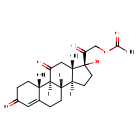
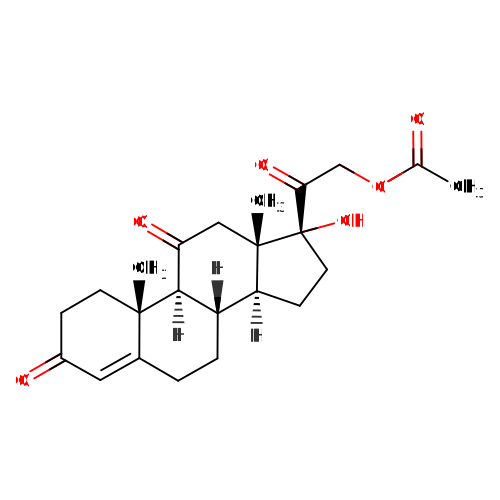
Structure for Cortisone acetate (DB01380)
- Weight
- Average: 402.4807
Monoisotopic: 402.204238692 - Chemical Formula
- C23H30O6
- Synonyms
- Cortisone 21-acetate
- Cortisone acetate
- Cortone acetate

Pharmacology
- Indication
Cortisone acetate is indicated to treat a wide variety of endocrine, rheumatic, collagen, dermatologic, allergic, ophthalmic, respiratory, hematologic, neoplastic, edematous, and gastrointestinal diseases and disorders.2,8
 Reduce drug development failure ratesBuild, train, & validate machine-learning modelswith evidence-based and structured datasets.Build, train, & validate predictive machine-learning models with structured datasets.
- Associated Conditions
Indication Type Indication Combined Product Details Approval Level Age Group Patient Characteristics Dose Form Management of Acne rosacea •••••••••••• Management of Acquired hemolytic anemia •••••••••••• Management of Acute gouty arthritis •••••••••••• Management of Acute leukemia •••••••••••• Diagnostic agent Adrenocortical hyperfunction •••••••••••• - Contraindications & Blackbox Warnings
 Prevent Adverse Drug Events TodayTap into our Clinical API for life-saving information on contraindications & blackbox warnings, population restrictions, harmful risks, & more.Avoid life-threatening adverse drug events with our Clinical API
- Pharmacodynamics
Corticosteroids bind to the glucocorticoid receptor, inhibiting pro-inflammatory signals, and promoting anti-inflammatory signals.3 The duration of action is moderate as it is generally given once daily.8 Corticosteroids have a wide therapeutic window as patients may require doses that are multiples of what the body naturally produces.3 Patients taking corticosteroids should be counselled regarding the risk of hypothalamic-pituitary-adrenal axis suppression and increased susceptibility to infections.3
- Mechanism of action
The short term effects of corticosteroids are decreased vasodilation and permeability of capillaries, as well as decreased leukocyte migration to sites of inflammation.3 Corticosteroids binding to the glucocorticoid receptor mediates changes in gene expression that lead to multiple downstream effects over hours to days.3 Glucocorticoids inhibit neutrophil apoptosis and demargination; they inhibit phospholipase A2, which decreases the formation of arachidonic acid derivatives; they inhibit NF-Kappa B and other inflammatory transcription factors; they promote anti-inflammatory genes like interleukin-10.3 Lower doses of corticosteroids provide an anti-inflammatory effect, while higher doses are immunosuppressive.3 High doses of glucocorticoids for an extended period bind to the mineralocorticoid receptor, raising sodium levels and decreasing potassium levels.3
Target Actions Organism AGlucocorticoid receptor agonistHumans UAnnexin A1 inducerHumans - Absorption
Not Available
- Volume of distribution
Not Available
- Protein binding
Corticosteroids are generally bound to corticosteroid binding globulin5 and serum albumin4 in plasma.
- Metabolism
- Not Available
- Route of elimination
Corticosteroids are eliminated predominantly in the urine.4
- Half-life
Not Available
- Clearance
Data regarding the clearance of cortisone acetate is not readily available.8
- Adverse Effects
 Improve decision support & research outcomesWith structured adverse effects data, including: blackbox warnings, adverse reactions, warning & precautions, & incidence rates. View sample adverse effects data in our new Data Library!Improve decision support & research outcomes with our structured adverse effects data.
- Toxicity
Data regarding acute overdoses of glucocorticoids are rare.8 Chronic high doses of glucocorticoids can lead to the development of cataract, glaucoma, hypertension, water retention, hyperlipidemia, peptic ulcer, pancreatitis, myopathy, osteoporosis, mood changes, psychosis, dermal atrophy, allergy, acne, hypertrichosis, immune suppression, decreased resistance to infection, moon face, hyperglycemia, hypocalcemia, hypophosphatemia, metabolic acidosis, growth suppression, and secondary adrenal insufficiency.6 Overdose may be treated by adjusting the dose or stopping the corticosteroid as well as initiating symptomatic and supportive treatment.6
- Pathways
- Not Available
- Pharmacogenomic Effects/ADRs
- Not Available
Interactions
- Drug Interactions
- This information should not be interpreted without the help of a healthcare provider. If you believe you are experiencing an interaction, contact a healthcare provider immediately. The absence of an interaction does not necessarily mean no interactions exist.
Drug Interaction Integrate drug-drug
interactions in your softwareAbametapir The serum concentration of Cortisone acetate can be increased when it is combined with Abametapir. Abatacept The risk or severity of adverse effects can be increased when Abatacept is combined with Cortisone acetate. Abemaciclib The metabolism of Abemaciclib can be increased when combined with Cortisone acetate. Acalabrutinib The metabolism of Acalabrutinib can be increased when combined with Cortisone acetate. Acarbose The risk or severity of hyperglycemia can be increased when Cortisone acetate is combined with Acarbose. - Food Interactions
- Take with food. Taking cortisone acetate with food may reduce gastrointestinal upset.
Products
 Drug product information from 10+ global regionsOur datasets provide approved product information including:dosage, form, labeller, route of administration, and marketing period.Access drug product information from over 10 global regions.
- Active Moieties
Name Kind UNII CAS InChI Key Cortisone prodrug V27W9254FZ 53-06-5 MFYSYFVPBJMHGN-ZPOLXVRWSA-N - Product Images

- International/Other Brands
- Cortisyl
- Brand Name Prescription Products
Name Dosage Strength Route Labeller Marketing Start Marketing End Region Image Cortisone Acetate Tablet 25 mg Oral Bausch Health, Canada Inc. 1973-12-31 Not applicable Canada 
Cortisone Acetate Tablet 10 mg/1 Oral UNSPECIFIED 2006-01-04 Not applicable US 
Cortisone Acetate Tablet 5 mg/1 Oral UNSPECIFIED 2006-01-04 Not applicable US Cortone Sus 50mg/ml Suspension 50 mg / mL Intramuscular Merck Frosst Canada & Cie, Merck Frosst Canada & Co. 1951-12-31 1999-08-06 Canada Cortone Tab 25mg Tablet 25 mg Oral Merck Frosst Canada & Cie, Merck Frosst Canada & Co. 1954-12-31 2002-07-29 Canada - Generic Prescription Products
Name Dosage Strength Route Labeller Marketing Start Marketing End Region Image Cortisone Acetate Tablet 25 mg/1 Oral Hikma Pharmaceuticals USA Inc. 2013-08-22 Not applicable US Cortisone Acetate Tablet 25 mg/1 Oral Chartwell Rx, Llc 1974-10-17 Not applicable US Cortisone Acetate Tablet 25 mg/1 Oral Golden State Medical Supply 1972-06-13 2017-01-02 US Cortisone Acetate Tablet 25 mg/1 Oral Hikma Pharmaceuticals USA Inc. 1972-06-13 Not applicable US 
Cortisone Acetate Tablet 25 mg/1 Oral Hikma Pharmaceutical 2013-08-26 Not applicable US


Categories
- Drug Categories
- 17-Hydroxycorticosteroids
- Adrenal Cortex Hormones
- Adrenals
- Anti-Inflammatory Agents
- Corticosteroids
- Corticosteroids for Systemic Use
- Cytochrome P-450 CYP3A Inducers
- Cytochrome P-450 CYP3A Substrates
- Cytochrome P-450 CYP3A4 Inducers
- Cytochrome P-450 CYP3A4 Inducers (strength unknown)
- Cytochrome P-450 CYP3A4 Substrates
- Cytochrome P-450 CYP3A5 Inducers
- Cytochrome P-450 CYP3A5 Inducers (strength unknown)
- Cytochrome P-450 Enzyme Inducers
- Cytochrome P-450 Substrates
- Fused-Ring Compounds
- Glucocorticoids
- Hormones
- Hormones, Hormone Substitutes, and Hormone Antagonists
- Hydroxycorticosteroids
- Hyperglycemia-Associated Agents
- Immunosuppressive Agents
- OAT3/SLC22A8 Substrates
- P-glycoprotein inducers
- P-glycoprotein substrates
- Pregnanes
- Pregnenes
- Steroids
- Chemical TaxonomyProvided by Classyfire
- Description
- This compound belongs to the class of organic compounds known as gluco/mineralocorticoids, progestogins and derivatives. These are steroids with a structure based on a hydroxylated prostane moiety.
- Kingdom
- Organic compounds
- Super Class
- Lipids and lipid-like molecules
- Class
- Steroids and steroid derivatives
- Sub Class
- Pregnane steroids
- Direct Parent
- Gluco/mineralocorticoids, progestogins and derivatives
- Alternative Parents
- 20-oxosteroids / 3-oxo delta-4-steroids / 17-hydroxysteroids / 11-oxosteroids / Delta-4-steroids / Cyclohexenones / Alpha-acyloxy ketones / Tertiary alcohols / Alpha-hydroxy ketones / Cyclic alcohols and derivatives show 4 more
- Substituents
- 11-oxosteroid / 17-hydroxysteroid / 20-oxosteroid / 3-oxo-delta-4-steroid / 3-oxosteroid / Alcohol / Aliphatic homopolycyclic compound / Alpha-acyloxy ketone / Alpha-hydroxy ketone / Carbonyl group show 16 more
- Molecular Framework
- Aliphatic homopolycyclic compounds
- External Descriptors
- corticosteroid hormone (CHEBI:3897) / C21 steroids (gluco/mineralocorticoids, progestogens) and derivatives (C08173) / C21 steroids (gluco/mineralocorticoids, progestogins) and derivatives (LMST02030120)
- Affected organisms
- Humans and other mammals
Chemical Identifiers
- UNII
- 883WKN7W8X
- CAS number
- 50-04-4
- InChI Key
- ITRJWOMZKQRYTA-RFZYENFJSA-N
- InChI
- InChI=1S/C23H30O6/c1-13(24)29-12-19(27)23(28)9-7-17-16-5-4-14-10-15(25)6-8-21(14,2)20(16)18(26)11-22(17,23)3/h10,16-17,20,28H,4-9,11-12H2,1-3H3/t16-,17-,20+,21-,22-,23-/m0/s1
- IUPAC Name
- 2-[(1R,3aS,3bS,9aR,9bS,11aS)-1-hydroxy-9a,11a-dimethyl-7,10-dioxo-1H,2H,3H,3aH,3bH,4H,5H,7H,8H,9H,9aH,9bH,10H,11H,11aH-cyclopenta[a]phenanthren-1-yl]-2-oxoethyl acetate
- SMILES
- [H][C@@]12CC[C@](O)(C(=O)COC(C)=O)[C@@]1(C)CC(=O)[C@@]1([H])[C@@]2([H])CCC2=CC(=O)CC[C@]12C
References
- Synthesis Reference
Reichstein,T.; US. Patent 2,403,683; July 9, 1946. Gallagher,T.F.; US. Patent 2,447,325; August 17,1948; assigned to Research Corporation. Sarett, L.H.; U.S. Patent 2,541,104; February 13, 1951; assigned to Merck & Co., Inc.
- General References
- BOLAND EW, HEADLEY NE: Effects of cortisone acetate on rheumatoid arthritis. J Am Med Assoc. 1949 Oct 1;141(5):301-8. doi: 10.1001/jama.1949.02910050001001. [Article]
- Hardy RS, Raza K, Cooper MS: Therapeutic glucocorticoids: mechanisms of actions in rheumatic diseases. Nat Rev Rheumatol. 2020 Mar;16(3):133-144. doi: 10.1038/s41584-020-0371-y. Epub 2020 Feb 7. [Article]
- Yasir M, Sonthalia S: Corticosteroid Adverse Effects . [Article]
- Czock D, Keller F, Rasche FM, Haussler U: Pharmacokinetics and pharmacodynamics of systemically administered glucocorticoids. Clin Pharmacokinet. 2005;44(1):61-98. doi: 10.2165/00003088-200544010-00003. [Article]
- Gardill BR, Vogl MR, Lin HY, Hammond GL, Muller YA: Corticosteroid-binding globulin: structure-function implications from species differences. PLoS One. 2012;7(12):e52759. doi: 10.1371/journal.pone.0052759. Epub 2012 Dec 26. [Article]
- Ciriaco M, Ventrice P, Russo G, Scicchitano M, Mazzitello G, Scicchitano F, Russo E: Corticosteroid-related central nervous system side effects. J Pharmacol Pharmacother. 2013 Dec;4(Suppl 1):S94-8. doi: 10.4103/0976-500X.120975. [Article]
- FDA Approved Drug Products: Cortone Cortisone Acetate Injection (Discontinued) [Link]
- DailyMed Label: Cortisone acetate tablet [Link]
- External Links
- Human Metabolome Database
- HMDB0015459
- KEGG Drug
- D00973
- KEGG Compound
- C08173
- PubChem Compound
- 5745
- PubChem Substance
- 46508852
- ChemSpider
- 5543
- BindingDB
- 50455157
- 21655
- ChEBI
- 3897
- ChEMBL
- CHEMBL1650
- ZINC
- ZINC000003875334
- PharmGKB
- PA449130
- RxList
- RxList Drug Page
- Drugs.com
- Drugs.com Drug Page
- Wikipedia
- Cortisone_acetate
- MSDS
- Download (74.3 KB)
Clinical Trials
- Clinical Trials
Phase Status Purpose Conditions Count 4 Completed Treatment Primary adrenocoritical insufficiency / Secondary Adrenal Insufficiency 1 4 Recruiting Treatment Congenital Adrenal Hyperplasia (CAH) 1 3 Completed Treatment Acute ACE-induced Angioedema 1 3 Completed Treatment Adrenal Insufficiency 1 2 Unknown Status Treatment Congenital Adrenal Hyperplasia (CAH) 1
Pharmacoeconomics
- Manufacturers
- Not Available
- Packagers
- Bergen Brunswig
- Consolidated Midland Corp.
- CVS Pharmacy
- Major Pharmaceuticals
- Medicine Shop
- Medisca Inc.
- Murfreesboro Pharmaceutical Nursing Supply
- Pharmacia Inc.
- Qualitest
- West-Ward Pharmaceuticals
- Dosage Forms
Form Route Strength Injection Tablet Oral 10 mg/1 Tablet Oral 25 mg/1 Tablet Oral 5 mg/1 Tablet Oral 25 MG Suspension Intramuscular 50 mg / mL Tablet Oral 5 mg - Prices
Unit description Cost Unit Cortisone acetate powder 24.18USD g Cortisone Acetate 25 mg Tablet 0.47USD tablet Cortisone 25 mg tablet 0.46USD tablet Cortaid 1% cream 0.21USD g CVS Pharmacy cortisone 1% cream 0.18USD g CVS Pharmacy anti-itch 1% cream 0.13USD g Hydrocortisone 0.5% cream 0.11USD g Medi-cortisone 1% cream 0.1USD g DrugBank does not sell nor buy drugs. Pricing information is supplied for informational purposes only.- Patents
- Not Available
Properties
- State
- Solid
- Experimental Properties
Property Value Source melting point (°C) 227-229 Reichstein,T.; US. Patent 2,403,683; July 9, 1946. Gallagher,T.F.; US. Patent 2,447,325; August 17,1948; assigned to Research Corporation. Sarett, L.H.; U.S. Patent 2,541,104; February 13, 1951; assigned to Merck & Co., Inc. water solubility 20 mg/L (at 25 °C) YALKOWSKY,SH & DANNENFELSER,RM (1992) logP 2.10 HANSCH,C ET AL. (1995) - Predicted Properties
Property Value Source Water Solubility 0.0278 mg/mL ALOGPS logP 2.35 ALOGPS logP 2.1 Chemaxon logS -4.2 ALOGPS pKa (Strongest Acidic) 12.6 Chemaxon pKa (Strongest Basic) -3.8 Chemaxon Physiological Charge 0 Chemaxon Hydrogen Acceptor Count 5 Chemaxon Hydrogen Donor Count 1 Chemaxon Polar Surface Area 97.74 Å2 Chemaxon Rotatable Bond Count 4 Chemaxon Refractivity 105.63 m3·mol-1 Chemaxon Polarizability 43.06 Å3 Chemaxon Number of Rings 4 Chemaxon Bioavailability 1 Chemaxon Rule of Five Yes Chemaxon Ghose Filter Yes Chemaxon Veber's Rule No Chemaxon MDDR-like Rule No Chemaxon - Predicted ADMET Features
Property Value Probability Human Intestinal Absorption + 0.983 Blood Brain Barrier + 0.9851 Caco-2 permeable - 0.6606 P-glycoprotein substrate Substrate 0.7382 P-glycoprotein inhibitor I Inhibitor 0.7341 P-glycoprotein inhibitor II Inhibitor 0.5925 Renal organic cation transporter Non-inhibitor 0.7452 CYP450 2C9 substrate Non-substrate 0.8551 CYP450 2D6 substrate Non-substrate 0.9294 CYP450 3A4 substrate Substrate 0.7841 CYP450 1A2 substrate Non-inhibitor 0.9045 CYP450 2C9 inhibitor Non-inhibitor 0.9071 CYP450 2D6 inhibitor Non-inhibitor 0.9556 CYP450 2C19 inhibitor Non-inhibitor 0.9026 CYP450 3A4 inhibitor Non-inhibitor 0.8588 CYP450 inhibitory promiscuity Low CYP Inhibitory Promiscuity 0.9246 Ames test Non AMES toxic 0.9409 Carcinogenicity Non-carcinogens 0.9551 Biodegradation Not ready biodegradable 0.9354 Rat acute toxicity 2.1280 LD50, mol/kg Not applicable hERG inhibition (predictor I) Weak inhibitor 0.9599 hERG inhibition (predictor II) Non-inhibitor 0.6638
Spectra
- Mass Spec (NIST)
- Not Available
- Spectra
- Chromatographic Properties
Collision Cross Sections (CCS)
Adduct CCS Value (Å2) Source type Source [M-H]- 209.2040396 predictedDarkChem Lite v0.1.0 [M-H]- 206.7025396 predictedDarkChem Lite v0.1.0 [M-H]- 210.4518396 predictedDarkChem Lite v0.1.0 [M-H]- 203.05083 predictedDeepCCS 1.0 (2019) [M+H]+ 209.4531396 predictedDarkChem Lite v0.1.0 [M+H]+ 206.8732396 predictedDarkChem Lite v0.1.0 [M+H]+ 209.7077396 predictedDarkChem Lite v0.1.0 [M+H]+ 204.94624 predictedDeepCCS 1.0 (2019) [M+Na]+ 209.6649396 predictedDarkChem Lite v0.1.0 [M+Na]+ 206.5763396 predictedDarkChem Lite v0.1.0 [M+Na]+ 210.3525396 predictedDarkChem Lite v0.1.0 [M+Na]+ 211.80598 predictedDeepCCS 1.0 (2019)
Targets

- Kind
- Protein
- Organism
- Humans
- Pharmacological action
- Yes
- Actions
- Agonist
- General Function
- Zinc ion binding
- Specific Function
- Receptor for glucocorticoids (GC). Has a dual mode of action: as a transcription factor that binds to glucocorticoid response elements (GRE), both for nuclear and mitochondrial DNA, and as a modula...
- Gene Name
- NR3C1
- Uniprot ID
- P04150
- Uniprot Name
- Glucocorticoid receptor
- Molecular Weight
- 85658.57 Da
References
- Grossman R, Yehuda R, Golier J, McEwen B, Harvey P, Maria NS: Cognitive effects of intravenous hydrocortisone in subjects with PTSD and healthy control subjects. Ann N Y Acad Sci. 2006 Jul;1071:410-21. [Article]
- Rautanen A, Eriksson JG, Kere J, Andersson S, Osmond C, Tienari P, Sairanen H, Barker DJ, Phillips DI, Forsen T, Kajantie E: Associations of body size at birth with late-life cortisol concentrations and glucose tolerance are modified by haplotypes of the glucocorticoid receptor gene. J Clin Endocrinol Metab. 2006 Nov;91(11):4544-51. Epub 2006 Aug 8. [Article]
- Hammer F, Stewart PM: Cortisol metabolism in hypertension. Best Pract Res Clin Endocrinol Metab. 2006 Sep;20(3):337-53. [Article]
- Shaw JR, Gabor K, Hand E, Lankowski A, Durant L, Thibodeau R, Stanton CR, Barnaby R, Coutermarsh B, Karlson KH, Sato JD, Hamilton JW, Stanton BA: Role of glucocorticoid receptor in acclimation of killifish (Fundulus heteroclitus) to seawater and effects of arsenic. Am J Physiol Regul Integr Comp Physiol. 2007 Feb;292(2):R1052-60. Epub 2006 Oct 12. [Article]
- Sher L: Combined dexamethasone suppression-corticotropin-releasing hormone stimulation test in studies of depression, alcoholism, and suicidal behavior. ScientificWorldJournal. 2006 Oct 31;6:1398-404. [Article]
- Schlechte JA, Ginsberg BH, Sherman BM: Regulation of the glucocorticoid receptor in human lymphocytes. J Steroid Biochem. 1982 Jan;16(1):69-74. [Article]
- Schlechte JA, Sherman BM: Decreased glucocorticoid receptor binding in adrenal insufficiency. J Clin Endocrinol Metab. 1982 Jan;54(1):145-9. [Article]
- DailyMed Label: Cortisone acetate tablet [Link]
- Kind
- Protein
- Organism
- Humans
- Pharmacological action
- Unknown
- Actions
- Inducer
- General Function
- Structural molecule activity
- Specific Function
- Plays important roles in the innate immune response as effector of glucocorticoid-mediated responses and regulator of the inflammatory process. Has anti-inflammatory activity (PubMed:8425544). Play...
- Gene Name
- ANXA1
- Uniprot ID
- P04083
- Uniprot Name
- Annexin A1
- Molecular Weight
- 38713.855 Da
References
- Serres M, Viac J, Comera C, Schmitt D: Expression of annexin I in freshly isolated human epidermal cells and in cultured keratinocytes. Arch Dermatol Res. 1994;286(5):268-72. [Article]
Enzymes
- Kind
- Protein
- Organism
- Humans
- Pharmacological action
- Unknown
- Actions
- SubstrateInducer
- General Function
- Vitamin d3 25-hydroxylase activity
- Specific Function
- Cytochromes P450 are a group of heme-thiolate monooxygenases. In liver microsomes, this enzyme is involved in an NADPH-dependent electron transport pathway. It performs a variety of oxidation react...
- Gene Name
- CYP3A4
- Uniprot ID
- P08684
- Uniprot Name
- Cytochrome P450 3A4
- Molecular Weight
- 57342.67 Da
References
- Ekins S, Bravi G, Wikel JH, Wrighton SA: Three-dimensional-quantitative structure activity relationship analysis of cytochrome P-450 3A4 substrates. J Pharmacol Exp Ther. 1999 Oct;291(1):424-33. [Article]
- Luo X, Zhu LJ, Cai NF, Zheng LY, Cheng ZN: Prediction of tacrolimus metabolism and dosage requirements based on CYP3A4 phenotype and CYP3A5(*)3 genotype in Chinese renal transplant recipients. Acta Pharmacol Sin. 2016 Apr;37(4):555-60. doi: 10.1038/aps.2015.163. Epub 2016 Feb 29. [Article]
- Flockhart Table of Drug Interactions [Link]
- Kind
- Protein
- Organism
- Humans
- Pharmacological action
- Unknown
- Actions
- Inducer
- General Function
- Oxygen binding
- Specific Function
- Cytochromes P450 are a group of heme-thiolate monooxygenases. In liver microsomes, this enzyme is involved in an NADPH-dependent electron transport pathway. It oxidizes a variety of structurally un...
- Gene Name
- CYP3A5
- Uniprot ID
- P20815
- Uniprot Name
- Cytochrome P450 3A5
- Molecular Weight
- 57108.065 Da
References
- Dvorak Z, Pavek P: Regulation of drug-metabolizing cytochrome P450 enzymes by glucocorticoids. Drug Metab Rev. 2010 Nov;42(4):621-35. doi: 10.3109/03602532.2010.484462. [Article]
Carriers
- Kind
- Protein
- Organism
- Humans
- Pharmacological action
- Unknown
- Actions
- Binder
- General Function
- Steroid binding
- Specific Function
- Major transport protein for glucocorticoids and progestins in the blood of almost all vertebrate species.
- Gene Name
- SERPINA6
- Uniprot ID
- P08185
- Uniprot Name
- Corticosteroid-binding globulin
- Molecular Weight
- 45140.49 Da
References
- Gardill BR, Vogl MR, Lin HY, Hammond GL, Muller YA: Corticosteroid-binding globulin: structure-function implications from species differences. PLoS One. 2012;7(12):e52759. doi: 10.1371/journal.pone.0052759. Epub 2012 Dec 26. [Article]
- SLAUNWHITE WR Jr, SANDBERG AA: Transcortin: a corticosteroid-binding protein of plasma. J Clin Invest. 1959 Feb;38(2):384-91. doi: 10.1172/JCI103812. [Article]
- Kind
- Protein
- Organism
- Humans
- Pharmacological action
- Unknown
- Actions
- Binder
- General Function
- Toxic substance binding
- Specific Function
- Serum albumin, the main protein of plasma, has a good binding capacity for water, Ca(2+), Na(+), K(+), fatty acids, hormones, bilirubin and drugs. Its main function is the regulation of the colloid...
- Gene Name
- ALB
- Uniprot ID
- P02768
- Uniprot Name
- Serum albumin
- Molecular Weight
- 69365.94 Da
References
- Czock D, Keller F, Rasche FM, Haussler U: Pharmacokinetics and pharmacodynamics of systemically administered glucocorticoids. Clin Pharmacokinet. 2005;44(1):61-98. doi: 10.2165/00003088-200544010-00003. [Article]
Transporters
- Kind
- Protein
- Organism
- Humans
- Pharmacological action
- Unknown
- Actions
- Inhibitor
- General Function
- Sodium-independent organic anion transmembrane transporter activity
- Specific Function
- Mediates the Na(+)-independent transport of organic anions such as sulfobromophthalein (BSP) and conjugated (taurocholate) and unconjugated (cholate) bile acids (By similarity). Selectively inhibit...
- Gene Name
- SLCO1A2
- Uniprot ID
- P46721
- Uniprot Name
- Solute carrier organic anion transporter family member 1A2
- Molecular Weight
- 74144.105 Da
References
- Bossuyt X, Muller M, Hagenbuch B, Meier PJ: Polyspecific drug and steroid clearance by an organic anion transporter of mammalian liver. J Pharmacol Exp Ther. 1996 Mar;276(3):891-6. [Article]
- Kind
- Protein
- Organism
- Humans
- Pharmacological action
- Unknown
- Actions
- SubstrateInducer
- General Function
- Xenobiotic-transporting atpase activity
- Specific Function
- Energy-dependent efflux pump responsible for decreased drug accumulation in multidrug-resistant cells.
- Gene Name
- ABCB1
- Uniprot ID
- P08183
- Uniprot Name
- Multidrug resistance protein 1
- Molecular Weight
- 141477.255 Da
References
- Yates CR, Chang C, Kearbey JD, Yasuda K, Schuetz EG, Miller DD, Dalton JT, Swaan PW: Structural determinants of P-glycoprotein-mediated transport of glucocorticoids. Pharm Res. 2003 Nov;20(11):1794-803. [Article]
- Matoulkova P, Pavek P, Maly J, Vlcek J: Cytochrome P450 enzyme regulation by glucocorticoids and consequences in terms of drug interaction. Expert Opin Drug Metab Toxicol. 2014 Mar;10(3):425-35. doi: 10.1517/17425255.2014.878703. Epub 2014 Jan 23. [Article]
- Kind
- Protein
- Organism
- Humans
- Pharmacological action
- Unknown
- Actions
- Substrate
- General Function
- Sodium-independent organic anion transmembrane transporter activity
- Specific Function
- Plays an important role in the excretion/detoxification of endogenous and exogenous organic anions, especially from the brain and kidney. Involved in the transport basolateral of steviol, fexofenad...
- Gene Name
- SLC22A8
- Uniprot ID
- Q8TCC7
- Uniprot Name
- Solute carrier family 22 member 8
- Molecular Weight
- 59855.585 Da
References
- VanWert AL, Gionfriddo MR, Sweet DH: Organic anion transporters: discovery, pharmacology, regulation and roles in pathophysiology. Biopharm Drug Dispos. 2010 Jan;31(1):1-71. doi: 10.1002/bdd.693. [Article]

Drug created at July 06, 2007 20:32 / Updated at April 26, 2024 00:45