Identification
- Summary
Bezafibrate is a lipid-lowering fibrate used in the management of primary and secondary hyperlipidaemia, when there is a lack of clinical improvement following lifestyle modifications or correction of the underlying disorder.
- Brand Names
- Bezalip
- Generic Name
- Bezafibrate
- DrugBank Accession Number
- DB01393
- Background
Antilipemic agent that lowers cholesterol and triglycerides. It decreases low density lipoproteins and increases high density lipoproteins.
- Type
- Small Molecule
- Groups
- Approved, Investigational
- Structure
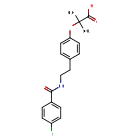
Structure for Bezafibrate (DB01393)

- Weight
- Average: 361.819
Monoisotopic: 361.10808584 - Chemical Formula
- C19H20ClNO4
- Synonyms
- 2-(p-(2-(p-Chlorobenzamido)ethyl)phenoxy)-2-methylpropionic acid
- Bezafibrate
- Bezafibrato
- Bezafibratum
- External IDs
- BM 15.075

Pharmacology
- Indication
For the treatment of primary hyperlipidaemia types IIa, IIb, III, IV and V (Fredrickson classification) corresponding to groups I, II and III of the European Atherosclerosis Society guidelines - when diet alone or improvements in lifestyle such as increased exercise or weight reduction do not lead to an adequate response. Also for the treatment of secondary hyperlipidaemias, e.g. severe hypertriglyceridemias, when sufficient improvement does not occur after correction of the underlying disorder (e.g. diabetes mellitus).
 Reduce drug development failure ratesBuild, train, & validate machine-learning modelswith evidence-based and structured datasets.Build, train, & validate predictive machine-learning models with structured datasets.
- Associated Conditions
Indication Type Indication Combined Product Details Approval Level Age Group Patient Characteristics Dose Form Management of Fredrickson classification type iv hyperlipidemia •••••••••••• Management of Fredrickson classification type v hyperlipidemia •••••••••••• Management of Type iia hypercholesterolemia •••••••••••• Management of Type iib hypercholesterolemia •••••••••••• - Contraindications & Blackbox Warnings
 Prevent Adverse Drug Events TodayTap into our Clinical API for life-saving information on contraindications & blackbox warnings, population restrictions, harmful risks, & more.Avoid life-threatening adverse drug events with our Clinical API
- Pharmacodynamics
Bezafibrate is an antilipemic agent that lowers cholesterol and triglycerides. It decreases low density lipoproteins and increases high density lipoproteins. Bezafibrate lowers elevated blood lipids (triglycerides and cholesterol). Elevated VLDL and LDL are reduced by treatment with bezafibrate, whilst HDL-levels are increased. The activity of triglyceride lipases (lipoprotein lipase and hepatic lipoproteinlipase) involved in the catabolism of triglyceride-rich lipoproteins is increased by bezafibrate. In the course of the intensified degradation of triglyceride-rich lipoproteins (chylomicrons, VLDL) precursors for the formation of HDL are formed which explains an increase in HDL. Furthermore, cholesterol biosynthesis is reduced by bezafibrate, which is accompanied by a stimulation of the LDL-receptor-mediated lipoprotein catabolism. Elevated fibrinogen appears to be an important risk-factor, alongside the lipids, smoking and hypertension, in the development of atheroma. Fibrinogen plays an important role in viscosity, and therefore blood flow, and also appears to play an important role in thrombus development and lysability. Bezafibrate exerts an effect on thrombogenic factors. A significant decrease in elevated plasma fibrinogen levels can be achieved. This may lead, amongst other things, to a reduction in both blood and plasma viscosity. Inhibition of platelet aggregation has also been observed. A reduction in blood glucose concentration due to an increase in glucose tolerance has been reported in diabetic patients. In the same patients, the concentration of fasting and postprandial free fatty acids was reduced by bezafibrate.
- Mechanism of action
It is generally accepted that bezafibrate is likely an agonist of PPAR-alpha. However, certain other investigations have also suggested that the substance might also elicit some effects on PPAR-gamma and PPAR-delta too.
Target Actions Organism APeroxisome proliferator-activated receptor delta agonistHumans APeroxisome proliferator-activated receptor gamma agonistHumans APeroxisome proliferator-activated receptor alpha agonistHumans UNuclear receptor subfamily 1 group I member 2 partial agonistHumans URetinoic acid receptor RXR-alpha agonistHumans URetinoic acid receptor RXR-beta agonistHumans URetinoic acid receptor RXR-gamma agonistHumans - Absorption
Bezafibrate is almost completely absorbed after oral administration. The relative bioavailability of bezafibrate retard compared to the standard form is about 70%.
- Volume of distribution
Not Available
- Protein binding
94-96% of bezafibrate is bound to protein in human serum.
- Metabolism
Hepatic.
- Route of elimination
Not Available
- Half-life
1-2 hours
- Clearance
Not Available
- Adverse Effects
 Improve decision support & research outcomesWith structured adverse effects data, including: blackbox warnings, adverse reactions, warning & precautions, & incidence rates. View sample adverse effects data in our new Data Library!Improve decision support & research outcomes with our structured adverse effects data.
- Toxicity
Not Available
- Pathways
- Not Available
- Pharmacogenomic Effects/ADRs
- Not Available
Interactions
- Drug Interactions
- This information should not be interpreted without the help of a healthcare provider. If you believe you are experiencing an interaction, contact a healthcare provider immediately. The absence of an interaction does not necessarily mean no interactions exist.
Drug Interaction Integrate drug-drug
interactions in your softwareAbametapir The serum concentration of Bezafibrate can be increased when it is combined with Abametapir. Acenocoumarol The risk or severity of bleeding can be increased when Bezafibrate is combined with Acenocoumarol. Acetohexamide The risk or severity of hypoglycemia can be increased when Bezafibrate is combined with Acetohexamide. Acipimox The risk or severity of myopathy, rhabdomyolysis, and myoglobinuria can be increased when Bezafibrate is combined with Acipimox. Alendronic acid The risk or severity of myopathy, rhabdomyolysis, and myoglobinuria can be increased when Alendronic acid is combined with Bezafibrate. - Food Interactions
- Take with a full glass of water.
- Take with food. Taking bezafibrate with food or after meals slows the absorption of bezafibrate.
Products
 Drug product information from 10+ global regionsOur datasets provide approved product information including:dosage, form, labeller, route of administration, and marketing period.Access drug product information from over 10 global regions.
- International/Other Brands
- Befizal / Bezalip / Bezalip retard / Bezatol / Bezatol SR / Cedur
- Brand Name Prescription Products
Name Dosage Strength Route Labeller Marketing Start Marketing End Region Image Act-bezafibrate SR Tablet, extended release 400 mg Oral Actavis Group Ptc Ehf. Not applicable Not applicable Canada 
Bezalip SR Tablet, extended release 400 mg Oral Allergan 1994-12-21 Not applicable Canada Bezalip Tab 200mg Tablet 200 mg Oral Hoffmann La Roche 1994-12-31 2001-07-19 Canada - Generic Prescription Products
Name Dosage Strength Route Labeller Marketing Start Marketing End Region Image Jamp-bezafibrate SR Tablet, extended release 400 mg Oral Jamp Pharma Corporation 2016-04-06 Not applicable Canada PMS-bezafibrate Tablet 200 mg Oral Pharmascience Inc 1999-09-01 Not applicable Canada
Categories
- ATC Codes
- C10AB02 — Bezafibrate
- Drug Categories
- Acids, Acyclic
- Acids, Carbocyclic
- Agents Causing Muscle Toxicity
- Amides
- Benzamides and benzamide derivatives
- Benzene Derivatives
- Benzoates
- Butyrates
- Chlorobenzoates
- Cytochrome P-450 CYP2C8 Inhibitors
- Cytochrome P-450 CYP2C8 Inhibitors (strength unknown)
- Cytochrome P-450 CYP2C8 Inhibitors (weak)
- Cytochrome P-450 CYP3A Substrates
- Cytochrome P-450 CYP3A4 Substrates
- Cytochrome P-450 Enzyme Inhibitors
- Cytochrome P-450 Substrates
- Ethers
- Fibric Acid Derivatives
- Fibric Acids
- Hypolipidemic Agents
- Hypolipidemic Agents Indicated for Hyperlipidemia
- Isobutyrates
- Lipid Modifying Agents
- Lipid Modifying Agents, Plain
- Lipid Regulating Agents
- Non-statin Hypolipidemic Agents Indicated for Hyperlipidemia
- OATP1B1/SLCO1B1 Inhibitors
- Phenols
- Phenyl Ethers
- Chemical TaxonomyProvided by Classyfire
- Description
- This compound belongs to the class of organic compounds known as phenoxyacetic acid derivatives. These are compounds containing an anisole where the methane group is linked to an acetic acid or a derivative.
- Kingdom
- Organic compounds
- Super Class
- Benzenoids
- Class
- Benzene and substituted derivatives
- Sub Class
- Phenoxyacetic acid derivatives
- Direct Parent
- Phenoxyacetic acid derivatives
- Alternative Parents
- 4-halobenzoic acids and derivatives / Benzamides / Phenoxy compounds / Phenol ethers / Benzoyl derivatives / Alkyl aryl ethers / Chlorobenzenes / Aryl chlorides / Secondary carboxylic acid amides / Monocarboxylic acids and derivatives show 7 more
- Substituents
- 4-halobenzoic acid or derivatives / Alkyl aryl ether / Aromatic homomonocyclic compound / Aryl chloride / Aryl halide / Benzamide / Benzoic acid or derivatives / Benzoyl / Carbonyl group / Carboxamide group show 20 more
- Molecular Framework
- Aromatic homomonocyclic compounds
- External Descriptors
- aromatic ether, monocarboxylic acid, monocarboxylic acid amide, monochlorobenzenes (CHEBI:47612)
- Affected organisms
- Humans and other mammals
Chemical Identifiers
- UNII
- Y9449Q51XH
- CAS number
- 41859-67-0
- InChI Key
- IIBYAHWJQTYFKB-UHFFFAOYSA-N
- InChI
- InChI=1S/C19H20ClNO4/c1-19(2,18(23)24)25-16-9-3-13(4-10-16)11-12-21-17(22)14-5-7-15(20)8-6-14/h3-10H,11-12H2,1-2H3,(H,21,22)(H,23,24)
- IUPAC Name
- 2-(4-{2-[(4-chlorophenyl)formamido]ethyl}phenoxy)-2-methylpropanoic acid
- SMILES
- CC(C)(OC1=CC=C(CCNC(=O)C2=CC=C(Cl)C=C2)C=C1)C(O)=O
References
- General References
- Authors unspecified: Secondary prevention by raising HDL cholesterol and reducing triglycerides in patients with coronary artery disease. Circulation. 2000 Jul 4;102(1):21-7. [Article]
- Tenenbaum A, Motro M, Fisman EZ, Tanne D, Boyko V, Behar S: Bezafibrate for the secondary prevention of myocardial infarction in patients with metabolic syndrome. Arch Intern Med. 2005 May 23;165(10):1154-60. [Article]
- Tenenbaum A, Motro M, Fisman EZ, Schwammenthal E, Adler Y, Goldenberg I, Leor J, Boyko V, Mandelzweig L, Behar S: Peroxisome proliferator-activated receptor ligand bezafibrate for prevention of type 2 diabetes mellitus in patients with coronary artery disease. Circulation. 2004 May 11;109(18):2197-202. Epub 2004 May 3. [Article]
- Tenenbaum A, Fisman EZ, Boyko V, Benderly M, Tanne D, Haim M, Matas Z, Motro M, Behar S: Attenuation of progression of insulin resistance in patients with coronary artery disease by bezafibrate. Arch Intern Med. 2006 Apr 10;166(7):737-41. [Article]
- External Links
- Human Metabolome Database
- HMDB0015465
- KEGG Drug
- D01366
- PubChem Compound
- 39042
- PubChem Substance
- 46509188
- ChemSpider
- 35728
- BindingDB
- 28701
- 1525
- ChEBI
- 47612
- ChEMBL
- CHEMBL264374
- ZINC
- ZINC000003956919
- Therapeutic Targets Database
- DAP001182
- PharmGKB
- PA162364313
- Guide to Pharmacology
- GtP Drug Page
- PDBe Ligand
- PEM
- Wikipedia
- Bezafibrate
- PDB Entries
- 1iwh / 5x2s / 5x2t / 7bpz / 7wgl / 7wgo
Clinical Trials
- Clinical Trials
Phase Status Purpose Conditions Count 4 Completed Treatment Acute Coronary Syndrome (ACS) / High Cholesterol 1 4 Completed Treatment Acute Myocardial Infarction (AMI) 1 3 Active Not Recruiting Treatment Primary Biliary Cholangitis 1 3 Completed Treatment Mixed Dyslipidemias 1 3 Completed Treatment Primary Bilary Cirrhosis (PBC) / Primary Biliary Cholangitis 1
Pharmacoeconomics
- Manufacturers
- Not Available
- Packagers
- Not Available
- Dosage Forms
Form Route Strength Tablet, extended release Oral 400 mg Tablet, film coated Oral Tablet, film coated Oral 400 mg Tablet Oral 400.000 mg Tablet Oral 200 mg Tablet Oral Tablet, film coated Oral 200 mg/1 Tablet, extended release Oral 400 mg/1 Tablet Oral 200.00 mg Pill Tablet, coated Oral Tablet Oral 200.000 mg Tablet, film coated Oral 200 mg Tablet, coated Oral 200 mg - Prices
Unit description Cost Unit Bezalip 400 mg Sustained-Release Tablet 1.96USD tablet DrugBank does not sell nor buy drugs. Pricing information is supplied for informational purposes only.- Patents
- Not Available
Properties
- State
- Solid
- Experimental Properties
Property Value Source melting point (°C) 186 °C PhysProp - Predicted Properties
Property Value Source Water Solubility 0.00155 mg/mL ALOGPS logP 3.97 ALOGPS logP 3.99 Chemaxon logS -5.4 ALOGPS pKa (Strongest Acidic) 3.83 Chemaxon pKa (Strongest Basic) -0.84 Chemaxon Physiological Charge -1 Chemaxon Hydrogen Acceptor Count 4 Chemaxon Hydrogen Donor Count 2 Chemaxon Polar Surface Area 75.63 Å2 Chemaxon Rotatable Bond Count 7 Chemaxon Refractivity 95.96 m3·mol-1 Chemaxon Polarizability 37.53 Å3 Chemaxon Number of Rings 2 Chemaxon Bioavailability 1 Chemaxon Rule of Five Yes Chemaxon Ghose Filter Yes Chemaxon Veber's Rule No Chemaxon MDDR-like Rule No Chemaxon - Predicted ADMET Features
Property Value Probability Human Intestinal Absorption + 0.9246 Blood Brain Barrier + 0.8773 Caco-2 permeable - 0.5564 P-glycoprotein substrate Substrate 0.6325 P-glycoprotein inhibitor I Non-inhibitor 0.8387 P-glycoprotein inhibitor II Non-inhibitor 0.7329 Renal organic cation transporter Non-inhibitor 0.8161 CYP450 2C9 substrate Non-substrate 0.7725 CYP450 2D6 substrate Non-substrate 0.9116 CYP450 3A4 substrate Substrate 0.7261 CYP450 1A2 substrate Non-inhibitor 0.9045 CYP450 2C9 inhibitor Non-inhibitor 0.9071 CYP450 2D6 inhibitor Non-inhibitor 0.923 CYP450 2C19 inhibitor Non-inhibitor 0.9026 CYP450 3A4 inhibitor Non-inhibitor 0.883 CYP450 inhibitory promiscuity High CYP Inhibitory Promiscuity 0.5096 Ames test Non AMES toxic 0.7749 Carcinogenicity Non-carcinogens 0.7815 Biodegradation Not ready biodegradable 0.9902 Rat acute toxicity 2.4927 LD50, mol/kg Not applicable hERG inhibition (predictor I) Weak inhibitor 0.9928 hERG inhibition (predictor II) Non-inhibitor 0.6481
Spectra
- Mass Spec (NIST)
- Not Available
- Spectra
- Chromatographic Properties
Collision Cross Sections (CCS)
Adduct CCS Value (Å2) Source type Source [M-H]- 199.7822834 predictedDarkChem Lite v0.1.0 [M-H]- 199.6735834 predictedDarkChem Lite v0.1.0 [M-H]- 179.11458 predictedDeepCCS 1.0 (2019) [M+H]+ 199.7643834 predictedDarkChem Lite v0.1.0 [M+H]+ 175.8817862 predictedDarkChem Lite v0.1.0 [M+H]+ 181.47258 predictedDeepCCS 1.0 (2019) [M+Na]+ 199.7327834 predictedDarkChem Lite v0.1.0 [M+Na]+ 200.0447834 predictedDarkChem Lite v0.1.0 [M+Na]+ 188.59563 predictedDeepCCS 1.0 (2019)
Targets

- Kind
- Protein
- Organism
- Humans
- Pharmacological action
- Yes
- Actions
- Agonist
- General Function
- Zinc ion binding
- Specific Function
- Ligand-activated transcription factor. Receptor that binds peroxisome proliferators such as hypolipidemic drugs and fatty acids. Has a preference for poly-unsaturated fatty acids, such as gamma-lin...
- Gene Name
- PPARD
- Uniprot ID
- Q03181
- Uniprot Name
- Peroxisome proliferator-activated receptor delta
- Molecular Weight
- 49902.99 Da
References
- Tenenbaum A, Motro M, Fisman EZ: Dual and pan-peroxisome proliferator-activated receptors (PPAR) co-agonism: the bezafibrate lessons. Cardiovasc Diabetol. 2005 Sep 16;4:14. [Article]
- Kind
- Protein
- Organism
- Humans
- Pharmacological action
- Yes
- Actions
- Agonist
- General Function
- Zinc ion binding
- Specific Function
- Nuclear receptor that binds peroxisome proliferators such as hypolipidemic drugs and fatty acids. Once activated by a ligand, the nuclear receptor binds to DNA specific PPAR response elements (PPRE...
- Gene Name
- PPARG
- Uniprot ID
- P37231
- Uniprot Name
- Peroxisome proliferator-activated receptor gamma
- Molecular Weight
- 57619.58 Da
References
- Tenenbaum A, Motro M, Fisman EZ: Dual and pan-peroxisome proliferator-activated receptors (PPAR) co-agonism: the bezafibrate lessons. Cardiovasc Diabetol. 2005 Sep 16;4:14. [Article]
- Kind
- Protein
- Organism
- Humans
- Pharmacological action
- Yes
- Actions
- Agonist
- General Function
- Zinc ion binding
- Specific Function
- Ligand-activated transcription factor. Key regulator of lipid metabolism. Activated by the endogenous ligand 1-palmitoyl-2-oleoyl-sn-glycerol-3-phosphocholine (16:0/18:1-GPC). Activated by oleyleth...
- Gene Name
- PPARA
- Uniprot ID
- Q07869
- Uniprot Name
- Peroxisome proliferator-activated receptor alpha
- Molecular Weight
- 52224.595 Da
References
- Pedraza N, Solanes G, Carmona MC, Iglesias R, Vinas O, Mampel T, Vazquez M, Giralt M, Villarroya F: Impaired expression of the uncoupling protein-3 gene in skeletal muscle during lactation: fibrates and troglitazone reverse lactation-induced downregulation of the uncoupling protein-3 gene. Diabetes. 2000 Jul;49(7):1224-30. [Article]
- Cabrero A, Alegret M, Sanchez R, Adzet T, Laguna JC, Vazquez M: Peroxisome proliferator-activated receptor alpha (PPARalpha) activators, bezafibrate and Wy-14,643, increase uncoupling protein-3 mRNA levels without modifying the mitochondrial membrane potential in primary culture of rat preadipocytes. Arch Biochem Biophys. 2000 Aug 15;380(2):353-9. [Article]
- Inoue I, Goto S, Matsunaga T, Nakajima T, Awata T, Hokari S, Komoda T, Katayama S: The ligands/activators for peroxisome proliferator-activated receptor alpha (PPARalpha) and PPARgamma increase Cu2+,Zn2+-superoxide dismutase and decrease p22phox message expressions in primary endothelial cells. Metabolism. 2001 Jan;50(1):3-11. [Article]
- Guan Y, Breyer MD: Peroxisome proliferator-activated receptors (PPARs): novel therapeutic targets in renal disease. Kidney Int. 2001 Jul;60(1):14-30. [Article]
- Bonilla S, Redonnet A, Noel-Suberville C, Groubet R, Pallet V, Higueret P: Effect of a pharmacological activation of PPAR on the expression of RAR and TR in rat liver. J Physiol Biochem. 2001 Mar;57(1):1-8. [Article]
- Goldenberg I, Benderly M, Goldbourt U: Update on the use of fibrates: focus on bezafibrate. Vasc Health Risk Manag. 2008;4(1):131-41. [Article]
- Fruchart JC, Duriez P: Mode of action of fibrates in the regulation of triglyceride and HDL-cholesterol metabolism. Drugs Today (Barc). 2006 Jan;42(1):39-64. [Article]
- Chen X, Ji ZL, Chen YZ: TTD: Therapeutic Target Database. Nucleic Acids Res. 2002 Jan 1;30(1):412-5. [Article]
- Kind
- Protein
- Organism
- Humans
- Pharmacological action
- Unknown
- Actions
- Partial agonist
- General Function
- Zinc ion binding
- Specific Function
- Nuclear receptor that binds and is activated by variety of endogenous and xenobiotic compounds. Transcription factor that activates the transcription of multiple genes involved in the metabolism an...
- Gene Name
- NR1I2
- Uniprot ID
- O75469
- Uniprot Name
- Nuclear receptor subfamily 1 group I member 2
- Molecular Weight
- 49761.245 Da
References
- Creusot N, Kinani S, Balaguer P, Tapie N, LeMenach K, Maillot-Marechal E, Porcher JM, Budzinski H, Ait-Aissa S: Evaluation of an hPXR reporter gene assay for the detection of aquatic emerging pollutants: screening of chemicals and application to water samples. Anal Bioanal Chem. 2010 Jan;396(2):569-83. doi: 10.1007/s00216-009-3310-y. Epub 2009 Nov 29. [Article]
- Kind
- Protein
- Organism
- Humans
- Pharmacological action
- Unknown
- Actions
- Agonist
- General Function
- Zinc ion binding
- Specific Function
- Receptor for retinoic acid. Retinoic acid receptors bind as heterodimers to their target response elements in response to their ligands, all-trans or 9-cis retinoic acid, and regulate gene expressi...
- Gene Name
- RXRA
- Uniprot ID
- P19793
- Uniprot Name
- Retinoic acid receptor RXR-alpha
- Molecular Weight
- 50810.835 Da
References
- Sarath Josh MK, Pradeep S, Vijayalekshmi Amma KS, Balachandran S, Abdul Jaleel UC, Doble M, Spener F, Benjamin S: Phthalates efficiently bind to human peroxisome proliferator activated receptor and retinoid X receptor alpha, beta, gamma subtypes: an in silico approach. J Appl Toxicol. 2014 Jul;34(7):754-65. doi: 10.1002/jat.2902. Epub 2013 Jul 11. [Article]
- Kind
- Protein
- Organism
- Humans
- Pharmacological action
- Unknown
- Actions
- Agonist
- General Function
- Zinc ion binding
- Specific Function
- Receptor for retinoic acid. Retinoic acid receptors bind as heterodimers to their target response elements in response to their ligands, all-trans or 9-cis retinoic acid, and regulate gene expressi...
- Gene Name
- RXRB
- Uniprot ID
- P28702
- Uniprot Name
- Retinoic acid receptor RXR-beta
- Molecular Weight
- 56921.38 Da
References
- Sarath Josh MK, Pradeep S, Vijayalekshmi Amma KS, Balachandran S, Abdul Jaleel UC, Doble M, Spener F, Benjamin S: Phthalates efficiently bind to human peroxisome proliferator activated receptor and retinoid X receptor alpha, beta, gamma subtypes: an in silico approach. J Appl Toxicol. 2014 Jul;34(7):754-65. doi: 10.1002/jat.2902. Epub 2013 Jul 11. [Article]
- Kind
- Protein
- Organism
- Humans
- Pharmacological action
- Unknown
- Actions
- Agonist
- General Function
- Zinc ion binding
- Specific Function
- Receptor for retinoic acid. Retinoic acid receptors bind as heterodimers to their target response elements in response to their ligands, all-trans or 9-cis retinoic acid, and regulate gene expressi...
- Gene Name
- RXRG
- Uniprot ID
- P48443
- Uniprot Name
- Retinoic acid receptor RXR-gamma
- Molecular Weight
- 50870.72 Da
References
- Sarath Josh MK, Pradeep S, Vijayalekshmi Amma KS, Balachandran S, Abdul Jaleel UC, Doble M, Spener F, Benjamin S: Phthalates efficiently bind to human peroxisome proliferator activated receptor and retinoid X receptor alpha, beta, gamma subtypes: an in silico approach. J Appl Toxicol. 2014 Jul;34(7):754-65. doi: 10.1002/jat.2902. Epub 2013 Jul 11. [Article]
Enzymes
- Kind
- Protein
- Organism
- Humans
- Pharmacological action
- Unknown
- Actions
- Inducer
- General Function
- Vitamin d 24-hydroxylase activity
- Specific Function
- Cytochromes P450 are a group of heme-thiolate monooxygenases. In liver microsomes, this enzyme is involved in an NADPH-dependent electron transport pathway. It oxidizes a variety of structurally un...
- Gene Name
- CYP1A1
- Uniprot ID
- P04798
- Uniprot Name
- Cytochrome P450 1A1
- Molecular Weight
- 58164.815 Da
References
- Seree E, Villard PH, Pascussi JM, Pineau T, Maurel P, Nguyen QB, Fallone F, Martin PM, Champion S, Lacarelle B, Savouret JF, Barra Y: Evidence for a new human CYP1A1 regulation pathway involving PPAR-alpha and 2 PPRE sites. Gastroenterology. 2004 Nov;127(5):1436-45. doi: 10.1053/j.gastro.2004.08.023. [Article]
- Kind
- Protein
- Organism
- Humans
- Pharmacological action
- Unknown
- Actions
- Inhibitor
- General Function
- Steroid hydroxylase activity
- Specific Function
- Cytochromes P450 are a group of heme-thiolate monooxygenases. In liver microsomes, this enzyme is involved in an NADPH-dependent electron transport pathway. It oxidizes a variety of structurally un...
- Gene Name
- CYP2C8
- Uniprot ID
- P10632
- Uniprot Name
- Cytochrome P450 2C8
- Molecular Weight
- 55824.275 Da
References
- Kajosaari LI, Laitila J, Neuvonen PJ, Backman JT: Metabolism of repaglinide by CYP2C8 and CYP3A4 in vitro: effect of fibrates and rifampicin. Basic Clin Pharmacol Toxicol. 2005 Oct;97(4):249-56. doi: 10.1111/j.1742-7843.2005.pto_157.x. [Article]
- Kind
- Protein
- Organism
- Humans
- Pharmacological action
- Unknown
- Actions
- Substrate
- General Function
- Vitamin d3 25-hydroxylase activity
- Specific Function
- Cytochromes P450 are a group of heme-thiolate monooxygenases. In liver microsomes, this enzyme is involved in an NADPH-dependent electron transport pathway. It performs a variety of oxidation react...
- Gene Name
- CYP3A4
- Uniprot ID
- P08684
- Uniprot Name
- Cytochrome P450 3A4
- Molecular Weight
- 57342.67 Da
References
- Miller DB, Spence JD: Clinical pharmacokinetics of fibric acid derivatives (fibrates). Clin Pharmacokinet. 1998 Feb;34(2):155-62. doi: 10.2165/00003088-199834020-00003. [Article]
Transporters
- Kind
- Protein
- Organism
- Humans
- Pharmacological action
- Unknown
- Actions
- Inhibitor
- General Function
- Sodium-independent organic anion transmembrane transporter activity
- Specific Function
- Mediates the Na(+)-independent uptake of organic anions such as pravastatin, taurocholate, methotrexate, dehydroepiandrosterone sulfate, 17-beta-glucuronosyl estradiol, estrone sulfate, prostagland...
- Gene Name
- SLCO1B1
- Uniprot ID
- Q9Y6L6
- Uniprot Name
- Solute carrier organic anion transporter family member 1B1
- Molecular Weight
- 76447.99 Da
References
- Sharma P, Holmes VE, Elsby R, Lambert C, Surry D: Validation of cell-based OATP1B1 assays to assess drug transport and the potential for drug-drug interaction to support regulatory submissions. Xenobiotica. 2010 Jan;40(1):24-37. doi: 10.3109/00498250903351013. [Article]

Drug created at July 08, 2007 17:01 / Updated at April 27, 2024 09:44