Identification
- Summary
Diamorphine is an opioid analgesic agent used in the relief of severe pain associated with surgical procedures, myocardial infarction or pain in the terminally ill and for the relief of dyspnea in acute pulmonary edema.
- Generic Name
- Diamorphine
- DrugBank Accession Number
- DB01452
- Background
Diamorphine (heroin) is a narcotic analgesic that may be habit-forming. It is a controlled substance (opium derivative) listed in the U.S. Code of Federal Regulations, Title 21 Parts 329.1, 1308.11 (1987). Sale is forbidden in the United States by Federal statute. (Merck Index, 11th ed) Internationally, diamorphine is controlled under Schedules I and IV of the Single Convention on Narcotic Drugs. As heroin, it is illegal to manufacture, possess, or sell in the United States and the UK. However, under the name diamorphine, heroin is a legal prescription drug in the United Kingdom.
- Type
- Small Molecule
- Groups
- Approved, Illicit, Investigational
- Structure
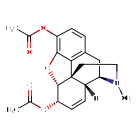
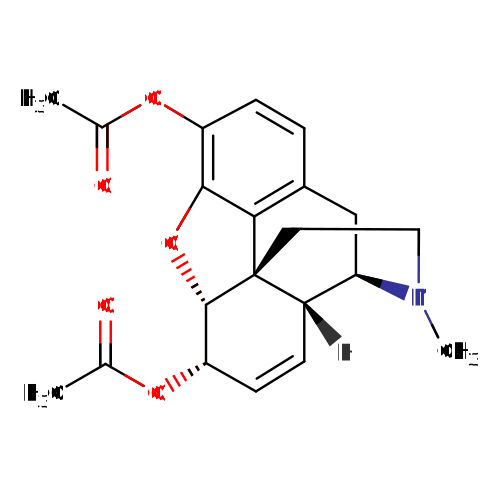
Structure for Diamorphine (DB01452)
- Weight
- Average: 369.411
Monoisotopic: 369.157622851 - Chemical Formula
- C21H23NO5
- Synonyms
- (5α,6α)-7,8-Didehydro-4,5-epoxy-17-methylmorphinan-3,6-diol diacetate (ester)
- 3,6-Diacetylmorphine
- 7,8-Dihydro-4,5-alpha-epoxy-17-methylmorphinan-3,6-alpha-diol diacetate
- Diacetylmorphine
- Diamorphine
- Heroin
- O,O'-Diacetylmorphine
- External IDs
- IDS-NH-001
- IDS-NH-001(SECT.3)
- J6.494G

Pharmacology
- Indication
Diamorphine, as a prescription medication in the United Kingdom, is indicated for use in the treatment of severe pain associated with surgical procedures, myocardial infarction or pain in the terminally ill and for the relief of dyspnoea in acute pulmonary edema 6.
 Reduce drug development failure ratesBuild, train, & validate machine-learning modelswith evidence-based and structured datasets.Build, train, & validate predictive machine-learning models with structured datasets.
- Contraindications & Blackbox Warnings
 Prevent Adverse Drug Events TodayTap into our Clinical API for life-saving information on contraindications & blackbox warnings, population restrictions, harmful risks, & more.Avoid life-threatening adverse drug events with our Clinical API
- Pharmacodynamics
The onset of heroin's effects is dependent on the method of administration. Taken orally, heroin is totally metabolized in vivo via extensive first-pass metabolism into morphine before crossing the blood-brain barrier; so the effects are the same as orally administered morphine 5,6. Take by injection, diamorphine's acetyl groups facilitate rapid crossing into the brain 5,6. Once in the brain, heroin is rapidly metabolized into morphine by removal of the acetyl groups, therefore making it a prodrug for the delivery of morphine 5,6. Subsequently, whether eliciting actions peripherally (on smooth muscle, skeletal muscle, kidney, lung, liver, or spleen tissue 5, for example) or on the central nervous system, it is ultimately the morphine metabolite of heroin that then binds with opioid receptors and produces the narcotic opioid effects commonly associated with the substance 5,6.
- Mechanism of action
When administered orally, diamorphine experiences extensive first-pass metabolism by way of deacetylation to generate the active metabolites 6-monoacetylmorphine (6-MAM) and morphine 5,6. Alternatively, when given as an injection the acetyl groups present in the diamorphine/diacetylmorphine compound confer the substance lipophilicity that facilitates diamorphine's rapid crossing of the blood-brain-barrier 5,6. Once in the brain, diamorphine is metabolised via deacetylation to the active 6-MAM and morphine metabolites as well 5,6. Despite diamorphine possessing little to no opioid agonist activity itself, its rapid transit across the blood-brain-barrier elicits a far faster onset of activity in comparison to the extensive first-pass metabolism of oral administration 5,6. Regardless, the metabolism of diamorphine to morphine makes heroin a prodrug for the delivery of morphine 5,6.
Morphine is subsequently a mu-opioid agonist. It acts on endogenous mu-opioid receptors that are spread in discrete packets throughout the brain, spinal cord and gut in almost all mammals 1. Morphine, along with other opioids, are agonists to four endogenous neurotransmitters 1. They are beta-endorphin, dynorphin, leu-enkephalin, and met-enkephalin 1. The body responds to morphine in the brain by reducing (and sometimes stopping) production of the endogenous opioids when morphine is present 1. Endorphins are regularly released in the brain and nerves, attenuating pain. Their other functions are still obscure, but are probably related to the effects produced by morphine besides analgesia (antitussin, anti-diarrheal) 1.
Nevertheless, morphine ultimately elicits the majority of its analgesic activity by binding to mu opioid receptors in both the central and peripheral nervous systems 7. The overall effect of morphine is activation of descending inhibitory pathways of the central nervous system as well as inhibition of nociceptive afferent neurons of the peripheral nervous system, which results in an overall reduction of the nociceptive pain transmission 7.
Target Actions Organism AMu-type opioid receptor agonistHumans UKappa-type opioid receptor agonistHumans UDelta-type opioid receptor agonistHumans ULiver carboxylesterase 1 Not Available Humans - Absorption
Bioavailability is less than 35% when orally administered 2. In particular, some studies have determined that the bioavailability of orally administered diamorphine could be as low as 22.9% (16.4-29.4%) on average in opioid-naive subjects 3.
Nevertheless, diamorphine administered by any many medically indicated routes of administration leads to a rapid absorption 5. Peak serum levels are achieved five to ten minutes subcutaneously, three to five minutes intranasally and intramuscularly, and less than one minute intravenously 5.
- Volume of distribution
Data regarding the volume of distribution specific to diamorphine is not readily accessible or available. However, considering diamorphine is considered a prodrug for morphine, the volume of distribution of morphine has been determined to be approximately 1 to 6 L/kg 8.
- Protein binding
Diamorphine does not bind to plasma protein 6. However, considering diamorphine is considered a prodrug for morphine, morphine itself is about 20 to 35% reversibly bound to human plasma proteins 6,8.
- Metabolism
Once administered into the body, diamorphine undergoes deacetylation via various esterase enzymes to generate active metabolites like 6-monoacetylmorphine and morphine 5,6. In particular, when administered orally, diamorphine undergoes extensive first pass metabolism 5,6.
Hover over products below to view reaction partners
- Route of elimination
The majority of the drug is excreted via the kidney as glucuronides and to a much lesser extent as morphine 6. About 7-10 % is eliminated via the biliary system into the faeces 6.
- Half-life
In humans, administered diamorphine has a half-life of approximately two to three minutes 6.
- Clearance
Some studies have determined a relatively high systemic diacetylmorphine clearance of about 8.7 +/- 2.6 L/min, suggesting that the intestine, liver, and blood might all collectively take part in the first pass metabolism of diacetylmorphine to morphine 3, although such clearance observations were made only in opioid-addicted individuals 4.
However, considering diamorphine is considered a prodrug for morphine, the mean adult plasma clearance of morphine is approximately 20 to 30 mL/min/kg 8.
- Adverse Effects
 Improve decision support & research outcomesWith structured adverse effects data, including: blackbox warnings, adverse reactions, warning & precautions, & incidence rates. View sample adverse effects data in our new Data Library!Improve decision support & research outcomes with our structured adverse effects data.
- Toxicity
Overdosage with diamorphine well characterised by a number of symptoms including respiratory depression, pulmonary oedema, muscle flaccidity, coma or stupor, constricted pupils, cold, clammy skin and occasionally bradycardia and hypotension 5,6. The antidote for heroin overdose or poisoning is naloxone 5.
- Pathways
Pathway Category Heroin Action Pathway Drug action Heroin Metabolism Pathway Drug metabolism - Pharmacogenomic Effects/ADRs
- Not Available
Interactions
- Drug Interactions
- This information should not be interpreted without the help of a healthcare provider. If you believe you are experiencing an interaction, contact a healthcare provider immediately. The absence of an interaction does not necessarily mean no interactions exist.
Drug Interaction Integrate drug-drug
interactions in your software1,2-Benzodiazepine The risk or severity of adverse effects can be increased when Diamorphine is combined with 1,2-Benzodiazepine. Acetazolamide The risk or severity of CNS depression can be increased when Acetazolamide is combined with Diamorphine. Acetophenazine The risk or severity of hypotension and CNS depression can be increased when Acetophenazine is combined with Diamorphine. Aclidinium The risk or severity of adverse effects can be increased when Aclidinium is combined with Diamorphine. Agomelatine The risk or severity of CNS depression can be increased when Diamorphine is combined with Agomelatine. - Food Interactions
- Avoid alcohol.
Products
 Drug product information from 10+ global regionsOur datasets provide approved product information including:dosage, form, labeller, route of administration, and marketing period.Access drug product information from over 10 global regions.
- Product Ingredients
Ingredient UNII CAS InChI Key Diamorphine hydrochloride 8H672SHT8E 1502-95-0 FZJYQGFGNHGSFX-PVQKIFDLSA-N - Brand Name Prescription Products
Name Dosage Strength Route Labeller Marketing Start Marketing End Region Image Diacetylmorphine Hydrochloride Powder, for solution 5000 mg / vial Intramuscular; Intravenous Pharmascience Inc 2022-04-11 Not applicable Canada 
Diacetylmorphine Hydrochloride Powder, for solution 200 mg / vial Intramuscular; Intravenous Pharmascience Inc 2022-06-16 Not applicable Canada Diamorphine Hydrochloride Inj 100mg/ml BP Powder, for solution 100 mg / mL Intramuscular; Intravenous; Subcutaneous Technilab Pharma Inc. 1988-12-31 1997-08-22 Canada Diamorphine Hydrochloride Inj 30mg/ml BP Powder, for solution 30 mg / mL Intramuscular; Intravenous; Subcutaneous Technilab Pharma Inc. 1988-12-31 1997-08-22 Canada
Categories
- ATC Codes
- N07BC06 — Diamorphine
- Drug Categories
- Alkaloids
- Analgesics
- Central Nervous System Agents
- Central Nervous System Depressants
- Drugs Used in Addictive Disorders
- Drugs Used in Opioid Dependence
- Heroin, agonists
- Heterocyclic Compounds, Fused-Ring
- Morphinans
- Morphine Derivatives
- Narcotics
- Nervous System
- Opiate Agonists
- Opiate Alkaloids
- Opioids
- Peripheral Nervous System Agents
- Phenanthrenes
- Sensory System Agents
- Thyroxine-binding globulin inducers
- Chemical TaxonomyProvided by Classyfire
- Description
- This compound belongs to the class of organic compounds known as morphinans. These are polycyclic compounds with a four-ring skeleton with three condensed six-member rings forming a partially hydrogenated phenanthrene moiety, one of which is aromatic while the two others are alicyclic.
- Kingdom
- Organic compounds
- Super Class
- Alkaloids and derivatives
- Class
- Morphinans
- Sub Class
- Not Available
- Direct Parent
- Morphinans
- Alternative Parents
- Phenanthrenes and derivatives / Tetralins / Coumarans / Alkyl aryl ethers / Aralkylamines / Piperidines / Dicarboxylic acids and derivatives / Trialkylamines / Amino acids and derivatives / Carboxylic acid esters show 6 more
- Substituents
- Alkyl aryl ether / Amine / Amino acid or derivatives / Aralkylamine / Aromatic heteropolycyclic compound / Azacycle / Benzenoid / Carbonyl group / Carboxylic acid derivative / Carboxylic acid ester show 18 more
- Molecular Framework
- Aromatic heteropolycyclic compounds
- External Descriptors
- morphinane alkaloid (CHEBI:27808)
- Affected organisms
- Humans and other mammals
Chemical Identifiers
- UNII
- 70D95007SX
- CAS number
- 561-27-3
- InChI Key
- GVGLGOZIDCSQPN-PVHGPHFFSA-N
- InChI
- InChI=1S/C21H23NO5/c1-11(23)25-16-6-4-13-10-15-14-5-7-17(26-12(2)24)20-21(14,8-9-22(15)3)18(13)19(16)27-20/h4-7,14-15,17,20H,8-10H2,1-3H3/t14-,15+,17-,20-,21-/m0/s1
- IUPAC Name
- (1S,5R,13R,14S,17R)-10-(acetyloxy)-4-methyl-12-oxa-4-azapentacyclo[9.6.1.0^{1,13}.0^{5,17}.0^{7,18}]octadeca-7(18),8,10,15-tetraen-14-yl acetate
- SMILES
- [H][C@@]12C=C[C@H](OC(C)=O)[C@@H]3OC4=C(OC(C)=O)C=CC5=C4[C@]13CCN(C)[C@@H]2C5
References
- General References
- Tschacher W, Haemmig R, Jacobshagen N: Time series modeling of heroin and morphine drug action. Psychopharmacology (Berl). 2003 Jan;165(2):188-93. Epub 2002 Oct 29. [Article]
- Rook EJ, van Ree JM, van den Brink W, Hillebrand MJ, Huitema AD, Hendriks VM, Beijnen JH: Pharmacokinetics and pharmacodynamics of high doses of pharmaceutically prepared heroin, by intravenous or by inhalation route in opioid-dependent patients. Basic Clin Pharmacol Toxicol. 2006 Jan;98(1):86-96. doi: 10.1111/j.1742-7843.2006.pto_233.x. [Article]
- Halbsguth U, Rentsch KM, Eich-Hochli D, Diterich I, Fattinger K: Oral diacetylmorphine (heroin) yields greater morphine bioavailability than oral morphine: bioavailability related to dosage and prior opioid exposure. Br J Clin Pharmacol. 2008 Dec;66(6):781-91. doi: 10.1111/j.1365-2125.2008.03286.x. [Article]
- Rentsch KM, Kullak-Ublick GA, Reichel C, Meier PJ, Fattinger K: Arterial and venous pharmacokinetics of intravenous heroin in subjects who are addicted to narcotics. Clin Pharmacol Ther. 2001 Sep;70(3):237-46. doi: 10.1067/mcp.2001.117981. [Article]
- Huecker MR, Marraffa J. Heroin. [Updated 2018 Oct 27]. In: StatPearls [Internet]. Treasure Island (FL): StatPearls Publishing; 2018 Jan. [Link]
- Electronic Medicines Compendium: Diamorphine Hydrochloride BP 100 mg Lyophilisate for Solution for Injection Monograph [Link]
- Murphy PB, Barrett MJ. Morphine. [Updated 2018 Oct 27]. In: StatPearls [Internet]. Treasure Island (FL): StatPearls Publishing; 2018 Jan [Link]
- Morphine Sulfate FDA Label [File]
- External Links
- KEGG Drug
- D07286
- KEGG Compound
- C06534
- PubChem Compound
- 5462328
- PubChem Substance
- 46506839
- ChemSpider
- 4575379
- 3304
- ChEBI
- 27808
- ChEMBL
- CHEMBL459324
- ZINC
- ZINC000004097183
- PharmGKB
- PA452619
- Drugs.com
- Drugs.com Drug Page
- Wikipedia
- Heroin
- MSDS
- Download (18.8 KB)
Clinical Trials
- Clinical Trials
Phase Status Purpose Conditions Count 4 Terminated Treatment Sickle Cell Disease (SCD) 1 3 Completed Basic Science Opioid Related Disorders 1 3 Completed Treatment Heroin Dependence / Opioid Dependence 1 3 Completed Treatment Opiate Addiction 1 3 Completed Treatment Opioid Dependence 1
Pharmacoeconomics
- Manufacturers
- Not Available
- Packagers
- Not Available
- Dosage Forms
Form Route Strength Powder, for solution Intramuscular; Intravenous 200 mg / vial Powder, for solution Intramuscular; Intravenous 5000 mg / vial Powder, for solution Intramuscular; Intravenous; Subcutaneous 100 mg / mL Powder, for solution Intramuscular; Intravenous; Subcutaneous 30 mg / mL - Prices
- Not Available
- Patents
- Not Available
Properties
- State
- Solid
- Experimental Properties
Property Value Source melting point (°C) 173 °C PhysProp boiling point (°C) 272-274 °C at 1.20E+01 mm Hg PhysProp water solubility 600 mg/L (at 25 °C) SEIDELL,A (1941) logP 1.58 AVDEEF,A ET AL. (1996) pKa 7.95 (at 25 °C) AVDEEF,A ET AL. (1996) - Predicted Properties
Property Value Source Water Solubility 0.266 mg/mL ALOGPS logP 2.3 ALOGPS logP 1.55 Chemaxon logS -3.1 ALOGPS pKa (Strongest Basic) 9.1 Chemaxon Physiological Charge 1 Chemaxon Hydrogen Acceptor Count 4 Chemaxon Hydrogen Donor Count 0 Chemaxon Polar Surface Area 65.07 Å2 Chemaxon Rotatable Bond Count 4 Chemaxon Refractivity 98.43 m3·mol-1 Chemaxon Polarizability 38.19 Å3 Chemaxon Number of Rings 5 Chemaxon Bioavailability 1 Chemaxon Rule of Five Yes Chemaxon Ghose Filter Yes Chemaxon Veber's Rule No Chemaxon MDDR-like Rule No Chemaxon - Predicted ADMET Features
Property Value Probability Human Intestinal Absorption + 0.9932 Blood Brain Barrier + 0.9892 Caco-2 permeable + 0.7924 P-glycoprotein substrate Substrate 0.837 P-glycoprotein inhibitor I Inhibitor 0.8674 P-glycoprotein inhibitor II Non-inhibitor 0.6816 Renal organic cation transporter Non-inhibitor 0.5372 CYP450 2C9 substrate Non-substrate 0.8192 CYP450 2D6 substrate Substrate 0.6599 CYP450 3A4 substrate Substrate 0.7803 CYP450 1A2 substrate Non-inhibitor 0.7994 CYP450 2C9 inhibitor Non-inhibitor 0.8162 CYP450 2D6 inhibitor Non-inhibitor 0.6335 CYP450 2C19 inhibitor Non-inhibitor 0.8059 CYP450 3A4 inhibitor Non-inhibitor 0.8072 CYP450 inhibitory promiscuity Low CYP Inhibitory Promiscuity 0.8335 Ames test Non AMES toxic 0.6935 Carcinogenicity Non-carcinogens 0.9341 Biodegradation Not ready biodegradable 0.9696 Rat acute toxicity 2.8951 LD50, mol/kg Not applicable hERG inhibition (predictor I) Weak inhibitor 0.9038 hERG inhibition (predictor II) Non-inhibitor 0.9086
Spectra
- Mass Spec (NIST)
- Not Available
- Spectra
- Chromatographic Properties
Collision Cross Sections (CCS)
Adduct CCS Value (Å2) Source type Source [M-H]- 189.33522 predictedDeepCCS 1.0 (2019) [M+H]+ 191.32669 predictedDeepCCS 1.0 (2019) [M+Na]+ 198.27452 predictedDeepCCS 1.0 (2019)
Targets

- Kind
- Protein
- Organism
- Humans
- Pharmacological action
- Yes
- Actions
- Agonist
- General Function
- Voltage-gated calcium channel activity
- Specific Function
- Receptor for endogenous opioids such as beta-endorphin and endomorphin. Receptor for natural and synthetic opioids including morphine, heroin, DAMGO, fentanyl, etorphine, buprenorphin and methadone...
- Gene Name
- OPRM1
- Uniprot ID
- P35372
- Uniprot Name
- Mu-type opioid receptor
- Molecular Weight
- 44778.855 Da
References
- Greenwald MK, Johanson CE, Moody DE, Woods JH, Kilbourn MR, Koeppe RA, Schuster CR, Zubieta JK: Effects of buprenorphine maintenance dose on mu-opioid receptor availability, plasma concentrations, and antagonist blockade in heroin-dependent volunteers. Neuropsychopharmacology. 2003 Nov;28(11):2000-9. [Article]
- Becker J, Schmidt P, Musshoff F, Fitzenreiter M, Madea B: MOR1 receptor mRNA expression in human brains of drug-related fatalities-a real-time PCR quantification. Forensic Sci Int. 2004 Feb 10;140(1):13-20. [Article]
- Yao L, McFarland K, Fan P, Jiang Z, Inoue Y, Diamond I: Activator of G protein signaling 3 regulates opiate activation of protein kinase A signaling and relapse of heroin-seeking behavior. Proc Natl Acad Sci U S A. 2005 Jun 14;102(24):8746-51. Epub 2005 Jun 3. [Article]
- Antonilli L, Petecchia E, Caprioli D, Badiani A, Nencini P: Effect of repeated administrations of heroin, naltrexone, methadone, and alcohol on morphine glucuronidation in the rat. Psychopharmacology (Berl). 2005 Oct;182(1):58-64. Epub 2005 Sep 29. [Article]
- Choi HS, Kim CS, Hwang CK, Song KY, Wang W, Qiu Y, Law PY, Wei LN, Loh HH: The opioid ligand binding of human mu-opioid receptor is modulated by novel splice variants of the receptor. Biochem Biophys Res Commun. 2006 May 19;343(4):1132-40. Epub 2006 Mar 23. [Article]
- Kind
- Protein
- Organism
- Humans
- Pharmacological action
- Unknown
- Actions
- Agonist
- General Function
- Opioid receptor activity
- Specific Function
- G-protein coupled opioid receptor that functions as receptor for endogenous alpha-neoendorphins and dynorphins, but has low affinity for beta-endorphins. Also functions as receptor for various synt...
- Gene Name
- OPRK1
- Uniprot ID
- P41145
- Uniprot Name
- Kappa-type opioid receptor
- Molecular Weight
- 42644.665 Da
References
- Wee S, Koob GF: The role of the dynorphin-kappa opioid system in the reinforcing effects of drugs of abuse. Psychopharmacology (Berl). 2010 Jun;210(2):121-35. doi: 10.1007/s00213-010-1825-8. Epub 2010 Mar 30. [Article]
- Klein G, Juni A, Arout CA, Waxman AR, Inturrisi CE, Kest B: Acute and chronic heroin dependence in mice: contribution of opioid and excitatory amino acid receptors. Eur J Pharmacol. 2008 May 31;586(1-3):179-88. doi: 10.1016/j.ejphar.2008.02.035. Epub 2008 Feb 19. [Article]
- Kind
- Protein
- Organism
- Humans
- Pharmacological action
- Unknown
- Actions
- Agonist
- General Function
- Opioid receptor activity
- Specific Function
- G-protein coupled receptor that functions as receptor for endogenous enkephalins and for a subset of other opioids. Ligand binding causes a conformation change that triggers signaling via guanine n...
- Gene Name
- OPRD1
- Uniprot ID
- P41143
- Uniprot Name
- Delta-type opioid receptor
- Molecular Weight
- 40368.235 Da
References
- Klein G, Juni A, Arout CA, Waxman AR, Inturrisi CE, Kest B: Acute and chronic heroin dependence in mice: contribution of opioid and excitatory amino acid receptors. Eur J Pharmacol. 2008 May 31;586(1-3):179-88. doi: 10.1016/j.ejphar.2008.02.035. Epub 2008 Feb 19. [Article]
- Chen X, Ji ZL, Chen YZ: TTD: Therapeutic Target Database. Nucleic Acids Res. 2002 Jan 1;30(1):412-5. [Article]
- Kieffer BL, Gaveriaux-Ruff C: Exploring the opioid system by gene knockout. Prog Neurobiol. 2002 Apr;66(5):285-306. [Article]
- Kind
- Protein
- Organism
- Humans
- Pharmacological action
- Unknown
- Curator comments
- substrate for metabolism
- General Function
- Triglyceride lipase activity
- Specific Function
- Involved in the detoxification of xenobiotics and in the activation of ester and amide prodrugs. Hydrolyzes aromatic and aliphatic esters, but has no catalytic activity toward amides or a fatty acy...
- Gene Name
- CES1
- Uniprot ID
- P23141
- Uniprot Name
- Liver carboxylesterase 1
- Molecular Weight
- 62520.62 Da
References
- Brzezinski MR, Spink BJ, Dean RA, Berkman CE, Cashman JR, Bosron WF: Human liver carboxylesterase hCE-1: binding specificity for cocaine, heroin, and their metabolites and analogs. Drug Metab Dispos. 1997 Sep;25(9):1089-96. [Article]
Carriers
- Kind
- Protein
- Organism
- Humans
- Pharmacological action
- No
- Actions
- Inducer
- General Function
- Serine-type endopeptidase inhibitor activity
- Specific Function
- Major thyroid hormone transport protein in serum.
- Gene Name
- SERPINA7
- Uniprot ID
- P05543
- Uniprot Name
- Thyroxine-binding globulin
- Molecular Weight
- 46324.12 Da
References
- CYTOMEL (liothyronine) FDA label [File]

Drug created at July 31, 2007 13:09 / Updated at April 26, 2024 00:45