Identification
- Summary
Arachidonic Acid is a natural fatty acid that plays an essential role in physiological homeostases, such as repair and growth of cells.
- Generic Name
- Arachidonic Acid
- DrugBank Accession Number
- DB04557
- Background
An unsaturated, essential fatty acid. It is found in animal and human fat as well as in the liver, brain, and glandular organs, and is a constituent of animal phosphatides. It is formed by the synthesis from dietary linoleic acid and is a precursor in the biosynthesis of prostaglandins, thromboxanes, and leukotrienes. [PubChem]
- Type
- Small Molecule
- Groups
- Experimental
- Structure
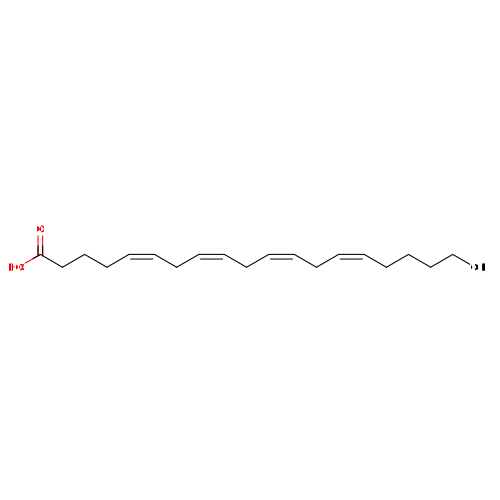
Structure for Arachidonic Acid (DB04557)
- Weight
- Average: 304.4669
Monoisotopic: 304.240230268 - Chemical Formula
- C20H32O2
- Synonyms
- Not Available

Pharmacology
- Indication
Not Available
 Reduce drug development failure ratesBuild, train, & validate machine-learning modelswith evidence-based and structured datasets.Build, train, & validate predictive machine-learning models with structured datasets.
- Contraindications & Blackbox Warnings
 Prevent Adverse Drug Events TodayTap into our Clinical API for life-saving information on contraindications & blackbox warnings, population restrictions, harmful risks, & more.Avoid life-threatening adverse drug events with our Clinical API
- Pharmacodynamics
Not Available
- Mechanism of action
Target Actions Organism UPeroxisome proliferator-activated receptor alpha Not Available Humans UBile acid receptor ligandHumans URetinoic acid receptor RXR-alpha Not Available Humans UProstaglandin G/H synthase 1 Not Available Humans U14 kDa fatty acid-binding protein Not Available Blood fluke - Absorption
Not Available
- Volume of distribution
Not Available
- Protein binding
Not Available
- Metabolism
Hover over products below to view reaction partners
- Route of elimination
Not Available
- Half-life
Not Available
- Clearance
Not Available
- Adverse Effects
 Improve decision support & research outcomesWith structured adverse effects data, including: blackbox warnings, adverse reactions, warning & precautions, & incidence rates. View sample adverse effects data in our new Data Library!Improve decision support & research outcomes with our structured adverse effects data.
- Toxicity
Not Available
- Pathways
- Pharmacogenomic Effects/ADRs
- Not Available
Interactions
- Drug Interactions
- This information should not be interpreted without the help of a healthcare provider. If you believe you are experiencing an interaction, contact a healthcare provider immediately. The absence of an interaction does not necessarily mean no interactions exist.
Drug Interaction Integrate drug-drug
interactions in your softwareAbatacept The metabolism of Arachidonic Acid can be increased when combined with Abatacept. Abrocitinib The metabolism of Abrocitinib can be decreased when combined with Arachidonic Acid. Acenocoumarol The metabolism of Arachidonic Acid can be decreased when combined with Acenocoumarol. Acetohexamide The metabolism of Arachidonic Acid can be decreased when combined with Acetohexamide. Acetyl sulfisoxazole The metabolism of Arachidonic Acid can be decreased when combined with Acetyl sulfisoxazole. - Food Interactions
- Not Available
Products
 Drug product information from 10+ global regionsOur datasets provide approved product information including:dosage, form, labeller, route of administration, and marketing period.Access drug product information from over 10 global regions.
- Unapproved/Other Products
Name Ingredients Dosage Route Labeller Marketing Start Marketing End Region Image SIMILAC ALIMENTUM 400 G TOZ Arachidonic Acid (0.013 g/100ml) + Doconexent (0.007 g/100ml) + Linoleic acid (0.54 g/100ml) + alpha-Linolenic acid (0.058 g/100ml) ABBOTT LABORATUARLARI İTHALAT İHRACAT VE TİC. LTD. ŞTİ. 2015-08-18 Not applicable Turkey 
Categories
- Drug Categories
- Chemical TaxonomyProvided by Classyfire
- Description
- This compound belongs to the class of organic compounds known as long-chain fatty acids. These are fatty acids with an aliphatic tail that contains between 13 and 21 carbon atoms.
- Kingdom
- Organic compounds
- Super Class
- Lipids and lipid-like molecules
- Class
- Fatty Acyls
- Sub Class
- Fatty acids and conjugates
- Direct Parent
- Long-chain fatty acids
- Alternative Parents
- Unsaturated fatty acids / Straight chain fatty acids / Monocarboxylic acids and derivatives / Carboxylic acids / Organic oxides / Hydrocarbon derivatives / Carbonyl compounds
- Substituents
- Aliphatic acyclic compound / Carbonyl group / Carboxylic acid / Carboxylic acid derivative / Hydrocarbon derivative / Long-chain fatty acid / Monocarboxylic acid or derivatives / Organic oxide / Organic oxygen compound / Organooxygen compound
- Molecular Framework
- Aliphatic acyclic compounds
- External Descriptors
- long-chain fatty acid, omega-6 fatty acid, icosa-5,8,11,14-tetraenoic acid (CHEBI:15843) / Unsaturated fatty acids, Polyunsaturated fatty acids (C00219) / Unsaturated fatty acids (LMFA01030001)
- Affected organisms
- Not Available
Chemical Identifiers
- UNII
- 27YG812J1I
- CAS number
- 506-32-1
- InChI Key
- YZXBAPSDXZZRGB-DOFZRALJSA-N
- InChI
- InChI=1S/C20H32O2/c1-2-3-4-5-6-7-8-9-10-11-12-13-14-15-16-17-18-19-20(21)22/h6-7,9-10,12-13,15-16H,2-5,8,11,14,17-19H2,1H3,(H,21,22)/b7-6-,10-9-,13-12-,16-15-
- IUPAC Name
- (5Z,8Z,11Z,14Z)-icosa-5,8,11,14-tetraenoic acid
- SMILES
- CCCCC\C=C/C\C=C/C\C=C/C\C=C/CCCC(O)=O
References
- Synthesis Reference
Derek R. Buckle, "Arachidonic acid analogues, processes for their preparation and their use in medicine." U.S. Patent US4699995, issued July, 1973.
US4699995- General References
- Not Available
- External Links
- Human Metabolome Database
- HMDB0060102
- KEGG Compound
- C00219
- PubChem Compound
- 444899
- PubChem Substance
- 46506683
- ChemSpider
- 392692
- BindingDB
- 22319
- 1368624
- ChEBI
- 15843
- ChEMBL
- CHEMBL15594
- ZINC
- ZINC000004474696
- Therapeutic Targets Database
- DNC000249
- PDBe Ligand
- ACD
- PDB Entries
- 1adl / 1cvu / 1diy / 1gnj / 1u67 / 1vyg / 2lbv / 3fg4 / 3hs5 / 3olt … show 19 more
Clinical Trials
- Clinical Trials
Phase Status Purpose Conditions Count 4 Completed Treatment Development, Child / Premature Births 1 Not Available Completed Not Available Squamous Cell Carcinoma of the Head and Neck (SCCHN) 1 Not Available Enrolling by Invitation Treatment Development, Child / Premature Births 1
Pharmacoeconomics
- Manufacturers
- Not Available
- Packagers
- Not Available
- Dosage Forms
Form Route Strength Capsule, liquid filled Oral Capsule Oral - Prices
- Not Available
- Patents
- Not Available
Properties
- State
- Solid
- Experimental Properties
Property Value Source melting point (°C) -49.5 °C PhysProp boiling point (°C) 170 °C at 1.50E-01 mm Hg PhysProp logP 6.98 SANGSTER (1993) - Predicted Properties
Property Value Source Water Solubility 0.000151 mg/mL ALOGPS logP 6.8 ALOGPS logP 6.59 Chemaxon logS -6.3 ALOGPS pKa (Strongest Acidic) 4.82 Chemaxon Physiological Charge -1 Chemaxon Hydrogen Acceptor Count 2 Chemaxon Hydrogen Donor Count 1 Chemaxon Polar Surface Area 37.3 Å2 Chemaxon Rotatable Bond Count 14 Chemaxon Refractivity 99.95 m3·mol-1 Chemaxon Polarizability 37.2 Å3 Chemaxon Number of Rings 0 Chemaxon Bioavailability 0 Chemaxon Rule of Five No Chemaxon Ghose Filter No Chemaxon Veber's Rule No Chemaxon MDDR-like Rule No Chemaxon - Predicted ADMET Features
Property Value Probability Human Intestinal Absorption + 0.9945 Blood Brain Barrier + 0.9539 Caco-2 permeable + 0.8371 P-glycoprotein substrate Non-substrate 0.5962 P-glycoprotein inhibitor I Non-inhibitor 0.9487 P-glycoprotein inhibitor II Non-inhibitor 0.8964 Renal organic cation transporter Non-inhibitor 0.9272 CYP450 2C9 substrate Non-substrate 0.7643 CYP450 2D6 substrate Non-substrate 0.8954 CYP450 3A4 substrate Non-substrate 0.6678 CYP450 1A2 substrate Inhibitor 0.9107 CYP450 2C9 inhibitor Non-inhibitor 0.8972 CYP450 2D6 inhibitor Non-inhibitor 0.9545 CYP450 2C19 inhibitor Non-inhibitor 0.9467 CYP450 3A4 inhibitor Non-inhibitor 0.9295 CYP450 inhibitory promiscuity Low CYP Inhibitory Promiscuity 0.9349 Ames test Non AMES toxic 0.9674 Carcinogenicity Non-carcinogens 0.6568 Biodegradation Ready biodegradable 0.811 Rat acute toxicity 1.3991 LD50, mol/kg Not applicable hERG inhibition (predictor I) Weak inhibitor 0.9133 hERG inhibition (predictor II) Non-inhibitor 0.9103
Spectra
- Mass Spec (NIST)
- Not Available
- Spectra
- Chromatographic Properties
Collision Cross Sections (CCS)
Adduct CCS Value (Å2) Source type Source [M-H]- 222.9278022 predictedDarkChem Lite v0.1.0 [M-H]- 223.1946022 predictedDarkChem Lite v0.1.0 [M-H]- 179.2348664 predictedDarkChem Standard v0.1.0 [M-H]- 223.4693022 predictedDarkChem Lite v0.1.0 [M-H]- 223.7542022 predictedDarkChem Lite v0.1.0 [M-H]- 190.8317 predictedDeepCCS 1.0 (2019) [M+H]+ 193.18968 predictedDeepCCS 1.0 (2019) [M+Na]+ 199.28285 predictedDeepCCS 1.0 (2019)
Targets

- Kind
- Protein
- Organism
- Humans
- Pharmacological action
- Unknown
- General Function
- Zinc ion binding
- Specific Function
- Ligand-activated transcription factor. Key regulator of lipid metabolism. Activated by the endogenous ligand 1-palmitoyl-2-oleoyl-sn-glycerol-3-phosphocholine (16:0/18:1-GPC). Activated by oleyleth...
- Gene Name
- PPARA
- Uniprot ID
- Q07869
- Uniprot Name
- Peroxisome proliferator-activated receptor alpha
- Molecular Weight
- 52224.595 Da
References
- Murakami K, Ide T, Suzuki M, Mochizuki T, Kadowaki T: Evidence for direct binding of fatty acids and eicosanoids to human peroxisome proliferators-activated receptor alpha. Biochem Biophys Res Commun. 1999 Jul 14;260(3):609-13. [Article]
- Downie MM, Sanders DA, Maier LM, Stock DM, Kealey T: Peroxisome proliferator-activated receptor and farnesoid X receptor ligands differentially regulate sebaceous differentiation in human sebaceous gland organ cultures in vitro. Br J Dermatol. 2004 Oct;151(4):766-75. [Article]
- Kind
- Protein
- Organism
- Humans
- Pharmacological action
- Unknown
- Actions
- Ligand
- General Function
- Zinc ion binding
- Specific Function
- Ligand-activated transcription factor. Receptor for bile acids such as chenodeoxycholic acid, lithocholic acid and deoxycholic acid. Represses the transcription of the cholesterol 7-alpha-hydroxyla...
- Gene Name
- NR1H4
- Uniprot ID
- Q96RI1
- Uniprot Name
- Bile acid receptor
- Molecular Weight
- 55913.915 Da
References
- Zhao A, Yu J, Lew JL, Huang L, Wright SD, Cui J: Polyunsaturated fatty acids are FXR ligands and differentially regulate expression of FXR targets. DNA Cell Biol. 2004 Aug;23(8):519-26. [Article]
- Kind
- Protein
- Organism
- Humans
- Pharmacological action
- Unknown
- General Function
- Zinc ion binding
- Specific Function
- Receptor for retinoic acid. Retinoic acid receptors bind as heterodimers to their target response elements in response to their ligands, all-trans or 9-cis retinoic acid, and regulate gene expressi...
- Gene Name
- RXRA
- Uniprot ID
- P19793
- Uniprot Name
- Retinoic acid receptor RXR-alpha
- Molecular Weight
- 50810.835 Da
References
- Lengqvist J, Mata De Urquiza A, Bergman AC, Willson TM, Sjovall J, Perlmann T, Griffiths WJ: Polyunsaturated fatty acids including docosahexaenoic and arachidonic acid bind to the retinoid X receptor alpha ligand-binding domain. Mol Cell Proteomics. 2004 Jul;3(7):692-703. Epub 2004 Apr 8. [Article]
- Kind
- Protein
- Organism
- Humans
- Pharmacological action
- Unknown
- General Function
- Prostaglandin-endoperoxide synthase activity
- Specific Function
- Converts arachidonate to prostaglandin H2 (PGH2), a committed step in prostanoid synthesis. Involved in the constitutive production of prostanoids in particular in the stomach and platelets. In gas...
- Gene Name
- PTGS1
- Uniprot ID
- P23219
- Uniprot Name
- Prostaglandin G/H synthase 1
- Molecular Weight
- 68685.82 Da
References
- Overington JP, Al-Lazikani B, Hopkins AL: How many drug targets are there? Nat Rev Drug Discov. 2006 Dec;5(12):993-6. [Article]
- Imming P, Sinning C, Meyer A: Drugs, their targets and the nature and number of drug targets. Nat Rev Drug Discov. 2006 Oct;5(10):821-34. [Article]
- Berman HM, Westbrook J, Feng Z, Gilliland G, Bhat TN, Weissig H, Shindyalov IN, Bourne PE: The Protein Data Bank. Nucleic Acids Res. 2000 Jan 1;28(1):235-42. [Article]
- Kind
- Protein
- Organism
- Blood fluke
- Pharmacological action
- Unknown
- General Function
- Transporter activity
- Specific Function
- May play a role in the transport of fatty acids. Binds various fatty acids, such as arachidonic, oleic, palmitic and linolenic acid (in vitro).
- Gene Name
- Not Available
- Uniprot ID
- P29498
- Uniprot Name
- 14 kDa fatty acid-binding protein
- Molecular Weight
- 14847.73 Da
References
Enzymes
- Kind
- Protein
- Organism
- Humans
- Pharmacological action
- Unknown
- Actions
- Substrate
- General Function
- Steroid hydroxylase activity
- Specific Function
- Cytochromes P450 are a group of heme-thiolate monooxygenases. In liver microsomes, this enzyme is involved in an NADPH-dependent electron transport pathway. It oxidizes a variety of structurally un...
- Gene Name
- CYP2C9
- Uniprot ID
- P11712
- Uniprot Name
- Cytochrome P450 2C9
- Molecular Weight
- 55627.365 Da
References
- Mo SL, Zhou ZW, Yang LP, Wei MQ, Zhou SF: New insights into the structural features and functional relevance of human cytochrome P450 2C9. Part I. Curr Drug Metab. 2009 Dec;10(10):1075-126. [Article]
Carriers
- Kind
- Protein
- Organism
- Humans
- Pharmacological action
- No
- General Function
- Transporter activity
- Specific Function
- FABP are thought to play a role in the intracellular transport of long-chain fatty acids and their acyl-CoA esters. FABP2 is probably involved in triglyceride-rich lipoprotein synthesis. Binds satu...
- Gene Name
- FABP2
- Uniprot ID
- P12104
- Uniprot Name
- Fatty acid-binding protein, intestinal
- Molecular Weight
- 15207.165 Da
References
- Rowland A, Knights KM, Mackenzie PI, Miners JO: Characterization of the binding of drugs to human intestinal fatty acid binding protein (IFABP): potential role of IFABP as an alternative to albumin for in vitro-in vivo extrapolation of drug kinetic parameters. Drug Metab Dispos. 2009 Jul;37(7):1395-403. doi: 10.1124/dmd.109.027656. Epub 2009 Apr 27. [Article]
- Kind
- Protein
- Organism
- Humans
- Pharmacological action
- No
- General Function
- Toxic substance binding
- Specific Function
- Serum albumin, the main protein of plasma, has a good binding capacity for water, Ca(2+), Na(+), K(+), fatty acids, hormones, bilirubin and drugs. Its main function is the regulation of the colloid...
- Gene Name
- ALB
- Uniprot ID
- P02768
- Uniprot Name
- Serum albumin
- Molecular Weight
- 69365.94 Da
References
- Petitpas I, Grune T, Bhattacharya AA, Curry S: Crystal structures of human serum albumin complexed with monounsaturated and polyunsaturated fatty acids. J Mol Biol. 2001 Dec 14;314(5):955-60. [Article]
- Kind
- Protein
- Organism
- Humans
- Pharmacological action
- Unknown
- General Function
- Transporter activity
- Specific Function
- Lipid transport protein in adipocytes. Binds both long chain fatty acids and retinoic acid. Delivers long-chain fatty acids and retinoic acid to their cognate receptors in the nucleus (By similarity).
- Gene Name
- FABP4
- Uniprot ID
- P15090
- Uniprot Name
- Fatty acid-binding protein, adipocyte
- Molecular Weight
- 14718.815 Da
References
- Overington JP, Al-Lazikani B, Hopkins AL: How many drug targets are there? Nat Rev Drug Discov. 2006 Dec;5(12):993-6. [Article]
- Imming P, Sinning C, Meyer A: Drugs, their targets and the nature and number of drug targets. Nat Rev Drug Discov. 2006 Oct;5(10):821-34. [Article]
- Berman HM, Westbrook J, Feng Z, Gilliland G, Bhat TN, Weissig H, Shindyalov IN, Bourne PE: The Protein Data Bank. Nucleic Acids Res. 2000 Jan 1;28(1):235-42. [Article]
Transporters
- Kind
- Protein
- Organism
- Humans
- Pharmacological action
- Unknown
- Actions
- Substrate
- General Function
- Sodium-independent organic anion transmembrane transporter activity
- Specific Function
- May mediate the release of newly synthesized prostaglandins from cells, the transepithelial transport of prostaglandins, and the clearance of prostaglandins from the circulation. Transports PGD2, a...
- Gene Name
- SLCO2A1
- Uniprot ID
- Q92959
- Uniprot Name
- Solute carrier organic anion transporter family member 2A1
- Molecular Weight
- 70043.33 Da
References
- Kanai N, Lu R, Satriano JA, Bao Y, Wolkoff AW, Schuster VL: Identification and characterization of a prostaglandin transporter. Science. 1995 May 12;268(5212):866-9. [Article]

Drug created at June 13, 2005 13:24 / Updated at June 12, 2021 10:53