Identification
- Summary
Triflusal is a medication related to acetylsalicylic acid with antithrombotic effects used in the treatment of thromboembolic diseases.
- Generic Name
- Triflusal
- DrugBank Accession Number
- DB08814
- Background
Triflusal is a 2-acetoxy-4-trifluoromethylbenzoic acid and it is an aspirin chemically-related molecule but not a derivative. The benefits of this agent are the lack of action over the arachidonic acid pathway, the driven production of nitric oxide and the increase of cyclic nucleotide concentration on endothelial cells. The latest translates into the expansion of peripheral blood vessels.11 It is very important as a secondary prevention of ischemic stroke by offering a lower risk of bleeding.12 It was developed by J. Uriach and Company and even though it is commercialized in different countries it is not approved by the FDA, EMA or HealthCanada.
- Type
- Small Molecule
- Groups
- Approved, Investigational
- Structure
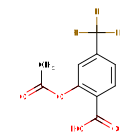
Structure for Triflusal (DB08814)
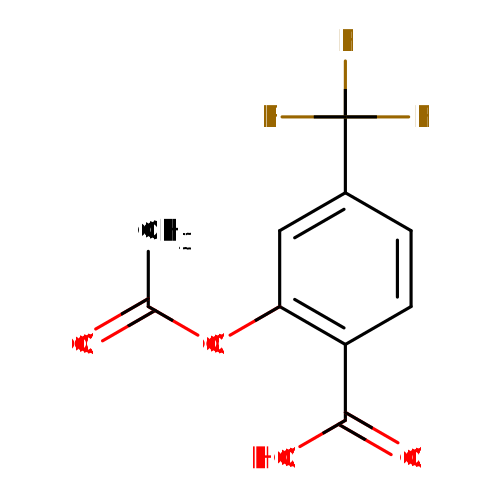
- Weight
- Average: 248.157
Monoisotopic: 248.029643194 - Chemical Formula
- C10H7F3O4
- Synonyms
- Triflusal
- Triflusalum
- External IDs
- UR 1501
- UR-1501

Pharmacology
- Indication
Triflusal is indicated as prophylaxis of thromboembolic disorders.15 It has been registered in Spain and in other countries of Europe, South America and South Korea for the prevention of Stroke and myocardial infarction.14
 Reduce drug development failure ratesBuild, train, & validate machine-learning modelswith evidence-based and structured datasets.Build, train, & validate predictive machine-learning models with structured datasets.
- Associated Conditions
Indication Type Indication Combined Product Details Approval Level Age Group Patient Characteristics Dose Form Prevention of Thromboembolism •••••••••••• ••••••• Treatment of Thromboembolism •••••••••••• ••••••• Treatment of Arterial thromboembolic disease •••••••••••• ••••••• - Contraindications & Blackbox Warnings
 Prevent Adverse Drug Events TodayTap into our Clinical API for life-saving information on contraindications & blackbox warnings, population restrictions, harmful risks, & more.Avoid life-threatening adverse drug events with our Clinical API
- Pharmacodynamics
Triflusal is an antithrombotic anticoagulant. It irreversibly inhibits the production of thromboxane-B2 in platelets by acetylating cycloxygenase-1. Triflusal affects many other targets such as NF kappa B, which is a gene expression regulatory factor for cycloxygenase-a and cytokines. Numerous studies comparing the efficacy and safety profile (i.e. systemic hemorrhage) between triflusal and acetylsalsylic acid has shown either no significant difference or a better effacy and safety profile for triflusal. Triflusal has been shown to protect cerebral tissue due to its inhibition of lipid peroxidation resulting from anoxia-reoxygenation.1
- Mechanism of action
Triflusal is chemically related to acetylsalicylic acid (ASA) and irreversibly inhibits cycloxygenase-1 (COX-1) in platelets. Acetylation of the active group of COX-1 prevents the formation of thromboxane-B2 in platelets. However, it is unique because it spares the arachidonic acid metabolic pathway in endothelial cells. In addition, it favors the production of nitric oxide, a vasodilator.5
Target Actions Organism AProstaglandin G/H synthase 1 antagonistHumans ANuclear factor NF-kappa-B p105 subunit antagonistHumans ANitric oxide synthase, inducible agonistHumans AcAMP and cAMP-inhibited cGMP 3',5'-cyclic phosphodiesterase 10A antagonistHumans - Absorption
Absorbed in the small intestine with a bioavailability range from 83% to 100%. There is no significant difference between the absorption of the oral solution and capsule formulation.2 Triflusal displays a Cmax of 11.6 mcg/ml and a tmax of 0.88 h. The major metabolite of triflusal presents different pharmacokinetic properties by showing a Cmax and tmax of 92.7 mcg/ml and 4.96 h, respectively.13
- Volume of distribution
The reported volume of distribution for triflusal is of 34L.13
- Protein binding
Triflusal binds almost completely to plasma proteins reaching a 99% of the administered dose.1
- Metabolism
In the liver, triflusal undergoes deacetylation, forming its main metabolite 2-OH-4-trifluoromethyl benzoic acid (HTB). This major metabolite seems to have marked antiplatelet properties in vitro.14
Hover over products below to view reaction partners
- Route of elimination
The elimination pathway of triflusal is primarily renal. Urine analysis has shown the presence of unchanged triflusal, HTB and the glycine conjugate of HTB.1
- Half-life
In the healthy human, the half-life is 0.5 +/- 0.1h, while that of HTB is 34.3 +/- 5.3h.1
- Clearance
Renal clearance is 0.8 +/- 0.2L/h and 0.18 +/1 0.04L/h for triflusal and HTB, respectively.1
- Adverse Effects
 Improve decision support & research outcomesWith structured adverse effects data, including: blackbox warnings, adverse reactions, warning & precautions, & incidence rates. View sample adverse effects data in our new Data Library!Improve decision support & research outcomes with our structured adverse effects data.
- Toxicity
There is the possibility of producing major systemic hemorrhages.[L1168]
- Pathways
- Not Available
- Pharmacogenomic Effects/ADRs
- Not Available
Interactions
- Drug Interactions
- This information should not be interpreted without the help of a healthcare provider. If you believe you are experiencing an interaction, contact a healthcare provider immediately. The absence of an interaction does not necessarily mean no interactions exist.
Drug Interaction Integrate drug-drug
interactions in your softwareAbciximab The risk or severity of bleeding can be increased when Abciximab is combined with Triflusal. Abrocitinib The risk or severity of bleeding and thrombocytopenia can be increased when Triflusal is combined with Abrocitinib. Aceclofenac The risk or severity of bleeding and hemorrhage can be increased when Aceclofenac is combined with Triflusal. Acemetacin The risk or severity of bleeding and hemorrhage can be increased when Triflusal is combined with Acemetacin. Acenocoumarol The risk or severity of bleeding can be increased when Triflusal is combined with Acenocoumarol. - Food Interactions
- Avoid herbs and supplements with anticoagulant/antiplatelet activity. Examples include garlic, ginger, bilberry, danshen, piracetam, and ginkgo biloba.
Products
 Drug product information from 10+ global regionsOur datasets provide approved product information including:dosage, form, labeller, route of administration, and marketing period.Access drug product information from over 10 global regions.
- International/Other Brands
- Aflen / Disgren / Grendis
Categories
- ATC Codes
- B01AC18 — Triflusal
- Drug Categories
- Chemical TaxonomyProvided by Classyfire
- Description
- This compound belongs to the class of organic compounds known as acylsalicylic acids. These are o-acylated derivatives of salicylic acid.
- Kingdom
- Organic compounds
- Super Class
- Benzenoids
- Class
- Benzene and substituted derivatives
- Sub Class
- Benzoic acids and derivatives
- Direct Parent
- Acylsalicylic acids
- Alternative Parents
- Trifluoromethylbenzenes / Phenol esters / Benzoic acids / Phenoxy compounds / Benzoyl derivatives / Dicarboxylic acids and derivatives / Carboxylic acid esters / Carboxylic acids / Organofluorides / Organic oxides show 3 more
- Substituents
- Acylsalicylic acid / Alkyl fluoride / Alkyl halide / Aromatic homomonocyclic compound / Benzoic acid / Benzoyl / Carbonyl group / Carboxylic acid / Carboxylic acid derivative / Carboxylic acid ester show 10 more
- Molecular Framework
- Aromatic homomonocyclic compounds
- External Descriptors
- Not Available
- Affected organisms
- Humans and other mammals
Chemical Identifiers
- UNII
- 1Z0YFI05OO
- CAS number
- 322-79-2
- InChI Key
- RMWVZGDJPAKBDE-UHFFFAOYSA-N
- InChI
- InChI=1S/C10H7F3O4/c1-5(14)17-8-4-6(10(11,12)13)2-3-7(8)9(15)16/h2-4H,1H3,(H,15,16)
- IUPAC Name
- 2-(acetyloxy)-4-(trifluoromethyl)benzoic acid
- SMILES
- CC(=O)OC1=C(C=CC(=C1)C(F)(F)F)C(O)=O
References
- General References
- Anninos H, Andrikopoulos G, Pastromas S, Sakellariou D, Theodorakis G, Vardas P: Triflusal: an old drug in modern antiplatelet therapy. Review of its action, use, safety and effectiveness. Hellenic J Cardiol. 2009 May-Jun;50(3):199-207. [Article]
- Izquierdo I, Borja J, Rovira S, Pelagio P, Torres F, Cebrecos J, Garcia-Rafanell J: Comparative bioavailability study of triflusal oral solution vs. triflusal capsules in healthy subjects. A single, randomized, two-way cross-over, open-label phase I study. Arzneimittelforschung. 2010;60(1):36-41. doi: 10.1055/s-0031-1296246. [Article]
- Duran X, Sanchez S, Vilahur G, Badimon L: Protective effects of triflusal on secondary thrombus growth and vascular cyclooxygenase-2. J Thromb Haemost. 2008 Aug;6(8):1385-92. doi: 10.1111/j.1538-7836.2008.03036.x. Epub 2008 May 22. [Article]
- Quetglas EG, Campanero MA, Sadaba B, Escolar M, Azanza JR: Bioequivalence of two oral formulations of triflusal capsules in healthy volunteers. Arzneimittelforschung. 2008;58(6):283-7. doi: 10.1055/s-0031-1296508. [Article]
- Gonzalez-Correa JA, De La Cruz JP: Triflusal: an antiplatelet drug with a neuroprotective effect? Cardiovasc Drug Rev. 2006 Spring;24(1):11-24. [Article]
- Fraj J, Valero A, Vives R, Perez I, Borja J, Izquierdo I, Picado C: Safety of triflusal (antiplatelet drug) in patients with aspirin-exacerbated respiratory diseases. Allergy. 2008 Jan;63(1):112-5. [Article]
- Sanchez-Machin I, Garcia Robaina JC, Torre Morin F: Widespread eczema from triflusal confirmed by patch testing. Contact Dermatitis. 2004 Apr;50(4):257. [Article]
- Matias-Guiu J, Ferro JM, Alvarez-Sabin J, Torres F, Jimenez MD, Lago A, Melo T: Comparison of triflusal and aspirin for prevention of vascular events in patients after cerebral infarction: the TACIP Study: a randomized, double-blind, multicenter trial. Stroke. 2003 Apr;34(4):840-8. Epub 2003 Mar 20. [Article]
- Culebras A, Rotta-Escalante R, Vila J, Dominguez R, Abiusi G, Famulari A, Rey R, Bauso-Tosselli L, Gori H, Ferrari J, Reich E: Triflusal vs aspirin for prevention of cerebral infarction: a randomized stroke study. Neurology. 2004 Apr 13;62(7):1073-80. [Article]
- Costa J, Ferro JM, Matias-Guiu J, Alvarez-Sabin J, Torres F: Triflusal for preventing serious vascular events in people at high risk. Cochrane Database Syst Rev. 2005 Jul 20;(3):CD004296. [Article]
- Shin S, Kim KJ, Cho IJ, Hong GR, Jang Y, Chung N, Rah YM, Chang HJ: Effect of Triflusal on Primary Vascular Dysregulation Compared with Aspirin: A Double-Blind, Randomized, Crossover Trial. Yonsei Med J. 2015 Sep;56(5):1227-34. doi: 10.3349/ymj.2015.56.5.1227. [Article]
- Han SW, Kim YJ, Ahn SH, Seo WK, Yu S, Oh SH, Nam HS, Choi HY, Yoon SS, Kim SH, Lee JY, Lee JH, Hwang YH, Lee KO, Jung YH, Lee J, Sohn SI, Kim YN, Lee KA, Bushnell CD, Lee KY: Effects of Triflusal and Clopidogrel on the Secondary Prevention of Stroke Based on Cytochrome P450 2C19 Genotyping. J Stroke. 2017 Sep;19(3):356-364. doi: 10.5853/jos.2017.01249. Epub 2017 Sep 29. [Article]
- Ramis J, Mis R, Forn J, Torrent J, Gorina E, Jane F: Pharmacokinetics of triflusal and its main metabolite HTB in healthy subjects following a single oral dose. Eur J Drug Metab Pharmacokinet. 1991 Oct-Dec;16(4):269-73. [Article]
- Bogousslavsky J. (2001). Drug Therapy for Stroke Prevention. Taylor and Francis.
- MIMS [Link]
- External Links
- PubChem Compound
- 9458
- PubChem Substance
- 347827803
- ChemSpider
- 9086
- 38655
- ChEBI
- 94721
- ChEMBL
- CHEMBL1332032
- ZINC
- ZINC000000002220
- Wikipedia
- Triflusal
- MSDS
- Download (245 KB)
Clinical Trials
- Clinical Trials
Phase Status Purpose Conditions Count 4 Completed Health Services Research Atherothrombosis 1 4 Completed Treatment Infarction Cerebral 1 4 Completed Treatment Vasospastic Syndrome 1 2 Completed Basic Science Healthy Volunteers (HV) 2 2 Completed Treatment Resistance, Insulin 1
Pharmacoeconomics
- Manufacturers
- Not Available
- Packagers
- Not Available
- Dosage Forms
Form Route Strength Capsule Oral 300.000 mg Capsule Oral Capsule Oral 300 mg - Prices
- Not Available
- Patents
- Not Available
Properties
- State
- Solid
- Experimental Properties
Property Value Source melting point (°C) 114-117ºC 'MSDS' water solubility <1 mg/ml 'MSDS' logP 2.231 'MSDS' - Predicted Properties
Property Value Source Water Solubility 0.696 mg/mL ALOGPS logP 2.4 ALOGPS logP 2.12 Chemaxon logS -2.6 ALOGPS pKa (Strongest Acidic) 3.39 Chemaxon pKa (Strongest Basic) -7.1 Chemaxon Physiological Charge -1 Chemaxon Hydrogen Acceptor Count 3 Chemaxon Hydrogen Donor Count 1 Chemaxon Polar Surface Area 63.6 Å2 Chemaxon Rotatable Bond Count 4 Chemaxon Refractivity 50.42 m3·mol-1 Chemaxon Polarizability 19.32 Å3 Chemaxon Number of Rings 1 Chemaxon Bioavailability 1 Chemaxon Rule of Five Yes Chemaxon Ghose Filter Yes Chemaxon Veber's Rule No Chemaxon MDDR-like Rule No Chemaxon - Predicted ADMET Features
- Not Available
Spectra
- Mass Spec (NIST)
- Not Available
- Spectra
Spectrum Spectrum Type Splash Key Predicted MS/MS Spectrum - 10V, Positive (Annotated) Predicted LC-MS/MS splash10-000x-9050000000-7eeea6db4e17c9d7a249 Predicted MS/MS Spectrum - 10V, Negative (Annotated) Predicted LC-MS/MS splash10-03dj-0950000000-ac7058cc8a76a9d9586b Predicted MS/MS Spectrum - 20V, Positive (Annotated) Predicted LC-MS/MS splash10-001i-0290000000-abb5272b74ebc925b1de Predicted MS/MS Spectrum - 20V, Negative (Annotated) Predicted LC-MS/MS splash10-03di-0900000000-22234b45c8db055b6478 Predicted MS/MS Spectrum - 40V, Negative (Annotated) Predicted LC-MS/MS splash10-03di-2900000000-5dbd2cce6dfafe0c0abf Predicted MS/MS Spectrum - 40V, Positive (Annotated) Predicted LC-MS/MS splash10-014r-0900000000-188423ce77042b950a39 Predicted 1H NMR Spectrum 1D NMR Not Applicable Predicted 13C NMR Spectrum 1D NMR Not Applicable - Chromatographic Properties
Collision Cross Sections (CCS)
Adduct CCS Value (Å2) Source type Source [M-H]- 146.12273 predictedDeepCCS 1.0 (2019) [M+H]+ 148.5183 predictedDeepCCS 1.0 (2019) [M+Na]+ 154.4308 predictedDeepCCS 1.0 (2019)
Targets

- Kind
- Protein
- Organism
- Humans
- Pharmacological action
- Yes
- Actions
- Antagonist
- General Function
- Prostaglandin-endoperoxide synthase activity
- Specific Function
- Converts arachidonate to prostaglandin H2 (PGH2), a committed step in prostanoid synthesis. Involved in the constitutive production of prostanoids in particular in the stomach and platelets. In gas...
- Gene Name
- PTGS1
- Uniprot ID
- P23219
- Uniprot Name
- Prostaglandin G/H synthase 1
- Molecular Weight
- 68685.82 Da
References
- Anninos H, Andrikopoulos G, Pastromas S, Sakellariou D, Theodorakis G, Vardas P: Triflusal: an old drug in modern antiplatelet therapy. Review of its action, use, safety and effectiveness. Hellenic J Cardiol. 2009 May-Jun;50(3):199-207. [Article]
- Dominguez MJ, Vacas M, Saez Y, Olabarria I, Velasco A, Iriarte JA, Forn J: Effects of triflusal in patients with prosthetic heart valves. Clin Ther. 1985;7(3):357-60. [Article]
- Kind
- Protein
- Organism
- Humans
- Pharmacological action
- Yes
- Actions
- Antagonist
- General Function
- Transcriptional repressor activity, rna polymerase ii transcription regulatory region sequence-specific binding
- Specific Function
- NF-kappa-B is a pleiotropic transcription factor present in almost all cell types and is the endpoint of a series of signal transduction events that are initiated by a vast array of stimuli related...
- Gene Name
- NFKB1
- Uniprot ID
- P19838
- Uniprot Name
- Nuclear factor NF-kappa-B p105 subunit
- Molecular Weight
- 105355.175 Da
References
- Zhang W, Potrovita I, Tarabin V, Herrmann O, Beer V, Weih F, Schneider A, Schwaninger M: Neuronal activation of NF-kappaB contributes to cell death in cerebral ischemia. J Cereb Blood Flow Metab. 2005 Jan;25(1):30-40. [Article]
- Anninos H, Andrikopoulos G, Pastromas S, Sakellariou D, Theodorakis G, Vardas P: Triflusal: an old drug in modern antiplatelet therapy. Review of its action, use, safety and effectiveness. Hellenic J Cardiol. 2009 May-Jun;50(3):199-207. [Article]
- Gomez-Isla T, Blesa R, Boada M, Clarimon J, Del Ser T, Domenech G, Ferro JM, Gomez-Anson B, Manubens JM, Martinez-Lage JM, Munoz D, Pena-Casanova J, Torres F: A randomized, double-blind, placebo controlled-trial of triflusal in mild cognitive impairment: the TRIMCI study. Alzheimer Dis Assoc Disord. 2008 Jan-Mar;22(1):21-9. doi: 10.1097/WAD.0b013e3181611024. [Article]
- Whitehead SN, Bayona NA, Cheng G, Allen GV, Hachinski VC, Cechetto DF: Effects of triflusal and aspirin in a rat model of cerebral ischemia. Stroke. 2007 Feb;38(2):381-7. Epub 2006 Dec 28. [Article]
- Kind
- Protein
- Organism
- Humans
- Pharmacological action
- Yes
- Actions
- Agonist
- General Function
- Tetrahydrobiopterin binding
- Specific Function
- Produces nitric oxide (NO) which is a messenger molecule with diverse functions throughout the body. In macrophages, NO mediates tumoricidal and bactericidal actions. Also has nitrosylase activity ...
- Gene Name
- NOS2
- Uniprot ID
- P35228
- Uniprot Name
- Nitric oxide synthase, inducible
- Molecular Weight
- 131116.3 Da
References
- Anninos H, Andrikopoulos G, Pastromas S, Sakellariou D, Theodorakis G, Vardas P: Triflusal: an old drug in modern antiplatelet therapy. Review of its action, use, safety and effectiveness. Hellenic J Cardiol. 2009 May-Jun;50(3):199-207. [Article]
- Sanchez de Miguel L, Casado S, Farre J, Garcia-Duran M, Rico LA, Monton M, Romero J, Bellver T, Sierra MP, Guerra JI, Mata P, Esteban A, Lopez-Farre A: Comparison of in vitro effects of triflusal and acetysalicylic acid on nitric oxide synthesis by human neutrophils. Eur J Pharmacol. 1998 Feb 5;343(1):57-65. [Article]
- De Miguel LS, Jimenez A, Monton M, Farre J, Del Mar Arriero M, Rodriguez-Feo JA, Garcia-Canete J, Rico L, Gomez J, Nunez A, Casado S, Farre AL: A 4-trifluoromethyl derivative of salicylate, triflusal, stimulates nitric oxide production by human neutrophils: role in platelet function. Eur J Clin Invest. 2000 Sep;30(9):811-7. [Article]
- Gonzalez-Correa JA, De La Cruz JP: Triflusal: an antiplatelet drug with a neuroprotective effect? Cardiovasc Drug Rev. 2006 Spring;24(1):11-24. [Article]
- Kind
- Protein
- Organism
- Humans
- Pharmacological action
- Yes
- Actions
- Antagonist
- General Function
- Metal ion binding
- Specific Function
- Plays a role in signal transduction by regulating the intracellular concentration of cyclic nucleotides. Can hydrolyze both cAMP and cGMP, but has higher affinity for cAMP and is more efficient wit...
- Gene Name
- PDE10A
- Uniprot ID
- Q9Y233
- Uniprot Name
- cAMP and cAMP-inhibited cGMP 3',5'-cyclic phosphodiesterase 10A
- Molecular Weight
- 88411.71 Da
References
- McNeely W, Goa KL: Triflusal. Drugs. 1998 Jun;55(6):823-33; discussion 834-5. [Article]
- De Miguel LS, Jimenez A, Monton M, Farre J, Del Mar Arriero M, Rodriguez-Feo JA, Garcia-Canete J, Rico L, Gomez J, Nunez A, Casado S, Farre AL: A 4-trifluoromethyl derivative of salicylate, triflusal, stimulates nitric oxide production by human neutrophils: role in platelet function. Eur J Clin Invest. 2000 Sep;30(9):811-7. [Article]
Carriers
- Kind
- Protein
- Organism
- Humans
- Pharmacological action
- No
- Actions
- Substrate
- General Function
- Toxic substance binding
- Specific Function
- Serum albumin, the main protein of plasma, has a good binding capacity for water, Ca(2+), Na(+), K(+), fatty acids, hormones, bilirubin and drugs. Its main function is the regulation of the colloid...
- Gene Name
- ALB
- Uniprot ID
- P02768
- Uniprot Name
- Serum albumin
- Molecular Weight
- 69365.94 Da
References
- Anninos H, Andrikopoulos G, Pastromas S, Sakellariou D, Theodorakis G, Vardas P: Triflusal: an old drug in modern antiplatelet therapy. Review of its action, use, safety and effectiveness. Hellenic J Cardiol. 2009 May-Jun;50(3):199-207. [Article]

Drug created at June 29, 2011 05:05 / Updated at February 03, 2022 21:01