Identification
- Summary
Epinephrine is a hormone and neurotransmitter used to treat allergic reactions, to restore cardiac rhythm, and to control mucosal congestion, glaucoma, and asthma.
- Brand Names
- Adrenalin, Allerject, Anapen, Articadent, Astracaine, Auvi-Q, Citanest, Citanest Forte, Emerade, Epipen, Lignospan, Marcaine, Marcaine With Epinephrine, Octocaine, Octocaine With Epinephrine, Orabloc, Scandonest, Sensorcaine, Sensorcaine With Epinephrine, Septanest, Septocaine, Symjepi, Ultacan, Ultracaine, Vivacaine, Xylocaine, Xylocaine With Epinephrine, Zorcaine
- Generic Name
- Epinephrine
- DrugBank Accession Number
- DB00668
- Background
Epinephrine, also known as adrenaline, is a hormone and neurotransmitter and produced by the adrenal glands that can also be used as a drug due to its various important functions. Though it has long been used in the treatment of hypersensitivity reactions, epinephrine in the auto-injector form (EpiPen) has been available since 1987 in the USA. Many new products/biosimilars and dosage routes have been approved under various names over the last several decades 10, 11, 12. On August 16, 2018, Teva Pharmaceuticals USA gained approval to market its generic epinephrine auto-injector in 0.3 mg and 0.15 mg strengths 8. Dosage delivery routes for epinephrine include intravenous, inhalation, nebulization, intramuscular injection, and subcutaneous injection.
In general, the most common uses of parenteral epinephrine are to relieve respiratory distress due to bronchospasm, to provide rapid relief of hypersensitivity (anaphylactic or anaphylactoid) reactions to drugs, animal serums and other allergens, and to prolong the action of infiltration anesthetics 20. In addition to the above functions, epinephrine is the primary drug administered during cardiopulmonary resuscitation (CPR) to reverse cardiac arrest 3, 4. It can be used in severe cases of croup 14.
- Type
- Small Molecule
- Groups
- Approved, Vet approved
- Structure
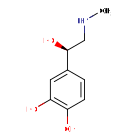
Structure for Epinephrine (DB00668)
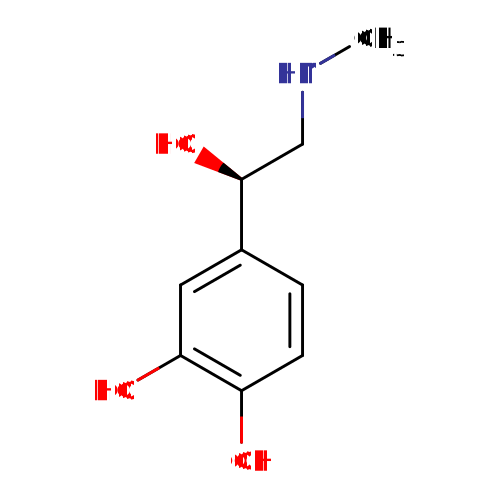
- Weight
- Average: 183.2044
Monoisotopic: 183.089543287 - Chemical Formula
- C9H13NO3
- Synonyms
- (−)-(R)-epinephrine
- (−)-3,4-dihydroxy-α-((methylamino)methyl)benzyl alcohol
- (−)-adrenaline
- (R)-(-)-Adnephrine
- (R)-(-)-Adrenaline
- (R)-(-)-Epinephrine
- (R)-(-)-Epirenamine
- (R)-(−)-adrenaline
- 4-[(1R)-1-Hydroxy-2-(methylamino)ethyl]-1,2-benzenediol
- Adrenaline
- Adrénaline
- Epinefrin
- Epinefrina
- Epinephrin
- Epinephrine
- Epinephrinum
- L-Adrenaline
- Levoepinephrine
- External IDs
- NSC-62786

Pharmacology
- Indication
Epinephrine injection is indicated in the emergency treatment of type I allergic reactions, including anaphylaxis. It is also used to increase mean arterial blood pressure in adult patients with hypotension associated with septic shock.17
Epinephrine's cardiac effects may be of use in restoring cardiac rhythm in cardiac arrest due to various causes but is not used in cardiac failure or in hemorrhagic, traumatic, or cardiogenic shock 18.
Epinephrine is used as a hemostatic agent. It is also used in treating mucosal congestion of hay fever, rhinitis, and acute sinusitis; to relieve bronchial asthmatic paroxysms; in syncope due to complete heart block or carotid sinus hypersensitivity; for symptomatic relief of serum sickness, urticaria, angioneurotic edema; for resuscitation in cardiac arrest following anesthetic accidents; in simple (open angle) glaucoma; for relaxation of uterine musculature and to inhibit uterine contractions. Epinephrine injection can be utilized to prolong the action of local anesthetics 18.
In addition to the above, epinephrine is used as an over the counter (OTC) agent for the intermittent symptoms of asthma, such as wheezing, tightness of chest and shortness of breath 19. It is also used for the maintenance of mydriasis during intraocular surgery 15.
 Reduce drug development failure ratesBuild, train, & validate machine-learning modelswith evidence-based and structured datasets.Build, train, & validate predictive machine-learning models with structured datasets.
- Associated Conditions
Indication Type Indication Combined Product Details Approval Level Age Group Patient Characteristics Dose Form Management of Anaphylaxis •••••••••••• Treatment of Anaphylaxis •••••••••••• •••••••••• •••••••••• ••••••••• •••••••••• ••••••••• ••••••••••• Treatment of Angioneurotic edema •••••••••••• Induction of Bleeding •••••••••••• Treatment of Bronchospasm ••• ••• •••••••• - Contraindications & Blackbox Warnings
 Prevent Adverse Drug Events TodayTap into our Clinical API for life-saving information on contraindications & blackbox warnings, population restrictions, harmful risks, & more.Avoid life-threatening adverse drug events with our Clinical API
- Pharmacodynamics
Epinephrine is a sympathomimetic drug. It causes an adrenergic receptive mechanism on effector cells and mimics all actions of the sympathetic nervous system except those on the facial arteries and sweat glands 18.
Important effects of epinephrine include increased heart rate, myocardial contractility, and renin release via beta-1 receptors. Beta-2 effects produce bronchodilation which may be useful as an adjunct treatment of asthma exacerbations as well as vasodilation, tocolysis, and increased aqueous humor production 15. In croup, nebulized epinephrine is associated with both clinically and statistically significant transient reduction of croup symptoms 30 minutes post-treatment 7. Epinephrine also alleviates pruritus, urticaria, and angioedema and may be helpful in relieving gastrointestinal and genitourinary symptoms associated with anaphylaxis because of its relaxing effects on the smooth muscle of the stomach, intestine, uterus, and urinary bladder Label.
- Mechanism of action
Epinephrine acts on alpha and beta-adrenergic receptors. Epinephrine acts on alpha and beta receptors and is the strongest alpha receptor activator 18. Through its action on alpha-adrenergic receptors, epinephrine minimizes the vasodilation and increased the vascular permeability that occurs during anaphylaxis, which can cause the loss of intravascular fluid volume as well as hypotension. Epinephrine relaxes the smooth muscle of the bronchi and iris and is a histamine antagonist, rendering it useful in treating the manifestations of allergic reactions and associated conditions 20. This drug also produces an increase in blood sugar and increases glycogenolysis in the liver 18. Through its action on beta-adrenergic receptors, epinephrine leads to bronchial smooth muscle relaxation that helps to relieve bronchospasm, wheezing, and dyspnea that may occur during anaphylaxis Label.
Target Actions Organism AAlpha-1A adrenergic receptor agonistHumans AAlpha-1B adrenergic receptor agonistHumans ABeta-1 adrenergic receptor agonistHumans ABeta-2 adrenergic receptor agonistHumans AAlpha-2A adrenergic receptor agonistHumans AAlpha-2B adrenergic receptor agonistHumans UAlpha-1D adrenergic receptor antagonistHumans UTumor necrosis factor antagonistagonistHumans - Absorption
Following I.V. (intravenous) injection, epinephrine disappears rapidly from the blood stream. Subcutaneously or I.M. (intramuscular) administered epinephrine has a rapid onset and short duration of action. Subcutaneous (SC) administration during asthmatic attacks may produce bronchodilation within 5 to 10 minutes, and maximal effects may occur within 20 minutes. The drug becomes fixed in the tissues rapidly 18, Label.
- Volume of distribution
Not Available
- Protein binding
Not Available
- Metabolism
Epinephrine is rapidly inactivated mainly by enzymic transformation to metanephrine or normetanephrine, either of which is then conjugated and excreted in the urine in the form of both sulfates and glucuronides. Either sequence results in the formation of 3-methoxy-4- hydroxy-mandelic acid(vanillylmandelic acid, VMA) which is shown to be detectable in the urine 18. Epinephrine is rapidly inactivated in the body mostly by the enzymes COMT (catechol-O-methyltransferase) and MAO (monoamine oxidase). The liver is abundant in the above enzymes, and is a primary, although not essential, tissue in the degradation process 13.
Hover over products below to view reaction partners
- Route of elimination
The majority of the dose of epinephrine is seen excreted in the urine 13, Label. About 40% of a parenteral dose of epinephrine is excreted in urine as metanephrine, 40% as VMA, 7% as 3-methoxy-4-hydroxyphenoglycol, 2% as 3,4-dihydroxymandelic acid, and the rest as acetylated derivatives. These metabolites are excreted mainly as the sulfate conjugates and, to a lesser extent, the glucuronide conjugates. Only small amounts of the drug are excreted completely unchanged 16.
- Half-life
The plasma half-life is approximately 2-3 minutes. However, when administered by subcutaneous or intramuscular injection, local vasoconstriction may delay absorption so that epinephrine's effects may last longer than the half-life suggests 13.
- Clearance
Intravenous injection produces an immediate and intensified response. Following intravenous injection, epinephrine disappears rapidly from the blood stream 20.
- Adverse Effects
 Improve decision support & research outcomesWith structured adverse effects data, including: blackbox warnings, adverse reactions, warning & precautions, & incidence rates. View sample adverse effects data in our new Data Library!Improve decision support & research outcomes with our structured adverse effects data.
- Toxicity
Skin, LD50 = 62 mg/kg (rat) MSDS
Pregnancy
Epinephrine is teratogenic in rats when given in doses about 25 times the human doses. It is unknown whether epinephrine can cause fetal harm when administered to a pregnant woman or can affect reproduction capacity. Epinephrine should be given to a pregnant woman only if clearly required in critical situations/emergencies 20.
Labor and Delivery Parenteral administration of epinephrine, if used as support for blood pressure during low or other spinal anesthesia for delivery, can lead to the acceleration of fetal heart rate and should not be used in obstetrics when maternal blood pressure is higher than 130/80. Epinephrine may delay the second stage of labour.
Common and generalized adverse effects: Transient and minor side effects of anxiety, headache, fear, and palpitations may occur with therapeutic doses of epinephrine, especially in hyperthyroid individuals. Repeated local injections may result in necrosis at sites of injection due to vascular constriction. Cerebral hemorrhage; hemiplegia; subarachnoid hemorrhage; anginal pain in patients with angina pectoris; anxiety; restlessness; throbbing headache; tremor; weakness; dizziness; pallor; respiratory difficulty; palpitation; apprehensiveness; sweating; nausea; vomiting Label.
Cardiovascular effects: Inadvertently induced high arterial blood pressure may result in angina pectoris (especially when coronary insufficiency is present), cardiac ischemia, or aortic rupture Label, 15. Epinephrine may cause serious cardiac arrhythmias in patients not suffering from heart disease and patients with organic heart disease receiving drugs that sensitize the cardiac muscle. With the injection of epinephrine 1:1,000, a paradoxical but transient lowering of blood pressure, bradycardia and apnea may occur immediately post-injection Label.
Cerebrovascular hemorrhage: Overdosage or accidental I.V. injection of epinephrine may lead to cerebrovascular hemorrhage resulting from the sharp rise in blood pressure Label.
Renal vasoconstriction: Parenterally administered epinephrine initially may produce constriction of renal blood vessels and decrease urine formation. High doses may cause complete renal shutdown 20.
Pulmonary edema: Fatality may also result from pulmonary edema due to the peripheral constriction and cardiac stimulation produced by epinephrine injection Label.
Digital vasoconstriction: Since epinephrine is a strong vasoconstrictor, accidental injection into the digits, hands or feet may lead to the loss of blood flow to the affected area. Treatment should be directed at vasodilation in addition to further treatment of anaphylaxis Label.
- Pathways
Pathway Category Aromatic L-Aminoacid Decarboxylase Deficiency Disease Tyrosine Metabolism Metabolic Catecholamine Biosynthesis Metabolic Tyrosinemia Type I Disease Disulfiram Action Pathway Drug action Alkaptonuria Disease Hawkinsinuria Disease Tyrosinemia, Transient, of the Newborn Disease Tyrosine Hydroxylase Deficiency Disease Dopamine beta-Hydroxylase Deficiency Disease Monoamine Oxidase-A Deficiency (MAO-A) Disease Epinephrine Action Pathway Drug action - Pharmacogenomic Effects/ADRs
- Not Available
Interactions
- Drug Interactions
- This information should not be interpreted without the help of a healthcare provider. If you believe you are experiencing an interaction, contact a healthcare provider immediately. The absence of an interaction does not necessarily mean no interactions exist.
Drug Interaction Integrate drug-drug
interactions in your softwareAbemaciclib The serum concentration of Abemaciclib can be increased when it is combined with Epinephrine. Abrocitinib The metabolism of Abrocitinib can be decreased when combined with Epinephrine. Acalabrutinib The serum concentration of Acalabrutinib can be increased when it is combined with Epinephrine. Acarbose The therapeutic efficacy of Acarbose can be decreased when used in combination with Epinephrine. Acebutolol The therapeutic efficacy of Acebutolol can be increased when used in combination with Epinephrine. - Food Interactions
- No interactions found.
Products
 Drug product information from 10+ global regionsOur datasets provide approved product information including:dosage, form, labeller, route of administration, and marketing period.Access drug product information from over 10 global regions.
- Product Ingredients
Ingredient UNII CAS InChI Key Epinephrine acetate M1NJX34RVJ 97289-42-4 CEBXQLPKMNOIHN-FVGYRXGTSA-N Epinephrine bitartrate 30Q7KI53AK 51-42-3 YLXIPWWIOISBDD-NDAAPVSOSA-N Epinephrine hydrochloride WBB047OO38 55-31-2 ATADHKWKHYVBTJ-FVGYRXGTSA-N - International/Other Brands
- Epi EZ Pen JR
- Brand Name Prescription Products
Name Dosage Strength Route Labeller Marketing Start Marketing End Region Image Adrenaclick Injection 0.15 mg/0.15mL Subcutaneous Amedra Pharmaceuticals LLC 2009-11-25 2014-11-01 US 
Adrenaclick Injection 1 mg/1mL Intramuscular; Subcutaneous Sciele Pharma, Inc. 2009-12-15 2013-08-19 US Adrenaclick Injection 0.3 mg/0.3mL Subcutaneous Amedra Pharmaceuticals LLC 2009-11-25 2014-11-01 US Adrenaclick Injection 1 mg/1mL Intramuscular; Subcutaneous Sciele Pharma, Inc. 2009-12-15 2013-08-19 US Adrenaclick 0.15mg Auto-injector Solution 0.15 mg / 0.15 mL Intramuscular Amedra Pharmaceuticals LLC Not applicable Not applicable Canada 
- Generic Prescription Products
Name Dosage Strength Route Labeller Marketing Start Marketing End Region Image Epinephrine Injection 0.15 mg/0.3mL Intramuscular; Subcutaneous Teva Pharmaceuticals USA, Inc. 2019-08-19 Not applicable US Epinephrine Injection 0.3 mg/0.3mL Subcutaneous Lineage Therapeutics 2010-04-01 2018-05-31 US Epinephrine Injection 0.3 mg/0.3mL Intramuscular Mylan Specialty L.P. 2016-12-15 Not applicable US Epinephrine Injection 0.15 mg/0.3mL Intramuscular REMEDYREPACK INC. 2019-02-26 Not applicable US Epinephrine Injection 0.3 mg/1 Subcutaneous Greenstone, Llc 2010-03-31 2012-09-30 US - Over the Counter Products
Name Dosage Strength Route Labeller Marketing Start Marketing End Region Image Crown-pak Max 4-ply Solution 0.197 mg/10mm Dental; Oral; Periodontal Gingi-Pak a Division of the Belport 1984-03-29 Not applicable US Gingi-pak Cotton Coil Solution 1.18 mg/10mm Dental; Oral; Periodontal Gingi-Pak a Division of the Belport 1987-06-26 Not applicable US Gingi-pak Max 2-ply Solution 0.197 mg/10mm Dental; Oral; Periodontal Gingi-Pak a Division of the Belport 1984-03-29 Not applicable US Gingi-pak Max Soft-twist No 1 Solution 0.197 mg/10mm Dental; Oral; Periodontal Gingi-Pak a Division of the Belport 1987-06-26 Not applicable US Gingi-pak Max Soft-twist No 2 Solution 0.197 mg/10mm Dental; Oral; Periodontal Gingi-Pak a Division of the Belport 1985-01-11 Not applicable US - Mixture Products
Name Ingredients Dosage Route Labeller Marketing Start Marketing End Region Image 2% Lidocaine and Epinephrine 1:100,000 Injection USP Epinephrine (0.01 mg / mL) + Lidocaine hydrochloride (20 mg / mL) Liquid Infiltration Alveda Pharmaceuticals Inc 2008-12-01 Not applicable Canada 4% Astracaine Dental With Epinephrine 1:200,000 (0.005mg/ml) Epinephrine bitartrate (0.005 mg / mL) + Articaine hydrochloride (40 mg / mL) Solution Infiltration Dentsply Pharmaceutical 2004-01-29 Not applicable Canada 4% Astracaine Dental With Epinephrine 1:200,000 (0.005mg/ml) Epinephrine (0.005 mg / mL) + Articaine hydrochloride (40 mg / mL) Solution Infiltration Dentsply Pharmaceutical 1997-02-26 2003-11-28 Canada 4% Astracaine Dental With Epinephrine Forte 1:100,000 (0.01mg/ml) Epinephrine (0.01 mg / mL) + Articaine hydrochloride (40 mg / mL) Solution Infiltration Dentsply Pharmaceutical 1997-02-26 2003-11-28 Canada 4% Astracaine Dental With Epinephrine Forte 1:100,000 (0.01mg/ml) Epinephrine bitartrate (0.01 mg / mL) + Articaine hydrochloride (40 mg / mL) Solution Infiltration Dentsply Pharmaceutical 2004-01-29 Not applicable Canada - Unapproved/Other Products
Name Ingredients Dosage Route Labeller Marketing Start Marketing End Region Image Adrenalin Epinephrine (1 mg/1mL) Injection Intracardiac; Intramuscular; Intraspinal; Intravenous; Subcutaneous JHP Pharmaceuticals, LLC. 2007-10-01 2013-07-31 US Adrenalin Epinephrine (1 mg/1mL) Injection Intracardiac; Intramuscular; Intraspinal; Intravenous; Subcutaneous JHP Pharmaceuticals, LLC. 2007-10-01 2013-07-31 US Adyphren Amp II Kit Epinephrine (1 mg/1mL) + Isopropyl alcohol (70 mL/100mL) Kit Topical Asclemed Usa, Inc. 2016-10-27 Not applicable US Adyphren Amp Kit Epinephrine (1 mg/1mL) + Isopropyl alcohol (70 mL/100mL) Kit Topical Asclemed Usa, Inc. 2016-10-27 Not applicable US Adyphren II Kit Epinephrine (1 mg/1mL) + Isopropyl alcohol (70 mL/100mL) Kit Intramuscular; Intraocular; Subcutaneous Asclemed Usa, Inc. 2016-10-04 Not applicable US
Categories
- ATC Codes
- A01AD01 — Epinephrine
- A01AD — Other agents for local oral treatment
- A01A — STOMATOLOGICAL PREPARATIONS
- A01 — STOMATOLOGICAL PREPARATIONS
- A — ALIMENTARY TRACT AND METABOLISM
- R03AK — Adrenergics in combination with corticosteroids or other drugs, excl. anticholinergics
- R03A — ADRENERGICS, INHALANTS
- R03 — DRUGS FOR OBSTRUCTIVE AIRWAY DISEASES
- R — RESPIRATORY SYSTEM
- B02BC — Local hemostatics
- B02B — VITAMIN K AND OTHER HEMOSTATICS
- B02 — ANTIHEMORRHAGICS
- B — BLOOD AND BLOOD FORMING ORGANS
- C01CA — Adrenergic and dopaminergic agents
- C01C — CARDIAC STIMULANTS EXCL. CARDIAC GLYCOSIDES
- C01 — CARDIAC THERAPY
- C — CARDIOVASCULAR SYSTEM
- S01EA — Sympathomimetics in glaucoma therapy
- S01E — ANTIGLAUCOMA PREPARATIONS AND MIOTICS
- S01 — OPHTHALMOLOGICALS
- S — SENSORY ORGANS
- R01AA — Sympathomimetics, plain
- R01A — DECONGESTANTS AND OTHER NASAL PREPARATIONS FOR TOPICAL USE
- R01 — NASAL PREPARATIONS
- R — RESPIRATORY SYSTEM
- R03AA — Alpha- and beta-adrenoreceptor agonists
- R03A — ADRENERGICS, INHALANTS
- R03 — DRUGS FOR OBSTRUCTIVE AIRWAY DISEASES
- R — RESPIRATORY SYSTEM
- Drug Categories
- Adrenergic Agents
- Adrenergic Agonists
- Adrenergic alpha-1 Receptor Agonists
- Adrenergic alpha-2 Receptor Agonists
- Adrenergic alpha-Agonists
- Adrenergic and Dopaminergic Agents
- Adrenergic beta-1 Receptor Agonists
- Adrenergic beta-2 Receptor Agonists
- Adrenergic beta-3 Receptor Agonists
- Adrenergic beta-Agonists
- Adrenergics, Inhalants
- Agents producing tachycardia
- Agents that produce hypertension
- Alpha-and Beta-adrenergic Agonists
- Amines
- Anti-Asthmatic Agents
- Antiglaucoma Preparations and Miotics
- Autonomic Agents
- Benzene Derivatives
- Biogenic Amines
- Biogenic Monoamines
- Bronchodilator Agents
- Cardiac Stimulants Excl. Cardiac Glycosides
- Cardiac Therapy
- Cardiovascular Agents
- Catecholamines
- Catechols
- COMT Substrates
- Cytochrome P-450 CYP2C9 Inhibitors
- Cytochrome P-450 CYP2C9 Inhibitors (strength unknown)
- Cytochrome P-450 CYP3A Inhibitors
- Cytochrome P-450 CYP3A4 Inhibitors
- Cytochrome P-450 CYP3A4 Inhibitors (strength unknown)
- Cytochrome P-450 Enzyme Inhibitors
- Dental Agents
- Drugs for Obstructive Airway Diseases
- Epinephrine and similars
- Hemostatics
- Hyperglycemia-Associated Agents
- Local Hemostatics
- Mydriatics
- Nasal Preparations
- Neurotransmitter Agents
- OCT1 substrates
- OCT2 Inhibitors
- OCT2 Substrates
- Ophthalmologicals
- Peripheral Nervous System Agents
- Phenols
- Respiratory System Agents
- Stomatological Preparations
- Sympathomimetic (Adrenergic) Agents
- Sympathomimetics
- Sympathomimetics in Glaucoma Therapy
- Sympathomimetics, Plain
- Vasoconstrictor Agents
- Chemical TaxonomyProvided by Classyfire
- Description
- This compound belongs to the class of organic compounds known as catechols. These are compounds containing a 1,2-benzenediol moiety.
- Kingdom
- Organic compounds
- Super Class
- Benzenoids
- Class
- Phenols
- Sub Class
- Benzenediols
- Direct Parent
- Catechols
- Alternative Parents
- Aralkylamines / 1-hydroxy-4-unsubstituted benzenoids / 1-hydroxy-2-unsubstituted benzenoids / Benzene and substituted derivatives / Secondary alcohols / 1,2-aminoalcohols / Dialkylamines / Organopnictogen compounds / Hydrocarbon derivatives / Aromatic alcohols
- Substituents
- 1,2-aminoalcohol / 1-hydroxy-2-unsubstituted benzenoid / 1-hydroxy-4-unsubstituted benzenoid / Alcohol / Amine / Aralkylamine / Aromatic alcohol / Aromatic homomonocyclic compound / Catechol / Hydrocarbon derivative
- Molecular Framework
- Aromatic homomonocyclic compounds
- External Descriptors
- adrenaline (CHEBI:28918) / Biogenic amines, Adrenalines (C00788)
- Affected organisms
- Humans and other mammals
Chemical Identifiers
- UNII
- YKH834O4BH
- CAS number
- 51-43-4
- InChI Key
- UCTWMZQNUQWSLP-VIFPVBQESA-N
- InChI
- InChI=1S/C9H13NO3/c1-10-5-9(13)6-2-3-7(11)8(12)4-6/h2-4,9-13H,5H2,1H3/t9-/m0/s1
- IUPAC Name
- 4-[(1R)-1-hydroxy-2-(methylamino)ethyl]benzene-1,2-diol
- SMILES
- CNC[C@H](O)C1=CC(O)=C(O)C=C1
References
- Synthesis Reference
Pamela Albaugh, "Pharmaceutical epinephrine-pilocarpine compounds and process of preparation thereof." U.S. Patent US5198545, issued October, 1988.
US5198545- General References
- Yamashima T: Jokichi Takamine (1854-1922), the samurai chemist, and his work on adrenalin. J Med Biogr. 2003 May;11(2):95-102. [Article]
- Bennett MR: One hundred years of adrenaline: the discovery of autoreceptors. Clin Auton Res. 1999 Jun;9(3):145-59. [Article]
- Otto CW, Yakaitis RW, Blitt CD: Mechanism of action of epinephrine in resuscitation from asphyxial arrest. Crit Care Med. 1981 Apr;9(4):321-4. [Article]
- Callaway CW: Epinephrine for cardiac arrest. Curr Opin Cardiol. 2013 Jan;28(1):36-42. doi: 10.1097/HCO.0b013e32835b0979. [Article]
- Shao H, Li CS: Epinephrine in Out-of-hospital Cardiac Arrest: Helpful or Harmful? Chin Med J (Engl). 2017 Sep 5;130(17):2112-2116. doi: 10.4103/0366-6999.213429. [Article]
- van der Poll T, Coyle SM, Barbosa K, Braxton CC, Lowry SF: Epinephrine inhibits tumor necrosis factor-alpha and potentiates interleukin 10 production during human endotoxemia. J Clin Invest. 1996 Feb 1;97(3):713-9. [Article]
- Bjornson C, Russell K, Vandermeer B, Klassen TP, Johnson DW: Nebulized epinephrine for croup in children. Cochrane Database Syst Rev. 2013 Oct 10;(10):CD006619. doi: 10.1002/14651858.CD006619.pub3. [Article]
- Teva Pharmaceuticals USA gained approval to market its generic epinephrine auto-injector in 0.3 mg and 0.15 mg strengths. [Link]
- Epinephrine, by Injection: NIH [Link]
- Symjepi Approval History [Link]
- FDA approves Auvi-Q [Link]
- Epipen.ca [Link]
- Medicines UK document [Link]
- Croup: American Family Physician Document [Link]
- NIH STAT pearls [Link]
- PubChem: Epinephrine [Link]
- FDA Approved Drug Products: ADRENALIN (epinephrine injection) 1 mg/mL, for intramuscular, subcutaneous, and intravenous use [Link]
- Epinephrine FDA label [File]
- Primatene Prescribing Info [File]
- Pfizer Monograph [File]
- External Links
- Human Metabolome Database
- HMDB0000068
- KEGG Drug
- D00095
- KEGG Compound
- C00788
- PubChem Compound
- 5816
- PubChem Substance
- 46509097
- ChemSpider
- 5611
- BindingDB
- 44818
- 3992
- ChEBI
- 28918
- ChEMBL
- CHEMBL679
- ZINC
- ZINC000000039089
- Therapeutic Targets Database
- DAP000066
- PharmGKB
- PA449470
- Guide to Pharmacology
- GtP Drug Page
- PDBe Ligand
- ALE
- RxList
- RxList Drug Page
- Drugs.com
- Drugs.com Drug Page
- Wikipedia
- Adrenaline
- PDB Entries
- 2hkk / 4a7u / 4ldo / 7brn / 7bts / 8thl
- FDA label
- Download (459 KB)
- MSDS
- Download (73.4 KB)
Clinical Trials
- Clinical Trials
Phase Status Purpose Conditions Count 4 Active Not Recruiting Prevention Postoperative pain 1 4 Active Not Recruiting Treatment Anesthesia Morbidity / Anesthetics Adverse Reaction / Dental Implant Failed / Surgical Complications From Local Anesthesia 1 4 Active Not Recruiting Treatment Traumatic Rib Fracture(s) 1 4 Completed Not Available Anaesthesia / Nerve Block / Orthopaedic Disorders 1 4 Completed Basic Science Distribution of Ropivacaine in Erector Spinae Plane Block 1
Pharmacoeconomics
- Manufacturers
- Sterling health div sterling winthrop inc
- Armstrong pharmaceuticals inc
- Wyeth consumer healthcare
- Shionogi pharma inc
- Meridian medical technologies inc
- Forest laboratories inc
- 3m pharmaceuticals inc
- Astrazeneca lp
- Pharmaton ltd
- Dentsply pharmaceutical
- Packagers
- Adamis Laboratories
- Amend
- American Regent
- Amphastar Pharmaceuticals
- APP Pharmaceuticals
- Armstrong Pharmaceuticals Inc.
- A-S Medication Solutions LLC
- AstraZeneca Inc.
- Baroli
- Bayer Healthcare
- Belport Co. Inc.
- Bioniche Pharma
- Cardinal Health
- Carestream Health Inc.
- Catalent Pharma Solutions
- Claris Lifesciences Inc.
- Cura Pharmaceutical Co. Inc.
- DENTSPLY International
- Deproco Inc.
- Dey Pharma LP
- Eastman Kodak Co. Dental Products
- General Injectables and Vaccines Inc.
- Greenstone LLC
- Henry Schein Inc.
- Hikma Pharmaceuticals
- Hollister-Stier Laboratories LLC
- Hospira Inc.
- JHP Pharmaceuticals LLC
- Jordan Pharmaceuticals Inc.
- Luitpold Pharmaceuticals Inc.
- Mckesson Corp.
- Medical Products Laboratories Inc.
- Meridian Medical Technologies Inc.
- Monarch Pharmacy
- Nephro-Tech Inc.
- North Safety Products
- Novocol Pharmaceutical Canada
- Pascal Co. Inc.
- Pharmedium
- Phillips Medical
- Physicians Total Care Inc.
- Prescript Pharmaceuticals
- Professional Co.
- Prometic Pharma Inc.
- Sciele Pharma Inc.
- Septodont Inc.
- Shionogi Pharma Inc.
- Sintetica SA
- Smiths Medical ASD Inc.
- Taylor Pharmaceuticals
- Verus Pharmaceuticals Inc.
- Walgreen Co.
- West-Ward Pharmaceuticals
- Wyeth Pharmaceuticals
- Dosage Forms
Form Route Strength Injection Intramuscular; Subcutaneous 1 mg/1mL Solution Intramuscular 0.15 mg / 0.15 mL Solution Intramuscular 0.30 mg / 0.30 mL Injection Intracardiac; Intramuscular; Intraspinal; Intravenous; Subcutaneous 1 mg/1mL Injection Intramuscular; Intraocular; Subcutaneous 1 mg/1mL Injection Intramuscular; Intravenous; Subcutaneous 1 mg/1mL Solution Intracardiac; Intramuscular; Intraspinal; Intravenous; Ophthalmic; Subcutaneous 1 mg / mL Injection, solution 0.25 mg/1ml Injection, solution 0.5 mg/1ml Injection, solution 1 mg/1ml Injection, solution Parenteral 1 mg/10ml Injection, solution Endotracheal; Intracardiac; Intramuscular; Intravenous; Subcutaneous 0.25 mg/mL Injection, solution Endotracheal; Intracardiac; Intramuscular; Intravenous; Subcutaneous 0.25 mg/1ml Injection, solution Endotracheal; Intracardiac; Intramuscular; Intravenous; Subcutaneous 0.5 mg/mL Injection, solution Endotracheal; Intracardiac; Intramuscular; Intravenous; Subcutaneous 1 mg/mL Solution Topical 1 mg / mL Solution Intravenous; Subcutaneous 1 mg Solution Intravenous; Subcutaneous 100000 mg Solution Intramuscular; Intravenous; Subcutaneous 1 mg Injection, solution Intravenous Injection, solution Parenteral 0.5 MG/ML Injection, solution Parenteral 1 MG/ML Injection, solution Injection Intramuscular; Intravenous; Subcutaneous 1 mg/ml Kit Intramuscular; Intraocular; Subcutaneous Solution Intramuscular 0.3 mg / 0.3 mL Liquid; tablet Intramuscular; Oral; Subcutaneous Liquid; tablet Oral; Parenteral Injection, solution 0.3 ml Injection Percutaneous Solution Dental Injection, solution Dental Injection Infiltration; Submucosal Injection, solution Dental; Infiltration Injection, solution Buccal Injection, solution Submucosal 0.01 mg Injection Intramuscular; Subcutaneous .15 mg/1 Injection Intramuscular; Subcutaneous 0.3 mg/1 Injection, solution Intramuscular 0.1 mg/0.1mL Injection, solution Intramuscular 0.15 mg/0.15mL Injection, solution Intramuscular 0.3 mg/0.3mL Aerosol, metered; injection; kit; tablet; tablet, chewable Intramuscular; Intravenous; Oral; Respiratory (inhalation); Subcutaneous; Sublingual Aerosol, metered Respiratory (inhalation) 0.5 % Injection, solution Epidural; Infiltration; Intracaudal Injection, solution Epidural; Infiltration; Intracaudal; Perineural Injection, solution Parenteral 150 MICROGRAMMI/0.3ML Injection, solution Parenteral 300 MICROGRAMMI/0.3ML Injection, solution Parenteral 500 MICROGRAMMI/0.3ML Injection, solution Submucosal Kit Intravenous Injection, solution; kit; solution Epidural; Infiltration; Intracaudal; Perineural; Topical Aerosol, metered; injection; kit; solution; tablet; tablet, chewable Intramuscular; Intravenous; Oral; Respiratory (inhalation); Subcutaneous; Sublingual Solution Intravenous Spray Respiratory (inhalation) 3.5 % Solution / drops Ophthalmic Injection, solution Intragingival Injection, solution Ophthalmic 150 MICROGRAMMI Injection, solution Ophthalmic 300 MICROGRAMMI Injection, solution Ophthalmic 500 MICROGRAMMI Solution Intramuscular 0.5 mg / 0.5 mL Injection, solution Parenteral 150 Mikrogramm Injection, solution Parenteral 300 Mikrogramm Injection, solution Parenteral 500 Mikrogramm Injection, solution Intravenous 0.1 mg/1mL Liquid Intramuscular 0.3 mg / 0.3 mL Solution Parenteral 1 mg Solution Intramuscular; Intravenous; Subcutaneous 100000 mg Injection Injection Intracardiac; Intravenous 0.1 mg/1mL Injection Intramuscular; Intravenous; Subcutaneous 30 mg/30mL Injection Intramuscular; Subcutaneous 0.15 mg/0.3mL Injection Intravenous 0.1 mg/1mL Injection Intravenous 1 mg/1mL Injection Parenteral 0.1 mg/1mL Injection Parenteral 1 mg/1mL Injection Subcutaneous 0.15 mg/0.15mL Injection Subcutaneous 0.15 mg/1 Injection Subcutaneous 0.3 mg/1 Injection Subcutaneous 0.3 mg/0.3mL Injection, solution Endotracheal; Intracardiac; Intramuscular; Intravenous; Subcutaneous 1 mg/1mL Injection, solution Endotracheal; Intracardiac; Intravenous 0.1 mg/1mL Injection, solution Intracardiac; Intramuscular; Intravenous; Subcutaneous 1 mg/1mL Injection, solution Intracardiac; Intravenous 0.1 mg/1mL Injection, solution Intramuscular; Intravenous; Subcutaneous 1 mg/1mL Injection, solution Intramuscular; Subcutaneous 1 mg/1mL Injection, solution Subcutaneous 1 mg/1mL Injection, solution, concentrate Intravenous 1 mg/1mL Liquid Intramuscular 1 mg / mL Solution Nasal 1 mg/1mL Injection; kit; swab Intramuscular; Subcutaneous; Topical Liquid Intracardiac; Intravenous .1 mg / mL Solution Intramuscular; Intravenous; Subcutaneous 1 mg / mL Solution Intravenous 1 mg / 10 mL Solution Endotracheal; Intracardiac; Intramuscular; Intravenous; Subcutaneous 1 mg / 1 mL Solution Endotracheal; Intramuscular; Intravenous; Subcutaneous 1 mg / 1 mL Solution Intracardiac; Intravenous 1 mg / 10 mL Solution Intramuscular; Intravenous; Subcutaneous 1 mg / 1 mL Kit Intramuscular; Subcutaneous Injection; kit Intramuscular; Subcutaneous; Topical Kit Intramuscular; Subcutaneous 1 mg/1mL Injection Intramuscular 0.3 mg/0.3mL Injection, solution Intramuscular Injection 0.3 mg Injection Intramuscular 0.15 mg/0.3mL Solution Intramuscular 0.15 mg / 0.3 mL Injection 0.15 mg Solution 0.5 mg/1ml Injection Intramuscular; Subcutaneous 1 mg/1000mL Kit Topical Packing Dental .5 mg / 2.54 cm Solution Dental; Oral; Periodontal 1.18 mg/10mm Solution Dental; Oral; Periodontal 0.197 mg/10mm Solution Dental; Oral; Periodontal 0.7 mg/1 Solution 0.25 mg/ml Solution 0.5 mg/ml Solution 1 mg/ml Injection, solution Parenteral 150 MICROGRAMMI Injection, solution Parenteral 300 MICROGRAMMI Solution Endotracheal; Intravenous 2 mg/20ml Solution Intradermal; Perineural; Subcutaneous Solution Parenteral Injection, solution Subcutaneous Injection Epidural; Infiltration; Intracaudal; Perineural Solution Epidural; Infiltration Injection, solution Epidural Injection, solution Epidural; Infiltration Injection, solution Infiltration Injection, solution Patch Iontophoresis Solution Intramuscular Liquid Infiltration Injection Intravascular; Intravenous Injection Epidural Liquid Epidural; Infiltration Aerosol Respiratory (inhalation) 0.16 ug/1 Solution Subcutaneous Injection, solution Parenteral Solution Subcutaneous 0.0180 mg Spray Topical Solution Topical Gel Topical Injection Dental 0.01 mg/mL Liquid Dental; Subcutaneous Liquid Subcutaneous Injection Solution Dental; Oral; Periodontal 1200 mg/15mL Injection, solution Intramuscular 0.15 mg/0.3ml Injection, solution Intramuscular 1 mg/ml Aerosol Respiratory (inhalation) 125 ug/1 Inhalant Oral 0.22 mg/1 Capsule Respiratory (inhalation) 0.22 mg/1 Kit Respiratory (inhalation) 0.22 mg/1 Injection, solution; kit; solution Infiltration; Perineural; Topical Solution Infiltration Injection Intramuscular Injection, solution Perineural Injection, solution Epidural; Intracaudal; Perineural Injection, solution Epidural; Retrobulbar Injection Epidural; Parenteral Injection Epidural; Parenteral; Retrobulbar Injection, solution Infiltration; Submucosal Solution Intramuscular 1.0 mg Kit Infiltration; Topical Liquid Parenteral; Topical Injection, solution Endotracheal; Intramuscular; Intravenous; Subcutaneous 1 mg/ml Injection Dental 5 mg Injection Intramuscular; Subcutaneous 0.3 mg/0.3mL Injection, solution Intramuscular; Subcutaneous 0.15 mg/0.3mL Injection, solution Intramuscular; Subcutaneous 0.3 mg/0.3mL Solution Intramuscular; Subcutaneous 0.15 mg / 0.15 mL Solution Intramuscular; Subcutaneous 0.3 mg / 0.3 mL Injection Submucosal 40 mg/ml Solution Parenteral 0.0225 mg Solution Injection Parenteral Injection, solution Interstitial Injection Submucosal Injection Infiltration Injection, solution Infiltration; Perineural Solution Epidural Injection Dental 0.0125 mg/ml Liquid Epidural Injection Dental Solution 1 mg/1ml - Prices
Unit description Cost Unit Twinject 2 0.3 mg/dose Device One Box Contains 2 Syringes 200.43USD box Epinephrine hcl powder 189.0USD g EpiPen 2-Pak (1 Package = 2 Syringes) Package 155.13USD package EpiPen Jr 2-Pak (1 Package = 2 Syringes) Package 155.13USD package Twinject 0.15 mg/dose Device Syringe 104.14USD syringe Epipen 0.3 mg/syr Syringe 93.04USD syringe Epipen Jr 0.15 mg/syr Syringe 93.04USD syringe Twinject 0.15 mg auto-injector 86.63USD each Twinject Auto Injector 0.15 mg/syr Syringe 84.85USD syringe Twinject Auto Injector 0.3 mg/syr Syringe 84.85USD syringe EpiPen (single Syringe) Syringe 77.56USD syringe EpiPen Jr (single Syringe) Syringe 77.56USD syringe Epipen jr 0.15 mg auto-inject 74.58USD each Epinephrine 0.3 mg auto-inject 67.05USD each Nephron FA 100 tablet Box 49.99USD box Epipen 0.3 mg auto-injector 41.78USD each Epinephrine powder 4.68USD g Epinephrine bitartrate crys 4.2USD g Adrenalin 1 mg/ml ampul 2.93USD ml Epinephrine 1 mg/ml ampul 2.9USD ml Adrenalin cl 1 mg/ml vial 1.42USD ml Epinephrine 0.1 mg/ml syringe 1.32USD ml Primatene mist inhaler 1.0USD ml Adrenalin 1:1000 nasal soln 0.83USD ml Bronchial mist inhaler 0.8USD ml Primatene mist inh refill 0.68USD ml Adrenalin 1 mg/ml 0.62USD ml Adrenalin 1 mg/ml Solution 0.61USD ml Nephron fa tablet 0.44USD each Epinephrine 1 mg/ml vial 0.18USD ml Bronkaid dual action caplet 0.14USD caplet Epinephrine-d5w 2 mg/250 ml 0.07USD ml DrugBank does not sell nor buy drugs. Pricing information is supplied for informational purposes only.- Patents
Patent Number Pediatric Extension Approved Expires (estimated) Region US5665071 No 1997-09-09 2013-05-27 US US7794432 No 2010-09-14 2025-09-11 US US8870827 No 2014-10-28 2025-09-11 US US7449012 No 2008-11-11 2025-09-11 US US8048035 No 2011-11-01 2025-09-11 US US7297136 No 2007-11-20 2025-01-18 US US7621891 No 2009-11-24 2025-02-04 US US6629968 No 2003-10-07 2020-06-30 US US6635045 No 2003-10-21 2021-06-29 US US9149579 No 2015-10-06 2025-07-19 US US8425462 No 2013-04-23 2024-11-23 US US8231573 No 2012-07-31 2028-11-25 US US8016788 No 2011-09-13 2025-03-21 US US9259539 No 2016-02-16 2026-02-01 US US8206360 No 2012-06-26 2027-02-27 US US9238108 No 2016-01-19 2027-01-22 US US8226610 No 2012-07-24 2029-04-10 US US7918823 No 2011-04-05 2024-11-23 US US8608698 No 2013-12-17 2024-11-23 US US8021344 No 2011-09-20 2029-11-02 US US8361029 No 2013-01-29 2024-11-23 US US8313466 No 2012-11-20 2024-11-23 US US7731690 No 2010-06-08 2025-01-15 US US9278182 No 2016-03-08 2026-02-01 US US8920377 No 2014-12-30 2024-11-23 US US7731686 No 2010-06-08 2026-06-01 US US8926594 No 2015-01-06 2026-03-31 US US7749194 No 2010-07-06 2028-10-30 US US9056170 No 2015-06-16 2024-11-23 US US7947017 No 2011-05-24 2028-03-12 US US9295657 No 2016-03-29 2035-03-13 US US9119876 No 2015-09-01 2035-03-13 US US9283197 No 2016-03-15 2034-08-15 US US9586010 No 2017-03-07 2025-09-11 US US7905352 No 2011-03-15 2027-04-12 US US9724471 No 2017-08-08 2027-05-23 US US9737669 No 2017-08-22 2024-11-23 US US9833573 No 2017-12-05 2024-11-23 US US10039728 No 2018-08-07 2034-08-14 US US10004700 No 2018-06-26 2034-08-14 US US10130592 No 2018-11-20 2035-03-13 US US8367734 No 2013-02-05 2026-01-26 US US10314977 No 2019-06-11 2024-11-23 US US10335549 No 2019-07-02 2025-04-30 US US10166344 No 2019-01-01 2025-01-21 US US10166334 No 2019-01-01 2025-01-21 US US10737028 No 2020-08-11 2024-11-23 US US10688244 No 2020-06-23 2037-12-21 US US10842938 No 2020-11-24 2037-12-21 US US10960155 No 2021-03-30 2026-06-25 US US11141540 No 2021-10-12 2036-10-20 US US11590286 No 2006-12-12 2026-12-12 US US11083698 No 2021-08-10 2039-03-21 US US11207280 No 2021-12-28 2039-03-21 US US10653646 No 2020-05-19 2039-03-21 US US11771830 No 2017-12-21 2037-12-21 US
Properties
- State
- Solid
- Experimental Properties
Property Value Source melting point (°C) 211.5 https://pubchem.ncbi.nlm.nih.gov/compound/epinephrine boiling point (°C) 215 MSDS water solubility less than 0.1 mg/mL at 64° F https://pubchem.ncbi.nlm.nih.gov/compound/epinephrine#section=Melting-Point logP -1.37 https://pubchem.ncbi.nlm.nih.gov/compound/epinephrine#section=Vapor-Pressure Caco2 permeability -6.02 https://pubchem.ncbi.nlm.nih.gov/compound/epinephrine#section=Stability pKa 8.59 (at 25 °C) https://pubchem.ncbi.nlm.nih.gov/compound/epinephrine#section=Stability - Predicted Properties
Property Value Source Water Solubility 18.6 mg/mL ALOGPS logP -0.82 ALOGPS logP -0.43 Chemaxon logS -0.99 ALOGPS pKa (Strongest Acidic) 9.69 Chemaxon pKa (Strongest Basic) 8.91 Chemaxon Physiological Charge 1 Chemaxon Hydrogen Acceptor Count 4 Chemaxon Hydrogen Donor Count 4 Chemaxon Polar Surface Area 72.72 Å2 Chemaxon Rotatable Bond Count 3 Chemaxon Refractivity 49.23 m3·mol-1 Chemaxon Polarizability 19.04 Å3 Chemaxon Number of Rings 1 Chemaxon Bioavailability 1 Chemaxon Rule of Five Yes Chemaxon Ghose Filter No Chemaxon Veber's Rule No Chemaxon MDDR-like Rule No Chemaxon - Predicted ADMET Features
Property Value Probability Human Intestinal Absorption + 0.9934 Blood Brain Barrier - 0.966 Caco-2 permeable - 0.8958 P-glycoprotein substrate Substrate 0.5953 P-glycoprotein inhibitor I Non-inhibitor 0.9036 P-glycoprotein inhibitor II Non-inhibitor 0.8465 Renal organic cation transporter Non-inhibitor 0.8903 CYP450 2C9 substrate Non-substrate 0.7897 CYP450 2D6 substrate Non-substrate 0.9116 CYP450 3A4 substrate Non-substrate 0.6928 CYP450 1A2 substrate Non-inhibitor 0.7862 CYP450 2C9 inhibitor Non-inhibitor 0.9563 CYP450 2D6 inhibitor Non-inhibitor 0.9638 CYP450 2C19 inhibitor Non-inhibitor 0.9451 CYP450 3A4 inhibitor Non-inhibitor 0.9121 CYP450 inhibitory promiscuity Low CYP Inhibitory Promiscuity 0.9516 Ames test Non AMES toxic 0.9132 Carcinogenicity Non-carcinogens 0.9322 Biodegradation Ready biodegradable 0.6459 Rat acute toxicity 2.3715 LD50, mol/kg Not applicable hERG inhibition (predictor I) Weak inhibitor 0.7514 hERG inhibition (predictor II) Non-inhibitor 0.7961
Spectra
- Mass Spec (NIST)
- Not Available
- Spectra
- Chromatographic Properties
Collision Cross Sections (CCS)
Adduct CCS Value (Å2) Source type Source [M-H]- 146.3216228 predictedDarkChem Lite v0.1.0 [M-H]- 146.8614228 predictedDarkChem Lite v0.1.0 [M-H]- 146.2810228 predictedDarkChem Lite v0.1.0 [M-H]- 141.8482 predictedDeepCCS 1.0 (2019) [M+H]+ 147.3575228 predictedDarkChem Lite v0.1.0 [M+H]+ 147.9436228 predictedDarkChem Lite v0.1.0 [M+H]+ 146.9951228 predictedDarkChem Lite v0.1.0 [M+H]+ 144.24377 predictedDeepCCS 1.0 (2019) [M+Na]+ 146.4668228 predictedDarkChem Lite v0.1.0 [M+Na]+ 147.3108228 predictedDarkChem Lite v0.1.0 [M+Na]+ 146.4223228 predictedDarkChem Lite v0.1.0 [M+Na]+ 150.45146 predictedDeepCCS 1.0 (2019)
Targets

- Kind
- Protein
- Organism
- Humans
- Pharmacological action
- Yes
- Actions
- Agonist
- General Function
- Protein heterodimerization activity
- Specific Function
- This alpha-adrenergic receptor mediates its action by association with G proteins that activate a phosphatidylinositol-calcium second messenger system. Its effect is mediated by G(q) and G(11) prot...
- Gene Name
- ADRA1A
- Uniprot ID
- P35348
- Uniprot Name
- Alpha-1A adrenergic receptor
- Molecular Weight
- 51486.005 Da
References
- Sanbe A, Tanaka Y, Fujiwara Y, Tsumura H, Yamauchi J, Cotecchia S, Koike K, Tsujimoto G, Tanoue A: Alpha1-adrenoceptors are required for normal male sexual function. Br J Pharmacol. 2007 Oct;152(3):332-40. Epub 2007 Jul 2. [Article]
- Tomiyama Y, Kobayashi K, Tadachi M, Kobayashi S, Inada Y, Kobayashi M, Yamazaki Y: Expressions and mechanical functions of alpha1-adrenoceptor subtypes in hamster ureter. Eur J Pharmacol. 2007 Nov 14;573(1-3):201-5. Epub 2007 Jul 6. [Article]
- Du L, Li M: Modeling the interactions between alpha(1)-adrenergic receptors and their antagonists. Curr Comput Aided Drug Des. 2010 Sep;6(3):165-78. [Article]
- Jensen BC, Swigart PM, Montgomery MD, Simpson PC: Functional alpha-1B adrenergic receptors on human epicardial coronary artery endothelial cells. Naunyn Schmiedebergs Arch Pharmacol. 2010 Dec;382(5-6):475-82. doi: 10.1007/s00210-010-0558-x. Epub 2010 Sep 22. [Article]
- Kind
- Protein
- Organism
- Humans
- Pharmacological action
- Yes
- Actions
- Agonist
- General Function
- Protein heterodimerization activity
- Specific Function
- This alpha-adrenergic receptor mediates its action by association with G proteins that activate a phosphatidylinositol-calcium second messenger system. Its effect is mediated by G(q) and G(11) prot...
- Gene Name
- ADRA1B
- Uniprot ID
- P35368
- Uniprot Name
- Alpha-1B adrenergic receptor
- Molecular Weight
- 56835.375 Da
References
- Cotecchia S: The alpha1-adrenergic receptors: diversity of signaling networks and regulation. J Recept Signal Transduct Res. 2010 Dec;30(6):410-9. doi: 10.3109/10799893.2010.518152. Epub 2010 Oct 18. [Article]
- Shieh JP, Chu CC, Wang JJ, Lin MT: Epinephrine, phenylephrine, and methoxamine induce infiltrative anesthesia via alpha1-adrenoceptors in rats. Acta Pharmacol Sin. 2009 Sep;30(9):1227-36. doi: 10.1038/aps.2009.129. [Article]
- Du L, Li M: Modeling the interactions between alpha(1)-adrenergic receptors and their antagonists. Curr Comput Aided Drug Des. 2010 Sep;6(3):165-78. [Article]
- Jensen BC, Swigart PM, Montgomery MD, Simpson PC: Functional alpha-1B adrenergic receptors on human epicardial coronary artery endothelial cells. Naunyn Schmiedebergs Arch Pharmacol. 2010 Dec;382(5-6):475-82. doi: 10.1007/s00210-010-0558-x. Epub 2010 Sep 22. [Article]
- Kind
- Protein
- Organism
- Humans
- Pharmacological action
- Yes
- Actions
- Agonist
- General Function
- Receptor signaling protein activity
- Specific Function
- Beta-adrenergic receptors mediate the catecholamine-induced activation of adenylate cyclase through the action of G proteins. This receptor binds epinephrine and norepinephrine with approximately e...
- Gene Name
- ADRB1
- Uniprot ID
- P08588
- Uniprot Name
- Beta-1 adrenergic receptor
- Molecular Weight
- 51322.1 Da
References
- Chen X, Ji ZL, Chen YZ: TTD: Therapeutic Target Database. Nucleic Acids Res. 2002 Jan 1;30(1):412-5. [Article]
- Ozakca I, Arioglu E, Guner S, Altan VM, Ozcelikay AT: Role of beta-3-adrenoceptor in catecholamine-induced relaxations in gastric fundus from control and diabetic rats. Pharmacology. 2007;80(4):227-38. Epub 2007 Jul 6. [Article]
- Khasar SG, McCarter G, Levine JD: Epinephrine produces a beta-adrenergic receptor-mediated mechanical hyperalgesia and in vitro sensitization of rat nociceptors. J Neurophysiol. 1999 Mar;81(3):1104-12. doi: 10.1152/jn.1999.81.3.1104. [Article]
- Strosberg AD: Structure, function, and regulation of adrenergic receptors. Protein Sci. 1993 Aug;2(8):1198-209. doi: 10.1002/pro.5560020802. [Article]
- Kind
- Protein
- Organism
- Humans
- Pharmacological action
- Yes
- Actions
- Agonist
- General Function
- Protein homodimerization activity
- Specific Function
- Beta-adrenergic receptors mediate the catecholamine-induced activation of adenylate cyclase through the action of G proteins. The beta-2-adrenergic receptor binds epinephrine with an approximately ...
- Gene Name
- ADRB2
- Uniprot ID
- P07550
- Uniprot Name
- Beta-2 adrenergic receptor
- Molecular Weight
- 46458.32 Da
References
- Chen X, Ji ZL, Chen YZ: TTD: Therapeutic Target Database. Nucleic Acids Res. 2002 Jan 1;30(1):412-5. [Article]
- Ozakca I, Arioglu E, Guner S, Altan VM, Ozcelikay AT: Role of beta-3-adrenoceptor in catecholamine-induced relaxations in gastric fundus from control and diabetic rats. Pharmacology. 2007;80(4):227-38. Epub 2007 Jul 6. [Article]
- Prenner L, Sieben A, Zeller K, Weiser D, Haberlein H: Reduction of high-affinity beta2-adrenergic receptor binding by hyperforin and hyperoside on rat C6 glioblastoma cells measured by fluorescence correlation spectroscopy. Biochemistry. 2007 May 1;46(17):5106-13. Epub 2007 Apr 7. [Article]
- Lucin KM, Sanders VM, Jones TB, Malarkey WB, Popovich PG: Impaired antibody synthesis after spinal cord injury is level dependent and is due to sympathetic nervous system dysregulation. Exp Neurol. 2007 Sep;207(1):75-84. Epub 2007 Jun 2. [Article]
- Reiner S, Ambrosio M, Hoffmann C, Lohse MJ: Differential signaling of the endogenous agonists at the beta2-adrenergic receptor. J Biol Chem. 2010 Nov 12;285(46):36188-98. doi: 10.1074/jbc.M110.175604. Epub 2010 Sep 13. [Article]
- Kind
- Protein
- Organism
- Humans
- Pharmacological action
- Yes
- Actions
- Agonist
- General Function
- Thioesterase binding
- Specific Function
- Alpha-2 adrenergic receptors mediate the catecholamine-induced inhibition of adenylate cyclase through the action of G proteins. The rank order of potency for agonists of this receptor is oxymetazo...
- Gene Name
- ADRA2A
- Uniprot ID
- P08913
- Uniprot Name
- Alpha-2A adrenergic receptor
- Molecular Weight
- 48956.275 Da
References
- Nyronen T, Pihlavisto M, Peltonen JM, Hoffren AM, Varis M, Salminen T, Wurster S, Marjamaki A, Kanerva L, Katainen E, Laaksonen L, Savola JM, Scheinin M, Johnson MS: Molecular mechanism for agonist-promoted alpha(2A)-adrenoceptor activation by norepinephrine and epinephrine. Mol Pharmacol. 2001 May;59(5):1343-54. [Article]
- MacLennan SJ, Reynen PH, Martin RS, Eglen RM, Martin GR: Characterization of human recombinant alpha(2A)-adrenoceptors expressed in Chinese hamster lung cells using extracellular acidification rate changes. Br J Pharmacol. 2000 Apr;129(7):1333-8. [Article]
- Hieble JP, Hehr A, Li YO, Ruffolo RR Jr: Molecular basis for the stereoselective interactions of catecholamines with alpha-adrenoceptors. Proc West Pharmacol Soc. 1998;41:225-8. [Article]
- Nash DT: Alpha-adrenergic blockers: mechanism of action, blood pressure control, and effects of lipoprotein metabolism. Clin Cardiol. 1990 Nov;13(11):764-72. [Article]
- Giovannoni MP, Ghelardini C, Vergelli C, Dal Piaz V: Alpha2-agonists as analgesic agents. Med Res Rev. 2009 Mar;29(2):339-68. doi: 10.1002/med.20134. [Article]
- Gilsbach R, Hein L: Presynaptic metabotropic receptors for acetylcholine and adrenaline/noradrenaline. Handb Exp Pharmacol. 2008;(184):261-88. [Article]
- Ariens EJ, Simonis AM: Physiological and pharmacological aspects of adrenergic receptor classification. Biochem Pharmacol. 1983 May 15;32(10):1539-45. [Article]
- Kind
- Protein
- Organism
- Humans
- Pharmacological action
- Yes
- Actions
- Agonist
- General Function
- Epinephrine binding
- Specific Function
- Alpha-2 adrenergic receptors mediate the catecholamine-induced inhibition of adenylate cyclase through the action of G proteins. The rank order of potency for agonists of this receptor is clonidine...
- Gene Name
- ADRA2B
- Uniprot ID
- P18089
- Uniprot Name
- Alpha-2B adrenergic receptor
- Molecular Weight
- 49565.8 Da
References
- Gobbi M, Frittoli E, Mennini T: The modulation of [3H]noradrenaline and [3H]serotonin release from rat brain synaptosomes is not mediated by the alpha 2B-adrenoceptor subtype. Naunyn Schmiedebergs Arch Pharmacol. 1990 Oct;342(4):382-6. [Article]
- Vizi ES, Katona I, Freund TF: Evidence for presynaptic cannabinoid CB(1) receptor-mediated inhibition of noradrenaline release in the guinea pig lung. Eur J Pharmacol. 2001 Nov 16;431(2):237-44. [Article]
- Rudling JE, Richardson J, Evans PD: A comparison of agonist-specific coupling of cloned human alpha(2)-adrenoceptor subtypes. Br J Pharmacol. 2000 Nov;131(5):933-41. [Article]
- Nash DT: Alpha-adrenergic blockers: mechanism of action, blood pressure control, and effects of lipoprotein metabolism. Clin Cardiol. 1990 Nov;13(11):764-72. [Article]
- Gilsbach R, Hein L: Presynaptic metabotropic receptors for acetylcholine and adrenaline/noradrenaline. Handb Exp Pharmacol. 2008;(184):261-88. [Article]
- Ariens EJ, Simonis AM: Physiological and pharmacological aspects of adrenergic receptor classification. Biochem Pharmacol. 1983 May 15;32(10):1539-45. [Article]
- Kind
- Protein
- Organism
- Humans
- Pharmacological action
- Unknown
- Actions
- Antagonist
- General Function
- Alpha1-adrenergic receptor activity
- Specific Function
- This alpha-adrenergic receptor mediates its effect through the influx of extracellular calcium.
- Gene Name
- ADRA1D
- Uniprot ID
- P25100
- Uniprot Name
- Alpha-1D adrenergic receptor
- Molecular Weight
- 60462.205 Da
References
- Cotecchia S: The alpha1-adrenergic receptors: diversity of signaling networks and regulation. J Recept Signal Transduct Res. 2010 Dec;30(6):410-9. doi: 10.3109/10799893.2010.518152. Epub 2010 Oct 18. [Article]
- Shieh JP, Chu CC, Wang JJ, Lin MT: Epinephrine, phenylephrine, and methoxamine induce infiltrative anesthesia via alpha1-adrenoceptors in rats. Acta Pharmacol Sin. 2009 Sep;30(9):1227-36. doi: 10.1038/aps.2009.129. [Article]
- Du L, Li M: Modeling the interactions between alpha(1)-adrenergic receptors and their antagonists. Curr Comput Aided Drug Des. 2010 Sep;6(3):165-78. [Article]
- Jensen BC, Swigart PM, Montgomery MD, Simpson PC: Functional alpha-1B adrenergic receptors on human epicardial coronary artery endothelial cells. Naunyn Schmiedebergs Arch Pharmacol. 2010 Dec;382(5-6):475-82. doi: 10.1007/s00210-010-0558-x. Epub 2010 Sep 22. [Article]
- Kind
- Protein
- Organism
- Humans
- Pharmacological action
- Unknown
- Actions
- AntagonistAgonist
- General Function
- Tumor necrosis factor receptor binding
- Specific Function
- Cytokine that binds to TNFRSF1A/TNFR1 and TNFRSF1B/TNFBR. It is mainly secreted by macrophages and can induce cell death of certain tumor cell lines. It is potent pyrogen causing fever by direct ac...
- Gene Name
- TNF
- Uniprot ID
- P01375
- Uniprot Name
- Tumor necrosis factor
- Molecular Weight
- 25644.15 Da
References
- van der Poll T, Coyle SM, Barbosa K, Braxton CC, Lowry SF: Epinephrine inhibits tumor necrosis factor-alpha and potentiates interleukin 10 production during human endotoxemia. J Clin Invest. 1996 Feb 1;97(3):713-9. [Article]
- Liao J, Keiser JA, Scales WE, Kunkel SL, Kluger MJ: Role of epinephrine in TNF and IL-6 production from isolated perfused rat liver. Am J Physiol. 1995 Apr;268(4 Pt 2):R896-901. doi: 10.1152/ajpregu.1995.268.4.R896. [Article]
Enzymes
- Kind
- Protein
- Organism
- Humans
- Pharmacological action
- Unknown
- Actions
- Inhibitor
- Curator comments
- Data based on findings of in vitro studies.
- General Function
- Steroid hydroxylase activity
- Specific Function
- Cytochromes P450 are a group of heme-thiolate monooxygenases. In liver microsomes, this enzyme is involved in an NADPH-dependent electron transport pathway. It oxidizes a variety of structurally un...
- Gene Name
- CYP2C9
- Uniprot ID
- P11712
- Uniprot Name
- Cytochrome P450 2C9
- Molecular Weight
- 55627.365 Da
References
- Gervasini G, Martinez C, Benitez J, Agundez JA: Effect of neurotransmitters on NADPH-cytochrome P450 reductase in vitro activity. Drug Metab Lett. 2007 Aug;1(3):172-5. [Article]
- Gervasini G, Martinez C, Agundez JA, Garcia-Gamito FJ, Benitez J: Inhibition of cytochrome P450 2C9 activity in vitro by 5-hydroxytryptamine and adrenaline. Pharmacogenetics. 2001 Feb;11(1):29-37. [Article]
- Kind
- Protein
- Organism
- Humans
- Pharmacological action
- Unknown
- Actions
- Inhibitor
- Curator comments
- Enzyme action supported only by one in vitro study.
- General Function
- Vitamin d3 25-hydroxylase activity
- Specific Function
- Cytochromes P450 are a group of heme-thiolate monooxygenases. In liver microsomes, this enzyme is involved in an NADPH-dependent electron transport pathway. It performs a variety of oxidation react...
- Gene Name
- CYP3A4
- Uniprot ID
- P08684
- Uniprot Name
- Cytochrome P450 3A4
- Molecular Weight
- 57342.67 Da
References
- Gervasini G, Martinez C, Benitez J, Agundez JA: Effect of neurotransmitters on NADPH-cytochrome P450 reductase in vitro activity. Drug Metab Lett. 2007 Aug;1(3):172-5. [Article]
- Kind
- Protein
- Organism
- Humans
- Pharmacological action
- No
- Actions
- Substrate
- General Function
- O-methyltransferase activity
- Specific Function
- Catalyzes the O-methylation, and thereby the inactivation, of catecholamine neurotransmitters and catechol hormones. Also shortens the biological half-lives of certain neuroactive drugs, like L-DOP...
- Gene Name
- COMT
- Uniprot ID
- P21964
- Uniprot Name
- Catechol O-methyltransferase
- Molecular Weight
- 30036.77 Da
References
- Bryan-Lluka LJ, O'Donnell SR: Dopamine and adrenaline, but not isoprenaline, are substrates for uptake and metabolism in isolated perfused lungs of rats. Naunyn Schmiedebergs Arch Pharmacol. 1992 Jul;346(1):20-6. [Article]
- Eisenhofer G, Finberg JP: Different metabolism of norepinephrine and epinephrine by catechol-O-methyltransferase and monoamine oxidase in rats. J Pharmacol Exp Ther. 1994 Mar;268(3):1242-51. [Article]
- Medicines UK document [Link]
- Kind
- Protein group
- Organism
- Humans
- Pharmacological action
- Unknown
- Actions
- Substrate
- General Function
- Serotonin binding
- Specific Function
- Catalyzes the oxidative deamination of biogenic and xenobiotic amines and has important functions in the metabolism of neuroactive and vasoactive amines in the central nervous system and peripheral...
Components:
References
- Bryan-Lluka LJ, O'Donnell SR: Dopamine and adrenaline, but not isoprenaline, are substrates for uptake and metabolism in isolated perfused lungs of rats. Naunyn Schmiedebergs Arch Pharmacol. 1992 Jul;346(1):20-6. [Article]
- Eisenhofer G, Finberg JP: Different metabolism of norepinephrine and epinephrine by catechol-O-methyltransferase and monoamine oxidase in rats. J Pharmacol Exp Ther. 1994 Mar;268(3):1242-51. [Article]
- Medicines UK document [Link]
Transporters
- Kind
- Protein
- Organism
- Humans
- Pharmacological action
- Unknown
- Actions
- Substrate
- General Function
- Quaternary ammonium group transmembrane transporter activity
- Specific Function
- Mediates tubular uptake of organic compounds from circulation. Mediates the influx of agmatine, dopamine, noradrenaline (norepinephrine), serotonin, choline, famotidine, ranitidine, histamin, creat...
- Gene Name
- SLC22A2
- Uniprot ID
- O15244
- Uniprot Name
- Solute carrier family 22 member 2
- Molecular Weight
- 62579.99 Da
References
- Urakami Y, Okuda M, Masuda S, Akazawa M, Saito H, Inui K: Distinct characteristics of organic cation transporters, OCT1 and OCT2, in the basolateral membrane of renal tubules. Pharm Res. 2001 Nov;18(11):1528-34. [Article]
- Grundemann D, Koster S, Kiefer N, Breidert T, Engelhardt M, Spitzenberger F, Obermuller N, Schomig E: Transport of monoamine transmitters by the organic cation transporter type 2, OCT2. J Biol Chem. 1998 Nov 20;273(47):30915-20. [Article]
- Jonker JW, Wagenaar E, Van Eijl S, Schinkel AH: Deficiency in the organic cation transporters 1 and 2 (Oct1/Oct2 [Slc22a1/Slc22a2]) in mice abolishes renal secretion of organic cations. Mol Cell Biol. 2003 Nov;23(21):7902-8. [Article]
- Kind
- Protein
- Organism
- Humans
- Pharmacological action
- Unknown
- Actions
- Substrate
- General Function
- Secondary active organic cation transmembrane transporter activity
- Specific Function
- Translocates a broad array of organic cations with various structures and molecular weights including the model compounds 1-methyl-4-phenylpyridinium (MPP), tetraethylammonium (TEA), N-1-methylnico...
- Gene Name
- SLC22A1
- Uniprot ID
- O15245
- Uniprot Name
- Solute carrier family 22 member 1
- Molecular Weight
- 61153.345 Da
References
- Urakami Y, Okuda M, Masuda S, Akazawa M, Saito H, Inui K: Distinct characteristics of organic cation transporters, OCT1 and OCT2, in the basolateral membrane of renal tubules. Pharm Res. 2001 Nov;18(11):1528-34. [Article]
- Breidert T, Spitzenberger F, Grundemann D, Schomig E: Catecholamine transport by the organic cation transporter type 1 (OCT1). Br J Pharmacol. 1998 Sep;125(1):218-24. [Article]

Drug created at June 13, 2005 13:24 / Updated at April 28, 2024 20:19