Identification
- Summary
Vasopressin is a peptide hormone used to increase blood pressure in patients with vasodilatory shock who are resistant to fluid and catecholamine therapy.
- Brand Names
- Vasostrict
- Generic Name
- Vasopressin
- DrugBank Accession Number
- DB00067
- Background
Vasopressin (arginine-vasopressin or antidiuretic hormone) is a nonapeptide primarily produced in the hypothalamus that exhibits diverse physiological functions related to diuresis, hemodynamic modulation, and behaviour.1,2,3,4,6 Vasopressin is very similar to oxytocin, differing in the third and eighth amino acids.7 Despite a wide variety of functions, exogenous vasopressin is primarily used to control blood pressure during systemic shock by increasing vasoconstriction and renal fluid reuptake by acting through V1 and V2 cellular receptors.6,7,8,10
The vasopressive effect of posterior pituitary gland extracts was noted in 1895, while vasopressin itself was not purified until 1951. It has been used for more than five decades for varying conditions, including variceal bleeding, diabetes insipidus, and, more recently, vasodilatory shock.7 It is currently marketed under the trademark VASOSTRICT® by PAR Pharmaceuticals.10
- Type
- Small Molecule
- Groups
- Approved
- Structure
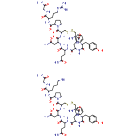
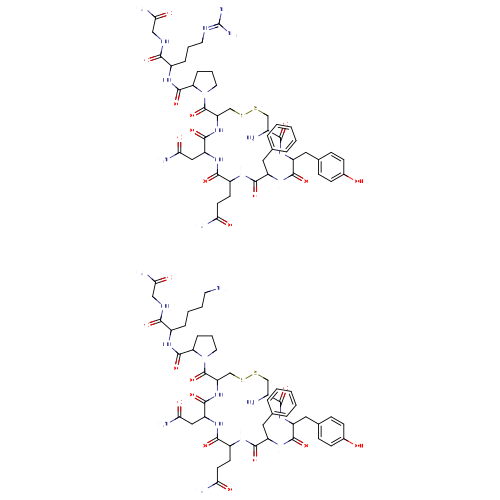
Structure for Vasopressin (DB00067)
- Weight
- Average: 2140.46
Monoisotopic: 2138.869561874 - Chemical Formula
- C92H130N28O24S4
- Synonyms
- Vasopressin, unspecified
- Vasopressina

Pharmacology
- Indication
Vasopressin is indicated to increase blood pressure in adults in vasodilatory shock refractory to the application of fluids and catecholamines.10
 Reduce drug development failure ratesBuild, train, & validate machine-learning modelswith evidence-based and structured datasets.Build, train, & validate predictive machine-learning models with structured datasets.
- Associated Conditions
Indication Type Indication Combined Product Details Approval Level Age Group Patient Characteristics Dose Form Treatment of Vasodilatory shock •••••••••••• ••••• ••••••••••• ••••••• •••••••••••••• •• •••••• ••• •••••••••••••• ••••••••• - Associated Therapies
- Contraindications & Blackbox Warnings
 Prevent Adverse Drug Events TodayTap into our Clinical API for life-saving information on contraindications & blackbox warnings, population restrictions, harmful risks, & more.Avoid life-threatening adverse drug events with our Clinical API
- Pharmacodynamics
Vasopressin is a nonapeptide antidiuretic hormone involved in modulating various physiological processes, including autonomic signalling, stress response, behaviour, and memory; the most well-known modulation is of blood pressure.1,2,3,4,10 Vasopressin acts both within the brain and in the periphery to modulate blood pressure through sympathetic outflow, baroreflex modulation, vasoconstriction, and renal fluid retention.6,7,8 These mechanisms vary by location and physiological state, leading to occasionally contradictory responses to vasopressin. Although generally safe, vasopressin may worsen cardiac output in patients with impaired cardiac function. The cessation of vasopressin therapy may result in transient reversible diabetes insipidus, which may require additional desmopressin or vasopressin to manage.10
- Mechanism of action
Vasopressin, Cyclo (1-6) L-Cysteinyl-L-Tyrosyl-L-PhenylalanylL-Glutaminyl-L-Asparaginyl-L-Cysteinyl-L-Prolyl-L-Arginyl-L-Glycinamide, is a cyclic nonapeptide hormone primarily produced by the supraoptic and periventricular nuclei of the hypothalamus.6,10 Vasopressin release is mediated by sensory pathways, in which either a 2% increase in plasma osmolarity or a 10% decrease in blood pressure causes the release of endogenous vasopressin.7 Upon release, vasopressin mediates a variety of physiological effects, both centrally and systemically, primarily by binding to G-protein-coupled receptors termed V1 (V1A), V2, and V3 (V1B).
V1 receptors are abundantly expressed in the brain whereby vasopressin binding can increase blood pressure through autonomic pathways.6 Peripherally, V1 is localized in the blood vessels (vascular smooth muscle), platelets, adrenal glands, kidneys, and liver.6,8 Vasopressin binding to V1 causes hydrolysis of phosphatidylinositol-4,5-bisphosphate into inositol triphosphate (IP3) and diacylglycerol (DAG) by phospholipase C, which in turn release intracellular calcium and activate protein kinase C (PKC) to open voltage-gated calcium channels (VGCCs) while closing potassium channels. Overall, intracellular calcium levels rise, which bind calmodulin and cause muscular contraction, resulting in vasoconstriction.7 This is balanced by the apparent ability of vasopressin to induce vasodilation through binding oxytocin receptors and activating endothelial nitric oxide (NO) synthase; NO acts antagonistically to reduce muscle contraction.7 It is also thought that vasopressin, acting through both V1 and oxytocin receptors, causes the cardiac release of atrial natriuretic peptide (ANP), which has a negative inotropic effect; indeed, vasopressin tends to decrease heart rate and cardiac output, although the opposite effect has been noted with low doses.7,10
V2 receptors are abundantly expressed in the distal convoluted tubules and the collecting ducts of the kidneys.8,9 Vasopressin binding to V2 causes activation of a Gs protein that subsequently activates protein kinase A (PKA) through adenylyl cyclase-mediated increase in cyclic adenosine monophosphate (cAMP), which leads to phosphorylation of the water channel aquaporin-2 (AQP2) and its trafficking to the cell surface.8,9 Increased AQP2 levels lead to increased water reabsorption and explains vasopressin's antidiuretic effects.8
V3 (formerly V1B) receptors are primarily located in the anterior pituitary and brain.6,8 Vasopressin released during acute stress causes adrenocorticotropic hormone (ACTH) release from the pituitary through V3 and by potentiating the effects of corticotrophin-releasing factor. Within the brain itself, V3 activation modulates various effects, including recognition, memory, aggression, anxiety, and depression.6
Thus, vasopressin can affect a wide variety of physiological processes, often in apparently contradictory ways depending on the patient's dose and physiological state. Vasodilatory shock causes an immediate release of vasopressin from 20 to 200 times its normal serum concentration, which falls again to normal levels in prolonged shock; in this context, normal serum levels are insufficient to control the pathologic vasodilation.7,8 In these cases, vasopressin acts to depolarize hyperpolarized vascular smooth muscle cells, restore sensitivity to catecholamines, and inhibit excessive nitric oxide production, primarily through acting through V1 receptors. Therefore, vasopressin helps decrease the dose requirement for norepinephrine and is routinely administered together with norepinephrine to restore normal blood pressure in shock states.8,10
Target Actions Organism AVasopressin V2 receptor agonistregulatorHumans AVasopressin V1a receptor agonistregulatorHumans AVasopressin V1b receptor agonistHumans AOxytocin receptor agonistHumans - Absorption
Not Available
- Volume of distribution
Not Available
- Protein binding
Not Available
- Metabolism
Animal studies suggest that vasopressin is metabolized by serine proteases, carboxypeptidases, and disulphide oxidoreductases, primarily in the liver and kidneys. These cleavage events occur at sites important for vasopressin's activity, and hence the metabolites are expected to be inactive.10
- Route of elimination
Vasopressin is primarily eliminated in the urine, where only 6% of the dose is excreted unchanged.10
- Half-life
Vasopressin administered at 0.01-0.1 U/min has an apparent t1/2 of ≤10 minutes,10 although half-lives of up to 44 minutes have been reported in the literature.
- Clearance
Vasopressin has a clearance of 9-25 mL/min/kg in patients with vasodilatory shock receiving 0.01-0.1 U/min of vasopressin.10
- Adverse Effects
 Improve decision support & research outcomesWith structured adverse effects data, including: blackbox warnings, adverse reactions, warning & precautions, & incidence rates. View sample adverse effects data in our new Data Library!Improve decision support & research outcomes with our structured adverse effects data.
- Toxicity
Vasopressin overdose is expected to present with consequences related to excessive vasoconstriction of peripheral, mesenteric, coronary vascular beds, hyponatremia, and possibly with ventricular tachyarrhythmias, rhabdomyolysis, and gastrointestinal symptoms. As vasopressin is rapidly metabolized and cleared, symptoms will resolve with cessation of vasopressin administration.10
- Pathways
- Not Available
- Pharmacogenomic Effects/ADRs
- Not Available
Interactions
- Drug Interactions
- This information should not be interpreted without the help of a healthcare provider. If you believe you are experiencing an interaction, contact a healthcare provider immediately. The absence of an interaction does not necessarily mean no interactions exist.
Drug Interaction Integrate drug-drug
interactions in your softwareAmitriptyline Amitriptyline may increase the fluid retaining and vasopressor activities of Vasopressin. Amitriptylinoxide Amitriptylinoxide may increase the fluid retaining and vasopressor activities of Vasopressin. Amoxapine Amoxapine may increase the fluid retaining and vasopressor activities of Vasopressin. Ardeparin The therapeutic efficacy of Vasopressin can be decreased when used in combination with Ardeparin. Bemiparin The therapeutic efficacy of Vasopressin can be decreased when used in combination with Bemiparin. - Food Interactions
- Not Available
Products
 Drug product information from 10+ global regionsOur datasets provide approved product information including:dosage, form, labeller, route of administration, and marketing period.Access drug product information from over 10 global regions.
- Product Ingredients
Ingredient UNII CAS InChI Key Argipressin Y4907O6MFD 113-79-1 KBZOIRJILGZLEJ-LGYYRGKSSA-N - Brand Name Prescription Products
Name Dosage Strength Route Labeller Marketing Start Marketing End Region Image Pitressin Injection 20 [USP'U]/1mL Intramuscular; Subcutaneous Cardinal Health 2007-10-01 2016-05-31 US 
Pitressin Injection 20 [USP'U]/1mL Intramuscular; Subcutaneous Par Pharmaceutical 2007-10-01 2016-06-30 US Pitressin Injection, solution 20 [USP'U]/1mL Intramuscular; Subcutaneous Physicians Total Care, Inc. 2011-05-17 2011-09-30 US Pitressin Inj 10 Unit/0.5ml Liquid 10 unit / .5 mL Intramuscular; Subcutaneous Parke Davis Division, Warner Lambert Canada Inc. 1971-12-31 1997-08-25 Canada 
Pressyn Ar Liquid 20 unit / 1 mL Intramuscular; Subcutaneous Ferring Pharmaceuticals 2002-11-04 2017-03-10 Canada - Generic Prescription Products
Name Dosage Strength Route Labeller Marketing Start Marketing End Region Image Vasopressin Injection 20 [USP'U]/1mL Intravenous Gland Pharma Limited 2024-02-09 Not applicable US Vasopressin Injection, solution 20 [USP'U]/1mL Intravenous Fresenius Kabi USA, LLC 2023-05-26 Not applicable US Vasopressin Injection 20 [USP'U]/1mL Intravenous Eugia US LLC 2022-08-15 Not applicable US Vasopressin Injection 20 [USP'U]/1mL Intravenous Medical Purchasing Solutions, Llc 2022-08-15 Not applicable US Vasopressin Injection 20 [USP'U]/1mL Intravenous HF Acquisition Co LLC, DBA HealthFirst 2023-03-02 Not applicable US - Unapproved/Other Products
Name Ingredients Dosage Route Labeller Marketing Start Marketing End Region Image Pitressin Vasopressin (20 [USP'U]/1mL) Injection Intramuscular; Subcutaneous Cardinal Health 2007-10-01 2016-05-31 US Pitressin Vasopressin (20 [USP'U]/1mL) Injection Intramuscular; Subcutaneous Par Pharmaceutical 2007-10-01 2016-06-30 US Pitressin Vasopressin (20 [USP'U]/1mL) Injection, solution Intramuscular; Subcutaneous Physicians Total Care, Inc. 2011-05-17 2011-09-30 US Vasopressin Argipressin (20 [USP'U]/1mL) Injection, solution Intramuscular; Subcutaneous American Regent 1992-10-01 2013-05-01 US Vasopressin Argipressin (20 [USP'U]/1mL) Injection, solution Intramuscular; Subcutaneous General Injectables & Vaccines 2010-08-01 2013-03-01 US
Categories
- Drug Categories
- Amino Acids, Peptides, and Proteins
- Antidiuretic Agents
- Arginine Vasopressin
- Arginine Vasopressin, analogs & derivatives
- Cardiovascular Agents
- Coagulants
- Decreased Diuresis
- Hematologic Agents
- Hemostatics
- Hormones
- Hormones, Hormone Substitutes, and Hormone Antagonists
- Natriuretic Agents
- Nerve Tissue Proteins
- Neuropeptides
- Oligopeptides
- Peptide Hormones
- Peptides
- Pituitary
- Pituitary Hormones
- Pituitary Hormones, Posterior
- Proteins
- Vasoconstriction
- Vasoconstrictor Agents
- Vasopressin and Analogues
- Vasopressins
- Classification
- Not classified
- Affected organisms
- Humans and other mammals
Chemical Identifiers
- UNII
- Y87Y826H08
- CAS number
- 11000-17-2
- InChI Key
- JLTCWSBVQSZVLT-UHFFFAOYSA-N
- InChI
- InChI=1S/C46H65N15O12S2.C46H65N13O12S2/c47-27-22-74-75-23-33(45(73)61-17-5-9-34(61)44(72)56-28(8-4-16-53-46(51)52)39(67)54-21-37(50)65)60-43(71)32(20-36(49)64)59-40(68)29(14-15-35(48)63)55-41(69)31(18-24-6-2-1-3-7-24)58-42(70)30(57-38(27)66)19-25-10-12-26(62)13-11-25;47-17-5-4-9-29(40(65)52-22-38(51)63)54-45(70)35-10-6-18-59(35)46(71)34-24-73-72-23-28(48)39(64)55-31(20-26-11-13-27(60)14-12-26)43(68)56-32(19-25-7-2-1-3-8-25)42(67)53-30(15-16-36(49)61)41(66)57-33(21-37(50)62)44(69)58-34/h1-3,6-7,10-13,27-34,62H,4-5,8-9,14-23,47H2,(H2,48,63)(H2,49,64)(H2,50,65)(H,54,67)(H,55,69)(H,56,72)(H,57,66)(H,58,70)(H,59,68)(H,60,71)(H4,51,52,53);1-3,7-8,11-14,28-35,60H,4-6,9-10,15-24,47-48H2,(H2,49,61)(H2,50,62)(H2,51,63)(H,52,65)(H,53,67)(H,54,70)(H,55,64)(H,56,68)(H,57,66)(H,58,69)
- IUPAC Name
- 2-({1-[19-amino-13-benzyl-10-(2-carbamoylethyl)-7-(carbamoylmethyl)-16-[(4-hydroxyphenyl)methyl]-6,9,12,15,18-pentaoxo-1,2-dithia-5,8,11,14,17-pentaazacycloicosane-4-carbonyl]pyrrolidin-2-yl}formamido)-N-(carbamoylmethyl)-5-[(diaminomethylidene)amino]pentanamide; 6-amino-2-({1-[19-amino-13-benzyl-10-(2-carbamoylethyl)-7-(carbamoylmethyl)-16-[(4-hydroxyphenyl)methyl]-6,9,12,15,18-pentaoxo-1,2-dithia-5,8,11,14,17-pentaazacycloicosane-4-carbonyl]pyrrolidin-2-yl}formamido)-N-(carbamoylmethyl)hexanamide
- SMILES
- NCCCCC(NC(=O)C1CCCN1C(=O)C1CSSCC(N)C(=O)NC(CC2=CC=C(O)C=C2)C(=O)NC(CC2=CC=CC=C2)C(=O)NC(CCC(N)=O)C(=O)NC(CC(N)=O)C(=O)N1)C(=O)NCC(N)=O.NC1CSSCC(NC(=O)C(CC(N)=O)NC(=O)C(CCC(N)=O)NC(=O)C(CC2=CC=CC=C2)NC(=O)C(CC2=CC=C(O)C=C2)NC1=O)C(=O)N1CCCC1C(=O)NC(CCCN=C(N)N)C(=O)NCC(N)=O
References
- Synthesis Reference
Nedumparambil A. Abraham, Hans U. Immer, Kazimir Sestanj, "Process for producing triglycyl-lysine vasopressin and intermediates therefor." U.S. Patent US4093610, issued June, 1963.
US4093610- General References
- Bielsky IF, Hu SB, Szegda KL, Westphal H, Young LJ: Profound impairment in social recognition and reduction in anxiety-like behavior in vasopressin V1a receptor knockout mice. Neuropsychopharmacology. 2004 Mar;29(3):483-93. [Article]
- Wersinger SR, Caldwell HK, Martinez L, Gold P, Hu SB, Young WS 3rd: Vasopressin 1a receptor knockout mice have a subtle olfactory deficit but normal aggression. Genes Brain Behav. 2007 Aug;6(6):540-51. Epub 2006 Nov 3. [Article]
- Lolait SJ, Stewart LQ, Jessop DS, Young WS 3rd, O'Carroll AM: The hypothalamic-pituitary-adrenal axis response to stress in mice lacking functional vasopressin V1b receptors. Endocrinology. 2007 Feb;148(2):849-56. Epub 2006 Nov 22. [Article]
- Wersinger SR, Kelliher KR, Zufall F, Lolait SJ, O'Carroll AM, Young WS 3rd: Social motivation is reduced in vasopressin 1b receptor null mice despite normal performance in an olfactory discrimination task. Horm Behav. 2004 Dec;46(5):638-45. [Article]
- Kanwar S, Woodman RC, Poon MC, Murohara T, Lefer AM, Davenpeck KL, Kubes P: Desmopressin induces endothelial P-selectin expression and leukocyte rolling in postcapillary venules. Blood. 1995 Oct 1;86(7):2760-6. [Article]
- Lozic M, Sarenac O, Murphy D, Japundzic-Zigon N: Vasopressin, Central Autonomic Control and Blood Pressure Regulation. Curr Hypertens Rep. 2018 Feb 26;20(2):11. doi: 10.1007/s11906-018-0811-0. [Article]
- Pelletier JS, Dicken B, Bigam D, Cheung PY: Cardiac effects of vasopressin. J Cardiovasc Pharmacol. 2014 Jul;64(1):100-7. doi: 10.1097/FJC.0000000000000092. [Article]
- Wagener G, Bakker J: Vasopressin in cirrhosis and sepsis: physiology and clinical implications. Minerva Anestesiol. 2015 Dec;81(12):1377-83. Epub 2014 Nov 11. [Article]
- Ranieri M, Di Mise A, Tamma G, Valenti G: Vasopressin-aquaporin-2 pathway: recent advances in understanding water balance disorders. F1000Res. 2019 Feb 4;8. doi: 10.12688/f1000research.16654.1. eCollection 2019. [Article]
- FDA Approved Drug Products: VASOSTRICT (vasopressin) injection [Link]
- External Links
- KEGG Drug
- D00101
- KEGG Compound
- C00840
- PubChem Substance
- 46505933
- ChemSpider
- 10152658
- 11149
- ChEMBL
- CHEMBL373742
- Therapeutic Targets Database
- DAP000018
- PharmGKB
- PA451858
- RxList
- RxList Drug Page
- Drugs.com
- Drugs.com Drug Page
- Wikipedia
- Vasopressin
- MSDS
- Download (143 KB)
Clinical Trials
- Clinical Trials
Phase Status Purpose Conditions Count 4 Completed Basic Science Endotoxaemia 1 4 Completed Basic Science General Anesthesia / Major Abdominal Surgeries / Mechanical Ventilation / Vasopressin Infusion 1 4 Completed Prevention Hemorrhage 1 4 Completed Prevention Kidney Failure 1 4 Completed Treatment Blood Loss During Surgery 1
Pharmacoeconomics
- Manufacturers
- Parke davis div warner lambert co
- Packagers
- American Regent
- APP Pharmaceuticals
- APPD
- A-S Medication Solutions LLC
- Cardinal Health
- JHP Pharmaceuticals LLC
- Luitpold Pharmaceuticals Inc.
- Monarch Pharmacy
- PD-Rx Pharmaceuticals Inc.
- Dosage Forms
Form Route Strength Solution Intramuscular; Subcutaneous 20 IU Solution Parenteral 20.000 UI Injection, solution, concentrate Intravenous Injection, solution, concentrate Intravenous 40 U.I./2ML Injection 20 IU/ml Injection Parenteral 20 IU/mL Injection Intramuscular; Subcutaneous 20 [USP'U]/1mL Injection, solution Intramuscular; Subcutaneous 20 [USP'U]/1mL Liquid Intramuscular; Subcutaneous 10 unit / .5 mL Solution Intravenous 20.00 UI Liquid Intramuscular; Subcutaneous 20 unit / 1 mL Solution Intravenous 20 IU Injection Intravenous 20 IU/mL Solution Intramuscular; Intravenous; Subcutaneous 20 U Injection Parenteral 20 U/1mL Injection, solution Intramuscular 20 [USP'U]/1mL Injection, solution Intravenous 20 [USP'U]/1mL Injection, solution Intravenous; Subcutaneous 20 [USP'U]/1mL Injection Intravenous 20 [USP'U]/100mL Liquid Intramuscular; Nasal; Subcutaneous 20 unit / mL Liquid Intramuscular; Subcutaneous 20 unit / mL Solution Intramuscular; Subcutaneous 20 unit / mL Injection Intramuscular; Subcutaneous 20 u/ml Injection, solution Intravenous Injection Intravenous 0.2 [USP'U]/1mL Injection Intravenous 1 [USP'U]/1mL Injection Intravenous 20 [USP'U]/1mL Injection Intravenous 40 [USP'U]/100mL Injection Intravenous 60 [USP'U]/100mL - Prices
Unit description Cost Unit Pitressin 20 unit/ml vial 7.68USD ml Vasopressin 10 unit/0.5 ml vial 2.88USD vial Vasopressin 20 unit/ml vial 1.86USD ml DrugBank does not sell nor buy drugs. Pricing information is supplied for informational purposes only.- Patents
Patent Number Pediatric Extension Approved Expires (estimated) Region US9687526 No 2017-06-27 2035-01-30 US US9375478 No 2016-06-28 2035-01-30 US US9744209 No 2017-08-29 2035-01-30 US US9744239 No 2017-08-29 2035-01-30 US US9750785 No 2017-09-05 2035-01-30 US US9937223 No 2018-04-10 2035-01-30 US US10010575 No 2018-07-03 2035-01-30 US US9925233 No 2018-03-27 2035-01-30 US US9974827 No 2018-05-22 2035-01-30 US US9968649 No 2018-05-15 2035-01-30 US US9962422 No 2018-05-08 2035-01-30 US US9925234 No 2018-03-27 2035-01-30 US US9981006 No 2018-05-29 2035-01-30 US US9919026 No 2018-03-20 2035-01-30 US
Properties
- State
- Solid
- Experimental Properties
Property Value Source water solubility Soluble Not Available - Predicted Properties
Property Value Source Water Solubility 0.124 mg/mL ALOGPS logP -1.4 ALOGPS logP -7.2 Chemaxon logS -3.9 ALOGPS pKa (Strongest Acidic) 7.65 Chemaxon pKa (Strongest Basic) 11.5 Chemaxon Physiological Charge 2 Chemaxon Hydrogen Acceptor Count 16 Chemaxon Hydrogen Donor Count 14 Chemaxon Polar Surface Area 463.93 Å2 Chemaxon Rotatable Bond Count 38 Chemaxon Refractivity 272.59 m3·mol-1 Chemaxon Polarizability 108.29 Å3 Chemaxon Number of Rings 8 Chemaxon Bioavailability 0 Chemaxon Rule of Five No Chemaxon Ghose Filter No Chemaxon Veber's Rule No Chemaxon MDDR-like Rule Yes Chemaxon - Predicted ADMET Features
- Not Available
Spectra
- Mass Spec (NIST)
- Not Available
- Spectra
- Not Available
- Chromatographic Properties
Collision Cross Sections (CCS)
Not Available
Targets

- Kind
- Protein
- Organism
- Humans
- Pharmacological action
- Yes
- Actions
- AgonistRegulator
- General Function
- Vasopressin receptor activity
- Specific Function
- Receptor for arginine vasopressin. The activity of this receptor is mediated by G proteins which activate adenylate cyclase. Involved in renal water reabsorption.
- Gene Name
- AVPR2
- Uniprot ID
- P30518
- Uniprot Name
- Vasopressin V2 receptor
- Molecular Weight
- 40278.57 Da
References
- Boson WL, Della Manna T, Damiani D, Miranda DM, Gadelha MR, Liberman B, Correa H, Romano-Silva MA, Friedman E, Silva FF, Ribeiro PA, De Marco L: Novel vasopressin type 2 (AVPR2) gene mutations in Brazilian nephrogenic diabetes insipidus patients. Genet Test. 2006 Fall;10(3):157-62. [Article]
- Slusarz MJ, Slusarz R, Ciarkowski J: Investigation of mechanism of desmopressin binding in vasopressin V2 receptor versus vasopressin V1a and oxytocin receptors: molecular dynamics simulation of the agonist-bound state in the membrane-aqueous system. Biopolymers. 2006 Apr 5;81(5):321-38. [Article]
- Bouley R, Hawthorn G, Russo LM, Lin HY, Ausiello DA, Brown D: Aquaporin 2 (AQP2) and vasopressin type 2 receptor (V2R) endocytosis in kidney epithelial cells: AQP2 is located in 'endocytosis-resistant' membrane domains after vasopressin treatment. Biol Cell. 2006 Apr;98(4):215-32. [Article]
- Yi X, Bouley R, Lin HY, Bechoua S, Sun TX, Del Re E, Shioda T, Raychowdhury MK, Lu HA, Abou-Samra AB, Brown D, Ausiello DA: Alix (AIP1) is a vasopressin receptor (V2R)-interacting protein that increases lysosomal degradation of the V2R. Am J Physiol Renal Physiol. 2007 May;292(5):F1303-13. Epub 2007 Feb 6. [Article]
- Chen X, Ji ZL, Chen YZ: TTD: Therapeutic Target Database. Nucleic Acids Res. 2002 Jan 1;30(1):412-5. [Article]
- Lozic M, Sarenac O, Murphy D, Japundzic-Zigon N: Vasopressin, Central Autonomic Control and Blood Pressure Regulation. Curr Hypertens Rep. 2018 Feb 26;20(2):11. doi: 10.1007/s11906-018-0811-0. [Article]
- Urbach J, Goldsmith SR: Vasopressin antagonism in heart failure: a review of the hemodynamic studies and major clinical trials. Ther Adv Cardiovasc Dis. 2021 Jan-Dec;15:1753944720977741. doi: 10.1177/1753944720977741. [Article]
- Mondritzki T, Mai TA, Vogel J, Pook E, Wasnaire P, Schmeck C, Huser J, Dinh W, Truebel H, Kolkhof P: Cardiac output improvement by pecavaptan: a novel dual-acting vasopressin V1a/V2 receptor antagonist in experimental heart failure. Eur J Heart Fail. 2021 May;23(5):743-750. doi: 10.1002/ejhf.2001. Epub 2020 Oct 9. [Article]
- FDA Approved Drug Products: VASOSTRICT (vasopressin) injection [Link]
- Kind
- Protein
- Organism
- Humans
- Pharmacological action
- Yes
- Actions
- AgonistRegulator
- General Function
- Vasopressin receptor activity
- Specific Function
- Receptor for arginine vasopressin. The activity of this receptor is mediated by G proteins which activate a phosphatidyl-inositol-calcium second messenger system. Has been involved in social behavi...
- Gene Name
- AVPR1A
- Uniprot ID
- P37288
- Uniprot Name
- Vasopressin V1a receptor
- Molecular Weight
- 46799.105 Da
References
- Hiroyama M, Wang S, Aoyagi T, Oikawa R, Sanbe A, Takeo S, Tanoue A: Vasopressin promotes cardiomyocyte hypertrophy via the vasopressin V1A receptor in neonatal mice. Eur J Pharmacol. 2007 Mar 22;559(2-3):89-97. Epub 2006 Dec 29. [Article]
- Liedman R, Grant L, Igidbashian S, James I, McLeod A, Skillern L, Akerlund M: Intrauterine pressure, ischemia markers, and experienced pain during administration of a vasopressin V1a receptor antagonist in spontaneous and vasopressin-induced dysmenorrhea. Acta Obstet Gynecol Scand. 2006;85(2):207-11. [Article]
- Adikesavan NV, Mahmood SS, Stanley N, Xu Z, Wu N, Thibonnier M, Shoham M: A C-terminal segment of the V1R vasopressin receptor is unstructured in the crystal structure of its chimera with the maltose-binding protein. Acta Crystallogr Sect F Struct Biol Cryst Commun. 2005 Apr 1;61(Pt 4):341-5. Epub 2005 Mar 24. [Article]
- Hammock EA, Lim MM, Nair HP, Young LJ: Association of vasopressin 1a receptor levels with a regulatory microsatellite and behavior. Genes Brain Behav. 2005 Jul;4(5):289-301. [Article]
- Aoyagi T, Birumachi J, Hiroyama M, Fujiwara Y, Sanbe A, Yamauchi J, Tanoue A: Alteration of glucose homeostasis in V1a vasopressin receptor-deficient mice. Endocrinology. 2007 May;148(5):2075-84. Epub 2007 Feb 15. [Article]
- Lozic M, Sarenac O, Murphy D, Japundzic-Zigon N: Vasopressin, Central Autonomic Control and Blood Pressure Regulation. Curr Hypertens Rep. 2018 Feb 26;20(2):11. doi: 10.1007/s11906-018-0811-0. [Article]
- Urbach J, Goldsmith SR: Vasopressin antagonism in heart failure: a review of the hemodynamic studies and major clinical trials. Ther Adv Cardiovasc Dis. 2021 Jan-Dec;15:1753944720977741. doi: 10.1177/1753944720977741. [Article]
- Mondritzki T, Mai TA, Vogel J, Pook E, Wasnaire P, Schmeck C, Huser J, Dinh W, Truebel H, Kolkhof P: Cardiac output improvement by pecavaptan: a novel dual-acting vasopressin V1a/V2 receptor antagonist in experimental heart failure. Eur J Heart Fail. 2021 May;23(5):743-750. doi: 10.1002/ejhf.2001. Epub 2020 Oct 9. [Article]
- FDA Approved Drug Products: VASOSTRICT (vasopressin) injection [Link]
- Kind
- Protein
- Organism
- Humans
- Pharmacological action
- Yes
- Actions
- Agonist
- General Function
- Vasopressin receptor activity
- Specific Function
- Receptor for arginine vasopressin. The activity of this receptor is mediated by G proteins which activate a phosphatidyl-inositol-calcium second messenger system.
- Gene Name
- AVPR1B
- Uniprot ID
- P47901
- Uniprot Name
- Vasopressin V1b receptor
- Molecular Weight
- 46970.345 Da
References
- Young WS, Li J, Wersinger SR, Palkovits M: The vasopressin 1b receptor is prominent in the hippocampal area CA2 where it is unaffected by restraint stress or adrenalectomy. Neuroscience. 2006 Dec 28;143(4):1031-9. Epub 2006 Oct 4. [Article]
- Volpi S, Liu Y, Aguilera G: Vasopressin increases GAGA binding activity to the V1b receptor promoter through transactivation of the MAP kinase pathway. J Mol Endocrinol. 2006 Jun;36(3):581-90. [Article]
- Wersinger SR, Caldwell HK, Christiansen M, Young WS 3rd: Disruption of the vasopressin 1b receptor gene impairs the attack component of aggressive behavior in mice. Genes Brain Behav. 2007 Oct;6(7):653-60. Epub 2006 Dec 20. [Article]
- Slusarz MJ, Gieldon A, Slusarz R, Ciarkowski J: Analysis of interactions responsible for vasopressin binding to human neurohypophyseal hormone receptors-molecular dynamics study of the activated receptor-vasopressin-G(alpha) systems. J Pept Sci. 2006 Mar;12(3):180-9. [Article]
- Jurkevich A, Berghman LR, Cornett LE, Kuenzel WJ: Characterization and immunohistochemical visualization of the vasotocin VT2 receptor in the pituitary gland of the chicken, Gallus gallus. Gen Comp Endocrinol. 2005 Aug;143(1):82-91. Epub 2005 Mar 23. [Article]
- Lozic M, Sarenac O, Murphy D, Japundzic-Zigon N: Vasopressin, Central Autonomic Control and Blood Pressure Regulation. Curr Hypertens Rep. 2018 Feb 26;20(2):11. doi: 10.1007/s11906-018-0811-0. [Article]
- FDA Approved Drug Products: VASOSTRICT (vasopressin) injection [Link]
- Kind
- Protein
- Organism
- Humans
- Pharmacological action
- Yes
- Actions
- Agonist
- General Function
- Vasopressin receptor activity
- Specific Function
- Receptor for oxytocin. The activity of this receptor is mediated by G proteins which activate a phosphatidylinositol-calcium second messenger system.
- Gene Name
- OXTR
- Uniprot ID
- P30559
- Uniprot Name
- Oxytocin receptor
- Molecular Weight
- 42770.99 Da
References
- Pelletier JS, Dicken B, Bigam D, Cheung PY: Cardiac effects of vasopressin. J Cardiovasc Pharmacol. 2014 Jul;64(1):100-7. doi: 10.1097/FJC.0000000000000092. [Article]
Transporters
- Kind
- Protein
- Organism
- Humans
- Pharmacological action
- Unknown
- Actions
- Substrate
- Curator comments
- This interaction is based on animal studies.
- General Function
- Organic anion transmembrane transporter activity
- Specific Function
- Mediates hepatobiliary excretion of numerous organic anions. May function as a cellular cisplatin transporter.
- Gene Name
- ABCC2
- Uniprot ID
- Q92887
- Uniprot Name
- Canalicular multispecific organic anion transporter 1
- Molecular Weight
- 174205.64 Da
References
- Madon J, Hagenbuch B, Landmann L, Meier PJ, Stieger B: Transport function and hepatocellular localization of mrp6 in rat liver. Mol Pharmacol. 2000 Mar;57(3):634-41. [Article]

Drug created at June 13, 2005 13:24 / Updated at April 26, 2024 00:46