Identification
- Summary
Valsartan is an angiotensin-receptor blocker used to manage hypertension alone or in combination with other antihypertensive agents and to manage heart failure in patients who are intolerant to ACE inhibitors.
- Brand Names
- Dafiro, Diovan, Diovan Hct, Entresto, Exforge, Exforge Hct
- Generic Name
- Valsartan
- DrugBank Accession Number
- DB00177
- Background
Valsartan belongs to the angiotensin II receptor blocker (ARB) family of drugs, which also includes telmisartan, candesartan, losartan, olmesartan, and irbesartan. ARBs selectively bind to angiotensin receptor 1 (AT1) and prevent the protein angiotensin II from binding and exerting its hypertensive effects, which include vasoconstriction, stimulation and synthesis of aldosterone and ADH, cardiac stimulation, and renal reabsorption of sodium, among others. Overall, valsartan's physiologic effects lead to reduced blood pressure, lower aldosterone levels, reduced cardiac activity, and increased excretion of sodium.
Valsartan also affects the renin-angiotensin aldosterone system (RAAS), which plays an important role in hemostasis and regulation of kidney, vascular, and cardiac functions. Pharmacological blockade of RAAS via AT1 receptor blockade inhibits negative regulatory feedback within RAAS, which is a contributing factor to the pathogenesis and progression of cardiovascular disease, heart failure, and renal disease. In particular, heart failure is associated with chronic activation of RAAS, leading to inappropriate fluid retention, vasoconstriction, and ultimately a further decline in left ventricular function. ARBs have been shown to have a protective effect on the heart by improving cardiac function, reducing afterload, increasing cardiac output and preventing ventricular hypertrophy and remodelling.5
By comparison, the angiotensin-converting enzyme inhibitor (ACEI) class of medications (which includes drugs such as ramipril, lisinopril, and perindopril) inhibit the conversion of angiotensin I to angiotensin II through inhibition of the ACE enzyme. However, this does not prevent the formation of all angiotensin II within the body. The angiotensin II receptor blocker (ARB) family of drugs unique in that it blocks all angiotensin II activity, regardless of where or how it was synthesized.
Valsartan is commonly used for the management of hypertension, heart failure, and Type 2 Diabetes-associated nephropathy, particularly in patients who are unable to tolerate ACE inhibitors. ARBs such as valsartan have been shown in a number of large-scale clinical outcomes trials to improve cardiovascular outcomes including reducing risk of myocardial infarction, stroke, the progression of heart failure, and hospitalization.1,9,10,11,12,13,14,15 Valsartan also slows the progression of diabetic nephropathy due to its renoprotective effects.6,7,8 Improvements in chronic kidney disease with valsartan include both clinically and statistically significant decreases in urinary albumin and protein excretion in patients diagnosed with type 2 diabetes and in nondiabetic patients diagnosed with chronic kidney disease.1,10
Valsartan was initially approved in 1996 in Europe for the treatment of hypertension in adults. Shortly after, in 1997, this drug was approved in the United States.1 Valsartan is generally well-tolerated with a side-effect profile superior to that of other antihypertensive drugs.3,4
- Type
- Small Molecule
- Groups
- Approved, Investigational
- Structure
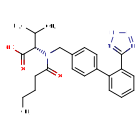
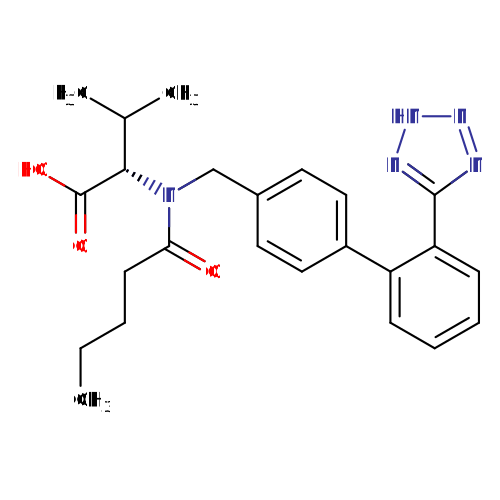
Structure for Valsartan (DB00177)
- Weight
- Average: 435.5188
Monoisotopic: 435.227039819 - Chemical Formula
- C24H29N5O3
- Synonyms
- (S)-N-Valeryl-N-{[2'-(1H-tetrazol-5-yl)biphenyl-4-yl]-methyl}-valine
- N-(P-(O-1H-Tetrazol-5-ylphenyl)benzyl)-N-valeryl-L-valine
- N-pentanoyl-N-{[2'-(1H-tetrazol-5-yl)biphenyl-4-yl]methyl}-L-valine
- Valsartan
- External IDs
- CGP 48933
- CGP-48933

Pharmacology
- Indication
Valsartan is indicated for the treatment of hypertension to reduce the risk of fatal and nonfatal cardiovascular events, primarily strokes and myocardial infarctions. It is also indicated for the treatment of heart failure (NYHA class II-IV) and for left ventricular dysfunction or failure after myocardial infarction when the use of an angiotensin-converting enzyme inhibitor (ACEI) is not appropriate.29,18
It is also used in combination with sacubitril.21
 Reduce drug development failure ratesBuild, train, & validate machine-learning modelswith evidence-based and structured datasets.Build, train, & validate predictive machine-learning models with structured datasets.
- Associated Conditions
Indication Type Indication Combined Product Details Approval Level Age Group Patient Characteristics Dose Form Used in combination to prevent Cardiovascular death Combination Product in combination with: Sacubitril (DB09292) •••••••••••• ••••• ••••••• ••••• ••••••• •••• ••••••• •••••••• •••••••• ••••• ••••• •••••• Prevention of Cardiovascular mortality •••••••••••• ••••• •••• ••••••••••• •••••••••••• •••• ••••••••••• •••••••• ••••••••••• Management of Diabetic nephropathy ••• ••••• •••• • •••••••• •••••••• Used in combination to treat Heart failure Combination Product in combination with: Sacubitril (DB09292) •••••••••••• ••••••••• Used in combination to treat High blood pressure (hypertension) Combination Product in combination with: Aliskiren (DB09026) •••••••••••• - Contraindications & Blackbox Warnings
 Prevent Adverse Drug Events TodayTap into our Clinical API for life-saving information on contraindications & blackbox warnings, population restrictions, harmful risks, & more.Avoid life-threatening adverse drug events with our Clinical API
- Pharmacodynamics
Valsartan inhibits the pressor effects of angiotensin II with oral doses of 80 mg inhibiting the pressor effect by about 80% at peak with approximately 30% inhibition persisting for 24 hours. Removal of the negative feedback of angiotensin II causes a 2- to 3-fold rise in plasma renin and consequent rise in angiotensin II plasma concentration in hypertensive patients. Minimal decreases in plasma aldosterone were observed after administration of valsartan.
In multiple-dose studies in hypertensive patients, valsartan had no notable effects on total cholesterol, fasting triglycerides, fasting serum glucose, or uric acid.18
Hypotension
Excessive hypotension was rarely seen (0.1%) in patients with uncomplicated hypertension treated with valsartan alone. In patients with an activated renin-angiotensin system, such as volume- and/or salt-depleted patients receiving high doses of diuretics, symptomatic hypotension may occur. This condition should be corrected prior to administration of valsartan, or the treatment should start under close medical supervision.
Caution should be observed when initiating therapy in patients with heart failure. Patients with heart failure given valsartan commonly have some reduction in blood pressure, but discontinuation of therapy because of continuing symptomatic hypotension usually is not necessary when dosing instructions are followed. In controlled trials in heart failure patients, the incidence of hypotension in valsartan-treated patients was 5.5% compared to 1.8% in placebo-treated patients.
If excessive hypotension occurs, the patient should be placed in the supine position and, if necessary, given an intravenous infusion of normal saline. A transient hypotensive response is not a contraindication to further treatment, which usually can be continued without difficulty once the blood pressure has stabilized.18
Impaired Renal Function
Changes in renal function including acute renal failure can be caused by drugs that inhibit the renin-angiotensin system and by diuretics. Patients whose renal function may depend in part on the activity of the renin-angiotensin system (e.g., patients with renal artery stenosis, chronic kidney disease, severe congestive heart failure, or volume depletion) may be at particular risk of developing acute renal failure on valsartan. Monitor renal function periodically in these patients. Consider withholding or discontinuing therapy in patients who develop a clinically significant decrease in renal function on valsartan.18
Hyperkalemia
Some patients with heart failure have developed increases in potassium. These effects are usually minor and transient, and they are more likely to occur in patients with pre-existing renal impairment. Dosage reduction and/or discontinuation of valsartan may be required.18
- Mechanism of action
Valsartan belongs to the angiotensin II receptor blocker (ARB) family of drugs, which selectively bind to angiotensin receptor 1 (AT1) and prevent angiotensin II from binding and exerting its hypertensive effects. These include vasoconstriction, stimulation and synthesis of aldosterone and ADH, cardiac stimulation, and renal reabsorption of sodium among others. Overall, valsartan's physiologic effects lead to reduced blood pressure, lower aldosterone levels, reduced cardiac activity, and increased excretion of sodium.
Valsartan also affects the renin-angiotensin aldosterone system (RAAS), which plays an important role in hemostasis and regulation of kidney, vascular, and cardiac functions. Pharmacological blockade of RAAS via AT1 receptor blockade inhibits negative regulatory feedback within RAAS which is a contributing factor to the pathogenesis and progression of cardiovascular disease, heart failure, and renal disease. In particular, heart failure is associated with chronic activation of RAAS, leading to inappropriate fluid retention, vasoconstriction, and ultimately a further decline in left ventricular function. ARBs have been shown to have a protective effect on the heart by improving cardiac function, reducing afterload, increasing cardiac output and prevent ventricular hypertrophy.5
The angiotensin-converting enzyme inhibitor (ACEI) class of medications (which includes drugs such as ramipril, lisinopril, and perindopril) inhibits the conversion of angiotensin I to angiotensin II by inhibiting the ACE enzyme but does not prevent the formation of all angiotensin II. ARB activity is unique in that it blocks all angiotensin II activity, regardless of where or how it was synthesized.
Valsartan is commonly used for the management of hypertension, heart failure, and type 2 diabetes-associated nephropathy, particularly in patients who are unable to tolerate ACE inhibitors. ARBs such as valsartan have been shown in a number of large-scale clinical outcomes trials to improve cardiovascular outcomes including reducing risk of myocardial infarction, stroke, the progression of heart failure, and hospitalization.1,9,10,11,12,13,14,15 Valsartan also slows the progression of diabetic nephropathy due to its renoprotective effects.6,7,8 Improvements in chronic kidney disease with valsartan include both clinically and statistically significant decreases in urinary albumin and protein excretion in patients diagnosed with type 2 diabetes and in nondiabetic patients diagnosed with chronic kidney disease.1,10
Valsartan also binds to the AT2 receptor, however AT2 is not known to be associated with cardiovascular homeostasis like AT1. Valsartan has about 20,000-fold higher affinity for the AT1 receptor than for the AT2 receptor. The increased plasma levels of angiotensin II following AT1 receptor blockade with valsartan may stimulate the unblocked AT2 receptor.18
Target Actions Organism AType-1 angiotensin II receptor antagonistHumans - Absorption
After one oral dose, the antihypertensive activity of valsartan begins within approximately 2 hours and peaks within 4-6 hours in most patients.24 Food decreases the exposure to orally administered valsartan by approximately 40% and peak plasma concentration by approximately 50%. AUC and Cmax values of valsartan generally increase linearly with increasing dose over the therapeutic dose range. Valsartan does not accumulate appreciably in plasma following repetitive administration.18
- Volume of distribution
The steady-state volume of distribution of valsartan after intravenous administration is small (17 L), indicating that valsartan does not distribute into tissues extensively.24
- Protein binding
Valsartan is highly bound to serum proteins (95%), mainly serum albumin.18
- Metabolism
Valsartan undergoes minimal liver metabolism and is not biotransformed to a high degree, as only approximately 20% of a single dose is recovered as metabolites.1,24 The primary metabolite, accounting for about 9% of dose, is valeryl 4-hydroxy valsartan. In vitro metabolism studies involving recombinant CYP 450 enzymes indicated that the CYP 2C9 isoenzyme is responsible for the formation of valeryl-4-hydroxy valsartan. Valsartan does not inhibit CYP 450 isozymes at clinically relevant concentrations. CYP 450 mediated drug interaction between valsartan and coadministered drugs are unlikely because of the low extent of metabolism.18
Hover over products below to view reaction partners
- Route of elimination
Valsartan, when administered as an oral solution, is primarily recovered in feces (about 83% of dose) and urine (about 13% of dose). The recovery is mainly as unchanged drug, with only about 20% of dose recovered as metabolites.18
- Half-life
After intravenous (IV) administration, valsartan demonstrates bi-exponential decay kinetics, with an average elimination half-life of about 6 hours.18
- Clearance
Following intravenous administration, plasma clearance of valsartan is approximately 2 L/hour and its renal clearance is 0.62 L/hour (about 30% of total clearance).18
- Adverse Effects
 Improve decision support & research outcomesWith structured adverse effects data, including: blackbox warnings, adverse reactions, warning & precautions, & incidence rates. View sample adverse effects data in our new Data Library!Improve decision support & research outcomes with our structured adverse effects data.
- Toxicity
Approximate LD50 >2000 mg/kg (Gavage, rat) 24
Reproductive Toxicology Studies
No teratogenic effects were seen when valsartan was given to pregnant mice and rats at oral doses up to 600 mg/kg/day and to pregnant rabbits at oral doses reaching up to 10 mg/kg/day. Despite this, marked decreases in fetal weight, pup birth weight, pup survival rate, and delays in developmental milestones were noted in studies in which parental rats were treated with valsartan at oral, maternally toxic doses of 600 mg/kg/day during the organogenesis period or during late gestation and lactation.18
Pregnancy
When used in pregnancy, drugs that act directly on the renin-angiotensin system (RAAS) can cause injury and death to the developing fetus. When pregnancy is detected, valsartan should be discontinued as soon as possible.18
- Pathways
Pathway Category Valsartan Action Pathway Drug action - Pharmacogenomic Effects/ADRs
- Not Available
Interactions
- Drug Interactions
- This information should not be interpreted without the help of a healthcare provider. If you believe you are experiencing an interaction, contact a healthcare provider immediately. The absence of an interaction does not necessarily mean no interactions exist.
Drug Interaction Integrate drug-drug
interactions in your softwareAbaloparatide The risk or severity of adverse effects can be increased when Valsartan is combined with Abaloparatide. Abatacept The metabolism of Valsartan can be increased when combined with Abatacept. Abrocitinib The metabolism of Abrocitinib can be decreased when combined with Valsartan. Acebutolol Valsartan may increase the hypotensive activities of Acebutolol. Aceclofenac The risk or severity of renal failure, hyperkalemia, and hypertension can be increased when Valsartan is combined with Aceclofenac. - Food Interactions
- Take with or without food. Co-administration with food slightly alters pharmacokinetics, but not to a clinically significant extent.
Products
 Drug product information from 10+ global regionsOur datasets provide approved product information including:dosage, form, labeller, route of administration, and marketing period.Access drug product information from over 10 global regions.
- Product Images
- Brand Name Prescription Products
Name Dosage Strength Route Labeller Marketing Start Marketing End Region Image Act Valsartan Tablet 160 mg Oral Actavis Pharma Company 2011-02-16 2019-08-14 Canada 
Act Valsartan Tablet 80 mg Oral Actavis Pharma Company 2011-02-16 2019-08-14 Canada Act Valsartan Tablet 320 mg Oral Actavis Pharma Company 2011-02-16 2019-08-14 Canada Act Valsartan Tablet 40 mg Oral Actavis Pharma Company 2011-02-16 2019-08-14 Canada Diovan Tablet 160 mg/1 Oral PD-Rx Pharmaceuticals, Inc. 2001-07-01 Not applicable US 

- Generic Prescription Products
Name Dosage Strength Route Labeller Marketing Start Marketing End Region Image Apo-valsartan Tablet 320 mg Oral Apotex Corporation 2012-07-12 Not applicable Canada Apo-valsartan Tablet 40 mg Oral Apotex Corporation 2012-07-12 Not applicable Canada Apo-valsartan Tablet 160 mg Oral Apotex Corporation 2012-07-12 Not applicable Canada Apo-valsartan Tablet 80 mg Oral Apotex Corporation 2012-07-12 Not applicable Canada Auro-valsartan Tablet 40 mg Oral Auro Pharma Inc 2014-02-06 Not applicable Canada - Mixture Products
Name Ingredients Dosage Route Labeller Marketing Start Marketing End Region Image ALENCAL VALS 2.5/160MG TABLETAS RECUBIERTAS Valsartan (160 mg) + Levamlodipine (2.5 mg) Tablet, coated Oral CLARIPACK S.A. 2015-01-23 2020-08-05 Colombia 
ALENCAL VALS 2.5/320 MG TABLETAS RECUBIERTAS Valsartan (320 mg) + Levamlodipine (2.5 mg) Tablet, coated Oral COLOMPACK S.A. 2017-03-16 Not applicable Colombia AMLO VALSACOR 10/160MG FTA Valsartan (160 mg) + Amlodipine (10 mg) Tablet, film coated Oral 2018-10-01 Not applicable Germany 
AMLO VALSACOR 10/160MG FTA Valsartan (160 mg) + Amlodipine (10 mg) Tablet, film coated Oral 2018-10-01 Not applicable Germany AMLO VALSACOR 10/160MG FTA Valsartan (160 mg) + Amlodipine (10 mg) Tablet, film coated Oral 2018-10-01 Not applicable Germany


Categories
- ATC Codes
- C09DX05 — Valsartan and nebivolol
- C09DX — Angiotensin II receptor blockers (ARBs), other combinations
- C09D — ANGIOTENSIN II RECEPTOR BLOCKERS (ARBs), COMBINATIONS
- C09 — AGENTS ACTING ON THE RENIN-ANGIOTENSIN SYSTEM
- C — CARDIOVASCULAR SYSTEM
- C10BX — Lipid modifying agents in combination with other drugs
- C10B — LIPID MODIFYING AGENTS, COMBINATIONS
- C10 — LIPID MODIFYING AGENTS
- C — CARDIOVASCULAR SYSTEM
- C09DA — Angiotensin II receptor blockers (ARBs) and diuretics
- C09D — ANGIOTENSIN II RECEPTOR BLOCKERS (ARBs), COMBINATIONS
- C09 — AGENTS ACTING ON THE RENIN-ANGIOTENSIN SYSTEM
- C — CARDIOVASCULAR SYSTEM
- C09CA — Angiotensin II receptor blockers (ARBs), plain
- C09C — ANGIOTENSIN II RECEPTOR BLOCKERS (ARBs), PLAIN
- C09 — AGENTS ACTING ON THE RENIN-ANGIOTENSIN SYSTEM
- C — CARDIOVASCULAR SYSTEM
- C09DX — Angiotensin II receptor blockers (ARBs), other combinations
- C09D — ANGIOTENSIN II RECEPTOR BLOCKERS (ARBs), COMBINATIONS
- C09 — AGENTS ACTING ON THE RENIN-ANGIOTENSIN SYSTEM
- C — CARDIOVASCULAR SYSTEM
- C09DX — Angiotensin II receptor blockers (ARBs), other combinations
- C09D — ANGIOTENSIN II RECEPTOR BLOCKERS (ARBs), COMBINATIONS
- C09 — AGENTS ACTING ON THE RENIN-ANGIOTENSIN SYSTEM
- C — CARDIOVASCULAR SYSTEM
- C09DB — Angiotensin II receptor blockers (ARBs) and calcium channel blockers
- C09D — ANGIOTENSIN II RECEPTOR BLOCKERS (ARBs), COMBINATIONS
- C09 — AGENTS ACTING ON THE RENIN-ANGIOTENSIN SYSTEM
- C — CARDIOVASCULAR SYSTEM
- C09DB — Angiotensin II receptor blockers (ARBs) and calcium channel blockers
- C09D — ANGIOTENSIN II RECEPTOR BLOCKERS (ARBs), COMBINATIONS
- C09 — AGENTS ACTING ON THE RENIN-ANGIOTENSIN SYSTEM
- C — CARDIOVASCULAR SYSTEM
- Drug Categories
- Agents Acting on the Renin-Angiotensin System
- Agents causing angioedema
- Agents causing hyperkalemia
- Angiotensin 2 Receptor Blocker
- Angiotensin II Antagonists and Calcium Channel Blockers
- Angiotensin II Antagonists and Diuretics
- Angiotensin II receptor antagonists
- Angiotensin II receptor blockers (ARBs) and calcium channel blockers
- Angiotensin II receptor blockers (ARBs) and diuretics
- Angiotensin II receptor blockers (ARBs), plain
- Angiotensin II Type 1 Receptor Blockers
- Angiotensin II Type 2 Receptor Blockers
- Angiotensin Receptor Antagonists
- Antihypertensive Agents
- Antihypertensive Agents Indicated for Hypertension
- Cardiovascular Agents
- Cytochrome P-450 CYP2C9 Inhibitors
- Cytochrome P-450 CYP2C9 Inhibitors (strength unknown)
- Cytochrome P-450 CYP2C9 Substrates
- Cytochrome P-450 Enzyme Inhibitors
- Cytochrome P-450 Substrates
- Hypotensive Agents
- OATP1B1/SLCO1B1 Inhibitors
- OATP1B1/SLCO1B1 Substrates
- OATP1B3 substrates
- Chemical TaxonomyProvided by Classyfire
- Description
- This compound belongs to the class of organic compounds known as valine and derivatives. These are compounds containing valine or a derivative thereof resulting from reaction of valine at the amino group or the carboxy group, or from the replacement of any hydrogen of glycine by a heteroatom.
- Kingdom
- Organic compounds
- Super Class
- Organic acids and derivatives
- Class
- Carboxylic acids and derivatives
- Sub Class
- Amino acids, peptides, and analogues
- Direct Parent
- Valine and derivatives
- Alternative Parents
- N-acyl-L-alpha-amino acids / Biphenyls and derivatives / Phenyltetrazoles and derivatives / N-acyl amines / Tertiary carboxylic acid amides / Heteroaromatic compounds / Monocarboxylic acids and derivatives / Carboxylic acids / Azacyclic compounds / Organopnictogen compounds show 4 more
- Substituents
- Aromatic heteromonocyclic compound / Azacycle / Azole / Benzenoid / Biphenyl / Carbonyl group / Carboxamide group / Carboxylic acid / Heteroaromatic compound / Hydrocarbon derivative show 17 more
- Molecular Framework
- Aromatic heteromonocyclic compounds
- External Descriptors
- monocarboxylic acid, monocarboxylic acid amide, biphenylyltetrazole (CHEBI:9927)
- Affected organisms
- Humans and other mammals
Chemical Identifiers
- UNII
- 80M03YXJ7I
- CAS number
- 137862-53-4
- InChI Key
- ACWBQPMHZXGDFX-QFIPXVFZSA-N
- InChI
- InChI=1S/C24H29N5O3/c1-4-5-10-21(30)29(22(16(2)3)24(31)32)15-17-11-13-18(14-12-17)19-8-6-7-9-20(19)23-25-27-28-26-23/h6-9,11-14,16,22H,4-5,10,15H2,1-3H3,(H,31,32)(H,25,26,27,28)/t22-/m0/s1
- IUPAC Name
- (2S)-3-methyl-2-(N-{[2'-(2H-1,2,3,4-tetrazol-5-yl)-[1,1'-biphenyl]-4-yl]methyl}pentanamido)butanoic acid
- SMILES
- CCCCC(=O)N(CC1=CC=C(C=C1)C1=CC=CC=C1C1=NNN=N1)[C@@H](C(C)C)C(O)=O
References
- Synthesis Reference
Zvi Harel, Igor Rukhman, "Process for the preparation of valsartan." U.S. Patent US20050010053, issued January 13, 2005.
US20050010053- General References
- Black HR, Bailey J, Zappe D, Samuel R: Valsartan: more than a decade of experience. Drugs. 2009;69(17):2393-414. doi: 10.2165/11319460-000000000-00000. [Article]
- Fogari R, Zoppi A: A drug safety evaluation of valsartan. Expert Opin Drug Saf. 2011 Mar;10(2):295-303. doi: 10.1517/14740338.2011.543416. Epub 2010 Dec 11. [Article]
- McInnes GT: Clinical advantage of valsartan. Cardiology. 1999;91 Suppl 1:14-8. doi: 10.1159/000047283. [Article]
- Chiolero A, Burnier M: Pharmacology of valsartan, an angiotensin II receptor antagonist. Expert Opin Investig Drugs. 1998 Nov;7(11):1915-25. doi: 10.1517/13543784.7.11.1915 . [Article]
- Akazawa H, Yabumoto C, Yano M, Kudo-Sakamoto Y, Komuro I: ARB and cardioprotection. Cardiovasc Drugs Ther. 2013 Apr;27(2):155-60. doi: 10.1007/s10557-012-6392-2. [Article]
- Zhou G, Cheung AK, Liu X, Huang Y: Valsartan slows the progression of diabetic nephropathy in db/db mice via a reduction in podocyte injury, and renal oxidative stress and inflammation. Clin Sci (Lond). 2014 May;126(10):707-20. doi: 10.1042/CS20130223. [Article]
- Suzuki K, Souda S, Ikarashi T, Kaneko S, Nakagawa O, Aizawa Y: Renoprotective effects of low-dose valsartan in type 2 diabetic patients with diabetic nephropathy. Diabetes Res Clin Pract. 2002 Sep;57(3):179-83. [Article]
- Currie G, Bethel MA, Holzhauer B, Haffner SM, Holman RR, McMurray JJV: Effect of valsartan on kidney outcomes in people with impaired glucose tolerance. Diabetes Obes Metab. 2017 Jun;19(6):791-799. doi: 10.1111/dom.12877. Epub 2017 Mar 17. [Article]
- Ezekowitz JA, O'Meara E, McDonald MA, Abrams H, Chan M, Ducharme A, Giannetti N, Grzeslo A, Hamilton PG, Heckman GA, Howlett JG, Koshman SL, Lepage S, McKelvie RS, Moe GW, Rajda M, Swiggum E, Virani SA, Zieroth S, Al-Hesayen A, Cohen-Solal A, D'Astous M, De S, Estrella-Holder E, Fremes S, Green L, Haddad H, Harkness K, Hernandez AF, Kouz S, LeBlanc MH, Masoudi FA, Ross HJ, Roussin A, Sussex B: 2017 Comprehensive Update of the Canadian Cardiovascular Society Guidelines for the Management of Heart Failure. Can J Cardiol. 2017 Nov;33(11):1342-1433. doi: 10.1016/j.cjca.2017.08.022. Epub 2017 Sep 6. [Article]
- Leung AA, Daskalopoulou SS, Dasgupta K, McBrien K, Butalia S, Zarnke KB, Nerenberg K, Harris KC, Nakhla M, Cloutier L, Gelfer M, Lamarre-Cliche M, Milot A, Bolli P, Tremblay G, McLean D, Tran KC, Tobe SW, Ruzicka M, Burns KD, Vallee M, Prasad GVR, Gryn SE, Feldman RD, Selby P, Pipe A, Schiffrin EL, McFarlane PA, Oh P, Hegele RA, Khara M, Wilson TW, Penner SB, Burgess E, Sivapalan P, Herman RJ, Bacon SL, Rabkin SW, Gilbert RE, Campbell TS, Grover S, Honos G, Lindsay P, Hill MD, Coutts SB, Gubitz G, Campbell NRC, Moe GW, Howlett JG, Boulanger JM, Prebtani A, Kline G, Leiter LA, Jones C, Cote AM, Woo V, Kaczorowski J, Trudeau L, Tsuyuki RT, Hiremath S, Drouin D, Lavoie KL, Hamet P, Gregoire JC, Lewanczuk R, Dresser GK, Sharma M, Reid D, Lear SA, Moullec G, Gupta M, Magee LA, Logan AG, Dionne J, Fournier A, Benoit G, Feber J, Poirier L, Padwal RS, Rabi DM: Hypertension Canada's 2017 Guidelines for Diagnosis, Risk Assessment, Prevention, and Treatment of Hypertension in Adults. Can J Cardiol. 2017 May;33(5):557-576. doi: 10.1016/j.cjca.2017.03.005. Epub 2017 Mar 10. [Article]
- Lee VC, Rhew DC, Dylan M, Badamgarav E, Braunstein GD, Weingarten SR: Meta-analysis: angiotensin-receptor blockers in chronic heart failure and high-risk acute myocardial infarction. Ann Intern Med. 2004 Nov 2;141(9):693-704. doi: 10.7326/0003-4819-141-9-200411020-00011. [Article]
- Brenner BM, Cooper ME, de Zeeuw D, Keane WF, Mitch WE, Parving HH, Remuzzi G, Snapinn SM, Zhang Z, Shahinfar S: Effects of losartan on renal and cardiovascular outcomes in patients with type 2 diabetes and nephropathy. N Engl J Med. 2001 Sep 20;345(12):861-9. doi: 10.1056/NEJMoa011161. [Article]
- Yusuf S, Teo KK, Pogue J, Dyal L, Copland I, Schumacher H, Dagenais G, Sleight P, Anderson C: Telmisartan, ramipril, or both in patients at high risk for vascular events. N Engl J Med. 2008 Apr 10;358(15):1547-59. doi: 10.1056/NEJMoa0801317. Epub 2008 Mar 31. [Article]
- Pfeffer MA, McMurray JJ, Velazquez EJ, Rouleau JL, Kober L, Maggioni AP, Solomon SD, Swedberg K, Van de Werf F, White H, Leimberger JD, Henis M, Edwards S, Zelenkofske S, Sellers MA, Califf RM: Valsartan, captopril, or both in myocardial infarction complicated by heart failure, left ventricular dysfunction, or both. N Engl J Med. 2003 Nov 13;349(20):1893-906. doi: 10.1056/NEJMoa032292. Epub 2003 Nov 10. [Article]
- O'Gara PT, Kushner FG, Ascheim DD, Casey DE Jr, Chung MK, de Lemos JA, Ettinger SM, Fang JC, Fesmire FM, Franklin BA, Granger CB, Krumholz HM, Linderbaum JA, Morrow DA, Newby LK, Ornato JP, Ou N, Radford MJ, Tamis-Holland JE, Tommaso CL, Tracy CM, Woo YJ, Zhao DX: 2013 ACCF/AHA guideline for the management of ST-elevation myocardial infarction: a report of the American College of Cardiology Foundation/American Heart Association Task Force on Practice Guidelines. J Am Coll Cardiol. 2013 Jan 29;61(4):e78-e140. doi: 10.1016/j.jacc.2012.11.019. Epub 2012 Dec 17. [Article]
- Nakashima A, Kawashita H, Masuda N, Saxer C, Niina M, Nagae Y, Iwasaki K: Identification of cytochrome P450 forms involved in the 4-hydroxylation of valsartan, a potent and specific angiotensin II receptor antagonist, in human liver microsomes. Xenobiotica. 2005 Jun;35(6):589-602. [Article]
- Bader, M. (2004). Renin-angiotensin-aldosterone system. In Encyclopedic reference of molecular pharmacology (pp. 810-814). Berlin: Springer. [ISBN:9783540298328]
- FDA Approved Drug Products: Diovan (valsartan) oral tablets [Link]
- FDA Approved Drug Products: EXFORGE (amlodipine and valsartan) tablets [Link]
- FDA Approved Drug Products: DIOVAN HCT (valsartan and hydrochlorothiazide) tablets [Link]
- FDA Approved Drug Products: ENTRESTO (sacubitril and valsartan) tablets [Link]
- FDA Approved Drug Products: EXFORGE HCT (amlodipine, valsartan, and hydrochlorothiazide) tablets [Link]
- FDA Approved Drug Products: Valturna (aliskiren and valsartan) tablets [Link]
- Health Canada Product Monograph: Valsartan-HCTZ (valsartan/hydrochlorothiazide) tablets for oral use [Link]
- NZ Data Sheet, Valsartan and sacubitril [File]
- Valsartan and Sacubitril FDA label [File]
- Valsartan and Amlodipine FDA label [File]
- Valsartan and Nevibolol FDA label [File]
- Health Canada Monograph - Valsartan [File]
- External Links
- Human Metabolome Database
- HMDB0014323
- KEGG Drug
- D00400
- PubChem Compound
- 60846
- PubChem Substance
- 46509000
- ChemSpider
- 54833
- BindingDB
- 50049186
- 69749
- ChEBI
- 9927
- ChEMBL
- CHEMBL1069
- ZINC
- ZINC000003875259
- Therapeutic Targets Database
- DAP000363
- PharmGKB
- PA451848
- Guide to Pharmacology
- GtP Drug Page
- PDBe Ligand
- U35
- RxList
- RxList Drug Page
- Drugs.com
- Drugs.com Drug Page
- Wikipedia
- Valsartan
- PDB Entries
- 7bm1 / 8dqt / 8egu
- MSDS
- Download (24 KB)
Clinical Trials
- Clinical Trials
Phase Status Purpose Conditions Count 4 Active Not Recruiting Basic Science Hypertension 1 4 Active Not Recruiting Prevention Blood Pressures / Impaired Glucose Tolerance / Obesity 1 4 Active Not Recruiting Treatment Chagas Disease / Heart Failure 1 4 Active Not Recruiting Treatment Heart Failure 1 4 Completed Basic Science Type 2 Diabetes Mellitus 1
Pharmacoeconomics
- Manufacturers
- Novartis pharmaceuticals corp
- Novartis Corporation
- Packagers
- Advanced Pharmaceutical Services Inc.
- AQ Pharmaceuticals Inc.
- A-S Medication Solutions LLC
- Bryant Ranch Prepack
- Cardinal Health
- Dispensing Solutions
- Diversified Healthcare Services Inc.
- Doctor Reddys Laboratories Ltd.
- Heartland Repack Services LLC
- Lake Erie Medical and Surgical Supply
- Murfreesboro Pharmaceutical Nursing Supply
- Novartis AG
- Nucare Pharmaceuticals Inc.
- PD-Rx Pharmaceuticals Inc.
- Physicians Total Care Inc.
- Prepackage Specialists
- Prepak Systems Inc.
- Promex Medical Inc.
- Resource Optimization and Innovation LLC
- Southwood Pharmaceuticals
- Stat Rx Usa
- Vangard Labs Inc.
- Dosage Forms
Form Route Strength Tablet, film coated Oral 12.5 mg Tablet, coated Oral Capsule Oral 160 mg/1 Capsule Oral 80 mg/1 Tablet Oral 160 mg/1 Tablet Oral 320 mg Tablet Oral 320 mg/1 Tablet Oral 40 mg Tablet Oral 40 mg/1 Tablet Oral 80 mg/1 Tablet, film coated Oral Capsule Oral 160 mg Tablet Oral 160 mg Solution Oral Tablet, coated Oral 320 mg Tablet, coated Oral 40 mg Capsule Oral 80 mg Tablet Oral 80 mg Tablet, film coated Oral Tablet, film coated Oral 40.00 mg Tablet, delayed release Oral 320 mg Pellet Oral Tablet, delayed release Oral 100 mg Tablet, film coated Oral 200 mg Tablet, film coated Oral 50 mg Tablet, film coated Oral 10.00 mg Tablet, film coated Oral 5.00 mg Tablet, film coated Oral 160.00 mg Tablet Oral 80.000 mg Tablet Oral 160.000 mg Tablet, coated Oral 100 mg Tablet, coated Oral 200 mg Tablet, coated Oral 50 mg Tablet Oral 40.00 mg Solution Oral 4 mg/1mL Capsule Oral Tablet, film coated Oral 40 MG Tablet, film coated Oral 80.00 mg Solution Oral 3 MG/ML Tablet, coated Oral 8000000 mg Tablet, coated Oral 160 mg/1 Tablet, coated Oral 320 mg/1 Tablet, coated Oral 40 mg/1 Tablet, coated Oral 80 mg/1 Tablet, film coated Oral 160 mg/1 Tablet, film coated Oral 320 mg/1 Tablet, film coated Oral 40 mg/1 Tablet, film coated Oral 80 mg/1 Capsule, coated Oral 160 mg Tablet, film coated Oral 120 MG Tablet Oral Capsule Oral 40 MG Tablet Oral Capsule, coated Oral Capsule, coated Oral 80 mg Tablet Oral 160.000 mg Capsule, coated Oral 40 mg Tablet Oral 80.00 mg Capsule, liquid filled Oral 160 mg Capsule, liquid filled Oral 80 mg Capsule, liquid filled Oral Tablet Oral 40.000 mg Tablet, film coated Oral 320 mg Tablet, film coated Oral 80 mg Tablet, coated Oral 160 mg Tablet, coated Oral 80 mg Tablet, film coated Oral 160 mg - Prices
Unit description Cost Unit Diovan hct 320-25 mg tablet 4.63USD tablet Diovan hct 320-12.5 mg tablet 4.1USD tablet Diovan hct 160-25 mg tablet 3.66USD tablet Diovan hct 160-12.5 mg tablet 3.27USD tablet Diovan 320 mg tablet 3.17USD tablet Diovan hct 80-12.5 mg tablet 3.0USD tablet Diovan 160 mg tablet 2.42USD tablet Diovan 80 mg tablet 2.33USD tablet Diovan 40 mg tablet 2.32USD tablet DrugBank does not sell nor buy drugs. Pricing information is supplied for informational purposes only.- Patents
Patent Number Pediatric Extension Approved Expires (estimated) Region US5399578 No 1995-03-21 2012-03-21 US CA2259148 No 2009-09-29 2017-06-18 Canada CA2036427 No 1998-12-29 2011-02-15 Canada US6294197 Yes 2001-09-25 2017-12-18 US US5559111 Yes 1996-09-24 2019-01-21 US US6395728 No 2002-05-28 2019-07-08 US US5972990 Yes 1999-10-26 2017-04-26 US US8168616 No 2012-05-01 2026-07-03 US US8101599 No 2012-01-24 2023-05-16 US US8475839 Yes 2013-07-02 2023-11-16 US US8796331 Yes 2014-08-05 2023-07-14 US US8101659 Yes 2012-01-24 2023-07-14 US US7468390 Yes 2008-12-23 2024-05-27 US US8404744 Yes 2013-03-26 2023-07-14 US US8877938 Yes 2014-11-04 2027-11-27 US US7803838 No 2010-09-28 2026-08-29 US US7838552 No 2010-11-23 2027-10-04 US US9388134 Yes 2016-07-12 2027-05-08 US US9517226 No 2016-12-13 2033-08-22 US US9937143 No 2018-04-10 2033-08-22 US US11058667 No 2021-07-13 2036-05-09 US US11135192 No 2021-10-05 2033-08-22 US
Properties
- State
- Solid
- Experimental Properties
Property Value Source melting point (°C) 116-117 °C https://www.chemicalbook.com/ChemicalProductProperty_US_CB6182539.aspx boiling point (°C) 83-88 https://www.trc-canada.com/product-detail/?V095750 water solubility soluble in ethanol, DMSO, and dimethyl formamide at 30 mg/mL https://www.caymanchem.com/pdfs/14178.pdf logP 1.499 http://www.japsonline.com/admin/php/uploads/54_pdf.pdf pKa 4.73 http://www.japsonline.com/admin/php/uploads/54_pdf.pdf - Predicted Properties
Property Value Source Water Solubility 0.0234 mg/mL ALOGPS logP 3.68 ALOGPS logP 5.27 Chemaxon logS -4.3 ALOGPS pKa (Strongest Acidic) 4.35 Chemaxon pKa (Strongest Basic) -0.64 Chemaxon Physiological Charge -2 Chemaxon Hydrogen Acceptor Count 6 Chemaxon Hydrogen Donor Count 2 Chemaxon Polar Surface Area 112.07 Å2 Chemaxon Rotatable Bond Count 10 Chemaxon Refractivity 134.77 m3·mol-1 Chemaxon Polarizability 47.27 Å3 Chemaxon Number of Rings 3 Chemaxon Bioavailability 1 Chemaxon Rule of Five No Chemaxon Ghose Filter No Chemaxon Veber's Rule No Chemaxon MDDR-like Rule Yes Chemaxon - Predicted ADMET Features
Property Value Probability Human Intestinal Absorption + 0.9956 Blood Brain Barrier - 0.8032 Caco-2 permeable - 0.6912 P-glycoprotein substrate Substrate 0.685 P-glycoprotein inhibitor I Non-inhibitor 0.5548 P-glycoprotein inhibitor II Non-inhibitor 0.5966 Renal organic cation transporter Non-inhibitor 0.8646 CYP450 2C9 substrate Non-substrate 0.7722 CYP450 2D6 substrate Non-substrate 0.9116 CYP450 3A4 substrate Non-substrate 0.5073 CYP450 1A2 substrate Non-inhibitor 0.8707 CYP450 2C9 inhibitor Non-inhibitor 0.5398 CYP450 2D6 inhibitor Non-inhibitor 0.8816 CYP450 2C19 inhibitor Inhibitor 0.5539 CYP450 3A4 inhibitor Non-inhibitor 0.5521 CYP450 inhibitory promiscuity High CYP Inhibitory Promiscuity 0.5618 Ames test Non AMES toxic 0.6384 Carcinogenicity Non-carcinogens 0.645 Biodegradation Not ready biodegradable 1.0 Rat acute toxicity 2.6518 LD50, mol/kg Not applicable hERG inhibition (predictor I) Weak inhibitor 0.9766 hERG inhibition (predictor II) Non-inhibitor 0.7388
Spectra
- Mass Spec (NIST)
- Not Available
- Spectra
- Chromatographic Properties
Collision Cross Sections (CCS)
Adduct CCS Value (Å2) Source type Source [M-H]- 228.4427286 predictedDarkChem Lite v0.1.0 [M-H]- 202.3463 predictedDeepCCS 1.0 (2019) [M+H]+ 228.1296286 predictedDarkChem Lite v0.1.0 [M+H]+ 204.74187 predictedDeepCCS 1.0 (2019) [M+Na]+ 229.2696286 predictedDarkChem Lite v0.1.0 [M+Na]+ 211.3199 predictedDeepCCS 1.0 (2019)
Targets

- Kind
- Protein
- Organism
- Humans
- Pharmacological action
- Yes
- Actions
- Antagonist
- General Function
- Protein heterodimerization activity
- Specific Function
- Receptor for angiotensin II. Mediates its action by association with G proteins that activate a phosphatidylinositol-calcium second messenger system.
- Gene Name
- AGTR1
- Uniprot ID
- P30556
- Uniprot Name
- Type-1 angiotensin II receptor
- Molecular Weight
- 41060.53 Da
References
- Chen X, Ji ZL, Chen YZ: TTD: Therapeutic Target Database. Nucleic Acids Res. 2002 Jan 1;30(1):412-5. [Article]
- Azizi M, Menard J, Bissery A, Guyenne TT, Bura-Riviere A, Vaidyanathan S, Camisasca RP: Pharmacologic demonstration of the synergistic effects of a combination of the renin inhibitor aliskiren and the AT1 receptor antagonist valsartan on the angiotensin II-renin feedback interruption. J Am Soc Nephrol. 2004 Dec;15(12):3126-33. [Article]
- Criscione L, de Gasparo M, Buhlmayer P, Whitebread S, Ramjoue HP, Wood J: Pharmacological profile of valsartan: a potent, orally active, nonpeptide antagonist of the angiotensin II AT1-receptor subtype. Br J Pharmacol. 1993 Oct;110(2):761-71. [Article]
- Shargorodsky M, Leibovitz E, Lubimov L, Gavish D, Zimlichman R: Prolonged treatment with the AT1 receptor blocker, valsartan, increases small and large artery compliance in uncomplicated essential hypertension. Am J Hypertens. 2002 Dec;15(12):1087-91. [Article]
- de Gasparo M, Whitebread S: Binding of valsartan to mammalian angiotensin AT1 receptors. Regul Pept. 1995 Nov 10;59(3):303-11. [Article]
- Siragy HM, El-Kersh MA, De Gasparo M, Webb RL, Carey RM: Differences in AT2 -receptor stimulation between AT1 -receptor blockers valsartan and losartan quantified by renal interstitial fluid cGMP. J Hypertens. 2002 Jun;20(6):1157-63. [Article]
- Ulutas Z, Ermis N, Ozhan O, Parlakpinar H, Vardi N, Ates B, Colak C: The Protective Effects of Compound 21 and Valsartan in Isoproterenol-Induced Myocardial Injury in Rats. Cardiovasc Toxicol. 2021 Jan;21(1):17-28. doi: 10.1007/s12012-020-09590-6. Epub 2020 Jul 9. [Article]
- Stanfield, Cindy L.;Germann, William J. (2009). Principles of Human Physiology (3rd ed.). Benjamin-Cummings Publishing Company. [ISBN:978-0321556660]
- Valsartan HCT monograph [File]
Enzymes
- Kind
- Protein
- Organism
- Humans
- Pharmacological action
- Unknown
- Actions
- Substrate
- General Function
- Steroid hydroxylase activity
- Specific Function
- Cytochromes P450 are a group of heme-thiolate monooxygenases. In liver microsomes, this enzyme is involved in an NADPH-dependent electron transport pathway. It oxidizes a variety of structurally un...
- Gene Name
- CYP2C9
- Uniprot ID
- P11712
- Uniprot Name
- Cytochrome P450 2C9
- Molecular Weight
- 55627.365 Da
References
- Nakashima A, Kawashita H, Masuda N, Saxer C, Niina M, Nagae Y, Iwasaki K: Identification of cytochrome P450 forms involved in the 4-hydroxylation of valsartan, a potent and specific angiotensin II receptor antagonist, in human liver microsomes. Xenobiotica. 2005 Jun;35(6):589-602. [Article]
- Kamiyama E, Yoshigae Y, Kasuya A, Takei M, Kurihara A, Ikeda T: Inhibitory effects of angiotensin receptor blockers on CYP2C9 activity in human liver microsomes. Drug Metab Pharmacokinet. 2007 Aug;22(4):267-75. [Article]
- Cabaleiro T, Roman M, Ochoa D, Talegon M, Prieto-Perez R, Wojnicz A, Lopez-Rodriguez R, Novalbos J, Abad-Santos F: Evaluation of the relationship between sex, polymorphisms in CYP2C8 and CYP2C9, and pharmacokinetics of angiotensin receptor blockers. Drug Metab Dispos. 2013 Jan;41(1):224-9. doi: 10.1124/dmd.112.046292. Epub 2012 Nov 1. [Article]
- Guo G, Zhao Y, Chai J, Hao D, Song F: Effectiveness evaluation of cardiovascular drugs based on CYP2C9 target protein. Pak J Pharm Sci. 2015 Jul;28(4 Suppl):1545-9. [Article]
Transporters
- Kind
- Protein
- Organism
- Humans
- Pharmacological action
- Unknown
- Actions
- Substrate
- General Function
- Sodium-independent organic anion transmembrane transporter activity
- Specific Function
- Mediates the Na(+)-independent uptake of organic anions such as 17-beta-glucuronosyl estradiol, taurocholate, triiodothyronine (T3), leukotriene C4, dehydroepiandrosterone sulfate (DHEAS), methotre...
- Gene Name
- SLCO1B3
- Uniprot ID
- Q9NPD5
- Uniprot Name
- Solute carrier organic anion transporter family member 1B3
- Molecular Weight
- 77402.175 Da
References
- Poirier A, Cascais AC, Funk C, Lave T: Prediction of pharmacokinetic profile of valsartan in human based on in vitro uptake transport data. J Pharmacokinet Pharmacodyn. 2009 Dec;36(6):585-611. doi: 10.1007/s10928-009-9139-3. Epub 2009 Nov 20. [Article]
- Poirier A, Cascais AC, Funk C, Lave T: Prediction of pharmacokinetic profile of valsartan in humans based on in vitro uptake-transport data. Chem Biodivers. 2009 Nov;6(11):1975-87. doi: 10.1002/cbdv.200900116. [Article]
- Hanna I, Alexander N, Crouthamel MH, Davis J, Natrillo A, Tran P, Vapurcuyan A, Zhu B: Transport properties of valsartan, sacubitril and its active metabolite (LBQ657) as determinants of disposition. Xenobiotica. 2018 Mar;48(3):300-313. doi: 10.1080/00498254.2017.1295171. Epub 2017 Mar 10. [Article]
- Alam K, Crowe A, Wang X, Zhang P, Ding K, Li L, Yue W: Regulation of Organic Anion Transporting Polypeptides (OATP) 1B1- and OATP1B3-Mediated Transport: An Updated Review in the Context of OATP-Mediated Drug-Drug Interactions. Int J Mol Sci. 2018 Mar 14;19(3). pii: ijms19030855. doi: 10.3390/ijms19030855. [Article]
- Kind
- Protein
- Organism
- Humans
- Pharmacological action
- Unknown
- Actions
- SubstrateInhibitor
- General Function
- Sodium-independent organic anion transmembrane transporter activity
- Specific Function
- Mediates the Na(+)-independent uptake of organic anions such as pravastatin, taurocholate, methotrexate, dehydroepiandrosterone sulfate, 17-beta-glucuronosyl estradiol, estrone sulfate, prostagland...
- Gene Name
- SLCO1B1
- Uniprot ID
- Q9Y6L6
- Uniprot Name
- Solute carrier organic anion transporter family member 1B1
- Molecular Weight
- 76447.99 Da
References
- Poirier A, Cascais AC, Funk C, Lave T: Prediction of pharmacokinetic profile of valsartan in human based on in vitro uptake transport data. J Pharmacokinet Pharmacodyn. 2009 Dec;36(6):585-611. doi: 10.1007/s10928-009-9139-3. Epub 2009 Nov 20. [Article]
- Poirier A, Cascais AC, Funk C, Lave T: Prediction of pharmacokinetic profile of valsartan in humans based on in vitro uptake-transport data. Chem Biodivers. 2009 Nov;6(11):1975-87. doi: 10.1002/cbdv.200900116. [Article]
- Karlgren M, Ahlin G, Bergstrom CA, Svensson R, Palm J, Artursson P: In vitro and in silico strategies to identify OATP1B1 inhibitors and predict clinical drug-drug interactions. Pharm Res. 2012 Feb;29(2):411-26. doi: 10.1007/s11095-011-0564-9. Epub 2011 Aug 23. [Article]
- Alam K, Crowe A, Wang X, Zhang P, Ding K, Li L, Yue W: Regulation of Organic Anion Transporting Polypeptides (OATP) 1B1- and OATP1B3-Mediated Transport: An Updated Review in the Context of OATP-Mediated Drug-Drug Interactions. Int J Mol Sci. 2018 Mar 14;19(3). pii: ijms19030855. doi: 10.3390/ijms19030855. [Article]
- Hanna I, Alexander N, Crouthamel MH, Davis J, Natrillo A, Tran P, Vapurcuyan A, Zhu B: Transport properties of valsartan, sacubitril and its active metabolite (LBQ657) as determinants of disposition. Xenobiotica. 2018 Mar;48(3):300-313. doi: 10.1080/00498254.2017.1295171. Epub 2017 Mar 10. [Article]
- Valsartan Canadian Monograph [File]
- Kind
- Protein
- Organism
- Humans
- Pharmacological action
- Unknown
- Actions
- Substrate
- General Function
- Organic anion transmembrane transporter activity
- Specific Function
- Mediates hepatobiliary excretion of numerous organic anions. May function as a cellular cisplatin transporter.
- Gene Name
- ABCC2
- Uniprot ID
- Q92887
- Uniprot Name
- Canalicular multispecific organic anion transporter 1
- Molecular Weight
- 174205.64 Da
References
- Yamashiro W, Maeda K, Hirouchi M, Adachi Y, Hu Z, Sugiyama Y: Involvement of transporters in the hepatic uptake and biliary excretion of valsartan, a selective antagonist of the angiotensin II AT1-receptor, in humans. Drug Metab Dispos. 2006 Jul;34(7):1247-54. doi: 10.1124/dmd.105.008938. Epub 2006 Apr 19. [Article]
- Hanna I, Alexander N, Crouthamel MH, Davis J, Natrillo A, Tran P, Vapurcuyan A, Zhu B: Transport properties of valsartan, sacubitril and its active metabolite (LBQ657) as determinants of disposition. Xenobiotica. 2018 Mar;48(3):300-313. doi: 10.1080/00498254.2017.1295171. Epub 2017 Mar 10. [Article]
- Valsartan HCT Canadian Monograph [File]

Drug created at June 13, 2005 13:24 / Updated at April 26, 2024 00:45