Identification
- Summary
Sildenafil is a phosphodiesterase inhibitor used for the treatment of erectile dysfunction.
- Brand Names
- Liqrev, Revatio, Viagra, Vizarsin
- Generic Name
- Sildenafil
- DrugBank Accession Number
- DB00203
- Background
In eliciting its mechanism of action, sildenafil ultimately prevents or minimizes the breakdown of cyclic guanosine monophosphate (cGMP) by inhibiting cGMP specific phosphodiesterase type 5 (PDE5) 11,12,13,14,15,16,8,9. The result of doing so allows cGMP present in both the penis and pulmonary vasculature to elicit smooth muscle relaxation and vasodilation that subsequently facilitates relief in pulmonary arterial hypertension and the increased flow of blood into the spongy erectile tissue of the penis that consequently allows it to grow in size and become erect and rigid 11,12,13,14,15,16,8,9.
Interestingly enough, it is precisely via this mechanism why sildenafil was at first researched as a potential treatment for angina - or chest pain associated with inadequate blood flow to the heart - before being serendipitously indicated for treating erectile dysfunction in the late 1980s 7. Nevertheless, it is because of this mechanism that sildenafil is also indicated for treating pulmonary arterial hypertension but is also additionally notorious for interacting with various anti-anginal or anti-hypertensive agents to develop potentially rapid, excessive, and/or fatal hypotensive crises 4,5,6.
Regardless, sildenafil, among a variety of other similar or related PDE5 inhibitors, has become a common and effective treatment for erectile dysfunction and since its formal approval for medical use in the public in 1998 7, continues to see millions of prescriptions written for it internationally. Although the medication has historically been most popularly recognized as Pfizer's brand name Viagra, sildenafil is currently available generically and even as a non-prescription over the counter medication in some countries 10.
- Type
- Small Molecule
- Groups
- Approved, Investigational
- Structure
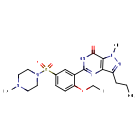
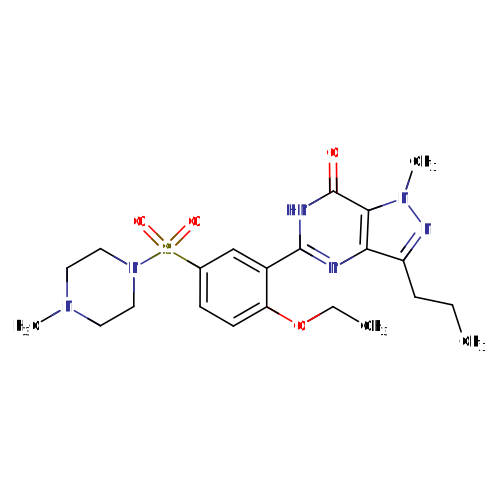
Structure for Sildenafil (DB00203)
- Weight
- Average: 474.576
Monoisotopic: 474.204924168 - Chemical Formula
- C22H30N6O4S
- Synonyms
- 1-((3-(4,7-Dihydro-1-methyl-7-oxo-3-propyl-1H-pyrazolo(4,3-d)pyrimidin-5-yl)-4-ethoxyphenyl)sulfonyl)-4-methylpiperazine
- Sildenafil
- Sildenafilo
- External IDs
- HIP-0908
- HIP0908

Pharmacology
- Indication
Sildenafil is a phosphodiesterase-5 (PDE5) inhibitor that is predominantly employed for two primary indications:
(1) the treatment of erectile dysfunction 5,8,12,13,16; and
(2) treatment of pulmonary hypertension, where: a) the US FDA specifically indicates sildenafil for the treatment of pulmonary arterial hypertension (PAH) (WHO Group I) in adults to improve exercise ability and delay clinical worsening 11. The delay in clinical worsening was demonstrated when sildenafil was added to background epoprostenol therapy 11. Studies establishing effectiveness were short-term (12 to 16 weeks), and included predominately patients with New York Heart Association (NYHA) Functional Class II-III symptoms and idiopathic etiology (71%) or associated with connective tissue disease (CTD) (25%) 11;
b) the Canadian product monograph specifically indicates sildenafil for the treatment of primary pulmonary arterial hypertension (PPH) or pulmonary hypertension secondary to connective tissue disease (CTD) in adult patients with WHO functional class II or III who have not responded to conventional therapy 14. In addition, improvement in exercise ability and delay in clinical worsening was demonstrated in adult patients who were already stabilized on background epoprostenol therapy 14; and
c) the EMA product information specifically indicates sildenafil for the treatment of adult patients with pulmonary arterial hypertension classified as WHO functional class II and III, to improve exercise capacity 15. Efficacy has been shown in primary pulmonary hypertension and pulmonary hypertension associated with connective tissue disease 15. The EMA label also indicates sildenafil for the treatment of pediatric patients aged 1 year to 17 years old with pulmonary arterial hypertension 15. Efficacy in terms of improvement of exercise capacity or pulmonary hemodynamics has been shown in primary pulmonary hypertension and pulmonary hypertension associated with congenital heart disease 15.
 Reduce drug development failure ratesBuild, train, & validate machine-learning modelswith evidence-based and structured datasets.Build, train, & validate predictive machine-learning models with structured datasets.
- Associated Conditions
Indication Type Indication Combined Product Details Approval Level Age Group Patient Characteristics Dose Form Used in combination to treat Erectile dysfunction Combination Product in combination with: Dapoxetine (DB04884) •••••••••••• •••••• Management of Erectile dysfunction •••••••••••• Management of Nyha functional class ii-iii pulmonary arterial hypertension •••••••••••• Used in combination to treat Premature ejaculation Combination Product in combination with: Dapoxetine (DB04884) •••••••••••• •••••• Treatment of Pulmonary arterial hypertension (pah) •••••••••••• •••••••••• ••••••••••• •••••• - Contraindications & Blackbox Warnings
 Prevent Adverse Drug Events TodayTap into our Clinical API for life-saving information on contraindications & blackbox warnings, population restrictions, harmful risks, & more.Avoid life-threatening adverse drug events with our Clinical API
- Pharmacodynamics
In vitro studies have shown that sildenafil is selective for phosphodiesterase-5 (PDE5) 11,12,13,14,15,16,8,9. Its effect is more potent on PDE5 than on other known phosphodiesterases 11,12,13,14,15,16,8,9. In particular, there is a 10-times selectivity over PDE6 which is involved in the phototransduction pathway in the retina 11,12,13,14,15,16,8,9. There is an 80-times selectivity over PDE1, and over 700-times over PDE 2, 3, 4, 7, 8, 9, 10 and 11 11,12,13,14,15,16,8,9. And finally, sildenafil has greater than 4,000-times selectivity for PDE5 over PDE3, the cAMP-specific phosphodiesterase isoform involved in the control of cardiac contractility 11,12,13,14,15,16,8,9.
In eight double-blind, placebo-controlled crossover studies of patients with either organic or psychogenic erectile dysfunction, sexual stimulation resulted in improved erections, as assessed by an objective measurement of hardness and duration of erections (via the use of RigiScan®), after sildenafil administration compared with placebo 11,12,13,14,15,16,8,9. Most studies assessed the efficacy of sildenafil approximately 60 minutes post-dose 11,12,13,14,15,16,8,9. The erectile response, as assessed by RigiScan®, generally increased with increasing sildenafil dose and plasma concentration 11,12,13,14,15,16,8,9. The time course of effect was examined in one study, showing an effect for up to 4 hours but the response was diminished compared to 2 hours 11,12,13,14,15,16,8,9.
Sildenafil causes mild and transient decreases in systemic blood pressure which, in the majority of cases, do not translate into clinical effects 11,12,13,14,15,16,8,9. After chronic dosing of 80 mg, three times a day to patients with systemic hypertension the mean change from baseline in systolic and diastolic blood pressure was a decrease of 9.4 mmHg and 9.1 mmHg respectively 11,12,13,14,15,16,8,9. After chronic dosing of 80 mg, three times a day to patients with pulmonary arterial hypertension lesser effects in blood pressure reduction were observed (a reduction in both systolic and diastolic pressure of 2 mmHg)11,12,13,14,15,16,8,9 . At the recommended dose of 20 mg three times a day no reductions in systolic or diastolic pressure were seen 11,12,13,14,15,16,8,9.
Single oral doses of sildenafil up to 100 mg in healthy volunteers produced no clinically relevant effects on ECG 11,12,13,14,15,16,8,9. After chronic dosing of 80 mg three times a day to patients with pulmonary arterial hypertension no clinically relevant effects on the ECG were reported either 11,12,13,14,15,16,8,9.
In a study of the hemodynamic effects of a single oral 100 mg dose of sildenafil in 14 patients with severe coronary artery disease (CAD) (> 70 % stenosis of at least one coronary artery), the mean resting systolic and diastolic blood pressures decreased by 7 % and 6 % respectively compared to baseline 11,12,13,14,15,16,8,9. Mean pulmonary systolic blood pressure decreased by 9% 11,12,13,14,15,16,8,9. Sildenafil showed no effect on cardiac output and did not impair blood flow through the stenosed coronary arteries 11,12,13,14,15,16,8,9.
Mild and transient differences in color discrimination (blue/green) were detected in some subjects using the Farnsworth-Munsell 100 hue test at 1 hour following a 100 mg dose, with no effects evident after 2 hours post-dose 11,12,13,14,15,16,8,9. The postulated mechanism for this change in color discrimination is related to inhibition of PDE6, which is involved in the phototransduction cascade of the retina 11,12,13,14,15,16,8,9. Sildenafil has no effect on visual acuity or contrast sensitivity. In a small size placebo-controlled study of patients with documented early age-related macular degeneration (n = 9), sildenafil (single dose, 100 mg) demonstrated no significant changes in visual tests conducted (which included visual acuity, Amsler grid, color discrimination simulated traffic light, and the Humphrey perimeter and photostress test) 11,12,13,14,15,16,8,9.
- Mechanism of action
Sildenafil is an oral therapy for erectile dysfunction 5,12,13,16,8. In the natural setting, i.e. with sexual stimulation, it restores impaired erectile function by increasing blood flow to the penis 5,12,13,16,8.
The physiological mechanism responsible for the erection of the penis involves the release of nitric oxide (NO) in the corpus cavernosum during sexual stimulation 5,12,13,16,8. Nitric oxide then activates the enzyme guanylate cyclase, which results in increased levels of cyclic guanosine monophosphate (cGMP), producing smooth muscle relaxation in the corpus cavernosum and allowing inflow of blood 5,12,13,16,8.
Sildenafil is a potent and selective inhibitor of cGMP specific phosphodiesterase type 5 (PDE5) in the corpus cavernosum, where PDE5 is responsible for degradation of cGMP 5,12,13,16,8. Sildenafil has a peripheral site of action on erections 5,12,13,16,8. Sildenafil has no direct relaxant effect on isolated human corpus cavernosum but potently enhances the relaxant effect of NO on this tissue 5,12,13,16,8. When the NO/cGMP pathway is activated, as occurs with sexual stimulation, inhibition of PDE5 by sildenafil results in increased corpus cavernosum levels of cGMP 5,12,13,16,8. Therefore sexual stimulation is required in order for sildenafil to produce its intended beneficial pharmacological effects 5,12,13,16,8.
Moreover, apart from the presence of PDE5 in the corpus cavernosum of the penis, PDE5 is also present in the pulmonary vasculature 4,11,14,15,9. Sildenafil, therefore, increases cGMP within pulmonary vascular smooth muscle cells resulting in relaxation 4,11,14,15,9. In patients with pulmonary arterial hypertension, this can lead to vasodilation of the pulmonary vascular bed and, to a lesser degree, vasodilatation in the systemic circulation 4,11,14,15,9.
Target Actions Organism AcGMP-specific 3',5'-cyclic phosphodiesterase inhibitorHumans NRetinal rod rhodopsin-sensitive cGMP 3',5'-cyclic phosphodiesterase subunit gamma inhibitorHumans NRetinal cone rhodopsin-sensitive cGMP 3',5'-cyclic phosphodiesterase subunit gamma inhibitorHumans UOrnithine decarboxylase downregulatorHumans UProgrammed cell death 1 ligand 1 downregulatorHumans - Absorption
Sildenafil is known to be quickly absorbed, with maximum plasma concentrations being observed within 30-120 minutes (with a median of 60 minutes) of oral administration in a fasting patient 11,12,13,14,15,16,8,9. Moreover, the mean absolute bioavailability observed for sildenafil is about 41% (from a range of 25-63%) 11,12,13,14,15,16,8,9. In particular, after oral three times a day dosing of sildenafil, the AUC and Cmax increase in proportion with dose over the recommended dosage range of 25-100 mg 11,12,13,14,15,16,8,9.
When used in pulmonary arterial hypertension patients, however, the oral bioavailability of sildenafil after a dosing regimen of 80 mg three times a day, was on average 43% greater than compared to the lower doses 11,12,13,14,15,16,8,9.
Finally, if sildenafil is administered orally with food, the rate of absorption is observed to be decreased with a mean delay in Tmax of about 60 minutes and a mean decrease in Cmax of approximately 29% 11,12,13,14,15,16,8,9. Regardless, the extent of absorption is not observed to be significantly affected as the recorded AUC decreased by only about 11 % 11,12,13,14,15,16,8,9.
- Volume of distribution
The mean steady-state volume of distribution documented for sildenafil is approximately 105 L - a value which suggests the medication undergoes distribution into the tissues 11,12,13,14,15,16,8,9.
- Protein binding
It is generally observed that sildenafil and its main circulating N-desmethyl metabolite are both estimated to be about 96% bound to plasma proteins 11,12,13,14,15,16,8,9. Nevertheless, it has been determined that protein binding for sildenafil is independent of total drug concentrations 11,12,13,14,15,16,8,9.
- Metabolism
The metabolism of sildenafil is facilitated primarily by the CYP3A4 hepatic microsomal isoenzymes and to a minor extent, via the CYP2C9 hepatic isoenzymes 6,11,12,13,14,15,16,8,9. The predominant circulating metabolite results from the N-demethylation of sildenafil 6,11,12,13,14,15,16,8,9. This particular resultant metabolite possesses a phosphodiesterase selectivity that is similar to the parent sildenafil molecule and a corresponding in vitro potency for PDE5 that is approximately 50% that of the parent drug 6,11,12,13,14,15,16,8,9. Moreover, plasma concentrations of the metabolite are about 40% of those recorded for sildenafil, a percentage that accounts for about 20% of sildenafil’s pharmacologic effects 6,11,12,13,14,15,16,8,9. This primary N-desmethyl metabolite of sildenafil also undergoes further metabolism, with a terminal half-life of about 4 hours 6,11,12,13,14,15,16,8,9.
In patients with pulmonary arterial hypertension, plasma concentrations of the primary N-desmethyl metabolite are about 72% those of the original parent sildenafil molecule after a regimen of 20 mg three times a day - which is consequently responsible for about a 36% contribution to sildenafil’s overall pharmacological effects 6,11,12,13,14,15,16,8,9.
Hover over products below to view reaction partners
- Route of elimination
After either oral or intravenous administration, sildenafil is excreted as metabolites predominantly in the feces (approximately 80% of the administered oral dose) and to a lesser extent in the urine (approximately 13% of the administered oral dose) 11,12,13,14,15,16,8,9.
- Half-life
The terminal phase half-life observed for sildenafil is approximately 3 to 5 hours 11,12,13,14,15,16,8,9.
- Clearance
The total body clearance documented for sildenafil is 41 L/h 11,12,13,14,15,16,8,9.
- Adverse Effects
 Improve decision support & research outcomesWith structured adverse effects data, including: blackbox warnings, adverse reactions, warning & precautions, & incidence rates. View sample adverse effects data in our new Data Library!Improve decision support & research outcomes with our structured adverse effects data.
- Toxicity
In single-dose volunteer studies of doses up to 800 mg, adverse reactions were similar to those seen at lower doses, but the incidence rates and severities were increased 11,12,13,14,15,16,8,9. Doses of 200 mg did not result in increased efficacy but the incidence of adverse reaction (headache, flushing, dizziness, dyspepsia, nasal congestion, altered vision) was increased 11,12,13,14,15,16,8,9.
Due to the lack of data on the effect of sildenafil indicated for the treatment of pulmonary arterial hypertension (PAH) in pregnant women, sildenafil is not recommended for women of childbearing potential unless also using appropriate contraceptive measures 11,14,15,9.
The safety and efficacy of sildenafil indicated for treating PAH in a woman during labor and delivery have not been studied 11,14,15,9. Caution should ultimately be exercised when sildenafil is administered to nursing women as it is not known if sildenafil or its metabolites are excreted in human breast milk 11,14,15,9.
The safety and efficacy of sildenafil for the treatment of PAH in children below 1 year of age has not been established as no data is available 15.
Clinical experience with the elderly population in the use of sildenafil for the treatment of PAH has been varied. Some reports suggest that there are no identified differences in responses between elderly and younger patients 11 while others have documented that clinical efficacy as measured by 6-minute walk distance could be less in elderly patients 9. In general, dose selection for an elderly patient should be cautious, reflecting the greater frequency of decreased hepatic, renal, or cardiac function, and of concomitant disease or other drug therapy 11.
Conversely, when sildenafil was used to treat erectile dysfunction in healthy elderly volunteers (65 years or over), a reduced clearance of sildenafil was observed 12,8. This reduction resulted in about 90% higher plasma concentrations of sildenafil and the active N-desmethyl metabolite compared to those seen in healthy younger volunteers (18-45 years) 12,8. Due to age-differences in plasma protein binding, the corresponding increase in free sildenafil plasma concentration was approximately 40% 12,8.
Sildenafil was not carcinogenic when administered to rats for 24 months at a dose resulting in total systemic drug exposure (AUCs) for unbound sildenafil and its major metabolite of 29- and 42- times, for male and female rats, respectively, the exposures observed in human males given the Maximum Recommended Human Dose (MRHD) of 100 mg 11,12,13,14,15,16,8,9. Sildenafil was not carcinogenic when administered to mice for 18-21 months at dosages up to the Maximum Tolerated Dose (MTD) of 10 mg/kg/day, approximately 0.6 times the MRHD on a mg/m2 basis 11,12,13,14,15,16,8,9.
Sildenafil was negative in in vitro bacterial and Chinese hamster ovary cell assays to detect mutagenicity, and in vitro human lymphocytes and in vivo mouse micronucleus assays to detect clastogenicity 11,12,13,14,15,16,8,9.
There was no impairment of fertility in rats given sildenafil up to 60 mg/kg/day for 36 days to females and 102 days to males, a dose producing an AUC value of more than 25 times the human male AUC 11,12,13,14,15,16,8,9.
- Pathways
- Not Available
- Pharmacogenomic Effects/ADRs
Interacting Gene/Enzyme Allele name Genotype(s) Defining Change(s) Type(s) Description Details Angiotensin-converting enzyme --- Not Available Alu insertions / Alu insertions … show all Effect Directly Studied Patients with this genotype have increased frequency of positive erectile response when using sildenafil to treat erectile dysfunction Details Guanine nucleotide-binding protein G(I)/G(S)/G(T) subunit beta-3 --- (T;T) T allele, homozygote Effect Directly Studied Patients with this genotype have increased frequency of positive erectile response when using sildenafil to treat erectile dysfunction Details
Interactions
- Drug Interactions
- This information should not be interpreted without the help of a healthcare provider. If you believe you are experiencing an interaction, contact a healthcare provider immediately. The absence of an interaction does not necessarily mean no interactions exist.
Drug Interaction Integrate drug-drug
interactions in your softwareAbaloparatide The risk or severity of hypotension can be increased when Sildenafil is combined with Abaloparatide. Abametapir The serum concentration of Sildenafil can be increased when it is combined with Abametapir. Abatacept The metabolism of Sildenafil can be increased when combined with Abatacept. Abciximab The risk or severity of hemorrhage can be increased when Abciximab is combined with Sildenafil. Abemaciclib The serum concentration of Abemaciclib can be increased when it is combined with Sildenafil. - Food Interactions
- Take with or without food. If taken with a high-fat meal the medicine may take a little longer to start working.
Products
 Drug product information from 10+ global regionsOur datasets provide approved product information including:dosage, form, labeller, route of administration, and marketing period.Access drug product information from over 10 global regions.
- Product Ingredients
Ingredient UNII CAS InChI Key Sildenafil citrate BW9B0ZE037 171599-83-0 DEIYFTQMQPDXOT-UHFFFAOYSA-N - Product Images
- Brand Name Prescription Products
Name Dosage Strength Route Labeller Marketing Start Marketing End Region Image Act Sildenafil Tablet 50 mg Oral Actavis Pharma Company 2012-11-08 2018-06-26 Canada 
Act Sildenafil Tablet 25 mg Oral Actavis Pharma Company 2012-11-08 2018-06-26 Canada Act Sildenafil Tablet 100 mg Oral Actavis Pharma Company 2012-11-08 2018-06-26 Canada Granpidam Tablet, film coated 20 mg Oral Accord Healthcare S.L.U. 2021-01-12 Not applicable EU 
Granpidam Tablet, film coated 20 mg Oral Accord Healthcare S.L.U. 2021-01-12 Not applicable EU - Generic Prescription Products
Name Dosage Strength Route Labeller Marketing Start Marketing End Region Image Accel-sildenafil Tablet 50 mg Oral Accel Pharma Inc 2019-08-15 Not applicable Canada Accel-sildenafil Tablet 25 mg Oral Accel Pharma Inc 2019-08-15 Not applicable Canada Accel-sildenafil Tablet 100 mg Oral Accel Pharma Inc 2019-08-15 Not applicable Canada Ag-sildenafil Tablet 50 mg Oral Angita Pharma Inc. 2018-12-21 2022-11-15 Canada Ag-sildenafil Tablet 25 mg Oral Angita Pharma Inc. 2018-12-21 2022-11-15 Canada - Mixture Products
Name Ingredients Dosage Route Labeller Marketing Start Marketing End Region Image DAPOKSEL 30 MG/50 MG FILM TABLET ,3 FILM TABLET Sildenafil citrate (50 mg) + Dapoxetine hydrochloride (30 mg) Tablet, film coated Oral NOBEL İLAÇ SAN. VE TİC. A.Ş. 2016-05-24 2017-11-14 Turkey 
DAPOKSEL 30 MG/50 MG FILM TABLET ,6 FILM TABLET Sildenafil citrate (50 mg) + Dapoxetine hydrochloride (30 mg) Tablet, film coated Oral NOBEL İLAÇ SAN. VE TİC. A.Ş. 2016-05-24 2017-11-14 Turkey DAPOXIL 30/50 MG FILM KAPLI TABLET, 3 FILM KAPLI TABLET Sildenafil citrate (50 mg) + Dapoxetine hydrochloride (30 mg) Tablet, coated Oral VİTALİS İLAÇ SAN. TİC. A.Ş. 2020-08-14 2021-02-15 Turkey DAPOXIL 30/50 MG FILM KAPLI TABLET, 6 FILM KAPLI TABLET Sildenafil citrate (50 mg) + Dapoxetine hydrochloride (30 mg) Tablet, coated Oral VİTALİS İLAÇ SAN. TİC. A.Ş. 2020-08-14 2021-02-15 Turkey DAPOXIL 30/50 MG FILM KAPLI TABLET,18 FILM KAPLI TABLET Sildenafil citrate (50 mg) + Dapoxetine hydrochloride (30 mg) Tablet, coated Oral VİTALİS İLAÇ SAN. TİC. A.Ş. 2020-08-14 2021-02-15 Turkey


Categories
- ATC Codes
- G01AE10 — Combinations of sulfonamides
- G01AE — Sulfonamides
- G01A — ANTIINFECTIVES AND ANTISEPTICS, EXCL. COMBINATIONS WITH CORTICOSTEROIDS
- G01 — GYNECOLOGICAL ANTIINFECTIVES AND ANTISEPTICS
- G — GENITO URINARY SYSTEM AND SEX HORMONES
- Drug Categories
- Agents Causing Muscle Toxicity
- Amides
- Cardiovascular Agents
- Cytochrome P-450 CYP2C19 Inhibitors
- Cytochrome P-450 CYP2C19 Inhibitors (weak)
- Cytochrome P-450 CYP2C19 Substrates
- Cytochrome P-450 CYP2C9 Inhibitors
- Cytochrome P-450 CYP2C9 Inhibitors (weak)
- Cytochrome P-450 CYP2C9 Substrates
- Cytochrome P-450 CYP2D6 Substrates
- Cytochrome P-450 CYP2E1 Inhibitors
- Cytochrome P-450 CYP2E1 Inhibitors (strength unknown)
- Cytochrome P-450 CYP2E1 Substrates
- Cytochrome P-450 CYP3A Substrates
- Cytochrome P-450 CYP3A4 Substrates
- Cytochrome P-450 CYP3A5 Substrates
- Cytochrome P-450 CYP3A7 Substrates
- Cytochrome P-450 Enzyme Inhibitors
- Cytochrome P-450 Substrates
- Drugs Used in Erectile Dysfunction
- Enzyme Inhibitors
- Genitourinary Agents
- Heterocyclic Compounds, Fused-Ring
- OATP1B1/SLCO1B1 Inhibitors
- P-glycoprotein inhibitors
- P-glycoprotein substrates
- Phosphodiesterase 5 Inhibitors
- Phosphodiesterase Inhibitors
- Piperazines
- Purines
- Sulfonamides
- Sulfones
- Sulfur Compounds
- Urological Agents
- Urologicals
- Vasodilating Agents
- Chemical TaxonomyProvided by Classyfire
- Description
- This compound belongs to the class of organic compounds known as benzenesulfonamides. These are organic compounds containing a sulfonamide group that is S-linked to a benzene ring.
- Kingdom
- Organic compounds
- Super Class
- Benzenoids
- Class
- Benzene and substituted derivatives
- Sub Class
- Benzenesulfonamides
- Direct Parent
- Benzenesulfonamides
- Alternative Parents
- Pyrazolopyrimidines / Benzenesulfonyl compounds / Phenoxy compounds / Phenol ethers / Pyrimidones / Alkyl aryl ethers / N-methylpiperazines / Organosulfonamides / Sulfonyls / Pyrazoles show 7 more
- Substituents
- 1,4-diazinane / Alkyl aryl ether / Amine / Aromatic heteropolycyclic compound / Azacycle / Azole / Benzenesulfonamide / Benzenesulfonyl group / Ether / Heteroaromatic compound show 25 more
- Molecular Framework
- Aromatic heteropolycyclic compounds
- External Descriptors
- sulfonamide, piperazines, pyrazolopyrimidine (CHEBI:9139)
- Affected organisms
- Humans and other mammals
Chemical Identifiers
- UNII
- 3M7OB98Y7H
- CAS number
- 139755-83-2
- InChI Key
- BNRNXUUZRGQAQC-UHFFFAOYSA-N
- InChI
- InChI=1S/C22H30N6O4S/c1-5-7-17-19-20(27(4)25-17)22(29)24-21(23-19)16-14-15(8-9-18(16)32-6-2)33(30,31)28-12-10-26(3)11-13-28/h8-9,14H,5-7,10-13H2,1-4H3,(H,23,24,29)
- IUPAC Name
- 5-{2-ethoxy-5-[(4-methylpiperazin-1-yl)sulfonyl]phenyl}-1-methyl-3-propyl-1H,4H,7H-pyrazolo[4,3-d]pyrimidin-7-one
- SMILES
- CCCC1=NN(C)C2=C1N=C(NC2=O)C1=CC(=CC=C1OCC)S(=O)(=O)N1CCN(C)CC1
References
- Synthesis Reference
Peter James Dunn, Albert Shaw Wood, "Process for preparing sildenafil." U.S. Patent US5955611, issued December, 1994.
US5955611- General References
- Boolell M, Allen MJ, Ballard SA, Gepi-Attee S, Muirhead GJ, Naylor AM, Osterloh IH, Gingell C: Sildenafil: an orally active type 5 cyclic GMP-specific phosphodiesterase inhibitor for the treatment of penile erectile dysfunction. Int J Impot Res. 1996 Jun;8(2):47-52. [Article]
- Cheitlin MD, Hutter AM Jr, Brindis RG, Ganz P, Kaul S, Russell RO Jr, Zusman RM: ACC/AHA expert consensus document. Use of sildenafil (Viagra) in patients with cardiovascular disease. American College of Cardiology/American Heart Association. J Am Coll Cardiol. 1999 Jan;33(1):273-82. [Article]
- Fries R, Shariat K, von Wilmowsky H, Bohm M: Sildenafil in the treatment of Raynaud's phenomenon resistant to vasodilatory therapy. Circulation. 2005 Nov 8;112(19):2980-5. [Article]
- Unegbu C, Noje C, Coulson JD, Segal JB, Romer L: Pulmonary Hypertension Therapy and a Systematic Review of Efficacy and Safety of PDE-5 Inhibitors. Pediatrics. 2017 Mar;139(3). pii: peds.2016-1450. doi: 10.1542/peds.2016-1450. [Article]
- Gong B, Ma M, Xie W, Yang X, Huang Y, Sun T, Luo Y, Huang J: Direct comparison of tadalafil with sildenafil for the treatment of erectile dysfunction: a systematic review and meta-analysis. Int Urol Nephrol. 2017 Oct;49(10):1731-1740. doi: 10.1007/s11255-017-1644-5. Epub 2017 Jul 24. [Article]
- Nichols DJ, Muirhead GJ, Harness JA: Pharmacokinetics of sildenafil after single oral doses in healthy male subjects: absolute bioavailability, food effects and dose proportionality. Br J Clin Pharmacol. 2002;53 Suppl 1:5S-12S. [Article]
- Goldstein I, Burnett AL, Rosen RC, Park PW, Stecher VJ: The Serendipitous Story of Sildenafil: An Unexpected Oral Therapy for Erectile Dysfunction. Sex Med Rev. 2019 Jan;7(1):115-128. doi: 10.1016/j.sxmr.2018.06.005. Epub 2018 Oct 6. [Article]
- Electronic Medicines Compendium: Sildenafil 25mg, 50mg, 100mg film-coated tablets Monograph [Link]
- Electronic Medicines Compendium: Revatio (sildenafil citrate) 20 mg film-coated tablets Monograph [Link]
- Forbes: With Viagra Now Available Over-The-Counter In The U.K., Will The U.S. Follow Suit? [Link]
- Revatio (sildenafil) FDA Label [File]
- Viagra (sildenafil citrate) FDA Label [File]
- Viagra (sildenafil citrate) Tablets 25 mg, 50 mg, and 100 mg Canadian Product Monograph [File]
- Revatio (sildenafil citrate) Canadian Product Monograph [File]
- Revatio (sildenafil citrate) EMA Label [File]
- Viagra (sildenafil citrate) EMA Label [File]
- External Links
- Human Metabolome Database
- HMDB0005039
- KEGG Drug
- D08514
- KEGG Compound
- C07259
- PubChem Compound
- 5212
- PubChem Substance
- 46508371
- ChemSpider
- 5023
- BindingDB
- 50238854
- 136411
- ChEBI
- 9139
- ChEMBL
- CHEMBL192
- ZINC
- ZINC000019796168
- Therapeutic Targets Database
- DAP000614
- PharmGKB
- PA451346
- PDBe Ligand
- VIA
- RxList
- RxList Drug Page
- Drugs.com
- Drugs.com Drug Page
- PDRhealth
- PDRhealth Drug Page
- Wikipedia
- Sildenafil
- PDB Entries
- 1tbf / 1udt / 1xos / 2h42 / 3jwq
- FDA label
- Download (80.5 KB)
- MSDS
- Download (37.1 KB)
Clinical Trials
- Clinical Trials
Phase Status Purpose Conditions Count 4 Completed Not Available Sexual impotency 1 4 Completed Basic Science Emphysema 1 4 Completed Basic Science Syndrome, Metabolic 1 4 Completed Diagnostic Left Ventricular Dysfunction / Pulmonary Arterial Hypertension (PAH) 1 4 Completed Educational/Counseling/Training Blindness 1
Pharmacoeconomics
- Manufacturers
- Pfizer inc
- Pfizer ireland pharmaceuticals
- Packagers
- A-S Medication Solutions LLC
- Bryant Ranch Prepack
- Cardinal Health
- Direct Dispensing Inc.
- Diversified Healthcare Services Inc.
- Gallipot
- MSN Laboratories Ltd.
- Murfreesboro Pharmaceutical Nursing Supply
- Nucare Pharmaceuticals Inc.
- PD-Rx Pharmaceuticals Inc.
- Pfizer Inc.
- Physicians Total Care Inc.
- Preferred Pharmaceuticals Inc.
- Prepackage Specialists
- Prepak Systems Inc.
- Rebel Distributors Corp.
- Redpharm Drug
- Southwood Pharmaceuticals
- Stat Rx Usa
- US Pharmaceutical Group
- Dosage Forms
Form Route Strength Tablet, chewable Oral 25 MG Tablet, film coated Oral 140.5 MG Tablet Oral 25 mg Tablet Oral 50.000 mg Tablet Oral 140.48 mg Suspension Oral 25 MG/ML Injection, suspension Tablet, chewable Oral 5000000 mg Tablet, film coated Oral 140480 Mg Tablet, film coated Oral 70240 Mg Tablet, film coated Oral Tablet, film coated Oral Tablet, coated Oral Tablet, delayed release Oral 35.112 mg Capsule Oral 50.00 mg Tablet, film coated Oral 70.225 mg Film, soluble Oral 70241 Mg Tablet Oral 100 mg Tablet Oral 50 mg Capsule, liquid filled Oral 25 mg Capsule, liquid filled Oral 50 mg Tablet, soluble Oral 50 mg Tablet Oral 70.240 mg Tablet, film coated Oral 20 MG Solution Intravenous 10 mg Tablet Oral 100.0 mg Tablet Oral 25.0 mg Tablet Oral 50.0 mg Solution Oral 0.01838 g Tablet Oral 140.450 mg Tablet Oral 70.225 mg Suspension Oral 10 mg/1mL Solution Oral 1.838 g Film Buccal 70.240 mg Tablet Oral 140.480 mg Tablet, film coated Oral 70.24 mg Tablet Oral 50.00 mg Gel Oral 28.100 mg Tablet Oral 140.400 mg Tablet Oral 100.000 mg Film, soluble Oral 100 mg Film, soluble Oral 25 MG Film, soluble Oral 75 MG Tablet Oral 28.090 mg Injection, solution Intravenous 0.8 MG/ML Injection, solution Intravenous 0.8 mg/1mL Powder, for suspension Oral 10 MG/ML Solution Intravenous 0.8 mg / mL Syrup Tablet Oral 20 mg Tablet, coated Oral 20 mg Tablet, film coated Oral 20.0 mg/unit Tablet Oral Suspension Oral 25.000 mg Film, soluble Oral 70.23 MG Tablet, film coated Oral 100.0 mg Tablet, film coated Oral 50.0 mg Capsule Oral 25 mg Capsule Oral 50 mg Tablet, film coated Oral 25 mg For suspension Oral 10 mg/1mL Injection, solution Intravenous 10 mg/12.5mL Tablet Oral 100 mg/1 Tablet Oral 20 mg/1 Tablet Oral 25 mg/1 Tablet Oral 50 mg/1 Tablet, film coated Oral 20 mg/1 Tablet, chewable Buccal 50 mg Tablet, chewable Oral 50 mg Tablet, coated Oral 5000000 mg Tablet, coated Oral 70.24 mg Tablet, coated Oral 50 mg Tablet, chewable Oral 100 MG Powder, for suspension Oral 10 mg/1mL Tablet, chewable Oral Tablet, coated Oral 2500000 mg Tablet, film coated Oral 100 mg Tablet, film coated Oral 50 mg Film Oral 50 mg Film, soluble Oral 50 mg Tablet, film coated Oral 100 mg/1 Tablet, film coated Oral 25 mg/1 Tablet, film coated Oral 50 mg/1 Tablet, orally disintegrating Oral 50 mg Tablet, coated Oral 100 mg Tablet, coated Oral 25 mg Film, soluble Oral Tablet, orally disintegrating Oral 100 mg Tablet, orally disintegrating Oral 25 mg Tablet Oral 70.241 mg Tablet, film coated Oral 140.48 MG Film Buccal 70.230 mg - Prices
Unit description Cost Unit Sildenafil citrate powder 24.38USD g Viagra 50 mg tablet 19.45USD tablet Viagra 100 mg tablet 19.45USD tablet Viagra 25 mg tablet 19.45USD tablet Revatio 20 mg tablet 17.5USD tablet Revatio 10 mg/12.5 ml vial 9.33USD ml DrugBank does not sell nor buy drugs. Pricing information is supplied for informational purposes only.- Patents
Patent Number Pediatric Extension Approved Expires (estimated) Region US5250534 No 1993-10-05 2012-03-27 US 
CA2324324 No 2005-12-20 2020-10-26 Canada CA2044748 No 1998-02-03 2011-06-17 Canada US6469012 Yes 2002-10-22 2020-04-22 US US11337979 No 2018-12-24 2038-12-24 US US11464778 No 2018-12-24 2038-12-24 US US11759468 No 2018-12-24 2038-12-24 US
Properties
- State
- Solid
- Experimental Properties
Property Value Source melting point (°C) 189-190 °C Not Available water solubility 3.5 mg/mL Not Available logP 1.9 Not Available - Predicted Properties
Property Value Source Water Solubility 0.46 mg/mL ALOGPS logP 1.8 ALOGPS logP 1.87 Chemaxon logS -3 ALOGPS pKa (Strongest Acidic) 11.14 Chemaxon pKa (Strongest Basic) 5.99 Chemaxon Physiological Charge 0 Chemaxon Hydrogen Acceptor Count 8 Chemaxon Hydrogen Donor Count 1 Chemaxon Polar Surface Area 109.13 Å2 Chemaxon Rotatable Bond Count 6 Chemaxon Refractivity 139.44 m3·mol-1 Chemaxon Polarizability 51.18 Å3 Chemaxon Number of Rings 4 Chemaxon Bioavailability 1 Chemaxon Rule of Five Yes Chemaxon Ghose Filter No Chemaxon Veber's Rule No Chemaxon MDDR-like Rule Yes Chemaxon - Predicted ADMET Features
Property Value Probability Human Intestinal Absorption + 1.0 Blood Brain Barrier + 0.6461 Caco-2 permeable + 0.7078 P-glycoprotein substrate Substrate 0.7753 P-glycoprotein inhibitor I Inhibitor 0.672 P-glycoprotein inhibitor II Inhibitor 0.8877 Renal organic cation transporter Non-inhibitor 0.648 CYP450 2C9 substrate Non-substrate 0.6553 CYP450 2D6 substrate Substrate 0.8918 CYP450 3A4 substrate Substrate 0.7254 CYP450 1A2 substrate Non-inhibitor 0.823 CYP450 2C9 inhibitor Inhibitor 0.6864 CYP450 2D6 inhibitor Non-inhibitor 0.8394 CYP450 2C19 inhibitor Non-inhibitor 0.8222 CYP450 3A4 inhibitor Inhibitor 0.849 CYP450 inhibitory promiscuity High CYP Inhibitory Promiscuity 0.5839 Ames test Non AMES toxic 0.5683 Carcinogenicity Non-carcinogens 0.6658 Biodegradation Not ready biodegradable 0.7641 Rat acute toxicity 2.6730 LD50, mol/kg Not applicable hERG inhibition (predictor I) Weak inhibitor 0.8664 hERG inhibition (predictor II) Inhibitor 0.7602
Spectra
- Mass Spec (NIST)
- Not Available
- Spectra
- Chromatographic Properties
Collision Cross Sections (CCS)
Adduct CCS Value (Å2) Source type Source [M-H]- 233.2005827 predictedDarkChem Lite v0.1.0 [M-H]- 237.5357827 predictedDarkChem Lite v0.1.0 [M-H]- 208.75966 predictedDeepCCS 1.0 (2019) [M+H]+ 233.9926827 predictedDarkChem Lite v0.1.0 [M+H]+ 238.7927827 predictedDarkChem Lite v0.1.0 [M+H]+ 211.15523 predictedDeepCCS 1.0 (2019) [M+Na]+ 232.9520827 predictedDarkChem Lite v0.1.0 [M+Na]+ 238.0477827 predictedDarkChem Lite v0.1.0 [M+Na]+ 217.06773 predictedDeepCCS 1.0 (2019)
Targets

- Kind
- Protein
- Organism
- Humans
- Pharmacological action
- Yes
- Actions
- Inhibitor
- General Function
- Metal ion binding
- Specific Function
- Plays a role in signal transduction by regulating the intracellular concentration of cyclic nucleotides. This phosphodiesterase catalyzes the specific hydrolysis of cGMP to 5'-GMP (PubMed:9714779, ...
- Gene Name
- PDE5A
- Uniprot ID
- O76074
- Uniprot Name
- cGMP-specific 3',5'-cyclic phosphodiesterase
- Molecular Weight
- 99984.14 Da
References
- Carson CC: Long-term use of sildenafil. Expert Opin Pharmacother. 2003 Mar;4(3):397-405. [Article]
- Chen X, Ji ZL, Chen YZ: TTD: Therapeutic Target Database. Nucleic Acids Res. 2002 Jan 1;30(1):412-5. [Article]
- Corbin JD, Francis SH, Webb DJ: Phosphodiesterase type 5 as a pharmacologic target in erectile dysfunction. Urology. 2002 Sep;60(2 Suppl 2):4-11. [Article]
- Kruuse C, Thomsen LL, Birk S, Olesen J: Migraine can be induced by sildenafil without changes in middle cerebral artery diameter. Brain. 2003 Jan;126(Pt 1):241-7. [Article]
- Rybalkin SD, Rybalkina IG, Shimizu-Albergine M, Tang XB, Beavo JA: PDE5 is converted to an activated state upon cGMP binding to the GAF A domain. EMBO J. 2003 Feb 3;22(3):469-78. [Article]
- Wang H, Liu Y, Huai Q, Cai J, Zoraghi R, Francis SH, Corbin JD, Robinson H, Xin Z, Lin G, Ke H: Multiple conformations of phosphodiesterase-5: implications for enzyme function and drug development. J Biol Chem. 2006 Jul 28;281(30):21469-79. Epub 2006 May 30. [Article]
- Wang H, Ye M, Robinson H, Francis SH, Ke H: Conformational variations of both phosphodiesterase-5 and inhibitors provide the structural basis for the physiological effects of vardenafil and sildenafil. Mol Pharmacol. 2008 Jan;73(1):104-10. Epub 2007 Oct 24. [Article]
- Wang J, Re J, Wang Z: [Mode of action of sildenafil]. Zhongguo Yi Xue Ke Xue Yuan Xue Bao. 1999 Dec;21(6):493-6. [Article]
- Zoraghi R, Francis SH, Corbin JD: Critical amino acids in phosphodiesterase-5 catalytic site that provide for high-affinity interaction with cyclic guanosine monophosphate and inhibitors. Biochemistry. 2007 Nov 27;46(47):13554-63. Epub 2007 Nov 3. [Article]
- Kind
- Protein
- Organism
- Humans
- Pharmacological action
- No
- Actions
- Inhibitor
- General Function
- Enzyme inhibitor activity
- Specific Function
- Participates in processes of transmission and amplification of the visual signal. cGMP-PDEs are the effector molecules in G-protein-mediated phototransduction in vertebrate rods and cones.
- Gene Name
- PDE6G
- Uniprot ID
- P18545
- Uniprot Name
- Retinal rod rhodopsin-sensitive cGMP 3',5'-cyclic phosphodiesterase subunit gamma
- Molecular Weight
- 9643.09 Da
References
- Uckert S, Hedlund P, Andersson KE, Truss MC, Jonas U, Stief CG: Update on phosphodiesterase (PDE) isoenzymes as pharmacologic targets in urology: present and future. Eur Urol. 2006 Dec;50(6):1194-207; discussion 1207. Epub 2006 Jun 6. [Article]
- Kind
- Protein
- Organism
- Humans
- Pharmacological action
- No
- Actions
- Inhibitor
- General Function
- Enzyme inhibitor activity
- Specific Function
- Participates in processes of transmission and amplification of the visual signal. cGMP-PDEs are the effector molecules in G-protein-mediated phototransduction in vertebrate rods and cones.
- Gene Name
- PDE6H
- Uniprot ID
- Q13956
- Uniprot Name
- Retinal cone rhodopsin-sensitive cGMP 3',5'-cyclic phosphodiesterase subunit gamma
- Molecular Weight
- 9074.36 Da
References
- Uckert S, Hedlund P, Andersson KE, Truss MC, Jonas U, Stief CG: Update on phosphodiesterase (PDE) isoenzymes as pharmacologic targets in urology: present and future. Eur Urol. 2006 Dec;50(6):1194-207; discussion 1207. Epub 2006 Jun 6. [Article]
- Kind
- Protein
- Organism
- Humans
- Pharmacological action
- Unknown
- Actions
- Downregulator
- General Function
- Protein homodimerization activity
- Specific Function
- Key enzyme of polyamine biosynthesis that converts ornithine into putrescine, which is the precursor for the polyamines, spermidine and spermine.
- Gene Name
- ODC1
- Uniprot ID
- P11926
- Uniprot Name
- Ornithine decarboxylase
- Molecular Weight
- 51147.73 Da
References
- Booth L, Roberts JL, Poklepovic A, Dent P: [pemetrexed + sildenafil], via autophagy-dependent HDAC downregulation, enhances the immunotherapy response of NSCLC cells. Cancer Biol Ther. 2017 Sep 2;18(9):705-714. doi: 10.1080/15384047.2017.1362511. [Article]
- Kind
- Protein
- Organism
- Humans
- Pharmacological action
- Unknown
- Actions
- Downregulator
- General Function
- Not Available
- Specific Function
- Involved in the costimulatory signal, essential for T-cell proliferation and production of IL10 and IFNG, in an IL2-dependent and a PDCD1-independent manner. Interaction with PDCD1 inhibits T-cell ...
- Gene Name
- CD274
- Uniprot ID
- Q9NZQ7
- Uniprot Name
- Programmed cell death 1 ligand 1
- Molecular Weight
- 33275.095 Da
References
- Booth L, Roberts JL, Poklepovic A, Dent P: [pemetrexed + sildenafil], via autophagy-dependent HDAC downregulation, enhances the immunotherapy response of NSCLC cells. Cancer Biol Ther. 2017 Sep 2;18(9):705-714. doi: 10.1080/15384047.2017.1362511. [Article]
Enzymes
- Kind
- Protein
- Organism
- Humans
- Pharmacological action
- Unknown
- Actions
- Substrate
- General Function
- Vitamin d3 25-hydroxylase activity
- Specific Function
- Cytochromes P450 are a group of heme-thiolate monooxygenases. In liver microsomes, this enzyme is involved in an NADPH-dependent electron transport pathway. It performs a variety of oxidation react...
- Gene Name
- CYP3A4
- Uniprot ID
- P08684
- Uniprot Name
- Cytochrome P450 3A4
- Molecular Weight
- 57342.67 Da
References
- Ku HY, Ahn HJ, Seo KA, Kim H, Oh M, Bae SK, Shin JG, Shon JH, Liu KH: The contributions of cytochromes P450 3A4 and 3A5 to the metabolism of the phosphodiesterase type 5 inhibitors sildenafil, udenafil, and vardenafil. Drug Metab Dispos. 2008 Jun;36(6):986-90. doi: 10.1124/dmd.107.020099. Epub 2008 Feb 28. [Article]
- Zhou SF, Zhou ZW, Yang LP, Cai JP: Substrates, inducers, inhibitors and structure-activity relationships of human Cytochrome P450 2C9 and implications in drug development. Curr Med Chem. 2009;16(27):3480-675. Epub 2009 Sep 1. [Article]
- Hyland R, Roe EG, Jones BC, Smith DA: Identification of the cytochrome P450 enzymes involved in the N-demethylation of sildenafil. Br J Clin Pharmacol. 2001 Mar;51(3):239-48. doi: 10.1046/j.1365-2125.2001.00318.x. [Article]
- Rendic S: Summary of information on human CYP enzymes: human P450 metabolism data. Drug Metab Rev. 2002 Feb-May;34(1-2):83-448. [Article]
- Flockhart Table of Drug Interactions [Link]
- Kind
- Protein
- Organism
- Humans
- Pharmacological action
- Unknown
- Actions
- Substrate
- General Function
- Oxygen binding
- Specific Function
- Cytochromes P450 are a group of heme-thiolate monooxygenases. In liver microsomes, this enzyme is involved in an NADPH-dependent electron transport pathway. It oxidizes a variety of structurally un...
- Gene Name
- CYP3A5
- Uniprot ID
- P20815
- Uniprot Name
- Cytochrome P450 3A5
- Molecular Weight
- 57108.065 Da
References
- Ku HY, Ahn HJ, Seo KA, Kim H, Oh M, Bae SK, Shin JG, Shon JH, Liu KH: The contributions of cytochromes P450 3A4 and 3A5 to the metabolism of the phosphodiesterase type 5 inhibitors sildenafil, udenafil, and vardenafil. Drug Metab Dispos. 2008 Jun;36(6):986-90. doi: 10.1124/dmd.107.020099. Epub 2008 Feb 28. [Article]
- Flockhart Table of Drug Interactions [Link]
- Kind
- Protein
- Organism
- Humans
- Pharmacological action
- Unknown
- Actions
- Substrate
- General Function
- Oxygen binding
- Specific Function
- Cytochromes P450 are a group of heme-thiolate monooxygenases. In liver microsomes, this enzyme is involved in an NADPH-dependent electron transport pathway. It oxidizes a variety of structurally un...
- Gene Name
- CYP3A7
- Uniprot ID
- P24462
- Uniprot Name
- Cytochrome P450 3A7
- Molecular Weight
- 57525.03 Da
References
- Flockhart Table of Drug Interactions [Link]
- Kind
- Protein
- Organism
- Humans
- Pharmacological action
- Unknown
- Actions
- SubstrateInhibitor
- General Function
- Steroid hydroxylase activity
- Specific Function
- Cytochromes P450 are a group of heme-thiolate monooxygenases. In liver microsomes, this enzyme is involved in an NADPH-dependent electron transport pathway. It oxidizes a variety of structurally un...
- Gene Name
- CYP2C9
- Uniprot ID
- P11712
- Uniprot Name
- Cytochrome P450 2C9
- Molecular Weight
- 55627.365 Da
References
- Zhou SF, Zhou ZW, Yang LP, Cai JP: Substrates, inducers, inhibitors and structure-activity relationships of human Cytochrome P450 2C9 and implications in drug development. Curr Med Chem. 2009;16(27):3480-675. Epub 2009 Sep 1. [Article]
- Hyland R, Roe EG, Jones BC, Smith DA: Identification of the cytochrome P450 enzymes involved in the N-demethylation of sildenafil. Br J Clin Pharmacol. 2001 Mar;51(3):239-48. doi: 10.1046/j.1365-2125.2001.00318.x. [Article]
- Sildenafil FDA label [File]
- Kind
- Protein
- Organism
- Humans
- Pharmacological action
- Unknown
- Actions
- SubstrateInhibitor
- General Function
- Steroid hydroxylase activity
- Specific Function
- Responsible for the metabolism of a number of therapeutic agents such as the anticonvulsant drug S-mephenytoin, omeprazole, proguanil, certain barbiturates, diazepam, propranolol, citalopram and im...
- Gene Name
- CYP2C19
- Uniprot ID
- P33261
- Uniprot Name
- Cytochrome P450 2C19
- Molecular Weight
- 55930.545 Da
References
- Warrington JS, Shader RI, von Moltke LL, Greenblatt DJ: In vitro biotransformation of sildenafil (Viagra): identification of human cytochromes and potential drug interactions. Drug Metab Dispos. 2000 Apr;28(4):392-7. [Article]
- Hyland R, Roe EG, Jones BC, Smith DA: Identification of the cytochrome P450 enzymes involved in the N-demethylation of sildenafil. Br J Clin Pharmacol. 2001 Mar;51(3):239-48. doi: 10.1046/j.1365-2125.2001.00318.x. [Article]
- Kind
- Protein
- Organism
- Humans
- Pharmacological action
- Unknown
- Actions
- Substrate
- General Function
- Steroid hydroxylase activity
- Specific Function
- Responsible for the metabolism of many drugs and environmental chemicals that it oxidizes. It is involved in the metabolism of drugs such as antiarrhythmics, adrenoceptor antagonists, and tricyclic...
- Gene Name
- CYP2D6
- Uniprot ID
- P10635
- Uniprot Name
- Cytochrome P450 2D6
- Molecular Weight
- 55768.94 Da
References
- Zhou SF, Zhou ZW, Yang LP, Cai JP: Substrates, inducers, inhibitors and structure-activity relationships of human Cytochrome P450 2C9 and implications in drug development. Curr Med Chem. 2009;16(27):3480-675. Epub 2009 Sep 1. [Article]
- Warrington JS, Shader RI, von Moltke LL, Greenblatt DJ: In vitro biotransformation of sildenafil (Viagra): identification of human cytochromes and potential drug interactions. Drug Metab Dispos. 2000 Apr;28(4):392-7. [Article]
- Kind
- Protein
- Organism
- Humans
- Pharmacological action
- Unknown
- Actions
- SubstrateInhibitor
- General Function
- Steroid hydroxylase activity
- Specific Function
- Metabolizes several precarcinogens, drugs, and solvents to reactive metabolites. Inactivates a number of drugs and xenobiotics and also bioactivates many xenobiotic substrates to their hepatotoxic ...
- Gene Name
- CYP2E1
- Uniprot ID
- P05181
- Uniprot Name
- Cytochrome P450 2E1
- Molecular Weight
- 56848.42 Da
References
- Sheweita SA, Wally M, Hassan M: Erectile Dysfunction Drugs Changed the Protein Expressions and Activities of Drug-Metabolising Enzymes in the Liver of Male Rats. Oxid Med Cell Longev. 2016;2016:4970906. doi: 10.1155/2016/4970906. Epub 2016 Oct 9. [Article]
- List of drugs that may have potential CYP2E1 interactions [File]
Transporters
- Kind
- Protein
- Organism
- Humans
- Pharmacological action
- Unknown
- Actions
- Inhibitor
- General Function
- Atpase activity, coupled to transmembrane movement of substances
- Specific Function
- May be an organic anion pump relevant to cellular detoxification.
- Gene Name
- ABCC4
- Uniprot ID
- O15439
- Uniprot Name
- Multidrug resistance-associated protein 4
- Molecular Weight
- 149525.33 Da
References
- Chen ZS, Lee K, Walther S, Raftogianis RB, Kuwano M, Zeng H, Kruh GD: Analysis of methotrexate and folate transport by multidrug resistance protein 4 (ABCC4): MRP4 is a component of the methotrexate efflux system. Cancer Res. 2002 Jun 1;62(11):3144-50. [Article]
- Reid G, Wielinga P, Zelcer N, De Haas M, Van Deemter L, Wijnholds J, Balzarini J, Borst P: Characterization of the transport of nucleoside analog drugs by the human multidrug resistance proteins MRP4 and MRP5. Mol Pharmacol. 2003 May;63(5):1094-103. [Article]
- Kind
- Protein
- Organism
- Humans
- Pharmacological action
- Unknown
- Actions
- Inhibitor
- General Function
- Organic anion transmembrane transporter activity
- Specific Function
- Acts as a multispecific organic anion pump which can transport nucleotide analogs.
- Gene Name
- ABCC5
- Uniprot ID
- O15440
- Uniprot Name
- Multidrug resistance-associated protein 5
- Molecular Weight
- 160658.8 Da
References
- Jedlitschky G, Burchell B, Keppler D: The multidrug resistance protein 5 functions as an ATP-dependent export pump for cyclic nucleotides. J Biol Chem. 2000 Sep 29;275(39):30069-74. [Article]
- Reid G, Wielinga P, Zelcer N, De Haas M, Van Deemter L, Wijnholds J, Balzarini J, Borst P: Characterization of the transport of nucleoside analog drugs by the human multidrug resistance proteins MRP4 and MRP5. Mol Pharmacol. 2003 May;63(5):1094-103. [Article]
- Kind
- Protein
- Organism
- Humans
- Pharmacological action
- Unknown
- Actions
- Inhibitor
- General Function
- Atpase activity, coupled to transmembrane movement of substances
- Specific Function
- ATP-dependent transporter probably involved in cellular detoxification through lipophilic anion extrusion.
- Gene Name
- ABCC10
- Uniprot ID
- Q5T3U5
- Uniprot Name
- Multidrug resistance-associated protein 7
- Molecular Weight
- 161627.375 Da
References
- Chen ZS, Hopper-Borge E, Belinsky MG, Shchaveleva I, Kotova E, Kruh GD: Characterization of the transport properties of human multidrug resistance protein 7 (MRP7, ABCC10). Mol Pharmacol. 2003 Feb;63(2):351-8. [Article]
- Kind
- Protein
- Organism
- Humans
- Pharmacological action
- Unknown
- Actions
- Inhibitor
- General Function
- Sodium-independent organic anion transmembrane transporter activity
- Specific Function
- Mediates the Na(+)-independent uptake of organic anions such as pravastatin, taurocholate, methotrexate, dehydroepiandrosterone sulfate, 17-beta-glucuronosyl estradiol, estrone sulfate, prostagland...
- Gene Name
- SLCO1B1
- Uniprot ID
- Q9Y6L6
- Uniprot Name
- Solute carrier organic anion transporter family member 1B1
- Molecular Weight
- 76447.99 Da
References
- Kalliokoski A, Niemi M: Impact of OATP transporters on pharmacokinetics. Br J Pharmacol. 2009 Oct;158(3):693-705. doi: 10.1111/j.1476-5381.2009.00430.x. Epub 2009 Sep 25. [Article]
- Kind
- Protein
- Organism
- Humans
- Pharmacological action
- Unknown
- Actions
- SubstrateInhibitor
- General Function
- Xenobiotic-transporting atpase activity
- Specific Function
- Energy-dependent efflux pump responsible for decreased drug accumulation in multidrug-resistant cells.
- Gene Name
- ABCB1
- Uniprot ID
- P08183
- Uniprot Name
- Multidrug resistance protein 1
- Molecular Weight
- 141477.255 Da
References
- Shi Z, Tiwari AK, Shukla S, Robey RW, Singh S, Kim IW, Bates SE, Peng X, Abraham I, Ambudkar SV, Talele TT, Fu LW, Chen ZS: Sildenafil reverses ABCB1- and ABCG2-mediated chemotherapeutic drug resistance. Cancer Res. 2011 Apr 15;71(8):3029-41. doi: 10.1158/0008-5472.CAN-10-3820. Epub 2011 Mar 14. [Article]
- Higashi H, Watanabe N, Tamura R, Taguchi M: In Vitro P-Glycoprotein-Mediated Transport of Tadalafil: A Comparison with Sildenafil. Biol Pharm Bull. 2017;40(8):1314-1319. doi: 10.1248/bpb.b17-00278. [Article]
- Lin F, Hoogendijk L, Buil L, Beijnen JH, van Tellingen O: Sildenafil is not a useful modulator of ABCB1 and ABCG2 mediated drug resistance in vivo. Eur J Cancer. 2013 May;49(8):2059-64. doi: 10.1016/j.ejca.2012.12.028. Epub 2013 Feb 17. [Article]
- Choi MK, Song IS: Characterization of efflux transport of the PDE5 inhibitors, vardenafil and sildenafil. J Pharm Pharmacol. 2012 Aug;64(8):1074-83. doi: 10.1111/j.2042-7158.2012.01498.x. Epub 2012 Mar 16. [Article]

Drug created at June 13, 2005 13:24 / Updated at April 27, 2024 09:44