Identification
- Summary
Torasemide is a diuretic used to treat hypertension and edema associated with heart failure, renal failure, or liver disease.
- Brand Names
- Demadex, Soaanz
- Generic Name
- Torasemide
- DrugBank Accession Number
- DB00214
- Background
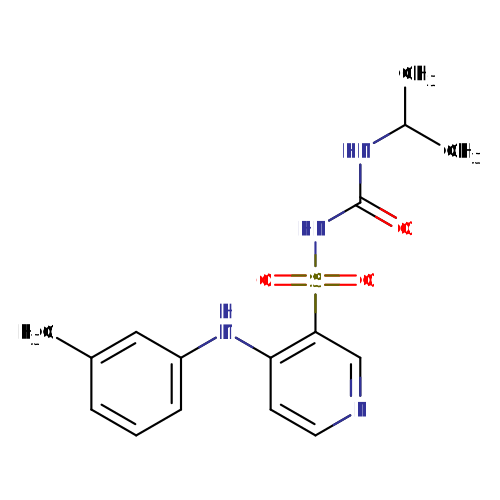
Torasemide is a high-ceiling loop diuretic.1 Structurally, it is a pyridine-sulfonylurea used as an antihypertensive agent.4 Torasemide was first approved for clinical use by the FDA in 1993.12
- Type
- Small Molecule
- Groups
- Approved
- Structure
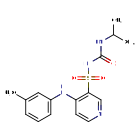
Structure for Torasemide (DB00214)
- Weight
- Average: 348.42
Monoisotopic: 348.125611216 - Chemical Formula
- C16H20N4O3S
- Synonyms
- 1-Isopropyl-3-((4-m-toluidino-3-pyridyl)sulfonyl)urea
- N-(((1-Methylethyl)amino)carbonyl)-4-((3-methylphenyl)amino)-3-pyridinesulfonamide
- Torasemida
- Torasemide
- Torasémide
- Torasemidum
- Torsemide
- External IDs
- AC-4464
- AC4464
- BM-02.015
- BM-02015
- BM02.015

Pharmacology
- Indication
Torasemide is indicated for the treatment of edema associated with congestive heart failure, renal or hepatic diseases. From this condition, it has been observed that torasemide is very effective in cases of kidney failure.Label
As well, torasemide is approved to be used as an antihypertensive agent either alone or in combination with other antihypertensives.Label
 Reduce drug development failure ratesBuild, train, & validate machine-learning modelswith evidence-based and structured datasets.Build, train, & validate predictive machine-learning models with structured datasets.
- Associated Conditions
Indication Type Indication Combined Product Details Approval Level Age Group Patient Characteristics Dose Form Management of Edema •••••••••••• ••••• •••••• Management of Edema •••••••••••• ••••• •••••• Management of Edema •••••••••••• ••••• •••••• Management of Hypertension •••••••••••• •••••••••• ••••••••• •••••• - Contraindications & Blackbox Warnings
 Prevent Adverse Drug Events TodayTap into our Clinical API for life-saving information on contraindications & blackbox warnings, population restrictions, harmful risks, & more.Avoid life-threatening adverse drug events with our Clinical API
- Pharmacodynamics
It is widely known that administration of torasemide can attenuate renal injury and reduce the severity of acute renal failure. This effect is obtained by increasing urine output and hence, facilitating fluid, acid-base and potassium control.2 This effect is obtained by the increase in the excretion of urinary sodium and chloride.3
Several reports have indicated that torasemide presents a long-lasting diuresis and less potassium excretion which can be explained by the effect that torasemide has on the renin-angiotensin-aldosterone system. This effect is very similar to the effect observed with the administration of combination therapy with furosemide and spironolactone and it is characterized by a decrease in plasma brain natriuretic peptide and improved measurements of left ventricular function.3
Above the aforementioned effect, torasemide presents a dual effect .in which the inhibition of aldosterone which donates torasemide with a potassium-sparing action.2
Torasemide has been shown to reduce extracellular fluid volume and blood pressure in hypertensive patients suffering from chronic kidney disease. As well, some reports have indicated that torasemide can reduce myocardial fibrosis by reducing the collagen accumulation. This effect is suggested to be related to the decrease in aldosterone which in order has been shown to reduce the production of the enzyme procollagen type I carboxy-terminal proteinase which is known to be overexpressed in heart failure patients.1
- Mechanism of action
As mentioned above, torasemide is part of the loop diuretics and thus, it acts by reducing the oxygen demand in the medullary thick ascending loop of Henle by inhibiting the Na+/K+/Cl- pump on the luminal cell membrane surface.2 This action is obtained by the binding of torasemide to a chloride ion-binding site of the transport molecule.12
Torasemide is known to have an effect in the renin-angiotensin-aldosterone system by inhibiting the downstream cascade after the activation of angiotensin II. This inhibition will produce a secondary effect marked by the reduction of the expression of aldosterone synthase, TGF-B1 and thromboxane A2 and a reduction on the aldosterone receptor binding.2,3
Target Actions Organism ASolute carrier family 12 member 2 inhibitorHumans ASolute carrier family 12 member 1 inhibitorHumans - Absorption
Torasemide is the diuretic with the highest oral bioavailability even in advanced stages of chronic kidney disease.1 This bioavailability tends to be higher than 80% regardless of the patient condition. The maximal serum concentration is reported to be of 1 hour and the absorption parameters are not affected by its use concomitantly with food.3
- Volume of distribution
The volume of distribution of torasemide is 0.2 L/kg.5
- Protein binding
Torasemide is found to be highly bound to plasma proteins, representing over 99% of the administered dose.5
- Metabolism
Torasemide is extensively metabolized in the liver and only 20% of the dose remains unchanged and it is recovered in the urine.5 Metabolized via the hepatic CYP2C8 and CYP2C9 mainly by reactions of hydroxylation, oxidation and reduction to 5 metabolites.7 The major metabolite, M5, is pharmacologically inactive. There are 2 minor metabolites, M1, possessing one-tenth the activity of torasemide, and M3, equal in activity to torasemide. Overall, torasemide appears to account for 80% of the total diuretic activity, while metabolites M1 and M3 account for 9% and 11%, respectively.6
Hover over products below to view reaction partners
- Route of elimination
Torasemide is mainly hepatically processed and excreted in the feces from which about 70-80% of the administered dose is excreted by this pathway. On the other hand, about 20-30% of the administered dose is found in the urine.12
- Half-life
The average half-life of torasemide is 3.5 hours.3
- Clearance
The clearance rate of torasemide is considerably reduced by the presence of renal disorders.5
- Adverse Effects
 Improve decision support & research outcomesWith structured adverse effects data, including: blackbox warnings, adverse reactions, warning & precautions, & incidence rates. View sample adverse effects data in our new Data Library!Improve decision support & research outcomes with our structured adverse effects data.
- Toxicity
The oral LD50 of torasemide in the rat is 5 g/kg. When overdose occurs, there is a marked diuresis with the danger of loss of fluid and electrolytes which has been seen to lead to somnolence, confusion, hypotension, hyponatremia, hypokalemia, hypochloremic alkalosis, hemoconcentration dehydration and circulatory collapse. This effects can include some gastrointestinal disturbances.13
There is no increase in tumor incidence with torasemide and it is proven to not be mutagenic, not fetotoxic or teratogenic.Label
- Pathways
Pathway Category Torsemide Action Pathway Drug action - Pharmacogenomic Effects/ADRs
- Not Available
Interactions
- Drug Interactions
- This information should not be interpreted without the help of a healthcare provider. If you believe you are experiencing an interaction, contact a healthcare provider immediately. The absence of an interaction does not necessarily mean no interactions exist.
Drug Interaction Integrate drug-drug
interactions in your softwareAbacavir Torasemide may increase the excretion rate of Abacavir which could result in a lower serum level and potentially a reduction in efficacy. Abaloparatide The risk or severity of adverse effects can be increased when Torasemide is combined with Abaloparatide. Abatacept The metabolism of Torasemide can be increased when combined with Abatacept. Abiraterone The metabolism of Torasemide can be decreased when combined with Abiraterone. Abrocitinib The metabolism of Abrocitinib can be decreased when combined with Torasemide. - Food Interactions
- Take with or without food. Food delays the Cmax by 30 minutes but does not impact efficacy.
Products
 Drug product information from 10+ global regionsOur datasets provide approved product information including:dosage, form, labeller, route of administration, and marketing period.Access drug product information from over 10 global regions.
- Product Images
- International/Other Brands
- Britomar (Ferrer) / Diuver (Pliva) / Examide (Apex) / Luprac (Tanabe Mitshubishi Pharma) / Soaanz (Sarfez Pharmaceuticals) / Torem (Berlin-Chemie) / Trifas (Meranini)
- Brand Name Prescription Products
Name Dosage Strength Route Labeller Marketing Start Marketing End Region Image Demadex Injection, solution 10 mg/1mL Intravenous Roche Pharmaceuticals 2007-02-06 Not applicable US 
Demadex Tablet 100 mg/1 Oral MEDA Pharmaceuticals 2015-01-01 2020-07-31 US Demadex Tablet 5 mg/1 Oral Meda Pharmaceuticals Inc. 2015-01-01 2014-12-19 US Demadex Tablet 10 mg/1 Oral Meda Pharmaceuticals Inc. 2009-02-20 2009-08-04 US Demadex Tablet 5 mg/1 Oral Roche Pharmaceuticals 2007-02-06 Not applicable US - Generic Prescription Products
Name Dosage Strength Route Labeller Marketing Start Marketing End Region Image Torsemide Tablet 10 mg/1 Oral Direct_Rx 2019-09-05 Not applicable US Torsemide Tablet 10 mg/1 Oral Physicians Total Care, Inc. 2009-06-26 Not applicable US Torsemide Tablet 5 mg/1 Oral Par Pharmaceutical 2011-03-22 2016-03-27 US Torsemide Tablet 20 mg/1 Oral Carilion Materials Management 2011-01-01 Not applicable US 
Torsemide Tablet 20 mg/1 Oral Golden State Medical Supply, Inc. 2005-03-01 Not applicable US


Categories
- ATC Codes
- C03CA04 — TorasemideG01AE10 — Combinations of sulfonamides
- Drug Categories
- Antihypertensive Agents
- Antihypertensive Agents Indicated for Hypertension
- Cardiovascular Agents
- Cytochrome P-450 CYP2C8 Substrates
- Cytochrome P-450 CYP2C9 Inhibitors
- Cytochrome P-450 CYP2C9 Inhibitors (strength unknown)
- Cytochrome P-450 CYP2C9 Substrates
- Cytochrome P-450 Enzyme Inhibitors
- Cytochrome P-450 Substrates
- Diuretics
- High-Ceiling Diuretics
- Hyperglycemia-Associated Agents
- Hypotensive Agents
- Increased Diuresis at Loop of Henle
- Membrane Transport Modulators
- Natriuretic Agents
- Non Potassium Sparing Diuretics
- OATP1B1/SLCO1B1 Substrates
- Ototoxic agents
- Pyridines
- Sodium Potassium Chloride Symporter Inhibitors
- Sulfonamides
- Sulfones
- Sulfur Compounds
- Chemical TaxonomyProvided by Classyfire
- Description
- This compound belongs to the class of organic compounds known as pyridinesulfonamides. These are heterocyclic compounds containing a pyridine ring substituted by one or more sulfonamide groups.
- Kingdom
- Organic compounds
- Super Class
- Organoheterocyclic compounds
- Class
- Pyridines and derivatives
- Sub Class
- Pyridinesulfonamides
- Direct Parent
- Pyridinesulfonamides
- Alternative Parents
- Toluenes / Sulfonylureas / Dihydropyridines / Secondary ketimines / Organosulfonic acids and derivatives / Heteroaromatic compounds / Aminosulfonyl compounds / Propargyl-type 1,3-dipolar organic compounds / Carboximidic acids and derivatives / Azacyclic compounds show 4 more
- Substituents
- Aminosulfonyl compound / Aromatic heteromonocyclic compound / Azacycle / Benzenoid / Carboximidic acid derivative / Dihydropyridine / Heteroaromatic compound / Hydrocarbon derivative / Hydropyridine / Monocyclic benzene moiety show 16 more
- Molecular Framework
- Aromatic heteromonocyclic compounds
- External Descriptors
- secondary amino compound, aminopyridine, N-sulfonylurea (CHEBI:9637)
- Affected organisms
- Humans and other mammals
Chemical Identifiers
- UNII
- W31X2H97FB
- CAS number
- 56211-40-6
- InChI Key
- NGBFQHCMQULJNZ-UHFFFAOYSA-N
- InChI
- InChI=1S/C16H20N4O3S/c1-11(2)18-16(21)20-24(22,23)15-10-17-8-7-14(15)19-13-6-4-5-12(3)9-13/h4-11H,1-3H3,(H,17,19)(H2,18,20,21)
- IUPAC Name
- 1-({4-[(3-methylphenyl)amino]pyridin-3-yl}sulfonyl)-3-(propan-2-yl)urea
- SMILES
- CC(C)NC(=O)NS(=O)(=O)C1=C(NC2=CC=CC(C)=C2)C=CN=C1
References
- Synthesis Reference
Fritz Topfmeier, Gustav Lettenbauer, "Process for the preparation of a stable modification of torasemide." U.S. Patent USRE0345806, issued June, 1975.
USRE0345806- General References
- Lopez B, Gonzalez A, Hermida N, Laviades C, Diez J: Myocardial fibrosis in chronic kidney disease: potential benefits of torasemide. Kidney Int Suppl. 2008 Dec;(111):S19-23. doi: 10.1038/ki.2008.512. [Article]
- Li XM, Jin DX, Cong HL: Could torasemide be a prophylactic agent of contrast induced acute kidney injury? A review about this field. Eur Rev Med Pharmacol Sci. 2013 Jul;17(14):1845-9. [Article]
- Buggey J, Mentz RJ, Pitt B, Eisenstein EL, Anstrom KJ, Velazquez EJ, O'Connor CM: A reappraisal of loop diuretic choice in heart failure patients. Am Heart J. 2015 Mar;169(3):323-33. doi: 10.1016/j.ahj.2014.12.009. Epub 2015 Jan 6. [Article]
- Dunn CJ, Fitton A, Brogden RN: Torasemide. An update of its pharmacological properties and therapeutic efficacy. Drugs. 1995 Jan;49(1):121-42. [Article]
- Knauf H, Mutschler E: Clinical pharmacokinetics and pharmacodynamics of torasemide. Clin Pharmacokinet. 1998 Jan;34(1):1-24. doi: 10.2165/00003088-199834010-00001. [Article]
- Neugebauer G, Besenfelder E, von Mollendorff E: Pharmacokinetics and metabolism of torasemide in man. Arzneimittelforschung. 1988 Jan;38(1A):164-6. [Article]
- Barroso MB, Alonso RM, Jimenez RM: Simultaneous determination of torasemide and its major metabolite M5 in human urine by high-performance liquid chromatography-electrochemical detection. J Chromatogr Sci. 2001 Nov;39(11):491-6. [Article]
- Coleman J., Cox A. and Cowley N. (2011). Side Effects of Drugs Annual. Elsevier.
- FDA approvals [Link]
- Cleveland Clinic [Link]
- Hypertension Canada [Link]
- Indian Journal of Clinical Practice [Link]
- EMC [Link]
- FDA Approved Drug Products: Soaanz (torsemide) tablets for oral use [Link]
- Demadex (Torsemide) FDA Label [Link]
- External Links
- Human Metabolome Database
- HMDB0014359
- KEGG Drug
- D00382
- PubChem Compound
- 41781
- PubChem Substance
- 46504760
- ChemSpider
- 38123
- BindingDB
- 64107
- 38413
- ChEBI
- 9637
- ChEMBL
- CHEMBL1148
- ZINC
- ZINC000000005823
- Therapeutic Targets Database
- DAP000745
- PharmGKB
- PA451733
- RxList
- RxList Drug Page
- PDRhealth
- PDRhealth Drug Page
- Wikipedia
- Torasemide
- FDA label
- Download (92.4 KB)
- MSDS
- Download (74.7 KB)
Clinical Trials
- Clinical Trials
Phase Status Purpose Conditions Count 4 Completed Treatment Cardiovascular Disease (CVD) / Hypertension 1 4 Completed Treatment Congestive Heart Failure (CHF) 1 4 Completed Treatment Heart Failure 1 4 Completed Treatment Hypertension 2 4 Completed Treatment Right Heart Failure / Tricuspid valve incompetence 1
Pharmacoeconomics
- Manufacturers
- Hoffmann la roche inc
- Bedford laboratories
- Luitpold pharmaceuticals inc
- Meda pharmaceuticals inc
- Apotex inc etobicoke site
- Aurobindo pharma ltd
- Hetero drugs ltd
- Par pharmaceutical inc
- Pliva pharmaceutical industry inc
- Roxane laboratories inc
- Sun pharmaceutical industries ltd
- Teva pharmaceuticals usa inc
- Packagers
- American Regent
- Apotex Inc.
- Aurobindo Pharma Ltd.
- Camber Pharmaceuticals Inc.
- Cardinal Health
- Diversified Healthcare Services Inc.
- F Hoffmann-La Roche Ltd.
- General Injectables and Vaccines Inc.
- Greenstone LLC
- Heartland Repack Services LLC
- Hetero Drugs Ltd.
- Ivax Pharmaceuticals
- Mckesson Corp.
- Meda AB
- Murfreesboro Pharmaceutical Nursing Supply
- Neuman Distributors Inc.
- Palmetto Pharmaceuticals Inc.
- Par Pharmaceuticals
- Physicians Total Care Inc.
- Pliva Inc.
- Preferred Pharmaceuticals Inc.
- Prepak Systems Inc.
- Resource Optimization and Innovation LLC
- Roxane Labs
- Sun Pharmaceutical Industries Ltd.
- Teva Pharmaceutical Industries Ltd.
- UDL Laboratories
- Vangard Labs Inc.
- Dosage Forms
Form Route Strength Injection, solution Intravenous 10 mg/1mL Tablet Oral 10 mg/1 Tablet Oral 100 mg/1 Tablet Oral 20 mg/1 Tablet Oral 5 mg/1 Liquid Intravenous 10 mg / mL Tablet Oral 100 mg Tablet Oral 20 mg Tablet Oral 5 mg Injection, solution Intravenous 10 mg/2ml Injection, solution Intravenous 200 mg/20ml Solution Intravenous 10 mg/2ml Tablet, film coated Oral 20 mg/1 Tablet, film coated Oral 40 mg/1 Tablet, film coated Oral 60 mg/1 Tablet, extended release Oral Tablet, extended release Oral 10 mg Tablet, extended release Oral 5 mg Injection, suspension Intravenous 10 MG/2ML Tablet Oral 2.5 MG Tablet Oral 200 MG Tablet Oral Tablet Oral 50 MG Tablet Oral 10 mg - Prices
Unit description Cost Unit Demadex 100 mg tablet 5.69USD tablet Torsemide 100 mg tablet 3.16USD tablet Demadex 20 mg tablet 1.59USD tablet Demadex 10 mg tablet 1.39USD tablet Demadex 5 mg tablet 1.28USD tablet Torsemide 20 mg tablet 0.85USD tablet Torsemide 10 mg tablet 0.73USD tablet Torsemide 5 mg tablet 0.66USD tablet DrugBank does not sell nor buy drugs. Pricing information is supplied for informational purposes only.- Patents
Patent Number Pediatric Extension Approved Expires (estimated) Region US10154963 No 2018-12-18 2033-10-06 US
Properties
- State
- Solid
- Experimental Properties
Property Value Source melting point (°C) 163-164 °C 'MSDS' water solubility Soluble 'MSDS' logP 3.356 'MSDS' pKa 7.1 'FDA label' - Predicted Properties
Property Value Source Water Solubility 0.0596 mg/mL ALOGPS logP 1.76 ALOGPS logP 1.86 Chemaxon logS -3.8 ALOGPS pKa (Strongest Acidic) 5.92 Chemaxon pKa (Strongest Basic) 4.2 Chemaxon Physiological Charge -1 Chemaxon Hydrogen Acceptor Count 5 Chemaxon Hydrogen Donor Count 3 Chemaxon Polar Surface Area 100.19 Å2 Chemaxon Rotatable Bond Count 4 Chemaxon Refractivity 91.89 m3·mol-1 Chemaxon Polarizability 36.15 Å3 Chemaxon Number of Rings 2 Chemaxon Bioavailability 1 Chemaxon Rule of Five Yes Chemaxon Ghose Filter Yes Chemaxon Veber's Rule No Chemaxon MDDR-like Rule No Chemaxon - Predicted ADMET Features
Property Value Probability Human Intestinal Absorption + 0.9156 Blood Brain Barrier + 0.6871 Caco-2 permeable - 0.5374 P-glycoprotein substrate Non-substrate 0.799 P-glycoprotein inhibitor I Non-inhibitor 0.7695 P-glycoprotein inhibitor II Non-inhibitor 0.8232 Renal organic cation transporter Non-inhibitor 0.9185 CYP450 2C9 substrate Substrate 0.6049 CYP450 2D6 substrate Non-substrate 0.9116 CYP450 3A4 substrate Non-substrate 0.7558 CYP450 1A2 substrate Non-inhibitor 0.9045 CYP450 2C9 inhibitor Non-inhibitor 0.6692 CYP450 2D6 inhibitor Non-inhibitor 0.923 CYP450 2C19 inhibitor Non-inhibitor 0.9025 CYP450 3A4 inhibitor Inhibitor 0.5905 CYP450 inhibitory promiscuity Low CYP Inhibitory Promiscuity 0.6324 Ames test Non AMES toxic 0.9133 Carcinogenicity Non-carcinogens 0.8366 Biodegradation Not ready biodegradable 1.0 Rat acute toxicity 1.8740 LD50, mol/kg Not applicable hERG inhibition (predictor I) Weak inhibitor 0.9854 hERG inhibition (predictor II) Non-inhibitor 0.8668
Spectra
- Mass Spec (NIST)
- Not Available
- Spectra
- Chromatographic Properties
Collision Cross Sections (CCS)
Adduct CCS Value (Å2) Source type Source [M-H]- 193.4783449 predictedDarkChem Lite v0.1.0 [M-H]- 194.3572449 predictedDarkChem Lite v0.1.0 [M-H]- 182.6581 predictedDeepCCS 1.0 (2019) [M+H]+ 193.8189449 predictedDarkChem Lite v0.1.0 [M+H]+ 195.2768449 predictedDarkChem Lite v0.1.0 [M+H]+ 185.0161 predictedDeepCCS 1.0 (2019) [M+Na]+ 193.2753449 predictedDarkChem Lite v0.1.0 [M+Na]+ 194.2030449 predictedDarkChem Lite v0.1.0 [M+Na]+ 192.15666 predictedDeepCCS 1.0 (2019)
Targets

- Kind
- Protein
- Organism
- Humans
- Pharmacological action
- Yes
- Actions
- Inhibitor
- General Function
- Sodium:potassium:chloride symporter activity
- Specific Function
- Electrically silent transporter system. Mediates sodium and chloride reabsorption. Plays a vital role in the regulation of ionic balance and cell volume.
- Gene Name
- SLC12A2
- Uniprot ID
- P55011
- Uniprot Name
- Solute carrier family 12 member 2
- Molecular Weight
- 131445.825 Da
References
- Chen X, Ji ZL, Chen YZ: TTD: Therapeutic Target Database. Nucleic Acids Res. 2002 Jan 1;30(1):412-5. [Article]
- Baumann P: Pharmacology and pharmacokinetics of citalopram and other SSRIs. Int Clin Psychopharmacol. 1996 Mar;11 Suppl 1:5-11. [Article]
- Hyttel J, Bogeso KP, Perregaard J, Sanchez C: The pharmacological effect of citalopram residues in the (S)-(+)-enantiomer. J Neural Transm Gen Sect. 1992;88(2):157-60. [Article]
- Kind
- Protein
- Organism
- Humans
- Pharmacological action
- Yes
- Actions
- Inhibitor
- General Function
- Sodium:potassium:chloride symporter activity
- Specific Function
- Electrically silent transporter system. Mediates sodium and chloride reabsorption. Plays a vital role in the regulation of ionic balance and cell volume.
- Gene Name
- SLC12A1
- Uniprot ID
- Q13621
- Uniprot Name
- Solute carrier family 12 member 1
- Molecular Weight
- 121449.13 Da
References
- Chen X, Ji ZL, Chen YZ: TTD: Therapeutic Target Database. Nucleic Acids Res. 2002 Jan 1;30(1):412-5. [Article]
- Vormfelde SV, Sehrt D, Toliat MR, Schirmer M, Meineke I, Tzvetkov M, Nurnberg P, Brockmoller J: Genetic variation in the renal sodium transporters NKCC2, NCC, and ENaC in relation to the effects of loop diuretic drugs. Clin Pharmacol Ther. 2007 Sep;82(3):300-9. Epub 2007 Apr 25. [Article]
- Fortuno A, Muniz P, Ravassa S, Rodriguez JA, Fortuno MA, Zalba G, Diez J: Torasemide inhibits angiotensin II-induced vasoconstriction and intracellular calcium increase in the aorta of spontaneously hypertensive rats. Hypertension. 1999 Jul;34(1):138-43. [Article]
Enzymes
- Kind
- Protein
- Organism
- Humans
- Pharmacological action
- Unknown
- Actions
- Substrate
- General Function
- Steroid hydroxylase activity
- Specific Function
- Cytochromes P450 are a group of heme-thiolate monooxygenases. In liver microsomes, this enzyme is involved in an NADPH-dependent electron transport pathway. It oxidizes a variety of structurally un...
- Gene Name
- CYP2C8
- Uniprot ID
- P10632
- Uniprot Name
- Cytochrome P450 2C8
- Molecular Weight
- 55824.275 Da
References
- Miners JO, Coulter S, Birkett DJ, Goldstein JA: Torsemide metabolism by CYP2C9 variants and other human CYP2C subfamily enzymes. Pharmacogenetics. 2000 Apr;10(3):267-70. [Article]
- Polasek TM, Elliot DJ, Lewis BC, Miners JO: Mechanism-based inactivation of human cytochrome P4502C8 by drugs in vitro. J Pharmacol Exp Ther. 2004 Dec;311(3):996-1007. doi: 10.1124/jpet.104.071803. Epub 2004 Aug 10. [Article]
- Ong CE, Coulter S, Birkett DJ, Bhasker CR, Miners JO: The xenobiotic inhibitor profile of cytochrome P4502C8. Br J Clin Pharmacol. 2000 Dec;50(6):573-80. doi: 10.1046/j.1365-2125.2000.00316.x. [Article]
- Kind
- Protein
- Organism
- Humans
- Pharmacological action
- Unknown
- Actions
- SubstrateInhibitor
- General Function
- Steroid hydroxylase activity
- Specific Function
- Cytochromes P450 are a group of heme-thiolate monooxygenases. In liver microsomes, this enzyme is involved in an NADPH-dependent electron transport pathway. It oxidizes a variety of structurally un...
- Gene Name
- CYP2C9
- Uniprot ID
- P11712
- Uniprot Name
- Cytochrome P450 2C9
- Molecular Weight
- 55627.365 Da
References
- Zhou SF, Zhou ZW, Yang LP, Cai JP: Substrates, inducers, inhibitors and structure-activity relationships of human Cytochrome P450 2C9 and implications in drug development. Curr Med Chem. 2009;16(27):3480-675. Epub 2009 Sep 1. [Article]
- Miners JO, Coulter S, Birkett DJ, Goldstein JA: Torsemide metabolism by CYP2C9 variants and other human CYP2C subfamily enzymes. Pharmacogenetics. 2000 Apr;10(3):267-70. [Article]
- Flockhart Table of Drug Interactions [Link]
Carriers
- Kind
- Protein
- Organism
- Humans
- Pharmacological action
- Unknown
- Actions
- Substrate
- General Function
- Toxic substance binding
- Specific Function
- Serum albumin, the main protein of plasma, has a good binding capacity for water, Ca(2+), Na(+), K(+), fatty acids, hormones, bilirubin and drugs. Its main function is the regulation of the colloid...
- Gene Name
- ALB
- Uniprot ID
- P02768
- Uniprot Name
- Serum albumin
- Molecular Weight
- 69365.94 Da
References
- Knauf H, Mutschler E: Clinical pharmacokinetics and pharmacodynamics of torasemide. Clin Pharmacokinet. 1998 Jan;34(1):1-24. doi: 10.2165/00003088-199834010-00001. [Article]
Transporters
- Kind
- Protein
- Organism
- Humans
- Pharmacological action
- No
- Actions
- Substrate
- General Function
- Sodium-independent organic anion transmembrane transporter activity
- Specific Function
- Mediates the Na(+)-independent uptake of organic anions such as pravastatin, taurocholate, methotrexate, dehydroepiandrosterone sulfate, 17-beta-glucuronosyl estradiol, estrone sulfate, prostagland...
- Gene Name
- SLCO1B1
- Uniprot ID
- Q9Y6L6
- Uniprot Name
- Solute carrier organic anion transporter family member 1B1
- Molecular Weight
- 76447.99 Da
References
- Coleman J., Cox A. and Cowley N. (2011). Side Effects of Drugs Annual. Elsevier.

Drug created at June 13, 2005 13:24 / Updated at April 09, 2024 18:13