Identification
- Summary
Lovastatin is an HMG-CoA reductase inhibitor used to lower LDL cholesterol and reduce the risk of cardiovascular disease and associated conditions, including myocardial infarction and stroke.
- Brand Names
- Advicor, Altoprev
- Generic Name
- Lovastatin
- DrugBank Accession Number
- DB00227
- Background
Lovastatin, also known as the brand name product Mevacor, is a lipid-lowering drug and fungal metabolite derived synthetically from a fermentation product of Aspergillus terreus.1 Originally named Mevinolin, lovastatin belongs to the statin class of medications, which are used to lower the risk of cardiovascular disease and manage abnormal lipid levels by inhibiting the endogenous production of cholesterol in the liver.2 More specifically, statin medications competitively inhibit the enzyme hydroxymethylglutaryl-coenzyme A (HMG-CoA) Reductase,12 which catalyzes the conversion of HMG-CoA to mevalonic acid and is the third step in a sequence of metabolic reactions involved in the production of several compounds involved in lipid metabolism and transport including cholesterol, low-density lipoprotein (LDL) (sometimes referred to as "bad cholesterol"), and very low-density lipoprotein (VLDL). Prescribing of statin medications is considered standard practice following any cardiovascular events and for people with a moderate to high risk of development of CVD, such as those with Type 2 Diabetes. The clear evidence of the benefit of statin use coupled with very minimal side effects or long term effects has resulted in this class becoming one of the most widely prescribed medications in North America.13,14
Lovastatin and other drugs from the statin class of medications including atorvastatin, pravastatin, rosuvastatin, fluvastatin, and simvastatin are considered first-line options for the treatment of dyslipidemia.13,14 Increasing use of the statin class of drugs is largely due to the fact that cardiovascular disease (CVD), which includes heart attack, atherosclerosis, angina, peripheral artery disease, and stroke, has become a leading cause of death in high-income countries and a major cause of morbidity around the world.15 Elevated cholesterol levels, and in particular, elevated low-density lipoprotein (LDL) levels, are an important risk factor for the development of CVD.13,16 Use of statins to target and reduce LDL levels has been shown in a number of landmark studies to significantly reduce the risk of development of CVD and all-cause mortality.17,18,19,20,21,22 Statins are considered a cost-effective treatment option for CVD due to their evidence of reducing all-cause mortality including fatal and non-fatal CVD as well as the need for surgical revascularization or angioplasty following a heart attack.13,14 Evidence has shown that even for low-risk individuals (with <10% risk of a major vascular event occurring within 5 years) statins cause a 20%-22% relative reduction in major cardiovascular events (heart attack, stroke, coronary revascularization, and coronary death) for every 1 mmol/L reduction in LDL without any significant side effects or risks.24,23
While all statin medications are considered equally effective from a clinical standpoint, rosuvastatin is considered the most potent; doses of 10 to 40mg rosuvastatin per day were found in clinical studies to result in a 45.8% to 54.6% decrease in LDL cholesterol levels, while lovastatin has been found to have an average decrease in LDL-C of 25-40%.5,25,26,22,27 Potency is thought to correlate to tissue permeability as the more lipophilic statins such as lovastatin are thought to enter endothelial cells by passive diffusion, as opposed to hydrophilic statins such as pravastatin and rosuvastatin which are taken up into hepatocytes through OATP1B1 (organic anion transporter protein 1B1)-mediated transport.31,28 Despite these differences in potency, several trials have demonstrated only minimal differences in terms of clinical outcomes between statins.22,20
- Type
- Small Molecule
- Groups
- Approved, Investigational
- Structure
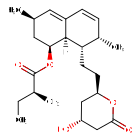
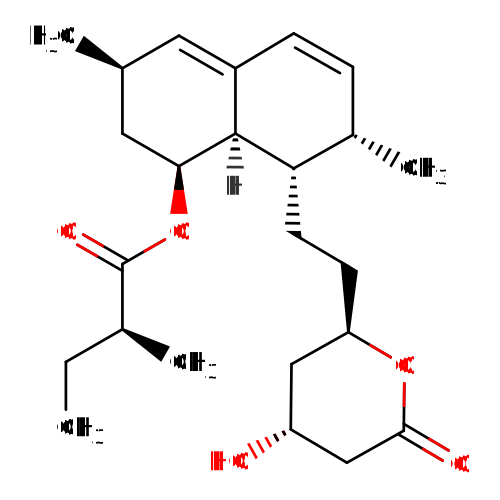
Structure for Lovastatin (DB00227)
- Weight
- Average: 404.5396
Monoisotopic: 404.256274262 - Chemical Formula
- C24H36O5
- Synonyms
- (1S,3R,7S,8S,8aR)-1,2,3,7,8,8a-hexahydro-3,7-dimethyl-8-(2-(2R,4R)-(tetrahydro-4-hydroxy-6-oxo-2H-pyran-2-yl)ethyl)-1-naphthalenyl (S)-2-methyl-butyrate
- 2β,6α-dimethyl-8alpha-(2-methyl-1-oxobutoxy)-mevinic acid lactone
- 6-alpha-methylcompactin
- 6alpha-methylcompactin
- 6α-methylcompactin
- Lovastatin
- Lovastatina
- Lovastatine
- Lovastatinum
- Mevinolin
- External IDs
- L-154803
- MK-803
- ML-530B

Pharmacology
- Indication
Lovastatin is indicated to reduce the risk of myocardial infarction, unstable angina, and the need for coronary revascularization procedures in individuals without symptomatic cardiovascular disease, average to moderately elevated total-C and LDL-C, and below average HDL-C. It is indicated as an intervention alternative in individuals presenting dyslipidemia at risk of developing atherosclerotic vascular disease. The administration of this agent should be accompanied by the implementation of a fat and cholesterol-restricted diet.43
Therapy with lipid-altering agents should be a component of multiple risk factor intervention in those individuals at significantly increased risk for atherosclerotic vascular disease due to hypercholesterolemia. Lovastatin is indicated as an adjunct to diet for the reduction of elevated total-C and LDL-C levels in patients with primary hypercholesterolemia (Types IIa and IIb2), when the response to diet restricted in saturated fat and cholesterol and to other nonpharmacological measures alone has been inadequate.43,44
Lovastatin is also indicated to slow the progression of coronary atherosclerosis in patients with coronary heart disease as part of a treatment strategy to lower total-C and LDL-C to target levels.43
Lovastatin is indicated as an adjunct to diet to reduce total-C, LDL-C and apolipoprotein B levels in adolescent boys and girls with Heterozygous Familial Hypercholesterolemia (HeFH) who are at least one year post-menarche, 10 to 17 years of age, with HeFH if after an adequate trial of diet therapy the following findings are present: LDL-C remains greater than 189 mg/dL or LDL-C remains greater than 160 mg/dL and there is a positive family history of premature cardiovascular disease or two or more other CVD risk factors are present in the adolescent patient.
Before administering lovastatin, it is important to rule out the presence of secondary causes of hypercholesterolemia and a lipid profile should be performed.
Prescribing of statin medications is considered standard practice following any cardiovascular events and for people with a moderate to high risk of development of CVD. Statin-indicated conditions include diabetes mellitus, clinical atherosclerosis (including myocardial infarction, acute coronary syndromes, stable angina, documented coronary artery disease, stroke, trans ischemic attack (TIA), documented carotid disease, peripheral artery disease, and claudication), abdominal aortic aneurysm, chronic kidney disease, and severely elevated LDL-C levels.13,14
 Reduce drug development failure ratesBuild, train, & validate machine-learning modelswith evidence-based and structured datasets.Build, train, & validate predictive machine-learning models with structured datasets.
- Associated Conditions
Indication Type Indication Combined Product Details Approval Level Age Group Patient Characteristics Dose Form Adjunct therapy in management of Apolipoprotein •••••••••••• ••• • ••• ••••• ••••• •••• ••••••••••••• •••••••••••• •••••••• •••••••••••••••••••• ••••••• ••• • ••• ••••• ••• •••••••• ••••••• •• •••••••••••••• •••••••• • •••• •••••••••••••• ••• • ••• ••••• ••• ••• •••••••••••••• •••• ••••••• •••••• Adjunct therapy in management of Apolipoprotein •••••••••••• ••••• •••••••••••••• ••••••• •••••••••••••••••••• ••••••• ••••••• •••••••• ••••••• Adjunct therapy in management of Cholesterol, ldl •••••••••••• ••• • ••• ••••• ••••• •••• ••••••••••••• ••• • ••• ••••• ••• •••••••• ••••••• •• •••••••••••••• •••••••• •••••••••••• •••••••• •••••••••••••••••••• ••••••• ••• • ••• ••••• ••• ••• •••••••••••••• •••• •••••••• • •••• ••••••••••••• •••••• Adjunct therapy in management of Cholesterol, ldl •••••••••••• ••••••• ••••••••••••••••••••• ••••• ••••••••••••• ••••••• ••••••• •••••••• ••••••• Adjunct therapy in management of Coronary artery atherosclerosis •••••••••••• •••••••• ••••• ••••••• ••••• ••••••• ••••••• •••••••• ••••••• - Contraindications & Blackbox Warnings
 Prevent Adverse Drug Events TodayTap into our Clinical API for life-saving information on contraindications & blackbox warnings, population restrictions, harmful risks, & more.Avoid life-threatening adverse drug events with our Clinical API
- Pharmacodynamics
Lovastatin is an oral antilipemic agent which reversibly inhibits HMG-CoA reductase. It is used to lower total cholesterol, low density lipoprotein-cholesterol (LDL-C), apolipoprotein B (apoB), non-high density lipoprotein-cholesterol (non-HDL-C), and trigleride (TG) plasma concentrations while increasing HDL-C concentrations. High LDL-C, low HDL-C and high TG concentrations in the plasma are associated with increased risk of atherosclerosis and cardiovascular disease. The total cholesterol to HDL-C ratio is a strong predictor of coronary artery disease and high ratios are associated with higher risk of disease. Increased levels of HDL-C are associated with lower cardiovascular risk. By decreasing LDL-C and TG and increasing HDL-C, lovastatin reduces the risk of cardiovascular morbidity and mortality.5,13,14,30
Elevated cholesterol levels, and in particular, elevated low-density lipoprotein (LDL) levels, are an important risk factor for the development of CVD.13 Use of statins to target and reduce LDL levels has been shown in a number of landmark studies to significantly reduce the risk of development of CVD and all-cause mortality.17,18,19,20,21 Statins are considered a cost-effective treatment option for CVD due to their evidence of reducing all-cause mortality including fatal and non-fatal CVD as well as the need for surgical revascularization or angioplasty following a heart attack.13,14 Evidence has shown that even for low-risk individuals (with <10% risk of a major vascular event occurring within 5 years) statins cause a 20%-22% relative reduction in major cardiovascular events (heart attack, stroke, coronary revascularization, and coronary death) for every 1 mmol/L reduction in LDL without any significant side effects or risks.5,24,23 Clinical studies have shown that lovastatin reduces LDL-C and total cholesterol by 25-40%.5 The 50% inhibitory dose is known to be of 46 mcg/kg which is translated into a reduction of approximately 30% of plasma cholesterol.2
Myopathy/Rhabdomyolysis
Lovastatin, like other inhibitors of HMG-CoA reductase, occasionally causes myopathy manifested as muscle pain, tenderness or weakness with creatine kinase (CK) above ten times the upper limit of normal (ULN). Myopathy sometimes takes the form of rhabdomyolysis with or without acute renal failure secondary to myoglobinuria, and rare fatalities have occurred. The risk of myopathy is dose-related and is increased by high levels of HMG-CoA reductase inhibitory activity in plasma. In a clinical study (EXCEL)30 in which patients were carefully monitored and some interacting drugs were excluded, there was one case of myopathy among 4933 patients randomized to lovastatin 20 to 40 mg daily for 48 weeks, and 4 among 1649 patients randomized to 80 mg daily.
Predisposing factors for myopathy include advanced age (≥65 years), female gender, uncontrolled hypothyroidism, and renal impairment. Chinese patients may also be at increased risk for myopathy. In most cases, muscle symptoms and CK increases resolved when treatment was promptly discontinued.
The risk of myopathy during treatment with lovastatin may be increased with concurrent administration of interacting drugs such as fenofibrate, niacin, gemfibrozil, cyclosporine, and strong inhibitors of the CYP3A4 enzyme. Cases of myopathy, including rhabdomyolysis, have been reported with HMG-CoA reductase inhibitors coadministered with colchicine, and caution should therefore be exercised when prescribing these two medications together.43,44
Real-world data from observational studies has suggested that 10-15% of people taking statins may experience muscle aches at some point during treatment.38
Liver Dysfunction
Persistent increases (to more than 3 times the upper limit of normal) in serum transaminases occurred in 1.9% of adult patients who received lovastatin for at least one year in early clinical trials. When the drug was interrupted or discontinued in these patients, the transaminase levels usually fell slowly to pretreatment levels. The increases usually appeared 3 to 12 months after the start of therapy with lovastatin, and were not associated with jaundice or other clinical signs or symptoms.43 In the EXCEL study,30 the incidence of persistent increases in serum transaminases over 48 weeks was 0.1% for placebo, 0.1% at 20 mg/day, 0.9% at 40 mg/day, and 1.5% at 80 mg/day in patients on lovastatin. However, in post-marketing experience with lovastatin, symptomatic liver disease has been reported rarely at all dosages.43
- Mechanism of action
Lovastatin is a lactone which is readily hydrolyzed in vivo to the corresponding β-hydroxyacid and strong inhibitor of HMG-CoA reductase, a hepatic microsomal enzyme which catalyzes the conversion of HMG-CoA (3-hydroxy-3-methylglutaryl-coenzyme A ) to mevalonate, an early rate-limiting step in cholesterol biosynthesis.12,2 At therapeutic lovastatin doses, HMG-CoA reductase is not completely blocked, thereby allowing biologically necessary amounts of mevalonate to be available. Because the conversion of HMG-CoA to mevalonate is an early step in the biosynthetic pathway for cholesterol, therapy with lovastatin would not be expected to cause an accumulation of potentially toxic sterols.44
Lovastatin acts primarily in the liver, where decreased hepatic cholesterol concentrations stimulate the upregulation of hepatic low density lipoprotein (LDL) receptors which increase hepatic uptake of LDL. Lovastatin also inhibits hepatic synthesis of very low density lipoprotein (VLDL). The overall effect is a decrease in plasma LDL and VLDL and a significant reduction in the risk of development of CVD and all-cause mortality.17,18,19,20,21
A significant effect on LDL-C reduction was seen within 2 weeks of initiation of lovastatin, and the maximum therapeutic response occurred within 4-6 weeks. The response was maintained during continuation of therapy. Single daily doses given in the evening were more effective than the same dose given in the morning, perhaps because cholesterol is synthesized mainly at night. When therapy with lovastatin is stopped, total cholesterol has been shown to return to pre-treatment levels.44
In vitro and in vivo animal studies also demonstrate that lovastatin exerts vasculoprotective effects independent of its lipid-lowering properties, also known as the pleiotropic effects of statins.31 This includes improvement in endothelial function, enhanced stability of atherosclerotic plaques, reduced oxidative stress and inflammation, and inhibition of the thrombogenic response.
Statins have also been found to bind allosterically to β2 integrin function-associated antigen-1 (LFA-1), which plays an important role in leukocyte trafficking and in T cell activation.32
Lovastatin has been reported to have beneficial effects on certain cancers. This includes a multi-factorial stress-triggered cell death (apoptosis) and DNA degradation response in breast cancer cells.33 It has also been shown to inhibit histone deacetylase 2 (HDAC2) activity and increase the accumulation of acetylated histone-H3 and the expression of p21(WAF/CIP) in human cancer cells, suggesting that statins might serve as novel HDAC inhibitors for cancer therapy and chemoprevention.37
Target Actions Organism A3-hydroxy-3-methylglutaryl-coenzyme A reductase inhibitorHumans UIntegrin alpha-L inhibitorHumans NHistone deacetylase 2 inhibitorHumans - Absorption
Lovastatin Cmax was found to be 3.013ng/mL with a Tmax of 3.36 hours.44
Plasma concentrations of total radioactivity (lovastatin plus 14C-metabolites) peaked at 2 hours and declined rapidly to about 10% of peak by 24 hours postdose. Absorption of lovastatin, estimated relative to an intravenous reference dose, in each of four animal species tested, averaged about 30% of an oral dose. In animal studies, after oral dosing, lovastatin had high selectivity for the liver, where it achieved substantially higher concentrations than in non-target tissues. Lovastatin undergoes extensive first-pass extraction in the liver, its primary site of action, with subsequent excretion of drug equivalents in the bile. As a consequence of extensive hepatic extraction of lovastatin, the availability of drug to the general circulation is low and variable. In a single dose study in four hypercholesterolemic patients, it was estimated that less than 5% of an oral dose of lovastatin reaches the general circulation as active inhibitors. Following administration of lovastatin tablets the coefficient of variation, based on between-subject variability, was approximately 40% for the area under the curve (AUC) of total inhibitory activity in the general circulation.43,44
The peak concentrations of lovastatin when a dose of 10-40 mg is administered are reported to range from 1.04-4.03 ng/ml and an AUC of 14-53 ng.h/ml. This indicates that lovastatin presents a dose-dependent pharmacokinetic profile.8 When lovastatin was given under fasting conditions, plasma concentrations of both active and total inhibitors were on average about two-thirds those found when lovastatin was administered immediately after a standard test meal.44
Genetic differences in the OATP1B1 (Organic-Anion-Transporting Polypeptide 1B1) hepatic transporter encoded by the SCLCO1B1 gene (Solute Carrier Organic Anion Transporter family member 1B1) have been shown to impact lovastatin pharmacokinetics.34 Evidence from pharmacogenetic studies of the c.521T>C single nucleotide polymorphism (SNP) showed that lovastatin Cmax and AUC were 340 and 286% higher, respectively, for individuals homozygous for 521CC compared to homozygous 521TT individuals.35 The 521CC genotype is also associated with a marked increase in the risk of developing myopathy, likely secondary to increased systemic exposure.36 Other statin drugs impacted by this polymorphism include rosuvastatin, pitavastatin, atorvastatin, simvastatin, and pravastatin.28
While specific dosage instructions are not included in the available product monographs for lovastatin, individuals with the above-mentioned c.521CC OATP1B1 genotype should be monitored for development of adverse effects from increased exposure to the drug, such as muscle pain and risk of rhabdomyolysis, particularly at higher doses.
- Volume of distribution
Lovastatin is able to cross the blood-brain barrier and placenta.44
- Protein binding
Both lovastatin and its β-hydroxy acid metabolite are highly bound (>95%) to human plasma proteins, largely due to its lipophilicity. Animal studies demonstrated that lovastatin crosses the blood-brain and placental barriers.43,44
- Metabolism
Lovastatin is given as a lactone prodrug and thus, in order to produce its mechanism of action, it is required to be converted to the active beta-hydroxy form. This drug activation process does not seem to be related to CYP isoenzyme activity7 but rather to be controlled by the activity of serum paraoxonase.11
Lovastatin is metabolized by the microsomal hepatic enzyme system (Cytochrome P-450 isoform 3A4). The major active metabolites present in human plasma are the β-hydroxy acid of lovastatin, its 6'-hydroxy, 6'-hydroxymethyl, and 6'-exomethylene derivatives.44 The uptake of lovastatin by the liver is enhanced by the activity of OATP1B1.9
Hover over products below to view reaction partners
- Route of elimination
Following an oral dose of 14C-labeled lovastatin to man, 10% of the dose was excreted in urine and 83% in feces. The latter represents absorbed drug excreted in bile, together with unabsorbed drug.44
- Half-life
Lovastatin half-life is reported to be of 13.37 hours.44 The elimination half-life of the hydroxy acid form of lovastatin is reported to be of 0.7-3 hours.6
- Clearance
Not Available
- Adverse Effects
 Improve decision support & research outcomesWith structured adverse effects data, including: blackbox warnings, adverse reactions, warning & precautions, & incidence rates. View sample adverse effects data in our new Data Library!Improve decision support & research outcomes with our structured adverse effects data.
- Toxicity
The median lethal dose of lovastatin is higher than 15 g/m2. Five healthy human volunteers have received up to 200 mg of lovastatin as a single dose without clinically significant adverse experiences. A few cases of accidental overdosage have been reported; no patients had any specific symptoms, and all patients recovered without sequelae. The maximum dose taken was 5 to 6 g.43
In carcinogenic studies, there is an increase in the incidence of hepatocellular carcinomas and adenomas, pulmonary adenomas, papilloma in non-glandular mucose in stomach and thyroid neoplasms. However, with respect to effects on fertility, lovastatin has been reported to present testicular atrophy, decreased spermatogenesis, spermatocytic degeneration and giant cell formation which derived into decreased fertility in males. Lastly, there is no evidence of mutagenicity induced by lovastatin.43
- Pathways
Pathway Category Lovastatin Action Pathway Drug action - Pharmacogenomic Effects/ADRs
- Not Available
Interactions
- Drug Interactions
- This information should not be interpreted without the help of a healthcare provider. If you believe you are experiencing an interaction, contact a healthcare provider immediately. The absence of an interaction does not necessarily mean no interactions exist.
Drug Interaction Integrate drug-drug
interactions in your softwareAbametapir The serum concentration of Lovastatin can be increased when it is combined with Abametapir. Abatacept The metabolism of Lovastatin can be increased when combined with Abatacept. Acalabrutinib The metabolism of Lovastatin can be decreased when combined with Acalabrutinib. Acenocoumarol The risk or severity of bleeding can be increased when Lovastatin is combined with Acenocoumarol. Acetaminophen The metabolism of Lovastatin can be decreased when combined with Acetaminophen. - Food Interactions
- Avoid grapefruit products. Grapefruit products may increase the risk for lovastatin related adverse effects such as myopathy and rhabdomyolysis.
- Take with food. Food increases bioavailability.
Products
 Drug product information from 10+ global regionsOur datasets provide approved product information including:dosage, form, labeller, route of administration, and marketing period.Access drug product information from over 10 global regions.
- Product Images
- International/Other Brands
- Altocor (Andrx)
- Brand Name Prescription Products
Name Dosage Strength Route Labeller Marketing Start Marketing End Region Image Act Lovastatin Tablet 20 mg Oral TEVA Canada Limited 2004-07-28 Not applicable Canada 
Act Lovastatin Tablet 40 mg Oral TEVA Canada Limited 2004-07-28 Not applicable Canada Altoprev Tablet, extended release 60 mg/1 Oral Physicians Total Care, Inc. 2005-07-11 2012-06-30 US 
Altoprev Tablet, extended release 20 mg/1 Oral Shionogi 2002-06-26 2017-12-31 US Altoprev Tablet, extended release 40 mg/1 Oral Covis Pharma US, Inc 2016-05-01 Not applicable US - Generic Prescription Products
Name Dosage Strength Route Labeller Marketing Start Marketing End Region Image Ava-lovastatin Tablet 40 mg Oral Avanstra Inc 2011-08-18 2014-08-21 Canada Ava-lovastatin Tablet 20 mg Oral Avanstra Inc 2011-08-18 2014-08-21 Canada Dom-lovastatin Tablet 40 mg Oral Dominion Pharmacal 2003-02-25 Not applicable Canada Dom-lovastatin Tablet 20 mg Oral Dominion Pharmacal 2003-02-25 Not applicable Canada Lovastatin Tablet 40 mg/1 Oral Nucare Pharmaceuticals, Inc. 2001-12-17 2019-12-31 US - Mixture Products
Name Ingredients Dosage Route Labeller Marketing Start Marketing End Region Image Advicor Lovastatin (20 mg/1) + Niacin (750 mg/1) Tablet, extended release Oral Physicians Total Care, Inc. 2004-02-18 2011-06-30 US Advicor Lovastatin (20 mg/1) + Niacin (1000 mg/1) Tablet, extended release Oral Abbvie 2001-12-17 2017-11-30 US Advicor Lovastatin (20 mg) + Niacin (1000 mg) Tablet, extended release; Tablet, multilayer, extended release Oral Sepracor Pharmaceuticals Inc 2005-11-09 2012-08-02 Canada Advicor Lovastatin (40 mg/1) + Niacin (1000 mg/1) Tablet, extended release Oral Physicians Total Care, Inc. 2006-08-08 Not applicable US Advicor Lovastatin (20 mg/1) + Niacin (1000 mg/1) Tablet, extended release Oral Kos Pharmaceuticals, Inc. 2007-02-20 2007-02-20 US


Categories
- ATC Codes
- C10AA02 — Lovastatin
- C10AA — HMG CoA reductase inhibitors
- C10A — LIPID MODIFYING AGENTS, PLAIN
- C10 — LIPID MODIFYING AGENTS
- C — CARDIOVASCULAR SYSTEM
- Drug Categories
- Agents Causing Muscle Toxicity
- Anticholesteremic Agents
- BSEP/ABCB11 Substrates
- Cytochrome P-450 CYP2C19 Substrates
- Cytochrome P-450 CYP2C8 Substrates
- Cytochrome P-450 CYP3A Substrates
- Cytochrome P-450 CYP3A4 Substrates
- Cytochrome P-450 CYP3A5 Substrates
- Cytochrome P-450 CYP3A7 Substrates
- Cytochrome P-450 Substrates
- Drugs causing inadvertant photosensitivity
- Enzyme Inhibitors
- Hydroxymethylglutaryl-CoA Reductase Inhibitors
- Hypolipidemic Agents
- Hypolipidemic Agents Indicated for Hyperlipidemia
- Lipid Modifying Agents
- Lipid Regulating Agents
- OATP1B1/SLCO1B1 Inhibitors
- OATP1B1/SLCO1B1 Substrates
- P-glycoprotein inhibitors
- Photosensitizing Agents
- UGT1A1 Substrates
- UGT1A3 substrates
- UGT2B7 substrates
- Chemical TaxonomyProvided by Classyfire
- Description
- This compound belongs to the class of organic compounds known as delta valerolactones. These are cyclic organic compounds containing an oxan-2- one moiety.
- Kingdom
- Organic compounds
- Super Class
- Organoheterocyclic compounds
- Class
- Lactones
- Sub Class
- Delta valerolactones
- Direct Parent
- Delta valerolactones
- Alternative Parents
- Fatty acid esters / Oxanes / Dicarboxylic acids and derivatives / Secondary alcohols / Carboxylic acid esters / Oxacyclic compounds / Organic oxides / Hydrocarbon derivatives / Carbonyl compounds
- Substituents
- Alcohol / Aliphatic heteropolycyclic compound / Carbonyl group / Carboxylic acid derivative / Carboxylic acid ester / Delta valerolactone / Delta_valerolactone / Dicarboxylic acid or derivatives / Fatty acid ester / Fatty acyl
- Molecular Framework
- Aliphatic heteropolycyclic compounds
- External Descriptors
- polyketide, fatty acid ester, delta-lactone, carbobicyclic compound, statin (naturally occurring) (CHEBI:40303)
- Affected organisms
- Humans and other mammals
Chemical Identifiers
- UNII
- 9LHU78OQFD
- CAS number
- 75330-75-5
- InChI Key
- PCZOHLXUXFIOCF-BXMDZJJMSA-N
- InChI
- InChI=1S/C24H36O5/c1-5-15(3)24(27)29-21-11-14(2)10-17-7-6-16(4)20(23(17)21)9-8-19-12-18(25)13-22(26)28-19/h6-7,10,14-16,18-21,23,25H,5,8-9,11-13H2,1-4H3/t14-,15-,16-,18+,19+,20-,21-,23-/m0/s1
- IUPAC Name
- (1S,3R,7S,8S,8aR)-8-{2-[(2R,4R)-4-hydroxy-6-oxooxan-2-yl]ethyl}-3,7-dimethyl-1,2,3,7,8,8a-hexahydronaphthalen-1-yl (2S)-2-methylbutanoate
- SMILES
- [H][C@]12[C@H](C[C@@H](C)C=C1C=C[C@H](C)[C@@H]2CC[C@@H]1C[C@@H](O)CC(=O)O1)OC(=O)[C@@H](C)CC
References
- Synthesis Reference
Donald F. Gerson, Xinfa Xiao, "Process for the production of lovastatin using Coniothyrium fuckelii." U.S. Patent US5409820, issued January, 1984.
US5409820- General References
- Boruta T, Bizukojc M: Production of lovastatin and itaconic acid by Aspergillus terreus: a comparative perspective. World J Microbiol Biotechnol. 2017 Feb;33(2):34. doi: 10.1007/s11274-017-2206-9. Epub 2017 Jan 19. [Article]
- Alberts AW, Chen J, Kuron G, Hunt V, Huff J, Hoffman C, Rothrock J, Lopez M, Joshua H, Harris E, Patchett A, Monaghan R, Currie S, Stapley E, Albers-Schonberg G, Hensens O, Hirshfield J, Hoogsteen K, Liesch J, Springer J: Mevinolin: a highly potent competitive inhibitor of hydroxymethylglutaryl-coenzyme A reductase and a cholesterol-lowering agent. Proc Natl Acad Sci U S A. 1980 Jul;77(7):3957-61. [Article]
- Endo A: The origin of the statins. 2004. Atheroscler Suppl. 2004 Oct;5(3):125-30. doi: 10.1016/j.atherosclerosissup.2004.08.033. [Article]
- Chiloeches A, Lasa M, Brihuega F, Montes A, Toro MJ: Effects of lovastatin on adenylyl cyclase activity and G proteins in GH4C1 cells. FEBS Lett. 1995 Mar 13;361(1):46-50. [Article]
- Henwood JM, Heel RC: Lovastatin. A preliminary review of its pharmacodynamic properties and therapeutic use in hyperlipidaemia. Drugs. 1988 Oct;36(4):429-54. doi: 10.2165/00003495-198836040-00003. [Article]
- Lennernas H, Fager G: Pharmacodynamics and pharmacokinetics of the HMG-CoA reductase inhibitors. Similarities and differences. Clin Pharmacokinet. 1997 May;32(5):403-25. doi: 10.2165/00003088-199732050-00005. [Article]
- Whirl-Carrillo M, McDonagh EM, Hebert JM, Gong L, Sangkuhl K, Thorn CF, Altman RB, Klein TE: Pharmacogenomics knowledge for personalized medicine. Clin Pharmacol Ther. 2012 Oct;92(4):414-7. doi: 10.1038/clpt.2012.96. [Article]
- Lamson M, Phillips G, Shen J, Lukacsko P, Friedhoff L, Niecestro RM: Pharmacokinetics of lovastatin extended-release dosage form (Lovastatin XL) in healthy volunteers. Biopharm Drug Dispos. 2002 May;23(4):143-9. doi: 10.1002/bdd.304. [Article]
- Neuvonen PJ, Backman JT, Niemi M: Pharmacokinetic comparison of the potential over-the-counter statins simvastatin, lovastatin, fluvastatin and pravastatin. Clin Pharmacokinet. 2008;47(7):463-74. doi: 10.2165/00003088-200847070-00003. [Article]
- Greenspan MD, Yudkovitz JB, Alberts AW, Argenbright LS, Arison BH, Smith JL: Metabolism of lovastatin by rat and human liver microsomes in vitro. Drug Metab Dispos. 1988 Sep-Oct;16(5):678-82. [Article]
- Draganov DI, Stetson PL, Watson CE, Billecke SS, La Du BN: Rabbit serum paraoxonase 3 (PON3) is a high density lipoprotein-associated lactonase and protects low density lipoprotein against oxidation. J Biol Chem. 2000 Oct 27;275(43):33435-42. [Article]
- Moghadasian MH: Clinical pharmacology of 3-hydroxy-3-methylglutaryl coenzyme A reductase inhibitors. Life Sci. 1999;65(13):1329-37. doi: 10.1016/s0024-3205(99)00199-x. [Article]
- Anderson TJ, Gregoire J, Pearson GJ, Barry AR, Couture P, Dawes M, Francis GA, Genest J Jr, Grover S, Gupta M, Hegele RA, Lau DC, Leiter LA, Lonn E, Mancini GB, McPherson R, Ngui D, Poirier P, Sievenpiper JL, Stone JA, Thanassoulis G, Ward R: 2016 Canadian Cardiovascular Society Guidelines for the Management of Dyslipidemia for the Prevention of Cardiovascular Disease in the Adult. Can J Cardiol. 2016 Nov;32(11):1263-1282. doi: 10.1016/j.cjca.2016.07.510. Epub 2016 Jul 25. [Article]
- Grundy SM, Stone NJ: 2018 American Heart Association/American College of Cardiology Multisociety Guideline on the Management of Blood Cholesterol: Primary Prevention. JAMA Cardiol. 2019 Apr 10. pii: 2730287. doi: 10.1001/jamacardio.2019.0777. [Article]
- Kreatsoulas C, Anand SS: The impact of social determinants on cardiovascular disease. Can J Cardiol. 2010 Aug-Sep;26 Suppl C:8C-13C. doi: 10.1016/s0828-282x(10)71075-8. [Article]
- Kannel WB, Castelli WP, Gordon T, McNamara PM: Serum cholesterol, lipoproteins, and the risk of coronary heart disease. The Framingham study. Ann Intern Med. 1971 Jan;74(1):1-12. doi: 10.7326/0003-4819-74-1-1. [Article]
- Authors unspecified: Prevention of cardiovascular events and death with pravastatin in patients with coronary heart disease and a broad range of initial cholesterol levels. N Engl J Med. 1998 Nov 5;339(19):1349-57. doi: 10.1056/NEJM199811053391902. [Article]
- Cannon CP, Braunwald E, McCabe CH, Rader DJ, Rouleau JL, Belder R, Joyal SV, Hill KA, Pfeffer MA, Skene AM: Intensive versus moderate lipid lowering with statins after acute coronary syndromes. N Engl J Med. 2004 Apr 8;350(15):1495-504. doi: 10.1056/NEJMoa040583. Epub 2004 Mar 8. [Article]
- Ridker PM, Danielson E, Fonseca FA, Genest J, Gotto AM Jr, Kastelein JJ, Koenig W, Libby P, Lorenzatti AJ, MacFadyen JG, Nordestgaard BG, Shepherd J, Willerson JT, Glynn RJ: Rosuvastatin to prevent vascular events in men and women with elevated C-reactive protein. N Engl J Med. 2008 Nov 20;359(21):2195-207. doi: 10.1056/NEJMoa0807646. Epub 2008 Nov 9. [Article]
- Nicholls SJ, Ballantyne CM, Barter PJ, Chapman MJ, Erbel RM, Libby P, Raichlen JS, Uno K, Borgman M, Wolski K, Nissen SE: Effect of two intensive statin regimens on progression of coronary disease. N Engl J Med. 2011 Dec 1;365(22):2078-87. doi: 10.1056/NEJMoa1110874. Epub 2011 Nov 15. [Article]
- Authors unspecified: MRC/BHF Heart Protection Study of cholesterol lowering with simvastatin in 20,536 high-risk individuals: a randomised placebo-controlled trial. Lancet. 2002 Jul 6;360(9326):7-22. doi: 10.1016/S0140-6736(02)09327-3. [Article]
- Authors unspecified: Randomised trial of cholesterol lowering in 4444 patients with coronary heart disease: the Scandinavian Simvastatin Survival Study (4S) Lancet. 1994 Nov 19;344(8934):1383-9. [Article]
- Taylor F, Huffman MD, Macedo AF, Moore TH, Burke M, Davey Smith G, Ward K, Ebrahim S: Statins for the primary prevention of cardiovascular disease. Cochrane Database Syst Rev. 2013 Jan 31;(1):CD004816. doi: 10.1002/14651858.CD004816.pub5. [Article]
- Mihaylova B, Emberson J, Blackwell L, Keech A, Simes J, Barnes EH, Voysey M, Gray A, Collins R, Baigent C: The effects of lowering LDL cholesterol with statin therapy in people at low risk of vascular disease: meta-analysis of individual data from 27 randomised trials. Lancet. 2012 Aug 11;380(9841):581-90. doi: 10.1016/S0140-6736(12)60367-5. Epub 2012 May 17. [Article]
- Adams SP, Sekhon SS, Wright JM: Lipid-lowering efficacy of rosuvastatin. Cochrane Database Syst Rev. 2014 Nov 21;(11):CD010254. doi: 10.1002/14651858.CD010254.pub2. [Article]
- Pedersen TR, Faergeman O, Kastelein JJ, Olsson AG, Tikkanen MJ, Holme I, Larsen ML, Bendiksen FS, Lindahl C, Szarek M, Tsai J: High-dose atorvastatin vs usual-dose simvastatin for secondary prevention after myocardial infarction: the IDEAL study: a randomized controlled trial. JAMA. 2005 Nov 16;294(19):2437-45. doi: 10.1001/jama.294.19.2437. [Article]
- Jones PH, Davidson MH, Stein EA, Bays HE, McKenney JM, Miller E, Cain VA, Blasetto JW: Comparison of the efficacy and safety of rosuvastatin versus atorvastatin, simvastatin, and pravastatin across doses (STELLAR* Trial). Am J Cardiol. 2003 Jul 15;92(2):152-60. [Article]
- Elsby R, Hilgendorf C, Fenner K: Understanding the critical disposition pathways of statins to assess drug-drug interaction risk during drug development: it's not just about OATP1B1. Clin Pharmacol Ther. 2012 Nov;92(5):584-98. doi: 10.1038/clpt.2012.163. Epub 2012 Oct 10. [Article]
- Jacobsen W, Kirchner G, Hallensleben K, Mancinelli L, Deters M, Hackbarth I, Benet LZ, Sewing KF, Christians U: Comparison of cytochrome P-450-dependent metabolism and drug interactions of the 3-hydroxy-3-methylglutaryl-CoA reductase inhibitors lovastatin and pravastatin in the liver. Drug Metab Dispos. 1999 Feb;27(2):173-9. [Article]
- Bradford RH, Shear CL, Chremos AN, Dujovne CA, Franklin FA, Grillo RB, Higgins J, Langendorfer A, Nash DT, Pool JL, et al.: Expanded Clinical Evaluation of Lovastatin (EXCEL) study results: two-year efficacy and safety follow-up. Am J Cardiol. 1994 Oct 1;74(7):667-73. doi: 10.1016/0002-9149(94)90307-7. [Article]
- Liao JK, Laufs U: Pleiotropic effects of statins. Annu Rev Pharmacol Toxicol. 2005;45:89-118. doi: 10.1146/annurev.pharmtox.45.120403.095748. [Article]
- Weitz-Schmidt G, Welzenbach K, Brinkmann V, Kamata T, Kallen J, Bruns C, Cottens S, Takada Y, Hommel U: Statins selectively inhibit leukocyte function antigen-1 by binding to a novel regulatory integrin site. Nat Med. 2001 Jun;7(6):687-92. doi: 10.1038/89058. [Article]
- Mahmoud AM, Aboul-Soud MA, Han J, Al-Sheikh YA, Al-Abd AM, El-Shemy HA: Transcriptional profiling of breast cancer cells in response to mevinolin: Evidence of cell cycle arrest, DNA degradation and apoptosis. Int J Oncol. 2016 May;48(5):1886-94. doi: 10.3892/ijo.2016.3418. Epub 2016 Mar 4. [Article]
- Zhao G, Liu M, Wu X, Li G, Qiu F, Gu J, Zhao L: Effect of polymorphisms in CYP3A4, PPARA, NR1I2, NFKB1, ABCG2 and SLCO1B1 on the pharmacokinetics of lovastatin in healthy Chinese volunteers. Pharmacogenomics. 2017 Jan;18(1):65-75. doi: 10.2217/pgs.16.31. Epub 2016 Dec 14. [Article]
- Tornio A, Vakkilainen J, Neuvonen M, Backman JT, Neuvonen PJ, Niemi M: SLCO1B1 polymorphism markedly affects the pharmacokinetics of lovastatin acid. Pharmacogenet Genomics. 2015 Aug;25(8):382-7. doi: 10.1097/FPC.0000000000000148. [Article]
- Xiang Q, Chen SQ, Ma LY, Hu K, Zhang Z, Mu GY, Xie QF, Zhang XD, Cui YM: Association between SLCO1B1 T521C polymorphism and risk of statin-induced myopathy: a meta-analysis. Pharmacogenomics J. 2018 Dec;18(6):721-729. doi: 10.1038/s41397-018-0054-0. Epub 2018 Sep 24. [Article]
- Lin YC, Lin JH, Chou CW, Chang YF, Yeh SH, Chen CC: Statins increase p21 through inhibition of histone deacetylase activity and release of promoter-associated HDAC1/2. Cancer Res. 2008 Apr 1;68(7):2375-83. doi: 10.1158/0008-5472.CAN-07-5807. [Article]
- Harper CR, Jacobson TA: The broad spectrum of statin myopathy: from myalgia to rhabdomyolysis. Curr Opin Lipidol. 2007 Aug;18(4):401-8. doi: 10.1097/MOL.0b013e32825a6773. [Article]
- Acton A. (2013). Advances in Lovastatin Research and Application. ScholarlyBrief.
- Loughlin K. and Generali J. (2006). Prescription Drugs: Alternative Uses, Alternative Cures. Free Press. [ISBN:0-7432-9925-6]
- FDA Approved Drug Products: Altoprev (lovastatin extended-release) oral tablets [Link]
- FDA Approved Drug Products: Mevacor (lovastatin) oral tablets [Link]
- FDA Label - Lovastatin [File]
- Health Canada Monograph - Lovastatin [File]
- External Links
- Human Metabolome Database
- HMDB0014372
- KEGG Drug
- D00359
- KEGG Compound
- C07074
- PubChem Compound
- 53232
- PubChem Substance
- 46508223
- ChemSpider
- 48085
- BindingDB
- 34168
- 6472
- ChEBI
- 40303
- ChEMBL
- CHEMBL503
- ZINC
- ZINC000003812841
- Therapeutic Targets Database
- DAP000551
- PharmGKB
- PA450272
- Guide to Pharmacology
- GtP Drug Page
- PDBe Ligand
- 803
- RxList
- RxList Drug Page
- Drugs.com
- Drugs.com Drug Page
- Wikipedia
- Lovastatin
- PDB Entries
- 1cqp / 7kc6
- MSDS
- Download (118 KB)
Clinical Trials
- Clinical Trials
Phase Status Purpose Conditions Count 4 Completed Treatment Dyslipidemia / Hyperlipidemias / Mixed Hyperlipidemia 1 4 Completed Treatment Fragile X Syndrome / Genetic Disease 1 4 Completed Treatment Healthy Volunteers (HV) 2 3 Completed Prevention Cardiovascular Disease (CVD) / Coronary Heart Disease (CHD) / Myocardial Ischemia 1 3 Completed Prevention High Cholesterol 1
Pharmacoeconomics
- Manufacturers
- Andrx labs llc
- Actavis elizabeth llc
- Apotex inc
- Carlsbad technology inc
- Lupin ltd
- Mutual pharmaceutical co inc
- Mylan pharmaceuticals inc
- Sandoz inc
- Teva pharmaceuticals usa inc
- Merck research laboratories div merck co inc
- Packagers
- Actavis Group
- Advanced Pharmaceutical Services Inc.
- Amerisource Health Services Corp.
- Apotex Inc.
- Apotheca Inc.
- A-S Medication Solutions LLC
- Bryant Ranch Prepack
- Cardinal Health
- Carlsbad Technology Inc.
- Comprehensive Consultant Services Inc.
- DHHS Program Support Center Supply Service Center
- Dispensing Solutions
- Diversified Healthcare Services Inc.
- Eon Labs
- Heartland Repack Services LLC
- International Laboratories Inc.
- Ivax Pharmaceuticals
- Kaiser Foundation Hospital
- Lake Erie Medical and Surgical Supply
- Lupin Pharmaceuticals Inc.
- Major Pharmaceuticals
- Mckesson Corp.
- Medvantx Inc.
- Merck & Co.
- Murfreesboro Pharmaceutical Nursing Supply
- Mutual Pharmaceutical Co.
- Mylan
- Neuman Distributors Inc.
- Nucare Pharmaceuticals Inc.
- Palmetto Pharmaceuticals Inc.
- PCA LLC
- PD-Rx Pharmaceuticals Inc.
- Pharmaceutical Utilization Management Program VA Inc.
- Pharmedix
- Physicians Total Care Inc.
- Preferred Pharmaceuticals Inc.
- Prepackage Specialists
- Prepak Systems Inc.
- Rebel Distributors Corp.
- Remedy Repack
- Resource Optimization and Innovation LLC
- Sandhills Packaging Inc.
- Sciele Pharma Inc.
- Shionogi Pharma Inc.
- Southwood Pharmaceuticals
- Teva Pharmaceutical Industries Ltd.
- UDL Laboratories
- Va Cmop Dallas
- Vangard Labs Inc.
- Watson Pharmaceuticals
- Yung Shin Pharmaceutical Industry Ltd.
- Dosage Forms
Form Route Strength Tablet, extended release Oral Tablet, extended release; tablet, multilayer, extended release Oral Tablet, extended release Oral 20 mg/1 Tablet, extended release Oral 40 mg/1 Tablet, extended release Oral 60 mg/1 Tablet Oral 10 MG Tablet Oral 10 mg/1 Tablet Oral 20 mg/1 Tablet Oral 40 mg/1 Tablet Oral 40 mg Tablet Oral Tablet Oral 20 mg Tablet Oral 21 mg - Prices
Unit description Cost Unit Altoprev 60 mg 24 Hour tablet 7.99USD tablet Altoprev 60 mg tablet 7.74USD tablet Altoprev 20 mg 24 Hour tablet 6.88USD tablet Altoprev 20 mg tablet 6.61USD tablet Mevacor 40 mg tablet 4.57USD tablet Altoprev 40 mg tablet 4.41USD tablet Lovastatin 40 mg tablet 4.36USD tablet Altoprev 10 mg 24 Hour tablet 3.07USD tablet Mevacor 20 mg tablet 2.53USD tablet Lovastatin 20 mg tablet 2.42USD tablet Altocor 20 mg 24 Hour tablet 2.36USD tablet Apo-Lovastatin 40 mg Tablet 2.11USD tablet Co Lovastatin 40 mg Tablet 2.11USD tablet Mylan-Lovastatin 40 mg Tablet 2.11USD tablet Novo-Lovastatin 40 mg Tablet 2.11USD tablet Pms-Lovastatin 40 mg Tablet 2.11USD tablet Ran-Lovastatin 40 mg Tablet 2.11USD tablet Ratio-Lovastatin 40 mg Tablet 2.11USD tablet Sandoz Lovastatin 40 mg Tablet 2.11USD tablet Mevacor 10 mg tablet 1.65USD tablet Lovastatin 10 mg tablet 1.37USD tablet Apo-Lovastatin 20 mg Tablet 1.14USD tablet Co Lovastatin 20 mg Tablet 1.14USD tablet Mylan-Lovastatin 20 mg Tablet 1.14USD tablet Novo-Lovastatin 20 mg Tablet 1.14USD tablet Pms-Lovastatin 20 mg Tablet 1.14USD tablet Ran-Lovastatin 20 mg Tablet 1.14USD tablet Ratio-Lovastatin 20 mg Tablet 1.14USD tablet Sandoz Lovastatin 20 mg Tablet 1.14USD tablet DrugBank does not sell nor buy drugs. Pricing information is supplied for informational purposes only.- Patents
Patent Number Pediatric Extension Approved Expires (estimated) Region US6080428 No 2000-06-27 2017-05-27 US US6469035 No 2002-10-22 2018-03-15 US US6080778 No 2000-06-27 2018-03-23 US US6485748 No 2002-11-26 2017-12-12 US US5916595 No 1999-06-29 2017-12-12 US
Properties
- State
- Solid
- Experimental Properties
Property Value Source melting point (°C) 174.5 °C 'MSDS' boiling point (°C) 559.2 ºC at 760 mmHg Chemspider water solubility 0.0004 mg/mL 'MSDS' logP 4.08 'MSDS' pKa 13.49 Chuong M. et al. (2013). International Journal of Applied Pharmaceutics. - Predicted Properties
Property Value Source Water Solubility 0.0243 mg/mL ALOGPS logP 4.11 ALOGPS logP 3.9 Chemaxon logS -4.2 ALOGPS pKa (Strongest Acidic) 14.91 Chemaxon pKa (Strongest Basic) -2.8 Chemaxon Physiological Charge 0 Chemaxon Hydrogen Acceptor Count 3 Chemaxon Hydrogen Donor Count 1 Chemaxon Polar Surface Area 72.83 Å2 Chemaxon Rotatable Bond Count 7 Chemaxon Refractivity 113.18 m3·mol-1 Chemaxon Polarizability 46.06 Å3 Chemaxon Number of Rings 3 Chemaxon Bioavailability 1 Chemaxon Rule of Five Yes Chemaxon Ghose Filter Yes Chemaxon Veber's Rule No Chemaxon MDDR-like Rule Yes Chemaxon - Predicted ADMET Features
Property Value Probability Human Intestinal Absorption + 0.9452 Blood Brain Barrier + 0.9287 Caco-2 permeable - 0.5484 P-glycoprotein substrate Substrate 0.7861 P-glycoprotein inhibitor I Inhibitor 0.7046 P-glycoprotein inhibitor II Inhibitor 0.8388 Renal organic cation transporter Non-inhibitor 0.8299 CYP450 2C9 substrate Non-substrate 0.8333 CYP450 2D6 substrate Non-substrate 0.9116 CYP450 3A4 substrate Substrate 0.6868 CYP450 1A2 substrate Non-inhibitor 0.9045 CYP450 2C9 inhibitor Non-inhibitor 0.9291 CYP450 2D6 inhibitor Non-inhibitor 0.923 CYP450 2C19 inhibitor Non-inhibitor 0.9026 CYP450 3A4 inhibitor Inhibitor 0.796 CYP450 inhibitory promiscuity Low CYP Inhibitory Promiscuity 0.8682 Ames test Non AMES toxic 0.8475 Carcinogenicity Non-carcinogens 0.9519 Biodegradation Not ready biodegradable 0.8819 Rat acute toxicity 2.0554 LD50, mol/kg Not applicable hERG inhibition (predictor I) Weak inhibitor 0.7272 hERG inhibition (predictor II) Non-inhibitor 0.7484
Spectra
- Mass Spec (NIST)
- Not Available
- Spectra
- Chromatographic Properties
Collision Cross Sections (CCS)
Adduct CCS Value (Å2) Source type Source [M-H]- 216.6026803 predictedDarkChem Lite v0.1.0 [M-H]- 205.4240803 predictedDarkChem Lite v0.1.0 [M-H]- 211.0510803 predictedDarkChem Lite v0.1.0 [M-H]- 206.9025803 predictedDarkChem Lite v0.1.0 [M-H]- 211.30775 predictedDeepCCS 1.0 (2019) [M+H]+ 218.0134803 predictedDarkChem Lite v0.1.0 [M+H]+ 206.0641803 predictedDarkChem Lite v0.1.0 [M+H]+ 211.5156803 predictedDarkChem Lite v0.1.0 [M+H]+ 205.9996803 predictedDarkChem Lite v0.1.0 [M+H]+ 213.43275 predictedDeepCCS 1.0 (2019) [M+Na]+ 217.1368803 predictedDarkChem Lite v0.1.0 [M+Na]+ 205.8157803 predictedDarkChem Lite v0.1.0 [M+Na]+ 210.9312803 predictedDarkChem Lite v0.1.0 [M+Na]+ 206.8173803 predictedDarkChem Lite v0.1.0 [M+Na]+ 219.32207 predictedDeepCCS 1.0 (2019)
Targets

- Kind
- Protein
- Organism
- Humans
- Pharmacological action
- Yes
- Actions
- Inhibitor
- General Function
- Nadph binding
- Specific Function
- Transmembrane glycoprotein that is the rate-limiting enzyme in cholesterol biosynthesis as well as in the biosynthesis of nonsterol isoprenoids that are essential for normal cell function including...
- Gene Name
- HMGCR
- Uniprot ID
- P04035
- Uniprot Name
- 3-hydroxy-3-methylglutaryl-coenzyme A reductase
- Molecular Weight
- 97475.155 Da
References
- Abe Y, Suzuki T, Ono C, Iwamoto K, Hosobuchi M, Yoshikawa H: Molecular cloning and characterization of an ML-236B (compactin) biosynthetic gene cluster in Penicillium citrinum. Mol Genet Genomics. 2002 Jul;267(5):636-46. Epub 2002 Jun 28. [Article]
- Miyazaki A, Koieyama T, Shimada Y, Kikuchi T, Nezu H, Ito K, Kasanuki N, Koga T: Effects of pravastatin sodium on mevalonate metabolism in common marmosets. J Biochem. 2002 Sep;132(3):395-400. [Article]
- Buxbaum JD, Geoghagen NS, Friedhoff LT: Cholesterol depletion with physiological concentrations of a statin decreases the formation of the Alzheimer amyloid Abeta peptide. J Alzheimers Dis. 2001 Apr;3(2):221-229. [Article]
- Baranova NA, Kreier VG, Egorov NS: [Concentration on Diapak C 16 capsules of lovastatin, mevinolinic acid and other inhibitors of biosynthesis of sterins produced by Penicillium citrinum 89]. Antibiot Khimioter. 2002;47(4):3-6. [Article]
- Farina HG, Bublik DR, Alonso DF, Gomez DE: Lovastatin alters cytoskeleton organization and inhibits experimental metastasis of mammary carcinoma cells. Clin Exp Metastasis. 2002;19(6):551-9. [Article]
- Chen X, Ji ZL, Chen YZ: TTD: Therapeutic Target Database. Nucleic Acids Res. 2002 Jan 1;30(1):412-5. [Article]
- Podar K, Tai YT, Hideshima T, Vallet S, Richardson PG, Anderson KC: Emerging therapies for multiple myeloma. Expert Opin Emerg Drugs. 2009 Mar;14(1):99-127. doi: 10.1517/14728210802676278 . [Article]
- Dimitroulakos J, Marhin WH, Tokunaga J, Irish J, Gullane P, Penn LZ, Kamel-Reid S: Microarray and biochemical analysis of lovastatin-induced apoptosis of squamous cell carcinomas. Neoplasia. 2002 Jul-Aug;4(4):337-46. [Article]
- Kind
- Protein
- Organism
- Humans
- Pharmacological action
- Unknown
- Actions
- Inhibitor
- General Function
- Metal ion binding
- Specific Function
- Integrin alpha-L/beta-2 is a receptor for ICAM1, ICAM2, ICAM3 and ICAM4. It is involved in a variety of immune phenomena including leukocyte-endothelial cell interaction, cytotoxic T-cell mediated ...
- Gene Name
- ITGAL
- Uniprot ID
- P20701
- Uniprot Name
- Integrin alpha-L
- Molecular Weight
- 128768.495 Da
References
- Kallen J, Welzenbach K, Ramage P, Geyl D, Kriwacki R, Legge G, Cottens S, Weitz-Schmidt G, Hommel U: Structural basis for LFA-1 inhibition upon lovastatin binding to the CD11a I-domain. J Mol Biol. 1999 Sep 10;292(1):1-9. [Article]
- Weitz-Schmidt G, Welzenbach K, Brinkmann V, Kamata T, Kallen J, Bruns C, Cottens S, Takada Y, Hommel U: Statins selectively inhibit leukocyte function antigen-1 by binding to a novel regulatory integrin site. Nat Med. 2001 Jun;7(6):687-92. doi: 10.1038/89058. [Article]
- Liao JK, Laufs U: Pleiotropic effects of statins. Annu Rev Pharmacol Toxicol. 2005;45:89-118. doi: 10.1146/annurev.pharmtox.45.120403.095748. [Article]
- Kind
- Protein
- Organism
- Humans
- Pharmacological action
- No
- Actions
- Inhibitor
- General Function
- Transcription factor binding
- Specific Function
- Responsible for the deacetylation of lysine residues on the N-terminal part of the core histones (H2A, H2B, H3 and H4). Histone deacetylation gives a tag for epigenetic repression and plays an impo...
- Gene Name
- HDAC2
- Uniprot ID
- Q92769
- Uniprot Name
- Histone deacetylase 2
- Molecular Weight
- 55363.855 Da
References
- Lin YC, Lin JH, Chou CW, Chang YF, Yeh SH, Chen CC: Statins increase p21 through inhibition of histone deacetylase activity and release of promoter-associated HDAC1/2. Cancer Res. 2008 Apr 1;68(7):2375-83. doi: 10.1158/0008-5472.CAN-07-5807. [Article]
- Zhang L, Kang W, Lu X, Ma S, Dong L, Zou B: Weighted gene co-expression network analysis and connectivity map identifies lovastatin as a treatment option of gastric cancer by inhibiting HDAC2. Gene. 2019 Jan 10;681:15-25. doi: 10.1016/j.gene.2018.09.040. Epub 2018 Sep 25. [Article]
- Luthje P, Walker S, Kamolvit W, Mohanty S, Putsep K, Brauner A: Statins influence epithelial expression of the anti-microbial peptide LL-37/hCAP-18 independently of the mevalonate pathway. Clin Exp Immunol. 2019 Feb;195(2):265-276. doi: 10.1111/cei.13217. Epub 2018 Oct 11. [Article]
Enzymes
- Kind
- Protein
- Organism
- Humans
- Pharmacological action
- Unknown
- Actions
- Substrate
- General Function
- Vitamin d3 25-hydroxylase activity
- Specific Function
- Cytochromes P450 are a group of heme-thiolate monooxygenases. In liver microsomes, this enzyme is involved in an NADPH-dependent electron transport pathway. It performs a variety of oxidation react...
- Gene Name
- CYP3A4
- Uniprot ID
- P08684
- Uniprot Name
- Cytochrome P450 3A4
- Molecular Weight
- 57342.67 Da
References
- Rendic S: Summary of information on human CYP enzymes: human P450 metabolism data. Drug Metab Rev. 2002 Feb-May;34(1-2):83-448. [Article]
- Hong SP, Yang JS, Han JY, Ha SI, Chung JW, Koh YY, Chang KS, Choi DH: Effects of lovastatin on the pharmacokinetics of diltiazem and its main metabolite, desacetyldiltiazem, in rats: possible role of cytochrome P450 3A4 and P-glycoprotein inhibition by lovastatin. J Pharm Pharmacol. 2011 Jan;63(1):129-35. [Article]
- Kitzmiller JP, Mikulik EB, Dauki AM, Murkherjee C, Luzum JA: Pharmacogenomics of statins: understanding susceptibility to adverse effects. Pharmgenomics Pers Med. 2016 Oct 3;9:97-106. doi: 10.2147/PGPM.S86013. eCollection 2016. [Article]
- Neuvonen PJ, Backman JT, Niemi M: Pharmacokinetic comparison of the potential over-the-counter statins simvastatin, lovastatin, fluvastatin and pravastatin. Clin Pharmacokinet. 2008;47(7):463-74. doi: 10.2165/00003088-200847070-00003. [Article]
- Flockhart Table of Drug Interactions [Link]
- TABLETS MEVACOR® (LOVASTATIN) FDA LABEL [Link]
- FDA Label - Lovastatin [File]
- Health Canada Monograph - Lovastatin [File]
- Kind
- Protein
- Organism
- Humans
- Pharmacological action
- Unknown
- Actions
- Substrate
- General Function
- Protein homodimerization activity
- Specific Function
- Has low activity towards the organophosphate paraxon and aromatic carboxylic acid esters. Rapidly hydrolyzes lactones such as statin prodrugs (e.g. lovastatin). Hydrolyzes aromatic lactones and 5- ...
- Gene Name
- PON3
- Uniprot ID
- Q15166
- Uniprot Name
- Serum paraoxonase/lactonase 3
- Molecular Weight
- 39607.185 Da
References
- Draganov DI, Stetson PL, Watson CE, Billecke SS, La Du BN: Rabbit serum paraoxonase 3 (PON3) is a high density lipoprotein-associated lactonase and protects low density lipoprotein against oxidation. J Biol Chem. 2000 Oct 27;275(43):33435-42. [Article]
- Kind
- Protein
- Organism
- Humans
- Pharmacological action
- Unknown
- Actions
- Substrate
- General Function
- Steroid hydroxylase activity
- Specific Function
- Cytochromes P450 are a group of heme-thiolate monooxygenases. In liver microsomes, this enzyme is involved in an NADPH-dependent electron transport pathway. It oxidizes a variety of structurally un...
- Gene Name
- CYP2C8
- Uniprot ID
- P10632
- Uniprot Name
- Cytochrome P450 2C8
- Molecular Weight
- 55824.275 Da
References
- Tornio A, Pasanen MK, Laitila J, Neuvonen PJ, Backman JT: Comparison of 3-hydroxy-3-methylglutaryl coenzyme A (HMG-CoA) reductase inhibitors (statins) as inhibitors of cytochrome P450 2C8. Basic Clin Pharmacol Toxicol. 2005 Aug;97(2):104-8. [Article]
- Walsky RL, Gaman EA, Obach RS: Examination of 209 drugs for inhibition of cytochrome P450 2C8. J Clin Pharmacol. 2005 Jan;45(1):68-78. [Article]
- Kitzmiller JP, Mikulik EB, Dauki AM, Murkherjee C, Luzum JA: Pharmacogenomics of statins: understanding susceptibility to adverse effects. Pharmgenomics Pers Med. 2016 Oct 3;9:97-106. doi: 10.2147/PGPM.S86013. eCollection 2016. [Article]
- Neuvonen PJ, Backman JT, Niemi M: Pharmacokinetic comparison of the potential over-the-counter statins simvastatin, lovastatin, fluvastatin and pravastatin. Clin Pharmacokinet. 2008;47(7):463-74. doi: 10.2165/00003088-200847070-00003. [Article]
- Kind
- Protein
- Organism
- Humans
- Pharmacological action
- No
- Actions
- Substrate
- General Function
- Steroid binding
- Specific Function
- UDPGT is of major importance in the conjugation and subsequent elimination of potentially toxic xenobiotics and endogenous compounds. This isoform glucuronidates bilirubin IX-alpha to form both the...
- Gene Name
- UGT1A1
- Uniprot ID
- P22309
- Uniprot Name
- UDP-glucuronosyltransferase 1-1
- Molecular Weight
- 59590.91 Da
References
- Kind
- Protein
- Organism
- Humans
- Pharmacological action
- Unknown
- Actions
- Substrate
- General Function
- Retinoic acid binding
- Specific Function
- UDPGT is of major importance in the conjugation and subsequent elimination of potentially toxic xenobiotics and endogenous compounds. Isoform 2 lacks transferase activity but acts as a negative reg...
- Gene Name
- UGT1A3
- Uniprot ID
- P35503
- Uniprot Name
- UDP-glucuronosyltransferase 1-3
- Molecular Weight
- 60337.835 Da
References
- Kind
- Protein
- Organism
- Humans
- Pharmacological action
- Unknown
- Actions
- Substrate
- General Function
- Glucuronosyltransferase activity
- Specific Function
- UDPGT is of major importance in the conjugation and subsequent elimination of potentially toxic xenobiotics and endogenous compounds.Its unique specificity for 3,4-catechol estrogens and estriol su...
- Gene Name
- UGT2B7
- Uniprot ID
- P16662
- Uniprot Name
- UDP-glucuronosyltransferase 2B7
- Molecular Weight
- 60694.12 Da
References
- Prueksaritanont T, Subramanian R, Fang X, Ma B, Qiu Y, Lin JH, Pearson PG, Baillie TA: Glucuronidation of statins in animals and humans: a novel mechanism of statin lactonization. Drug Metab Dispos. 2002 May;30(5):505-12. [Article]
- Kitzmiller JP, Mikulik EB, Dauki AM, Murkherjee C, Luzum JA: Pharmacogenomics of statins: understanding susceptibility to adverse effects. Pharmgenomics Pers Med. 2016 Oct 3;9:97-106. doi: 10.2147/PGPM.S86013. eCollection 2016. [Article]
- Kind
- Protein
- Organism
- Humans
- Pharmacological action
- Unknown
- Actions
- Substrate
- General Function
- Steroid hydroxylase activity
- Specific Function
- Responsible for the metabolism of a number of therapeutic agents such as the anticonvulsant drug S-mephenytoin, omeprazole, proguanil, certain barbiturates, diazepam, propranolol, citalopram and im...
- Gene Name
- CYP2C19
- Uniprot ID
- P33261
- Uniprot Name
- Cytochrome P450 2C19
- Molecular Weight
- 55930.545 Da
References
- Kitzmiller JP, Mikulik EB, Dauki AM, Murkherjee C, Luzum JA: Pharmacogenomics of statins: understanding susceptibility to adverse effects. Pharmgenomics Pers Med. 2016 Oct 3;9:97-106. doi: 10.2147/PGPM.S86013. eCollection 2016. [Article]
Carriers
- Kind
- Protein
- Organism
- Humans
- Pharmacological action
- No
- Actions
- Substrate
- General Function
- Toxic substance binding
- Specific Function
- Serum albumin, the main protein of plasma, has a good binding capacity for water, Ca(2+), Na(+), K(+), fatty acids, hormones, bilirubin and drugs. Its main function is the regulation of the colloid...
- Gene Name
- ALB
- Uniprot ID
- P02768
- Uniprot Name
- Serum albumin
- Molecular Weight
- 69365.94 Da
References
- Lennernas H, Fager G: Pharmacodynamics and pharmacokinetics of the HMG-CoA reductase inhibitors. Similarities and differences. Clin Pharmacokinet. 1997 May;32(5):403-25. doi: 10.2165/00003088-199732050-00005. [Article]
Transporters
- Kind
- Protein
- Organism
- Humans
- Pharmacological action
- Unknown
- Actions
- Inhibitor
- General Function
- Xenobiotic-transporting atpase activity
- Specific Function
- Energy-dependent efflux pump responsible for decreased drug accumulation in multidrug-resistant cells.
- Gene Name
- ABCB1
- Uniprot ID
- P08183
- Uniprot Name
- Multidrug resistance protein 1
- Molecular Weight
- 141477.255 Da
References
- Wang E, Casciano CN, Clement RP, Johnson WW: HMG-CoA reductase inhibitors (statins) characterized as direct inhibitors of P-glycoprotein. Pharm Res. 2001 Jun;18(6):800-6. [Article]
- Wang EJ, Casciano CN, Clement RP, Johnson WW: Active transport of fluorescent P-glycoprotein substrates: evaluation as markers and interaction with inhibitors. Biochem Biophys Res Commun. 2001 Nov 30;289(2):580-5. [Article]
- Kim RB, Wandel C, Leake B, Cvetkovic M, Fromm MF, Dempsey PJ, Roden MM, Belas F, Chaudhary AK, Roden DM, Wood AJ, Wilkinson GR: Interrelationship between substrates and inhibitors of human CYP3A and P-glycoprotein. Pharm Res. 1999 Mar;16(3):408-14. [Article]
- Choi DH, Chung JH, Choi JS: Pharmacokinetic interaction between oral lovastatin and verapamil in healthy subjects: role of P-glycoprotein inhibition by lovastatin. Eur J Clin Pharmacol. 2010 Mar;66(3):285-90. doi: 10.1007/s00228-009-0757-x. Epub 2009 Dec 12. [Article]
- Neuvonen PJ, Backman JT, Niemi M: Pharmacokinetic comparison of the potential over-the-counter statins simvastatin, lovastatin, fluvastatin and pravastatin. Clin Pharmacokinet. 2008;47(7):463-74. doi: 10.2165/00003088-200847070-00003. [Article]
- Kind
- Protein
- Organism
- Humans
- Pharmacological action
- Unknown
- Actions
- Inhibitor
- General Function
- Sodium-independent organic anion transmembrane transporter activity
- Specific Function
- Mediates the Na(+)-independent transport of organic anions such as sulfobromophthalein (BSP) and conjugated (taurocholate) and unconjugated (cholate) bile acids (By similarity). Selectively inhibit...
- Gene Name
- SLCO1A2
- Uniprot ID
- P46721
- Uniprot Name
- Solute carrier organic anion transporter family member 1A2
- Molecular Weight
- 74144.105 Da
References
- Cvetkovic M, Leake B, Fromm MF, Wilkinson GR, Kim RB: OATP and P-glycoprotein transporters mediate the cellular uptake and excretion of fexofenadine. Drug Metab Dispos. 1999 Aug;27(8):866-71. [Article]
- Hsiang B, Zhu Y, Wang Z, Wu Y, Sasseville V, Yang WP, Kirchgessner TG: A novel human hepatic organic anion transporting polypeptide (OATP2). Identification of a liver-specific human organic anion transporting polypeptide and identification of rat and human hydroxymethylglutaryl-CoA reductase inhibitor transporters. J Biol Chem. 1999 Dec 24;274(52):37161-8. [Article]
- Kind
- Protein
- Organism
- Humans
- Pharmacological action
- Unknown
- Actions
- SubstrateInhibitor
- General Function
- Sodium-independent organic anion transmembrane transporter activity
- Specific Function
- Mediates the Na(+)-independent uptake of organic anions such as pravastatin, taurocholate, methotrexate, dehydroepiandrosterone sulfate, 17-beta-glucuronosyl estradiol, estrone sulfate, prostagland...
- Gene Name
- SLCO1B1
- Uniprot ID
- Q9Y6L6
- Uniprot Name
- Solute carrier organic anion transporter family member 1B1
- Molecular Weight
- 76447.99 Da
References
- Hsiang B, Zhu Y, Wang Z, Wu Y, Sasseville V, Yang WP, Kirchgessner TG: A novel human hepatic organic anion transporting polypeptide (OATP2). Identification of a liver-specific human organic anion transporting polypeptide and identification of rat and human hydroxymethylglutaryl-CoA reductase inhibitor transporters. J Biol Chem. 1999 Dec 24;274(52):37161-8. [Article]
- Sandhu P, Lee W, Xu X, Leake BF, Yamazaki M, Stone JA, Lin JH, Pearson PG, Kim RB: Hepatic uptake of the novel antifungal agent caspofungin. Drug Metab Dispos. 2005 May;33(5):676-82. Epub 2005 Feb 16. [Article]
- Kunze A, Huwyler J, Camenisch G, Poller B: Prediction of organic anion-transporting polypeptide 1B1- and 1B3-mediated hepatic uptake of statins based on transporter protein expression and activity data. Drug Metab Dispos. 2014 Sep;42(9):1514-21. doi: 10.1124/dmd.114.058412. Epub 2014 Jul 2. [Article]
- Tornio A, Vakkilainen J, Neuvonen M, Backman JT, Neuvonen PJ, Niemi M: SLCO1B1 polymorphism markedly affects the pharmacokinetics of lovastatin acid. Pharmacogenet Genomics. 2015 Aug;25(8):382-7. doi: 10.1097/FPC.0000000000000148. [Article]
- Zhao G, Liu M, Wu X, Li G, Qiu F, Gu J, Zhao L: Effect of polymorphisms in CYP3A4, PPARA, NR1I2, NFKB1, ABCG2 and SLCO1B1 on the pharmacokinetics of lovastatin in healthy Chinese volunteers. Pharmacogenomics. 2017 Jan;18(1):65-75. doi: 10.2217/pgs.16.31. Epub 2016 Dec 14. [Article]
- Xiang Q, Chen SQ, Ma LY, Hu K, Zhang Z, Mu GY, Xie QF, Zhang XD, Cui YM: Association between SLCO1B1 T521C polymorphism and risk of statin-induced myopathy: a meta-analysis. Pharmacogenomics J. 2018 Dec;18(6):721-729. doi: 10.1038/s41397-018-0054-0. Epub 2018 Sep 24. [Article]
- Kind
- Protein
- Organism
- Humans
- Pharmacological action
- Unknown
- Actions
- Substrate
- General Function
- Organic anion transmembrane transporter activity
- Specific Function
- Mediates hepatobiliary excretion of numerous organic anions. May function as a cellular cisplatin transporter.
- Gene Name
- ABCC2
- Uniprot ID
- Q92887
- Uniprot Name
- Canalicular multispecific organic anion transporter 1
- Molecular Weight
- 174205.64 Da
References
- Ellis LC, Hawksworth GM, Weaver RJ: ATP-dependent transport of statins by human and rat MRP2/Mrp2. Toxicol Appl Pharmacol. 2013 Jun 1;269(2):187-94. doi: 10.1016/j.taap.2013.03.019. Epub 2013 Apr 2. [Article]
- Kitzmiller JP, Mikulik EB, Dauki AM, Murkherjee C, Luzum JA: Pharmacogenomics of statins: understanding susceptibility to adverse effects. Pharmgenomics Pers Med. 2016 Oct 3;9:97-106. doi: 10.2147/PGPM.S86013. eCollection 2016. [Article]
- Kind
- Protein
- Organism
- Humans
- Pharmacological action
- No
- Actions
- Substrate
- General Function
- Transporter activity
- Specific Function
- Involved in the ATP-dependent secretion of bile salts into the canaliculus of hepatocytes.
- Gene Name
- ABCB11
- Uniprot ID
- O95342
- Uniprot Name
- Bile salt export pump
- Molecular Weight
- 146405.83 Da
References
- Pedersen JM, Matsson P, Bergstrom CA, Hoogstraate J, Noren A, LeCluyse EL, Artursson P: Early identification of clinically relevant drug interactions with the human bile salt export pump (BSEP/ABCB11). Toxicol Sci. 2013 Dec;136(2):328-43. doi: 10.1093/toxsci/kft197. Epub 2013 Sep 6. [Article]
- Kind
- Protein
- Organism
- Humans
- Pharmacological action
- Unknown
- General Function
- Sodium-independent organic anion transmembrane transporter activity
- Specific Function
- Mediates the Na(+)-independent transport of organic anions such as taurocholate, the prostaglandins PGD2, PGE1, PGE2, leukotriene C4, thromboxane B2 and iloprost.
- Gene Name
- SLCO2B1
- Uniprot ID
- O94956
- Uniprot Name
- Solute carrier organic anion transporter family member 2B1
- Molecular Weight
- 76709.98 Da
References
- Kitzmiller JP, Mikulik EB, Dauki AM, Murkherjee C, Luzum JA: Pharmacogenomics of statins: understanding susceptibility to adverse effects. Pharmgenomics Pers Med. 2016 Oct 3;9:97-106. doi: 10.2147/PGPM.S86013. eCollection 2016. [Article]
- Kind
- Protein
- Organism
- Humans
- Pharmacological action
- Unknown
- General Function
- Sodium-independent organic anion transmembrane transporter activity
- Specific Function
- Mediates the Na(+)-independent uptake of organic anions such as 17-beta-glucuronosyl estradiol, taurocholate, triiodothyronine (T3), leukotriene C4, dehydroepiandrosterone sulfate (DHEAS), methotre...
- Gene Name
- SLCO1B3
- Uniprot ID
- Q9NPD5
- Uniprot Name
- Solute carrier organic anion transporter family member 1B3
- Molecular Weight
- 77402.175 Da
References
- Kitzmiller JP, Mikulik EB, Dauki AM, Murkherjee C, Luzum JA: Pharmacogenomics of statins: understanding susceptibility to adverse effects. Pharmgenomics Pers Med. 2016 Oct 3;9:97-106. doi: 10.2147/PGPM.S86013. eCollection 2016. [Article]

Drug created at June 13, 2005 13:24 / Updated at April 26, 2024 04:06