Identification
- Summary
Cladribine is a purine antimetabolite used for the management of relapsing forms of Multiple Sclerosis (MS), used in patients who have not responded to or who were unable to tolerate alternative MS drugs.
- Brand Names
- Litak, Mavenclad
- Generic Name
- Cladribine
- DrugBank Accession Number
- DB00242
- Background
An antineoplastic agent used in the treatment of lymphoproliferative diseases including hairy-cell leukemia. Cladribine is also used to treat relapsing forms of multiple sclerosis.8
- Type
- Small Molecule
- Groups
- Approved, Investigational
- Structure
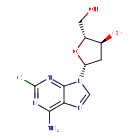
Structure for Cladribine (DB00242)

- Weight
- Average: 285.687
Monoisotopic: 285.062866982 - Chemical Formula
- C10H12ClN5O3
- Synonyms
- (2R,3S,5R)-5-(6-amino-2-chloropurin-9-yl)-2-(hydroxymethyl)oxolan-3-ol
- 2-CdA
- 2-Chloro-2'-deoxy-beta-adenosine
- 2-Chloro-2'-deoxyadenosine
- 2-chloro-6-amino-9-(2-deoxy-β-D-erythro-pentofuranosyl)purine
- 2-chloro-deoxyadenosine
- 2-Chlorodeoxyadenosine
- 2ClAdo
- Cladribina
- Cladribine
- Cladribinum
- CldAdo
- External IDs
- RWJ 26251
- RWJ-26251

Pharmacology
- Indication
For the treatment of active hairy cell leukemia (leukemic reticuloendotheliosis) as defined by clinically significant anemia, neutropenia, thrombocytopenia, or disease-related symptoms. Also used as an alternative agent for the treatment of chronic lymphocytic leukemia (CLL), low-grade non-Hodgkin's lymphoma, and cutaneous T-cell lymphoma.
 Reduce drug development failure ratesBuild, train, & validate machine-learning modelswith evidence-based and structured datasets.Build, train, & validate predictive machine-learning models with structured datasets.
- Associated Conditions
Indication Type Indication Combined Product Details Approval Level Age Group Patient Characteristics Dose Form Treatment of Chronic lymphocytic leukemia ••• ••••• Treatment of Cutaneous t-cell lymphoma ••• ••••• Treatment of Hairy cell leukemia •••••••••••• Treatment of Non-hodgkin's lymphoma ••• ••••• Treatment of Active confirmed by clinical features, confirmed by imaging features relapsing multiple sclerosis (ms) •••••••••••• ••••• - Contraindications & Blackbox Warnings
 Prevent Adverse Drug Events TodayTap into our Clinical API for life-saving information on contraindications & blackbox warnings, population restrictions, harmful risks, & more.Avoid life-threatening adverse drug events with our Clinical API
- Pharmacodynamics
Cladribine is a synthetic purine nucleoside that acts as an antineoplastic agent with immunosuppressive effects. Cladribine differs structurally from deoxyadenosine only by the presence of a chlorine atom at position 2 of the purine ring, which results in resistance to enzymatic degradation by adenosine deaminase. Due to this resistance, cladribine exhibits a more prolonged cytotoxic effect than deoxyadenosine against resting and proliferating lymphocytes. Cladribine is one of a group of chemotherapy drugs known as the anti-metabolites. Anti-metabolites stop cells from making and repairing DNA, which are processes that are necessary for cancer cells to grow and multiply.
- Mechanism of action
Cladribine is structurally related to fludarabine and pentostatin but has a different mechanism of action. Although the exact mechanism of action has not been fully determined, evidence shows that cladribine is phosphorylated by deoxycytidine kinase to the nucleotidecladribine triphosphate (CdATP; 2-chloro-2′-deoxyadenosine 5′-triphosphate), which accumulates and is incorporated into DNA in cells such as lymphocytes that contain high levels of deoxycytidine kinase and low levels of deoxynucleotidase, resulting in DNA strand breakage and inhibition of DNA synthesis and repair. High levels of CdATP also appear to inhibit ribonucleotide reductase, which leads to an imbalance in triphosphorylated deoxynucleotide (dNTP) pools and subsequent DNA strand breaks, inhibition of DNA synthesis and repair, nicotinamide adenine dinucleotide (NAD) and ATP depletion, and cell death.
Unlike other antimetabolite drugs, cladribine has cytotoxic effects on resting as well as proliferating lymphocytes. However, it does cause cells to accumulate at the G1/S phase junction, suggesting that cytotoxicity is associated with events critical to cell entry into S phase. It also binds purine nucleoside phosphorylase (PNP), however no relationship between this binding and a mechanism of action has been established. Cladribine also has therapeutic effects in patients with multiple sclerosis; although the mechanism of action for this therapeutic effect is not fully elucidated, it is thought to involve cytotoxic effects on B and T lymphocytes by impairing DNA synthesis which in turn results in depletion of lymphocytes.8
Target Actions Organism ARibonucleoside-diphosphate reductase large subunit inhibitorHumans ARibonucleoside-diphosphate reductase subunit M2 inhibitorHumans ARibonucleoside-diphosphate reductase subunit M2 B inhibitorHumans ADNA other/unknownHumans ADNA polymerase alpha catalytic subunit inhibitorHumans ADNA polymerase epsilon catalytic subunit A inhibitorHumans ADNA polymerase epsilon subunit 2 inhibitorHumans ADNA polymerase epsilon subunit 3 inhibitorHumans ADNA polymerase epsilon subunit 4 inhibitorHumans APurine nucleoside phosphorylase inducerHumans - Absorption
Oral bioavailability is 34 to 48%.
- Volume of distribution
- 4.5 ± 2.8 L/kg [patients with hematologic malignancies]
- 9 L/kg
- Protein binding
20%
- Metabolism
Metabolized in all cells with deoxycytidine kinase activity to 2-chloro-2'-deoxyadenosine-5'-triphosphate
Hover over products below to view reaction partners
- Route of elimination
Not Available
- Half-life
5.4 hours
- Clearance
- 978 +/- 422 mL/h/kg
- Adverse Effects
 Improve decision support & research outcomesWith structured adverse effects data, including: blackbox warnings, adverse reactions, warning & precautions, & incidence rates. View sample adverse effects data in our new Data Library!Improve decision support & research outcomes with our structured adverse effects data.
- Toxicity
Symptoms of overdose include irreversible neurologic toxicity (paraparesis/quadriparesis), acute nephrotoxicity, and severe bone marrow suppression resulting in neutropenia, anemia and thrombocytopenia.
- Pathways
- Not Available
- Pharmacogenomic Effects/ADRs
- Not Available
Interactions
- Drug Interactions
- This information should not be interpreted without the help of a healthcare provider. If you believe you are experiencing an interaction, contact a healthcare provider immediately. The absence of an interaction does not necessarily mean no interactions exist.
Drug Interaction Integrate drug-drug
interactions in your softwareAbatacept The risk or severity of adverse effects can be increased when Cladribine is combined with Abatacept. Abciximab The risk or severity of bleeding can be increased when Abciximab is combined with Cladribine. Abemaciclib Abemaciclib may decrease the excretion rate of Cladribine which could result in a higher serum level. Acenocoumarol The risk or severity of bleeding can be increased when Acenocoumarol is combined with Cladribine. Acetyldigitoxin Acetyldigitoxin may decrease the cardiotoxic activities of Cladribine. - Food Interactions
- Avoid echinacea. Echinacea should be used with caution, if at all, in patients receiving therapeutic immunosuppressants. Monitor for reduced efficacy of the immunosuppressant during concomitant use.
Products
 Drug product information from 10+ global regionsOur datasets provide approved product information including:dosage, form, labeller, route of administration, and marketing period.Access drug product information from over 10 global regions.
- International/Other Brands
- Litak / Movectro / Mylinax
- Brand Name Prescription Products
Name Dosage Strength Route Labeller Marketing Start Marketing End Region Image Cladribine Injection Solution 1 mg / mL Intravenous Fresenius Kabi 2009-06-30 Not applicable Canada 
Cladribine Injection Solution 1 mg / mL Intravenous Generic Medical Partners Inc 2020-08-19 Not applicable Canada Leustatin Injection, solution 1 mg/1mL Intravenous Janssen Products, L.P. 1993-03-01 2013-09-30 US 
Leustatin 1mg/ml Solution 1 mg / mL Intravenous Janssen Pharmaceuticals 1993-12-31 2011-12-19 Canada Litak Injection, solution 2 mg/ml Subcutaneous Lipomed 2020-12-16 Not applicable EU 
- Generic Prescription Products
Name Dosage Strength Route Labeller Marketing Start Marketing End Region Image Cladribine Injection, solution 1 mg/1mL Intravenous Hisun Pharmaceuticals Usa, Inc. 2020-05-18 Not applicable US Cladribine Injection 1 mg/1mL Intravenous Mylan Institutional LLC 2011-07-10 2022-12-31 US Cladribine Injection 1 mg/1mL Intravenous Bedford Pharmaceuticals 2000-02-28 2012-12-31 US Cladribine Injection 1 mg/1mL Intravenous Pfizer Laboratories Div Pfizer Inc. 2011-10-07 2017-12-31 US Cladribine Injection 1 mg/1mL Intravenous Fresenius Kabi USA, LLC 2004-12-01 Not applicable US
Categories
- ATC Codes
- L04AA40 — Cladribine
- L04AA — Selective immunosuppressants
- L04A — IMMUNOSUPPRESSANTS
- L04 — IMMUNOSUPPRESSANTS
- L — ANTINEOPLASTIC AND IMMUNOMODULATING AGENTS
- Drug Categories
- 2-Chloroadenosine
- Agents Causing Muscle Toxicity
- Antimetabolites
- Antineoplastic Agents
- Antineoplastic and Immunomodulating Agents
- BCRP/ABCG2 Substrates
- Cardiotoxic antineoplastic agents
- Deoxyadenosines
- Deoxyribonucleosides
- Heterocyclic Compounds, Fused-Ring
- Immunologic Factors
- Immunosuppressive Agents
- Myelosuppressive Agents
- Nucleic Acids, Nucleotides, and Nucleosides
- Nucleosides
- Purine Analogues
- Purine Antimetabolite
- Purine Nucleosides
- Purines
- Ribonucleosides
- Selective Immunosuppressants
- Chemical TaxonomyProvided by Classyfire
- Description
- This compound belongs to the class of organic compounds known as purine 2'-deoxyribonucleosides. These are compounds consisting of a purine linked to a ribose which lacks a hydroxyl group at position 2.
- Kingdom
- Organic compounds
- Super Class
- Nucleosides, nucleotides, and analogues
- Class
- Purine nucleosides
- Sub Class
- Purine 2'-deoxyribonucleosides
- Direct Parent
- Purine 2'-deoxyribonucleosides
- Alternative Parents
- 6-aminopurines / 2-halopyrimidines / Aminopyrimidines and derivatives / Aryl chlorides / N-substituted imidazoles / Imidolactams / Tetrahydrofurans / Heteroaromatic compounds / Secondary alcohols / Oxacyclic compounds show 6 more
- Substituents
- 2-halopyrimidine / 6-aminopurine / Alcohol / Amine / Aminopyrimidine / Aromatic heteropolycyclic compound / Aryl chloride / Aryl halide / Azacycle / Azole show 23 more
- Molecular Framework
- Aromatic heteropolycyclic compounds
- External Descriptors
- organochlorine compound, purine 2'-deoxyribonucleoside (CHEBI:567361)
- Affected organisms
- Humans and other mammals
Chemical Identifiers
- UNII
- 47M74X9YT5
- CAS number
- 4291-63-8
- InChI Key
- PTOAARAWEBMLNO-KVQBGUIXSA-N
- InChI
- InChI=1S/C10H12ClN5O3/c11-10-14-8(12)7-9(15-10)16(3-13-7)6-1-4(18)5(2-17)19-6/h3-6,17-18H,1-2H2,(H2,12,14,15)/t4-,5+,6+/m0/s1
- IUPAC Name
- (2R,3S,5R)-5-(6-amino-2-chloro-9H-purin-9-yl)-2-(hydroxymethyl)oxolan-3-ol
- SMILES
- NC1=C2N=CN([C@H]3C[C@H](O)[C@@H](CO)O3)C2=NC(Cl)=N1
References
- Synthesis Reference
Szepsel Gerszberg, "Method for the production of 2-chloro-2' -deoxyadenosine (cladribine) and its 3,5-di-O-p-toluoyl derivative." U.S. Patent US20020052491, issued May 02, 2002.
US20020052491- General References
- Warnke C, Wiendl H, Hartung HP, Stuve O, Kieseier BC: Identification of targets and new developments in the treatment of multiple sclerosis--focus on cladribine. Drug Des Devel Ther. 2010 Jul 21;4:117-26. [Article]
- Sigal DS, Miller HJ, Schram ED, Saven A: Beyond hairy cell: the activity of cladribine in other hematologic malignancies. Blood. 2010 Oct 21;116(16):2884-96. doi: 10.1182/blood-2010-02-246140. Epub 2010 Jul 15. [Article]
- Khalid BA, Hamilton NT, Cauchi MN: Binding of thyroid microsomes by lymphocytes from patients with thyroid disease and normal subjects. Clin Exp Immunol. 1976 Jan;23(1):28-32. [Article]
- Sampat K, Kantarjian H, Borthakur G: Clofarabine: emerging role in leukemias. Expert Opin Investig Drugs. 2009 Oct;18(10):1559-64. doi: 10.1517/13543780903173222. [Article]
- Kantarjian HM, Jeha S, Gandhi V, Wess M, Faderl S: Clofarabine: past, present, and future. Leuk Lymphoma. 2007 Oct;48(10):1922-30. [Article]
- Zhenchuk A, Lotfi K, Juliusson G, Albertioni F: Mechanisms of anti-cancer action and pharmacology of clofarabine. Biochem Pharmacol. 2009 Dec 1;78(11):1351-9. doi: 10.1016/j.bcp.2009.06.094. Epub 2009 Jul 1. [Article]
- Larson ML, Venugopal P: Clofarabine: a new treatment option for patients with acute myeloid leukemia. Expert Opin Pharmacother. 2009 Jun;10(8):1353-7. doi: 10.1517/14656560902997990. [Article]
- FDA Approved Drug Products: MAVENCLAD (cladribine) tablets, for oral use [Link]
- External Links
- Human Metabolome Database
- HMDB0014387
- KEGG Drug
- D01370
- PubChem Compound
- 20279
- PubChem Substance
- 46504588
- ChemSpider
- 19105
- BindingDB
- 38920
- 44157
- ChEBI
- 567361
- ChEMBL
- CHEMBL1619
- ZINC
- ZINC000003798064
- Therapeutic Targets Database
- DAP000565
- PharmGKB
- PA449027
- PDBe Ligand
- CL9
- RxList
- RxList Drug Page
- Drugs.com
- Drugs.com Drug Page
- Wikipedia
- Cladribine
- PDB Entries
- 2zi9 / 2zia
- MSDS
- Download (43.7 KB)
Clinical Trials
- Clinical Trials
Phase Status Purpose Conditions Count 4 Active Not Recruiting Basic Science Multiple Sclerosis / Relapsing Remitting Multiple Sclerosis (RRMS) 1 4 Active Not Recruiting Other Multiple Sclerosis 1 4 Active Not Recruiting Treatment Multiple Sclerosis 1 4 Active Not Recruiting Treatment Relapsing Remitting Multiple Sclerosis (RRMS) 1 4 Completed Other Multiple Sclerosis 1
Pharmacoeconomics
- Manufacturers
- App pharmaceuticals llc
- Bedford laboratories div ben venue laboratories inc
- Ortho biotech products lp
- Packagers
- APP Pharmaceuticals
- Bedford Labs
- Ben Venue Laboratories Inc.
- Centocor Ortho Biotech Inc.
- Dosage Forms
Form Route Strength Injection Intravenous 1 mg/1mL Injection Intravenous 10 MG/10ML Injection, solution Intravenous 1 mg/1mL Solution Intravenous 1 mg / mL Solution Intravenous 1 mg Injection, solution Parenteral; Subcutaneous 2 MG/ML Injection, solution Subcutaneous 2 mg/ml Solution Intravenous; Subcutaneous 2 mg Solution Intravenous; Subcutaneous 200000 mg Tablet Oral 10 mg/1 Tablet Oral 10.000 mg Tablet Oral 10 mg Injection, solution 2 mg/ml - Prices
Unit description Cost Unit Leustatin 10 mg/10 ml vial 102.78USD ml Cladribine 10 mg/10 ml vial 34.2USD ml DrugBank does not sell nor buy drugs. Pricing information is supplied for informational purposes only.- Patents
Patent Number Pediatric Extension Approved Expires (estimated) Region US7888328 No 2011-02-15 2024-04-11 US US8785415 No 2014-07-22 2024-04-11 US US7713947 No 2010-05-11 2026-10-16 US US8377903 No 2013-02-19 2026-05-31 US US10849919 No 2020-12-01 2038-11-23 US
Properties
- State
- Solid
- Experimental Properties
Property Value Source melting point (°C) 215 °C Not Available logP -0.1 Not Available - Predicted Properties
Property Value Source Water Solubility 6.35 mg/mL ALOGPS logP -0.12 ALOGPS logP -0.28 Chemaxon logS -1.6 ALOGPS pKa (Strongest Acidic) 13.89 Chemaxon pKa (Strongest Basic) 2.22 Chemaxon Physiological Charge 0 Chemaxon Hydrogen Acceptor Count 7 Chemaxon Hydrogen Donor Count 3 Chemaxon Polar Surface Area 119.31 Å2 Chemaxon Rotatable Bond Count 2 Chemaxon Refractivity 67.18 m3·mol-1 Chemaxon Polarizability 26.85 Å3 Chemaxon Number of Rings 3 Chemaxon Bioavailability 1 Chemaxon Rule of Five Yes Chemaxon Ghose Filter Yes Chemaxon Veber's Rule No Chemaxon MDDR-like Rule No Chemaxon - Predicted ADMET Features
Property Value Probability Human Intestinal Absorption + 1.0 Blood Brain Barrier + 0.9386 Caco-2 permeable - 0.7394 P-glycoprotein substrate Non-substrate 0.6469 P-glycoprotein inhibitor I Non-inhibitor 0.9139 P-glycoprotein inhibitor II Non-inhibitor 0.8526 Renal organic cation transporter Non-inhibitor 0.8722 CYP450 2C9 substrate Non-substrate 0.8948 CYP450 2D6 substrate Non-substrate 0.8145 CYP450 3A4 substrate Non-substrate 0.5 CYP450 1A2 substrate Non-inhibitor 0.7226 CYP450 2C9 inhibitor Non-inhibitor 0.8803 CYP450 2D6 inhibitor Non-inhibitor 0.9007 CYP450 2C19 inhibitor Non-inhibitor 0.8856 CYP450 3A4 inhibitor Non-inhibitor 0.831 CYP450 inhibitory promiscuity Low CYP Inhibitory Promiscuity 0.8761 Ames test Non AMES toxic 0.8673 Carcinogenicity Non-carcinogens 0.6795 Biodegradation Not ready biodegradable 1.0 Rat acute toxicity 2.2055 LD50, mol/kg Not applicable hERG inhibition (predictor I) Weak inhibitor 0.9326 hERG inhibition (predictor II) Non-inhibitor 0.8344
Spectra
- Mass Spec (NIST)
- Not Available
- Spectra
- Chromatographic Properties
Collision Cross Sections (CCS)
Adduct CCS Value (Å2) Source type Source [M-H]- 166.1812149 predictedDarkChem Lite v0.1.0 [M-H]- 161.9079659 predictedDarkChem Lite v0.1.0 [M-H]- 160.90352 predictedDeepCCS 1.0 (2019) [M+H]+ 166.7559149 predictedDarkChem Lite v0.1.0 [M+H]+ 160.7847969 predictedDarkChem Lite v0.1.0 [M+H]+ 163.26152 predictedDeepCCS 1.0 (2019) [M+Na]+ 166.1916149 predictedDarkChem Lite v0.1.0 [M+Na]+ 166.41 predictedDarkChem Lite v0.1.0 [M+Na]+ 169.98991 predictedDeepCCS 1.0 (2019)
Targets

- Kind
- Protein
- Organism
- Humans
- Pharmacological action
- Yes
- Actions
- Inhibitor
- General Function
- Ribonucleoside-diphosphate reductase activity, thioredoxin disulfide as acceptor
- Specific Function
- Provides the precursors necessary for DNA synthesis. Catalyzes the biosynthesis of deoxyribonucleotides from the corresponding ribonucleotides.
- Gene Name
- RRM1
- Uniprot ID
- P23921
- Uniprot Name
- Ribonucleoside-diphosphate reductase large subunit
- Molecular Weight
- 90069.375 Da
References
- Sampat K, Kantarjian H, Borthakur G: Clofarabine: emerging role in leukemias. Expert Opin Investig Drugs. 2009 Oct;18(10):1559-64. doi: 10.1517/13543780903173222. [Article]
- Kantarjian HM, Jeha S, Gandhi V, Wess M, Faderl S: Clofarabine: past, present, and future. Leuk Lymphoma. 2007 Oct;48(10):1922-30. [Article]
- Zhenchuk A, Lotfi K, Juliusson G, Albertioni F: Mechanisms of anti-cancer action and pharmacology of clofarabine. Biochem Pharmacol. 2009 Dec 1;78(11):1351-9. doi: 10.1016/j.bcp.2009.06.094. Epub 2009 Jul 1. [Article]
- Kline JP, Larson RA: Clofarabine in the treatment of acute myeloid leukaemia and acute lymphoblastic leukaemia: a review. Expert Opin Pharmacother. 2005 Dec;6(15):2711-8. [Article]
- Takahashi T, Kanazawa J, Akinaga S, Tamaoki T, Okabe M: Antitumor activity of 2-chloro-9-(2-deoxy-2-fluoro-beta-D-arabinofuranosyl) adenine, a novel deoxyadenosine analog, against human colon tumor xenografts by oral administration. Cancer Chemother Pharmacol. 1999;43(3):233-40. [Article]
- Kind
- Protein
- Organism
- Humans
- Pharmacological action
- Yes
- Actions
- Inhibitor
- General Function
- Ribonucleoside-diphosphate reductase activity, thioredoxin disulfide as acceptor
- Specific Function
- Provides the precursors necessary for DNA synthesis. Catalyzes the biosynthesis of deoxyribonucleotides from the corresponding ribonucleotides. Inhibits Wnt signaling.
- Gene Name
- RRM2
- Uniprot ID
- P31350
- Uniprot Name
- Ribonucleoside-diphosphate reductase subunit M2
- Molecular Weight
- 44877.25 Da
References
- Sampat K, Kantarjian H, Borthakur G: Clofarabine: emerging role in leukemias. Expert Opin Investig Drugs. 2009 Oct;18(10):1559-64. doi: 10.1517/13543780903173222. [Article]
- Kantarjian HM, Jeha S, Gandhi V, Wess M, Faderl S: Clofarabine: past, present, and future. Leuk Lymphoma. 2007 Oct;48(10):1922-30. [Article]
- Zhenchuk A, Lotfi K, Juliusson G, Albertioni F: Mechanisms of anti-cancer action and pharmacology of clofarabine. Biochem Pharmacol. 2009 Dec 1;78(11):1351-9. doi: 10.1016/j.bcp.2009.06.094. Epub 2009 Jul 1. [Article]
- Kline JP, Larson RA: Clofarabine in the treatment of acute myeloid leukaemia and acute lymphoblastic leukaemia: a review. Expert Opin Pharmacother. 2005 Dec;6(15):2711-8. [Article]
- Takahashi T, Kanazawa J, Akinaga S, Tamaoki T, Okabe M: Antitumor activity of 2-chloro-9-(2-deoxy-2-fluoro-beta-D-arabinofuranosyl) adenine, a novel deoxyadenosine analog, against human colon tumor xenografts by oral administration. Cancer Chemother Pharmacol. 1999;43(3):233-40. [Article]
- Kind
- Protein
- Organism
- Humans
- Pharmacological action
- Yes
- Actions
- Inhibitor
- General Function
- Ribonucleoside-diphosphate reductase activity, thioredoxin disulfide as acceptor
- Specific Function
- Plays a pivotal role in cell survival by repairing damaged DNA in a p53/TP53-dependent manner. Supplies deoxyribonucleotides for DNA repair in cells arrested at G1 or G2. Contains an iron-tyrosyl f...
- Gene Name
- RRM2B
- Uniprot ID
- Q7LG56
- Uniprot Name
- Ribonucleoside-diphosphate reductase subunit M2 B
- Molecular Weight
- 40736.11 Da
References
- Sampat K, Kantarjian H, Borthakur G: Clofarabine: emerging role in leukemias. Expert Opin Investig Drugs. 2009 Oct;18(10):1559-64. doi: 10.1517/13543780903173222. [Article]
- Kantarjian HM, Jeha S, Gandhi V, Wess M, Faderl S: Clofarabine: past, present, and future. Leuk Lymphoma. 2007 Oct;48(10):1922-30. [Article]
- Zhenchuk A, Lotfi K, Juliusson G, Albertioni F: Mechanisms of anti-cancer action and pharmacology of clofarabine. Biochem Pharmacol. 2009 Dec 1;78(11):1351-9. doi: 10.1016/j.bcp.2009.06.094. Epub 2009 Jul 1. [Article]
- Kline JP, Larson RA: Clofarabine in the treatment of acute myeloid leukaemia and acute lymphoblastic leukaemia: a review. Expert Opin Pharmacother. 2005 Dec;6(15):2711-8. [Article]
- Takahashi T, Kanazawa J, Akinaga S, Tamaoki T, Okabe M: Antitumor activity of 2-chloro-9-(2-deoxy-2-fluoro-beta-D-arabinofuranosyl) adenine, a novel deoxyadenosine analog, against human colon tumor xenografts by oral administration. Cancer Chemother Pharmacol. 1999;43(3):233-40. [Article]
References
- Overington JP, Al-Lazikani B, Hopkins AL: How many drug targets are there? Nat Rev Drug Discov. 2006 Dec;5(12):993-6. [Article]
- Imming P, Sinning C, Meyer A: Drugs, their targets and the nature and number of drug targets. Nat Rev Drug Discov. 2006 Oct;5(10):821-34. [Article]
- Sampat K, Kantarjian H, Borthakur G: Clofarabine: emerging role in leukemias. Expert Opin Investig Drugs. 2009 Oct;18(10):1559-64. doi: 10.1517/13543780903173222. [Article]
- Kantarjian HM, Jeha S, Gandhi V, Wess M, Faderl S: Clofarabine: past, present, and future. Leuk Lymphoma. 2007 Oct;48(10):1922-30. [Article]
- Zhenchuk A, Lotfi K, Juliusson G, Albertioni F: Mechanisms of anti-cancer action and pharmacology of clofarabine. Biochem Pharmacol. 2009 Dec 1;78(11):1351-9. doi: 10.1016/j.bcp.2009.06.094. Epub 2009 Jul 1. [Article]
- Kline JP, Larson RA: Clofarabine in the treatment of acute myeloid leukaemia and acute lymphoblastic leukaemia: a review. Expert Opin Pharmacother. 2005 Dec;6(15):2711-8. [Article]
- Hartman WR, Hentosh P: The antileukemia drug 2-chloro-2'-deoxyadenosine: an intrinsic transcriptional antagonist. Mol Pharmacol. 2004 Jan;65(1):227-34. [Article]
- Kind
- Protein
- Organism
- Humans
- Pharmacological action
- Yes
- Actions
- Inhibitor
- General Function
- Protein kinase binding
- Specific Function
- Plays an essential role in the initiation of DNA replication. During the S phase of the cell cycle, the DNA polymerase alpha complex (composed of a catalytic subunit POLA1/p180, a regulatory subuni...
- Gene Name
- POLA1
- Uniprot ID
- P09884
- Uniprot Name
- DNA polymerase alpha catalytic subunit
- Molecular Weight
- 165911.405 Da
References
- Zhenchuk A, Lotfi K, Juliusson G, Albertioni F: Mechanisms of anti-cancer action and pharmacology of clofarabine. Biochem Pharmacol. 2009 Dec 1;78(11):1351-9. doi: 10.1016/j.bcp.2009.06.094. Epub 2009 Jul 1. [Article]
- Kline JP, Larson RA: Clofarabine in the treatment of acute myeloid leukaemia and acute lymphoblastic leukaemia: a review. Expert Opin Pharmacother. 2005 Dec;6(15):2711-8. [Article]
- Takahashi T, Kanazawa J, Akinaga S, Tamaoki T, Okabe M: Antitumor activity of 2-chloro-9-(2-deoxy-2-fluoro-beta-D-arabinofuranosyl) adenine, a novel deoxyadenosine analog, against human colon tumor xenografts by oral administration. Cancer Chemother Pharmacol. 1999;43(3):233-40. [Article]
- Hartman WR, Hentosh P: The antileukemia drug 2-chloro-2'-deoxyadenosine: an intrinsic transcriptional antagonist. Mol Pharmacol. 2004 Jan;65(1):227-34. [Article]
- Kind
- Protein
- Organism
- Humans
- Pharmacological action
- Yes
- Actions
- Inhibitor
- General Function
- Zinc ion binding
- Specific Function
- Participates in DNA repair and in chromosomal DNA replication.
- Gene Name
- POLE
- Uniprot ID
- Q07864
- Uniprot Name
- DNA polymerase epsilon catalytic subunit A
- Molecular Weight
- 261515.525 Da
References
- Zhenchuk A, Lotfi K, Juliusson G, Albertioni F: Mechanisms of anti-cancer action and pharmacology of clofarabine. Biochem Pharmacol. 2009 Dec 1;78(11):1351-9. doi: 10.1016/j.bcp.2009.06.094. Epub 2009 Jul 1. [Article]
- Kind
- Protein
- Organism
- Humans
- Pharmacological action
- Yes
- Actions
- Inhibitor
- General Function
- Dna-directed dna polymerase activity
- Specific Function
- Participates in DNA repair and in chromosomal DNA replication.
- Gene Name
- POLE2
- Uniprot ID
- P56282
- Uniprot Name
- DNA polymerase epsilon subunit 2
- Molecular Weight
- 59536.64 Da
References
- Zhenchuk A, Lotfi K, Juliusson G, Albertioni F: Mechanisms of anti-cancer action and pharmacology of clofarabine. Biochem Pharmacol. 2009 Dec 1;78(11):1351-9. doi: 10.1016/j.bcp.2009.06.094. Epub 2009 Jul 1. [Article]
- Kind
- Protein
- Organism
- Humans
- Pharmacological action
- Yes
- Actions
- Inhibitor
- General Function
- Dna-directed dna polymerase activity
- Specific Function
- Forms a complex with DNA polymerase epsilon subunit CHRAC1 and binds naked DNA, which is then incorporated into chromatin, aided by the nucleosome-remodeling activity of ISWI/SNF2H and ACF1.
- Gene Name
- POLE3
- Uniprot ID
- Q9NRF9
- Uniprot Name
- DNA polymerase epsilon subunit 3
- Molecular Weight
- 16859.4 Da
References
- Zhenchuk A, Lotfi K, Juliusson G, Albertioni F: Mechanisms of anti-cancer action and pharmacology of clofarabine. Biochem Pharmacol. 2009 Dec 1;78(11):1351-9. doi: 10.1016/j.bcp.2009.06.094. Epub 2009 Jul 1. [Article]
- Kind
- Protein
- Organism
- Humans
- Pharmacological action
- Yes
- Actions
- Inhibitor
- General Function
- Dna-directed dna polymerase activity
- Specific Function
- May play a role in allowing polymerase epsilon to carry out its replication and/or repair function.
- Gene Name
- POLE4
- Uniprot ID
- Q9NR33
- Uniprot Name
- DNA polymerase epsilon subunit 4
- Molecular Weight
- 12208.63 Da
References
- Zhenchuk A, Lotfi K, Juliusson G, Albertioni F: Mechanisms of anti-cancer action and pharmacology of clofarabine. Biochem Pharmacol. 2009 Dec 1;78(11):1351-9. doi: 10.1016/j.bcp.2009.06.094. Epub 2009 Jul 1. [Article]
- Kind
- Protein
- Organism
- Humans
- Pharmacological action
- Yes
- Actions
- Inducer
- General Function
- Purine-nucleoside phosphorylase activity
- Specific Function
- The purine nucleoside phosphorylases catalyze the phosphorolytic breakdown of the N-glycosidic bond in the beta-(deoxy)ribonucleoside molecules, with the formation of the corresponding free purine ...
- Gene Name
- PNP
- Uniprot ID
- P00491
- Uniprot Name
- Purine nucleoside phosphorylase
- Molecular Weight
- 32117.69 Da
References
- Bzowska A, Kazimierczuk Z: 2-Chloro-2'-deoxyadenosine (cladribine) and its analogues are good substrates and potent selective inhibitors of Escherichia coli purine-nucleoside phosphorylase. Eur J Biochem. 1995 Nov 1;233(3):886-90. [Article]
- Dumontet C, Fabianowska-Majewska K, Mantincic D, Callet Bauchu E, Tigaud I, Gandhi V, Lepoivre M, Peters GJ, Rolland MO, Wyczechowska D, Fang X, Gazzo S, Voorn DA, Vanier-Viornery A, MacKey J: Common resistance mechanisms to deoxynucleoside analogues in variants of the human erythroleukaemic line K562. Br J Haematol. 1999 Jul;106(1):78-85. [Article]
- Dumontet C, Bauchu EC, Fabianowska K, Lepoivre M, Wyczechowska D, Bodin F, Rolland MO: Common resistance mechanisms to nucleoside analogues in variants of the human erythroleukemic line K562. Adv Exp Med Biol. 1999;457:571-7. [Article]
- Takimoto T, Kubota M, Tsuruta S, Kitoh T, Tanizawa A, Akiyama Y, Kiriyama Y, Mikawa H: Changes in sensitivity to anticancer drugs during TPA-induced cellular differentiation in a human T-lymphoblastoid cell line (MOLT-4). Leukemia. 1988 Jul;2(7):443-6. [Article]
- Carson DA, Wasson DB, Lakow E, Kamatani N: Possible metabolic basis for the different immunodeficient states associated with genetic deficiencies of adenosine deaminase and purine nucleoside phosphorylase. Proc Natl Acad Sci U S A. 1982 Jun;79(12):3848-52. [Article]
Enzymes
- Kind
- Protein
- Organism
- Humans
- Pharmacological action
- Unknown
- Actions
- Substrate
- General Function
- Protein homodimerization activity
- Specific Function
- Required for the phosphorylation of the deoxyribonucleosides deoxycytidine (dC), deoxyguanosine (dG) and deoxyadenosine (dA). Has broad substrate specificity, and does not display selectivity based...
- Gene Name
- DCK
- Uniprot ID
- P27707
- Uniprot Name
- Deoxycytidine kinase
- Molecular Weight
- 30518.315 Da
References
- Warnke C, Wiendl H, Hartung HP, Stuve O, Kieseier BC: Identification of targets and new developments in the treatment of multiple sclerosis--focus on cladribine. Drug Des Devel Ther. 2010 Jul 21;4:117-26. [Article]
- Sigal DS, Miller HJ, Schram ED, Saven A: Beyond hairy cell: the activity of cladribine in other hematologic malignancies. Blood. 2010 Oct 21;116(16):2884-96. doi: 10.1182/blood-2010-02-246140. Epub 2010 Jul 15. [Article]
- Kantarjian HM, Jeha S, Gandhi V, Wess M, Faderl S: Clofarabine: past, present, and future. Leuk Lymphoma. 2007 Oct;48(10):1922-30. [Article]
- Sampat K, Kantarjian H, Borthakur G: Clofarabine: emerging role in leukemias. Expert Opin Investig Drugs. 2009 Oct;18(10):1559-64. doi: 10.1517/13543780903173222. [Article]
- Zhenchuk A, Lotfi K, Juliusson G, Albertioni F: Mechanisms of anti-cancer action and pharmacology of clofarabine. Biochem Pharmacol. 2009 Dec 1;78(11):1351-9. doi: 10.1016/j.bcp.2009.06.094. Epub 2009 Jul 1. [Article]
- Larson ML, Venugopal P: Clofarabine: a new treatment option for patients with acute myeloid leukemia. Expert Opin Pharmacother. 2009 Jun;10(8):1353-7. doi: 10.1517/14656560902997990. [Article]
Transporters
- Kind
- Protein
- Organism
- Humans
- Pharmacological action
- Unknown
- Actions
- Substrate
- General Function
- Xenobiotic-transporting atpase activity
- Specific Function
- High-capacity urate exporter functioning in both renal and extrarenal urate excretion. Plays a role in porphyrin homeostasis as it is able to mediates the export of protoporhyrin IX (PPIX) both fro...
- Gene Name
- ABCG2
- Uniprot ID
- Q9UNQ0
- Uniprot Name
- ATP-binding cassette sub-family G member 2
- Molecular Weight
- 72313.47 Da
References
- de Wolf C, Jansen R, Yamaguchi H, de Haas M, van de Wetering K, Wijnholds J, Beijnen J, Borst P: Contribution of the drug transporter ABCG2 (breast cancer resistance protein) to resistance against anticancer nucleosides. Mol Cancer Ther. 2008 Sep;7(9):3092-102. doi: 10.1158/1535-7163.MCT-08-0427. Epub 2008 Sep 2. [Article]
- Kind
- Protein
- Organism
- Humans
- Pharmacological action
- Unknown
- General Function
- Pyrimidine- and adenine-specific:sodium symporter activity
- Specific Function
- Sodium-dependent, pyrimidine- and purine-selective. Involved in the homeostasis of endogenous nucleosides. Exhibits the transport characteristics of the nucleoside transport system cib or N3 subtyp...
- Gene Name
- SLC28A3
- Uniprot ID
- Q9HAS3
- Uniprot Name
- Solute carrier family 28 member 3
- Molecular Weight
- 76929.61 Da
References
- Badagnani I, Chan W, Castro RA, Brett CM, Huang CC, Stryke D, Kawamoto M, Johns SJ, Ferrin TE, Carlson EJ, Burchard EG, Giacomini KM: Functional analysis of genetic variants in the human concentrative nucleoside transporter 3 (CNT3; SLC28A3). Pharmacogenomics J. 2005;5(3):157-65. [Article]

Drug created at June 13, 2005 13:24 / Updated at April 26, 2024 00:45