Identification
- Summary
Ziprasidone is an atypical antipsychotic used to manage schizophrenia, bipolar mania, and agitation in patients with schizophrenia.
- Brand Names
- Geodon, Zeldox
- Generic Name
- Ziprasidone
- DrugBank Accession Number
- DB00246
- Background
Disorders such as schizophrenia and bipolar disorder can significantly impair mood, cognition, and behavior.6 These mental illnesses can often be accompanied by comorbidities such as depression and substance abuse, and can significantly impact the quality of life of patients and caregivers.6 Luckily, several treatment options for psychotic disorders have been introduced to market since the realization of chlorpromazine's antipsychotic properties in 1952.6
Second generation antipsychotics (commonly referred to as atypical antipsychotics) include clozapine, quetiapine, olanzapine, aripiprazole and ziprasidone among others, and are generally thought to be as efficacious as first generation antipsychotics but differ in their adverse effect profiles.6,7 First generation antipsychotics are associated with extrapyramidal adverse effects while atypical antipsychotics are linked to weight gain, impaired glucose tolerance and metabolic syndrome.7,8
Ziprasidone is used to treat schizophrenia and bipolar disorder.5 It can effectively reduce the rate and time of relapses in schizophrenia, and can be used to treat manic episodes in bipolar disorder although the mechanism of action is unknown.5 Although ziprasidone is classified as an atypical antipsychotic, it appears to have a lower incidence of metabolic adverse effects compared to other medications in the same class.6
- Type
- Small Molecule
- Groups
- Approved
- Structure
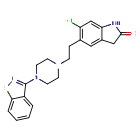
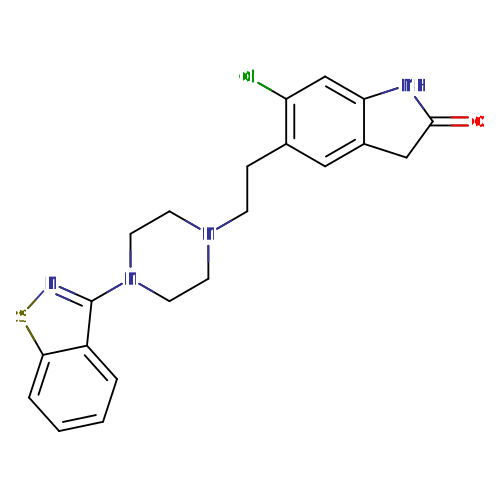
Structure for Ziprasidone (DB00246)
- Weight
- Average: 412.936
Monoisotopic: 412.112459711 - Chemical Formula
- C21H21ClN4OS
- Synonyms
- Ziprasidona
- Ziprasidone
- Ziprasidonum
- External IDs
- CP 88059

Pharmacology
- Indication
In its oral form, ziprasidone is approved for the treatment of schizophrenia, as monotherapy for acute treatment of manic or mixed episodes related to bipolar I disorder, and as adjunctive therapy to lithium or valproate for maintenance treatment of bipolar I disorder.13 The injectable formulation is approved only for treatment of acute agitation in schizophrenia.13
 Reduce drug development failure ratesBuild, train, & validate machine-learning modelswith evidence-based and structured datasets.Build, train, & validate predictive machine-learning models with structured datasets.
- Associated Conditions
Indication Type Indication Combined Product Details Approval Level Age Group Patient Characteristics Dose Form Treatment of Acute agitation •••••••••••• ••••••••• Treatment of Agitation ••• ••••• Used as adjunct in combination to manage Bipolar 1 disorder •••••••••••• ••••••• Treatment of Psychosis ••• ••••• Treatment of Schizophrenia •••••••••••• ••••••• - Contraindications & Blackbox Warnings
 Prevent Adverse Drug Events TodayTap into our Clinical API for life-saving information on contraindications & blackbox warnings, population restrictions, harmful risks, & more.Avoid life-threatening adverse drug events with our Clinical API
- Pharmacodynamics
Ziprasidone is classified as a "second generation" or "atypical" antipsychotic and is a dopamine and 5HT2A receptor antagonist with a unique receptor binding profile. As previously mentioned, ziprasidone has a very high 5-HT2A/D2 affinity ratio, binds to multiple serotonin receptors in addition to 5-HT2A, and blocks monoamine transporters which prevents 5HT and NE reuptake. On the other hand, ziprasidone has a low affinity for muscarinic cholinergic M1, histamine H1, and alpha1-adrenergic receptors.4
- Mechanism of action
The effects of ziprasidone are differentiated from other antispychotics based on its preference and affinity for certain receptors. Ziprasidone binds to serotonin-2A (5-HT2A) and dopamine D2 receptors in a similar fashion to other atypical antipsychotics; however, one key difference is that ziprasidone has a higher 5-HT2A/D2 receptor affinity ratio when compared to other antipsychotics such as olanzapine, quetiapine, risperidone, and aripiprazole.1 Ziprasidone offers enhanced modulation of mood, notable negative symptom relief, overall cognitive improvement and reduced motor dysfunction which is linked to it's potent interaction with 5-HT2C, 5-HT1D, and 5-HT1A receptors in brain tissue.1 Ziprasidone can bind moderately to norepinephrine and serotonin reuptake sites which may contribute to its antidepressant and anxiolytic activity.1 Patient's taking ziprasidone will likely experience a lower incidence of orthostatic hypotension, cognitive disturbance, sedation, weight gain, and disruption in prolactin levels since ziprasidone has a lower affinity for histamine H1, muscarinic M1, and alpha1-adrenoceptors.1
- Absorption
In the absence of food, ziprasidone's oral bioavailability is 60%, and absorption may reach 100% if ziprasidone is taken with a meal containing at least 500 kcal. The difference in bioavailability has little to do with the fat content of the food and appears to be related to the bulk of the meal since more absorption occurs the longer ziprasidone remains in the stomach.4
- Volume of distribution
The mean apparent volume of distribution of Ziprasidone is 1.5 L/kg.13
- Protein binding
Ziprasidone is extensively protein bound with over 99% of the drug bound to plasma proteins, primarily albumin and alpha1-acid glycoprotein.11,13
- Metabolism
Ziprasidone is heavily metabolized in the liver with less than 5% of the drug excreted unchanged in the urine.3 The primary reductive pathway is catalyzed by aldehyde oxidase, while 2 other less prominent oxidative pathways are catalyzed by CYP3A4.3 Ziprasidone is unlikely to interact with other medications metabolized by CYP3A4 since only 1/3 of the antipsychotic is metabolized by the CYP3A4 system.3
There are 12 identified ziprasidone metabolites (abbreviations italicized): Ziprasidone sulfoxide, ziprasidone sulfone, (6-chloro-2-oxo-2,3-dihydro-1H-indol-5-yl)acetic acid (OX-COOH), OX-COOH glucuronide, 3-(piperazine-1-yl)-1,2-benzisothiazole (BITP), BITP sulfoxide, BITP sulfone, BITP sulfone lactam, S-Methyl-dihydro-ziprasidone, S-Methyl-dihydro-ziprasidone-sulfoxide, 6-chloro-5-(2-piperazin-1-yl-ethyl)-1,3-dihydro-indol-2-one (OX-P), and dihydro-ziprasidone-sulfone.10
As suggested by the quantity of metabolites, ziprasidone is metabolized through several different pathways. Ziprasidone is sequentially oxidized to ziprasidone sulfoxide and ziprasidone sulfone, and oxidative N-dealkylation of ziprasidone produces OX-COOH and BITP.10 OX-COOH undergoes phase II metabolism to yield a glucuronidated metabolite while BITP is sequentially oxidized into BITP sulfoxide, BITP sulfone, then BITP sulfone lactam.10 Ziprasidone can also undergo reductive cleavage and methylation to produce S-Methyl-dihydro-ziprasidone and then further oxidation to produce S-Methyl-dihydro-ziprasidone-sulfoxide.10 Finally dearylation of ziprasidone produces OX-P, and the process of hydration and oxidation transforms the parent drug into dihydro-ziprasidone-sulfone.10
Although CYP3A4 and aldehyde oxidase are the primary enzymes involved in ziprasidone metabolism3, the pathways associated with each enzyme have not been specified.
Hover over products below to view reaction partners
- Route of elimination
Ziprasidone is extensively metabolized after oral administration with only a small amount excreted in the urine (<1%) or feces (<4%) as unchanged drug.
- Half-life
The half life of ziprasidone is 6-7 hours.4
- Clearance
The mean apparent systemic clearance is 7.5 mL/min/kg.13
- Adverse Effects
 Improve decision support & research outcomesWith structured adverse effects data, including: blackbox warnings, adverse reactions, warning & precautions, & incidence rates. View sample adverse effects data in our new Data Library!Improve decision support & research outcomes with our structured adverse effects data.
- Toxicity
The most common adverse reactions reported with ziprasidone include somnolence, respiratory tract infections, extrapyramidal symptoms, dizziness, akathisia, abnormal vision, asthenia, vomiting, headache and nausea. 13
- Pathways
- Not Available
- Pharmacogenomic Effects/ADRs
- Not Available
Interactions
- Drug Interactions
- This information should not be interpreted without the help of a healthcare provider. If you believe you are experiencing an interaction, contact a healthcare provider immediately. The absence of an interaction does not necessarily mean no interactions exist.
Drug Interaction Integrate drug-drug
interactions in your software1,2-Benzodiazepine The risk or severity of adverse effects can be increased when 1,2-Benzodiazepine is combined with Ziprasidone. Abametapir The serum concentration of Ziprasidone can be increased when it is combined with Abametapir. Abatacept The metabolism of Ziprasidone can be increased when combined with Abatacept. Abemaciclib The metabolism of Abemaciclib can be decreased when combined with Ziprasidone. Abiraterone The metabolism of Abiraterone can be decreased when combined with Ziprasidone. - Food Interactions
- Avoid alcohol.
- Take with food.
Products
 Drug product information from 10+ global regionsOur datasets provide approved product information including:dosage, form, labeller, route of administration, and marketing period.Access drug product information from over 10 global regions.
- Product Ingredients
Ingredient UNII CAS InChI Key Ziprasidone hydrochloride 216X081ORU 138982-67-9 ZCBZSCBNOOIHFP-UHFFFAOYSA-N Ziprasidone mesylate trihydrate 3X6SAX83JZ 199191-69-0 WLQZEFFFIUHSJB-UHFFFAOYSA-N - Product Images
- Brand Name Prescription Products
Name Dosage Strength Route Labeller Marketing Start Marketing End Region Image Geodon Capsule 80 mg/1 Oral Roerig 2019-08-01 Not applicable US 
Geodon Capsule 60 mg/1 Oral Lake Erie Medical &Surgical Supply Dba Quality Care Products Llc 2012-03-27 2014-12-31 US Geodon Capsule 40 mg/1 Oral Rebel Distributors 2001-02-05 Not applicable US 
Geodon Capsule 20 mg/1 Oral Roerig 2019-08-01 2022-02-28 US Geodon Capsule 80 mg/1 Oral Cardinal Health 2001-02-05 2015-06-30 US 
- Generic Prescription Products
Name Dosage Strength Route Labeller Marketing Start Marketing End Region Image Auro-ziprasidone Capsule 40 mg Oral Auro Pharma Inc 2018-03-19 Not applicable Canada 
Auro-ziprasidone Capsule 80 mg Oral Auro Pharma Inc 2018-03-19 Not applicable Canada Auro-ziprasidone Capsule 20 mg Oral Auro Pharma Inc 2018-03-19 Not applicable Canada Auro-ziprasidone Capsule 60 mg Oral Auro Pharma Inc 2018-03-19 Not applicable Canada Gd-ziprasidone Capsule 40 mg Oral Genmed A Division Of Pfizer Canada Ulc Not applicable Not applicable Canada


Categories
- ATC Codes
- N05AE04 — Ziprasidone
- Drug Categories
- Adrenergic alpha-1 Receptor Antagonists
- Adrenergic alpha-Antagonists
- Adrenergic Antagonists
- Agents that produce hypertension
- Anticholinergic Agents
- Antidepressive Agents
- Antipsychotic Agents
- Antipsychotic Agents (Second Generation [Atypical])
- Central Nervous System Agents
- Central Nervous System Depressants
- Cytochrome P-450 CYP2D6 Inhibitors
- Cytochrome P-450 CYP2D6 Inhibitors (weak)
- Cytochrome P-450 CYP3A Inhibitors
- Cytochrome P-450 CYP3A Substrates
- Cytochrome P-450 CYP3A4 Inhibitors
- Cytochrome P-450 CYP3A4 Inhibitors (moderate)
- Cytochrome P-450 CYP3A4 Substrates
- Cytochrome P-450 CYP3A4 Substrates (strength unknown)
- Cytochrome P-450 CYP3A5 Substrates
- Cytochrome P-450 Enzyme Inhibitors
- Cytochrome P-450 Substrates
- Dopamine Agents
- Dopamine Antagonists
- Dopamine D2 Receptor Antagonists
- Highest Risk QTc-Prolonging Agents
- Histamine Antagonists
- Histamine H1 Antagonists
- Hyperglycemia-Associated Agents
- Indole Derivatives
- Muscarinic Antagonists
- Nervous System
- Neurotoxic agents
- Neurotransmitter Agents
- Psycholeptics
- Psychotropic Drugs
- QTc Prolonging Agents
- Serotonergic Drugs Shown to Increase Risk of Serotonin Syndrome
- Serotonin 5-HT1 Receptor Agonists
- Serotonin 5-HT1 Receptor Antagonists
- Serotonin 5-HT1D Receptor Antagonists
- Serotonin 5-HT2 Receptor Antagonists
- Serotonin 5-HT2A Receptor Antagonists
- Serotonin 5-HT2C Receptor Antagonists
- Serotonin Agents
- Serotonin Receptor Agonists
- Serotonin Receptor Antagonists
- Sulfur Compounds
- Tranquilizing Agents
- Chemical TaxonomyProvided by Classyfire
- Description
- This compound belongs to the class of organic compounds known as n-arylpiperazines. These are organic compounds containing a piperazine ring where the nitrogen ring atom carries an aryl group.
- Kingdom
- Organic compounds
- Super Class
- Organoheterocyclic compounds
- Class
- Diazinanes
- Sub Class
- Piperazines
- Direct Parent
- N-arylpiperazines
- Alternative Parents
- Benzothiazoles / Phenethylamines / Indoles / Dialkylarylamines / Aralkylamines / N-alkylpiperazines / Aminothiazoles / Aryl chlorides / Imidolactams / Heteroaromatic compounds show 8 more
- Substituents
- 1,2-benzothiazole / 1,2-thiazolamine / Amine / Aralkylamine / Aromatic heteropolycyclic compound / Aryl chloride / Aryl halide / Azacycle / Azole / Benzenoid show 22 more
- Molecular Framework
- Aromatic heteropolycyclic compounds
- External Descriptors
- organochlorine compound, indolones, piperazines, 1,2-benzisothiazole (CHEBI:10119)
- Affected organisms
- Humans and other mammals
Chemical Identifiers
- UNII
- 6UKA5VEJ6X
- CAS number
- 146939-27-7
- InChI Key
- MVWVFYHBGMAFLY-UHFFFAOYSA-N
- InChI
- InChI=1S/C21H21ClN4OS/c22-17-13-18-15(12-20(27)23-18)11-14(17)5-6-25-7-9-26(10-8-25)21-16-3-1-2-4-19(16)28-24-21/h1-4,11,13H,5-10,12H2,(H,23,27)
- IUPAC Name
- 5-{2-[4-(1,2-benzothiazol-3-yl)piperazin-1-yl]ethyl}-6-chloro-2,3-dihydro-1H-indol-2-one
- SMILES
- ClC1=C(CCN2CCN(CC2)C2=NSC3=CC=CC=C23)C=C2CC(=O)NC2=C1
References
- Synthesis Reference
Frank R. Busch, Carol A. Rose, "Mesylate trihydrate salt of 5-(2-(4-(1,2-benzisothiazol-3-yl)-1-piperazinyl)ethyl)-6-chloro-1,3-dihy dro-2(1H)-indol-2-one (=ziprasidone), its preparation and its use as dopamine D2 antagonist." U.S. Patent US6110918, issued January, 1995.
US6110918- General References
- Stahl SM, Shayegan DK: The psychopharmacology of ziprasidone: receptor-binding properties and real-world psychiatric practice. J Clin Psychiatry. 2003;64 Suppl 19:6-12. [Article]
- Schmidt AW, Lebel LA, Howard HR Jr, Zorn SH: Ziprasidone: a novel antipsychotic agent with a unique human receptor binding profile. Eur J Pharmacol. 2001 Aug 17;425(3):197-201. [Article]
- Beedham C, Miceli JJ, Obach RS: Ziprasidone metabolism, aldehyde oxidase, and clinical implications. J Clin Psychopharmacol. 2003 Jun;23(3):229-32. doi: 10.1097/01.jcp.0000084028.22282.f2. [Article]
- Mattei C, Rapagnani MP, Stahl SM: Ziprasidone hydrocloride: what role in the management of schizophrenia? J Cent Nerv Syst Dis. 2011 Feb 15;3:1-16. doi: 10.4137/JCNSD.S4138. Print 2011. [Article]
- Bouchette D, Marwaha R: Ziprasidone . [Article]
- Kutcher S, Brooks SJ, Gardner DM, Honer B, Kopala L, Labelle A, Lalonde P, Malla A, Milliken H, Soni J, Williams R: Expert Canadian consensus suggestions on the rational, clinical use of ziprasidone in the treatment of schizophrenia and related psychotic disorders. Neuropsychiatr Dis Treat. 2005 Jun;1(2):89-108. doi: 10.2147/nedt.1.2.89.61042. [Article]
- Murray R, Correll CU, Reynolds GP, Taylor D: Atypical antipsychotics: recent research findings and applications to clinical practice: Proceedings of a symposium presented at the 29th Annual European College of Neuropsychopharmacology Congress, 19 September 2016, Vienna, Austria. Ther Adv Psychopharmacol. 2017 Mar;7(1 Suppl):1-14. doi: 10.1177/2045125317693200. Epub 2017 Mar 1. [Article]
- Dayabandara M, Hanwella R, Ratnatunga S, Seneviratne S, Suraweera C, de Silva VA: Antipsychotic-associated weight gain: management strategies and impact on treatment adherence. Neuropsychiatr Dis Treat. 2017 Aug 22;13:2231-2241. doi: 10.2147/NDT.S113099. eCollection 2017. [Article]
- Wilner KD, Demattos SB, Anziano RJ, Apseloff G, Gerber N: Ziprasidone and the activity of cytochrome P450 2D6 in healthy extensive metabolizers. Br J Clin Pharmacol. 2000;49 Suppl 1:43S-47S. [Article]
- Prakash C, Kamel A, Gummerus J, Wilner K: Metabolism and excretion of a new antipsychotic drug, ziprasidone, in humans. Drug Metab Dispos. 1997 Jul;25(7):863-72. [Article]
- Uzelac TN, Nikolic-Kokic AL, Spasic SD, Macvanin MT, Nikolic MR, Mandic LM, Jovanovic VB: Opposite clozapine and ziprasidone effects on the reactivity of plasma albumin SH-group are the consequence of their different binding properties dependent on protein fatty acids content. Chem Biol Interact. 2019 Sep 25;311:108787. doi: 10.1016/j.cbi.2019.108787. Epub 2019 Aug 7. [Article]
- Ziprasidone Black Box Warning [Link]
- FDA Approved Drug Products: Geodon (ziprasidone HCl) [Link]
- Zeldox Pfizer Canada Product Monograph [Link]
- FDA Approved Drug Products: Geodon (ziprasidone) [Link]
- External Links
- Human Metabolome Database
- HMDB0014391
- KEGG Drug
- D08687
- KEGG Compound
- C07568
- PubChem Compound
- 60854
- PubChem Substance
- 46507627
- ChemSpider
- 54841
- BindingDB
- 50048803
- 115698
- ChEBI
- 10119
- ChEMBL
- CHEMBL708
- ZINC
- ZINC000000538550
- Therapeutic Targets Database
- DAP000079
- PharmGKB
- PA451974
- Guide to Pharmacology
- GtP Drug Page
- RxList
- RxList Drug Page
- Drugs.com
- Drugs.com Drug Page
- Wikipedia
- Ziprasidone
- MSDS
- Download (57.8 KB)
Clinical Trials
- Clinical Trials
Phase Status Purpose Conditions Count 4 Completed Not Available Healthy Male Volunteers 1 4 Completed Basic Science Diabetes / Schizophrenia 1 4 Completed Diagnostic Post Traumatic Stress Disorder (PTSD) 1 4 Completed Treatment Acute Exacerbation of Psychosis / Mania / Psychotic Paranoia / Schizophrenia 1 4 Completed Treatment Adherence, Medication / Bipolar Disorder (BD) 1
Pharmacoeconomics
- Manufacturers
- Pfizer inc
- Packagers
- Ben Venue Laboratories Inc.
- Cardinal Health
- Comprehensive Consultant Services Inc.
- Kaiser Foundation Hospital
- Lake Erie Medical and Surgical Supply
- Nucare Pharmaceuticals Inc.
- Pfizer Inc.
- Pharmacia Inc.
- Physicians Total Care Inc.
- Prepackage Specialists
- Rebel Distributors Corp.
- Remedy Repack
- Resource Optimization and Innovation LLC
- Stat Rx Usa
- US Pharmaceutical Group
- Dosage Forms
Form Route Strength Capsule Oral 20 mg/1 Capsule Oral 40 mg/1 Capsule Oral 60 mg/1 Capsule Oral 80 mg/1 Injection, powder, lyophilized, for solution Intramuscular 20 mg/1mL Suspension Oral 1.000 g Capsule, coated Oral 20 mg Capsule, coated Oral 8000000 mg Capsule, coated Oral 80 mg Capsule Oral 40.000 mg Injection, powder, for solution 20 MG/ML Capsule Oral 40 mg Capsule Oral 60 mg Capsule Oral 80 mg Suspension Oral 10 MG/ML Injection, powder, for solution Parenteral 20 mg/ml Injection, powder, for solution Intramuscular 20 mg/mL Capsule Oral Capsule Oral 20 mg - Prices
Unit description Cost Unit Zoladex 10.8 mg Implant Syringe 1407.72USD syringe Geodon 20 mg vial 16.22USD vial Geodon 60 mg capsule 9.88USD capsule Geodon 80 mg capsule 9.88USD capsule Geodon 20 mg capsule 8.14USD capsule Geodon 40 mg capsule 8.14USD capsule Zeldox 40 mg Capsule 2.13USD capsule Zeldox 60 mg Capsule 2.13USD capsule Zeldox 80 mg Capsule 2.13USD capsule Zeldox 20 mg Capsule 1.86USD capsule DrugBank does not sell nor buy drugs. Pricing information is supplied for informational purposes only.- Patents
Patent Number Pediatric Extension Approved Expires (estimated) Region US5134127 No 1992-07-28 2010-01-23 US CA2256227 No 2003-07-01 2018-12-16 Canada CA2105114 No 2000-02-15 2013-08-30 Canada US6245766 No 2001-06-12 2018-12-18 US US6150366 No 2000-11-21 2019-05-27 US US6232304 No 2001-05-15 2017-04-01 US US6399777 No 2002-06-04 2017-04-01 US US6110918 No 2000-08-29 2017-03-26 US US7175855 No 2007-02-13 2020-05-18 US
Properties
- State
- Solid
- Experimental Properties
Property Value Source melting point (°C) >276°C (Ziprasidone Hydrochloride Monohydrate) https://www.trc-canada.com/product-detail/?CatNum=Z485000 logP 3.8 Not Available - Predicted Properties
Property Value Source Water Solubility 0.00718 mg/mL ALOGPS logP 4.64 ALOGPS logP 4.3 Chemaxon logS -4.8 ALOGPS pKa (Strongest Acidic) 12.21 Chemaxon pKa (Strongest Basic) 7.09 Chemaxon Physiological Charge 0 Chemaxon Hydrogen Acceptor Count 4 Chemaxon Hydrogen Donor Count 1 Chemaxon Polar Surface Area 48.47 Å2 Chemaxon Rotatable Bond Count 4 Chemaxon Refractivity 116.72 m3·mol-1 Chemaxon Polarizability 44.96 Å3 Chemaxon Number of Rings 5 Chemaxon Bioavailability 1 Chemaxon Rule of Five Yes Chemaxon Ghose Filter Yes Chemaxon Veber's Rule No Chemaxon MDDR-like Rule No Chemaxon - Predicted ADMET Features
Property Value Probability Human Intestinal Absorption + 1.0 Blood Brain Barrier + 0.9759 Caco-2 permeable + 0.8867 P-glycoprotein substrate Substrate 0.7167 P-glycoprotein inhibitor I Inhibitor 0.8052 P-glycoprotein inhibitor II Inhibitor 0.6419 Renal organic cation transporter Inhibitor 0.5325 CYP450 2C9 substrate Non-substrate 0.7972 CYP450 2D6 substrate Non-substrate 0.9117 CYP450 3A4 substrate Substrate 0.7408 CYP450 1A2 substrate Inhibitor 0.6576 CYP450 2C9 inhibitor Inhibitor 0.6329 CYP450 2D6 inhibitor Non-inhibitor 0.7151 CYP450 2C19 inhibitor Inhibitor 0.8086 CYP450 3A4 inhibitor Non-inhibitor 0.7723 CYP450 inhibitory promiscuity High CYP Inhibitory Promiscuity 0.9567 Ames test Non AMES toxic 0.6273 Carcinogenicity Non-carcinogens 0.8672 Biodegradation Not ready biodegradable 1.0 Rat acute toxicity 2.5877 LD50, mol/kg Not applicable hERG inhibition (predictor I) Weak inhibitor 0.6826 hERG inhibition (predictor II) Inhibitor 0.7753
Spectra
- Mass Spec (NIST)
- Not Available
- Spectra
- Chromatographic Properties
Collision Cross Sections (CCS)
Adduct CCS Value (Å2) Source type Source [M-H]- 200.0907091 predictedDarkChem Lite v0.1.0 [M-H]- 187.4095 predictedDeepCCS 1.0 (2019) [M+H]+ 200.6694091 predictedDarkChem Lite v0.1.0 [M+H]+ 189.7675 predictedDeepCCS 1.0 (2019) [M+Na]+ 200.0606091 predictedDarkChem Lite v0.1.0 [M+Na]+ 196.42203 predictedDeepCCS 1.0 (2019)
Targets

- Kind
- Protein
- Organism
- Humans
- Pharmacological action
- Yes
- Actions
- Antagonist
- General Function
- Potassium channel regulator activity
- Specific Function
- Dopamine receptor whose activity is mediated by G proteins which inhibit adenylyl cyclase.
- Gene Name
- DRD2
- Uniprot ID
- P14416
- Uniprot Name
- D(2) dopamine receptor
- Molecular Weight
- 50618.91 Da
References
- Seeman P: Atypical antipsychotics: mechanism of action. Can J Psychiatry. 2002 Feb;47(1):27-38. [Article]
- Kopecek M, Bares M, Mohr P: Ziprasidone-induced galactorrhea: a case report. Neuro Endocrinol Lett. 2005 Feb;26(1):69-70. [Article]
- Seeger TF, Seymour PA, Schmidt AW, Zorn SH, Schulz DW, Lebel LA, McLean S, Guanowsky V, Howard HR, Lowe JA 3rd, et al.: Ziprasidone (CP-88,059): a new antipsychotic with combined dopamine and serotonin receptor antagonist activity. J Pharmacol Exp Ther. 1995 Oct;275(1):101-13. [Article]
- Stahl SM, Shayegan DK: The psychopharmacology of ziprasidone: receptor-binding properties and real-world psychiatric practice. J Clin Psychiatry. 2003;64 Suppl 19:6-12. [Article]
- Nasrallah HA: Atypical antipsychotic-induced metabolic side effects: insights from receptor-binding profiles. Mol Psychiatry. 2008 Jan;13(1):27-35. Epub 2007 Sep 11. [Article]
- Kind
- Protein
- Organism
- Humans
- Pharmacological action
- Yes
- Actions
- Antagonist
- General Function
- Virus receptor activity
- Specific Function
- G-protein coupled receptor for 5-hydroxytryptamine (serotonin). Also functions as a receptor for various drugs and psychoactive substances, including mescaline, psilocybin, 1-(2,5-dimethoxy-4-iodop...
- Gene Name
- HTR2A
- Uniprot ID
- P28223
- Uniprot Name
- 5-hydroxytryptamine receptor 2A
- Molecular Weight
- 52602.58 Da
References
- Mansbach RS, Carver J, Zorn SH: Blockade of drug-induced deficits in prepulse inhibition of acoustic startle by ziprasidone. Pharmacol Biochem Behav. 2001 Jul-Aug;69(3-4):535-42. [Article]
- Ichikawa J, Li Z, Dai J, Meltzer HY: Atypical antipsychotic drugs, quetiapine, iloperidone, and melperone, preferentially increase dopamine and acetylcholine release in rat medial prefrontal cortex: role of 5-HT1A receptor agonism. Brain Res. 2002 Nov 29;956(2):349-57. [Article]
- Lu BY, Lundgren R, Escalona PR, Roberts BB: A case of ziprasidone-induced mania and the role of 5-HT2A in mood changes induced by atypical antipsychotics. J Clin Psychiatry. 2002 Dec;63(12):1185-6. [Article]
- Mamo D, Kapur S, Shammi CM, Papatheodorou G, Mann S, Therrien F, Remington G: A PET study of dopamine D2 and serotonin 5-HT2 receptor occupancy in patients with schizophrenia treated with therapeutic doses of ziprasidone. Am J Psychiatry. 2004 May;161(5):818-25. [Article]
- Kast RE, Focosi D, Petrini M, Altschuler EL: Treatment schedules for 5-HT2A blocking in progressive multifocal leukoencephalopathy using risperidone or ziprasidone. Bone Marrow Transplant. 2007 Jun;39(12):811-2. Epub 2007 Apr 23. [Article]
- Stahl SM, Shayegan DK: The psychopharmacology of ziprasidone: receptor-binding properties and real-world psychiatric practice. J Clin Psychiatry. 2003;64 Suppl 19:6-12. [Article]
- Nasrallah HA: Atypical antipsychotic-induced metabolic side effects: insights from receptor-binding profiles. Mol Psychiatry. 2008 Jan;13(1):27-35. Epub 2007 Sep 11. [Article]
- Kind
- Protein
- Organism
- Humans
- Pharmacological action
- Yes
- Actions
- Agonist
- General Function
- Serotonin receptor activity
- Specific Function
- G-protein coupled receptor for 5-hydroxytryptamine (serotonin). Also functions as a receptor for various drugs and psychoactive substances. Ligand binding causes a conformation change that triggers...
- Gene Name
- HTR1A
- Uniprot ID
- P08908
- Uniprot Name
- 5-hydroxytryptamine receptor 1A
- Molecular Weight
- 46106.335 Da
References
- Sprouse JS, Reynolds LS, Braselton JP, Rollema H, Zorn SH: Comparison of the novel antipsychotic ziprasidone with clozapine and olanzapine: inhibition of dorsal raphe cell firing and the role of 5-HT1A receptor activation. Neuropsychopharmacology. 1999 Nov;21(5):622-31. [Article]
- Rollema H, Lu Y, Schmidt AW, Sprouse JS, Zorn SH: 5-HT(1A) receptor activation contributes to ziprasidone-induced dopamine release in the rat prefrontal cortex. Biol Psychiatry. 2000 Aug 1;48(3):229-37. [Article]
- Richelson E, Souder T: Binding of antipsychotic drugs to human brain receptors focus on newer generation compounds. Life Sci. 2000 Nov 24;68(1):29-39. [Article]
- Wilner KD, Anziano RJ, Johnson AC, Miceli JJ, Fricke JR, Titus CK: The anxiolytic effect of the novel antipsychotic ziprasidone compared with diazepam in subjects anxious before dental surgery. J Clin Psychopharmacol. 2002 Apr;22(2):206-10. [Article]
- Newman-Tancredi A, Rivet JM, Cussac D, Touzard M, Chaput C, Marini L, Millan MJ: Comparison of hippocampal G protein activation by 5-HT(1A) receptor agonists and the atypical antipsychotics clozapine and S16924. Naunyn Schmiedebergs Arch Pharmacol. 2003 Sep;368(3):188-99. Epub 2003 Aug 16. [Article]
- Stahl SM, Shayegan DK: The psychopharmacology of ziprasidone: receptor-binding properties and real-world psychiatric practice. J Clin Psychiatry. 2003;64 Suppl 19:6-12. [Article]
- Schmidt AW, Lebel LA, Howard HR Jr, Zorn SH: Ziprasidone: a novel antipsychotic agent with a unique human receptor binding profile. Eur J Pharmacol. 2001 Aug 17;425(3):197-201. [Article]
- Cates ME: Ziprasidone--not an option for serotonin syndrome. CMAJ. 2003 Nov 25;169(11):1147-8. [Article]
- Kind
- Protein
- Organism
- Humans
- Pharmacological action
- Yes
- Actions
- Antagonist
- General Function
- Serotonin receptor activity
- Specific Function
- G-protein coupled receptor for 5-hydroxytryptamine (serotonin). Also functions as a receptor for ergot alkaloid derivatives, various anxiolytic and antidepressant drugs and other psychoactive subst...
- Gene Name
- HTR1D
- Uniprot ID
- P28221
- Uniprot Name
- 5-hydroxytryptamine receptor 1D
- Molecular Weight
- 41906.38 Da
References
- Stahl SM, Shayegan DK: The psychopharmacology of ziprasidone: receptor-binding properties and real-world psychiatric practice. J Clin Psychiatry. 2003;64 Suppl 19:6-12. [Article]
- Wilner KD, Anziano RJ, Johnson AC, Miceli JJ, Fricke JR, Titus CK: The anxiolytic effect of the novel antipsychotic ziprasidone compared with diazepam in subjects anxious before dental surgery. J Clin Psychopharmacol. 2002 Apr;22(2):206-10. [Article]
- Seeger TF, Seymour PA, Schmidt AW, Zorn SH, Schulz DW, Lebel LA, McLean S, Guanowsky V, Howard HR, Lowe JA 3rd, et al.: Ziprasidone (CP-88,059): a new antipsychotic with combined dopamine and serotonin receptor antagonist activity. J Pharmacol Exp Ther. 1995 Oct;275(1):101-13. [Article]
- Richelson E, Souder T: Binding of antipsychotic drugs to human brain receptors focus on newer generation compounds. Life Sci. 2000 Nov 24;68(1):29-39. [Article]
- Sprouse JS, Reynolds LS, Braselton JP, Rollema H, Zorn SH: Comparison of the novel antipsychotic ziprasidone with clozapine and olanzapine: inhibition of dorsal raphe cell firing and the role of 5-HT1A receptor activation. Neuropsychopharmacology. 1999 Nov;21(5):622-31. [Article]
- Cates ME: Ziprasidone--not an option for serotonin syndrome. CMAJ. 2003 Nov 25;169(11):1147-8. [Article]
- Kind
- Protein
- Organism
- Humans
- Pharmacological action
- Yes
- Actions
- Antagonist
- General Function
- Serotonin receptor activity
- Specific Function
- G-protein coupled receptor for 5-hydroxytryptamine (serotonin). Also functions as a receptor for various drugs and psychoactive substances, including ergot alkaloid derivatives, 1-2,5,-dimethoxy-4-...
- Gene Name
- HTR2C
- Uniprot ID
- P28335
- Uniprot Name
- 5-hydroxytryptamine receptor 2C
- Molecular Weight
- 51820.705 Da
References
- Stahl SM, Shayegan DK: The psychopharmacology of ziprasidone: receptor-binding properties and real-world psychiatric practice. J Clin Psychiatry. 2003;64 Suppl 19:6-12. [Article]
- Sanchez C, Arnt J: In-vivo assessment of 5-HT2A and 5-HT2C antagonistic properties of newer antipsychotics. Behav Pharmacol. 2000 Jun;11(3-4):291-8. [Article]
- Seeger TF, Seymour PA, Schmidt AW, Zorn SH, Schulz DW, Lebel LA, McLean S, Guanowsky V, Howard HR, Lowe JA 3rd, et al.: Ziprasidone (CP-88,059): a new antipsychotic with combined dopamine and serotonin receptor antagonist activity. J Pharmacol Exp Ther. 1995 Oct;275(1):101-13. [Article]
- Richelson E, Souder T: Binding of antipsychotic drugs to human brain receptors focus on newer generation compounds. Life Sci. 2000 Nov 24;68(1):29-39. [Article]
- Wood MD, Scott C, Clarke K, Cato KJ, Patel N, Heath J, Worby A, Gordon L, Campbell L, Riley G, Davies CH, Gribble A, Jones DN: Pharmacological profile of antipsychotics at monoamine receptors: atypicality beyond 5-HT2A receptor blockade. CNS Neurol Disord Drug Targets. 2006 Aug;5(4):445-52. [Article]
- Cates ME: Ziprasidone--not an option for serotonin syndrome. CMAJ. 2003 Nov 25;169(11):1147-8. [Article]
- Kind
- Protein
- Organism
- Humans
- Pharmacological action
- Unknown
- Actions
- Antagonist
- General Function
- G-protein coupled amine receptor activity
- Specific Function
- Dopamine receptor whose activity is mediated by G proteins which activate adenylyl cyclase.
- Gene Name
- DRD1
- Uniprot ID
- P21728
- Uniprot Name
- D(1A) dopamine receptor
- Molecular Weight
- 49292.765 Da
References
- Nasrallah HA: Atypical antipsychotic-induced metabolic side effects: insights from receptor-binding profiles. Mol Psychiatry. 2008 Jan;13(1):27-35. Epub 2007 Sep 11. [Article]
- Kind
- Protein
- Organism
- Humans
- Pharmacological action
- Unknown
- Actions
- Antagonist
- General Function
- G-protein coupled amine receptor activity
- Specific Function
- Dopamine receptor whose activity is mediated by G proteins which activate adenylyl cyclase.
- Gene Name
- DRD5
- Uniprot ID
- P21918
- Uniprot Name
- D(1B) dopamine receptor
- Molecular Weight
- 52950.5 Da
References
- Nasrallah HA: Atypical antipsychotic-induced metabolic side effects: insights from receptor-binding profiles. Mol Psychiatry. 2008 Jan;13(1):27-35. Epub 2007 Sep 11. [Article]
- Kind
- Protein
- Organism
- Humans
- Pharmacological action
- Unknown
- Actions
- Antagonist
- General Function
- G-protein coupled amine receptor activity
- Specific Function
- Dopamine receptor whose activity is mediated by G proteins which inhibit adenylyl cyclase. Promotes cell proliferation.
- Gene Name
- DRD3
- Uniprot ID
- P35462
- Uniprot Name
- D(3) dopamine receptor
- Molecular Weight
- 44224.335 Da
References
- Overington JP, Al-Lazikani B, Hopkins AL: How many drug targets are there? Nat Rev Drug Discov. 2006 Dec;5(12):993-6. [Article]
- Imming P, Sinning C, Meyer A: Drugs, their targets and the nature and number of drug targets. Nat Rev Drug Discov. 2006 Oct;5(10):821-34. [Article]
- Nasrallah HA: Atypical antipsychotic-induced metabolic side effects: insights from receptor-binding profiles. Mol Psychiatry. 2008 Jan;13(1):27-35. Epub 2007 Sep 11. [Article]
- Kind
- Protein
- Organism
- Humans
- Pharmacological action
- Unknown
- Actions
- Antagonist
- General Function
- Sh3 domain binding
- Specific Function
- Dopamine receptor responsible for neuronal signaling in the mesolimbic system of the brain, an area of the brain that regulates emotion and complex behavior. Its activity is mediated by G proteins ...
- Gene Name
- DRD4
- Uniprot ID
- P21917
- Uniprot Name
- D(4) dopamine receptor
- Molecular Weight
- 48359.86 Da
References
- Overington JP, Al-Lazikani B, Hopkins AL: How many drug targets are there? Nat Rev Drug Discov. 2006 Dec;5(12):993-6. [Article]
- Imming P, Sinning C, Meyer A: Drugs, their targets and the nature and number of drug targets. Nat Rev Drug Discov. 2006 Oct;5(10):821-34. [Article]
- Nasrallah HA: Atypical antipsychotic-induced metabolic side effects: insights from receptor-binding profiles. Mol Psychiatry. 2008 Jan;13(1):27-35. Epub 2007 Sep 11. [Article]
- Kind
- Protein
- Organism
- Humans
- Pharmacological action
- Unknown
- Actions
- Antagonist
- General Function
- Serotonin receptor activity
- Specific Function
- G-protein coupled receptor for 5-hydroxytryptamine (serotonin). Also functions as a receptor for ergot alkaloid derivatives, various anxiolytic and antidepressant drugs and other psychoactive subst...
- Gene Name
- HTR1B
- Uniprot ID
- P28222
- Uniprot Name
- 5-hydroxytryptamine receptor 1B
- Molecular Weight
- 43567.535 Da
References
- Nasrallah HA: Atypical antipsychotic-induced metabolic side effects: insights from receptor-binding profiles. Mol Psychiatry. 2008 Jan;13(1):27-35. Epub 2007 Sep 11. [Article]
- Schmidt AW, Lebel LA, Howard HR Jr, Zorn SH: Ziprasidone: a novel antipsychotic agent with a unique human receptor binding profile. Eur J Pharmacol. 2001 Aug 17;425(3):197-201. [Article]
- Kind
- Protein
- Organism
- Humans
- Pharmacological action
- Unknown
- Actions
- Antagonist
- General Function
- Serotonin receptor activity
- Specific Function
- G-protein coupled receptor for 5-hydroxytryptamine (serotonin). Also functions as a receptor for various alkaloids and psychoactive substances. Ligand binding causes a conformation change that trig...
- Gene Name
- HTR1E
- Uniprot ID
- P28566
- Uniprot Name
- 5-hydroxytryptamine receptor 1E
- Molecular Weight
- 41681.57 Da
References
- Nasrallah HA: Atypical antipsychotic-induced metabolic side effects: insights from receptor-binding profiles. Mol Psychiatry. 2008 Jan;13(1):27-35. Epub 2007 Sep 11. [Article]
- Kind
- Protein
- Organism
- Humans
- Pharmacological action
- Unknown
- Actions
- Antagonist
- General Function
- Serotonin receptor activity
- Specific Function
- This is one of the several different receptors for 5-hydroxytryptamine (serotonin), a biogenic hormone that functions as a neurotransmitter, a hormone, and a mitogen. The activity of this receptor ...
- Gene Name
- HTR6
- Uniprot ID
- P50406
- Uniprot Name
- 5-hydroxytryptamine receptor 6
- Molecular Weight
- 46953.625 Da
References
- Nasrallah HA: Atypical antipsychotic-induced metabolic side effects: insights from receptor-binding profiles. Mol Psychiatry. 2008 Jan;13(1):27-35. Epub 2007 Sep 11. [Article]
- Kind
- Protein
- Organism
- Humans
- Pharmacological action
- Unknown
- Actions
- Antagonist
- General Function
- Serotonin receptor activity
- Specific Function
- This is one of the several different receptors for 5-hydroxytryptamine (serotonin), a biogenic hormone that functions as a neurotransmitter, a hormone, and a mitogen. The activity of this receptor ...
- Gene Name
- HTR7
- Uniprot ID
- P34969
- Uniprot Name
- 5-hydroxytryptamine receptor 7
- Molecular Weight
- 53554.43 Da
References
- Nasrallah HA: Atypical antipsychotic-induced metabolic side effects: insights from receptor-binding profiles. Mol Psychiatry. 2008 Jan;13(1):27-35. Epub 2007 Sep 11. [Article]
- Kind
- Protein
- Organism
- Humans
- Pharmacological action
- Unknown
- Actions
- Antagonist
- General Function
- Histamine receptor activity
- Specific Function
- In peripheral tissues, the H1 subclass of histamine receptors mediates the contraction of smooth muscles, increase in capillary permeability due to contraction of terminal venules, and catecholamin...
- Gene Name
- HRH1
- Uniprot ID
- P35367
- Uniprot Name
- Histamine H1 receptor
- Molecular Weight
- 55783.61 Da
References
- Richelson E, Souder T: Binding of antipsychotic drugs to human brain receptors focus on newer generation compounds. Life Sci. 2000 Nov 24;68(1):29-39. [Article]
- Nasrallah HA: Atypical antipsychotic-induced metabolic side effects: insights from receptor-binding profiles. Mol Psychiatry. 2008 Jan;13(1):27-35. Epub 2007 Sep 11. [Article]
- Kind
- Protein
- Organism
- Humans
- Pharmacological action
- Unknown
- Actions
- Antagonist
- General Function
- Protein heterodimerization activity
- Specific Function
- This alpha-adrenergic receptor mediates its action by association with G proteins that activate a phosphatidylinositol-calcium second messenger system. Its effect is mediated by G(q) and G(11) prot...
- Gene Name
- ADRA1A
- Uniprot ID
- P35348
- Uniprot Name
- Alpha-1A adrenergic receptor
- Molecular Weight
- 51486.005 Da
References
- Andersohn F, Schmedt N, Weinmann S, Willich SN, Garbe E: Priapism associated with antipsychotics: role of alpha1 adrenoceptor affinity. J Clin Psychopharmacol. 2010 Feb;30(1):68-71. doi: 10.1097/JCP.0b013e3181c8273d. [Article]
- Nasrallah HA: Atypical antipsychotic-induced metabolic side effects: insights from receptor-binding profiles. Mol Psychiatry. 2008 Jan;13(1):27-35. Epub 2007 Sep 11. [Article]
- Kind
- Protein
- Organism
- Humans
- Pharmacological action
- Unknown
- Actions
- Antagonist
- General Function
- Protein heterodimerization activity
- Specific Function
- This alpha-adrenergic receptor mediates its action by association with G proteins that activate a phosphatidylinositol-calcium second messenger system. Its effect is mediated by G(q) and G(11) prot...
- Gene Name
- ADRA1B
- Uniprot ID
- P35368
- Uniprot Name
- Alpha-1B adrenergic receptor
- Molecular Weight
- 56835.375 Da
References
- Nasrallah HA: Atypical antipsychotic-induced metabolic side effects: insights from receptor-binding profiles. Mol Psychiatry. 2008 Jan;13(1):27-35. Epub 2007 Sep 11. [Article]
- Kind
- Protein
- Organism
- Humans
- Pharmacological action
- Unknown
- Actions
- Antagonist
- General Function
- Thioesterase binding
- Specific Function
- Alpha-2 adrenergic receptors mediate the catecholamine-induced inhibition of adenylate cyclase through the action of G proteins. The rank order of potency for agonists of this receptor is oxymetazo...
- Gene Name
- ADRA2A
- Uniprot ID
- P08913
- Uniprot Name
- Alpha-2A adrenergic receptor
- Molecular Weight
- 48956.275 Da
References
- Nasrallah HA: Atypical antipsychotic-induced metabolic side effects: insights from receptor-binding profiles. Mol Psychiatry. 2008 Jan;13(1):27-35. Epub 2007 Sep 11. [Article]
- Kind
- Protein
- Organism
- Humans
- Pharmacological action
- Unknown
- Actions
- Antagonist
- General Function
- Epinephrine binding
- Specific Function
- Alpha-2 adrenergic receptors mediate the catecholamine-induced inhibition of adenylate cyclase through the action of G proteins. The rank order of potency for agonists of this receptor is clonidine...
- Gene Name
- ADRA2B
- Uniprot ID
- P18089
- Uniprot Name
- Alpha-2B adrenergic receptor
- Molecular Weight
- 49565.8 Da
References
- Nasrallah HA: Atypical antipsychotic-induced metabolic side effects: insights from receptor-binding profiles. Mol Psychiatry. 2008 Jan;13(1):27-35. Epub 2007 Sep 11. [Article]
- Kind
- Protein
- Organism
- Humans
- Pharmacological action
- Unknown
- Actions
- Antagonist
- General Function
- Protein homodimerization activity
- Specific Function
- Alpha-2 adrenergic receptors mediate the catecholamine-induced inhibition of adenylate cyclase through the action of G proteins.
- Gene Name
- ADRA2C
- Uniprot ID
- P18825
- Uniprot Name
- Alpha-2C adrenergic receptor
- Molecular Weight
- 49521.585 Da
References
- Nasrallah HA: Atypical antipsychotic-induced metabolic side effects: insights from receptor-binding profiles. Mol Psychiatry. 2008 Jan;13(1):27-35. Epub 2007 Sep 11. [Article]
- Kind
- Protein
- Organism
- Humans
- Pharmacological action
- Unknown
- Actions
- Antagonist
- General Function
- Phosphatidylinositol phospholipase c activity
- Specific Function
- The muscarinic acetylcholine receptor mediates various cellular responses, including inhibition of adenylate cyclase, breakdown of phosphoinositides and modulation of potassium channels through the...
- Gene Name
- CHRM1
- Uniprot ID
- P11229
- Uniprot Name
- Muscarinic acetylcholine receptor M1
- Molecular Weight
- 51420.375 Da
References
- Nasrallah HA: Atypical antipsychotic-induced metabolic side effects: insights from receptor-binding profiles. Mol Psychiatry. 2008 Jan;13(1):27-35. Epub 2007 Sep 11. [Article]
- Kind
- Protein
- Organism
- Humans
- Pharmacological action
- Unknown
- Actions
- Antagonist
- General Function
- G-protein coupled acetylcholine receptor activity
- Specific Function
- The muscarinic acetylcholine receptor mediates various cellular responses, including inhibition of adenylate cyclase, breakdown of phosphoinositides and modulation of potassium channels through the...
- Gene Name
- CHRM2
- Uniprot ID
- P08172
- Uniprot Name
- Muscarinic acetylcholine receptor M2
- Molecular Weight
- 51714.605 Da
References
- Nasrallah HA: Atypical antipsychotic-induced metabolic side effects: insights from receptor-binding profiles. Mol Psychiatry. 2008 Jan;13(1):27-35. Epub 2007 Sep 11. [Article]
- Kind
- Protein
- Organism
- Humans
- Pharmacological action
- Unknown
- Actions
- Antagonist
- General Function
- Receptor activity
- Specific Function
- The muscarinic acetylcholine receptor mediates various cellular responses, including inhibition of adenylate cyclase, breakdown of phosphoinositides and modulation of potassium channels through the...
- Gene Name
- CHRM3
- Uniprot ID
- P20309
- Uniprot Name
- Muscarinic acetylcholine receptor M3
- Molecular Weight
- 66127.445 Da
References
- Nasrallah HA: Atypical antipsychotic-induced metabolic side effects: insights from receptor-binding profiles. Mol Psychiatry. 2008 Jan;13(1):27-35. Epub 2007 Sep 11. [Article]
- Kind
- Protein
- Organism
- Humans
- Pharmacological action
- Unknown
- Actions
- Antagonist
- General Function
- Guanyl-nucleotide exchange factor activity
- Specific Function
- The muscarinic acetylcholine receptor mediates various cellular responses, including inhibition of adenylate cyclase, breakdown of phosphoinositides and modulation of potassium channels through the...
- Gene Name
- CHRM4
- Uniprot ID
- P08173
- Uniprot Name
- Muscarinic acetylcholine receptor M4
- Molecular Weight
- 53048.65 Da
References
- Nasrallah HA: Atypical antipsychotic-induced metabolic side effects: insights from receptor-binding profiles. Mol Psychiatry. 2008 Jan;13(1):27-35. Epub 2007 Sep 11. [Article]
- Kind
- Protein
- Organism
- Humans
- Pharmacological action
- Unknown
- Actions
- Antagonist
- General Function
- Phosphatidylinositol phospholipase c activity
- Specific Function
- The muscarinic acetylcholine receptor mediates various cellular responses, including inhibition of adenylate cyclase, breakdown of phosphoinositides and modulation of potassium channels through the...
- Gene Name
- CHRM5
- Uniprot ID
- P08912
- Uniprot Name
- Muscarinic acetylcholine receptor M5
- Molecular Weight
- 60073.205 Da
References
- Nasrallah HA: Atypical antipsychotic-induced metabolic side effects: insights from receptor-binding profiles. Mol Psychiatry. 2008 Jan;13(1):27-35. Epub 2007 Sep 11. [Article]
- Kind
- Protein group
- Organism
- Humans
- Pharmacological action
- Unknown
- Actions
- Antagonist
- General Function
- Voltage-gated potassium channel activity
- Specific Function
- This is one of the several different receptors for 5-hydroxytryptamine (serotonin), a biogenic hormone that functions as a neurotransmitter, a hormone, and a mitogen. This receptor is a ligand-gate...
Components:
| Name | UniProt ID |
|---|---|
| 5-hydroxytryptamine receptor 3A | P46098 |
| 5-hydroxytryptamine receptor 3B | O95264 |
| 5-hydroxytryptamine receptor 3C | Q8WXA8 |
| 5-hydroxytryptamine receptor 3D | Q70Z44 |
| 5-hydroxytryptamine receptor 3E | A5X5Y0 |
References
- Kind
- Protein
- Organism
- Humans
- Pharmacological action
- Unknown
- Actions
- Antagonist
- General Function
- Serotonin receptor activity
- Specific Function
- This is one of the several different receptors for 5-hydroxytryptamine (serotonin), a biogenic hormone that functions as a neurotransmitter, a hormone, and a mitogen. The activity of this receptor ...
- Gene Name
- HTR5A
- Uniprot ID
- P47898
- Uniprot Name
- 5-hydroxytryptamine receptor 5A
- Molecular Weight
- 40254.69 Da
References
- Nasrallah HA: Atypical antipsychotic-induced metabolic side effects: insights from receptor-binding profiles. Mol Psychiatry. 2008 Jan;13(1):27-35. Epub 2007 Sep 11. [Article]
- Nelson DL: 5-HT5 receptors. Curr Drug Targets CNS Neurol Disord. 2004 Feb;3(1):53-8. doi: 10.2174/1568007043482606. [Article]
Enzymes
- Kind
- Protein
- Organism
- Humans
- Pharmacological action
- Unknown
- Actions
- Substrate
- General Function
- Vitamin d3 25-hydroxylase activity
- Specific Function
- Cytochromes P450 are a group of heme-thiolate monooxygenases. In liver microsomes, this enzyme is involved in an NADPH-dependent electron transport pathway. It performs a variety of oxidation react...
- Gene Name
- CYP3A4
- Uniprot ID
- P08684
- Uniprot Name
- Cytochrome P450 3A4
- Molecular Weight
- 57342.67 Da
References
- Prakash C, Kamel A, Cui D, Whalen RD, Miceli JJ, Tweedie D: Identification of the major human liver cytochrome P450 isoform(s) responsible for the formation of the primary metabolites of ziprasidone and prediction of possible drug interactions. Br J Clin Pharmacol. 2000;49 Suppl 1:35S-42S. [Article]
- Prior TI, Baker GB: Interactions between the cytochrome P450 system and the second-generation antipsychotics. J Psychiatry Neurosci. 2003 Mar;28(2):99-112. [Article]
- Beedham C, Miceli JJ, Obach RS: Ziprasidone metabolism, aldehyde oxidase, and clinical implications. J Clin Psychopharmacol. 2003 Jun;23(3):229-32. doi: 10.1097/01.jcp.0000084028.22282.f2. [Article]
- Kind
- Protein
- Organism
- Humans
- Pharmacological action
- No
- Actions
- Substrate
- General Function
- Xanthine dehydrogenase activity
- Specific Function
- Oxidase with broad substrate specificity, oxidizing aromatic azaheterocycles, such as N1-methylnicotinamide and N-methylphthalazinium, as well as aldehydes, such as benzaldehyde, retinal, pyridoxal...
- Gene Name
- AOX1
- Uniprot ID
- Q06278
- Uniprot Name
- Aldehyde oxidase
- Molecular Weight
- 147916.735 Da
References
- Spina E, de Leon J: Metabolic drug interactions with newer antipsychotics: a comparative review. Basic Clin Pharmacol Toxicol. 2007 Jan;100(1):4-22. doi: 10.1111/j.1742-7843.2007.00017.x. [Article]
Carriers
- Kind
- Protein
- Organism
- Humans
- Pharmacological action
- Unknown
- General Function
- Toxic substance binding
- Specific Function
- Serum albumin, the main protein of plasma, has a good binding capacity for water, Ca(2+), Na(+), K(+), fatty acids, hormones, bilirubin and drugs. Its main function is the regulation of the colloid...
- Gene Name
- ALB
- Uniprot ID
- P02768
- Uniprot Name
- Serum albumin
- Molecular Weight
- 69365.94 Da
References
- Uzelac TN, Nikolic-Kokic AL, Spasic SD, Macvanin MT, Nikolic MR, Mandic LM, Jovanovic VB: Opposite clozapine and ziprasidone effects on the reactivity of plasma albumin SH-group are the consequence of their different binding properties dependent on protein fatty acids content. Chem Biol Interact. 2019 Sep 25;311:108787. doi: 10.1016/j.cbi.2019.108787. Epub 2019 Aug 7. [Article]
- Kind
- Protein
- Organism
- Humans
- Pharmacological action
- Unknown
- General Function
- Not Available
- Specific Function
- Functions as transport protein in the blood stream. Binds various ligands in the interior of its beta-barrel domain. Also binds synthetic drugs and influences their distribution and availability in...
- Gene Name
- ORM1
- Uniprot ID
- P02763
- Uniprot Name
- Alpha-1-acid glycoprotein 1
- Molecular Weight
- 23511.38 Da
References
- Lv D, Zhao M, Chen L, Yu D, Yun X, Yang Q, Huang X: An Inter-Ethnic Comparison Study of Ziprasidone Plasma Levels, Dosage and Clinical Response in Patients with Schizophrenia. Psychiatry Investig. 2017 May;14(3):360-367. doi: 10.4306/pi.2017.14.3.360. Epub 2017 May 16. [Article]
- FDA Approved Drug Products: Geodon (ziprasidone HCl) [Link]
Transporters
- Kind
- Protein
- Organism
- Humans
- Pharmacological action
- Unknown
- General Function
- Xenobiotic-transporting atpase activity
- Specific Function
- Energy-dependent efflux pump responsible for decreased drug accumulation in multidrug-resistant cells.
- Gene Name
- ABCB1
- Uniprot ID
- P08183
- Uniprot Name
- Multidrug resistance protein 1
- Molecular Weight
- 141477.255 Da
References
- Lv D, Zhao M, Chen L, Yu D, Yun X, Yang Q, Huang X: An Inter-Ethnic Comparison Study of Ziprasidone Plasma Levels, Dosage and Clinical Response in Patients with Schizophrenia. Psychiatry Investig. 2017 May;14(3):360-367. doi: 10.4306/pi.2017.14.3.360. Epub 2017 May 16. [Article]

Drug created at June 13, 2005 13:24 / Updated at April 26, 2024 00:45