Identification
- Summary
Zolmitriptan is a member of the triptan class of 5-HT(1B/1D/1F) receptor agonist drugs used for the acute treatment of migraine with or without aura in adults.
- Brand Names
- Zomig
- Generic Name
- Zolmitriptan
- DrugBank Accession Number
- DB00315
- Background
Zolmitriptan is a member of the triptan class of 5-hydroxytryptamine(5-HT)1B/1D/(1F) receptor agonists used to treat acute migraine.1,14 Sumatriptan was the first triptan to be developed, but had poor oral bioavailability and lipophilicity. This led to the development of second-generation triptans, including almotriptan, eletriptan, frovatriptan, naratriptan, rizatriptan, and zolmitriptan.2 Triptans can be administered alone or in combination with an NSAID like naproxen, and represent the current "gold standard" for acute migraine treatment.4
Zolmitriptan was first approved by the FDA for sale by Zeneca Pharmaceuticals under the trade name Zomig® on November 25, 1997. It is currently available in both tablet and nasal spray forms.14
- Type
- Small Molecule
- Groups
- Approved, Investigational
- Structure
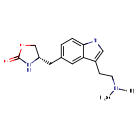
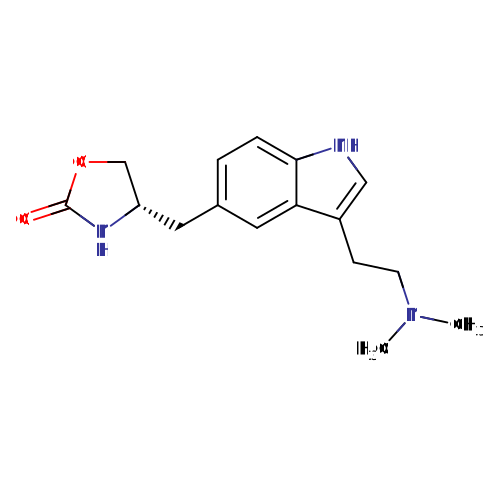
Structure for Zolmitriptan (DB00315)
- Weight
- Average: 287.3568
Monoisotopic: 287.163376931 - Chemical Formula
- C16H21N3O2
- Synonyms
- (S)-4-({3-[2-(dimethylamino)ethyl]-1H-indol-5-yl}methyl)-1,3-oxazolidin-2-one
- 4-[[3-(2-dimethylaminoethyl)-1H-indol-5-yl]methyl]oxazolidin-2-one
- Zolmitriptan
- Zolmitriptán
- Zolmitriptanum
- External IDs
- 311 C 90
- BW 311 C 90

Pharmacology
- Indication
Zolmitriptan is indicated for the acute treatment of migraine with or without auras in patients aged 18 and over.14
 Reduce drug development failure ratesBuild, train, & validate machine-learning modelswith evidence-based and structured datasets.Build, train, & validate predictive machine-learning models with structured datasets.
- Associated Conditions
Indication Type Indication Combined Product Details Approval Level Age Group Patient Characteristics Dose Form Treatment of Cluster headache •••••••••••• ••••• Treatment of Migraine •••••••••••• ••••• Treatment of Migraine •••••••••••• ••••• ••••••••• •• •••••••• ••••• Treatment of Migraine •••••••••••• ••••• ••••• ••••••••• •• •••••••• ••••••• ••••••• •••••• •••••••••••••• - Contraindications & Blackbox Warnings
 Prevent Adverse Drug Events TodayTap into our Clinical API for life-saving information on contraindications & blackbox warnings, population restrictions, harmful risks, & more.Avoid life-threatening adverse drug events with our Clinical API
- Pharmacodynamics
Zolmitriptan, like other triptans, is a serotonin (5-hydroxytryptamine; 5-HT) receptor agonist, with enhanced specificity for the 5-HT1B and 5-HT1D receptor subtypes. It is through the downstream effects of 5-HT1B/1D activation that triptans are proposed to provide acute relief of migraines.14,1,2 Zolmitriptan is also a vasoconstrictor,5 leading to possible adverse cardiovascular effects such as myocardial ischemia/infarction, arrhythmias, cerebral and subarachnoid hemorrhage, stroke, gastrointestinal ischemia, and peripheral vasospastic reactions. In addition, chest/throat/neck/jaw pain, tightness, and/or pressure has been reported, along with the possibility of medication overuse headaches and serotonin syndrome. Patients with phenylketonuria should be advised that ZOMIG-ZMT contains phenylalanine.14
- Mechanism of action
Migraines are complex physiological events characterized by unilateral throbbing headaches combined with photophobia and other aversions to sensory input. Migraine attacks are generally divided into phases: the premonitory phase, which typically involves irritability, fatigue, yawning, and stiff neck; the headache phase, which lasts for between four and 72 hours; and the postdrome phase, which lasts for up to a day following resolution of pain and whose symptoms are similar to those of the premonitory phase. In addition, neurological deficits, collectively termed migraine aura, may precede the headache phase.4,3
The underlying pathophysiology of migraines is a matter of active research but involves both neurological and vascular components. The head pain associated with migraine is thought to be a consequence of activation of the nociceptive nerves comprising the trigeminocervical complex (TCC).3 Terminals of nociceptive nerves that innervate the dura matter release vasoactive peptides, such as calcitonin gene-related peptide (CGRP), resulting in cranial vasodilation. Finally, when present, migraine aura appears to correlate with a transient wave(s) of cortical depolarization, termed cortical spreading depression (CSD).3,6
Triptans, including zolmitriptan, are proposed to act in three ways. The main mechanism is through modulation of nociceptive nerve signalling in the central nervous system through 5-HT1B/1D receptors throughout the TCC and associated areas of the brain. In addition, triptans can enhance vasoconstriction, both through direct 5-HT1B-mediated dilation of cranial blood vessels,1,8 as well as through 5-HT1D-mediated suppression of CGRP release.3,14
Although triptans are classically described solely in terms of their effects on 5-HT1B/1D receptors, they also act as 5-HT1F agonists as well. This 5-HT subtype is also found throughout the TCC, but is not present appreciably in cerebral vasculature; the significance of triptan-mediated 5-HT1F activation is currently not well described.2 Additionally, CSD that initiates in the ipsilateral parietal region may exert its effects in a manner that relies on 5-HT1B/1D receptor activation, suggesting that triptans may have some effect on CSD-mediated symptoms.3,7
Target Actions Organism A5-hydroxytryptamine receptor 1B agonistHumans A5-hydroxytryptamine receptor 1D agonistHumans A5-hydroxytryptamine receptor 1F agonistHumans U5-hydroxytryptamine receptor 1E agonistHumans N5-hydroxytryptamine receptor 7 agonistHumans N5-hydroxytryptamine receptor 1A agonistHumans N5-hydroxytryptamine receptor 2A agonistHumans N5-hydroxytryptamine receptor 2B agonistHumans - Absorption
Zolmitriptan tablets have a mean absolute oral bioavailability of approximately 40%, with food having no effect on the rate or extent of absorption.1,9,14 The dosing kinetics are linear over a range of 2.5 to 50 mg with 75% of the eventual Cmax being attained within 1 hour of dosing. The median Tmax for the tablet form is 1.5 hours, while for the orally disintegrating tablet form, it is 3 hours.9,14 The AUC across studies was in the range of 84.4-173.8 ng/mL*h while the Cmax was between 16 and 25.2 ng/mL.9,12
Zolmitriptan administered as a nasal spray is detected in the plasma within 2-5 minutes, compared to 10-15 minutes for the tablet form; the faster kinetics likely reflect fast absorption across the nasal mucosa.10 The bioavailability compared to the tablet is 102%, and plasma zolmitriptan concentration is maintained for 4-6 hours after intranasal delivery.10,14
The active N-desmethyl metabolite of zolmitriptan has a mean plasma concentration that is roughly two-thirds of zolmitriptan, regardless of dosage route or concentration.9,14
- Volume of distribution
Zolmitriptan has a volume of distribution between 7 and 8.4 L/kg.14
- Protein binding
Zolmitriptan and its active N-desmethyl metabolite remain approximately 25% bound to plasma proteins over a concentration range of 10-1000 ng/mL.9,14
- Metabolism
Zolmitriptan is metabolized in the liver, and studies using cytochrome P450 inhibitors like cimetidine suggest that it is likely metabolized by CYP1A2, as well as by monoamine oxidase (MAO).14,11,13 Zolmitriptan metabolism results in three major metabolites: an active N-desmethyl metabolite (183C91) as well as inactive N-oxide (1652W92) and indole acetic acid (2161W92) metabolites.14,12,9
Hover over products below to view reaction partners
- Route of elimination
Zolmitriptan is primarily excreted in urine (approximately 65%) and feces (approximately 30%). Within urine, the most common form is the indole acetic acid metabolite (31%), followed by the N-oxide (7%), and N-desmethyl (4%) metabolites; the majority of zolmitriptan recovered in feces remains unchanged.14,12
- Half-life
Zolmitriptan has a mean elimination half-life of approximately three hours following oral or nasal administration. Its active N-desmethyl metabolite has a slightly longer (approximately 3.5 hours) half-life.14,12
- Clearance
Zolmitriptan has a clearance of 31.5 mL/min/kg for oral tablets and 25.9 mL/min/kg for nasal administration; one-sixth of the clearance is renal.14
- Adverse Effects
 Improve decision support & research outcomesWith structured adverse effects data, including: blackbox warnings, adverse reactions, warning & precautions, & incidence rates. View sample adverse effects data in our new Data Library!Improve decision support & research outcomes with our structured adverse effects data.
- Toxicity
Toxicity information regarding zolmitriptan is not readily available. Patients experiencing an overdose are at an increased risk of severe adverse effects such as cardiovascular symptoms due to excessive vasoconstriction and activation of serotonergic receptors. Patients receiving a single 50 mg oral dose of zolmitriptan often experienced sedation. Symptomatic and supportive measures are recommended.14
- Pathways
- Not Available
- Pharmacogenomic Effects/ADRs
Interacting Gene/Enzyme Allele name Genotype(s) Defining Change(s) Type(s) Description Details Guanine nucleotide-binding protein G(I)/G(S)/G(T) subunit beta-3 --- (T;T) / (C;T) T Allele Effect Directly Studied Patients with this genotype have an increased likelihood of responding to zolmitriptan when treating (condition: cluster headache). Details
Interactions
- Drug Interactions
- This information should not be interpreted without the help of a healthcare provider. If you believe you are experiencing an interaction, contact a healthcare provider immediately. The absence of an interaction does not necessarily mean no interactions exist.
Drug Interaction Integrate drug-drug
interactions in your software1,2-Benzodiazepine The risk or severity of CNS depression can be increased when Zolmitriptan is combined with 1,2-Benzodiazepine. Abametapir The serum concentration of Zolmitriptan can be increased when it is combined with Abametapir. Abatacept The metabolism of Zolmitriptan can be increased when combined with Abatacept. Abiraterone The serum concentration of Zolmitriptan can be increased when it is combined with Abiraterone. Acebutolol Zolmitriptan may decrease the antihypertensive activities of Acebutolol. - Food Interactions
- Take with or without food. Food does not significantly impact the oral bioavalibility of zolmitriptan.
Products
 Drug product information from 10+ global regionsOur datasets provide approved product information including:dosage, form, labeller, route of administration, and marketing period.Access drug product information from over 10 global regions.
- Product Images
- International/Other Brands
- AscoTop (AstraZeneca) / Nomi (Square) / Zipton / Zolmiles (Actavis) / Zolmit (Beximco) / Zomigon (AstraZeneca) / Zomigoro (AstraZeneca) / Zomitan (Incepta)
- Brand Name Prescription Products
Name Dosage Strength Route Labeller Marketing Start Marketing End Region Image Nra-zolmitriptan Tablet 2.5 mg Oral Nora Pharma Inc 2020-07-06 Not applicable Canada 
Zolmitriptan Tablet 5 mg/1 Oral Impax Generics 2013-05-14 2019-10-31 US 
Zolmitriptan Tablet 2.5 mg Oral Sanis Health Inc 2015-10-14 Not applicable Canada Zolmitriptan Tablet 2.5 mg Oral Pro Doc Limitee 2012-03-29 2021-04-07 Canada Zolmitriptan Tablet 2.5 mg Oral Jubilant Generics Limited Not applicable Not applicable Canada - Generic Prescription Products
Name Dosage Strength Route Labeller Marketing Start Marketing End Region Image Ag-zolmitriptan ODT Tablet, orally disintegrating 2.5 mg Oral Angita Pharma Inc. 2015-12-10 2022-09-02 Canada Apo-zolmitriptan Tablet 2.5 mg Oral Apotex Corporation 2016-08-15 Not applicable Canada Apo-zolmitriptan Rapid Tablet, orally disintegrating 2.5 mg Oral Apotex Corporation 2016-07-22 Not applicable Canada Auro-zolmitriptan Tablet 2.5 mg Oral Auro Pharma Inc 2020-03-18 Not applicable Canada Bio-zolmitriptan Tablet 2.5 mg Oral Biomed Pharma 2023-01-11 Not applicable Canada


Categories
- ATC Codes
- N02CC03 — Zolmitriptan
- Drug Categories
- Agents that produce hypertension
- Amines
- Analgesics
- Antidepressive Agents
- Antimigraine Preparations
- Biogenic Amines
- Biogenic Monoamines
- Central Nervous System Depressants
- Cytochrome P-450 CYP1A2 Substrates
- Cytochrome P-450 Substrates
- Heterocyclic Compounds, Fused-Ring
- Indoles
- Monoamine Oxidase A Substrates
- Nervous System
- Neurotransmitter Agents
- Oxazoles
- Selective Serotonin 5-HT1 Receptor Agonists
- Selective Serotonin Agonists
- Serotonergic Drugs Shown to Increase Risk of Serotonin Syndrome
- Serotonin 1b Receptor Agonists
- Serotonin 1d Receptor Agonists
- Serotonin 5-HT1 Receptor Agonists
- Serotonin Agents
- Serotonin Modulators
- Serotonin Receptor Agonists
- Serotonin-1b and Serotonin-1d Receptor Agonist
- Triptans
- Chemical TaxonomyProvided by Classyfire
- Description
- This compound belongs to the class of organic compounds known as tryptamines and derivatives. These are compounds containing the tryptamine backbone, which is structurally characterized by an indole ring substituted at the 3-position by an ethanamine.
- Kingdom
- Organic compounds
- Super Class
- Organoheterocyclic compounds
- Class
- Indoles and derivatives
- Sub Class
- Tryptamines and derivatives
- Direct Parent
- Tryptamines and derivatives
- Alternative Parents
- 3-alkylindoles / Aralkylamines / Substituted pyrroles / Oxazolidinones / Benzenoids / Heteroaromatic compounds / Carbamate esters / Trialkylamines / Organic carbonic acids and derivatives / Oxacyclic compounds show 5 more
- Substituents
- 3-alkylindole / Amine / Aralkylamine / Aromatic heteropolycyclic compound / Azacycle / Benzenoid / Carbamic acid ester / Carbonic acid derivative / Carbonyl group / Heteroaromatic compound show 16 more
- Molecular Framework
- Aromatic heteropolycyclic compounds
- External Descriptors
- tryptamines (CHEBI:10124)
- Affected organisms
- Humans and other mammals
Chemical Identifiers
- UNII
- 2FS66TH3YW
- CAS number
- 139264-17-8
- InChI Key
- ULSDMUVEXKOYBU-ZDUSSCGKSA-N
- InChI
- InChI=1S/C16H21N3O2/c1-19(2)6-5-12-9-17-15-4-3-11(8-14(12)15)7-13-10-21-16(20)18-13/h3-4,8-9,13,17H,5-7,10H2,1-2H3,(H,18,20)/t13-/m0/s1
- IUPAC Name
- (4S)-4-({3-[2-(dimethylamino)ethyl]-1H-indol-5-yl}methyl)-1,3-oxazolidin-2-one
- SMILES
- CN(C)CCC1=CNC2=CC=C(C[C@H]3COC(=O)N3)C=C12
References
- Synthesis Reference
Islam Aminul, Bhar Chandan, Katam Sahadev, "Process for preparing optically pure zolmitriptan." U.S. Patent US20050245585, issued November 03, 2005.
US20050245585- General References
- Martin GR: Pre-clinical pharmacology of zolmitriptan (Zomig; formerly 311C90), a centrally and peripherally acting 5HT1B/1D agonist for migraine. Cephalalgia. 1997 Oct;17 Suppl 18:4-14. [Article]
- Rubio-Beltran E, Labastida-Ramirez A, Villalon CM, MaassenVanDenBrink A: Is selective 5-HT1F receptor agonism an entity apart from that of the triptans in antimigraine therapy? Pharmacol Ther. 2018 Jun;186:88-97. doi: 10.1016/j.pharmthera.2018.01.005. Epub 2018 Jan 17. [Article]
- Goadsby PJ, Holland PR, Martins-Oliveira M, Hoffmann J, Schankin C, Akerman S: Pathophysiology of Migraine: A Disorder of Sensory Processing. Physiol Rev. 2017 Apr;97(2):553-622. doi: 10.1152/physrev.00034.2015. [Article]
- Becker WJ: Acute Migraine Treatment in Adults. Headache. 2015 Jun;55(6):778-93. doi: 10.1111/head.12550. Epub 2015 Apr 15. [Article]
- Feniuk W, Humphrey PP, Perren MJ, Connor HE, Whalley ET: Rationale for the use of 5-HT1-like agonists in the treatment of migraine. J Neurol. 1991;238 Suppl 1:S57-61. doi: 10.1007/bf01642908. [Article]
- Qubty W, Patniyot I: Migraine Pathophysiology. Pediatr Neurol. 2020 Feb 4. pii: S0887-8994(20)30048-5. doi: 10.1016/j.pediatrneurol.2019.12.014. [Article]
- Supronsinchai W, Hoffmans J, Akermann S, Goadsby PJ: KCl-induced repetitive cortical spreading depression inhibits trigeminal neuronal firing mediated by 5-HT1B/1D and opioid receptor J Headache Pain. 2013 Feb 21;14(Suppl 1):P69. [Article]
- Longmore J, Shaw D, Smith D, Hopkins R, McAllister G, Pickard JD, Sirinathsinghji DJ, Butler AJ, Hill RG: Differential distribution of 5HT1D- and 5HT1B-immunoreactivity within the human trigemino-cerebrovascular system: implications for the discovery of new antimigraine drugs. Cephalalgia. 1997 Dec;17(8):833-42. doi: 10.1046/j.1468-2982.1997.1708833.x. [Article]
- Dixon R, Warrander A: The clinical pharmacokinetics of zolmitriptan. Cephalalgia. 1997 Oct;17 Suppl 18:15-20. doi: 10.1177/0333102497017S1803. [Article]
- Tepper SJ, Chen S, Reidenbach F, Rapoport AM: Intranasal zolmitriptan for the treatment of acute migraine. Headache. 2013 Sep;53 Suppl 2:62-71. doi: 10.1111/head.12181. [Article]
- Dixon R, French S, Kemp J, Sellers M, Yates R: The metabolism of zolmitriptan: effects of an inducer and an inhibitor of cytochrome p450 on its pharmacokinetics in healthy volunteers. Clin Drug Investig. 1998;15(6):515-22. [Article]
- Seaber E, On N, Dixon RM, Gibbens M, Leavens WJ, Liptrot J, Chittick G, Posner J, Rolan PE, Pack RW: The absolute bioavailability and metabolic disposition of the novel antimigraine compound zolmitriptan (311C90). Br J Clin Pharmacol. 1997 Jun;43(6):579-87. doi: 10.1046/j.1365-2125.1997.00614.x. [Article]
- Wild MJ, McKillop D, Butters CJ: Determination of the human cytochrome P450 isoforms involved in the metabolism of zolmitriptan. Xenobiotica. 1999 Aug;29(8):847-57. [Article]
- FDA Approved Drug Products: ZOMIG/ZOMIG-ZMT (zolmitriptan) oral tablets and nasal spray [Link]
- External Links
- Human Metabolome Database
- HMDB0014460
- KEGG Drug
- D00415
- KEGG Compound
- C07218
- PubChem Compound
- 60857
- PubChem Substance
- 46506452
- ChemSpider
- 54844
- BindingDB
- 50033383
- 135775
- ChEBI
- 10124
- ChEMBL
- CHEMBL1185
- ZINC
- ZINC000000015515
- Therapeutic Targets Database
- DAP000077
- PharmGKB
- PA451975
- RxList
- RxList Drug Page
- Drugs.com
- Drugs.com Drug Page
- Wikipedia
- Zolmitriptan
- FDA label
- Download (101 KB)
Clinical Trials
- Clinical Trials
Phase Status Purpose Conditions Count 4 Completed Other Workplace Migraine Treatment 1 4 Completed Treatment Acute Migraine 1 4 Completed Treatment Migraine 2 4 Unknown Status Treatment Cluster Headache 1 3 Completed Treatment Migraine 4
Pharmacoeconomics
- Manufacturers
- Astrazeneca pharmaceuticals lp
- Ipr pharmaceuticals inc
- Packagers
- AstraZeneca Inc.
- Cima Laboratories Inc.
- IPR Pharmaceuticals Inc.
- Physicians Total Care Inc.
- Promex Medical Inc.
- Stat Rx Usa
- Dosage Forms
Form Route Strength Tablet, film coated Oral 2.5 MG Tablet, film coated Oral 5 MG Tablet, orally disintegrating Oral 5 MG Tablet Oral 2.500 mg Tablet Oral 2.50 mg Tablet, multilayer, extended release Oral 2.5 mg Tablet Oral 1.0 mg Tablet, orally disintegrating Oral 1 mg Spray Nasal 5 mg/1 Tablet, film coated Oral 2.5 mg/1 Tablet, film coated Oral 5 mg/1 Tablet, film coated Oral Tablet, orally disintegrating Oral Tablet Oral Tablet Oral 5 MG Solution Intrasinal; Nasal 5 mg Spray Nasal 2.5 mg Spray Nasal 5 mg Spray, metered Nasal 2.5 mg/1 Spray, metered Nasal 5 mg/1 Tablet Oral 2.5 mg/1 Tablet Oral 5 mg/1 Spray Nasal Spray Nasal; Oral 2.5 mg / act Spray Nasal; Oral 5.0 mg / act Tablet, orally disintegrating Oral 2.5 mg Tablet Oral 2.5 mg Tablet, orally disintegrating Oral 2.5 mg/1 Tablet, orally disintegrating Oral 5 mg/1 - Prices
Unit description Cost Unit Zomig 6 5 mg Solution 1 Box = 6 Single Use Bottles 235.62USD bottle Zomig ZMT 6 2.5 mg Dispersible Tablet Box 159.66USD box Zomig 6 2.5 mg tablet 1 Box = 6 tablet 147.23USD box Zomig 3 5 mg tablet Box 93.49USD box Zomig ZMT 3 5 mg Dispersible Tablet Box 88.21USD box Zomig 5 mg nasal spray 37.76USD each Zomig 5 mg tablet 28.82USD tablet Zomig zmt 5 mg tablet 28.27USD tablet Zomig 2.5 mg tablet 26.08USD tablet Zomig zmt 2.5 mg tablet 25.59USD tablet DrugBank does not sell nor buy drugs. Pricing information is supplied for informational purposes only.- Patents
Patent Number Pediatric Extension Approved Expires (estimated) Region US5466699 No 1995-11-14 2012-11-14 US CA2572508 No 2010-03-30 2016-08-02 Canada CA2064815 No 1999-11-16 2011-06-06 Canada US7220767 Yes 2007-05-22 2021-05-28 US US6750237 Yes 2004-06-15 2021-05-28 US
Properties
- State
- Solid
- Experimental Properties
Property Value Source melting point (°C) 136 https://www.astrazeneca.ca/content/dam/az-ca/downloads/productinformation/zomig-product-monograph-en.pdf water solubility 1.3 mg/ml https://www.astrazeneca.ca/content/dam/az-ca/downloads/productinformation/zomig-product-monograph-en.pdf logP 1.792 https://www.sigmaaldrich.com/MSDS/MSDS/DisplayMSDSPage.do?country=CA&language=en&productNumber=SML0248&brand=SIGMA&PageToGoToURL=https%3A%2F%2Fwww.sigmaaldrich.com%2Fcatalog%2Fproduct%2Fsigma%2Fsml0248%3Flang%3Den pKa 9.64 https://www.astrazeneca.ca/content/dam/az-ca/downloads/productinformation/zomig-product-monograph-en.pdf - Predicted Properties
Property Value Source Water Solubility 0.19 mg/mL ALOGPS logP 2.25 ALOGPS logP 2.04 Chemaxon logS -3.2 ALOGPS pKa (Strongest Acidic) 13 Chemaxon pKa (Strongest Basic) 9.55 Chemaxon Physiological Charge 1 Chemaxon Hydrogen Acceptor Count 2 Chemaxon Hydrogen Donor Count 2 Chemaxon Polar Surface Area 57.36 Å2 Chemaxon Rotatable Bond Count 5 Chemaxon Refractivity 82.44 m3·mol-1 Chemaxon Polarizability 31.65 Å3 Chemaxon Number of Rings 3 Chemaxon Bioavailability 1 Chemaxon Rule of Five Yes Chemaxon Ghose Filter Yes Chemaxon Veber's Rule No Chemaxon MDDR-like Rule No Chemaxon - Predicted ADMET Features
Property Value Probability Human Intestinal Absorption + 1.0 Blood Brain Barrier + 0.8956 Caco-2 permeable - 0.8957 P-glycoprotein substrate Substrate 0.6888 P-glycoprotein inhibitor I Non-inhibitor 0.8782 P-glycoprotein inhibitor II Non-inhibitor 0.8383 Renal organic cation transporter Non-inhibitor 0.7674 CYP450 2C9 substrate Non-substrate 0.8051 CYP450 2D6 substrate Non-substrate 0.9116 CYP450 3A4 substrate Substrate 0.5822 CYP450 1A2 substrate Non-inhibitor 0.6189 CYP450 2C9 inhibitor Non-inhibitor 0.8989 CYP450 2D6 inhibitor Non-inhibitor 0.8281 CYP450 2C19 inhibitor Non-inhibitor 0.831 CYP450 3A4 inhibitor Non-inhibitor 0.8481 CYP450 inhibitory promiscuity Low CYP Inhibitory Promiscuity 0.9263 Ames test Non AMES toxic 0.7651 Carcinogenicity Non-carcinogens 0.9641 Biodegradation Not ready biodegradable 0.9961 Rat acute toxicity 2.5965 LD50, mol/kg Not applicable hERG inhibition (predictor I) Weak inhibitor 0.9301 hERG inhibition (predictor II) Non-inhibitor 0.8949
Spectra
- Mass Spec (NIST)
- Not Available
- Spectra
- Chromatographic Properties
Collision Cross Sections (CCS)
Adduct CCS Value (Å2) Source type Source [M-H]- 180.8417196 predictedDarkChem Lite v0.1.0 [M-H]- 177.9639196 predictedDarkChem Lite v0.1.0 [M-H]- 168.06175 predictedDeepCCS 1.0 (2019) [M+H]+ 180.5547196 predictedDarkChem Lite v0.1.0 [M+H]+ 178.3083196 predictedDarkChem Lite v0.1.0 [M+H]+ 170.41975 predictedDeepCCS 1.0 (2019) [M+Na]+ 180.5627196 predictedDarkChem Lite v0.1.0 [M+Na]+ 176.5129 predictedDeepCCS 1.0 (2019)
Targets

- Kind
- Protein
- Organism
- Humans
- Pharmacological action
- Yes
- Actions
- Agonist
- Curator comments
- Zolmitriptan activation of 5-HT1B/1D receptors is central to the proposed mechanism of action.
- General Function
- Serotonin receptor activity
- Specific Function
- G-protein coupled receptor for 5-hydroxytryptamine (serotonin). Also functions as a receptor for ergot alkaloid derivatives, various anxiolytic and antidepressant drugs and other psychoactive subst...
- Gene Name
- HTR1B
- Uniprot ID
- P28222
- Uniprot Name
- 5-hydroxytryptamine receptor 1B
- Molecular Weight
- 43567.535 Da
References
- Le Grand B, Panissie A, Perez M, Pauwels PJ, John GW: Zolmitriptan stimulates a Ca(2+)-dependent K(+) current in C6 glioma cells stably expressing recombinant human 5-HT(1B) receptors. Eur J Pharmacol. 2000 Jun 2;397(2-3):297-302. [Article]
- Johnson DE, Rollema H, Schmidt AW, McHarg AD: Serotonergic effects and extracellular brain levels of eletriptan, zolmitriptan and sumatriptan in rat brain. Eur J Pharmacol. 2001 Aug 17;425(3):203-10. [Article]
- Martin GR: Pre-clinical pharmacology of zolmitriptan (Zomig; formerly 311C90), a centrally and peripherally acting 5HT1B/1D agonist for migraine. Cephalalgia. 1997 Oct;17 Suppl 18:4-14. [Article]
- Rubio-Beltran E, Labastida-Ramirez A, Villalon CM, MaassenVanDenBrink A: Is selective 5-HT1F receptor agonism an entity apart from that of the triptans in antimigraine therapy? Pharmacol Ther. 2018 Jun;186:88-97. doi: 10.1016/j.pharmthera.2018.01.005. Epub 2018 Jan 17. [Article]
- FDA Approved Drug Products: ZOMIG/ZOMIG-ZMT (zolmitriptan) oral tablets and nasal spray [Link]
- Kind
- Protein
- Organism
- Humans
- Pharmacological action
- Yes
- Actions
- Agonist
- Curator comments
- Zolmitriptan activation of 5-HT1B/1D receptors is central to the proposed mechanism of action.
- General Function
- Serotonin receptor activity
- Specific Function
- G-protein coupled receptor for 5-hydroxytryptamine (serotonin). Also functions as a receptor for ergot alkaloid derivatives, various anxiolytic and antidepressant drugs and other psychoactive subst...
- Gene Name
- HTR1D
- Uniprot ID
- P28221
- Uniprot Name
- 5-hydroxytryptamine receptor 1D
- Molecular Weight
- 41906.38 Da
References
- Johnson DE, Rollema H, Schmidt AW, McHarg AD: Serotonergic effects and extracellular brain levels of eletriptan, zolmitriptan and sumatriptan in rat brain. Eur J Pharmacol. 2001 Aug 17;425(3):203-10. [Article]
- Martin GR: Pre-clinical pharmacology of zolmitriptan (Zomig; formerly 311C90), a centrally and peripherally acting 5HT1B/1D agonist for migraine. Cephalalgia. 1997 Oct;17 Suppl 18:4-14. [Article]
- Rubio-Beltran E, Labastida-Ramirez A, Villalon CM, MaassenVanDenBrink A: Is selective 5-HT1F receptor agonism an entity apart from that of the triptans in antimigraine therapy? Pharmacol Ther. 2018 Jun;186:88-97. doi: 10.1016/j.pharmthera.2018.01.005. Epub 2018 Jan 17. [Article]
- FDA Approved Drug Products: ZOMIG/ZOMIG-ZMT (zolmitriptan) oral tablets and nasal spray [Link]
- Kind
- Protein
- Organism
- Humans
- Pharmacological action
- Yes
- Actions
- Agonist
- Curator comments
- Zolmitriptan activation of 5-HT1F receptors may have clinical relevance, as they represent a target for a new class of serotonin receptor agonists known as ditans.
- General Function
- Serotonin receptor activity
- Specific Function
- G-protein coupled receptor for 5-hydroxytryptamine (serotonin). Also functions as a receptor for various alkaloids and psychoactive substances. Ligand binding causes a conformation change that trig...
- Gene Name
- HTR1F
- Uniprot ID
- P30939
- Uniprot Name
- 5-hydroxytryptamine receptor 1F
- Molecular Weight
- 41708.505 Da
References
- Rubio-Beltran E, Labastida-Ramirez A, Villalon CM, MaassenVanDenBrink A: Is selective 5-HT1F receptor agonism an entity apart from that of the triptans in antimigraine therapy? Pharmacol Ther. 2018 Jun;186:88-97. doi: 10.1016/j.pharmthera.2018.01.005. Epub 2018 Jan 17. [Article]
- Martin GR: Pre-clinical pharmacology of zolmitriptan (Zomig; formerly 311C90), a centrally and peripherally acting 5HT1B/1D agonist for migraine. Cephalalgia. 1997 Oct;17 Suppl 18:4-14. [Article]
- FDA Approved Drug Products: ZOMIG/ZOMIG-ZMT (zolmitriptan) oral tablets and nasal spray [Link]
- Kind
- Protein
- Organism
- Humans
- Pharmacological action
- Unknown
- Actions
- Agonist
- Curator comments
- Zolmitriptan binds to 5-HT1E receptors roughly as well as to 5-HT1F receptors; the significance, if any, of this is currently unkown.
- General Function
- Serotonin receptor activity
- Specific Function
- G-protein coupled receptor for 5-hydroxytryptamine (serotonin). Also functions as a receptor for various alkaloids and psychoactive substances. Ligand binding causes a conformation change that trig...
- Gene Name
- HTR1E
- Uniprot ID
- P28566
- Uniprot Name
- 5-hydroxytryptamine receptor 1E
- Molecular Weight
- 41681.57 Da
References
- Rubio-Beltran E, Labastida-Ramirez A, Villalon CM, MaassenVanDenBrink A: Is selective 5-HT1F receptor agonism an entity apart from that of the triptans in antimigraine therapy? Pharmacol Ther. 2018 Jun;186:88-97. doi: 10.1016/j.pharmthera.2018.01.005. Epub 2018 Jan 17. [Article]
- Martin GR: Pre-clinical pharmacology of zolmitriptan (Zomig; formerly 311C90), a centrally and peripherally acting 5HT1B/1D agonist for migraine. Cephalalgia. 1997 Oct;17 Suppl 18:4-14. [Article]
- Kind
- Protein
- Organism
- Humans
- Pharmacological action
- No
- Actions
- Agonist
- Curator comments
- Zolmitriptan binds more weakly to 5-HT7 receptors than to 5-HT1B/1D/1E/1F receptors.
- General Function
- Serotonin receptor activity
- Specific Function
- This is one of the several different receptors for 5-hydroxytryptamine (serotonin), a biogenic hormone that functions as a neurotransmitter, a hormone, and a mitogen. The activity of this receptor ...
- Gene Name
- HTR7
- Uniprot ID
- P34969
- Uniprot Name
- 5-hydroxytryptamine receptor 7
- Molecular Weight
- 53554.43 Da
References
- Rubio-Beltran E, Labastida-Ramirez A, Villalon CM, MaassenVanDenBrink A: Is selective 5-HT1F receptor agonism an entity apart from that of the triptans in antimigraine therapy? Pharmacol Ther. 2018 Jun;186:88-97. doi: 10.1016/j.pharmthera.2018.01.005. Epub 2018 Jan 17. [Article]
- Kind
- Protein
- Organism
- Humans
- Pharmacological action
- No
- Actions
- Agonist
- Curator comments
- Zolmitriptan binding to 5-HT1A/2A/2B receptors is weak, but still detectable; the clinical relevance of this binding is unclear but likely unimportant for the intended effect of relieving migraine symptoms.
- General Function
- Serotonin receptor activity
- Specific Function
- G-protein coupled receptor for 5-hydroxytryptamine (serotonin). Also functions as a receptor for various drugs and psychoactive substances. Ligand binding causes a conformation change that triggers...
- Gene Name
- HTR1A
- Uniprot ID
- P08908
- Uniprot Name
- 5-hydroxytryptamine receptor 1A
- Molecular Weight
- 46106.335 Da
References
- Johnson DE, Rollema H, Schmidt AW, McHarg AD: Serotonergic effects and extracellular brain levels of eletriptan, zolmitriptan and sumatriptan in rat brain. Eur J Pharmacol. 2001 Aug 17;425(3):203-10. [Article]
- Rubio-Beltran E, Labastida-Ramirez A, Villalon CM, MaassenVanDenBrink A: Is selective 5-HT1F receptor agonism an entity apart from that of the triptans in antimigraine therapy? Pharmacol Ther. 2018 Jun;186:88-97. doi: 10.1016/j.pharmthera.2018.01.005. Epub 2018 Jan 17. [Article]
- Martin GR: Pre-clinical pharmacology of zolmitriptan (Zomig; formerly 311C90), a centrally and peripherally acting 5HT1B/1D agonist for migraine. Cephalalgia. 1997 Oct;17 Suppl 18:4-14. [Article]
- Kind
- Protein
- Organism
- Humans
- Pharmacological action
- No
- Actions
- Agonist
- Curator comments
- Zolmitriptan binding to 5-HT1A/2A/2B receptors is weak, but still detectable; the clinical relevance of this binding is unclear but likely unimportant for the intended effect of relieving migraine symptoms.
- General Function
- Virus receptor activity
- Specific Function
- G-protein coupled receptor for 5-hydroxytryptamine (serotonin). Also functions as a receptor for various drugs and psychoactive substances, including mescaline, psilocybin, 1-(2,5-dimethoxy-4-iodop...
- Gene Name
- HTR2A
- Uniprot ID
- P28223
- Uniprot Name
- 5-hydroxytryptamine receptor 2A
- Molecular Weight
- 52602.58 Da
References
- Rubio-Beltran E, Labastida-Ramirez A, Villalon CM, MaassenVanDenBrink A: Is selective 5-HT1F receptor agonism an entity apart from that of the triptans in antimigraine therapy? Pharmacol Ther. 2018 Jun;186:88-97. doi: 10.1016/j.pharmthera.2018.01.005. Epub 2018 Jan 17. [Article]
- Kind
- Protein
- Organism
- Humans
- Pharmacological action
- No
- Actions
- Agonist
- Curator comments
- Zolmitriptan binding to 5-HT1A/2A/2B receptors is weak, but still detectable; the clinical relevance of this binding is unclear but likely unimportant for the intended effect of relieving migraine symptoms.
- General Function
- Serotonin receptor activity
- Specific Function
- G-protein coupled receptor for 5-hydroxytryptamine (serotonin). Also functions as a receptor for various ergot alkaloid derivatives and psychoactive substances. Ligand binding causes a conformation...
- Gene Name
- HTR2B
- Uniprot ID
- P41595
- Uniprot Name
- 5-hydroxytryptamine receptor 2B
- Molecular Weight
- 54297.41 Da
References
- Rubio-Beltran E, Labastida-Ramirez A, Villalon CM, MaassenVanDenBrink A: Is selective 5-HT1F receptor agonism an entity apart from that of the triptans in antimigraine therapy? Pharmacol Ther. 2018 Jun;186:88-97. doi: 10.1016/j.pharmthera.2018.01.005. Epub 2018 Jan 17. [Article]
Enzymes
- Kind
- Protein
- Organism
- Humans
- Pharmacological action
- No
- Actions
- Substrate
- Curator comments
- CYP1A2 is likely the main metabolic enzyme for zolmitriptan metabolism in human liver, including to the N-desmethyl metabolite that is between 2 and 6 times more active against 5-HT1B/1D receptors.
- General Function
- Oxidoreductase activity, acting on paired donors, with incorporation or reduction of molecular oxygen, reduced flavin or flavoprotein as one donor, and incorporation of one atom of oxygen
- Specific Function
- Cytochromes P450 are a group of heme-thiolate monooxygenases. In liver microsomes, this enzyme is involved in an NADPH-dependent electron transport pathway. It oxidizes a variety of structurally un...
- Gene Name
- CYP1A2
- Uniprot ID
- P05177
- Uniprot Name
- Cytochrome P450 1A2
- Molecular Weight
- 58293.76 Da
References
- Yu LS, Yao TW, Zeng S: In vitro metabolism of zolmitriptan in rat cytochromes induced with beta-naphthoflavone and the interaction between six drugs and zolmitriptan. Chem Biol Interact. 2003 Dec 15;146(3):263-72. [Article]
- Wild MJ, McKillop D, Butters CJ: Determination of the human cytochrome P450 isoforms involved in the metabolism of zolmitriptan. Xenobiotica. 1999 Aug;29(8):847-57. [Article]
- Dixon R, French S, Kemp J, Sellers M, Yates R: The metabolism of zolmitriptan: effects of an inducer and an inhibitor of cytochrome p450 on its pharmacokinetics in healthy volunteers. Clin Drug Investig. 1998;15(6):515-22. [Article]
- Flockhart Table of Drug Interactions [Link]
- Kind
- Protein
- Organism
- Humans
- Pharmacological action
- Unknown
- Actions
- Substrate
- Curator comments
- MAO-A is thought to be involved in the transformation of the active N-desmethyl metabolite to the inactive indole acetic acid metabolite. Inhibition of MAO-A in patients taking zolmitriptan may result in altered pharmacokinetics.
- General Function
- Serotonin binding
- Specific Function
- Catalyzes the oxidative deamination of biogenic and xenobiotic amines and has important functions in the metabolism of neuroactive and vasoactive amines in the central nervous system and peripheral...
- Gene Name
- MAOA
- Uniprot ID
- P21397
- Uniprot Name
- Amine oxidase [flavin-containing] A
- Molecular Weight
- 59681.27 Da
References
- Rolan P: Potential drug interactions with the novel antimigraine compound zolmitriptan (Zomig, 311C90). Cephalalgia. 1997 Oct;17 Suppl 18:21-7. [Article]
- Wild MJ, McKillop D, Butters CJ: Determination of the human cytochrome P450 isoforms involved in the metabolism of zolmitriptan. Xenobiotica. 1999 Aug;29(8):847-57. [Article]
- Med-Psych Interactions Review: Triptans [File]
Transporters
- Kind
- Protein
- Organism
- Humans
- Pharmacological action
- No
- Curator comments
- P-glycoprotein may play a role in zolmatriptan absorption in the intestinal tract.
- General Function
- Xenobiotic-transporting atpase activity
- Specific Function
- Energy-dependent efflux pump responsible for decreased drug accumulation in multidrug-resistant cells.
- Gene Name
- ABCB1
- Uniprot ID
- P08183
- Uniprot Name
- Multidrug resistance protein 1
- Molecular Weight
- 141477.255 Da
References
- Yu L, Zeng S: Transport characteristics of zolmitriptan in a human intestinal epithelial cell line Caco-2. J Pharm Pharmacol. 2007 May;59(5):655-60. doi: 10.1211/jpp.59.5.0005. [Article]

Drug created at June 13, 2005 13:24 / Updated at May 04, 2024 07:34