Identification
- Summary
Clozapine is an atypical or second-generation antipsychotic drug used in treatment-resistant schizophrenia and to decrease suicide risk in schizophrenic patients.
- Brand Names
- Clozaril, Fazaclo, Versacloz
- Generic Name
- Clozapine
- DrugBank Accession Number
- DB00363
- Background
Clozapine is a tricyclic dibenzodiazepine, classified as an atypical antipsychotic agent.23 Clozapine displays affinity to various neuroreceptors with a particularly low affinity to the dopamine receptors, thus breaking the mold of first-generation antipsychotics and deeming it "atypical".26. This low affinity to dopamine receptors results in fewer extrapyramidal side effects, especially tardive dyskinesia.21 However, its promiscuity toward the muscarinic and adrenergic receptors can result in other side effects, notably gastrointestinal hypomotility and orthostatic hypotension. 27,8. Despite its effectiveness in treating both positive and negative symptoms of schizophrenia, clozapine was briefly removed from the market in various jurisdictions in 1970 due to severe agranulocytosis.24,25 However, continued evidence of its effectiveness led to clozapine's eventual reintroduction, although with a reluctance to prescribe it.25
Clozapine was approved by the FDA in 1989 for treatment-resistant schizophrenia under the brand CLOZARIL.27 Due to its severe adverse effects profile, clozapine is only available through a restricted program under a Risk Evaluation Mitigation Strategy (REMS) called the Clozapine REMS Program.27
- Type
- Small Molecule
- Groups
- Approved
- Structure
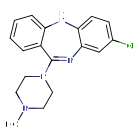
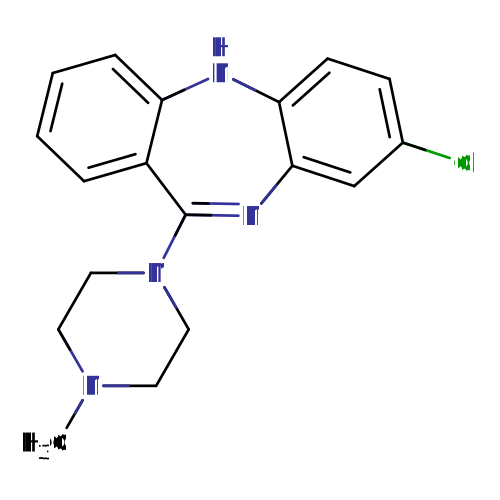
Structure for Clozapine (DB00363)
- Weight
- Average: 326.823
Monoisotopic: 326.129824335 - Chemical Formula
- C18H19ClN4
- Synonyms
- Clozapin
- Clozapina
- Clozapine
- Clozapinum
- External IDs
- HF 1854
- HF-1854
- LX 100-129
- W 108

Pharmacology
- Indication
Clozapine is indicated for the treatment of severely ill patients with schizophrenia who fail to respond adequately to standard antipsychotic treatment. Because of the risks of severe neutropenia and of seizure associated with its use, Clozapine should be used only in patients who have failed to respond adequately to standard antipsychotic treatment.27
Clozapine is also indicated for reducing the risk of recurrent suicidal behavior in patients with schizophrenia or schizoaffective disorder who are judged to be at chronic risk for re-experiencing suicidal behavior, based on history and recent clinical state. Suicidal behavior refers to actions by a patient that put him/herself at risk for death.27
 Reduce drug development failure ratesBuild, train, & validate machine-learning modelswith evidence-based and structured datasets.Build, train, & validate predictive machine-learning models with structured datasets.
- Associated Conditions
Indication Type Indication Combined Product Details Approval Level Age Group Patient Characteristics Dose Form Management of Suicidal behaviour •••••••••••• •••• •••• •••••• Management of Suicidal behaviour •••••••••••• •••• •••• •••••• Management of Treatment-resistant schizophrenia •••••••••••• •••••• •••••• •••••••• •••••••••• •••••••• •• •••••••••••• ••••••• •••••• Treatment of Advanced dopaminomimetic psychosis ••• ••••• - Contraindications & Blackbox Warnings
 Prevent Adverse Drug Events TodayTap into our Clinical API for life-saving information on contraindications & blackbox warnings, population restrictions, harmful risks, & more.Avoid life-threatening adverse drug events with our Clinical API
- Pharmacodynamics
Clozapine is a psychotropic agent belonging to the chemical class of benzisoxazole derivatives that is universally regarded as the treatment of choice for treatment-resistant schizophrenia.22 Although it is thought to mediate its pharmacological effect through antagonism of the dopamine type 2 (D2) and the serotonin type 2A (5-HT2A) receptors, research have shown that clozapine can act on various types of receptors.21
Patients should be counseled regarding the risk of hypersensitivity reactions such as agranulocytosis and myocarditis with clozapine use.27 Clozapine-induced agranulocytosis, which is a reduction in the absolute neutrophil count or white blood cell count, places the patient at an increased risk for infection.8,27 Agranulocytosis is most likely to occur in the first 3-6 months of therapy, but it can still occur after years of treatment. The mechanism is thought to be a dose-independent and immune-mediated reaction against neutrophils.6 Patients are strictly monitored by lab testing (complete blood count with differential) to ensure agranulocytosis is detected and treated if it occurs.27 Testing is initially completed at one-week intervals but is expanded to two-week intervals at six months, and then four-week intervals at twelve months if lab results have been within an appropriate range. Monitoring parameters may change if there is any break in therapy. In Canada, the patient's lab values are reported to the manufacturer for hematological monitoring, and in the USA, the patient's lab values are reported to the REMS (Risk Evaluation and Mitigation Strategy) program.7 These programs function to notify the care provider of any significant drop in WBC/neutrophil count, or if there is a drop below a threshold level. Patients who enter the "Red" zone (WBC<2x10⁹/L or ANC<1.5x10⁹/L) should normally not be re-challenged.27
Clozapine-induced myocarditis is a hypersensitivity reaction that usually occurs in the third week of clozapine therapy and about 2% of clozapine patients.5 Monitor the patient's troponin, CRP, and ECG at baseline, and 28 days into treatment. Follow guidelines for appropriate next steps according to the patient's lab results. If myocarditis occurs, the patient should not be re-challenged with clozapine.27
- Mechanism of action
The mechanism of action of clozapine is unknown. However, it has been proposed that the therapeutic efficacy of clozapine in schizophrenia is mediated through antagonism of the dopamine type 2 (D2) and the serotonin type 2A (5-HT2A) receptors. Clozapine also acts as an antagonist at adrenergic, cholinergic, histaminergic, and other dopaminergic and serotonergic receptors.27
Clozapine demonstrated binding affinity to the following receptors: histamine H1 (Ki 1.1 nM), adrenergic α1A (Ki 1.6 nM), serotonin 5-HT6 (Ki 4 nM), serotonin 5-HT2A (Ki 5.4 nM), muscarinic M1 (Ki 6.2 nM), serotonin 5-HT7 (Ki 6.3 nM), serotonin 5-HT2C (Ki 9.4 nM), dopamine D4 (Ki 24 nM), adrenergic α2A (Ki 90 nM), serotonin 5-HT3 (Ki 95 nM), serotonin 5-HT1A (Ki 120 nM), dopamine D2 (Ki 160 nM), dopamine D1 (Ki 270 nM), dopamine D5 (Ki 454 nM), and dopamine D3 (Ki 555 nM).27
Clozapine acts as an antagonist at other receptors, but with lower potency. Antagonism at receptors other than dopamine and 5HT2 with similar receptor affinities may explain some of the other therapeutic and side effects of clozapine. Clozapine's antagonism of muscarinic M1-5 receptors may explain its anticholinergic effects.18 Clozapine's antagonism of histamine H1 receptors may explain the somnolence observed with this drug.19 Clozapine's antagonism of adrenergic α1 receptors may explain the orthostatic hypotension observed with this drug.20
- Absorption
In humans, clozapine tablets (25 mg and 100 mg) are equally bioavailable relative to a CLOZARIL solution. Following oral administration of clozapine 100 mg twice daily, the average steady-state peak plasma concentration was 319 ng/mL (range: 102 to 771 ng/mL), occurring at the average of 2.5 hours (range: 1 to 6 hours) after dosing. The average minimum concentration at steady state was 122 ng/mL (range: 41 to 343 ng/mL), after 100 mg twice daily dosing.27
- Volume of distribution
The median volume of distribution of clozapine was calculated to be 508 L (272–1290 L).9,10,11,13,12
- Protein binding
Clozapine is approximately 97% bound to serum proteins. The interaction between clozapine and other highly protein-bound drugs has not been fully evaluated but may be important.27
- Metabolism
Clozapine is almost completely metabolized prior to excretion, and only trace amounts of unchanged drug are detected in the urine and feces. Clozapine is a substrate for many cytochrome P450 isozymes, in particular CYP1A2, CYP2D6, and CYP3A4.The unmethylated, hydroxylated, and N-oxide derivatives are components in both urine and feces. Pharmacological testing has shown the desmethyl metabolite (norclozapine) to have only limited activity, while the hydroxylated and N-oxide derivatives were inactive.27
Hover over products below to view reaction partners
- Route of elimination
Approximately 50% of the administered dose is excreted in the urine and 30% in the feces.27
- Half-life
The mean elimination half-life of clozapine after a single 75 mg dose was 8 hours (range: 4 to 12 hours), compared to a mean elimination half-life of 12 hours (range: 4 to 66 hours), after achieving a steady state with 100 mg twice daily dosing.27
A comparison of single-dose and multiple-dose administration of clozapine demonstrated that the elimination half-life increased significantly after multiple dosing relative to that after single-dose administration, suggesting the possibility of concentration-dependent pharmacokinetics.27
- Clearance
The median clearance of clozapine is calculated to be 30.3 L/h (14.4–45.2 L/h).10,12,14,15,16,17
- Adverse Effects
 Improve decision support & research outcomesWith structured adverse effects data, including: blackbox warnings, adverse reactions, warning & precautions, & incidence rates. View sample adverse effects data in our new Data Library!Improve decision support & research outcomes with our structured adverse effects data.
- Toxicity
There are no adequate or well-controlled studies of clozapine in pregnant women. Reproduction studies have been performed in rats and rabbits at doses up to 0.4 and 0.9 times, respectively, the maximum recommended human dose (MRHD) of 900 mg/day on a mg/m2 body surface area basis. The studies revealed no evidence of impaired fertility or harm to the fetus due to clozapine. Because animal reproduction studies are not always predictive of human response, CLOZARIL should be used during pregnancy only if clearly needed.27
Consider the risk of exacerbation of psychosis when discontinuing or changing treatment with antipsychotic medications during pregnancy and postpartum. Consider early screening for gestational diabetes for patients treated with antipsychotic medications [see Warnings and Precautions (5.11)]. Neonates exposed to antipsychotic drugs during the third trimester of pregnancy are at risk for extrapyramidal and/or withdrawal symptoms following delivery. Monitor neonates for symptoms of agitation, hypertonia, hypotonia, tremor, somnolence, respiratory distress, and feeding difficulties. The severity of complications can vary from self-limited symptoms to some neonates requiring intensive care unit support and prolonged hospitalization.27
The most commonly reported signs and symptoms associated with clozapine overdose are: sedation, delirium, coma, tachycardia, hypotension, respiratory depression or failure; and hypersalivation. There are reports of aspiration pneumonia, cardiac arrhythmias, and seizure. Fatal overdoses have been reported with clozapine, generally at doses above 2500 mg. There have also been reports of patients recovering from overdoses well in excess of 4 g. There is no available specific antidote to an overdose of CLOZARIL. Establish and maintain an airway; ensure adequate oxygenation and ventilation. Monitor cardiac status and vital signs. Use general symptomatic and supportive measures. Consider the possibility of multiple-drug involvement.27
No carcinogenic potential was demonstrated in long-term studies in mice and rats at doses up to 0.3 times and 0.4 times, respectively, the maximum recommended human dose (MRHD) of 900 mg/day on an mg/m2 body surface area basis. Clozapine was not genotoxic when tested in the following gene mutation and chromosomal aberration tests: the bacterial Ames test, the in vitro mammalian V79 in Chinese hamster cells, the in vitro unscheduled DNA synthesis in rat hepatocytes or the in vivo micronucleus assay in mice. Clozapine had no effect on any parameters of fertility, pregnancy, fetal weight, or postnatal development when administered orally to male rats 70 days before mating and to female rats for 14 days before mating at doses up to 0.4 times the MRHD of 900 mg/day on an mg/m2 body surface area basis.27
- Pathways
- Not Available
- Pharmacogenomic Effects/ADRs
Interacting Gene/Enzyme Allele name Genotype(s) Defining Change(s) Type(s) Description Details Guanine nucleotide-binding protein G(I)/G(S)/G(T) subunit beta-3 --- (T;T) TT allele ADR Directly Studied Patients with this genotype have increased weight gain with clozapine. Details Cytochrome P450 2D6 CYP2D6*3 Not Available C allele Effect Inferred Poor drug metabolizer. Details Cytochrome P450 2D6 CYP2D6*4 Not Available C allele Effect Inferred Poor drug metabolizer. Details Cytochrome P450 2D6 CYP2D6*5 Not Available Whole-gene deletion Effect Inferred Poor drug metabolizer. Details Cytochrome P450 2D6 CYP2D6*6 Not Available 1707delT Effect Inferred Poor drug metabolizer. Details Cytochrome P450 2D6 CYP2D6*7 Not Available 2935A>C Effect Inferred Poor drug metabolizer. Details Cytochrome P450 2D6 CYP2D6*8 Not Available 1758G>T Effect Inferred Poor drug metabolizer. Details Cytochrome P450 2D6 CYP2D6*11 Not Available 883G>C Effect Inferred Poor drug metabolizer. Details Cytochrome P450 2D6 CYP2D6*12 Not Available 124G>A Effect Inferred Poor drug metabolizer. Details Cytochrome P450 2D6 CYP2D6*13 Not Available CYP2D7/2D6 hybrid gene structure Effect Inferred Poor drug metabolizer. Details Cytochrome P450 2D6 CYP2D6*14A Not Available 1758G>A Effect Inferred Poor drug metabolizer. Details Cytochrome P450 2D6 CYP2D6*15 Not Available 137insT, 137_138insT Effect Inferred Poor drug metabolizer. Details Cytochrome P450 2D6 CYP2D6*19 Not Available 2539_2542delAACT Effect Inferred Poor drug metabolizer. Details Cytochrome P450 2D6 CYP2D6*20 Not Available 1973_1974insG Effect Inferred Poor drug metabolizer. Details Cytochrome P450 2D6 CYP2D6*21 Not Available 2573insC Effect Inferred Poor drug metabolizer. Details Cytochrome P450 2D6 CYP2D6*31 Not Available -1770G>A / -1584C>G … show all Effect Inferred Poor drug metabolizer. Details Cytochrome P450 2D6 CYP2D6*36 Not Available 100C>T / -1426C>T … show all Effect Inferred Poor drug metabolizer. Details Cytochrome P450 2D6 CYP2D6*38 Not Available 2587_2590delGACT Effect Inferred Poor drug metabolizer. Details Cytochrome P450 2D6 CYP2D6*40 Not Available 1863_1864ins(TTT CGC CCC)2 Effect Inferred Poor drug metabolizer. Details Cytochrome P450 2D6 CYP2D6*42 Not Available 3259_3260insGT Effect Inferred Poor drug metabolizer. Details Cytochrome P450 2D6 CYP2D6*44 Not Available 2950G>C Effect Inferred Poor drug metabolizer. Details Cytochrome P450 2D6 CYP2D6*47 Not Available 100C>T / -1426C>T … show all Effect Inferred Poor drug metabolizer. Details Cytochrome P450 2D6 CYP2D6*51 Not Available -1584C>G / -1235A>G … show all Effect Inferred Poor drug metabolizer. Details Cytochrome P450 2D6 CYP2D6*56 Not Available 3201C>T Effect Inferred Poor drug metabolizer. Details Cytochrome P450 2D6 CYP2D6*57 Not Available 100C>T / 310G>T … show all Effect Inferred Poor drug metabolizer. Details Cytochrome P450 2D6 CYP2D6*62 Not Available 4044C>T Effect Inferred Poor drug metabolizer. Details Cytochrome P450 2D6 CYP2D6*68A Not Available -1426C>T / -1235A>G … show all Effect Inferred Poor drug metabolizer. Details Cytochrome P450 2D6 CYP2D6*68B Not Available Similar but not identical switch region compared to CYP2D6*68A. Found in tandem arrangement with CYP2D6*4. Effect Inferred Poor drug metabolizer. Details Cytochrome P450 2D6 CYP2D6*69 Not Available 2988G>A / -1426C>T … show all Effect Inferred Poor drug metabolizer. Details Cytochrome P450 2D6 CYP2D6*92 Not Available 1995delC Effect Inferred Poor drug metabolizer. Details Cytochrome P450 2D6 CYP2D6*100 Not Available -1426C>T / -1235A>G … show all Effect Inferred Poor drug metabolizer. Details Cytochrome P450 2D6 CYP2D6*101 Not Available -1426C>T / -1235A>G … show all Effect Inferred Poor drug metabolizer. Details
Interactions
- Drug Interactions
- This information should not be interpreted without the help of a healthcare provider. If you believe you are experiencing an interaction, contact a healthcare provider immediately. The absence of an interaction does not necessarily mean no interactions exist.
Drug Interaction Integrate drug-drug
interactions in your software1,2-Benzodiazepine The risk or severity of adverse effects can be increased when 1,2-Benzodiazepine is combined with Clozapine. Abacavir Clozapine may decrease the excretion rate of Abacavir which could result in a higher serum level. Abaloparatide The risk or severity of adverse effects can be increased when Clozapine is combined with Abaloparatide. Abametapir The serum concentration of Clozapine can be increased when it is combined with Abametapir. Abatacept The metabolism of Clozapine can be increased when combined with Abatacept. - Food Interactions
- Avoid alcohol. Alcohol is a predisposing risk factor for seizure in combination with clozapine.
- Exercise caution with St. John's Wort. This herb induces both CYP3A4 and CYP1A2 metabolism and may reduce clozapine serum levels.
- Limit caffeine intake. Caffeine may reduce clozapine metabolism.
- Take with or without food. The absorption is unaffected by food.
Products
 Drug product information from 10+ global regionsOur datasets provide approved product information including:dosage, form, labeller, route of administration, and marketing period.Access drug product information from over 10 global regions.
- Product Ingredients
Ingredient UNII CAS InChI Key Clozapine hydrochloride 80862U56A3 54241-01-9 ARWPDHKDEREYEE-UHFFFAOYSA-N - Product Images
- International/Other Brands
- Azaleptine (Arpimed) / Cloment (Pharmaplan) / Clonex (Adeka) / Clopin (East West) / Clopine (Douglas) / Clopsine (Psicofarma) / Clorazem (Remedica) / Lanolept (Lannacher) / Lapenax (Novartis) / Leponex (Novartis) / Lodux (Rider) / Lozapin (Torrent) / Luften (Pharos) / Mezapin (Panbiotic) / Refract (Crescent) / Refraxol (AC Farma) / Sensipin (Beximco) / Sequax (Ivax) / Sizopin (Sun) / Sizopril (Meprofarm) / Syclop (Brown & Burk Phils) / Syzopin (Psyco Remedies) / Tanyl (Novamed) / Uspen (Yu Sheng) / Zapen (Psipharma) / Zapenia (Incepta) / Zapine (Taiwan Biotech) / Ziproc (Torrent) / Zopin (Psychotropics India)
- Brand Name Prescription Products
Name Dosage Strength Route Labeller Marketing Start Marketing End Region Image Clozapine Tablet 200 mg/1 Oral Heartwood Pharma 2019-07-30 Not applicable US 
Clozapine Tablet 25 mg/1 Oral Heartwood Pharma 2019-04-15 Not applicable US Clozapine Tablet 50 mg/1 Oral Heartwood Pharma 2019-07-30 Not applicable US Clozapine Tablet 25 mg/1 Oral Sandoz Inc. 2016-05-06 2021-06-30 US Clozapine Tablet 100 mg/1 Oral TEVA PHARMACEUTICALS USA 2008-03-17 2008-03-17 US - Generic Prescription Products
Name Dosage Strength Route Labeller Marketing Start Marketing End Region Image Aa-clozapine Tablet 50 mg Oral Aa Pharma Inc 2017-02-27 Not applicable Canada 
Aa-clozapine Tablet 100 mg Oral Aa Pharma Inc 2004-01-27 Not applicable Canada Aa-clozapine Tablet 200 mg Oral Aa Pharma Inc 2017-02-27 Not applicable Canada Aa-clozapine Tablet 25 mg Oral Aa Pharma Inc 2004-01-27 Not applicable Canada Auro-clozapine Tablet 200 mg Oral Auro Pharma Inc Not applicable Not applicable Canada


Categories
- ATC Codes
- N05AH02 — Clozapine
- Drug Categories
- Adrenergic alpha-1 Receptor Antagonists
- Adrenergic alpha-Antagonists
- Adrenergic Antagonists
- Agents producing tachycardia
- Agents that produce hypertension
- Agents that reduce seizure threshold
- Anticholinergic Agents
- Antidepressive Agents
- Antipsychotic Agents
- Antipsychotic Agents (Second Generation [Atypical])
- Central Nervous System Agents
- Central Nervous System Depressants
- Cytochrome P-450 CYP1A2 Substrates
- Cytochrome P-450 CYP2A6 Substrates
- Cytochrome P-450 CYP2C19 Inhibitors
- Cytochrome P-450 CYP2C19 inhibitors (strength unknown)
- Cytochrome P-450 CYP2C19 Inhibitors (weak)
- Cytochrome P-450 CYP2C19 Substrates
- Cytochrome P-450 CYP2C8 Substrates
- Cytochrome P-450 CYP2C9 Substrates
- Cytochrome P-450 CYP2D6 Inhibitors
- Cytochrome P-450 CYP2D6 Inhibitors (moderate)
- Cytochrome P-450 CYP2D6 Substrates
- Cytochrome P-450 CYP3A Inducers
- Cytochrome P-450 CYP3A Inhibitors
- Cytochrome P-450 CYP3A Substrates
- Cytochrome P-450 CYP3A4 Inducers
- Cytochrome P-450 CYP3A4 Inducers (strength unknown)
- Cytochrome P-450 CYP3A4 Inhibitors
- Cytochrome P-450 CYP3A4 Inhibitors (moderate)
- Cytochrome P-450 CYP3A4 Substrates
- Cytochrome P-450 Enzyme Inducers
- Cytochrome P-450 Enzyme Inhibitors
- Cytochrome P-450 Substrates
- Diazepines, Oxazepines, Thiazepines and Oxepines
- Dibenzazepines
- Dopamine Antagonists
- Dopamine D2 Receptor Antagonists
- Drugs causing inadvertant photosensitivity
- Drugs that are Mainly Renally Excreted
- GABA Agents
- GABA Antagonists
- Heterocyclic Compounds, Fused-Ring
- Histamine Antagonists
- Histamine H1 Antagonists
- Hyperglycemia-Associated Agents
- Hypotensive Agents
- Moderate Risk QTc-Prolonging Agents
- Muscarinic Antagonists
- Nervous System
- Neurotoxic agents
- Neurotransmitter Agents
- OCT1 substrates
- P-glycoprotein substrates
- Photosensitizing Agents
- Psycholeptics
- Psychotropic Drugs
- QTc Prolonging Agents
- Serotonin 5-HT1 Receptor Antagonists
- Serotonin 5-HT1A Receptor Antagonists
- Serotonin 5-HT1D Receptor Antagonists
- Serotonin 5-HT2 Receptor Antagonists
- Serotonin 5-HT2A Receptor Antagonists
- Serotonin 5-HT2C Receptor Antagonists
- Serotonin Agents
- Serotonin Receptor Antagonists
- Tranquilizing Agents
- UGT1A4 substrates
- Chemical TaxonomyProvided by Classyfire
- Description
- This compound belongs to the class of organic compounds known as dibenzodiazepines. These are compounds containing a dibenzodiazepine moiety, which consists of two benzene connected by diazepine ring.
- Kingdom
- Organic compounds
- Super Class
- Organoheterocyclic compounds
- Class
- Benzodiazepines
- Sub Class
- Dibenzodiazepines
- Direct Parent
- Dibenzodiazepines
- Alternative Parents
- 1,4-benzodiazepines / N-methylpiperazines / Imidolactams / Benzenoids / Aryl chlorides / Trialkylamines / Secondary amines / Propargyl-type 1,3-dipolar organic compounds / Carboxamidines / Azacyclic compounds show 3 more
- Substituents
- 1,4-benzodiazepine / 1,4-diazinane / Amidine / Amine / Aromatic heteropolycyclic compound / Aryl chloride / Aryl halide / Azacycle / Benzenoid / Carboxylic acid amidine show 16 more
- Molecular Framework
- Aromatic heteropolycyclic compounds
- External Descriptors
- N-arylpiperazine, organochlorine compound, N-methylpiperazine, benzodiazepine (CHEBI:3766)
- Affected organisms
- Humans and other mammals
Chemical Identifiers
- UNII
- J60AR2IKIC
- CAS number
- 5786-21-0
- InChI Key
- QZUDBNBUXVUHMW-UHFFFAOYSA-N
- InChI
- InChI=1S/C18H19ClN4/c1-22-8-10-23(11-9-22)18-14-4-2-3-5-15(14)20-16-7-6-13(19)12-17(16)21-18/h2-7,12,20H,8-11H2,1H3
- IUPAC Name
- 6-chloro-10-(4-methylpiperazin-1-yl)-2,9-diazatricyclo[9.4.0.0^{3,8}]pentadeca-1(15),3,5,7,9,11,13-heptaene
- SMILES
- CN1CCN(CC1)C1=NC2=CC(Cl)=CC=C2NC2=CC=CC=C12
References
- Synthesis Reference
Schmutz, J. and Hunziker, F.; US. Patent 3,539,573; November 10, 1970 .
US3539573- General References
- Alvir JM, Lieberman JA, Safferman AZ, Schwimmer JL, Schaaf JA: Clozapine-induced agranulocytosis. Incidence and risk factors in the United States. N Engl J Med. 1993 Jul 15;329(3):162-7. [Article]
- Vaddadi KS, Soosai E, Vaddadi G: Low blood selenium concentrations in schizophrenic patients on clozapine. Br J Clin Pharmacol. 2003 Mar;55(3):307-9. [Article]
- Naheed M, Green B: Focus on clozapine. Curr Med Res Opin. 2001;17(3):223-9. [Article]
- Lane HY, Chang YC, Chang WH, Lin SK, Tseng YT, Jann MW: Effects of gender and age on plasma levels of clozapine and its metabolites: analyzed by critical statistics. J Clin Psychiatry. 1999 Jan;60(1):36-40. [Article]
- Ronaldson KJ, Fitzgerald PB, Taylor AJ, Topliss DJ, McNeil JJ: A new monitoring protocol for clozapine-induced myocarditis based on an analysis of 75 cases and 94 controls. Aust N Z J Psychiatry. 2011 Jun;45(6):458-65. doi: 10.3109/00048674.2011.572852. Epub 2011 Apr 27. [Article]
- Wicinski M, Weclewicz MM: Clozapine-induced agranulocytosis/granulocytopenia: mechanisms and monitoring. Curr Opin Hematol. 2018 Jan;25(1):22-28. doi: 10.1097/MOH.0000000000000391. [Article]
- Borrelli EP, Lee EY, Caffrey AR: Clozapine and hematologic adverse reactions: Impact of the Risk Evaluation and Mitigation Strategy program. Ment Health Clin. 2020 May 7;10(3):70-75. doi: 10.9740/mhc.2020.05.070. eCollection 2020 May. [Article]
- Kar N, Barreto S, Chandavarkar R: Clozapine Monitoring in Clinical Practice: Beyond the Mandatory Requirement. Clin Psychopharmacol Neurosci. 2016 Nov 30;14(4):323-329. doi: 10.9758/cpn.2016.14.4.323. [Article]
- Guitton C, Abbar M, Kinowski JM, Chabrand P, Bressolle F: Multiple-dose pharmacokinetics of clozapine in patients with chronic schizophrenia. J Clin Psychopharmacol. 1998 Dec;18(6):470-6. doi: 10.1097/00004714-199812000-00010. [Article]
- Jerling M, Merle Y, Mentre F, Mallet A: Population pharmacokinetics of clozapine evaluated with the nonparametric maximum likelihood method. Br J Clin Pharmacol. 1997 Nov;44(5):447-53. doi: 10.1046/j.1365-2125.1997.t01-1-00606.x. [Article]
- Dailly E, Urien S, Chanut E, Claudel B, Guerra N, Femandez C, Jolliet P, Bourin M: Evidence from a population pharmacokinetics analysis for a major effect of CYP1A2 activity on inter- and intraindividual variations of clozapine clearance. Prog Neuropsychopharmacol Biol Psychiatry. 2002 May;26(4):699-703. doi: 10.1016/s0278-5846(01)00320-7. [Article]
- Doude van Troostwijk LJ, Koopmans RP, Vermeulen HD, Guchelaar HJ: CYP1A2 activity is an important determinant of clozapine dosage in schizophrenic patients. Eur J Pharm Sci. 2003 Dec;20(4-5):451-7. [Article]
- Li LJ, Shang DW, Li WB, Guo W, Wang XP, Ren YP, Li AN, Fu PX, Ji SM, Lu W, Wang CY: Population pharmacokinetics of clozapine and its primary metabolite norclozapine in Chinese patients with schizophrenia. Acta Pharmacol Sin. 2012 Nov;33(11):1409-16. doi: 10.1038/aps.2012.71. Epub 2012 Jul 23. [Article]
- Ng W, Uchida H, Ismail Z, Mamo DC, Rajji TK, Remington G, Sproule B, Pollock BG, Mulsant BH, Bies RR: Clozapine exposure and the impact of smoking and gender: a population pharmacokinetic study. Ther Drug Monit. 2009 Jun;31(3):360-6. doi: 10.1097/FTD.0b013e31819c7037. [Article]
- Ismail Z, Wessels AM, Uchida H, Ng W, Mamo DC, Rajji TK, Pollock BG, Mulsant BH, Bies RR: Age and sex impact clozapine plasma concentrations in inpatients and outpatients with schizophrenia. Am J Geriatr Psychiatry. 2012 Jan;20(1):53-60. doi: 10.1097/JGP.0b013e3182118318. [Article]
- Li AN, Dong F, He JL, Shang DW, Guo W, Li WB, Lu W, Wang CY: The Elimination Rate after Clozapine Overdose in Chinese Schizophrenia Patients: A Population Pharmacokinetics Model Study. Pharmacopsychiatry. 2015 Jul;48(4-5):150-5. doi: 10.1055/s-0035-1554672. Epub 2015 Jun 16. [Article]
- Olmos I, Ibarra M, Vazquez M, Maldonado C, Fagiolino P, Giachetto G: Population Pharmacokinetics of Clozapine and Norclozapine and Switchability Assessment between Brands in Uruguayan Patients with Schizophrenia. Biomed Res Int. 2019 Mar 6;2019:3163502. doi: 10.1155/2019/3163502. eCollection 2019. [Article]
- Li Z, Huang M, Ichikawa J, Dai J, Meltzer HY: N-desmethylclozapine, a major metabolite of clozapine, increases cortical acetylcholine and dopamine release in vivo via stimulation of M1 muscarinic receptors. Neuropsychopharmacology. 2005 Nov;30(11):1986-95. doi: 10.1038/sj.npp.1300768. [Article]
- Fang F, Sun H, Wang Z, Ren M, Calabrese JR, Gao K: Antipsychotic Drug-Induced Somnolence: Incidence, Mechanisms, and Management. CNS Drugs. 2016 Sep;30(9):845-67. doi: 10.1007/s40263-016-0352-5. [Article]
- Tanzer TD, Brouard T, Pra SD, Warren N, Barras M, Kisely S, Brooks E, Siskind D: Treatment strategies for clozapine-induced hypotension: a systematic review. Ther Adv Psychopharmacol. 2022 May 24;12:20451253221092931. doi: 10.1177/20451253221092931. eCollection 2022. [Article]
- Li P, Snyder GL, Vanover KE: Dopamine Targeting Drugs for the Treatment of Schizophrenia: Past, Present and Future. Curr Top Med Chem. 2016;16(29):3385-3403. doi: 10.2174/1568026616666160608084834. [Article]
- Keating D, McWilliams S, Schneider I, Hynes C, Cousins G, Strawbridge J, Clarke M: Pharmacological guidelines for schizophrenia: a systematic review and comparison of recommendations for the first episode. BMJ Open. 2017 Jan 6;7(1):e013881. doi: 10.1136/bmjopen-2016-013881. [Article]
- Iqbal MM, Rahman A, Husain Z, Mahmud SZ, Ryan WG, Feldman JM: Clozapine: a clinical review of adverse effects and management. Ann Clin Psychiatry. 2003 Mar;15(1):33-48. doi: 10.1023/a:1023228626309. [Article]
- Breier A, Buchanan RW, Kirkpatrick B, Davis OR, Irish D, Summerfelt A, Carpenter WT Jr: Effects of clozapine on positive and negative symptoms in outpatients with schizophrenia. Am J Psychiatry. 1994 Jan;151(1):20-6. doi: 10.1176/ajp.151.1.20. [Article]
- Siskind D, McCartney L, Goldschlager R, Kisely S: Clozapine v. first- and second-generation antipsychotics in treatment-refractory schizophrenia: systematic review and meta-analysis. Br J Psychiatry. 2016 Nov;209(5):385-392. doi: 10.1192/bjp.bp.115.177261. Epub 2016 Jul 7. [Article]
- Khokhar JY, Henricks AM, Sullivan EDK, Green AI: Unique Effects of Clozapine: A Pharmacological Perspective. Adv Pharmacol. 2018;82:137-162. doi: 10.1016/bs.apha.2017.09.009. Epub 2018 Jan 12. [Article]
- FDA Approved Drug Products: CLOZARIL® (clozapine) tablets, for oral use [Link]
- DailyMed Label: CLOZARI (clozapine) tablets, for oral use [Link]
- External Links
- Human Metabolome Database
- HMDB0014507
- KEGG Drug
- D00283
- KEGG Compound
- C06924
- PubChem Compound
- 2818
- PubChem Substance
- 46506474
- ChemSpider
- 10442628
- BindingDB
- 50001884
- 2626
- ChEBI
- 3766
- ChEMBL
- CHEMBL42
- ZINC
- ZINC000019796155
- Therapeutic Targets Database
- DAP000029
- PharmGKB
- PA449061
- Guide to Pharmacology
- GtP Drug Page
- PDBe Ligand
- VBU
- RxList
- RxList Drug Page
- Drugs.com
- Drugs.com Drug Page
- PDRhealth
- PDRhealth Drug Page
- Wikipedia
- Clozapine
- PDB Entries
- 8jxv
- FDA label
- Download (89.8 KB)
Clinical Trials
- Clinical Trials
Phase Status Purpose Conditions Count 4 Completed Basic Science Schizoaffective Disorders / Schizophrenia 1 4 Completed Health Services Research Schizophrenia 1 4 Completed Treatment Cannabis Abuse / Cannabis Dependence / Dual Diagnosis / Schizophrenia 1 4 Completed Treatment Cannabis Abuse / Dual Diagnosis / Psychosis / Schizoaffective Disorders / Schizophrenia 1 4 Completed Treatment Panic Disorder 1
Pharmacoeconomics
- Manufacturers
- Azur pharma international iii ltd
- Caraco pharmaceutical laboratories ltd
- Ivax pharmaceuticals inc sub teva pharmaceuticals usa
- Mylan pharmaceuticals inc
- Par pharmaceutical
- Sandoz inc
- Novartis pharmaceuticals corp
- Packagers
- Alamo Pharmaceuticals LLC
- Amerisource Health Services Corp.
- Avanir Pharmaceuticals
- AzurPharma Inc.
- Caraco Pharmaceutical Labs
- Cardinal Health
- Cima Laboratories Inc.
- Heartland Repack Services LLC
- Ivax Pharmaceuticals
- Murfreesboro Pharmaceutical Nursing Supply
- Mylan
- Neuman Distributors Inc.
- Novartis AG
- Novopharm Ltd.
- Physicians Total Care Inc.
- Resource Optimization and Innovation LLC
- Sandhills Packaging Inc.
- Teva Pharmaceutical Industries Ltd.
- UDL Laboratories
- Dosage Forms
Form Route Strength Suspension Oral Tablet Oral 25.00 mg Tablet Oral Tablet, coated Oral 25 mg Tablet Oral 200 mg/1 Tablet Oral 50 mg/1 Tablet, orally disintegrating Oral 100 mg/1 Tablet, orally disintegrating Oral 12.5 mg/1 Tablet, orally disintegrating Oral 150 mg/1 Tablet, orally disintegrating Oral 200 mg/1 Tablet, orally disintegrating Oral 25 mg/1 Tablet Oral 100 mg/1 Tablet Oral 25 mg/1 Tablet Oral 100 MG Tablet, film coated Oral 100 mg Tablet, film coated Oral 25 mg Tablet Oral 25 MG Tablet, film coated Oral 105 mg Tablet, orally disintegrating Oral 50 mg/1 Suspension Oral 50 mg / mL Tablet Oral 200 mg Tablet Oral 50 mg Tablet Oral 100.000 mg Suspension Oral 50 mg/1mL - Prices
Unit description Cost Unit Fazaclo 100 mg odt 6.55USD tablet Clozapine 200 mg tablet 6.32USD tablet Clozaril 100 mg tablet 5.84USD tablet Clozapine 100 mg tablet 3.33USD tablet Apo-Clozapine 100 mg Tablet 2.77USD tablet Gen-Clozapine 100 mg Tablet 2.77USD tablet Fazaclo 25 mg odt 2.4USD tablet Fazaclo 25 mg tablet 2.19USD tablet Clozaril 25 mg tablet 1.96USD tablet Fazaclo 12.5 mg odt 1.79USD tablet Clozapine 50 mg tablet 1.65USD tablet Clozapine 25 mg tablet 1.28USD tablet Apo-Clozapine 25 mg Tablet 0.69USD tablet Gen-Clozapine 25 mg Tablet 0.69USD tablet DrugBank does not sell nor buy drugs. Pricing information is supplied for informational purposes only.- Patents
Patent Number Pediatric Extension Approved Expires (estimated) Region US5178878 No 1993-01-12 2010-01-12 US US6221392 No 2001-04-24 2018-04-09 US US6024981 No 2000-02-15 2018-04-09 US US6106861 No 2000-08-22 2017-12-05 US US8057811 No 2011-11-15 2028-05-01 US
Properties
- State
- Solid
- Experimental Properties
Property Value Source melting point (°C) 183-184 °C PhysProp water solubility 11.8 mg/L Not Available logP 3.23 HANSCH,C ET AL. (1995) pKa 7.5 EL TAYAR,N ET AL. (1985) - Predicted Properties
Property Value Source Water Solubility 0.186 mg/mL ALOGPS logP 3.67 ALOGPS logP 3.4 Chemaxon logS -3.2 ALOGPS pKa (Strongest Acidic) 15.9 Chemaxon pKa (Strongest Basic) 7.35 Chemaxon Physiological Charge 1 Chemaxon Hydrogen Acceptor Count 4 Chemaxon Hydrogen Donor Count 1 Chemaxon Polar Surface Area 30.87 Å2 Chemaxon Rotatable Bond Count 0 Chemaxon Refractivity 97.36 m3·mol-1 Chemaxon Polarizability 35.75 Å3 Chemaxon Number of Rings 4 Chemaxon Bioavailability 1 Chemaxon Rule of Five Yes Chemaxon Ghose Filter Yes Chemaxon Veber's Rule Yes Chemaxon MDDR-like Rule No Chemaxon - Predicted ADMET Features
Property Value Probability Human Intestinal Absorption + 0.9904 Blood Brain Barrier + 0.9614 Caco-2 permeable + 0.6151 P-glycoprotein substrate Substrate 0.8684 P-glycoprotein inhibitor I Inhibitor 0.6791 P-glycoprotein inhibitor II Inhibitor 0.7407 Renal organic cation transporter Inhibitor 0.8049 CYP450 2C9 substrate Non-substrate 0.7509 CYP450 2D6 substrate Substrate 0.8919 CYP450 3A4 substrate Substrate 0.6088 CYP450 1A2 substrate Inhibitor 0.5722 CYP450 2C9 inhibitor Non-inhibitor 0.9432 CYP450 2D6 inhibitor Inhibitor 0.8932 CYP450 2C19 inhibitor Non-inhibitor 0.9026 CYP450 3A4 inhibitor Non-inhibitor 0.9137 CYP450 inhibitory promiscuity Low CYP Inhibitory Promiscuity 0.571 Ames test Non AMES toxic 0.9132 Carcinogenicity Non-carcinogens 0.9106 Biodegradation Not ready biodegradable 1.0 Rat acute toxicity 3.0838 LD50, mol/kg Not applicable hERG inhibition (predictor I) Weak inhibitor 0.8189 hERG inhibition (predictor II) Inhibitor 0.7164
Spectra
- Mass Spec (NIST)
- Not Available
- Spectra
- Chromatographic Properties
Collision Cross Sections (CCS)
Adduct CCS Value (Å2) Source type Source [M-H]- 182.0765183 predictedDarkChem Lite v0.1.0 [M-H]- 168.69757 predictedDeepCCS 1.0 (2019) [M+H]+ 181.4398183 predictedDarkChem Lite v0.1.0 [M+H]+ 171.05556 predictedDeepCCS 1.0 (2019) [M+Na]+ 181.6733183 predictedDarkChem Lite v0.1.0 [M+Na]+ 177.14873 predictedDeepCCS 1.0 (2019)
Targets

- Kind
- Protein
- Organism
- Humans
- Pharmacological action
- Unknown
- Actions
- Antagonist
- General Function
- G-protein coupled amine receptor activity
- Specific Function
- Dopamine receptor whose activity is mediated by G proteins which activate adenylyl cyclase.
- Gene Name
- DRD1
- Uniprot ID
- P21728
- Uniprot Name
- D(1A) dopamine receptor
- Molecular Weight
- 49292.765 Da
References
- Chen X, Ji ZL, Chen YZ: TTD: Therapeutic Target Database. Nucleic Acids Res. 2002 Jan 1;30(1):412-5. [Article]
- Kind
- Protein
- Organism
- Humans
- Pharmacological action
- Yes
- Actions
- Antagonist
- General Function
- Potassium channel regulator activity
- Specific Function
- Dopamine receptor whose activity is mediated by G proteins which inhibit adenylyl cyclase.
- Gene Name
- DRD2
- Uniprot ID
- P14416
- Uniprot Name
- D(2) dopamine receptor
- Molecular Weight
- 50618.91 Da
References
- Green AI, Salomon MS, Brenner MJ, Rawlins K: Treatment of schizophrenia and comorbid substance use disorder. Curr Drug Targets CNS Neurol Disord. 2002 Apr;1(2):129-39. [Article]
- Weizman T, Pick CG, Backer MM, Rigai T, Bloch M, Schreiber S: The antinociceptive effect of amisulpride in mice is mediated through opioid mechanisms. Eur J Pharmacol. 2003 Oct 8;478(2-3):155-9. [Article]
- Young RM, Lawford BR, Barnes M, Burton SC, Ritchie T, Ward WK, Noble EP: Prolactin levels in antipsychotic treatment of patients with schizophrenia carrying the DRD2*A1 allele. Br J Psychiatry. 2004 Aug;185:147-51. [Article]
- Stonehouse AH, Jones FS: Bromocriptine and clozapine regulate dopamine 2 receptor gene expression in the mouse striatum. J Mol Neurosci. 2005;25(1):29-36. [Article]
- Takano A, Suhara T, Kusumi I, Takahashi Y, Asai Y, Yasuno F, Ichimiya T, Inoue M, Sudo Y, Koyama T: Time course of dopamine D2 receptor occupancy by clozapine with medium and high plasma concentrations. Prog Neuropsychopharmacol Biol Psychiatry. 2006 Jan;30(1):75-81. Epub 2005 Jul 22. [Article]
- Chen X, Ji ZL, Chen YZ: TTD: Therapeutic Target Database. Nucleic Acids Res. 2002 Jan 1;30(1):412-5. [Article]
- Kind
- Protein
- Organism
- Humans
- Pharmacological action
- Unknown
- Actions
- Antagonist
- General Function
- G-protein coupled amine receptor activity
- Specific Function
- Dopamine receptor whose activity is mediated by G proteins which inhibit adenylyl cyclase. Promotes cell proliferation.
- Gene Name
- DRD3
- Uniprot ID
- P35462
- Uniprot Name
- D(3) dopamine receptor
- Molecular Weight
- 44224.335 Da
References
- Nasrallah HA: Atypical antipsychotic-induced metabolic side effects: insights from receptor-binding profiles. Mol Psychiatry. 2008 Jan;13(1):27-35. Epub 2007 Sep 11. [Article]
- Kind
- Protein
- Organism
- Humans
- Pharmacological action
- Unknown
- Actions
- Antagonist
- General Function
- Sh3 domain binding
- Specific Function
- Dopamine receptor responsible for neuronal signaling in the mesolimbic system of the brain, an area of the brain that regulates emotion and complex behavior. Its activity is mediated by G proteins ...
- Gene Name
- DRD4
- Uniprot ID
- P21917
- Uniprot Name
- D(4) dopamine receptor
- Molecular Weight
- 48359.86 Da
References
- Chen X, Ji ZL, Chen YZ: TTD: Therapeutic Target Database. Nucleic Acids Res. 2002 Jan 1;30(1):412-5. [Article]
- Zhao AL, Zhao JP, Zhang YH, Xue ZM, Chen JD, Chen XG: Dopamine D4 receptor gene exon III polymorphism and interindividual variation in response to clozapine. Int J Neurosci. 2005 Nov;115(11):1539-47. [Article]
- Nakane M, Cowart MD, Hsieh GC, Miller L, Uchic ME, Chang R, Terranova MA, Donnelly-Roberts DL, Namovic MT, Miller TR, Wetter JM, Marsh K, Stewart AO, Brioni JD, Moreland RB: 2-[4-(3,4-Dimethylphenyl)piperazin-1-ylmethyl]-1H benzoimidazole (A-381393), a selective dopamine D4 receptor antagonist. Neuropharmacology. 2005 Jul;49(1):112-21. Epub 2005 Apr 1. [Article]
- Kuballa G, Nowak P, Labus L, Bortel A, Dabrowska J, Swoboda M, Kwiecinski A, Kostrzewa RM, Brus R: Central effects of nafadotride, a dopamine D3 receptor antagonist, in rats. Comparison with haloperidol and clozapine. Pharmacol Rep. 2005 Mar-Apr;57(2):161-9. [Article]
- Glatt SJ, Faraone SV, Tsuang MT: Schizophrenia is not associated with DRD4 48-base-pair-repeat length or individual alleles: results of a meta-analysis. Biol Psychiatry. 2003 Sep 15;54(6):629-35. [Article]
- Patel S, Chapman KL, Marston D, Hutson PH, Ragan CI: Pharmacological and functional characterisation of dopamine D4 receptors in the rat retina. Neuropharmacology. 2003 Jun;44(8):1038-46. [Article]
- Kind
- Protein
- Organism
- Humans
- Pharmacological action
- Unknown
- Actions
- Binder
- General Function
- G-protein coupled amine receptor activity
- Specific Function
- Dopamine receptor whose activity is mediated by G proteins which activate adenylyl cyclase.
- Gene Name
- DRD5
- Uniprot ID
- P21918
- Uniprot Name
- D(1B) dopamine receptor
- Molecular Weight
- 52950.5 Da
References
- Li P, Snyder GL, Vanover KE: Dopamine Targeting Drugs for the Treatment of Schizophrenia: Past, Present and Future. Curr Top Med Chem. 2016;16(29):3385-3403. doi: 10.2174/1568026616666160608084834. [Article]
- Hwang R, Tiwari AK, Zai CC, Felsky D, Remington E, Wallace T, Tong RP, Souza RP, Oh G, Potkin SG, Lieberman JA, Meltzer HY, Kennedy JL: Dopamine D4 and D5 receptor gene variant effects on clozapine response in schizophrenia: replication and exploration. Prog Neuropsychopharmacol Biol Psychiatry. 2012 Apr 27;37(1):62-75. doi: 10.1016/j.pnpbp.2011.11.018. Epub 2011 Dec 8. [Article]
- Perreault ML, Jones-Tabah J, O'Dowd BF, George SR: A physiological role for the dopamine D5 receptor as a regulator of BDNF and Akt signalling in rodent prefrontal cortex. Int J Neuropsychopharmacol. 2013 Mar;16(2):477-83. doi: 10.1017/S1461145712000685. Epub 2012 Jul 25. [Article]
- Kind
- Protein
- Organism
- Humans
- Pharmacological action
- Unknown
- Actions
- Antagonist
- General Function
- Serotonin receptor activity
- Specific Function
- G-protein coupled receptor for 5-hydroxytryptamine (serotonin). Also functions as a receptor for various drugs and psychoactive substances. Ligand binding causes a conformation change that triggers...
- Gene Name
- HTR1A
- Uniprot ID
- P08908
- Uniprot Name
- 5-hydroxytryptamine receptor 1A
- Molecular Weight
- 46106.335 Da
References
- Hagino Y, Watanabe M: Effects of clozapine on the efflux of serotonin and dopamine in the rat brain: the role of 5-HT1A receptors. Can J Physiol Pharmacol. 2002 Dec;80(12):1158-66. [Article]
- Chou YH, Halldin C, Farde L: Occupancy of 5-HT1A receptors by clozapine in the primate brain: a PET study. Psychopharmacology (Berl). 2003 Mar;166(3):234-40. Epub 2003 Feb 13. [Article]
- Newman-Tancredi A, Rivet JM, Cussac D, Touzard M, Chaput C, Marini L, Millan MJ: Comparison of hippocampal G protein activation by 5-HT(1A) receptor agonists and the atypical antipsychotics clozapine and S16924. Naunyn Schmiedebergs Arch Pharmacol. 2003 Sep;368(3):188-99. Epub 2003 Aug 16. [Article]
- Zahorodna A, Bobula B, Grzegorzewska M, Tokarski K, Hess G: The influence of repeated administration of clozapine and haloperidol on the effects of the activation of 5-HT(1A), 5-HT(2) and 5-HT(4) receptors in rat frontal cortex. J Physiol Pharmacol. 2004 Jun;55(2):371-9. [Article]
- Tomic M, Kundakovic M, Butorovic B, Janac B, Andric D, Roglic G, Ignjatovic D, Kostic-Rajacic S: Pharmacological evaluation of selected arylpiperazines with atypical antipsychotic potential. Bioorg Med Chem Lett. 2004 Aug 16;14(16):4263-6. [Article]
- Kind
- Protein
- Organism
- Humans
- Pharmacological action
- Unknown
- Actions
- Antagonist
- General Function
- Serotonin receptor activity
- Specific Function
- G-protein coupled receptor for 5-hydroxytryptamine (serotonin). Also functions as a receptor for ergot alkaloid derivatives, various anxiolytic and antidepressant drugs and other psychoactive subst...
- Gene Name
- HTR1B
- Uniprot ID
- P28222
- Uniprot Name
- 5-hydroxytryptamine receptor 1B
- Molecular Weight
- 43567.535 Da
References
- Nasrallah HA: Atypical antipsychotic-induced metabolic side effects: insights from receptor-binding profiles. Mol Psychiatry. 2008 Jan;13(1):27-35. Epub 2007 Sep 11. [Article]
- Kind
- Protein
- Organism
- Humans
- Pharmacological action
- Unknown
- Actions
- Antagonist
- General Function
- Serotonin receptor activity
- Specific Function
- G-protein coupled receptor for 5-hydroxytryptamine (serotonin). Also functions as a receptor for ergot alkaloid derivatives, various anxiolytic and antidepressant drugs and other psychoactive subst...
- Gene Name
- HTR1D
- Uniprot ID
- P28221
- Uniprot Name
- 5-hydroxytryptamine receptor 1D
- Molecular Weight
- 41906.38 Da
References
- Nasrallah HA: Atypical antipsychotic-induced metabolic side effects: insights from receptor-binding profiles. Mol Psychiatry. 2008 Jan;13(1):27-35. Epub 2007 Sep 11. [Article]
- Kind
- Protein
- Organism
- Humans
- Pharmacological action
- Unknown
- Actions
- Antagonist
- General Function
- Serotonin receptor activity
- Specific Function
- G-protein coupled receptor for 5-hydroxytryptamine (serotonin). Also functions as a receptor for various alkaloids and psychoactive substances. Ligand binding causes a conformation change that trig...
- Gene Name
- HTR1E
- Uniprot ID
- P28566
- Uniprot Name
- 5-hydroxytryptamine receptor 1E
- Molecular Weight
- 41681.57 Da
References
- Nasrallah HA: Atypical antipsychotic-induced metabolic side effects: insights from receptor-binding profiles. Mol Psychiatry. 2008 Jan;13(1):27-35. Epub 2007 Sep 11. [Article]
- Kind
- Protein
- Organism
- Humans
- Pharmacological action
- Yes
- Actions
- Antagonist
- General Function
- Virus receptor activity
- Specific Function
- G-protein coupled receptor for 5-hydroxytryptamine (serotonin). Also functions as a receptor for various drugs and psychoactive substances, including mescaline, psilocybin, 1-(2,5-dimethoxy-4-iodop...
- Gene Name
- HTR2A
- Uniprot ID
- P28223
- Uniprot Name
- 5-hydroxytryptamine receptor 2A
- Molecular Weight
- 52602.58 Da
References
- Goldstein JM: Quetiapine fumarate (Seroquel): a new atypical antipsychotic. Drugs Today (Barc). 1999 Mar;35(3):193-210. [Article]
- McDonald LM, Moran PM, Vythelingum GN, Joseph MH, Stephenson JD, Gray JA: Enhancement of latent inhibition by two 5-HT2A receptor antagonists only when given at both pre-exposure and conditioning. Psychopharmacology (Berl). 2003 Sep;169(3-4):321-31. Epub 2002 Aug 9. [Article]
- Broderick PA, Hope O, Okonji C, Rahni DN, Zhou Y: Clozapine and cocaine effects on dopamine and serotonin release in nucleus accumbens during psychostimulant behavior and withdrawal. Prog Neuropsychopharmacol Biol Psychiatry. 2004 Jan;28(1):157-71. [Article]
- Heiser P, Schulte E, Hausmann C, Becker R, Remschmidt H, Krieg JC, Vedder H: Effects of clozapine and its metabolites on the 5-HT2 receptor system in cortical and hippocampal cells in vitro. Prog Neuropsychopharmacol Biol Psychiatry. 2004 Mar;28(2):297-302. [Article]
- Reist C, Mazzanti C, Vu R, Fujimoto K, Goldman D: Inter-relationships of intermediate phenotypes for serotonin function, impulsivity, and a 5-HT2A candidate allele: His452Tyr. Mol Psychiatry. 2004 Sep;9(9):871-8. [Article]
- Leysen JE, Janssen PM, Megens AA, Schotte A: Risperidone: a novel antipsychotic with balanced serotonin-dopamine antagonism, receptor occupancy profile, and pharmacologic activity. J Clin Psychiatry. 1994 May;55 Suppl:5-12. [Article]
- Kind
- Protein
- Organism
- Humans
- Pharmacological action
- Unknown
- Actions
- Antagonist
- General Function
- Voltage-gated potassium channel activity
- Specific Function
- This is one of the several different receptors for 5-hydroxytryptamine (serotonin), a biogenic hormone that functions as a neurotransmitter, a hormone, and a mitogen. This receptor is a ligand-gate...
- Gene Name
- HTR3A
- Uniprot ID
- P46098
- Uniprot Name
- 5-hydroxytryptamine receptor 3A
- Molecular Weight
- 55279.835 Da
References
- Nasrallah HA: Atypical antipsychotic-induced metabolic side effects: insights from receptor-binding profiles. Mol Psychiatry. 2008 Jan;13(1):27-35. Epub 2007 Sep 11. [Article]
- Kind
- Protein
- Organism
- Humans
- Pharmacological action
- Unknown
- Actions
- Antagonist
- General Function
- Serotonin receptor activity
- Specific Function
- G-protein coupled receptor for 5-hydroxytryptamine (serotonin). Also functions as a receptor for various drugs and psychoactive substances, including ergot alkaloid derivatives, 1-2,5,-dimethoxy-4-...
- Gene Name
- HTR2C
- Uniprot ID
- P28335
- Uniprot Name
- 5-hydroxytryptamine receptor 2C
- Molecular Weight
- 51820.705 Da
References
- Sodhi MS, Airey DC, Lambert W, Burnet PW, Harrison PJ, Sanders-Bush E: A rapid new assay to detect RNA editing reveals antipsychotic-induced changes in serotonin-2C transcripts. Mol Pharmacol. 2005 Sep;68(3):711-9. Epub 2005 May 25. [Article]
- Navailles S, De Deurwaerdere P, Spampinato U: Clozapine and haloperidol differentially alter the constitutive activity of central serotonin2C receptors in vivo. Biol Psychiatry. 2006 Mar 15;59(6):568-75. Epub 2005 Sep 22. [Article]
- Kind
- Protein
- Organism
- Humans
- Pharmacological action
- Unknown
- Actions
- Antagonist
- General Function
- Serotonin receptor activity
- Specific Function
- This is one of the several different receptors for 5-hydroxytryptamine (serotonin), a biogenic hormone that functions as a neurotransmitter, a hormone, and a mitogen. The activity of this receptor ...
- Gene Name
- HTR6
- Uniprot ID
- P50406
- Uniprot Name
- 5-hydroxytryptamine receptor 6
- Molecular Weight
- 46953.625 Da
References
- Nasrallah HA: Atypical antipsychotic-induced metabolic side effects: insights from receptor-binding profiles. Mol Psychiatry. 2008 Jan;13(1):27-35. Epub 2007 Sep 11. [Article]
- Kind
- Protein
- Organism
- Humans
- Pharmacological action
- Unknown
- Actions
- Antagonist
- General Function
- Serotonin receptor activity
- Specific Function
- This is one of the several different receptors for 5-hydroxytryptamine (serotonin), a biogenic hormone that functions as a neurotransmitter, a hormone, and a mitogen. The activity of this receptor ...
- Gene Name
- HTR7
- Uniprot ID
- P34969
- Uniprot Name
- 5-hydroxytryptamine receptor 7
- Molecular Weight
- 53554.43 Da
References
- Nasrallah HA: Atypical antipsychotic-induced metabolic side effects: insights from receptor-binding profiles. Mol Psychiatry. 2008 Jan;13(1):27-35. Epub 2007 Sep 11. [Article]
- Kind
- Protein
- Organism
- Humans
- Pharmacological action
- No
- Actions
- Antagonist
- General Function
- Protein homodimerization activity
- Specific Function
- Alpha-2 adrenergic receptors mediate the catecholamine-induced inhibition of adenylate cyclase through the action of G proteins.
- Gene Name
- ADRA2C
- Uniprot ID
- P18825
- Uniprot Name
- Alpha-2C adrenergic receptor
- Molecular Weight
- 49521.585 Da
References
- Nasrallah HA: Atypical antipsychotic-induced metabolic side effects: insights from receptor-binding profiles. Mol Psychiatry. 2008 Jan;13(1):27-35. Epub 2007 Sep 11. [Article]
- Kind
- Protein
- Organism
- Humans
- Pharmacological action
- Unknown
- Actions
- Antagonist
- General Function
- Histamine receptor activity
- Specific Function
- In peripheral tissues, the H1 subclass of histamine receptors mediates the contraction of smooth muscles, increase in capillary permeability due to contraction of terminal venules, and catecholamin...
- Gene Name
- HRH1
- Uniprot ID
- P35367
- Uniprot Name
- Histamine H1 receptor
- Molecular Weight
- 55783.61 Da
References
- Chen X, Ji ZL, Chen YZ: TTD: Therapeutic Target Database. Nucleic Acids Res. 2002 Jan 1;30(1):412-5. [Article]
- Roegge CS, Perraut C, Hao X, Levin ED: Histamine H1 receptor involvement in prepulse inhibition and memory function: relevance for the antipsychotic actions of clozapine. Pharmacol Biochem Behav. 2007 Apr;86(4):686-92. Epub 2007 Feb 22. [Article]
- Leysen JE, Janssen PM, Megens AA, Schotte A: Risperidone: a novel antipsychotic with balanced serotonin-dopamine antagonism, receptor occupancy profile, and pharmacologic activity. J Clin Psychiatry. 1994 May;55 Suppl:5-12. [Article]
- Kind
- Protein
- Organism
- Humans
- Pharmacological action
- No
- Actions
- Antagonist
- General Function
- Histamine receptor activity
- Specific Function
- The H4 subclass of histamine receptors could mediate the histamine signals in peripheral tissues. Displays a significant level of constitutive activity (spontaneous activity in the absence of agoni...
- Gene Name
- HRH4
- Uniprot ID
- Q9H3N8
- Uniprot Name
- Histamine H4 receptor
- Molecular Weight
- 44495.375 Da
References
- Chen X, Ji ZL, Chen YZ: TTD: Therapeutic Target Database. Nucleic Acids Res. 2002 Jan 1;30(1):412-5. [Article]
- Sugata Y, Okano M, Fujiwara T, Matsumoto R, Hattori H, Yamamoto M, Nishibori M, Nishizaki K: Histamine H4 receptor agonists have more activities than H4 agonism in antigen-specific human T-cell responses. Immunology. 2007 Jun;121(2):266-75. Epub 2007 Mar 7. [Article]
- Smits RA, Lim HD, Stegink B, Bakker RA, de Esch IJ, Leurs R: Characterization of the histamine H4 receptor binding site. Part 1. Synthesis and pharmacological evaluation of dibenzodiazepine derivatives. J Med Chem. 2006 Jul 27;49(15):4512-6. [Article]
- Adachi N, Liu K, Motoki A, Nishibori M, Arai T: Suppression of ischemia/reperfusion liver injury by histamine H4 receptor stimulation in rats. Eur J Pharmacol. 2006 Aug 21;544(1-3):181-7. Epub 2006 Jun 29. [Article]
- Kind
- Protein
- Organism
- Humans
- Pharmacological action
- Unknown
- Actions
- Antagonist
- General Function
- Protein heterodimerization activity
- Specific Function
- This alpha-adrenergic receptor mediates its action by association with G proteins that activate a phosphatidylinositol-calcium second messenger system. Its effect is mediated by G(q) and G(11) prot...
- Gene Name
- ADRA1A
- Uniprot ID
- P35348
- Uniprot Name
- Alpha-1A adrenergic receptor
- Molecular Weight
- 51486.005 Da
References
- Nasrallah HA: Atypical antipsychotic-induced metabolic side effects: insights from receptor-binding profiles. Mol Psychiatry. 2008 Jan;13(1):27-35. Epub 2007 Sep 11. [Article]
- Kind
- Protein
- Organism
- Humans
- Pharmacological action
- No
- Actions
- Antagonist
- General Function
- Protein heterodimerization activity
- Specific Function
- This alpha-adrenergic receptor mediates its action by association with G proteins that activate a phosphatidylinositol-calcium second messenger system. Its effect is mediated by G(q) and G(11) prot...
- Gene Name
- ADRA1B
- Uniprot ID
- P35368
- Uniprot Name
- Alpha-1B adrenergic receptor
- Molecular Weight
- 56835.375 Da
References
- Nasrallah HA: Atypical antipsychotic-induced metabolic side effects: insights from receptor-binding profiles. Mol Psychiatry. 2008 Jan;13(1):27-35. Epub 2007 Sep 11. [Article]
- Kind
- Protein
- Organism
- Humans
- Pharmacological action
- Unknown
- Actions
- Antagonist
- General Function
- Thioesterase binding
- Specific Function
- Alpha-2 adrenergic receptors mediate the catecholamine-induced inhibition of adenylate cyclase through the action of G proteins. The rank order of potency for agonists of this receptor is oxymetazo...
- Gene Name
- ADRA2A
- Uniprot ID
- P08913
- Uniprot Name
- Alpha-2A adrenergic receptor
- Molecular Weight
- 48956.275 Da
References
- Nasrallah HA: Atypical antipsychotic-induced metabolic side effects: insights from receptor-binding profiles. Mol Psychiatry. 2008 Jan;13(1):27-35. Epub 2007 Sep 11. [Article]
- Kind
- Protein
- Organism
- Humans
- Pharmacological action
- No
- Actions
- Antagonist
- General Function
- Epinephrine binding
- Specific Function
- Alpha-2 adrenergic receptors mediate the catecholamine-induced inhibition of adenylate cyclase through the action of G proteins. The rank order of potency for agonists of this receptor is clonidine...
- Gene Name
- ADRA2B
- Uniprot ID
- P18089
- Uniprot Name
- Alpha-2B adrenergic receptor
- Molecular Weight
- 49565.8 Da
References
- Nasrallah HA: Atypical antipsychotic-induced metabolic side effects: insights from receptor-binding profiles. Mol Psychiatry. 2008 Jan;13(1):27-35. Epub 2007 Sep 11. [Article]
- Kind
- Protein
- Organism
- Humans
- Pharmacological action
- Unknown
- Actions
- Partial agonist
- General Function
- Phosphatidylinositol phospholipase c activity
- Specific Function
- The muscarinic acetylcholine receptor mediates various cellular responses, including inhibition of adenylate cyclase, breakdown of phosphoinositides and modulation of potassium channels through the...
- Gene Name
- CHRM1
- Uniprot ID
- P11229
- Uniprot Name
- Muscarinic acetylcholine receptor M1
- Molecular Weight
- 51420.375 Da
References
- Nasrallah HA: Atypical antipsychotic-induced metabolic side effects: insights from receptor-binding profiles. Mol Psychiatry. 2008 Jan;13(1):27-35. Epub 2007 Sep 11. [Article]
- Foster DJ, Bryant ZK, Conn PJ: Targeting muscarinic receptors to treat schizophrenia. Behav Brain Res. 2021 May 7;405:113201. doi: 10.1016/j.bbr.2021.113201. Epub 2021 Feb 26. [Article]
- Kind
- Protein
- Organism
- Humans
- Pharmacological action
- Unknown
- Actions
- Partial agonist
- General Function
- G-protein coupled acetylcholine receptor activity
- Specific Function
- The muscarinic acetylcholine receptor mediates various cellular responses, including inhibition of adenylate cyclase, breakdown of phosphoinositides and modulation of potassium channels through the...
- Gene Name
- CHRM2
- Uniprot ID
- P08172
- Uniprot Name
- Muscarinic acetylcholine receptor M2
- Molecular Weight
- 51714.605 Da
References
- Nasrallah HA: Atypical antipsychotic-induced metabolic side effects: insights from receptor-binding profiles. Mol Psychiatry. 2008 Jan;13(1):27-35. Epub 2007 Sep 11. [Article]
- Foster DJ, Bryant ZK, Conn PJ: Targeting muscarinic receptors to treat schizophrenia. Behav Brain Res. 2021 May 7;405:113201. doi: 10.1016/j.bbr.2021.113201. Epub 2021 Feb 26. [Article]
- Kind
- Protein
- Organism
- Humans
- Pharmacological action
- Unknown
- Actions
- Antagonist
- General Function
- Receptor activity
- Specific Function
- The muscarinic acetylcholine receptor mediates various cellular responses, including inhibition of adenylate cyclase, breakdown of phosphoinositides and modulation of potassium channels through the...
- Gene Name
- CHRM3
- Uniprot ID
- P20309
- Uniprot Name
- Muscarinic acetylcholine receptor M3
- Molecular Weight
- 66127.445 Da
References
- Nasrallah HA: Atypical antipsychotic-induced metabolic side effects: insights from receptor-binding profiles. Mol Psychiatry. 2008 Jan;13(1):27-35. Epub 2007 Sep 11. [Article]
- Foster DJ, Bryant ZK, Conn PJ: Targeting muscarinic receptors to treat schizophrenia. Behav Brain Res. 2021 May 7;405:113201. doi: 10.1016/j.bbr.2021.113201. Epub 2021 Feb 26. [Article]
- Kind
- Protein
- Organism
- Humans
- Pharmacological action
- Unknown
- Actions
- Partial agonist
- General Function
- Guanyl-nucleotide exchange factor activity
- Specific Function
- The muscarinic acetylcholine receptor mediates various cellular responses, including inhibition of adenylate cyclase, breakdown of phosphoinositides and modulation of potassium channels through the...
- Gene Name
- CHRM4
- Uniprot ID
- P08173
- Uniprot Name
- Muscarinic acetylcholine receptor M4
- Molecular Weight
- 53048.65 Da
References
- Nasrallah HA: Atypical antipsychotic-induced metabolic side effects: insights from receptor-binding profiles. Mol Psychiatry. 2008 Jan;13(1):27-35. Epub 2007 Sep 11. [Article]
- Foster DJ, Bryant ZK, Conn PJ: Targeting muscarinic receptors to treat schizophrenia. Behav Brain Res. 2021 May 7;405:113201. doi: 10.1016/j.bbr.2021.113201. Epub 2021 Feb 26. [Article]
- Kind
- Protein
- Organism
- Humans
- Pharmacological action
- Unknown
- Actions
- Antagonist
- General Function
- Phosphatidylinositol phospholipase c activity
- Specific Function
- The muscarinic acetylcholine receptor mediates various cellular responses, including inhibition of adenylate cyclase, breakdown of phosphoinositides and modulation of potassium channels through the...
- Gene Name
- CHRM5
- Uniprot ID
- P08912
- Uniprot Name
- Muscarinic acetylcholine receptor M5
- Molecular Weight
- 60073.205 Da
References
- Nasrallah HA: Atypical antipsychotic-induced metabolic side effects: insights from receptor-binding profiles. Mol Psychiatry. 2008 Jan;13(1):27-35. Epub 2007 Sep 11. [Article]
- Foster DJ, Bryant ZK, Conn PJ: Targeting muscarinic receptors to treat schizophrenia. Behav Brain Res. 2021 May 7;405:113201. doi: 10.1016/j.bbr.2021.113201. Epub 2021 Feb 26. [Article]
- Kind
- Protein
- Organism
- Humans
- Pharmacological action
- Unknown
- Actions
- Unknown
- General Function
- Clathrin light chain binding
- Specific Function
- Interacts with clathrin light chain A and stimulates clathrin self-assembly and clathrin-mediated endocytosis.
- Gene Name
- CALY
- Uniprot ID
- Q9NYX4
- Uniprot Name
- Neuron-specific vesicular protein calcyon
- Molecular Weight
- 23433.49 Da
References
- Chen X, Ji ZL, Chen YZ: TTD: Therapeutic Target Database. Nucleic Acids Res. 2002 Jan 1;30(1):412-5. [Article]
- Kind
- Protein
- Organism
- Humans
- Pharmacological action
- Unknown
- General Function
- S-nitrosoglutathione binding
- Specific Function
- Conjugation of reduced glutathione to a wide number of exogenous and endogenous hydrophobic electrophiles. Regulates negatively CDK5 activity via p25/p35 translocation to prevent neurodegeneration.
- Gene Name
- GSTP1
- Uniprot ID
- P09211
- Uniprot Name
- Glutathione S-transferase P
- Molecular Weight
- 23355.625 Da
References
- Boerma JS, Vermeulen NP, Commandeur JN: Application of CYP102A1M11H as a tool for the generation of protein adducts of reactive drug metabolites. Chem Res Toxicol. 2011 Aug 15;24(8):1263-74. doi: 10.1021/tx2001515. Epub 2011 Jun 16. [Article]
- Kind
- Protein
- Organism
- Humans
- Pharmacological action
- Unknown
- Actions
- Positive modulator
- General Function
- G-protein coupled gaba receptor activity
- Specific Function
- Component of a heterodimeric G-protein coupled receptor for GABA, formed by GABBR1 and GABBR2. Within the heterodimeric GABA receptor, only GABBR1 seems to bind agonists, while GABBR2 mediates coup...
- Gene Name
- GABBR1
- Uniprot ID
- Q9UBS5
- Uniprot Name
- Gamma-aminobutyric acid type B receptor subunit 1
- Molecular Weight
- 108319.4 Da
References
- Nair PC, McKinnon RA, Miners JO, Bastiampillai T: Binding of clozapine to the GABA(B) receptor: clinical and structural insights. Mol Psychiatry. 2020 Sep;25(9):1910-1919. doi: 10.1038/s41380-020-0709-5. Epub 2020 Mar 13. [Article]
- Kind
- Protein
- Organism
- Humans
- Pharmacological action
- Unknown
- Actions
- Positive modulator
- General Function
- G-protein coupled gaba receptor activity
- Specific Function
- Component of a heterodimeric G-protein coupled receptor for GABA, formed by GABBR1 and GABBR2. Within the heterodimeric GABA receptor, only GABBR1 seems to bind agonists, while GABBR2 mediates coup...
- Gene Name
- GABBR2
- Uniprot ID
- O75899
- Uniprot Name
- Gamma-aminobutyric acid type B receptor subunit 2
- Molecular Weight
- 105820.52 Da
References
- Nair PC, McKinnon RA, Miners JO, Bastiampillai T: Binding of clozapine to the GABA(B) receptor: clinical and structural insights. Mol Psychiatry. 2020 Sep;25(9):1910-1919. doi: 10.1038/s41380-020-0709-5. Epub 2020 Mar 13. [Article]
- Kind
- Protein
- Organism
- Humans
- Pharmacological action
- Unknown
- Actions
- Antagonist
- General Function
- Inhibitory extracellular ligand-gated ion channel activity
- Specific Function
- Component of the heteropentameric receptor for GABA, the major inhibitory neurotransmitter in the vertebrate brain. Functions also as histamine receptor and mediates cellular responses to histamine...
- Gene Name
- GABRA1
- Uniprot ID
- P14867
- Uniprot Name
- Gamma-aminobutyric acid receptor subunit alpha-1
- Molecular Weight
- 51801.395 Da
References
- Korpi ER, Wong G, Luddens H: Subtype specificity of gamma-aminobutyric acid type A receptor antagonism by clozapine. Naunyn Schmiedebergs Arch Pharmacol. 1995 Oct;352(4):365-73. doi: 10.1007/BF00172773. [Article]
- Squires RF, Saederup E: Clozapine and some other antipsychotic drugs may preferentially block the same subset of GABA(A) receptors. Neurochem Res. 1997 Feb;22(2):151-62. doi: 10.1023/a:1027359422433. [Article]
- Kind
- Protein
- Organism
- Humans
- Pharmacological action
- Unknown
- Actions
- Antagonist
- General Function
- Ligand-gated ion channel activity
- Specific Function
- Component of the heteropentameric receptor for GABA, the major inhibitory neurotransmitter in the vertebrate brain. Functions also as histamine receptor and mediates cellular responses to histamine...
- Gene Name
- GABRB1
- Uniprot ID
- P18505
- Uniprot Name
- Gamma-aminobutyric acid receptor subunit beta-1
- Molecular Weight
- 54234.085 Da
References
- Korpi ER, Wong G, Luddens H: Subtype specificity of gamma-aminobutyric acid type A receptor antagonism by clozapine. Naunyn Schmiedebergs Arch Pharmacol. 1995 Oct;352(4):365-73. doi: 10.1007/BF00172773. [Article]
- Squires RF, Saederup E: Clozapine and some other antipsychotic drugs may preferentially block the same subset of GABA(A) receptors. Neurochem Res. 1997 Feb;22(2):151-62. doi: 10.1023/a:1027359422433. [Article]
- Kind
- Protein
- Organism
- Humans
- Pharmacological action
- Unknown
- Actions
- Antagonist
- General Function
- Inhibitory extracellular ligand-gated ion channel activity
- Specific Function
- GABA, the major inhibitory neurotransmitter in the vertebrate brain, mediates neuronal inhibition by binding to the GABA/benzodiazepine receptor and opening an integral chloride channel.
- Gene Name
- GABRG1
- Uniprot ID
- Q8N1C3
- Uniprot Name
- Gamma-aminobutyric acid receptor subunit gamma-1
- Molecular Weight
- 53594.49 Da
References
- Korpi ER, Wong G, Luddens H: Subtype specificity of gamma-aminobutyric acid type A receptor antagonism by clozapine. Naunyn Schmiedebergs Arch Pharmacol. 1995 Oct;352(4):365-73. doi: 10.1007/BF00172773. [Article]
- Squires RF, Saederup E: Clozapine and some other antipsychotic drugs may preferentially block the same subset of GABA(A) receptors. Neurochem Res. 1997 Feb;22(2):151-62. doi: 10.1023/a:1027359422433. [Article]
Enzymes
- Kind
- Protein
- Organism
- Humans
- Pharmacological action
- No
- Actions
- Substrate
- General Function
- Oxidoreductase activity, acting on paired donors, with incorporation or reduction of molecular oxygen, reduced flavin or flavoprotein as one donor, and incorporation of one atom of oxygen
- Specific Function
- Cytochromes P450 are a group of heme-thiolate monooxygenases. In liver microsomes, this enzyme is involved in an NADPH-dependent electron transport pathway. It oxidizes a variety of structurally un...
- Gene Name
- CYP1A2
- Uniprot ID
- P05177
- Uniprot Name
- Cytochrome P450 1A2
- Molecular Weight
- 58293.76 Da
References
- Brosen K: Drug interactions and the cytochrome P450 system. The role of cytochrome P450 1A2. Clin Pharmacokinet. 1995;29 Suppl 1:20-5. [Article]
- Wang B, Zhou SF: Synthetic and natural compounds that interact with human cytochrome P450 1A2 and implications in drug development. Curr Med Chem. 2009;16(31):4066-218. [Article]
- Fang J, Coutts RT, McKenna KF, Baker GB: Elucidation of individual cytochrome P450 enzymes involved in the metabolism of clozapine. Naunyn Schmiedebergs Arch Pharmacol. 1998 Nov;358(5):592-9. [Article]
- Carrillo JA, Benitez J: Clinically significant pharmacokinetic interactions between dietary caffeine and medications. Clin Pharmacokinet. 2000 Aug;39(2):127-53. [Article]
- Flockhart Table of Drug Interactions [Link]
- FDA Drug Development and Drug Interactions: Table of Substrates, Inhibitors and Inducers [Link]
- Kind
- Protein
- Organism
- Humans
- Pharmacological action
- No
- Actions
- SubstrateInhibitor
- General Function
- Steroid hydroxylase activity
- Specific Function
- Responsible for the metabolism of many drugs and environmental chemicals that it oxidizes. It is involved in the metabolism of drugs such as antiarrhythmics, adrenoceptor antagonists, and tricyclic...
- Gene Name
- CYP2D6
- Uniprot ID
- P10635
- Uniprot Name
- Cytochrome P450 2D6
- Molecular Weight
- 55768.94 Da
References
- Chetty M, Murray M: CYP-mediated clozapine interactions: how predictable are they? Curr Drug Metab. 2007 May;8(4):307-13. [Article]
- Prior TI, Baker GB: Interactions between the cytochrome P450 system and the second-generation antipsychotics. J Psychiatry Neurosci. 2003 Mar;28(2):99-112. [Article]
- Fischer V, Vogels B, Maurer G, Tynes RE: The antipsychotic clozapine is metabolized by the polymorphic human microsomal and recombinant cytochrome P450 2D6. J Pharmacol Exp Ther. 1992 Mar;260(3):1355-60. [Article]
- Clozapine Therapy and CYP2D6, CYP1A2, and CYP3A4 Genotypes [Link]
- Kind
- Protein
- Organism
- Humans
- Pharmacological action
- No
- Actions
- Substrate
- Curator comments
- Enzyme action is based on in vitro study findings.
- General Function
- Steroid hydroxylase activity
- Specific Function
- Cytochromes P450 are a group of heme-thiolate monooxygenases. In liver microsomes, this enzyme is involved in an NADPH-dependent electron transport pathway. It oxidizes a variety of structurally un...
- Gene Name
- CYP2C9
- Uniprot ID
- P11712
- Uniprot Name
- Cytochrome P450 2C9
- Molecular Weight
- 55627.365 Da
References
- Jung F, Richardson TH, Raucy JL, Johnson EF: Diazepam metabolism by cDNA-expressed human 2C P450s: identification of P4502C18 and P4502C19 as low K(M) diazepam N-demethylases. Drug Metab Dispos. 1997 Feb;25(2):133-9. [Article]
- Chetty M, Murray M: CYP-mediated clozapine interactions: how predictable are they? Curr Drug Metab. 2007 May;8(4):307-13. [Article]
- Kind
- Protein
- Organism
- Humans
- Pharmacological action
- No
- Actions
- SubstrateInhibitorInducer
- General Function
- Vitamin d3 25-hydroxylase activity
- Specific Function
- Cytochromes P450 are a group of heme-thiolate monooxygenases. In liver microsomes, this enzyme is involved in an NADPH-dependent electron transport pathway. It performs a variety of oxidation react...
- Gene Name
- CYP3A4
- Uniprot ID
- P08684
- Uniprot Name
- Cytochrome P450 3A4
- Molecular Weight
- 57342.67 Da
References
- Prior TI, Chue PS, Tibbo P, Baker GB: Drug metabolism and atypical antipsychotics. Eur Neuropsychopharmacol. 1999 Jun;9(4):301-9. [Article]
- Fang J, Coutts RT, McKenna KF, Baker GB: Elucidation of individual cytochrome P450 enzymes involved in the metabolism of clozapine. Naunyn Schmiedebergs Arch Pharmacol. 1998 Nov;358(5):592-9. [Article]
- Ring BJ, Binkley SN, Vandenbranden M, Wrighton SA: In vitro interaction of the antipsychotic agent olanzapine with human cytochromes P450 CYP2C9, CYP2C19, CYP2D6 and CYP3A. Br J Clin Pharmacol. 1996 Mar;41(3):181-6. [Article]
- Chetty M, Murray M: CYP-mediated clozapine interactions: how predictable are they? Curr Drug Metab. 2007 May;8(4):307-13. [Article]
- Clozapine Therapy and CYP2D6, CYP1A2, and CYP3A4 Genotypes [Link]
- Kind
- Protein
- Organism
- Humans
- Pharmacological action
- No
- Actions
- SubstrateInhibitor
- General Function
- Steroid hydroxylase activity
- Specific Function
- Responsible for the metabolism of a number of therapeutic agents such as the anticonvulsant drug S-mephenytoin, omeprazole, proguanil, certain barbiturates, diazepam, propranolol, citalopram and im...
- Gene Name
- CYP2C19
- Uniprot ID
- P33261
- Uniprot Name
- Cytochrome P450 2C19
- Molecular Weight
- 55930.545 Da
References
- Ring BJ, Binkley SN, Vandenbranden M, Wrighton SA: In vitro interaction of the antipsychotic agent olanzapine with human cytochromes P450 CYP2C9, CYP2C19, CYP2D6 and CYP3A. Br J Clin Pharmacol. 1996 Mar;41(3):181-6. [Article]
- Fang J, Coutts RT, McKenna KF, Baker GB: Elucidation of individual cytochrome P450 enzymes involved in the metabolism of clozapine. Naunyn Schmiedebergs Arch Pharmacol. 1998 Nov;358(5):592-9. [Article]
- Prior TI, Chue PS, Tibbo P, Baker GB: Drug metabolism and atypical antipsychotics. Eur Neuropsychopharmacol. 1999 Jun;9(4):301-9. [Article]
- Piatkov I, Caetano D, Assur Y, Lau SL, Coelho M, Jones T, Nguyen T, Boyages S, McLean M: CYP2C19*17 protects against metabolic complications of clozapine treatment. World J Biol Psychiatry. 2017 Oct;18(7):521-527. doi: 10.1080/15622975.2017.1347712. Epub 2017 Jul 18. [Article]
- Kind
- Protein
- Organism
- Humans
- Pharmacological action
- No
- Actions
- Substrate
- Curator comments
- The information supporting this enzyme action in the literature is limited to one study.
- General Function
- Steroid hydroxylase activity
- Specific Function
- Exhibits a high coumarin 7-hydroxylase activity. Can act in the hydroxylation of the anti-cancer drugs cyclophosphamide and ifosphamide. Competent in the metabolic activation of aflatoxin B1. Const...
- Gene Name
- CYP2A6
- Uniprot ID
- P11509
- Uniprot Name
- Cytochrome P450 2A6
- Molecular Weight
- 56501.005 Da
References
- Dragovic S, Gunness P, Ingelman-Sundberg M, Vermeulen NP, Commandeur JN: Characterization of human cytochrome P450s involved in the bioactivation of clozapine. Drug Metab Dispos. 2013 Mar;41(3):651-8. doi: 10.1124/dmd.112.050484. Epub 2013 Jan 7. [Article]
- Kind
- Protein
- Organism
- Humans
- Pharmacological action
- No
- Actions
- Substrate
- General Function
- Steroid hydroxylase activity
- Specific Function
- Cytochromes P450 are a group of heme-thiolate monooxygenases. In liver microsomes, this enzyme is involved in an NADPH-dependent electron transport pathway. It oxidizes a variety of structurally un...
- Gene Name
- CYP2C8
- Uniprot ID
- P10632
- Uniprot Name
- Cytochrome P450 2C8
- Molecular Weight
- 55824.275 Da
References
- Fang J, Coutts RT, McKenna KF, Baker GB: Elucidation of individual cytochrome P450 enzymes involved in the metabolism of clozapine. Naunyn Schmiedebergs Arch Pharmacol. 1998 Nov;358(5):592-9. [Article]
- Kind
- Protein
- Organism
- Humans
- Pharmacological action
- No
- Actions
- Substrate
- General Function
- Trimethylamine monooxygenase activity
- Specific Function
- Involved in the oxidative metabolism of a variety of xenobiotics such as drugs and pesticides. It N-oxygenates primary aliphatic alkylamines as well as secondary and tertiary amines. Plays an impor...
- Gene Name
- FMO3
- Uniprot ID
- P31513
- Uniprot Name
- Dimethylaniline monooxygenase [N-oxide-forming] 3
- Molecular Weight
- 60032.975 Da
References
- Zhou SF, Zhou ZW, Yang LP, Cai JP: Substrates, inducers, inhibitors and structure-activity relationships of human Cytochrome P450 2C9 and implications in drug development. Curr Med Chem. 2009;16(27):3480-675. Epub 2009 Sep 1. [Article]
- Kind
- Protein
- Organism
- Humans
- Pharmacological action
- No
- Actions
- Substrate
- General Function
- Protein homodimerization activity
- Specific Function
- UDPGT is of major importance in the conjugation and subsequent elimination of potentially toxic xenobiotics and endogenous compounds. This isoform glucuronidates bilirubin IX-alpha to form both the...
- Gene Name
- UGT1A4
- Uniprot ID
- P22310
- Uniprot Name
- UDP-glucuronosyltransferase 1-4
- Molecular Weight
- 60024.535 Da
References
- Zhou SF, Zhou ZW, Yang LP, Cai JP: Substrates, inducers, inhibitors and structure-activity relationships of human Cytochrome P450 2C9 and implications in drug development. Curr Med Chem. 2009;16(27):3480-675. Epub 2009 Sep 1. [Article]
- Kind
- Protein
- Organism
- Humans
- Pharmacological action
- No
- Actions
- Inducer
- General Function
- Vitamin d 24-hydroxylase activity
- Specific Function
- Cytochromes P450 are a group of heme-thiolate monooxygenases. In liver microsomes, this enzyme is involved in an NADPH-dependent electron transport pathway. It oxidizes a variety of structurally un...
- Gene Name
- CYP1A1
- Uniprot ID
- P04798
- Uniprot Name
- Cytochrome P450 1A1
- Molecular Weight
- 58164.815 Da
References
- Prior TI, Chue PS, Tibbo P, Baker GB: Drug metabolism and atypical antipsychotics. Eur Neuropsychopharmacol. 1999 Jun;9(4):301-9. [Article]
Carriers
- Kind
- Protein
- Organism
- Humans
- Pharmacological action
- No
- Actions
- Binder
- General Function
- Not Available
- Specific Function
- Functions as transport protein in the blood stream. Binds various ligands in the interior of its beta-barrel domain. Also binds synthetic drugs and influences their distribution and availability in...
- Gene Name
- ORM1
- Uniprot ID
- P02763
- Uniprot Name
- Alpha-1-acid glycoprotein 1
- Molecular Weight
- 23511.38 Da
References
- Man WH, Wilting I, Heerdink ER, Hugenholtz GWK, Bognar T, Ten Berg MJ, van Solinge WW, Egberts TACG, van Maarseveen EM: Unbound Fraction of Clozapine Significantly Decreases with Elevated Plasma Concentrations of the Inflammatory Acute-Phase Protein Alpha-1-Acid Glycoprotein. Clin Pharmacokinet. 2019 Aug;58(8):1069-1075. doi: 10.1007/s40262-019-00744-6. [Article]
- Banis GE, Winkler T, Barton P, Chocron SE, Kim E, Kelly DL, Payne GF, Ben-Yoav H, Ghodssi R: The Binding Effect of Proteins on Medications and Its Impact on Electrochemical Sensing: Antipsychotic Clozapine as a Case Study. Pharmaceuticals (Basel). 2017 Aug 1;10(3):69. doi: 10.3390/ph10030069. [Article]
- Kind
- Protein
- Organism
- Humans
- Pharmacological action
- No
- Actions
- Binder
- General Function
- Toxic substance binding
- Specific Function
- Serum albumin, the main protein of plasma, has a good binding capacity for water, Ca(2+), Na(+), K(+), fatty acids, hormones, bilirubin and drugs. Its main function is the regulation of the colloid...
- Gene Name
- ALB
- Uniprot ID
- P02768
- Uniprot Name
- Serum albumin
- Molecular Weight
- 69365.94 Da
References
- Banis GE, Winkler T, Barton P, Chocron SE, Kim E, Kelly DL, Payne GF, Ben-Yoav H, Ghodssi R: The Binding Effect of Proteins on Medications and Its Impact on Electrochemical Sensing: Antipsychotic Clozapine as a Case Study. Pharmaceuticals (Basel). 2017 Aug 1;10(3):69. doi: 10.3390/ph10030069. [Article]
Transporters
- Kind
- Protein
- Organism
- Humans
- Pharmacological action
- Unknown
- Actions
- Substrate
- General Function
- Xenobiotic-transporting atpase activity
- Specific Function
- Energy-dependent efflux pump responsible for decreased drug accumulation in multidrug-resistant cells.
- Gene Name
- ABCB1
- Uniprot ID
- P08183
- Uniprot Name
- Multidrug resistance protein 1
- Molecular Weight
- 141477.255 Da
References
- Boulton DW, DeVane CL, Liston HL, Markowitz JS: In vitro P-glycoprotein affinity for atypical and conventional antipsychotics. Life Sci. 2002 May 31;71(2):163-9. [Article]
- Kind
- Protein
- Organism
- Humans
- Pharmacological action
- No
- Actions
- Substrate
- General Function
- Secondary active organic cation transmembrane transporter activity
- Specific Function
- Translocates a broad array of organic cations with various structures and molecular weights including the model compounds 1-methyl-4-phenylpyridinium (MPP), tetraethylammonium (TEA), N-1-methylnico...
- Gene Name
- SLC22A1
- Uniprot ID
- O15245
- Uniprot Name
- Solute carrier family 22 member 1
- Molecular Weight
- 61153.345 Da
References
- Haenisch B, Drescher E, Thiemer L, Xin H, Giros B, Gautron S, Bonisch H: Interaction of antidepressant and antipsychotic drugs with the human organic cation transporters hOCT1, hOCT2 and hOCT3. Naunyn Schmiedebergs Arch Pharmacol. 2012 Oct;385(10):1017-23. doi: 10.1007/s00210-012-0781-8. Epub 2012 Jul 18. [Article]
- Kind
- Protein
- Organism
- Humans
- Pharmacological action
- No
- General Function
- Quaternary ammonium group transmembrane transporter activity
- Specific Function
- Mediates tubular uptake of organic compounds from circulation. Mediates the influx of agmatine, dopamine, noradrenaline (norepinephrine), serotonin, choline, famotidine, ranitidine, histamin, creat...
- Gene Name
- SLC22A2
- Uniprot ID
- O15244
- Uniprot Name
- Solute carrier family 22 member 2
- Molecular Weight
- 62579.99 Da
References
- Haenisch B, Drescher E, Thiemer L, Xin H, Giros B, Gautron S, Bonisch H: Interaction of antidepressant and antipsychotic drugs with the human organic cation transporters hOCT1, hOCT2 and hOCT3. Naunyn Schmiedebergs Arch Pharmacol. 2012 Oct;385(10):1017-23. doi: 10.1007/s00210-012-0781-8. Epub 2012 Jul 18. [Article]
- Kind
- Protein
- Organism
- Humans
- Pharmacological action
- No
- Actions
- Substrate
- General Function
- Toxin transporter activity
- Specific Function
- Mediates potential-dependent transport of a variety of organic cations. May play a significant role in the disposition of cationic neurotoxins and neurotransmitters in the brain.
- Gene Name
- SLC22A3
- Uniprot ID
- O75751
- Uniprot Name
- Solute carrier family 22 member 3
- Molecular Weight
- 61279.485 Da
References
- Haenisch B, Drescher E, Thiemer L, Xin H, Giros B, Gautron S, Bonisch H: Interaction of antidepressant and antipsychotic drugs with the human organic cation transporters hOCT1, hOCT2 and hOCT3. Naunyn Schmiedebergs Arch Pharmacol. 2012 Oct;385(10):1017-23. doi: 10.1007/s00210-012-0781-8. Epub 2012 Jul 18. [Article]

Drug created at June 13, 2005 13:24 / Updated at April 26, 2024 00:45