Identification
- Summary
Doxylamine is an antihistamine used to treat insomnia and allergy symptoms and is used with pyridoxine in the treatment of nausea and vomiting in pregnancy.
- Brand Names
- Bonjesta, Dalmacol, Dayquil Sinex, Diclectin, Diclegis, Mersyndol, Nyquil Cough, Poly Hist Forte Reformulated Nov 2013, Robafen DM, Robitussin Nighttime Cough DM, Safetussin PM, Unisom, Wal-som (doxylamine)
- Generic Name
- Doxylamine
- DrugBank Accession Number
- DB00366
- Background
Histamine H1 antagonist with pronounced sedative properties. It is used in allergies and as an antitussive, antiemetic, and hypnotic. Doxylamine has also been administered in veterinary applications and was formerly used in parkinsonism.
- Type
- Small Molecule
- Groups
- Approved, Vet approved
- Structure
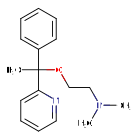
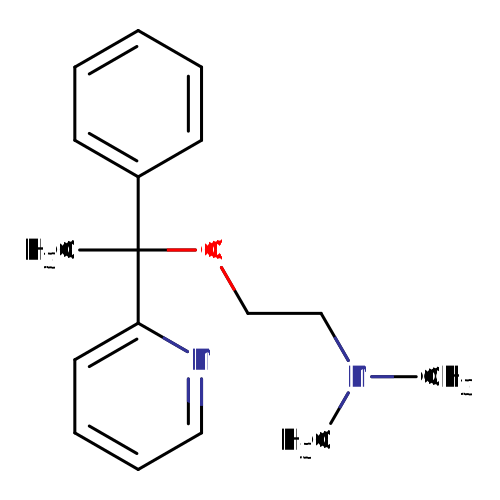
Structure for Doxylamine (DB00366)
- Weight
- Average: 270.3694
Monoisotopic: 270.173213336 - Chemical Formula
- C17H22N2O
- Synonyms
- 2-(alpha-(2-(Dimethylamino)ethoxy)-alpha-methylbenzyl)pyridine
- 2-Dimethylaminoethoxyphenylmethyl-2-picoline
- Dossilamina
- Doxilamina
- Doxilminio
- Doxylamine
- Doxylaminum
- N,N-Dimethyl-2-(1-phenyl-1-(2-pyridinyl)ethoxy)ethanamine
- Phenyl-2-pyridylmethyl-beta-N,N-dimethylaminoethyl ether

Pharmacology
- Indication
Used alone as a short-term sleep aid, in combination with other drugs as a night-time cold and allergy relief drug. Also used in combination with Vitamin B6 (pyridoxine) to prevent morning sickness in pregnant women.
 Reduce drug development failure ratesBuild, train, & validate machine-learning modelswith evidence-based and structured datasets.Build, train, & validate predictive machine-learning models with structured datasets.
- Associated Conditions
Indication Type Indication Combined Product Details Approval Level Age Group Patient Characteristics Dose Form Used in combination for symptomatic treatment of Common cold •••••••••••• Used in combination for symptomatic treatment of Flu symptoms •••••••••••• Treatment of Insomnia •••••••••••• •••••• Treatment of Mild allergic rhinitis •••••••••••• ••••••••• ••••• Used in combination for symptomatic treatment of Nausea Combination Product in combination with: Pyridoxine (DB00165) •••••••••••• - Contraindications & Blackbox Warnings
 Prevent Adverse Drug Events TodayTap into our Clinical API for life-saving information on contraindications & blackbox warnings, population restrictions, harmful risks, & more.Avoid life-threatening adverse drug events with our Clinical API
- Pharmacodynamics
Doxylamine is an antihistamine commonly used as a sleep aid. This drug is also used to relieve symptoms of hay fever (allergic rhinitis), hives (rash or itching), and other allergic reactions. Doxylamine is a member of the ethanolamine class of antihistamines and has anti-allergy power far superior to virtually every other antihistamine on the market, with the exception of diphenhydramine (Benadryl). It is also the most powerful over-the-counter sedative available in the United States, and more sedating than many prescription hypnotics. In a study, it was found to be superior to even the barbiturate, phenobarbital for use as a sedative. Doxylamine is also a potent anticholinergic.
- Mechanism of action
Like other antihistamines, doxylamine acts by competitively inhibiting histamine at H1 receptors. It also has substantial sedative and anticholinergic effects.
Target Actions Organism AHistamine H1 receptor antagonistHumans UNuclear receptor subfamily 1 group I member 3 Not Available Humans UMuscarinic acetylcholine receptor antagonistHumans - Absorption
Readily absorbed via the gastrointestinal tract.
- Volume of distribution
Not Available
- Protein binding
Not Available
- Metabolism
Hepatic.
- Route of elimination
Not Available
- Half-life
10 hours
- Clearance
Not Available
- Adverse Effects
 Improve decision support & research outcomesWith structured adverse effects data, including: blackbox warnings, adverse reactions, warning & precautions, & incidence rates. View sample adverse effects data in our new Data Library!Improve decision support & research outcomes with our structured adverse effects data.
- Toxicity
Signs of overdose include wheezing, tightness in the chest, fever, itching, bad cough, blue skin color, fits, swelling of face, lips, tongue, or throat.
- Pathways
Pathway Category Doxylamine H1-Antihistamine Action Drug action - Pharmacogenomic Effects/ADRs
- Not Available
Interactions
- Drug Interactions
- This information should not be interpreted without the help of a healthcare provider. If you believe you are experiencing an interaction, contact a healthcare provider immediately. The absence of an interaction does not necessarily mean no interactions exist.
Drug Interaction Integrate drug-drug
interactions in your software1,2-Benzodiazepine Doxylamine may increase the central nervous system depressant (CNS depressant) activities of 1,2-Benzodiazepine. Acetazolamide Doxylamine may increase the central nervous system depressant (CNS depressant) activities of Acetazolamide. Acetophenazine Doxylamine may increase the central nervous system depressant (CNS depressant) activities of Acetophenazine. Aclidinium The risk or severity of adverse effects can be increased when Doxylamine is combined with Aclidinium. Acrivastine The risk or severity of QTc prolongation can be increased when Doxylamine is combined with Acrivastine. - Food Interactions
- Avoid alcohol. Co-administration may increase drowsiness and fall risk.
Products
 Drug product information from 10+ global regionsOur datasets provide approved product information including:dosage, form, labeller, route of administration, and marketing period.Access drug product information from over 10 global regions.
- Product Ingredients
Ingredient UNII CAS InChI Key Doxylamine succinate V9BI9B5YI2 562-10-7 KBAUFVUYFNWQFM-UHFFFAOYSA-N - Product Images


- Over the Counter Products
Name Dosage Strength Route Labeller Marketing Start Marketing End Region Image 7 Select Sleep Aid Tablet 25 mg/1 Oral 7-Eleven 2014-08-05 2022-02-28 US 
Aldex AN Tablet, chewable 5 mg/1 Oral Pernix Therapeutics 2010-01-20 2012-10-31 US Basic Care Sleep Aid Tablet 25 mg/1 Oral L. Perrigo Company 2018-03-06 Not applicable US Basic Care Sleep Aid Tablet 25 mg/1 Oral Amazon.com Services LLC 2020-06-02 Not applicable US Berkley and Jensen Sleep Aid Tablet 25 mg/1 Oral BJWC 2018-08-06 Not applicable US - Mixture Products
Name Ingredients Dosage Route Labeller Marketing Start Marketing End Region Image 7 Select Night Time Relief Doxylamine succinate (6.25 mg/1) + Acetaminophen (325 mg/1) + Dextromethorphan hydrobromide monohydrate (15 mg/1) Capsule, liquid filled Oral 7-Eleven 2014-04-17 2020-07-31 US 7 Select Night Time Relief Doxylamine succinate (12.5 mg/30mL) + Acetaminophen (650 mg/30mL) + Dextromethorphan hydrobromide monohydrate (30 mg/30mL) Solution Oral 7-Eleven 2014-08-05 2021-03-31 US Acetaminophen Dextromethorphan HBr Doxylamine succinate Phenylephrine HCl Doxylamine succinate (6.25 mg/1) + Acetaminophen (325 mg/1) + Dextromethorphan hydrobromide monohydrate (10 mg/1) + Phenylephrine hydrochloride (5 mg/1) Capsule, liquid filled Oral CVS Health 2017-11-30 Not applicable US Acetaminophen Dextromethorphan HBr Doxylamine succinate Phenylephrine HCl Doxylamine succinate (6.25 mg/1) + Acetaminophen (325 mg/1) + Dextromethorphan hydrobromide monohydrate (10 mg/1) + Phenylephrine hydrochloride (5 mg/1) Capsule, liquid filled Oral Cvs Pharmacy,inc 2017-07-07 Not applicable US ACETAMINOPHEN DEXTROMETHORPHAN HYDROBROMIDE and DOXYLAMINE SUCCINATE Doxylamine succinate (6.25 mg/1) + Acetaminophen (325 mg/1) + Dextromethorphan hydrobromide monohydrate (15 mg/1) Capsule, liquid filled Oral J.P. BUSINESS ENTERPRISE 2014-12-01 Not applicable US - Unapproved/Other Products
Name Ingredients Dosage Route Labeller Marketing Start Marketing End Region Image Poly Hist Forte Doxylamine succinate (10.5 mg/1) + Phenylephrine hydrochloride (10 mg/1) Tablet Oral Poly Pharmaceuticals, Inc. 2019-06-01 Not applicable US Rotosxika Sleep Aid Patch Doxylamine succinate (5 g/100g) + Camphor (3 g/100g) + Chamomile (3 g/100g) + Diphenhydramine hydrochloride (3 g/100g) Patch Topical Puning Xinhua Trade Co., Ltd. 2023-06-01 Not applicable US Rotosxika Ventilation Health patch Doxylamine succinate (5 g/100g) + Camphor (3 g/100g) + Chamomile (3 g/100g) + Diphenhydramine hydrochloride (3 g/100g) Patch Topical Puning Xinhua Trade Co., Ltd. 2023-06-01 Not applicable US


Categories
- ATC Codes
- R06AA09 — Doxylamine
- R06AA — Aminoalkyl ethers
- R06A — ANTIHISTAMINES FOR SYSTEMIC USE
- R06 — ANTIHISTAMINES FOR SYSTEMIC USE
- R — RESPIRATORY SYSTEM
- Drug Categories
- Agents producing tachycardia
- Aminoalkyl Ethers
- Anticholinergic Agents
- Antiemetics
- Antihistamines for Systemic Use
- Autonomic Agents
- Central Nervous System Agents
- Central Nervous System Depressants
- Ethanolamine Derivatives
- Gastrointestinal Agents
- Histamine Agents
- Histamine Antagonists
- Histamine H1 Antagonists
- Histamine Receptor Antagonists
- Muscarinic Antagonists
- Neurotransmitter Agents
- Peripheral Nervous System Agents
- Potential QTc-Prolonging Agents
- Pyridines
- QTc Prolonging Agents
- Chemical TaxonomyProvided by Classyfire
- Description
- This compound belongs to the class of organic compounds known as benzylethers. These are aromatic ethers with the general formula ROCR' (R = alkyl, aryl; R'=benzene).
- Kingdom
- Organic compounds
- Super Class
- Benzenoids
- Class
- Benzene and substituted derivatives
- Sub Class
- Benzylethers
- Direct Parent
- Benzylethers
- Alternative Parents
- Pyridines and derivatives / Heteroaromatic compounds / Trialkylamines / Dialkyl ethers / Azacyclic compounds / Organopnictogen compounds / Hydrocarbon derivatives
- Substituents
- Amine / Aromatic heteromonocyclic compound / Azacycle / Benzylether / Dialkyl ether / Ether / Heteroaromatic compound / Hydrocarbon derivative / Organic nitrogen compound / Organic oxygen compound
- Molecular Framework
- Aromatic heteromonocyclic compounds
- External Descriptors
- tertiary amine, pyridines (CHEBI:51380)
- Affected organisms
- Humans and other mammals
Chemical Identifiers
- UNII
- 95QB77JKPL
- CAS number
- 469-21-6
- InChI Key
- HCFDWZZGGLSKEP-UHFFFAOYSA-N
- InChI
- InChI=1S/C17H22N2O/c1-17(20-14-13-19(2)3,15-9-5-4-6-10-15)16-11-7-8-12-18-16/h4-12H,13-14H2,1-3H3
- IUPAC Name
- dimethyl({2-[1-phenyl-1-(pyridin-2-yl)ethoxy]ethyl})amine
- SMILES
- CN(C)CCOC(C)(C1=CC=CC=C1)C1=CC=CC=N1
References
- General References
- Not Available
- External Links
- Human Metabolome Database
- HMDB0001936
- KEGG Drug
- D02327
- PubChem Compound
- 3162
- PubChem Substance
- 46506354
- ChemSpider
- 3050
- BindingDB
- 50239996
- 3642
- ChEBI
- 51380
- ChEMBL
- CHEMBL1004
- Therapeutic Targets Database
- DAP000859
- PharmGKB
- PA449419
- Drugs.com
- Drugs.com Drug Page
- Wikipedia
- Doxylamine
- MSDS
- Download (74 KB)
Clinical Trials
- Clinical Trials
Phase Status Purpose Conditions Count 4 Terminated Treatment Morning Sickness 1 3 Completed Prevention Hyperemesis Gravidarum / Pregnancy 1 3 Completed Treatment Herpes Simplex Labialis 1 3 Completed Treatment Nausea and Vomiting of Pregnancy 2 3 Recruiting Treatment Morning Sickness 1
Pharmacoeconomics
- Manufacturers
- Not Available
- Packagers
- Amend
- Centurion Labs
- Chattem Chemicals Inc.
- Deltex Pharmaceuticals Inc.
- Duchesnay Inc.
- Perrigo Co.
- Dosage Forms
Form Route Strength Tablet, chewable Oral 5 mg/1 Tablet, effervescent Oral Tablet, extended release Oral Tablet Oral Kit; liquid; solution Oral Kit; tablet; tablet, coated Oral Capsule; kit Oral Kit; liquid Oral Capsule, gelatin coated; capsule, liquid filled; kit Oral Solution Oral Tablet, delayed release Oral 10 mg Tablet, delayed release Oral Powder Oral Tablet Oral 25 mg/1 Tablet, chewable Oral Tablet, effervescent Oral 25 mg Syrup Oral Tablet Oral 25 mg Tablet, orally disintegrating Oral 25 mg Capsule, liquid filled Oral Capsule Oral Capsule, gelatin coated Oral Tablet, film coated Oral Capsule, delayed release Oral Tablet, coated Oral Capsule, liquid filled; kit Oral Patch Topical Syrup Oral 9.78 mg/3mL Syrup Oral 9.75 mg/5mL Tablet Oral 30 mg Kit; tablet, film coated Oral Kit; tablet Oral Kit Oral Powder, for solution Oral Kit; solution Oral Kit; powder, for solution Oral Kit; syrup Oral Kit; suspension Oral Liquid Oral Tablet, coated Oral 25 mg - Prices
Unit description Cost Unit Doxylamine succinate powder 1.5USD g Unisom sleep aid tablet 0.34USD tablet Sleep aid 25 mg tablet 0.15USD tablet DrugBank does not sell nor buy drugs. Pricing information is supplied for informational purposes only.- Patents
Patent Number Pediatric Extension Approved Expires (estimated) Region US6340695 No 2002-01-22 2021-06-21 US US7560122 No 2009-07-14 2019-01-25 US US9526703 No 2016-12-27 2033-02-18 US US9375404 No 2016-06-28 2033-02-18 US US9089489 No 2015-07-28 2033-02-18 US US9937132 No 2018-04-10 2033-02-18 US
Properties
- State
- Liquid
- Experimental Properties
Property Value Source melting point (°C) < 25 °C PhysProp boiling point (°C) 139 °C at 5.00E-01 mm Hg PhysProp water solubility 1 g/ml (succinate salt) Not Available logP 2.5 Not Available - Predicted Properties
Property Value Source Water Solubility 0.541 mg/mL ALOGPS logP 2.9 ALOGPS logP 2.96 Chemaxon logS -2.7 ALOGPS pKa (Strongest Basic) 8.87 Chemaxon Physiological Charge 1 Chemaxon Hydrogen Acceptor Count 3 Chemaxon Hydrogen Donor Count 0 Chemaxon Polar Surface Area 25.36 Å2 Chemaxon Rotatable Bond Count 6 Chemaxon Refractivity 82.24 m3·mol-1 Chemaxon Polarizability 31.09 Å3 Chemaxon Number of Rings 2 Chemaxon Bioavailability 1 Chemaxon Rule of Five Yes Chemaxon Ghose Filter Yes Chemaxon Veber's Rule Yes Chemaxon MDDR-like Rule No Chemaxon - Predicted ADMET Features
Property Value Probability Human Intestinal Absorption + 0.9505 Blood Brain Barrier + 0.9491 Caco-2 permeable + 0.746 P-glycoprotein substrate Substrate 0.7449 P-glycoprotein inhibitor I Non-inhibitor 0.5123 P-glycoprotein inhibitor II Non-inhibitor 0.8383 Renal organic cation transporter Inhibitor 0.7507 CYP450 2C9 substrate Non-substrate 0.8153 CYP450 2D6 substrate Non-substrate 0.5432 CYP450 3A4 substrate Substrate 0.6801 CYP450 1A2 substrate Non-inhibitor 0.9092 CYP450 2C9 inhibitor Non-inhibitor 0.8957 CYP450 2D6 inhibitor Inhibitor 0.8361 CYP450 2C19 inhibitor Non-inhibitor 0.8764 CYP450 3A4 inhibitor Non-inhibitor 0.6894 CYP450 inhibitory promiscuity Low CYP Inhibitory Promiscuity 0.736 Ames test Non AMES toxic 0.9133 Carcinogenicity Non-carcinogens 0.9183 Biodegradation Not ready biodegradable 1.0 Rat acute toxicity 2.9218 LD50, mol/kg Not applicable hERG inhibition (predictor I) Weak inhibitor 0.8765 hERG inhibition (predictor II) Inhibitor 0.5398
Spectra
- Mass Spec (NIST)
- Not Available
- Spectra
- Chromatographic Properties
Collision Cross Sections (CCS)
Adduct CCS Value (Å2) Source type Source [M-H]- 169.524403 predictedDarkChem Lite v0.1.0 [M-H]- 161.44737 predictedDeepCCS 1.0 (2019) [M+H]+ 169.366703 predictedDarkChem Lite v0.1.0 [M+H]+ 163.80539 predictedDeepCCS 1.0 (2019) [M+Na]+ 169.993003 predictedDarkChem Lite v0.1.0 [M+Na]+ 169.89853 predictedDeepCCS 1.0 (2019)
Targets

- Kind
- Protein
- Organism
- Humans
- Pharmacological action
- Yes
- Actions
- Antagonist
- General Function
- Histamine receptor activity
- Specific Function
- In peripheral tissues, the H1 subclass of histamine receptors mediates the contraction of smooth muscles, increase in capillary permeability due to contraction of terminal venules, and catecholamin...
- Gene Name
- HRH1
- Uniprot ID
- P35367
- Uniprot Name
- Histamine H1 receptor
- Molecular Weight
- 55783.61 Da
References
- Overington JP, Al-Lazikani B, Hopkins AL: How many drug targets are there? Nat Rev Drug Discov. 2006 Dec;5(12):993-6. [Article]
- Imming P, Sinning C, Meyer A: Drugs, their targets and the nature and number of drug targets. Nat Rev Drug Discov. 2006 Oct;5(10):821-34. [Article]
- Chen X, Ji ZL, Chen YZ: TTD: Therapeutic Target Database. Nucleic Acids Res. 2002 Jan 1;30(1):412-5. [Article]
- Kind
- Protein
- Organism
- Humans
- Pharmacological action
- Unknown
- Curator comments
- Antagonist at the canonical form of the receptor. Agonist at isoform 3 of the receptor.
- General Function
- Zinc ion binding
- Specific Function
- Binds and transactivates the retinoic acid response elements that control expression of the retinoic acid receptor beta 2 and alcohol dehydrogenase 3 genes. Transactivates both the phenobarbital re...
- Gene Name
- NR1I3
- Uniprot ID
- Q14994
- Uniprot Name
- Nuclear receptor subfamily 1 group I member 3
- Molecular Weight
- 39942.145 Da
References
- Dring AM, Anderson LE, Qamar S, Stoner MA: Rational quantitative structure-activity relationship (RQSAR) screen for PXR and CAR isoform-specific nuclear receptor ligands. Chem Biol Interact. 2010 Dec 5;188(3):512-25. doi: 10.1016/j.cbi.2010.09.018. Epub 2010 Oct 20. [Article]
- Kind
- Protein group
- Organism
- Humans
- Pharmacological action
- Unknown
- Actions
- Antagonist
- Curator comments
- Doxylamine at toxic doses can cause anticholinergic effects.
- General Function
- Phosphatidylinositol phospholipase c activity
- Specific Function
- The muscarinic acetylcholine receptor mediates various cellular responses, including inhibition of adenylate cyclase, breakdown of phosphoinositides and modulation of potassium channels through the...
Components:
References
- Syed H, Som S, Khan N, Faltas W: Doxylamine toxicity: seizure, rhabdomyolysis and false positive urine drug screen for methadone. BMJ Case Rep. 2009;2009. pii: bcr09.2008.0879. doi: 10.1136/bcr.09.2008.0879. Epub 2009 Mar 17. [Article]
Enzymes
- Kind
- Protein
- Organism
- Humans
- Pharmacological action
- Unknown
- Actions
- Inducer
- Curator comments
- Doxylamine was found to induce CYP2B enzymes in mice; correlation with human subjects has not been established.
- General Function
- Oxidoreductase activity, acting on paired donors, with incorporation or reduction of molecular oxygen, reduced flavin or flavoprotein as one donor, and incorporation of one atom of oxygen
- Specific Function
- Not Available
- Gene Name
- CYP2B
- Uniprot ID
- Q14097
- Uniprot Name
- CYP2B protein
- Molecular Weight
- 43147.81 Da
References
- Bookstaff RC, Murphy VA, Skare JA, Minnema D, Sanzgiri U, Parkinson A: Effects of doxylamine succinate on thyroid hormone balance and enzyme induction in mice. Toxicol Appl Pharmacol. 1996 Dec;141(2):584-94. [Article]
Carriers
- Kind
- Protein
- Organism
- Humans
- Pharmacological action
- Unknown
- Actions
- Regulator
- General Function
- Toxic substance binding
- Specific Function
- Serum albumin, the main protein of plasma, has a good binding capacity for water, Ca(2+), Na(+), K(+), fatty acids, hormones, bilirubin and drugs. Its main function is the regulation of the colloid...
- Gene Name
- ALB
- Uniprot ID
- P02768
- Uniprot Name
- Serum albumin
- Molecular Weight
- 69365.94 Da
References
- Martinez-Gomez MA, Carril-Aviles MM, Sagrado S, Villanueva-Camanas RM, Medina-Hernandez MJ: Characterization of antihistamine-human serum protein interactions by capillary electrophoresis. J Chromatogr A. 2007 Apr 20;1147(2):261-9. doi: 10.1016/j.chroma.2007.02.054. Epub 2007 Feb 22. [Article]

Drug created at June 13, 2005 13:24 / Updated at April 26, 2024 00:45