Identification
- Summary
Lansoprazole is a proton pump inhibitor used to help gastrointestinal ulcers heal, to treat symptoms of gastroesophageal reflux disease (GERD), to eradicate Helicobacter pylori, and to treat hypersecretory conditions such as Zollinger-Ellison Syndrome.
- Brand Names
- Prevacid, Prevpac
- Generic Name
- Lansoprazole
- DrugBank Accession Number
- DB00448
- Background
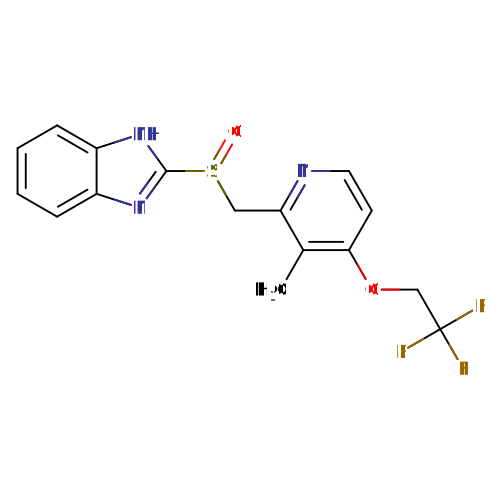
Lansoprazole marketed under the brand Prevacid, is a proton pump inhibitor (PPI) and is structurally classified as a substituted benzimidazole.4 It reduces gastric acid secretion by targeting gastric H,K-ATPase pumps and is thus effective at promoting healing in ulcerative diseases, and treating gastroesophageal reflux disease (GERD) along with other pathologies caused by excessive acid secretion.2
- Type
- Small Molecule
- Groups
- Approved, Investigational
- Structure
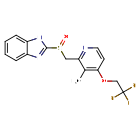
Structure for Lansoprazole (DB00448)
- Weight
- Average: 369.361
Monoisotopic: 369.075882012 - Chemical Formula
- C16H14F3N3O2S
- Synonyms
- Lansoprazol
- Lansoprazole
- Lansoprazolum
- External IDs
- A 65006
- A-65006
- AG 1749
- AG-1749

Pharmacology
- Indication
Lansoprazole is used to reduce gastric acid secretion and is approved for short term treatment of active gastric ulcers, active duodenal ulcers, erosive reflux oesophagitis, symptomatic gastroesophageal reflux disease, and non-steroidal anti-inflammatory drug (NSAID) induced gastric and duodenal ulcers. 14Label It may be used in the maintenance and healing of several gastric conditions including duodenal ulcers, NSAID related gastric ulcers, and erosive esophagitis.Label Lansoprazole prevents recurrence of gastric ulcers in patients who have a documented history of gastric ulcers who also use NSAIDs chronically. Label Predictably, it is also useful in the management of hypersecretory conditions including Zollinger-Ellison syndrome. Label Lansoprazole is effective at eradicating H. pylori when used in conjunction with amoxicillin and clarithromycin (triple therapy) or with amoxicillin alone (dual therapy). Label
 Reduce drug development failure ratesBuild, train, & validate machine-learning modelswith evidence-based and structured datasets.Build, train, & validate predictive machine-learning models with structured datasets.
- Associated Conditions
Indication Type Indication Combined Product Details Approval Level Age Group Patient Characteristics Dose Form Used in combination to prevent Duodenal ulcer Regimen in combination with: Amoxicillin (DB01060) •••••••••••• ••••• Used in combination to prevent Duodenal ulcer Combination Product in combination with: Amoxicillin (DB01060), Clarithromycin (DB01211) •••••••••••• Management of Erosive esophagitis •••••••••••• ••••••• ••••••••• Management of Erosive esophagitis •••••••••••• ••••••••••• ••••• Used in combination to treat Helicobacter pylori infection Regimen in combination with: Amoxicillin (DB01060) •••••••••••• ••••• - Contraindications & Blackbox Warnings
 Prevent Adverse Drug Events TodayTap into our Clinical API for life-saving information on contraindications & blackbox warnings, population restrictions, harmful risks, & more.Avoid life-threatening adverse drug events with our Clinical API
- Pharmacodynamics
Lansoprazole decreases gastric acid secretion by targeting H+,K+-ATPase, which is the enzyme that catalyzes the final step in the acid secretion pathway in parietal cells. 6 Conveniently, lansoprazole administered any time of day is able to inhibit both daytime and nocturnal acid secretion.6 The result is that lansoprazole is effective at healing duodenal ulcers, reduces ulcer-related pain, and offers relief from symptoms of heartburn 6 Lansoprazole also reduces pepsin secretion, making it a useful treatment option for hypersecretory conditions such as Zollinger-Ellison syndrome.76
- Mechanism of action
As a PPI, lansoprazole is a prodrug and requires protonation via an acidic environment to become activated. 3 Once protonated, lansoprazole is able to react with cysteine residues, specifically Cys813 and Cys321, on parietal H+,K+-ATPase resulting in stable disulfides.35 PPI's in general are able to provide prolonged inhibition of acid secretion due to their ability to bind covalently to their targets.3
Target Actions Organism APotassium-transporting ATPase alpha chain 1 inhibitorHumans UMicrotubule-associated protein tau Not Available Humans - Absorption
The oral bioavailability of lansoprazole is reported to be 80-90%2 and the peak plasma concentration(Cmax) is achieved about 1.7 hours after oral dosing.Label Food reduces the absorption of lansoprazole (both Cmax and AUC are reduced by 50-70%); therefore, patients should be instructed to take lansoprazole before meals.Label
- Volume of distribution
The apparent volume of distribution of lansoprazole is 0.4 L/kg. 3
- Protein binding
97% of lansoprazole is plasma protein bound. Label
- Metabolism
Lansoprazole is predominantly metabolized in the liver by CYP3A4 and CYP2C19. 3 The resulting major metabolites are 5-hydroxy lansoprazole and the sulfone derivative of lansoprazole. 3Label
Hover over products below to view reaction partners
- Route of elimination
A reported 14-23% of a lansoprazole is eliminated in the urine with this percentage range including both conjugated and unconjugated hydroxylated metabolites. 6
- Half-life
One source reports the half life of lansoprazole to be 0.9 - 1.6 hours2, while another source cites 0.9 - 2.1 hours3. The general consensus is that lansoprazole has a short half life and is approximately 2 hours or less. Label These numbers may be misleading since it suggests that lansoprazole has a short duration of action when in practice, lansoprazole can effectively inhibit acid secretion for ~24 hours due to it's mechanism of action. Label
- Clearance
The reported clearance of lansoprazole is 400-650 mL/min. 3
- Adverse Effects
 Improve decision support & research outcomesWith structured adverse effects data, including: blackbox warnings, adverse reactions, warning & precautions, & incidence rates. View sample adverse effects data in our new Data Library!Improve decision support & research outcomes with our structured adverse effects data.
- Toxicity
The most commonly reported adverse events occurring more frequently in lansoprazole treated patients compared to placebo include abdominal pain, constipation, diarrhea, and nausea.Label There is a case report of toxic epidermal necrolysis (TEN), which is a rare but very serious cutaneous reaction, caused by lansoprazole.8 The previously healthy patient presented with symptoms of TEN 15 days after starting lansoprazole to manage peptic disease.8 Although the use of PPI's is rarely associated with TEN, causation should be considered if a patient presents with TEN shortly after newly commencing a PPI.8
In a single case report, a patient ingested 600 mg of lansoprazole and did not experience any adverse effects or symptoms of overdose.Label Overall, lansoprazole is well tolerated with relatively few adverse effects.
Lansoprazole is classified as Pregnancy Category B.Label Although there are animal studies that suggest lansoprazole does not cause harm to the fetus, there is still a paucity of human data. Hence, lansoprazole should only be administered to pregnant women if other options with more safety data have been exhausted.
It is unknown if lansoprazole is excreted in human breast milk.Label It is worth mentioning that lansoprazole has been used safely in infants, and is therefore likely safe to use during breastfeeding.9
- Pathways
Pathway Category Lansoprazole Metabolism Pathway Drug metabolism Lansoprazole Action Pathway Drug action - Pharmacogenomic Effects/ADRs
Interacting Gene/Enzyme Allele name Genotype(s) Defining Change(s) Type(s) Description Details Cytochrome P450 2C19 CYP2C19*2 (A;A) A Allele, homozygote Effect Directly Studied Patients with this genotype have reduced metabolism of lansoprazole. Details Cytochrome P450 2C19 CYP2C19*3 (A;A) A Allele, homozygote Effect Directly Studied Patients with this genotype have reduced metabolism of lansoprazole. Details Multidrug resistance protein 1 --- (C;T) C Allele, heterozygote Effect Directly Studied Patients with this genotype have increased plasma concentration of lansoprazole. Details Cytochrome P450 2C19 CYP2C19*2A Not Available 681G>A Effect Inferred Poor metabolizer, lower dose requirement, improved drug efficacy Details Cytochrome P450 2C19 CYP2C19*2B Not Available 681G>A Effect Inferred Poor metabolizer, lower dose requirement, improved drug efficacy Details Cytochrome P450 2C19 CYP2C19*4 Not Available 1A>G Effect Inferred Poor metabolizer, lower dose requirement, improved drug efficacy Details Cytochrome P450 2C19 CYP2C19*5 Not Available 1297C>T Effect Inferred Poor metabolizer, lower dose requirement, improved drug efficacy Details Cytochrome P450 2C19 CYP2C19*6 Not Available 395G>A Effect Inferred Poor metabolizer, lower dose requirement, improved drug efficacy Details Cytochrome P450 2C19 CYP2C19*7 Not Available 19294T>A Effect Inferred Poor metabolizer, lower dose requirement, improved drug efficacy Details Cytochrome P450 2C19 CYP2C19*22 Not Available 557G>C / 991A>G Effect Inferred Poor metabolizer, lower dose requirement, improved drug efficacy Details Cytochrome P450 2C19 CYP2C19*24 Not Available 99C>T / 991A>G … show all Effect Inferred Poor metabolizer, lower dose requirement, improved drug efficacy Details Cytochrome P450 2C19 CYP2C19*35 Not Available 12662A>G Effect Inferred Poor metabolizer, lower dose requirement, improved drug efficacy Details
Interactions
- Drug Interactions
- This information should not be interpreted without the help of a healthcare provider. If you believe you are experiencing an interaction, contact a healthcare provider immediately. The absence of an interaction does not necessarily mean no interactions exist.
Drug Interaction Integrate drug-drug
interactions in your softwareAbametapir The serum concentration of Lansoprazole can be increased when it is combined with Abametapir. Abatacept The metabolism of Lansoprazole can be increased when combined with Abatacept. Abemaciclib Lansoprazole may decrease the excretion rate of Abemaciclib which could result in a higher serum level. Abiraterone The metabolism of Lansoprazole can be decreased when combined with Abiraterone. Abrocitinib The metabolism of Abrocitinib can be decreased when combined with Lansoprazole. - Food Interactions
- Take before a meal. Take 30-60 minutes before meals.
Products
 Drug product information from 10+ global regionsOur datasets provide approved product information including:dosage, form, labeller, route of administration, and marketing period.Access drug product information from over 10 global regions.
- Product Images
- International/Other Brands
- Agopton (Takeda) / Bamalite / Lansoloc (Cipla Medpro) / Lanzol (Cipla) / Lanzopral (Pharma Investi) / Lanzopran (Ranbaxy) / Limpidex (Sigma-Tau) / Monolitum (Salvat) / Ogast (Takeda) / Ogastro (Abbott) / Opiren (Almirall) / Prevacid 24HR (Novartis) / Prosogan (Takeda) / Takepron (Takeda) / Ulpax (Hormona) / Zoprol (Toprak) / Zoton (Pfizer)
- Brand Name Prescription Products
Name Dosage Strength Route Labeller Marketing Start Marketing End Region Image Lansoprazole Capsule, delayed release 30 mg Oral Pro Doc Limitee 2011-06-07 Not applicable Canada 
Lansoprazole Capsule, delayed release 15 mg Oral Sivem Pharmaceuticals Ulc 2012-06-11 Not applicable Canada Lansoprazole Capsule, delayed release 30 mg/1 Oral Rebel Distributors 2009-11-11 Not applicable US 

Lansoprazole Capsule, delayed release 30 mg Oral Sanis Health Inc 2010-11-22 Not applicable Canada Lansoprazole Capsule, delayed release 15 mg Oral Pharmascience Inc 2015-01-13 Not applicable Canada - Generic Prescription Products
Name Dosage Strength Route Labeller Marketing Start Marketing End Region Image Apo-lansoprazole Capsule, delayed release 30 mg Oral Apotex Corporation 2009-06-03 Not applicable Canada Apo-lansoprazole Capsule, delayed release 15 mg Oral Apotex Corporation 2009-06-03 Not applicable Canada Dom-lansoprazole Capsule, delayed release 30 mg Oral Dominion Pharmacal 2014-07-08 Not applicable Canada Dom-lansoprazole Capsule, delayed release 15 mg Oral Dominion Pharmacal Not applicable Not applicable Canada Lansoprazole Capsule, delayed release 15 mg/1 Oral Camber Pharmaceuticals, Inc. 2020-05-18 Not applicable US - Over the Counter Products
Name Dosage Strength Route Labeller Marketing Start Marketing End Region Image Basic Care Lansoprazole Capsule, delayed release 15 mg/1 Oral Amazon.com Services LLC 2020-09-24 Not applicable US Basic Care Lansoprazole Capsule, delayed release 15 mg/1 Oral Amazon.com Services LLC 2021-06-22 Not applicable US Basic Care Lansoprazole Capsule, delayed release 15 mg/1 Oral L. Perrigo Company 2017-09-03 Not applicable US Basic Care Lansoprazole Tablet, orally disintegrating, delayed release 15 mg/1 Oral L. Perrigo Company 2018-12-29 2024-02-01 US Basic Care Lansoprazole Tablet, orally disintegrating, delayed release 15 mg/1 Oral Amazon.com Services LLC 2021-08-09 Not applicable US - Mixture Products
Name Ingredients Dosage Route Labeller Marketing Start Marketing End Region Image Aa-lansoprazole-amoxicillin-clarithromycin Lansoprazole (30 mg / cap) + Amoxicillin (500 mg / cap) + Clarithromycin (500 mg / tab) Capsule; Capsule, delayed release; Kit; Tablet Oral Aa Pharma Inc 2018-08-03 Not applicable Canada DUOLANS 15/30 MG SR KAPSUL, 28 ADET Lansoprazole (15 mg) + Domperidone (30 mg) Capsule Oral NUVOMED İLAÇ SAN.TİC. A.Ş. 2011-12-09 Not applicable Turkey 
DUOLANS 30/30 MG SR KAPSUL, 28 ADET Lansoprazole (30 mg) + Domperidone (30 mg) Capsule Oral NUVOMED İLAÇ SAN.TİC. A.Ş. 2011-12-09 Not applicable Turkey HELIPAK 500 + 30 + 1000mg TEDAVİ PAKETİ, 14 TABLET Lansoprazole (370 mg) + Amoxicillin (1 g) + Clarithromycin (500 mg) Tablet Oral TEVA İLAÇLARI SAN.VE TİC. A.Ş. 2002-08-02 Not applicable Turkey HELIPAK 500 + 30 + 1000mg TEDAVİ PAKETİ, 7 TABLET Lansoprazole (370 mg) + Amoxicillin (1 g) + Clarithromycin (500 mg) Tablet Oral TEVA İLAÇLARI SAN.VE TİC. A.Ş. 2020-08-14 Not applicable Turkey


Categories
- ATC Codes
- A02BC03 — Lansoprazole
- A02BC — Proton pump inhibitors
- A02B — DRUGS FOR PEPTIC ULCER AND GASTRO-OESOPHAGEAL REFLUX DISEASE (GORD)
- A02 — DRUGS FOR ACID RELATED DISORDERS
- A — ALIMENTARY TRACT AND METABOLISM
- A02BD — Combinations for eradication of Helicobacter pylori
- A02B — DRUGS FOR PEPTIC ULCER AND GASTRO-OESOPHAGEAL REFLUX DISEASE (GORD)
- A02 — DRUGS FOR ACID RELATED DISORDERS
- A — ALIMENTARY TRACT AND METABOLISM
- A02BD — Combinations for eradication of Helicobacter pylori
- A02B — DRUGS FOR PEPTIC ULCER AND GASTRO-OESOPHAGEAL REFLUX DISEASE (GORD)
- A02 — DRUGS FOR ACID RELATED DISORDERS
- A — ALIMENTARY TRACT AND METABOLISM
- A02BD — Combinations for eradication of Helicobacter pylori
- A02B — DRUGS FOR PEPTIC ULCER AND GASTRO-OESOPHAGEAL REFLUX DISEASE (GORD)
- A02 — DRUGS FOR ACID RELATED DISORDERS
- A — ALIMENTARY TRACT AND METABOLISM
- A02BD — Combinations for eradication of Helicobacter pylori
- A02B — DRUGS FOR PEPTIC ULCER AND GASTRO-OESOPHAGEAL REFLUX DISEASE (GORD)
- A02 — DRUGS FOR ACID RELATED DISORDERS
- A — ALIMENTARY TRACT AND METABOLISM
- A02BD — Combinations for eradication of Helicobacter pylori
- A02B — DRUGS FOR PEPTIC ULCER AND GASTRO-OESOPHAGEAL REFLUX DISEASE (GORD)
- A02 — DRUGS FOR ACID RELATED DISORDERS
- A — ALIMENTARY TRACT AND METABOLISM
- Drug Categories
- Acid Reducers
- Alimentary Tract and Metabolism
- Anti-Ulcer Agents
- BCRP/ABCG2 Inhibitors
- Benzimidazoles
- Cytochrome P-450 CYP2C18 Substrates
- Cytochrome P-450 CYP2C19 Inhibitors
- Cytochrome P-450 CYP2C19 Inhibitors (strong)
- Cytochrome P-450 CYP2C19 Substrates
- Cytochrome P-450 CYP2C8 Substrates
- Cytochrome P-450 CYP2C9 Inducers
- Cytochrome P-450 CYP2C9 Inducers (strength unknown)
- Cytochrome P-450 CYP2C9 Inhibitors
- Cytochrome P-450 CYP2C9 Inhibitors (strength unknown)
- Cytochrome P-450 CYP2C9 Substrates
- Cytochrome P-450 CYP2D6 Inhibitors
- Cytochrome P-450 CYP2D6 Inhibitors (weak)
- Cytochrome P-450 CYP3A Inducers
- Cytochrome P-450 CYP3A Inhibitors
- Cytochrome P-450 CYP3A Substrates
- Cytochrome P-450 CYP3A4 Inducers
- Cytochrome P-450 CYP3A4 Inducers (strength unknown)
- Cytochrome P-450 CYP3A4 Inhibitors
- Cytochrome P-450 CYP3A4 Inhibitors (strength unknown)
- Cytochrome P-450 CYP3A4 Substrates
- Cytochrome P-450 Enzyme Inducers
- Cytochrome P-450 Enzyme Inhibitors
- Cytochrome P-450 Substrates
- Drugs for Acid Related Disorders
- Drugs for Peptic Ulcer and Gastro-Oesophageal Reflux Disease (Gord)
- Gastric Acid Lowering Agents
- Gastrointestinal Agents
- Heterocyclic Compounds, Fused-Ring
- Inhibition Gastric Acid Secretion
- OAT3/SLC22A8 Inhibitors
- P-glycoprotein inhibitors
- P-glycoprotein substrates
- Proton Pump Inhibitors
- Proton-pump Inhibitors
- Pyridines
- Sulfoxides
- Sulfur Compounds
- Chemical TaxonomyProvided by Classyfire
- Description
- This compound belongs to the class of organic compounds known as sulfinylbenzimidazoles. These are polycyclic aromatic compounds containing a sulfinyl group attached at the position 2 of a benzimidazole moiety.
- Kingdom
- Organic compounds
- Super Class
- Organoheterocyclic compounds
- Class
- Benzimidazoles
- Sub Class
- Sulfinylbenzimidazoles
- Direct Parent
- Sulfinylbenzimidazoles
- Alternative Parents
- Methylpyridines / Alkyl aryl ethers / Benzenoids / Imidazoles / Heteroaromatic compounds / Sulfoxides / Sulfinyl compounds / Azacyclic compounds / Organopnictogen compounds / Organonitrogen compounds show 4 more
- Substituents
- Alkyl aryl ether / Alkyl fluoride / Alkyl halide / Aromatic heteropolycyclic compound / Azacycle / Azole / Benzenoid / Ether / Heteroaromatic compound / Hydrocarbon derivative show 15 more
- Molecular Framework
- Aromatic heteropolycyclic compounds
- External Descriptors
- sulfoxide, pyridines, benzimidazoles (CHEBI:6375)
- Affected organisms
- Humans and other mammals
Chemical Identifiers
- UNII
- 0K5C5T2QPG
- CAS number
- 103577-45-3
- InChI Key
- MJIHNNLFOKEZEW-UHFFFAOYSA-N
- InChI
- InChI=1S/C16H14F3N3O2S/c1-10-13(20-7-6-14(10)24-9-16(17,18)19)8-25(23)15-21-11-4-2-3-5-12(11)22-15/h2-7H,8-9H2,1H3,(H,21,22)
- IUPAC Name
- 2-{[3-methyl-4-(2,2,2-trifluoroethoxy)pyridin-2-yl]methanesulfinyl}-1H-1,3-benzodiazole
- SMILES
- CC1=C(OCC(F)(F)F)C=CN=C1CS(=O)C1=NC2=CC=CC=C2N1
References
- Synthesis Reference
Clarke Slemon, Bob Macel, "Preparation of omeprazole and lansoprazole." U.S. Patent US5374730, issued December, 1986.
US5374730- General References
- Matheson AJ, Jarvis B: Lansoprazole: an update of its place in the management of acid-related disorders. Drugs. 2001;61(12):1801-33. [Article]
- Shin JM, Sachs G: Pharmacology of proton pump inhibitors. Curr Gastroenterol Rep. 2008 Dec;10(6):528-34. [Article]
- Shin JM, Kim N: Pharmacokinetics and pharmacodynamics of the proton pump inhibitors. J Neurogastroenterol Motil. 2013 Jan;19(1):25-35. doi: 10.5056/jnm.2013.19.1.25. Epub 2013 Jan 8. [Article]
- Gremse DA: Lansoprazole: pharmacokinetics, pharmacodynamics and clinical uses. Expert Opin Pharmacother. 2001 Oct;2(10):1663-70. doi: 10.1517/14656566.2.10.1663 . [Article]
- Bosnjak T, Solberg R, Hemati PD, Jafari A, Kassem M, Johansen HT: Lansoprazole inhibits the cysteine protease legumain by binding to the active site. Basic Clin Pharmacol Toxicol. 2019 Mar 27. doi: 10.1111/bcpt.13230. [Article]
- Barradell LB, Faulds D, McTavish D: Lansoprazole. A review of its pharmacodynamic and pharmacokinetic properties and its therapeutic efficacy in acid-related disorders. Drugs. 1992 Aug;44(2):225-50. doi: 10.2165/00003495-199244020-00007. [Article]
- Hirschowitz BI, Simmons JL, Johnson LF, Mohnen J: Risk factors for esophagitis in extreme acid hypersecretors with and without Zollinger-Ellison syndrome. Clin Gastroenterol Hepatol. 2004 Mar;2(3):220-9. [Article]
- Fracaroli TS, Miranda LQ, Sodre JL, Chaves M, Gripp A: Toxic epidermal necrolysis induced by lansoprazole. An Bras Dermatol. 2013 Jan-Feb;88(1):117-20. [Article]
- Lansoprazole - Drugs and Lactation Database [Link]
- FDA Approved Drug Products: Prevacid (lansoprazole) [Link]
- External Links
- Human Metabolome Database
- HMDB0005008
- KEGG Drug
- D00355
- PubChem Compound
- 3883
- PubChem Substance
- 46508975
- ChemSpider
- 3746
- BindingDB
- 47032
- 17128
- ChEBI
- 6375
- ChEMBL
- CHEMBL480
- Therapeutic Targets Database
- DAP000725
- PharmGKB
- PA450180
- RxList
- RxList Drug Page
- Drugs.com
- Drugs.com Drug Page
- Wikipedia
- Lansoprazole
- FDA label
- Download (508 KB)
Clinical Trials
- Clinical Trials
Phase Status Purpose Conditions Count 4 Completed Not Available Healthy Volunteers (HV) 1 4 Completed Basic Science Coronavirus Disease 2019 (COVID‑19) / Myocarditis Allergic / Renal Dialysis / Severe Acute Respiratory Syndrome-related Coronavirus / Vaccines / Viral Infections 1 4 Completed Basic Science Healthy Volunteers (HV) 1 4 Completed Diagnostic Helicobacter Pylori Infection 1 4 Completed Prevention Aspiration of Gastric Contents 1
Pharmacoeconomics
- Manufacturers
- Matrix laboratories ltd
- Teva pharmaceuticals usa
- Takeda pharmaceuticals north america inc
- Novartis consumer health inc
- Sandoz inc
- Packagers
- Abbott Laboratories Ltd.
- Advanced Pharmaceutical Services Inc.
- AQ Pharmaceuticals Inc.
- A-S Medication Solutions LLC
- Cardinal Health
- Caremark LLC
- Direct Pharmaceuticals Inc.
- Dispensing Solutions
- H.J. Harkins Co. Inc.
- Heartland Repack Services LLC
- Innoviant Pharmacy Inc.
- Inventia Healthcare Pvt Ltd.
- Lake Erie Medical and Surgical Supply
- Mckesson Corp.
- Medisca Inc.
- Murfreesboro Pharmaceutical Nursing Supply
- Mylan
- Novartis AG
- Nucare Pharmaceuticals Inc.
- Patheon Inc.
- PD-Rx Pharmaceuticals Inc.
- Pharmaceutical Utilization Management Program VA Inc.
- Physicians Total Care Inc.
- Preferred Pharmaceuticals Inc.
- Prepackage Specialists
- Promex Medical Inc.
- Redpharm Drug
- Resource Optimization and Innovation LLC
- Sandoz
- Southwood Pharmaceuticals
- Stat Rx Usa
- Takeda Pharmaceutical Co. Ltd.
- TAP Pharmaceuticals
- Teva Pharmaceutical Industries Ltd.
- UDL Laboratories
- Va Cmop Dallas
- Vangard Labs Inc.
- Dosage Forms
Form Route Strength Capsule Oral Capsule Oral 30.000 mg Capsule Oral 15.000 mg Capsule, coated pellets Oral Capsule, delayed release Oral Kit Not applicable 0.9 g/0.9g Tablet Oral Capsule Oral Capsule, extended release Oral 15 mg Capsule, extended release Oral 30 mg Capsule, coated pellets Oral 30 mg Capsule, coated Oral 30 mg Capsule Oral 30 MG Capsule Oral 15 mg/1 Capsule, delayed release Oral 15 mg/1 Capsule, delayed release Oral 353 mg Capsule, delayed release pellets Oral 15 mg/1 Capsule, delayed release pellets Oral 30 mg/1 Powder Not applicable 1 g/1g Tablet, orally disintegrating, delayed release Oral 30 mg/1 Capsule; capsule, delayed release; kit; tablet Oral Capsule, delayed release Oral 15 MG Tablet, orally disintegrating Oral Capsule, delayed release Oral 30 mg Capsule Oral 15 MG Capsule, coated Oral 3000000 mg Capsule; capsule, delayed release Oral 30 mg Capsule, coated pellets Oral 15 mg Tablet, coated Oral 15 mg Capsule, coated Oral 15 mg Capsule, extended release Oral Capsule Oral 30.0 mg Tablet, soluble Oral 30 mg Capsule, delayed release Oral 30 mg/1 Injection Intravenous 30 mg/5mL Suspension Oral 15 mg/1 Suspension Oral 30 mg/1 Tablet, orally disintegrating Oral 15 mg/1 Tablet, orally disintegrating Oral 30 mg/1 Tablet, orally disintegrating, delayed release Oral 15 mg/1 Tablet, delayed release Oral 15 mg Tablet, delayed release Oral 30 mg Injection, powder, for solution Intravenous 30 mg/5mL Kit Oral Injection, powder, for solution Intravenous Tablet Oral Capsule; capsule, delayed release Oral Capsule; tablet Oral Powder 30 mg/1vial Tablet Oral 15 mg Tablet, orally disintegrating Oral 15 mg Tablet Oral 30 mg Tablet, orally disintegrating Oral 30 mg - Prices
Unit description Cost Unit Prevacid SoluTab 100 15 mg Dispersible Tablet Box 620.65USD box Prevacid NapraPAC 84 15-500 mg Kit Box 175.8USD box Prevpac Miscellaneous 32.02USD ea Prevpac patient pack 28.22USD each Lansoprazole 100% powder 27.54USD g Prevacid iv 30 mg vial 27.31USD vial Prevacid dr 15 mg capsule 6.25USD capsule Prevacid SoluTab 30 mg Dispersible Tablet 6.21USD dispersible tablet Prevacid 15 mg capsule dr 6.0USD capsule Prevacid 30 mg capsule dr 6.0USD capsule Prevacid dr 30 mg capsule 5.91USD capsule Lansoprazole 15 mg Delayed Release Capsule 5.9USD capsule Lansoprazole 30 mg Delayed Release Capsule 5.9USD capsule Prevacid 15 mg solutab 5.73USD tablet Prevacid 30 mg solutab 5.73USD tablet Lansoprazole dr 15 mg capsule 5.67USD capsule Lansoprazole dr 30 mg capsule 5.67USD capsule Prevacid 30 mg Delayed Release Capsule 4.45USD capsule Prevacid 15 mg Delayed Release Capsule 4.32USD capsule Apo-Lansoprazole 15 mg Delayed Release Capsule 1.17USD capsule Apo-Lansoprazole 30 mg Delayed Release Capsule 1.17USD capsule Novo-Lansoprazole 15 mg Delayed Release Capsule 1.17USD capsule Novo-Lansoprazole 30 mg Delayed Release Capsule 1.17USD capsule Prevacid 24hr dr 15 mg capsule 0.86USD capsule DrugBank does not sell nor buy drugs. Pricing information is supplied for informational purposes only.- Patents
Patent Number Pediatric Extension Approved Expires (estimated) Region US4628098 No 1986-12-09 2009-11-10 US CA2419067 No 2008-12-23 2021-08-17 Canada CA1327010 No 1994-02-15 2011-02-15 Canada US7399485 Yes 2008-07-15 2018-11-26 US US6328994 Yes 2001-12-11 2019-11-17 US US7875292 Yes 2011-01-25 2019-11-17 US US7431942 Yes 2008-10-07 2019-11-17 US US7396841 Yes 2008-07-08 2022-02-17 US US9901546 Yes 2018-02-27 2019-11-17 US US11077055 No 2021-08-03 2036-04-21 US
Properties
- State
- Solid
- Experimental Properties
Property Value Source melting point (°C) 178-182 °C https://www.chemicalbook.com/ChemicalProductProperty_US_CB6396972.aspx water solubility 0.97 mg/L FDA Label - Predicted Properties
Property Value Source Water Solubility 0.25 mg/mL ALOGPS logP 2.84 ALOGPS logP 3.03 Chemaxon logS -3.2 ALOGPS pKa (Strongest Acidic) 9.35 Chemaxon pKa (Strongest Basic) 4.16 Chemaxon Physiological Charge 0 Chemaxon Hydrogen Acceptor Count 4 Chemaxon Hydrogen Donor Count 1 Chemaxon Polar Surface Area 67.87 Å2 Chemaxon Rotatable Bond Count 6 Chemaxon Refractivity 87.61 m3·mol-1 Chemaxon Polarizability 34.59 Å3 Chemaxon Number of Rings 3 Chemaxon Bioavailability 1 Chemaxon Rule of Five Yes Chemaxon Ghose Filter Yes Chemaxon Veber's Rule No Chemaxon MDDR-like Rule Yes Chemaxon - Predicted ADMET Features
Property Value Probability Human Intestinal Absorption + 0.9972 Blood Brain Barrier + 0.7007 Caco-2 permeable + 0.8866 P-glycoprotein substrate Non-substrate 0.547 P-glycoprotein inhibitor I Inhibitor 0.5357 P-glycoprotein inhibitor II Non-inhibitor 0.8692 Renal organic cation transporter Inhibitor 0.5521 CYP450 2C9 substrate Non-substrate 0.7826 CYP450 2D6 substrate Non-substrate 0.8659 CYP450 3A4 substrate Substrate 0.6771 CYP450 1A2 substrate Inhibitor 0.9106 CYP450 2C9 inhibitor Non-inhibitor 0.9071 CYP450 2D6 inhibitor Inhibitor 0.8932 CYP450 2C19 inhibitor Inhibitor 0.8993 CYP450 3A4 inhibitor Inhibitor 0.7959 CYP450 inhibitory promiscuity High CYP Inhibitory Promiscuity 0.8768 Ames test Non AMES toxic 0.5858 Carcinogenicity Non-carcinogens 0.7944 Biodegradation Not ready biodegradable 1.0 Rat acute toxicity 1.8997 LD50, mol/kg Not applicable hERG inhibition (predictor I) Weak inhibitor 0.8777 hERG inhibition (predictor II) Non-inhibitor 0.8734
Spectra
- Mass Spec (NIST)
- Not Available
- Spectra
- Chromatographic Properties
Collision Cross Sections (CCS)
Adduct CCS Value (Å2) Source type Source [M-H]- 190.7522069 predictedDarkChem Lite v0.1.0 [M-H]- 173.57635 predictedDeepCCS 1.0 (2019) [M+H]+ 191.5039069 predictedDarkChem Lite v0.1.0 [M+H]+ 175.93436 predictedDeepCCS 1.0 (2019) [M+Na]+ 191.3743069 predictedDarkChem Lite v0.1.0 [M+Na]+ 182.0275 predictedDeepCCS 1.0 (2019)
Targets

- Kind
- Protein
- Organism
- Humans
- Pharmacological action
- Yes
- Actions
- Inhibitor
- General Function
- Sodium:potassium-exchanging atpase activity
- Specific Function
- Catalyzes the hydrolysis of ATP coupled with the exchange of H(+) and K(+) ions across the plasma membrane. Responsible for acid production in the stomach.
- Gene Name
- ATP4A
- Uniprot ID
- P20648
- Uniprot Name
- Potassium-transporting ATPase alpha chain 1
- Molecular Weight
- 114117.74 Da
References
- Matheson AJ, Jarvis B: Lansoprazole: an update of its place in the management of acid-related disorders. Drugs. 2001;61(12):1801-33. [Article]
- Langtry HD, Wilde MI: Lansoprazole. An update of its pharmacological properties and clinical efficacy in the management of acid-related disorders. Drugs. 1997 Sep;54(3):473-500. [Article]
- Chen X, Ji ZL, Chen YZ: TTD: Therapeutic Target Database. Nucleic Acids Res. 2002 Jan 1;30(1):412-5. [Article]
- Kind
- Protein
- Organism
- Humans
- Pharmacological action
- Unknown
- General Function
- Structural constituent of cytoskeleton
- Specific Function
- Promotes microtubule assembly and stability, and might be involved in the establishment and maintenance of neuronal polarity. The C-terminus binds axonal microtubules while the N-terminus binds neu...
- Gene Name
- MAPT
- Uniprot ID
- P10636
- Uniprot Name
- Microtubule-associated protein tau
- Molecular Weight
- 78927.025 Da
References
- Rojo LE, Alzate-Morales J, Saavedra IN, Davies P, Maccioni RB: Selective interaction of lansoprazole and astemizole with tau polymers: potential new clinical use in diagnosis of Alzheimer's disease. J Alzheimers Dis. 2010;19(2):573-89. doi: 10.3233/JAD-2010-1262. [Article]
Enzymes
- Kind
- Protein
- Organism
- Humans
- Pharmacological action
- Unknown
- Actions
- Inducer
- General Function
- Vitamin d 24-hydroxylase activity
- Specific Function
- Cytochromes P450 are a group of heme-thiolate monooxygenases. In liver microsomes, this enzyme is involved in an NADPH-dependent electron transport pathway. It oxidizes a variety of structurally un...
- Gene Name
- CYP1A1
- Uniprot ID
- P04798
- Uniprot Name
- Cytochrome P450 1A1
- Molecular Weight
- 58164.815 Da
References
- Curi-Pedrosa R, Daujat M, Pichard L, Ourlin JC, Clair P, Gervot L, Lesca P, Domergue J, Joyeux H, Fourtanier G, et al.: Omeprazole and lansoprazole are mixed inducers of CYP1A and CYP3A in human hepatocytes in primary culture. J Pharmacol Exp Ther. 1994 Apr;269(1):384-92. [Article]
- Krusekopf S, Roots I, Hildebrandt AG, Kleeberg U: Time-dependent transcriptional induction of CYP1A1, CYP1A2 and CYP1B1 mRNAs by H+/K+ -ATPase inhibitors and other xenobiotics. Xenobiotica. 2003 Feb;33(2):107-18. [Article]
- Kind
- Protein
- Organism
- Humans
- Pharmacological action
- Unknown
- Actions
- Inducer
- General Function
- Oxygen binding
- Specific Function
- Cytochromes P450 are a group of heme-thiolate monooxygenases. In liver microsomes, this enzyme is involved in an NADPH-dependent electron transport pathway. It oxidizes a variety of structurally un...
- Gene Name
- CYP1B1
- Uniprot ID
- Q16678
- Uniprot Name
- Cytochrome P450 1B1
- Molecular Weight
- 60845.33 Da
References
- Krusekopf S, Roots I, Hildebrandt AG, Kleeberg U: Time-dependent transcriptional induction of CYP1A1, CYP1A2 and CYP1B1 mRNAs by H+/K+ -ATPase inhibitors and other xenobiotics. Xenobiotica. 2003 Feb;33(2):107-18. [Article]
- Kind
- Protein
- Organism
- Humans
- Pharmacological action
- Unknown
- Actions
- Substrate
- Curator comments
- Very minor contribution to metabolism and not relevant at therapeutic concentrations.
- General Function
- Steroid hydroxylase activity
- Specific Function
- Cytochromes P450 are a group of heme-thiolate monooxygenases. In liver microsomes, this enzyme is involved in an NADPH-dependent electron transport pathway. It oxidizes a variety of structurally un...
- Gene Name
- CYP2C8
- Uniprot ID
- P10632
- Uniprot Name
- Cytochrome P450 2C8
- Molecular Weight
- 55824.275 Da
References
- Pearce RE, Rodrigues AD, Goldstein JA, Parkinson A: Identification of the human P450 enzymes involved in lansoprazole metabolism. J Pharmacol Exp Ther. 1996 May;277(2):805-16. [Article]
- Pichard L, Curi-Pedrosa R, Bonfils C, Jacqz-Aigrain E, Domergue J, Joyeux H, Cosme J, Guengerich FP, Maurel P: Oxidative metabolism of lansoprazole by human liver cytochromes P450. Mol Pharmacol. 1995 Feb;47(2):410-8. [Article]
- Kind
- Protein
- Organism
- Humans
- Pharmacological action
- Unknown
- Actions
- InhibitorInducer
- Curator comments
- Very minor contribution to metabolism and not relevant at therapeutic concentrations. R-lansoprazole acts as a steroespecific inducer of the enzyme but the degree of activation varies depending on the substrate. All data supporting this enzyme action are in vitro,
- General Function
- Steroid hydroxylase activity
- Specific Function
- Cytochromes P450 are a group of heme-thiolate monooxygenases. In liver microsomes, this enzyme is involved in an NADPH-dependent electron transport pathway. It oxidizes a variety of structurally un...
- Gene Name
- CYP2C9
- Uniprot ID
- P11712
- Uniprot Name
- Cytochrome P450 2C9
- Molecular Weight
- 55627.365 Da
References
- Zhou SF, Zhou ZW, Yang LP, Cai JP: Substrates, inducers, inhibitors and structure-activity relationships of human Cytochrome P450 2C9 and implications in drug development. Curr Med Chem. 2009;16(27):3480-675. Epub 2009 Sep 1. [Article]
- Liu KH, Kim MJ, Jung WM, Kang W, Cha IJ, Shin JG: Lansoprazole enantiomer activates human liver microsomal CYP2C9 catalytic activity in a stereospecific and substrate-specific manner. Drug Metab Dispos. 2005 Feb;33(2):209-13. doi: 10.1124/dmd.104.001438. Epub 2004 Nov 10. [Article]
- Li XQ, Andersson TB, Ahlstrom M, Weidolf L: Comparison of inhibitory effects of the proton pump-inhibiting drugs omeprazole, esomeprazole, lansoprazole, pantoprazole, and rabeprazole on human cytochrome P450 activities. Drug Metab Dispos. 2004 Aug;32(8):821-7. [Article]
- Liu KH, Kim MJ, Shon JH, Moon YS, Seol SY, Kang W, Cha IJ, Shin JG: Stereoselective inhibition of cytochrome P450 forms by lansoprazole and omeprazole in vitro. Xenobiotica. 2005 Jan;35(1):27-38. doi: 10.1080/00498250400026472 . [Article]
- Kind
- Protein
- Organism
- Humans
- Pharmacological action
- Unknown
- Actions
- Substrate
- General Function
- Steroid hydroxylase activity
- Specific Function
- Cytochromes P450 are a group of heme-thiolate monooxygenases. In liver microsomes, this enzyme is involved in an NADPH-dependent electron transport pathway. It oxidizes a variety of structurally un...
- Gene Name
- CYP2C18
- Uniprot ID
- P33260
- Uniprot Name
- Cytochrome P450 2C18
- Molecular Weight
- 55710.075 Da
References
- Pichard L, Curi-Pedrosa R, Bonfils C, Jacqz-Aigrain E, Domergue J, Joyeux H, Cosme J, Guengerich FP, Maurel P: Oxidative metabolism of lansoprazole by human liver cytochromes P450. Mol Pharmacol. 1995 Feb;47(2):410-8. [Article]
- Kind
- Protein
- Organism
- Humans
- Pharmacological action
- Unknown
- Actions
- Inhibitor
- General Function
- Steroid hydroxylase activity
- Specific Function
- Responsible for the metabolism of many drugs and environmental chemicals that it oxidizes. It is involved in the metabolism of drugs such as antiarrhythmics, adrenoceptor antagonists, and tricyclic...
- Gene Name
- CYP2D6
- Uniprot ID
- P10635
- Uniprot Name
- Cytochrome P450 2D6
- Molecular Weight
- 55768.94 Da
References
- Ko JW, Sukhova N, Thacker D, Chen P, Flockhart DA: Evaluation of omeprazole and lansoprazole as inhibitors of cytochrome P450 isoforms. Drug Metab Dispos. 1997 Jul;25(7):853-62. [Article]
- Kind
- Protein
- Organism
- Humans
- Pharmacological action
- Unknown
- Actions
- SubstrateInhibitorInducer
- General Function
- Vitamin d3 25-hydroxylase activity
- Specific Function
- Cytochromes P450 are a group of heme-thiolate monooxygenases. In liver microsomes, this enzyme is involved in an NADPH-dependent electron transport pathway. It performs a variety of oxidation react...
- Gene Name
- CYP3A4
- Uniprot ID
- P08684
- Uniprot Name
- Cytochrome P450 3A4
- Molecular Weight
- 57342.67 Da
References
- Kim KA, Kim MJ, Park JY, Shon JH, Yoon YR, Lee SS, Liu KH, Chun JH, Hyun MH, Shin JG: Stereoselective metabolism of lansoprazole by human liver cytochrome P450 enzymes. Drug Metab Dispos. 2003 Oct;31(10):1227-34. doi: 10.1124/dmd.31.10.1227. [Article]
- Curi-Pedrosa R, Daujat M, Pichard L, Ourlin JC, Clair P, Gervot L, Lesca P, Domergue J, Joyeux H, Fourtanier G, et al.: Omeprazole and lansoprazole are mixed inducers of CYP1A and CYP3A in human hepatocytes in primary culture. J Pharmacol Exp Ther. 1994 Apr;269(1):384-92. [Article]
- Masubuchi N, Li AP, Okazaki O: An evaluation of the cytochrome P450 induction potential of pantoprazole in primary human hepatocytes. Chem Biol Interact. 1998 Jul 3;114(1-2):1-13. [Article]
- Pearce RE, Rodrigues AD, Goldstein JA, Parkinson A: Identification of the human P450 enzymes involved in lansoprazole metabolism. J Pharmacol Exp Ther. 1996 May;277(2):805-16. [Article]
- Ko JW, Sukhova N, Thacker D, Chen P, Flockhart DA: Evaluation of omeprazole and lansoprazole as inhibitors of cytochrome P450 isoforms. Drug Metab Dispos. 1997 Jul;25(7):853-62. [Article]
- Kind
- Protein
- Organism
- Humans
- Pharmacological action
- Unknown
- Actions
- SubstrateInhibitor
- Curator comments
- Higher affinity for S-lansoprazole but contributes to the metabolism of R-lansoprazole as well. This affinity is also proportional to the potency of each molecule as an inhibitor of the enzyme.
- General Function
- Steroid hydroxylase activity
- Specific Function
- Responsible for the metabolism of a number of therapeutic agents such as the anticonvulsant drug S-mephenytoin, omeprazole, proguanil, certain barbiturates, diazepam, propranolol, citalopram and im...
- Gene Name
- CYP2C19
- Uniprot ID
- P33261
- Uniprot Name
- Cytochrome P450 2C19
- Molecular Weight
- 55930.545 Da
References
- Pearce RE, Rodrigues AD, Goldstein JA, Parkinson A: Identification of the human P450 enzymes involved in lansoprazole metabolism. J Pharmacol Exp Ther. 1996 May;277(2):805-16. [Article]
- Kim KA, Kim MJ, Park JY, Shon JH, Yoon YR, Lee SS, Liu KH, Chun JH, Hyun MH, Shin JG: Stereoselective metabolism of lansoprazole by human liver cytochrome P450 enzymes. Drug Metab Dispos. 2003 Oct;31(10):1227-34. doi: 10.1124/dmd.31.10.1227. [Article]
- Liu KH, Kim MJ, Shon JH, Moon YS, Seol SY, Kang W, Cha IJ, Shin JG: Stereoselective inhibition of cytochrome P450 forms by lansoprazole and omeprazole in vitro. Xenobiotica. 2005 Jan;35(1):27-38. doi: 10.1080/00498250400026472 . [Article]
- Li XQ, Andersson TB, Ahlstrom M, Weidolf L: Comparison of inhibitory effects of the proton pump-inhibiting drugs omeprazole, esomeprazole, lansoprazole, pantoprazole, and rabeprazole on human cytochrome P450 activities. Drug Metab Dispos. 2004 Aug;32(8):821-7. [Article]
- Kita T, Sakaeda T, Baba T, Aoyama N, Kakumoto M, Kurimoto Y, Kawahara Y, Okamura N, Kirita S, Kasuga M, Okumura K: Different contribution of CYP2C19 in the in vitro metabolism of three proton pump inhibitors. Biol Pharm Bull. 2003 Mar;26(3):386-90. [Article]
- Yasui-Furukori N, Saito M, Uno T, Takahata T, Sugawara K, Tateishi T: Effects of fluvoxamine on lansoprazole pharmacokinetics in relation to CYP2C19 genotypes. J Clin Pharmacol. 2004 Nov;44(11):1223-9. doi: 10.1177/0091270004269015. [Article]
- Ko JW, Sukhova N, Thacker D, Chen P, Flockhart DA: Evaluation of omeprazole and lansoprazole as inhibitors of cytochrome P450 isoforms. Drug Metab Dispos. 1997 Jul;25(7):853-62. [Article]
- Shin JM, Kim N: Pharmacokinetics and pharmacodynamics of the proton pump inhibitors. J Neurogastroenterol Motil. 2013 Jan;19(1):25-35. doi: 10.5056/jnm.2013.19.1.25. Epub 2013 Jan 8. [Article]
- Flockhart Table of Drug Interactions [Link]
Transporters
- Kind
- Protein
- Organism
- Humans
- Pharmacological action
- Unknown
- Actions
- Inhibitor
- General Function
- Xenobiotic-transporting atpase activity
- Specific Function
- High-capacity urate exporter functioning in both renal and extrarenal urate excretion. Plays a role in porphyrin homeostasis as it is able to mediates the export of protoporhyrin IX (PPIX) both fro...
- Gene Name
- ABCG2
- Uniprot ID
- Q9UNQ0
- Uniprot Name
- ATP-binding cassette sub-family G member 2
- Molecular Weight
- 72313.47 Da
References
- Suzuki K, Doki K, Homma M, Tamaki H, Hori S, Ohtani H, Sawada Y, Kohda Y: Co-administration of proton pump inhibitors delays elimination of plasma methotrexate in high-dose methotrexate therapy. Br J Clin Pharmacol. 2009 Jan;67(1):44-9. doi: 10.1111/j.1365-2125.2008.03303.x. Epub 2008 Nov 17. [Article]
- Delayed Elimination of Methotrexate Associated with Co-Administration of Proton Pump Inhibitors [File]
- Kind
- Protein
- Organism
- Humans
- Pharmacological action
- Unknown
- Actions
- SubstrateInhibitor
- General Function
- Xenobiotic-transporting atpase activity
- Specific Function
- Energy-dependent efflux pump responsible for decreased drug accumulation in multidrug-resistant cells.
- Gene Name
- ABCB1
- Uniprot ID
- P08183
- Uniprot Name
- Multidrug resistance protein 1
- Molecular Weight
- 141477.255 Da
References
- Pauli-Magnus C, Rekersbrink S, Klotz U, Fromm MF: Interaction of omeprazole, lansoprazole and pantoprazole with P-glycoprotein. Naunyn Schmiedebergs Arch Pharmacol. 2001 Dec;364(6):551-7. [Article]
- Kodaira C, Sugimoto M, Nishino M, Yamade M, Shirai N, Uchida S, Ikuma M, Yamada S, Watanabe H, Hishida A, Furuta T: Effect of MDR1 C3435T polymorphism on lansoprazole in healthy Japanese subjects. Eur J Clin Pharmacol. 2009 Jun;65(6):593-600. doi: 10.1007/s00228-009-0625-8. Epub 2009 Feb 24. [Article]
- Kind
- Protein
- Organism
- Humans
- Pharmacological action
- Unknown
- Actions
- Inhibitor
- General Function
- Sodium-independent organic anion transmembrane transporter activity
- Specific Function
- Plays an important role in the excretion/detoxification of endogenous and exogenous organic anions, especially from the brain and kidney. Involved in the transport basolateral of steviol, fexofenad...
- Gene Name
- SLC22A8
- Uniprot ID
- Q8TCC7
- Uniprot Name
- Solute carrier family 22 member 8
- Molecular Weight
- 59855.585 Da
References
- Hamada Y, Ikemura K, Iwamoto T, Okuda M: Stereoselective Inhibition of Renal Basolateral Human Organic Anion Transporter 3 by Lansoprazole Enantiomers. Pharmacology. 2018;101(3-4):176-183. doi: 10.1159/000485920. Epub 2018 Jan 19. [Article]
- Proton Pump Inhibitors Inhibit Methotrexate Transport by Renal Basolateral Organic Anion Transporter hOAT3 [Link]
- Kind
- Protein
- Organism
- Humans
- Pharmacological action
- Unknown
- General Function
- Secondary active organic cation transmembrane transporter activity
- Specific Function
- Translocates a broad array of organic cations with various structures and molecular weights including the model compounds 1-methyl-4-phenylpyridinium (MPP), tetraethylammonium (TEA), N-1-methylnico...
- Gene Name
- SLC22A1
- Uniprot ID
- O15245
- Uniprot Name
- Solute carrier family 22 member 1
- Molecular Weight
- 61153.345 Da
References
- Nies AT, Hofmann U, Resch C, Schaeffeler E, Rius M, Schwab M: Proton pump inhibitors inhibit metformin uptake by organic cation transporters (OCTs). PLoS One. 2011;6(7):e22163. doi: 10.1371/journal.pone.0022163. Epub 2011 Jul 14. [Article]
- Kind
- Protein
- Organism
- Humans
- Pharmacological action
- Unknown
- General Function
- Quaternary ammonium group transmembrane transporter activity
- Specific Function
- Mediates tubular uptake of organic compounds from circulation. Mediates the influx of agmatine, dopamine, noradrenaline (norepinephrine), serotonin, choline, famotidine, ranitidine, histamin, creat...
- Gene Name
- SLC22A2
- Uniprot ID
- O15244
- Uniprot Name
- Solute carrier family 22 member 2
- Molecular Weight
- 62579.99 Da
References
- Nies AT, Hofmann U, Resch C, Schaeffeler E, Rius M, Schwab M: Proton pump inhibitors inhibit metformin uptake by organic cation transporters (OCTs). PLoS One. 2011;6(7):e22163. doi: 10.1371/journal.pone.0022163. Epub 2011 Jul 14. [Article]
- Kind
- Protein
- Organism
- Humans
- Pharmacological action
- Unknown
- General Function
- Toxin transporter activity
- Specific Function
- Mediates potential-dependent transport of a variety of organic cations. May play a significant role in the disposition of cationic neurotoxins and neurotransmitters in the brain.
- Gene Name
- SLC22A3
- Uniprot ID
- O75751
- Uniprot Name
- Solute carrier family 22 member 3
- Molecular Weight
- 61279.485 Da
References
- Nies AT, Hofmann U, Resch C, Schaeffeler E, Rius M, Schwab M: Proton pump inhibitors inhibit metformin uptake by organic cation transporters (OCTs). PLoS One. 2011;6(7):e22163. doi: 10.1371/journal.pone.0022163. Epub 2011 Jul 14. [Article]

Drug created at June 13, 2005 13:24 / Updated at April 27, 2024 09:44