Identification
- Summary
Meperidine is an opioid agonist with analgesic and sedative properties used to manage severe pain.
- Brand Names
- Demerol
- Generic Name
- Meperidine
- DrugBank Accession Number
- DB00454
- Background
A narcotic analgesic that can be used for the relief of most types of moderate to severe pain, including postoperative pain and the pain of labor. Prolonged use may lead to dependence of the morphine type; withdrawal symptoms appear more rapidly than with morphine and are of shorter duration.
- Type
- Small Molecule
- Groups
- Approved
- Structure
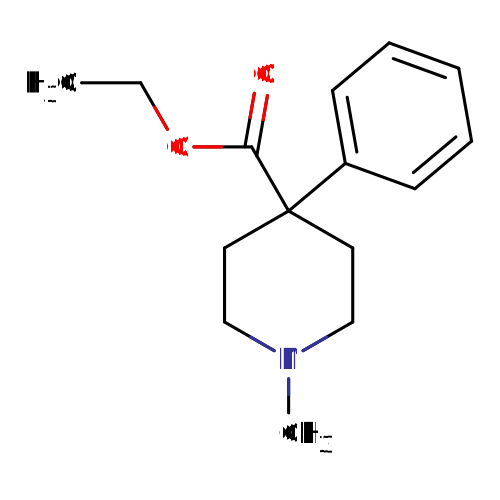
Structure for Meperidine (DB00454)
- Weight
- Average: 247.3327
Monoisotopic: 247.157228921 - Chemical Formula
- C15H21NO2
- Synonyms
- Isonipecaïne
- Meperidina
- Pethidin
- Pethidine
- Péthidine
- Pethidinum
- Petidina
- Petydyna
- External IDs
- IDS-NP-001

Pharmacology
- Indication
Used to control moderate to severe pain.
 Reduce drug development failure ratesBuild, train, & validate machine-learning modelswith evidence-based and structured datasets.Build, train, & validate predictive machine-learning models with structured datasets.
- Associated Conditions
Indication Type Indication Combined Product Details Approval Level Age Group Patient Characteristics Dose Form Used in combination to manage Severe pain Combination Product in combination with: Promethazine (DB01069) •••••••••••• •••••••••• ••••••••••• ••••••••• ••••••• •••••••••• ••••••• •••••••• Management of Severe pain •••••••••••• •••••••••• ••••••••••• ••••••••• ••••••• •••••••••• ••••••• ••••••••• •••••• - Associated Therapies
- Contraindications & Blackbox Warnings
 Prevent Adverse Drug Events TodayTap into our Clinical API for life-saving information on contraindications & blackbox warnings, population restrictions, harmful risks, & more.Avoid life-threatening adverse drug events with our Clinical API
- Pharmacodynamics
Meperidine is a synthetic opiate agonist belonging to the phenylpiperidine class. Meperidine may produce less smooth muscle spasm, constipation, and depression of the cough reflex than equivalent doses of morphine. The onset of action is lightly more rapid than with morphine, and the duration of action is slightly shorter. The chemical structure of meperidine is similar to local anesthetics. Meperidine is recommended for relief of moderate to severe acute pain and has the unique ability to interrupt postoperative shivering and shaking chills induced by amphotericin B. Meperidine has also been used for intravenous regional anesthesia, peripheral nerve blocks and intraarticular, epidural and spinal analgesia. Meperidine is considered a second-line agent for the treatment of acute pain.
- Mechanism of action
Meperidine is primarily a kappa-opiate receptor agonist and also has local anesthetic effects. Meperidine has more affinity for the kappa-receptor than morphine. Opiate receptors are coupled with G-protein receptors and function as both positive and negative regulators of synaptic transmission via G-proteins that activate effector proteins. Binding of the opiate stimulates the exchange of GTP for GDP on the G-protein complex. As the effector system is adenylate cyclase and cAMP located at the inner surface of the plasma membrane, opioids decrease intracellular cAMP by inhibiting adenylate cyclase. Subsequently, the release of nociceptive neurotransmitters such as substance P, GABA, dopamine, acetylcholine and noradrenaline is inhibited. Opioids also inhibit the release of vasopressin, somatostatin, insulin and glucagon. Opioids close N-type voltage-operated calcium channels (OP2-receptor agonist) and open calcium-dependent inwardly rectifying potassium channels (OP3 and OP1 receptor agonist). This results in hyperpolarization and reduced neuronal excitability.
Target Actions Organism AKappa-type opioid receptor Not Available Humans UGlutamate receptor ionotropic, NMDA 1 antagonistHumans UGlutamate receptor ionotropic, NMDA 2B antagonistHumans UGlutamate receptor ionotropic, NMDA 2A antagonistHumans UGlutamate receptor ionotropic, NMDA 2C antagonistHumans UGlutamate receptor ionotropic, NMDA 2D antagonistHumans UMuscarinic acetylcholine receptor binderHumans UMu-type opioid receptor agonistHumans USodium-dependent dopamine transporter inhibitorHumans USodium-dependent noradrenaline transporter inhibitorHumans USodium-dependent serotonin transporter binderHumans ULiver carboxylesterase 1 Not Available Humans - Absorption
The oral bioavailability of meperidine in patients with normal hepatic function is 50-60% due to extensive first-pass metabolism. Bioavailability increases to 80-90% in patients with hepatic impairment (e.g. liver cirrhosis). Meperidine is less than half as effective when administered orally compared to parenteral administration. One study reported that 80-85% of the drug administered intramuscularly was absorbed within 6 hours of intragluteal injection in health adults; however, inter-individual variation and patient-specific variable appear to cause considerable variations in absorption upon IM injection.
- Volume of distribution
Meperidine crosses the placenta and is distributed into breast milk.
- Protein binding
60-80% bound to plasma proteins, primarily albumin and α1-acid glycoprotein. The presence of cirrhosis or active viral hepatitis does not appear to affect the extent of protein binding.
- Metabolism
Meperidine is metabolized in the liver by hydrolysis to meperidinic acid followed by partial conjugation with glucuronic acid. Meperidine also undergoes N-demethylation to normeperidine, which then undergoes hydrolysis and partial conjugation. Normeperidine is about half as potent as meperidine, but it has twice the CNS stimulation effects.
- Route of elimination
Excreted in the urine. The proportion of drug that is excreted unchanged or as metabolites is dependent on pH. When urine pH is uncontrolled, 5-30% of the meperidine dose is excreted as normeperidine and approximately 5% is excreted unchanged. Meperidine and normeperidine are found in acidic urine, while the free and conjugated forms of meperidinic and normperidinic acids are found in alkaline urine.
- Half-life
Initial distribution phase (t1/2 α) = 2-11 minutes; terminal elimination phase (t1/2 β) = 3-5 hours. In patients with hepatic dysfunction (e.g. liver cirrhosis or active viral hepatitis) the t1/2 β is prolonged to 7-11 hours.
- Clearance
Not Available
- Adverse Effects
 Improve decision support & research outcomesWith structured adverse effects data, including: blackbox warnings, adverse reactions, warning & precautions, & incidence rates. View sample adverse effects data in our new Data Library!Improve decision support & research outcomes with our structured adverse effects data.
- Toxicity
Not Available
- Pathways
- Not Available
- Pharmacogenomic Effects/ADRs
- Not Available
Interactions
- Drug Interactions
- This information should not be interpreted without the help of a healthcare provider. If you believe you are experiencing an interaction, contact a healthcare provider immediately. The absence of an interaction does not necessarily mean no interactions exist.
Drug Interaction Integrate drug-drug
interactions in your software1,2-Benzodiazepine The risk or severity of adverse effects can be increased when Meperidine is combined with 1,2-Benzodiazepine. Abacavir Meperidine may decrease the excretion rate of Abacavir which could result in a higher serum level. Abametapir The serum concentration of Meperidine can be increased when it is combined with Abametapir. Abatacept The metabolism of Meperidine can be increased when combined with Abatacept. Abemaciclib The metabolism of Abemaciclib can be decreased when combined with Meperidine. - Food Interactions
- Avoid alcohol.
- Take with or without food. Food does not significantly affect absorption.
Products
 Drug product information from 10+ global regionsOur datasets provide approved product information including:dosage, form, labeller, route of administration, and marketing period.Access drug product information from over 10 global regions.
- Product Ingredients
Ingredient UNII CAS InChI Key Meperidine hydrochloride N8E7F7Q170 50-13-5 WCNLCIJMFAJCPX-UHFFFAOYSA-N - Product Images


- International/Other Brands
- Dolantin (sanofi-aventis) / Dolcontral (mibe) / Dolosal (Cristália) / Dolsin (Biotika) / Lydol (Sopharma) / Mialgin (Zentiva) / Petidin (Nycomed)
- Brand Name Prescription Products
Name Dosage Strength Route Labeller Marketing Start Marketing End Region Image Demerol Tablet 100 mg/1 Oral Validus Pharmaceuticals LLC 1942-11-10 Not applicable US 
Demerol Injection, solution 75 mg/1mL Intramuscular; Intravenous; Subcutaneous Hospira, Inc. 2021-04-16 2021-04-16 US Demerol Injection, solution 50 mg/1mL Intramuscular; Intravenous; Subcutaneous Hospira, Inc. 2007-02-06 2007-02-06 US Demerol Solution 50 mg/5mL Oral Validus Pharmaceuticals LLC 1942-11-10 2007-11-09 US Demerol Injection, solution 100 mg/1mL Intramuscular; Intravenous; Subcutaneous Hospira, Inc. 2006-03-15 2017-10-01 US - Generic Prescription Products
Name Dosage Strength Route Labeller Marketing Start Marketing End Region Image Meperidine Hydrochloride Tablet 50 mg/1 Oral Epic Pharma, LLC 2011-05-05 Not applicable US 
Meperidine Hydrochloride Injection 25 mg/1mL Intramuscular; Intravenous; Subcutaneous Hikma Pharmaceuticals USA Inc. 1975-01-22 Not applicable US Meperidine Hydrochloride Tablet 50 mg/1 Oral Genus Lifesciences Inc. 2024-02-14 Not applicable US Meperidine Hydrochloride Tablet 100 mg/1 Oral TAGI Pharma, Inc. 2011-03-15 2011-05-31 US Meperidine Hydrochloride Tablet 100 mg/1 Oral Sun Pharmaceutical Industries, Inc. 2007-01-04 2014-12-31 US - Unapproved/Other Products
Name Ingredients Dosage Route Labeller Marketing Start Marketing End Region Image Meperidine HCl Meperidine hydrochloride (10 mg/1mL) Injection, solution Intravenous Cantrell Drug Company 2014-08-13 Not applicable US Meperidine Hcl and Promethazine Hcl Meperidine hydrochloride (50 mg/1) + Promethazine hydrochloride (25 mg/1) Capsule Oral Physicians Total Care, Inc. 2004-09-03 2013-01-15 US Meperidine Hydrochloride and Promethazine Hydrochloride Meperidine hydrochloride (50 mg/1) + Promethazine hydrochloride (25 mg/1) Capsule Oral Eci Pharmaceuticals Llc 2013-02-19 2018-06-30 US


Categories
- ATC Codes
- N02AB02 — PethidineN02AB72 — Pethidine, combinations with psycholepticsN02AB52 — Pethidine, combinations excl. psycholepticsN02AG03 — Pethidine and antispasmodics
- Drug Categories
- Adjuvants
- Adjuvants, Anesthesia
- Agents that reduce seizure threshold
- Analgesics
- Antidepressive Agents
- Central Nervous System Agents
- Central Nervous System Depressants
- Cytochrome P-450 CYP1A2 Inducers
- Cytochrome P-450 CYP1A2 Inducers (strength unknown)
- Cytochrome P-450 CYP2B6 Substrates
- Cytochrome P-450 CYP2C19 Substrates
- Cytochrome P-450 CYP2D6 Substrates
- Cytochrome P-450 CYP3A Inducers
- Cytochrome P-450 CYP3A Substrates
- Cytochrome P-450 CYP3A4 Inducers
- Cytochrome P-450 CYP3A4 Inducers (strength unknown)
- Cytochrome P-450 CYP3A4 Substrates
- Cytochrome P-450 CYP3A4 Substrates (strength unknown)
- Cytochrome P-450 Enzyme Inducers
- Cytochrome P-450 Substrates
- Drugs that are Mainly Renally Excreted
- High-risk opioids
- Isonipecotic Acids
- Narcotics
- Nervous System
- NMDA Receptor Antagonists
- Opiate Agonists
- Opioid Agonist
- Opioids
- P-glycoprotein substrates
- Peripheral Nervous System Agents
- Phenylpiperidine opioids
- Piperidines
- Sensory System Agents
- Serotonergic Drugs Shown to Increase Risk of Serotonin Syndrome
- Serotonin Agents
- Serotonin Modulators
- Chemical TaxonomyProvided by Classyfire
- Description
- This compound belongs to the class of organic compounds known as phenylpiperidines. These are compounds containing a phenylpiperidine skeleton, which consists of a piperidine bound to a phenyl group.
- Kingdom
- Organic compounds
- Super Class
- Organoheterocyclic compounds
- Class
- Piperidines
- Sub Class
- Phenylpiperidines
- Direct Parent
- Phenylpiperidines
- Alternative Parents
- Piperidinecarboxylic acids / Aralkylamines / Benzene and substituted derivatives / Trialkylamines / Carboxylic acid esters / Amino acids and derivatives / Monocarboxylic acids and derivatives / Azacyclic compounds / Organopnictogen compounds / Organic oxides show 2 more
- Substituents
- Amine / Amino acid or derivatives / Aralkylamine / Aromatic heteromonocyclic compound / Azacycle / Benzenoid / Carbonyl group / Carboxylic acid derivative / Carboxylic acid ester / Hydrocarbon derivative show 12 more
- Molecular Framework
- Aromatic heteromonocyclic compounds
- External Descriptors
- piperidines (CHEBI:6754)
- Affected organisms
- Humans and other mammals
Chemical Identifiers
- UNII
- 9E338QE28F
- CAS number
- 57-42-1
- InChI Key
- XADCESSVHJOZHK-UHFFFAOYSA-N
- InChI
- InChI=1S/C15H21NO2/c1-3-18-14(17)15(9-11-16(2)12-10-15)13-7-5-4-6-8-13/h4-8H,3,9-12H2,1-2H3
- IUPAC Name
- ethyl 1-methyl-4-phenylpiperidine-4-carboxylate
- SMILES
- CCOC(=O)C1(CCN(C)CC1)C1=CC=CC=C1
References
- General References
- FDA Approved Drug Products: DEMEROL (meperidine hydrochloride) injection [Link]
- FDA Approved Drug Products: DEMEROL (meperidine hydrochloride) solution and tablets [Link]
- FDA Approved Drug Products: MEPERGAN (meperidine HCl and promethazine HCl) injection [Link]
- FDA Approved Drug Products: DEMEROL (meperidine hydrochloride injection), for subcutaneous, intramuscular, and intravenous use, CII (December 2023) [Link]
- External Links
- Human Metabolome Database
- HMDB0014597
- KEGG Drug
- D08343
- KEGG Compound
- C07128
- PubChem Compound
- 4058
- PubChem Substance
- 46506899
- ChemSpider
- 3918
- BindingDB
- 50026752
- 6754
- ChEBI
- 6754
- ChEMBL
- CHEMBL607
- ZINC
- ZINC000000001681
- Therapeutic Targets Database
- DAP000230
- PharmGKB
- PA450369
- RxList
- RxList Drug Page
- Drugs.com
- Drugs.com Drug Page
- Wikipedia
- Pethidine
- FDA label
- Download (173 KB)
- MSDS
- Download (6.6 KB)
Clinical Trials
- Clinical Trials
Phase Status Purpose Conditions Count 4 Active Not Recruiting Supportive Care Shivering 1 4 Completed Not Available Disorders of Gallbladder, Biliary Tract and Pancrease 1 4 Completed Diagnostic Alteration of Cognitive Function / Gastrointestinal Dysfunction 1 4 Completed Prevention Shivering 1 4 Completed Supportive Care Colonoscopy 1
Pharmacoeconomics
- Manufacturers
- Hospira inc
- Sanofi aventis us llc
- Abbott laboratories pharmaceutical products div
- Astrazeneca lp
- Baxter healthcare corp anesthesia and critical care
- Baxter healthcare corp anesthesia critical care
- Elkins sinn div ah robins co inc
- International medication systems ltd
- Parke davis div warner lambert co
- Watson laboratories inc
- International medication system
- Mallinckrodt chemical inc
- Roxane laboratories inc
- Barr laboratories inc
- Caraco pharmaceutical laboratories ltd
- Duramed pharmaceuticals inc sub barr laboratories inc
- Mallinckrodt inc
- Mikah pharma llc
- Mikart inc
- Mutual pharmaceutical co inc
- Vintage pharmaceuticals inc
- Wyeth ayerst laboratories
- Packagers
- AstraZeneca Inc.
- Barr Pharmaceuticals
- Baxter International Inc.
- Bayer Healthcare
- Caraco Pharmaceutical Labs
- D.M. Graham Laboratories Inc.
- Diversified Healthcare Services Inc.
- Hawkins Inc.
- Hospira Inc.
- Lake Erie Medical and Surgical Supply
- Mallinckrodt Inc.
- Nucare Pharmaceuticals Inc.
- Pharmedium
- Physicians Total Care Inc.
- Qualitest
- Roxane Labs
- Sanofi-Aventis Inc.
- Vintage Pharmaceuticals Inc.
- Dosage Forms
Form Route Strength Injection, solution Parenteral 50 mg/ml Injection Intramuscular; Intravenous; Subcutaneous 50 mg/ml Injection, solution Intramuscular; Intravenous; Subcutaneous 100 mg/1mL Injection, solution Intramuscular; Intravenous; Subcutaneous 100 mg/2mL Injection, solution Intramuscular; Intravenous; Subcutaneous 25 mg/0.5mL Injection, solution Intramuscular; Intravenous; Subcutaneous 25 mg/1mL Injection, solution Intramuscular; Intravenous; Subcutaneous 50 mg/1mL Injection, solution Intramuscular; Intravenous; Subcutaneous 75 mg/1.5mL Injection, solution Intramuscular; Intravenous; Subcutaneous 75 mg/1mL Syrup Oral 50 mg/5mL Tablet Oral 50 mg Liquid Intramuscular; Intravenous; Subcutaneous 100 mg / mL Liquid Intramuscular; Subcutaneous 100 mg / mL Solution Intramuscular; Intravenous; Subcutaneous 100 mg / 1 mL Solution Intramuscular; Subcutaneous 100 mg / mL Solution Intramuscular; Subcutaneous 50 mg / mL Solution Intramuscular; Intravenous; Subcutaneous 50 mg / 1 mL Liquid Intramuscular; Intravenous; Subcutaneous 50 mg / mL Liquid Intramuscular; Subcutaneous 50 mg / mL Solution Intramuscular; Intravenous; Subcutaneous 75 mg / 1 mL Liquid Intramuscular; Intravenous; Subcutaneous 75 mg / mL Injection Parenteral Solution Intramuscular; Subcutaneous 100 mg Tablet Oral 50 mg/1 Capsule Oral Solution Intramuscular; Intravenous; Subcutaneous 100 mg / mL Solution Intramuscular; Intravenous; Subcutaneous 10 mg / mL Solution Intramuscular; Intravenous; Subcutaneous 25 mg / mL Solution Intramuscular; Intravenous; Subcutaneous 50 mg / mL Solution Intramuscular; Intravenous; Subcutaneous 75 mg / mL Injection Intramuscular 50 mg/1mL Injection Intramuscular; Intravenous; Subcutaneous 100 mg/1mL Injection Intramuscular; Intravenous; Subcutaneous 25 mg/1mL Injection Intramuscular; Intravenous; Subcutaneous 50 mg/1mL Injection Intramuscular; Intravenous; Subcutaneous 75 mg/1mL Injection, solution Intravenous 10 mg/1mL Solution Oral 50 mg/5mL Tablet Oral 100 mg/1 Tablet Oral 150 mg/1 Tablet Oral 75 mg/1 Injection Solution Intramuscular; Intravenous; Subcutaneous 100 mg Solution Intravenous 10 mg / mL Solution 50 MG/ML Solution Intramuscular; Intravenous; Subcutaneous 50 MG/ML Injection, solution Intramuscular; Intravenous; Subcutaneous 50 mg Injection, solution 100 mg/2ml Injection, solution Injection, solution Intramuscular 100 MG/2ML Injection, solution Intramuscular 50 MG/1ML - Prices
Unit description Cost Unit Meperidine HCl 100 mg/ml vial 33.99USD vial Meperidine hcl powder 10.51USD g Demerol 100 mg tablet 3.33USD tablet Demerol 100 mg/ml vial 1.79USD ml Demerol 50 mg tablet 1.71USD tablet Meperidine HCl 100 mg tablet 1.33USD tablet Meperidine 100 mg tablet 1.31USD tablet Demerol 100 mg/ml ampul 1.1USD ml Meperidine Hydrochloride 100 mg/ml 1.1USD ml Meperidine Hydrochloride 75 mg/ml 1.04USD ml Meperidine Hydrochloride 50 mg/ml 0.98USD ml Meperidine HCl 50 mg tablet 0.93USD tablet Demerol 50 mg/ml vial 0.85USD ml Meperidine 10 mg/ml syringe 0.85USD ml Meperidine 50 mg tablet 0.69USD tablet Demerol 50 mg/ml ampul 0.58USD ml Meperidine 10 mg/ml cartrdge 0.3USD ml Demerol 50 mg Tablet 0.16USD tablet Meperidine HCl 50 mg/5ml Solution 0.14USD ml DrugBank does not sell nor buy drugs. Pricing information is supplied for informational purposes only.- Patents
- Not Available
Properties
- State
- Solid
- Experimental Properties
Property Value Source melting point (°C) 270 °C PhysProp water solubility 3220 mg/L (at 30 °C) YALKOWSKY,SH & DANNENFELSER,RM (1992) logP 2.72 SANGSTER (1994) logS -1.89 ADME Research, USCD pKa 8.59 SANGSTER (1994) - Predicted Properties
Property Value Source Water Solubility 1.11 mg/mL ALOGPS logP 2.9 ALOGPS logP 2.46 Chemaxon logS -2.4 ALOGPS pKa (Strongest Basic) 8.16 Chemaxon Physiological Charge 1 Chemaxon Hydrogen Acceptor Count 2 Chemaxon Hydrogen Donor Count 0 Chemaxon Polar Surface Area 29.54 Å2 Chemaxon Rotatable Bond Count 4 Chemaxon Refractivity 72.48 m3·mol-1 Chemaxon Polarizability 28.09 Å3 Chemaxon Number of Rings 2 Chemaxon Bioavailability 1 Chemaxon Rule of Five Yes Chemaxon Ghose Filter Yes Chemaxon Veber's Rule Yes Chemaxon MDDR-like Rule No Chemaxon - Predicted ADMET Features
Property Value Probability Human Intestinal Absorption + 0.9947 Blood Brain Barrier + 0.9876 Caco-2 permeable + 0.6683 P-glycoprotein substrate Substrate 0.7821 P-glycoprotein inhibitor I Inhibitor 0.5174 P-glycoprotein inhibitor II Inhibitor 0.5401 Renal organic cation transporter Inhibitor 0.6375 CYP450 2C9 substrate Non-substrate 0.8593 CYP450 2D6 substrate Substrate 0.8826 CYP450 3A4 substrate Substrate 0.5073 CYP450 1A2 substrate Non-inhibitor 0.6897 CYP450 2C9 inhibitor Non-inhibitor 0.6691 CYP450 2D6 inhibitor Inhibitor 0.7415 CYP450 2C19 inhibitor Non-inhibitor 0.7635 CYP450 3A4 inhibitor Non-inhibitor 0.6876 CYP450 inhibitory promiscuity Low CYP Inhibitory Promiscuity 0.5547 Ames test Non AMES toxic 0.8694 Carcinogenicity Non-carcinogens 0.8355 Biodegradation Not ready biodegradable 0.9145 Rat acute toxicity 3.1526 LD50, mol/kg Not applicable hERG inhibition (predictor I) Weak inhibitor 0.8593 hERG inhibition (predictor II) Inhibitor 0.5813
Spectra
- Mass Spec (NIST)
- Not Available
- Spectra
- Chromatographic Properties
Collision Cross Sections (CCS)
Adduct CCS Value (Å2) Source type Source [M-H]- 166.8714066 predictedDarkChem Lite v0.1.0 [M-H]- 168.2619066 predictedDarkChem Lite v0.1.0 [M-H]- 159.98625 predictedDeepCCS 1.0 (2019) [M+H]+ 167.2786066 predictedDarkChem Lite v0.1.0 [M+H]+ 168.1877066 predictedDarkChem Lite v0.1.0 [M+H]+ 162.34425 predictedDeepCCS 1.0 (2019) [M+Na]+ 166.8877066 predictedDarkChem Lite v0.1.0 [M+Na]+ 168.4374 predictedDeepCCS 1.0 (2019)
Targets

- Kind
- Protein
- Organism
- Humans
- Pharmacological action
- Yes
- General Function
- Opioid receptor activity
- Specific Function
- G-protein coupled opioid receptor that functions as receptor for endogenous alpha-neoendorphins and dynorphins, but has low affinity for beta-endorphins. Also functions as receptor for various synt...
- Gene Name
- OPRK1
- Uniprot ID
- P41145
- Uniprot Name
- Kappa-type opioid receptor
- Molecular Weight
- 42644.665 Da
References
- Ikeda T, Kurz A, Sessler DI, Go J, Kurz M, Belani K, Larson M, Bjorksten AR, Dechert M, Christensen R: The effect of opioids on thermoregulatory responses in humans and the special antishivering action of meperidine. Ann N Y Acad Sci. 1997 Mar 15;813:792-8. doi: 10.1111/j.1749-6632.1997.tb51783.x. [Article]
- Yasaei R, Saadabadi A: Meperidine . [Article]
- Kurz M, Belani KG, Sessler DI, Kurz A, Larson MD, Schroeder M, Blanchard D: Naloxone, meperidine, and shivering. Anesthesiology. 1993 Dec;79(6):1193-201. doi: 10.1097/00000542-199312000-00009. [Article]
- Cruz Pardos P, Garutti Martinez I: [Usefulness of meperidine in anesthesiology]. Rev Esp Anestesiol Reanim. 2000 Apr;47(4):168-75; quiz 175-6. [Article]
- Kind
- Protein
- Organism
- Humans
- Pharmacological action
- Unknown
- Actions
- Antagonist
- General Function
- Voltage-gated cation channel activity
- Specific Function
- NMDA receptor subtype of glutamate-gated ion channels with high calcium permeability and voltage-dependent sensitivity to magnesium. Mediated by glycine. This protein plays a key role in synaptic p...
- Gene Name
- GRIN1
- Uniprot ID
- Q05586
- Uniprot Name
- Glutamate receptor ionotropic, NMDA 1
- Molecular Weight
- 105371.945 Da
References
- Yamakura T, Sakimura K, Shimoji K: N-methyl-D-aspartate receptor channel block by meperidine is dependent on extracellular pH. Anesth Analg. 2000 Apr;90(4):928-32. [Article]
- Kind
- Protein
- Organism
- Humans
- Pharmacological action
- Unknown
- Actions
- Antagonist
- General Function
- Zinc ion binding
- Specific Function
- NMDA receptor subtype of glutamate-gated ion channels with high calcium permeability and voltage-dependent sensitivity to magnesium. Mediated by glycine. In concert with DAPK1 at extrasynaptic site...
- Gene Name
- GRIN2B
- Uniprot ID
- Q13224
- Uniprot Name
- Glutamate receptor ionotropic, NMDA 2B
- Molecular Weight
- 166365.885 Da
References
- Yamakura T, Sakimura K, Shimoji K: N-methyl-D-aspartate receptor channel block by meperidine is dependent on extracellular pH. Anesth Analg. 2000 Apr;90(4):928-32. [Article]
- Kind
- Protein
- Organism
- Humans
- Pharmacological action
- Unknown
- Actions
- Antagonist
- General Function
- Zinc ion binding
- Specific Function
- NMDA receptor subtype of glutamate-gated ion channels possesses high calcium permeability and voltage-dependent sensitivity to magnesium. Activation requires binding of agonist to both types of sub...
- Gene Name
- GRIN2A
- Uniprot ID
- Q12879
- Uniprot Name
- Glutamate receptor ionotropic, NMDA 2A
- Molecular Weight
- 165281.215 Da
References
- Yamakura T, Sakimura K, Shimoji K: N-methyl-D-aspartate receptor channel block by meperidine is dependent on extracellular pH. Anesth Analg. 2000 Apr;90(4):928-32. [Article]
- Kind
- Protein
- Organism
- Humans
- Pharmacological action
- Unknown
- Actions
- Antagonist
- General Function
- Nmda glutamate receptor activity
- Specific Function
- NMDA receptor subtype of glutamate-gated ion channels with high calcium permeability and voltage-dependent sensitivity to magnesium. Mediated by glycine.
- Gene Name
- GRIN2C
- Uniprot ID
- Q14957
- Uniprot Name
- Glutamate receptor ionotropic, NMDA 2C
- Molecular Weight
- 134207.77 Da
References
- Yamakura T, Sakimura K, Shimoji K: N-methyl-D-aspartate receptor channel block by meperidine is dependent on extracellular pH. Anesth Analg. 2000 Apr;90(4):928-32. [Article]
- Kind
- Protein
- Organism
- Humans
- Pharmacological action
- Unknown
- Actions
- Antagonist
- General Function
- Nmda glutamate receptor activity
- Specific Function
- NMDA receptor subtype of glutamate-gated ion channels with high calcium permeability and voltage-dependent sensitivity to magnesium. Mediated by glycine.
- Gene Name
- GRIN2D
- Uniprot ID
- O15399
- Uniprot Name
- Glutamate receptor ionotropic, NMDA 2D
- Molecular Weight
- 143750.685 Da
References
- Yamakura T, Sakimura K, Shimoji K: N-methyl-D-aspartate receptor channel block by meperidine is dependent on extracellular pH. Anesth Analg. 2000 Apr;90(4):928-32. [Article]
- Kind
- Protein group
- Organism
- Humans
- Pharmacological action
- Unknown
- Actions
- Binder
- General Function
- Phosphatidylinositol phospholipase c activity
- Specific Function
- The muscarinic acetylcholine receptor mediates various cellular responses, including inhibition of adenylate cyclase, breakdown of phosphoinositides and modulation of potassium channels through the...
Components:
References
- Hustveit O: Binding of fentanyl and pethidine to muscarinic receptors in rat brain. Jpn J Pharmacol. 1994 Jan;64(1):57-9. [Article]
- Kind
- Protein
- Organism
- Humans
- Pharmacological action
- Unknown
- Actions
- Agonist
- General Function
- Voltage-gated calcium channel activity
- Specific Function
- Receptor for endogenous opioids such as beta-endorphin and endomorphin. Receptor for natural and synthetic opioids including morphine, heroin, DAMGO, fentanyl, etorphine, buprenorphin and methadone...
- Gene Name
- OPRM1
- Uniprot ID
- P35372
- Uniprot Name
- Mu-type opioid receptor
- Molecular Weight
- 44778.855 Da
References
- Poulain R, Horvath D, Bonnet B, Eckhoff C, Chapelain B, Bodinier MC, Deprez B: From hit to lead. Combining two complementary methods for focused library design. Application to mu opiate ligands. J Med Chem. 2001 Oct 11;44(21):3378-90. [Article]
- Bryant, Bronwen (2010). Pharmacology for Health Professionals (Paperback) (3rd ed.). Chatswood: Mosby Australia. [ISBN:978-0-7295-3929-6]
- Kind
- Protein
- Organism
- Humans
- Pharmacological action
- Unknown
- Actions
- Inhibitor
- General Function
- Monoamine transmembrane transporter activity
- Specific Function
- Amine transporter. Terminates the action of dopamine by its high affinity sodium-dependent reuptake into presynaptic terminals.
- Gene Name
- SLC6A3
- Uniprot ID
- Q01959
- Uniprot Name
- Sodium-dependent dopamine transporter
- Molecular Weight
- 68494.255 Da
References
- Lomenzo SA, Izenwasser S, Gerdes RM, Katz JL, Kopajtic T, Trudell ML: Synthesis, dopamine and serotonin transporter binding affinities of novel analogues of meperidine. Bioorg Med Chem Lett. 1999 Dec 6;9(23):3273-6. [Article]
- Lomenzo SA, Rhoden JB, Izenwasser S, Wade D, Kopajtic T, Katz JL, Trudell ML: Synthesis and biological evaluation of meperidine analogues at monoamine transporters. J Med Chem. 2005 Mar 10;48(5):1336-43. [Article]
- Gu X, Izenwasser S, Wade D, Housman A, Gulasey G, Rhoden JB, Savoie CD, Mobley DL, Lomenzo SA, Trudell ML: Synthesis and structure-activity studies of benzyl ester meperidine and normeperidine derivatives as selective serotonin transporter ligands. Bioorg Med Chem. 2010 Dec 1;18(23):8356-64. doi: 10.1016/j.bmc.2010.09.060. Epub 2010 Sep 29. [Article]
- Kind
- Protein
- Organism
- Humans
- Pharmacological action
- Unknown
- Actions
- Inhibitor
- General Function
- Norepinephrine:sodium symporter activity
- Specific Function
- Amine transporter. Terminates the action of noradrenaline by its high affinity sodium-dependent reuptake into presynaptic terminals.
- Gene Name
- SLC6A2
- Uniprot ID
- P23975
- Uniprot Name
- Sodium-dependent noradrenaline transporter
- Molecular Weight
- 69331.42 Da
References
- Lomenzo SA, Rhoden JB, Izenwasser S, Wade D, Kopajtic T, Katz JL, Trudell ML: Synthesis and biological evaluation of meperidine analogues at monoamine transporters. J Med Chem. 2005 Mar 10;48(5):1336-43. [Article]
- Gu X, Izenwasser S, Wade D, Housman A, Gulasey G, Rhoden JB, Savoie CD, Mobley DL, Lomenzo SA, Trudell ML: Synthesis and structure-activity studies of benzyl ester meperidine and normeperidine derivatives as selective serotonin transporter ligands. Bioorg Med Chem. 2010 Dec 1;18(23):8356-64. doi: 10.1016/j.bmc.2010.09.060. Epub 2010 Sep 29. [Article]
- Kind
- Protein
- Organism
- Humans
- Pharmacological action
- Unknown
- Actions
- Binder
- General Function
- Serotonin:sodium symporter activity
- Specific Function
- Serotonin transporter whose primary function in the central nervous system involves the regulation of serotonergic signaling via transport of serotonin molecules from the synaptic cleft back into t...
- Gene Name
- SLC6A4
- Uniprot ID
- P31645
- Uniprot Name
- Sodium-dependent serotonin transporter
- Molecular Weight
- 70324.165 Da
References
- Lomenzo SA, Rhoden JB, Izenwasser S, Wade D, Kopajtic T, Katz JL, Trudell ML: Synthesis and biological evaluation of meperidine analogues at monoamine transporters. J Med Chem. 2005 Mar 10;48(5):1336-43. [Article]
- Gu X, Izenwasser S, Wade D, Housman A, Gulasey G, Rhoden JB, Savoie CD, Mobley DL, Lomenzo SA, Trudell ML: Synthesis and structure-activity studies of benzyl ester meperidine and normeperidine derivatives as selective serotonin transporter ligands. Bioorg Med Chem. 2010 Dec 1;18(23):8356-64. doi: 10.1016/j.bmc.2010.09.060. Epub 2010 Sep 29. [Article]
- Kind
- Protein
- Organism
- Humans
- Pharmacological action
- Unknown
- General Function
- Triglyceride lipase activity
- Specific Function
- Involved in the detoxification of xenobiotics and in the activation of ester and amide prodrugs. Hydrolyzes aromatic and aliphatic esters, but has no catalytic activity toward amides or a fatty acy...
- Gene Name
- CES1
- Uniprot ID
- P23141
- Uniprot Name
- Liver carboxylesterase 1
- Molecular Weight
- 62520.62 Da
References
- Zhang J, Burnell JC, Dumaual N, Bosron WF: Binding and hydrolysis of meperidine by human liver carboxylesterase hCE-1. J Pharmacol Exp Ther. 1999 Jul;290(1):314-8. [Article]
Enzymes
- Kind
- Protein
- Organism
- Humans
- Pharmacological action
- Unknown
- Actions
- SubstrateInducer
- General Function
- Vitamin d3 25-hydroxylase activity
- Specific Function
- Cytochromes P450 are a group of heme-thiolate monooxygenases. In liver microsomes, this enzyme is involved in an NADPH-dependent electron transport pathway. It performs a variety of oxidation react...
- Gene Name
- CYP3A4
- Uniprot ID
- P08684
- Uniprot Name
- Cytochrome P450 3A4
- Molecular Weight
- 57342.67 Da
References
- Rane A, Liu Z, Henderson CJ, Wolf CR: Divergent regulation of cytochrome P450 enzymes by morphine and pethidine: a neuroendocrine mechanism? Mol Pharmacol. 1995 Jan;47(1):57-64. [Article]
- Buck ML: Is Meperidine the Drug That Just Won't Die? J Pediatr Pharmacol Ther. 2011 Jul;16(3):167-9. doi: 10.5863/1551-6776-16.3.167. [Article]
- Kind
- Protein
- Organism
- Humans
- Pharmacological action
- Unknown
- Actions
- Substrate
- General Function
- Steroid hydroxylase activity
- Specific Function
- Responsible for the metabolism of a number of therapeutic agents such as the anticonvulsant drug S-mephenytoin, omeprazole, proguanil, certain barbiturates, diazepam, propranolol, citalopram and im...
- Gene Name
- CYP2C19
- Uniprot ID
- P33261
- Uniprot Name
- Cytochrome P450 2C19
- Molecular Weight
- 55930.545 Da
References
- Ramirez J, Innocenti F, Schuetz EG, Flockhart DA, Relling MV, Santucci R, Ratain MJ: CYP2B6, CYP3A4, and CYP2C19 are responsible for the in vitro N-demethylation of meperidine in human liver microsomes. Drug Metab Dispos. 2004 Sep;32(9):930-6. [Article]
- Murray JL, Mercer SL, Jackson KD: Impact of cytochrome P450 variation on meperidine N-demethylation to the neurotoxic metabolite normeperidine. Xenobiotica. 2019 Mar 22:1-14. doi: 10.1080/00498254.2019.1599465. [Article]
- Kind
- Protein
- Organism
- Humans
- Pharmacological action
- No
- Actions
- Substrate
- General Function
- Steroid hydroxylase activity
- Specific Function
- Cytochromes P450 are a group of heme-thiolate monooxygenases. In liver microsomes, this enzyme is involved in an NADPH-dependent electron transport pathway. It oxidizes a variety of structurally un...
- Gene Name
- CYP2B6
- Uniprot ID
- P20813
- Uniprot Name
- Cytochrome P450 2B6
- Molecular Weight
- 56277.81 Da
References
- Ramirez J, Innocenti F, Schuetz EG, Flockhart DA, Relling MV, Santucci R, Ratain MJ: CYP2B6, CYP3A4, and CYP2C19 are responsible for the in vitro N-demethylation of meperidine in human liver microsomes. Drug Metab Dispos. 2004 Sep;32(9):930-6. [Article]
- Hedrich WD, Hassan HE, Wang H: Insights into CYP2B6-mediated drug-drug interactions. Acta Pharm Sin B. 2016 Sep;6(5):413-425. doi: 10.1016/j.apsb.2016.07.016. Epub 2016 Aug 9. [Article]
- Kind
- Protein
- Organism
- Humans
- Pharmacological action
- Unknown
- Actions
- Substrate
- General Function
- Steroid hydroxylase activity
- Specific Function
- Responsible for the metabolism of many drugs and environmental chemicals that it oxidizes. It is involved in the metabolism of drugs such as antiarrhythmics, adrenoceptor antagonists, and tricyclic...
- Gene Name
- CYP2D6
- Uniprot ID
- P10635
- Uniprot Name
- Cytochrome P450 2D6
- Molecular Weight
- 55768.94 Da
References
- Ramirez J, Innocenti F, Schuetz EG, Flockhart DA, Relling MV, Santucci R, Ratain MJ: CYP2B6, CYP3A4, and CYP2C19 are responsible for the in vitro N-demethylation of meperidine in human liver microsomes. Drug Metab Dispos. 2004 Sep;32(9):930-6. [Article]
- Kind
- Protein
- Organism
- Humans
- Pharmacological action
- Unknown
- Actions
- Inducer
- Curator comments
- In vitro data support this enzyme action.
- General Function
- Oxidoreductase activity, acting on paired donors, with incorporation or reduction of molecular oxygen, reduced flavin or flavoprotein as one donor, and incorporation of one atom of oxygen
- Specific Function
- Cytochromes P450 are a group of heme-thiolate monooxygenases. In liver microsomes, this enzyme is involved in an NADPH-dependent electron transport pathway. It oxidizes a variety of structurally un...
- Gene Name
- CYP1A2
- Uniprot ID
- P05177
- Uniprot Name
- Cytochrome P450 1A2
- Molecular Weight
- 58293.76 Da
References
- Rane A, Liu Z, Henderson CJ, Wolf CR: Divergent regulation of cytochrome P450 enzymes by morphine and pethidine: a neuroendocrine mechanism? Mol Pharmacol. 1995 Jan;47(1):57-64. [Article]
Carriers
- Kind
- Protein
- Organism
- Humans
- Pharmacological action
- Unknown
- Actions
- Binder
- General Function
- Toxic substance binding
- Specific Function
- Serum albumin, the main protein of plasma, has a good binding capacity for water, Ca(2+), Na(+), K(+), fatty acids, hormones, bilirubin and drugs. Its main function is the regulation of the colloid...
- Gene Name
- ALB
- Uniprot ID
- P02768
- Uniprot Name
- Serum albumin
- Molecular Weight
- 69365.94 Da
References
- Edwards DJ, Svensson CK, Visco JP, Lalka D: Clinical pharmacokinetics of pethidine: 1982. Clin Pharmacokinet. 1982 Sep-Oct;7(5):421-33. [Article]
- Kind
- Protein
- Organism
- Humans
- Pharmacological action
- Unknown
- Actions
- Binder
- General Function
- Not Available
- Specific Function
- Functions as transport protein in the blood stream. Binds various ligands in the interior of its beta-barrel domain. Also binds synthetic drugs and influences their distribution and availability in...
- Gene Name
- ORM1
- Uniprot ID
- P02763
- Uniprot Name
- Alpha-1-acid glycoprotein 1
- Molecular Weight
- 23511.38 Da
References
- Edwards DJ, Svensson CK, Visco JP, Lalka D: Clinical pharmacokinetics of pethidine: 1982. Clin Pharmacokinet. 1982 Sep-Oct;7(5):421-33. [Article]
Transporters
- Kind
- Protein
- Organism
- Humans
- Pharmacological action
- Unknown
- Actions
- Substrate
- Curator comments
- In vitro studies demonstrate that meperidine is a P-gp substrate; however, in vivo brain uptake studies and antinociceptive studies indicated that it is not a P-gp substrate.
- General Function
- Xenobiotic-transporting atpase activity
- Specific Function
- Energy-dependent efflux pump responsible for decreased drug accumulation in multidrug-resistant cells.
- Gene Name
- ABCB1
- Uniprot ID
- P08183
- Uniprot Name
- Multidrug resistance protein 1
- Molecular Weight
- 141477.255 Da
References
- Hassan HE, Myers AL, Coop A, Eddington ND: Differential involvement of P-glycoprotein (ABCB1) in permeability, tissue distribution, and antinociceptive activity of methadone, buprenorphine, and diprenorphine: in vitro and in vivo evaluation. J Pharm Sci. 2009 Dec;98(12):4928-40. doi: 10.1002/jps.21770. [Article]
- Hassan HE, Mercer SL, Cunningham CW, Coop A, Eddington ND: Evaluation of the P-glycoprotein (Abcb1) affinity status of a series of morphine analogs: comparative study with meperidine analogs to identify opioids with minimal P-glycoprotein interactions. Int J Pharm. 2009 Jun 22;375(1-2):48-54. doi: 10.1016/j.ijpharm.2009.03.037. Epub 2009 Apr 5. [Article]

Drug created at June 13, 2005 13:24 / Updated at April 27, 2024 09:44