Identification
- Summary
Prazosin is an alpha-blocker that causes a decrease in total peripheral resistance and is used to treat hypertension.
- Brand Names
- Minipress, Minizide
- Generic Name
- Prazosin
- DrugBank Accession Number
- DB00457
- Background
Prazosin is a drug used to treat hypertension. Prazosin is marketed by Pfizer and was initially approved by the FDA in 1988.16 It belongs to the class of drugs known as alpha-1 antagonists.
Recently, many studies have evaluated the benefits of this drug in controlling the symptoms of post-traumatic stress disorder (PTSD) and associated nightmares.4,5,6
- Type
- Small Molecule
- Groups
- Approved
- Structure
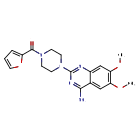
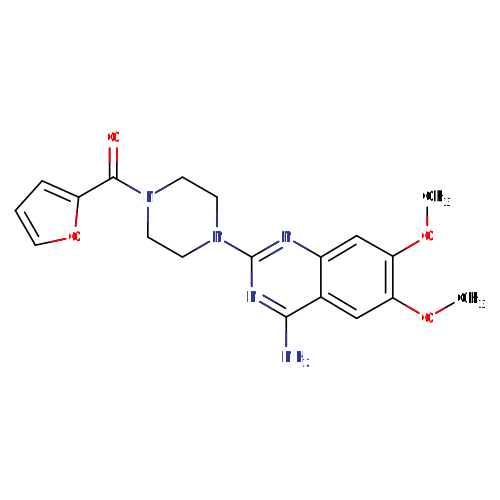
Structure for Prazosin (DB00457)
- Weight
- Average: 383.4011
Monoisotopic: 383.159354185 - Chemical Formula
- C19H21N5O4
- Synonyms
- 1-(4-Amino-6,7-dimethoxy-2-quinazolinyl)-4-(2-furanylcarbonyl)piperazine
- 2-(4-(2-Furoyl)piperazin-1-yl)-4-amino-6,7-dimethoxyquinazoline
- Prazosin
- Prazosina
- Prazosine
- Prazosinum
- External IDs
- CP-122991

Pharmacology
- Indication
This drug is indicated for the treatment of hypertension (high blood pressure). Prazosin can be given alone or given with other blood pressure-lowering drugs, including diuretics or beta-adrenergic blocking agents Label.
Prazosin does not negatively impact lung function, and therefore may be used to manage hypertension in patients who are asthmatic or patients with chronic obstructive lung disease (COPD)8.
 Reduce drug development failure ratesBuild, train, & validate machine-learning modelswith evidence-based and structured datasets.Build, train, & validate predictive machine-learning models with structured datasets.
- Associated Conditions
Indication Type Indication Combined Product Details Approval Level Age Group Patient Characteristics Dose Form Treatment of Agitation ••• ••••• Symptomatic treatment of Benign prostatic hyperplasia ••• ••••• Management of High blood pressure (hypertension) •••••••••••• ••••••• Management of Hypertension •••••••••••• Treatment of Hypertension (htn) •••••••••••• - Contraindications & Blackbox Warnings
 Prevent Adverse Drug Events TodayTap into our Clinical API for life-saving information on contraindications & blackbox warnings, population restrictions, harmful risks, & more.Avoid life-threatening adverse drug events with our Clinical API
- Pharmacodynamics
Effects on blood pressure
The pharmacodynamic and therapeutic effect of this drug includes is a decrease in blood pressure as well as clinically significant decreases in cardiac output, heart rate, blood flow to the kidney, and glomerular filtration rate. The decrease in blood pressure may occur in both standing and supine positions Label.
Many of the above effects are due to vasodilation of blood vessels caused by prazosin, resulting in decreased peripheral resistance 7, Label. Peripheral resistance refers to the level resistance of the blood vessels to blood that flows through them. As the blood vessels constrict (narrow), the resistance increases and as they dilate (widen), and peripheral resistance decreases, lowering blood pressure 14,17.
Effects on sleep disturbance related to post-traumatic stress disorder (PTSD)
Some studies have suggested that this drug improves sleep in patients suffering from insomnia related to nightmares and post-traumatic stress disorder, caused by hyperarousal 5,6. This effect likely occurs through the inhibition of adrenergic stimulation found in states of hyperarousal 13.
- Mechanism of action
Alpha-adrenergic receptors are essential for the regulation of blood pressure in humans. Two types of alpha receptors, alpha 1 and alpha 2, both play a role in regulating blood pressure. Alpha-1 receptors are postsynaptic (located after the nerve junction, or space between a nerve fiber and target tissue). In this case, the target tissue is the vascular smooth muscle 18. These receptors, when activated, increase blood pressure 9.
Prazosin inhibits the postsynaptic alpha-1 adrenoceptors. This inhibition blocks the vasoconstricting (narrowing) effect of catecholamines (epinephrine and norepinephrine) on the vessels, leading to peripheral blood vessel dilation. Through blood vessel constriction by adrenergic receptor activation, epinephrine and norepinephrine normally act to increase blood pressure 10.
Target Actions Organism AAlpha-1A adrenergic receptor antagonistHumans AAlpha-1B adrenergic receptor antagonistHumans AAlpha-1D adrenergic receptor antagonistHumans UPotassium voltage-gated channel subfamily H member 2 inhibitorHumans UAlpha-2A adrenergic receptor binderHumans UAlpha-2B adrenergic receptor binderHumans UAlpha-1 adrenergic receptors Not Available Humans - Absorption
After administration of an oral dose, peak plasma concentrations are attained at approximately 3 hours Label. There is a linear association between the prazosin dose given and plasma concentration at steady state 11.
- Volume of distribution
About 0.6 L/kg 11.
- Protein binding
Highly bound to proteins Label with 97% binding to albumin and alpha 1-acid glycoprotein 11. Prazosin is thought to be mostly (about 80-90%) bound to albumin 15.
- Metabolism
In animals, prazosin hydrochloride is heavily metabolized. This occurs through liver demethylation and conjugation Label. Some studies in humans or human cells in vitro show similar prazosin metabolism 7,12.
Hover over products below to view reaction partners
- Route of elimination
This drug is mainly excreted in the bile and the feces Label.
- Half-life
The plasma half-life is about 2-3 hours Label.
- Clearance
In patients with congestive heart failure, the clearance of this drug is decreased. Impairment of renal function does not have relevant effects on elimination 8.
- Adverse Effects
 Improve decision support & research outcomesWith structured adverse effects data, including: blackbox warnings, adverse reactions, warning & precautions, & incidence rates. View sample adverse effects data in our new Data Library!Improve decision support & research outcomes with our structured adverse effects data.
- Toxicity
TDLO, LD50: Oral TDLO (human): 285 μg/kg; Oral TDLO (woman): 10 μg/kg MSDS.
Oral LD50 (rat): 1950 mg/kg; Intraperitoneal LD50 (rat): 102 mg/kg MSDS.
Overdose information
Accidental ingestion of at least 50 mg of prazosin by a two-year-old child led to severe drowsiness with depressed reflexes. There was no fall in blood pressure, and the child recovered without complication Label.
Use in pregnancy
There are no adequate and well-controlled studies determining the safety of prazosin use during pregnancy. It is considered a pregnancy category C drug. Prazosin should be used during pregnancy only in cases where the benefit outweighs the possible risk to the mother and fetus Label. In specific cases where blood pressure control was emergent during pregnancy, prazosin has been used and no effects on the fetus or neonate were reported Label.
Use in nursing
This drug is found excreted in small concentrations in human milk. This drug should be used with caution when used during nursing Label.
- Pathways
- Not Available
- Pharmacogenomic Effects/ADRs
- Not Available
Interactions
- Drug Interactions
- This information should not be interpreted without the help of a healthcare provider. If you believe you are experiencing an interaction, contact a healthcare provider immediately. The absence of an interaction does not necessarily mean no interactions exist.
Drug Interaction Integrate drug-drug
interactions in your softwareAbaloparatide The risk or severity of adverse effects can be increased when Prazosin is combined with Abaloparatide. Abemaciclib Abemaciclib may decrease the excretion rate of Prazosin which could result in a higher serum level. Acebutolol The risk or severity of hypotension can be increased when Prazosin is combined with Acebutolol. Aceclofenac The therapeutic efficacy of Prazosin can be decreased when used in combination with Aceclofenac. Acemetacin The therapeutic efficacy of Prazosin can be decreased when used in combination with Acemetacin. - Food Interactions
- Avoid alcohol.
- Avoid natural licorice.
- Take with or without food. The absorption is unaffected by food.
Products
 Drug product information from 10+ global regionsOur datasets provide approved product information including:dosage, form, labeller, route of administration, and marketing period.Access drug product information from over 10 global regions.
- Product Ingredients
Ingredient UNII CAS InChI Key Prazosin hydrochloride X0Z7454B90 19237-84-4 WFXFYZULCQKPIP-UHFFFAOYSA-N - Product Images
- International/Other Brands
- Hypovase / Minipress Xl (Pfizer) / Pressin / Vasoflex
- Brand Name Prescription Products
Name Dosage Strength Route Labeller Marketing Start Marketing End Region Image Minipress Tablet 5 mg Oral Aa Pharma Inc 1983-12-31 Not applicable Canada 
Minipress Capsule 1 mg/1 Oral Physicians Total Care, Inc. 1994-05-10 2012-06-30 US 
Minipress Capsule 5 mg/1 Oral Pfizer Laboratories Div Pfizer Inc 1994-05-10 Not applicable US Minipress Capsule 1 mg/1 Oral Pfizer Laboratories Div Pfizer Inc 1994-05-10 Not applicable US Minipress Tablet 2 mg Oral Aa Pharma Inc 1983-12-31 Not applicable Canada - Generic Prescription Products
Name Dosage Strength Route Labeller Marketing Start Marketing End Region Image Alti-prazosin-tab 1mg Tablet 1 mg Oral Altimed Pharma Inc. 1995-12-31 2005-05-27 Canada Alti-prazosin-tab 2mg Tablet 2 mg Oral Altimed Pharma Inc. 1995-12-31 2005-05-27 Canada Alti-prazosin-tab 5mg Tablet 5 mg Oral Altimed Pharma Inc. 1995-12-31 2005-05-27 Canada Apo-prazo Tab 1mg Tablet 1 mg Oral Apotex Corporation 1990-12-31 Not applicable Canada Apo-prazo Tab 2mg Tablet 2 mg Oral Apotex Corporation 1990-12-31 Not applicable Canada - Mixture Products
Name Ingredients Dosage Route Labeller Marketing Start Marketing End Region Image Minizide Prazosin hydrochloride (1 mg/1) + Polythiazide (0.5 mg/1) Capsule Oral Pfizer Labs 2006-10-05 Not applicable US Minizide Prazosin hydrochloride (5 mg/1) + Polythiazide (0.5 mg/1) Capsule Oral Pfizer Labs 2006-10-05 Not applicable US Minizide Prazosin hydrochloride (2 mg/1) + Polythiazide (0.5 mg/1) Capsule Oral Pfizer Labs 2006-10-05 Not applicable US


Categories
- ATC Codes
- C02LE01 — Prazosin and diuretics
- C02LE — Alpha-adrenoreceptor antagonists and diuretics
- C02L — ANTIHYPERTENSIVES AND DIURETICS IN COMBINATION
- C02 — ANTIHYPERTENSIVES
- C — CARDIOVASCULAR SYSTEM
- Drug Categories
- Adrenergic alpha-1 Receptor Antagonists
- Adrenergic alpha-Antagonists
- Adrenergic Antagonists
- Alpha-Adrenoreceptor Antagonists and Diuretics
- Antiadrenergic Agents, Peripherally Acting
- Antihypertensive Agents
- Antihypertensive Agents Indicated for Hypertension
- BCRP/ABCG2 Substrates
- Cardiovascular Agents
- Heterocyclic Compounds, Fused-Ring
- Hypotensive Agents
- OCT1 inhibitors
- OCT1 substrates
- OCT2 Substrates
- P-glycoprotein inhibitors
- P-glycoprotein substrates
- Peripheral alpha-1 blockers
- Quinazolines
- Vasodilating Agents
- Chemical TaxonomyProvided by Classyfire
- Description
- This compound belongs to the class of organic compounds known as n-arylpiperazines. These are organic compounds containing a piperazine ring where the nitrogen ring atom carries an aryl group.
- Kingdom
- Organic compounds
- Super Class
- Organoheterocyclic compounds
- Class
- Diazinanes
- Sub Class
- Piperazines
- Direct Parent
- N-arylpiperazines
- Alternative Parents
- Quinazolinamines / 2-heteroaryl carboxamides / Anisoles / Dialkylarylamines / Furoic acid and derivatives / Alkyl aryl ethers / Aminopyrimidines and derivatives / Imidolactams / Tertiary carboxylic acid amides / Heteroaromatic compounds show 7 more
- Substituents
- 2-heteroaryl carboxamide / Alkyl aryl ether / Amine / Amino acid or derivatives / Aminopyrimidine / Anisole / Aromatic heteropolycyclic compound / Azacycle / Benzenoid / Carboxamide group show 22 more
- Molecular Framework
- Aromatic heteropolycyclic compounds
- External Descriptors
- aromatic ether, monocarboxylic acid amide, furans, quinazolines, piperazines (CHEBI:8364)
- Affected organisms
- Humans and other mammals
Chemical Identifiers
- UNII
- XM03YJ541D
- CAS number
- 19216-56-9
- InChI Key
- IENZQIKPVFGBNW-UHFFFAOYSA-N
- InChI
- InChI=1S/C19H21N5O4/c1-26-15-10-12-13(11-16(15)27-2)21-19(22-17(12)20)24-7-5-23(6-8-24)18(25)14-4-3-9-28-14/h3-4,9-11H,5-8H2,1-2H3,(H2,20,21,22)
- IUPAC Name
- 2-[4-(furan-2-carbonyl)piperazin-1-yl]-6,7-dimethoxyquinazolin-4-amine
- SMILES
- COC1=C(OC)C=C2C(N)=NC(=NC2=C1)N1CCN(CC1)C(=O)C1=CC=CO1
References
- Synthesis Reference
Stig O. E. Lindholm, "A process for the preparation of anhydrous, stable, crystalline delta-form of prazosin hydrochloride." U.S. Patent US4873330, issued 0000.
US4873330- General References
- Bawaskar HS, Bawaskar PH: Utility of scorpion antivenin vs prazosin in the management of severe Mesobuthus tamulus (Indian red scorpion) envenoming at rural setting. J Assoc Physicians India. 2007 Jan;55:14-21. [Article]
- Cushman WC, Ford CE, Cutler JA, Margolis KL, Davis BR, Grimm RH, Black HR, Hamilton BP, Holland J, Nwachuku C, Papademetriou V, Probstfield J, Wright JT Jr, Alderman MH, Weiss RJ, Piller L, Bettencourt J, Walsh SM: Success and predictors of blood pressure control in diverse North American settings: the antihypertensive and lipid-lowering treatment to prevent heart attack trial (ALLHAT). J Clin Hypertens (Greenwich). 2002 Nov-Dec;4(6):393-404. [Article]
- Hiraoka Y, Taniguchi T, Tanaka T, Okada K, Kanamaru H, Muramatsu I: Pharmacological characterization of unique prazosin-binding sites in human kidney. Naunyn Schmiedebergs Arch Pharmacol. 2003 Jul;368(1):49-56. Epub 2003 Jun 25. [Article]
- Kung S, Espinel Z, Lapid MI: Treatment of nightmares with prazosin: a systematic review. Mayo Clin Proc. 2012 Sep;87(9):890-900. doi: 10.1016/j.mayocp.2012.05.015. Epub 2012 Aug 9. [Article]
- Hudson SM, Whiteside TE, Lorenz RA, Wargo KA: Prazosin for the treatment of nightmares related to posttraumatic stress disorder: a review of the literature. Prim Care Companion CNS Disord. 2012;14(2). pii: 11r01222. doi: 10.4088/PCC.11r01222. Epub 2012 Mar 22. [Article]
- Koola MM, Varghese SP, Fawcett JA: High-dose prazosin for the treatment of post-traumatic stress disorder. Ther Adv Psychopharmacol. 2014 Feb;4(1):43-7. doi: 10.1177/2045125313500982. [Article]
- Jaillon P: Clinical pharmacokinetics of prazosin. Clin Pharmacokinet. 1980 Jul-Aug;5(4):365-76. doi: 10.2165/00003088-198005040-00004. [Article]
- Stanaszek WF, Kellerman D, Brogden RN, Romankiewicz JA: Prazosin update. A review of its pharmacological properties and therapeutic use in hypertension and congestive heart failure. Drugs. 1983 Apr;25(4):339-84. doi: 10.2165/00003495-198325040-00002. [Article]
- Reid JL: Alpha-adrenergic receptors and blood pressure control. Am J Cardiol. 1986 Mar 28;57(9):6E-12E. [Article]
- Lefevre-Borg F, Mathias O, Cavero I: Role of the sympathetic nervous system in blood pressure maintenance and in the antihypertensive effects of calcium antagonists in spontaneously hypertensive rats. Hypertension. 1988 Apr;11(4):360-70. [Article]
- Grahnen A, Seideman P, Lindstrom B, Haglund K, von Bahr C: Prazosin kinetics in hypertension. Clin Pharmacol Ther. 1981 Oct;30(4):439-46. [Article]
- Erve JC, Vashishtha SC, DeMaio W, Talaat RE: Metabolism of prazosin in rat, dog, and human liver microsomes and cryopreserved rat and human hepatocytes and characterization of metabolites by liquid chromatography/tandem mass spectrometry. Drug Metab Dispos. 2007 Jun;35(6):908-16. doi: 10.1124/dmd.106.013219. Epub 2007 Mar 12. [Article]
- Ronzoni G, Del Arco A, Mora F, Segovia G: Enhanced noradrenergic activity in the amygdala contributes to hyperarousal in an animal model of PTSD. Psychoneuroendocrinology. 2016 Aug;70:1-9. doi: 10.1016/j.psyneuen.2016.04.018. Epub 2016 Apr 25. [Article]
- Mayet J, Hughes A: Cardiac and vascular pathophysiology in hypertension. Heart. 2003 Sep;89(9):1104-9. [Article]
- Brunner F, Muller WE: Prazosin binding to human alpha 1-acid glycoprotein (orosomucoid), human serum albumin, and human serum. Further characterization of the 'single drug binding site' of orosomucoid. J Pharm Pharmacol. 1985 May;37(5):305-9. [Article]
- FDA approval information, Prazosin [Link]
- Cardiac anesthesiology, University of Toronto [Link]
- The pharmacology of adrenergic receptors [Link]
- FDA Approved Drug Products: Minipress (prazosin) oral capsules [Link]
- DailyMed Label: MINIPRESS (prazosin hydrochloride) Oral Capsules [Link]
- External Links
- Human Metabolome Database
- HMDB0014600
- KEGG Drug
- D08411
- KEGG Compound
- C07368
- PubChem Compound
- 4893
- PubChem Substance
- 46508594
- ChemSpider
- 4724
- BindingDB
- 29568
- 8629
- ChEBI
- 8364
- ChEMBL
- CHEMBL2
- ZINC
- ZINC000095616601
- Therapeutic Targets Database
- DAP000300
- PharmGKB
- PA451093
- Guide to Pharmacology
- GtP Drug Page
- PDBe Ligand
- XRA
- RxList
- RxList Drug Page
- Drugs.com
- Drugs.com Drug Page
- Wikipedia
- Prazosin
- PDB Entries
- 3owx
- FDA label
- Download (50.6 KB)
- MSDS
- Download (26.6 KB)
Clinical Trials
- Clinical Trials
Phase Status Purpose Conditions Count 4 Completed Prevention Cirrhosis of the Liver / Gastrointestinal Hemorrhage / Portal Hypertension 1 4 Completed Treatment Alcohol Dependency 1 4 Completed Treatment Allergic Rhinitis (AR) / Rhinitis Medicamentosa / Tachyphylaxis 1 4 Completed Treatment Nightmares / Post Traumatic Stress Disorder (PTSD) / Suicidal Thoughts 1 4 Completed Treatment Post Traumatic Stress Disorder (PTSD) 1
Pharmacoeconomics
- Manufacturers
- Pfizer laboratories div pfizer inc
- American therapeutics inc
- Clonmel healthcare ltd
- Ivax pharmaceuticals inc sub teva pharmaceuticals usa
- Mylan pharmaceuticals inc
- Purepac pharmaceutical co
- Sandoz inc
- Watson laboratories inc
- Pfizer inc
- Packagers
- Advanced Pharmaceutical Services Inc.
- A-S Medication Solutions LLC
- BASF Corp.
- Caremark LLC
- Central Texas Community Health Centers
- Direct Dispensing Inc.
- Dispensing Solutions
- Heartland Repack Services LLC
- Ivax Pharmaceuticals
- Kramer-Novis
- Liberty Pharmaceuticals
- Major Pharmaceuticals
- Murfreesboro Pharmaceutical Nursing Supply
- Mylan
- Nucare Pharmaceuticals Inc.
- PCA LLC
- PD-Rx Pharmaceuticals Inc.
- Pfizer Inc.
- Pharmaceutical Utilization Management Program VA Inc.
- Pharmedix
- Physicians Total Care Inc.
- Prepackage Specialists
- Prepak Systems Inc.
- Remedy Repack
- Sandhills Packaging Inc.
- Southwood Pharmaceuticals
- Teva Pharmaceutical Industries Ltd.
- UDL Laboratories
- Dosage Forms
Form Route Strength Tablet Oral Capsule Oral 1.000 mg Capsule, coated Oral 1 mg Capsule Oral Capsule Oral 1.095 mg Capsule Oral 1 mg/1 Capsule Oral 2 mg/1 Capsule Oral 5 mg/1 Tablet Oral 1 mg / tab Tablet Oral 5 mg / tab Tablet Oral 2 mg Tablet Oral 5 mg Tablet Oral 1 mg - Prices
Unit description Cost Unit Minipress 5 mg capsule 1.97USD capsule Minipress 2 mg capsule 1.14USD capsule Prazosin HCl 5 mg capsule 0.98USD capsule Prazosin 5 mg capsule 0.94USD capsule Minipress 1 mg capsule 0.83USD capsule Prazosin HCl 2 mg capsule 0.57USD capsule Prazosin 2 mg capsule 0.55USD capsule Prazosin HCl 1 mg capsule 0.41USD capsule Prazosin 1 mg capsule 0.4USD capsule Apo-Prazo 5 mg Tablet 0.4USD tablet Novo-Prazin 5 mg Tablet 0.4USD tablet Nu-Prazo 5 mg Tablet 0.4USD tablet Vasoflex hd caplet 0.38USD caplet Vasoflex forte capsule 0.29USD capsule Apo-Prazo 2 mg Tablet 0.29USD tablet Novo-Prazin 2 mg Tablet 0.29USD tablet Nu-Prazo 2 mg Tablet 0.29USD tablet Apo-Prazo 1 mg Tablet 0.22USD tablet Novo-Prazin 1 mg Tablet 0.22USD tablet Nu-Prazo 1 mg Tablet 0.22USD tablet Vasoflex tablet 0.15USD tablet DrugBank does not sell nor buy drugs. Pricing information is supplied for informational purposes only.- Patents
- Not Available
Properties
- State
- Solid
- Experimental Properties
Property Value Source melting point (°C) 277-280 https://www.chemicalbook.com/ChemicalProductProperty_US_CB6120870.aspx boiling point (°C) 638.366 http://www.chemspider.com/Chemical-Structure.4724.html water solubility 1.4 mg/mL https://www.sigmaaldrich.com/content/dam/sigma-aldrich/docs/Sigma/Product_Information_Sheet/1/p7791pis.pdf logP 1.3 https://pubchem.ncbi.nlm.nih.gov/compound/prazosin pKa 6.54 https://www.sigmaaldrich.com/content/dam/sigma-aldrich/docs/Sigma/Product_Information_Sheet/1/p7791pis.pdf - Predicted Properties
Property Value Source Water Solubility 0.693 mg/mL ALOGPS logP 1.93 ALOGPS logP 1.65 Chemaxon logS -2.7 ALOGPS pKa (Strongest Basic) 7.24 Chemaxon Physiological Charge 1 Chemaxon Hydrogen Acceptor Count 7 Chemaxon Hydrogen Donor Count 1 Chemaxon Polar Surface Area 106.95 Å2 Chemaxon Rotatable Bond Count 4 Chemaxon Refractivity 104.5 m3·mol-1 Chemaxon Polarizability 40.51 Å3 Chemaxon Number of Rings 4 Chemaxon Bioavailability 1 Chemaxon Rule of Five Yes Chemaxon Ghose Filter Yes Chemaxon Veber's Rule No Chemaxon MDDR-like Rule No Chemaxon - Predicted ADMET Features
Property Value Probability Human Intestinal Absorption + 1.0 Blood Brain Barrier + 0.9479 Caco-2 permeable + 0.8298 P-glycoprotein substrate Substrate 0.7193 P-glycoprotein inhibitor I Non-inhibitor 0.5747 P-glycoprotein inhibitor II Non-inhibitor 0.8383 Renal organic cation transporter Non-inhibitor 0.6405 CYP450 2C9 substrate Non-substrate 0.8773 CYP450 2D6 substrate Non-substrate 0.7641 CYP450 3A4 substrate Substrate 0.7577 CYP450 1A2 substrate Non-inhibitor 0.8434 CYP450 2C9 inhibitor Non-inhibitor 0.9278 CYP450 2D6 inhibitor Non-inhibitor 0.9685 CYP450 2C19 inhibitor Non-inhibitor 0.9169 CYP450 3A4 inhibitor Non-inhibitor 0.7608 CYP450 inhibitory promiscuity Low CYP Inhibitory Promiscuity 0.8049 Ames test Non AMES toxic 0.5581 Carcinogenicity Non-carcinogens 0.9199 Biodegradation Not ready biodegradable 0.9818 Rat acute toxicity 2.3304 LD50, mol/kg Not applicable hERG inhibition (predictor I) Weak inhibitor 0.8352 hERG inhibition (predictor II) Inhibitor 0.8489
Spectra
- Mass Spec (NIST)
- Not Available
- Spectra
- Chromatographic Properties
Collision Cross Sections (CCS)
Adduct CCS Value (Å2) Source type Source [M-H]- 216.3428159 predictedDarkChem Lite v0.1.0 [M-H]- 215.9014159 predictedDarkChem Lite v0.1.0 [M-H]- 183.95142 predictedDeepCCS 1.0 (2019) [M+H]+ 216.5477159 predictedDarkChem Lite v0.1.0 [M+H]+ 215.0963159 predictedDarkChem Lite v0.1.0 [M+H]+ 186.30943 predictedDeepCCS 1.0 (2019) [M+Na]+ 216.1423159 predictedDarkChem Lite v0.1.0 [M+Na]+ 216.1275159 predictedDarkChem Lite v0.1.0 [M+Na]+ 193.35191 predictedDeepCCS 1.0 (2019)
Targets

- Kind
- Protein
- Organism
- Humans
- Pharmacological action
- Yes
- Actions
- Antagonist
- General Function
- Protein heterodimerization activity
- Specific Function
- This alpha-adrenergic receptor mediates its action by association with G proteins that activate a phosphatidylinositol-calcium second messenger system. Its effect is mediated by G(q) and G(11) prot...
- Gene Name
- ADRA1A
- Uniprot ID
- P35348
- Uniprot Name
- Alpha-1A adrenergic receptor
- Molecular Weight
- 51486.005 Da
References
- Morris DP, Price RR, Smith MP, Lei B, Schwinn DA: Cellular trafficking of human alpha1a-adrenergic receptors is continuous and primarily agonist-independent. Mol Pharmacol. 2004 Oct;66(4):843-54. Epub 2004 Jul 16. [Article]
- Suzuki Y, Kanada A, Okaya Y, Aisaka K: Effect of JTH-601, a novel alpha(1)-adrenoceptor antagonist, on prostate function in dogs. Eur J Pharmacol. 2000 Apr 7;394(1):123-30. [Article]
- Tomiyama Y, Kobayashi K, Tadachi M, Kobayashi S, Inada Y, Kobayashi M, Yamazaki Y: Expressions and mechanical functions of alpha1-adrenoceptor subtypes in hamster ureter. Eur J Pharmacol. 2007 Nov 14;573(1-3):201-5. Epub 2007 Jul 6. [Article]
- Zacharia J, Hillier C, MacDonald A: Alpha1-adrenoceptor subtypes involved in vasoconstrictor responses to exogenous and neurally released noradrenaline in rat femoral resistance arteries. Br J Pharmacol. 2004 Mar;141(6):915-24. Epub 2004 Feb 23. [Article]
- Kind
- Protein
- Organism
- Humans
- Pharmacological action
- Yes
- Actions
- Antagonist
- General Function
- Protein heterodimerization activity
- Specific Function
- This alpha-adrenergic receptor mediates its action by association with G proteins that activate a phosphatidylinositol-calcium second messenger system. Its effect is mediated by G(q) and G(11) prot...
- Gene Name
- ADRA1B
- Uniprot ID
- P35368
- Uniprot Name
- Alpha-1B adrenergic receptor
- Molecular Weight
- 56835.375 Da
References
- Eltze M: In functional experiments, risperidone is selective, not for the B, but for the A subtype of alpha 1-adrenoceptors. Eur J Pharmacol. 1996 Jan 4;295(1):69-73. [Article]
- Sharpe IA, Thomas L, Loughnan M, Motin L, Palant E, Croker DE, Alewood D, Chen S, Graham RM, Alewood PF, Adams DJ, Lewis RJ: Allosteric alpha 1-adrenoreceptor antagonism by the conopeptide rho-TIA. J Biol Chem. 2003 Sep 5;278(36):34451-7. Epub 2003 Jun 24. [Article]
- Sleight AJ, Koek W, Bigg DC: Binding of antipsychotic drugs at alpha 1A- and alpha 1B-adrenoceptors: risperidone is selective for the alpha 1B-adrenoceptors. Eur J Pharmacol. 1993 Jul 20;238(2-3):407-10. [Article]
- Kind
- Protein
- Organism
- Humans
- Pharmacological action
- Yes
- Actions
- Antagonist
- General Function
- Alpha1-adrenergic receptor activity
- Specific Function
- This alpha-adrenergic receptor mediates its effect through the influx of extracellular calcium.
- Gene Name
- ADRA1D
- Uniprot ID
- P25100
- Uniprot Name
- Alpha-1D adrenergic receptor
- Molecular Weight
- 60462.205 Da
References
- Nagaoka Y, Ahmed M, Hossain M, Bhuiyan MA, Ishiguro M, Nakamura T, Watanabe M, Nagatomo T: Amino acids of the human alpha1d-adrenergic receptor involved in antagonist binding. J Pharmacol Sci. 2008 Jan;106(1):114-20. Epub 2008 Jan 11. [Article]
- Yamamoto Y, Koike K: alpha(1)-Adrenoceptor subtypes in the mouse mesenteric artery and abdominal aorta. Br J Pharmacol. 2001 Nov;134(5):1045-54. [Article]
- Kind
- Protein
- Organism
- Humans
- Pharmacological action
- Unknown
- Actions
- Inhibitor
- General Function
- Voltage-gated potassium channel activity involved in ventricular cardiac muscle cell action potential repolarization
- Specific Function
- Pore-forming (alpha) subunit of voltage-gated inwardly rectifying potassium channel. Channel properties are modulated by cAMP and subunit assembly. Mediates the rapidly activating component of the ...
- Gene Name
- KCNH2
- Uniprot ID
- Q12809
- Uniprot Name
- Potassium voltage-gated channel subfamily H member 2
- Molecular Weight
- 126653.52 Da
References
- Thomas D, Wimmer AB, Wu K, Hammerling BC, Ficker EK, Kuryshev YA, Kiehn J, Katus HA, Schoels W, Karle CA: Inhibition of human ether-a-go-go-related gene potassium channels by alpha 1-adrenoceptor antagonists prazosin, doxazosin, and terazosin. Naunyn Schmiedebergs Arch Pharmacol. 2004 May;369(5):462-72. Epub 2004 Apr 20. [Article]
- Thomas D, Wu K, Wimmer AB, Zitron E, Hammerling BC, Kathofer S, Lueck S, Bloehs R, Kreye VA, Kiehn J, Katus HA, Schoels W, Karle CA: Activation of cardiac human ether-a-go-go related gene potassium currents is regulated by alpha(1A)-adrenoceptors. J Mol Med (Berl). 2004 Dec;82(12):826-37. doi: 10.1007/s00109-004-0582-8. Epub 2004 Sep 8. [Article]
- Kind
- Protein
- Organism
- Humans
- Pharmacological action
- Unknown
- Actions
- Binder
- General Function
- Thioesterase binding
- Specific Function
- Alpha-2 adrenergic receptors mediate the catecholamine-induced inhibition of adenylate cyclase through the action of G proteins. The rank order of potency for agonists of this receptor is oxymetazo...
- Gene Name
- ADRA2A
- Uniprot ID
- P08913
- Uniprot Name
- Alpha-2A adrenergic receptor
- Molecular Weight
- 48956.275 Da
References
- Uhlen S, Wikberg JE: Delineation of rat kidney alpha 2A- and alpha 2B-adrenoceptors with [3H]RX821002 radioligand binding: computer modelling reveals that guanfacine is an alpha 2A-selective compound. Eur J Pharmacol. 1991 Sep 17;202(2):235-43. [Article]
- Adams HR: Pharmacologic problems in circulation research: alpha adrenergic blocking drugs. Circ Shock. 1983;10(3):215-23. [Article]
- Bylund DB: Heterogeneity of alpha-2 adrenergic receptors. Pharmacol Biochem Behav. 1985 May;22(5):835-43. [Article]
- Kind
- Protein
- Organism
- Humans
- Pharmacological action
- Unknown
- Actions
- Binder
- General Function
- Epinephrine binding
- Specific Function
- Alpha-2 adrenergic receptors mediate the catecholamine-induced inhibition of adenylate cyclase through the action of G proteins. The rank order of potency for agonists of this receptor is clonidine...
- Gene Name
- ADRA2B
- Uniprot ID
- P18089
- Uniprot Name
- Alpha-2B adrenergic receptor
- Molecular Weight
- 49565.8 Da
References
- Uhlen S, Wikberg JE: Delineation of rat kidney alpha 2A- and alpha 2B-adrenoceptors with [3H]RX821002 radioligand binding: computer modelling reveals that guanfacine is an alpha 2A-selective compound. Eur J Pharmacol. 1991 Sep 17;202(2):235-43. [Article]
- Yasuda G, Sun L, Umemura S, Pettinger WA, Jeffries WB: Characterization of prazosin-sensitive alpha 2 B-adrenoceptors expressed by cultured rat IMCD cells. Am J Physiol. 1991 Nov;261(5 Pt 2):F760-6. doi: 10.1152/ajprenal.1991.261.5.F760. [Article]
- Bylund DB, Ray-Prenger C, Murphy TJ: Alpha-2A and alpha-2B adrenergic receptor subtypes: antagonist binding in tissues and cell lines containing only one subtype. J Pharmacol Exp Ther. 1988 May;245(2):600-7. [Article]
- Adams HR: Pharmacologic problems in circulation research: alpha adrenergic blocking drugs. Circ Shock. 1983;10(3):215-23. [Article]
- Bylund DB: Heterogeneity of alpha-2 adrenergic receptors. Pharmacol Biochem Behav. 1985 May;22(5):835-43. [Article]
- Kind
- Protein group
- Organism
- Humans
- Pharmacological action
- Unknown
- General Function
- Protein heterodimerization activity
- Specific Function
- This alpha-adrenergic receptor mediates its action by association with G proteins that activate a phosphatidylinositol-calcium second messenger system. Its effect is mediated by G(q) and G(11) prot...
Components:
| Name | UniProt ID |
|---|---|
| Alpha-1A adrenergic receptor | P35348 |
| Alpha-1B adrenergic receptor | P35368 |
| Alpha-1D adrenergic receptor | P25100 |
References
- Prazosin FDA label [File]
Carriers
- Kind
- Protein
- Organism
- Humans
- Pharmacological action
- No
- Actions
- Substrate
- General Function
- Not Available
- Specific Function
- Functions as transport protein in the blood stream. Binds various ligands in the interior of its beta-barrel domain. Also binds synthetic drugs and influences their distribution and availability in...
- Gene Name
- ORM1
- Uniprot ID
- P02763
- Uniprot Name
- Alpha-1-acid glycoprotein 1
- Molecular Weight
- 23511.38 Da
References
- Ferry DG, Caplan NB, Cubeddu LX: Interaction between antidepressants and alpha 1-adrenergic receptor antagonists on the binding to alpha 1-acid glycoprotein. J Pharm Sci. 1986 Feb;75(2):146-9. doi: 10.1002/jps.2600750208. [Article]
- Sager G, Jaeger R, Little C: Binding of prazosin to alpha 1-acid glycoprotein and albumin: effect of protein purity and concentrations. Pharmacol Toxicol. 1989 Apr;64(4):365-8. [Article]
- Brunner F, Muller WE: Prazosin binding to human alpha 1-acid glycoprotein (orosomucoid), human serum albumin, and human serum. Further characterization of the 'single drug binding site' of orosomucoid. J Pharm Pharmacol. 1985 May;37(5):305-9. [Article]
- Prazosin FDA label [File]
Transporters
- Kind
- Protein
- Organism
- Humans
- Pharmacological action
- Unknown
- Actions
- SubstrateInhibitor
- General Function
- Secondary active organic cation transmembrane transporter activity
- Specific Function
- Translocates a broad array of organic cations with various structures and molecular weights including the model compounds 1-methyl-4-phenylpyridinium (MPP), tetraethylammonium (TEA), N-1-methylnico...
- Gene Name
- SLC22A1
- Uniprot ID
- O15245
- Uniprot Name
- Solute carrier family 22 member 1
- Molecular Weight
- 61153.345 Da
References
- Hayer-Zillgen M, Bruss M, Bonisch H: Expression and pharmacological profile of the human organic cation transporters hOCT1, hOCT2 and hOCT3. Br J Pharmacol. 2002 Jul;136(6):829-36. [Article]
- Sekhar GN, Georgian AR, Sanderson L, Vizcay-Barrena G, Brown RC, Muresan P, Fleck RA, Thomas SA: Organic cation transporter 1 (OCT1) is involved in pentamidine transport at the human and mouse blood-brain barrier (BBB). PLoS One. 2017 Mar 31;12(3):e0173474. doi: 10.1371/journal.pone.0173474. eCollection 2017. [Article]
- Dujic T, Zhou K, Donnelly LA, Tavendale R, Palmer CN, Pearson ER: Association of Organic Cation Transporter 1 With Intolerance to Metformin in Type 2 Diabetes: A GoDARTS Study. Diabetes. 2015 May;64(5):1786-93. doi: 10.2337/db14-1388. Epub 2014 Dec 15. [Article]
- Pan G, Winter TN, Roberts JC, Fairbanks CA, Elmquist WF: Organic cation uptake is enhanced in bcrp1-transfected MDCKII cells. Mol Pharm. 2010 Feb 1;7(1):138-45. doi: 10.1021/mp900177r. [Article]
- Kind
- Protein
- Organism
- Humans
- Pharmacological action
- Unknown
- Actions
- Inhibitor
- General Function
- Toxin transporter activity
- Specific Function
- Mediates potential-dependent transport of a variety of organic cations. May play a significant role in the disposition of cationic neurotoxins and neurotransmitters in the brain.
- Gene Name
- SLC22A3
- Uniprot ID
- O75751
- Uniprot Name
- Solute carrier family 22 member 3
- Molecular Weight
- 61279.485 Da
References
- Hayer-Zillgen M, Bruss M, Bonisch H: Expression and pharmacological profile of the human organic cation transporters hOCT1, hOCT2 and hOCT3. Br J Pharmacol. 2002 Jul;136(6):829-36. [Article]
- Kind
- Protein
- Organism
- Humans
- Pharmacological action
- Unknown
- Actions
- SubstrateInhibitorModulator
- General Function
- Xenobiotic-transporting atpase activity
- Specific Function
- Energy-dependent efflux pump responsible for decreased drug accumulation in multidrug-resistant cells.
- Gene Name
- ABCB1
- Uniprot ID
- P08183
- Uniprot Name
- Multidrug resistance protein 1
- Molecular Weight
- 141477.255 Da
References
- Takara K, Sakaeda T, Kakumoto M, Tanigawara Y, Kobayashi H, Okumura K, Ohnishi N, Yokoyama T: Effects of alpha-adrenoceptor antagonist doxazosin on MDR1-mediated multidrug resistance and transcellular transport. Oncol Res. 2009;17(11-12):527-33. [Article]
- Dey S, Ramachandra M, Pastan I, Gottesman MM, Ambudkar SV: Evidence for two nonidentical drug-interaction sites in the human P-glycoprotein. Proc Natl Acad Sci U S A. 1997 Sep 30;94(20):10594-9. [Article]
- Lee CG, Gottesman MM, Cardarelli CO, Ramachandra M, Jeang KT, Ambudkar SV, Pastan I, Dey S: HIV-1 protease inhibitors are substrates for the MDR1 multidrug transporter. Biochemistry. 1998 Mar 17;37(11):3594-601. doi: 10.1021/bi972709x. [Article]
- Andrus MB, Mettath SN, Song C: A modified synthesis of iodoazidoaryl prazosin. J Org Chem. 2002 Nov 15;67(23):8284-6. [Article]
- Rautio J, Humphreys JE, Webster LO, Balakrishnan A, Keogh JP, Kunta JR, Serabjit-Singh CJ, Polli JW: In vitro p-glycoprotein inhibition assays for assessment of clinical drug interaction potential of new drug candidates: a recommendation for probe substrates. Drug Metab Dispos. 2006 May;34(5):786-92. doi: 10.1124/dmd.105.008615. Epub 2006 Feb 2. [Article]
- Kind
- Protein
- Organism
- Humans
- Pharmacological action
- Unknown
- Actions
- Substrate
- General Function
- Xenobiotic-transporting atpase activity
- Specific Function
- High-capacity urate exporter functioning in both renal and extrarenal urate excretion. Plays a role in porphyrin homeostasis as it is able to mediates the export of protoporhyrin IX (PPIX) both fro...
- Gene Name
- ABCG2
- Uniprot ID
- Q9UNQ0
- Uniprot Name
- ATP-binding cassette sub-family G member 2
- Molecular Weight
- 72313.47 Da
References
- Mukkavilli R, Jadhav G, Vangala S: Evaluation of Drug Transport in MDCKII-Wild Type, MDCKII-MDR1, MDCKII-BCRP and Caco-2 Cell Lines. Curr Pharm Biotechnol. 2017;18(14):1151-1158. doi: 10.2174/1389201019666180308091855. [Article]
- Wright JA, Haslam IS, Coleman T, Simmons NL: Breast cancer resistance protein BCRP (ABCG2)-mediated transepithelial nitrofurantoin secretion and its regulation in human intestinal epithelial (Caco-2) layers. Eur J Pharmacol. 2011 Dec 15;672(1-3):70-6. doi: 10.1016/j.ejphar.2011.10.004. Epub 2011 Oct 10. [Article]
- Giri N, Agarwal S, Shaik N, Pan G, Chen Y, Elmquist WF: Substrate-dependent breast cancer resistance protein (Bcrp1/Abcg2)-mediated interactions: consideration of multiple binding sites in in vitro assay design. Drug Metab Dispos. 2009 Mar;37(3):560-70. doi: 10.1124/dmd.108.022046. Epub 2008 Dec 4. [Article]
- Shemesh CS, Yu RZ, Warren MS, Liu M, Jahic M, Nichols B, Post N, Lin S, Norris DA, Hurh E, Huang J, Watanabe T, Henry SP, Wang Y: Assessment of the Drug Interaction Potential of Unconjugated and GalNAc3-Conjugated 2'-MOE-ASOs. Mol Ther Nucleic Acids. 2017 Dec 15;9:34-47. doi: 10.1016/j.omtn.2017.08.012. Epub 2017 Aug 30. [Article]

Drug created at June 13, 2005 13:24 / Updated at May 04, 2024 07:34