Identification
- Summary
Tenoxicam is an anti inflammatory analgesic used to treat mild to moderate pain as well as the signs and symptoms of rheumatoid arthritis and osteoarthritis.
- Generic Name
- Tenoxicam
- DrugBank Accession Number
- DB00469
- Background
Tenoxicam, an antiinflammatory agent with analgesic and antipyretic properties, is used to treat osteoarthritis and control acute pain.
- Type
- Small Molecule
- Groups
- Approved
- Structure
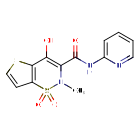
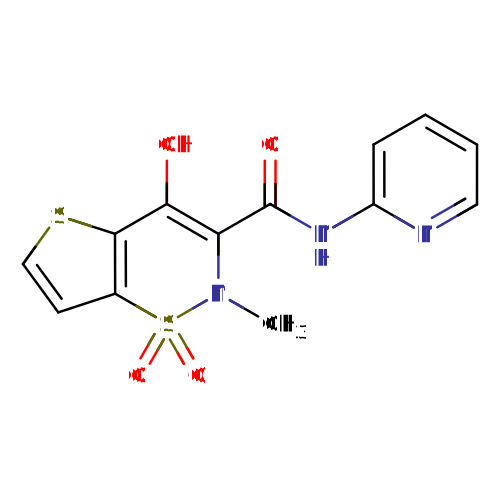
Structure for Tenoxicam (DB00469)
- Weight
- Average: 337.37
Monoisotopic: 337.019098194 - Chemical Formula
- C13H11N3O4S2
- Synonyms
- Tenoxicam
- Ténoxicam
- Tenoxicamum
- External IDs
- RO 12-0068

Pharmacology
- Indication
For the treatment of rheumatoid arthritis, osteoarthritis, backache, and pain.
 Reduce drug development failure ratesBuild, train, & validate machine-learning modelswith evidence-based and structured datasets.Build, train, & validate predictive machine-learning models with structured datasets.
- Associated Conditions
Indication Type Indication Combined Product Details Approval Level Age Group Patient Characteristics Dose Form Treatment of Backache •••••••••••• Management of Osteoarthritis •••••••••••• Treatment of Pain •••••••••••• Management of Rheumatoid arthritis •••••••••••• - Contraindications & Blackbox Warnings
 Prevent Adverse Drug Events TodayTap into our Clinical API for life-saving information on contraindications & blackbox warnings, population restrictions, harmful risks, & more.Avoid life-threatening adverse drug events with our Clinical API
- Pharmacodynamics
Tenoxicam, an antiinflammatory agent with analgesic and antipyretic properties, is used to treat osteoarthritis and control acute pain.
- Mechanism of action
The antiinflammatory effects of tenoxicam may result from the inhibition of the enzyme cycooxygenase and the subsequent peripheral inhibition of prostaglandin synthesis. As prostaglandins sensitize pain receptors, their inhibition accounts for the peripheral analgesic effects of tenoxicam. Antipyresis may occur by central action on the hypothalamus, resulting in peripheral dilation, increased cutaneous blood flow, and subsequent heat loss.
Target Actions Organism AProstaglandin G/H synthase 2 inhibitorHumans UProstaglandin G/H synthase 1 inhibitorHumans - Absorption
Oral absorption of tenoxicam is rapid and complete (absolute bioavailability 100%).
- Volume of distribution
Not Available
- Protein binding
99%
- Metabolism
Tenoxicam is metabolized in the liver to several pharmacologically inactive metabolites (mainly 5'-hydroxy-tenoxicam).
Hover over products below to view reaction partners
- Route of elimination
Not Available
- Half-life
72 hours (range 59 to 74 hours)
- Clearance
Not Available
- Adverse Effects
 Improve decision support & research outcomesWith structured adverse effects data, including: blackbox warnings, adverse reactions, warning & precautions, & incidence rates. View sample adverse effects data in our new Data Library!Improve decision support & research outcomes with our structured adverse effects data.
- Toxicity
Not Available
- Pathways
Pathway Category Tenoxicam Action Pathway Drug action - Pharmacogenomic Effects/ADRs
- Not Available
Interactions
- Drug Interactions
- This information should not be interpreted without the help of a healthcare provider. If you believe you are experiencing an interaction, contact a healthcare provider immediately. The absence of an interaction does not necessarily mean no interactions exist.
Drug Interaction Integrate drug-drug
interactions in your softwareAbacavir Tenoxicam may decrease the excretion rate of Abacavir which could result in a higher serum level. Abatacept The metabolism of Tenoxicam can be increased when combined with Abatacept. Abciximab The risk or severity of bleeding and hemorrhage can be increased when Tenoxicam is combined with Abciximab. Abrocitinib The metabolism of Abrocitinib can be decreased when combined with Tenoxicam. Acamprosate The excretion of Acamprosate can be decreased when combined with Tenoxicam. - Food Interactions
- Take with food. Food may minimize stomach upset caused by tenoxicam.
Products
 Drug product information from 10+ global regionsOur datasets provide approved product information including:dosage, form, labeller, route of administration, and marketing period.Access drug product information from over 10 global regions.
- International/Other Brands
- Mobiflex (Roche) / Octiveran (Rafarm) / Oxicam (ACI) / Oxytel (Coup) / Palitenox (Pharmathen) / Tenorix (Orion) / Tenxil (Unison) / Tilcotil (Meda) / Tilflam (Dexa Medica) / Tilko (Koçak) / Tilnoxcam (T. O. Chemicals) / Tiloxican (Hexal) / Tobitil (Ranbaxy) / Tonox (Utopian) / Toscacalm (Genepharm) / Velasor (Vocate) / Vienoks (Toprak) / Voir (Velka) / Xicotil (Aristopharma) / Zibelant (Chrispa) / Zikaral (Sanovel)
- Brand Name Prescription Products
Name Dosage Strength Route Labeller Marketing Start Marketing End Region Image Mobiflex Tab 20mg Tablet 20 mg / tab Oral Hoffmann La Roche 1991-12-31 2001-07-19 Canada 
Tenoxicam Tablet 20 mg Oral Aa Pharma Inc 1997-02-21 Not applicable Canada Tenoxicam Tablet 20 mg Oral Apotex Corporation Not applicable Not applicable Canada Tenoxicam-20 Tablet 20 mg Oral Pro Doc Limitee 1998-11-24 2009-07-23 Canada - Generic Prescription Products
Name Dosage Strength Route Labeller Marketing Start Marketing End Region Image Novo-tenoxicam Tab 20mg Tablet 20 mg Oral Novopharm Limited 1997-06-05 2005-08-10 Canada - Mixture Products
Name Ingredients Dosage Route Labeller Marketing Start Marketing End Region Image MAXCOTIL TEDAVI PAKETI Tenoxicam (20 mg) + Thiocolchicoside (4 mg) Powder, for solution Intramuscular Deva Holding A.S. 2020-08-14 2018-10-26 Turkey 
MİXOLEKS TEDAVİ PAKETİ Tenoxicam (20 mg) + Thiocolchicoside (4 mg) Injection Intramuscular GENSENTA İLAÇ SANAYİ VE TİC. A.Ş. 2011-06-30 Not applicable Turkey
Categories
- ATC Codes
- M01AC02 — Tenoxicam
- Drug Categories
- Agents causing hyperkalemia
- Agents that produce hypertension
- Analgesics
- Analgesics, Non-Narcotic
- Anti-Inflammatory Agents
- Anti-Inflammatory Agents, Non-Steroidal
- Anti-Inflammatory Agents, Non-Steroidal (Non-Selective)
- Antiinflammatory and Antirheumatic Products
- Antiinflammatory and Antirheumatic Products, Non-Steroids
- Antirheumatic Agents
- Cyclooxygenase Inhibitors
- Cytochrome P-450 CYP2C9 Substrates
- Cytochrome P-450 Substrates
- Enzyme Inhibitors
- Musculo-Skeletal System
- Nephrotoxic agents
- Non COX-2 selective NSAIDS
- OAT3/SLC22A8 Inhibitors
- Other Nonsteroidal Anti-inflammatory Agents
- Oxicams
- Peripheral Nervous System Agents
- Sensory System Agents
- Sulfur Compounds
- Thiazines
- Chemical TaxonomyProvided by Classyfire
- Description
- This compound belongs to the class of organic compounds known as alpha amino acids and derivatives. These are amino acids in which the amino group is attached to the carbon atom immediately adjacent to the carboxylate group (alpha carbon), or a derivative thereof.
- Kingdom
- Organic compounds
- Super Class
- Organic acids and derivatives
- Class
- Carboxylic acids and derivatives
- Sub Class
- Amino acids, peptides, and analogues
- Direct Parent
- Alpha amino acids and derivatives
- Alternative Parents
- Thienothiazines / N-arylamides / Pyridines and derivatives / Organosulfonamides / Imidolactams / 1,2-thiazines / Vinylogous acids / Thiophenes / Heteroaromatic compounds / Secondary carboxylic acid amides show 5 more
- Substituents
- Alpha-amino acid or derivatives / Aromatic heteropolycyclic compound / Azacycle / Carbonyl group / Carboxamide group / Heteroaromatic compound / Hydrocarbon derivative / Imidolactam / N-arylamide / Organic nitrogen compound show 15 more
- Molecular Framework
- Aromatic heteropolycyclic compounds
- External Descriptors
- monocarboxylic acid amide, pyridines, heteroaryl hydroxy compound, thienothiazine (CHEBI:32192)
- Affected organisms
- Humans and other mammals
Chemical Identifiers
- UNII
- Z1R9N0A399
- CAS number
- 59804-37-4
- InChI Key
- LZNWYQJJBLGYLT-UHFFFAOYSA-N
- InChI
- InChI=1S/C13H11N3O4S2/c1-16-10(13(18)15-9-4-2-3-6-14-9)11(17)12-8(5-7-21-12)22(16,19)20/h2-7,17H,1H3,(H,14,15,18)
- IUPAC Name
- 4-hydroxy-2-methyl-1,1-dioxo-N-(pyridin-2-yl)-2H-1λ⁶-thieno[2,3-e][1,2]thiazine-3-carboxamide
- SMILES
- CN1C(C(=O)NC2=CC=CC=N2)=C(O)C2=C(C=CS2)S1(=O)=O
References
- General References
- Not Available
- External Links
- KEGG Drug
- D01767
- PubChem Compound
- 54677971
- PubChem Substance
- 46507303
- ChemSpider
- 10442339
- BindingDB
- 92332
- 37790
- ChEBI
- 32192
- ChEMBL
- CHEMBL302795
- ZINC
- ZINC000100006429
- Therapeutic Targets Database
- DAP000736
- PharmGKB
- PA131890625
- Wikipedia
- Tenoxicam
- MSDS
- Download (57.1 KB)
Clinical Trials
- Clinical Trials
Phase Status Purpose Conditions Count 4 Completed Prevention Injection Pain 1 4 Completed Supportive Care Molar, Third / Pain 1 4 Unknown Status Treatment Postoperative pain 1 2 Unknown Status Treatment Analgesia / Obstetrical 1 1 Completed Treatment Arthrocentesis 1
Pharmacoeconomics
- Manufacturers
- Not Available
- Packagers
- Not Available
- Dosage Forms
Form Route Strength Injection Intramuscular; Intravenous Capsule 20 mg Granule, for suspension Oral Injection, powder, for solution Intramuscular Suppository Rectal Capsule, liquid filled Oral 20 mg Powder, for solution Intramuscular Injection Intramuscular Tablet Oral 20 mg / tab Suppository Rectal 20 mg Injection, powder, for solution Intramuscular; Intravenous 20 mg Tablet, film coated Oral Injection, powder, lyophilized, for solution Intramuscular; Intravenous 20 mg Capsule Tablet Oral Injection, powder, lyophilized, for solution Parenteral 20 mg Capsule, liquid filled Oral 21 mg Solution Parenteral 20 mg Injection, solution Intramuscular; Intravenous Injection, powder, for solution Solution Oral 20.000 mg Injection Intramuscular; Intravenous 20 mg/2ml Solution Parenteral 22 mg Injection, powder, for solution Parenteral 20 mg Injection Intramuscular; Intravenous 20 mg Tablet, delayed release Oral 20 mg Tablet, film coated Oral 20 mg Tablet, coated Oral 20 mg Tablet Oral 20 mg - Prices
Unit description Cost Unit Apo-Tenoxicam 20 mg Tablet 1.21USD tablet DrugBank does not sell nor buy drugs. Pricing information is supplied for informational purposes only.- Patents
- Not Available
Properties
- State
- Solid
- Experimental Properties
Property Value Source melting point (°C) 211 dec °C PhysProp water solubility 14.1 mg/L Not Available logP 1.9 Not Available - Predicted Properties
Property Value Source Water Solubility 0.257 mg/mL ALOGPS logP 2.42 ALOGPS logP -0.12 Chemaxon logS -3.1 ALOGPS pKa (Strongest Acidic) 2.21 Chemaxon pKa (Strongest Basic) 4.26 Chemaxon Physiological Charge -1 Chemaxon Hydrogen Acceptor Count 5 Chemaxon Hydrogen Donor Count 2 Chemaxon Polar Surface Area 99.6 Å2 Chemaxon Rotatable Bond Count 2 Chemaxon Refractivity 83.93 m3·mol-1 Chemaxon Polarizability 31.96 Å3 Chemaxon Number of Rings 3 Chemaxon Bioavailability 1 Chemaxon Rule of Five Yes Chemaxon Ghose Filter Yes Chemaxon Veber's Rule No Chemaxon MDDR-like Rule No Chemaxon - Predicted ADMET Features
Property Value Probability Human Intestinal Absorption + 0.9955 Blood Brain Barrier - 0.9455 Caco-2 permeable + 0.8867 P-glycoprotein substrate Substrate 0.5536 P-glycoprotein inhibitor I Non-inhibitor 0.7976 P-glycoprotein inhibitor II Non-inhibitor 0.8024 Renal organic cation transporter Non-inhibitor 0.9191 CYP450 2C9 substrate Substrate 0.6922 CYP450 2D6 substrate Non-substrate 0.8896 CYP450 3A4 substrate Non-substrate 0.7105 CYP450 1A2 substrate Non-inhibitor 0.9045 CYP450 2C9 inhibitor Inhibitor 0.7661 CYP450 2D6 inhibitor Non-inhibitor 0.9231 CYP450 2C19 inhibitor Non-inhibitor 0.9026 CYP450 3A4 inhibitor Non-inhibitor 0.8966 CYP450 inhibitory promiscuity Low CYP Inhibitory Promiscuity 0.9057 Ames test Non AMES toxic 0.8655 Carcinogenicity Non-carcinogens 0.7271 Biodegradation Not ready biodegradable 0.936 Rat acute toxicity 3.4010 LD50, mol/kg Not applicable hERG inhibition (predictor I) Weak inhibitor 0.9633 hERG inhibition (predictor II) Non-inhibitor 0.8785
Spectra
- Mass Spec (NIST)
- Not Available
- Spectra
- Chromatographic Properties
Collision Cross Sections (CCS)
Adduct CCS Value (Å2) Source type Source [M-H]- 174.4381279 predictedDarkChem Lite v0.1.0 [M-H]- 163.27448 predictedDeepCCS 1.0 (2019) [M+H]+ 173.8738279 predictedDarkChem Lite v0.1.0 [M+H]+ 165.63249 predictedDeepCCS 1.0 (2019) [M+Na]+ 171.72563 predictedDeepCCS 1.0 (2019)
Targets

- Kind
- Protein
- Organism
- Humans
- Pharmacological action
- Yes
- Actions
- Inhibitor
- General Function
- Prostaglandin-endoperoxide synthase activity
- Specific Function
- Converts arachidonate to prostaglandin H2 (PGH2), a committed step in prostanoid synthesis. Constitutively expressed in some tissues in physiological conditions, such as the endothelium, kidney and...
- Gene Name
- PTGS2
- Uniprot ID
- P35354
- Uniprot Name
- Prostaglandin G/H synthase 2
- Molecular Weight
- 68995.625 Da
References
- Kothekar V, Sahi S, Srinivasan M, Mohan A, Mishra J: Recognition of cyclooxygenase-2 (COX-2) active site by NSAIDs: a computer modelling study. Indian J Biochem Biophys. 2001 Feb-Apr;38(1-2):56-63. [Article]
- Yamada M, Niki H, Yamashita M, Mue S, Ohuchi K: Prostaglandin E2 production dependent upon cyclooxygenase-1 and cyclooxygenase-2 and its contradictory modulation by auranofin in rat peritoneal macrophages. J Pharmacol Exp Ther. 1997 May;281(2):1005-12. [Article]
- Ozgocmen S, Ardicoglu O, Erdogan H, Fadillioglu E, Gudul H: In vivo effect of celecoxib and tenoxicam on oxidant/ anti-oxidant status of patients with knee osteoarthritis. Ann Clin Lab Sci. 2005 Spring;35(2):137-43. [Article]
- Yilmaz H, Gurel S, Ozdemir O: The use and safety profile of non-steroidal antiinflammatory drugs among Turkish patients with osteoarthritis. Turk J Gastroenterol. 2005 Sep;16(3):138-42. [Article]
- Galvao RI, Diogenes JP, Maia GC, Filho EA, Vasconcelos SM, de Menezes DB, Cunha GM, Viana GS: Tenoxicam exerts a neuroprotective action after cerebral ischemia in rats. Neurochem Res. 2005 Jan;30(1):39-46. [Article]
- Chen X, Ji ZL, Chen YZ: TTD: Therapeutic Target Database. Nucleic Acids Res. 2002 Jan 1;30(1):412-5. [Article]
- Kind
- Protein
- Organism
- Humans
- Pharmacological action
- Unknown
- Actions
- Inhibitor
- General Function
- Prostaglandin-endoperoxide synthase activity
- Specific Function
- Converts arachidonate to prostaglandin H2 (PGH2), a committed step in prostanoid synthesis. Involved in the constitutive production of prostanoids in particular in the stomach and platelets. In gas...
- Gene Name
- PTGS1
- Uniprot ID
- P23219
- Uniprot Name
- Prostaglandin G/H synthase 1
- Molecular Weight
- 68685.82 Da
References
- Yamada M, Niki H, Yamashita M, Mue S, Ohuchi K: Prostaglandin E2 production dependent upon cyclooxygenase-1 and cyclooxygenase-2 and its contradictory modulation by auranofin in rat peritoneal macrophages. J Pharmacol Exp Ther. 1997 May;281(2):1005-12. [Article]
- Ozgocmen S, Ardicoglu O, Erdogan H, Fadillioglu E, Gudul H: In vivo effect of celecoxib and tenoxicam on oxidant/ anti-oxidant status of patients with knee osteoarthritis. Ann Clin Lab Sci. 2005 Spring;35(2):137-43. [Article]
- Lucio M, Ferreira H, Lima JL, Reis S: Interactions between oxicams and membrane bilayers: an explanation for their different COX selectivity. Med Chem. 2006 Sep;2(5):447-56. [Article]
- Lora M, Morisset S, Menard HA, Leduc R, de Brum-Fernandes AJ: Expression of recombinant human cyclooxygenase isoenzymes in transfected COS-7 cells in vitro and inhibition by tenoxicam, indomethacin and aspirin. Prostaglandins Leukot Essent Fatty Acids. 1997 May;56(5):361-7. [Article]
- Kothekar V, Sahi S, Srinivasan M, Mohan A, Mishra J: Recognition of cyclooxygenase-2 (COX-2) active site by NSAIDs: a computer modelling study. Indian J Biochem Biophys. 2001 Feb-Apr;38(1-2):56-63. [Article]
Enzymes
- Kind
- Protein
- Organism
- Humans
- Pharmacological action
- Unknown
- Actions
- Substrate
- General Function
- Steroid hydroxylase activity
- Specific Function
- Cytochromes P450 are a group of heme-thiolate monooxygenases. In liver microsomes, this enzyme is involved in an NADPH-dependent electron transport pathway. It oxidizes a variety of structurally un...
- Gene Name
- CYP2C9
- Uniprot ID
- P11712
- Uniprot Name
- Cytochrome P450 2C9
- Molecular Weight
- 55627.365 Da
References
- Vianna-Jorge R, Perini JA, Rondinelli E, Suarez-Kurtz G: CYP2C9 genotypes and the pharmacokinetics of tenoxicam in Brazilians. Clin Pharmacol Ther. 2004 Jul;76(1):18-26. doi: 10.1016/j.clpt.2004.03.002. [Article]
- Miners JO, Birkett DJ: Cytochrome P4502C9: an enzyme of major importance in human drug metabolism. Br J Clin Pharmacol. 1998 Jun;45(6):525-38. [Article]
- Rodrigues AD: Impact of CYP2C9 genotype on pharmacokinetics: are all cyclooxygenase inhibitors the same? Drug Metab Dispos. 2005 Nov;33(11):1567-75. Epub 2005 Aug 23. [Article]
Transporters
- Kind
- Protein
- Organism
- Humans
- Pharmacological action
- Unknown
- Actions
- Inhibitor
- General Function
- Sodium-independent organic anion transmembrane transporter activity
- Specific Function
- Plays an important role in the excretion/detoxification of endogenous and exogenous organic anions, especially from the brain and kidney. Involved in the transport basolateral of steviol, fexofenad...
- Gene Name
- SLC22A8
- Uniprot ID
- Q8TCC7
- Uniprot Name
- Solute carrier family 22 member 8
- Molecular Weight
- 59855.585 Da
References
- Kobayashi Y, Ohshiro N, Tsuchiya A, Kohyama N, Ohbayashi M, Yamamoto T: Renal transport of organic compounds mediated by mouse organic anion transporter 3 (mOat3): further substrate specificity of mOat3. Drug Metab Dispos. 2004 May;32(5):479-83. [Article]

Drug created at June 13, 2005 13:24 / Updated at April 27, 2024 09:44