Identification
- Summary
Chlorpromazine is a phenothiazine antipsychotic used to treat nausea, vomiting, preoperative anxiety, schizophrenia, bipolar disorder, and severe behavioral problems in children.
- Generic Name
- Chlorpromazine
- DrugBank Accession Number
- DB00477
- Background
The prototypical phenothiazine antipsychotic drug. Like the other drugs in this class, chlorpromazine's antipsychotic actions are thought to be due to long-term adaptation by the brain to blocking dopamine receptors. Chlorpromazine has several other actions and therapeutic uses, including as an antiemetic and in the treatment of intractable hiccup.
- Type
- Small Molecule
- Groups
- Approved, Investigational, Vet approved
- Structure

Structure for Chlorpromazine (DB00477)
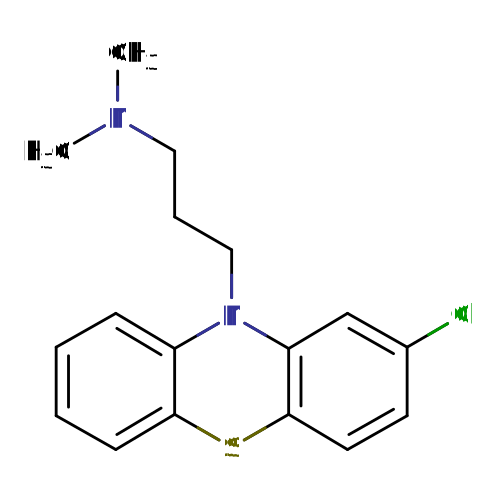
- Weight
- Average: 318.864
Monoisotopic: 318.095747015 - Chemical Formula
- C17H19ClN2S
- Synonyms
- 3-(2-chloro-10H-phenothiazin-10-yl)-N,N-dimethyl-1-propanamine
- 3-(2-chlorophenothiazin-10-yl)-N,N-dimethyl-propan-1-amine
- Chlorpromazine
- Chlorpromazinum
- Clorpromazina
- CPZ
- N-(3-dimethylaminopropyl)-3-chlorophenothiazine
- External IDs
- J2.794D
- NSC-167745
- NSC-226514

Pharmacology
- Indication
For the treatment of schizophrenia; to control nausea and vomiting; for relief of restlessness and apprehension before surgery; for acute intermittent porphyria; as an adjunct in the treatment of tetanus; to control the manifestations of the manic type of manic-depressive illness; for relief of intractable hiccups; for the treatment of severe behavioral problems in children (1 to 12 years of age) marked by combativeness and/or explosive hyperexcitable behavior (out of proportion to immediate provocations), and in the short-term treatment of hyperactive children who show excessive motor activity with accompanying conduct disorders consisting of some or all of the following symptoms: impulsivity, difficulty sustaining attention, aggressivity, mood lability, and poor frustration tolerance.
 Reduce drug development failure ratesBuild, train, & validate machine-learning modelswith evidence-based and structured datasets.Build, train, & validate predictive machine-learning models with structured datasets.
- Associated Conditions
Indication Type Indication Combined Product Details Approval Level Age Group Patient Characteristics Dose Form Treatment of Apprehension •••••••••••• Management of Disruptive behavior disorder •••••••••••• Treatment of Intractable hiccups •••••••••••• Management of Mania •••••••••••• Treatment of Nausea and vomiting •••••••••••• - Contraindications & Blackbox Warnings
 Prevent Adverse Drug Events TodayTap into our Clinical API for life-saving information on contraindications & blackbox warnings, population restrictions, harmful risks, & more.Avoid life-threatening adverse drug events with our Clinical API
- Pharmacodynamics
Chlorpromazine is a psychotropic agent indicated for the treatment of schizophrenia. It also exerts sedative and antiemetic activity. Chlorpromazine has actions at all levels of the central nervous system-primarily at subcortical levels-as well as on multiple organ systems. Chlorpromazine has strong antiadrenergic and weaker peripheral anticholinergic activity; ganglionic blocking action is relatively slight. It also possesses slight antihistaminic and antiserotonin activity.
- Mechanism of action
Chlorpromazine acts as an antagonist (blocking agent) on different postsysnaptic receptors -on dopaminergic-receptors (subtypes D1, D2, D3 and D4 - different antipsychotic properties on productive and unproductive symptoms), on serotonergic-receptors (5-HT1 and 5-HT2, with anxiolytic, antidepressive and antiaggressive properties as well as an attenuation of extrapypramidal side-effects, but also leading to weight gain, fall in blood pressure, sedation and ejaculation difficulties), on histaminergic-receptors (H1-receptors, sedation, antiemesis, vertigo, fall in blood pressure and weight gain), alpha1/alpha2-receptors (antisympathomimetic properties, lowering of blood pressure, reflex tachycardia, vertigo, sedation, hypersalivation and incontinence as well as sexual dysfunction, but may also attenuate pseudoparkinsonism - controversial) and finally on muscarinic (cholinergic) M1/M2-receptors (causing anticholinergic symptoms like dry mouth, blurred vision, obstipation, difficulty/inability to urinate, sinus tachycardia, ECG-changes and loss of memory, but the anticholinergic action may attenuate extrapyramidal side-effects). Additionally, Chlorpromazine is a weak presynaptic inhibitor of Dopamine reuptake, which may lead to (mild) antidepressive and antiparkinsonian effects. This action could also account for psychomotor agitation and amplification of psychosis (very rarely noted in clinical use).
- Absorption
Readily absorbed from the GI tract. Bioavailability varies due to first-pass metabolism by the liver.
- Volume of distribution
- 20 L/kg
- Protein binding
> 90% to plasma proteins, primarily albumin
- Metabolism
Extensively metabolized in the liver and kidneys. It is extensively metabolized by cytochrome P450 isozymes CYP2D6 (major pathway), CYP1A2 and CYP3A4. Approximately 10 to 12 major metabolite have been identified. Hydroxylation at positions 3 and 7 of the phenothiazine nucleus and the N-dimethylaminopropyl side chain undergoes demethylation and is also metabolized to an N-oxide. In urine, 20% of chlopromazine and its metabolites are excreted unconjugated in the urine as unchanged drug, demonomethylchlorpromazine, dedimethylchlorpromazine, their sulfoxide metabolites, and chlorpromazine-N-oxide. The remaining 80% consists of conjugated metabolites, principally O-glucuronides and small amounts of ethereal sulfates of the mono- and dihydroxy-derivatives of chlorpromazine and their sulfoxide metabolites. The major metabolites are the monoglucuronide of N-dedimethylchlorpromazine and 7-hydroxychlorpromazine. Approximately 37% of the administered dose of chlorpromazine is excreted in urine.
Hover over products below to view reaction partners
- Route of elimination
Kidneys, ~ 37% excreted in urine
- Half-life
~ 30 hours
- Clearance
Not Available
- Adverse Effects
 Improve decision support & research outcomesWith structured adverse effects data, including: blackbox warnings, adverse reactions, warning & precautions, & incidence rates. View sample adverse effects data in our new Data Library!Improve decision support & research outcomes with our structured adverse effects data.
- Toxicity
Agitation, coma, convulsions, difficulty breathing, difficulty swallowing, dry mouth, extreme sleepiness, fever, intestinal blockage, irregular heart rate, low blood pressure, restlessness
- Pathways
- Not Available
- Pharmacogenomic Effects/ADRs
- Not Available
Interactions
- Drug Interactions
- This information should not be interpreted without the help of a healthcare provider. If you believe you are experiencing an interaction, contact a healthcare provider immediately. The absence of an interaction does not necessarily mean no interactions exist.
Drug Interaction Integrate drug-drug
interactions in your software1,2-Benzodiazepine The risk or severity of CNS depression can be increased when Chlorpromazine is combined with 1,2-Benzodiazepine. Abacavir Chlorpromazine may decrease the excretion rate of Abacavir which could result in a higher serum level. Abaloparatide The risk or severity of adverse effects can be increased when Chlorpromazine is combined with Abaloparatide. Abametapir The serum concentration of Chlorpromazine can be increased when it is combined with Abametapir. Abatacept The metabolism of Chlorpromazine can be increased when combined with Abatacept. - Food Interactions
- Avoid alcohol.
- Take with food. Food reduces irritation.
Products
 Drug product information from 10+ global regionsOur datasets provide approved product information including:dosage, form, labeller, route of administration, and marketing period.Access drug product information from over 10 global regions.
- Product Ingredients
Ingredient UNII CAS InChI Key Chlorpromazine hydrochloride 9WP59609J6 69-09-0 FBSMERQALIEGJT-UHFFFAOYSA-N - Product Images
- International/Other Brands
- Aminazine / Chlorderazin / Chloropromazine / Chlorpromados / Chlorpromanyl (Technilab (Canada)) / Contomin / Largactil (Specia)
- Brand Name Prescription Products
Name Dosage Strength Route Labeller Marketing Start Marketing End Region Image Chlorprom Tab 100mg Tablet 111.6 mg / tab Oral Icn Pharmaceuticals 1962-12-31 1998-08-13 Canada 
Chlorprom Tab 25mg Tablet 27.9 mg / tab Oral Icn Pharmaceuticals 1974-12-31 1998-08-13 Canada Chlorprom Tab 50mg Tablet 55.8 mg / tab Oral Icn Pharmaceuticals 1962-12-31 1998-08-13 Canada Chlorpromanyl 20 Syr Solution / drops 22.2 mg / mL Oral Technilab Pharma Inc. 1983-12-31 2004-08-03 Canada Chlorpromanyl 40 Drops Syr 44.5mg/ml Syrup 44.5 mg / mL Oral Technilab Pharma Inc. 1986-12-31 2006-07-28 Canada - Generic Prescription Products
Name Dosage Strength Route Labeller Marketing Start Marketing End Region Image Apo Chlorpromazine Tablet 55.7 mg Oral Apotex Corporation 1976-12-31 2011-08-05 Canada Apo Chlorpromazine Tablet 27.9 mg Oral Apotex Corporation 1976-12-31 2011-08-05 Canada Apo Chlorpromazine Tablet 111.4 mg Oral Apotex Corporation 1976-12-31 2011-08-05 Canada Chlorpromazine Tablet 25 mg/1 Oral Alembic Pharmaceuticals Inc. 2023-07-20 Not applicable US 
Chlorpromazine Tablet 50 mg/1 Oral Mayne Pharma Inc. 2021-07-15 Not applicable US - Over the Counter Products
Name Dosage Strength Route Labeller Marketing Start Marketing End Region Image โปเกตอล 200 Tablet, coated 200 mg Oral บริษัท ฟาร์มาสันต์ แล็บบอราตอรี่ส์ จำกัด จำกัด 2008-07-31 Not applicable Thailand 


Categories
- ATC Codes
- N05AA01 — Chlorpromazine
- Drug Categories
- Adrenergic alpha-1 Receptor Antagonists
- Adrenergic alpha-Antagonists
- Adrenergic Antagonists
- Agents producing tachycardia
- Agents that produce hypertension
- Agents that reduce seizure threshold
- Anticholinergic Agents
- Antidepressive Agents
- Antiemetics
- Antipsychotic Agents
- Antipsychotic Agents (First Generation [Typical])
- Autonomic Agents
- BSEP/ABCB11 Inhibitors
- Central Nervous System Agents
- Central Nervous System Depressants
- Cholinesterase Inhibitors
- Cytochrome P-450 CYP1A2 Substrates
- Cytochrome P-450 CYP2D6 Inhibitors
- Cytochrome P-450 CYP2D6 Inhibitors (moderate)
- Cytochrome P-450 CYP2D6 Inhibitors (strength unknown)
- Cytochrome P-450 CYP2D6 Substrates
- Cytochrome P-450 CYP2E1 Inhibitors
- Cytochrome P-450 CYP2E1 Inhibitors (strength unknown)
- Cytochrome P-450 CYP3A Inducers
- Cytochrome P-450 CYP3A Substrates
- Cytochrome P-450 CYP3A4 Inducers
- Cytochrome P-450 CYP3A4 Inducers (strength unknown)
- Cytochrome P-450 CYP3A4 Substrates
- Cytochrome P-450 CYP3A4 Substrates (strength unknown)
- Cytochrome P-450 Enzyme Inducers
- Cytochrome P-450 Enzyme Inhibitors
- Cytochrome P-450 Substrates
- Dopamine Agents
- Dopamine Antagonists
- Dopamine D2 Receptor Antagonists
- Drugs causing inadvertant photosensitivity
- Drugs that are Mainly Renally Excreted
- Gastrointestinal Agents
- Heterocyclic Compounds, Fused-Ring
- Histamine Antagonists
- Histamine H1 Antagonists
- Hyperglycemia-Associated Agents
- Hypotensive Agents
- Moderate Risk QTc-Prolonging Agents
- Muscarinic Antagonists
- Nervous System
- Neurotoxic agents
- Neurotransmitter Agents
- P-glycoprotein inhibitors
- P-glycoprotein substrates
- Peripheral Nervous System Agents
- Phenothiazines
- Phenothiazines With Aliphatic Side-Chain
- Photosensitizing Agents
- Psycholeptics
- Psychotropic Drugs
- QTc Prolonging Agents
- Serotonergic Drugs Shown to Increase Risk of Serotonin Syndrome
- Serotonin 5-HT1 Receptor Antagonists
- Serotonin 5-HT1A Receptor Antagonists
- Serotonin 5-HT2 Receptor Antagonists
- Serotonin 5-HT2A Receptor Antagonists
- Serotonin Agents
- Serotonin Receptor Antagonists
- Sulfur Compounds
- Tranquilizing Agents
- Chemical TaxonomyProvided by Classyfire
- Description
- This compound belongs to the class of organic compounds known as phenothiazines. These are polycyclic aromatic compounds containing a phenothiazine moiety, which is a linear tricyclic system that consists of a two benzene rings joined by a para-thiazine ring.
- Kingdom
- Organic compounds
- Super Class
- Organoheterocyclic compounds
- Class
- Benzothiazines
- Sub Class
- Phenothiazines
- Direct Parent
- Phenothiazines
- Alternative Parents
- Alkyldiarylamines / Diarylthioethers / Benzenoids / Aryl chlorides / 1,4-thiazines / Trialkylamines / Azacyclic compounds / Organopnictogen compounds / Organochlorides / Hydrocarbon derivatives
- Substituents
- Alkyldiarylamine / Amine / Aromatic heteropolycyclic compound / Aryl chloride / Aryl halide / Aryl thioether / Azacycle / Benzenoid / Diarylthioether / Hydrocarbon derivative
- Molecular Framework
- Aromatic heteropolycyclic compounds
- External Descriptors
- phenothiazines, tertiary amine, organochlorine compound (CHEBI:3647)
- Affected organisms
- Humans and other mammals
Chemical Identifiers
- UNII
- U42B7VYA4P
- CAS number
- 50-53-3
- InChI Key
- ZPEIMTDSQAKGNT-UHFFFAOYSA-N
- InChI
- InChI=1S/C17H19ClN2S/c1-19(2)10-5-11-20-14-6-3-4-7-16(14)21-17-9-8-13(18)12-15(17)20/h3-4,6-9,12H,5,10-11H2,1-2H3
- IUPAC Name
- [3-(2-chloro-10H-phenothiazin-10-yl)propyl]dimethylamine
- SMILES
- CN(C)CCCN1C2=CC=CC=C2SC2=C1C=C(Cl)C=C2
References
- Synthesis Reference
Charpentier, P.; U S . Patent 2,645,640; July 14, 1953; assigned to Societe des Usines Chimiques Rhone-Poulenc, France.
US2645640- General References
- Leucht S, Wahlbeck K, Hamann J, Kissling W: New generation antipsychotics versus low-potency conventional antipsychotics: a systematic review and meta-analysis. Lancet. 2003 May 10;361(9369):1581-9. [Article]
- External Links
- Human Metabolome Database
- HMDB0014620
- KEGG Drug
- D00270
- KEGG Compound
- C06906
- PubChem Compound
- 2726
- PubChem Substance
- 46508395
- ChemSpider
- 2625
- BindingDB
- 50001888
- 2403
- ChEBI
- 3647
- ChEMBL
- CHEMBL71
- ZINC
- ZINC000000044027
- Therapeutic Targets Database
- DAP000374
- PharmGKB
- PA448964
- Guide to Pharmacology
- GtP Drug Page
- PDBe Ligand
- Z80
- RxList
- RxList Drug Page
- Drugs.com
- Drugs.com Drug Page
- PDRhealth
- PDRhealth Drug Page
- Wikipedia
- Chlorpromazine
- PDB Entries
- 3apx / 3lk0 / 4ma8 / 5g08 / 5lg3 / 5nuj / 5nuk / 5num / 5nun / 7ook
- MSDS
- Download (75.4 KB)
Clinical Trials
- Clinical Trials
Phase Status Purpose Conditions Count 4 Completed Treatment Aggression / Agitation / Psychiatric Emergency 1 4 Completed Treatment Bipolar Disorder (BD) / Schizoaffective Disorders 1 4 Completed Treatment Schizophrenia 1 4 Terminated Treatment Schizophrenia 1 3 Completed Treatment Neonatal drug withdrawal syndrome 1
Pharmacoeconomics
- Manufacturers
- Glaxosmithkline
- Actavis mid atlantic llc
- Pharmaceutical assoc inc div beach products
- Wockhardt eu operations (swiss) ag
- Roxane laboratories inc
- Sandoz inc
- Abraxis pharmaceutical products
- Baxter healthcare corp anesthesia and critical care
- Marsam pharmaceuticals llc
- Watson laboratories inc
- Wyeth ayerst laboratories
- Alpharma us pharmaceuticals division
- Abbott laboratories pharmaceutical products div
- Ivax pharmaceuticals inc sub teva pharmaceuticals usa
- Kv pharmaceutical co
- Lederle laboratories div american cyanamid co
- Purepac pharmaceutical co
- Private formulations inc
- Usl pharma inc
- Vangard laboratories inc div midway medical co
- West ward pharmaceutical corp
- Parke davis div warner lambert co
- Packagers
- Amerisource Health Services Corp.
- Baxter International Inc.
- Cardinal Health
- Comprehensive Consultant Services Inc.
- Coupler Enterprises Inc.
- Heartland Repack Services LLC
- Innovative Manufacturing and Distribution Services Inc.
- Liberty Pharmaceuticals
- Major Pharmaceuticals
- Murfreesboro Pharmaceutical Nursing Supply
- Nucare Pharmaceuticals Inc.
- Physicians Total Care Inc.
- Prepak Systems Inc.
- Prescript Pharmaceuticals
- Qualitest
- Remedy Repack
- Sandoz
- Tya Pharmaceuticals
- UDL Laboratories
- United Research Laboratories Inc.
- USL Pharma Inc.
- Vangard Labs Inc.
- Dosage Forms
Form Route Strength Tablet Oral 111.4 mg Tablet Oral 27.9 mg Tablet Oral 55.7 mg Tablet Oral 111.6 mg / tab Tablet Oral 27.9 mg / tab Tablet Oral 55.8 mg / tab Solution / drops Oral 22.2 mg / mL Syrup Oral 44.5 mg / mL Tablet, film coated Oral 100 mg/1 Tablet, film coated Oral 50 mg/1 Liquid Intramuscular; Intravenous 25 mg / mL Liquid Intramuscular; Intravenous 27.9 mg / mL Solution Intramuscular; Intravenous 25 mg / mL Concentrate Oral 100 mg/1mL Concentrate Oral 30 mg/1mL Injection Intramuscular Injection Intramuscular 25 mg/1mL Tablet Oral 10 mg/1 Tablet Oral 100 mg/1 Tablet Oral 200 mg/1 Tablet Oral 25 mg/1 Tablet Oral 50 mg/1 Tablet, film coated Oral 10 mg/1 Tablet, film coated Oral 200 mg/1 Tablet, film coated Oral 25 mg/1 Tablet, sugar coated Oral 10 mg/1 Tablet, sugar coated Oral 100 mg/1 Tablet, sugar coated Oral 200 mg/1 Tablet, sugar coated Oral 25 mg/1 Tablet, sugar coated Oral 50 mg/1 Tablet Oral 100 mg / tab Tablet Oral 25 mg / tab Tablet Oral 50 mg / tab Tablet, coated Oral Tablet Oral Injection, solution Injection, solution Parenteral 50 MG/2ML Solution / drops Oral 40 MG/ML Liquid Oral 100 mg / 5 mL Liquid Oral 25 mg / 5 mL Injection Intramuscular 25 mg Solution Intramuscular; Intravenous 50 mg / amp Solution / drops Oral 40 mg / mL Suppository Rectal 100 mg Solution Intramuscular; Intravenous 25 mg/1ml Tablet, film coated Oral 25 mg Tablet, film coated Oral 50 mg Tablet, sugar coated Oral 50 mg Injection, solution Intramuscular 25 mg/5ml Tablet Oral 223.2 mg Tablet Oral 11.16 mg Tablet, film coated Oral Injection, solution Intramuscular 50 MG/2ML Tablet Oral 100 mg Tablet Oral 25.0 mg Tablet Oral 50.0 mg Injection, solution Intramuscular 25 mg/1mL Suppository Rectal 100 mg/1 Suppository Rectal 25 mg/1 Syrup Oral 10 mg/5mL Tablet, coated Oral 10 mg/1 Tablet, coated Oral 100 mg/1 Tablet, coated Oral 200 mg/1 Tablet, coated Oral 25 mg/1 Tablet, coated Oral 50 mg/1 Capsule 10 mg Tablet, film coated Oral 100 mg Tablet, sugar coated Oral 100 mg Tablet, sugar coated Oral 25 mg Tablet, coated Oral 100 mg Tablet, coated Oral 200 mg Tablet, coated Oral 25 mg Tablet, coated Oral 50 mg Tablet Oral 10 mg - Prices
Unit description Cost Unit Chlorpromazine 25 mg/ml amp 8.04USD ml ChlorproMAZINE HCl 200 mg tablet 1.19USD tablet Chlorpromazine 200 mg tablet 1.05USD tablet ChlorproMAZINE HCl 100 mg tablet 0.84USD tablet ChlorproMAZINE HCl 50 mg tablet 0.73USD tablet ChlorproMAZINE HCl 25 mg tablet 0.55USD tablet Chlorpromazine 100 mg tablet 0.39USD tablet ChlorproMAZINE HCl 10 mg tablet 0.37USD tablet Chlorpromazine 10 mg tablet 0.32USD tablet Chlorpromazine 50 mg tablet 0.3USD tablet Chlorpromazine 25 mg tablet 0.17USD tablet DrugBank does not sell nor buy drugs. Pricing information is supplied for informational purposes only.- Patents
- Not Available
Properties
- State
- Liquid
- Experimental Properties
Property Value Source melting point (°C) 177-178 Charpentier, P.; U S . Patent 2,645,640; July 14, 1953; assigned to Societe des Usines Chimiques Rhone-Poulenc, France boiling point (°C) 200-205 °C at 8.00E-01 mm Hg PhysProp water solubility 2.55 mg/L (at 24 °C) YALKOWSKY,SH & DANNENFELSER,RM (1992) logP 5.41 AVDEEF,A (1995) logS -5.01 ADME Research, USCD Caco2 permeability -4.7 ADME Research, USCD pKa 9.3 (at 25 °C) HANSCH,C & LEO,AJ (1985) - Predicted Properties
Property Value Source Water Solubility 0.00417 mg/mL ALOGPS logP 5.18 ALOGPS logP 4.54 Chemaxon logS -4.9 ALOGPS pKa (Strongest Basic) 9.2 Chemaxon Physiological Charge 1 Chemaxon Hydrogen Acceptor Count 2 Chemaxon Hydrogen Donor Count 0 Chemaxon Polar Surface Area 6.48 Å2 Chemaxon Rotatable Bond Count 4 Chemaxon Refractivity 93.76 m3·mol-1 Chemaxon Polarizability 35.1 Å3 Chemaxon Number of Rings 3 Chemaxon Bioavailability 1 Chemaxon Rule of Five Yes Chemaxon Ghose Filter Yes Chemaxon Veber's Rule Yes Chemaxon MDDR-like Rule No Chemaxon - Predicted ADMET Features
Property Value Probability Human Intestinal Absorption + 0.9757 Blood Brain Barrier + 0.9795 Caco-2 permeable + 0.8867 P-glycoprotein substrate Substrate 0.787 P-glycoprotein inhibitor I Inhibitor 0.7164 P-glycoprotein inhibitor II Inhibitor 0.8387 Renal organic cation transporter Inhibitor 0.7557 CYP450 2C9 substrate Non-substrate 0.7617 CYP450 2D6 substrate Substrate 0.8919 CYP450 3A4 substrate Substrate 0.6477 CYP450 1A2 substrate Inhibitor 0.9305 CYP450 2C9 inhibitor Non-inhibitor 0.9071 CYP450 2D6 inhibitor Inhibitor 0.9422 CYP450 2C19 inhibitor Inhibitor 0.5512 CYP450 3A4 inhibitor Non-inhibitor 0.9375 CYP450 inhibitory promiscuity High CYP Inhibitory Promiscuity 0.6601 Ames test Non AMES toxic 0.9133 Carcinogenicity Non-carcinogens 0.9309 Biodegradation Not ready biodegradable 1.0 Rat acute toxicity 3.3196 LD50, mol/kg Not applicable hERG inhibition (predictor I) Weak inhibitor 0.9536 hERG inhibition (predictor II) Inhibitor 0.787
Spectra
- Mass Spec (NIST)
- Download (8.36 KB)
- Spectra
- Chromatographic Properties
Collision Cross Sections (CCS)
Adduct CCS Value (Å2) Source type Source [M-H]- 177.6992431 predictedDarkChem Lite v0.1.0 [M-H]- 165.44008 predictedDeepCCS 1.0 (2019) [M+H]+ 179.6743431 predictedDarkChem Lite v0.1.0 [M+H]+ 167.79808 predictedDeepCCS 1.0 (2019) [M+Na]+ 178.6469431 predictedDarkChem Lite v0.1.0 [M+Na]+ 173.89124 predictedDeepCCS 1.0 (2019)
Targets

- Kind
- Protein
- Organism
- Humans
- Pharmacological action
- Yes
- Actions
- Antagonist
- General Function
- Potassium channel regulator activity
- Specific Function
- Dopamine receptor whose activity is mediated by G proteins which inhibit adenylyl cyclase.
- Gene Name
- DRD2
- Uniprot ID
- P14416
- Uniprot Name
- D(2) dopamine receptor
- Molecular Weight
- 50618.91 Da
References
- Oades RD, Rao ML, Bender S, Sartory G, Muller BW: Neuropsychological and conditioned blocking performance in patients with schizophrenia: assessment of the contribution of neuroleptic dose, serum levels and dopamine D2-receptor occupancy. Behav Pharmacol. 2000 Jun;11(3-4):317-30. [Article]
- Seeman P: Atypical antipsychotics: mechanism of action. Can J Psychiatry. 2002 Feb;47(1):27-38. [Article]
- Wu S, Xing Q, Gao R, Li X, Gu N, Feng G, He L: Response to chlorpromazine treatment may be associated with polymorphisms of the DRD2 gene in Chinese schizophrenic patients. Neurosci Lett. 2005 Mar 7;376(1):1-4. Epub 2004 Dec 2. [Article]
- Wu SN, Gao R, Xing QH, Li HF, Shen YF, Gu NF, Feng GY, He L: Association of DRD2 polymorphisms and chlorpromazine-induced extrapyramidal syndrome in Chinese schizophrenic patients. Acta Pharmacol Sin. 2006 Aug;27(8):966-70. [Article]
- Chen X, Ji ZL, Chen YZ: TTD: Therapeutic Target Database. Nucleic Acids Res. 2002 Jan 1;30(1):412-5. [Article]
- Seeman P: Dopamine D2 receptors as treatment targets in schizophrenia. Clin Schizophr Relat Psychoses. 2010 Apr;4(1):56-73. doi: 10.3371/CSRP.4.1.5. [Article]
- Roth BL, Craigo SC, Choudhary MS, Uluer A, Monsma FJ Jr, Shen Y, Meltzer HY, Sibley DR: Binding of typical and atypical antipsychotic agents to 5-hydroxytryptamine-6 and 5-hydroxytryptamine-7 receptors. J Pharmacol Exp Ther. 1994 Mar;268(3):1403-10. [Article]
- Roth BL, Tandra S, Burgess LH, Sibley DR, Meltzer HY: D4 dopamine receptor binding affinity does not distinguish between typical and atypical antipsychotic drugs. Psychopharmacology (Berl). 1995 Aug;120(3):365-8. [Article]
- Kind
- Protein
- Organism
- Humans
- Pharmacological action
- Yes
- Actions
- Antagonist
- General Function
- G-protein coupled amine receptor activity
- Specific Function
- Dopamine receptor whose activity is mediated by G proteins which activate adenylyl cyclase.
- Gene Name
- DRD1
- Uniprot ID
- P21728
- Uniprot Name
- D(1A) dopamine receptor
- Molecular Weight
- 49292.765 Da
References
- Kanba S, Suzuki E, Nomura S, Nakaki T, Yagi G, Asai M, Richelson E: Affinity of neuroleptics for D1 receptor of human brain striatum. J Psychiatry Neurosci. 1994 Jul;19(4):265-9. [Article]
- Kind
- Protein
- Organism
- Humans
- Pharmacological action
- Yes
- Actions
- Antagonist
- General Function
- Serotonin receptor activity
- Specific Function
- G-protein coupled receptor for 5-hydroxytryptamine (serotonin). Also functions as a receptor for various drugs and psychoactive substances. Ligand binding causes a conformation change that triggers...
- Gene Name
- HTR1A
- Uniprot ID
- P08908
- Uniprot Name
- 5-hydroxytryptamine receptor 1A
- Molecular Weight
- 46106.335 Da
References
- Cosi C, Koek W: Agonist, antagonist, and inverse agonist properties of antipsychotics at human recombinant 5-HT(1A) receptors expressed in HeLa cells. Eur J Pharmacol. 2001 Dec 14;433(1):55-62. [Article]
- Newman-Tancredi A, Gavaudan S, Conte C, Chaput C, Touzard M, Verriele L, Audinot V, Millan MJ: Agonist and antagonist actions of antipsychotic agents at 5-HT1A receptors: a [35S]GTPgammaS binding study. Eur J Pharmacol. 1998 Aug 21;355(2-3):245-56. [Article]
- Kind
- Protein
- Organism
- Humans
- Pharmacological action
- Yes
- Actions
- Antagonist
- General Function
- Virus receptor activity
- Specific Function
- G-protein coupled receptor for 5-hydroxytryptamine (serotonin). Also functions as a receptor for various drugs and psychoactive substances, including mescaline, psilocybin, 1-(2,5-dimethoxy-4-iodop...
- Gene Name
- HTR2A
- Uniprot ID
- P28223
- Uniprot Name
- 5-hydroxytryptamine receptor 2A
- Molecular Weight
- 52602.58 Da
References
- Kusumi I, Takahashi Y, Suzuki K, Kameda K, Koyama T: Differential effects of subchronic treatments with atypical antipsychotic drugs on dopamine D2 and serotonin 5-HT2A receptors in the rat brain. J Neural Transm (Vienna). 2000;107(3):295-302. [Article]
- Yamada J, Sugimoto Y, Horisaka K: Serotonin2 (5-HT2) receptor agonist 1-(2,5-dimethoxy-4-iodophenyl)-2-aminopropane (DOI) inhibits chlorpromazine- and haloperidol-induced hypothermia in mice. Biol Pharm Bull. 1995 Nov;18(11):1580-3. [Article]
- Kind
- Protein
- Organism
- Humans
- Pharmacological action
- Yes
- Actions
- Antagonist
- General Function
- Protein heterodimerization activity
- Specific Function
- This alpha-adrenergic receptor mediates its action by association with G proteins that activate a phosphatidylinositol-calcium second messenger system. Its effect is mediated by G(q) and G(11) prot...
- Gene Name
- ADRA1A
- Uniprot ID
- P35348
- Uniprot Name
- Alpha-1A adrenergic receptor
- Molecular Weight
- 51486.005 Da
References
- Cahir M, King DJ: Antipsychotics lack alpha 1A/B adrenoceptor subtype selectivity in the rat. Eur Neuropsychopharmacol. 2005 Mar;15(2):231-4. [Article]
- Kind
- Protein
- Organism
- Humans
- Pharmacological action
- Yes
- Actions
- Antagonist
- General Function
- Protein heterodimerization activity
- Specific Function
- This alpha-adrenergic receptor mediates its action by association with G proteins that activate a phosphatidylinositol-calcium second messenger system. Its effect is mediated by G(q) and G(11) prot...
- Gene Name
- ADRA1B
- Uniprot ID
- P35368
- Uniprot Name
- Alpha-1B adrenergic receptor
- Molecular Weight
- 56835.375 Da
References
- Cahir M, King DJ: Antipsychotics lack alpha 1A/B adrenoceptor subtype selectivity in the rat. Eur Neuropsychopharmacol. 2005 Mar;15(2):231-4. [Article]
- Kind
- Protein
- Organism
- Humans
- Pharmacological action
- Yes
- Actions
- Antagonist
- General Function
- Histamine receptor activity
- Specific Function
- In peripheral tissues, the H1 subclass of histamine receptors mediates the contraction of smooth muscles, increase in capillary permeability due to contraction of terminal venules, and catecholamin...
- Gene Name
- HRH1
- Uniprot ID
- P35367
- Uniprot Name
- Histamine H1 receptor
- Molecular Weight
- 55783.61 Da
References
- Hals PA, Hall H, Dahl SG: Muscarinic cholinergic and histamine H1 receptor binding of phenothiazine drug metabolites. Life Sci. 1988;43(5):405-12. [Article]
- Church MK, Young KD: The characteristics of inhibition of histamine release from human lung fragments by sodium cromoglycate, salbutamol and chlorpromazine. Br J Pharmacol. 1983 Apr;78(4):671-9. [Article]
- Johnson HG, Miller MD: Inhibition of histamine release and ionophore-induced calcium flux in rat mast cells by lidocaine and chlorpromazine. Agents Actions. 1979 Aug;9(3):239-43. [Article]
- Palmer GC, Wagner HR, Palmer SJ, Manian AA: Histamine-, norepinephrine-, and dopamine-sensitive central adenylate cyclases: effects of chlorpromazine derivatives and butaclamol. Arch Int Pharmacodyn Ther. 1978 Jun;233(2):314-25. [Article]
- Ruffolo RR, Patil PN: Kinetics of blockade of different receptors by chlorpromazine in rabbit stomach strips. Eur J Pharmacol. 1978 Mar 15;48(2):151-7. [Article]
- Kind
- Protein
- Organism
- Humans
- Pharmacological action
- Unknown
- Actions
- Inhibitor
- General Function
- Voltage-gated potassium channel activity involved in ventricular cardiac muscle cell action potential repolarization
- Specific Function
- Pore-forming (alpha) subunit of voltage-gated inwardly rectifying potassium channel. Channel properties are modulated by cAMP and subunit assembly. Mediates the rapidly activating component of the ...
- Gene Name
- KCNH2
- Uniprot ID
- Q12809
- Uniprot Name
- Potassium voltage-gated channel subfamily H member 2
- Molecular Weight
- 126653.52 Da
References
- Thomas D, Wu K, Kathofer S, Katus HA, Schoels W, Kiehn J, Karle CA: The antipsychotic drug chlorpromazine inhibits HERG potassium channels. Br J Pharmacol. 2003 Jun;139(3):567-74. [Article]
- Kind
- Protein group
- Organism
- Humans
- Pharmacological action
- Unknown
- Actions
- Inhibitor
- General Function
- G-protein coupled amine receptor activity
- Specific Function
- Dopamine receptor whose activity is mediated by G proteins which activate adenylyl cyclase.
Components:
References
- Seeman P, Van Tol HH: Dopamine receptor pharmacology. Curr Opin Neurol Neurosurg. 1993 Aug;6(4):602-8. [Article]
- Kind
- Protein
- Organism
- Humans
- Pharmacological action
- Unknown
- Actions
- Inhibitor
- General Function
- G-protein coupled amine receptor activity
- Specific Function
- Dopamine receptor whose activity is mediated by G proteins which inhibit adenylyl cyclase. Promotes cell proliferation.
- Gene Name
- DRD3
- Uniprot ID
- P35462
- Uniprot Name
- D(3) dopamine receptor
- Molecular Weight
- 44224.335 Da
References
- Freedman SB, Patel S, Marwood R, Emms F, Seabrook GR, Knowles MR, McAllister G: Expression and pharmacological characterization of the human D3 dopamine receptor. J Pharmacol Exp Ther. 1994 Jan;268(1):417-26. [Article]
- Kind
- Protein
- Organism
- Humans
- Pharmacological action
- Unknown
- Actions
- Binder
- General Function
- Sh3 domain binding
- Specific Function
- Dopamine receptor responsible for neuronal signaling in the mesolimbic system of the brain, an area of the brain that regulates emotion and complex behavior. Its activity is mediated by G proteins ...
- Gene Name
- DRD4
- Uniprot ID
- P21917
- Uniprot Name
- D(4) dopamine receptor
- Molecular Weight
- 48359.86 Da
References
- Roth BL, Tandra S, Burgess LH, Sibley DR, Meltzer HY: D4 dopamine receptor binding affinity does not distinguish between typical and atypical antipsychotic drugs. Psychopharmacology (Berl). 1995 Aug;120(3):365-8. [Article]
- Kind
- Protein
- Organism
- Humans
- Pharmacological action
- Unknown
- Actions
- Inhibitor
- General Function
- G-protein coupled amine receptor activity
- Specific Function
- Dopamine receptor whose activity is mediated by G proteins which activate adenylyl cyclase.
- Gene Name
- DRD5
- Uniprot ID
- P21918
- Uniprot Name
- D(1B) dopamine receptor
- Molecular Weight
- 52950.5 Da
References
- Seeman P, Van Tol HH: Dopamine receptor pharmacology. Curr Opin Neurol Neurosurg. 1993 Aug;6(4):602-8. [Article]
- Kind
- Protein
- Organism
- Humans
- Pharmacological action
- Unknown
- Actions
- Binder
- General Function
- Serotonin receptor activity
- Specific Function
- G-protein coupled receptor for 5-hydroxytryptamine (serotonin). Also functions as a receptor for various drugs and psychoactive substances, including ergot alkaloid derivatives, 1-2,5,-dimethoxy-4-...
- Gene Name
- HTR2C
- Uniprot ID
- P28335
- Uniprot Name
- 5-hydroxytryptamine receptor 2C
- Molecular Weight
- 51820.705 Da
References
- Roth BL, Craigo SC, Choudhary MS, Uluer A, Monsma FJ Jr, Shen Y, Meltzer HY, Sibley DR: Binding of typical and atypical antipsychotic agents to 5-hydroxytryptamine-6 and 5-hydroxytryptamine-7 receptors. J Pharmacol Exp Ther. 1994 Mar;268(3):1403-10. [Article]
- Kind
- Protein group
- Organism
- Humans
- Pharmacological action
- Unknown
- Actions
- Binder
- General Function
- Virus receptor activity
- Specific Function
- G-protein coupled receptor for 5-hydroxytryptamine (serotonin). Also functions as a receptor for various drugs and psychoactive substances, including mescaline, psilocybin, 1-(2,5-dimethoxy-4-iodop...
Components:
| Name | UniProt ID |
|---|---|
| 5-hydroxytryptamine receptor 2A | P28223 |
| 5-hydroxytryptamine receptor 2B | P41595 |
| 5-hydroxytryptamine receptor 2C | P28335 |
References
- Roth BL, Craigo SC, Choudhary MS, Uluer A, Monsma FJ Jr, Shen Y, Meltzer HY, Sibley DR: Binding of typical and atypical antipsychotic agents to 5-hydroxytryptamine-6 and 5-hydroxytryptamine-7 receptors. J Pharmacol Exp Ther. 1994 Mar;268(3):1403-10. [Article]
- Kind
- Protein group
- Organism
- Humans
- Pharmacological action
- Unknown
- Actions
- Inhibitor
- General Function
- Protein heterodimerization activity
- Specific Function
- This alpha-adrenergic receptor mediates its action by association with G proteins that activate a phosphatidylinositol-calcium second messenger system. Its effect is mediated by G(q) and G(11) prot...
Components:
| Name | UniProt ID |
|---|---|
| Alpha-1A adrenergic receptor | P35348 |
| Alpha-1B adrenergic receptor | P35368 |
| Alpha-1D adrenergic receptor | P25100 |
References
- Huerta-Bahena J, Villalobos-Molina R, Garcia-Sainz JA: Trifluoperazine and chlorpromazine antagonize alpha 1- but not alpha2- adrenergic effects. Mol Pharmacol. 1983 Jan;23(1):67-70. [Article]
- Kind
- Protein group
- Organism
- Humans
- Pharmacological action
- Unknown
- Actions
- Inhibitor
- General Function
- Thioesterase binding
- Specific Function
- Alpha-2 adrenergic receptors mediate the catecholamine-induced inhibition of adenylate cyclase through the action of G proteins. The rank order of potency for agonists of this receptor is oxymetazo...
Components:
| Name | UniProt ID |
|---|---|
| Alpha-2A adrenergic receptor | P08913 |
| Alpha-2B adrenergic receptor | P18089 |
| Alpha-2C adrenergic receptor | P18825 |
References
- Bylund DB, Ray-Prenger C, Murphy TJ: Alpha-2A and alpha-2B adrenergic receptor subtypes: antagonist binding in tissues and cell lines containing only one subtype. J Pharmacol Exp Ther. 1988 May;245(2):600-7. [Article]
- Kind
- Protein
- Organism
- Humans
- Pharmacological action
- Unknown
- Actions
- Antagonist
- General Function
- Phosphatidylinositol phospholipase c activity
- Specific Function
- The muscarinic acetylcholine receptor mediates various cellular responses, including inhibition of adenylate cyclase, breakdown of phosphoinositides and modulation of potassium channels through the...
- Gene Name
- CHRM1
- Uniprot ID
- P11229
- Uniprot Name
- Muscarinic acetylcholine receptor M1
- Molecular Weight
- 51420.375 Da
References
- Davies MA, Compton-Toth BA, Hufeisen SJ, Meltzer HY, Roth BL: The highly efficacious actions of N-desmethylclozapine at muscarinic receptors are unique and not a common property of either typical or atypical antipsychotic drugs: is M1 agonism a pre-requisite for mimicking clozapine's actions? Psychopharmacology (Berl). 2005 Apr;178(4):451-60. Epub 2004 Oct 13. [Article]
- Kind
- Protein
- Organism
- Humans
- Pharmacological action
- Unknown
- Actions
- Antagonist
- General Function
- Receptor activity
- Specific Function
- The muscarinic acetylcholine receptor mediates various cellular responses, including inhibition of adenylate cyclase, breakdown of phosphoinositides and modulation of potassium channels through the...
- Gene Name
- CHRM3
- Uniprot ID
- P20309
- Uniprot Name
- Muscarinic acetylcholine receptor M3
- Molecular Weight
- 66127.445 Da
References
- Davies MA, Compton-Toth BA, Hufeisen SJ, Meltzer HY, Roth BL: The highly efficacious actions of N-desmethylclozapine at muscarinic receptors are unique and not a common property of either typical or atypical antipsychotic drugs: is M1 agonism a pre-requisite for mimicking clozapine's actions? Psychopharmacology (Berl). 2005 Apr;178(4):451-60. Epub 2004 Oct 13. [Article]
- Kind
- Protein
- Organism
- Humans
- Pharmacological action
- Unknown
- Actions
- Inhibitor
- General Function
- Sphingomyelin phosphodiesterase activity
- Specific Function
- Converts sphingomyelin to ceramide. Also has phospholipase C activities toward 1,2-diacylglycerolphosphocholine and 1,2-diacylglycerolphosphoglycerol. Isoform 2 and isoform 3 have lost catalytic ac...
- Gene Name
- SMPD1
- Uniprot ID
- P17405
- Uniprot Name
- Sphingomyelin phosphodiesterase
- Molecular Weight
- 69751.3 Da
References
- Yoshida Y, Arimoto K, Sato M, Sakuragawa N, Arima M, Satoyoshi E: Reduction of acid sphingomyelinase activity in human fibroblasts induced by AY-9944 and other cationic amphiphilic drugs. J Biochem. 1985 Dec;98(6):1669-79. [Article]
- Kind
- Protein
- Organism
- Humans
- Pharmacological action
- Unknown
- Actions
- Inhibitor
- General Function
- Titin binding
- Specific Function
- Calmodulin mediates the control of a large number of enzymes, ion channels, aquaporins and other proteins by Ca(2+). Among the enzymes to be stimulated by the calmodulin-Ca(2+) complex are a number...
- Gene Name
- CALM1
- Uniprot ID
- P0DP23
- Uniprot Name
- Calmodulin
- Molecular Weight
- 16837.47 Da
References
- Marshak DR, Lukas TJ, Watterson DM: Drug-protein interactions: binding of chlorpromazine to calmodulin, calmodulin fragments, and related calcium binding proteins. Biochemistry. 1985 Jan 1;24(1):144-50. [Article]
- Bohr V, Mansbridge J, Hanawalt P: Comparative effects of growth inhibitors on DNA replication, DNA repair, and protein synthesis in human epidermal keratinocytes. Cancer Res. 1986 Jun;46(6):2929-35. [Article]
- Kind
- Protein group
- Organism
- Humans
- Pharmacological action
- Unknown
- Actions
- Binder
- General Function
- Not Available
- Specific Function
- Functions as transport protein in the blood stream. Binds various ligands in the interior of its beta-barrel domain. Also binds synthetic drugs and influences their distribution and availability in...
Components:
References
- Herve F, Duche JC, d'Athis P, Marche C, Barre J, Tillement JP: Binding of disopyramide, methadone, dipyridamole, chlorpromazine, lignocaine and progesterone to the two main genetic variants of human alpha 1-acid glycoprotein: evidence for drug-binding differences between the variants and for the presence of two separate drug-binding sites on alpha 1-acid glycoprotein. Pharmacogenetics. 1996 Oct;6(5):403-15. [Article]
- Kind
- Protein
- Organism
- Humans
- Pharmacological action
- Unknown
- Actions
- Binder
- General Function
- Serotonin receptor activity
- Specific Function
- This is one of the several different receptors for 5-hydroxytryptamine (serotonin), a biogenic hormone that functions as a neurotransmitter, a hormone, and a mitogen. The activity of this receptor ...
- Gene Name
- HTR6
- Uniprot ID
- P50406
- Uniprot Name
- 5-hydroxytryptamine receptor 6
- Molecular Weight
- 46953.625 Da
References
- Roth BL, Craigo SC, Choudhary MS, Uluer A, Monsma FJ Jr, Shen Y, Meltzer HY, Sibley DR: Binding of typical and atypical antipsychotic agents to 5-hydroxytryptamine-6 and 5-hydroxytryptamine-7 receptors. J Pharmacol Exp Ther. 1994 Mar;268(3):1403-10. [Article]
- Kind
- Protein
- Organism
- Humans
- Pharmacological action
- Unknown
- Actions
- Binder
- General Function
- Serotonin receptor activity
- Specific Function
- This is one of the several different receptors for 5-hydroxytryptamine (serotonin), a biogenic hormone that functions as a neurotransmitter, a hormone, and a mitogen. The activity of this receptor ...
- Gene Name
- HTR7
- Uniprot ID
- P34969
- Uniprot Name
- 5-hydroxytryptamine receptor 7
- Molecular Weight
- 53554.43 Da
References
- Roth BL, Craigo SC, Choudhary MS, Uluer A, Monsma FJ Jr, Shen Y, Meltzer HY, Sibley DR: Binding of typical and atypical antipsychotic agents to 5-hydroxytryptamine-6 and 5-hydroxytryptamine-7 receptors. J Pharmacol Exp Ther. 1994 Mar;268(3):1403-10. [Article]
- Kind
- Protein
- Organism
- Humans
- Pharmacological action
- Unknown
- Actions
- Binder
- General Function
- Histamine receptor activity
- Specific Function
- The H4 subclass of histamine receptors could mediate the histamine signals in peripheral tissues. Displays a significant level of constitutive activity (spontaneous activity in the absence of agoni...
- Gene Name
- HRH4
- Uniprot ID
- Q9H3N8
- Uniprot Name
- Histamine H4 receptor
- Molecular Weight
- 44495.375 Da
References
- Nguyen T, Shapiro DA, George SR, Setola V, Lee DK, Cheng R, Rauser L, Lee SP, Lynch KR, Roth BL, O'Dowd BF: Discovery of a novel member of the histamine receptor family. Mol Pharmacol. 2001 Mar;59(3):427-33. [Article]
Enzymes
- Kind
- Protein
- Organism
- Humans
- Pharmacological action
- Unknown
- Actions
- SubstrateInhibitor
- General Function
- Steroid hydroxylase activity
- Specific Function
- Responsible for the metabolism of many drugs and environmental chemicals that it oxidizes. It is involved in the metabolism of drugs such as antiarrhythmics, adrenoceptor antagonists, and tricyclic...
- Gene Name
- CYP2D6
- Uniprot ID
- P10635
- Uniprot Name
- Cytochrome P450 2D6
- Molecular Weight
- 55768.94 Da
References
- Micallef J, Fakra E, Blin O: [Use of antidepressant drugs in schizophrenic patients with depression]. Encephale. 2006 Mar-Apr;32(2 Pt 1):263-9. [Article]
- Otani K, Aoshima T: Pharmacogenetics of classical and new antipsychotic drugs. Ther Drug Monit. 2000 Feb;22(1):118-21. [Article]
- Yoshii K, Kobayashi K, Tsumuji M, Tani M, Shimada N, Chiba K: Identification of human cytochrome P450 isoforms involved in the 7-hydroxylation of chlorpromazine by human liver microsomes. Life Sci. 2000;67(2):175-84. [Article]
- Flockhart Table of Drug Interactions [Link]
- Kind
- Protein
- Organism
- Humans
- Pharmacological action
- Unknown
- Actions
- Substrate
- General Function
- Oxidoreductase activity, acting on paired donors, with incorporation or reduction of molecular oxygen, reduced flavin or flavoprotein as one donor, and incorporation of one atom of oxygen
- Specific Function
- Cytochromes P450 are a group of heme-thiolate monooxygenases. In liver microsomes, this enzyme is involved in an NADPH-dependent electron transport pathway. It oxidizes a variety of structurally un...
- Gene Name
- CYP1A2
- Uniprot ID
- P05177
- Uniprot Name
- Cytochrome P450 1A2
- Molecular Weight
- 58293.76 Da
References
- Yoshii K, Kobayashi K, Tsumuji M, Tani M, Shimada N, Chiba K: Identification of human cytochrome P450 isoforms involved in the 7-hydroxylation of chlorpromazine by human liver microsomes. Life Sci. 2000;67(2):175-84. [Article]
- Rendic S: Summary of information on human CYP enzymes: human P450 metabolism data. Drug Metab Rev. 2002 Feb-May;34(1-2):83-448. [Article]
- Wojcikowski J, Boksa J, Daniel WA: Main contribution of the cytochrome P450 isoenzyme 1A2 (CYP1A2) to N-demethylation and 5-sulfoxidation of the phenothiazine neuroleptic chlorpromazine in human liver--A comparison with other phenothiazines. Biochem Pharmacol. 2010 Oct 15;80(8):1252-9. doi: 10.1016/j.bcp.2010.06.045. Epub 2010 Jul 6. [Article]
- Chlorpromazine Prescribing Info [File]
- Kind
- Protein
- Organism
- Humans
- Pharmacological action
- Unknown
- Actions
- Inhibitor
- General Function
- Steroid hydroxylase activity
- Specific Function
- Metabolizes several precarcinogens, drugs, and solvents to reactive metabolites. Inactivates a number of drugs and xenobiotics and also bioactivates many xenobiotic substrates to their hepatotoxic ...
- Gene Name
- CYP2E1
- Uniprot ID
- P05181
- Uniprot Name
- Cytochrome P450 2E1
- Molecular Weight
- 56848.42 Da
References
- Tassaneeyakul W, Birkett DJ, Miners JO: Inhibition of human hepatic cytochrome P4502E1 by azole antifungals, CNS-active drugs and non-steroidal anti-inflammatory agents. Xenobiotica. 1998 Mar;28(3):293-301. doi: 10.1080/004982598239579 . [Article]
- Monostory K, Hazai E, Vereczkey L: Inhibition of cytochrome P450 enzymes participating in p-nitrophenol hydroxylation by drugs known as CYP2E1 inhibitors. Chem Biol Interact. 2004 Apr 15;147(3):331-40. doi: 10.1016/j.cbi.2004.03.003. [Article]
- Kind
- Protein
- Organism
- Humans
- Pharmacological action
- Unknown
- Actions
- Inducer
- General Function
- Vitamin d3 25-hydroxylase activity
- Specific Function
- Cytochromes P450 are a group of heme-thiolate monooxygenases. In liver microsomes, this enzyme is involved in an NADPH-dependent electron transport pathway. It performs a variety of oxidation react...
- Gene Name
- CYP3A4
- Uniprot ID
- P08684
- Uniprot Name
- Cytochrome P450 3A4
- Molecular Weight
- 57342.67 Da
References
- Tateishi T, Kumai T, Watanabe M, Tanaka M, Kobayashi S: A comparison of the effect of five phenothiazines on hepatic CYP isoenzymes in rats. Pharmacol Toxicol. 1999 Nov;85(5):252-6. [Article]
- Wojcikowski J, Haduch A, Daniel WA: Effect of classic and atypical neuroleptics on cytochrome P450 3A (CYP3A) in rat liver. Pharmacol Rep. 2012;64(6):1411-8. [Article]
- Kind
- Protein
- Organism
- Humans
- Pharmacological action
- Unknown
- Actions
- Inhibitor
- General Function
- Identical protein binding
- Specific Function
- Esterase with broad substrate specificity. Contributes to the inactivation of the neurotransmitter acetylcholine. Can degrade neurotoxic organophosphate esters.
- Gene Name
- BCHE
- Uniprot ID
- P06276
- Uniprot Name
- Cholinesterase
- Molecular Weight
- 68417.575 Da
References
- Nasello AG, Gidali D, Felicio LF: A comparative study of the anticholinesterase activity of several antipsychotic agents. Pharmacol Biochem Behav. 2003 Jul;75(4):895-901. [Article]
- Muraoka S, Miura T: Inactivation of cholinesterase induced by chlorpromazine cation radicals. Pharmacol Toxicol. 2003 Feb;92(2):100-4. [Article]
- Spinedi A, Pacini L, Limatola C, Luly P, Farias RN: A study of human erythrocyte acetylcholinesterase inhibition by chlorpromazine. Biochem J. 1991 Sep 1;278 ( Pt 2):461-3. [Article]
Carriers
- Kind
- Protein
- Organism
- Humans
- Pharmacological action
- Unknown
- General Function
- Toxic substance binding
- Specific Function
- Serum albumin, the main protein of plasma, has a good binding capacity for water, Ca(2+), Na(+), K(+), fatty acids, hormones, bilirubin and drugs. Its main function is the regulation of the colloid...
- Gene Name
- ALB
- Uniprot ID
- P02768
- Uniprot Name
- Serum albumin
- Molecular Weight
- 69365.94 Da
References
- Kitamura K, Omran AA, Nagata C, Kamijima Y, Tanaka R, Takegami S, Kitade T: Effects of inorganic ions on the binding of triflupromazine and chlorpromazine to bovine serum albumin studied by spectrometric methods. Chem Pharm Bull (Tokyo). 2006 Jul;54(7):972-6. [Article]
- Rukhadze MD, Bezarashvili GS, Sidamonidze NS, Tsagareli SK: Investigation of binding process of chlorpromazine to bovine serum albumin by means of passive and active experiments. Biomed Chromatogr. 2001 Oct;15(6):365-73. [Article]
- Silva D, Cortez CM, Louro SR: Quenching of the intrinsic fluorescence of bovine serum albumin by chlorpromazine and hemin. Braz J Med Biol Res. 2004 Jul;37(7):963-8. Epub 2004 Jun 22. [Article]
Transporters
- Kind
- Protein
- Organism
- Humans
- Pharmacological action
- Unknown
- Actions
- SubstrateInhibitor
- General Function
- Xenobiotic-transporting atpase activity
- Specific Function
- Energy-dependent efflux pump responsible for decreased drug accumulation in multidrug-resistant cells.
- Gene Name
- ABCB1
- Uniprot ID
- P08183
- Uniprot Name
- Multidrug resistance protein 1
- Molecular Weight
- 141477.255 Da
References
- Polli JW, Wring SA, Humphreys JE, Huang L, Morgan JB, Webster LO, Serabjit-Singh CS: Rational use of in vitro P-glycoprotein assays in drug discovery. J Pharmacol Exp Ther. 2001 Nov;299(2):620-8. [Article]
- Boulton DW, DeVane CL, Liston HL, Markowitz JS: In vitro P-glycoprotein affinity for atypical and conventional antipsychotics. Life Sci. 2002 May 31;71(2):163-9. [Article]
- Kind
- Protein
- Organism
- Humans
- Pharmacological action
- No
- Actions
- Inhibitor
- General Function
- Transporter activity
- Specific Function
- Involved in the ATP-dependent secretion of bile salts into the canaliculus of hepatocytes.
- Gene Name
- ABCB11
- Uniprot ID
- O95342
- Uniprot Name
- Bile salt export pump
- Molecular Weight
- 146405.83 Da
References
- Wilson A. (2016). New horizons in predictive drug metabolism and pharmacokinetics. The Royal Society of Chemistry. [ISBN:978-1-84973-828-6]


Drug created at June 13, 2005 13:24 / Updated at April 26, 2024 00:45