Identification
- Summary
Amikacin is an aminoglycoside used to treat infections caused by more resistant strains of Gram negative bacteria and some Gram positive bacteria.
- Brand Names
- Arikayce
- Generic Name
- Amikacin
- DrugBank Accession Number
- DB00479
- Background
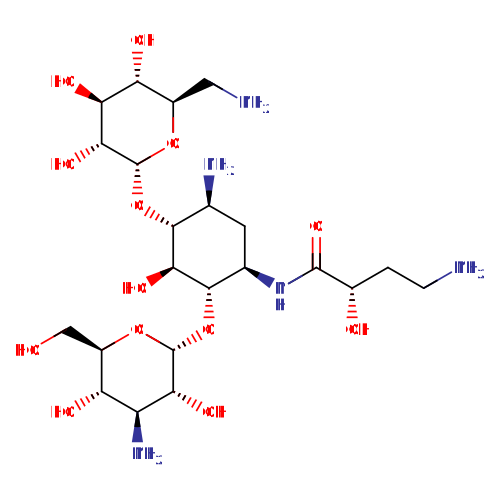
Amikacin is a semi-synthetic aminoglycoside antibiotic that is derived from kanamycin A.Label Amikacin is synthesized by acylation with the l-(-)-γ-amino-α-hydroxybutyryl side chain at the C-1 amino group of the deoxystreptamine moiety of kanamycin A.2
Amikacin's unique property is that it exerts activity against more resistant gram-negative bacilli such as Acinetobacter baumanii and Pseudomonas aeruginosa. Amikacin also exerts excellent activity against most aerobic gram-negative bacilli from the Enterobacteriaceae family, including Nocardia and some Mycobacterium (M. avium-intracellulare, M. chelonae, and M. fortuitum)4. M. avium-intracellulare (MAC) is a type of nontuberculous mycobacteria (NTM) found in water and soil. Symptoms of this disease include a persistent cough, fatigue, weight loss, night sweats, and shortness of breath and the coughing up of blood.4
Several forms of amikacin are used currently, including an intravenous (IV) or intramuscular (IM) injection.7 In September 2018, a liposomal inhalation suspension of this drug was approved by the FDA for the treatment of lung disease caused by Mycobacterium avium complex (MAC) bacteria in a small population of patients with the disease who do not respond to traditional treatment.4,5
- Type
- Small Molecule
- Groups
- Approved, Investigational, Vet approved
- Structure
Structure for Amikacin (DB00479)
- Weight
- Average: 585.6025
Monoisotopic: 585.285736487 - Chemical Formula
- C22H43N5O13
- Synonyms
- 1-N-(L(−)-γ-amino-α-hydroxybutyryl)kanamycin A
- Amikacin
- Amikacina
- Amikacine
- Amikacinum
- D-STREPTAMINE, O-3-AMINO-3-DEOXY-.ALPHA.-D-GLUCOPYRANOSYL-(1->6)-O-(6-AMINO-6-DEOXY-.ALPHA.-D-GLUCOPYRANOSYL-(1->4))-N(SUP 1)-(4-AMINO-2-HYDROXY-1-OXOBUTYL)-2-DEOXY-, (S)-
- encochleated amikacin
- O-3-AMINO-3-DEOXY-.ALPHA.-D-GLUCOPYRANOSYL-(1->4)-O-(6-AMINO-6-DEOXY-.ALPHA.-D-GLUCOPYRANOSYL-(1->6))-N(SUP 3)-(4-AMINO-L-2-HYDROXYBUTYRYL)-2-DEOXY-L-STREPTAMINE
- External IDs
- BAY 41-6551
- MAT 2501
- MAT-2501
- MAT2501
- NSC-177001

Pharmacology
- Indication
The amikacin sulfate injection is indicated in the short-term treatment of serious bacterial infections due to susceptible strains of gram-negative bacteria, including Pseudomonas species, Escherichia coli, species of indole-positive and indole-negative Proteus, Providencia species, Klebsiella-Enterobacter-Serratia species, as well as Acinetobacter (Mima-Herellea) species.9
Clinical studies have shown amikacin sulfate injection to be effective in bacterial septicemia (including neonatal sepsis); in serious infections of the respiratory tract, bones and joints, central nervous system (including meningitis) and skin and soft tissue; intra-abdominal infections (including peritonitis); and in burns and postoperative infections (including post-vascular surgery).9
Clinical studies have shown amikacin also to be effective in serious, complicated, and recurrent urinary tract infections due to the above organisms. Aminoglycosides, including amikacin, are not indicated in uncomplicated first-time episodes of urinary tract infections unless the causative organisms are not susceptible to antibiotics which are less toxic.9
In September 2018, a new indication with a new dosage route was approved for this drug. Amikacin liposome inhalation suspension was approved for the treatment of lung disease caused by a group of bacteria, Mycobacterium avium complex (MAC) in a limited population of patients with the disease who do not respond to conventional treatment (refractory disease).3 This indication is approved under accelerated approval based on achieving sputum culture conversion (defined as 3 consecutive negative monthly sputum cultures) by Month 6 of treatment. Clinical benefit has not yet been established.Label
Important notes regarding Staphylococcus and Sensitivity testing:
Staphylococcus aureus, including methicillin-resistant strains, is the principal Gram-positive organism sensitive to amikacin. The use of amikacin in the treatment of staphylococcal infections should be restricted only to second-line therapy, and should be limited to only those patients suffering from severe infections caused by susceptible strains of staphylococcus species who have failed to show sensitivity to other available antibiotics.7
Bacteriologic studies should be performed to identify causative organisms and their susceptibilities to amikacin. Amikacin may be used as initial therapy in suspected gram-negative infections and therapy may be initiated before obtaining the results of susceptibility testing.Label,7,9
 Reduce drug development failure ratesBuild, train, & validate machine-learning modelswith evidence-based and structured datasets.Build, train, & validate predictive machine-learning models with structured datasets.
- Associated Conditions
Indication Type Indication Combined Product Details Approval Level Age Group Patient Characteristics Dose Form Treatment of Bacterial meningitis •••••••••••• Treatment of Bacterial sepsis •••••••••••• Treatment of Bone and joint infections •••••••••••• Treatment of Burns •••••••••••• Treatment of Central nervous system infections •••••••••••• - Contraindications & Blackbox Warnings
 Prevent Adverse Drug Events TodayTap into our Clinical API for life-saving information on contraindications & blackbox warnings, population restrictions, harmful risks, & more.Avoid life-threatening adverse drug events with our Clinical API
- Pharmacodynamics
Amikacin is an aminoglycoside antibiotic. Aminoglycosides bind to the bacteria, causing misreading of t-RNA, leaving bacteria unable to synthesize proteins vital to their growth. Aminoglycosides are useful mainly in the treatment infections involving aerobic, Gram-negative bacteria, such as Pseudomonas, Acinetobacter, and Enterobacter. In addition, some mycobacteria, including the bacteria that cause tuberculosis, are susceptible to aminoglycosides. Infections caused by Gram-positive bacteria can also be treated with aminoglycosides, however, other antibiotics may be more potent and less toxic to humans.Label,7
- Mechanism of action
The primary mechanism of action of amikacin is the same as that for all aminoglycosides. It binds to bacterial 30S ribosomal subunits and interferes with mRNA binding and tRNA acceptor sites, interfering with bacterial growth. This leads to disruption of normal protein synthesis and production of non-functional or toxic peptides. Other actions have been postulated for drugs of this class.Label,7,8 Amikacin, as well as the rest of the aminoglycosides, are generally bacteriocidal against gram-positive and gram-negative bacteria.4,9
Target Actions Organism A30S ribosomal protein S12 inhibitorEscherichia coli (strain K12) - Absorption
Rapidly absorbed after intramuscular administration. Rapid absorption occurs from the peritoneum and pleura. Poor oral and topical absorption. Poorly absorbed from bladder irrigations and intrathecal administration.9,Label
The bioavailability of this drug is expected to vary primarily from individual differences in nebulizer efficiency and airway pathology.Label
Following IM administration of a single dose of amikacin of 7.5 mg/kg in adults with normal renal function, peak plasma amikacin concentrations of 17-25 micrograms/mL are attained within 45 minutes to 2 hours.7
Following IV infusion of the same dose given over 1 hour peak plasma concentrations of the drug average 38 micrograms/mL immediately following the infusion, 5.5 micrograms/mL at 4 hours, and 1.3 micrograms/mL at 8 hours.7
- Volume of distribution
- 24 L (28% of body weight healthy adult subjects).9
Following administration of usual dosages of amikacin, amikacin has been found in bone, heart, gallbladder, and lung tissue. Amikacin is also distributed into bile, sputum, bronchial secretions, and interstitial, pleural, and synovial fluids.7
- Protein binding
The protein binding of amikacin in serum is ≤ 10%.Label
- Metabolism
Amikacin's structure has been altered to reduce the possible route of enzymatic deactivation, thus reducing bacterial resistance. Many strains of Gram-negative organisms resistant to gentamicin and tobramycin have shown to be sensitive to amikacin in vitro.7
- Route of elimination
This drug is eliminated by the kidneys. In adults with normal renal function, 94-98% of a single IM or IV dose of amikacin is excreted unchanged by glomerular filtration in the kidney within 24 hours. Amikacin can be completely recovered within approximately 10-20 days in patients with normal, healthy renal function.7
In patients with impaired renal function, the clearance of amikacin is found to be decreased; the more severe the impairment, the slower the clearance. The interval between doses of amikacin should be adjusted according to the level of renal impairment. Endogenous creatinine clearance rate and serum creatinine which have a high correlation with serum half-life of amikacin, may be used as a guide for dosing.7
- Half-life
The plasma elimination half-life of amikacin is usually 2-3 hours in adults with normal renal function and is reported to range from 30-86 hours in adults with severe renal impairment.Label
- Clearance
The mean serum clearance rate is about 100 mL/min and the renal clearance rate is 94 mL/min in subjects with normal renal function.9
- Adverse Effects
 Improve decision support & research outcomesWith structured adverse effects data, including: blackbox warnings, adverse reactions, warning & precautions, & incidence rates. View sample adverse effects data in our new Data Library!Improve decision support & research outcomes with our structured adverse effects data.
- Toxicity
Oral (LD50): 6000 mg/kg (Mouse) MSDS. No antidote for toxicity is currently available. This drug is only 20% dialyzable; however, this is variable based on the type hemodialysis filter used.4
Nephrotoxicity
Mild and reversible nephrotoxicity may be observed in 5 - 25% of patients. Amikacin accumulates in the proximal renal tubular cells. Tubular cell regeneration occurs despite continued drug exposure. Toxicity most commonly occurs several days following initiation of therapy. Amikacin may exacerbate pre-existing renal disease.Label
Ototoxicity
May cause irreversible ototoxicity.Label Ototoxicity appears to be correlated to cumulative exposure. Drug accumulation in the endolymph and perilymph of the inner ear causes irreversible damage to hair cells of the cochlea or summit of ampullar cristae in the vestibular complex. High- frequency hearing is lost first with progression leading to loss of low-frequency hearing. Further toxicity may lead to retrograde degeneration of the 8th cranial (vestibulocochlear) nerve. Vestibular toxicity may cause vertigo, nausea, vomiting, dizziness, and loss of balance.7,Label
Neuromuscular blockade
In addition to the above, amikacin may exacerbate neuromuscular blockade, however, this is less common.Label,4
Use in Pregnancy
Category D. Gentamicin and other aminoglycosides are known to cross the placenta. There is evidence of selective uptake of gentamicin by the fetal kidney resulting in damage to immature nephrons. Eighth cranial nerve damage has also been reported after in-utero exposure to some of the aminoglycosides. Because of the chemical similarity, all aminoglycosides should be considered potentially nephrotoxic and ototoxic to the developing fetus. Therapeutic blood amikacin levels in the mother do not equate with safety for the fetus. In reproductive toxicity studies in mice and rats, no effects on fertility or fetal toxicity were observed.7
Use in Lactation
It is not known whether amikacin is excreted in breast milk. Since the possible harmful effect on the infant is not known, it is recommended that if nursing mothers must be given amikacin, the infants should not be breastfed during therapy.7
- Pathways
Pathway Category Amikacin Action Pathway Drug action - Pharmacogenomic Effects/ADRs
- Not Available
Interactions
- Drug Interactions
- This information should not be interpreted without the help of a healthcare provider. If you believe you are experiencing an interaction, contact a healthcare provider immediately. The absence of an interaction does not necessarily mean no interactions exist.
Drug Interaction Integrate drug-drug
interactions in your softwareAbacavir Abacavir may decrease the excretion rate of Amikacin which could result in a higher serum level. Aceclofenac Aceclofenac may decrease the excretion rate of Amikacin which could result in a higher serum level. Acemetacin Acemetacin may decrease the excretion rate of Amikacin which could result in a higher serum level. Acenocoumarol The risk or severity of bleeding can be increased when Amikacin is combined with Acenocoumarol. Acetaminophen Acetaminophen may decrease the excretion rate of Amikacin which could result in a higher serum level. - Food Interactions
- No interactions found.
Products
 Drug product information from 10+ global regionsOur datasets provide approved product information including:dosage, form, labeller, route of administration, and marketing period.Access drug product information from over 10 global regions.
- Product Ingredients
Ingredient UNII CAS InChI Key Amikacin sulfate N6M33094FD 39831-55-5 FXKSEJFHKVNEFI-GCZBSULCSA-N - International/Other Brands
- Amexel (Abbott) / Amukin (Bristol-Myers Squibb) / Biklin (Bristol-Myers Squibb) / Erkacin (Brown & Burk) / Farcyclin (Faran Laboratories) / Flexelite (Bros) / Kamin (Bosch) / Novamin (Bristol-Myers Squibb) / Selaxa (Proel) / Selemycin (Medochemie) / Sikacin (Shiteh Organic) / Tipkin (T P Drug) / Tybikin (M & H) / Ukaject (Unimed Pharm) / Unikin (Union) / Uzix (Rafarm) / Xylanal (Epsilon)
- Brand Name Prescription Products
Name Dosage Strength Route Labeller Marketing Start Marketing End Region Image Amikacin Sulfate Injection Solution 250 mg / mL Intramuscular; Intravenous Jamp Pharma Corporation 2023-10-06 Not applicable Canada 
Amikacin Sulfate Injection Solution 250 mg / mL Intramuscular; Intravenous Omega Laboratories Limited 2019-07-31 Not applicable Canada Amikacin Sulfate Injection Solution 250 mg / mL Intramuscular; Intravenous Hikma Canada Limited 2023-04-28 Not applicable Canada Amikacin Sulfate Injection Solution 250 mg / mL Intramuscular; Intravenous Juno Pharmaceuticals Corp. Not applicable Not applicable Canada Amikacin Sulfate Injection USP Liquid 250 mg / mL Intramuscular; Intravenous Sandoz Canada Incorporated 2001-01-29 Not applicable Canada - Generic Prescription Products
Name Dosage Strength Route Labeller Marketing Start Marketing End Region Image AMIKACIN Sulfate Injection, solution 100 mg/2mL Intramuscular; Intravenous Hospira, Inc. 2005-02-28 2010-10-01 US 
Amikacin Sulfate Injection, solution 500 mg/2mL Intramuscular; Intravenous Teva Parenteral Medicines, Inc. 1993-10-01 Not applicable US Amikacin Sulfate Injection 250 mg/1mL Intramuscular; Intravenous Hikma Pharmaceuticals USA Inc. 2015-08-01 Not applicable US Amikacin Sulfate Injection, solution 250 mg/1mL Intramuscular; Intravenous Bedford Pharmaceuticals 1997-06-10 2010-03-31 US AMIKACIN Sulfate Injection, solution 1 g/4mL Intramuscular; Intravenous Hospira, Inc. 2005-09-30 2010-10-01 US - Unapproved/Other Products
Name Ingredients Dosage Route Labeller Marketing Start Marketing End Region Image MIKASIN 100 MG/2 ML IM/IV 1 AMPUL Amikacin (100 mg/2ml) Injection Intramuscular; Intravenous FARMALAS İLAÇ SAN. VE TİC. LTD. ŞTİ. 2013-01-29 Not applicable Turkey 
MIKASIN 500 MG 1 AMPUL Amikacin (500 mg/2ml) Injection, solution Intramuscular; Intraperitoneal; Intravenous FARMALAS İLAÇ SAN. VE TİC. LTD. ŞTİ. 2013-01-29 Not applicable Turkey
Categories
- ATC Codes
- S01AA21 — AmikacinD06AX12 — Amikacin
- D06AX — Other antibiotics for topical use
- D06A — ANTIBIOTICS FOR TOPICAL USE
- D06 — ANTIBIOTICS AND CHEMOTHERAPEUTICS FOR DERMATOLOGICAL USE
- D — DERMATOLOGICALS
- J01GB — Other aminoglycosides
- J01G — AMINOGLYCOSIDE ANTIBACTERIALS
- J01 — ANTIBACTERIALS FOR SYSTEMIC USE
- J — ANTIINFECTIVES FOR SYSTEMIC USE
- Drug Categories
- Aminoglycoside Antibacterials
- Anti-Bacterial Agents
- Anti-Infective Agents
- Antibacterials for Systemic Use
- Antiinfectives for Systemic Use
- Drugs that are Mainly Renally Excreted
- Drugs that are Mainly Renally Excreted with a Narrow Therapeutic Index
- Glycosides
- Narrow Therapeutic Index Drugs
- Nephrotoxic agents
- Chemical TaxonomyProvided by Classyfire
- Description
- This compound belongs to the class of organic compounds known as 4,6-disubstituted 2-deoxystreptamines. These are 2-deoxystreptamine aminoglycosides that a glycosidically linked to a pyranose of furanose unit at the C4- and C6-positions.
- Kingdom
- Organic compounds
- Super Class
- Organic oxygen compounds
- Class
- Organooxygen compounds
- Sub Class
- Carbohydrates and carbohydrate conjugates
- Direct Parent
- 4,6-disubstituted 2-deoxystreptamines
- Alternative Parents
- Gamma amino acids and derivatives / O-glycosyl compounds / Aminocyclitols and derivatives / Cyclohexanols / Cyclohexylamines / Oxanes / Monosaccharides / N-acyl amines / 1,3-aminoalcohols / 1,2-aminoalcohols show 10 more
- Substituents
- 1,2-aminoalcohol / 1,3-aminoalcohol / 4,6-disubstituted 2-deoxystreptamine / Acetal / Alcohol / Aliphatic heteromonocyclic compound / Amine / Amino acid or derivatives / Aminocyclitol or derivatives / Carbonyl group show 27 more
- Molecular Framework
- Aliphatic heteromonocyclic compounds
- External Descriptors
- alpha-D-glucoside, aminoglycoside, carboxamide, amino cyclitol glycoside (CHEBI:2637)
- Affected organisms
- Humans and other mammals
- Enteric bacteria and other eubacteria
Chemical Identifiers
- UNII
- 84319SGC3C
- CAS number
- 37517-28-5
- InChI Key
- LKCWBDHBTVXHDL-RMDFUYIESA-N
- InChI
- InChI=1S/C22H43N5O13/c23-2-1-8(29)20(36)27-7-3-6(25)18(39-22-16(34)15(33)13(31)9(4-24)37-22)17(35)19(7)40-21-14(32)11(26)12(30)10(5-28)38-21/h6-19,21-22,28-35H,1-5,23-26H2,(H,27,36)/t6-,7+,8-,9+,10+,11-,12+,13+,14+,15-,16+,17-,18+,19-,21+,22+/m0/s1
- IUPAC Name
- (2S)-4-amino-N-[(1R,2S,3S,4R,5S)-5-amino-2-{[(2S,3R,4S,5S,6R)-4-amino-3,5-dihydroxy-6-(hydroxymethyl)oxan-2-yl]oxy}-4-{[(2R,3R,4S,5S,6R)-6-(aminomethyl)-3,4,5-trihydroxyoxan-2-yl]oxy}-3-hydroxycyclohexyl]-2-hydroxybutanamide
- SMILES
- NCC[C@H](O)C(=O)N[C@@H]1C[C@H](N)[C@@H](O[C@H]2O[C@H](CN)[C@@H](O)[C@H](O)[C@H]2O)[C@H](O)[C@H]1O[C@H]1O[C@H](CO)[C@@H](O)[C@H](N)[C@H]1O
References
- Synthesis Reference
Alberto Mangia, Vicenzo Giobbio, Giorgio Ornato, "Novel process for the synthesis of amikacin." U.S. Patent US4902790, issued August, 1984.
US4902790- General References
- Edson RS, Terrell CL: The aminoglycosides. Mayo Clin Proc. 1999 May;74(5):519-28. [Article]
- Ramirez MS, Tolmasky ME: Amikacin: Uses, Resistance, and Prospects for Inhibition. Molecules. 2017 Dec 19;22(12). pii: molecules22122267. doi: 10.3390/molecules22122267. [Article]
- FDA Approves Arikayce [Link]
- Stat Pearls: Amikacin [Link]
- FDA approves a new antibacterial drug to treat a serious lung disease using a novel pathway to spur innovation [Link]
- FDA Approved Drug Products: Arikayce (amikacin liposome suspension) for inhalation (February 2023) [Link]
- MedSafe NZ: Amikacin Injection [File]
- EMA Withdrawal document, Arikayce [File]
- Amikacin, DailyMed [File]
- External Links
- Human Metabolome Database
- HMDB0014622
- KEGG Drug
- D02543
- KEGG Compound
- C06820
- PubChem Compound
- 37768
- PubChem Substance
- 46506386
- ChemSpider
- 34635
- BindingDB
- 50237603
- 641
- ChEBI
- 2637
- ChEMBL
- CHEMBL177
- ZINC
- ZINC000008214483
- Therapeutic Targets Database
- DAP000400
- PharmGKB
- PA164744372
- PDBe Ligand
- AKN
- RxList
- RxList Drug Page
- Drugs.com
- Drugs.com Drug Page
- Wikipedia
- Amikacin
- PDB Entries
- 4p20 / 6cgd / 6vta / 6ypu / 8ev6 / 8syl
- MSDS
- Download (73.4 KB)
Clinical Trials
Pharmacoeconomics
- Manufacturers
- Abbott laboratories
- Abbott laboratories hosp products div
- Astrazeneca lp
- Baxter healthcare corp anesthesia and critical care
- Bedford laboratories div ben venue laboratories inc
- Hospira inc
- Teva parenteral medicines inc
- Apothecon inc div bristol myers squibb
- Packagers
- Bedford Labs
- Ben Venue Laboratories Inc.
- Bristol-Myers Squibb Co.
- Hospira Inc.
- Mead Johnson and Co.
- Medisca Inc.
- Sicor Pharmaceuticals
- Teva Pharmaceutical Industries Ltd.
- Dosage Forms
Form Route Strength Injection, solution Intramuscular 100 mg/2mL Injection, solution Intramuscular 250 mg/2mL Injection, solution Intramuscular 500 mg/2mL Injection, solution Parenteral 1000 MG/4ML Cream Topical Injection Solution Parenteral 2.5 mg/ml Solution Parenteral 5 mg/ml Injection, solution, concentrate Intravenous Injection Intramuscular; Intravenous Injection Intramuscular; Intravenous 250 mg/1mL Injection, solution Intramuscular; Intravenous 1 g/4mL Injection, solution Intramuscular; Intravenous 100 mg/2mL Injection, solution Intramuscular; Intravenous 500 mg/2mL Liquid Intramuscular; Intravenous 250 mg / mL Solution Intramuscular; Intravenous 500 mg / 2 mL Injection Intramuscular 500 mg/1 Solution Intramuscular; Intravenous 1 g Solution Intramuscular; Intravenous 100 mg Solution Parenteral 100 mg Solution Intramuscular; Intravenous 250 mg Solution Intramuscular; Intravenous 50000000 mg Solution Parenteral 500 mg Solution Parenteral 250 mg Injection, solution Intravenous; Parenteral 500 MG Injection, solution Parenteral 0.5 G/2ML Injection, solution Parenteral 1 G/4ML Injection, solution Intramuscular 1 g/4mL Solution Parenteral 500.00 mg Solution Parenteral 100.000 mg Injection, solution Intramuscular; Intravenous 250 mg/1mL Injection, solution Intramuscular; Intravenous 50 mg/1mL Solution Intramuscular; Intravenous 250 mg / mL Injection, solution Intramuscular; Intravenous 100 mg Solution Parenteral 1.00 g Suspension Respiratory (inhalation) 590 mg/8.4mL Suspension Respiratory (inhalation) 590 MG Injection, solution Solution Parenteral 500.000 mg Injection, solution Intramuscular; Intravenous 250 mg/2mL Injection, solution Parenteral 500 MG/2ML Solution Intramuscular; Intravenous 500 mg Gel Topical Injection Intramuscular; Intravenous 500 mg/2ml Gel Topical 5 % Injection Intramuscular 350 mg/2ml Injection, solution Intramuscular; Intravenous 1000 MG/4ML Gel Topical 5 %w/w Injection, solution Intramuscular; Intravenous 0.5 g/2ml Injection, solution Parenteral 0.5 MG/2ML Injection Intramuscular; Intravenous 100 mg/2ml Injection Intramuscular; Intravenous 250 mg/2ml Cream Topical 2.5 % Cream Topical 5 % Injection, solution Intramuscular; Parenteral 1 G/4ML Powder Topical 2.5 % Powder Topical 5 % Injection, solution Intramuscular; Intraperitoneal; Intravenous 500 mg/2ml Injection, solution Intramuscular; Intravenous 500 mg Injection, solution Parenteral 1000 MG Injection, solution Parenteral 500 MG Injection, solution Intramuscular; Intravenous Solution 125 mg/1ml Solution 250 mg/1ml - Prices
Unit description Cost Unit Amikacin sulfate powder 26.01USD g Amikacin (pf) 500 mg/2 ml 2.53USD ml Amikacin 250 mg/ml vial 2.19USD ml Amikacin (pf) 100 mg/2 ml 1.8USD ml DrugBank does not sell nor buy drugs. Pricing information is supplied for informational purposes only.- Patents
Patent Number Pediatric Extension Approved Expires (estimated) Region US8802137 No 2014-08-12 2024-04-08 US US7718189 No 2010-05-18 2025-06-06 US US8679532 No 2014-03-25 2026-12-05 US US9566234 No 2017-02-14 2034-01-18 US US9895385 No 2018-02-20 2035-05-15 US US8632804 No 2014-01-21 2026-12-05 US US9827317 No 2017-11-28 2024-04-08 US US8642075 No 2014-02-04 2026-12-05 US US8226975 No 2012-07-24 2028-08-15 US US10251900 No 2019-04-09 2035-05-15 US US10751355 No 2020-08-25 2035-05-15 US US11446318 No 2015-05-15 2035-05-15 US
Properties
- State
- Solid
- Experimental Properties
Property Value Source melting point (°C) 214 MSDS boiling point (°C) 632.23 https://www.chemicalbook.com/ChemicalProductProperty_US_CB8146049.aspx water solubility 50 mg/ml https://www.sigmaaldrich.com/content/dam/sigma-aldrich/docs/Sigma/Product_Information_Sheet/a1774pis.pdf logS -0.5 ADME Research, USCD: https://pubchem.ncbi.nlm.nih.gov/compound/amikacin#section=Solubility pKa 8.1 http://www.druginfosys.com/drug.aspx?drugcode=45&type=1 - Predicted Properties
Property Value Source Water Solubility 49.7 mg/mL ALOGPS logP -3.2 ALOGPS logP -8.6 Chemaxon logS -1.1 ALOGPS pKa (Strongest Acidic) 12.1 Chemaxon pKa (Strongest Basic) 9.79 Chemaxon Physiological Charge 4 Chemaxon Hydrogen Acceptor Count 17 Chemaxon Hydrogen Donor Count 13 Chemaxon Polar Surface Area 331.94 Å2 Chemaxon Rotatable Bond Count 10 Chemaxon Refractivity 129.84 m3·mol-1 Chemaxon Polarizability 58.06 Å3 Chemaxon Number of Rings 3 Chemaxon Bioavailability 0 Chemaxon Rule of Five No Chemaxon Ghose Filter No Chemaxon Veber's Rule No Chemaxon MDDR-like Rule Yes Chemaxon - Predicted ADMET Features
Property Value Probability Human Intestinal Absorption - 0.9405 Blood Brain Barrier - 0.9659 Caco-2 permeable - 0.7583 P-glycoprotein substrate Substrate 0.5129 P-glycoprotein inhibitor I Non-inhibitor 0.7336 P-glycoprotein inhibitor II Non-inhibitor 0.8383 Renal organic cation transporter Non-inhibitor 0.8614 CYP450 2C9 substrate Non-substrate 0.816 CYP450 2D6 substrate Non-substrate 0.8309 CYP450 3A4 substrate Non-substrate 0.5664 CYP450 1A2 substrate Non-inhibitor 0.9381 CYP450 2C9 inhibitor Non-inhibitor 0.9237 CYP450 2D6 inhibitor Non-inhibitor 0.9249 CYP450 2C19 inhibitor Non-inhibitor 0.9128 CYP450 3A4 inhibitor Non-inhibitor 0.9434 CYP450 inhibitory promiscuity Low CYP Inhibitory Promiscuity 0.8866 Ames test Non AMES toxic 0.6813 Carcinogenicity Non-carcinogens 0.9635 Biodegradation Not ready biodegradable 0.5512 Rat acute toxicity 1.7506 LD50, mol/kg Not applicable hERG inhibition (predictor I) Weak inhibitor 0.9926 hERG inhibition (predictor II) Non-inhibitor 0.6366
Spectra
- Mass Spec (NIST)
- Not Available
- Spectra
- Chromatographic Properties
Collision Cross Sections (CCS)
Adduct CCS Value (Å2) Source type Source [M-H]- 235.4901345 predictedDarkChem Lite v0.1.0 [M-H]- 232.8019345 predictedDarkChem Lite v0.1.0 [M-H]- 223.01088 predictedDeepCCS 1.0 (2019) [M+H]+ 235.4949345 predictedDarkChem Lite v0.1.0 [M+H]+ 233.4413345 predictedDarkChem Lite v0.1.0 [M+H]+ 224.7346 predictedDeepCCS 1.0 (2019) [M+Na]+ 235.5926345 predictedDarkChem Lite v0.1.0 [M+Na]+ 233.3424345 predictedDarkChem Lite v0.1.0 [M+Na]+ 231.05418 predictedDeepCCS 1.0 (2019)
Targets

- Kind
- Protein
- Organism
- Escherichia coli (strain K12)
- Pharmacological action
- Yes
- Actions
- Inhibitor
- General Function
- Trna binding
- Specific Function
- With S4 and S5 plays an important role in translational accuracy.Interacts with and stabilizes bases of the 16S rRNA that are involved in tRNA selection in the A site and with the mRNA backbone. Lo...
- Gene Name
- rpsL
- Uniprot ID
- P0A7S3
- Uniprot Name
- 30S ribosomal protein S12
- Molecular Weight
- 13736.995 Da
References
- Overington JP, Al-Lazikani B, Hopkins AL: How many drug targets are there? Nat Rev Drug Discov. 2006 Dec;5(12):993-6. [Article]
- Imming P, Sinning C, Meyer A: Drugs, their targets and the nature and number of drug targets. Nat Rev Drug Discov. 2006 Oct;5(10):821-34. [Article]
- Tolmasky ME: Bacterial resistance to aminoglycosides and beta-lactams: the Tn1331 transposon paradigm. Front Biosci. 2000 Jan 1;5:D20-9. [Article]
- Amikacin, DailyMed [File]
- MedSafe NZ: Amikacin Injection [File]

Drug created at June 13, 2005 13:24 / Updated at April 27, 2024 09:44