Identification
- Summary
Fosinopril is an ACE inhibitor used to treat mild to moderate hypertension, congestive heart failure, and to slow the progression of renal disease in hypertensive diabetics.
- Generic Name
- Fosinopril
- DrugBank Accession Number
- DB00492
- Background
Fosinopril is a phosphinic acid-containing ester prodrug that belongs to the angiotensin-converting enzyme (ACE) inhibitor class of medications. It is rapidly hydrolyzed to fosinoprilat, its principle active metabolite. Fosinoprilat inhibits ACE, the enzyme responsible for the conversion of angiotensin I (ATI) to angiotensin II (ATII). ATII regulates blood pressure and is a key component of the renin-angiotensin-aldosterone system (RAAS). Fosinopril may be used to treat mild to moderate hypertension, as an adjunct in the treatment of congestive heart failure, and to slow the rate of progression of renal disease in hypertensive individuals with diabetes mellitus and microalbuminuria or overt nephropathy.
- Type
- Small Molecule
- Groups
- Approved
- Structure
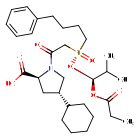
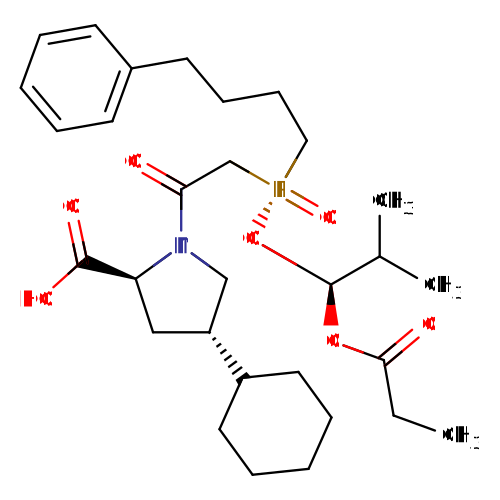
Structure for Fosinopril (DB00492)
- Weight
- Average: 563.672
Monoisotopic: 563.301189823 - Chemical Formula
- C30H46NO7P
- Synonyms
- Fosenopril
- Fosinopril

Pharmacology
- Indication
For treating mild to moderate hypertension, use as an adjunct in treating congestive heart failure, and may be used to slow the rate of progression of renal disease in hypertensive individuals with diabetes mellitus and microalbuminuria or overt nephropathy.
 Reduce drug development failure ratesBuild, train, & validate machine-learning modelswith evidence-based and structured datasets.Build, train, & validate predictive machine-learning models with structured datasets.
- Associated Conditions
Indication Type Indication Combined Product Details Approval Level Age Group Patient Characteristics Dose Form Adjunct therapy in management of Heart failure •••••••••••• •••••• Used in combination to manage Hypertension Combination Product in combination with: Hydrochlorothiazide (DB00999) •••••••••••• •••••• Management of Hypertension •••••••••••• •••••• - Contraindications & Blackbox Warnings
 Prevent Adverse Drug Events TodayTap into our Clinical API for life-saving information on contraindications & blackbox warnings, population restrictions, harmful risks, & more.Avoid life-threatening adverse drug events with our Clinical API
- Pharmacodynamics
Following oral administration, fosinopril is rapidly and completely hydrolyzed to its principle active metabolite, fosinoprilat. Hydrolysis is thought to occur in the gastrointestinal mucosa and liver. Fosinoprilat is a competitive inhibitor of ACE, a peptidyl dipeptidase that is part of the RAAS. The RAAS is a homeostatic mechanism for regulating hemodynamics, water and electrolyte balance. During sympathetic stimulation or when renal blood pressure or blood flow is reduced, renin is released from the granular cells of the juxtaglomerular apparatus in the kidneys. In the blood stream, renin cleaves circulating angiotensinogen to ATI, which is subsequently cleaved to ATII by ACE. ATII increases blood pressure using a number of mechanisms. First, it stimulates the secretion of aldosterone from the adrenal cortex. Aldosterone travels to the distal convoluted tubule (DCT) and collecting tubule of nephrons where it increases sodium and water reabsorption by increasing the number of sodium channels and sodium-potassium ATPases on cell membranes. Second, ATII stimulates the secretion of vasopressin (also known as antidiuretic hormone or ADH) from the posterior pituitary gland. ADH stimulates further water reabsorption from the kidneys via insertion of aquaporin-2 channels on the apical surface of cells of the DCT and collecting tubules. Third, ATII increases blood pressure through direct arterial vasoconstriction. Stimulation of the Type 1 ATII receptor on vascular smooth muscle cells leads to a cascade of events resulting in myocyte contraction and vasoconstriction. In addition to these major effects, ATII induces the thirst response via stimulation of hypothalamic neurons. ACE inhibitors inhibit the rapid conversion of ATI to ATII and antagonize RAAS-induced increases in blood pressure. ACE (also known as kininase II) is also involved in the enzymatic deactivation of bradykinin, a vasodilator. Inhibiting the deactivation of bradykinin increases bradykinin levels and may further sustain the effects of fosinoprilat by causing increased vasodilation and decreased blood pressure.
- Mechanism of action
There are two isoforms of ACE: the somatic isoform, which exists as a glycoprotein comprised of a single polypeptide chain of 1277; and the testicular isoform, which has a lower molecular mass and is thought to play a role in sperm maturation and binding of sperm to the oviduct epithelium. Somatic ACE has two functionally active domains, N and C, which arise from tandem gene duplication. Although the two domains have high sequence similarity, they play distinct physiological roles. The C-domain is predominantly involved in blood pressure regulation while the N-domain plays a role in hematopoietic stem cell differentiation and proliferation. ACE inhibitors bind to and inhibit the activity of both domains, but have much greater affinity for and inhibitory activity against the C-domain. Fosinoprilat, the active metabolite of fosinopril, competes with ATI for binding to ACE and inhibits and enzymatic proteolysis of ATI to ATII. Decreasing ATII levels in the body decreases blood pressure by inhibiting the pressor effects of ATII as described in the Pharmacology section above. Fosinoprilat also causes an increase in plasma renin activity likely due to a loss of feedback inhibition mediated by ATII on the release of renin and/or stimulation of reflex mechanisms via baroreceptors.
Target Actions Organism AAngiotensin-converting enzyme inhibitorHumans - Absorption
Average absolute absorption is 36%. The primary site of absorption is the proximal small intestine (duodenum/jejunum). Food slows the rate of absorption with no effect on the extent of absorption.
- Volume of distribution
Not Available
- Protein binding
Fosinoprilat is ≥95% protein bound
- Metabolism
Since fosinoprilat is not biotransformed after intravenous administration, fosinopril, not fosinoprilat, appears to be the precursor for the glucuronide and p-hydroxy metabolites.
Hover over products below to view reaction partners
- Route of elimination
After oral administration of radiolabeled fosinopril, approximately half of the absorbed dose is excreted in the urine and the remainder is excreted in the feces.
- Half-life
12 hours
- Clearance
- 26 - 39 mL/min [healthy]
- Adverse Effects
 Improve decision support & research outcomesWith structured adverse effects data, including: blackbox warnings, adverse reactions, warning & precautions, & incidence rates. View sample adverse effects data in our new Data Library!Improve decision support & research outcomes with our structured adverse effects data.
- Toxicity
Human overdoses of fosinopril have not been reported, but the most common manifestation of human fosinopril overdosage is likely to be hypotension. Oral doses of fosinopril at 2600 mg/kg in rats were associated with significant lethality. The most common adverse effects include dizzines, cough, fatigue, and headache.
- Pathways
Pathway Category Fosinopril Action Pathway Drug action Fosinopril Metabolism Pathway Drug metabolism - Pharmacogenomic Effects/ADRs
- Not Available
Interactions
- Drug Interactions
- This information should not be interpreted without the help of a healthcare provider. If you believe you are experiencing an interaction, contact a healthcare provider immediately. The absence of an interaction does not necessarily mean no interactions exist.
Drug Interaction Integrate drug-drug
interactions in your softwareAbacavir Fosinopril may decrease the excretion rate of Abacavir which could result in a higher serum level. Abaloparatide The risk or severity of adverse effects can be increased when Fosinopril is combined with Abaloparatide. Acebutolol Fosinopril may increase the hypotensive activities of Acebutolol. Aceclofenac The risk or severity of renal failure, hyperkalemia, and hypertension can be increased when Aceclofenac is combined with Fosinopril. Acemetacin The risk or severity of renal failure, hyperkalemia, and hypertension can be increased when Acemetacin is combined with Fosinopril. - Food Interactions
- Avoid hypertensive herbs (e.g. bayberry, blue cohosh, cayenne, ephedra, and licorice).
- Avoid potassium-containing products. Potassium products increase the risk of hyperkalemia.
- Limit salt intake. Salt may attenuate the antihypertensive effect.
- Take separate from antacids. Take at least 2 hours before or after antacids. Taking this medication with antacids can reduce absorption.Taking this medication with antacids can reduce absorption.
- Take with or without food. The absorption is unaffected by food.
Products
 Drug product information from 10+ global regionsOur datasets provide approved product information including:dosage, form, labeller, route of administration, and marketing period.Access drug product information from over 10 global regions.
- Product Ingredients
Ingredient UNII CAS InChI Key Fosinopril sodium NW2RTH6T2N 88889-14-9 TVTJZMHAIQQZTL-LVCDZQEYSA-M - Active Moieties
Name Kind UNII CAS InChI Key Fosinoprilat prodrug S312EY6ZT8 95399-71-6 WOIWWYDXDVSWAZ-RTWAWAEBSA-N - Product Images
- International/Other Brands
- Acecor (SPA (Czech Republic)) / Monopril / Staril (BMS (United Kingdom))
- Brand Name Prescription Products
Name Dosage Strength Route Labeller Marketing Start Marketing End Region Image Fosinopril Tablet 20 mg Oral Sanis Health Inc 2017-04-11 Not applicable Canada 
Fosinopril Tablet 10 mg Oral Sanis Health Inc 2017-04-11 Not applicable Canada Fosinopril Tablets Tablet 20 mg Oral Ranbaxy Inc. Not applicable Not applicable Canada Fosinopril Tablets Tablet 10 mg Oral Ranbaxy Inc. Not applicable Not applicable Canada Fosinopril-10 Tablet 10 mg Oral Pro Doc Limitee 2008-10-23 2021-07-27 Canada - Generic Prescription Products
Name Dosage Strength Route Labeller Marketing Start Marketing End Region Image Apo-fosinopril Tablet 20 mg Oral Apotex Corporation 2005-04-27 Not applicable Canada Apo-fosinopril Tablet 10 mg Oral Apotex Corporation 2005-04-27 Not applicable Canada Ava-fosinopril Tablet 10 mg Oral Avanstra Inc 2011-11-28 2014-08-21 Canada Ava-fosinopril Tablet 20 mg Oral Avanstra Inc 2011-11-28 2014-08-21 Canada FOSINOPRIL Na Tablet 20 mg/1 Oral Apotex Corporation 2005-05-18 2016-05-31 US 
- Mixture Products
Name Ingredients Dosage Route Labeller Marketing Start Marketing End Region Image Fosicomb - Tabletten Fosinopril sodium (20 mg) + Hydrochlorothiazide (12.5 mg) Tablet Oral Bausch Health Ireland Limited 1997-05-03 Not applicable Austria 
FOSICOMBI Fosinopril (20 MG) + Hydrochlorothiazide (12.5 MG) Tablet Oral A. Menarini Industrie Farmaceutiche Riunite s.r.l. 2014-07-08 Not applicable Italy 
FOSINOPRIL E IDROCLOROTIAZIDE DOC GENERICI Fosinopril (20 MG) + Hydrochlorothiazide (12.5 MG) Tablet Oral Doc Generici Srl 2014-07-08 Not applicable Italy FOSINOPRIL E IDROCLOROTIAZIDE DOC GENERICI Fosinopril (20 MG) + Hydrochlorothiazide (12.5 MG) Tablet Oral Doc Generici Srl 2014-07-08 Not applicable Italy FOSINOPRIL E IDROCLOROTIAZIDE DOC GENERICI Fosinopril (20 MG) + Hydrochlorothiazide (12.5 MG) Tablet Oral Doc Generici Srl 2014-07-08 Not applicable Italy


Categories
- ATC Codes
- C09BA09 — Fosinopril and diuretics
- C09BA — ACE inhibitors and diuretics
- C09B — ACE INHIBITORS, COMBINATIONS
- C09 — AGENTS ACTING ON THE RENIN-ANGIOTENSIN SYSTEM
- C — CARDIOVASCULAR SYSTEM
- Drug Categories
- ACE Inhibitors and Diuretics
- Agents Acting on the Renin-Angiotensin System
- Agents causing angioedema
- Agents causing hyperkalemia
- Amino Acids
- Amino Acids, Cyclic
- Amino Acids, Peptides, and Proteins
- Angiotensin-Converting Enzyme Inhibitors
- Antihypertensive Agents
- Antihypertensive Agents Indicated for Hypertension
- Cardiovascular Agents
- Drugs causing inadvertant photosensitivity
- Drugs that are Mainly Renally Excreted
- Enzyme Inhibitors
- Hypotensive Agents
- Imino Acids
- Organophosphorus Compounds
- Phosphinic Acids
- Photosensitizing Agents
- Protease Inhibitors
- Classification
- Not classified
- Affected organisms
- Humans and other mammals
Chemical Identifiers
- UNII
- R43D2573WO
- CAS number
- 98048-97-6
- InChI Key
- BIDNLKIUORFRQP-FLODCBCLSA-N
- InChI
- InChI=1S/C30H46NO7P/c1-4-28(33)37-30(22(2)3)38-39(36,18-12-11-15-23-13-7-5-8-14-23)21-27(32)31-20-25(19-26(31)29(34)35)24-16-9-6-10-17-24/h5,7-8,13-14,22,24-26,30H,4,6,9-12,15-21H2,1-3H3,(H,34,35)/t25-,26+,30+,39+/m1/s1
- IUPAC Name
- (2S,4S)-4-cyclohexyl-1-(2-{[(1S)-2-methyl-1-(propanoyloxy)propoxy](4-phenylbutyl)phosphoryl}acetyl)pyrrolidine-2-carboxylic acid
- SMILES
- CCC(=O)O[C@@H](OP(=O)(CCCCC1=CC=CC=C1)CC(=O)N1C[C@@H](C[C@H]1C(O)=O)C1CCCCC1)C(C)C
References
- Synthesis Reference
Sandra Gallego Pato, Antonio Palomo Coll, Francisco Palomo Nicolau, "Preparation of crystalline polymorphs of fosinopril sodium." U.S. Patent US20050010054, issued January 13, 2005.
US20050010054- General References
- David D, Jallad N, Germino FW, Willett MS, de Silva J, Weidner SM, Mills DJ: A Comparison of the Cough Profile of Fosinopril and Enalapril in Hypertensive Patients with a History of ACE Inhibitor-Associated Cough. Am J Ther. 1995 Oct;2(10):806-813. [Article]
- Sharma S, Deitchman D, Eni JS, Gelperin K, Ilgenfritz JP, Blumenthal M: The hemodynamic effects of long-term ACE inhibition with fosinopril in patients with heart failure. Fosinopril Hemodynamics Study Group. Am J Ther. 1999 Jul;6(4):181-9. [Article]
- DailyMed: Aurobindo Fosinopril sodium and Hydrochlorothiazide oral tablets [Link]
- DailyMEd: Aurobindo Fosinopril sodium oral tablets [Link]
- External Links
- Human Metabolome Database
- HMDB0014635
- KEGG Drug
- D07992
- KEGG Compound
- C07016
- PubChem Compound
- 55891
- PubChem Substance
- 46506495
- ChemSpider
- 23089342
- 50166
- ChEBI
- 5163
- ChEMBL
- CHEMBL3039598
- ZINC
- ZINC000003920355
- Therapeutic Targets Database
- DAP000582
- PharmGKB
- PA449710
- RxList
- RxList Drug Page
- Drugs.com
- Drugs.com Drug Page
- PDRhealth
- PDRhealth Drug Page
- Wikipedia
- Fosinopril
- FDA label
- Download (206 KB)
Clinical Trials
- Clinical Trials
Phase Status Purpose Conditions Count 4 Completed Treatment Chronic Obstructive Pulmonary Disease (COPD) 1 4 Completed Treatment Induction of Intraoperative Hypotension 1 4 Recruiting Treatment Cardiovascular Disease (CVD) / Type 2 Diabetes Mellitus 1 4 Suspended Prevention Coronavirus Disease 2019 (COVID‑19) / Hypertension 1 4 Unknown Status Treatment Chronic Kidney Disease (CKD) 1
Pharmacoeconomics
- Manufacturers
- Apotex inc etobicoke site
- Invagen pharmaceuticals inc
- Ranbaxy laboratories ltd
- Sandoz inc
- Teva pharmaceuticals usa inc
- Watson laboratories inc
- Watson laboratories inc florida
- Bristol myers squibb co pharmaceutical research institute
- Packagers
- Apotex Inc.
- A-S Medication Solutions LLC
- Atlantic Biologicals Corporation
- Blu Pharmaceuticals LLC
- Bristol-Myers Squibb Co.
- Cobalt Pharmaceuticals Inc.
- Deca Pharmaceuticals LLC
- Direct Dispensing Inc.
- Dispensing Solutions
- Diversified Healthcare Services Inc.
- Eon Labs
- Glenmark Generics Ltd.
- InvaGen Pharmaceuticals Inc.
- Ivax Pharmaceuticals
- Kaiser Foundation Hospital
- Murfreesboro Pharmaceutical Nursing Supply
- Neuman Distributors Inc.
- Nucare Pharmaceuticals Inc.
- Physicians Total Care Inc.
- Prepackage Specialists
- Prepak Systems Inc.
- Princeton Pharmaceutical Products Inc.
- Ranbaxy Laboratories
- Resource Optimization and Innovation LLC
- Teva Pharmaceutical Industries Ltd.
- Va Cmop Dallas
- Watson Pharmaceuticals
- Dosage Forms
Form Route Strength Tablet Oral Tablet Oral Tablet Oral 5 MG Tablet, film coated Tablet Oral 10 mg/1 Tablet Oral 20 mg/1 Tablet Oral 40 mg/1 Tablet Oral 10 mg Tablet Oral 20 mg - Prices
Unit description Cost Unit Monopril HCT 10-12.5 mg tablet 1.71USD tablet Monopril 10 mg tablet 1.68USD tablet Monopril 40 mg tablet 1.67USD tablet Monopril 20 mg tablet 1.62USD tablet Fosinopril Sodium-HCTZ 10-12.5 mg tablet 1.61USD tablet Fosinopril Sodium-HCTZ 20-12.5 mg tablet 1.61USD tablet Fosinopril sodium 20 mg tablet 1.25USD tablet Fosinopril sodium 40 mg tablet 1.25USD tablet Fosinopril sodium 10 mg tablet 1.21USD tablet Monopril 20 mg Tablet 1.1USD tablet Monopril 10 mg Tablet 0.91USD tablet Apo-Fosinopril 20 mg Tablet 0.61USD tablet Fosinopril 20 mg Tablet 0.61USD tablet Jamp-Fosinopril 20 mg Tablet 0.61USD tablet Mylan-Fosinopril 20 mg Tablet 0.61USD tablet Novo-Fosinopril 20 mg Tablet 0.61USD tablet Ran-Fosinopril 20 mg Tablet 0.61USD tablet Apo-Fosinopril 10 mg Tablet 0.51USD tablet Fosinopril 10 mg Tablet 0.51USD tablet Jamp-Fosinopril 10 mg Tablet 0.51USD tablet Mylan-Fosinopril 10 mg Tablet 0.51USD tablet Novo-Fosinopril 10 mg Tablet 0.51USD tablet Ran-Fosinopril 10 mg Tablet 0.51USD tablet DrugBank does not sell nor buy drugs. Pricing information is supplied for informational purposes only.- Patents
Patent Number Pediatric Extension Approved Expires (estimated) Region US5006344 No 1991-04-09 2010-01-10 US
Properties
- State
- Solid
- Experimental Properties
Property Value Source melting point (°C) 149-153 °C Not Available water solubility Insoluble Not Available logP 6.3 Not Available - Predicted Properties
Property Value Source Water Solubility 0.00101 mg/mL ALOGPS logP 4.71 ALOGPS logP 5.62 Chemaxon logS -5.8 ALOGPS pKa (Strongest Acidic) 3.87 Chemaxon pKa (Strongest Basic) -4.4 Chemaxon Physiological Charge -1 Chemaxon Hydrogen Acceptor Count 5 Chemaxon Hydrogen Donor Count 1 Chemaxon Polar Surface Area 110.21 Å2 Chemaxon Rotatable Bond Count 15 Chemaxon Refractivity 149.12 m3·mol-1 Chemaxon Polarizability 62.27 Å3 Chemaxon Number of Rings 3 Chemaxon Bioavailability 0 Chemaxon Rule of Five No Chemaxon Ghose Filter No Chemaxon Veber's Rule No Chemaxon MDDR-like Rule Yes Chemaxon - Predicted ADMET Features
Property Value Probability Human Intestinal Absorption + 0.9532 Blood Brain Barrier - 0.667 Caco-2 permeable - 0.6561 P-glycoprotein substrate Substrate 0.6165 P-glycoprotein inhibitor I Inhibitor 0.7161 P-glycoprotein inhibitor II Non-inhibitor 0.6774 Renal organic cation transporter Non-inhibitor 0.812 CYP450 2C9 substrate Non-substrate 0.7028 CYP450 2D6 substrate Non-substrate 0.8128 CYP450 3A4 substrate Substrate 0.6729 CYP450 1A2 substrate Non-inhibitor 0.8913 CYP450 2C9 inhibitor Non-inhibitor 0.7438 CYP450 2D6 inhibitor Non-inhibitor 0.9004 CYP450 2C19 inhibitor Non-inhibitor 0.5725 CYP450 3A4 inhibitor Non-inhibitor 0.7303 CYP450 inhibitory promiscuity Low CYP Inhibitory Promiscuity 0.6376 Ames test Non AMES toxic 0.7141 Carcinogenicity Non-carcinogens 0.8025 Biodegradation Not ready biodegradable 0.8102 Rat acute toxicity 2.8211 LD50, mol/kg Not applicable hERG inhibition (predictor I) Weak inhibitor 0.9534 hERG inhibition (predictor II) Non-inhibitor 0.5918
Spectra
- Mass Spec (NIST)
- Not Available
- Spectra
- Chromatographic Properties
Collision Cross Sections (CCS)
Not Available
Targets

- Kind
- Protein
- Organism
- Humans
- Pharmacological action
- Yes
- Actions
- Inhibitor
- General Function
- Zinc ion binding
- Specific Function
- Converts angiotensin I to angiotensin II by release of the terminal His-Leu, this results in an increase of the vasoconstrictor activity of angiotensin. Also able to inactivate bradykinin, a potent...
- Gene Name
- ACE
- Uniprot ID
- P12821
- Uniprot Name
- Angiotensin-converting enzyme
- Molecular Weight
- 149713.675 Da
References
- Chen X, Ji ZL, Chen YZ: TTD: Therapeutic Target Database. Nucleic Acids Res. 2002 Jan 1;30(1):412-5. [Article]
- Ondetti MA: Structural relationships of angiotensin converting-enzyme inhibitors to pharmacologic activity. Circulation. 1988 Jun;77(6 Pt 2):I74-8. [Article]
- Piepho RW: Overview of the angiotensin-converting-enzyme inhibitors. Am J Health Syst Pharm. 2000 Oct 1;57 Suppl 1:S3-7. [Article]
- Sharma S, Deitchman D, Eni JS, Gelperin K, Ilgenfritz JP, Blumenthal M: The hemodynamic effects of long-term ACE inhibition with fosinopril in patients with heart failure. Fosinopril Hemodynamics Study Group. Am J Ther. 1999 Jul;6(4):181-9. [Article]
Transporters
- Kind
- Protein
- Organism
- Humans
- Pharmacological action
- Unknown
- Actions
- Substrate
- General Function
- Proton-dependent oligopeptide secondary active transmembrane transporter activity
- Specific Function
- Proton-coupled intake of oligopeptides of 2 to 4 amino acids with a preference for dipeptides. May constitute a major route for the absorption of protein digestion end-products.
- Gene Name
- SLC15A1
- Uniprot ID
- P46059
- Uniprot Name
- Solute carrier family 15 member 1
- Molecular Weight
- 78805.265 Da
References
- Knutter I, Wollesky C, Kottra G, Hahn MG, Fischer W, Zebisch K, Neubert RH, Daniel H, Brandsch M: Transport of angiotensin-converting enzyme inhibitors by H+/peptide transporters revisited. J Pharmacol Exp Ther. 2008 Nov;327(2):432-41. doi: 10.1124/jpet.108.143339. Epub 2008 Aug 19. [Article]
- Kind
- Protein
- Organism
- Humans
- Pharmacological action
- Unknown
- Actions
- Substrate
- General Function
- Peptide:proton symporter activity
- Specific Function
- Proton-coupled intake of oligopeptides of 2 to 4 amino acids with a preference for dipeptides.
- Gene Name
- SLC15A2
- Uniprot ID
- Q16348
- Uniprot Name
- Solute carrier family 15 member 2
- Molecular Weight
- 81782.77 Da
References
- Knutter I, Wollesky C, Kottra G, Hahn MG, Fischer W, Zebisch K, Neubert RH, Daniel H, Brandsch M: Transport of angiotensin-converting enzyme inhibitors by H+/peptide transporters revisited. J Pharmacol Exp Ther. 2008 Nov;327(2):432-41. doi: 10.1124/jpet.108.143339. Epub 2008 Aug 19. [Article]

Drug created at June 13, 2005 13:24 / Updated at April 27, 2024 09:44