Identification
- Summary
Entacapone is a selective reversible catechol-O-methyltransferase inhibitor for the treatment of Parkinson's disease.
- Brand Names
- Comtan, Comtess, Stalevo
- Generic Name
- Entacapone
- DrugBank Accession Number
- DB00494
- Background
Entacapone is a selective, reversible catechol-O-methyl transferase (COMT) inhibitor for the treatment of Parkinson's disease. It is a member of the class of nitrocatechols. When administered concomittantly with levodopa and a decarboxylase inhibitor (e.g., carbidopa), increased and more sustained plasma levodopa concentrations are reached as compared to the administration of levodopa and a decarboxylase inhibitor.
- Type
- Small Molecule
- Groups
- Approved, Investigational
- Structure
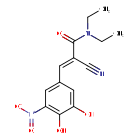
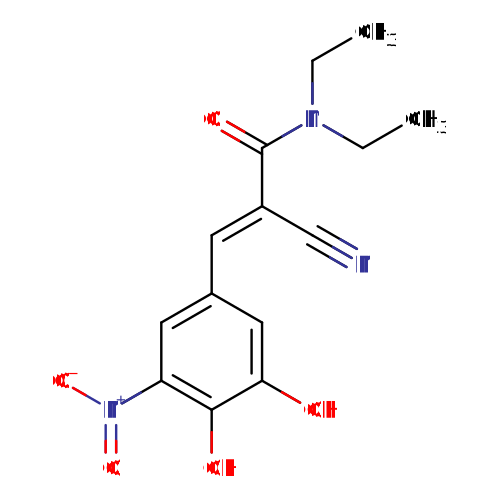
Structure for Entacapone (DB00494)
- Weight
- Average: 305.286
Monoisotopic: 305.101170605 - Chemical Formula
- C14H15N3O5
- Synonyms
- (E)-alpha-Cyano-N,N-diethyl-3,4-dihydroxy-5-nitrocinnamamide
- Entacapona
- Entacapone
- Entacaponum
- N,N-diethyl-2-cyano-3-(3,4-dihydroxy-5-nitrophenyl) acrylamide
- External IDs
- OR 611
- OR-611

Pharmacology
- Indication
Used as an adjunct to levodopa / carbidopa in the symptomatic treatment of patients with idiopathic Parkinson's Disease who experience the signs and symptoms of end-of-dose "wearing-off".
 Reduce drug development failure ratesBuild, train, & validate machine-learning modelswith evidence-based and structured datasets.Build, train, & validate predictive machine-learning models with structured datasets.
- Associated Conditions
Indication Type Indication Combined Product Details Approval Level Age Group Patient Characteristics Dose Form Used in combination to manage Parkinson's disease (pd) Combination Product in combination with: Levodopa (DB01235), Carbidopa (DB00190) •••••••••••• •••••• Used as adjunct in combination to treat Wearing off effect Regimen in combination with: Carbidopa (DB00190), Levodopa (DB01235) •••••••••••• •••••• - Contraindications & Blackbox Warnings
 Prevent Adverse Drug Events TodayTap into our Clinical API for life-saving information on contraindications & blackbox warnings, population restrictions, harmful risks, & more.Avoid life-threatening adverse drug events with our Clinical API
- Pharmacodynamics
Entacapone is structurally and pharmacologically related to tolcapone, but unlike tolcapone, is not associated with hepatotoxicity. Entacapone is used in the treatment of Parkinson’s disease as an adjunct to levodopa/carbidopa therapy. Entacapone selectively and reversiblly inhibits catechol-O-methyltransferase (COMT). In mammals, COMT is distributed throughout various organs with the highest activities in the liver and kidney. COMT also occurs in the heart, lung, smooth and skeletal muscles, intestinal tract, reproductive organs, various glands, adipose tissue, skin, blood cells and neuronal tissues, especially in glial cells. COMT catalyzes the transfer of the methyl group of S-adenosyl-L-methionine to the phenolic group of substrates that contain a catechol structure. Physiological substrates of COMT include dopa, catecholamines (dopamine, norepinephrine, and epinephrine) and their hydroxylated metabolites. The function of COMT is the elimination of biologically active catechols and some other hydroxylated metabolites. COMT is responsible for the elimination of biologically active catechols and some other hydroxylated metabolites. In the presence of a decarboxylase inhibitor, COMT becomes the major metabolizing enzyme for levodopa, catalyzing the it to 3-methoxy-4-hydroxy-L-phenylalanine (3-OMD) in the brain and periphery.
- Mechanism of action
The mechanism of action of entacapone is believed to be through its ability to inhibit COMT in peripheral tissues, altering the plasma pharmacokinetics of levodopa. When entacapone is given in conjunction with levodopa and an aromatic amino acid decarboxylase inhibitor, such as carbidopa, plasma levels of levodopa are greater and more sustained than after administration of levodopa and an aromatic amino acid decarboxylase inhibitor alone. It is believed that at a given frequency of levodopa administration, these more sustained plasma levels of levodopa result in more constant dopaminergic stimulation in the brain, leading to a greater reduction in the manifestations of parkinsonian syndrome.
Target Actions Organism ACatechol O-methyltransferase inhibitorHumans - Absorption
Entacapone is rapidly absorbed (approximately 1 hour). The absolute bioavailability following oral administration is 35%.
- Volume of distribution
- 20 L
- Protein binding
98% (bind to serum albumin)
- Metabolism
Metabolized via isomerization to the cis-isomer, followed by direct glucuronidation of the parent and cis-isomer.
- Route of elimination
Entacapone is almost completely metabolized prior to excretion, with only a very small amount (0.2% of dose) found unchanged in urine. As only about 10% of the entacapone dose is excreted in urine as parent compound and conjugated glucuronide, biliary excretion appears to be the major route of excretion of this drug.
- Half-life
0.4-0.7 hour
- Clearance
- 850 mL/min
- Adverse Effects
 Improve decision support & research outcomesWith structured adverse effects data, including: blackbox warnings, adverse reactions, warning & precautions, & incidence rates. View sample adverse effects data in our new Data Library!Improve decision support & research outcomes with our structured adverse effects data.
- Toxicity
Side effect include increase the occurrence of orthostatic hypotension, severe rhabdomyolysis, dyskinesia, hallucinations, hyperkinesia, hypokinesia, dizziness, fatigu,e gastrointestinal effects including abdominal pain constipation diarrhea nausea
- Pathways
- Not Available
- Pharmacogenomic Effects/ADRs
- Not Available
Interactions
- Drug Interactions
- This information should not be interpreted without the help of a healthcare provider. If you believe you are experiencing an interaction, contact a healthcare provider immediately. The absence of an interaction does not necessarily mean no interactions exist.
Drug Interaction Integrate drug-drug
interactions in your software1,2-Benzodiazepine The risk or severity of CNS depression can be increased when Entacapone is combined with 1,2-Benzodiazepine. Acebutolol The metabolism of Acebutolol can be decreased when combined with Entacapone. Acetaminophen The metabolism of Acetaminophen can be decreased when combined with Entacapone. Acetazolamide The risk or severity of CNS depression can be increased when Entacapone is combined with Acetazolamide. Acetophenazine The risk or severity of CNS depression can be increased when Entacapone is combined with Acetophenazine. - Food Interactions
- Take with or without food. The absorption is unaffected by food.
Products
 Drug product information from 10+ global regionsOur datasets provide approved product information including:dosage, form, labeller, route of administration, and marketing period.Access drug product information from over 10 global regions.
- Product Images


- International/Other Brands
- Anxopone (Root) / Comtade (Novartis)
- Brand Name Prescription Products
Name Dosage Strength Route Labeller Marketing Start Marketing End Region Image Comtan Tablet, film coated 200 mg Oral Orion Corporation 2020-12-16 Not applicable EU 
Comtan Tablet, film coated 200 mg Oral Orion Corporation 2016-09-08 2021-04-28 EU Comtan Tablet, film coated 200 mg/1 Oral Almatica Pharma LLC 2020-10-05 Not applicable US 
Comtan Tablet, film coated 200 mg Oral Orion Corporation 2020-12-16 Not applicable EU Comtan Tablet, film coated 200 mg/1 Oral Novartis Pharmaceuticals Corporation 1999-10-19 2022-04-30 US - Generic Prescription Products
Name Dosage Strength Route Labeller Marketing Start Marketing End Region Image Apo-entacapone Tablet 200 mg Oral Apotex Corporation Not applicable Not applicable Canada 
Auro-entacapone Tablet 200 mg Oral Auro Pharma Inc Not applicable Not applicable Canada Entacapone Tablet, film coated 200 mg/1 Oral Aurobindo Pharma Limited 2015-06-19 Not applicable US Entacapone Tablet, film coated 200 mg/1 Oral Sun Pharmaceutical Industries, Inc. 2013-04-01 Not applicable US Entacapone Tablet, film coated 200 mg/1 Oral Sandoz Inc 2014-06-04 Not applicable US - Mixture Products
Name Ingredients Dosage Route Labeller Marketing Start Marketing End Region Image ANTIPAR 100 MG/ 25 MG/ 200 MG FİLM TABLET, 100 ADET Entacapone (200 mg) + Carbidopa hydrate (25 mg) + Levodopa (100 mg) Tablet, film coated Oral İLKO İLAÇ SAN.VE TİC. A.Ş. 2017-08-11 Not applicable Turkey 
ANTIPAR 125 MG/ 31.25 MG/ 200 MG FİLM TABLET, 100 ADET Entacapone (200 mg) + Carbidopa hydrate (31.25 mg) + Levodopa (125 mg) Tablet, film coated Oral İLKO İLAÇ SAN.VE TİC. A.Ş. 2017-08-11 Not applicable Turkey ANTİPAR 150 MG/37.5 MG/200 MG FİLM TABLET, 100 ADET Entacapone (200 mg) + Carbidopa hydrate (37.5 mg) + Levodopa (150 mg) Tablet, film coated Oral İLKO İLAÇ SAN.VE TİC. A.Ş. 2017-07-26 Not applicable Turkey ANTIPAR 200 MG/50 MG/200 MG FILM TABLET, 100 ADET Entacapone (200 mg) + Carbidopa hydrate (50 mg) + Levodopa (200 mg) Tablet, film coated Oral İLKO İLAÇ SAN.VE TİC. A.Ş. 2017-04-07 Not applicable Turkey ANTIPAR 50 MG/ 12.5 MG/ 200 MG FİLM TABLET, 100 ADET Entacapone (200 mg) + Carbidopa hydrate (12.5 mg) + Levodopa (50 mg) Tablet, film coated Oral İLKO İLAÇ SAN.VE TİC. A.Ş. 2017-08-11 Not applicable Turkey


Categories
- ATC Codes
- N04BX02 — Entacapone
- Drug Categories
- Anti-Dyskinesia Agents
- Anti-Parkinson Drugs
- Benzene Derivatives
- Central Nervous System Agents
- Central Nervous System Depressants
- COMT Inhibitors
- Cytochrome P-450 CYP2D6 Inhibitors
- Cytochrome P-450 CYP2D6 Inhibitors (weak)
- Cytochrome P-450 Enzyme Inhibitors
- Dopamine Agents
- Enzyme Inhibitors
- Nervous System
- Phenols
- UGT1A9 Substrates
- Chemical TaxonomyProvided by Classyfire
- Description
- This compound belongs to the class of organic compounds known as hydroxycinnamic acids and derivatives. These are compounds containing an cinnamic acid (or a derivative thereof) where the benzene ring is hydroxylated.
- Kingdom
- Organic compounds
- Super Class
- Phenylpropanoids and polyketides
- Class
- Cinnamic acids and derivatives
- Sub Class
- Hydroxycinnamic acids and derivatives
- Direct Parent
- Hydroxycinnamic acids and derivatives
- Alternative Parents
- Nitrophenols / Nitrobenzenes / Nitroaromatic compounds / Catechols / 1-hydroxy-4-unsubstituted benzenoids / 1-hydroxy-2-unsubstituted benzenoids / Tertiary carboxylic acid amides / Propargyl-type 1,3-dipolar organic compounds / Organic oxoazanium compounds / Nitriles show 5 more
- Substituents
- 1-hydroxy-2-unsubstituted benzenoid / 1-hydroxy-4-unsubstituted benzenoid / Allyl-type 1,3-dipolar organic compound / Aromatic homomonocyclic compound / Benzenoid / C-nitro compound / Carbonitrile / Carbonyl group / Carboxamide group / Carboxylic acid derivative show 21 more
- Molecular Framework
- Aromatic homomonocyclic compounds
- External Descriptors
- monocarboxylic acid amide, catechols, nitrile (CHEBI:4798)
- Affected organisms
- Humans and other mammals
Chemical Identifiers
- UNII
- 4975G9NM6T
- CAS number
- 130929-57-6
- InChI Key
- JRURYQJSLYLRLN-BJMVGYQFSA-N
- InChI
- InChI=1S/C14H15N3O5/c1-3-16(4-2)14(20)10(8-15)5-9-6-11(17(21)22)13(19)12(18)7-9/h5-7,18-19H,3-4H2,1-2H3/b10-5+
- IUPAC Name
- (2E)-2-cyano-3-(3,4-dihydroxy-5-nitrophenyl)-N,N-diethylprop-2-enamide
- SMILES
- CCN(CC)C(=O)C(=C\C1=CC(=C(O)C(O)=C1)[N+]([O-])=O)\C#N
References
- Synthesis Reference
Pandurang Deshpande, Parven Luthra, Anand Pandey, Dharmesh Dhameliya, "Process for the preparation of (E)-2-cyano-3-(3, 4-dihydroxy-5-nitrophenyl)-N, N-diethyl-2-propenamide (entacapone)." U.S. Patent US20060258877, issued November 16, 2006.
US20060258877- General References
- Najib J: Entacapone: a catechol-O-methyltransferase inhibitor for the adjunctive treatment of Parkinson's disease. Clin Ther. 2001 Jun;23(6):802-32; discussion 771. [Article]
- Chong BS, Mersfelder TL: Entacapone. Ann Pharmacother. 2000 Sep;34(9):1056-65. [Article]
- Poewe WH, Deuschl G, Gordin A, Kultalahti ER, Leinonen M: Efficacy and safety of entacapone in Parkinson's disease patients with suboptimal levodopa response: a 6-month randomized placebo-controlled double-blind study in Germany and Austria (Celomen study). Acta Neurol Scand. 2002 Apr;105(4):245-55. [Article]
- Brooks DJ, Sagar H: Entacapone is beneficial in both fluctuating and non-fluctuating patients with Parkinson's disease: a randomised, placebo controlled, double blind, six month study. J Neurol Neurosurg Psychiatry. 2003 Aug;74(8):1071-9. [Article]
- Forsberg M, Lehtonen M, Heikkinen M, Savolainen J, Jarvinen T, Mannisto PT: Pharmacokinetics and pharmacodynamics of entacapone and tolcapone after acute and repeated administration: a comparative study in the rat. J Pharmacol Exp Ther. 2003 Feb;304(2):498-506. [Article]
- Kaakkola S: Clinical pharmacology, therapeutic use and potential of COMT inhibitors in Parkinson's disease. Drugs. 2000 Jun;59(6):1233-50. [Article]
- FDA Approved Drug Products: Comtan (entacapone) tablets for oral use [Link]
- FDA Approved Drug Products: Stalevo (carbidopa/levodopa/entacapone) tablets for oral use [Link]
- External Links
- Human Metabolome Database
- HMDB0012226
- KEGG Drug
- D00781
- KEGG Compound
- C07943
- PubChem Compound
- 5281081
- PubChem Substance
- 46508734
- ChemSpider
- 4444537
- BindingDB
- 50108879
- 60307
- ChEBI
- 4798
- ChEMBL
- CHEMBL953
- ZINC
- ZINC000035342787
- Therapeutic Targets Database
- DAP000608
- PharmGKB
- PA164748726
- PDBe Ligand
- PD9
- RxList
- RxList Drug Page
- Drugs.com
- Drugs.com Drug Page
- Wikipedia
- Entacapone
- PDB Entries
- 6ak4
- FDA label
- Download (52.6 KB)
Clinical Trials
- Clinical Trials
Phase Status Purpose Conditions Count 4 Completed Treatment Idiopathic Parkinson's Disease 1 4 Completed Treatment Parkinson's Disease (PD) 6 4 Completed Treatment Parkinson's Disease With Wearing-off Motor Fluctuations 1 4 Recruiting Treatment Parkinson's Disease (PD) 2 4 Terminated Treatment Parkinson's Disease (PD) 1
Pharmacoeconomics
- Manufacturers
- Orion corp
- Packagers
- Cardinal Health
- Dipharma
- Kaiser Foundation Hospital
- Neuland Laboratories Ltd.
- Novartis AG
- Orion Corporation
- Resource Optimization and Innovation LLC
- Vangard Labs Inc.
- Dosage Forms
Form Route Strength Tablet, film coated Oral Tablet Oral 200 mg Tablet Oral 200.000 mg Tablet, coated Oral 200 mg Tablet, film coated Oral 200 MG Tablet Oral 200 mg/1 Tablet, film coated Oral 200 mg/1 Tablet, film coated Oral Tablet, coated Oral Tablet Oral - Prices
Unit description Cost Unit Comtan 200 mg tablet 2.96USD tablet DrugBank does not sell nor buy drugs. Pricing information is supplied for informational purposes only.- Patents
Patent Number Pediatric Extension Approved Expires (estimated) Region US5135950 No 1992-08-04 2010-10-31 US CA2342634 No 2008-01-29 2019-09-13 Canada CA1334967 No 1995-03-28 2012-03-28 Canada US6599530 No 2003-07-29 2018-09-14 US US6500867 No 2002-12-31 2020-06-29 US US6797732 No 2004-09-28 2020-06-29 US
Properties
- State
- Solid
- Experimental Properties
Property Value Source logP 2.8 Not Available - Predicted Properties
Property Value Source Water Solubility 0.0797 mg/mL ALOGPS logP 2.5 ALOGPS logP 1.63 Chemaxon logS -3.6 ALOGPS pKa (Strongest Acidic) 6.09 Chemaxon pKa (Strongest Basic) -1.1 Chemaxon Physiological Charge -1 Chemaxon Hydrogen Acceptor Count 6 Chemaxon Hydrogen Donor Count 2 Chemaxon Polar Surface Area 127.7 Å2 Chemaxon Rotatable Bond Count 5 Chemaxon Refractivity 79.51 m3·mol-1 Chemaxon Polarizability 29.55 Å3 Chemaxon Number of Rings 1 Chemaxon Bioavailability 1 Chemaxon Rule of Five Yes Chemaxon Ghose Filter Yes Chemaxon Veber's Rule No Chemaxon MDDR-like Rule No Chemaxon - Predicted ADMET Features
Property Value Probability Human Intestinal Absorption + 0.9185 Blood Brain Barrier - 0.9104 Caco-2 permeable - 0.5817 P-glycoprotein substrate Substrate 0.64 P-glycoprotein inhibitor I Non-inhibitor 0.7342 P-glycoprotein inhibitor II Non-inhibitor 0.8442 Renal organic cation transporter Non-inhibitor 0.9311 CYP450 2C9 substrate Non-substrate 0.8406 CYP450 2D6 substrate Non-substrate 0.8932 CYP450 3A4 substrate Non-substrate 0.5057 CYP450 1A2 substrate Non-inhibitor 0.7003 CYP450 2C9 inhibitor Non-inhibitor 0.581 CYP450 2D6 inhibitor Non-inhibitor 0.8548 CYP450 2C19 inhibitor Non-inhibitor 0.6098 CYP450 3A4 inhibitor Non-inhibitor 0.5133 CYP450 inhibitory promiscuity Low CYP Inhibitory Promiscuity 0.7901 Ames test AMES toxic 0.5803 Carcinogenicity Non-carcinogens 0.561 Biodegradation Not ready biodegradable 0.9457 Rat acute toxicity 2.6750 LD50, mol/kg Not applicable hERG inhibition (predictor I) Weak inhibitor 0.8608 hERG inhibition (predictor II) Non-inhibitor 0.8332
Spectra
- Mass Spec (NIST)
- Not Available
- Spectra
Spectrum Spectrum Type Splash Key Predicted GC-MS Spectrum - GC-MS Predicted GC-MS splash10-003r-4190000000-da6b28638ec4920bd58a LC-MS/MS Spectrum - LC-ESI-qTof , Positive LC-MS/MS splash10-0a4i-0329000000-8d20a5650e9c1b1c8275 MS/MS Spectrum - , positive LC-MS/MS splash10-0a4i-0329000000-8d20a5650e9c1b1c8275 Predicted 1H NMR Spectrum 1D NMR Not Applicable Predicted 13C NMR Spectrum 1D NMR Not Applicable - Chromatographic Properties
Collision Cross Sections (CCS)
Adduct CCS Value (Å2) Source type Source [M-H]- 190.9702839 predictedDarkChem Lite v0.1.0 [M-H]- 189.6311839 predictedDarkChem Lite v0.1.0 [M-H]- 163.07701 predictedDeepCCS 1.0 (2019) [M+H]+ 191.2344839 predictedDarkChem Lite v0.1.0 [M+H]+ 189.3954839 predictedDarkChem Lite v0.1.0 [M+H]+ 166.90434 predictedDeepCCS 1.0 (2019) [M+Na]+ 190.4853839 predictedDarkChem Lite v0.1.0 [M+Na]+ 189.2751839 predictedDarkChem Lite v0.1.0 [M+Na]+ 175.46965 predictedDeepCCS 1.0 (2019)
Targets

- Kind
- Protein
- Organism
- Humans
- Pharmacological action
- Yes
- Actions
- Inhibitor
- General Function
- O-methyltransferase activity
- Specific Function
- Catalyzes the O-methylation, and thereby the inactivation, of catecholamine neurotransmitters and catechol hormones. Also shortens the biological half-lives of certain neuroactive drugs, like L-DOP...
- Gene Name
- COMT
- Uniprot ID
- P21964
- Uniprot Name
- Catechol O-methyltransferase
- Molecular Weight
- 30036.77 Da
References
- Chen X, Ji ZL, Chen YZ: TTD: Therapeutic Target Database. Nucleic Acids Res. 2002 Jan 1;30(1):412-5. [Article]
- Najib J: Entacapone: a catechol-O-methyltransferase inhibitor for the adjunctive treatment of Parkinson's disease. Clin Ther. 2001 Jun;23(6):802-32; discussion 771. [Article]
- Chong BS, Mersfelder TL: Entacapone. Ann Pharmacother. 2000 Sep;34(9):1056-65. [Article]
- Holm KJ, Spencer CM: Entacapone. A review of its use in Parkinson's disease. Drugs. 1999 Jul;58(1):159-77. [Article]
- Poewe WH, Deuschl G, Gordin A, Kultalahti ER, Leinonen M: Efficacy and safety of entacapone in Parkinson's disease patients with suboptimal levodopa response: a 6-month randomized placebo-controlled double-blind study in Germany and Austria (Celomen study). Acta Neurol Scand. 2002 Apr;105(4):245-55. [Article]
- Brooks DJ, Sagar H: Entacapone is beneficial in both fluctuating and non-fluctuating patients with Parkinson's disease: a randomised, placebo controlled, double blind, six month study. J Neurol Neurosurg Psychiatry. 2003 Aug;74(8):1071-9. [Article]
- Forsberg M, Lehtonen M, Heikkinen M, Savolainen J, Jarvinen T, Mannisto PT: Pharmacokinetics and pharmacodynamics of entacapone and tolcapone after acute and repeated administration: a comparative study in the rat. J Pharmacol Exp Ther. 2003 Feb;304(2):498-506. [Article]
- Tai CH, Wu RM: Catechol-O-methyltransferase and Parkinson's disease. Acta Med Okayama. 2002 Feb;56(1):1-6. [Article]
- Kaakkola S: Clinical pharmacology, therapeutic use and potential of COMT inhibitors in Parkinson's disease. Drugs. 2000 Jun;59(6):1233-50. [Article]
- Ruottinen HM, Rinne UK: COMT inhibition in the treatment of Parkinson's disease. J Neurol. 1998 Nov;245(11 Suppl 3):P25-34. [Article]
Enzymes
- Kind
- Protein
- Organism
- Humans
- Pharmacological action
- Unknown
- Actions
- Inhibitor
- General Function
- Steroid hydroxylase activity
- Specific Function
- Responsible for the metabolism of many drugs and environmental chemicals that it oxidizes. It is involved in the metabolism of drugs such as antiarrhythmics, adrenoceptor antagonists, and tricyclic...
- Gene Name
- CYP2D6
- Uniprot ID
- P10635
- Uniprot Name
- Cytochrome P450 2D6
- Molecular Weight
- 55768.94 Da
- Kind
- Protein
- Organism
- Humans
- Pharmacological action
- Unknown
- Actions
- Inhibitor
- General Function
- O-methyltransferase activity
- Specific Function
- Catalyzes the O-methylation, and thereby the inactivation, of catecholamine neurotransmitters and catechol hormones. Also shortens the biological half-lives of certain neuroactive drugs, like L-DOP...
- Gene Name
- COMT
- Uniprot ID
- P21964
- Uniprot Name
- Catechol O-methyltransferase
- Molecular Weight
- 30036.77 Da
References
- Chen X, Ji ZL, Chen YZ: TTD: Therapeutic Target Database. Nucleic Acids Res. 2002 Jan 1;30(1):412-5. [Article]
- Kind
- Protein
- Organism
- Humans
- Pharmacological action
- Unknown
- Actions
- Substrate
- General Function
- Retinoic acid binding
- Specific Function
- UDPGT is of major importance in the conjugation and subsequent elimination of potentially toxic xenobiotics and endogenous compounds. This isoform has specificity for phenols. Isoform 2 lacks trans...
- Gene Name
- UGT1A9
- Uniprot ID
- O60656
- Uniprot Name
- UDP-glucuronosyltransferase 1-9
- Molecular Weight
- 59940.495 Da
References
- Lautala P, Ethell BT, Taskinen J, Burchell B: The specificity of glucuronidation of entacapone and tolcapone by recombinant human UDP-glucuronosyltransferases. Drug Metab Dispos. 2000 Nov;28(11):1385-9. [Article]
- Kurkela M, Garcia-Horsman JA, Luukkanen L, Morsky S, Taskinen J, Baumann M, Kostiainen R, Hirvonen J, Finel M: Expression and characterization of recombinant human UDP-glucuronosyltransferases (UGTs). UGT1A9 is more resistant to detergent inhibition than other UGTs and was purified as an active dimeric enzyme. J Biol Chem. 2003 Feb 7;278(6):3536-44. Epub 2002 Nov 14. [Article]
- Luukkanen L, Taskinen J, Kurkela M, Kostiainen R, Hirvonen J, Finel M: Kinetic characterization of the 1A subfamily of recombinant human UDP-glucuronosyltransferases. Drug Metab Dispos. 2005 Jul;33(7):1017-26. Epub 2005 Mar 31. [Article]

Drug created at June 13, 2005 13:24 / Updated at April 27, 2024 09:44