Identification
- Summary
Cisplatin is a platinum based chemotherapy agent used to treat various sarcomas, carcinomas, lymphomas, and germ cell tumors.
- Brand Names
- Platinol
- Generic Name
- Cisplatin
- DrugBank Accession Number
- DB00515
- Background
Cisplatin, cisplatinum or cis-diamminedichloroplatinum(II) (CDDP) is a platinum-based chemotherapy drug used to treat various types of cancers, including sarcomas, some carcinomas (e.g. small cell lung cancer, and ovarian cancer), lymphomas and germ cell tumors. It was the first member of its class, which now also includes carboplatin and oxaliplatin.
- Type
- Small Molecule
- Groups
- Approved
- Structure
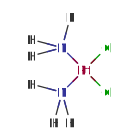
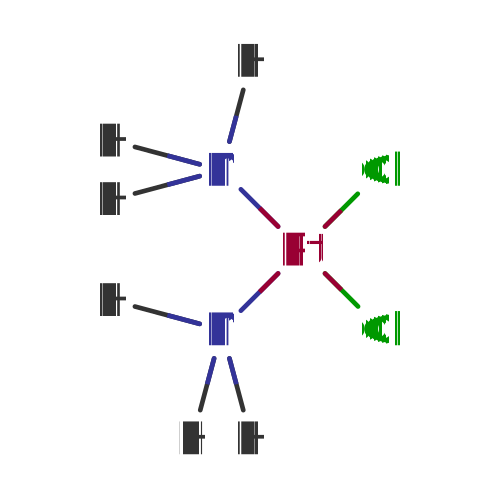
Structure for Cisplatin (DB00515)
- Weight
- Average: 300.05
Monoisotopic: 298.955596 - Chemical Formula
- Cl2H6N2Pt
- Synonyms
- (SP-4-2)-DIAMMINEDICHLOROPLATINUM
- CDDP
- Cis-DDP
- CIS-DIAMMINEDICHLOROPLATINUM
- CIS-DIAMMINEDICHLOROPLATINUM II
- cis-diamminedichloroplatinum(II)
- Cisplatin
- cisplatino
- INT-230-6 COMPONENT CISPLATIN
- INT230-6 COMPONENT CISPLATIN
- PLATINUM, DIAMMINEDICHLORO-, (SP-4-2)-

Pharmacology
- Indication
For the treatment of metastatic testicular tumors, metastatic ovarian tumors and advanced bladder cancer.
 Reduce drug development failure ratesBuild, train, & validate machine-learning modelswith evidence-based and structured datasets.Build, train, & validate predictive machine-learning models with structured datasets.
- Associated Conditions
Indication Type Indication Combined Product Details Approval Level Age Group Patient Characteristics Dose Form Treatment of Advanced ovarian cancer •••••••••••• ••••••••• Used in combination to treat Ovarian cancer metastatic •••••••••••• •••••••••• •• •••••••• ••••••••• ••••••••• Treatment of Advanced bladder cancer •••••••••••• ••••••••• Treatment of Advanced testicular cancer •••••••••••• ••••••••• Used in combination to treat Metastatic testicular cancer •••••••••••• ••••••••• - Contraindications & Blackbox Warnings
 Prevent Adverse Drug Events TodayTap into our Clinical API for life-saving information on contraindications & blackbox warnings, population restrictions, harmful risks, & more.Avoid life-threatening adverse drug events with our Clinical API
- Pharmacodynamics
Cisplatin is an antineoplastic in the class of alkylating agents and is used to treat various forms of cancer. Alkylating agents are so named because of their ability to add alkyl groups to many electronegative groups under conditions present in cells. They stop tumor growth by cross-linking guanine bases in DNA double-helix strands - directly attacking DNA. This makes the strands unable to uncoil and separate. As this is necessary in DNA replication, the cells can no longer divide. In addition, these drugs add methyl or other alkyl groups onto molecules where they do not belong which in turn inhibits their correct utilization by base pairing and causes a miscoding of DNA. Alkylating agents are cell cycle-nonspecific. Alkylating agents work by three different mechanisms all of which achieve the same end result - disruption of DNA function and cell death.
- Mechanism of action
Alkylating agents work by three different mechanisms: 1) attachment of alkyl groups to DNA bases, resulting in the DNA being fragmented by repair enzymes in their attempts to replace the alkylated bases, preventing DNA synthesis and RNA transcription from the affected DNA, 2) DNA damage via the formation of cross-links (bonds between atoms in the DNA) which prevents DNA from being separated for synthesis or transcription, and 3) the induction of mispairing of the nucleotides leading to mutations.
Target Actions Organism ADNA cross-linking/alkylationHumans UDNA-3-methyladenine glycosylase Not Available Humans UAlpha-2-macroglobulin Not Available Humans USerotransferrin Not Available Humans UCopper transport protein ATOX1 Not Available Humans - Absorption
Following cisplatin doses of 20 to 120 mg/m^2, the concentrations of platinum are highest in liver, prostate, and kidney; somewhat lower in bladder, muscle, testicle, pancreas, and spleen; and lowest in bowel, adrenal, heart, lung, cerebrum, and cerebellum. Platinum is present in tissues for as long as 180 days after the last administration.
- Volume of distribution
Volume of distribution at steady state = 11-12 L/m^2
- Protein binding
Cisplatin does not undergo instantaneous and reversible binding to plasma protein that is characteristic of normal drug-protein binding. However, the platinum itself is capable of binding to plasma proteins, including albumin, transferrin, and gamma globulin. Three hours after a bolus injection and two hours after the end of a three-hour infusion, 90% of the plasma platinum is protein bound.
- Metabolism
- Not Available
- Route of elimination
The parent compound, cisplatin, is excreted in the urine. Although small amounts of platinum are present in the bile and large intestine after administration of cisplatin, the fecal excretion of platinum appears to be insignificant.
- Half-life
Cisplatin decays monoexponentially with a half life of 20 to 30 minutes following administrations of 50 or 100 mg/m^2. Cisplatin has a plasma half-life of 30 minutes. The complexes between albumin and the platinum from cisplatin do not dissociate to a significant extent and are slowly eliminated with a minimum half-life of five days or more.
- Clearance
- 15-16 L/h/m^2 [total body clearance, 7-hour infusion of 100 mg/m^2]
- 62 mL/min/m^2 [renal clearance, 2-hour infusion of 100 mg/m^2]
- 50 mL/min/m^2 [renal clearance, 6- to 7-hour infusion of 100 mg/m^2] The renal clearance of free (ultrafilterable) platinum also exceeds the glomerular filtration rate indicating that cisplatin or other platinum-containing molecules are actively secreted by the kidneys. The renal clearance of free platinum is nonlinear and variable and is dependent on dose, urine flow rate, and individual variability in the extent of active secretion and possible tubular reabsorption.
- Adverse Effects
 Improve decision support & research outcomesWith structured adverse effects data, including: blackbox warnings, adverse reactions, warning & precautions, & incidence rates. View sample adverse effects data in our new Data Library!Improve decision support & research outcomes with our structured adverse effects data.
- Toxicity
Not Available
- Pathways
- Not Available
- Pharmacogenomic Effects/ADRs
Interacting Gene/Enzyme Allele name Genotype(s) Defining Change(s) Type(s) Description Details Glutathione S-transferase Mu 1 GSTM1 Not Available presence of functional GSTM1 ADR Directly Studied Patients with this genotype have increased risk of ototoxicity with [durg: cisplatin]. Details Low-density lipoprotein receptor-related protein 2 --- (A;A) / (A;G) --- ADR Directly Studied Patients with this genotype have increased risk of ototoxicity with [durg: cisplatin]. Details Glutathione S-transferase P --- (A;G) / (G;G) --- ADR Directly Studied Patients with this genotype have increased risk of ototoxicity with [durg: cisplatin]. Details DNA repair protein complementing XP-C cells --- (C;C) --- ADR Directly Studied Patients with this genotype have increased risk of ototoxicity with [durg: cisplatin]. Details
Interactions
- Drug Interactions
- This information should not be interpreted without the help of a healthcare provider. If you believe you are experiencing an interaction, contact a healthcare provider immediately. The absence of an interaction does not necessarily mean no interactions exist.
Drug Interaction Integrate drug-drug
interactions in your softwareAbacavir Abacavir may decrease the excretion rate of Cisplatin which could result in a higher serum level. Abatacept The risk or severity of adverse effects can be increased when Cisplatin is combined with Abatacept. Abciximab The risk or severity of bleeding can be increased when Abciximab is combined with Cisplatin. Acebutolol Cisplatin may increase the bradycardic activities of Acebutolol. Aceclofenac Aceclofenac may decrease the excretion rate of Cisplatin which could result in a higher serum level. - Food Interactions
- Avoid echinacea. Echinacea should be used with caution, if at all, in patients receiving therapeutic immunosuppressants. Monitor for reduced efficacy of the immunosuppressant during concomitant use.
Products
 Drug product information from 10+ global regionsOur datasets provide approved product information including:dosage, form, labeller, route of administration, and marketing period.Access drug product information from over 10 global regions.
- International/Other Brands
- Abiplatin / Cisplatyl / Platidiam / Platin (Cadila Healthcare)
- Brand Name Prescription Products
Name Dosage Strength Route Labeller Marketing Start Marketing End Region Image CISplatin Injection, solution 1 mg/1mL Intravenous WG Critical Care, LLC 2015-04-15 Not applicable US 
CISplatin Injection, solution 1 mg/1mL Intravenous WG Critical Care, LLC 2012-01-13 Not applicable US CISplatin Injection, solution 1 mg/1mL Intravenous WG Critical Care, LLC 2012-01-13 Not applicable US Cisplatin Injection, powder, lyophilized, for solution 1 mg/1mL Intravenous WG Critical Care, LLC 2019-04-05 Not applicable US Cisplatin Injection, solution 1 mg/1mL Intravenous Fresenius Kabi USA, LLC 2023-09-01 Not applicable US - Generic Prescription Products
Name Dosage Strength Route Labeller Marketing Start Marketing End Region Image CISplatin Injection 1 mg/1mL Intravenous West-Ward Pharmaceuticals Corp 2000-11-07 Not applicable US Cisplatin Injection, solution 1 mg/1mL Intravenous Gland Pharma Limited 2017-04-03 Not applicable US Cisplatin Injection 1 mg/1mL Intravenous Mylan Institutional 2012-04-19 2017-12-31 US Cisplatin Injection, solution 1 mg/1mL Intravenous Bedford Pharmaceuticals 2004-10-08 2010-10-31 US Cisplatin Injection 1 mg/1mL Intravenous Accord Healthcare 2016-12-13 Not applicable US - Unapproved/Other Products
Name Ingredients Dosage Route Labeller Marketing Start Marketing End Region Image Cisplatin Cisplatin (1 mg/1mL) Injection, solution Intravenous Fresenius Kabi USA, LLC 2023-09-01 Not applicable US CISplatin Cisplatin (50 mg/50mL) Injection, solution Intravenous Apotex Corp. 2023-06-06 Not applicable US CISPLATIN DBL 100 ML 100 MG FLAKON, 1 ADET Cisplatin (100 mg/100ml) Injection, solution Intravenous ORNA İLAÇ TEKSTİL KİMYEVİ MAD. SAN. VE DIŞ TİC. LTD. ŞTİ. 2019-11-26 Not applicable Turkey 
CISPLATIN DBL 50 ML 50 MG FLAKON, 1 ADET Cisplatin (50 mg/50ml) Injection, solution Intravenous ORNA İLAÇ TEKSTİL KİMYEVİ MAD. SAN. VE DIŞ TİC. LTD. ŞTİ. 2018-07-31 Not applicable Turkey
Categories
- ATC Codes
- L01XA01 — Cisplatin
- Drug Categories
- Antineoplastic Agents
- Antineoplastic and Immunomodulating Agents
- BCRP/ABCG2 Substrates
- Cardiotoxic antineoplastic agents
- Chlorine Compounds
- Cholinesterase Inhibitors
- Compounds used in a research, industrial, or household setting
- Cross-Linking Reagents
- Cytochrome P-450 CYP2B6 Inhibitors
- Cytochrome P-450 CYP2B6 Inhibitors (strength unknown)
- Cytochrome P-450 CYP2C9 Inhibitors
- Cytochrome P-450 CYP2C9 Inhibitors (strength unknown)
- Cytochrome P-450 Enzyme Inhibitors
- Drugs that are Mainly Renally Excreted
- Drugs that are Mainly Renally Excreted with a Narrow Therapeutic Index
- Immunosuppressive Agents
- Indicators and Reagents
- Laboratory Chemicals
- Myelosuppressive Agents
- Narrow Therapeutic Index Drugs
- Nephrotoxic agents
- Nitrogen Compounds
- OCT2 Inhibitors
- OCT2 Substrates
- OCT2 Substrates with a Narrow Therapeutic Index
- Platinum Compounds
- Radiation-Sensitizing Agents
- Chemical TaxonomyProvided by Classyfire
- Description
- This compound belongs to the class of inorganic compounds known as transition metal chlorides. These are inorganic compounds in which the largest halogen atom is Chlorine, and the heaviest metal atom is a transition metal.
- Kingdom
- Inorganic compounds
- Super Class
- Mixed metal/non-metal compounds
- Class
- Transition metal salts
- Sub Class
- Transition metal chlorides
- Direct Parent
- Transition metal chlorides
- Alternative Parents
- Inorganic chloride salts
- Substituents
- Inorganic chloride salt / Inorganic salt / Transition metal chloride
- Molecular Framework
- Not Available
- External Descriptors
- diamminedichloroplatinum (CHEBI:27899)
- Affected organisms
- Humans and other mammals
Chemical Identifiers
- UNII
- Q20Q21Q62J
- CAS number
- 15663-27-1
- InChI Key
- LXZZYRPGZAFOLE-UHFFFAOYSA-L
- InChI
- InChI=1S/2ClH.2H3N.Pt/h2*1H;2*1H3;/q;;;;+2/p-2
- IUPAC Name
- dichloroplatinumdiamine
- SMILES
- [H][N]([H])([H])[Pt](Cl)(Cl)[N]([H])([H])[H]
References
- Synthesis Reference
Murray A. Kaplan, Alphonse P. Granatek, "Process for the preparation of microcrystalline cisplatin." U.S. Patent US4322391, issued March 30, 1982.
US4322391- General References
- External Links
- Human Metabolome Database
- HMDB0014656
- KEGG Drug
- D00275
- KEGG Compound
- C06911
- PubChem Compound
- 2767
- PubChem Substance
- 46504561
- ChemSpider
- 76401
- BindingDB
- 50028111
- 2555
- ChEBI
- 27899
- ChEMBL
- CHEMBL11359
- Therapeutic Targets Database
- DAP000215
- PharmGKB
- PA449014
- PDBe Ligand
- CPT
- RxList
- RxList Drug Page
- Drugs.com
- Drugs.com Drug Page
- Wikipedia
- Cisplatin
- PDB Entries
- 1a2e / 1a84 / 1aio / 1au5 / 1ckt / 1da4 / 1da5 / 1ddp / 1i1p / 1ksb … show 57 more
- FDA label
- Download (413 KB)
- MSDS
- Download (76.1 KB)
Clinical Trials
- Clinical Trials
Phase Status Purpose Conditions Count 4 Active Not Recruiting Treatment Central Nervous System Embryonal Tumors / Medulloblastomas 1 4 Active Not Recruiting Treatment Esophageal Squamous Cell Carcinoma (ESCC) 1 4 Completed Not Available Esophageal Cancer 1 4 Completed Supportive Care Anemia / Cervical Cancer 1 4 Completed Treatment Esophageal Cancer 1
Pharmacoeconomics
- Manufacturers
- App pharmaceuticals llc
- Bedford laboratories div ben venue laboratories inc
- Pharmachemie bv
- Teva parenteral medicines inc
- Bristol myers co
- Packagers
- APP Pharmaceuticals
- APPD
- Baxter International Inc.
- Bedford Labs
- Ben Venue Laboratories Inc.
- Bristol-Myers Squibb Co.
- Mead Johnson and Co.
- Pharmachemie BV
- Sicor Pharmaceuticals
- Teva Pharmaceutical Industries Ltd.
- Dosage Forms
Form Route Strength Solution Intravenous 1.000 mg Solution Intravenous 10.000 mg Injection, powder, lyophilized, for solution Intravenous 50 mg Solution Intravenous 1 mg Solution Parenteral Solution Parenteral 1 mg/mL Injection Intravenous Injection Intravenous 1 mg/1mL Injection, powder, lyophilized, for solution Intravenous 1 mg/1mL Injection, solution Intravenous 1 mg/1mL Injection, solution Intravenous 100 mg/100mL Injection, solution Intravenous 50 mg/50mL Injection Parenteral Injection, solution, concentrate Intravenous Injection, solution Intravenous 10 mg/10ml Solution Intravenous 10 mg/20ml Solution Intravenous 100 mg/100ml Injection, solution, concentrate Intravenous 25 mg/50ml Solution Intravenous 50 mg/100ml Injection, solution, concentrate Intravenous 1 mg/ml Liquid Intravenous .5 mg / mL Liquid Intravenous 1 mg / mL Solution Intravenous 1.0 mg / mL Injection Intravenous 1 mg/ml Solution Intravenous 1 mg / mL Injection Intravenous 25 mg/50ml Injection Intravenous 50 mg/100ml Injection Parenteral 1 mg Injection, powder, for suspension Parenteral 10 mg Injection, powder, lyophilized, for solution Parenteral 10 mg Solution Parenteral 10 mg Injection, powder, lyophilized, for solution Parenteral 25 mg Injection, powder, lyophilized, for solution Parenteral 50 mg Injection, solution, concentrate Intravenous; Parenteral 1 MG/ML Injection, solution, concentrate Intravenous 0.5 MG/ML Solution Intravenous 10 mg Solution Parenteral 0.5 mg Solution Intravenous 50 mg Injection, solution Injection, solution, concentrate Intravenous; Parenteral 0.5 MG/ML Injection Intravenous 10 mg Injection, solution Intravenous Solution Intravenous 0.5 mg Injection Intravenous 50 mg Injection 10 mg/20ml Injection 25 mg/50ml Injection 50 mg/100ml Solution Parenteral 50 mg Injection, solution Intravenous 10 mg Injection, solution Intravenous 50 mg Injection, solution, concentrate Intravenous 1 mg/1ml Injection, powder, lyophilized, for solution Intravenous 10 mg Injection, solution Intravenous 1 MG/ML Injection Parenteral 10 mg Injection Parenteral 0.5 mg Injection, powder, for solution Intravenous 10 MG Injection, powder, for solution Intravenous 25 MG Injection, powder, for solution Intravenous 50 MG Powder, for solution Intravenous Injection, powder, lyophilized, for solution Intravenous 10 mg/10mL Injection, powder, lyophilized, for solution Intravenous 50 mg/50mL Injection Injection, solution Parenteral 10 MG/20ML Injection, solution Parenteral 25 MG/50ML Injection, solution Parenteral 50 MG/100ML Solution Parenteral 10.000 mg Injection, solution 1 mg/1ml Solution 1 mg/1ml - Prices
Unit description Cost Unit Cisplatin 1 mg/ml vial 0.41USD ml DrugBank does not sell nor buy drugs. Pricing information is supplied for informational purposes only.- Patents
- Not Available
Properties
- State
- Solid
- Experimental Properties
Property Value Source melting point (°C) 270 dec °C PhysProp water solubility 2530 mg/L (at 25 °C) AMUNDSEN,AR & STERN,EW (1982) logP -2.19 HANSCH,C ET AL. (1995) - Predicted Properties
Property Value Source Water Solubility 69.6 mg/mL ALOGPS logP -0.04 ALOGPS logS -0.64 ALOGPS Physiological Charge 0 Chemaxon Hydrogen Acceptor Count 0 Chemaxon Hydrogen Donor Count 0 Chemaxon Polar Surface Area 55.28 Å2 Chemaxon Rotatable Bond Count 0 Chemaxon Refractivity 43.3 m3·mol-1 Chemaxon Polarizability 10.95 Å3 Chemaxon Number of Rings 0 Chemaxon Bioavailability 1 Chemaxon Rule of Five No Chemaxon Ghose Filter No Chemaxon Veber's Rule No Chemaxon MDDR-like Rule No Chemaxon - Predicted ADMET Features
Property Value Probability Human Intestinal Absorption + 0.9637 Blood Brain Barrier + 0.9469 Caco-2 permeable - 0.5704 P-glycoprotein substrate Non-substrate 0.8714 P-glycoprotein inhibitor I Non-inhibitor 0.9763 P-glycoprotein inhibitor II Non-inhibitor 0.9843 Renal organic cation transporter Non-inhibitor 0.9211 CYP450 2C9 substrate Non-substrate 0.8069 CYP450 2D6 substrate Non-substrate 0.7874 CYP450 3A4 substrate Non-substrate 0.7495 CYP450 1A2 substrate Non-inhibitor 0.7733 CYP450 2C9 inhibitor Non-inhibitor 0.7808 CYP450 2D6 inhibitor Non-inhibitor 0.9075 CYP450 2C19 inhibitor Non-inhibitor 0.7995 CYP450 3A4 inhibitor Non-inhibitor 0.8562 CYP450 inhibitory promiscuity Low CYP Inhibitory Promiscuity 0.9204 Ames test Non AMES toxic 0.5661 Carcinogenicity Carcinogens 0.5146 Biodegradation Not ready biodegradable 0.9213 Rat acute toxicity 2.7612 LD50, mol/kg Not applicable hERG inhibition (predictor I) Weak inhibitor 0.9774 hERG inhibition (predictor II) Non-inhibitor 0.9344
Spectra
- Mass Spec (NIST)
- Not Available
- Spectra
- Not Available
- Chromatographic Properties
Collision Cross Sections (CCS)
Not Available
Targets

References
- Overington JP, Al-Lazikani B, Hopkins AL: How many drug targets are there? Nat Rev Drug Discov. 2006 Dec;5(12):993-6. [Article]
- Imming P, Sinning C, Meyer A: Drugs, their targets and the nature and number of drug targets. Nat Rev Drug Discov. 2006 Oct;5(10):821-34. [Article]
- Garcia Sar D, Montes-Bayon M, Aguado Ortiz L, Blanco-Gonzalez E, Sierra LM, Sanz-Medel A: In vivo detection of DNA adducts induced by cisplatin using capillary HPLC-ICP-MS and their correlation with genotoxic damage in Drosophila melanogaster. Anal Bioanal Chem. 2008 Jan;390(1):37-44. Epub 2007 Oct 12. [Article]
- Sharma S, Gong P, Temple B, Bhattacharyya D, Dokholyan NV, Chaney SG: Molecular dynamic simulations of cisplatin- and oxaliplatin-d(GG) intrastand cross-links reveal differences in their conformational dynamics. J Mol Biol. 2007 Nov 9;373(5):1123-40. Epub 2007 Aug 23. [Article]
- Bloemink MJ, Reedijk J: Cisplatin and derived anticancer drugs: mechanism and current status of DNA binding. Met Ions Biol Syst. 1996;32:641-85. [Article]
- Kind
- Protein
- Organism
- Humans
- Pharmacological action
- Unknown
- General Function
- Hydrolysis of the deoxyribose N-glycosidic bond to excise 3-methyladenine, and 7-methylguanine from the damaged DNA polymer formed by alkylation lesions.
- Specific Function
- Alkylbase dna n-glycosylase activity
- Gene Name
- MPG
- Uniprot ID
- P29372
- Uniprot Name
- DNA-3-methyladenine glycosylase
- Molecular Weight
- 32868.365 Da
References
- Kartalou M, Samson LD, Essigmann JM: Cisplatin adducts inhibit 1,N(6)-ethenoadenine repair by interacting with the human 3-methyladenine DNA glycosylase. Biochemistry. 2000 Jul 11;39(27):8032-8. [Article]
- Kind
- Protein
- Organism
- Humans
- Pharmacological action
- Unknown
- General Function
- Tumor necrosis factor binding
- Specific Function
- Is able to inhibit all four classes of proteinases by a unique 'trapping' mechanism. This protein has a peptide stretch, called the 'bait region' which contains specific cleavage sites for differen...
- Gene Name
- A2M
- Uniprot ID
- P01023
- Uniprot Name
- Alpha-2-macroglobulin
- Molecular Weight
- 163289.945 Da
References
- Khalaila I, Bergamo A, Bussy F, Sava G, Dyson PJ: The role of cisplatin and NAMI-A plasma-protein interactions in relation to combination therapy. Int J Oncol. 2006 Jul;29(1):261-8. [Article]
- Kind
- Protein
- Organism
- Humans
- Pharmacological action
- Unknown
- General Function
- Transferrin receptor binding
- Specific Function
- Transferrins are iron binding transport proteins which can bind two Fe(3+) ions in association with the binding of an anion, usually bicarbonate. It is responsible for the transport of iron from si...
- Gene Name
- TF
- Uniprot ID
- P02787
- Uniprot Name
- Serotransferrin
- Molecular Weight
- 77063.195 Da
References
- Khalaila I, Bergamo A, Bussy F, Sava G, Dyson PJ: The role of cisplatin and NAMI-A plasma-protein interactions in relation to combination therapy. Int J Oncol. 2006 Jul;29(1):261-8. [Article]
- Kind
- Protein
- Organism
- Humans
- Pharmacological action
- Unknown
- Curator comments
- Atox1 protein blocks cisplatin transport to DNA and may lead to drug resistance
- General Function
- Metallochaperone activity
- Specific Function
- Binds and deliver cytosolic copper to the copper ATPase proteins. May be important in cellular antioxidant defense.
- Gene Name
- ATOX1
- Uniprot ID
- O00244
- Uniprot Name
- Copper transport protein ATOX1
- Molecular Weight
- 7401.575 Da
References
- Xi Z, Guo W, Tian C, Wang F, Liu Y: Copper binding modulates the platination of human copper chaperone Atox1 by antitumor trans-platinum complexes. Metallomics. 2014 Mar;6(3):491-7. doi: 10.1039/c3mt00338h. Epub 2014 Jan 28. [Article]
Enzymes
- Kind
- Protein
- Organism
- Humans
- Pharmacological action
- Unknown
- Actions
- Inducer
- General Function
- Peroxidase activity
- Specific Function
- Part of the host defense system of polymorphonuclear leukocytes. It is responsible for microbicidal activity against a wide range of organisms. In the stimulated PMN, MPO catalyzes the production o...
- Gene Name
- MPO
- Uniprot ID
- P05164
- Uniprot Name
- Myeloperoxidase
- Molecular Weight
- 83867.71 Da
References
- Erdogan S, Tosyali E, Duzguner V, Kucukgul A, Aslantas O, Celik S: Cisplatin reduces Brucella melitensis-infected cell number by inducing apoptosis, oxidant and pro-inflammatory cytokine production. Res Vet Sci. 2010 Apr;88(2):218-26. doi: 10.1016/j.rvsc.2009.09.002. Epub 2009 Oct 8. [Article]
- Ozen S, Akyol O, Iraz M, Sogut S, Ozugurlu F, Ozyurt H, Odaci E, Yildirim Z: Role of caffeic acid phenethyl ester, an active component of propolis, against cisplatin-induced nephrotoxicity in rats. J Appl Toxicol. 2004 Jan-Feb;24(1):27-35. [Article]
- Kind
- Protein
- Organism
- Humans
- Pharmacological action
- Unknown
- Actions
- Inducer
- General Function
- Xanthine oxidase activity
- Specific Function
- Key enzyme in purine degradation. Catalyzes the oxidation of hypoxanthine to xanthine. Catalyzes the oxidation of xanthine to uric acid. Contributes to the generation of reactive oxygen species. Ha...
- Gene Name
- XDH
- Uniprot ID
- P47989
- Uniprot Name
- Xanthine dehydrogenase/oxidase
- Molecular Weight
- 146422.99 Da
References
- Yilmaz HR, Sogut S, Ozyurt B, Ozugurlu F, Sahin S, Isik B, Uz E, Ozyurt H: The activities of liver adenosine deaminase, xanthine oxidase, catalase, superoxide dismutase enzymes and the levels of malondialdehyde and nitric oxide after cisplatin toxicity in rats: protective effect of caffeic acid phenethyl ester. Toxicol Ind Health. 2005 May;21(3-4):67-73. [Article]
- Cetin R, Devrim E, Kilicoglu B, Avci A, Candir O, Durak I: Cisplatin impairs antioxidant system and causes oxidation in rat kidney tissues: possible protective roles of natural antioxidant foods. J Appl Toxicol. 2006 Jan-Feb;26(1):42-6. [Article]
- Erdogan S, Tosyali E, Duzguner V, Kucukgul A, Aslantas O, Celik S: Cisplatin reduces Brucella melitensis-infected cell number by inducing apoptosis, oxidant and pro-inflammatory cytokine production. Res Vet Sci. 2010 Apr;88(2):218-26. doi: 10.1016/j.rvsc.2009.09.002. Epub 2009 Oct 8. [Article]
- Kind
- Protein
- Organism
- Humans
- Pharmacological action
- Unknown
- Actions
- Inducer
- General Function
- Leukotriene-b4 20-monooxygenase activity
- Specific Function
- Catalyzes the omega- and (omega-1)-hydroxylation of various fatty acids such as laurate, myristate and palmitate. Has little activity toward prostaglandins A1 and E1. Oxidizes arachidonic acid to 2...
- Gene Name
- CYP4A11
- Uniprot ID
- Q02928
- Uniprot Name
- Cytochrome P450 4A11
- Molecular Weight
- 59347.31 Da
References
- Nakamura M, Imaoka S, Tanaka E, Misawa S, Funae Y: cis-Diamminedichloroplatinum induces peroxisomes as well as CYP4A1 in rat kidney. Res Commun Mol Pathol Pharmacol. 1998 Jan;99(1):23-32. [Article]
- Kind
- Protein
- Organism
- Humans
- Pharmacological action
- Unknown
- Actions
- Inhibitor
- General Function
- Prostaglandin-endoperoxide synthase activity
- Specific Function
- Converts arachidonate to prostaglandin H2 (PGH2), a committed step in prostanoid synthesis. Constitutively expressed in some tissues in physiological conditions, such as the endothelium, kidney and...
- Gene Name
- PTGS2
- Uniprot ID
- P35354
- Uniprot Name
- Prostaglandin G/H synthase 2
- Molecular Weight
- 68995.625 Da
References
- Tusgaard B, Norregaard R, Jensen AM, Wang G, Topcu SO, Wang Y, Nielsen S, Frokiaer J: Cisplatin decreases renal cyclooxygenase-2 expression and activity in rats. Acta Physiol (Oxf). 2011 May;202(1):79-90. doi: 10.1111/j.1748-1716.2011.02257.x. Epub 2011 Mar 22. [Article]
- Kind
- Protein
- Organism
- Mycobacterium tuberculosis
- Pharmacological action
- Unknown
- Actions
- Inhibitor
- General Function
- Catalyzes the transfer of the acetyl group from acetyl coenzyme A to the free amino group of arylamines and hydrazines (PubMed:18795795). Is able to utilize not only acetyl-CoA, but also n-propionyl-CoA and acetoacetyl-CoA as acyl donors, although at a lower rate (PubMed:19014350). As acetyl-CoA and propionyl-CoA are products of cholesterol catabolism and the nat gene is likely present in the same operon than genes involved in cholesterol degradation, this enzyme could have a role in the utilization and regulation of these CoA species (PubMed:19014350).
- Specific Function
- Arylamine n-acetyltransferase activity
- Gene Name
- nat
- Uniprot ID
- P9WJI5
- Uniprot Name
- Arylamine N-acetyltransferase
- Molecular Weight
- 31028.88 Da
References
- Ragunathan N, Dairou J, Pluvinage B, Martins M, Petit E, Janel N, Dupret JM, Rodrigues-Lima F: Identification of the xenobiotic-metabolizing enzyme arylamine N-acetyltransferase 1 as a new target of cisplatin in breast cancer cells: molecular and cellular mechanisms of inhibition. Mol Pharmacol. 2008 Jun;73(6):1761-8. doi: 10.1124/mol.108.045328. Epub 2008 Feb 29. [Article]
- Holzer AK, Samimi G, Katano K, Naerdemann W, Lin X, Safaei R, Howell SB: The copper influx transporter human copper transport protein 1 regulates the uptake of cisplatin in human ovarian carcinoma cells. Mol Pharmacol. 2004 Oct;66(4):817-23. Epub 2004 Jun 30. [Article]
- Kind
- Protein
- Organism
- Humans
- Pharmacological action
- Unknown
- Actions
- Inhibitor
- General Function
- Steroid hydroxylase activity
- Specific Function
- Cytochromes P450 are a group of heme-thiolate monooxygenases. In liver microsomes, this enzyme is involved in an NADPH-dependent electron transport pathway. It oxidizes a variety of structurally un...
- Gene Name
- CYP2C9
- Uniprot ID
- P11712
- Uniprot Name
- Cytochrome P450 2C9
- Molecular Weight
- 55627.365 Da
References
- Masek V, Anzenbacherova E, Machova M, Brabec V, Anzenbacher P: Interaction of antitumor platinum complexes with human liver microsomal cytochromes P450. Anticancer Drugs. 2009 Jun;20(5):305-11. [Article]
- Kind
- Protein
- Organism
- Humans
- Pharmacological action
- Unknown
- Actions
- Inhibitor
- General Function
- Steroid hydroxylase activity
- Specific Function
- Cytochromes P450 are a group of heme-thiolate monooxygenases. In liver microsomes, this enzyme is involved in an NADPH-dependent electron transport pathway. It oxidizes a variety of structurally un...
- Gene Name
- CYP2B6
- Uniprot ID
- P20813
- Uniprot Name
- Cytochrome P450 2B6
- Molecular Weight
- 56277.81 Da
References
- Masek V, Anzenbacherova E, Machova M, Brabec V, Anzenbacher P: Interaction of antitumor platinum complexes with human liver microsomal cytochromes P450. Anticancer Drugs. 2009 Jun;20(5):305-11. [Article]
- Walsky RL, Astuccio AV, Obach RS: Evaluation of 227 drugs for in vitro inhibition of cytochrome P450 2B6. J Clin Pharmacol. 2006 Dec;46(12):1426-38. [Article]
- Kind
- Protein
- Organism
- Humans
- Pharmacological action
- Unknown
- Actions
- Inhibitor
- General Function
- Identical protein binding
- Specific Function
- Esterase with broad substrate specificity. Contributes to the inactivation of the neurotransmitter acetylcholine. Can degrade neurotoxic organophosphate esters.
- Gene Name
- BCHE
- Uniprot ID
- P06276
- Uniprot Name
- Cholinesterase
- Molecular Weight
- 68417.575 Da
References
- Bodur E: Human serum butyrylcholinesterase interactions with cisplatin and cyclophosphamide. Biochimie. 2010 Aug;92(8):979-84. doi: 10.1016/j.biochi.2010.04.010. Epub 2010 Apr 24. [Article]
- Kind
- Protein
- Organism
- Humans
- Pharmacological action
- Unknown
- Actions
- Substrate
- General Function
- Glutathione transferase activity
- Specific Function
- Conjugation of reduced glutathione to a wide number of exogenous and endogenous hydrophobic electrophiles. Acts on 1,2-epoxy-3-(4-nitrophenoxy)propane, phenethylisothiocyanate 4-nitrobenzyl chlorid...
- Gene Name
- GSTT1
- Uniprot ID
- P30711
- Uniprot Name
- Glutathione S-transferase theta-1
- Molecular Weight
- 27334.755 Da
References
- Peters U, Preisler-Adams S, Hebeisen A, Hahn M, Seifert E, Lanvers C, Heinecke A, Horst J, Jurgens H, Lamprecht-Dinnesen A: Glutathione S-transferase genetic polymorphisms and individual sensitivity to the ototoxic effect of cisplatin. Anticancer Drugs. 2000 Sep;11(8):639-43. [Article]
- Kind
- Protein
- Organism
- Humans
- Pharmacological action
- Unknown
- Actions
- Substrate
- General Function
- Zinc ion binding
- Specific Function
- Metallothioneins have a high content of cysteine residues that bind various heavy metals; these proteins are transcriptionally regulated by both heavy metals and glucocorticoids.
- Gene Name
- MT1A
- Uniprot ID
- P04731
- Uniprot Name
- Metallothionein-1A
- Molecular Weight
- 6120.19 Da
References
- Meijer C, Timmer A, De Vries EG, Groten JP, Knol A, Zwart N, Dam WA, Sleijfer DT, Mulder NH: Role of metallothionein in cisplatin sensitivity of germ-cell tumours. Int J Cancer. 2000 Mar 15;85(6):777-81. [Article]
- Kind
- Protein
- Organism
- Humans
- Pharmacological action
- Unknown
- Actions
- Substrate
- General Function
- Zinc ion binding
- Specific Function
- Metallothioneins have a high content of cysteine residues that bind various heavy metals; these proteins are transcriptionally regulated by both heavy metals and glucocorticoids.
- Gene Name
- MT2A
- Uniprot ID
- P02795
- Uniprot Name
- Metallothionein-2
- Molecular Weight
- 6042.05 Da
References
- Meijer C, Timmer A, De Vries EG, Groten JP, Knol A, Zwart N, Dam WA, Sleijfer DT, Mulder NH: Role of metallothionein in cisplatin sensitivity of germ-cell tumours. Int J Cancer. 2000 Mar 15;85(6):777-81. [Article]
- Kind
- Protein
- Organism
- Humans
- Pharmacological action
- Unknown
- Actions
- Substrate
- General Function
- Zinc ion binding
- Specific Function
- Destroys radicals which are normally produced within the cells and which are toxic to biological systems.
- Gene Name
- SOD1
- Uniprot ID
- P00441
- Uniprot Name
- Superoxide dismutase [Cu-Zn]
- Molecular Weight
- 15935.685 Da
References
- Link [Link]
- Kind
- Protein
- Organism
- Humans
- Pharmacological action
- Unknown
- Actions
- Substrate
- General Function
- S-nitrosoglutathione binding
- Specific Function
- Conjugation of reduced glutathione to a wide number of exogenous and endogenous hydrophobic electrophiles. Regulates negatively CDK5 activity via p25/p35 translocation to prevent neurodegeneration.
- Gene Name
- GSTP1
- Uniprot ID
- P09211
- Uniprot Name
- Glutathione S-transferase P
- Molecular Weight
- 23355.625 Da
References
- Peters U, Preisler-Adams S, Hebeisen A, Hahn M, Seifert E, Lanvers C, Heinecke A, Horst J, Jurgens H, Lamprecht-Dinnesen A: Glutathione S-transferase genetic polymorphisms and individual sensitivity to the ototoxic effect of cisplatin. Anticancer Drugs. 2000 Sep;11(8):639-43. [Article]
- Kind
- Protein
- Organism
- Humans
- Pharmacological action
- Unknown
- Actions
- Substrate
- General Function
- Superoxide dismutase activity
- Specific Function
- The enzyme apparently serves as a quinone reductase in connection with conjugation reactions of hydroquinons involved in detoxification pathways as well as in biosynthetic processes such as the vit...
- Gene Name
- NQO1
- Uniprot ID
- P15559
- Uniprot Name
- NAD(P)H dehydrogenase [quinone] 1
- Molecular Weight
- 30867.405 Da
References
- Link [Link]
- Kind
- Protein
- Organism
- Humans
- Pharmacological action
- Unknown
- Actions
- Substrate
- General Function
- Protein homodimerization activity
- Specific Function
- Conjugation of reduced glutathione to a wide number of exogenous and endogenous hydrophobic electrophiles.
- Gene Name
- GSTM1
- Uniprot ID
- P09488
- Uniprot Name
- Glutathione S-transferase Mu 1
- Molecular Weight
- 25711.555 Da
References
- Peters U, Preisler-Adams S, Hebeisen A, Hahn M, Seifert E, Lanvers C, Heinecke A, Horst J, Jurgens H, Lamprecht-Dinnesen A: Glutathione S-transferase genetic polymorphisms and individual sensitivity to the ototoxic effect of cisplatin. Anticancer Drugs. 2000 Sep;11(8):639-43. [Article]
Carriers
- Kind
- Protein
- Organism
- Humans
- Pharmacological action
- Unknown
- General Function
- Toxic substance binding
- Specific Function
- Serum albumin, the main protein of plasma, has a good binding capacity for water, Ca(2+), Na(+), K(+), fatty acids, hormones, bilirubin and drugs. Its main function is the regulation of the colloid...
- Gene Name
- ALB
- Uniprot ID
- P02768
- Uniprot Name
- Serum albumin
- Molecular Weight
- 69365.94 Da
References
- Khalaila I, Bergamo A, Bussy F, Sava G, Dyson PJ: The role of cisplatin and NAMI-A plasma-protein interactions in relation to combination therapy. Int J Oncol. 2006 Jul;29(1):261-8. [Article]
Transporters
- Kind
- Protein
- Organism
- Humans
- Pharmacological action
- Unknown
- Actions
- Inducer
- General Function
- Organic anion transmembrane transporter activity
- Specific Function
- May act as an inducible transporter in the biliary and intestinal excretion of organic anions. Acts as an alternative route for the export of bile acids and glucuronides from cholestatic hepatocyte...
- Gene Name
- ABCC3
- Uniprot ID
- O15438
- Uniprot Name
- Canalicular multispecific organic anion transporter 2
- Molecular Weight
- 169341.14 Da
References
- Schrenk D, Baus PR, Ermel N, Klein C, Vorderstemann B, Kauffmann HM: Up-regulation of transporters of the MRP family by drugs and toxins. Toxicol Lett. 2001 Mar 31;120(1-3):51-7. [Article]
- Kind
- Protein
- Organism
- Humans
- Pharmacological action
- Unknown
- Actions
- Inducer
- General Function
- Organic anion transmembrane transporter activity
- Specific Function
- Acts as a multispecific organic anion pump which can transport nucleotide analogs.
- Gene Name
- ABCC5
- Uniprot ID
- O15440
- Uniprot Name
- Multidrug resistance-associated protein 5
- Molecular Weight
- 160658.8 Da
References
- Schrenk D, Baus PR, Ermel N, Klein C, Vorderstemann B, Kauffmann HM: Up-regulation of transporters of the MRP family by drugs and toxins. Toxicol Lett. 2001 Mar 31;120(1-3):51-7. [Article]
- Kind
- Protein
- Organism
- Humans
- Pharmacological action
- Unknown
- Actions
- Inducer
- General Function
- Organic anion transmembrane transporter activity
- Specific Function
- Mediates hepatobiliary excretion of numerous organic anions. May function as a cellular cisplatin transporter.
- Gene Name
- ABCC2
- Uniprot ID
- Q92887
- Uniprot Name
- Canalicular multispecific organic anion transporter 1
- Molecular Weight
- 174205.64 Da
References
- Schrenk D, Baus PR, Ermel N, Klein C, Vorderstemann B, Kauffmann HM: Up-regulation of transporters of the MRP family by drugs and toxins. Toxicol Lett. 2001 Mar 31;120(1-3):51-7. [Article]
- Demeule M, Brossard M, Beliveau R: Cisplatin induces renal expression of P-glycoprotein and canalicular multispecific organic anion transporter. Am J Physiol. 1999 Dec;277(6 Pt 2):F832-40. [Article]
- Kind
- Protein
- Organism
- Humans
- Pharmacological action
- Unknown
- Actions
- SubstrateInhibitor
- General Function
- Quaternary ammonium group transmembrane transporter activity
- Specific Function
- Mediates tubular uptake of organic compounds from circulation. Mediates the influx of agmatine, dopamine, noradrenaline (norepinephrine), serotonin, choline, famotidine, ranitidine, histamin, creat...
- Gene Name
- SLC22A2
- Uniprot ID
- O15244
- Uniprot Name
- Solute carrier family 22 member 2
- Molecular Weight
- 62579.99 Da
References
- Pan BF, Sweet DH, Pritchard JB, Chen R, Nelson JA: A transfected cell model for the renal toxin transporter, rOCT2. Toxicol Sci. 1999 Feb;47(2):181-6. [Article]
- Burger H, Zoumaro-Djayoon A, Boersma AW, Helleman J, Berns EM, Mathijssen RH, Loos WJ, Wiemer EA: Differential transport of platinum compounds by the human organic cation transporter hOCT2 (hSLC22A2). Br J Pharmacol. 2010 Feb;159(4):898-908. doi: 10.1111/j.1476-5381.2009.00569.x. Epub 2010 Jan 8. [Article]
- Berman HM, Westbrook J, Feng Z, Gilliland G, Bhat TN, Weissig H, Shindyalov IN, Bourne PE: The Protein Data Bank. Nucleic Acids Res. 2000 Jan 1;28(1):235-42. [Article]
- Kind
- Protein
- Organism
- Humans
- Pharmacological action
- Unknown
- Actions
- Substrate
- General Function
- Copper uptake transmembrane transporter activity
- Specific Function
- High-affinity, saturable copper transporter involved in dietary copper uptake.
- Gene Name
- SLC31A1
- Uniprot ID
- O15431
- Uniprot Name
- High affinity copper uptake protein 1
- Molecular Weight
- 21090.545 Da
References
- Howell SB, Safaei R, Larson CA, Sailor MJ: Copper transporters and the cellular pharmacology of the platinum-containing cancer drugs. Mol Pharmacol. 2010 Jun;77(6):887-94. doi: 10.1124/mol.109.063172. Epub 2010 Feb 16. [Article]
- Kurokawa T, He G, Siddik ZH: Protein kinase inhibitors emodin and dichloro-ribofuranosylbenzimidazole modulate the cellular accumulation and cytotoxicity of cisplatin in a schedule-dependent manner. Cancer Chemother Pharmacol. 2010 Feb;65(3):427-36. doi: 10.1007/s00280-009-1045-2. Epub 2009 Jun 16. [Article]
- Jandial DD, Farshchi-Heydari S, Larson CA, Elliott GI, Wrasidlo WJ, Howell SB: Enhanced delivery of cisplatin to intraperitoneal ovarian carcinomas mediated by the effects of bortezomib on the human copper transporter 1. Clin Cancer Res. 2009 Jan 15;15(2):553-60. doi: 10.1158/1078-0432.CCR-08-2081. [Article]
- Liang ZD, Stockton D, Savaraj N, Tien Kuo M: Mechanistic comparison of human high-affinity copper transporter 1-mediated transport between copper ion and cisplatin. Mol Pharmacol. 2009 Oct;76(4):843-53. doi: 10.1124/mol.109.056416. Epub 2009 Jul 1. [Article]
- Rabik CA, Maryon EB, Kasza K, Shafer JT, Bartnik CM, Dolan ME: Role of copper transporters in resistance to platinating agents. Cancer Chemother Pharmacol. 2009 Jun;64(1):133-42. doi: 10.1007/s00280-008-0860-1. Epub 2008 Nov 8. [Article]
- Pabla N, Murphy RF, Liu K, Dong Z: The copper transporter Ctr1 contributes to cisplatin uptake by renal tubular cells during cisplatin nephrotoxicity. Am J Physiol Renal Physiol. 2009 Mar;296(3):F505-11. doi: 10.1152/ajprenal.90545.2008. Epub 2009 Jan 14. [Article]
- Furukawa T, Komatsu M, Ikeda R, Tsujikawa K, Akiyama S: Copper transport systems are involved in multidrug resistance and drug transport. Curr Med Chem. 2008;15(30):3268-78. [Article]
- Holzer AK, Samimi G, Katano K, Naerdemann W, Lin X, Safaei R, Howell SB: The copper influx transporter human copper transport protein 1 regulates the uptake of cisplatin in human ovarian carcinoma cells. Mol Pharmacol. 2004 Oct;66(4):817-23. Epub 2004 Jun 30. [Article]
- Kind
- Protein
- Organism
- Humans
- Pharmacological action
- Unknown
- Actions
- Substrate
- General Function
- Copper ion transmembrane transporter activity
- Specific Function
- Involved in low-affinity copper uptake.
- Gene Name
- SLC31A2
- Uniprot ID
- O15432
- Uniprot Name
- Probable low affinity copper uptake protein 2
- Molecular Weight
- 15681.29 Da
References
- Blair BG, Larson CA, Safaei R, Howell SB: Copper transporter 2 regulates the cellular accumulation and cytotoxicity of Cisplatin and Carboplatin. Clin Cancer Res. 2009 Jul 1;15(13):4312-21. doi: 10.1158/1078-0432.CCR-09-0311. Epub 2009 Jun 9. [Article]
- Kind
- Protein
- Organism
- Humans
- Pharmacological action
- Unknown
- Actions
- Substrate
- General Function
- Transporter activity
- Specific Function
- Isoform 1: May participate directly in the active transport of drugs into subcellular organelles or influence drug distribution indirectly. Transports glutathione conjugates as leukotriene-c4 (LTC4...
- Gene Name
- ABCC6
- Uniprot ID
- O95255
- Uniprot Name
- Multidrug resistance-associated protein 6
- Molecular Weight
- 164904.81 Da
References
- Belinsky MG, Chen ZS, Shchaveleva I, Zeng H, Kruh GD: Characterization of the drug resistance and transport properties of multidrug resistance protein 6 (MRP6, ABCC6). Cancer Res. 2002 Nov 1;62(21):6172-7. [Article]
- Kind
- Protein
- Organism
- Humans
- Pharmacological action
- Unknown
- Actions
- Substrate
- General Function
- Copper-exporting atpase activity
- Specific Function
- Involved in the export of copper out of the cells, such as the efflux of hepatic copper into the bile.
- Gene Name
- ATP7B
- Uniprot ID
- P35670
- Uniprot Name
- Copper-transporting ATPase 2
- Molecular Weight
- 157261.34 Da
References
- Rabik CA, Maryon EB, Kasza K, Shafer JT, Bartnik CM, Dolan ME: Role of copper transporters in resistance to platinating agents. Cancer Chemother Pharmacol. 2009 Jun;64(1):133-42. doi: 10.1007/s00280-008-0860-1. Epub 2008 Nov 8. [Article]
- Mangala LS, Zuzel V, Schmandt R, Leshane ES, Halder JB, Armaiz-Pena GN, Spannuth WA, Tanaka T, Shahzad MM, Lin YG, Nick AM, Danes CG, Lee JW, Jennings NB, Vivas-Mejia PE, Wolf JK, Coleman RL, Siddik ZH, Lopez-Berestein G, Lutsenko S, Sood AK: Therapeutic Targeting of ATP7B in Ovarian Carcinoma. Clin Cancer Res. 2009 Jun 1;15(11):3770-80. doi: 10.1158/1078-0432.CCR-08-2306. Epub 2009 May 26. [Article]
- Furukawa T, Komatsu M, Ikeda R, Tsujikawa K, Akiyama S: Copper transport systems are involved in multidrug resistance and drug transport. Curr Med Chem. 2008;15(30):3268-78. [Article]
- Kind
- Protein
- Organism
- Humans
- Pharmacological action
- Unknown
- Actions
- Substrate
- General Function
- Superoxide dismutase copper chaperone activity
- Specific Function
- May supply copper to copper-requiring proteins within the secretory pathway, when localized in the trans-Golgi network. Under conditions of elevated extracellular copper, it relocalized to the plas...
- Gene Name
- ATP7A
- Uniprot ID
- Q04656
- Uniprot Name
- Copper-transporting ATPase 1
- Molecular Weight
- 163372.275 Da
References
- Rabik CA, Maryon EB, Kasza K, Shafer JT, Bartnik CM, Dolan ME: Role of copper transporters in resistance to platinating agents. Cancer Chemother Pharmacol. 2009 Jun;64(1):133-42. doi: 10.1007/s00280-008-0860-1. Epub 2008 Nov 8. [Article]
- Furukawa T, Komatsu M, Ikeda R, Tsujikawa K, Akiyama S: Copper transport systems are involved in multidrug resistance and drug transport. Curr Med Chem. 2008;15(30):3268-78. [Article]
- Kind
- Protein
- Organism
- Humans
- Pharmacological action
- Unknown
- Actions
- Substrate
- General Function
- Xenobiotic-transporting atpase activity
- Specific Function
- High-capacity urate exporter functioning in both renal and extrarenal urate excretion. Plays a role in porphyrin homeostasis as it is able to mediates the export of protoporhyrin IX (PPIX) both fro...
- Gene Name
- ABCG2
- Uniprot ID
- Q9UNQ0
- Uniprot Name
- ATP-binding cassette sub-family G member 2
- Molecular Weight
- 72313.47 Da
References
- Ceckova M, Vackova Z, Radilova H, Libra A, Buncek M, Staud F: Effect of ABCG2 on cytotoxicity of platinum drugs: interference of EGFP. Toxicol In Vitro. 2008 Dec;22(8):1846-52. doi: 10.1016/j.tiv.2008.09.001. Epub 2008 Sep 9. [Article]

Drug created at June 13, 2005 13:24 / Updated at April 27, 2024 09:44