Identification
- Summary
Cyclophosphamide is a nitrogen mustard used to treat lymphomas, myelomas, leukemia, mycosis fungoides, neuroblastoma, ovarian adenocarcinoma, retinoblastoma, and breast carcinoma.
- Brand Names
- Procytox
- Generic Name
- Cyclophosphamide
- DrugBank Accession Number
- DB00531
- Background
Precursor of an alkylating nitrogen mustard antineoplastic and immunosuppressive agent that must be activated in the liver to form the active aldophosphamide. It has been used in the treatment of lymphoma and leukemia. Its side effect, alopecia, has been used for defleecing sheep. Cyclophosphamide may also cause sterility, birth defects, mutations, and cancer.
- Type
- Small Molecule
- Groups
- Approved, Investigational
- Structure
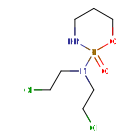
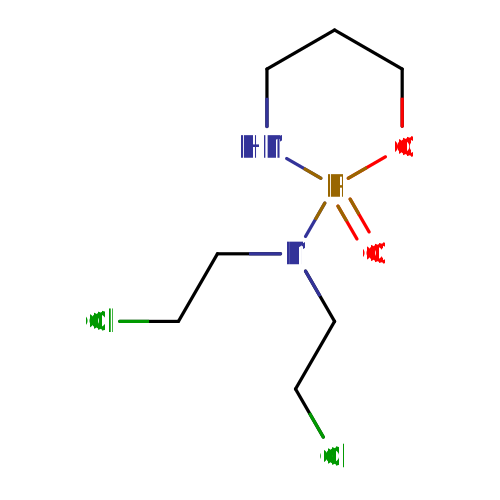
Structure for Cyclophosphamide (DB00531)
- Weight
- Average: 261.086
Monoisotopic: 260.02481966 - Chemical Formula
- C7H15Cl2N2O2P
- Synonyms
- (+-)-Cyclophosphamide
- (±)-2-(BIS(2-CHLOROETHYL)AMINO)TETRAHYDRO-2H-1,3,2-OXAZAPHOSPHORINE 2-OXIDE MONOHYDRATE
- (RS)-Cyclophosphamide
- 2-[Bis(2-chloroethylamino)]-tetrahydro-2H-1,3,2-oxazaphosphorine-2-oxide
- Anhydrous cyclophosphamide
- Bis(2-chloroethyl)phosphoramide cyclic propanolamide ester
- Ciclofosfamida
- Ciclofosfamide
- Cyclophosphamid
- Cyclophosphamide
- Cyclophosphamide anhydrous
- Cyclophosphamidum
- Cytophosphane
- N,N-Bis(2-chloroethyl)tetrahydro-2H-1,3,2-oxazaphosphorin-2-amine 2-oxide
- External IDs
- B 518
- NSC 26271
- RCRA Waste Number U058

Pharmacology
- Indication
Cyclophosphamide for intravenous injection is indicated for the treatment of a number of malignancies, including: Hodgkin’s disease, lymphocytic lymphoma, mixed-cell type lymphoma, histiocytic lymphoma, Burkitt’s lymphoma; multiple myeloma, leukemias, mycosis fungoides, neuroblastoma, adenocarcinoma of ovary, retinoblastoma, and breast carcinoma.4
Cyclophosphamide oral capsules are additionally indicated for the treatment of minimal change nephrotic syndrome in pediatric patients who fail to adequately respond to (or are unable to tolerate) adrenocorticosteroid therapy.5
 Reduce drug development failure ratesBuild, train, & validate machine-learning modelswith evidence-based and structured datasets.Build, train, & validate predictive machine-learning models with structured datasets.
- Associated Conditions
Indication Type Indication Combined Product Details Approval Level Age Group Patient Characteristics Dose Form Treatment of Acute lymphoblastic leukemia •••••••••••• Treatment of Acute myelocytic leukemia •••••••••••• Treatment of Acute myeloid leukemia (aml) •••••••••••• Treatment of Acute monocytic leukemia •••••••••••• Treatment of Adenocarcinoma of the ovary •••••••••••• - Contraindications & Blackbox Warnings
 Prevent Adverse Drug Events TodayTap into our Clinical API for life-saving information on contraindications & blackbox warnings, population restrictions, harmful risks, & more.Avoid life-threatening adverse drug events with our Clinical API
- Pharmacodynamics
Cyclophosphamide is an antineoplastic in the class of alkylating agents and is used to treat various forms of cancer. Alkylating agents are so named because of their ability to add alkyl groups to many electronegative groups under conditions present in cells. They stop tumor growth by cross-linking guanine bases in DNA double-helix strands - directly attacking DNA. This makes the strands unable to uncoil and separate. As this is necessary in DNA replication, the cells can no longer divide. In addition, these drugs add methyl or other alkyl groups onto molecules where they do not belong which in turn inhibits their correct utilization by base pairing and causes a miscoding of DNA. Alkylating agents are cell cycle-nonspecific. Alkylating agents work by three different mechanisms all of which achieve the same end result - disruption of DNA function and cell death.
- Mechanism of action
Alkylating agents work by three different mechanisms: 1) attachment of alkyl groups to DNA bases, resulting in the DNA being fragmented by repair enzymes in their attempts to replace the alkylated bases, preventing DNA synthesis and RNA transcription from the affected DNA, 2) DNA damage via the formation of cross-links (bonds between atoms in the DNA) which prevents DNA from being separated for synthesis or transcription, and 3) the induction of mispairing of the nucleotides leading to mutations.
Target Actions Organism ADNA cross-linking/alkylationHumans UNuclear receptor subfamily 1 group I member 2 Not Available Humans - Absorption
After oral administration, peak concentrations occur at one hour.
- Volume of distribution
30-50 L
- Protein binding
20% of cyclophosphamide is protein bound with no dose dependent changes. Some metabolites are protein bound to an extent greater than 60%.
- Metabolism
Metabolism and activation occurs at the liver. 75% of the drug is activated by cytochrome P450 isoforms, CYP2A6, 2B6, 3A4, 3A5, 2C9, 2C18, and 2C19. The CYP2B6 isoform is the enzyme with the highest 4-hydroxylase activity. Cyclophosphamide undergoes activation to eventually form active metabolites, phosphoramide mustard and acrolein. Cyclophosphamide appears to induce its own metabolism which results in an overall increase in clearance, increased formation of 4-hydroxyl metabolites, and shortened t1/2 values following repeated administration.
Hover over products below to view reaction partners
- Route of elimination
Cyclophosphamide is eliminated primarily in the form of metabolites. 10-20% is excreted unchanged in the urine and 4% is excreted in the bile following IV administration.
- Half-life
3-12 hours
- Clearance
Total body clearance = 63 ± 7.6 L/kg.
- Adverse Effects
 Improve decision support & research outcomesWith structured adverse effects data, including: blackbox warnings, adverse reactions, warning & precautions, & incidence rates. View sample adverse effects data in our new Data Library!Improve decision support & research outcomes with our structured adverse effects data.
- Toxicity
Adverse reactions reported most often include neutropenia, febrile neutropenia, fever, alopecia, nausea, vomiting, and diarrhea.
- Pathways
Pathway Category Cyclophosphamide Action Pathway Drug action Cyclophosphamide Metabolism Pathway Drug metabolism - Pharmacogenomic Effects/ADRs
Interacting Gene/Enzyme Allele name Genotype(s) Defining Change(s) Type(s) Description Details Cytochrome P450 3A4 CYP3A4*1B (G;G) / (A;G) G Allelle Effect Directly Studied Patients with this genotype have reduced metabolism of cyclophosphamide to its active form and reduced disease free survival time when using cyclophosphamide to treat node-positive breast cancer. Details Cytochrome P450 2B6 CYP2B6*1G (C;C) / (C;T) C Allelle Effect Directly Studied Patients with this genotype have reduced metabolism of cyclophosphamide to its active form. Details
Interactions
- Drug Interactions
- This information should not be interpreted without the help of a healthcare provider. If you believe you are experiencing an interaction, contact a healthcare provider immediately. The absence of an interaction does not necessarily mean no interactions exist.
Drug Interaction Integrate drug-drug
interactions in your softwareAbametapir The serum concentration of Cyclophosphamide can be increased when it is combined with Abametapir. Abatacept The metabolism of Cyclophosphamide can be increased when combined with Abatacept. Abciximab The risk or severity of bleeding can be increased when Abciximab is combined with Cyclophosphamide. Abemaciclib The metabolism of Abemaciclib can be increased when combined with Cyclophosphamide. Abiraterone The metabolism of Cyclophosphamide can be decreased when combined with Abiraterone. - Food Interactions
- Drink plenty of fluids. Drink 2 to 3 liters of fluids a day.
- Take with food. Food reduces irritation.
Products
 Drug product information from 10+ global regionsOur datasets provide approved product information including:dosage, form, labeller, route of administration, and marketing period.Access drug product information from over 10 global regions.
- Product Ingredients
Ingredient UNII CAS InChI Key Cyclophosphamide monohydrate 8N3DW7272P 6055-19-2 PWOQRKCAHTVFLB-UHFFFAOYSA-N - Product Images


- International/Other Brands
- Endoxan (Actavis) / Neosar / Procytox (Baxter) / Revimmune / Sendoxan (Baxter)
- Brand Name Prescription Products
Name Dosage Strength Route Labeller Marketing Start Marketing End Region Image Cyclophosphamide Injection, solution 200 mg/1mL Intravenous BluePoint Laboratories 2023-02-20 Not applicable US 
Cyclophosphamide Injection 500 mg/2.5mL Intravenous Eugia US LLC 2023-11-20 Not applicable US Cyclophosphamide Injection, solution 200 mg/1mL Intravenous Ingenus Pharmaceuticals, LLC 2021-11-19 Not applicable US Cyclophosphamide Injection, solution 200 mg/1mL Intravenous Ingenus Pharmaceuticals, LLC 2020-07-30 Not applicable US Cyclophosphamide Injection, solution, concentrate 500 mg/5mL Intravenous Sandoz Inc 2024-04-08 Not applicable US - Generic Prescription Products
Name Dosage Strength Route Labeller Marketing Start Marketing End Region Image Cyclophosphamide Injection, powder, lyophilized, for solution 2 g/150mL Intravenous; Oral XGen Pharmaceuticals DJB, Inc. 2023-12-19 Not applicable US Cyclophosphamide Capsule 50 mg/1 Oral Cipla USA Inc. 2019-01-18 Not applicable US Cyclophosphamide Capsule 50 mg/1 Oral ANI Pharmaceuticals, Inc. 2020-06-22 2023-08-31 US Cyclophosphamide Injection, powder, for solution 2 g/100mL Intravenous; Oral Fresenius Kabi USA, LLC 2023-11-17 Not applicable US Cyclophosphamide Injection, powder, for solution 1 g/50mL Intravenous; Oral Amneal Pharmaceuticals LLC 2018-05-31 Not applicable US - Mixture Products
Name Ingredients Dosage Route Labeller Marketing Start Marketing End Region Image Procytox for Injection 2000mg Pws IV Cyclophosphamide (2 g / vial) + Sodium chloride (900 mg / vial) Powder, for solution Intravenous Carter Horner Corp. 1994-12-31 2001-05-22 Canada 


Categories
- ATC Codes
- L01AA01 — Cyclophosphamide
- Drug Categories
- Alkylating Activity
- Alkylating Drugs
- Antineoplastic Agents
- Antineoplastic Agents, Alkylating
- Antineoplastic and Immunomodulating Agents
- Antirheumatic Agents
- Cardiotoxic antineoplastic agents
- Cytochrome P-450 CYP2A6 Substrates
- Cytochrome P-450 CYP2A6 Substrates with a Narrow Therapeutic Index
- Cytochrome P-450 CYP2B6 Inducers
- Cytochrome P-450 CYP2B6 Inducers (strength unknown)
- Cytochrome P-450 CYP2B6 Substrates
- Cytochrome P-450 CYP2B6 Substrates with a Narrow Therapeutic Index
- Cytochrome P-450 CYP2C18 Substrates
- Cytochrome P-450 CYP2C18 Substrates with a Narrow Therapeutic Index
- Cytochrome P-450 CYP2C19 Substrates
- Cytochrome P-450 CYP2C19 Substrates with a Narrow Therapeutic Index
- Cytochrome P-450 CYP2C8 Inducers
- Cytochrome P-450 CYP2C8 Inducers (strength unknown)
- Cytochrome P-450 CYP2C8 Substrates
- Cytochrome P-450 CYP2C8 Substrates with a Narrow Therapeutic Index
- Cytochrome P-450 CYP2C9 Substrates
- Cytochrome P-450 CYP2C9 Substrates with a Narrow Therapeutic Index
- Cytochrome P-450 CYP3A Inducers
- Cytochrome P-450 CYP3A Substrates
- Cytochrome P-450 CYP3A4 Inducers
- Cytochrome P-450 CYP3A4 Inducers (strength unknown)
- Cytochrome P-450 CYP3A4 Substrates
- Cytochrome P-450 CYP3A4 Substrates with a Narrow Therapeutic Index
- Cytochrome P-450 CYP3A5 Substrates
- Cytochrome P-450 CYP3A5 Substrates with a Narrow Therapeutic Index
- Cytochrome P-450 Enzyme Inducers
- Cytochrome P-450 Substrates
- Hydrocarbons, Halogenated
- Immunologic Factors
- Immunosuppressive Agents
- Methemoglobinemia Associated Agents
- Mustard Compounds
- Mutagens
- Myeloablative Agonists
- Myelosuppressive Agents
- Narrow Therapeutic Index Drugs
- Neurotoxic agents
- Nitrogen Mustard Analogues
- Nitrogen Mustard Compounds
- Noxae
- Organophosphorus Compounds
- Phosphoramide Mustards
- Phosphoramides
- Toxic Actions
- Chemical TaxonomyProvided by Classyfire
- Description
- This compound belongs to the class of organic compounds known as nitrogen mustard compounds. These are compounds having two beta-haloalkyl groups bound to a nitrogen atom.
- Kingdom
- Organic compounds
- Super Class
- Organic nitrogen compounds
- Class
- Organonitrogen compounds
- Sub Class
- Nitrogen mustard compounds
- Direct Parent
- Nitrogen mustard compounds
- Alternative Parents
- Phosphoric monoester diamides / Oxazaphosphinanes / Oxacyclic compounds / Azacyclic compounds / Organopnictogen compounds / Organooxygen compounds / Organochlorides / Organic oxides / Hydrocarbon derivatives / Alkyl chlorides
- Substituents
- Aliphatic heteromonocyclic compound / Alkyl chloride / Alkyl halide / Azacycle / Hydrocarbon derivative / Nitrogen mustard / Organic oxide / Organic oxygen compound / Organic phosphoric acid amide / Organic phosphoric acid derivative
- Molecular Framework
- Aliphatic heteromonocyclic compounds
- External Descriptors
- organochlorine compound, nitrogen mustard, phosphorodiamide (CHEBI:4027)
- Affected organisms
- Humans and other mammals
Chemical Identifiers
- UNII
- 6UXW23996M
- CAS number
- 50-18-0
- InChI Key
- CMSMOCZEIVJLDB-UHFFFAOYSA-N
- InChI
- InChI=1S/C7H15Cl2N2O2P/c8-2-5-11(6-3-9)14(12)10-4-1-7-13-14/h1-7H2,(H,10,12)
- IUPAC Name
- 2-[bis(2-chloroethyl)amino]-1,3,2lambda5-oxazaphosphinan-2-one
- SMILES
- ClCCN(CCCl)P1(=O)NCCCO1
References
- Synthesis Reference
Riccardo Dalla-Favera, Alessandro Massimo Gianni, "Retroviral vector capable of transducing the aldehyde dehydrogenase-1 gene and making cells resistant to the chemotherapeutic agent cyclophosphamide and its derivatives and analogs." U.S. Patent US6268138, issued March, 1999.
US6268138- General References
- Brock N: The history of the oxazaphosphorine cytostatics. Cancer. 1996 Aug 1;78(3):542-7. [Article]
- Brock N: Oxazaphosphorine cytostatics: past-present-future. Seventh Cain Memorial Award lecture. Cancer Res. 1989 Jan 1;49(1):1-7. [Article]
- FDA Approved Drug Products: Cyclophosphamide Intravenous Injection [Link]
- FDA Approved Drug Products: Cyclophosphamide for intravenous injection (November 2023) [Link]
- FDA Approved Drug Products: Cyclophosphamide capsules for oral use (September 2019) [Link]
- External Links
- Human Metabolome Database
- HMDB0014672
- KEGG Drug
- D07760
- KEGG Compound
- C07888
- PubChem Compound
- 2907
- PubChem Substance
- 46505441
- ChemSpider
- 2804
- BindingDB
- 50237604
- 1545988
- ChEBI
- 4027
- ChEMBL
- CHEMBL88
- Therapeutic Targets Database
- DAP000532
- PharmGKB
- PA449165
- RxList
- RxList Drug Page
- Drugs.com
- Drugs.com Drug Page
- PDRhealth
- PDRhealth Drug Page
- Wikipedia
- Cyclophosphamide
- MSDS
- Download (76.1 KB)
Clinical Trials
- Clinical Trials
Phase Status Purpose Conditions Count 4 Active Not Recruiting Treatment Central Nervous System Embryonal Tumors / Medulloblastomas 1 4 Active Not Recruiting Treatment Diffuse Large B-Cell Lymphoma (DLBCL) 1 4 Completed Health Services Research Breast Cancer 1 4 Completed Other Breast Cancer / Obesity 1 4 Completed Prevention Hematopoietic Stem Cell Transplantation (SCT) 1
Pharmacoeconomics
- Manufacturers
- Baxter healthcare corp
- Baxter healthcare corp anesthesia and critical care
- Teva parenteral medicines inc
- Roxane laboratories inc
- Packagers
- Baxter International Inc.
- Bristol-Myers Squibb Co.
- Kaiser Foundation Hospital
- Mead Johnson and Co.
- Meda AB
- Medisca Inc.
- Pharmaceutical Utilization Management Program VA Inc.
- Pharmacia Inc.
- Roxane Labs
- Dosage Forms
Form Route Strength Injection, solution Intravenous Injection, powder, for solution Intravenous 1000 mg Injection, powder, lyophilized, for solution Intravenous 1000 mg Injection, powder, lyophilized, for solution Parenteral 1000 mg Injection Parenteral 1.5 g Powder Intravenous 1 g Powder Intravenous 200 mg Solution Intravenous 500.000 mg Injection, powder, for solution Parenteral 1 g Injection, powder, for solution Parenteral 2 g Injection, powder, for solution Parenteral 500 mg Injection, solution Parenteral 1000 mg/2ml Injection, solution Parenteral 2000 mg/4ml Injection, solution Parenteral 500 mg/ml Injection, solution Parenteral 100 mg/ml Injection, powder, for solution Parenteral 1000 mg Injection, powder, for solution Parenteral 2000 mg Capsule Oral 25 mg/1 Capsule Oral 50 mg/1 Injection Intravenous 1 g/5mL Injection Intravenous 1 g/2mL Injection Intravenous 2 g/4mL Injection Intravenous 2 g/10mL Injection Intravenous 500 mg/1mL Injection Intravenous 500 mg/2.5mL Injection, powder, for solution Intravenous; Oral 1 g/50mL Injection, powder, for solution Intravenous; Oral 2 g/100mL Injection, powder, for solution Intravenous; Oral 500 mg/25mL Injection, powder, lyophilized, for solution Intravenous 1 g/50mL Injection, powder, lyophilized, for solution Intravenous 2 g/100mL Injection, powder, lyophilized, for solution Intravenous 500 mg/25mL Injection, powder, lyophilized, for solution Intravenous; Oral 1 g/50mL Injection, powder, lyophilized, for solution Intravenous; Oral 2 g/100mL Injection, powder, lyophilized, for solution Intravenous; Oral 2 g/150mL Injection, powder, lyophilized, for solution Intravenous; Oral 500 mg/25mL Injection, solution Intravenous 200 mg/1mL Injection, solution, concentrate Intravenous 1000 mg/10mL Injection, solution, concentrate Intravenous 2000 mg/20mL Injection, solution, concentrate Intravenous 500 mg/5mL Injection, powder, lyophilized, for solution 1000 MG Injection, powder, lyophilized, for solution 200 mg Injection, powder, for solution Injection, powder, for solution Intravenous 1 g Injection, powder, for solution Intramuscular; Intraperitoneal; Intrapleural; Intravascular 1 g/50mL Injection, powder, for solution Intramuscular; Intraperitoneal; Intrapleural; Intravascular 2 g/100mL Injection, powder, for solution Intramuscular; Intraperitoneal; Intrapleural; Intravascular 500 mg/25mL Tablet Oral Tablet Oral 25 mg/1 Tablet Oral 50 mg/1 Injection, powder, for solution 1 g Injection, powder, for solution 200 mg Injection, powder, for solution 500 mg Tablet, sugar coated Oral 50 mg Injection, solution Intravenous 1 g Injection, powder, for solution Intravenous 100000 g Tablet, coated Oral 50 mg Injection, powder, for solution Intravenous 50000000 mg Injection, solution Intravenous 500 mg Injection, powder, for solution Parenteral 200 MG Injection, powder, for solution Intravenous 200 mg Injection, powder, for solution Intravenous 500 mg Injection, powder, for solution Intravenous Injection, powder, lyophilized, for solution Intravenous 200 mg Solution Parenteral 200.000 mg Injection, powder, lyophilized, for solution Parenteral 500 mg Solution Intravenous 1000.00 mg Powder, for solution Intravenous 1000 mg / vial Powder, for solution Intravenous 200 mg / vial Powder, for solution Intravenous 2000 mg / vial Powder, for solution Intravenous 500 mg / vial Powder, for solution Intravenous Powder, for solution Parenteral 500 mg / vial Tablet Oral 25 mg / tab Tablet Oral 25 mg Tablet Oral 50 mg / tab Powder, for solution Intravenous 1 g / vial Solution Intravenous 200.000 mg Powder Intravenous 200 mg/1vial Powder Intravenous 500 mg/1vial Powder Intravenous 100 mg/1vial Tablet Oral 50 mg - Prices
Unit description Cost Unit Cyclophosphamide 500 mg vial 37.76USD vial Cyclophosphamide 100% powder 33.66USD g Cytoxan 500 mg vial 15.25USD vial Cytoxan 50 mg tablet 4.14USD tablet Cyclophosphamide 50 mg tablet 3.92USD tablet Cytoxan 25 mg tablet 2.26USD tablet Cyclophosphamide 25 mg tablet 2.09USD tablet DrugBank does not sell nor buy drugs. Pricing information is supplied for informational purposes only.- Patents
Patent Number Pediatric Extension Approved Expires (estimated) Region US10993952 No 2021-05-04 2036-02-15 US US9662342 No 2017-05-30 2035-06-26 US US10849916 No 2020-12-01 2035-07-13 US US11382923 No 2015-12-01 2035-12-01 US
Properties
- State
- Solid
- Experimental Properties
Property Value Source melting point (°C) 48-49 Arnold, H., Brock, N. and Bourseaux, F.; U S . Patent 3,018,302; January 23,1962; assigned to Asta-Werke A.G. Chemische Fabrik (W. Germany). water solubility Soluble. 1-5 g/100 mL at 23 °C Not Available logP 0.8 Not Available - Predicted Properties
Property Value Source Water Solubility 15.1 mg/mL ALOGPS logP 0.76 ALOGPS logP 0.097 Chemaxon logS -1.2 ALOGPS pKa (Strongest Acidic) 13.48 Chemaxon Physiological Charge 0 Chemaxon Hydrogen Acceptor Count 1 Chemaxon Hydrogen Donor Count 1 Chemaxon Polar Surface Area 41.57 Å2 Chemaxon Rotatable Bond Count 5 Chemaxon Refractivity 58.48 m3·mol-1 Chemaxon Polarizability 23.72 Å3 Chemaxon Number of Rings 1 Chemaxon Bioavailability 1 Chemaxon Rule of Five Yes Chemaxon Ghose Filter Yes Chemaxon Veber's Rule No Chemaxon MDDR-like Rule No Chemaxon - Predicted ADMET Features
Property Value Probability Human Intestinal Absorption + 0.9722 Blood Brain Barrier + 0.971 Caco-2 permeable - 0.5451 P-glycoprotein substrate Non-substrate 0.71 P-glycoprotein inhibitor I Non-inhibitor 0.779 P-glycoprotein inhibitor II Non-inhibitor 0.9797 Renal organic cation transporter Non-inhibitor 0.8125 CYP450 2C9 substrate Non-substrate 0.7856 CYP450 2D6 substrate Non-substrate 0.5884 CYP450 3A4 substrate Substrate 0.5461 CYP450 1A2 substrate Non-inhibitor 0.9045 CYP450 2C9 inhibitor Non-inhibitor 0.9071 CYP450 2D6 inhibitor Non-inhibitor 0.9232 CYP450 2C19 inhibitor Non-inhibitor 0.9026 CYP450 3A4 inhibitor Non-inhibitor 0.9232 CYP450 inhibitory promiscuity Low CYP Inhibitory Promiscuity 0.9737 Ames test AMES toxic 0.9146 Carcinogenicity Non-carcinogens 0.8727 Biodegradation Not ready biodegradable 0.9511 Rat acute toxicity 3.3855 LD50, mol/kg Not applicable hERG inhibition (predictor I) Strong inhibitor 0.8419 hERG inhibition (predictor II) Non-inhibitor 0.8735
Spectra
- Mass Spec (NIST)
- Download (9.91 KB)
- Spectra
- Chromatographic Properties
Collision Cross Sections (CCS)
Adduct CCS Value (Å2) Source type Source [M-H]- 145.7077843 predictedDarkChem Lite v0.1.0 [M-H]- 151.2296 predictedDeepCCS 1.0 (2019) [M+H]+ 146.1072843 predictedDarkChem Lite v0.1.0 [M+H]+ 154.38454 predictedDeepCCS 1.0 (2019) [M+Na]+ 146.4020843 predictedDarkChem Lite v0.1.0 [M+Na]+ 163.43007 predictedDeepCCS 1.0 (2019)
Targets

References
- Overington JP, Al-Lazikani B, Hopkins AL: How many drug targets are there? Nat Rev Drug Discov. 2006 Dec;5(12):993-6. [Article]
- Imming P, Sinning C, Meyer A: Drugs, their targets and the nature and number of drug targets. Nat Rev Drug Discov. 2006 Oct;5(10):821-34. [Article]
- Khan O, Middleton MR: The therapeutic potential of O6-alkylguanine DNA alkyltransferase inhibitors. Expert Opin Investig Drugs. 2007 Oct;16(10):1573-84. [Article]
- Schmidt E, Tony HP, Brocker EB, Kneitz C: Sun-induced life-threatening lupus nephritis. Ann N Y Acad Sci. 2007 Jun;1108:35-40. [Article]
- Zhang QH, Wu CF, Duan L, Yang JY: Protective effects of total saponins from stem and leaf of Panax ginseng against cyclophosphamide-induced genotoxicity and apoptosis in mouse bone marrow cells and peripheral lymphocyte cells. Food Chem Toxicol. 2008 Jan;46(1):293-302. Epub 2007 Aug 23. [Article]
- Kind
- Protein
- Organism
- Humans
- Pharmacological action
- Unknown
- General Function
- Zinc ion binding
- Specific Function
- Nuclear receptor that binds and is activated by variety of endogenous and xenobiotic compounds. Transcription factor that activates the transcription of multiple genes involved in the metabolism an...
- Gene Name
- NR1I2
- Uniprot ID
- O75469
- Uniprot Name
- Nuclear receptor subfamily 1 group I member 2
- Molecular Weight
- 49761.245 Da
References
- Harmsen S, Meijerman I, Beijnen JH, Schellens JH: Nuclear receptor mediated induction of cytochrome P450 3A4 by anticancer drugs: a key role for the pregnane X receptor. Cancer Chemother Pharmacol. 2009 Jun;64(1):35-43. doi: 10.1007/s00280-008-0842-3. Epub 2008 Oct 7. [Article]
Enzymes
- Kind
- Protein
- Organism
- Humans
- Pharmacological action
- Unknown
- Actions
- Substrate
- General Function
- Steroid hydroxylase activity
- Specific Function
- Cytochromes P450 are a group of heme-thiolate monooxygenases. In liver microsomes, this enzyme is involved in an NADPH-dependent electron transport pathway. It oxidizes a variety of structurally un...
- Gene Name
- CYP2C9
- Uniprot ID
- P11712
- Uniprot Name
- Cytochrome P450 2C9
- Molecular Weight
- 55627.365 Da
References
- Kind
- Protein
- Organism
- Humans
- Pharmacological action
- Unknown
- Actions
- SubstrateInducer
- General Function
- Vitamin d3 25-hydroxylase activity
- Specific Function
- Cytochromes P450 are a group of heme-thiolate monooxygenases. In liver microsomes, this enzyme is involved in an NADPH-dependent electron transport pathway. It performs a variety of oxidation react...
- Gene Name
- CYP3A4
- Uniprot ID
- P08684
- Uniprot Name
- Cytochrome P450 3A4
- Molecular Weight
- 57342.67 Da
References
- Preiss R, Schmidt R, Baumann F, Hanschmann H, Hauss J, Geissler F, Pahlig H, Ratzewiss B: Measurement of 4-hydroxylation of ifosfamide in human liver microsomes using the estimation of free and protein-bound acrolein and codetermination of keto- and carboxyifosfamide. J Cancer Res Clin Oncol. 2002 Jul;128(7):385-92. Epub 2002 Jun 11. [Article]
- Yang L, Yan C, Zhang F, Jiang B, Gao S, Liang Y, Huang L, Chen W: Effects of ketoconazole on cyclophosphamide metabolism: evaluation of CYP3A4 inhibition effect using the in vitro and in vivo models. Exp Anim. 2018 Feb 9;67(1):71-82. doi: 10.1538/expanim.17-0048. Epub 2017 Nov 13. [Article]
- Lindley C, Hamilton G, McCune JS, Faucette S, Shord SS, Hawke RL, Wang H, Gilbert D, Jolley S, Yan B, LeCluyse EL: The effect of cyclophosphamide with and without dexamethasone on cytochrome P450 3A4 and 2B6 in human hepatocytes. Drug Metab Dispos. 2002 Jul;30(7):814-22. doi: 10.1124/dmd.30.7.814. [Article]
- FDA Approved Drug Products: Cyclophosphamide Intravenous Injection [Link]
- Kind
- Protein
- Organism
- Humans
- Pharmacological action
- Unknown
- Actions
- SubstrateInducer
- General Function
- Steroid hydroxylase activity
- Specific Function
- Cytochromes P450 are a group of heme-thiolate monooxygenases. In liver microsomes, this enzyme is involved in an NADPH-dependent electron transport pathway. It oxidizes a variety of structurally un...
- Gene Name
- CYP2B6
- Uniprot ID
- P20813
- Uniprot Name
- Cytochrome P450 2B6
- Molecular Weight
- 56277.81 Da
References
- Preiss R, Schmidt R, Baumann F, Hanschmann H, Hauss J, Geissler F, Pahlig H, Ratzewiss B: Measurement of 4-hydroxylation of ifosfamide in human liver microsomes using the estimation of free and protein-bound acrolein and codetermination of keto- and carboxyifosfamide. J Cancer Res Clin Oncol. 2002 Jul;128(7):385-92. Epub 2002 Jun 11. [Article]
- Rendic S: Summary of information on human CYP enzymes: human P450 metabolism data. Drug Metab Rev. 2002 Feb-May;34(1-2):83-448. [Article]
- Xie HJ, Yasar U, Lundgren S, Griskevicius L, Terelius Y, Hassan M, Rane A: Role of polymorphic human CYP2B6 in cyclophosphamide bioactivation. Pharmacogenomics J. 2003;3(1):53-61. doi: 10.1038/sj.tpj.6500157. [Article]
- Wang H, Tompkins LM: CYP2B6: new insights into a historically overlooked cytochrome P450 isozyme. Curr Drug Metab. 2008 Sep;9(7):598-610. [Article]
- Lindley C, Hamilton G, McCune JS, Faucette S, Shord SS, Hawke RL, Wang H, Gilbert D, Jolley S, Yan B, LeCluyse EL: The effect of cyclophosphamide with and without dexamethasone on cytochrome P450 3A4 and 2B6 in human hepatocytes. Drug Metab Dispos. 2002 Jul;30(7):814-22. doi: 10.1124/dmd.30.7.814. [Article]
- Flockhart Table of Drug Interactions [Link]
- FDA Approved Drug Products: Cyclophosphamide Intravenous Injection [Link]
- Kind
- Protein
- Organism
- Humans
- Pharmacological action
- Unknown
- Actions
- Substrate
- General Function
- Steroid hydroxylase activity
- Specific Function
- Responsible for the metabolism of a number of therapeutic agents such as the anticonvulsant drug S-mephenytoin, omeprazole, proguanil, certain barbiturates, diazepam, propranolol, citalopram and im...
- Gene Name
- CYP2C19
- Uniprot ID
- P33261
- Uniprot Name
- Cytochrome P450 2C19
- Molecular Weight
- 55930.545 Da
References
- Ren S, Yang JS, Kalhorn TF, Slattery JT: Oxidation of cyclophosphamide to 4-hydroxycyclophosphamide and deschloroethylcyclophosphamide in human liver microsomes. Cancer Res. 1997 Oct 1;57(19):4229-35. [Article]
- Helsby NA, Hui CY, Goldthorpe MA, Coller JK, Soh MC, Gow PJ, De Zoysa JZ, Tingle MD: The combined impact of CYP2C19 and CYP2B6 pharmacogenetics on cyclophosphamide bioactivation. Br J Clin Pharmacol. 2010 Dec;70(6):844-53. doi: 10.1111/j.1365-2125.2010.03789.x. [Article]
- Helsby NA, Lo WY, Sharples K, Riley G, Murray M, Spells K, Dzhelai M, Simpson A, Findlay M: CYP2C19 pharmacogenetics in advanced cancer: compromised function independent of genotype. Br J Cancer. 2008 Oct 21;99(8):1251-5. doi: 10.1038/sj.bjc.6604699. [Article]
- Flockhart Table of Drug Interactions [Link]
- FDA Approved Drug Products: Cyclophosphamide Intravenous Injection [Link]
- Kind
- Protein
- Organism
- Humans
- Pharmacological action
- Unknown
- Actions
- Substrate
- General Function
- Steroid hydroxylase activity
- Specific Function
- Exhibits a high coumarin 7-hydroxylase activity. Can act in the hydroxylation of the anti-cancer drugs cyclophosphamide and ifosphamide. Competent in the metabolic activation of aflatoxin B1. Const...
- Gene Name
- CYP2A6
- Uniprot ID
- P11509
- Uniprot Name
- Cytochrome P450 2A6
- Molecular Weight
- 56501.005 Da
References
- Roy P, Yu LJ, Crespi CL, Waxman DJ: Development of a substrate-activity based approach to identify the major human liver P-450 catalysts of cyclophosphamide and ifosfamide activation based on cDNA-expressed activities and liver microsomal P-450 profiles. Drug Metab Dispos. 1999 Jun;27(6):655-66. [Article]
- FDA Approved Drug Products: Cyclophosphamide Intravenous Injection [Link]
- Kind
- Protein
- Organism
- Humans
- Pharmacological action
- Unknown
- Actions
- Substrate
- General Function
- Steroid hydroxylase activity
- Specific Function
- Cytochromes P450 are a group of heme-thiolate monooxygenases. In liver microsomes, this enzyme is involved in an NADPH-dependent electron transport pathway. It oxidizes a variety of structurally un...
- Gene Name
- CYP2C18
- Uniprot ID
- P33260
- Uniprot Name
- Cytochrome P450 2C18
- Molecular Weight
- 55710.075 Da
References
- Roy P, Yu LJ, Crespi CL, Waxman DJ: Development of a substrate-activity based approach to identify the major human liver P-450 catalysts of cyclophosphamide and ifosfamide activation based on cDNA-expressed activities and liver microsomal P-450 profiles. Drug Metab Dispos. 1999 Jun;27(6):655-66. [Article]
- FDA Approved Drug Products: Cyclophosphamide Intravenous Injection [Link]
- Kind
- Protein
- Organism
- Humans
- Pharmacological action
- Unknown
- Actions
- Substrate
- General Function
- Oxygen binding
- Specific Function
- Cytochromes P450 are a group of heme-thiolate monooxygenases. In liver microsomes, this enzyme is involved in an NADPH-dependent electron transport pathway. It oxidizes a variety of structurally un...
- Gene Name
- CYP3A5
- Uniprot ID
- P20815
- Uniprot Name
- Cytochrome P450 3A5
- Molecular Weight
- 57108.065 Da
References
- Ekhart C, Doodeman VD, Rodenhuis S, Smits PH, Beijnen JH, Huitema AD: Influence of polymorphisms of drug metabolizing enzymes (CYP2B6, CYP2C9, CYP2C19, CYP3A4, CYP3A5, GSTA1, GSTP1, ALDH1A1 and ALDH3A1) on the pharmacokinetics of cyclophosphamide and 4-hydroxycyclophosphamide. Pharmacogenet Genomics. 2008 Jun;18(6):515-23. doi: 10.1097/FPC.0b013e3282fc9766. [Article]
- FDA Approved Drug Products: Cyclophosphamide Intravenous Injection [Link]
- Kind
- Protein
- Organism
- Humans
- Pharmacological action
- Unknown
- Actions
- SubstrateInducer
- General Function
- Steroid hydroxylase activity
- Specific Function
- Cytochromes P450 are a group of heme-thiolate monooxygenases. In liver microsomes, this enzyme is involved in an NADPH-dependent electron transport pathway. It oxidizes a variety of structurally un...
- Gene Name
- CYP2C8
- Uniprot ID
- P10632
- Uniprot Name
- Cytochrome P450 2C8
- Molecular Weight
- 55824.275 Da
References
- Chang TK, Yu L, Goldstein JA, Waxman DJ: Identification of the polymorphically expressed CYP2C19 and the wild-type CYP2C9-ILE359 allele as low-Km catalysts of cyclophosphamide and ifosfamide activation. Pharmacogenetics. 1997 Jun;7(3):211-21. [Article]
- Chang TK, Weber GF, Crespi CL, Waxman DJ: Differential activation of cyclophosphamide and ifosphamide by cytochromes P-450 2B and 3A in human liver microsomes. Cancer Res. 1993 Dec 1;53(23):5629-37. [Article]
- Chang TK, Yu L, Maurel P, Waxman DJ: Enhanced cyclophosphamide and ifosfamide activation in primary human hepatocyte cultures: response to cytochrome P-450 inducers and autoinduction by oxazaphosphorines. Cancer Res. 1997 May 15;57(10):1946-54. [Article]


Drug created at June 13, 2005 13:24 / Updated at April 26, 2024 00:45