Identification
- Summary
Ivermectin is an anti parasite medication used to treat head lice, onchocerciasis, strongyloidiasis, ascariasis, trichuriasis, and enterobiasis.
- Brand Names
- Sklice, Soolantra, Stromectol
- Generic Name
- Ivermectin
- DrugBank Accession Number
- DB00602
- Background
Ivermectin is a semi-synthetic antiparasitic medication derived from avermectins, a class of highly-active broad-spectrum antiparasitic agents isolated from the fermentation products of Streptomyces avermitilis.8 Ivermectin itself is a mixture of two avermectins, comprising roughly 90% 5-O-demethyl-22,23-dihydroavermectin A1a (22,23-dihydroavermectin B1a) and 10% 5-O-demethyl-25-de(1-methylpropyl)-22,23-dihydro-25-(1-methylethyl)avermectin A1a (22,23-dihydroavermectin B1b).8
Ivermectin is mainly used in humans in the treatment of onchocerciasis, but may also be effective against other worm infestations (such as strongyloidiasis, ascariasis, trichuriasis and enterobiasis). Applied topically, it may be used in the treatment of head lice infestation.
With the advent of 2020 and the COVID-19 pandemic, ivermectin began garnering notoriety due to its off-label use for the prophylaxis and treatment of COVID-19. While studies are still ongoing, much of the evidence for ivermectin in COVID-19 relies on pre-print in vitro data, and the clinical utility of this data remains unclear. Due to a number of factors - for example, the relatively low number of patients per trial and the speed at which these trials were conducted - studies on the use of ivermectin in COVID-19 have been fraught with statistical errors and accusations of plagiarism.9,5 In addition, the use of aggregate patient data in large-scale meta-analyses (as opposed to individual patient data (IPD)) has been shown to disguise otherwise blatant data errors, such as extreme terminal digit bias and the duplication of blocks of patient records.5
Until high-quality, peer-reviewed data regarding both the safety and efficacy of ivermectin for COVID-19 in humans becomes available, the use of ivermectin for these purposes should be avoided in favour of thoroughly-vetted therapies (e.g. COVID-19 vaccines like Comirnaty).
- Type
- Small Molecule
- Groups
- Approved, Investigational, Vet approved
- Structure

Structure for Ivermectin (DB00602)
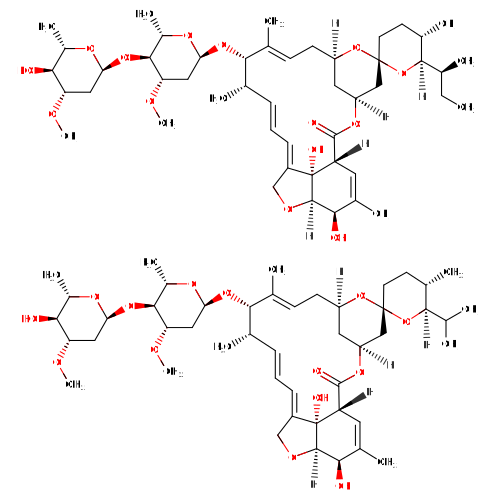
- Weight
- Average: 1736.185
Monoisotopic: 1735.000064061 - Chemical Formula
- C95H146O28
- Synonyms
- Ivermectin
- Ivermectina
- Ivermectine
- Ivermectinum
- External IDs
- L 640471
- L-640471
- MK 933
- MK-0933
- MK-933

Pharmacology
- Indication
Administered topically, ivermectin cream is indicated for the treatment of inflammatory lesions associated with rosacea.7 An over-the-counter ivermection lotion is commercially available and indicated for the topical treatment of head lice infestations in patients ≥6 months of age.6
Orally administered ivermectin is indicated as a broad-spectrum anti-parasitic for the treatment of intestinal strongyloidiasis caused by Strongyloides stercoralis and onchocerciasis caused by Onchocerca volvulus.8 Systemic ivermectin therapy is used internationally for the treatment of various tropical diseases, including filariasis, cutaneous larva migrans, and Loa loa infection, amongst others.2
 Reduce drug development failure ratesBuild, train, & validate machine-learning modelswith evidence-based and structured datasets.Build, train, & validate predictive machine-learning models with structured datasets.
- Associated Conditions
Indication Type Indication Combined Product Details Approval Level Age Group Patient Characteristics Dose Form Treatment of Ascariasis ••• ••••• Treatment of Demodex infestation ••• ••••• Treatment of Enterobiasis ••• ••••• Treatment of Filariasis caused by loa loa ••• ••••• Treatment of Gnathostomiasis ••• ••••• - Contraindications & Blackbox Warnings
 Prevent Adverse Drug Events TodayTap into our Clinical API for life-saving information on contraindications & blackbox warnings, population restrictions, harmful risks, & more.Avoid life-threatening adverse drug events with our Clinical API
- Pharmacodynamics
Ivermectin is a semisynthetic, anthelminitic agent. It is an avermectin, a group of pentacyclic sixteen-membered lactones (i.e. a macrocyclic lactone disaccharide) derived from the soil bacterium Streptomyces avermitilis. Avermectins are potent and broad-spectrum anti-parasitic agents.
- Mechanism of action
Ivermectin binds selectively and with high affinity to glutamate-gated chloride ion channels in invertebrate muscle and nerve cells of the microfilaria. This binding causes an increase in the permeability of the cell membrane to chloride ions and results in hyperpolarization of the cell, leading to paralysis and death of the parasite. Ivermectin also is believed to act as an agonist of the neurotransmitter gamma-aminobutyric acid (GABA), thereby disrupting GABA-mediated central nervous system (CNS) neurosynaptic transmission. Ivermectin may also impair normal intrauterine development of O. volvulus microfilariae and may inhibit their release from the uteri of gravid female worms.
- Absorption
Moderately well absorbed. Improved absorption with high fat meal.
- Volume of distribution
The volume of distribution is 3 to 3.5 L/kg and it does not cross the blood-brain barrier.
- Protein binding
93%
- Metabolism
Primarily hepatic. Ivermectin and/or its metabolites are excreted almost exclusively in the feces over an estimated 12 days, with less than 1 % of the administered dose excreted in the urine.
Hover over products below to view reaction partners
- Route of elimination
Ivermectin is metabolized in the liver, and ivermectin and/or its metabolites are excreted almost exclusively in the feces over an estimated 12 days, with less than 1% of the administered dose excreted in the urine.
- Half-life
Following oral administration, the half-life of ivermectin is approximately 18 hours.8
- Clearance
Not Available
- Adverse Effects
 Improve decision support & research outcomesWith structured adverse effects data, including: blackbox warnings, adverse reactions, warning & precautions, & incidence rates. View sample adverse effects data in our new Data Library!Improve decision support & research outcomes with our structured adverse effects data.
- Toxicity
Used appropriately, topically applied ivermectin lotions and creams are unlikely to cause significant toxicity. With accidental or intentional significant exposure to unknown quantities of veterinary formulations of ivermectin (by ingestion, inhalation, injection, or significant body surface area exposure) patients have reported rash, edema, headache, dizziness, asthenia, nausea, vomiting, and diarrhea. Other less common effects include seizure, ataxia, dyspnea, abdominal pain, paresthesia, urticaria, and contact dermatitis.8 Overdosage with orally administered ivermectin was lethal in mice and rats (at doses several-fold higher than the recommended dose), with death preceded by significant ataxia, bradypnea, tremors, ptosis, decreased activity, emesis, and mydriasis.8
If overdosage of ivermectin is suspected, initiate supportive therapy as clinically indicated, including the use of parenteral fluids and electrolytes, respiratory support, and pressor agents to manage hypotension. Induction of emesis and/or gastric lavage may be considered alongside other purgatives and routine anti-poison measures if clinically indicated.8
- Pathways
- Not Available
- Pharmacogenomic Effects/ADRs
- Not Available
Interactions
- Drug Interactions
- This information should not be interpreted without the help of a healthcare provider. If you believe you are experiencing an interaction, contact a healthcare provider immediately. The absence of an interaction does not necessarily mean no interactions exist.
Drug Interaction Integrate drug-drug
interactions in your softwareAbametapir The serum concentration of Ivermectin can be increased when it is combined with Abametapir. Abemaciclib Abemaciclib may decrease the excretion rate of Ivermectin which could result in a higher serum level. Acenocoumarol Ivermectin may increase the anticoagulant activities of Acenocoumarol. Acipimox The risk or severity of myopathy, rhabdomyolysis, and myoglobinuria can be increased when Ivermectin is combined with Acipimox. Afatinib Afatinib may decrease the excretion rate of Ivermectin which could result in a higher serum level. - Food Interactions
- Take on an empty stomach. Oral ivermectin should be taken on an empty stomach with a glass of water.
Products
 Drug product information from 10+ global regionsOur datasets provide approved product information including:dosage, form, labeller, route of administration, and marketing period.Access drug product information from over 10 global regions.
- Product Images


- International/Other Brands
- Ascapil (Abbott) / Detebencil (Roux-Ocefa) / Ermetin (Unipharm) / Gotax (Metlen) / Imectin (Pulse) / Ivectin (Aristopharma) / Ivera (Beximco) / Ivergot (Licol) / Ivermec (UCI) / Ivexterm (Valeant) / Ivori (Invision) / Kaonol (Mediderm) / Kilox (Bussié) / Maikeding (Hisun) / Quanox (Dermacare) / Revectina (Solvay) / Scabo (Delta) / Scavista (Zuventus) / Securo (Valeant) / Vermectin (Atlantic Lab)
- Brand Name Prescription Products
Name Dosage Strength Route Labeller Marketing Start Marketing End Region Image Rosiver Cream 1 % w/w Topical Galderma 2015-05-25 Not applicable Canada 
Sklice Lotion 0.585 g/117g Topical Sanofi Pasteur, Inc 2012-07-09 2017-07-31 US 
Sklice Lotion 5 mg/1g Topical Arbor Pharmaceuticals 2016-06-30 Not applicable US Soolantra Cream 10 mg/1g Topical Galderma Laboratories, L.P. 2015-01-01 Not applicable US Stromectol Tablet 3 mg/1 Oral Merck Sharp & Dohme Llc 1996-11-22 Not applicable US 
- Generic Prescription Products
Name Dosage Strength Route Labeller Marketing Start Marketing End Region Image Ivermectin Cream 10 mg/1g Topical Actavis Pharma, Inc. 2019-10-14 Not applicable US Ivermectin Cream 10 mg/1g Topical Mayne Pharma Inc. 2024-01-08 Not applicable US Ivermectin Tablet 3 mg/1 Oral bryant ranch prepack 2014-11-15 Not applicable US Ivermectin Cream 10 mg/1g Topical Viona Pharmaceuticals Inc 2023-06-10 Not applicable US Ivermectin Tablet 3 mg/1 Oral A-S Medication Solutions 2014-11-15 Not applicable US - Over the Counter Products
Name Dosage Strength Route Labeller Marketing Start Marketing End Region Image Ivermectin Lotion 5 mg/1g Topical CVS PHARMACY 2020-05-06 Not applicable US Ivermectin Lotion 5 mg/1g Topical Taro Pharmaceuticals U.S.A., Inc. 2020-05-06 Not applicable US Ivermectin Lotion 5 mg/1g Topical Walmart Inc. 2022-12-27 Not applicable US Ivermectin Lotion 5 mg/1g Topical Walgreen Company 2020-05-06 Not applicable US Ivermectin Lotion 5 mg/1g Topical Rite Aid Corporation 2020-05-06 Not applicable US - Unapproved/Other Products
Name Ingredients Dosage Route Labeller Marketing Start Marketing End Region Image 171083 Ivermectin 1% / Metronidazole 1% / Niacinamide 4% Ivermectin (1 g/100g) + Metronidazole (1 g/100g) + Nicotinamide (4 g/100g) Gel Topical Sincerus Florida, LLC 2020-07-02 Not applicable US Brimonidine Tartrate 0.25% / Ivermectin 1% / Metronidazole 1% / Niacinamide 4% Ivermectin (1 g/100g) + Brimonidine tartrate (0.25 g/100g) + Metronidazole (1 g/100g) + Nicotinamide (4 g/100g) Gel Topical Sincerus Florida, LLC 2019-05-16 Not applicable US Ivermectin 1% / Metronidazole 1% Ivermectin (1 g/100g) + Metronidazole (1 g/100g) Gel Topical Sincerus Florida, LLC 2019-05-01 Not applicable US Ivermectin 1% / Metronidazole 1% / Niacinamide 4% Ivermectin (1 g/100g) + Metronidazole (1 g/100g) + Nicotinamide (4 g/100g) Gel Topical Sincerus Florida, LLC 2019-05-01 Not applicable US Neck Hump Removal Patch Ivermectin (14 g/1001) Patch Topical Guangzhou Hanhai Trading Co., Ltd 2023-09-19 Not applicable US


Categories
- ATC Codes
- P02CF01 — Ivermectin
- P02CF — Avermectines
- P02C — ANTINEMATODAL AGENTS
- P02 — ANTHELMINTICS
- P — ANTIPARASITIC PRODUCTS, INSECTICIDES AND REPELLENTS
- Drug Categories
- Agents Causing Muscle Toxicity
- Agrochemicals
- Anthelmintics
- Anti-Infective Agents
- Antinematodal Agents
- Antiparasitic Agents
- Antiparasitic Products, Insecticides and Repellents
- Avermectines
- BCRP/ABCG2 Substrates
- Compounds used in a research, industrial, or household setting
- Cytochrome P-450 CYP2D6 Substrates
- Cytochrome P-450 CYP2E1 Substrates
- Cytochrome P-450 CYP3A Substrates
- Cytochrome P-450 CYP3A4 Substrates
- Cytochrome P-450 Substrates
- Dermatologicals
- Insecticides
- Lactones
- OATP1B1/SLCO1B1 Inhibitors
- OATP1B3 inhibitors
- P-glycoprotein inducers
- P-glycoprotein inhibitors
- P-glycoprotein substrates
- Pediculicides
- Pesticides
- Polyketides
- Scabicides and Pediculicides
- Toxic Actions
- Classification
- Not classified
- Affected organisms
- Parasitic nematodes and other roundworms
- Head lice
Chemical Identifiers
- UNII
- 8883YP2R6D
- CAS number
- 70288-86-7
- InChI Key
- SPBDXSGPUHCETR-JFUDTMANSA-N
- InChI
- InChI=1S/C48H74O14.C47H72O14/c1-11-25(2)43-28(5)17-18-47(62-43)23-34-20-33(61-47)16-15-27(4)42(26(3)13-12-14-32-24-55-45-40(49)29(6)19-35(46(51)58-34)48(32,45)52)59-39-22-37(54-10)44(31(8)57-39)60-38-21-36(53-9)41(50)30(7)56-38;1-24(2)41-27(5)16-17-46(61-41)22-33-19-32(60-46)15-14-26(4)42(25(3)12-11-13-31-23-54-44-39(48)28(6)18-34(45(50)57-33)47(31,44)51)58-38-21-36(53-10)43(30(8)56-38)59-37-20-35(52-9)40(49)29(7)55-37/h12-15,19,25-26,28,30-31,33-45,49-50,52H,11,16-18,20-24H2,1-10H3;11-14,18,24-25,27,29-30,32-44,48-49,51H,15-17,19-23H2,1-10H3/b13-12+,27-15+,32-14+;12-11+,26-14+,31-13+/t25-,26-,28-,30-,31-,33+,34-,35-,36-,37-,38-,39-,40+,41-,42-,43+,44-,45+,47+,48+;25-,27-,29-,30-,32+,33-,34-,35-,36-,37-,38-,39+,40-,41+,42-,43-,44+,46+,47+/m00/s1
- IUPAC Name
- (1'R,2R,4'S,5S,6R,8'R,10'E,12'S,13'S,14'E,16'E,20'R,21'R,24'S)-21',24'-dihydroxy-12'-{[(2R,4S,5S,6S)-5-{[(2S,4S,5S,6S)-5-hydroxy-4-methoxy-6-methyloxan-2-yl]oxy}-4-methoxy-6-methyloxan-2-yl]oxy}-5,11',13',22'-tetramethyl-6-(propan-2-yl)-3',7',19'-trioxaspiro[oxane-2,6'-tetracyclo[15.6.1.1^{4,8}.0^{20,24}]pentacosane]-10',14',16',22'-tetraen-2'-one; (1'R,2R,4'S,5S,6R,8'R,10'E,12'S,13'S,14'E,16'E,20'R,21'R,24'S)-6-[(2S)-butan-2-yl]-21',24'-dihydroxy-12'-{[(2R,4S,5S,6S)-5-{[(2S,4S,5S,6S)-5-hydroxy-4-methoxy-6-methyloxan-2-yl]oxy}-4-methoxy-6-methyloxan-2-yl]oxy}-5,11',13',22'-tetramethyl-3',7',19'-trioxaspiro[oxane-2,6'-tetracyclo[15.6.1.1^{4,8}.0^{20,24}]pentacosane]-10',14',16',22'-tetraen-2'-one
- SMILES
- [H][C@@]12OC\C3=C/C=C/[C@H](C)[C@H](O[C@H]4C[C@H](OC)[C@@H](O[C@H]5C[C@H](OC)[C@@H](O)[C@H](C)O5)[C@H](C)O4)\C(C)=C\C[C@]4([H])C[C@@]([H])(C[C@]5(CC[C@H](C)[C@]([H])(O5)C(C)C)O4)OC(=O)[C@]([H])(C=C(C)[C@H]1O)[C@@]23O.[H][C@@]12OC\C3=C/C=C/[C@H](C)[C@H](O[C@H]4C[C@H](OC)[C@@H](O[C@H]5C[C@H](OC)[C@@H](O)[C@H](C)O5)[C@H](C)O4)\C(C)=C\C[C@]4([H])C[C@@]([H])(C[C@]5(CC[C@H](C)[C@]([H])(O5)[C@@H](C)CC)O4)OC(=O)[C@]([H])(C=C(C)[C@H]1O)[C@@]23O
References
- Synthesis Reference
Shuet-Hing L. Chiu, Josephine R. Carlin, Rae Taub, "Ivermectin derivative compounds and process for preparing the same." U.S. Patent US4963667, issued June, 1982.
US4963667- General References
- El-Saber Batiha G, Alqahtani A, Ilesanmi OB, Saati AA, El-Mleeh A, Hetta HF, Magdy Beshbishy A: Avermectin Derivatives, Pharmacokinetics, Therapeutic and Toxic Dosages, Mechanism of Action, and Their Biological Effects. Pharmaceuticals (Basel). 2020 Aug 17;13(8). pii: ph13080196. doi: 10.3390/ph13080196. [Article]
- Mathachan SR, Sardana K, Khurana A: Current Use of Ivermectin in Dermatology, Tropical Medicine, and COVID-19: An Update on Pharmacology, Uses, Proven and Varied Proposed Mechanistic Action. Indian Dermatol Online J. 2021 Jul 14;12(4):500-514. doi: 10.4103/idoj.idoj_298_21. eCollection 2021 Jul-Aug. [Article]
- Alam S, Kamal TB, Sarker MMR, Zhou JR, Rahman SMA, Mohamed IN: Therapeutic Effectiveness and Safety of Repurposing Drugs for the Treatment of COVID-19: Position Standing in 2021. Front Pharmacol. 2021 Jun 14;12:659577. doi: 10.3389/fphar.2021.659577. eCollection 2021. [Article]
- Bestetti RB, Furlan-Daniel R, Silva VMR: Pharmacological Treatment of Patients with Mild to Moderate COVID-19: A Comprehensive Review. Int J Environ Res Public Health. 2021 Jul 5;18(13). pii: ijerph18137212. doi: 10.3390/ijerph18137212. [Article]
- Lawrence JM, Meyerowitz-Katz G, Heathers JAJ, et al.: The lesson of ivermectin: meta-analyses based on summary data alone are inherently unreliable. Nat Med. [Article]
- FDA Approved Drug Products: Sklice (ivermectin 0.5%) topical lotion (OTC) [Link]
- FDA Approved Drug Products: Soolantra (ivermectin 1%) topical cream [Link]
- FDA Approved Drug Products: Stromectol (Ivermectin) Oral Tablet [Link]
- Nature News: Flawed ivermectin preprint highlights challenges of COVID drug studies [Link]
- CDC Health Alert Network: Rapid Increase in Ivermectin Prescriptions and Reports of Severe Illness Associated with Use of Products Containing Ivermectin to Prevent or Treat COVID-19 [Link]
- External Links
- Human Metabolome Database
- HMDB0014740
- KEGG Drug
- D00804
- KEGG Compound
- C07970
- PubChem Compound
- 46936176
- PubChem Substance
- 46506810
- ChemSpider
- 7988461
- 6069
- ChEMBL
- CHEMBL1200633
- Therapeutic Targets Database
- DAP000261
- PharmGKB
- PA450133
- RxList
- RxList Drug Page
- Drugs.com
- Drugs.com Drug Page
- Wikipedia
- Ivermectin
- FDA label
- Download (60.2 KB)
- MSDS
- Download (73.4 KB)
Clinical Trials
- Clinical Trials
Phase Status Purpose Conditions Count 4 Active Not Recruiting Treatment Dimethicone Adverse Reaction / Dimethicone Allergy / Ivermectin / Pediculus Capitis Infestation / Permethrin Adverse Reaction / Permethrin Allergy / School Age Children 1 4 Completed Basic Science Loiasis 2 4 Completed Health Services Research Healthy Volunteers (HV) 1 4 Completed Treatment Coronavirus Disease 2019 (COVID‑19) 3 4 Completed Treatment Epilepsy 1
Pharmacoeconomics
- Manufacturers
- Merck and co inc
- Packagers
- Gallipot
- Merck & Co.
- Dosage Forms
Form Route Strength Injection Subcutaneous Solution Subcutaneous Granule Oral Paste Oral Tablet Oral 3.00 mg Tablet, chewable Oral Tablet, chewable Oral Liquid Topical Injection Parenteral Solution Oral Suspension Oral 6 mg Injection, solution Subcutaneous Tablet Oral 12 Mg Cream Topical 10 mg/1g Powder Not applicable 1 kg/1kg Gel Topical Solution Oral 6 mg Tablet Oral 6.000 mg Powder Oral Solution Oral 600000 mg Capsule, liquid filled Oral 3 mg Capsule, liquid filled Oral 300000 mg Solution Oral 0.6 g Patch Topical 14 g/1001 Solution Oral 600 mg Cream Oral 10.000 mg Suspension Oral Solution Topical 0.1 g Cream Topical 1 % w/w Tablet Oral Solution Oral 0.006 g Lotion Topical 0.585 g/117g Lotion Topical 5 mg/1g Cream 10 mg/g Cream Topical 10 mg/g Cream Topical 1 g Tablet Oral 3 mg/1 Tablet Oral 6 mg/1 Tablet Oral 3 mg Solution Topical Tablet Oral 6 mg Tablet, film coated 6 mg - Prices
Unit description Cost Unit Stromectol 20 3 mg tablet Box 116.13USD box Ivermectin powder 14.0USD g Stromectol 3 mg tablet 5.58USD tablet DrugBank does not sell nor buy drugs. Pricing information is supplied for informational purposes only.- Patents
Patent Number Pediatric Extension Approved Expires (estimated) Region US8927595 No 2015-01-06 2027-10-12 US US8791153 No 2014-07-29 2027-10-12 US US6103248 No 2000-08-15 2018-05-22 US US9089587 No 2015-07-28 2034-03-13 US US8470788 No 2013-06-25 2024-04-22 US US9233118 No 2016-01-12 2034-03-13 US US9233117 No 2016-01-12 2034-03-13 US US7550440 No 2009-06-23 2024-04-22 US US8815816 No 2014-08-26 2024-04-22 US US8093219 No 2012-01-10 2024-04-22 US US8080530 No 2011-12-20 2024-04-22 US US6133310 No 2000-10-17 2019-04-26 US US5952372 No 1999-09-14 2018-09-18 US US8415311 No 2013-04-09 2024-04-22 US US9782425 No 2017-10-10 2034-03-13 US US10206939 No 2019-02-19 2034-03-13 US US11033565 No 2021-06-15 2024-04-22 US
Properties
- State
- Solid
- Experimental Properties
Property Value Source melting point (°C) 155 °C Not Available water solubility Insoluble Not Available - Predicted Properties
Property Value Source Water Solubility 0.00614 mg/mL ALOGPS logP 4.37 ALOGPS logP 5.83 Chemaxon logS -5.2 ALOGPS pKa (Strongest Acidic) 12.47 Chemaxon pKa (Strongest Basic) -3.4 Chemaxon Physiological Charge 0 Chemaxon Hydrogen Acceptor Count 13 Chemaxon Hydrogen Donor Count 3 Chemaxon Polar Surface Area 170.06 Å2 Chemaxon Rotatable Bond Count 15 Chemaxon Refractivity 230.33 m3·mol-1 Chemaxon Polarizability 95.55 Å3 Chemaxon Number of Rings 14 Chemaxon Bioavailability 0 Chemaxon Rule of Five No Chemaxon Ghose Filter No Chemaxon Veber's Rule No Chemaxon MDDR-like Rule Yes Chemaxon - Predicted ADMET Features
Property Value Probability Human Intestinal Absorption + 0.8146 Blood Brain Barrier - 0.549 Caco-2 permeable - 0.8192 P-glycoprotein substrate Substrate 0.8771 P-glycoprotein inhibitor I Inhibitor 0.805 P-glycoprotein inhibitor II Inhibitor 0.8192 Renal organic cation transporter Non-inhibitor 0.7384 CYP450 2C9 substrate Non-substrate 0.8877 CYP450 2D6 substrate Non-substrate 0.886 CYP450 3A4 substrate Substrate 0.7714 CYP450 1A2 substrate Non-inhibitor 0.9129 CYP450 2C9 inhibitor Non-inhibitor 0.8366 CYP450 2D6 inhibitor Non-inhibitor 0.928 CYP450 2C19 inhibitor Non-inhibitor 0.8793 CYP450 3A4 inhibitor Non-inhibitor 0.7957 CYP450 inhibitory promiscuity Low CYP Inhibitory Promiscuity 0.8073 Ames test Non AMES toxic 0.8295 Carcinogenicity Non-carcinogens 0.9622 Biodegradation Not ready biodegradable 0.9759 Rat acute toxicity 3.5285 LD50, mol/kg Not applicable hERG inhibition (predictor I) Weak inhibitor 0.9471 hERG inhibition (predictor II) Non-inhibitor 0.5536
Spectra
- Mass Spec (NIST)
- Not Available
- Spectra
- Not Available
- Chromatographic Properties
Collision Cross Sections (CCS)
Not Available
Enzymes
- Kind
- Protein
- Organism
- Humans
- Pharmacological action
- No
- Actions
- Substrate
- General Function
- Vitamin d3 25-hydroxylase activity
- Specific Function
- Cytochromes P450 are a group of heme-thiolate monooxygenases. In liver microsomes, this enzyme is involved in an NADPH-dependent electron transport pathway. It performs a variety of oxidation react...
- Gene Name
- CYP3A4
- Uniprot ID
- P08684
- Uniprot Name
- Cytochrome P450 3A4
- Molecular Weight
- 57342.67 Da
References
- Zeng Z, Andrew NW, Arison BH, Luffer-Atlas D, Wang RW: Identification of cytochrome P4503A4 as the major enzyme responsible for the metabolism of ivermectin by human liver microsomes. Xenobiotica. 1998 Mar;28(3):313-21. doi: 10.1080/004982598239597 . [Article]
- Kudzi W, Dodoo AN, Mills JJ: Genetic polymorphisms in MDR1, CYP3A4 and CYP3A5 genes in a Ghanaian population: a plausible explanation for altered metabolism of ivermectin in humans? BMC Med Genet. 2010 Jul 14;11:111. doi: 10.1186/1471-2350-11-111. [Article]
- Juarez M, Schcolnik-Cabrera A, Duenas-Gonzalez A: The multitargeted drug ivermectin: from an antiparasitic agent to a repositioned cancer drug. Am J Cancer Res. 2018 Feb 1;8(2):317-331. eCollection 2018. [Article]
- Skalova L, Szotakova B, Machala M, Neca J, Soucek P, Havlasova J, Wsol V, Kridova L, Kvasnickova E, Lamka J: Effect of ivermectin on activities of cytochrome P450 isoenzymes in mouflon (Ovis musimon) and fallow deer (Dama dama). Chem Biol Interact. 2001 Aug 31;137(2):155-67. doi: 10.1016/s0009-2797(01)00227-7. [Article]
- FDA Approved Drug Products: Stromectol (Ivermectin) Oral Tablet [Link]
- Kind
- Protein
- Organism
- Humans
- Pharmacological action
- No
- Actions
- Substrate
- Curator comments
- Have shown involvement in the in vitro metabolism of ivermectin, but are likely minor contributors (if at all).
- General Function
- Steroid hydroxylase activity
- Specific Function
- Responsible for the metabolism of many drugs and environmental chemicals that it oxidizes. It is involved in the metabolism of drugs such as antiarrhythmics, adrenoceptor antagonists, and tricyclic...
- Gene Name
- CYP2D6
- Uniprot ID
- P10635
- Uniprot Name
- Cytochrome P450 2D6
- Molecular Weight
- 55768.94 Da
References
- FDA Approved Drug Products: Stromectol (Ivermectin) Oral Tablet [Link]
- Kind
- Protein
- Organism
- Humans
- Pharmacological action
- No
- Actions
- Substrate
- Curator comments
- Have shown involvement in the in vitro metabolism of ivermectin, but are likely minor contributors (if at all).
- General Function
- Steroid hydroxylase activity
- Specific Function
- Metabolizes several precarcinogens, drugs, and solvents to reactive metabolites. Inactivates a number of drugs and xenobiotics and also bioactivates many xenobiotic substrates to their hepatotoxic ...
- Gene Name
- CYP2E1
- Uniprot ID
- P05181
- Uniprot Name
- Cytochrome P450 2E1
- Molecular Weight
- 56848.42 Da
References
- FDA Approved Drug Products: Stromectol (Ivermectin) Oral Tablet [Link]
Transporters
- Kind
- Protein
- Organism
- Humans
- Pharmacological action
- Unknown
- Actions
- SubstrateInhibitorInducer
- General Function
- Xenobiotic-transporting atpase activity
- Specific Function
- Energy-dependent efflux pump responsible for decreased drug accumulation in multidrug-resistant cells.
- Gene Name
- ABCB1
- Uniprot ID
- P08183
- Uniprot Name
- Multidrug resistance protein 1
- Molecular Weight
- 141477.255 Da
References
- Schwab D, Fischer H, Tabatabaei A, Poli S, Huwyler J: Comparison of in vitro P-glycoprotein screening assays: recommendations for their use in drug discovery. J Med Chem. 2003 Apr 24;46(9):1716-25. [Article]
- Pouliot JF, L'Heureux F, Liu Z, Prichard RK, Georges E: Reversal of P-glycoprotein-associated multidrug resistance by ivermectin. Biochem Pharmacol. 1997 Jan 10;53(1):17-25. [Article]
- Nagy H, Goda K, Fenyvesi F, Bacso Z, Szilasi M, Kappelmayer J, Lustyik G, Cianfriglia M, Szabo G Jr: Distinct groups of multidrug resistance modulating agents are distinguished by competition of P-glycoprotein-specific antibodies. Biochem Biophys Res Commun. 2004 Mar 19;315(4):942-9. [Article]
- Schinkel AH, Wagenaar E, van Deemter L, Mol CA, Borst P: Absence of the mdr1a P-Glycoprotein in mice affects tissue distribution and pharmacokinetics of dexamethasone, digoxin, and cyclosporin A. J Clin Invest. 1995 Oct;96(4):1698-705. [Article]
- Jani M, Makai I, Kis E, Szabo P, Nagy T, Krajcsi P, Lespine A: Ivermectin interacts with human ABCG2. J Pharm Sci. 2011 Jan;100(1):94-7. doi: 10.1002/jps.22262. Epub 2010 Jun 22. [Article]
- Menez C, Mselli-Lakhal L, Foucaud-Vignault M, Balaguer P, Alvinerie M, Lespine A: Ivermectin induces P-glycoprotein expression and function through mRNA stabilization in murine hepatocyte cell line. Biochem Pharmacol. 2012 Jan 15;83(2):269-78. doi: 10.1016/j.bcp.2011.10.010. Epub 2011 Oct 18. [Article]
- Kind
- Protein
- Organism
- Humans
- Pharmacological action
- Unknown
- Actions
- Inhibitor
- General Function
- Transporter activity
- Specific Function
- Mediates export of organic anions and drugs from the cytoplasm. Mediates ATP-dependent transport of glutathione and glutathione conjugates, leukotriene C4, estradiol-17-beta-o-glucuronide, methotre...
- Gene Name
- ABCC1
- Uniprot ID
- P33527
- Uniprot Name
- Multidrug resistance-associated protein 1
- Molecular Weight
- 171589.5 Da
References
- Lespine A, Dupuy J, Orlowski S, Nagy T, Glavinas H, Krajcsi P, Alvinerie M: Interaction of ivermectin with multidrug resistance proteins (MRP1, 2 and 3). Chem Biol Interact. 2006 Feb 25;159(3):169-79. Epub 2005 Dec 27. [Article]
- Kind
- Protein
- Organism
- Humans
- Pharmacological action
- Unknown
- Actions
- Inhibitor
- General Function
- Organic anion transmembrane transporter activity
- Specific Function
- Mediates hepatobiliary excretion of numerous organic anions. May function as a cellular cisplatin transporter.
- Gene Name
- ABCC2
- Uniprot ID
- Q92887
- Uniprot Name
- Canalicular multispecific organic anion transporter 1
- Molecular Weight
- 174205.64 Da
References
- Lespine A, Dupuy J, Orlowski S, Nagy T, Glavinas H, Krajcsi P, Alvinerie M: Interaction of ivermectin with multidrug resistance proteins (MRP1, 2 and 3). Chem Biol Interact. 2006 Feb 25;159(3):169-79. Epub 2005 Dec 27. [Article]
- Kind
- Protein
- Organism
- Humans
- Pharmacological action
- Unknown
- Actions
- Substrate
- General Function
- Xenobiotic-transporting atpase activity
- Specific Function
- High-capacity urate exporter functioning in both renal and extrarenal urate excretion. Plays a role in porphyrin homeostasis as it is able to mediates the export of protoporhyrin IX (PPIX) both fro...
- Gene Name
- ABCG2
- Uniprot ID
- Q9UNQ0
- Uniprot Name
- ATP-binding cassette sub-family G member 2
- Molecular Weight
- 72313.47 Da
References
- Jani M, Makai I, Kis E, Szabo P, Nagy T, Krajcsi P, Lespine A: Ivermectin interacts with human ABCG2. J Pharm Sci. 2011 Jan;100(1):94-7. doi: 10.1002/jps.22262. Epub 2010 Jun 22. [Article]
- Kind
- Protein
- Organism
- Humans
- Pharmacological action
- Unknown
- Actions
- Inhibitor
- General Function
- Sodium-independent organic anion transmembrane transporter activity
- Specific Function
- Mediates the Na(+)-independent uptake of organic anions such as pravastatin, taurocholate, methotrexate, dehydroepiandrosterone sulfate, 17-beta-glucuronosyl estradiol, estrone sulfate, prostagland...
- Gene Name
- SLCO1B1
- Uniprot ID
- Q9Y6L6
- Uniprot Name
- Solute carrier organic anion transporter family member 1B1
- Molecular Weight
- 76447.99 Da
References
- Karlgren M, Vildhede A, Norinder U, Wisniewski JR, Kimoto E, Lai Y, Haglund U, Artursson P: Classification of inhibitors of hepatic organic anion transporting polypeptides (OATPs): influence of protein expression on drug-drug interactions. J Med Chem. 2012 May 24;55(10):4740-63. doi: 10.1021/jm300212s. Epub 2012 May 15. [Article]
- Kind
- Protein
- Organism
- Humans
- Pharmacological action
- Unknown
- Actions
- Inhibitor
- General Function
- Sodium-independent organic anion transmembrane transporter activity
- Specific Function
- Mediates the Na(+)-independent uptake of organic anions such as 17-beta-glucuronosyl estradiol, taurocholate, triiodothyronine (T3), leukotriene C4, dehydroepiandrosterone sulfate (DHEAS), methotre...
- Gene Name
- SLCO1B3
- Uniprot ID
- Q9NPD5
- Uniprot Name
- Solute carrier organic anion transporter family member 1B3
- Molecular Weight
- 77402.175 Da
References
- Karlgren M, Vildhede A, Norinder U, Wisniewski JR, Kimoto E, Lai Y, Haglund U, Artursson P: Classification of inhibitors of hepatic organic anion transporting polypeptides (OATPs): influence of protein expression on drug-drug interactions. J Med Chem. 2012 May 24;55(10):4740-63. doi: 10.1021/jm300212s. Epub 2012 May 15. [Article]

Drug created at June 13, 2005 13:24 / Updated at May 07, 2024 09:01