Identification
- Summary
Metronidazole is a nitroimidazole used to treat trichomoniasis, amebiasis, inflammatory lesions of rosacea, and bacterial infections, as well as prevent postoperative infections.
- Brand Names
- Flagyl, Flagystatin, Likmez, Metrocream, Metrogel, Metrolotion, Nidagel, Noritate, Nuvessa, Pylera, Rosadan, Vandazole
- Generic Name
- Metronidazole
- DrugBank Accession Number
- DB00916
- Background
Metronidazole is a commonly used antibiotic, belonging to the nitroimidazole class of antibiotics.14 It is frequently used to treat gastrointestinal infections as well as trichomoniasis and giardiasis, and amebiasis which are parasitic infections.4,5 Metronidazole has been used as an antibiotic for several decades15, with added antiparasitic properties that set it apart from many other antibacterial drugs, allowing it to treat a wide variety of infections. It is available in capsule form, tablet form, and topical form, and suppository preparations for the treatment of various infections.
- Type
- Small Molecule
- Groups
- Approved
- Structure
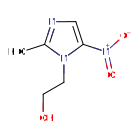
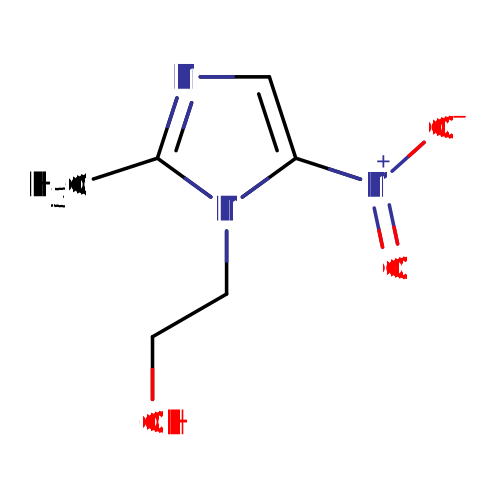
Structure for Metronidazole (DB00916)
- Weight
- Average: 171.154
Monoisotopic: 171.064391169 - Chemical Formula
- C6H9N3O3
- Synonyms
- 1-(2-hydroxy-1-ethyl)-2-methyl-5-nitroimidazole
- 1-(2-hydroxyethyl)-2-methyl-5-nitroimidazole
- 1-(β-ethylol)-2-methyl-5-nitro-3-azapyrrole
- 1-(β-hydroxyethyl)-2-methyl-5-nitroimidazole
- 1-(β-oxyethyl)-2-methyl-5-nitroimidazole
- 2-methyl-1-(2-hydroxyethyl)-5-nitroimidazole
- 2-methyl-3-(2-hydroxyethyl)-4-nitroimidazole
- 2-methyl-5-nitroimidazole-1-ethanol
- Metronidazol
- Métronidazole
- Metronidazole
- Metronidazolum
- External IDs
- Bayer 5360
- BAYER-5360
- NSC-50364
- NSC-69587
- RP 8823
- RP-8823

Pharmacology
- Indication
Metronidazole is indicated for the treatment of confirmed trichomoniasis caused by Trichomonas vaginalis (except for in the first trimester of pregnancy) and the patient's sexual partners, bacterial vaginosis,16,23 certain types of amebiasis, and various anaerobic infections.11,23 The above anaerobic infections may occur on the skin and skin structures, the abdomen, the heart, reproductive organs, central nervous system, and the respiratory system. Some may also be present in the bloodstream in cases of septicemia. Common infections treated by metronidazole are Bacteroides species infections, Clostridium infections, and Fusobacterium infections, as well as Peptococcus and Peptostreptococcus infections.14 Topical formulations of metronidazole are indicated for the treatment of inflammatory lesions of rosacea.19
It is also used off-label in the treatment of Crohn's disease, as a prophylactic agent after surgery5, and in the treatment of Helicobacter pylori infection.7 It has also been studied in the prevention of preterm births and to treat periodontal disease.1,12
 Reduce drug development failure ratesBuild, train, & validate machine-learning modelswith evidence-based and structured datasets.Build, train, & validate predictive machine-learning models with structured datasets.
- Associated Conditions
Indication Type Indication Combined Product Details Approval Level Age Group Patient Characteristics Dose Form Treatment of Amebiasis •••••••••••• •••••••••• Treatment of Anaerobic bacterial infection •••••••••••• ••••• •••••••••• Treatment of Anaerobic bacterial infection •••••••••••• •••••••• ••••••••• •••••• Treatment of Bacterial endocarditis •••••••••••• •••••••• ••••••••• •••••• Treatment of Bacterial septicemia •••••••••••• •••••••• ••••••••• •••••• - Contraindications & Blackbox Warnings
 Prevent Adverse Drug Events TodayTap into our Clinical API for life-saving information on contraindications & blackbox warnings, population restrictions, harmful risks, & more.Avoid life-threatening adverse drug events with our Clinical API
- Pharmacodynamics
Metronidazole treats amebiasis, trichomoniasis, and giardiasis, exerting both antibacterial and antiprotozoal activities.16 Metronidazole is an effective treatment for some anaerobic bacterial infections.11 Metronidazole has shown antibacterial activity against the majority of obligate anaerobes, however, during in vitro studies, it does not demonstrate significant action against facultative anaerobes or obligate aerobes.14 The nitro group reduction of metronidazole by anaerobic organisms is likely responsible for the drug's antimicrobial cytotoxic effects, causing DNA strand damage to microbes.5,7
A note on convulsions and neuropathy and carcinogenesis
It is important to be aware of the risk of peripheral neuropathy and convulsions associated with metronidazole, especially at higher doses. If convulsions or numbness of an extremity occur, discontinue the drug immediately.14 Metronidazole has been found to be carcinogenic in mice and rats. The relevance to this effect in humans is unknown. It is advisable to only administer metronidazole when clinically necessary and only for its approved indications.17
- Mechanism of action
The exact mechanism of action of metronidazole has not been fully established, however, it is possible that an intermediate in the reduction of metronidazole which is only made by anaerobic bacteria and protozoa, binds deoxyribonucleic acid and electron-transport proteins of organisms, blocking nucleic acid synthesis.14 After administration, metronidazole enters cells by passive diffusion. Following this, ferredoxin or flavodoxin reduce its nitro group to nitro radicals. The redox potential of the electron transport portions of anaerobic or microaerophilic microorganisms renders metronidazole selective to these organisms, which cause nitro group reduction, leading to the production of toxic metabolites. These include N-(2-hydroxyethyl) oxamic acid and acetamide, which may damage DNA of replicating organisms.5
Target Actions Organism AOxygen-insensitive NADPH nitroreductase potentiatorHelicobacter pylori (strain ATCC 700392 / 26695) UAnaerobic bacterial DNA inhibitorUProtozoal DNA inhibitor- Absorption
After the intravenous infusion of a 1.5g dose, peak concentration was reached within 1 hour and was peak level of 30-40 mg/L.16 When a multiple-dose regimen of 500mg three times a day administered intravenously, steady-state concentrations were achieved within about 3 days and peak concentration was measured at 26 mg/L.16 When administered orally in the tablet form, metronidazole is absorbed entirely absorbed, showing a bioavailability of greater than 90%.7 One resource indicates that Cmax after a single oral dose of 500mg metronidazole ranges from 8 to 13 mg/L, with a Tmax of 25 minutes to 4 hours. The AUC following a single 500mg oral dose of metronidazole was 122 ± 10.3 mg/L • h.7
A note on the absorption of topical preparations
Insignificant percutaneous absorption of metronidazole occurs after the application of 1% metronidazole cream topically. Healthy volunteers applied one 100 mg dose of 14C-labelled metronidazole 2% cream to unbroken skin. After 12 hours, metronidazole was not detected in the plasma. Approximately 0.1% to 1% of the administered metronidazole was measured in the urine and feces.16
- Volume of distribution
Metronidazole is widely distributed throughout the body5 and various body fluids. They include the bile, saliva, breastmilk, cerebrospinal fluid, and the placenta.16 Steady-state volume distribution of metronidazole in adults ranges from 0.51 to 1.1 L/kg. It attains 60 to 100% of plasma concentrations in various tissues, such as the central nervous system, however, is not measured in high concentrations in the placental tissue.7
- Protein binding
Metronidazole is less than 20% bound to plasma proteins.7,16
- Metabolism
Metronidazole undergoes hepatic metabolism via hydroxylation, oxidation, and glucuronidation. The metabolism of metronidazole yields 5 metabolites. The hydroxy metabolite, 1-(2-hydroxy-ethyl)-2-hydroxy methyl-5-nitroimidazole, is considered the major active metabolite.7,13 Unchanged metronidazole is found in the plasma along with small amounts of its 2- hydroxymethyl metabolite. Several metabolites of metronidazole are found in the urine. They are primarily a product of side-chain oxidation in addition to glucuronide conjugation. Only 20% of the dose found in the urine is accounted for by unchanged metronidazole.16 The two main oxidative metabolites of metronidazole are hydroxy and acetic acid metabolites.6,9
Hover over products below to view reaction partners
- Route of elimination
Metronidazole and metabolites are 60 to 80% eliminated in the urine, and 6-15% excreted in the feces.7,14
- Half-life
The elimination half-life of metronidazole is 7.3 ± 1.0 after a single 500mg IV dose in healthy subjects.16 Another resource indicates that the elimination half-life for metronidazole ranges from 6 to 10 hours.7
- Clearance
Dose adjustments may be required in patients with hepatic impairment, as clearance is impaired in these patients.16 The clearance of metronidazole in the kidneys is estimated at 10 mL/min/1.73 m2.14 The total clearance from serum is about 2.1 to 6.4 L/h/kg.7
- Adverse Effects
 Improve decision support & research outcomesWith structured adverse effects data, including: blackbox warnings, adverse reactions, warning & precautions, & incidence rates. View sample adverse effects data in our new Data Library!Improve decision support & research outcomes with our structured adverse effects data.
- Toxicity
LD50 information
The oral LD50 of metronidazole in rats is 5000 mg/kg 16
Overdose information
Adverse effects that may be exaggerated with an overdose include peripheral neuropathy, central nervous system toxicity, seizures, disulfiram-like effect (if combined with alcohol) dark urine, a metallic taste in the mouth, nausea, epigastric discomfort, and vertigo, in addition to neutropenia.10,16 There is no specific antidote for metronidazole overdose. Symptomatic and supportive treatment should be employed in addition to the administration of activated charcoal to remove the unabsorbed drug from the gastrointestinal tract. In addition to the above measures, contact the local poison control center for updated information on the management of a metronidazole overdose.16
- Pathways
- Not Available
- Pharmacogenomic Effects/ADRs
- Not Available
Interactions
- Drug Interactions
- This information should not be interpreted without the help of a healthcare provider. If you believe you are experiencing an interaction, contact a healthcare provider immediately. The absence of an interaction does not necessarily mean no interactions exist.
Drug Interaction Integrate drug-drug
interactions in your softwareAbatacept The metabolism of Metronidazole can be increased when combined with Abatacept. Abemaciclib The serum concentration of Abemaciclib can be increased when it is combined with Metronidazole. Abrocitinib The metabolism of Abrocitinib can be decreased when combined with Metronidazole. Acalabrutinib The serum concentration of Acalabrutinib can be increased when it is combined with Metronidazole. Acenocoumarol The serum concentration of Acenocoumarol can be increased when it is combined with Metronidazole. - Food Interactions
- Avoid alcohol. Unpleasant symptoms such as nausea, vomiting, and abdominal distress may occur with alcohol.
- Take with or without food. The extended release formulation should, however, be taken without food.
Products
 Drug product information from 10+ global regionsOur datasets provide approved product information including:dosage, form, labeller, route of administration, and marketing period.Access drug product information from over 10 global regions.
- Product Ingredients
Ingredient UNII CAS InChI Key Metronidazole hydrochloride 76JC1633UF 69198-10-3 FPTPAIQTXYFGJC-UHFFFAOYSA-N - Product Images
- International/Other Brands
- Anabact (Cambridge Healthcare Supplies) / Arilin / Clont / Deflamon / Efloran / Elyzol / Entizol / Fossyol / Klion / Klont / Metrolyl / Metrotop / Nalox / Nidagel / Novonidazol / Orvagil / Protostat / Takimetol / Trichazole / Trichex / Trichopol / Tricowas B / Trikacide / Trikozol / Vagilen / Vagimid / Vertisal / Zadstat
- Brand Name Prescription Products
Name Dosage Strength Route Labeller Marketing Start Marketing End Region Image Flagyl Cream 10 % Vaginal Sanofi Aventis 1970-12-31 Not applicable Canada 
Flagyl Capsule 375 mg/1 Oral Physicians Total Care, Inc. 1995-05-03 2000-09-19 US 
Flagyl Tablet, film coated 250 mg/1 Oral Pfizer Laboratories Div Pfizer Inc 1963-07-18 2019-02-28 US Flagyl Tablet, film coated 500 mg/1 Oral RedPharm Drug 1963-07-18 Not applicable US Flagyl Tablet, film coated 500 mg/1 Oral Pfizer Laboratories Div Pfizer Inc 1963-07-18 2021-10-31 US - Generic Prescription Products
Name Dosage Strength Route Labeller Marketing Start Marketing End Region Image Apo-metronidazole Capsule 500 mg Oral Apotex Corporation 2003-11-27 Not applicable Canada Apo-metronidazole Tablet 250 mg Oral Apotex Corporation Not applicable Not applicable Canada Apo-metronidazole Capsule 500 mg Oral Apotex Corporation Not applicable Not applicable Canada Apo-metronidazole Tablets Tablet 250 mg Oral Apotex Corporation 1982-12-31 Not applicable Canada Auro-metronidazole Capsule 500 mg Oral Auro Pharma Inc 2018-04-03 Not applicable Canada - Over the Counter Products
Name Dosage Strength Route Labeller Marketing Start Marketing End Region Image เมโตรจิล เจล Gel 1 %w/w Topical ห้างหุ้นส่วนจำกัด จีไอเอส ฟาร์มา 2014-06-17 2019-10-21 Thailand 
- Mixture Products
Name Ingredients Dosage Route Labeller Marketing Start Marketing End Region Image AMEBICOL® Metronidazole (300 mg) + Nifuroxazide (200 mg) Capsule, coated Oral BIOQUIMICO PHARMAS.A. 2017-05-22 Not applicable Colombia 
AMZOL FEM® Metronidazole (500 mg) + Clotrimazole (100 mg) Insert Vaginal 2015-12-02 2015-12-02 Colombia BIOGYNOL® OVULOS Metronidazole (750 mg) + Miconazole nitrate (200 mg) Insert Vaginal BIOCHEM FARMACEUTICA DE COLOMBIAS.A. 2016-07-08 Not applicable Colombia Bismuth Subcitrate Potassium, Metronidazole and Tetracycline Hydrochloride Metronidazole (125 mg/1) + Bismuth subcitrate potassium monohydrate (140 mg/1) + Tetracycline hydrochloride (125 mg/1) Capsule Oral Par Pharmaceutical, Inc. 2023-03-07 Not applicable US Bismuth Subcitrate Potassium, Metronidazole, and Tetracycline Hydrochloride Metronidazole (125 mg/1) + Bismuth subcitrate potassium monohydrate (140 mg/1) + Tetracycline hydrochloride (125 mg/1) Capsule Oral H2-Pharma, LLC 2023-07-31 Not applicable US - Unapproved/Other Products
Name Ingredients Dosage Route Labeller Marketing Start Marketing End Region Image 171083 Ivermectin 1% / Metronidazole 1% / Niacinamide 4% Metronidazole (1 g/100g) + Ivermectin (1 g/100g) + Nicotinamide (4 g/100g) Gel Topical Sincerus Florida, LLC 2020-07-02 Not applicable US Brimonidine Tartrate 0.25% / Ivermectin 1% / Metronidazole 1% / Niacinamide 4% Metronidazole (1 g/100g) + Brimonidine tartrate (0.25 g/100g) + Ivermectin (1 g/100g) + Nicotinamide (4 g/100g) Gel Topical Sincerus Florida, LLC 2019-05-16 Not applicable US Ivermectin 1% / Metronidazole 1% Metronidazole (1 g/100g) + Ivermectin (1 g/100g) Gel Topical Sincerus Florida, LLC 2019-05-01 Not applicable US Ivermectin 1% / Metronidazole 1% / Niacinamide 4% Metronidazole (1 g/100g) + Ivermectin (1 g/100g) + Nicotinamide (4 g/100g) Gel Topical Sincerus Florida, LLC 2019-05-01 Not applicable US Metronidazole Metronidazole (500 mg/100mL) Injection, solution Intravenous Baxter Healthcare Corporation 2017-10-05 2019-10-31 US


Categories
- ATC Codes
- A02BD11 — Pantoprazole, amoxicillin, clarithromycin and metronidazole
- A02BD — Combinations for eradication of Helicobacter pylori
- A02B — DRUGS FOR PEPTIC ULCER AND GASTRO-OESOPHAGEAL REFLUX DISEASE (GORD)
- A02 — DRUGS FOR ACID RELATED DISORDERS
- A — ALIMENTARY TRACT AND METABOLISM
- P01AB — Nitroimidazole derivatives
- P01A — AGENTS AGAINST AMOEBIASIS AND OTHER PROTOZOAL DISEASES
- P01 — ANTIPROTOZOALS
- P — ANTIPARASITIC PRODUCTS, INSECTICIDES AND REPELLENTS
- D06BX — Other chemotherapeutics
- D06B — CHEMOTHERAPEUTICS FOR TOPICAL USE
- D06 — ANTIBIOTICS AND CHEMOTHERAPEUTICS FOR DERMATOLOGICAL USE
- D — DERMATOLOGICALS
- A02BD — Combinations for eradication of Helicobacter pylori
- A02B — DRUGS FOR PEPTIC ULCER AND GASTRO-OESOPHAGEAL REFLUX DISEASE (GORD)
- A02 — DRUGS FOR ACID RELATED DISORDERS
- A — ALIMENTARY TRACT AND METABOLISM
- J01XD — Imidazole derivatives
- J01X — OTHER ANTIBACTERIALS
- J01 — ANTIBACTERIALS FOR SYSTEMIC USE
- J — ANTIINFECTIVES FOR SYSTEMIC USE
- J01RA — Combinations of antibacterials
- J01R — COMBINATIONS OF ANTIBACTERIALS
- J01 — ANTIBACTERIALS FOR SYSTEMIC USE
- J — ANTIINFECTIVES FOR SYSTEMIC USE
- A02BD — Combinations for eradication of Helicobacter pylori
- A02B — DRUGS FOR PEPTIC ULCER AND GASTRO-OESOPHAGEAL REFLUX DISEASE (GORD)
- A02 — DRUGS FOR ACID RELATED DISORDERS
- A — ALIMENTARY TRACT AND METABOLISM
- J01RA — Combinations of antibacterials
- J01R — COMBINATIONS OF ANTIBACTERIALS
- J01 — ANTIBACTERIALS FOR SYSTEMIC USE
- J — ANTIINFECTIVES FOR SYSTEMIC USE
- A02BD — Combinations for eradication of Helicobacter pylori
- A02B — DRUGS FOR PEPTIC ULCER AND GASTRO-OESOPHAGEAL REFLUX DISEASE (GORD)
- A02 — DRUGS FOR ACID RELATED DISORDERS
- A — ALIMENTARY TRACT AND METABOLISM
- J01RA — Combinations of antibacterials
- J01R — COMBINATIONS OF ANTIBACTERIALS
- J01 — ANTIBACTERIALS FOR SYSTEMIC USE
- J — ANTIINFECTIVES FOR SYSTEMIC USE
- A01AB — Antiinfectives and antiseptics for local oral treatment
- A01A — STOMATOLOGICAL PREPARATIONS
- A01 — STOMATOLOGICAL PREPARATIONS
- A — ALIMENTARY TRACT AND METABOLISM
- G01AF — Imidazole derivatives
- G01A — ANTIINFECTIVES AND ANTISEPTICS, EXCL. COMBINATIONS WITH CORTICOSTEROIDS
- G01 — GYNECOLOGICAL ANTIINFECTIVES AND ANTISEPTICS
- G — GENITO URINARY SYSTEM AND SEX HORMONES
- J01RA — Combinations of antibacterials
- J01R — COMBINATIONS OF ANTIBACTERIALS
- J01 — ANTIBACTERIALS FOR SYSTEMIC USE
- J — ANTIINFECTIVES FOR SYSTEMIC USE
- A02BD — Combinations for eradication of Helicobacter pylori
- A02B — DRUGS FOR PEPTIC ULCER AND GASTRO-OESOPHAGEAL REFLUX DISEASE (GORD)
- A02 — DRUGS FOR ACID RELATED DISORDERS
- A — ALIMENTARY TRACT AND METABOLISM
- A02BD — Combinations for eradication of Helicobacter pylori
- A02B — DRUGS FOR PEPTIC ULCER AND GASTRO-OESOPHAGEAL REFLUX DISEASE (GORD)
- A02 — DRUGS FOR ACID RELATED DISORDERS
- A — ALIMENTARY TRACT AND METABOLISM
- G01AF — Imidazole derivatives
- G01A — ANTIINFECTIVES AND ANTISEPTICS, EXCL. COMBINATIONS WITH CORTICOSTEROIDS
- G01 — GYNECOLOGICAL ANTIINFECTIVES AND ANTISEPTICS
- G — GENITO URINARY SYSTEM AND SEX HORMONES
- P01AB — Nitroimidazole derivatives
- P01A — AGENTS AGAINST AMOEBIASIS AND OTHER PROTOZOAL DISEASES
- P01 — ANTIPROTOZOALS
- P — ANTIPARASITIC PRODUCTS, INSECTICIDES AND REPELLENTS
- A02BD — Combinations for eradication of Helicobacter pylori
- A02B — DRUGS FOR PEPTIC ULCER AND GASTRO-OESOPHAGEAL REFLUX DISEASE (GORD)
- A02 — DRUGS FOR ACID RELATED DISORDERS
- A — ALIMENTARY TRACT AND METABOLISM
- Drug Categories
- Agents that reduce seizure threshold
- Alimentary Tract and Metabolism
- Anti-Bacterial Agents
- Anti-Infective Agents
- Antibacterials for Systemic Use
- Antiinfectives and Antiseptics for Local Oral Treatment
- Antiinfectives for Systemic Use
- Antiparasitic Agents
- Antiparasitic Products, Insecticides and Repellents
- Antiprotozoals
- Cytochrome P-450 CYP2A6 Substrates
- Cytochrome P-450 CYP2C8 Inhibitors
- Cytochrome P-450 CYP2C8 Inhibitors (strength unknown)
- Cytochrome P-450 CYP2C9 Inhibitors
- Cytochrome P-450 CYP2C9 Inhibitors (strength unknown)
- Cytochrome P-450 CYP3A Inhibitors
- Cytochrome P-450 CYP3A Substrates
- Cytochrome P-450 CYP3A4 Inhibitors
- Cytochrome P-450 CYP3A4 Inhibitors (strength unknown)
- Cytochrome P-450 CYP3A5 Substrates
- Cytochrome P-450 CYP3A7 Substrates
- Cytochrome P-450 Enzyme Inhibitors
- Cytochrome P-450 Substrates
- Dermatologicals
- Drugs for Acid Related Disorders
- Drugs for Peptic Ulcer and Gastro-Oesophageal Reflux Disease (Gord)
- Genito Urinary System and Sex Hormones
- Gynecological Antiinfectives and Antiseptics
- Imidazole Derivatives
- Imidazoles
- Miscellaneous Antiprotozoals
- Miscellaneous Local Anti-infectives
- Nitro Compounds
- Nitroimidazole Antimicrobial
- Nitroimidazole Derivatives
- Nitroimidazoles
- P-glycoprotein inhibitors
- Potential QTc-Prolonging Agents
- QTc Prolonging Agents
- Stomatological Preparations
- UGT1A1 Substrates
- Chemical TaxonomyProvided by Classyfire
- Description
- This compound belongs to the class of organic compounds known as nitroimidazoles. These are compounds containing an imidazole ring which bears a nitro group.
- Kingdom
- Organic compounds
- Super Class
- Organoheterocyclic compounds
- Class
- Azoles
- Sub Class
- Imidazoles
- Direct Parent
- Nitroimidazoles
- Alternative Parents
- Nitroaromatic compounds / 1,2,5-trisubstituted imidazoles / N-substituted imidazoles / Heteroaromatic compounds / Propargyl-type 1,3-dipolar organic compounds / Organic oxoazanium compounds / Azacyclic compounds / Alkanolamines / Primary alcohols / Organopnictogen compounds show 3 more
- Substituents
- 1,2,5-trisubstituted-imidazole / Alcohol / Alkanolamine / Allyl-type 1,3-dipolar organic compound / Aromatic heteromonocyclic compound / Azacycle / C-nitro compound / Heteroaromatic compound / Hydrocarbon derivative / N-substituted imidazole show 15 more
- Molecular Framework
- Aromatic heteromonocyclic compounds
- External Descriptors
- C-nitro compound, imidazoles, primary alcohol (CHEBI:6909)
- Affected organisms
- Bacteria and protozoa
- Helicobacter pylori
- Peptoclostridium difficile
Chemical Identifiers
- UNII
- 140QMO216E
- CAS number
- 443-48-1
- InChI Key
- VAOCPAMSLUNLGC-UHFFFAOYSA-N
- InChI
- InChI=1S/C6H9N3O3/c1-5-7-4-6(9(11)12)8(5)2-3-10/h4,10H,2-3H2,1H3
- IUPAC Name
- 2-(2-methyl-5-nitro-1H-imidazol-1-yl)ethan-1-ol
- SMILES
- CC1=NC=C(N1CCO)[N+]([O-])=O
References
- Synthesis Reference
- US2944061
- General References
- Shennan A, Crawshaw S, Briley A, Hawken J, Seed P, Jones G, Poston L: A randomised controlled trial of metronidazole for the prevention of preterm birth in women positive for cervicovaginal fetal fibronectin: the PREMET Study. BJOG. 2006 Jan;113(1):65-74. [Article]
- Williams CS, Woodcock KR: Do ethanol and metronidazole interact to produce a disulfiram-like reaction? Ann Pharmacother. 2000 Feb;34(2):255-7. [Article]
- Visapaa JP, Tillonen JS, Kaihovaara PS, Salaspuro MP: Lack of disulfiram-like reaction with metronidazole and ethanol. Ann Pharmacother. 2002 Jun;36(6):971-4. [Article]
- Dingsdag SA, Hunter N: Metronidazole: an update on metabolism, structure-cytotoxicity and resistance mechanisms. J Antimicrob Chemother. 2018 Feb 1;73(2):265-279. doi: 10.1093/jac/dkx351. [Article]
- Hernandez Ceruelos A, Romero-Quezada LC, Ruvalcaba Ledezma JC, Lopez Contreras L: Therapeutic uses of metronidazole and its side effects: an update. Eur Rev Med Pharmacol Sci. 2019 Jan;23(1):397-401. doi: 10.26355/eurrev_201901_16788. [Article]
- Sprandel KA, Schriever CA, Pendland SL, Quinn JP, Gotfried MH, Hackett S, Graham MB, Danziger LH, Rodvold KA: Pharmacokinetics and pharmacodynamics of intravenous levofloxacin at 750 milligrams and various doses of metronidazole in healthy adult subjects. Antimicrob Agents Chemother. 2004 Dec;48(12):4597-605. doi: 10.1128/AAC.48.12.4597-4605.2004. [Article]
- Lamp KC, Freeman CD, Klutman NE, Lacy MK: Pharmacokinetics and pharmacodynamics of the nitroimidazole antimicrobials. Clin Pharmacokinet. 1999 May;36(5):353-73. doi: 10.2165/00003088-199936050-00004. [Article]
- Morales-Leon F, von Plessing-Rossel C, Villa-Zapata L, Fernandez-Rocca P, Sanhueza-Sanhueza C, Bello-Toledo H, Mella-Montecinos S: [Pharmacokinetics/pharmacodinamic (PK/PD) evaluation of a short course of oral administration of metronidazole for the management of infections caused by Bacteroides fragilis]. Rev Chilena Infectol. 2015 Apr;32(2):135-41. doi: 10.4067/S0716-10182015000300001. [Article]
- Lau AH, Lam NP, Piscitelli SC, Wilkes L, Danziger LH: Clinical pharmacokinetics of metronidazole and other nitroimidazole anti-infectives. Clin Pharmacokinet. 1992 Nov;23(5):328-64. doi: 10.2165/00003088-199223050-00002. [Article]
- Kapoor K, Chandra M, Nag D, Paliwal JK, Gupta RC, Saxena RC: Evaluation of metronidazole toxicity: a prospective study. Int J Clin Pharmacol Res. 1999;19(3):83-8. [Article]
- Lofmark S, Edlund C, Nord CE: Metronidazole is still the drug of choice for treatment of anaerobic infections. Clin Infect Dis. 2010 Jan 1;50 Suppl 1:S16-23. doi: 10.1086/647939. [Article]
- Loesche WJ, Schmidt E, Smith BA, Morrison EC, Caffesse R, Hujoel PP: Effects of metronidazole on periodontal treatment needs. J Periodontol. 1991 Apr;62(4):247-57. doi: 10.1902/jop.1991.62.4.247. [Article]
- Pearce RE, Cohen-Wolkowiez M, Sampson MR, Kearns GL: The role of human cytochrome P450 enzymes in the formation of 2-hydroxymetronidazole: CYP2A6 is the high affinity (low Km) catalyst. Drug Metab Dispos. 2013 Sep;41(9):1686-94. doi: 10.1124/dmd.113.052548. Epub 2013 Jun 27. [Article]
- FDA Approved Drug Products: Flagyl (metronidazole) capsules for oral administration [Link]
- FDA approvals, Metronidazole [Link]
- Canadian monograph, Flagyl [Link]
- Flagyl [Link]
- DailyMed: Flagyl (metronidazole) oral tablets [Link]
- FDA Approved Drug Products: Metronidazole gel (January 2023) [Link]
- FDA Approved Drug Products: FLAGYL (metronidazole) tablets, for oral use (October 2023) [Link]
- DailyMed: Metronidazole Oral Tablet [Link]
- DailyMed: Metronidazole Oral Capsule [Link]
- FDA Approved Drug Products: LIKMEZ (metronidazole) oral suspension [Link]
- External Links
- Human Metabolome Database
- HMDB0015052
- KEGG Drug
- D00409
- KEGG Compound
- C07203
- PubChem Compound
- 4173
- PubChem Substance
- 46508911
- ChemSpider
- 4029
- BindingDB
- 50375309
- 6922
- ChEBI
- 6909
- ChEMBL
- CHEMBL137
- ZINC
- ZINC000000113442
- Therapeutic Targets Database
- DAP000534
- PharmGKB
- PA450484
- PDBe Ligand
- 2MN
- RxList
- RxList Drug Page
- Drugs.com
- Drugs.com Drug Page
- Wikipedia
- Metronidazole
- PDB Entries
- 1w3r
- MSDS
- Download (73.9 KB)
Clinical Trials
- Clinical Trials
Phase Status Purpose Conditions Count 4 Active Not Recruiting Prevention Infection Post Op 1 4 Active Not Recruiting Prevention Surgery, Colorectal 1 4 Active Not Recruiting Treatment Blastocystis Hominis Infections 1 4 Completed Basic Science Crohn's Disease (CD) 1 4 Completed Basic Science Rabies Human 1
Pharmacoeconomics
- Manufacturers
- Gd searle llc
- Able laboratories inc
- Alembic ltd
- Par pharmaceutical inc
- Galderma laboratories lp
- Altana inc
- G and w laboratories inc
- Sanofi aventis us llc
- Taro pharmaceutical industries ltd
- Tolmar inc
- Graceway pharmaceuticals llc
- Teva pharmaceuticals usa
- Baxter healthcare corp
- B braun medical inc
- Abbott laboratories pharmaceutical products div
- Abraxis pharmaceutical products
- Elkins sinn div ah robins co inc
- International medication systems ltd
- Watson laboratories inc
- Claris lifesciences ltd
- Hospira inc
- Laboratorios aplicaciones farmaceuticas sa de cv
- Halsey drug co inc
- Ivax pharmaceuticals inc sub teva pharmaceuticals usa
- Lnk international inc
- Mutual pharmaceutical co inc
- Pliva inc
- Sandoz inc
- Superpharm corp
- Teva pharmaceuticals usa inc
- World gen llc
- Ortho mcneil pharmaceutical inc
- Savage laboratories inc div altana inc
- Packagers
- Actavis Group
- Advanced Pharmaceutical Services Inc.
- American Pharmaceutical Association
- Ameri-Pac Inc.
- Amerisource Health Services Corp.
- Amneal Pharmaceuticals
- Apace Packaging
- Apotheca Inc.
- A-S Medication Solutions LLC
- Atlantic Biologicals Corporation
- B. Braun Melsungen AG
- Baxter International Inc.
- Ben Venue Laboratories Inc.
- Bryant Ranch Prepack
- Cardinal Health
- Carlisle Laboratories Inc.
- Central Texas Community Health Centers
- Claris Lifesciences Inc.
- Community Action Inc. Community Health Services
- Comprehensive Consultant Services Inc.
- Contract Pharm
- Darby Dental Supply Co. Inc.
- Dept Health Central Pharmacy
- Dermik Labs
- DHHS Program Support Center Supply Service Center
- Direct Dispensing Inc.
- Dispensing Solutions
- Diversified Healthcare Services Inc.
- DPT Laboratories Ltd.
- Dudley Corp.
- E. Fougera and Co.
- G & W Labs
- Galderma Laboratories
- GD Searle LLC
- GlaxoSmithKline Inc.
- Golden State Medical Supply Inc.
- Graceway Pharmaceuticals
- Group Health Cooperative
- H and H Laboratories
- H.J. Harkins Co. Inc.
- Harris Pharmaceutical Inc.
- Hawkins Inc.
- Heartland Repack Services LLC
- Hospira Inc.
- Kaiser Foundation Hospital
- Lake Erie Medical and Surgical Supply
- Liberty Pharmaceuticals
- Major Pharmaceuticals
- Mckesson Corp.
- Medisca Inc.
- Medvantx Inc.
- Mississippi State Dept Health
- Murfreesboro Pharmaceutical Nursing Supply
- Mutual Pharmaceutical Co.
- Nord Ost Corp.
- Nucare Pharmaceuticals Inc.
- Nycomed Inc.
- Obagi Medical Products Inc.
- Palmetto Pharmaceuticals Inc.
- Pangeo Pharma Quebec Inc.
- Par Pharmaceuticals
- Patheon Inc.
- Patient First Corp.
- PCA LLC
- PD-Rx Pharmaceuticals Inc.
- Pfizer Inc.
- Pharmacia Inc.
- Pharmedix
- Pharmpak Inc.
- Physicians Total Care Inc.
- Pliva Inc.
- Prasco Labs
- Preferred Pharmaceuticals Inc.
- Prepackage Specialists
- Prepak Systems Inc.
- Prescription Dispensing Service Inc.
- Qualitest
- Raz Co. Inc.
- Rebel Distributors Corp.
- Redpharm Drug
- Remedy Repack
- Rochester Pharmaceuticals
- Sagent Pharmaceuticals
- Sandhills Packaging Inc.
- Sandoz
- Sanofi-Aventis Inc.
- SCS Pharmaceuticals
- Southwood Pharmaceuticals
- St Mary's Medical Park Pharmacy
- Stat Rx Usa
- Taro Pharmaceuticals USA
- Teva Pharmaceutical Industries Ltd.
- Tolmar Inc.
- UDL Laboratories
- Upsher Smith Laboratories
- Vangard Labs Inc.
- Veratex Corp.
- Watson Pharmaceuticals
- West-Ward Pharmaceuticals
- Dosage Forms
Form Route Strength Solution Intravenous 200.000 mg Suspension Oral 5 g Suspension Oral 8.04 g Solution Intravenous 5 mg/ml Capsule, coated Oral 400 mg Tablet Oral 250 mg Tablet, film coated Oral 250 mg Tablet, film coated Oral 500 mg Injection Intravenous 500 MG Suspension Oral 5.000 g Injection, solution 5 mg/1ml Capsule; kit; tablet Oral Injection, solution Parenteral 500 MG/100ML Suppository Vaginal 500 mg Gel Oral Tablet Oral 500.000 mg Solution Intravenous 500.000 mg Injection, solution Intravenous Suppository Vaginal Capsule Vaginal Suspension Oral Capsule Oral 375 mg/1 Cream Vaginal 10 % Injection Intravenous 5 mg/ml Tablet Oral; Vaginal 500 MG Tablet, film coated Oral 400 mg Suppository Vaginal 500 mg / sup Tablet, coated Oral 500 mg Injection Intravenous 0.5 % w/v Insert Vaginal 0.5 g Solution Intravenous 5 mg Tablet, extended release Oral 750 mg Tablet, coated Oral Capsule, liquid filled Vaginal Kit Oral Suspension Oral Gel Topical Capsule, coated Oral Tablet Oral 250.000 mg Injection Parenteral 0.5 % Suspension Oral 100 mg/1mL Cream Vaginal Insert Vaginal Solution Vaginal Tablet 500.000 mg Tablet, film coated Suspension Oral 125 mg/5ml Solution Intravenous 5.000 mg Gel Vaginal 0.75 g Cream Cutaneous 0.750 g Cream Topical .75 % Capsule, coated Oral 600 mg Suspension Oral 4.02 g Gel Cutaneous 0.750 g Gel Topical 10 mg/1g Gel Vaginal 7.5 mg/1g Gel Topical 0.75 % Gel Topical 1 % Lotion Topical 0.75 % Solution Parenteral 0.5 % Suspension Oral 4 g Capsule, liquid filled Oral 250 mg Solution Intravenous 500 mg Tablet Oral 50000000 mg Tablet Vaginal 500 mg Solution Intravenous 500 g Solution Parenteral 500 mg Solution Parenteral 5 MG/ML Solution Parenteral 500 MG/100ML Solution Intravenous 1.5 g Solution Parenteral 5 mg Tablet, film coated Oral Tablet Oral 500 mg Capsule, liquid filled Oral Cream Topical 10 mg/1g Cream Topical 7.5 mg/1g Gel Topical 7.5 mg/1g Gel Vaginal 13 mg/1g Injection Intravenous Injection Intravenous 0.5 % Injection, solution Intravenous 500 mg/100mL Lotion Topical 7.5 mg/1g Lotion Topical 7.5 mg/1mL Powder Not applicable 1 g/1g Solution Intravenous 500 mg/100mL Tablet Oral Tablet Oral 250 mg/1 Tablet Oral 500 mg/1 Tablet, coated Oral 250 mg/1 Tablet, coated Oral 500 mg/1 Tablet, film coated Oral 500 mg/1 Tablet, film coated, extended release Oral 750 mg/1 Tablet; tablet, film coated Oral Ointment Topical Injection Intravenous 0.5 g/100ml Injection Intravenous 500 mg/100ml Injection, solution Intravenous 5 mg/1ml Solution Intravenous 5 mg / mL Injection Intravenous 5.000 g/1000ml Syrup Oral 100 MG Tablet, film coated Oral 250 mg/1 Tablet Vaginal Injection, solution Parenteral 5 MG/ML Injection, solution Intravenous; Parenteral 0.5 G/100ML Injection, solution Intravenous; Parenteral 500 MG/100ML Injection, solution 5 MG/ML Injection, solution Injection, solution Parenteral 0.5 G/100ML Gel Topical Suspension Oral 2.500 g Tablet, film coated Oral Capsule, liquid filled Oral 500 mg Insert Vaginal 500 mg Capsule Vaginal 500 mg Gel Vaginal 0.75 % w/w Gel Topical 7.5 mg/g Solution 200 mg/5ml Injection, solution Intravenous 500 mg Cream Topical 1 % w/w Cream Topical 10 mg/60g Tablet Gel Topical 65 mg/5g Gel Vaginal 65 mg/5g Solution Parenteral 200.000 mg Injection Parenteral 500 mg Tablet, film coated Oral 200 mg Tablet Oral 400 MG Capsule Oral 500 mg Solution Intravenous 0.5 % Capsule Oral Kit Topical 7.5 mg/1g Gel; kit Topical 7.5 mg/1g Cream Topical Cream Oral Cream Topical Emulsion Topical 0.75 % Gel Topical 0.75 g Cream Topical 0.75 % Solution Intravenous 500.00 mg Tablet Oral Suppository Vaginal Tablet Oral 200 mg Injection, powder, for solution Intramuscular 200 mg/200mg Capsule Oral 250 MG Capsule Oral 400.000 mg Gel Vaginal 0.75 % Tablet Vaginal Capsule 200 mg Capsule 250 mg Tablet 200 mg Tablet 400 mg Tablet 250 mg Solution 5 mg/1ml Tablet, coated Oral 200 mg Gel Topical 1 %w/w Tablet, coated Oral 250 mg Tablet 500 mg Tablet, coated Oral 400 mg - Prices
Unit description Cost Unit MetroLotion 0.75% Lotion 59ml Bottle 292.66USD bottle MetroCream 0.75% Cream 45 gm Tube 281.09USD tube Metrogel 1% Gel 60 gm Tube 200.93USD tube Metrogel 1% Kit Box 200.93USD box Metrogel 1% kit 193.2USD kit Noritate 1% Cream 60 gm Tube 156.44USD tube MetroNIDAZOLE 0.75% Lotion 59ml Bottle 89.86USD bottle MetroNIDAZOLE 0.75% Cream 45 gm Tube 80.87USD tube MetroNIDAZOLE 0.75% Gel 45 gm Tube 74.0USD tube MetroNIDAZOLE 0.75% Gel 70 gm Tube 68.53USD tube Flagyl ER 750 mg 24 Hour tablet 13.2USD tablet Flagyl er 750 mg tablet 12.7USD tablet MetroNIDAZOLE 750 mg 24 Hour tablet 8.07USD tablet Flagyl 500 mg tablet 6.24USD tablet Metrocream 0.75% cream 5.99USD g Danazol 200 mg capsule 5.63USD capsule Flagyl 375 mg capsule 5.45USD capsule Metrolotion topical 0.75% 4.77USD ml Metronidazole benz powder 4.74USD g Flagyl 250 mg tablet 3.49USD tablet Danazol 100 mg capsule 2.98USD capsule Noritate 1% cream 2.51USD g Danazol 50 mg capsule 1.99USD capsule Metronidazole powder 1.65USD g Metronidazole 0.75% cream 1.34USD g Metronidazole vaginal 0.75% gl 0.94USD g Metronidazole 500 mg tablet 0.72USD tablet Metrogel 0.75 % Gel 0.69USD g Metrogel 1 % Gel 0.63USD g Noritate 1 % Cream 0.58USD g Rosasol 1 % Cream 0.57USD g Metrocream 0.75 % Cream 0.52USD g Metrolotion 0.75 % Lotion 0.52USD g Metrogel-vaginal 0.75% gel 0.51USD g Vandazole vaginal 0.75% gel 0.48USD g Metronidazole 250 mg tablet 0.44USD tablet Flagyl 10 % Cream 0.25USD g Apo-Metronidazole 250 mg Tablet 0.06USD tablet Flagyl 5 mg/ml 0.03USD ml Metro iv 500 mg/100 ml 0.03USD ml Metronidazole 5 mg/ml 0.03USD ml Metronidazole 500 mg/100 ml 0.03USD ml DrugBank does not sell nor buy drugs. Pricing information is supplied for informational purposes only.- Patents
Patent Number Pediatric Extension Approved Expires (estimated) Region US5536743 No 1996-07-16 2013-07-16 US CA2470492 No 2010-02-23 2022-11-07 Canada CA2161737 No 1998-10-20 2015-10-30 Canada US6881726 No 2005-04-19 2022-02-21 US US7348317 No 2008-03-25 2022-02-21 US US7456207 No 2008-11-25 2024-09-22 US US6350468 No 2002-02-26 2018-12-14 US US8946276 No 2015-02-03 2032-06-28 US US8658678 No 2014-02-25 2028-06-27 US US9198858 No 2015-12-01 2032-06-28 US US8877792 No 2014-11-04 2028-02-02 US US7893097 No 2011-02-22 2028-02-19 US US10238634 No 2019-03-26 2032-06-28 US US10596155 No 2020-03-24 2032-06-28 US US11541035 No 2019-10-04 2039-10-04 US
Properties
- State
- Solid
- Experimental Properties
Property Value Source melting point (°C) 160 http://www.inchem.org/documents/pims/pharm/metronid.htm boiling point (°C) 405.4 http://www.emelcabio.com/metronidazole-41310008.html logP -0.02 http://www.t3db.ca/toxins/T3D4703 logS -1.5 http://www.t3db.ca/toxins/T3D4703 pKa 2.57,15.42 http://www.t3db.ca/toxins/T3D4703 - Predicted Properties
Property Value Source Water Solubility 5.92 mg/mL ALOGPS logP -0.15 ALOGPS logP -0.46 Chemaxon logS -1.5 ALOGPS pKa (Strongest Acidic) 15.41 Chemaxon pKa (Strongest Basic) 3.03 Chemaxon Physiological Charge 0 Chemaxon Hydrogen Acceptor Count 4 Chemaxon Hydrogen Donor Count 1 Chemaxon Polar Surface Area 81.19 Å2 Chemaxon Rotatable Bond Count 3 Chemaxon Refractivity 40.22 m3·mol-1 Chemaxon Polarizability 15.87 Å3 Chemaxon Number of Rings 1 Chemaxon Bioavailability 1 Chemaxon Rule of Five Yes Chemaxon Ghose Filter No Chemaxon Veber's Rule No Chemaxon MDDR-like Rule No Chemaxon - Predicted ADMET Features
Property Value Probability Human Intestinal Absorption + 0.9805 Blood Brain Barrier + 0.9297 Caco-2 permeable - 0.5365 P-glycoprotein substrate Non-substrate 0.5141 P-glycoprotein inhibitor I Non-inhibitor 0.8954 P-glycoprotein inhibitor II Non-inhibitor 0.8755 Renal organic cation transporter Non-inhibitor 0.7762 CYP450 2C9 substrate Non-substrate 0.7318 CYP450 2D6 substrate Non-substrate 0.8815 CYP450 3A4 substrate Non-substrate 0.6767 CYP450 1A2 substrate Non-inhibitor 0.9045 CYP450 2C9 inhibitor Non-inhibitor 0.9242 CYP450 2D6 inhibitor Non-inhibitor 0.9231 CYP450 2C19 inhibitor Non-inhibitor 0.9401 CYP450 3A4 inhibitor Non-inhibitor 0.9242 CYP450 inhibitory promiscuity Low CYP Inhibitory Promiscuity 0.8483 Ames test AMES toxic 0.9107 Carcinogenicity Non-carcinogens 0.7471 Biodegradation Not ready biodegradable 0.5941 Rat acute toxicity 2.0422 LD50, mol/kg Not applicable hERG inhibition (predictor I) Weak inhibitor 0.5 hERG inhibition (predictor II) Non-inhibitor 0.8272
Spectra
- Mass Spec (NIST)
- Download (9.68 KB)
- Spectra
- Chromatographic Properties
Collision Cross Sections (CCS)
Adduct CCS Value (Å2) Source type Source [M-H]- 137.19013 predictedDarkChem Lite v0.1.0 [M-H]- 136.93393 predictedDarkChem Lite v0.1.0 [M-H]- 137.37183 predictedDarkChem Lite v0.1.0 [M-H]- 132.8605 predictedDeepCCS 1.0 (2019) [M+H]+ 137.06023 predictedDarkChem Lite v0.1.0 [M+H]+ 136.96433 predictedDarkChem Lite v0.1.0 [M+H]+ 137.75783 predictedDarkChem Lite v0.1.0 [M+H]+ 136.20238 predictedDeepCCS 1.0 (2019) [M+Na]+ 137.42373 predictedDarkChem Lite v0.1.0 [M+Na]+ 137.20983 predictedDarkChem Lite v0.1.0 [M+Na]+ 137.40463 predictedDarkChem Lite v0.1.0 [M+Na]+ 144.92393 predictedDeepCCS 1.0 (2019)
Targets

- Kind
- Protein
- Organism
- Helicobacter pylori (strain ATCC 700392 / 26695)
- Pharmacological action
- Yes
- Actions
- Potentiator
- General Function
- Oxidoreductase activity
- Specific Function
- Reduction of a variety of nitroaromatic compounds using NADPH as source of reducing equivalents; two electrons are transferred (By similarity). Capable of reducing metronidazole; inactive RdxA rend...
- Gene Name
- rdxA
- Uniprot ID
- O25608
- Uniprot Name
- Oxygen-insensitive NADPH nitroreductase
- Molecular Weight
- 24067.775 Da
References
- Sisson G, Jeong JY, Goodwin A, Bryden L, Rossler N, Lim-Morrison S, Raudonikiene A, Berg DE, Hoffman PS: Metronidazole activation is mutagenic and causes DNA fragmentation in Helicobacter pylori and in Escherichia coli containing a cloned H. pylori RdxA(+) (Nitroreductase) gene. J Bacteriol. 2000 Sep;182(18):5091-6. [Article]
- Chisholm SA, Owen RJ: Mutations in Helicobacter pylori rdxA gene sequences may not contribute to metronidazole resistance. J Antimicrob Chemother. 2003 Apr;51(4):995-9. Epub 2003 Mar 13. [Article]
- Debets-Ossenkopp YJ, Pot RG, van Westerloo DJ, Goodwin A, Vandenbroucke-Grauls CM, Berg DE, Hoffman PS, Kusters JG: Insertion of mini-IS605 and deletion of adjacent sequences in the nitroreductase (rdxA) gene cause metronidazole resistance in Helicobacter pylori NCTC11637. Antimicrob Agents Chemother. 1999 Nov;43(11):2657-62. [Article]
- Pisharath H, Parsons MJ: Nitroreductase-mediated cell ablation in transgenic zebrafish embryos. Methods Mol Biol. 2009;546:133-43. doi: 10.1007/978-1-60327-977-2_9. [Article]
References
- Samuelson J: Why metronidazole is active against both bacteria and parasites. Antimicrob Agents Chemother. 1999 Jul;43(7):1533-41. [Article]
- Soule AF, Green SB, Blanchette LM: Clinical efficacy of 12-h metronidazole dosing regimens in patients with anaerobic or mixed anaerobic infections. Ther Adv Infect Dis. 2018 May;5(3):57-62. doi: 10.1177/2049936118766462. Epub 2018 Apr 3. [Article]
- FDA Approved Drug Products: Flagyl (metronidazole) capsules for oral administration [Link]
References
- Uzlikova M, Nohynkova E: The effect of metronidazole on the cell cycle and DNA in metronidazole-susceptible and -resistant Giardia cell lines. Mol Biochem Parasitol. 2014 Dec;198(2):75-81. doi: 10.1016/j.molbiopara.2015.01.005. Epub 2015 Feb 12. [Article]
- Nasirudeen AM, Hian YE, Singh M, Tan KS: Metronidazole induces programmed cell death in the protozoan parasite Blastocystis hominis. Microbiology. 2004 Jan;150(Pt 1):33-43. doi: 10.1099/mic.0.26496-0. [Article]
- FDA Approved Drug Products: Flagyl (metronidazole) capsules for oral administration [Link]
Enzymes
- Kind
- Protein
- Organism
- Humans
- Pharmacological action
- Unknown
- Actions
- Inhibitor
- General Function
- Steroid hydroxylase activity
- Specific Function
- Cytochromes P450 are a group of heme-thiolate monooxygenases. In liver microsomes, this enzyme is involved in an NADPH-dependent electron transport pathway. It oxidizes a variety of structurally un...
- Gene Name
- CYP2C8
- Uniprot ID
- P10632
- Uniprot Name
- Cytochrome P450 2C8
- Molecular Weight
- 55824.275 Da
References
- Kudo T, Endo Y, Taguchi R, Yatsu M, Ito K: Metronidazole reduces the expression of cytochrome P450 enzymes in HepaRG cells and cryopreserved human hepatocytes. Xenobiotica. 2015 May;45(5):413-9. doi: 10.3109/00498254.2014.990948. Epub 2014 Dec 3. [Article]
- Kind
- Protein
- Organism
- Humans
- Pharmacological action
- No
- Actions
- Substrate
- General Function
- Steroid binding
- Specific Function
- UDPGT is of major importance in the conjugation and subsequent elimination of potentially toxic xenobiotics and endogenous compounds. This isoform glucuronidates bilirubin IX-alpha to form both the...
- Gene Name
- UGT1A1
- Uniprot ID
- P22309
- Uniprot Name
- UDP-glucuronosyltransferase 1-1
- Molecular Weight
- 59590.91 Da
References
- Williams JA, Hyland R, Jones BC, Smith DA, Hurst S, Goosen TC, Peterkin V, Koup JR, Ball SE: Drug-drug interactions for UDP-glucuronosyltransferase substrates: a pharmacokinetic explanation for typically observed low exposure (AUCi/AUC) ratios. Drug Metab Dispos. 2004 Nov;32(11):1201-8. doi: 10.1124/dmd.104.000794. Epub 2004 Aug 10. [Article]
- Kind
- Protein
- Organism
- Humans
- Pharmacological action
- Unknown
- Actions
- Substrate
- General Function
- Steroid hydroxylase activity
- Specific Function
- Exhibits a high coumarin 7-hydroxylase activity. Can act in the hydroxylation of the anti-cancer drugs cyclophosphamide and ifosphamide. Competent in the metabolic activation of aflatoxin B1. Const...
- Gene Name
- CYP2A6
- Uniprot ID
- P11509
- Uniprot Name
- Cytochrome P450 2A6
- Molecular Weight
- 56501.005 Da
References
- Pearce RE, Cohen-Wolkowiez M, Sampson MR, Kearns GL: The role of human cytochrome P450 enzymes in the formation of 2-hydroxymetronidazole: CYP2A6 is the high affinity (low Km) catalyst. Drug Metab Dispos. 2013 Sep;41(9):1686-94. doi: 10.1124/dmd.113.052548. Epub 2013 Jun 27. [Article]
- Kind
- Protein
- Organism
- Humans
- Pharmacological action
- Unknown
- Actions
- Substrate
- General Function
- Oxygen binding
- Specific Function
- Cytochromes P450 are a group of heme-thiolate monooxygenases. In liver microsomes, this enzyme is involved in an NADPH-dependent electron transport pathway. It oxidizes a variety of structurally un...
- Gene Name
- CYP3A5
- Uniprot ID
- P20815
- Uniprot Name
- Cytochrome P450 3A5
- Molecular Weight
- 57108.065 Da
References
- Pearce RE, Cohen-Wolkowiez M, Sampson MR, Kearns GL: The role of human cytochrome P450 enzymes in the formation of 2-hydroxymetronidazole: CYP2A6 is the high affinity (low Km) catalyst. Drug Metab Dispos. 2013 Sep;41(9):1686-94. doi: 10.1124/dmd.113.052548. Epub 2013 Jun 27. [Article]
- Kind
- Protein
- Organism
- Humans
- Pharmacological action
- Unknown
- Actions
- Substrate
- General Function
- Oxygen binding
- Specific Function
- Cytochromes P450 are a group of heme-thiolate monooxygenases. In liver microsomes, this enzyme is involved in an NADPH-dependent electron transport pathway. It oxidizes a variety of structurally un...
- Gene Name
- CYP3A7
- Uniprot ID
- P24462
- Uniprot Name
- Cytochrome P450 3A7
- Molecular Weight
- 57525.03 Da
References
- Pearce RE, Cohen-Wolkowiez M, Sampson MR, Kearns GL: The role of human cytochrome P450 enzymes in the formation of 2-hydroxymetronidazole: CYP2A6 is the high affinity (low Km) catalyst. Drug Metab Dispos. 2013 Sep;41(9):1686-94. doi: 10.1124/dmd.113.052548. Epub 2013 Jun 27. [Article]
- Kind
- Protein
- Organism
- Humans
- Pharmacological action
- Unknown
- Actions
- Inhibitor
- General Function
- Steroid hydroxylase activity
- Specific Function
- Cytochromes P450 are a group of heme-thiolate monooxygenases. In liver microsomes, this enzyme is involved in an NADPH-dependent electron transport pathway. It oxidizes a variety of structurally un...
- Gene Name
- CYP2C9
- Uniprot ID
- P11712
- Uniprot Name
- Cytochrome P450 2C9
- Molecular Weight
- 55627.365 Da
References
- Kudo T, Endo Y, Taguchi R, Yatsu M, Ito K: Metronidazole reduces the expression of cytochrome P450 enzymes in HepaRG cells and cryopreserved human hepatocytes. Xenobiotica. 2015 May;45(5):413-9. doi: 10.3109/00498254.2014.990948. Epub 2014 Dec 3. [Article]
- Hersh EV, Moore PA: Three Serious Drug Interactions that Every Dentist Should Know About. Compend Contin Educ Dent. 2015 Jun;36(6):408-13; quiz 414, 416. [Article]
- Sychev DA, Ashraf GM, Svistunov AA, Maksimov ML, Tarasov VV, Chubarev VN, Otdelenov VA, Denisenko NP, Barreto GE, Aliev G: The cytochrome P450 isoenzyme and some new opportunities for the prediction of negative drug interaction in vivo. Drug Des Devel Ther. 2018 May 8;12:1147-1156. doi: 10.2147/DDDT.S149069. eCollection 2018. [Article]
- CYP table [Link]
- Kind
- Protein
- Organism
- Humans
- Pharmacological action
- Unknown
- Actions
- Inhibitor
- General Function
- Vitamin d3 25-hydroxylase activity
- Specific Function
- Cytochromes P450 are a group of heme-thiolate monooxygenases. In liver microsomes, this enzyme is involved in an NADPH-dependent electron transport pathway. It performs a variety of oxidation react...
- Gene Name
- CYP3A4
- Uniprot ID
- P08684
- Uniprot Name
- Cytochrome P450 3A4
- Molecular Weight
- 57342.67 Da
References
- Kudo T, Endo Y, Taguchi R, Yatsu M, Ito K: Metronidazole reduces the expression of cytochrome P450 enzymes in HepaRG cells and cryopreserved human hepatocytes. Xenobiotica. 2015 May;45(5):413-9. doi: 10.3109/00498254.2014.990948. Epub 2014 Dec 3. [Article]
- Michalets EL: Update: clinically significant cytochrome P-450 drug interactions. Pharmacotherapy. 1998 Jan-Feb;18(1):84-112. [Article]
- Spina E, Pisani F, Perucca E: Clinically significant pharmacokinetic drug interactions with carbamazepine. An update. Clin Pharmacokinet. 1996 Sep;31(3):198-214. doi: 10.2165/00003088-199631030-00004. [Article]
Transporters
- Kind
- Protein
- Organism
- Humans
- Pharmacological action
- Unknown
- Actions
- Inhibitor
- Curator comments
- Evidence regarding this transporter inhibition is conflicting in the literature. Various references have been attached, some of which may provide conflicting evidence.
- General Function
- Xenobiotic-transporting atpase activity
- Specific Function
- Energy-dependent efflux pump responsible for decreased drug accumulation in multidrug-resistant cells.
- Gene Name
- ABCB1
- Uniprot ID
- P08183
- Uniprot Name
- Multidrug resistance protein 1
- Molecular Weight
- 141477.255 Da
References
- Tan SY, Kan E, Lim WY, Chay G, Law JH, Soo GW, Bukhari NI, Segarra I: Metronidazole leads to enhanced uptake of imatinib in brain, liver and kidney without affecting its plasma pharmacokinetics in mice. J Pharm Pharmacol. 2011 Jul;63(7):918-25. doi: 10.1111/j.2042-7158.2011.01296.x. Epub 2011 May 19. [Article]
- Kim KA, Park JY: Effect of metronidazole on the pharmacokinetics of fexofenadine, a P-glycoprotein substrate, in healthy male volunteers. Eur J Clin Pharmacol. 2010 Jul;66(7):721-5. doi: 10.1007/s00228-010-0797-2. Epub 2010 Mar 20. [Article]
- Page RL 2nd, Klem PM, Rogers C: Potential elevation of tacrolimus trough concentrations with concomitant metronidazole therapy. Ann Pharmacother. 2005 Jun;39(6):1109-13. doi: 10.1345/aph.1E399. Epub 2005 Apr 26. [Article]


Drug created at June 13, 2005 13:24 / Updated at April 27, 2024 09:44