Identification
- Summary
Medroxyprogesterone acetate is a progestin used as a contraceptive and in the treatment of secondary amenorrhea, abnormal uterine bleeding, pain from endometriosis, endometrial and renal carcinomas, paraphilia in males, and GnRH-dependent precocious puberty.
- Brand Names
- Depo-provera, Depo-subq Provera, Premphase 28 Day, Prempro 0.625/2.5 28 Day, Provera
- Generic Name
- Medroxyprogesterone acetate
- DrugBank Accession Number
- DB00603
- Background
Medroxyprogesterone acetate (MPA) is a progesterone derivative that is more resistant to metabolism for improved pharmacokinetic properties.9 MPA can be use to treat secondary amenorrhea, endometrial hyperplasia, abnormal uterine bleeding, osteoporosis, vasomotor symptoms in menopause, vulvar and vaginal atrophy, prevent pregnancy, manage pain in endometriosis, prevent pregnancy, and is also used in palliative care for endometrial and renal carcinoma.10,11,12,13,14
Medroxyprogesterone acetate was granted FDA approval on 18 June 1959.10
- Type
- Small Molecule
- Groups
- Approved, Investigational
- Structure
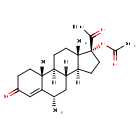
Structure for Medroxyprogesterone acetate (DB00603)

- Weight
- Average: 386.5244
Monoisotopic: 386.245709576 - Chemical Formula
- C24H34O4
- Synonyms
- (6α)-17-(Acetyloxy)-6-methylpreg-4-ene-3,20-dione
- 17-Acetoxy-6α-methylprogesterone
- 17α-hydroxy-6α-methylprogesterone acetate
- 6-alpha-Methyl-17-alpha-acetoxyprogesterone
- 6-alpha-Methyl-17-alpha-hydroxyprogesterone acetate
- 6α-Methyl-17-acetoxy progesterone
- 6α-Methyl-17α-hydroxyprogesterone acetate
- 6α-Methyl-4-pregnene-3,20-dion-17α-ol acetate
- Medroxyacetate progesterone
- Medroxyprogesterone 17-acetate
- Medroxyprogesterone acetate
- Methylacetoxyprogesterone
- Metigestrona
- MPA
- External IDs
- NSC-21171
- NSC-26386

Pharmacology
- Indication
Medroxyprogesterone acetate (MPA) oral tablets are indicated to treat secondary amenorrhea, reduce the incidence of endometrial hyperplasia in postmenopausal women, and to treat abnormal uterine bleeding due to hormonal imbalance, not organic pathology.10 Oral tablets containing MPA and conjugated estrogens are indicated to prevent postmenopausal osteoporosis and to treat moderate to severe menopausal symptoms such as vasomotor symptoms, vulvar atrophy, and vaginal atrophy.11 Subcutaneous MPA is indicated to prevent pregnancy and manage pain associated with endometriosis.12 Intramuscular MPA is indicated to prevent pregnancy,13 and at higher concentrations for palliative treatment of endometrial or renal carcinoma.14
 Reduce drug development failure ratesBuild, train, & validate machine-learning modelswith evidence-based and structured datasets.Build, train, & validate predictive machine-learning models with structured datasets.
- Associated Conditions
Indication Type Indication Combined Product Details Approval Level Age Group Patient Characteristics Dose Form Treatment of Abnormal uterine bleeding •••••••••••• •••••• Treatment of Amenorrhea •••••••••••• •••••• Management of Endometriosis related pain •••••••••••• •••••••••• ••••••••••• •••••••••• ••••••••••• •••••••• ••••••• Adjunct therapy in treatment of Metastatic renal cell carcinoma •••••••••••• •••••••••• ••••••••••• •••••••••• ••••••••••• •••••••• ••••••• Used in combination to prevent Osteoporosis Combination Product in combination with: Estradiol valerate (DB13956) •••••••••••• •••••••••••••• •••••••••••••••• •• ••••• •••••••••••• •••••••••• •••••••••••• •••• •••• •• ••••••••• •••••••••• •• ••••• •••••••••••• •••••••••• ••••••••••• •••••• - Associated Therapies
- Contraindications & Blackbox Warnings
 Prevent Adverse Drug Events TodayTap into our Clinical API for life-saving information on contraindications & blackbox warnings, population restrictions, harmful risks, & more.Avoid life-threatening adverse drug events with our Clinical API
- Pharmacodynamics
Medroxyprogesterone acetate (MPA) inhibits gonadotropin production, reduces nuclear estrogen receptors and DNA synthesis in epithelial cells of the endometrium, and induces p53 dependant apoptosis in cancer cell lines.11,6 MPA oral tablets have a half life of 40-60 hours and other formulations can have half lives that are considerably longer, so the duration of action is long.2,3 The therapeutic window is wide as patients may take doses ranging from 5mg orally daily to 1000mg as a depo injection weekly.10,11,12,13,14 Long term use of MPA is associated with a reduction in bone density and patients who taking MPA during adolescence may have lower peak bone mass than untreated patients, which can also increase the risk of osteoporosis and fractures in the future.10,11,12,13,14
- Mechanism of action
Medroxyprogesterone acetate (MPA) inhibits the production of gonadotropin, preventing follicular maturation and ovulation, which is responsible for it’s ability to prevent pregnancy.11 This action also thins the endometrium.11 MPA reduces nuclear estrogen receptors and DNA synthesis in epithelial cells of the endometrium.11 MPA can also induce p53 dependant apoptosis in certain cancer cell lines,6 and inhibit GABA-A receptors.8
Target Actions Organism AProgesterone receptor agonistHumans AEstrogen receptor alpha agonistHumans UP-glycoprotein 1 inhibitorHumans UGABA(A) Receptor inhibitorHumans - Absorption
Absorption of oral medroxyprogesterone acetate (MPA) varies considerably between formulations.2 A 1000mg oral dose reaches an average Cmax of 145-315nmol/L while a 500mg oral dose reaches an average Cmax of 33-178nmol/L with a Tmax of 1-3 hours and a lag time of half an hour.2 The AUC of a 500mg oral dose of MPA was 543.4-1981.1nmol*L/h depending on formulation.2
Intramuscular MPA reaches a Cmax of 4.69±1.52nmol/L with a Tmax of 4.75±2.09 days and an AUC of 81.58±27.64days*nmol/L.3 Subcutaneous MPA reaches a Cmax of 3.83±1.56nmol/L with a T±max of 6.52±2.07 days and an AUC of 72.26±38.73days*nmol/L.3 However, the pharmacokinetics of MPA may also vary depending on injection site.4
- Volume of distribution
The volume of distribution of medroxyprogesterone acetate is 20±3L.15
- Protein binding
Medroxyprogesterone acetate is 86% protein bound in serum, mainly to albumin.1,10,11,12,13 No binding occurs with sex hormone binding globulin.1,10,11,12,13
- Metabolism
Medroxyprogesterone acetate undergoes beta hydroxylation to form the metabolites 6-beta (M-2), 2-beta (M-4), and 1-beta-hydroxymedroxyprogesterone acetate (M-3).9 M-2 and M-4 are further metabolized to 2-beta,6-beta-dihydroxymedroxyprogesterone (M-1).9 M-3 is further metabolized to 1,2-dehydromedroxyprogesterone acetate (M-5).9
Hover over products below to view reaction partners
- Route of elimination
The majority of medroxyprogesterone acetate (MPA) is eliminated in the urine as glucuronide conjugates and a minority of sulphate conjugates.10,11,12,13 Glucuronide conjugates are also detected in the feces.15 Determining the exact ratio of metabolites and parent compound eliminated in the urine and feces is difficult as the metabolite profile in the urine is not significantly different7 and radio labelling studies are not readily available.10,11,12,13,14
- Half-life
Oral medroxyprogesterone acetate (MPA) has an absorption half life of 15-30min and a biological half life of 40-60 hours.2 Intramuscular MPA has an absorption half life of 0.86±0.30 days and an elimination half life of 24.03±21.74 days.3 Subcutaneous MPA has an absorption half life of 1.05±0.56 days and an elimination half life of 30.90±15.11 days.3
- Clearance
The mean clearance of medroxyprogesterone acetate (MPA) is 1668±146L/day or 21.9±4.3L/kg/day.5 Due to the high inter patient variability in MPA pharmacokinetics, clearance has been reported to be 1600-4000L/day.15
- Adverse Effects
 Improve decision support & research outcomesWith structured adverse effects data, including: blackbox warnings, adverse reactions, warning & precautions, & incidence rates. View sample adverse effects data in our new Data Library!Improve decision support & research outcomes with our structured adverse effects data.
- Toxicity
The oral LD50 in rats is >6400mg/kg and in mice is >16g/kg.16 The intraperitoneal LD50 in rats is >900mg/kg and in mice is >1500mg/kg.16 The subcutaneous LD50 in rats is >900mg/kg and in mice is>1500mg/kg.16
Patients experiencing and overdose or oral medroxyprogesterone acetate (MPA) may present with nausea, vomiting, breast tenderness, dizziness, abdominal pain, drowsiness, fatigue, and withdrawal bleeding.10,11 Treat patients by stopping MPA and beginning symptomatic treatment.10,11 Patients who have been given too much of a MPA depo injection should contact a healthcare professional, hospital emergency department, or local poison control immediately.15
- Pathways
- Not Available
- Pharmacogenomic Effects/ADRs
- Not Available
Interactions
- Drug Interactions
- This information should not be interpreted without the help of a healthcare provider. If you believe you are experiencing an interaction, contact a healthcare provider immediately. The absence of an interaction does not necessarily mean no interactions exist.
Drug Interaction Integrate drug-drug
interactions in your softwareAbacavir Medroxyprogesterone acetate may decrease the excretion rate of Abacavir which could result in a higher serum level. Abametapir The serum concentration of Medroxyprogesterone acetate can be increased when it is combined with Abametapir. Abciximab The risk or severity of adverse effects can be increased when Medroxyprogesterone acetate is combined with Abciximab. Abemaciclib The metabolism of Abemaciclib can be increased when combined with Medroxyprogesterone acetate. Abrocitinib The metabolism of Abrocitinib can be decreased when combined with Medroxyprogesterone acetate. - Food Interactions
- Avoid St. John's Wort. St. John's Wort may decrease the effectiveness of medroxyprogesterone acetate.
- Take with food. Food increases the bioavailability of medroxyprogesterone acetate.
Products
 Drug product information from 10+ global regionsOur datasets provide approved product information including:dosage, form, labeller, route of administration, and marketing period.Access drug product information from over 10 global regions.
- Product Images
- International/Other Brands
- Depo-subq provera 104
- Brand Name Prescription Products
Name Dosage Strength Route Labeller Marketing Start Marketing End Region Image Depo-Provera Injection, suspension 150 mg/1mL Intramuscular A-S Medication Solutions 1992-10-29 Not applicable US 
Depo-Provera Injection, suspension 400 mg/1mL Intramuscular Physicians Total Care, Inc. 1995-01-13 Not applicable US Depo-Provera Suspension 50 mg / mL Intramuscular Pfizer Canada Ulc 1960-12-31 2019-08-16 Canada 
Depo-Provera Injection, suspension 150 mg/1mL Intramuscular Pharmacia & Upjohn Company LLC 1992-10-29 Not applicable US Depo-Provera Suspension 150 mg / mL Intramuscular Pfizer Canada Ulc 2022-04-25 Not applicable Canada - Generic Prescription Products
Name Dosage Strength Route Labeller Marketing Start Marketing End Region Image Apo-medroxy Tablet 10 mg Oral Apotex Corporation 2007-01-10 Not applicable Canada Apo-medroxy Tablet 100 mg Oral Apotex Corporation 2005-08-04 Not applicable Canada Apo-medroxy Tablets Tablet 5 mg Oral Apotex Corporation 2002-04-22 Not applicable Canada Apo-medroxy Tablets Tablet 2.5 mg Oral Apotex Corporation 2002-04-22 Not applicable Canada Dom-medroxyprogesterone Tablet 2.5 mg Oral Dominion Pharmacal 2003-05-13 2016-10-25 Canada - Mixture Products
Name Ingredients Dosage Route Labeller Marketing Start Marketing End Region Image CYCLOFEM Medroxyprogesterone acetate (25 mg) + Estradiol cypionate (5 mg) Suspension Intramuscular ASOCIACIÓN PROFAMILIA 2006-11-10 Not applicable Colombia 
CYCLOFEM Medroxyprogesterone acetate (25 mg) + Estradiol cypionate (5 mg) Injection; Injection, suspension Tunggal Idaman Abdi 2017-12-27 2027-02-21 Indonesia 
CYCLOFEMINA Medroxyprogesterone acetate (25 mg) + Estradiol cypionate (5 mg) Suspension Intramuscular AULEN PHARMA S.A. 2010-07-15 2016-06-08 Colombia DIVINA 2 MG + 2 MG /10 MG TABLET, 21 ADET Medroxyprogesterone acetate (10 mg) + Estradiol valerate (2 mg) + Estradiol valerate (2 mg) Tablet Oral ABDİ İBRAHİM İLAÇ SAN. VE TİC. A.Ş. 1994-01-12 Not applicable Turkey 
FEMELIN® Medroxyprogesterone acetate (25 mg) + Estradiol cypionate (5 mg) Suspension Intramuscular LABORATORIO FRANCO COLOMBIANO - LAFRANCOL S.A.S. 2009-02-24 Not applicable Colombia - Unapproved/Other Products
Name Ingredients Dosage Route Labeller Marketing Start Marketing End Region Image Lunelle Monthly Contraceptive Medroxyprogesterone acetate (25 mg/0.5mL) + Estradiol cypionate (5 mg/0.5mL) Injection, suspension Intramuscular Physicians Total Care, Inc. 2002-08-26 2004-10-31 US


Categories
- ATC Codes
- G03AA08 — Medroxyprogesterone and ethinylestradiol
- G03AA — Progestogens and estrogens, fixed combinations
- G03A — HORMONAL CONTRACEPTIVES FOR SYSTEMIC USE
- G03 — SEX HORMONES AND MODULATORS OF THE GENITAL SYSTEM
- G — GENITO URINARY SYSTEM AND SEX HORMONES
- G03DA — Pregnen (4) derivatives
- G03D — PROGESTOGENS
- G03 — SEX HORMONES AND MODULATORS OF THE GENITAL SYSTEM
- G — GENITO URINARY SYSTEM AND SEX HORMONES
- G03FB — Progestogens and estrogens, sequential preparations
- G03F — PROGESTOGENS AND ESTROGENS IN COMBINATION
- G03 — SEX HORMONES AND MODULATORS OF THE GENITAL SYSTEM
- G — GENITO URINARY SYSTEM AND SEX HORMONES
- G03FA — Progestogens and estrogens, fixed combinations
- G03F — PROGESTOGENS AND ESTROGENS IN COMBINATION
- G03 — SEX HORMONES AND MODULATORS OF THE GENITAL SYSTEM
- G — GENITO URINARY SYSTEM AND SEX HORMONES
- L02AB — Progestogens
- L02A — HORMONES AND RELATED AGENTS
- L02 — ENDOCRINE THERAPY
- L — ANTINEOPLASTIC AND IMMUNOMODULATING AGENTS
- G03AA — Progestogens and estrogens, fixed combinations
- G03A — HORMONAL CONTRACEPTIVES FOR SYSTEMIC USE
- G03 — SEX HORMONES AND MODULATORS OF THE GENITAL SYSTEM
- G — GENITO URINARY SYSTEM AND SEX HORMONES
- Drug Categories
- Adrenal Cortex Hormones
- Antineoplastic Agents
- Antineoplastic Agents, Hormonal
- Antineoplastic and Immunomodulating Agents
- Combination Contraceptives (with Estrogen and derivatives)
- Contraceptive Agents, Female
- Contraceptive Agents, Hormonal
- Contraceptive Agents, Male
- Contraceptives, Oral
- Contraceptives, Oral, Hormonal
- Contraceptives, Oral, Synthetic
- Corpus Luteum Hormones
- Cytochrome P-450 CYP2C8 Inhibitors
- Cytochrome P-450 CYP2C8 Inhibitors (moderate)
- Cytochrome P-450 CYP2C9 Inhibitors
- Cytochrome P-450 CYP2C9 Inhibitors (strength unknown)
- Cytochrome P-450 CYP3A Inducers
- Cytochrome P-450 CYP3A Substrates
- Cytochrome P-450 CYP3A4 Inducers
- Cytochrome P-450 CYP3A4 Inducers (strength unknown)
- Cytochrome P-450 CYP3A4 Substrates
- Cytochrome P-450 Enzyme Inducers
- Cytochrome P-450 Enzyme Inhibitors
- Cytochrome P-450 Substrates
- Drugs that are Mainly Renally Excreted
- Endocrine Therapy
- Fused-Ring Compounds
- Genito Urinary System and Sex Hormones
- Gonadal Hormones
- Gonadal Steroid Hormones
- Hormonal Contraceptives for Systemic Use
- Hormones
- Hormones and Related Agents
- Hormones, Hormone Substitutes, and Hormone Antagonists
- Hydroxyprogesterones
- Hyperglycemia-Associated Agents
- P-glycoprotein inhibitors
- Pregnanes
- Pregnen (4) Derivatives
- Pregnenediones
- Pregnenes
- Progesterone and Derivatives
- Progesterone Congeners
- Progestin Contraceptives
- Progestins
- Progestogens and Estrogens, Sequential Preparations
- Reproductive Control Agents
- Sex Hormones and Modulators of the Genital System
- Steroids
- Chemical TaxonomyProvided by Classyfire
- Description
- This compound belongs to the class of organic compounds known as gluco/mineralocorticoids, progestogins and derivatives. These are steroids with a structure based on a hydroxylated prostane moiety.
- Kingdom
- Organic compounds
- Super Class
- Lipids and lipid-like molecules
- Class
- Steroids and steroid derivatives
- Sub Class
- Pregnane steroids
- Direct Parent
- Gluco/mineralocorticoids, progestogins and derivatives
- Alternative Parents
- Steroid esters / 20-oxosteroids / 3-oxo delta-4-steroids / Delta-4-steroids / Cyclohexenones / Alpha-acyloxy ketones / Carboxylic acid esters / Monocarboxylic acids and derivatives / Organic oxides / Hydrocarbon derivatives
- Substituents
- 20-oxosteroid / 3-oxo-delta-4-steroid / 3-oxosteroid / Aliphatic homopolycyclic compound / Alpha-acyloxy ketone / Carbonyl group / Carboxylic acid derivative / Carboxylic acid ester / Cyclic ketone / Cyclohexenone
- Molecular Framework
- Aliphatic homopolycyclic compounds
- External Descriptors
- steroid ester (CHEBI:6716)
- Affected organisms
- Humans and other mammals
Chemical Identifiers
- UNII
- C2QI4IOI2G
- CAS number
- 71-58-9
- InChI Key
- PSGAAPLEWMOORI-PEINSRQWSA-N
- InChI
- InChI=1S/C24H34O4/c1-14-12-18-19(22(4)9-6-17(27)13-21(14)22)7-10-23(5)20(18)8-11-24(23,15(2)25)28-16(3)26/h13-14,18-20H,6-12H2,1-5H3/t14-,18+,19-,20-,22+,23-,24-/m0/s1
- IUPAC Name
- (1R,3aS,3bR,5S,9aR,9bS,11aS)-1-acetyl-5,9a,11a-trimethyl-7-oxo-1H,2H,3H,3aH,3bH,4H,5H,7H,8H,9H,9aH,9bH,10H,11H,11aH-cyclopenta[a]phenanthren-1-yl acetate
- SMILES
- [H][C@@]12CC[C@](OC(C)=O)(C(C)=O)[C@@]1(C)CC[C@@]1([H])[C@@]2([H])C[C@H](C)C2=CC(=O)CC[C@]12C
References
- Synthesis Reference
Klaus ANNEN, Thomas Linz, Karl-Heinz Neff, Rolf Bohlmann, Henry Laurent, "PROCESS FOR PREPARING 17ALPHA-ACETOXY-6-METHYLENEPREGN-4-ENE-3,20-DIONE, MEDROXYPROGESTERONE ACETATE AND MEGESTROL ACETATE." U.S. Patent US20090012321, issued January 08, 2009.
US20090012321- General References
- Akpoviroro JO, Mangalam M, Jenkins N, Fotherby K: Binding of the contraceptive steroids medroxyprogesterone acetate and ethynyloestradiol in blood of various species. J Steroid Biochem. 1981 May;14(5):493-8. doi: 10.1016/0022-4731(81)90362-9. [Article]
- Johansson ED, Johansen PB, Rasmussen SN: Medroxyprogesterone acetate pharmacokinetics following oral high-dose administration in humans: a bioavailability evaluation of a new MPA tablet formulation. Acta Pharmacol Toxicol (Copenh). 1986 May;58(5):311-7. doi: 10.1111/j.1600-0773.1986.tb00115.x. [Article]
- Sierra-Ramirez JA, Lara-Ricalde R, Lujan M, Velazquez-Ramirez N, Godinez-Victoria M, Hernadez-Munguia IA, Padilla A, Garza-Flores J: Comparative pharmacokinetics and pharmacodynamics after subcutaneous and intramuscular administration of medroxyprogesterone acetate (25 mg) and estradiol cypionate (5 mg). Contraception. 2011 Dec;84(6):565-70. doi: 10.1016/j.contraception.2011.03.014. Epub 2011 May 11. [Article]
- Halpern V, Combes SL, Dorflinger LJ, Weiner DH, Archer DF: Pharmacokinetics of subcutaneous depot medroxyprogesterone acetate injected in the upper arm. Contraception. 2014 Jan;89(1):31-5. doi: 10.1016/j.contraception.2013.07.002. Epub 2013 Jul 12. [Article]
- Gupta C, Osterman J, Santen R, Bardin CW: In vivo metabolism of progestins. V. The effect of protocol design on the estimated metabolic clearance rate and volume of distribution of medroxyprogesterone acetate in women. J Clin Endocrinol Metab. 1979 May;48(5):816-20. doi: 10.1210/jcem-48-5-816. [Article]
- Altinoz MA, Bilir A, Ozar E, Onar FD, Sav A: Medroxyprogesterone acetate alone or synergistic with chemotherapy suppresses colony formation and DNA synthesis in C6 glioma in vitro. Int J Dev Neurosci. 2001 Oct;19(6):541-7. doi: 10.1016/s0736-5748(01)00045-4. [Article]
- Yovich JL, Willcox DL, Wilkinson SP, Poletti VM, Hahnel R: Medroxyprogesterone acetate does not perturb the profile of steroid metabolites in urine during pregnancy. J Endocrinol. 1985 Mar;104(3):453-9. doi: 10.1677/joe.0.1040453. [Article]
- Braden BB, Garcia AN, Mennenga SE, Prokai L, Villa SR, Acosta JI, Lefort N, Simard AR, Bimonte-Nelson HA: Cognitive-impairing effects of medroxyprogesterone acetate in the rat: independent and interactive effects across time. Psychopharmacology (Berl). 2011 Nov;218(2):405-18. doi: 10.1007/s00213-011-2322-4. Epub 2011 May 12. [Article]
- Zhang JW, Liu Y, Zhao JY, Wang LM, Ge GB, Gao Y, Li W, Liu HT, Liu HX, Zhang YY, Sun J, Yang L: Metabolic profiling and cytochrome P450 reaction phenotyping of medroxyprogesterone acetate. Drug Metab Dispos. 2008 Nov;36(11):2292-8. doi: 10.1124/dmd.108.022525. Epub 2008 Aug 25. [Article]
- FDA Approved Drug Products: Provera Medroxyprogesterone Acetate Oral Tablets [Link]
- FDA Approved Drug Products: Conjugated Estrogens and Medroxyprogesterone Acetate Oral Tablets [Link]
- FDA Approved Drug Products: Medroxyprogesterone Acetate Subcutaneous Injection [Link]
- FDA Approved Drug Products: Medroxyprogesterone Acetate Intramuscular Injection 150mg/mL [Link]
- FDA Approved Drug Products: Medroxyprogesterone Acetate Intramuscular Injection 400mg/mL [Link]
- Pfizer Canada: Depo-Provera Monograph [Link]
- Cayman Chemicals: Medroxyprogesterone Acetate MSDS [Link]
- External Links
- KEGG Drug
- D00951
- KEGG Compound
- C08150
- PubChem Compound
- 6279
- PubChem Substance
- 46508895
- ChemSpider
- 6043
- BindingDB
- 50067678
- 1000112
- ChEBI
- 6716
- ChEMBL
- CHEMBL717
- ZINC
- ZINC000005029557
- Therapeutic Targets Database
- DAP001211
- PharmGKB
- PA450344
- Guide to Pharmacology
- GtP Drug Page
- RxList
- RxList Drug Page
- Drugs.com
- Drugs.com Drug Page
- Wikipedia
- Medroxyprogesterone
- FDA label
- Download (1.2 MB)
Clinical Trials
- Clinical Trials
Phase Status Purpose Conditions Count 4 Active Not Recruiting Basic Science Arts / Contraception / Human Immunodeficiency Virus (HIV) Infections 1 4 Active Not Recruiting Treatment Contraception / Drug Drug Interaction (DDI) / Human Immunodeficiency Virus (HIV) Infections 1 4 Completed Basic Science Contraception / Human Immunodeficiency Virus (HIV) Infections 1 4 Completed Basic Science Contraceptive; Complications, Intrauterine / Mucosal Inflammation 1 4 Completed Diagnostic Bone Mineral Density / Contraception 1
Pharmacoeconomics
- Manufacturers
- Sandoz canada inc
- Teva parenteral medicines inc
- Barr laboratories inc
- Duramed pharmaceuticals inc sub barr laboratories inc
- Usl pharma inc
- Pharmacia and upjohn co
- Packagers
- Advanced Pharmaceutical Services Inc.
- Amerisource Health Services Corp.
- Apotheca Inc.
- A-S Medication Solutions LLC
- Barr Pharmaceuticals
- Bryant Ranch Prepack
- Cardinal Health
- Caremark LLC
- Central Texas Community Health Centers
- Direct Dispensing Inc.
- Dispensing Solutions
- Diversified Healthcare Services Inc.
- Duramed
- Greenstone LLC
- Group Health Cooperative
- H and H Laboratories
- Kaiser Foundation Hospital
- Lake Erie Medical and Surgical Supply
- Liberty Pharmaceuticals
- Major Pharmaceuticals
- Medisca Inc.
- Murfreesboro Pharmaceutical Nursing Supply
- Nucare Pharmaceuticals Inc.
- Palmetto Pharmaceuticals Inc.
- PCA LLC
- PD-Rx Pharmaceuticals Inc.
- Pfizer Inc.
- Pharmaceutical Co. Jelfa SA
- Pharmaceutical Utilization Management Program VA Inc.
- Pharmacia Inc.
- Pharmacy Service Center
- Pharmedix
- Pharmpak Inc.
- Physicians Total Care Inc.
- Preferred Pharmaceuticals Inc.
- Prepackage Specialists
- Prescript Pharmaceuticals
- Qualitest
- Rebel Distributors Corp.
- Redpharm Drug
- Remedy Repack
- Resource Optimization and Innovation LLC
- Rite Aid Corp.
- Sandhills Packaging Inc.
- Southwood Pharmaceuticals
- Talbert Medical Management Corp.
- Teva Pharmaceutical Industries Ltd.
- United Research Laboratories Inc.
- USL Pharma Inc.
- Veratex Corp.
- Wyeth Pharmaceuticals
- Dosage Forms
Form Route Strength Tablet, film coated Oral Injection; injection, suspension Injection, suspension Intramuscular 100 mg/ml Injection, suspension Intramuscular 150 MG/ML Injection, suspension Intramuscular 400 mg/1mL Injection, suspension Intramuscular 50 MG/ML Injection, suspension Intramuscular; Parenteral 150 MG/ML Injection, suspension Intramuscular; Parenteral 50 MG/ML Suspension Intramuscular 150 mg / mL Suspension Intramuscular 50 mg / mL Injection, suspension Intramuscular Suspension Intramuscular 150 mg/ml Injection Intramuscular 50 mg/ml Injection, suspension Subcutaneous 104 mg/0.65mL Injection, suspension Parenteral 150 mg Injection Intramuscular; Subcutaneous Suspension Intramuscular 150 mg Injection Intramuscular 50 MG Injection, suspension Intramuscular 1 G/5ML Injection, suspension Intramuscular 150 MG/3ML Injection, suspension Intramuscular 500 MG/2.5ML Suspension Oral 1 G/10ML Suspension Oral 500 MG/5ML Tablet Oral 100 MG Tablet Oral 20 MG Injection Intramuscular 500 mg Injection Parenteral Suspension Parenteral Kit; tablet, film coated Oral Injection Tablet, film coated Oral 5 mg Tablet Oral Injection, suspension Intramuscular Injection Intramuscular Injection Intramuscular 150 mg/1mL Injection, suspension Intramuscular 150 mg/1mL Injection, suspension, extended release Intramuscular 150 mg/1mL Powder Not applicable 1 g/1g Tablet Oral 10 mg/1 Tablet Oral 2.5 mg/1 Tablet Oral 5 mg/1 Suspension Parenteral 150 mg Injection Injection, suspension Injection; injection, suspension Tablet Oral 10 mg / tab Tablet Oral 2.5 mg / tab Tablet Oral 5 mg / tab Kit Oral Kit; tablet; tablet, sugar coated Oral Kit; tablet Oral Tablet, sugar coated Oral Tablet Oral Granule, for suspension Oral 1000 MG Granule, for suspension Oral 500 MG Tablet Oral 10 MG Tablet Oral 2.5 MG Tablet Oral 250 MG Tablet Oral 5 MG Suspension Subcutaneous 104.000 mg Injection, suspension Parenteral 104 mg/0.65ml Suspension Subcutaneous 104 mg Injection, solution Intramuscular Suspension Intramuscular Solution 150 mg/1ml Suspension 150 mg/1ml Tablet Oral 500 mg Solution 50 mg/1ml Injection, suspension 50 mg/1ml Suspension 50 mg/1ml - Prices
Unit description Cost Unit Depo-Provera 400 mg/ml Suspension 2.5ml Vial 201.13USD vial Depo-subq provera 104 syringe 108.17USD syringe Depo-provera 400 mg/ml vial 96.7USD ml Depo-Provera 150 mg/ml Suspension 1ml Syringe 94.58USD syringe MedroxyPROGESTERone Acetate 150 mg/ml Suspension 1ml Syringe 60.56USD syringe MedroxyPROGESTERone Acetate 150 mg/ml Suspension 1ml Vial 55.17USD vial Depo-Provera 150 mg/ml 31.02USD ml Medroxyprogesterone Acetate 150 mg/ml 23.05USD ml Medroxyprogesterone ace powder 18.97USD g Depo-Provera 50 mg/ml 6.01USD ml Provera 10 mg tablet 2.03USD tablet Provera 5 mg tablet 1.57USD tablet Provera 100 mg Tablet 1.41USD tablet Provera 2.5 mg tablet 1.15USD tablet Apo-Medroxy 100 mg Tablet 0.96USD tablet Provera 10 mg Tablet 0.73USD tablet MedroxyPROGESTERone Acetate 10 mg tablet 0.51USD tablet MedroxyPROGESTERone Acetate 5 mg tablet 0.48USD tablet MedroxyPROGESTERone Acetate 2.5 mg tablet 0.43USD tablet Medroxyprogesterone 10 mg tablet 0.4USD tablet Provera 5 mg Tablet 0.36USD tablet Medroxyprogesterone 5 mg tablet 0.33USD tablet Apo-Medroxy 10 mg Tablet 0.33USD tablet Novo-Medrone 10 mg Tablet 0.33USD tablet Medroxyprogesterone 2.5 mg tablet 0.32USD tablet Provera 2.5 mg Tablet 0.18USD tablet Apo-Medroxy 5 mg Tablet 0.16USD tablet Novo-Medrone 5 mg Tablet 0.16USD tablet Apo-Medroxy 2.5 mg Tablet 0.08USD tablet Novo-Medrone 2.5 mg Tablet 0.08USD tablet DrugBank does not sell nor buy drugs. Pricing information is supplied for informational purposes only.- Patents
Patent Number Pediatric Extension Approved Expires (estimated) Region CA2409059 No 2006-04-18 2021-04-25 Canada US6495534 No 2002-12-17 2020-05-15 US
Properties
- State
- Solid
- Experimental Properties
Property Value Source melting point (°C) 205-209 FDA Approved Drug Products: Medroxyprogesterone Acetate Subcutaneous Injection water solubility 10mM Chemspider - Predicted Properties
Property Value Source Water Solubility 0.00221 mg/mL ALOGPS logP 3.42 ALOGPS logP 4.13 Chemaxon logS -5.2 ALOGPS pKa (Strongest Acidic) 17.73 Chemaxon pKa (Strongest Basic) -4.9 Chemaxon Physiological Charge 0 Chemaxon Hydrogen Acceptor Count 3 Chemaxon Hydrogen Donor Count 0 Chemaxon Polar Surface Area 60.44 Å2 Chemaxon Rotatable Bond Count 3 Chemaxon Refractivity 107.81 m3·mol-1 Chemaxon Polarizability 44.06 Å3 Chemaxon Number of Rings 4 Chemaxon Bioavailability 1 Chemaxon Rule of Five Yes Chemaxon Ghose Filter Yes Chemaxon Veber's Rule No Chemaxon MDDR-like Rule No Chemaxon - Predicted ADMET Features
Property Value Probability Human Intestinal Absorption + 0.9959 Blood Brain Barrier + 0.9617 Caco-2 permeable + 0.651 P-glycoprotein substrate Substrate 0.6107 P-glycoprotein inhibitor I Inhibitor 0.9149 P-glycoprotein inhibitor II Inhibitor 0.7016 Renal organic cation transporter Non-inhibitor 0.7753 CYP450 2C9 substrate Non-substrate 0.8642 CYP450 2D6 substrate Non-substrate 0.908 CYP450 3A4 substrate Substrate 0.7744 CYP450 1A2 substrate Non-inhibitor 0.9045 CYP450 2C9 inhibitor Non-inhibitor 0.8907 CYP450 2D6 inhibitor Non-inhibitor 0.9532 CYP450 2C19 inhibitor Non-inhibitor 0.9025 CYP450 3A4 inhibitor Non-inhibitor 0.8095 CYP450 inhibitory promiscuity Low CYP Inhibitory Promiscuity 0.899 Ames test Non AMES toxic 0.9775 Carcinogenicity Non-carcinogens 0.9273 Biodegradation Not ready biodegradable 0.9354 Rat acute toxicity 1.8121 LD50, mol/kg Not applicable hERG inhibition (predictor I) Weak inhibitor 0.9429 hERG inhibition (predictor II) Non-inhibitor 0.7761
Spectra
- Mass Spec (NIST)
- Not Available
- Spectra
- Chromatographic Properties
Collision Cross Sections (CCS)
Adduct CCS Value (Å2) Source type Source [M-H]- 203.7643221 predictedDarkChem Lite v0.1.0 [M-H]- 201.1716221 predictedDarkChem Lite v0.1.0 [M-H]- 193.8373 predictedDeepCCS 1.0 (2019) [M+H]+ 203.0670221 predictedDarkChem Lite v0.1.0 [M+H]+ 201.7769221 predictedDarkChem Lite v0.1.0 [M+H]+ 195.73271 predictedDeepCCS 1.0 (2019) [M+Na]+ 203.6834221 predictedDarkChem Lite v0.1.0 [M+Na]+ 201.4036221 predictedDarkChem Lite v0.1.0 [M+Na]+ 201.39648 predictedDeepCCS 1.0 (2019)
Targets

- Kind
- Protein
- Organism
- Humans
- Pharmacological action
- Yes
- Actions
- Agonist
- General Function
- Zinc ion binding
- Specific Function
- The steroid hormones and their receptors are involved in the regulation of eukaryotic gene expression and affect cellular proliferation and differentiation in target tissues. Progesterone receptor ...
- Gene Name
- PGR
- Uniprot ID
- P06401
- Uniprot Name
- Progesterone receptor
- Molecular Weight
- 98979.96 Da
References
- Risch HA, Bale AE, Beck PA, Zheng W: PGR +331 A/G and increased risk of epithelial ovarian cancer. Cancer Epidemiol Biomarkers Prev. 2006 Sep;15(9):1738-41. [Article]
- Madauss KP, Stewart EL, Williams SP: The evolution of progesterone receptor ligands. Med Res Rev. 2007 May;27(3):374-400. [Article]
- Gizard F, Robillard R, Gross B, Barbier O, Revillion F, Peyrat JP, Torpier G, Hum DW, Staels B: TReP-132 is a novel progesterone receptor coactivator required for the inhibition of breast cancer cell growth and enhancement of differentiation by progesterone. Mol Cell Biol. 2006 Oct;26(20):7632-44. [Article]
- Wu HB, Fabian S, Jenab S, Quinones-Jenab V: Progesterone receptors activation after acute cocaine administration. Brain Res. 2006 Dec 18;1126(1):188-92. Epub 2006 Nov 15. [Article]
- Boonyaratanakornkit V, McGowan E, Sherman L, Mancini MA, Cheskis BJ, Edwards DP: The role of extranuclear signaling actions of progesterone receptor in mediating progesterone regulation of gene expression and the cell cycle. Mol Endocrinol. 2007 Feb;21(2):359-75. Epub 2006 Nov 30. [Article]
- Chen X, Ji ZL, Chen YZ: TTD: Therapeutic Target Database. Nucleic Acids Res. 2002 Jan 1;30(1):412-5. [Article]
- Kind
- Protein
- Organism
- Humans
- Pharmacological action
- Yes
- Actions
- Agonist
- General Function
- Zinc ion binding
- Specific Function
- Nuclear hormone receptor. The steroid hormones and their receptors are involved in the regulation of eukaryotic gene expression and affect cellular proliferation and differentiation in target tissu...
- Gene Name
- ESR1
- Uniprot ID
- P03372
- Uniprot Name
- Estrogen receptor
- Molecular Weight
- 66215.45 Da
References
- Jain JK, Li A, Yang W, Minoo P, Felix JC: Mifepristone alters expression of endometrial steroid receptors and their cofactors in new users of medroxyprogesterone acetate. Fertil Steril. 2007 Jan;87(1):8-23. Epub 2006 Nov 7. [Article]
- Kumar AS, Cureton E, Shim V, Sakata T, Moore DH, Benz CC, Esserman LJ, Hwang ES: Type and duration of exogenous hormone use affects breast cancer histology. Ann Surg Oncol. 2007 Feb;14(2):695-703. Epub 2006 Nov 14. [Article]
- Lessey BA, Palomino WA, Apparao KB, Young SL, Lininger RA: Estrogen receptor-alpha (ER-alpha) and defects in uterine receptivity in women. Reprod Biol Endocrinol. 2006;4 Suppl 1:S9. [Article]
- Yuri T, Tsukamoto R, Uehara N, Matsuoka Y, Tsubura A: Effects of different durations of estrogen and progesterone treatment on development of N-methyl-N-nitrosourea-induced mammary carcinomas in female Lewis rats. In Vivo. 2006 Nov-Dec;20(6B):829-36. [Article]
- Ghebeh H, Tulbah A, Mohammed S, Elkum N, Bin Amer SM, Al-Tweigeri T, Dermime S: Expression of B7-H1 in breast cancer patients is strongly associated with high proliferative Ki-67-expressing tumor cells. Int J Cancer. 2007 Aug 15;121(4):751-8. [Article]
- Kind
- Protein
- Organism
- Humans
- Pharmacological action
- Unknown
- Actions
- Inhibitor
- General Function
- Xenobiotic-transporting atpase activity
- Specific Function
- Energy-dependent efflux pump responsible for decreased drug accumulation in multidrug-resistant cells.
- Gene Name
- ABCB1
- Uniprot ID
- P08183
- Uniprot Name
- Multidrug resistance protein 1
- Molecular Weight
- 141477.255 Da
References
- Altinoz MA, Bilir A, Ozar E, Onar FD, Sav A: Medroxyprogesterone acetate alone or synergistic with chemotherapy suppresses colony formation and DNA synthesis in C6 glioma in vitro. Int J Dev Neurosci. 2001 Oct;19(6):541-7. doi: 10.1016/s0736-5748(01)00045-4. [Article]
- Kind
- Protein group
- Organism
- Humans
- Pharmacological action
- Unknown
- Actions
- Inhibitor
- General Function
- Inhibitory extracellular ligand-gated ion channel activity
- Specific Function
- Component of the heteropentameric receptor for GABA, the major inhibitory neurotransmitter in the vertebrate brain. Functions also as histamine receptor and mediates cellular responses to histamine...
Components:
References
- Braden BB, Garcia AN, Mennenga SE, Prokai L, Villa SR, Acosta JI, Lefort N, Simard AR, Bimonte-Nelson HA: Cognitive-impairing effects of medroxyprogesterone acetate in the rat: independent and interactive effects across time. Psychopharmacology (Berl). 2011 Nov;218(2):405-18. doi: 10.1007/s00213-011-2322-4. Epub 2011 May 12. [Article]
Enzymes
- Kind
- Protein
- Organism
- Humans
- Pharmacological action
- Unknown
- Actions
- SubstrateInducer
- General Function
- Vitamin d3 25-hydroxylase activity
- Specific Function
- Cytochromes P450 are a group of heme-thiolate monooxygenases. In liver microsomes, this enzyme is involved in an NADPH-dependent electron transport pathway. It performs a variety of oxidation react...
- Gene Name
- CYP3A4
- Uniprot ID
- P08684
- Uniprot Name
- Cytochrome P450 3A4
- Molecular Weight
- 57342.67 Da
References
- Zhang JW, Liu Y, Zhao JY, Wang LM, Ge GB, Gao Y, Li W, Liu HT, Liu HX, Zhang YY, Sun J, Yang L: Metabolic profiling and cytochrome P450 reaction phenotyping of medroxyprogesterone acetate. Drug Metab Dispos. 2008 Nov;36(11):2292-8. doi: 10.1124/dmd.108.022525. Epub 2008 Aug 25. [Article]
- Mimura N, Kobayashi K, Nakamura Y, Shimada N, Hosokawa M, Chiba K: Metabolism of medroxyprogesterone acetate (MPA) via CYP enzymes in vitro and effect of MPA on bleeding time in female rats in dependence on CYP activity in vivo. Life Sci. 2003 Nov 7;73(25):3201-12. doi: 10.1016/j.lfs.2003.05.004. [Article]
- Kind
- Protein
- Organism
- Humans
- Pharmacological action
- Unknown
- Actions
- Inhibitor
- General Function
- Steroid hydroxylase activity
- Specific Function
- Cytochromes P450 are a group of heme-thiolate monooxygenases. In liver microsomes, this enzyme is involved in an NADPH-dependent electron transport pathway. It oxidizes a variety of structurally un...
- Gene Name
- CYP2C8
- Uniprot ID
- P10632
- Uniprot Name
- Cytochrome P450 2C8
- Molecular Weight
- 55824.275 Da
References
- Walsky RL, Gaman EA, Obach RS: Examination of 209 drugs for inhibition of cytochrome P450 2C8. J Clin Pharmacol. 2005 Jan;45(1):68-78. [Article]
- Backman JT, Filppula AM, Niemi M, Neuvonen PJ: Role of Cytochrome P450 2C8 in Drug Metabolism and Interactions. Pharmacol Rev. 2016 Jan;68(1):168-241. doi: 10.1124/pr.115.011411. [Article]
- Zhang JW, Liu Y, Li W, Hao DC, Yang L: Inhibitory effect of medroxyprogesterone acetate on human liver cytochrome P450 enzymes. Eur J Clin Pharmacol. 2006 Jul;62(7):497-502. doi: 10.1007/s00228-006-0128-9. Epub 2006 Apr 28. [Article]
- Kind
- Protein
- Organism
- Humans
- Pharmacological action
- Unknown
- Actions
- Inhibitor
- General Function
- Steroid delta-isomerase activity
- Specific Function
- 3-beta-HSD is a bifunctional enzyme, that catalyzes the oxidative conversion of Delta(5)-ene-3-beta-hydroxy steroid, and the oxidative conversion of ketosteroids. The 3-beta-HSD enzymatic system pl...
- Gene Name
- HSD3B2
- Uniprot ID
- P26439
- Uniprot Name
- 3 beta-hydroxysteroid dehydrogenase/Delta 5-->4-isomerase type 2
- Molecular Weight
- 42051.845 Da
References
- Lee TC, Miller WL, Auchus RJ: Medroxyprogesterone acetate and dexamethasone are competitive inhibitors of different human steroidogenic enzymes. J Clin Endocrinol Metab. 1999 Jun;84(6):2104-10. [Article]
- Kind
- Protein
- Organism
- Humans
- Pharmacological action
- Unknown
- Actions
- Inhibitor
- General Function
- Steroid hydroxylase activity
- Specific Function
- Cytochromes P450 are a group of heme-thiolate monooxygenases. In liver microsomes, this enzyme is involved in an NADPH-dependent electron transport pathway. It oxidizes a variety of structurally un...
- Gene Name
- CYP2C9
- Uniprot ID
- P11712
- Uniprot Name
- Cytochrome P450 2C9
- Molecular Weight
- 55627.365 Da
References
- Zhang JW, Liu Y, Li W, Hao DC, Yang L: Inhibitory effect of medroxyprogesterone acetate on human liver cytochrome P450 enzymes. Eur J Clin Pharmacol. 2006 Jul;62(7):497-502. doi: 10.1007/s00228-006-0128-9. Epub 2006 Apr 28. [Article]
- Laine K, Yasar U, Widen J, Tybring G: A screening study on the liability of eight different female sex steroids to inhibit CYP2C9, 2C19 and 3A4 activities in human liver microsomes. Pharmacol Toxicol. 2003 Aug;93(2):77-81. [Article]
- Kind
- Protein
- Organism
- Rat
- Pharmacological action
- Unknown
- Actions
- Substrate
- General Function
- Testosterone 6-beta-hydroxylase activity
- Specific Function
- Cytochromes P450 are a group of heme-thiolate monooxygenases. In liver microsomes, this enzyme is involved in an NADPH-dependent electron transport pathway. It oxidizes a variety of structurally un...
- Gene Name
- Cyp3a1
- Uniprot ID
- P04800
- Uniprot Name
- Cytochrome P450 3A1
- Molecular Weight
- 57917.375 Da
References
- Mimura N, Kobayashi K, Nakamura Y, Shimada N, Hosokawa M, Chiba K: Metabolism of medroxyprogesterone acetate (MPA) via CYP enzymes in vitro and effect of MPA on bleeding time in female rats in dependence on CYP activity in vivo. Life Sci. 2003 Nov 7;73(25):3201-12. doi: 10.1016/j.lfs.2003.05.004. [Article]
Carriers
- Kind
- Protein
- Organism
- Humans
- Pharmacological action
- Unknown
- Actions
- Binder
- General Function
- Toxic substance binding
- Specific Function
- Serum albumin, the main protein of plasma, has a good binding capacity for water, Ca(2+), Na(+), K(+), fatty acids, hormones, bilirubin and drugs. Its main function is the regulation of the colloid...
- Gene Name
- ALB
- Uniprot ID
- P02768
- Uniprot Name
- Serum albumin
- Molecular Weight
- 69365.94 Da
References
- Akpoviroro JO, Mangalam M, Jenkins N, Fotherby K: Binding of the contraceptive steroids medroxyprogesterone acetate and ethynyloestradiol in blood of various species. J Steroid Biochem. 1981 May;14(5):493-8. doi: 10.1016/0022-4731(81)90362-9. [Article]
- FDA Approved Drug Products: Provera Medroxyprogesterone Acetate Oral Tablets [Link]
- FDA Approved Drug Products: Conjugated Estrogens and Medroxyprogesterone Acetate Oral Tablets [Link]
- FDA Approved Drug Products: Medroxyprogesterone Acetate Subcutaneous Injection [Link]
- FDA Approved Drug Products: Medroxyprogesterone Acetate Intramuscular Injection 150mg/mL [Link]
Transporters
- Kind
- Protein
- Organism
- Humans
- Pharmacological action
- Unknown
- Actions
- Inhibitor
- General Function
- Xenobiotic-transporting atpase activity
- Specific Function
- Energy-dependent efflux pump responsible for decreased drug accumulation in multidrug-resistant cells.
- Gene Name
- ABCB1
- Uniprot ID
- P08183
- Uniprot Name
- Multidrug resistance protein 1
- Molecular Weight
- 141477.255 Da
References
- Englund G, Hallberg P, Artursson P, Michaelsson K, Melhus H: Association between the number of coadministered P-glycoprotein inhibitors and serum digoxin levels in patients on therapeutic drug monitoring. BMC Med. 2004 Apr 2;2:8. doi: 10.1186/1741-7015-2-8. [Article]
- Zibera C, Gibelli N, Maestri L, Della Cuna GR: Medroxyprogesterone-acetate reverses the MDR phenotype of the CG5-doxorubicin resistant human breast cancer cell line. Anticancer Res. 1995 May-Jun;15(3):745-9. [Article]

Drug created at June 13, 2005 13:24 / Updated at April 27, 2024 09:44