Identification
- Summary
Sulindac is an NSAID used to treat osteoarthritis, rheumatoid arthritis, ankylosing spondylitis, acute subacromial bursitis or supraspinatus tendinitis, and acute gouty arthritis.
- Generic Name
- Sulindac
- DrugBank Accession Number
- DB00605
- Background
Sulindac is a nonsteroidal anti-inflammatory drug (NSAID) of the arylalkanoic acid class that is marketed by Merck under the brand name Clinoril. Like other NSAIDs, it may be used in the treatment of acute or chronic inflammatory conditions. Sulindac is a prodrug, derived from sulfinylindene, that is converted in vivo to an active sulfide compound by liver enzymes. There is evidence from some studies that sulindac may be associated with fewer gastrointestinal side effects than other NSAIDs, except for the cyclooxygenase-2 (COX-2) inhibitor drug class. This may be due to the sulfide metabolite undergoing enterohepatic circulation thus maintaining constant blood levels of the compound without inducing gastrointestinal effects, where the drug is excreted in the bile and then reabsorbed from the intestines. While its full mechanism of action is not fully understood, sulindac is thought to primarily mediate its action by inhibiting prostaglandin synthesis by inhibiting COX-1 and COX-2.
- Type
- Small Molecule
- Groups
- Approved, Investigational
- Structure

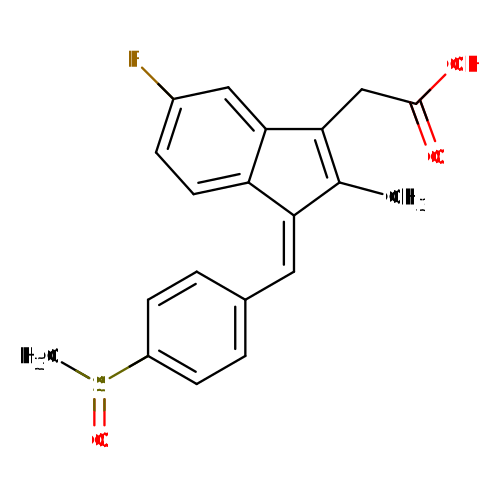
Structure for Sulindac (DB00605)
- Weight
- Average: 356.411
Monoisotopic: 356.088243305 - Chemical Formula
- C20H17FO3S
- Synonyms
- (Z)-5-Fluoro-2-methyl-1-((p-(methylsulfinyl)phenyl)methylene)-1H-indene-3-acetic acid
- cis-5-Fluoro-2-methyl-1-((4-(methylsulfinyl)phenyl)methylene)-1H-indene-3-acetic acid
- cis-5-Fluoro-2-methyl-1-((p-methylsulfinyl)benzylidene)indene-3-acetic acid
- Sulindac
- Sulindaco
- Sulindacum

Pharmacology
- Indication
For acute or long-term use in the relief of signs and symptoms of osteoarthritis, rheumatoid arthritis, ankylosing spondylitis, acute painful shoulder (acute subacromial bursitis/supraspinatus tendinitis), and acute gouty arthritis.
 Reduce drug development failure ratesBuild, train, & validate machine-learning modelswith evidence-based and structured datasets.Build, train, & validate predictive machine-learning models with structured datasets.
- Associated Conditions
Indication Type Indication Combined Product Details Approval Level Age Group Patient Characteristics Dose Form Symptomatic treatment of Acute tendonitis •••••••••••• Symptomatic treatment of Ankylosing spondylitis •••••••••••• Management of Colorectal polyps ••• ••••• Symptomatic treatment of Gouty arthritis •••••••••••• Symptomatic treatment of Osteoarthritis •••••••••••• - Contraindications & Blackbox Warnings
 Prevent Adverse Drug Events TodayTap into our Clinical API for life-saving information on contraindications & blackbox warnings, population restrictions, harmful risks, & more.Avoid life-threatening adverse drug events with our Clinical API
- Pharmacodynamics
Sulindac is a non-steroidal anti-inflammatory indene derivative, also possessing analgesic and antipyretic activities.
- Mechanism of action
Sulindac's exact mechanism of action is unknown. Its antiinflammatory effects are believed to be due to inhibition of both COX-1 and COX-2 which leads to the inhibition of prostaglandin synthesis. Antipyretic effects may be due to action on the hypothalamus, resulting in an increased peripheral blood flow, vasodilation, and subsequent heat dissipation.
Target Actions Organism AProstaglandin G/H synthase 2 inhibitorHumans UProstaglandin G/H synthase 1 inhibitorHumans UAldose reductase inhibitorHumans UMitogen-activated protein kinase 3 inhibitorHumans UPeroxisome proliferator-activated receptor delta negative modulatorHumans UProstaglandin D2 receptor 2 antagonistHumans UAldo-keto reductase family 1 member B10 inhibitorHumans - Absorption
Approximately 90% absorbed in humans following oral administration.
- Volume of distribution
Not Available
- Protein binding
At 1 mcg/ml concentrations, approximately 93% sulindac and 98% of its sulfide metabolite are bound to human serum albumin.
- Metabolism
Undergoes two major biotransformations: reversible reduction to the sulfide metabolite, and irreversible oxidation to the sulfone metabolite. Sulindac and its sulfide and sulfone metabolites undergo extensive enterohepatic circulation. Available evidence indicates that the biological activity resides with the sulfide metabolite. Side chain hydroxylation and hydration of the double bond also occur.
Hover over products below to view reaction partners
- Route of elimination
Sulindac is excreted in rat milk; concentrations in milk were 10 to 20% of those levels in plasma. It is not known if sulindac is excreted in human milk. Approximately 50% of the administered dose of sulindac is excreted in the urine with the conjugated sulfone metabolite accounting for the major portion. Hepatic metabolism is an important elimination pathway.
- Half-life
The mean half-life of sulindac is 7.8 hours while the mean half-life of the sulfide metabolite is 16.4 hours.
- Clearance
- Renal cl=68.12 +/- 27.56 mL/min [NORMAL (19-41 yrs)]
- Adverse Effects
 Improve decision support & research outcomesWith structured adverse effects data, including: blackbox warnings, adverse reactions, warning & precautions, & incidence rates. View sample adverse effects data in our new Data Library!Improve decision support & research outcomes with our structured adverse effects data.
- Toxicity
Acute oral toxicity (LD50) in rats is 264 mg/kg. Cases of overdose have been reported and rarely, deaths have occurred. The following signs and symptoms may be observed following overdose: stupor, coma, diminished urine output and hypotension.
- Pathways
Pathway Category Sulindac Action Pathway Drug action - Pharmacogenomic Effects/ADRs
- Not Available
Interactions
- Drug Interactions
- This information should not be interpreted without the help of a healthcare provider. If you believe you are experiencing an interaction, contact a healthcare provider immediately. The absence of an interaction does not necessarily mean no interactions exist.
Drug Interaction Integrate drug-drug
interactions in your softwareAbacavir Sulindac may decrease the excretion rate of Abacavir which could result in a higher serum level. Abciximab The risk or severity of bleeding and hemorrhage can be increased when Sulindac is combined with Abciximab. Acebutolol Sulindac may decrease the antihypertensive activities of Acebutolol. Aceclofenac The risk or severity of adverse effects can be increased when Sulindac is combined with Aceclofenac. Acemetacin The risk or severity of adverse effects can be increased when Sulindac is combined with Acemetacin. - Food Interactions
- Avoid alcohol. Ingesting alcohol may increase the risk of gastrointestinal bleeding.
- Take with food.
Products
 Drug product information from 10+ global regionsOur datasets provide approved product information including:dosage, form, labeller, route of administration, and marketing period.Access drug product information from over 10 global regions.
- Product Ingredients
Ingredient UNII CAS InChI Key Sulindac sodium NJV14I2XPC 63804-15-9 YMXUJDLCLXHYBO-WPTDRQDKSA-M - Product Images
- Brand Name Prescription Products
Name Dosage Strength Route Labeller Marketing Start Marketing End Region Image Clinoril Tablet 200 mg/1 Oral Merck Sharp & Dohme Limited 1978-09-27 2012-03-31 US 
Clinoril Tablet 150 mg/1 Oral Merck & Co., Inc. 2007-02-01 2007-02-01 US Clinoril Tab 150mg Tablet 150 mg / tab Oral Merck Frosst Canada & Cie, Merck Frosst Canada & Co. 1979-12-31 1998-08-14 Canada 
Clinoril Tab 200mg Tablet 200 mg / tab Oral Merck Frosst Canada & Cie, Merck Frosst Canada & Co. 1979-12-31 1998-08-14 Canada Sulindac-150 Tab 150mg Tablet 150 mg Oral Pro Doc Limitee 1989-12-31 2009-07-23 Canada - Generic Prescription Products
Name Dosage Strength Route Labeller Marketing Start Marketing End Region Image Apo-sulin Tab 150mg Tablet 150 mg Oral Apotex Corporation 1988-12-31 2019-12-02 Canada Apo-sulin Tab 200mg Tablet 200 mg Oral Apotex Corporation 1988-12-31 2019-12-02 Canada Nu-sulindac Tab 150mg Tablet 150 mg Oral Nu Pharm Inc 1994-12-31 2012-09-04 Canada Nu-sulindac Tab 200mg Tablet 200 mg Oral Nu Pharm Inc 1994-12-31 2012-09-04 Canada Penta-sulindac Tablet 200 mg / tab Oral Pentapharm Ltd. Not applicable Not applicable Canada


Categories
- ATC Codes
- M01AB02 — Sulindac
- Drug Categories
- Acetic Acid Derivatives and Related Substances
- Agents causing hyperkalemia
- Agents that produce hypertension
- Analgesics
- Analgesics, Non-Narcotic
- Anti-Inflammatory Agents
- Anti-Inflammatory Agents, Non-Steroidal
- Anti-Inflammatory Agents, Non-Steroidal (Non-Selective)
- Antiinflammatory and Antirheumatic Products
- Antiinflammatory and Antirheumatic Products, Non-Steroids
- Antirheumatic Agents
- Cyclooxygenase Inhibitors
- Drugs causing inadvertant photosensitivity
- Enzyme Inhibitors
- Indenes
- Musculo-Skeletal System
- Nephrotoxic agents
- Non COX-2 selective NSAIDS
- OAT1/SLC22A6 inhibitors
- Other Nonsteroidal Anti-inflammatory Agents
- Peripheral Nervous System Agents
- Photosensitizing Agents
- Sensory System Agents
- Chemical TaxonomyProvided by Classyfire
- Description
- This compound belongs to the class of organic compounds known as indenes and isoindenes. These are compounds containing an indene moiety(which consists of a cyclopentadiene fused to a benzene ring), or a isoindene moiety (which consists of a cyclopentadiene fused to cyclohexadiene ring).
- Kingdom
- Organic compounds
- Super Class
- Benzenoids
- Class
- Indenes and isoindenes
- Sub Class
- Not Available
- Direct Parent
- Indenes and isoindenes
- Alternative Parents
- Phenyl sulfoxides / Aryl fluorides / Sulfoxides / Sulfinyl compounds / Monocarboxylic acids and derivatives / Carboxylic acids / Organofluorides / Organic oxides / Hydrocarbon derivatives / Carbonyl compounds
- Substituents
- Aromatic homopolycyclic compound / Aryl fluoride / Aryl halide / Carbonyl group / Carboxylic acid / Carboxylic acid derivative / Hydrocarbon derivative / Indene / Monocarboxylic acid or derivatives / Monocyclic benzene moiety
- Molecular Framework
- Aromatic homopolycyclic compounds
- External Descriptors
- organofluorine compound, monocarboxylic acid, sulfoxide (CHEBI:9352)
- Affected organisms
- Humans and other mammals
Chemical Identifiers
- UNII
- 184SNS8VUH
- CAS number
- 38194-50-2
- InChI Key
- MLKXDPUZXIRXEP-MFOYZWKCSA-N
- InChI
- InChI=1S/C20H17FO3S/c1-12-17(9-13-3-6-15(7-4-13)25(2)24)16-8-5-14(21)10-19(16)18(12)11-20(22)23/h3-10H,11H2,1-2H3,(H,22,23)/b17-9-
- IUPAC Name
- 2-[(1Z)-5-fluoro-1-[(4-methanesulfinylphenyl)methylidene]-2-methyl-1H-inden-3-yl]acetic acid
- SMILES
- CC1=C(CC(O)=O)C2=CC(F)=CC=C2\C1=C/C1=CC=C(C=C1)S(C)=O
References
- Synthesis Reference
Gary Piazza, Robert Reynolds, "Derivatives of sulindac, use thereof and preparation thereof." U.S. Patent US20070244122, issued October 18, 2007.
US20070244122- General References
- Not Available
- External Links
- Human Metabolome Database
- HMDB0014743
- KEGG Drug
- D00120
- KEGG Compound
- C01531
- PubChem Compound
- 1548887
- PubChem Substance
- 46506570
- ChemSpider
- 1265915
- BindingDB
- 50103504
- 10237
- ChEBI
- 9352
- ChEMBL
- CHEMBL15770
- Therapeutic Targets Database
- DAP000569
- PharmGKB
- PA451565
- RxList
- RxList Drug Page
- Drugs.com
- Drugs.com Drug Page
- PDRhealth
- PDRhealth Drug Page
- Wikipedia
- Sulindac
- FDA label
- Download (106 KB)
- MSDS
- Download (73.2 KB)
Clinical Trials
- Clinical Trials
Phase Status Purpose Conditions Count 3 Active Not Recruiting Prevention Colorectal Neoplasms 1 3 Completed Prevention Precancerous Conditions 1 3 Completed Treatment Familial Adenomatous Polyposis 1 3 Withdrawn Treatment Familial Adenomatous Polyposis 1 2 Completed Prevention Adenomatous Polyps 1
Pharmacoeconomics
- Manufacturers
- Merck research laboratories div merck co inc
- Epic pharma llc
- Heritage pharmaceuticals inc
- Mutual pharmaceutical co inc
- Mylan pharmaceuticals inc
- Sandoz inc
- Teva pharmaceuticals usa inc
- Watson laboratories inc
- Packagers
- A-S Medication Solutions LLC
- Avkare Incorporated
- Bryant Ranch Prepack
- Dept Health Central Pharmacy
- DHHS Program Support Center Supply Service Center
- Direct Dispensing Inc.
- Dispensing Solutions
- Diversified Healthcare Services Inc.
- Endo Pharmaceuticals Inc.
- Epic Pharma LLC
- Golden State Medical Supply Inc.
- Group Health Cooperative
- H.J. Harkins Co. Inc.
- Heartland Repack Services LLC
- Heritage Pharmaceuticals
- Innoviant Pharmacy Inc.
- Kaiser Foundation Hospital
- Keltman Pharmaceuticals Inc.
- Major Pharmaceuticals
- Merck & Co.
- Murfreesboro Pharmaceutical Nursing Supply
- Mutual Pharmaceutical Co.
- Mylan
- Nucare Pharmaceuticals Inc.
- PD-Rx Pharmaceuticals Inc.
- Pharmedix
- Physicians Total Care Inc.
- Prepackage Specialists
- Prepak Systems Inc.
- Prescription Dispensing Service Inc.
- Qualitest
- Richmond Pharmacy
- Southwood Pharmaceuticals
- Spectrum Pharmaceuticals
- St Mary's Medical Park Pharmacy
- Stat Rx Usa
- Tya Pharmaceuticals
- UDL Laboratories
- Va Cmop Dallas
- Watson Pharmaceuticals
- Dosage Forms
Form Route Strength Suppository Tablet Oral Tablet Oral 150 mg / tab Tablet Oral 200 mg / tab Tablet Oral 200.000 mg Tablet Oral 150 mg/1 Tablet Oral 200 mg/1 Tablet Oral 200 mg Tablet Oral 150 mg - Prices
Unit description Cost Unit Sulindac powder 17.36USD g Clinoril 200 mg tablet 1.58USD tablet Sulindac 200 mg tablet 1.23USD tablet Sulindac 150 mg tablet 1.0USD tablet Apo-Sulin 200 mg Tablet 0.51USD tablet Novo-Sundac 200 mg Tablet 0.51USD tablet Nu-Sulindac 200 mg Tablet 0.51USD tablet Apo-Sulin 150 mg Tablet 0.4USD tablet Novo-Sundac 150 mg Tablet 0.4USD tablet Nu-Sulindac 150 mg Tablet 0.4USD tablet DrugBank does not sell nor buy drugs. Pricing information is supplied for informational purposes only.- Patents
- Not Available
Properties
- State
- Solid
- Experimental Properties
Property Value Source melting point (°C) 183 °C PhysProp water solubility 3000 mg/L MERCK INDEX (1996); pH 7 logP 3.42 SANGSTER (1993) pKa 4.7 MERCK INDEX (1996) - Predicted Properties
Property Value Source Water Solubility 0.0251 mg/mL ALOGPS logP 2.96 ALOGPS logP 2.93 Chemaxon logS -4.2 ALOGPS pKa (Strongest Acidic) 4.09 Chemaxon pKa (Strongest Basic) -8.1 Chemaxon Physiological Charge -1 Chemaxon Hydrogen Acceptor Count 3 Chemaxon Hydrogen Donor Count 1 Chemaxon Polar Surface Area 54.37 Å2 Chemaxon Rotatable Bond Count 4 Chemaxon Refractivity 99.56 m3·mol-1 Chemaxon Polarizability 37.21 Å3 Chemaxon Number of Rings 3 Chemaxon Bioavailability 1 Chemaxon Rule of Five Yes Chemaxon Ghose Filter Yes Chemaxon Veber's Rule No Chemaxon MDDR-like Rule No Chemaxon - Predicted ADMET Features
Property Value Probability Human Intestinal Absorption + 0.9937 Blood Brain Barrier + 0.8325 Caco-2 permeable - 0.8957 P-glycoprotein substrate Non-substrate 0.5904 P-glycoprotein inhibitor I Non-inhibitor 0.5847 P-glycoprotein inhibitor II Non-inhibitor 0.9949 Renal organic cation transporter Non-inhibitor 0.8753 CYP450 2C9 substrate Non-substrate 0.7715 CYP450 2D6 substrate Non-substrate 0.8961 CYP450 3A4 substrate Non-substrate 0.5629 CYP450 1A2 substrate Inhibitor 0.9107 CYP450 2C9 inhibitor Non-inhibitor 0.9071 CYP450 2D6 inhibitor Non-inhibitor 0.9231 CYP450 2C19 inhibitor Non-inhibitor 0.9025 CYP450 3A4 inhibitor Non-inhibitor 0.8309 CYP450 inhibitory promiscuity Low CYP Inhibitory Promiscuity 0.5789 Ames test Non AMES toxic 0.5451 Carcinogenicity Non-carcinogens 0.6516 Biodegradation Not ready biodegradable 1.0 Rat acute toxicity 3.0989 LD50, mol/kg Not applicable hERG inhibition (predictor I) Weak inhibitor 0.9768 hERG inhibition (predictor II) Non-inhibitor 0.8671
Spectra
- Mass Spec (NIST)
- Not Available
- Spectra
- Chromatographic Properties
Collision Cross Sections (CCS)
Adduct CCS Value (Å2) Source type Source [M-H]- 199.3143986 predictedDarkChem Lite v0.1.0 [M-H]- 177.90828 predictedDeepCCS 1.0 (2019) [M+H]+ 197.6079986 predictedDarkChem Lite v0.1.0 [M+H]+ 180.26628 predictedDeepCCS 1.0 (2019) [M+Na]+ 199.4509986 predictedDarkChem Lite v0.1.0 [M+Na]+ 187.27032 predictedDeepCCS 1.0 (2019)
Targets

- Kind
- Protein
- Organism
- Humans
- Pharmacological action
- Yes
- Actions
- Inhibitor
- General Function
- Prostaglandin-endoperoxide synthase activity
- Specific Function
- Converts arachidonate to prostaglandin H2 (PGH2), a committed step in prostanoid synthesis. Constitutively expressed in some tissues in physiological conditions, such as the endothelium, kidney and...
- Gene Name
- PTGS2
- Uniprot ID
- P35354
- Uniprot Name
- Prostaglandin G/H synthase 2
- Molecular Weight
- 68995.625 Da
References
- Giuliano F, Warner TD: Ex vivo assay to determine the cyclooxygenase selectivity of non-steroidal anti-inflammatory drugs. Br J Pharmacol. 1999 Apr;126(8):1824-30. [Article]
- Molina MA, Sitja-Arnau M, Lemoine MG, Frazier ML, Sinicrope FA: Increased cyclooxygenase-2 expression in human pancreatic carcinomas and cell lines: growth inhibition by nonsteroidal anti-inflammatory drugs. Cancer Res. 1999 Sep 1;59(17):4356-62. [Article]
- Yip-Schneider MT, Barnard DS, Billings SD, Cheng L, Heilman DK, Lin A, Marshall SJ, Crowell PL, Marshall MS, Sweeney CJ: Cyclooxygenase-2 expression in human pancreatic adenocarcinomas. Carcinogenesis. 2000 Feb;21(2):139-46. [Article]
- Fosslien E: Biochemistry of cyclooxygenase (COX)-2 inhibitors and molecular pathology of COX-2 in neoplasia. Crit Rev Clin Lab Sci. 2000 Oct;37(5):431-502. [Article]
- Taylor MT, Lawson KR, Ignatenko NA, Marek SE, Stringer DE, Skovan BA, Gerner EW: Sulindac sulfone inhibits K-ras-dependent cyclooxygenase-2 expression in human colon cancer cells. Cancer Res. 2000 Dec 1;60(23):6607-10. [Article]
- Kind
- Protein
- Organism
- Humans
- Pharmacological action
- Unknown
- Actions
- Inhibitor
- General Function
- Prostaglandin-endoperoxide synthase activity
- Specific Function
- Converts arachidonate to prostaglandin H2 (PGH2), a committed step in prostanoid synthesis. Involved in the constitutive production of prostanoids in particular in the stomach and platelets. In gas...
- Gene Name
- PTGS1
- Uniprot ID
- P23219
- Uniprot Name
- Prostaglandin G/H synthase 1
- Molecular Weight
- 68685.82 Da
References
- Giuliano F, Warner TD: Ex vivo assay to determine the cyclooxygenase selectivity of non-steroidal anti-inflammatory drugs. Br J Pharmacol. 1999 Apr;126(8):1824-30. [Article]
- Lim JT, Piazza GA, Han EK, Delohery TM, Li H, Finn TS, Buttyan R, Yamamoto H, Sperl GJ, Brendel K, Gross PH, Pamukcu R, Weinstein IB: Sulindac derivatives inhibit growth and induce apoptosis in human prostate cancer cell lines. Biochem Pharmacol. 1999 Oct 1;58(7):1097-107. [Article]
- Soriano AF, Helfrich B, Chan DC, Heasley LE, Bunn PA Jr, Chou TC: Synergistic effects of new chemopreventive agents and conventional cytotoxic agents against human lung cancer cell lines. Cancer Res. 1999 Dec 15;59(24):6178-84. [Article]
- Cheng ZJ, Tikkanen I, Vapaatalo H, Mervaala EM: Vascular effects of COX inhibition and AT1 receptor blockade in transgenic rats harboring mouse renin-2 gene. J Physiol Pharmacol. 2002 Dec;53(4 Pt 1):597-613. [Article]
- Cheng ZJ, Finckenberg P, Louhelainen M, Merasto S, Tikkanen I, Vapaatalo H, Mervaala EM: Cardiovascular and renal effects of cyclooxygenase inhibition in transgenic rats harboring mouse renin-2 gene (TGR[mREN2]27). Eur J Pharmacol. 2003 Feb 14;461(2-3):159-69. [Article]
- Kind
- Protein
- Organism
- Humans
- Pharmacological action
- Unknown
- Actions
- Inhibitor
- General Function
- Glyceraldehyde oxidoreductase activity
- Specific Function
- Catalyzes the NADPH-dependent reduction of a wide variety of carbonyl-containing compounds to their corresponding alcohols with a broad range of catalytic efficiencies.
- Gene Name
- AKR1B1
- Uniprot ID
- P15121
- Uniprot Name
- Aldose reductase
- Molecular Weight
- 35853.125 Da
References
- Sharma YR, Vajpayee RB, Bhatnagar R, Mohan M, Azad RV, Kumar M, Nath R: Topical sulindac therapy in diabetic senile cataracts: cataract-IV. Indian J Ophthalmol. 1989 Jul-Sep;37(3):127-33. [Article]
- Crabbe MJ, Freeman G, Halder AB, Bron AJ: The inhibition of bovine lens aldose reductase by Clinoril, its absorption into the human red cell and its effect on human red cell aldose reductase activity. Ophthalmic Res. 1985;17(2):85-9. [Article]
- Chaudhry PS, Cabrera J, Juliani HR, Varma SD: Inhibition of human lens aldose reductase by flavonoids, sulindac and indomethacin. Biochem Pharmacol. 1983 Jul 1;32(13):1995-8. [Article]
- Jacobson M, Sharma YR, Cotlier E, Hollander JD: Diabetic complications in lens and nerve and their prevention by sulindac or sorbinil: two novel aldose reductase inhibitors. Invest Ophthalmol Vis Sci. 1983 Oct;24(10):1426-9. [Article]
- van der Sloot P, Mizisin A, Zochodne D: Sulindac in established experimental diabetes: a follow-up study. Can J Neurol Sci. 1995 Aug;22(3):198-201. [Article]
- Chen X, Ji ZL, Chen YZ: TTD: Therapeutic Target Database. Nucleic Acids Res. 2002 Jan 1;30(1):412-5. [Article]
- Kind
- Protein
- Organism
- Humans
- Pharmacological action
- Unknown
- Actions
- Inhibitor
- General Function
- Phosphatase binding
- Specific Function
- Serine/threonine kinase which acts as an essential component of the MAP kinase signal transduction pathway. MAPK1/ERK2 and MAPK3/ERK1 are the 2 MAPKs which play an important role in the MAPK/ERK ca...
- Gene Name
- MAPK3
- Uniprot ID
- P27361
- Uniprot Name
- Mitogen-activated protein kinase 3
- Molecular Weight
- 43135.16 Da
References
- Rice PL, Goldberg RJ, Ray EC, Driggers LJ, Ahnen DJ: Inhibition of extracellular signal-regulated kinase 1/2 phosphorylation and induction of apoptosis by sulindac metabolites. Cancer Res. 2001 Feb 15;61(4):1541-7. [Article]
- Rice PL, Washington M, Schleman S, Beard KS, Driggers LJ, Ahnen DJ: Sulindac sulfide inhibits epidermal growth factor-induced phosphorylation of extracellular-regulated kinase 1/2 and Bad in human colon cancer cells. Cancer Res. 2003 Feb 1;63(3):616-20. [Article]
- Rice PL, Beard KS, Driggers LJ, Ahnen DJ: Inhibition of extracellular-signal regulated kinases 1/2 is required for apoptosis of human colon cancer cells in vitro by sulindac metabolites. Cancer Res. 2004 Nov 15;64(22):8148-51. [Article]
- Pangburn HA, Kraus H, Ahnen DJ, Rice PL: Sulindac metabolites inhibit epidermal growth factor receptor activation and expression. J Carcinog. 2005 Sep 2;4:16. [Article]
- Rice PL, Peters SL, Beard KS, Ahnen DJ: Sulindac independently modulates extracellular signal-regulated kinase 1/2 and cyclic GMP-dependent protein kinase signaling pathways. Mol Cancer Ther. 2006 Mar;5(3):746-54. [Article]
- Kind
- Protein
- Organism
- Humans
- Pharmacological action
- Unknown
- Actions
- Negative modulator
- General Function
- Zinc ion binding
- Specific Function
- Ligand-activated transcription factor. Receptor that binds peroxisome proliferators such as hypolipidemic drugs and fatty acids. Has a preference for poly-unsaturated fatty acids, such as gamma-lin...
- Gene Name
- PPARD
- Uniprot ID
- Q03181
- Uniprot Name
- Peroxisome proliferator-activated receptor delta
- Molecular Weight
- 49902.99 Da
References
- He TC, Chan TA, Vogelstein B, Kinzler KW: PPARdelta is an APC-regulated target of nonsteroidal anti-inflammatory drugs. Cell. 1999 Oct 29;99(3):335-45. [Article]
- Babbar N, Ignatenko NA, Casero RA Jr, Gerner EW: Cyclooxygenase-independent induction of apoptosis by sulindac sulfone is mediated by polyamines in colon cancer. J Biol Chem. 2003 Nov 28;278(48):47762-75. Epub 2003 Sep 23. [Article]
- Jarvis MC, Gray TJ, Palmer CN: Both PPARgamma and PPARdelta influence sulindac sulfide-mediated p21WAF1/CIP1 upregulation in a human prostate epithelial cell line. Oncogene. 2005 Dec 8;24(55):8211-5. [Article]
- Kim DJ, Prabhu KS, Gonzalez FJ, Peters JM: Inhibition of chemically induced skin carcinogenesis by sulindac is independent of peroxisome proliferator-activated receptor-beta/delta (PPARbeta/delta). Carcinogenesis. 2006 May;27(5):1105-12. Epub 2006 Jan 16. [Article]
- Liou JY, Ghelani D, Yeh S, Wu KK: Nonsteroidal anti-inflammatory drugs induce colorectal cancer cell apoptosis by suppressing 14-3-3epsilon. Cancer Res. 2007 Apr 1;67(7):3185-91. [Article]
- Kind
- Protein
- Organism
- Humans
- Pharmacological action
- Unknown
- Actions
- Antagonist
- General Function
- Prostaglandin j receptor activity
- Specific Function
- Receptor for prostaglandin D2 (PGD2). Coupled to the G(i)-protein. Receptor activation may result in pertussis toxin-sensitive decreases in cAMP levels and Ca(2+) mobilization. PI3K signaling is al...
- Gene Name
- PTGDR2
- Uniprot ID
- Q9Y5Y4
- Uniprot Name
- Prostaglandin D2 receptor 2
- Molecular Weight
- 43267.15 Da
References
- Hata AN, Lybrand TP, Marnett LJ, Breyer RM: Structural determinants of arylacetic acid nonsteroidal anti-inflammatory drugs necessary for binding and activation of the prostaglandin D2 receptor CRTH2. Mol Pharmacol. 2005 Mar;67(3):640-7. Epub 2004 Nov 24. [Article]
- Kind
- Protein
- Organism
- Humans
- Pharmacological action
- Unknown
- Actions
- Inhibitor
- General Function
- Retinal dehydrogenase activity
- Specific Function
- Acts as all-trans-retinaldehyde reductase. Can efficiently reduce aliphatic and aromatic aldehydes, and is less active on hexoses (in vitro). May be responsible for detoxification of reactive aldeh...
- Gene Name
- AKR1B10
- Uniprot ID
- O60218
- Uniprot Name
- Aldo-keto reductase family 1 member B10
- Molecular Weight
- 36019.295 Da
References
- Cousido-Siah A, Ruiz FX, Crespo I, Porte S, Mitschler A, Pares X, Podjarny A, Farres J: Structural analysis of sulindac as an inhibitor of aldose reductase and AKR1B10. Chem Biol Interact. 2015 Jun 5;234:290-6. doi: 10.1016/j.cbi.2014.12.018. Epub 2014 Dec 20. [Article]
Enzymes
- Kind
- Protein
- Organism
- Humans
- Pharmacological action
- Unknown
- Actions
- Inhibitor
- General Function
- Vitamin d 24-hydroxylase activity
- Specific Function
- Cytochromes P450 are a group of heme-thiolate monooxygenases. In liver microsomes, this enzyme is involved in an NADPH-dependent electron transport pathway. It oxidizes a variety of structurally un...
- Gene Name
- CYP1A1
- Uniprot ID
- P04798
- Uniprot Name
- Cytochrome P450 1A1
- Molecular Weight
- 58164.815 Da
References
- Ciolino HP, MacDonald CJ, Memon OS, Bass SE, Yeh GC: Sulindac regulates the aryl hydrocarbon receptor-mediated expression of Phase 1 metabolic enzymes in vivo and in vitro. Carcinogenesis. 2006 Aug;27(8):1586-92. doi: 10.1093/carcin/bgi359. Epub 2006 Mar 10. [Article]
Carriers
- Kind
- Protein
- Organism
- Humans
- Pharmacological action
- Unknown
- General Function
- Toxic substance binding
- Specific Function
- Serum albumin, the main protein of plasma, has a good binding capacity for water, Ca(2+), Na(+), K(+), fatty acids, hormones, bilirubin and drugs. Its main function is the regulation of the colloid...
- Gene Name
- ALB
- Uniprot ID
- P02768
- Uniprot Name
- Serum albumin
- Molecular Weight
- 69365.94 Da
References
- Russeva VN, Zhivkova ZD: Molecular basis of sulindac competition with specific markers for the major binding sites on human serum albumin. Arzneimittelforschung. 2003;53(3):174-81. [Article]
- Shams-Eldeen MA, Vallner JJ, Needham TE: Interaction of sulindac and metabolite with human serum albumin. J Pharm Sci. 1978 Aug;67(8):1077-80. [Article]
- Zhivkova ZD, Russeva VN: Thermodynamic characterization of the binding process of sulindac to human serum albumin. Arzneimittelforschung. 2003;53(1):53-6. [Article]
Transporters
- Kind
- Protein
- Organism
- Humans
- Pharmacological action
- Unknown
- Actions
- Inhibitor
- General Function
- Sodium-independent organic anion transmembrane transporter activity
- Specific Function
- Involved in the renal elimination of endogenous and exogenous organic anions. Functions as organic anion exchanger when the uptake of one molecule of organic anion is coupled with an efflux of one ...
- Gene Name
- SLC22A6
- Uniprot ID
- Q4U2R8
- Uniprot Name
- Solute carrier family 22 member 6
- Molecular Weight
- 61815.78 Da
References
- Kuze K, Graves P, Leahy A, Wilson P, Stuhlmann H, You G: Heterologous expression and functional characterization of a mouse renal organic anion transporter in mammalian cells. J Biol Chem. 1999 Jan 15;274(3):1519-24. [Article]

Drug created at June 13, 2005 13:24 / Updated at April 27, 2024 09:44