Identification
- Summary
Adenosine is a medication used in myocardial perfusion scintigraphy and to treat supraventricular tachycardia.
- Brand Names
- Adenocard, Viva-drops Lubricating Eye Drops
- Generic Name
- Adenosine
- DrugBank Accession Number
- DB00640
- Background
The structure of adenosine was first described in 1931,7 though the vasodilating effects were not described in literature until the 1940s.8 Adenosine is indicated as an adjunct to thallium-201 in myocardial perfusion scintigraphy,12 though it is rarely used in this indication, having largely been replaced by dipyridamole and [regadenson].9,10 Adenosine is also indicated in the treatment of supraventricular tachycardia.13
Adenosine was granted FDA approval on 30 October 1989.11
- Type
- Small Molecule
- Groups
- Approved, Investigational
- Structure
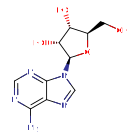
Structure for Adenosine (DB00640)

- Weight
- Average: 267.2413
Monoisotopic: 267.096753929 - Chemical Formula
- C10H13N5O4
- Synonyms
- (2R,3R,4S,5R)-2-(6-aminopurin-9-yl)-5-(hydroxymethyl)oxolane-3,4-diol
- 6-Amino-9-beta-D-ribofuranosyl-9H-purine
- 9-beta-D-Ribofuranosidoadenine
- 9-beta-D-Ribofuranosyl-9H-purin-6-amine
- 9-β-D-ribofuranosyl-9H-purin-6-amine
- Ade-Rib
- Adenin riboside
- Adenine Deoxyribonucleoside
- Adenogesic
- Adenosin
- Adenosina
- Adénosine
- Adenosine
- Adenosinum
- Ado
- beta-D-Adenosine
- External IDs
- SR 96225
- SR-96225
- USAF CB-10

Pharmacology
- Indication
Adenosine is indicated as an adjunct to thallium-201 in myocardial perfusion scintigraphy in patients unable to adequately exercise.12 It is also indicated to convert sinus rhythm of paroxysmal supraventricular tachycardia.13
 Reduce drug development failure ratesBuild, train, & validate machine-learning modelswith evidence-based and structured datasets.Build, train, & validate predictive machine-learning models with structured datasets.
- Associated Conditions
Indication Type Indication Combined Product Details Approval Level Age Group Patient Characteristics Dose Form Management of Paroxysmal supraventricular tachycardia •••••••••••• Management of Paroxysmal supraventricular tachycardia •••••••••••• Diagnostic agent Pulmonary artery hypertension ••• ••••• Management of Svt •••••••••••• Diagnostic agent Supraventricular tachycardias •••••••••••• - Contraindications & Blackbox Warnings
 Prevent Adverse Drug Events TodayTap into our Clinical API for life-saving information on contraindications & blackbox warnings, population restrictions, harmful risks, & more.Avoid life-threatening adverse drug events with our Clinical API
- Pharmacodynamics
Adenosine is indicated as an adjunct to thallium-201 in myocardial perfusion scintigraphy and also indicated for conversion of sinus rhythm of paroxysmal supraventricular tachycardia.12,13 Adenosine has a short duration of action as the half life is <10 seconds, and a wide therapeutic window.12,13 Patients should be counselled regarding the risk of cardiovascular side effects, bronchoconstriction, seizures, and hypersensitivity.12,13
- Mechanism of action
Agonism of adenosine receptors A1 and A2 reduces conduction time in the atrioventricular node of the heart.4,6,12 Conduction time is decreased by inducing potassium efflux and inhibiting calcium influx through channels in nerve cells, leading to hyperpolarization and and increased threshold for calcium dependent action potentials.4 Decreased conduction time leads to an antiarrhythmic effect.4 Inhibition of calcium influx, reduces the activity of adenylate cyclase, relaxing vascular smooth muscle.6 Relaxed vascular smooth muscle leads to increased blood flow through normal coronary arteries but not stenotic arteries, allowing thallium-201 to be more readily uptaken in normal coronary arteries.12
Target Actions Organism AAdenosine receptor A1 agonistHumans AAdenosine receptor A2a agonistHumans AAdenosine receptor A2b agonistHumans AAdenosine receptor A3 agonistHumans - Absorption
Data regarding the absorption of adenosine are not readily available.5
- Volume of distribution
Data regarding the volume of distribution of adenosine are not readily available.5
- Protein binding
Adenosine is bound to albumin in plasma, however data regarding the extent of binding are not readily available.3
- Metabolism
Adenosine can be phosphorylated by adenosine kinase to form adenosine monophosphate.1,12 From there, it is phosphorylated again by adenylate kinase 1 to form adenosine diphosphate, and again by nucleoside diphosphate kinase A or B to form adenosine triphosphate.1,12
Alternatively, adenosine can be deaminated by adenosine deaminase to form inosine.1,12 Iosine is phosphorylated by purine nucleoside phosphorylase to form hypoxanthine.1,12 Hypoxanthine undergoes oxidation by xanthine dehydrogenase twice to form the metabolites xanthine, followed by uric acid.2,12
Hover over products below to view reaction partners
- Route of elimination
Adenosine is predominantly eliminated in the urine as uric acid.2,12
- Half-life
The half life of adenosine in blood is less than 10 seconds.12
- Clearance
Data regarding the clearance of adenosine are not readily available.5
- Adverse Effects
 Improve decision support & research outcomesWith structured adverse effects data, including: blackbox warnings, adverse reactions, warning & precautions, & incidence rates. View sample adverse effects data in our new Data Library!Improve decision support & research outcomes with our structured adverse effects data.
- Toxicity
Patients experiencing an overdose of adenosine may present with asystole, heart block, or cardiac ischemia; though the effects are generally short lived.4 Patients experiencing an overdose should be treated with symptomatic and supportive care, which may include a slow intravenous injection of theophylline.12
The LD50 in mice is >20 g/kg subcutaneously, 500mg/kg intraperitoneally, and 39.6 µg/kg subcutaneously.14
- Pathways
- Pharmacogenomic Effects/ADRs
- Not Available
Interactions
- Drug Interactions
- This information should not be interpreted without the help of a healthcare provider. If you believe you are experiencing an interaction, contact a healthcare provider immediately. The absence of an interaction does not necessarily mean no interactions exist.
Drug Interaction Integrate drug-drug
interactions in your softwareAcebutolol Adenosine may increase the arrhythmogenic activities of Acebutolol. Acetyldigitoxin Acetyldigitoxin may increase the arrhythmogenic activities of Adenosine. Aclidinium The risk or severity of Tachycardia can be increased when Adenosine is combined with Aclidinium. Acrivastine The risk or severity of QTc prolongation can be increased when Acrivastine is combined with Adenosine. Ajmaline Adenosine may increase the arrhythmogenic activities of Ajmaline. - Food Interactions
- Avoid caffeine. Caffeine may antagonise the activity of adenosine.
Products
 Drug product information from 10+ global regionsOur datasets provide approved product information including:dosage, form, labeller, route of administration, and marketing period.Access drug product information from over 10 global regions.
- International/Other Brands
- Adenocor (Sanofi-Aventis) / Adenoject (Sun) / Adenoz (Celon) / Adenozer (Purzer) / Adesin (Dae Han New Pharm) / Adrekar (Sanofi-Aventis) / Atépadène (Mayoly-Spindler) / Cardimax (AC Farma) / Cardiovert (Sanofi-Aventis) / Krenosin (Sanofi-Aventis) / Osiden (Square) / Pisdeno (Pisa)
- Brand Name Prescription Products
Name Dosage Strength Route Labeller Marketing Start Marketing End Region Image Adenocard Solution 3 mg/1mL Intravenous Astellas Pharma US, Inc. 1989-10-30 Not applicable US 
Adenocard Solution 3 mg/1mL Intravenous Remedy Repack 2015-08-18 2016-08-18 US Adenocard Solution 3 mg/1mL Intravenous Cardinal Health 1989-10-30 2018-01-31 US Adenocard Solution 6 mg/2mL Intravenous Cardinal Health 1989-10-30 2019-01-31 US Adenocard - Liq Rapid Bolus IV 3mg/ml Solution 3 mg / mL Intravenous Astellas Pharma Inc 1996-08-14 2014-12-05 Canada 
- Generic Prescription Products
Name Dosage Strength Route Labeller Marketing Start Marketing End Region Image Adenosine Injection, solution 3 mg/1mL Intravenous Heritage Pharmaceuticals Inc. d/b/a Avet Pharmaceuticals Inc. 2021-03-01 Not applicable US Adenosine Injection 3 mg/1mL Intravenous Teva Parenteral Medicines, Inc. 2004-06-18 2011-10-31 US Adenosine Injection 3 mg/1mL Intravenous HF Acquisition Co LLC, DBA HealthFirst 2023-04-28 Not applicable US Adenosine Solution 3 mg/1mL Intravenous Gland Pharma Limited 2017-01-13 Not applicable US Adenosine Injection, solution 3 mg/1mL Intravenous Teva Parenteral Medicines, Inc. 2013-09-23 Not applicable US - Over the Counter Products
Name Dosage Strength Route Labeller Marketing Start Marketing End Region Image 9tails Premium Wrinkle Power Lifting Liquid 0.04 g/100g Topical ELUO.CO.,Ltd. 2019-10-28 Not applicable US A.H.C Real Eye For Face Cream 0.12 mg/30mL Topical Carver Korea Co Ltd 2013-06-21 2018-12-01 US A.H.C. Collagen Cream Cream 20 mg/50mL Topical Carver Korea Co.,Ltd 2013-08-15 2018-12-01 US A.H.C. Collagen Toner Liquid 48 mg/120mL Topical Carver Korea Co.,Ltd 2013-08-15 2018-12-01 US Advanced Snail 92 All in One Cream Cream 0.04 mg/100mL Topical Cosrx Inc. 2016-05-24 2017-06-28 US - Mixture Products
Name Ingredients Dosage Route Labeller Marketing Start Marketing End Region Image A.H.c Cotton 100 Mask Multi Peptide Adenosine (0.01 g/25mL) + Allantoin (0.025 g/25mL) + Nicotinamide (0.05 g/25mL) Patch Topical Carver Korea Co.,Ltd. 2017-09-20 2018-12-01 US A.H.c Cotton 100 Mask Skin Ceramide Adenosine (0.01 g/25mL) + Allantoin (0.025 g/25mL) + Nicotinamide (0.05 g/25mL) Patch Topical Carver Korea Co.,Ltd. 2017-09-05 2018-12-01 US A.H.c Cotton 100 Mask Soy Isoflavone Adenosine (0.01 g/25mL) + Allantoin (0.025 g/25mL) + Nicotinamide (0.05 g/25mL) Patch Topical Carver Korea Co.,Ltd. 2017-09-14 2018-12-01 US A.H.c Cotton 100 Mask Triple Hyaluronic Adenosine (0.01 g/25mL) + Allantoin (0.025 g/25mL) + Nicotinamide (0.05 g/25mL) Patch Topical Carver Korea Co.,Ltd. 2017-09-20 2017-09-21 US A.H.c Cotton 100 Mask Triple Hyaluronic Adenosine (0.01 g/25mL) + Allantoin (0.025 g/25mL) + Nicotinamide (0.05 g/25mL) Patch Topical Carver Korea Co.,Ltd. 2017-09-20 2018-12-01 US - Unapproved/Other Products
Name Ingredients Dosage Route Labeller Marketing Start Marketing End Region Image 9tails Premium Wrinkle Power Lifting Adenosine (0.04 g/100g) Liquid Topical ELUO.CO.,Ltd. 2019-10-28 Not applicable US A.H.c Cotton 100 Mask Multi Peptide Adenosine (0.01 g/25mL) + Allantoin (0.025 g/25mL) + Nicotinamide (0.05 g/25mL) Patch Topical Carver Korea Co.,Ltd. 2017-09-20 2018-12-01 US A.H.c Cotton 100 Mask Skin Ceramide Adenosine (0.01 g/25mL) + Allantoin (0.025 g/25mL) + Nicotinamide (0.05 g/25mL) Patch Topical Carver Korea Co.,Ltd. 2017-09-05 2018-12-01 US A.H.c Cotton 100 Mask Soy Isoflavone Adenosine (0.01 g/25mL) + Allantoin (0.025 g/25mL) + Nicotinamide (0.05 g/25mL) Patch Topical Carver Korea Co.,Ltd. 2017-09-14 2018-12-01 US A.H.c Cotton 100 Mask Triple Hyaluronic Adenosine (0.01 g/25mL) + Allantoin (0.025 g/25mL) + Nicotinamide (0.05 g/25mL) Patch Topical Carver Korea Co.,Ltd. 2017-09-20 2017-09-21 US
Categories
- ATC Codes
- C01EB10 — Adenosine
- Drug Categories
- Adenosine, antagonists & inhibitors
- Agents producing tachycardia
- Alkenes
- Analgesics
- Antiarrhythmic agents
- Antiarrhythmics, Class V
- Biological Factors
- Carbohydrates
- Cardiac Therapy
- Cardiovascular Agents
- Central Nervous System Agents
- Cyclohexanes
- Cyclohexenes
- Cycloparaffins
- Glycosides
- Heterocyclic Compounds, Fused-Ring
- Hydrocarbons, Acyclic
- Miscellaneous Cardiac Drugs
- Miscellaneous Therapeutic Agents
- Moderate Risk QTc-Prolonging Agents
- Neurotransmitter Agents
- Nucleic Acids, Nucleotides, and Nucleosides
- Nucleosides
- Peripheral Nervous System Agents
- Polyenes
- Purine Nucleosides
- Purinergic Agents
- Purinergic Agonists
- Purinergic P1 Receptor Agonists
- Purines
- QTc Prolonging Agents
- Ribonucleosides
- Sensory System Agents
- Terpenes
- Vasodilating Agents
- Chemical TaxonomyProvided by Classyfire
- Description
- This compound belongs to the class of organic compounds known as purine nucleosides. These are compounds comprising a purine base attached to a ribosyl or deoxyribosyl moiety.
- Kingdom
- Organic compounds
- Super Class
- Nucleosides, nucleotides, and analogues
- Class
- Purine nucleosides
- Sub Class
- Not Available
- Direct Parent
- Purine nucleosides
- Alternative Parents
- Glycosylamines / Pentoses / 6-aminopurines / Aminopyrimidines and derivatives / N-substituted imidazoles / Imidolactams / Tetrahydrofurans / Heteroaromatic compounds / Secondary alcohols / Oxacyclic compounds show 5 more
- Substituents
- 6-aminopurine / Alcohol / Amine / Aminopyrimidine / Aromatic heteropolycyclic compound / Azacycle / Azole / Glycosyl compound / Heteroaromatic compound / Hydrocarbon derivative show 21 more
- Molecular Framework
- Aromatic heteropolycyclic compounds
- External Descriptors
- adenosines (CHEBI:16335) / Ribonucleosides (C00212)
- Affected organisms
- Humans and other mammals
Chemical Identifiers
- UNII
- K72T3FS567
- CAS number
- 58-61-7
- InChI Key
- OIRDTQYFTABQOQ-KQYNXXCUSA-N
- InChI
- InChI=1S/C10H13N5O4/c11-8-5-9(13-2-12-8)15(3-14-5)10-7(18)6(17)4(1-16)19-10/h2-4,6-7,10,16-18H,1H2,(H2,11,12,13)/t4-,6-,7-,10-/m1/s1
- IUPAC Name
- (2R,3R,4S,5R)-2-(6-amino-9H-purin-9-yl)-5-(hydroxymethyl)oxolane-3,4-diol
- SMILES
- NC1=C2N=CN([C@@H]3O[C@H](CO)[C@@H](O)[C@H]3O)C2=NC=N1
References
- Synthesis Reference
Giorgio Stramentinoli, Federico Gennari, "Process for preparing adenosine derivatives of anti-inflammatory and analgesic activity." U.S. Patent US4373097, issued October, 1965.
US4373097- General References
- Boison D, Yegutkin GG: Adenosine Metabolism: Emerging Concepts for Cancer Therapy. Cancer Cell. 2019 Dec 9;36(6):582-596. doi: 10.1016/j.ccell.2019.10.007. [Article]
- Maiuolo J, Oppedisano F, Gratteri S, Muscoli C, Mollace V: Regulation of uric acid metabolism and excretion. Int J Cardiol. 2016 Jun 15;213:8-14. doi: 10.1016/j.ijcard.2015.08.109. Epub 2015 Aug 14. [Article]
- Cui F, Wang J, Li F, Fan J, Qu G, Yao X, Lei B: Investigation of the Interaction between Adenosine and Human Serum Albumin by Fluorescent Spectroscopy and Molecular Modeling Chinese Journal of Chemistry. 2008 Apr 16;26(4):661-665. [Article]
- Singh S, McKintosh R: Adenosine . [Article]
- Uematsu T, Kozawa O, Matsuno H, Niwa M, Yoshikoshi H, Oh-uchi M, Kohno K, Nagashima S, Kanamaru M: Pharmacokinetics and tolerability of intravenous infusion of adenosine (SUNY4001) in healthy volunteers. Br J Clin Pharmacol. 2000 Aug;50(2):177-81. doi: 10.1046/j.1365-2125.2000.00214.x. [Article]
- Iskandrian AS: Adenosine myocardial perfusion imaging. J Nucl Med. 1994 Apr;35(4):734-6. [Article]
- Levene PA, Tipson RS: THE RING STRUCTURE OF ADENOSINE. Science. 1931 Nov 20;74(1925):521. doi: 10.1126/science.74.1925.521. [Article]
- SINGHER HO, MILLMAN N: The adenosine-triphosphatase activity of smooth muscle. Fed Proc. 1946;5(1 Pt 2):202. [Article]
- Notghi A, Low CS: Myocardial perfusion scintigraphy: past, present and future. Br J Radiol. 2011 Dec;84 Spec No 3:S229-36. doi: 10.1259/bjr/14625142. [Article]
- Palani G, Ananthasubramaniam K: Regadenoson: review of its established role in myocardial perfusion imaging and emerging applications. Cardiol Rev. 2013 Jan-Feb;21(1):42-8. doi: 10.1097/CRD.0b013e3182613db6. [Article]
- FDA Approved Drug Products: Adenocard (Adenosine) Intravenous Injection (Discontinued) [Link]
- FDA Approved Drug Products: Adenoscan (Adenosine) Intravenous Injection (Discontinued) [Link]
- Dailymed: Adenocard (Adenosine) Intravenous Injection [Link]
- Cayman Chemical: Adenosine MSDS [Link]
- External Links
- Human Metabolome Database
- HMDB0000050
- KEGG Drug
- D00045
- KEGG Compound
- C00212
- PubChem Compound
- 60961
- PubChem Substance
- 46508728
- ChemSpider
- 54923
- BindingDB
- 14487
- 296
- ChEBI
- 16335
- ChEMBL
- CHEMBL477
- ZINC
- ZINC000002169830
- Therapeutic Targets Database
- DAP000223
- PharmGKB
- PA448049
- PDBe Ligand
- ADN
- RxList
- RxList Drug Page
- Drugs.com
- Drugs.com Drug Page
- Wikipedia
- Adenosine
- PDB Entries
- 1bx4 / 1d4f / 1dgm / 1fmo / 1ho5 / 1jdv / 1jg2 / 1jg3 / 1lii / 1lik … show 197 more
Clinical Trials
- Clinical Trials
Phase Status Purpose Conditions Count 4 Completed Diagnostic Percutaneous Coronary Intervention (PCI) 1 4 Completed Treatment Acute Coronary Syndrome (ACS) / No Reflow Phenomenon / Normotensive 1 4 Completed Treatment Supraventricular Tachycardia (SVT) 1 4 Recruiting Diagnostic Premature Ventricular Contraction (PVC) 1 4 Recruiting Treatment Takotsubo Cardiomyopathy 1
Pharmacoeconomics
- Manufacturers
- Astellas pharma us inc
- Akorn inc
- App pharmaceuticals llc
- Baxter healthcare corp
- Bedford laboratories div ben venue laboratories inc
- Gland pharma ltd
- Luitpold pharmaceuticals inc
- Strides arcolab ltd
- Teva parenteral medicines inc
- Wockhardt ltd
- Packagers
- APP Pharmaceuticals
- A-S Medication Solutions LLC
- Astellas Pharma Inc.
- Baxter International Inc.
- Bedford Labs
- Ben Venue Laboratories Inc.
- General Injectables and Vaccines Inc.
- Gland Pharma Ltd.
- Hospira Inc.
- Physicians Total Care Inc.
- Sagent Pharmaceuticals
- Spectrum Pharmaceuticals
- Strides Arcolab Limited
- Teva Pharmaceutical Industries Ltd.
- Wockhardt Ltd.
- Dosage Forms
Form Route Strength Cream Topical 0.12 mg/30mL Liquid Topical 48 mg/120mL Soap Topical Solution Intravenous 6 mg/2mL Liquid Intravenous 3 mg / mL Injection, solution Intravenous bolus Injection Intravenous 6.0 mg/2ml Solution Solution 3 mg/1ml Injection Intravenous 30 mg/10ml Solution Intravenous 3 mg/1mL Injection, solution Parenteral 3 mg/ml Injection, solution Parenteral 6 mg/2ml Injection, solution Intravenous 5 mg/mL Solution Intravenous 6 mg Solution Intravenous 600000 mg Injection, solution 6 MG/2ML Injection, solution 30 MG/10ML Injection, solution 3 MG/ML Solution Intravenous 3 mg Injection Intravenous 3 mg/1mL Injection, solution Intravenous 3 mg/1mL Injection, solution Intravenous 60 mg/20mL Injection, solution Intravenous 90 mg/30mL Injection Parenteral 3 mg Injection, solution Intravenous Injection, solution Intravenous 10 mg/2ml Injection, solution Intravenous 250 mg/50ml Injection, solution Intravenous 3 mg/ml Injection, solution Intravenous 50 mg/10ml Cream Topical 0.04 mg/100mL Cream Topical 0.4 mg/1mL Cream Topical 20 mg/50mL Liquid Topical 12.8 mg/32g Liquid Topical 12 mg/30mL Liquid Topical 54 mg/135mL Liquid Topical 12 mg/30g Solution Topical 0.002 g/6mL Solution Intramuscular 6.000 mg Solution Topical 2.8 mg/7mL Cream Topical 0.012 g/30mL Liquid Topical 0.012 g/30mL Gel Topical Liquid Topical 0.05 g/130mL Cream Topical 0.01 g/45mL Cream Topical 0.02 g/50mL Cream Topical 0.01 g/30mL Solution Topical 1.2 mg/3mL Cream Topical 0.03 g/100mL Patch Topical 0.04 g/100mL Emulsion Topical 0.04 g/120mL Emulsion Topical 0.0006 g/1.5mL Cream Topical 0.01 g/50mL Cream Topical 0.0003 g/1.5mL Liquid Topical 0.04 g/120mL Liquid Topical 0.0006 g/1.5mL Liquid Topical 0.6 mg/6mL Liquid Dental Cream Topical 0.04 mL/100mL Cream Topical 0.004 g/10g Liquid Topical 0.04 g/100mL Gel Topical 0.04 g/100g Patch Topical 0.01 g/25mL Cream Topical 0.03 g/95g Patch Topical 0.006 g/15g Patch Topical 0.008 g/20g Stick Topical 0.003 g/9g Solution Topical Liquid Topical 20 mg/50mL Gel Topical 0.04 g/100mL Cream; kit; liquid; patch Topical Cream Topical 0.04 g/100g Patch Topical 0.0016 g/4g Lotion Topical 0.04 g/100g Liquid Topical 0.002 g/6mL Liquid Topical 0.001 g/3mL Cream Oral 0.04 g/100mL Liquid Topical 6 mg/15mL Cream Topical 0.004 g/10mL Emulsion Topical 0.04 g/100g Cream Topical 0.04 g/100mL Patch Topical 0.001 g/2.8g Patch Topical 0.014 g/35g Patch Topical 0.003 g/8g Patch Topical 0.04 g/100g Liquid Topical 0.04 g/100g Solution / drops Topical Cream Topical 0.0428 g/100g Cream Topical 0.2 g/100g Liquid Topical 2.0 mg/5mL Liquid Topical 25 mg/50mL Patch Topical 0.005 g/0.55g Kit Topical Emulsion Topical Cream Topical 0.0004 g/1g Cream Topical 0.0004 g/1mL Liquid Topical 0.0004 g/1mL Kit; liquid; spray Topical Liquid Vaginal 15 g/100mL Liquid Topical 0.1 g/100g Cream Topical 0.1 g/100mL Liquid Topical 0.1 g/100mL Emulsion Topical 0.05 g/130mL Cream Topical 0.04 g/120mL Injection, solution Intravenous 6 MG/2ML Lotion Topical Aerosol, spray Topical Liquid Oral 0.0435 g/100mL Patch Topical 0.5 g/25g Patch Topical 0.012 g/30g Cream Topical 6 g/150g Cream Topical 0.004 mg/10g Cream Topical 0.08 mg/20mL Stick Topical Patch Topical 0.6 mg/3g Injection, emulsion Topical Cream Topical 0.02 mg/50mL Liquid Topical 0.05 mg/125mL Patch Topical 13.2 mg/33mL Cream Topical 10 mg/25mL Liquid Topical 16 mg/40mL Cream Topical 0.03 g/75mL Cream Topical 0.01 g/25mL Cream Topical 0.018 g/45mL Injection Intravenous bolus Cream Topical Cream Topical 0.01 g/27g Liquid Topical 0.04 mg/100mL Lipstick Topical 0.001 g/3.5g Liquid Topical 0.00012 mg/0.3mL Cream Topical 0.00012 mg/0.3mL Cream Topical 0.011 mg/27mL Cream Topical 0.001 mg/2.5mL Patch Topical 0.01 g/25g Oil Topical 0.01 g/30mL Patch Topical Liquid Topical Cream Topical 0.012 g/30g Solution Intravenous 6.000 mg Solution Intravenous 3 mg / mL Cream Topical 0.0004 1/100mL Oil Topical Liquid Topical 0.02 g/50mL Patch Topical 0.01 g/27g Liquid Topical 0.02 g/50g Patch Topical 0.008 g/20mL Cream Topical 0.01 g/25g Patch Topical 1 g/100g Spray Topical Cream Topical 0.4 mg/1g Cream Topical 0.002 g/10g Cream Topical 0.01 g/50g Cream Topical 0.04 mL/1mL Liquid Topical 0.0004 mL/1mL Lotion Topical 0.05 g/100mL Cream Topical 0.05 g/100mL Liquid Topical 0.05 g/100mL Liquid Topical 0.001 g/4mL Patch Topical 0.009 g/24mL Emulsion Topical 0.04 g/100mL Liquid Topical 0.005 g/13mL Lotion Topical 1 mg/150mL Liquid Topical 0.04 mL/100mL Cream Topical 0.02 g/50g Cream Topical 0.024 g/60g Powder Topical Solution Intravenous 6.00 mg Emulsion Topical 0.06 g/150mL Liquid Topical 0.06 g/150mL - Prices
Unit description Cost Unit Adenosine-5 monophosphate 19.74USD g Adenosine powder 15.86USD g Adenoscan 3 mg/ml vial 10.09USD ml Adenosine 12 mg/4 ml vial 8.44USD ml Adenosine 6 mg/2 ml vial 8.1USD ml DrugBank does not sell nor buy drugs. Pricing information is supplied for informational purposes only.- Patents
Patent Number Pediatric Extension Approved Expires (estimated) Region US5731296 No 1998-03-24 2015-03-24 US
Properties
- State
- Solid
- Experimental Properties
Property Value Source melting point (°C) 235.5 °C PhysProp logP -1.05 HANSCH,C ET AL. (1995) - Predicted Properties
Property Value Source Water Solubility 14.0 mg/mL ALOGPS logP -1.2 ALOGPS logP -2.1 Chemaxon logS -1.3 ALOGPS pKa (Strongest Acidic) 12.45 Chemaxon pKa (Strongest Basic) 3.94 Chemaxon Physiological Charge 0 Chemaxon Hydrogen Acceptor Count 8 Chemaxon Hydrogen Donor Count 4 Chemaxon Polar Surface Area 139.54 Å2 Chemaxon Rotatable Bond Count 2 Chemaxon Refractivity 63.2 m3·mol-1 Chemaxon Polarizability 25.28 Å3 Chemaxon Number of Rings 3 Chemaxon Bioavailability 1 Chemaxon Rule of Five Yes Chemaxon Ghose Filter No Chemaxon Veber's Rule No Chemaxon MDDR-like Rule No Chemaxon - Predicted ADMET Features
Property Value Probability Human Intestinal Absorption + 0.9227 Blood Brain Barrier + 0.9383 Caco-2 permeable - 0.8957 P-glycoprotein substrate Non-substrate 0.7026 P-glycoprotein inhibitor I Non-inhibitor 0.966 P-glycoprotein inhibitor II Non-inhibitor 0.9533 Renal organic cation transporter Non-inhibitor 0.9444 CYP450 2C9 substrate Non-substrate 0.8639 CYP450 2D6 substrate Non-substrate 0.8349 CYP450 3A4 substrate Non-substrate 0.5866 CYP450 1A2 substrate Non-inhibitor 0.9667 CYP450 2C9 inhibitor Non-inhibitor 0.9595 CYP450 2D6 inhibitor Non-inhibitor 0.977 CYP450 2C19 inhibitor Non-inhibitor 0.9514 CYP450 3A4 inhibitor Non-inhibitor 0.962 CYP450 inhibitory promiscuity Low CYP Inhibitory Promiscuity 0.9701 Ames test Non AMES toxic 0.9133 Carcinogenicity Non-carcinogens 0.9182 Biodegradation Not ready biodegradable 0.9738 Rat acute toxicity 1.9715 LD50, mol/kg Not applicable hERG inhibition (predictor I) Weak inhibitor 0.989 hERG inhibition (predictor II) Non-inhibitor 0.9102
Spectra
- Mass Spec (NIST)
- Download (9.12 KB)
- Spectra
- Chromatographic Properties
Collision Cross Sections (CCS)
Adduct CCS Value (Å2) Source type Source [M-H]- 167.84392 predictedDarkChem Lite v0.1.0 [M-H]- 157.0312984 predictedDarkChem Standard v0.1.0 [M-H]- 168.25412 predictedDarkChem Lite v0.1.0 [M-H]- 168.87412 predictedDarkChem Lite v0.1.0 [M-H]- 160.4605 predictedDeepCCS 1.0 (2019) [M+H]+ 167.62612 predictedDarkChem Lite v0.1.0 [M+H]+ 161.4826835 predictedDarkChem Standard v0.1.0 [M+H]+ 168.23712 predictedDarkChem Lite v0.1.0 [M+H]+ 169.48162 predictedDarkChem Lite v0.1.0 [M+H]+ 162.82753 predictedDeepCCS 1.0 (2019) [M+Na]+ 167.54952 predictedDarkChem Lite v0.1.0 [M+Na]+ 172.1040913 predictedDarkChem Standard v0.1.0 [M+Na]+ 167.90312 predictedDarkChem Lite v0.1.0 [M+Na]+ 168.94112 predictedDarkChem Lite v0.1.0 [M+Na]+ 169.51688 predictedDeepCCS 1.0 (2019)
Targets

- Kind
- Protein
- Organism
- Humans
- Pharmacological action
- Yes
- Actions
- Agonist
- General Function
- Purine nucleoside binding
- Specific Function
- Receptor for adenosine. The activity of this receptor is mediated by G proteins which inhibit adenylyl cyclase.
- Gene Name
- ADORA1
- Uniprot ID
- P30542
- Uniprot Name
- Adenosine receptor A1
- Molecular Weight
- 36511.325 Da
References
- Trincavelli ML, Daniele S, Martini C: Adenosine receptors: what we know and what we are learning. Curr Top Med Chem. 2010;10(9):860-77. [Article]
- Schenone S, Brullo C, Musumeci F, Bruno O, Botta M: A1 receptors ligands: past, present and future trends. Curr Top Med Chem. 2010;10(9):878-901. [Article]
- Ezeamuzie CI, Khan I: The role of adenosine A(2) receptors in the regulation of TNF-alpha production and PGE(2) release in mouse peritoneal macrophages. Int Immunopharmacol. 2007 Apr;7(4):483-90. Epub 2006 Dec 29. [Article]
- Buenestado A, Grassin Delyle S, Arnould I, Besnard F, Naline E, Blouquit-Laye S, Chapelier A, Bellamy JF, Devillier P: The role of adenosine receptors in regulating production of tumour necrosis factor-alpha and chemokines by human lung macrophages. Br J Pharmacol. 2010 Mar;159(6):1304-11. doi: 10.1111/j.1476-5381.2009.00614.x. Epub 2010 Feb 5. [Article]
- Funakoshi H, Zacharia LC, Tang Z, Zhang J, Lee LL, Good JC, Herrmann DE, Higuchi Y, Koch WJ, Jackson EK, Chan TO, Feldman AM: A1 adenosine receptor upregulation accompanies decreasing myocardial adenosine levels in mice with left ventricular dysfunction. Circulation. 2007 May 1;115(17):2307-15. Epub 2007 Apr 16. [Article]
- Haschemi A, Wagner O, Marculescu R, Wegiel B, Robson SC, Gagliani N, Gallo D, Chen JF, Bach FH, Otterbein LE: Cross-regulation of carbon monoxide and the adenosine A2a receptor in macrophages. J Immunol. 2007 May 1;178(9):5921-9. [Article]
- Kind
- Protein
- Organism
- Humans
- Pharmacological action
- Yes
- Actions
- Agonist
- General Function
- Identical protein binding
- Specific Function
- Receptor for adenosine. The activity of this receptor is mediated by G proteins which activate adenylyl cyclase.
- Gene Name
- ADORA2A
- Uniprot ID
- P29274
- Uniprot Name
- Adenosine receptor A2a
- Molecular Weight
- 44706.925 Da
References
- Trincavelli ML, Daniele S, Martini C: Adenosine receptors: what we know and what we are learning. Curr Top Med Chem. 2010;10(9):860-77. [Article]
- Schenone S, Brullo C, Musumeci F, Bruno O, Botta M: A1 receptors ligands: past, present and future trends. Curr Top Med Chem. 2010;10(9):878-901. [Article]
- Ezeamuzie CI, Khan I: The role of adenosine A(2) receptors in the regulation of TNF-alpha production and PGE(2) release in mouse peritoneal macrophages. Int Immunopharmacol. 2007 Apr;7(4):483-90. Epub 2006 Dec 29. [Article]
- Kreckler LM, Wan TC, Ge ZD, Auchampach JA: Adenosine inhibits tumor necrosis factor-alpha release from mouse peritoneal macrophages via A2A and A2B but not the A3 adenosine receptor. J Pharmacol Exp Ther. 2006 Apr;317(1):172-80. Epub 2005 Dec 9. [Article]
- Kreckler LM, Gizewski E, Wan TC, Auchampach JA: Adenosine suppresses lipopolysaccharide-induced tumor necrosis factor-alpha production by murine macrophages through a protein kinase A- and exchange protein activated by cAMP-independent signaling pathway. J Pharmacol Exp Ther. 2009 Dec;331(3):1051-61. doi: 10.1124/jpet.109.157651. Epub 2009 Sep 11. [Article]
- Buenestado A, Grassin Delyle S, Arnould I, Besnard F, Naline E, Blouquit-Laye S, Chapelier A, Bellamy JF, Devillier P: The role of adenosine receptors in regulating production of tumour necrosis factor-alpha and chemokines by human lung macrophages. Br J Pharmacol. 2010 Mar;159(6):1304-11. doi: 10.1111/j.1476-5381.2009.00614.x. Epub 2010 Feb 5. [Article]
- Funakoshi H, Zacharia LC, Tang Z, Zhang J, Lee LL, Good JC, Herrmann DE, Higuchi Y, Koch WJ, Jackson EK, Chan TO, Feldman AM: A1 adenosine receptor upregulation accompanies decreasing myocardial adenosine levels in mice with left ventricular dysfunction. Circulation. 2007 May 1;115(17):2307-15. Epub 2007 Apr 16. [Article]
- Haschemi A, Wagner O, Marculescu R, Wegiel B, Robson SC, Gagliani N, Gallo D, Chen JF, Bach FH, Otterbein LE: Cross-regulation of carbon monoxide and the adenosine A2a receptor in macrophages. J Immunol. 2007 May 1;178(9):5921-9. [Article]
- Kind
- Protein
- Organism
- Humans
- Pharmacological action
- Yes
- Actions
- Agonist
- General Function
- G-protein coupled adenosine receptor activity
- Specific Function
- Receptor for adenosine. The activity of this receptor is mediated by G proteins which activate adenylyl cyclase.
- Gene Name
- ADORA2B
- Uniprot ID
- P29275
- Uniprot Name
- Adenosine receptor A2b
- Molecular Weight
- 36332.655 Da
References
- Trincavelli ML, Daniele S, Martini C: Adenosine receptors: what we know and what we are learning. Curr Top Med Chem. 2010;10(9):860-77. [Article]
- Schenone S, Brullo C, Musumeci F, Bruno O, Botta M: A1 receptors ligands: past, present and future trends. Curr Top Med Chem. 2010;10(9):878-901. [Article]
- Ezeamuzie CI, Khan I: The role of adenosine A(2) receptors in the regulation of TNF-alpha production and PGE(2) release in mouse peritoneal macrophages. Int Immunopharmacol. 2007 Apr;7(4):483-90. Epub 2006 Dec 29. [Article]
- Kreckler LM, Wan TC, Ge ZD, Auchampach JA: Adenosine inhibits tumor necrosis factor-alpha release from mouse peritoneal macrophages via A2A and A2B but not the A3 adenosine receptor. J Pharmacol Exp Ther. 2006 Apr;317(1):172-80. Epub 2005 Dec 9. [Article]
- Buenestado A, Grassin Delyle S, Arnould I, Besnard F, Naline E, Blouquit-Laye S, Chapelier A, Bellamy JF, Devillier P: The role of adenosine receptors in regulating production of tumour necrosis factor-alpha and chemokines by human lung macrophages. Br J Pharmacol. 2010 Mar;159(6):1304-11. doi: 10.1111/j.1476-5381.2009.00614.x. Epub 2010 Feb 5. [Article]
- Funakoshi H, Zacharia LC, Tang Z, Zhang J, Lee LL, Good JC, Herrmann DE, Higuchi Y, Koch WJ, Jackson EK, Chan TO, Feldman AM: A1 adenosine receptor upregulation accompanies decreasing myocardial adenosine levels in mice with left ventricular dysfunction. Circulation. 2007 May 1;115(17):2307-15. Epub 2007 Apr 16. [Article]
- Haschemi A, Wagner O, Marculescu R, Wegiel B, Robson SC, Gagliani N, Gallo D, Chen JF, Bach FH, Otterbein LE: Cross-regulation of carbon monoxide and the adenosine A2a receptor in macrophages. J Immunol. 2007 May 1;178(9):5921-9. [Article]
- Kind
- Protein
- Organism
- Humans
- Pharmacological action
- Yes
- Actions
- Agonist
- General Function
- G-protein coupled adenosine receptor activity
- Specific Function
- Receptor for adenosine. The activity of this receptor is mediated by G proteins which inhibits adenylyl cyclase. Possible role in reproduction.
- Gene Name
- ADORA3
- Uniprot ID
- P0DMS8
- Uniprot Name
- Adenosine receptor A3
- Molecular Weight
- 36184.175 Da
References
- Chen X, Ji ZL, Chen YZ: TTD: Therapeutic Target Database. Nucleic Acids Res. 2002 Jan 1;30(1):412-5. [Article]
- Trincavelli ML, Daniele S, Martini C: Adenosine receptors: what we know and what we are learning. Curr Top Med Chem. 2010;10(9):860-77. [Article]
- Schenone S, Brullo C, Musumeci F, Bruno O, Botta M: A1 receptors ligands: past, present and future trends. Curr Top Med Chem. 2010;10(9):878-901. [Article]
- Ezeamuzie CI, Khan I: The role of adenosine A(2) receptors in the regulation of TNF-alpha production and PGE(2) release in mouse peritoneal macrophages. Int Immunopharmacol. 2007 Apr;7(4):483-90. Epub 2006 Dec 29. [Article]
- Kreckler LM, Wan TC, Ge ZD, Auchampach JA: Adenosine inhibits tumor necrosis factor-alpha release from mouse peritoneal macrophages via A2A and A2B but not the A3 adenosine receptor. J Pharmacol Exp Ther. 2006 Apr;317(1):172-80. Epub 2005 Dec 9. [Article]
- Buenestado A, Grassin Delyle S, Arnould I, Besnard F, Naline E, Blouquit-Laye S, Chapelier A, Bellamy JF, Devillier P: The role of adenosine receptors in regulating production of tumour necrosis factor-alpha and chemokines by human lung macrophages. Br J Pharmacol. 2010 Mar;159(6):1304-11. doi: 10.1111/j.1476-5381.2009.00614.x. Epub 2010 Feb 5. [Article]
- Funakoshi H, Zacharia LC, Tang Z, Zhang J, Lee LL, Good JC, Herrmann DE, Higuchi Y, Koch WJ, Jackson EK, Chan TO, Feldman AM: A1 adenosine receptor upregulation accompanies decreasing myocardial adenosine levels in mice with left ventricular dysfunction. Circulation. 2007 May 1;115(17):2307-15. Epub 2007 Apr 16. [Article]
- Haschemi A, Wagner O, Marculescu R, Wegiel B, Robson SC, Gagliani N, Gallo D, Chen JF, Bach FH, Otterbein LE: Cross-regulation of carbon monoxide and the adenosine A2a receptor in macrophages. J Immunol. 2007 May 1;178(9):5921-9. [Article]
Enzymes
- Kind
- Protein
- Organism
- Humans
- Pharmacological action
- Unknown
- Actions
- Substrate
- General Function
- Nucleoside diphosphate kinase activity
- Specific Function
- Catalyzes the reversible transfer of the terminal phosphate group between ATP and AMP. Also displays broad nucleoside diphosphate kinase activity. Plays an important role in cellular energy homeost...
- Gene Name
- AK1
- Uniprot ID
- P00568
- Uniprot Name
- Adenylate kinase isoenzyme 1
- Molecular Weight
- 21634.725 Da
References
- Boison D, Yegutkin GG: Adenosine Metabolism: Emerging Concepts for Cancer Therapy. Cancer Cell. 2019 Dec 9;36(6):582-596. doi: 10.1016/j.ccell.2019.10.007. [Article]
- Kind
- Protein
- Organism
- Humans
- Pharmacological action
- Unknown
- Actions
- Substrate
- General Function
- Ribosomal small subunit binding
- Specific Function
- Major role in the synthesis of nucleoside triphosphates other than ATP. The ATP gamma phosphate is transferred to the NDP beta phosphate via a ping-pong mechanism, using a phosphorylated active-sit...
- Gene Name
- NME1
- Uniprot ID
- P15531
- Uniprot Name
- Nucleoside diphosphate kinase A
- Molecular Weight
- 17148.635 Da
References
- Boison D, Yegutkin GG: Adenosine Metabolism: Emerging Concepts for Cancer Therapy. Cancer Cell. 2019 Dec 9;36(6):582-596. doi: 10.1016/j.ccell.2019.10.007. [Article]
- Kind
- Protein
- Organism
- Humans
- Pharmacological action
- Unknown
- Actions
- Substrate
- General Function
- Transcription factor activity, sequence-specific dna binding
- Specific Function
- Major role in the synthesis of nucleoside triphosphates other than ATP. Negatively regulates Rho activity by interacting with AKAP13/LBC. Acts as a transcriptional activator of the MYC gene; binds ...
- Gene Name
- NME2
- Uniprot ID
- P22392
- Uniprot Name
- Nucleoside diphosphate kinase B
- Molecular Weight
- 17297.935 Da
References
- Boison D, Yegutkin GG: Adenosine Metabolism: Emerging Concepts for Cancer Therapy. Cancer Cell. 2019 Dec 9;36(6):582-596. doi: 10.1016/j.ccell.2019.10.007. [Article]
- Kind
- Protein
- Organism
- Humans
- Pharmacological action
- Unknown
- Actions
- Substrate
- General Function
- Purine-nucleoside phosphorylase activity
- Specific Function
- The purine nucleoside phosphorylases catalyze the phosphorolytic breakdown of the N-glycosidic bond in the beta-(deoxy)ribonucleoside molecules, with the formation of the corresponding free purine ...
- Gene Name
- PNP
- Uniprot ID
- P00491
- Uniprot Name
- Purine nucleoside phosphorylase
- Molecular Weight
- 32117.69 Da
References
- Boison D, Yegutkin GG: Adenosine Metabolism: Emerging Concepts for Cancer Therapy. Cancer Cell. 2019 Dec 9;36(6):582-596. doi: 10.1016/j.ccell.2019.10.007. [Article]
- Kind
- Protein
- Organism
- Humans
- Pharmacological action
- Unknown
- Actions
- Substrate
- General Function
- Xanthine oxidase activity
- Specific Function
- Key enzyme in purine degradation. Catalyzes the oxidation of hypoxanthine to xanthine. Catalyzes the oxidation of xanthine to uric acid. Contributes to the generation of reactive oxygen species. Ha...
- Gene Name
- XDH
- Uniprot ID
- P47989
- Uniprot Name
- Xanthine dehydrogenase/oxidase
- Molecular Weight
- 146422.99 Da
References
- Maiuolo J, Oppedisano F, Gratteri S, Muscoli C, Mollace V: Regulation of uric acid metabolism and excretion. Int J Cardiol. 2016 Jun 15;213:8-14. doi: 10.1016/j.ijcard.2015.08.109. Epub 2015 Aug 14. [Article]
- Kind
- Protein
- Organism
- Humans
- Pharmacological action
- Unknown
- Actions
- Substrate
- General Function
- Zinc ion binding
- Specific Function
- Catalyzes the hydrolytic deamination of adenosine and 2-deoxyadenosine. Plays an important role in purine metabolism and in adenosine homeostasis. Modulates signaling by extracellular adenosine, an...
- Gene Name
- ADA
- Uniprot ID
- P00813
- Uniprot Name
- Adenosine deaminase
- Molecular Weight
- 40764.13 Da
References
- Kopff M, Kopff A, Puczkowski S: [Adenosine deaminase: isoenzymes ADA1 and ADA2]. Pol Merkur Lekarski. 1997 Dec;3(18):288-90. [Article]
- Boison D, Yegutkin GG: Adenosine Metabolism: Emerging Concepts for Cancer Therapy. Cancer Cell. 2019 Dec 9;36(6):582-596. doi: 10.1016/j.ccell.2019.10.007. [Article]
- Kind
- Protein
- Organism
- Humans
- Pharmacological action
- Unknown
- Actions
- Substrate
- General Function
- Poly(a) rna binding
- Specific Function
- ATP dependent phosphorylation of adenosine and other related nucleoside analogs to monophosphate derivatives. Serves as a potential regulator of concentrations of extracellular adenosine and intrac...
- Gene Name
- ADK
- Uniprot ID
- P55263
- Uniprot Name
- Adenosine kinase
- Molecular Weight
- 40545.075 Da
References
- Boison D: Adenosine kinase, epilepsy and stroke: mechanisms and therapies. Trends Pharmacol Sci. 2006 Dec;27(12):652-8. Epub 2006 Oct 23. [Article]
- Boison D, Yegutkin GG: Adenosine Metabolism: Emerging Concepts for Cancer Therapy. Cancer Cell. 2019 Dec 9;36(6):582-596. doi: 10.1016/j.ccell.2019.10.007. [Article]
Carriers
- Kind
- Protein
- Organism
- Humans
- Pharmacological action
- Unknown
- Actions
- Binder
- General Function
- Toxic substance binding
- Specific Function
- Serum albumin, the main protein of plasma, has a good binding capacity for water, Ca(2+), Na(+), K(+), fatty acids, hormones, bilirubin and drugs. Its main function is the regulation of the colloid...
- Gene Name
- ALB
- Uniprot ID
- P02768
- Uniprot Name
- Serum albumin
- Molecular Weight
- 69365.94 Da
References
- Wzorek J, Bednarek R, Watala C, Boncler M: Binding of adenosine derivatives to carrier proteins may reduce their antiplatelet activity. Biochem Pharmacol. 2020 Apr;174:113827. doi: 10.1016/j.bcp.2020.113827. Epub 2020 Jan 25. [Article]
- Cui F, Wang J, Cui Y, Yao X, Qu G, Lu Y: Investigation of interaction between human serum albumin and N6-(2-hydroxyethyl)-adenosine by fluorescence spectroscopy and molecular modelling. Luminescence. 2007 Nov-Dec;22(6):546-53. doi: 10.1002/bio.999. [Article]
- Cui F, Wang J, Li F, Fan J, Qu G, Yao X, Lei B: Investigation of the Interaction between Adenosine and Human Serum Albumin by Fluorescent Spectroscopy and Molecular Modeling Chinese Journal of Chemistry. 2008 Apr 16;26(4):661-665. [Article]
Transporters
- Kind
- Protein
- Organism
- Humans
- Pharmacological action
- Unknown
- Actions
- Substrate
- General Function
- Nucleoside transmembrane transporter activity
- Specific Function
- Mediates both influx and efflux of nucleosides across the membrane (equilibrative transporter). It is sensitive (ES) to low concentrations of the inhibitor nitrobenzylmercaptopurine riboside (NBMPR...
- Gene Name
- SLC29A1
- Uniprot ID
- Q99808
- Uniprot Name
- Equilibrative nucleoside transporter 1
- Molecular Weight
- 50218.805 Da
References
- Boison D, Yegutkin GG: Adenosine Metabolism: Emerging Concepts for Cancer Therapy. Cancer Cell. 2019 Dec 9;36(6):582-596. doi: 10.1016/j.ccell.2019.10.007. [Article]
- Kind
- Protein
- Organism
- Humans
- Pharmacological action
- Unknown
- Actions
- Substrate
- General Function
- Nucleoside transmembrane transporter activity
- Specific Function
- Mediates equilibrative transport of purine, pyrimidine nucleosides and the purine base hypoxanthine. Very less sensitive than SLC29A1 to inhibition by nitrobenzylthioinosine (NBMPR), dipyridamole, ...
- Gene Name
- SLC29A2
- Uniprot ID
- Q14542
- Uniprot Name
- Equilibrative nucleoside transporter 2
- Molecular Weight
- 50112.335 Da
References
- Boison D, Yegutkin GG: Adenosine Metabolism: Emerging Concepts for Cancer Therapy. Cancer Cell. 2019 Dec 9;36(6):582-596. doi: 10.1016/j.ccell.2019.10.007. [Article]
- Kind
- Protein
- Organism
- Humans
- Pharmacological action
- Unknown
- Actions
- Substrate
- General Function
- Mediates both influx and efflux of nucleosides across the membrane (equilibrative transporter). Mediates transport of adenine, adenosine and uridine, as well as several nucleoside analog drugs, such as anticancer and antiviral agents, including cladribine, cordycepin, tubercidin and AZT. Does not transport hypoxanthine.
- Specific Function
- Nucleoside transmembrane transporter activity
- Gene Name
- SLC29A3
- Uniprot ID
- Q9BZD2
- Uniprot Name
- Equilibrative nucleoside transporter 3
- Molecular Weight
- 51813.89 Da
References
- Boison D, Yegutkin GG: Adenosine Metabolism: Emerging Concepts for Cancer Therapy. Cancer Cell. 2019 Dec 9;36(6):582-596. doi: 10.1016/j.ccell.2019.10.007. [Article]
- Kind
- Protein
- Organism
- Humans
- Pharmacological action
- Unknown
- Actions
- Substrate
- General Function
- Nucleoside transmembrane transporter activity
- Specific Function
- Functions as a polyspecific organic cation transporter, efficiently transporting many organic cations such as monoamine neurotransmitters 1-methyl-4-phenylpyridinium and biogenic amines including s...
- Gene Name
- SLC29A4
- Uniprot ID
- Q7RTT9
- Uniprot Name
- Equilibrative nucleoside transporter 4
- Molecular Weight
- 58058.005 Da
References
- Boison D, Yegutkin GG: Adenosine Metabolism: Emerging Concepts for Cancer Therapy. Cancer Cell. 2019 Dec 9;36(6):582-596. doi: 10.1016/j.ccell.2019.10.007. [Article]
- Kind
- Protein
- Organism
- Humans
- Pharmacological action
- Unknown
- Actions
- Substrate
- General Function
- Pyrimidine- and adenine-specific:sodium symporter activity
- Specific Function
- Sodium-dependent and pyrimidine-selective. Exhibits the transport characteristics of the nucleoside transport system cit or N2 subtype (N2/cit) (selective for pyrimidine nucleosides and adenosine)....
- Gene Name
- SLC28A1
- Uniprot ID
- O00337
- Uniprot Name
- Sodium/nucleoside cotransporter 1
- Molecular Weight
- 71583.18 Da
References
- Boison D, Yegutkin GG: Adenosine Metabolism: Emerging Concepts for Cancer Therapy. Cancer Cell. 2019 Dec 9;36(6):582-596. doi: 10.1016/j.ccell.2019.10.007. [Article]
- Kind
- Protein
- Organism
- Humans
- Pharmacological action
- Unknown
- Actions
- Substrate
- General Function
- Purine nucleoside transmembrane transporter activity
- Specific Function
- Sodium-dependent and purine-selective transporter. Exhibits the transport characteristics of the nucleoside transport system cif or N1 subtype (N1/cif) (selective for purine nucleosides and uridine...
- Gene Name
- SLC28A2
- Uniprot ID
- O43868
- Uniprot Name
- Sodium/nucleoside cotransporter 2
- Molecular Weight
- 71925.565 Da
References
- Boison D, Yegutkin GG: Adenosine Metabolism: Emerging Concepts for Cancer Therapy. Cancer Cell. 2019 Dec 9;36(6):582-596. doi: 10.1016/j.ccell.2019.10.007. [Article]
- Kind
- Protein
- Organism
- Humans
- Pharmacological action
- Unknown
- Actions
- Substrate
- General Function
- Signal transducer activity
- Specific Function
- Gap junction protein that acts as a regulator of bladder capacity. A gap junction consists of a cluster of closely packed pairs of transmembrane channels, the connexons, through which materials of ...
- Gene Name
- GJA1
- Uniprot ID
- P17302
- Uniprot Name
- Gap junction alpha-1 protein
- Molecular Weight
- 43008.005 Da
References
- Boison D, Yegutkin GG: Adenosine Metabolism: Emerging Concepts for Cancer Therapy. Cancer Cell. 2019 Dec 9;36(6):582-596. doi: 10.1016/j.ccell.2019.10.007. [Article]
- Kind
- Protein
- Organism
- Humans
- Pharmacological action
- Unknown
- General Function
- Pyrimidine- and adenine-specific:sodium symporter activity
- Specific Function
- Sodium-dependent, pyrimidine- and purine-selective. Involved in the homeostasis of endogenous nucleosides. Exhibits the transport characteristics of the nucleoside transport system cib or N3 subtyp...
- Gene Name
- SLC28A3
- Uniprot ID
- Q9HAS3
- Uniprot Name
- Solute carrier family 28 member 3
- Molecular Weight
- 76929.61 Da
References
- Badagnani I, Chan W, Castro RA, Brett CM, Huang CC, Stryke D, Kawamoto M, Johns SJ, Ferrin TE, Carlson EJ, Burchard EG, Giacomini KM: Functional analysis of genetic variants in the human concentrative nucleoside transporter 3 (CNT3; SLC28A3). Pharmacogenomics J. 2005;5(3):157-65. [Article]


Drug created at June 13, 2005 13:24 / Updated at April 26, 2024 00:45