Identification
- Summary
Naltrexone is a narcotic antagonist used in opioid overdose.
- Brand Names
- Contrave, Embeda, Vivitrol
- Generic Name
- Naltrexone
- DrugBank Accession Number
- DB00704
- Background
Derivative of noroxymorphone that is the N-cyclopropylmethyl congener of naloxone. It is a narcotic antagonist that is effective orally, longer lasting and more potent than naloxone, and has been proposed for the treatment of heroin addiction. The FDA has approved naltrexone for the treatment of alcohol dependence.
- Type
- Small Molecule
- Groups
- Approved, Investigational, Vet approved
- Structure
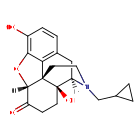
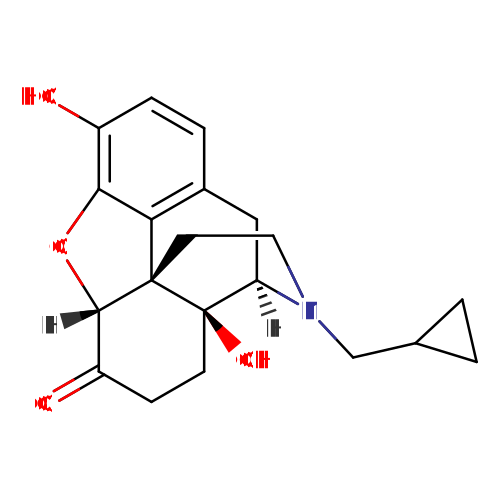
Structure for Naltrexone (DB00704)
- Weight
- Average: 341.4009
Monoisotopic: 341.162708229 - Chemical Formula
- C20H23NO4
- Synonyms
- 17-(Cyclopropylmethyl)-4,5-epoxy-3,14-dihydroxymorphinan-6-one
- 17-(Cyclopropylmethyl)-4,5α-epoxy-3,14-dihydroxymorphinan-6-one
- N-Cyclopropylmethyl-14-hydroxydihydromorphinone
- N-Cyclopropylmethylnoroxymorphone
- Naltrexon
- Naltrexona
- Naltrexone
- Naltrexonum
- External IDs
- EN-1639 A
- PTI-901
- UM 792

Pharmacology
- Indication
Used as an adjunct to a medically supervised behaviour modification program in the maintenance of opiate cessation in individuals who were formerly physically dependent on opiates and who have successfully undergone detoxification. Also used for the management of alcohol dependence in conjunction with a behavioural modification program.
 Reduce drug development failure ratesBuild, train, & validate machine-learning modelswith evidence-based and structured datasets.Build, train, & validate predictive machine-learning models with structured datasets.
- Associated Conditions
Indication Type Indication Combined Product Details Approval Level Age Group Patient Characteristics Dose Form Management of Alcohol dependence •••••••••••• Management of Cholestatic pruritus ••• ••••• ••••• Used as adjunct in combination to treat Obesity Combination Product in combination with: Bupropion (DB01156) •••••••••••• ••••••• •••••••• •••••••• ••••••• •••• ••••••• •••••••• ••••••• Used as adjunct in combination to manage Obesity Combination Product in combination with: Bupropion (DB01156) •••••••••••• ••••••••••• •• •••••••••••••• ••••••••••• ••••••• •••••••• •••••••• ••••••• •••• ••••••• •••••••• ••••••• Used as adjunct in combination to treat Obesity Combination Product in combination with: Bupropion (DB01156) •••••••••••• •• •••••••••••••• ••••••••••• ••••••• •••••••• •••••••• ••••••• •••• ••••••• •••••••• ••••••• - Contraindications & Blackbox Warnings
 Prevent Adverse Drug Events TodayTap into our Clinical API for life-saving information on contraindications & blackbox warnings, population restrictions, harmful risks, & more.Avoid life-threatening adverse drug events with our Clinical API
- Pharmacodynamics
Naltrexone, a pure opioid antagonist, is a synthetic congener of oxymorphone with no opioid agonist properties. Naltrexone is indicated in the treatment of alcohol dependence and for the blockade of the effects of exogenously administered opioids. It markedly attenuates or completely blocks, reversibly, the subjective effects of intravenously administered opioids. When co-administered with morphine, on a chronic basis, naltrexone blocks the physical dependence to morphine, heroin and other opioids. In subjects physically dependent on opioids, naltrexone will precipitate withdrawal symptomatology.
- Mechanism of action
Naltrexone is a pure opiate antagonist and has little or no agonist activity. The mechanism of action of naltrexone in alcoholism is not understood; however, involvement of the endogenous opioid system is suggested by preclinical data. Naltrexone is thought to act as a competitive antagonist at mc, κ, and δ receptors in the CNS, with the highest affintiy for the μ receptor. Naltrexone competitively binds to such receptors and may block the effects of endogenous opioids. This leads to the antagonization of most of the subjective and objective effects of opiates, including respiratory depression, miosis, euphoria, and drug craving. The major metabolite of naltrexone, 6-β-naltrexol, is also an opiate antagonist and may contribute to the antagonistic activity of the drug.
Target Actions Organism AMu-type opioid receptor antagonistHumans AKappa-type opioid receptor antagonistHumans ADelta-type opioid receptor antagonistHumans USigma non-opioid intracellular receptor 1 Not Available Humans - Absorption
Although well absorbed orally, naltrexone is subject to significant first pass metabolism with oral bioavailability estimates ranging from 5 to 40%.
- Volume of distribution
- 1350 L [intravenous administration]
- Protein binding
21% bound to plasma proteins over the therapeutic dose range.
- Metabolism
Hepatic. When administered orally, naltrexone undergoes extensive biotransformation and is metabolized to 6 beta-naltrexol (which may contribute to the therapeutic effect) and other minor metabolites.
Hover over products below to view reaction partners
- Route of elimination
Both parent drug and metabolites are excreted primarily by the kidney (53% to 79% of the dose), however, urinary excretion of unchanged naltrexone accounts for less than 2% of an oral dose and fecal excretion is a minor elimination pathway. The renal clearance for naltrexone ranges from 30 to 127 mL/min and suggests that renal elimination is primarily by glomerular filtration.
- Half-life
4 hours for naltrexone and 13 hours for the active metabolite 6 beta-naltrexol.
- Clearance
- ~ 3.5 L/min [after IV administration]
- Adverse Effects
 Improve decision support & research outcomesWith structured adverse effects data, including: blackbox warnings, adverse reactions, warning & precautions, & incidence rates. View sample adverse effects data in our new Data Library!Improve decision support & research outcomes with our structured adverse effects data.
- Toxicity
In the mouse, rat and guinea pig, the oral LD50s were 1,100-1,550 mg/kg; 1,450 mg/kg; and 1,490 mg/kg; respectively. High doses of naltrexone (generally >1,000 mg/kg) produce salivation, depression/reduced activity, tremors, and convulsions.
- Pathways
Pathway Category Naltrexone Action Pathway Drug action - Pharmacogenomic Effects/ADRs
Interacting Gene/Enzyme Allele name Genotype(s) Defining Change(s) Type(s) Description Details Mu-type opioid receptor --- (G;G) / (A;G) A > G Effect Directly Studied Patients with this genotype have an increased number of abstinent days when using naltrexone to treat alcohol addiction. Details
Interactions
- Drug Interactions
- This information should not be interpreted without the help of a healthcare provider. If you believe you are experiencing an interaction, contact a healthcare provider immediately. The absence of an interaction does not necessarily mean no interactions exist.
Drug Interaction Integrate drug-drug
interactions in your software1,2-Benzodiazepine The risk or severity of adverse effects can be increased when Naltrexone is combined with 1,2-Benzodiazepine. Acamprosate The bioavailability of Acamprosate can be increased when combined with Naltrexone. Acetazolamide The therapeutic efficacy of Acetazolamide can be decreased when used in combination with Naltrexone. Acetophenazine The risk or severity of hypotension and CNS depression can be increased when Acetophenazine is combined with Naltrexone. Aclidinium The risk or severity of adverse effects can be increased when Aclidinium is combined with Naltrexone. - Food Interactions
- Take with or without food. The absorption is unaffected by food.
Products
 Drug product information from 10+ global regionsOur datasets provide approved product information including:dosage, form, labeller, route of administration, and marketing period.Access drug product information from over 10 global regions.
- Product Ingredients
Ingredient UNII CAS InChI Key Naltrexone hydrochloride Z6375YW9SF 16676-29-2 RHBRMCOKKKZVRY-ITLPAZOVSA-N - Product Images
- International/Other Brands
- Abernil (Medochemie) / Adepend (AOP Orphan) / Antaxon (Zambon) / Antaxone (Pharmazam) / Arrop (Quimico) / Celupan / Depade / Dependex (Amomed) / Nalerona (ABL Pharma) / Nalorex (Bristol-Myers Squibb) / Naltax (Navana) / Naltrekson (Wyeth) / Narcoral (Sirton) / Neksi (GMP) / Nemexin (Bristol-Myers Squibb) / Opizone (Britannia) / Revez (Soubeiran Chobet) / Trexan (Du Pont) / Vivitrex
- Brand Name Prescription Products
Name Dosage Strength Route Labeller Marketing Start Marketing End Region Image Addex-1000 Pellet, implantable 1000 mg/1 Subcutaneous Advanced Pharmaceutical Technology, Inc. 2018-05-16 Not applicable US 
Naltrexone Hydrochloride Tablets USP Tablet 50 mg Oral Sterinova Inc. 2017-05-30 Not applicable Canada 
Revia Tablet 50 mg Oral TEVA Canada Limited 1997-10-23 Not applicable Canada Revia - Tab 50mg Tablet 50 mg / tab Oral Dupont Merck Pharma Inc. 1995-12-31 1998-08-13 Canada Vivitrol Injection, powder, for suspension, extended release; Kit 380 mg/4mL Intramuscular Alkermes, Inc. 2006-06-13 Not applicable US - Generic Prescription Products
Name Dosage Strength Route Labeller Marketing Start Marketing End Region Image Apo-naltrexone Tablet 50 mg Oral Apotex Corporation 2015-11-10 Not applicable Canada Naltrexone Hydrochloride Tablet, film coated 50 mg/1 Oral A-S Medication Solutions 2012-01-18 Not applicable US Naltrexone Hydrochloride Tablet, film coated 50 mg/1 Oral REMEDYREPACK INC. 2018-04-27 Not applicable US Naltrexone Hydrochloride Tablet, film coated 50 mg/1 Oral Pd Rx Pharmaceuticals, Inc. 1998-05-08 2017-08-31 US Naltrexone Hydrochloride Tablet, film coated 50 mg/1 Oral Remedy Repack 2013-10-07 2014-10-07 US - Mixture Products
Name Ingredients Dosage Route Labeller Marketing Start Marketing End Region Image Contrave Naltrexone hydrochloride (8 mg/1) + Bupropion hydrochloride (90 mg/1) Tablet, film coated, extended release Oral Takeda Pharmaceuticals America, Inc. 2014-09-10 2019-08-15 US Contrave Naltrexone hydrochloride (8 mg) + Bupropion hydrochloride (90 mg) Tablet, extended release Oral Bausch Health, Canada Inc. 2018-03-16 Not applicable Canada Contrave Naltrexone hydrochloride (8 mg/1) + Bupropion hydrochloride (90 mg/1) Tablet, film coated, extended release Oral A-S Medication Solutions 2014-09-10 2018-09-30 US Contrave Extended-Release Naltrexone hydrochloride (8 mg/1) + Bupropion hydrochloride (90 mg/1) Tablet, extended release Oral Nalpropion Pharmaceuticals LLC 2014-10-22 Not applicable US Contrave Extended-Release Naltrexone hydrochloride (8 mg/1) + Bupropion hydrochloride (90 mg/1) Tablet, extended release Oral A-S Medication Solutions 2014-10-22 Not applicable US - Unapproved/Other Products
Name Ingredients Dosage Route Labeller Marketing Start Marketing End Region Image Naltrexone Naltrexone (200 mg/1) + Triamcinolone (6.5 mg/1) Implant Subcutaneous Complete Pharmacy And Medical Solutions 2018-02-01 Not applicable US


Categories
- ATC Codes
- N02AA56 — Oxycodone and naltrexoneN07BB04 — Naltrexone
- N07BB — Drugs used in alcohol dependence
- N07B — DRUGS USED IN ADDICTIVE DISORDERS
- N07 — OTHER NERVOUS SYSTEM DRUGS
- N — NERVOUS SYSTEM
- Drug Categories
- Agents Causing Muscle Toxicity
- Alcohol Deterrents
- Alimentary Tract and Metabolism
- Alkaloids
- Analgesics
- Antiobesity Preparations, Excl. Diet Products
- Central Nervous System Agents
- Centrally Acting Antiobesity Products
- Drugs Used in Addictive Disorders
- Drugs Used in Alcohol Dependence
- Hepatotoxic Agents
- Heterocyclic Compounds, Fused-Ring
- Morphinans
- Natural Opium Alkaloids
- Nervous System
- Opiate Alkaloids
- Opiate Antagonists
- Opioid Antagonists
- Opioids
- Peripheral Nervous System Agents
- Phenanthrenes
- Sensory System Agents
- Serotonergic Drugs Shown to Increase Risk of Serotonin Syndrome
- UGT1A1 Substrates
- Chemical TaxonomyProvided by Classyfire
- Description
- This compound belongs to the class of organic compounds known as phenanthrenes and derivatives. These are polycyclic compounds containing a phenanthrene moiety, which is a tricyclic aromatic compound with three non-linearly fused benzene.
- Kingdom
- Organic compounds
- Super Class
- Benzenoids
- Class
- Phenanthrenes and derivatives
- Sub Class
- Not Available
- Direct Parent
- Phenanthrenes and derivatives
- Alternative Parents
- Isoquinolones and derivatives / Tetralins / Coumarans / 1-hydroxy-2-unsubstituted benzenoids / Alkyl aryl ethers / Aralkylamines / Piperidines / Tertiary alcohols / Trialkylamines / 1,2-aminoalcohols show 7 more
- Substituents
- 1,2-aminoalcohol / 1-hydroxy-2-unsubstituted benzenoid / Alcohol / Alkyl aryl ether / Amine / Aralkylamine / Aromatic heteropolycyclic compound / Azacycle / Carbonyl group / Coumaran show 19 more
- Molecular Framework
- Aromatic heteropolycyclic compounds
- External Descriptors
- organic heteropentacyclic compound, cyclopropanes, morphinane-like compound (CHEBI:7465)
- Affected organisms
- Humans and other mammals
Chemical Identifiers
- UNII
- 5S6W795CQM
- CAS number
- 16590-41-3
- InChI Key
- DQCKKXVULJGBQN-XFWGSAIBSA-N
- InChI
- InChI=1S/C20H23NO4/c22-13-4-3-12-9-15-20(24)6-5-14(23)18-19(20,16(12)17(13)25-18)7-8-21(15)10-11-1-2-11/h3-4,11,15,18,22,24H,1-2,5-10H2/t15-,18+,19+,20-/m1/s1
- IUPAC Name
- (1S,5R,13R,17S)-4-(cyclopropylmethyl)-10,17-dihydroxy-12-oxa-4-azapentacyclo[9.6.1.0^{1,13}.0^{5,17}.0^{7,18}]octadeca-7(18),8,10-trien-14-one
- SMILES
- [H][C@@]12OC3=C(O)C=CC4=C3[C@@]11CCN(CC3CC3)[C@]([H])(C4)[C@]1(O)CCC2=O
References
- Synthesis Reference
Bao-Shan Huang, Yansong Lu, Ben-Yi Ji, Aris P Christodoulou, "Preparation of naltrexone from codeine and 3-benzylmorphine." U.S. Patent US6013796, issued March, 1990.
US6013796- General References
- Schmitz JM, Stotts AL, Rhoades HM, Grabowski J: Naltrexone and relapse prevention treatment for cocaine-dependent patients. Addict Behav. 2001 Mar-Apr;26(2):167-80. [Article]
- Krystal JH, Gueorguieva R, Cramer J, Collins J, Rosenheck R: Naltrexone is associated with reduced drinking by alcohol dependent patients receiving antidepressants for mood and anxiety symptoms: results from VA Cooperative Study No. 425, "Naltrexone in the treatment of alcoholism". Alcohol Clin Exp Res. 2008 Jan;32(1):85-91. Epub 2007 Dec 7. [Article]
- Ray LA, Chin PF, Miotto K: Naltrexone for the treatment of alcoholism: clinical findings, mechanisms of action, and pharmacogenetics. CNS Neurol Disord Drug Targets. 2010 Mar;9(1):13-22. [Article]
- Kariv R, Tiomny E, Grenshpon R, Dekel R, Waisman G, Ringel Y, Halpern Z: Low-dose naltreoxone for the treatment of irritable bowel syndrome: a pilot study. Dig Dis Sci. 2006 Dec;51(12):2128-33. Epub 2006 Nov 1. [Article]
- External Links
- Human Metabolome Database
- HMDB0014842
- KEGG Drug
- D05113
- KEGG Compound
- C07253
- PubChem Compound
- 5360515
- PubChem Substance
- 46505333
- ChemSpider
- 4514524
- BindingDB
- 60212
- 7243
- ChEBI
- 7465
- ChEMBL
- CHEMBL19019
- ZINC
- ZINC000000001773
- Therapeutic Targets Database
- DAP000379
- PharmGKB
- PA450588
- RxList
- RxList Drug Page
- Drugs.com
- Drugs.com Drug Page
- PDRhealth
- PDRhealth Drug Page
- Wikipedia
- Naltrexone
- FDA label
- Download (1.83 MB)
- MSDS
- Download (73.9 KB)
Clinical Trials
- Clinical Trials
Phase Status Purpose Conditions Count 4 Active Not Recruiting Treatment Obesity 3 4 Active Not Recruiting Treatment Obesity / Type 2 Diabetes Mellitus 1 4 Active Not Recruiting Treatment Randomized Controlled Trials 1 4 Completed Basic Science Attention Deficit Hyperactivity Disorder (ADHD) / Healthy Volunteers (HV) 1 4 Completed Basic Science Depression / Major Depressive Disorder (MDD) 1
Pharmacoeconomics
- Manufacturers
- Alkermes inc
- Actavis totowa llc
- Barr laboratories inc
- Mallinckrodt inc
- Sandoz inc
- Duramed pharmaceuticals inc
- Packagers
- Alkermes Inc.
- Barr Pharmaceuticals
- Bristol-Myers Squibb Co.
- Cephalon Inc.
- D.M. Graham Laboratories Inc.
- Duramed
- Eon Labs
- Heartland Repack Services LLC
- Kaiser Foundation Hospital
- King Pharmaceuticals Inc.
- Mallinckrodt Inc.
- Medisca Inc.
- Murfreesboro Pharmaceutical Nursing Supply
- Pharmacy Service Center
- Physicians Total Care Inc.
- Professional Co.
- Spectrum Pharmaceuticals
- Stat Rx Usa
- Dosage Forms
Form Route Strength Pellet, implantable Subcutaneous 1000 mg/1 Capsule Oral 10 MG Capsule Oral 25 MG Capsule Oral 50 MG Solution Oral 100 MG/20ML Solution Oral 50 MG/10ML Solution Oral 50 MG Tablet Oral 50.000 mg Tablet, film coated, extended release Oral Capsule, extended release Oral Tablet Oral Tablet, coated Oral 50 MG Tablet, film coated Oral Implant Subcutaneous Tablet, film coated Oral 50 MG Powder Not applicable 1 g/1g Tablet, film coated Oral 50 mg/1 Tablet, extended release Oral Tablet Oral Tablet Oral 10 MG Tablet Oral 50 mg Tablet Oral 50 mg / tab Injection, powder, for suspension, extended release; kit Intramuscular 380 mg/4mL Kit Intramuscular 380 mg/1 - Prices
Unit description Cost Unit Vivitrol injectable suspension 960.0USD each ReVia 30 50 mg tablet Bottle 291.73USD bottle Naltrexone hcl powder 172.54USD g Naltrexone powder 69.0USD g Revia 50 mg tablet 9.35USD tablet Naltrexone 50 mg tablet 4.57USD tablet Naltrexone HCl 50 mg tablet 4.45USD tablet Depade 50 mg tablet 4.28USD tablet DrugBank does not sell nor buy drugs. Pricing information is supplied for informational purposes only.- Patents
Patent Number Pediatric Extension Approved Expires (estimated) Region US7919499 No 2011-04-05 2029-10-15 US US6537586 No 2003-03-25 2019-11-12 US US6331317 No 2001-12-18 2019-11-12 US US6667061 Yes 2003-12-23 2020-11-25 US US5792477 Yes 1998-08-11 2017-11-02 US US6395304 No 2002-05-28 2019-11-12 US US7799345 No 2010-09-21 2020-05-25 US US5916598 Yes 1999-06-29 2017-11-02 US US6379703 Yes 2002-04-30 2019-06-30 US US6495164 No 2002-12-17 2020-05-25 US US6403114 Yes 2002-06-11 2017-11-02 US US6379704 No 2002-04-30 2020-05-19 US US6596316 Yes 2003-07-22 2019-06-30 US US6713090 No 2004-03-30 2019-11-12 US US6194006 Yes 2001-02-27 2019-06-30 US US6264987 No 2001-07-24 2020-05-19 US US6495166 No 2002-12-17 2019-11-12 US US6534092 No 2003-03-18 2020-05-19 US US6939033 No 2005-09-06 2019-11-12 US US8685443 No 2014-04-01 2025-07-03 US US8158156 No 2012-04-17 2027-06-19 US US7682633 No 2010-03-23 2027-06-19 US US8623418 No 2014-01-07 2029-11-07 US US8685444 No 2014-04-01 2025-07-03 US US8846104 No 2014-09-30 2027-06-19 US US7815934 No 2010-10-19 2027-12-12 US US7682634 No 2010-03-23 2027-06-19 US US8877247 No 2014-11-04 2027-06-19 US US8722085 No 2014-05-13 2027-11-08 US US8318788 No 2012-11-27 2027-11-08 US US7462626 No 2008-12-09 2024-07-20 US US8815889 No 2014-08-26 2024-07-20 US US9107837 No 2015-08-18 2027-06-04 US US9125868 No 2015-09-08 2027-11-08 US US8916195 No 2014-12-23 2030-02-02 US US9248123 No 2016-02-02 2032-01-13 US US8088786 No 2012-01-03 2029-02-03 US US7375111 No 2008-05-20 2025-03-26 US US10231964 No 2019-03-19 2034-07-02 US US10307376 No 2019-06-04 2027-11-08 US US10835527 No 2020-11-17 2034-07-02 US US10828294 No 2020-11-10 2034-07-02 US US11139056 No 2021-10-05 2033-06-05 US US10403170 No 2019-09-03 2033-06-05 US US9633575 No 2017-04-25 2033-06-25 US US11033543 No 2021-06-15 2031-01-10 US US11278544 No 2004-04-21 2024-04-21 US US11324741 No 2009-05-29 2029-05-29 US
Properties
- State
- Solid
- Experimental Properties
Property Value Source melting point (°C) 168-170 °C PhysProp water solubility 100 mg/mL (as hydrochloride salt) Not Available logP 1.92 HANSCH,C ET AL. (1995) - Predicted Properties
Property Value Source Water Solubility 3.07 mg/mL ALOGPS logP 2.07 ALOGPS logP 1.27 Chemaxon logS -2 ALOGPS pKa (Strongest Acidic) 10.2 Chemaxon pKa (Strongest Basic) 9.35 Chemaxon Physiological Charge 1 Chemaxon Hydrogen Acceptor Count 5 Chemaxon Hydrogen Donor Count 2 Chemaxon Polar Surface Area 70 Å2 Chemaxon Rotatable Bond Count 2 Chemaxon Refractivity 91.5 m3·mol-1 Chemaxon Polarizability 36.03 Å3 Chemaxon Number of Rings 6 Chemaxon Bioavailability 1 Chemaxon Rule of Five Yes Chemaxon Ghose Filter Yes Chemaxon Veber's Rule No Chemaxon MDDR-like Rule No Chemaxon - Predicted ADMET Features
Property Value Probability Human Intestinal Absorption + 0.9769 Blood Brain Barrier + 0.9671 Caco-2 permeable + 0.7471 P-glycoprotein substrate Substrate 0.8685 P-glycoprotein inhibitor I Non-inhibitor 0.8867 P-glycoprotein inhibitor II Non-inhibitor 0.8718 Renal organic cation transporter Non-inhibitor 0.5189 CYP450 2C9 substrate Non-substrate 0.8336 CYP450 2D6 substrate Substrate 0.5925 CYP450 3A4 substrate Substrate 0.5981 CYP450 1A2 substrate Inhibitor 0.6656 CYP450 2C9 inhibitor Non-inhibitor 0.9355 CYP450 2D6 inhibitor Non-inhibitor 0.5686 CYP450 2C19 inhibitor Non-inhibitor 0.9354 CYP450 3A4 inhibitor Non-inhibitor 0.8993 CYP450 inhibitory promiscuity Low CYP Inhibitory Promiscuity 0.9483 Ames test Non AMES toxic 0.6324 Carcinogenicity Non-carcinogens 0.96 Biodegradation Not ready biodegradable 0.9939 Rat acute toxicity 2.7174 LD50, mol/kg Not applicable hERG inhibition (predictor I) Weak inhibitor 0.861 hERG inhibition (predictor II) Non-inhibitor 0.8446
Spectra
- Mass Spec (NIST)
- Not Available
- Spectra
- Chromatographic Properties
Collision Cross Sections (CCS)
Adduct CCS Value (Å2) Source type Source [M-H]- 185.0978335 predictedDarkChem Lite v0.1.0 [M-H]- 185.2552335 predictedDarkChem Lite v0.1.0 [M-H]- 184.72047 predictedDeepCCS 1.0 (2019) [M+H]+ 184.8287335 predictedDarkChem Lite v0.1.0 [M+H]+ 185.4879335 predictedDarkChem Lite v0.1.0 [M+H]+ 187.13283 predictedDeepCCS 1.0 (2019) [M+Na]+ 184.7870335 predictedDarkChem Lite v0.1.0 [M+Na]+ 184.8500335 predictedDarkChem Lite v0.1.0 [M+Na]+ 194.87132 predictedDeepCCS 1.0 (2019)
Targets

- Kind
- Protein
- Organism
- Humans
- Pharmacological action
- Yes
- Actions
- Antagonist
- General Function
- Voltage-gated calcium channel activity
- Specific Function
- Receptor for endogenous opioids such as beta-endorphin and endomorphin. Receptor for natural and synthetic opioids including morphine, heroin, DAMGO, fentanyl, etorphine, buprenorphin and methadone...
- Gene Name
- OPRM1
- Uniprot ID
- P35372
- Uniprot Name
- Mu-type opioid receptor
- Molecular Weight
- 44778.855 Da
References
- Chen X, Ji ZL, Chen YZ: TTD: Therapeutic Target Database. Nucleic Acids Res. 2002 Jan 1;30(1):412-5. [Article]
- Kato H: [Pharmacological effects of a mu-opioid receptor antagonist naltrexone on alcohol dependence]. Nihon Arukoru Yakubutsu Igakkai Zasshi. 2008 Oct;43(5):697-704. [Article]
- Helm S, Trescot AM, Colson J, Sehgal N, Silverman S: Opioid antagonists, partial agonists, and agonists/antagonists: the role of office-based detoxification. Pain Physician. 2008 Mar-Apr;11(2):225-35. [Article]
- Goodman AJ, Le Bourdonnec B, Dolle RE: Mu opioid receptor antagonists: recent developments. ChemMedChem. 2007 Nov;2(11):1552-70. [Article]
- Barrios de Tomasi E, Juarez-Gonzalez J: [Opioid antagonists and alcohol consumption]. Rev Neurol. 2007 Aug 1-15;45(3):155-62. [Article]
- Weerts EM, Kim YK, Wand GS, Dannals RF, Lee JS, Frost JJ, McCaul ME: Differences in delta- and mu-opioid receptor blockade measured by positron emission tomography in naltrexone-treated recently abstinent alcohol-dependent subjects. Neuropsychopharmacology. 2008 Feb;33(3):653-65. Epub 2007 May 9. [Article]
- Herz A: Opioid reward mechanisms: a key role in drug abuse? Can J Physiol Pharmacol. 1998 Mar;76(3):252-8. [Article]
- Kind
- Protein
- Organism
- Humans
- Pharmacological action
- Yes
- Actions
- Antagonist
- General Function
- Opioid receptor activity
- Specific Function
- G-protein coupled opioid receptor that functions as receptor for endogenous alpha-neoendorphins and dynorphins, but has low affinity for beta-endorphins. Also functions as receptor for various synt...
- Gene Name
- OPRK1
- Uniprot ID
- P41145
- Uniprot Name
- Kappa-type opioid receptor
- Molecular Weight
- 42644.665 Da
References
- Chen X, Ji ZL, Chen YZ: TTD: Therapeutic Target Database. Nucleic Acids Res. 2002 Jan 1;30(1):412-5. [Article]
- Helm S, Trescot AM, Colson J, Sehgal N, Silverman S: Opioid antagonists, partial agonists, and agonists/antagonists: the role of office-based detoxification. Pain Physician. 2008 Mar-Apr;11(2):225-35. [Article]
- Herz A: Endogenous opioid systems and alcohol addiction. Psychopharmacology (Berl). 1997 Jan;129(2):99-111. [Article]
- Barrios de Tomasi E, Juarez-Gonzalez J: [Opioid antagonists and alcohol consumption]. Rev Neurol. 2007 Aug 1-15;45(3):155-62. [Article]
- Wee S, Orio L, Ghirmai S, Cashman JR, Koob GF: Inhibition of kappa opioid receptors attenuated increased cocaine intake in rats with extended access to cocaine. Psychopharmacology (Berl). 2009 Sep;205(4):565-75. doi: 10.1007/s00213-009-1563-y. Epub 2009 May 30. [Article]
- Kind
- Protein
- Organism
- Humans
- Pharmacological action
- Yes
- Actions
- Antagonist
- General Function
- Opioid receptor activity
- Specific Function
- G-protein coupled receptor that functions as receptor for endogenous enkephalins and for a subset of other opioids. Ligand binding causes a conformation change that triggers signaling via guanine n...
- Gene Name
- OPRD1
- Uniprot ID
- P41143
- Uniprot Name
- Delta-type opioid receptor
- Molecular Weight
- 40368.235 Da
References
- Chen X, Ji ZL, Chen YZ: TTD: Therapeutic Target Database. Nucleic Acids Res. 2002 Jan 1;30(1):412-5. [Article]
- Roy S, Guo X, Kelschenbach J, Liu Y, Loh HH: In vivo activation of a mutant mu-opioid receptor by naltrexone produces a potent analgesic effect but no tolerance: role of mu-receptor activation and delta-receptor blockade in morphine tolerance. J Neurosci. 2005 Mar 23;25(12):3229-33. [Article]
- Barrios de Tomasi E, Juarez-Gonzalez J: [Opioid antagonists and alcohol consumption]. Rev Neurol. 2007 Aug 1-15;45(3):155-62. [Article]
- Weerts EM, Kim YK, Wand GS, Dannals RF, Lee JS, Frost JJ, McCaul ME: Differences in delta- and mu-opioid receptor blockade measured by positron emission tomography in naltrexone-treated recently abstinent alcohol-dependent subjects. Neuropsychopharmacology. 2008 Feb;33(3):653-65. Epub 2007 May 9. [Article]
- Herz A: Opioid reward mechanisms: a key role in drug abuse? Can J Physiol Pharmacol. 1998 Mar;76(3):252-8. [Article]
- Herz A: Endogenous opioid systems and alcohol addiction. Psychopharmacology (Berl). 1997 Jan;129(2):99-111. [Article]
- Kind
- Protein
- Organism
- Humans
- Pharmacological action
- Unknown
- General Function
- Opioid receptor activity
- Specific Function
- Functions in lipid transport from the endoplasmic reticulum and is involved in a wide array of cellular functions probably through regulation of the biogenesis of lipid microdomains at the plasma m...
- Gene Name
- SIGMAR1
- Uniprot ID
- Q99720
- Uniprot Name
- Sigma non-opioid intracellular receptor 1
- Molecular Weight
- 25127.52 Da
References
- Helm S, Trescot AM, Colson J, Sehgal N, Silverman S: Opioid antagonists, partial agonists, and agonists/antagonists: the role of office-based detoxification. Pain Physician. 2008 Mar-Apr;11(2):225-35. [Article]
Enzymes
- Kind
- Protein
- Organism
- Humans
- Pharmacological action
- Unknown
- Actions
- Substrate
- General Function
- Steroid binding
- Specific Function
- UDPGT is of major importance in the conjugation and subsequent elimination of potentially toxic xenobiotics and endogenous compounds. This isoform glucuronidates bilirubin IX-alpha to form both the...
- Gene Name
- UGT1A1
- Uniprot ID
- P22309
- Uniprot Name
- UDP-glucuronosyltransferase 1-1
- Molecular Weight
- 59590.91 Da
References
- Antonilli L, Brusadin V, Milella MS, Sobrero F, Badiani A, Nencini P: In vivo chronic exposure to heroin or naltrexone selectively inhibits liver microsome formation of estradiol-3-glucuronide in the rat. Biochem Pharmacol. 2008 Sep 1;76(5):672-9. doi: 10.1016/j.bcp.2008.06.011. Epub 2008 Jul 1. [Article]

Drug created at June 13, 2005 13:24 / Updated at April 26, 2024 00:45