Identification
- Summary
Tamsulosin is an alpha-1A and alpha-1B adrenergic receptor antagonist used to treat benign prostatic hyperplasia, ureteral stones, prostatitis, and female voiding dysfunction.
- Brand Names
- Flomax, Jalyn
- Generic Name
- Tamsulosin
- DrugBank Accession Number
- DB00706
- Background
Tamsulosin is a selective alpha-1A and alpha-1B adrenoceptor antagonist that exerts its greatest effect in the prostate and bladder, where these receptors are most common.Label It is indicated for the treatment of signs and symptoms of benign prostatic hypertrophy.Label Antagonism of these receptors leads to relaxation of smooth muscle in the prostate and detrusor muscles in the bladder, allowing for better urinary flow.Label Other alpha-1 adrenoceptor antagonists developed in the 1980s were less selective and more likely to act on the smooth muscle of blood vessels, resulting in hypotension.5
Tamsulosin was first approved by the FDA on April 15, 1997.6
- Type
- Small Molecule
- Groups
- Approved, Investigational
- Structure
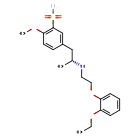
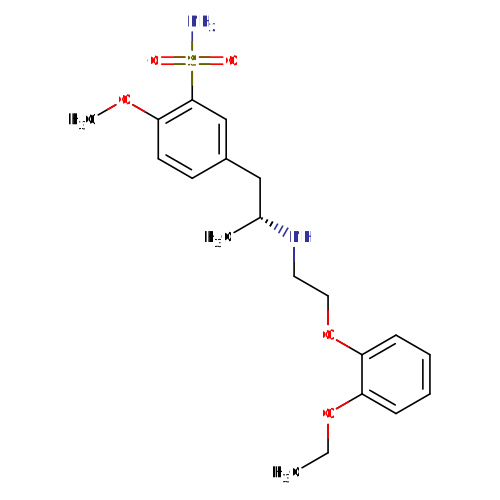
Structure for Tamsulosin (DB00706)
- Weight
- Average: 408.512
Monoisotopic: 408.171892706 - Chemical Formula
- C20H28N2O5S
- Synonyms
- (−)-tamsulosin
- (R)-(−)-tamsulosin
- (R)-5-(2-((2-(2-ethoxyphenoxy)ethyl)amino)propyl)-2-methoxybenzenesulfonamide
- Tamsulosin
- Tamsulosina
- Tamsulosine
- Tamsulosinum
- External IDs
- HGP-0412
- HIP-1402
- HIP1402
- LY 253351
- Y 617
- YM 12617-1
- YM-617

Pharmacology
- Indication
Tamsulosin is indicated for the treatment of signs and symptoms of benign prostatic hyperplasia.Label
Tamsulosin is also used off label for the treatment of ureteral stones, prostatitis, and female voiding dysfunction.4,7
 Reduce drug development failure ratesBuild, train, & validate machine-learning modelswith evidence-based and structured datasets.Build, train, & validate predictive machine-learning models with structured datasets.
- Associated Conditions
Indication Type Indication Combined Product Details Approval Level Age Group Patient Characteristics Dose Form Symptomatic treatment of Benign prostatic hyperplasia •••••••••••• Used in combination to treat Benign prostatic hypertrophy Combination Product in combination with: Dutasteride (DB01126) •••••••••••• Symptomatic treatment of Bladder outlet obstruction ••• ••••• Treatment of Ureteral calculi ••• ••••• - Contraindications & Blackbox Warnings
 Prevent Adverse Drug Events TodayTap into our Clinical API for life-saving information on contraindications & blackbox warnings, population restrictions, harmful risks, & more.Avoid life-threatening adverse drug events with our Clinical API
- Pharmacodynamics
Tamsulosin is an alpha adrenoceptor blocker with specificity for the alpha-1A and alpha-1D subtypes, which are more common in the prostate and submaxillary tissue.1 The final subtype, alpha-1B, are most common in the aorta and spleen.1 Tamsulosin binds to alpha-1A receptors 3.9-38 times more selectively than alpha-1B and 3-20 times more selectively than alpha-1D.1 This selectivity allows for a significant effect on urinary flow with a reduced incidence of adverse reactions like orthostatic hypotension.1
- Mechanism of action
Tamsulosin is a blocker of alpha-1A and alpha-1D adrenoceptors.Label,1 About 70% of the alpha-1 adrenoceptors in the prostate are of the alpha-1A subtype.Label By blocking these adrenoceptors, smooth muscle in the prostate is relaxed and urinary flow is improved.Label The blocking of alpha-1D adrenoceptors relaxes the detrusor muscles of the bladder which prevents storage symptoms.1 The specificity of tamsulosin focuses the effects to the target area while minimizing effects in other areas.Label
Target Actions Organism AAlpha-1A adrenergic receptor antagonistHumans UAlpha-1D adrenergic receptor antagonistHumans UAlpha-1B adrenergic receptor antagonistHumans - Absorption
Oral tamsulosin is 90% absorbed in fasted patients.Label The area under the curve is 151-199ng/mL*hr for a 0.4mg oral dose and 440-557ng/mL*hr for a 0.8mg oral dose.Label The maximum plasma concentration is 3.1-5.3ng/mL for a 0.4mg oral dose and 2.5-3.6ng/mL for a 0.8mg oral dose.Label Taking tamsulosin with food increases the time to maximum concentration from 4-5 hours to 6-7 hours but increases bioavailability by 30% and maximum plasma concentration by 40-70%.Label
- Volume of distribution
16L after intravenous administration.Label
- Protein binding
Tamsulosin is 94%-99% protein bound, mostly to alpha-1-acid glycoprotein.Label
- Metabolism
Tamsulosin is mostly metabolized in the liver by cytochrome P450 (CYP) 3A4 and 2D6, with some metabolism by other CYPs.Label,1 CYP3A4 is responsible for the deethylation of tamsulosin to the M-1 metabolite and the oxidative deamination to the AM-1 metabolite,2,3 while CYP2D6 is responsible for the hydroxylation of tamsulosin to the M-3 metabolite and the demethylation of tamsulosin to the M-4 metabolite.2 In addition, tamsulosin can be hydroxylated at a different position by an unknown enzyme to form the M-2 metabolite.2 The M-1, M-2, M-3, and M-4 metabolites can be glucuronidated, and the M-1 and M-3 metabolites can undergo sulfate conjugation to form other metabolites before excretion.3
Hover over products below to view reaction partners
- Route of elimination
97% of an orally administered does is recovered in studies, which 76% in the urine and 21% in the feces after 168 hours.Label 8.7% of the dose is excreted as unmetabolized tamsulosin.Label,1
- Half-life
The half life in fasted patients is 14.9±3.9 hours.Label The elimination half life is 5-7 hours and the apparent half life is 9 to 13 hours in healthy subjects.Label In patients who require tamsulosin, the apparent half life is 14-15 hours.Label
- Clearance
2.88L/h.Label
- Adverse Effects
 Improve decision support & research outcomesWith structured adverse effects data, including: blackbox warnings, adverse reactions, warning & precautions, & incidence rates. View sample adverse effects data in our new Data Library!Improve decision support & research outcomes with our structured adverse effects data.
- Toxicity
In the event of overdose, patients may experience hypotension and should lie down in a supine position to maintain blood pressure and heart rate.Label If further measures are required intravenous fluids should be considered.Label If further progression is required, vasopressors may be used and renal function should be monitored.Label Dialysis is unlikely to assist in treating overdose because tamsulosin is extensively protein bound.Label
The oral LD50 in rats is 650mg/kg.MSDS
Tamsulosin is not indicated for use in women and no studies have been performed in pregnancy, though animal studies have not shown fetal harm.Label Tamsulosin is excreted in the milk of rats but there is no available data on what the effect of this tamsulosin exposure may be.Label Animal studies have shown male and female rat fertility is affected by tamsulosin due to impairment of ejaculation and fertilization.Label In men, tamsulosin is associated with abnormal ejaculation.Label Tamsulosin is not mutagenic but may be carcinogenic at levels above the maximum recommended human dose.Label Female rats experience a slight increase in the rates of mammary gland fibroadenomas and adenocarcinomas.Label
- Pathways
- Not Available
- Pharmacogenomic Effects/ADRs
- Not Available
Interactions
- Drug Interactions
- This information should not be interpreted without the help of a healthcare provider. If you believe you are experiencing an interaction, contact a healthcare provider immediately. The absence of an interaction does not necessarily mean no interactions exist.
Drug Interaction Integrate drug-drug
interactions in your softwareAbacavir Tamsulosin may decrease the excretion rate of Abacavir which could result in a higher serum level. Abaloparatide The risk or severity of adverse effects can be increased when Tamsulosin is combined with Abaloparatide. Abametapir The serum concentration of Tamsulosin can be increased when it is combined with Abametapir. Abatacept The metabolism of Tamsulosin can be increased when combined with Abatacept. Abiraterone The metabolism of Tamsulosin can be decreased when combined with Abiraterone. - Food Interactions
- Take after a meal. Take 30 minutes after the same meal each day to reduce plasma level variations.
Products
 Drug product information from 10+ global regionsOur datasets provide approved product information including:dosage, form, labeller, route of administration, and marketing period.Access drug product information from over 10 global regions.
- Product Ingredients
Ingredient UNII CAS InChI Key Tamsulosin hydrochloride 11SV1951MR 106463-17-6 ZZIZZTHXZRDOFM-XFULWGLBSA-N - Product Images
- International/Other Brands
- Betamsal (Hemofarm) / Contiflo XL (Ranbaxy) / Flomaxtra (Astellas) / Harnal D (Astellas) / Maxrin (Square) / Mecir (Boehringer Ingelheim) / Omexel (Astellas) / Omipro (Jelfa) / Omix (Astellas) / Omnic (Astellas Pharma Europe) / Pradif (Boehringer Ingelheim) / Ranomax (Ranbaxy) / Salover (Aversi) / Secotex (Boehringer Ingelheim) / Stronazon (Actavis) / Tamsact (Actavis) / Tamsol (Apex) / Tamsul (Aspen Pharmacare) / Urimax (Celeris)
- Brand Name Prescription Products
Name Dosage Strength Route Labeller Marketing Start Marketing End Region Image Flomax Capsule 0.4 mg/1 Oral sanofi-aventis U.S. LLC 2019-04-16 Not applicable US 
Flomax Capsule 0.4 mg/1 Oral bryant ranch prepack 1997-09-12 Not applicable US Flomax Capsule 0.4 mg/1 Oral Lake Erie Medical Dba Quality Care Produts Llc 2010-05-13 2014-09-10 US Flomax Capsule 0.4 mg/1 Oral A S Medication Solutions 1999-06-03 Not applicable US Flomax Capsule 0.4 mg/1 Oral Cardinal Health 1997-09-12 2012-09-30 US - Generic Prescription Products
Name Dosage Strength Route Labeller Marketing Start Marketing End Region Image Apo-tamsulosin CR Tablet, extended release 0.4 mg Oral Apotex Corporation 2012-02-09 Not applicable Canada 
Auro-tamsulosin CR Tablet, extended release 0.4 mg Oral Auro Pharma Inc Not applicable Not applicable Canada Ava-tamsulosin CR Tablet, extended release 0.4 mg Oral Avanstra Inc 2011-09-19 2014-08-21 Canada Jamp Tamsulosin Capsule, extended release 0.4 mg Oral Jamp Pharma Corporation 2010-06-16 Not applicable Canada Mylan-tamsulosin Capsule, extended release 0.4 mg Oral Mylan Pharmaceuticals 2007-08-16 2017-01-09 Canada - Mixture Products
Name Ingredients Dosage Route Labeller Marketing Start Marketing End Region Image Aglandin comp. 0,5 mg/0,4 mg-Hartkapseln Tamsulosin hydrochloride (0.4 mg) + Dutasteride (0.5 mg) Capsule Oral G.L. Pharma Gmb H 2019-01-16 Not applicable Austria 
DUODART Tamsulosin (0.4 MG) + Dutasteride (0.5 MG) Capsule Oral บริษัท แกล็กโซสมิทไคล์น (ประเทศไทย) จำกัด 2018-09-24 Not applicable Thailand 
DUODART 0,5 MG/0,4 MG KAPSÜL,30 KAPSÜL Tamsulosin hydrochloride (0.4 mg) + Dutasteride (0.5 mg) Capsule Oral GLAXOSMİTHKLİNE İLAÇLARI SAN. VE TİC. A.Ş. 2020-08-14 2020-05-22 Turkey 
DUODART 0,5 MG/0,4 MG KAPSÜL,7 KAPSÜL Tamsulosin hydrochloride (0.4 mg) + Dutasteride (0.5 mg) Capsule Oral GLAXOSMİTHKLİNE İLAÇLARI SAN. VE TİC. A.Ş. 2020-08-14 2020-05-22 Turkey DUODART 0,5 MG/0,4 MG KAPSÜL,90 KAPSÜL Tamsulosin hydrochloride (0.4 mg) + Dutasteride (0.5 mg) Capsule Oral GLAXOSMİTHKLİNE İLAÇLARI SAN. VE TİC. A.Ş. 2020-08-14 2020-05-22 Turkey


Categories
- ATC Codes
- G04CA52 — Tamsulosin and dutasteride
- G04CA — Alpha-adrenoreceptor antagonists
- G04C — DRUGS USED IN BENIGN PROSTATIC HYPERTROPHY
- G04 — UROLOGICALS
- G — GENITO URINARY SYSTEM AND SEX HORMONES
- G04CA — Alpha-adrenoreceptor antagonists
- G04C — DRUGS USED IN BENIGN PROSTATIC HYPERTROPHY
- G04 — UROLOGICALS
- G — GENITO URINARY SYSTEM AND SEX HORMONES
- G01AE — Sulfonamides
- G01A — ANTIINFECTIVES AND ANTISEPTICS, EXCL. COMBINATIONS WITH CORTICOSTEROIDS
- G01 — GYNECOLOGICAL ANTIINFECTIVES AND ANTISEPTICS
- G — GENITO URINARY SYSTEM AND SEX HORMONES
- G04CA — Alpha-adrenoreceptor antagonists
- G04C — DRUGS USED IN BENIGN PROSTATIC HYPERTROPHY
- G04 — UROLOGICALS
- G — GENITO URINARY SYSTEM AND SEX HORMONES
- Drug Categories
- Adrenergic Agents
- Adrenergic alpha-1 Receptor Antagonists
- Adrenergic alpha-Antagonists
- Adrenergic Antagonists
- Amides
- Benzene Derivatives
- Benzenesulfonamides
- Cytochrome P-450 CYP2D6 Substrates
- Cytochrome P-450 CYP3A Substrates
- Cytochrome P-450 CYP3A4 Substrates
- Cytochrome P-450 Substrates
- Drugs that are Mainly Renally Excreted
- Drugs Used in Benign Prostatic Hypertrophy
- Genito Urinary System and Sex Hormones
- Genitourinary Agents
- Gynecological Antiinfectives and Antiseptics
- Hypotensive Agents
- Neurotransmitter Agents
- Peripheral alpha-1 blockers
- Selective Alfa-1-adrenergic Blocking Agents
- Sulfonamides
- Sulfones
- Sulfur Compounds
- Urological Agents
- Urologicals
- Chemical TaxonomyProvided by Classyfire
- Description
- This compound belongs to the class of organic compounds known as amphetamines and derivatives. These are organic compounds containing or derived from 1-phenylpropan-2-amine.
- Kingdom
- Organic compounds
- Super Class
- Benzenoids
- Class
- Benzene and substituted derivatives
- Sub Class
- Phenethylamines
- Direct Parent
- Amphetamines and derivatives
- Alternative Parents
- Benzenesulfonamides / Phenylpropanes / Benzenesulfonyl compounds / Phenoxy compounds / Methoxybenzenes / Anisoles / Aralkylamines / Alkyl aryl ethers / Organosulfonamides / Aminosulfonyl compounds show 4 more
- Substituents
- Alkyl aryl ether / Amine / Aminosulfonyl compound / Amphetamine or derivatives / Anisole / Aralkylamine / Aromatic homomonocyclic compound / Benzenesulfonamide / Benzenesulfonyl group / Ether show 18 more
- Molecular Framework
- Aromatic homomonocyclic compounds
- External Descriptors
- sulfonamide (CHEBI:9398)
- Affected organisms
- Humans and other mammals
Chemical Identifiers
- UNII
- G3P28OML5I
- CAS number
- 106133-20-4
- InChI Key
- DRHKJLXJIQTDTD-OAHLLOKOSA-N
- InChI
- InChI=1S/C20H28N2O5S/c1-4-26-17-7-5-6-8-18(17)27-12-11-22-15(2)13-16-9-10-19(25-3)20(14-16)28(21,23)24/h5-10,14-15,22H,4,11-13H2,1-3H3,(H2,21,23,24)/t15-/m1/s1
- IUPAC Name
- 5-[(2R)-2-{[2-(2-ethoxyphenoxy)ethyl]amino}propyl]-2-methoxybenzene-1-sulfonamide
- SMILES
- CCOC1=CC=CC=C1OCCN[C@H](C)CC1=CC(=C(OC)C=C1)S(N)(=O)=O
References
- Synthesis Reference
Hun Wang, Jun Park, Min Kwon, Ji Shim, Bong Lee, Hong Jeon, "Controlled release formulation of tamsulosin hydrochloride and preparation process thereof." U.S. Patent US20050100606, issued May 12, 2005.
US20050100606- General References
- Dunn CJ, Matheson A, Faulds DM: Tamsulosin: a review of its pharmacology and therapeutic efficacy in the management of lower urinary tract symptoms. Drugs Aging. 2002;19(2):135-61. [Article]
- Matsushima H, Kamimura H, Soeishi Y, Watanabe T, Higuchi S, Tsunoo M: Pharmacokinetics and plasma protein binding of tamsulosin hydrochloride in rats, dogs, and humans. Drug Metab Dispos. 1998 Mar;26(3):240-5. [Article]
- Soeishi Y, Matsushima H, Watanabe T, Higuchi S, Cornelissen K, Ward J: Absorption, metabolism and excretion of tamsulosin hydrochloride in man. Xenobiotica. 1996 Jun;26(6):637-45. [Article]
- Rivard R: Tamsulosin: ureteral stones (distal). Hosp Pharm. 2015 Jan;50(1):31-3. doi: 10.1310/hjp5001-031. [Article]
- Lepor H, Roehrborn C: Historical Overview of Medical Therapy for Benign Prostatic Hyperplasia Reviews in Urology. [Article]
- FDA Approved Drug Products: Flomax [Link]
- Urology Times: Urologists no longer primary initiator of tamsulosin [Link]
- External Links
- Human Metabolome Database
- HMDB0014844
- KEGG Compound
- C07124
- PubChem Compound
- 129211
- PubChem Substance
- 46507763
- ChemSpider
- 114457
- BindingDB
- 50060964
- 77492
- ChEBI
- 9398
- ChEMBL
- CHEMBL836
- ZINC
- ZINC000001530694
- Therapeutic Targets Database
- DAP000086
- PharmGKB
- PA451583
- Guide to Pharmacology
- GtP Drug Page
- PDBe Ligand
- JGX
- RxList
- RxList Drug Page
- Drugs.com
- Drugs.com Drug Page
- Wikipedia
- Tamsulosin
- PDB Entries
- 7ymj
- FDA label
- Download (570 KB)
- MSDS
- Download (20.3 KB)
Clinical Trials
- Clinical Trials
Phase Status Purpose Conditions Count 4 Active Not Recruiting Treatment Benign Prostatic Hyperplasia (BPH) / Lower Urinary Tract Symptoms (LUTS) 1 4 Active Not Recruiting Treatment Benign Prostatic Hyperplasia (BPH) / Overactive Bladder Syndrome (OABS) 1 4 Active Not Recruiting Treatment Lower Ureteric Stones 1 4 Completed Basic Science Benign Prostatic Hyperplasia (BPH) 1 4 Completed Prevention Postoperative Urinary Retention (POUR) 2
Pharmacoeconomics
- Manufacturers
- Boehringer ingelheim pharmaceuticals inc
- Impax laboratories inc
- Mylan pharmaceuticals inc
- Sandoz inc
- Sun pharmaceutical industries ltd
- Synthon pharmaceuticals inc
- Teva pharmaceuticals usa
- Wockhardt ltd
- Zydus pharmaceuticals usa inc
- Packagers
- Actavis Group
- AQ Pharmaceuticals Inc.
- A-S Medication Solutions LLC
- Astellas Pharma Inc.
- Atlantic Biologicals Corporation
- Boehringer Ingelheim Ltd.
- Bryant Ranch Prepack
- Cadila Healthcare Ltd.
- Cardinal Health
- Diversified Healthcare Services Inc.
- GlaxoSmithKline Inc.
- Global Pharmaceuticals
- Kaiser Foundation Hospital
- Major Pharmaceuticals
- Mylan
- Pharmacy Service Center
- Physicians Total Care Inc.
- Preferred Pharmaceuticals Inc.
- Prepackage Specialists
- Prepak Systems Inc.
- Redpharm Drug
- Resource Optimization and Innovation LLC
- Sandoz
- Stat Rx Usa
- Synthon Pharmaceuticals Inc.
- Teva Pharmaceutical Industries Ltd.
- UDL Laboratories
- Vangard Labs Inc.
- Wockhardt Ltd.
- Zydus Pharmaceuticals
- Dosage Forms
Form Route Strength Capsule Oral 5.000 mg Capsule Oral Capsule Oral 206.000 mg Capsule Oral 0.400 mg Capsule, coated Oral 0.22 mg Capsule, extended release Oral 0.4 mg Capsule Oral 0.4 mg/1 Tablet Oral 0.4 mg Tablet, soluble Oral Tablet Oral 0.2 mg Tablet, film coated Oral 0.4 mg Tablet, film coated Oral Tablet, film coated, extended release Oral 0.4 mg Capsule Oral Capsule, extended release Oral Capsule, delayed release Oral Capsule Oral 0.4 MG Capsule Oral 200.000 mg Capsule Oral 333.0000 mg Capsule, extended release Oral 0.4 mg / cap Tablet Oral 0.400 mg Capsule, delayed release Oral 0.4 MG Capsule, delayed release pellets Oral Capsule, coated Oral Capsule Oral .4 mg/1 Capsule Oral 0.4 mg/0.4mg Tablet, extended release Oral Tablet, film coated, extended release Oral 0.40 mg Capsule, extended release Oral Capsule, extended release Oral 400 MICROGRAMMI Capsule Oral 0.4 MG Tablet, extended release Oral 0.4 mg Capsule, gelatin coated 0.4 mg Tablet, delayed release Oral Tablet Oral Capsule Oral 0.500 mg - Prices
Unit description Cost Unit Flomax 0.4 mg capsule 4.71USD capsule Tamsulosin hcl 0.4 mg capsule 4.3USD capsule Flomax Cr 0.4 mg Extended-Release Tablet 0.63USD tablet Mylan-Tamsulosin 0.4 mg Sustained-Release Capsule 0.63USD capsule Novo-Tamsulosin 0.4 mg Sustained-Release Capsule 0.57USD capsule Ran-Tamsulosin 0.4 mg Sustained-Release Capsule 0.57USD capsule Ratio-Tamsulosin 0.4 mg Sustained-Release Capsule 0.57USD capsule Sandoz Tamsulosin 0.4 mg Sustained-Release Capsule 0.57USD capsule Tamsulosin 0.4 mg Sustained-Release Capsule 0.57USD capsule DrugBank does not sell nor buy drugs. Pricing information is supplied for informational purposes only.- Patents
Patent Number Pediatric Extension Approved Expires (estimated) Region US4703063 No 1987-10-27 2010-04-27 US CA2490299 No 2008-08-26 2023-12-24 Canada CA2144077 No 2005-05-24 2013-09-10 Canada US5565467 No 1996-10-15 2015-11-20 US
Properties
- State
- Solid
- Experimental Properties
Property Value Source melting point (°C) 230 FDA Label water solubility Sparingly soluble in water FDA Label - Predicted Properties
Property Value Source Water Solubility 0.00655 mg/mL ALOGPS logP 3.05 ALOGPS logP 2.04 Chemaxon logS -4.8 ALOGPS pKa (Strongest Acidic) 9.93 Chemaxon pKa (Strongest Basic) 9.28 Chemaxon Physiological Charge 1 Chemaxon Hydrogen Acceptor Count 6 Chemaxon Hydrogen Donor Count 2 Chemaxon Polar Surface Area 99.88 Å2 Chemaxon Rotatable Bond Count 11 Chemaxon Refractivity 108.86 m3·mol-1 Chemaxon Polarizability 43.95 Å3 Chemaxon Number of Rings 2 Chemaxon Bioavailability 1 Chemaxon Rule of Five Yes Chemaxon Ghose Filter Yes Chemaxon Veber's Rule No Chemaxon MDDR-like Rule No Chemaxon - Predicted ADMET Features
Property Value Probability Human Intestinal Absorption + 0.997 Blood Brain Barrier + 0.5915 Caco-2 permeable - 0.6473 P-glycoprotein substrate Substrate 0.5911 P-glycoprotein inhibitor I Non-inhibitor 0.5734 P-glycoprotein inhibitor II Non-inhibitor 0.5522 Renal organic cation transporter Non-inhibitor 0.8178 CYP450 2C9 substrate Non-substrate 0.7898 CYP450 2D6 substrate Substrate 0.8919 CYP450 3A4 substrate Substrate 0.6012 CYP450 1A2 substrate Non-inhibitor 0.7876 CYP450 2C9 inhibitor Inhibitor 0.5916 CYP450 2D6 inhibitor Non-inhibitor 0.8614 CYP450 2C19 inhibitor Non-inhibitor 0.5056 CYP450 3A4 inhibitor Inhibitor 0.718 CYP450 inhibitory promiscuity Low CYP Inhibitory Promiscuity 0.6146 Ames test Non AMES toxic 0.6245 Carcinogenicity Non-carcinogens 0.6419 Biodegradation Not ready biodegradable 1.0 Rat acute toxicity 2.4091 LD50, mol/kg Not applicable hERG inhibition (predictor I) Weak inhibitor 0.8367 hERG inhibition (predictor II) Non-inhibitor 0.6971
Spectra
- Mass Spec (NIST)
- Not Available
- Spectra
Spectrum Spectrum Type Splash Key Predicted GC-MS Spectrum - GC-MS Predicted GC-MS splash10-0fc0-1696000000-feeed148e3d1a2085e88 Predicted MS/MS Spectrum - 10V, Positive (Annotated) Predicted LC-MS/MS splash10-0abi-0090200000-dd7803e5aaaea60d41df Predicted MS/MS Spectrum - 10V, Negative (Annotated) Predicted LC-MS/MS splash10-0a4i-1161900000-79b54b73964ee5987c2d Predicted MS/MS Spectrum - 20V, Negative (Annotated) Predicted LC-MS/MS splash10-05r0-1496100000-799f3938ab8fce9f4f7c Predicted MS/MS Spectrum - 20V, Positive (Annotated) Predicted LC-MS/MS splash10-05fr-0091100000-a88e2ac4326a4d8a69b4 Predicted MS/MS Spectrum - 40V, Negative (Annotated) Predicted LC-MS/MS splash10-052f-7935200000-d739988cd42698037251 Predicted MS/MS Spectrum - 40V, Positive (Annotated) Predicted LC-MS/MS splash10-0zfr-2291000000-dbd0c8f638da9e7b308d Predicted 1H NMR Spectrum 1D NMR Not Applicable Predicted 13C NMR Spectrum 1D NMR Not Applicable - Chromatographic Properties
Collision Cross Sections (CCS)
Adduct CCS Value (Å2) Source type Source [M-H]- 202.4959786 predictedDarkChem Lite v0.1.0 [M-H]- 191.92873 predictedDeepCCS 1.0 (2019) [M+H]+ 203.6285786 predictedDarkChem Lite v0.1.0 [M+H]+ 194.28671 predictedDeepCCS 1.0 (2019) [M+Na]+ 202.7988786 predictedDarkChem Lite v0.1.0 [M+Na]+ 201.101 predictedDeepCCS 1.0 (2019)
Targets

- Kind
- Protein
- Organism
- Humans
- Pharmacological action
- Yes
- Actions
- Antagonist
- General Function
- Protein heterodimerization activity
- Specific Function
- This alpha-adrenergic receptor mediates its action by association with G proteins that activate a phosphatidylinositol-calcium second messenger system. Its effect is mediated by G(q) and G(11) prot...
- Gene Name
- ADRA1A
- Uniprot ID
- P35348
- Uniprot Name
- Alpha-1A adrenergic receptor
- Molecular Weight
- 51486.005 Da
References
- Chen X, Ji ZL, Chen YZ: TTD: Therapeutic Target Database. Nucleic Acids Res. 2002 Jan 1;30(1):412-5. [Article]
- Abrams P, Speakman M, Stott M, Arkell D, Pocock R: A dose-ranging study of the efficacy and safety of tamsulosin, the first prostate-selective alpha 1A-adrenoceptor antagonist, in patients with benign prostatic obstruction (symptomatic benign prostatic hyperplasia). Br J Urol. 1997 Oct;80(4):587-96. [Article]
- Na YJ, Guo YL, Gu FL: Clinical comparison of selective and non-selective alpha 1A-adrenoceptor antagonists for bladder outlet obstruction associated with benign prostatic hyperplasia: studies on tamsulosin and terazosin in Chinese patients. The Chinese Tamsulosin Study Group. J Med. 1998;29(5-6):289-304. [Article]
- Lee E, Lee C: Clinical comparison of selective and non-selective alpha 1A-adrenoreceptor antagonists in benign prostatic hyperplasia: studies on tamsulosin in a fixed dose and terazosin in increasing doses. Br J Urol. 1997 Oct;80(4):606-11. [Article]
- Chapple CR, Wyndaele JJ, Nordling J, Boeminghaus F, Ypma AF, Abrams P: Tamsulosin, the first prostate-selective alpha 1A-adrenoceptor antagonist. A meta-analysis of two randomized, placebo-controlled, multicentre studies in patients with benign prostatic obstruction (symptomatic BPH). European Tamsulosin Study Group. Eur Urol. 1996;29(2):155-67. [Article]
- Schulman CC, Cortvriend J, Jonas U, Lock TM, Vaage S, Speakman MJ: Tamsulosin, the first prostate-selective alpha 1A-adrenoceptor antagonist. Analysis of a multinational, multicentre, open-label study assessing the long-term efficacy and safety in patients with benign prostatic obstruction (symptomatic BPH). European Tamsulosin Study Group. Eur Urol. 1996;29(2):145-54. [Article]
- Chen Y, Li H, Dong Q, Wang KJ: Blockade of alpha 1A-adrenoceptor: a novel possible strategy for male contraception. Med Hypotheses. 2009 Aug;73(2):140-1. doi: 10.1016/j.mehy.2009.02.022. Epub 2009 May 8. [Article]
- Michel MC, de la Rosette JJ: Efficacy and safety of tamsulosin in the treatment of urological diseases. Expert Opin Pharmacother. 2004 Jan;5(1):151-60. [Article]
- Kind
- Protein
- Organism
- Humans
- Pharmacological action
- Unknown
- Actions
- Antagonist
- General Function
- Alpha1-adrenergic receptor activity
- Specific Function
- This alpha-adrenergic receptor mediates its effect through the influx of extracellular calcium.
- Gene Name
- ADRA1D
- Uniprot ID
- P25100
- Uniprot Name
- Alpha-1D adrenergic receptor
- Molecular Weight
- 60462.205 Da
References
- Chen X, Ji ZL, Chen YZ: TTD: Therapeutic Target Database. Nucleic Acids Res. 2002 Jan 1;30(1):412-5. [Article]
- Noble AJ, Chess-Williams R, Couldwell C, Furukawa K, Uchyiuma T, Korstanje C, Chapple CR: The effects of tamsulosin, a high affinity antagonist at functional alpha 1A- and alpha 1D-adrenoceptor subtypes. Br J Pharmacol. 1997 Jan;120(2):231-8. [Article]
- Lowe FC: Summary of clinical experiences with tamsulosin for the treatment of benign prostatic hyperplasia. Rev Urol. 2005;7 Suppl 4:S13-21. [Article]
- Tomiyama Y, Tatemichi S, Tadachi M, Kobayashi S, Hayashi M, Kobayashi M, Yamazaki Y, Shibata N: [Effect of silodosin on intraurethral pressure increase induced by hypogastric nerve stimulation in dogs with benign prostatic hyperplasia]. Yakugaku Zasshi. 2006 Mar;126 Spec no.:225-30. [Article]
- Ishiguro M, Futabayashi Y, Ohnuki T, Ahmed M, Muramatsu I, Nagatomo T: Identification of binding sites of prazosin, tamsulosin and KMD-3213 with alpha(1)-adrenergic receptor subtypes by molecular modeling. Life Sci. 2002 Oct 11;71(21):2531-41. [Article]
- Taguchi K, Saitoh M, Sato S, Asano M, Michel MC: Effects of tamsulosin metabolites at alpha-1 adrenoceptor subtypes. J Pharmacol Exp Ther. 1997 Jan;280(1):1-5. [Article]
- Michel MC, de la Rosette JJ: Efficacy and safety of tamsulosin in the treatment of urological diseases. Expert Opin Pharmacother. 2004 Jan;5(1):151-60. [Article]
- Kind
- Protein
- Organism
- Humans
- Pharmacological action
- Unknown
- Actions
- Antagonist
- General Function
- Protein heterodimerization activity
- Specific Function
- This alpha-adrenergic receptor mediates its action by association with G proteins that activate a phosphatidylinositol-calcium second messenger system. Its effect is mediated by G(q) and G(11) prot...
- Gene Name
- ADRA1B
- Uniprot ID
- P35368
- Uniprot Name
- Alpha-1B adrenergic receptor
- Molecular Weight
- 56835.375 Da
References
- Ishiguro M, Futabayashi Y, Ohnuki T, Ahmed M, Muramatsu I, Nagatomo T: Identification of binding sites of prazosin, tamsulosin and KMD-3213 with alpha(1)-adrenergic receptor subtypes by molecular modeling. Life Sci. 2002 Oct 11;71(21):2531-41. [Article]
- Michel MC, Hanft G, Gross G: Functional studies on alpha 1-adrenoceptor subtypes mediating inotropic effects in rat right ventricle. Br J Pharmacol. 1994 Feb;111(2):539-46. [Article]
- Taguchi K, Saitoh M, Sato S, Asano M, Michel MC: Effects of tamsulosin metabolites at alpha-1 adrenoceptor subtypes. J Pharmacol Exp Ther. 1997 Jan;280(1):1-5. [Article]
- Richardson CD, Donatucci CF, Page SO, Wilson KH, Schwinn DA: Pharmacology of tamsulosin: saturation-binding isotherms and competition analysis using cloned alpha 1-adrenergic receptor subtypes. Prostate. 1997 Sep 15;33(1):55-9. [Article]
- Chen X, Ji ZL, Chen YZ: TTD: Therapeutic Target Database. Nucleic Acids Res. 2002 Jan 1;30(1):412-5. [Article]
- Michel MC, de la Rosette JJ: Efficacy and safety of tamsulosin in the treatment of urological diseases. Expert Opin Pharmacother. 2004 Jan;5(1):151-60. [Article]
Enzymes
- Kind
- Protein
- Organism
- Humans
- Pharmacological action
- Unknown
- Actions
- Substrate
- General Function
- Steroid hydroxylase activity
- Specific Function
- Responsible for the metabolism of many drugs and environmental chemicals that it oxidizes. It is involved in the metabolism of drugs such as antiarrhythmics, adrenoceptor antagonists, and tricyclic...
- Gene Name
- CYP2D6
- Uniprot ID
- P10635
- Uniprot Name
- Cytochrome P450 2D6
- Molecular Weight
- 55768.94 Da
References
- Kamimura H, Oishi S, Matsushima H, Watanabe T, Higuchi S, Hall M, Wood SG, Chasseaud LF: Identification of cytochrome P450 isozymes involved in metabolism of the alpha1-adrenoceptor blocker tamsulosin in human liver microsomes. Xenobiotica. 1998 Oct;28(10):909-22. doi: 10.1080/004982598238985 . [Article]
- Kind
- Protein
- Organism
- Humans
- Pharmacological action
- Unknown
- Actions
- Substrate
- General Function
- Vitamin d3 25-hydroxylase activity
- Specific Function
- Cytochromes P450 are a group of heme-thiolate monooxygenases. In liver microsomes, this enzyme is involved in an NADPH-dependent electron transport pathway. It performs a variety of oxidation react...
- Gene Name
- CYP3A4
- Uniprot ID
- P08684
- Uniprot Name
- Cytochrome P450 3A4
- Molecular Weight
- 57342.67 Da
References
- Kamimura H, Oishi S, Matsushima H, Watanabe T, Higuchi S, Hall M, Wood SG, Chasseaud LF: Identification of cytochrome P450 isozymes involved in metabolism of the alpha1-adrenoceptor blocker tamsulosin in human liver microsomes. Xenobiotica. 1998 Oct;28(10):909-22. doi: 10.1080/004982598238985 . [Article]
Carriers
- Kind
- Protein
- Organism
- Humans
- Pharmacological action
- No
- General Function
- Not Available
- Specific Function
- Functions as transport protein in the blood stream. Binds various ligands in the interior of its beta-barrel domain. Also binds synthetic drugs and influences their distribution and availability in...
- Gene Name
- ORM1
- Uniprot ID
- P02763
- Uniprot Name
- Alpha-1-acid glycoprotein 1
- Molecular Weight
- 23511.38 Da
References
- Matsushima H, Watanabe T, Higuchi S: Effect of alpha(1)-acid glycoprotein on the pharmacokinetics of tamsulosin in rats treated with turpentine oil. J Pharm Sci. 2000 Apr;89(4):490-8. [Article]
- Hanada K, Tochikura N, Ogata H: Selective binding of tamsulosin to genetic variants of human alpha1-acid glycoprotein. Biol Pharm Bull. 2007 Aug;30(8):1593-5. [Article]
- Koiso K, Akaza H, Kikuchi K, Aoyagi K, Ohba S, Miyazaki M, Ito M, Sueyoshi T, Matsushima H, Kamimura H, Watanabe T, Higuchi S: Pharmacokinetics of tamsulosin hydrochloride in patients with renal impairment: effects of alpha 1-acid glycoprotein. J Clin Pharmacol. 1996 Nov;36(11):1029-38. [Article]

Drug created at June 13, 2005 13:24 / Updated at April 26, 2024 00:45