Identification
- Summary
Flurbiprofen is an NSAID used to treat the signs and symptoms of osteoarthritis and rheumatoid arthritis.
- Generic Name
- Flurbiprofen
- DrugBank Accession Number
- DB00712
- Background
Flurbiprofen, a propionic acid derivative, is a nonsteroidal anti-inflammatory agent (NSAIA) with antipyretic and analgesic activity. Oral formulations of flurbiprofen may be used for the symptomatic treatment of rheumatoid arthritis, osteoarthritis and anklylosing spondylitis. Flurbiprofen may also be used topically prior to ocular surgery to prevent or reduce intraoperative miosis. Flurbiprofen is structurally and pharmacologically related to fenoprofen, ibuprofen, and ketoprofen.
- Type
- Small Molecule
- Groups
- Approved, Investigational
- Structure
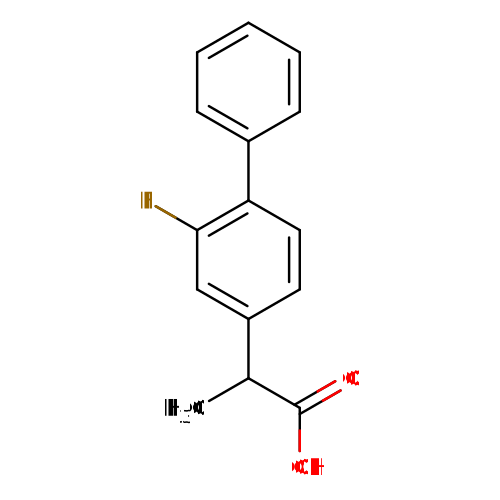
Structure for Flurbiprofen (DB00712)
- Weight
- Average: 244.2609
Monoisotopic: 244.089957865 - Chemical Formula
- C15H13FO2
- Synonyms
- (±)-2-fluoro-α-methyl-4-biphenylacetic acid
- 2-(2-fluorobiphenyl-4-yl)propanoic acid
- 2-fluoro-α-methyl-(1,1'-biphenyl)-4-acetic acid
- 3-fluoro-4-phenylhydratropic acid
- Flurbiprofen
- Flurbiprofene
- Flurbiprofeno
- Flurbiprofenum
- External IDs
- BTS 18 322
- BTS 18,322
- FP 70
- FP 83
- U 27182
- U-27,182

Pharmacology
- Indication
Flurbiprofen tablets are indicated for the acute or long-term symptomatic treatment of rheumatoid arthritis, osteorarthritis and anklosing spondylitis. It may also be used to treat pain associated with dysmenorrhea and mild to moderate pain accompanied by inflammation (e.g. bursitis, tendonitis, soft tissue trauma). Topical ophthalmic formulations may be used pre-operatively to prevent intraoperative miosis.
 Reduce drug development failure ratesBuild, train, & validate machine-learning modelswith evidence-based and structured datasets.Build, train, & validate predictive machine-learning models with structured datasets.
- Associated Conditions
Indication Type Indication Combined Product Details Approval Level Age Group Patient Characteristics Dose Form Symptomatic treatment of Ankylosing spondylitis •••••••••••• Used in combination for symptomatic treatment of Back pain, acute Combination Product in combination with: Thiocolchicoside (DB11582) •••••••••••• ••• Used in combination for symptomatic treatment of Back pain, acute Combination Product in combination with: Thiocolchicoside (DB11582) •••••••••••• ••••• Used in combination for symptomatic treatment of Chronic back pain Combination Product in combination with: Thiocolchicoside (DB11582) •••••••••••• ••• Used in combination for symptomatic treatment of Chronic back pain Combination Product in combination with: Thiocolchicoside (DB11582) •••••••••••• ••••• - Contraindications & Blackbox Warnings
 Prevent Adverse Drug Events TodayTap into our Clinical API for life-saving information on contraindications & blackbox warnings, population restrictions, harmful risks, & more.Avoid life-threatening adverse drug events with our Clinical API
- Pharmacodynamics
Flurbiprofen, a nonsteroidal anti-inflammatory agent (NSAIA) of the propionic acid class, is structually and pharmacologically related to fenoprofen, ibuprofen, and ketoprofen, and has similar pharmacological actions to other prototypica NSAIAs. Flurbiprofen exhibits antiinflammatory, analgesic, and antipyretic activities. The commercially available flurbiprofen is a racemic mixture of (+)S- and (-) R-enantiomers. The S-enantiomer appears to possess most of the anti-inflammatory, while both enantiomers may possess analgesic activity.
- Mechanism of action
Similar to other NSAIAs, the anti-inflammatory effect of flurbiprofen occurs via reversible inhibition of cyclooxygenase (COX), the enzyme responsible for the conversion of arachidonic acid to prostaglandin G2 (PGG2) and PGG2 to prostaglandin H2 (PGH2) in the prostaglandin synthesis pathway. This effectively decreases the concentration of prostaglandins involved in inflammation, pain, swelling and fever. Flurbiprofen is a non-selective COX inhibitor and inhibits the activity of both COX-1 and -2. It is also one of the most potent NSAIAs in terms of prostaglandin inhibitory activity.
Target Actions Organism AProstaglandin G/H synthase 2 inhibitorHumans UProstaglandin G/H synthase 1 inhibitorHumans - Absorption
Fluribiprofen is rapidly and almost completely absorbed following oral administration. Peak plasma concentrations are reached 0.5 - 4 hours after oral administration.
- Volume of distribution
- 14 L [Normal Healthy Adults]
- 12 L [Geriatric Arthritis Patients]
- 10 L [End Stage Renal Disease Patients]
- 14 L [Alcoholic Cirrhosis Patients]
- 0.12 L/kg
- Protein binding
> 99% bound, primarily to albumin. Binds to a different primary binding site on albumin than anticoagulants, sulfonamides and phenytoin.
- Metabolism
Hepatic. Cytochrome P450 2C9 plays an important role in the metabolism of flurbiprofen to its major metabolite, 4’-hydroxy-flurbiprofen. The 4’-hydroxy-flurbiprofen metabolite showed little anti-inflammatory activity in animal models of inflammation.
Hover over products below to view reaction partners
- Route of elimination
Flurbiprofen is poorly excreted into human milk. Following dosing with flurbiprofen, less than 3% of flurbiprofen is excreted unchanged in the urine, with about 70% of the dose eliminated in the urine as parent drug and metabolites. Renal elimination is a significant pathway of elimination of flurbiprofen metabolites.
- Half-life
R-flurbiprofen, 4.7 hours; S-flurbiprofen, 5.7 hours
- Clearance
Not Available
- Adverse Effects
 Improve decision support & research outcomesWith structured adverse effects data, including: blackbox warnings, adverse reactions, warning & precautions, & incidence rates. View sample adverse effects data in our new Data Library!Improve decision support & research outcomes with our structured adverse effects data.
- Toxicity
LD50=10 mg/kg (orally in dogs).
Selective COX-2 inhibitors have been associated with increased risk of serious cardiovascular events (e.g. myocardial infarction, stroke) in some patients. Current data is insufficient to assess the cardiovascular risk of flurbiprofen. Flurbiprofen may increase blood pressure and/or cause fluid retention and edema. Use caution in patients with fluid retention or heart failure. Risk of GI toxicity including bleeding, ulceration and perforation. Risk of direct renal injury, including renal papillary necrosis. Anaphylactoid and serious skin reactions (e.g. exfoliative dermatitis, Stevens-Johnson syndrome, toxic epidermal necrolysis) may occur. Common adverse events include abdominal pain, constipation, diarrhea, dyspepsia, flatulence, GI bleeding, GI perforation, nausea, peptic ulcer, vomiting, renal function abnormalities, anemia, dizziness, edema, liver function test abnormalities, headache, prolonged bleeding time, pruritus, rash, tinnitus. Although rarely documented in the case of flurbiprofen, oral propionic acid derivatives have been associated with a relatively high frequency of allergic reactions.
- Pathways
Pathway Category Flurbiprofen Action Pathway Drug action - Pharmacogenomic Effects/ADRs
Interacting Gene/Enzyme Allele name Genotype(s) Defining Change(s) Type(s) Description Details Cytochrome P450 2C9 CYP2C9*2 Not Available 430C>T Effect Inferred Poor drug metabolizer. Details Cytochrome P450 2C9 CYP2C9*3 Not Available 1075A>C Effect Inferred Poor drug metabolizer. Details Cytochrome P450 2C9 CYP2C9*4 Not Available 1076T>C Effect Inferred Poor drug metabolizer. Details Cytochrome P450 2C9 CYP2C9*5 Not Available 1080C>G Effect Inferred Poor drug metabolizer. Details Cytochrome P450 2C9 CYP2C9*8 Not Available 449G>A Effect Inferred Poor drug metabolizer. Details Cytochrome P450 2C9 CYP2C9*11 Not Available 1003C>T Effect Inferred Poor drug metabolizer. Details Cytochrome P450 2C9 CYP2C9*12 Not Available 1465C>T Effect Inferred Poor drug metabolizer. Details Cytochrome P450 2C9 CYP2C9*13 Not Available 269T>C Effect Inferred Poor drug metabolizer. Details Cytochrome P450 2C9 CYP2C9*14 Not Available 374G>A Effect Inferred Poor drug metabolizer. Details Cytochrome P450 2C9 CYP2C9*16 Not Available 895A>G Effect Inferred Poor drug metabolizer. Details Cytochrome P450 2C9 CYP2C9*18 Not Available 1075A>C / 1190A>C … show all Effect Inferred Poor drug metabolizer. Details Cytochrome P450 2C9 CYP2C9*26 Not Available 389C>G Effect Inferred Poor drug metabolizer. Details Cytochrome P450 2C9 CYP2C9*28 Not Available 641A>T Effect Inferred Poor drug metabolizer. Details Cytochrome P450 2C9 CYP2C9*30 Not Available 1429G>A Effect Inferred Poor drug metabolizer. Details Cytochrome P450 2C9 CYP2C9*33 Not Available 395G>A Effect Inferred Poor drug metabolizer. Details Cytochrome P450 2C9 CYP2C9*6 Not Available 818delA Effect Inferred Poor drug metabolizer. Details Cytochrome P450 2C9 CYP2C9*15 Not Available 485C>A Effect Inferred Poor drug metabolizer. Details Cytochrome P450 2C9 CYP2C9*25 Not Available 353_362delAGAAATGGAA Effect Inferred Poor drug metabolizer. Details Cytochrome P450 2C9 CYP2C9*35 Not Available 374G>T / 430C>T Effect Inferred Poor drug metabolizer. Details
Interactions
- Drug Interactions
- This information should not be interpreted without the help of a healthcare provider. If you believe you are experiencing an interaction, contact a healthcare provider immediately. The absence of an interaction does not necessarily mean no interactions exist.
Drug Interaction Integrate drug-drug
interactions in your softwareAbacavir The metabolism of Abacavir can be decreased when combined with Flurbiprofen. Abatacept The metabolism of Flurbiprofen can be increased when combined with Abatacept. Abciximab The risk or severity of bleeding and hemorrhage can be increased when Flurbiprofen is combined with Abciximab. Abrocitinib The metabolism of Abrocitinib can be decreased when combined with Flurbiprofen. Acebutolol Flurbiprofen may decrease the antihypertensive activities of Acebutolol. - Food Interactions
- Avoid alcohol.
- Take with food. Food reduces irritation.
Products
 Drug product information from 10+ global regionsOur datasets provide approved product information including:dosage, form, labeller, route of administration, and marketing period.Access drug product information from over 10 global regions.
- Product Ingredients
Ingredient UNII CAS InChI Key Flurbiprofen sodium M3QE6AS001 Not Available AUAGTGKMTMVIKN-UHFFFAOYSA-M - Product Images
- International/Other Brands
- Acustop Cataplasma (Sang-A) / Adofeed (Lead Chemical) / Antadys (Theramex) / Cebutid (Almirall) / Flurofen (Abbott Laboratories Ltd.) / Ocuflur (Allergan) / Stayban (Tokuhon) / Strefen (Reckitt Benckiser) / Strepfen (Reckitt Benckiser) / Strepsils (Reckitt Benckiser) / Strepsils Intensive (Reckitt Benckiser) / TransAct (Reckitt Benckiser) / Urbifen (General Pharma) / Zepolas (Mikasa Seiyaku)
- Brand Name Prescription Products
Name Dosage Strength Route Labeller Marketing Start Marketing End Region Image Ansaid Tablet, film coated 100 mg/1 Oral Physicians Total Care, Inc. 1988-10-31 2008-08-31 US 
Ansaid Tablet, film coated 50 mg/1 Oral Pharmacia & Upjohn Inc 1988-10-31 2009-01-12 US Ansaid Tablet, film coated 100 mg/1 Oral Pharmacia & Upjohn Inc 1988-10-31 2009-01-12 US Ansaid Tablets 100 mg Tablet 100 mg Oral Pfizer Canada Ulc 1985-12-31 2013-07-25 Canada 
Ansaid Tablets 50 mg Tablet 50 mg Oral Pfizer Canada Ulc 1985-12-31 2013-07-25 Canada - Generic Prescription Products
Name Dosage Strength Route Labeller Marketing Start Marketing End Region Image Flurbiprofen Tablet, film coated 100 mg/1 Oral Preferred Pharmaceuticals Inc. 2019-03-08 Not applicable US Flurbiprofen Tablet, film coated 100 mg/1 Oral bryant ranch prepack 1995-06-02 Not applicable US Flurbiprofen Tablet, film coated 100 mg/1 Oral Greenstone, Llc 1988-10-31 2009-01-12 US Flurbiprofen Tablet, film coated 100 mg/1 Oral A-S Medication Solutions 1995-06-02 2018-03-31 US 
Flurbiprofen Tablet, film coated 100 mg/1 Oral Nucare Pharmaceuticals,inc. 1995-06-02 Not applicable US - Over the Counter Products
Name Dosage Strength Route Labeller Marketing Start Marketing End Region Image ACUSTOP CATAPLASMA PLASTER 40 mg/sheet Patch 40 mg Transdermal EMERGING PHARMA (S) PTE LTD 2002-09-30 Not applicable Singapore 
Antiphlamine Pain Relieving Patch 33 mg/51 Topical Hanul Trading Co., Ltd. 2015-09-01 Not applicable US STREPSILS MAX PRO DIRECT SPRAY 8.75MG PER DOSE Spray 8.7480 mg Oropharyngeal RECKITT BENCKISER (SINGAPORE) PTE LTD 2017-11-29 Not applicable Singapore Strepsils MaxPro Honey and Lemon lozenges 8.75mg Lozenge 8.75 mg Oral RECKITT BENCKISER (SINGAPORE) PTE LTD 2013-11-06 Not applicable Singapore - Mixture Products
Name Ingredients Dosage Route Labeller Marketing Start Marketing End Region Image FULDUO 100 MG/8 MG FİLM KAPLI TABLET, 14 ADET Flurbiprofen (100 mg) + Thiocolchicoside (8 mg) Tablet, coated Oral GENVEON İLAÇ SAN. VE TİC. A.Ş. 2020-02-05 Not applicable Turkey 
KLORHEX PLUS 2.5 MG/ML + 1.2 MG/ML GARGARA,200 ML Flurbiprofen (2.5 mg/ml) + Chlorhexidine gluconate (1.2 mg/ml) Rinse Oral DROGSAN İLAÇLARI SAN. VE TİC. A.Ş. 2015-03-06 2024-03-13 Turkey KLORHEX PLUS 2.5 MG/ML + 1.2 MG/ML ORAL SPREY, ÇÖZELTİ, 30 ML Flurbiprofen (2.5 mg/ml) + Chlorhexidine gluconate (1.2 mg/ml) Spray Oral DROGSAN İLAÇLARI SAN. VE TİC. A.Ş. 2015-09-02 Not applicable Turkey MAJEZIK DUO %5 + %0.25 TOPIKAL JEL, 30 G Flurbiprofen (1.5 g) + Thiocolchicoside (75 mg) Gel Topical SANOVEL İLAÇ SAN. VE TİC. A.Ş. 2012-01-23 2021-10-04 Turkey MAJEZIK DUO %5 + %0.25 TOPIKAL JEL, 50 G Flurbiprofen (2.5 g) + Thiocolchicoside (125 mg) Gel Topical SANOVEL İLAÇ SAN. VE TİC. A.Ş. 2012-01-23 2021-10-04 Turkey - Unapproved/Other Products
Name Ingredients Dosage Route Labeller Marketing Start Marketing End Region Image Antiphlamine Pain Relieving Flurbiprofen (33 mg/51) Patch Topical Hanul Trading Co., Ltd. 2015-09-01 Not applicable US


Categories
- ATC Codes
- M02AA19 — Flurbiprofen
- M02AA — Antiinflammatory preparations, non-steroids for topical use
- M02A — TOPICAL PRODUCTS FOR JOINT AND MUSCULAR PAIN
- M02 — TOPICAL PRODUCTS FOR JOINT AND MUSCULAR PAIN
- M — MUSCULO-SKELETAL SYSTEM
- M01AE — Propionic acid derivatives
- M01A — ANTIINFLAMMATORY AND ANTIRHEUMATIC PRODUCTS, NON-STEROIDS
- M01 — ANTIINFLAMMATORY AND ANTIRHEUMATIC PRODUCTS
- M — MUSCULO-SKELETAL SYSTEM
- R02AX — Other throat preparations
- R02A — THROAT PREPARATIONS
- R02 — THROAT PREPARATIONS
- R — RESPIRATORY SYSTEM
- Drug Categories
- Acids, Acyclic
- Agents causing hyperkalemia
- Agents that produce hypertension
- Analgesics
- Analgesics, Non-Narcotic
- Anti-Inflammatory Agents
- Anti-Inflammatory Agents, Non-Steroidal
- Anti-Inflammatory Agents, Non-Steroidal (Non-Selective)
- Antiinflammatory and Antirheumatic Products
- Antiinflammatory and Antirheumatic Products, Non-Steroids
- Antiinflammatory Preparations, Non-Steroids for Topical Use
- Antirheumatic Agents
- Benzene Derivatives
- Biphenyl Compounds
- Central Nervous System Agents
- Cyclooxygenase Inhibitors
- Cytochrome P-450 CYP2C9 Substrates
- Cytochrome P-450 Substrates
- Drugs causing inadvertant photosensitivity
- Drugs that are Mainly Renally Excreted
- Enzyme Inhibitors
- Musculo-Skeletal System
- Nephrotoxic agents
- Non COX-2 selective NSAIDS
- OAT1/SLC22A6 inhibitors
- Ophthalmologicals
- Other Nonsteroidal Anti-inflammatory Agents
- Peripheral Nervous System Agents
- Photosensitizing Agents
- Propionates
- Sensory Organs
- Sensory System Agents
- Throat Preparations
- Topical Products for Joint and Muscular Pain
- UGT1A1 Inhibitors
- UGT1A1 Substrates
- UGT1A3 substrates
- UGT1A9 Substrates
- UGT2B7 substrates
- Chemical TaxonomyProvided by Classyfire
- Description
- This compound belongs to the class of organic compounds known as biphenyls and derivatives. These are organic compounds containing to benzene rings linked together by a C-C bond.
- Kingdom
- Organic compounds
- Super Class
- Benzenoids
- Class
- Benzene and substituted derivatives
- Sub Class
- Biphenyls and derivatives
- Direct Parent
- Biphenyls and derivatives
- Alternative Parents
- Phenylpropanoic acids / Monocyclic monoterpenoids / Aromatic monoterpenoids / Fluorobenzenes / Aryl fluorides / Monocarboxylic acids and derivatives / Carboxylic acids / Organofluorides / Organic oxides / Hydrocarbon derivatives show 1 more
- Substituents
- 2-phenylpropanoic-acid / Aromatic homomonocyclic compound / Aromatic monoterpenoid / Aryl fluoride / Aryl halide / Biphenyl / Carbonyl group / Carboxylic acid / Carboxylic acid derivative / Fluorobenzene show 11 more
- Molecular Framework
- Aromatic homomonocyclic compounds
- External Descriptors
- fluorobiphenyl (CHEBI:5130)
- Affected organisms
- Humans and other mammals
Chemical Identifiers
- UNII
- 5GRO578KLP
- CAS number
- 5104-49-4
- InChI Key
- SYTBZMRGLBWNTM-UHFFFAOYSA-N
- InChI
- InChI=1S/C15H13FO2/c1-10(15(17)18)12-7-8-13(14(16)9-12)11-5-3-2-4-6-11/h2-10H,1H3,(H,17,18)
- IUPAC Name
- 2-{2-fluoro-[1,1'-biphenyl]-4-yl}propanoic acid
- SMILES
- CC(C(O)=O)C1=CC(F)=C(C=C1)C1=CC=CC=C1
References
- Synthesis Reference
Yutaka Mizushima, Hiroyuki Okamoto, Shigetoshi Sugio, Kazumasa Yokoyama, Tadakazu Suyama, Masao Tohno, Makoto Okumura, Yoshiaki Konishi, Kiyonoshin Ichikawa, Katsuhiro Uchida, "Flurbiprofen derivative ophthalmic preparation." U.S. Patent US5171566, issued January, 1984.
US5171566- General References
- Geerts H: Drug evaluation: (R)-flurbiprofen--an enantiomer of flurbiprofen for the treatment of Alzheimer's disease. IDrugs. 2007 Feb;10(2):121-33. [Article]
- Zhou SF, Zhou ZW, Yang LP, Cai JP: Substrates, inducers, inhibitors and structure-activity relationships of human Cytochrome P450 2C9 and implications in drug development. Curr Med Chem. 2009;16(27):3480-675. Epub 2009 Sep 1. [Article]
- Calapai G, Imbesi S, Cafeo V, Ventura Spagnolo E, Minciullo PL, Caputi AP, Gangemi S, Milone L: Fatal hypersensitivity reaction to an oral spray of flurbiprofen: a case report. J Clin Pharm Ther. 2013 Aug;38(4):337-8. doi: 10.1111/jcpt.12073. Epub 2013 May 13. [Article]
- Mironov GG, Logie J, Okhonin V, Renaud JB, Mayer PM, Berezovski MV: Comparative study of three methods for affinity measurements: capillary electrophoresis coupled with UV detection and mass spectrometry, and direct infusion mass spectrometry. J Am Soc Mass Spectrom. 2012 Jul;23(7):1232-40. doi: 10.1007/s13361-012-0386-y. Epub 2012 Apr 28. [Article]
- External Links
- Human Metabolome Database
- HMDB0014850
- KEGG Drug
- D00330
- PubChem Compound
- 3394
- PubChem Substance
- 46505550
- ChemSpider
- 3277
- BindingDB
- 50074922
- 4502
- ChEBI
- 5130
- ChEMBL
- CHEMBL563
- Therapeutic Targets Database
- DAP000621
- PharmGKB
- PA449683
- Guide to Pharmacology
- GtP Drug Page
- RxList
- RxList Drug Page
- Drugs.com
- Drugs.com Drug Page
- PDRhealth
- PDRhealth Drug Page
- Wikipedia
- Flurbiprofen
- FDA label
- Download (234 KB)
- MSDS
- Download (75 KB)
Clinical Trials
- Clinical Trials
Phase Status Purpose Conditions Count 4 Completed Prevention Midazolam / Remimazolam / Sedation Complication 1 4 Completed Supportive Care Pain / Quality of Life (QOL) 1 4 Completed Treatment Back Pain, Acute 1 4 Completed Treatment Drug Use / Effect of Drugs / Oral Soft Tissue Conditions 1 4 Completed Treatment Pancreatic Stone Disease 1
Pharmacoeconomics
- Manufacturers
- Pharmacia and upjohn co
- Caraco pharmaceutical laboratories ltd
- Ivax pharmaceuticals inc sub teva pharmaceuticals usa
- Mylan pharmaceuticals inc
- Pliva inc
- Sandoz inc
- Teva pharmaceuticals usa inc
- Theragen inc
- Bausch and lomb inc
- Allergan pharmaceutical
- Packagers
- Advanced Pharmaceutical Services Inc.
- Allergan Inc.
- Amerisource Health Services Corp.
- A-S Medication Solutions LLC
- Atlantic Biologicals Corporation
- Bausch & Lomb Inc.
- Caraco Pharmaceutical Labs
- Direct Dispensing Inc.
- Dispensing Solutions
- Greenstone LLC
- H.J. Harkins Co. Inc.
- Ivax Pharmaceuticals
- Lake Erie Medical and Surgical Supply
- Major Pharmaceuticals
- Medisca Inc.
- Murfreesboro Pharmaceutical Nursing Supply
- Mylan
- Novopharm Ltd.
- Nucare Pharmaceuticals Inc.
- Pacific Pharma Lp
- PD-Rx Pharmaceuticals Inc.
- Pharmaceutical Utilization Management Program VA Inc.
- Pharmacia Inc.
- Physicians Total Care Inc.
- Sandhills Packaging Inc.
- Southwood Pharmaceuticals
- St Mary's Medical Park Pharmacy
- Stat Rx Usa
- Teva Pharmaceutical Industries Ltd.
- UDL Laboratories
- Dosage Forms
Form Route Strength Patch Transdermal 40 mg Tablet, film coated Oral Capsule, coated pellets Oral 200 mg Tablet Oral 100.000 mg Tablet, film coated Oral 50 mg/1 Tablet, coated Oral Patch Topical 33 mg/51 Mouthwash Oral 250 mg/100ml Tablet Transmucosal Mouthwash Oropharyngeal Spray Oropharyngeal Granule Spray Buccal 2.5 MG/ML Capsule Oral 200 mg Tablet, film coated Oral 100 mg Tablet, coated Oral 100 mg Lozenge Oral Tablet Oral 100 mg Tablet Oral 100 mg/1 Tablet Oral 50 mg Tablet Oral 50 mg/1 Tablet, film coated Oral 100 mg/1 Solution / drops Ophthalmic 0.242 mg/1mL Solution / drops Ophthalmic 0.3 mg/1mL Capsule, extended release Oral Tablet Transmucosal 8.75 MG Rinse Oral 0.25 % Gel Topical Granule, effervescent 100 MG Injection, powder, lyophilized, for solution Intramuscular 150 mg Mouthwash Oral 0.25 % Pill 100 MG Pill 50 MG Spray Oral 0.25 % Suppository 100 MG Syrup Oral 0.5 g/100ml Syrup Oral 5 MG/ML Capsule, extended release Oral 200 mg Tablet Oral 100 mg / tab Tablet Oral 50 mg / tab Capsule, extended release Oral 200 mg / cap Capsule, coated pellets Oral Tablet, coated Oral Tablet Oral; Transmucosal 8.75 MG Solution Buccal 16.200 mg Tablet Oral 8.750 mg Spray Oral Gel Topical 5 % Capsule, delayed release pellets Oral 200 mg Capsule, delayed release pellets Oral Tablet, film coated Oral 50 mg Gel Topical Tablet, film coated Oral Tablet, orally disintegrating Oral 100 mg Rinse Oral Rinse Oral Capsule Oral Spray Topical Solution Conjunctival; Ophthalmic 0.03 g Capsule Oral Mouthwash Oral Tablet Oral Tablet, orally disintegrating Transmucosal Mouthwash Oral 2.5 MG/ML Capsule, extended release Oral 200 mg / src Solution / drops Ophthalmic 0.03 % Solution / drops Ophthalmic 0.3 MG/ML Liquid Ophthalmic 0.03 % Spray Topical 5 % Spray 8.75 mg Spray Oral 8.75 mg Tablet Oral 8.75 mg Spray Oral Tablet Buccal; Oral 8.75 mg Solution Oral; Oropharyngeal 8.748 mg Spray Oral; Transmucosal Spray Oropharyngeal 8.7480 mg Solution Conjunctival; Ophthalmic 1 mg Patch Topical Patch Topical 40 MG Lozenge Oral 8.75 mg - Prices
Unit description Cost Unit Ocufen 0.03% Solution 2.5ml Bottle 22.7USD bottle Flurbiprofen powder 20.9USD g Flurbiprofen Sodium 0.03% Solution 2.5ml Bottle 15.99USD bottle Ocufen 0.03% eye drops 10.63USD ml Flurbiprofen 0.03% eye drop 4.37USD ml Ansaid 100 mg tablet 2.1USD tablet Flurbiprofen 100 mg tablet 1.08USD tablet Flurbiprofen 50 mg tablet 0.8USD tablet Ansaid 50 mg Tablet 0.58USD tablet Apo-Flurbiprofen 100 mg Tablet 0.37USD tablet Novo-Flurprofen 100 mg Tablet 0.37USD tablet Nu-Flurbiprofen 100 mg Tablet 0.37USD tablet Apo-Flurbiprofen 50 mg Tablet 0.27USD tablet Novo-Flurprofen 50 mg Tablet 0.27USD tablet Nu-Flurbiprofen 50 mg Tablet 0.27USD tablet DrugBank does not sell nor buy drugs. Pricing information is supplied for informational purposes only.- Patents
- Not Available
Properties
- State
- Solid
- Experimental Properties
Property Value Source melting point (°C) 110-111 °C Adams, S.S., Bernard, J., Nicholson, J.S. and Blancafort, A.R.; U.S. Patent 3,755,427; Aug. 28, 1973; assigned to The Boots Company Ltd. water solubility 8 mg/L (at 22 °C) YALKOWSKY,SH & DANNENFELSER,RM (1992) logP 4.16 HANSCH,C ET AL. (1995) logS -4.49 ADME Research, USCD - Predicted Properties
Property Value Source Water Solubility 0.0249 mg/mL ALOGPS logP 3.57 ALOGPS logP 3.94 Chemaxon logS -4 ALOGPS pKa (Strongest Acidic) 4.42 Chemaxon Physiological Charge -1 Chemaxon Hydrogen Acceptor Count 2 Chemaxon Hydrogen Donor Count 1 Chemaxon Polar Surface Area 37.3 Å2 Chemaxon Rotatable Bond Count 3 Chemaxon Refractivity 67.29 m3·mol-1 Chemaxon Polarizability 25.23 Å3 Chemaxon Number of Rings 2 Chemaxon Bioavailability 1 Chemaxon Rule of Five Yes Chemaxon Ghose Filter Yes Chemaxon Veber's Rule Yes Chemaxon MDDR-like Rule No Chemaxon - Predicted ADMET Features
Property Value Probability Human Intestinal Absorption + 1.0 Blood Brain Barrier + 0.9824 Caco-2 permeable + 0.8866 P-glycoprotein substrate Non-substrate 0.76 P-glycoprotein inhibitor I Non-inhibitor 0.9061 P-glycoprotein inhibitor II Non-inhibitor 0.9739 Renal organic cation transporter Non-inhibitor 0.912 CYP450 2C9 substrate Non-substrate 0.7247 CYP450 2D6 substrate Non-substrate 0.9249 CYP450 3A4 substrate Non-substrate 0.7205 CYP450 1A2 substrate Inhibitor 0.8663 CYP450 2C9 inhibitor Inhibitor 0.8949 CYP450 2D6 inhibitor Non-inhibitor 0.9546 CYP450 2C19 inhibitor Non-inhibitor 0.9026 CYP450 3A4 inhibitor Non-inhibitor 0.9674 CYP450 inhibitory promiscuity Low CYP Inhibitory Promiscuity 0.8752 Ames test Non AMES toxic 0.9659 Carcinogenicity Non-carcinogens 0.5554 Biodegradation Not ready biodegradable 0.9861 Rat acute toxicity 3.1121 LD50, mol/kg Not applicable hERG inhibition (predictor I) Weak inhibitor 0.9849 hERG inhibition (predictor II) Non-inhibitor 0.9116
Spectra
- Mass Spec (NIST)
- Download (126 KB)
- Spectra
- Chromatographic Properties
Collision Cross Sections (CCS)
Adduct CCS Value (Å2) Source type Source [M-H]- 165.6553027 predictedDarkChem Lite v0.1.0 [M-H]- 155.37337 predictedDeepCCS 1.0 (2019) [M+H]+ 157.76894 predictedDeepCCS 1.0 (2019) [M+Na]+ 163.78603 predictedDeepCCS 1.0 (2019)
Targets

- Kind
- Protein
- Organism
- Humans
- Pharmacological action
- Yes
- Actions
- Inhibitor
- General Function
- Prostaglandin-endoperoxide synthase activity
- Specific Function
- Converts arachidonate to prostaglandin H2 (PGH2), a committed step in prostanoid synthesis. Constitutively expressed in some tissues in physiological conditions, such as the endothelium, kidney and...
- Gene Name
- PTGS2
- Uniprot ID
- P35354
- Uniprot Name
- Prostaglandin G/H synthase 2
- Molecular Weight
- 68995.625 Da
References
- Bayly CI, Black WC, Leger S, Ouimet N, Ouellet M, Percival MD: Structure-based design of COX-2 selectivity into flurbiprofen. Bioorg Med Chem Lett. 1999 Feb 8;9(3):307-12. [Article]
- van Haeringen NJ, van Sorge AA, Carballosa Core-Bodelier VM: Constitutive cyclooxygenase-1 and induced cyclooxygenase-2 in isolated human iris inhibited by S(+) flurbiprofen. J Ocul Pharmacol Ther. 2000 Aug;16(4):353-61. [Article]
- Smith T, McCracken J, Shin YK, DeWitt D: Arachidonic acid and nonsteroidal anti-inflammatory drugs induce conformational changes in the human prostaglandin endoperoxide H2 synthase-2 (cyclooxygenase-2). J Biol Chem. 2000 Dec 22;275(51):40407-15. [Article]
- Hinz B, Brune K, Rau T, Pahl A: Flurbiprofen enantiomers inhibit inducible nitric oxide synthase expression in RAW 264.7 macrophages. Pharm Res. 2001 Feb;18(2):151-6. [Article]
- Hewett SJ, Uliasz TF, Vidwans AS, Hewett JA: Cyclooxygenase-2 contributes to N-methyl-D-aspartate-mediated neuronal cell death in primary cortical cell culture. J Pharmacol Exp Ther. 2000 May;293(2):417-25. [Article]
- Basselin M, Villacreses NE, Lee HJ, Bell JM, Rapoport SI: Flurbiprofen, a cyclooxygenase inhibitor, reduces the brain arachidonic acid signal in response to the cholinergic muscarinic agonist, arecoline, in awake rats. Neurochem Res. 2007 Nov;32(11):1857-67. Epub 2007 Jun 12. [Article]
- Nivsarkar M, Banerjee A, Padh H: Cyclooxygenase inhibitors: a novel direction for Alzheimer's management. Pharmacol Rep. 2008 Sep-Oct;60(5):692-8. [Article]
- Kind
- Protein
- Organism
- Humans
- Pharmacological action
- Unknown
- Actions
- Inhibitor
- General Function
- Prostaglandin-endoperoxide synthase activity
- Specific Function
- Converts arachidonate to prostaglandin H2 (PGH2), a committed step in prostanoid synthesis. Involved in the constitutive production of prostanoids in particular in the stomach and platelets. In gas...
- Gene Name
- PTGS1
- Uniprot ID
- P23219
- Uniprot Name
- Prostaglandin G/H synthase 1
- Molecular Weight
- 68685.82 Da
References
- Rieke CJ, Mulichak AM, Garavito RM, Smith WL: The role of arginine 120 of human prostaglandin endoperoxide H synthase-2 in the interaction with fatty acid substrates and inhibitors. J Biol Chem. 1999 Jun 11;274(24):17109-14. [Article]
- Hewett SJ, Uliasz TF, Vidwans AS, Hewett JA: Cyclooxygenase-2 contributes to N-methyl-D-aspartate-mediated neuronal cell death in primary cortical cell culture. J Pharmacol Exp Ther. 2000 May;293(2):417-25. [Article]
- Kurahashi K, Shirahase H, Nakamura S, Tarumi T, Koshino Y, Wang AM, Nishihashi T, Shimizu Y: Nicotine-induced contraction in the rat coronary artery: possible involvement of the endothelium, reactive oxygen species and COX-1 metabolites. J Cardiovasc Pharmacol. 2001 Oct;38 Suppl 1:S21-5. [Article]
- Klegeris A, McGeer PL: Cyclooxygenase and 5-lipoxygenase inhibitors protect against mononuclear phagocyte neurotoxicity. Neurobiol Aging. 2002 Sep-Oct;23(5):787-94. [Article]
- Droge MJ, van Sorge AA, van Haeringen NJ, Quax WJ, Zaagsma J: Alternative splicing of cyclooxygenase-1 mRNA in the human iris. Ophthalmic Res. 2003 May-Jun;35(3):160-3. [Article]
- Basselin M, Villacreses NE, Lee HJ, Bell JM, Rapoport SI: Flurbiprofen, a cyclooxygenase inhibitor, reduces the brain arachidonic acid signal in response to the cholinergic muscarinic agonist, arecoline, in awake rats. Neurochem Res. 2007 Nov;32(11):1857-67. Epub 2007 Jun 12. [Article]
- Nivsarkar M, Banerjee A, Padh H: Cyclooxygenase inhibitors: a novel direction for Alzheimer's management. Pharmacol Rep. 2008 Sep-Oct;60(5):692-8. [Article]
Enzymes
- Kind
- Protein
- Organism
- Humans
- Pharmacological action
- Unknown
- Actions
- Substrate
- General Function
- Glucuronosyltransferase activity
- Specific Function
- UDPGT is of major importance in the conjugation and subsequent elimination of potentially toxic xenobiotics and endogenous compounds.Its unique specificity for 3,4-catechol estrogens and estriol su...
- Gene Name
- UGT2B7
- Uniprot ID
- P16662
- Uniprot Name
- UDP-glucuronosyltransferase 2B7
- Molecular Weight
- 60694.12 Da
References
- Zhou SF, Zhou ZW, Yang LP, Cai JP: Substrates, inducers, inhibitors and structure-activity relationships of human Cytochrome P450 2C9 and implications in drug development. Curr Med Chem. 2009;16(27):3480-675. Epub 2009 Sep 1. [Article]
- Kind
- Protein
- Organism
- Humans
- Pharmacological action
- Unknown
- Actions
- SubstrateInhibitor
- General Function
- Steroid binding
- Specific Function
- UDPGT is of major importance in the conjugation and subsequent elimination of potentially toxic xenobiotics and endogenous compounds. This isoform glucuronidates bilirubin IX-alpha to form both the...
- Gene Name
- UGT1A1
- Uniprot ID
- P22309
- Uniprot Name
- UDP-glucuronosyltransferase 1-1
- Molecular Weight
- 59590.91 Da
References
- Zhou SF, Zhou ZW, Yang LP, Cai JP: Substrates, inducers, inhibitors and structure-activity relationships of human Cytochrome P450 2C9 and implications in drug development. Curr Med Chem. 2009;16(27):3480-675. Epub 2009 Sep 1. [Article]
- Kind
- Protein
- Organism
- Humans
- Pharmacological action
- Unknown
- Actions
- Substrate
- General Function
- Retinoic acid binding
- Specific Function
- UDPGT is of major importance in the conjugation and subsequent elimination of potentially toxic xenobiotics and endogenous compounds. Isoform 2 lacks transferase activity but acts as a negative reg...
- Gene Name
- UGT1A3
- Uniprot ID
- P35503
- Uniprot Name
- UDP-glucuronosyltransferase 1-3
- Molecular Weight
- 60337.835 Da
References
- Zhou SF, Zhou ZW, Yang LP, Cai JP: Substrates, inducers, inhibitors and structure-activity relationships of human Cytochrome P450 2C9 and implications in drug development. Curr Med Chem. 2009;16(27):3480-675. Epub 2009 Sep 1. [Article]
- Kind
- Protein
- Organism
- Humans
- Pharmacological action
- Unknown
- Actions
- Substrate
- General Function
- Retinoic acid binding
- Specific Function
- UDPGT is of major importance in the conjugation and subsequent elimination of potentially toxic xenobiotics and endogenous compounds. This isoform has specificity for phenols. Isoform 2 lacks trans...
- Gene Name
- UGT1A9
- Uniprot ID
- O60656
- Uniprot Name
- UDP-glucuronosyltransferase 1-9
- Molecular Weight
- 59940.495 Da
References
- Zhou SF, Zhou ZW, Yang LP, Cai JP: Substrates, inducers, inhibitors and structure-activity relationships of human Cytochrome P450 2C9 and implications in drug development. Curr Med Chem. 2009;16(27):3480-675. Epub 2009 Sep 1. [Article]
- Kind
- Protein
- Organism
- Humans
- Pharmacological action
- Unknown
- Actions
- Substrate
- General Function
- Glucuronosyltransferase activity
- Specific Function
- UDPGTs are of major importance in the conjugation and subsequent elimination of potentially toxic xenobiotics and endogenous compounds. This isozyme is active on polyhydroxylated estrogens (such as...
- Gene Name
- UGT2B4
- Uniprot ID
- P06133
- Uniprot Name
- UDP-glucuronosyltransferase 2B4
- Molecular Weight
- 60512.035 Da
References
- Zhou SF, Zhou ZW, Yang LP, Cai JP: Substrates, inducers, inhibitors and structure-activity relationships of human Cytochrome P450 2C9 and implications in drug development. Curr Med Chem. 2009;16(27):3480-675. Epub 2009 Sep 1. [Article]
- Kind
- Protein
- Organism
- Humans
- Pharmacological action
- Unknown
- Actions
- Substrate
- General Function
- Steroid hydroxylase activity
- Specific Function
- Cytochromes P450 are a group of heme-thiolate monooxygenases. In liver microsomes, this enzyme is involved in an NADPH-dependent electron transport pathway. It oxidizes a variety of structurally un...
- Gene Name
- CYP2C9
- Uniprot ID
- P11712
- Uniprot Name
- Cytochrome P450 2C9
- Molecular Weight
- 55627.365 Da
References
- Wang L, Bao SH, Pan PP, Xia MM, Chen MC, Liang BQ, Dai DP, Cai JP, Hu GX: Effect of CYP2C9 genetic polymorphism on the metabolism of flurbiprofen in vitro. Drug Dev Ind Pharm. 2015;41(8):1363-7. doi: 10.3109/03639045.2014.950274. Epub 2014 Aug 21. [Article]
- Zgheib NK, Frye RF, Tracy TS, Romkes M, Branch RA: Evaluation of flurbiprofen urinary ratios as in vivo indices for CYP2C9 activity. Br J Clin Pharmacol. 2007 Apr;63(4):477-87. doi: 10.1111/j.1365-2125.2006.02781.x. Epub 2006 Oct 19. [Article]
- Flurbiprofen FDA label [File]
Carriers
- Kind
- Protein
- Organism
- Humans
- Pharmacological action
- No
- Actions
- Other/unknown
- General Function
- Toxic substance binding
- Specific Function
- Serum albumin, the main protein of plasma, has a good binding capacity for water, Ca(2+), Na(+), K(+), fatty acids, hormones, bilirubin and drugs. Its main function is the regulation of the colloid...
- Gene Name
- ALB
- Uniprot ID
- P02768
- Uniprot Name
- Serum albumin
- Molecular Weight
- 69365.94 Da
References
- Aarons L, Khan AZ, Grennan DM, Alam-Siddiqi M: The binding of flurbiprofen to plasma proteins. J Pharm Pharmacol. 1985 Sep;37(9):644-6. [Article]
- Takla PG, Schulman SG, Perrin JH: Measurement of flurbiprofen-human serum albumin interaction by fluorimetry. J Pharm Biomed Anal. 1985;3(1):41-50. [Article]
Transporters
- Kind
- Protein
- Organism
- Humans
- Pharmacological action
- Unknown
- Actions
- Inhibitor
- General Function
- Atpase activity, coupled to transmembrane movement of substances
- Specific Function
- May be an organic anion pump relevant to cellular detoxification.
- Gene Name
- ABCC4
- Uniprot ID
- O15439
- Uniprot Name
- Multidrug resistance-associated protein 4
- Molecular Weight
- 149525.33 Da
References
- Reid G, Wielinga P, Zelcer N, van der Heijden I, Kuil A, de Haas M, Wijnholds J, Borst P: The human multidrug resistance protein MRP4 functions as a prostaglandin efflux transporter and is inhibited by nonsteroidal antiinflammatory drugs. Proc Natl Acad Sci U S A. 2003 Aug 5;100(16):9244-9. Epub 2003 Jun 30. [Article]
- Kind
- Protein
- Organism
- Humans
- Pharmacological action
- Unknown
- Actions
- Inhibitor
- General Function
- Sodium-independent organic anion transmembrane transporter activity
- Specific Function
- Involved in the renal elimination of endogenous and exogenous organic anions. Functions as organic anion exchanger when the uptake of one molecule of organic anion is coupled with an efflux of one ...
- Gene Name
- SLC22A6
- Uniprot ID
- Q4U2R8
- Uniprot Name
- Solute carrier family 22 member 6
- Molecular Weight
- 61815.78 Da
References
- Mulato AS, Ho ES, Cihlar T: Nonsteroidal anti-inflammatory drugs efficiently reduce the transport and cytotoxicity of adefovir mediated by the human renal organic anion transporter 1. J Pharmacol Exp Ther. 2000 Oct;295(1):10-5. [Article]
- Apiwattanakul N, Sekine T, Chairoungdua A, Kanai Y, Nakajima N, Sophasan S, Endou H: Transport properties of nonsteroidal anti-inflammatory drugs by organic anion transporter 1 expressed in Xenopus laevis oocytes. Mol Pharmacol. 1999 May;55(5):847-54. [Article]


Drug created at June 13, 2005 13:24 / Updated at April 26, 2024 00:45