Identification
- Summary
Paroxetine is a selective serotonin reuptake inhibitor used to treat major depressive disorder, panic disorder, OCD, social phobia, generalized anxiety disorder, the vasomotor symptoms of menopause, and premenstrual dysphoric disorder.
- Brand Names
- Paxil, Pexeva
- Generic Name
- Paroxetine
- DrugBank Accession Number
- DB00715
- Background
Paroxetine is a selective serotonin reuptake inhibitor (SSRI) drug commonly known as Paxil. It has a variety of uses, including the treatment of anxiety disorders, major depression, posttraumatic stress disorder, and symptoms of menopause, among others.26 It was approved by the FDA in the early 1990s and marketed by SmithKline Beecham.32,33 A unique feature of this drug is that it is highly potent and selective in its inhibition of serotonin reuptake and has little effect on other neurotransmitters.13 Because of its potent inhibition of serotonin reuptake, paroxetine is more likely to cause withdrawal effects upon cessation. Paroxetine is well tolerated in most patients with a similar adverse effect profile to other members of its drug class.13 The controlled release formulation was designed to decrease the likelihood of nausea that is sometimes associated with paroxetine.28,36
- Type
- Small Molecule
- Groups
- Approved, Investigational
- Structure
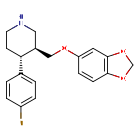
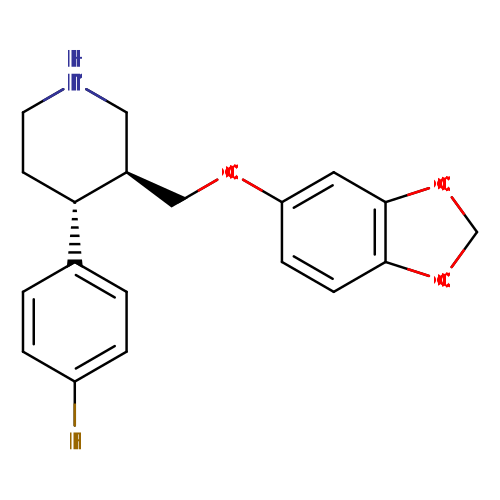
Structure for Paroxetine (DB00715)
- Weight
- Average: 329.3654
Monoisotopic: 329.142721716 - Chemical Formula
- C19H20FNO3
- Synonyms
- (−)-(3S,4R)-4-(p-fluorophenyl)-3-((3,4-(methylenedioxy)phenoxy)methyl)piperidine
- (3S-trans)-3-((1,3-benzodioxol-5-yloxy)methyl)-4-(4-fluorophenyl)piperidine
- Paroxetina
- Paroxetine
- Paroxetinum
- External IDs
- BRL 29060
- BRL-29060
- FG-7051

Pharmacology
- Indication
Paroxetine is indicated for the management of depression, obsessive-compulsive disorder, panic disorder, social anxiety disorder, generalized anxiety disorder, posttraumatic stress disorder.29 One form of paroxetine, commercially known as Brisdelle, is used to manage mild to moderate vasomotor symptoms of menopause.30 Off-label, paroxetine may be used for the treatment of premature ejaculation or irritable bowel syndrome (IBS).4,5,23
 Reduce drug development failure ratesBuild, train, & validate machine-learning modelswith evidence-based and structured datasets.Build, train, & validate predictive machine-learning models with structured datasets.
- Associated Conditions
Indication Type Indication Combined Product Details Approval Level Age Group Patient Characteristics Dose Form Treatment of Generalized anxiety disorder •••••••••••• •••••••• ••••••••••• ••••••• ••••••• •••• •••••• Symptomatic treatment of Irritable bowel syndrome ••• ••••• Treatment of Major depressive disorder •••••••••••• •••••••• ••••••••••• ••••••• ••••••• •••••••• •••••••• ••••••• •••• •••••• Treatment of Obsessive-compulsive disorder ••• ••••• ••••••••• Treatment of Obsessive-compulsive disorder •••••••••••• •••••••• ••••••••••• ••••••• ••••••• •••• •••••• - Contraindications & Blackbox Warnings
 Prevent Adverse Drug Events TodayTap into our Clinical API for life-saving information on contraindications & blackbox warnings, population restrictions, harmful risks, & more.Avoid life-threatening adverse drug events with our Clinical API
- Pharmacodynamics
Paroxetine treats the symptoms of depression, various anxiety disorders, posttraumatic stress disorder, obsessive-compulsive disorder, and the vasomotor symptoms of menopause via the inhibition of serotonin reuptake.26,29,30 The onset of action of paroxetine is reported to be approximately 6 weeks.18
Due its serotonergic activity, paroxetine, like other SSRI drugs, may potentiate serotonin syndrome. This risk is especially high when monoamine oxidase (MAO) inhibitors are given within 2 weeks of paroxetine administration. Upon cessation of MAO inhibitors, a 2-week interval before paroxetine administration is recommended. Do not coadminister these agents.27
- Mechanism of action
Paroxetine enhances serotonergic activity via the inhibition presynaptic reuptake of serotonin by the serotonin (SERT) receptor.20,11 This inhibition raises the level of serotonin in the synaptic cleft, relieving various symptoms. This drug has been demonstrated to be a stronger inhibitor of serotonin reuptake than other members of the same drug class, including Citalopram, Fluoxetine, and Fluvoxamine.13 The mechanism of action of paroxetine in relieving the vasomotor symptoms of menopause is unknown, according to the Brisdelle prescribing information30, but may occur due to its effects on thermoregulation.24
Paroxetine shows a clinically insignificant affinity for adrenergic alpha-1 and alpha-2 receptors and β-adrenergic receptors, dopamine D1 and D2 receptors, histamine H1 receptors and serotonin 5-HT1A, 5-HT2A and 5-HT2C receptors.13 This drug shows some affinity for muscarinic cholinergic receptors and 5-H2B receptors.21,22 The delayed onset of paroxetine therapeutic effects may be explained by the initial paroxetine actions on the 5-HT neurons. In rats, paroxetine activates 5-HT1A receptors when it is first administered, inhibiting the stimulation of the 5-HT neurons and subsequent release of serotonin at the synaptic cleft.13
Target Actions Organism ASodium-dependent serotonin transporter inhibitorHumans USodium-dependent noradrenaline transporter inhibitorHumans U5-hydroxytryptamine receptor 2A agonistHumans UAlpha-1 adrenergic receptors binderHumans UAlpha-2 adrenergic receptors binderHumans UBeta adrenergic receptor inhibitorHumans UDopamine D2 receptor other/unknownHumans UHistamine H1 receptor inhibitorHumans USerotonin Receptors Not Available Humans UMuscarinic acetylcholine receptor inhibitorHumans U5-hydroxytryptamine receptor 2B agonistHumans UD(1) dopamine receptor other/unknownHumans - Absorption
Paroxetine is readily absorbed from the gastrointestinal tract. Due to the first-pass metabolism, the bioavailability ranges from 30-60%. Cmax is attained 2 to 8 hours after an oral dose.7 Mean Tmax is 4.3 hours in healthy patients.31 The steady-state concentration of paroxetine is achieved within 7 to 14 days of oral therapy.13 In a pharmacokinetic study, AUC in healthy patients was 574 ng·h/mL and 1053 ng·h/mL in those with moderate renal impairment.31
- Volume of distribution
Paroxetine has a large volume of distribution and is found throughout the body, including in the central nervous system. Only 1% of the drug is found in the plasma.29 Paroxetine is found in the breast milk at concentrations similar to the concentrations found in plasma.13
- Protein binding
- Metabolism
Paroxetine metabolism occurs in the liver and is largely mediated by cytochrome CYP2D6 with contributions from CYP3A4 and possibly other cytochrome enzymes.19,27 Genetic polymorphisms of the CYP2D6 enzyme may alter the pharmacokinetics of this drug. Poor metabolizers may demonstrate increased adverse effects while rapid metabolizers may experience decreased therapeutic effects.13,10,34
The majority of a paroxetine dose is oxidized to a catechol metabolite that is subsequently converted to both glucuronide and sulfate metabolites via methylation and conjugation. In rat synaptosomes, the glucuronide and sulfate conjugates have been shown to thousands of times less potent than paroxetine itself.31 The metabolites of paroxetine are considered inactive.25,13,27
Hover over products below to view reaction partners
- Route of elimination
About 2/3 of a single paroxetine dose is found to be excreted in the urine and the remainder is found to be excreted in feces. Almost all of the dose is eliminated as metabolites; 3% is found to be excreted as unchanged paroxetine.13 About 64% of a 30 mg oral dose was found excreted in the urine, with 2% as the parent drug and 62% appearing as metabolites. Approximately 36% of the dose was found to be eliminated in the feces primarily as metabolites and less than 1% as the parent compound.29
- Half-life
The mean elimination half-life of paroxetine is about 21 hours.29 In healthy young subjects, mean elimination half-life was found to be 17.3 hours.31
- Clearance
The apparent oral clearance of paroxetine is 167 L/h.14 The clearance of paroxetine in patients with renal failure is significantly lower and dose adjustment may be required, despite the fact that it is mainly cleared by the liver. Dose adjustments may be required in hepatic impairment.14,29,31
- Adverse Effects
 Improve decision support & research outcomesWith structured adverse effects data, including: blackbox warnings, adverse reactions, warning & precautions, & incidence rates. View sample adverse effects data in our new Data Library!Improve decision support & research outcomes with our structured adverse effects data.
- Toxicity
The acute LD50 in mice and rats is 350 mg/kg.35
Overdose information
The lowest dose of paroxetine reported to lead to a fatal outcome is approximately 400 mg. The largest reported paroxetine overdose from which a patient has survived and recovered is a dose of 2000 mg. Common manifestations in a paroxetine overdose include fatigue, fever, insomnia hypertension, tachycardia, nausea, vomiting, somnolence, tremor, dizziness, agitation, confusion, anxious symptoms, headache, insomnia, hyperhidrosis, dilated pupils, seizures, paresthesia, serotonin syndrome, involuntary muscle contraction, and change in mental status. It should be noted that in some cases, patients may have consumed alcohol in addition to taking an overdose of paroxetine.31 Some of these symptoms may also be seen with clinical use. There is no specific antidote to an overdose of paroxetine.12
- Pathways
- Not Available
- Pharmacogenomic Effects/ADRs
Interacting Gene/Enzyme Allele name Genotype(s) Defining Change(s) Type(s) Description Details Multidrug resistance protein 1 --- (C;C) / (C;T) C Allele Effect Directly Studied Patients with this genotype have an increased likelihood of remission when using paroxetine to treat major depressive disorder. Details Cytochrome P450 2D6 CYP2D6*3 Not Available 2549delA Effect Directly Studied The presence of this polymorphism in CYP2D6 is associated with reduced or poor metabolism of paroxetine. Details Cytochrome P450 2D6 CYP2D6*4 Not Available A allele Effect Directly Studied The presence of this polymorphism in CYP2D6 is associated with reduced or poor metabolism of paroxetine. Details Cytochrome P450 2D6 CYP2D6*5 Not Available Whole-gene deletion Effect Directly Studied The presence of this polymorphism in CYP2D6 is associated with reduced or poor metabolism of paroxetine. Details Cytochrome P450 2D6 CYP2D6*6 Not Available 1707delT Effect Directly Studied The presence of this polymorphism in CYP2D6 is associated with reduced or poor metabolism of paroxetine. Details Cytochrome P450 2D6 CYP2D6*7 Not Available 2935A>C Effect Inferred Poor drug metabolizer. For individual with two non-functional alleles, alternative drug or dose reduction recommended. Details Cytochrome P450 2D6 CYP2D6*8 Not Available 1758G>T Effect Inferred Poor drug metabolizer. For individual with two non-functional alleles, alternative drug or dose reduction recommended. Details Cytochrome P450 2D6 CYP2D6*11 Not Available 883G>C Effect Inferred Poor drug metabolizer. For individual with two non-functional alleles, alternative drug or dose reduction recommended. Details Cytochrome P450 2D6 CYP2D6*12 Not Available 124G>A Effect Inferred Poor drug metabolizer. For individual with two non-functional alleles, alternative drug or dose reduction recommended. Details Cytochrome P450 2D6 CYP2D6*13 Not Available CYP2D7/2D6 hybrid gene structure Effect Inferred Poor drug metabolizer. For individual with two non-functional alleles, alternative drug or dose reduction recommended. Details Cytochrome P450 2D6 CYP2D6*14A Not Available 1758G>A Effect Inferred Poor drug metabolizer. For individual with two non-functional alleles, alternative drug or dose reduction recommended. Details Cytochrome P450 2D6 CYP2D6*15 Not Available 137insT, 137_138insT Effect Inferred Poor drug metabolizer. For individual with two non-functional alleles, alternative drug or dose reduction recommended. Details Cytochrome P450 2D6 CYP2D6*19 Not Available 2539_2542delAACT Effect Inferred Poor drug metabolizer. For individual with two non-functional alleles, alternative drug or dose reduction recommended. Details Cytochrome P450 2D6 CYP2D6*20 Not Available 1973_1974insG Effect Inferred Poor drug metabolizer. For individual with two non-functional alleles, alternative drug or dose reduction recommended. Details Cytochrome P450 2D6 CYP2D6*21 Not Available 2573insC Effect Inferred Poor drug metabolizer. For individual with two non-functional alleles, alternative drug or dose reduction recommended. Details Cytochrome P450 2D6 CYP2D6*31 Not Available -1770G>A / -1584C>G … show all Effect Inferred Poor drug metabolizer. For individual with two non-functional alleles, alternative drug or dose reduction recommended. Details Cytochrome P450 2D6 CYP2D6*36 Not Available 100C>T / -1426C>T … show all Effect Inferred Poor drug metabolizer. For individual with two non-functional alleles, alternative drug or dose reduction recommended. Details Cytochrome P450 2D6 CYP2D6*38 Not Available 2587_2590delGACT Effect Inferred Poor drug metabolizer. For individual with two non-functional alleles, alternative drug or dose reduction recommended. Details Cytochrome P450 2D6 CYP2D6*40 Not Available 1863_1864ins(TTT CGC CCC)2 Effect Inferred Poor drug metabolizer. For individual with two non-functional alleles, alternative drug or dose reduction recommended. Details Cytochrome P450 2D6 CYP2D6*42 Not Available 3259_3260insGT Effect Inferred Poor drug metabolizer. For individual with two non-functional alleles, alternative drug or dose reduction recommended. Details Cytochrome P450 2D6 CYP2D6*44 Not Available 2950G>C Effect Inferred Poor drug metabolizer. For individual with two non-functional alleles, alternative drug or dose reduction recommended. Details Cytochrome P450 2D6 CYP2D6*47 Not Available 100C>T / -1426C>T … show all Effect Inferred Poor drug metabolizer. For individual with two non-functional alleles, alternative drug or dose reduction recommended. Details Cytochrome P450 2D6 CYP2D6*51 Not Available -1584C>G / -1235A>G … show all Effect Inferred Poor drug metabolizer. For individual with two non-functional alleles, alternative drug or dose reduction recommended. Details Cytochrome P450 2D6 CYP2D6*56 Not Available 3201C>T Effect Inferred Poor drug metabolizer. For individual with two non-functional alleles, alternative drug or dose reduction recommended. Details Cytochrome P450 2D6 CYP2D6*57 Not Available 100C>T / 310G>T … show all Effect Inferred Poor drug metabolizer. For individual with two non-functional alleles, alternative drug or dose reduction recommended. Details Cytochrome P450 2D6 CYP2D6*62 Not Available 4044C>T Effect Inferred Poor drug metabolizer. For individual with two non-functional alleles, alternative drug or dose reduction recommended. Details Cytochrome P450 2D6 CYP2D6*68A Not Available -1426C>T / -1235A>G … show all Effect Inferred Poor drug metabolizer. For individual with two non-functional alleles, alternative drug or dose reduction recommended. Details Cytochrome P450 2D6 CYP2D6*68B Not Available Similar but not identical switch region compared to CYP2D6*68A. Found in tandem arrangement with CYP2D6*4. Effect Inferred Poor drug metabolizer. For individual with two non-functional alleles, alternative drug or dose reduction recommended. Details Cytochrome P450 2D6 CYP2D6*69 Not Available 2988G>A / -1426C>T … show all Effect Inferred Poor drug metabolizer. For individual with two non-functional alleles, alternative drug or dose reduction recommended. Details Cytochrome P450 2D6 CYP2D6*92 Not Available 1995delC Effect Inferred Poor drug metabolizer. For individual with two non-functional alleles, alternative drug or dose reduction recommended. Details Cytochrome P450 2D6 CYP2D6*100 Not Available -1426C>T / -1235A>G … show all Effect Inferred Poor drug metabolizer. For individual with two non-functional alleles, alternative drug or dose reduction recommended. Details Cytochrome P450 2D6 CYP2D6*101 Not Available -1426C>T / -1235A>G … show all Effect Inferred Poor drug metabolizer. For individual with two non-functional alleles, alternative drug or dose reduction recommended. Details Cytochrome P450 2D6 CYP2D6*3 Not Available G allele Effect Directly Studied The presence of this polymorphism in CYP2D6 is associated with reduced or poor metabolism of paroxetine. Details Cytochrome P450 2D6 CYP2D6*4 Not Available 3877G>A Effect Directly Studied The presence of this polymorphism in CYP2D6 is associated with reduced or poor metabolism of paroxetine. Details
Interactions
- Drug Interactions
- This information should not be interpreted without the help of a healthcare provider. If you believe you are experiencing an interaction, contact a healthcare provider immediately. The absence of an interaction does not necessarily mean no interactions exist.
Drug Interaction Integrate drug-drug
interactions in your software1,2-Benzodiazepine The risk or severity of adverse effects can be increased when 1,2-Benzodiazepine is combined with Paroxetine. Abametapir The serum concentration of Paroxetine can be increased when it is combined with Abametapir. Abatacept The metabolism of Paroxetine can be increased when combined with Abatacept. Abciximab The risk or severity of hemorrhage can be increased when Paroxetine is combined with Abciximab. Abiraterone The serum concentration of Paroxetine can be increased when it is combined with Abiraterone. - Food Interactions
- Avoid alcohol.
- Take with or without food. Food does not significantly affect absorption.
Products
 Drug product information from 10+ global regionsOur datasets provide approved product information including:dosage, form, labeller, route of administration, and marketing period.Access drug product information from over 10 global regions.
- Product Ingredients
Ingredient UNII CAS InChI Key Paroxetine hydrochloride 3I3T11UD2S 78246-49-8 GELRVIPPMNMYGS-RVXRQPKJSA-N Paroxetine hydrochloride hemihydrate X2ELS050D8 110429-35-1 MQZOATSIFWSKKT-OASXIEIISA-N Paroxetine mesylate M711N184JE 217797-14-3 SHIJTGJXUHTGGZ-RVXRQPKJSA-N - Product Images
- International/Other Brands
- Aropax / PAXILCR / Sereupin / Seroxat / Seroxat CR
- Brand Name Prescription Products
Name Dosage Strength Route Labeller Marketing Start Marketing End Region Image Act Paroxetine Tablet 10 mg Oral Actavis Pharma Company 2005-03-14 2020-10-21 Canada 
Act Paroxetine Tablet 30 mg Oral Actavis Pharma Company 2005-03-14 2020-10-21 Canada Act Paroxetine Tablet 20 mg Oral Actavis Pharma Company 2005-03-14 2020-10-21 Canada Brisdelle Capsule 7.5 mg/1 Oral Noven Therapeutics 2013-06-28 2017-11-30 US 
Brisdelle Capsule 7.5 mg/1 Oral Sebela Pharmaceuticals Inc. 2017-05-23 2023-01-31 US - Generic Prescription Products
Name Dosage Strength Route Labeller Marketing Start Marketing End Region Image Ag-paroxetine Tablet 30 mg Oral Angita Pharma Inc. 2018-07-24 Not applicable Canada Ag-paroxetine Tablet 20 mg Oral Angita Pharma Inc. 2018-07-24 Not applicable Canada Ag-paroxetine Tablet 10 mg Oral Angita Pharma Inc. 2018-07-24 Not applicable Canada Ag-paroxetine Tablets Tablet 30 mg Oral Angita Pharma Inc. 2022-03-18 Not applicable Canada Ag-paroxetine Tablets Tablet 20 mg Oral Angita Pharma Inc. 2022-03-18 Not applicable Canada


Categories
- ATC Codes
- N06AB05 — Paroxetine
- Drug Categories
- Agents producing tachycardia
- Anticholinergic Agents
- Antidepressive Agents
- Antidepressive Agents Indicated for Depression
- Antidepressive Agents, Second-Generation
- Central Nervous System Agents
- Central Nervous System Depressants
- Cytochrome P-450 CYP1A2 Inhibitors
- Cytochrome P-450 CYP1A2 Inhibitors (strength unknown)
- Cytochrome P-450 CYP1A2 Substrates
- Cytochrome P-450 CYP2B6 Inhibitors
- Cytochrome P-450 CYP2B6 Inhibitors (strength unknown)
- Cytochrome P-450 CYP2C19 Substrates
- Cytochrome P-450 CYP2C9 Inhibitors
- Cytochrome P-450 CYP2C9 Inhibitors (strength unknown)
- Cytochrome P-450 CYP2D6 Inhibitors
- Cytochrome P-450 CYP2D6 Inhibitors (strong)
- Cytochrome P-450 CYP2D6 Substrates
- Cytochrome P-450 CYP3A Inhibitors
- Cytochrome P-450 CYP3A Substrates
- Cytochrome P-450 CYP3A4 Inhibitors
- Cytochrome P-450 CYP3A4 Inhibitors (strength unknown)
- Cytochrome P-450 CYP3A4 Substrates
- Cytochrome P-450 Enzyme Inhibitors
- Cytochrome P-450 Substrates
- Drugs causing inadvertant photosensitivity
- Enzyme Inhibitors
- Hypoglycemia-Associated Agents
- Membrane Transport Modulators
- Muscarinic Antagonists
- Nervous System
- Neurotransmitter Agents
- Neurotransmitter Uptake Inhibitors
- P-glycoprotein inhibitors
- Photosensitizing Agents
- Piperidines
- Psychoanaleptics
- Psychotropic Drugs
- Selective Serotonin Reuptake Inhibitors
- Serotonergic Drugs Shown to Increase Risk of Serotonin Syndrome
- Serotonin Agents
- Serotonin Modulators
- Chemical TaxonomyProvided by Classyfire
- Description
- This compound belongs to the class of organic compounds known as phenylpiperidines. These are compounds containing a phenylpiperidine skeleton, which consists of a piperidine bound to a phenyl group.
- Kingdom
- Organic compounds
- Super Class
- Organoheterocyclic compounds
- Class
- Piperidines
- Sub Class
- Phenylpiperidines
- Direct Parent
- Phenylpiperidines
- Alternative Parents
- Benzodioxoles / Fluorobenzenes / Aralkylamines / Alkyl aryl ethers / Aryl fluorides / Oxacyclic compounds / Dialkylamines / Azacyclic compounds / Acetals / Organopnictogen compounds show 2 more
- Substituents
- Acetal / Alkyl aryl ether / Amine / Aralkylamine / Aromatic heteropolycyclic compound / Aryl fluoride / Aryl halide / Azacycle / Benzenoid / Benzodioxole show 16 more
- Molecular Framework
- Aromatic heteropolycyclic compounds
- External Descriptors
- piperidines, organofluorine compound, aromatic ether, benzodioxoles (CHEBI:7936)
- Affected organisms
- Humans and other mammals
Chemical Identifiers
- UNII
- 41VRH5220H
- CAS number
- 61869-08-7
- InChI Key
- AHOUBRCZNHFOSL-YOEHRIQHSA-N
- InChI
- InChI=1S/C19H20FNO3/c20-15-3-1-13(2-4-15)17-7-8-21-10-14(17)11-22-16-5-6-18-19(9-16)24-12-23-18/h1-6,9,14,17,21H,7-8,10-12H2/t14-,17-/m0/s1
- IUPAC Name
- (3S,4R)-3-[(2H-1,3-benzodioxol-5-yloxy)methyl]-4-(4-fluorophenyl)piperidine
- SMILES
- FC1=CC=C(C=C1)[C@@H]1CCNC[C@H]1COC1=CC2=C(OCO2)C=C1
References
- Synthesis Reference
Charles M. Zepp, Yun Gao, Donald L. Heefner, "Method of preparing optically pure precursors of paroxetine." U.S. Patent US5258517, issued November 1993.
US5258517- General References
- Baldwin DS, Anderson IM, Nutt DJ, Bandelow B, Bond A, Davidson JR, den Boer JA, Fineberg NA, Knapp M, Scott J, Wittchen HU: Evidence-based guidelines for the pharmacological treatment of anxiety disorders: recommendations from the British Association for Psychopharmacology. J Psychopharmacol. 2005 Nov;19(6):567-96. [Article]
- Baldwin D, Bobes J, Stein DJ, Scharwachter I, Faure M: Paroxetine in social phobia/social anxiety disorder. Randomised, double-blind, placebo-controlled study. Paroxetine Study Group. Br J Psychiatry. 1999 Aug;175:120-6. [Article]
- Yonkers KA, Gullion C, Williams A, Novak K, Rush AJ: Paroxetine as a treatment for premenstrual dysphoric disorder. J Clin Psychopharmacol. 1996 Feb;16(1):3-8. [Article]
- Waldinger MD, Hengeveld MW, Zwinderman AH, Olivier B: Effect of SSRI antidepressants on ejaculation: a double-blind, randomized, placebo-controlled study with fluoxetine, fluvoxamine, paroxetine, and sertraline. J Clin Psychopharmacol. 1998 Aug;18(4):274-81. [Article]
- Zhang D, Cheng Y, Wu K, Ma Q, Jiang J, Yan Z: Paroxetine in the treatment of premature ejaculation: a systematic review and meta-analysis. BMC Urol. 2019 Jan 3;19(1):2. doi: 10.1186/s12894-018-0431-7. [Article]
- Nevels RM, Gontkovsky ST, Williams BE: Paroxetine-The Antidepressant from Hell? Probably Not, But Caution Required. Psychopharmacol Bull. 2016 Mar 1;46(1):77-104. [Article]
- Hiemke C: [Paroxetine: pharmacokinetics and pharmacodynamics]. Fortschr Neurol Psychiatr. 1994 Sep;62 Suppl 1:2-8. [Article]
- van Zeeland YR, Schoemaker NJ, Haritova A, Smit JW, van Maarseveen EM, Lumeij JT, Fink-Gremmels J: Pharmacokinetics of paroxetine, a selective serotonin reuptake inhibitor, in Grey parrots (Psittacus erithacus erithacus): influence of pharmaceutical formulation and length of dosing. J Vet Pharmacol Ther. 2013 Feb;36(1):51-8. doi: 10.1111/j.1365-2885.2012.01391.x. Epub 2012 Mar 21. [Article]
- Tang SW, Helmeste D: Paroxetine. Expert Opin Pharmacother. 2008 Apr;9(5):787-94. doi: 10.1517/14656566.9.5.787 . [Article]
- Uttamsingh V, Gallegos R, Liu JF, Harbeson SL, Bridson GW, Cheng C, Wells DS, Graham PB, Zelle R, Tung R: Altering metabolic profiles of drugs by precision deuteration: reducing mechanism-based inhibition of CYP2D6 by paroxetine. J Pharmacol Exp Ther. 2015 Jul;354(1):43-54. doi: 10.1124/jpet.115.223768. Epub 2015 May 5. [Article]
- Davis BA, Nagarajan A, Forrest LR, Singh SK: Mechanism of Paroxetine (Paxil) Inhibition of the Serotonin Transporter. Sci Rep. 2016 Apr 1;6:23789. doi: 10.1038/srep23789. [Article]
- Calisto V, Ferreira CI, Oliveira JA, Otero M, Esteves VI: Adsorptive removal of pharmaceuticals from water by commercial and waste-based carbons. J Environ Manage. 2015 Apr 1;152:83-90. doi: 10.1016/j.jenvman.2015.01.019. Epub 2015 Jan 21. [Article]
- Foster RH, Goa KL: Paroxetine : a review of its pharmacology and therapeutic potential in the management of panic disorder. CNS Drugs. 1997 Aug;8(2):163-88. doi: 10.2165/00023210-199708020-00010. [Article]
- van Harten J: Clinical pharmacokinetics of selective serotonin reuptake inhibitors. Clin Pharmacokinet. 1993 Mar;24(3):203-20. doi: 10.2165/00003088-199324030-00003. [Article]
- Geller DA, Wagner KD, Emslie G, Murphy T, Carpenter DJ, Wetherhold E, Perera P, Machin A, Gardiner C: Paroxetine treatment in children and adolescents with obsessive-compulsive disorder: a randomized, multicenter, double-blind, placebo-controlled trial. J Am Acad Child Adolesc Psychiatry. 2004 Nov;43(11):1387-96. doi: 10.1097/01.chi.0000138356.29099.f1. [Article]
- Kato O, Misawa H: Treatment of diarrhea-predominant irritable bowel syndrome with paroxetine. Prim Care Companion J Clin Psychiatry. 2005;7(4):202. doi: 10.4088/pcc.v07n0412a. [Article]
- Gray SL, Hanlon JT: Anticholinergic medication use and dementia: latest evidence and clinical implications. Ther Adv Drug Saf. 2016 Oct;7(5):217-224. doi: 10.1177/2042098616658399. Epub 2016 Jul 18. [Article]
- Morishita S, Arita S: Differential period of onset of action of fluvoxamine, paroxetine and milnacipran for depression. Hum Psychopharmacol. 2003 Aug;18(6):479-82. doi: 10.1002/hup.508. [Article]
- Zhou SF, Zhou ZW, Yang LP, Cai JP: Substrates, inducers, inhibitors and structure-activity relationships of human Cytochrome P450 2C9 and implications in drug development. Curr Med Chem. 2009;16(27):3480-675. Epub 2009 Sep 1. [Article]
- Scholze P, Zwach J, Kattinger A, Pifl C, Singer EA, Sitte HH: Transporter-mediated release: a superfusion study on human embryonic kidney cells stably expressing the human serotonin transporter. J Pharmacol Exp Ther. 2000 Jun;293(3):870-8. [Article]
- Fujishiro J, Imanishi T, Onozawa K, Tsushima M: Comparison of the anticholinergic effects of the serotonergic antidepressants, paroxetine, fluvoxamine and clomipramine. Eur J Pharmacol. 2002 Nov 15;454(2-3):183-8. doi: 10.1016/s0014-2999(02)02557-8. [Article]
- Peng L, Gu L, Li B, Hertz L: Fluoxetine and all other SSRIs are 5-HT2B Agonists - Importance for their Therapeutic Effects. Curr Neuropharmacol. 2014 Jul;12(4):365-79. doi: 10.2174/1570159X12666140828221720. [Article]
- Masand PS, Gupta S, Schwartz TL, Virk S, Lockwood K, Hameed A, King M, Kaplan DS: Paroxetine in Patients With Irritable Bowel Syndrome: A Pilot Open-Label Study. Prim Care Companion J Clin Psychiatry. 2002 Feb;4(1):12-16. doi: 10.4088/pcc.v04n0105. [Article]
- Shortall SE, Spicer CH, Ebling FJ, Green AR, Fone KC, King MV: Contribution of serotonin and dopamine to changes in core body temperature and locomotor activity in rats following repeated administration of mephedrone. Addict Biol. 2016 Nov;21(6):1127-1139. doi: 10.1111/adb.12283. Epub 2015 Jul 16. [Article]
- Jornil J, Jensen KG, Larsen F, Linnet K: Identification of cytochrome P450 isoforms involved in the metabolism of paroxetine and estimation of their importance for human paroxetine metabolism using a population-based simulator. Drug Metab Dispos. 2010 Mar;38(3):376-85. doi: 10.1124/dmd.109.030551. Epub 2009 Dec 10. [Article]
- Prabina Shrestha; Sara Abdijadid (2018). Paroxetine. NIH StatPearls.
- Siu Wa Tang and Daiga Helmeste (2008). Expert opinion on pharmacotherapeutics; Paroxetine. Taylor and Francis online.
- Paxil CR FDA label [Link]
- Paroxetine FDA Label [Link]
- Brisdelle FDA label [Link]
- GSK monograph, Paxil [Link]
- Paxil [Link]
- Putting GlaxoSmithKline to the test over paroxetine [Link]
- Annotation of CPIC Guideline for paroxetine and CYP2D6 [Link]
- Sandoz paroxetine tablets [Link]
- Paroxetine, psychopharmacology institute [Link]
- External Links
- Human Metabolome Database
- HMDB0014853
- KEGG Drug
- D02362
- KEGG Compound
- C07415
- PubChem Compound
- 43815
- PubChem Substance
- 46504821
- ChemSpider
- 39888
- BindingDB
- 50331515
- 32937
- ChEBI
- 7936
- ChEMBL
- CHEMBL490
- ZINC
- ZINC000000527386
- Therapeutic Targets Database
- DAP001428
- PharmGKB
- PA450801
- PDBe Ligand
- 8PR
- RxList
- RxList Drug Page
- Drugs.com
- Drugs.com Drug Page
- Wikipedia
- Paroxetine
- PDB Entries
- 3v5w / 4jlt / 4l9i / 4mm4 / 5i6x / 6awn / 6dzw / 6f6i / 6vrh / 7oih
- MSDS
- Download (51.2 KB)
Clinical Trials
- Clinical Trials
Phase Status Purpose Conditions Count 4 Completed Not Available Major Depressive Disorder (MDD) 1 4 Completed Basic Science Post Traumatic Stress Disorder (PTSD) 2 4 Completed Health Services Research Obsessive Compulsive Disorder (OCD) 1 4 Completed Other Healthy (Controls) / Major Depressive Disorder (MDD) 1 4 Completed Prevention Coronary Artery Disease (CAD) 1
Pharmacoeconomics
- Manufacturers
- Glaxosmithkline
- Apotex inc
- Mylan pharmaceuticals inc
- Actavis elizabeth llc
- Alphapharm pty ltd
- Aurobindo pharma ltd
- Caraco pharmaceutical laboratories ltd
- Roxane laboratories inc
- Sandoz inc
- Teva pharmaceuticals usa inc
- Teva pharmaceuticals usa
- Zydus pharmaceuticals usa inc
- Noven therapeutics llc
- Packagers
- Advanced Pharmaceutical Services Inc.
- Aidarex Pharmacuticals LLC
- Alphapharm Party Ltd.
- Amerisource Health Services Corp.
- Apotex Inc.
- A-S Medication Solutions LLC
- Aurobindo Pharma Ltd.
- Bryant Ranch Prepack
- Cadila Healthcare Ltd.
- Caraco Pharmaceutical Labs
- Cardinal Health
- Comprehensive Consultant Services Inc.
- Corepharma LLC
- Dept Health Central Pharmacy
- Dispensing Solutions
- Diversified Healthcare Services Inc.
- Excella GmbH
- GlaxoSmithKline Inc.
- Golden State Medical Supply Inc.
- Greenstone LLC
- H.J. Harkins Co. Inc.
- Heartland Repack Services LLC
- Innoviant Pharmacy Inc.
- International Laboratories Inc.
- Kaiser Foundation Hospital
- Lake Erie Medical and Surgical Supply
- Major Pharmaceuticals
- Mallinckrodt Inc.
- Mckesson Corp.
- Murfreesboro Pharmaceutical Nursing Supply
- Mylan
- Neuman Distributors Inc.
- Norwich Pharmaceuticals Inc.
- Noven Pharmaceuticals Inc.
- Nucare Pharmaceuticals Inc.
- Palmetto Pharmaceuticals Inc.
- PD-Rx Pharmaceuticals Inc.
- Penn Labs
- Pharmacy Service Center
- Physicians Total Care Inc.
- Preferred Pharmaceuticals Inc.
- Prepackage Specialists
- Prepak Systems Inc.
- Rebel Distributors Corp.
- Remedy Repack
- Resource Optimization and Innovation LLC
- Rubin Neudecker Medical Research Laboratories Ltd.
- Sandhills Packaging Inc.
- Sandoz
- Southwood Pharmaceuticals
- Stat Rx Usa
- Synthon Pharmaceuticals Inc.
- Teva Pharmaceutical Industries Ltd.
- Torpharm Inc.
- UDL Laboratories
- Vangard Labs Inc.
- Watson Pharmaceuticals
- Zydus Pharmaceuticals
- Dosage Forms
Form Route Strength Tablet Oral 22.760 mg Tablet, film coated Oral 20.0 mg Tablet Oral 20.000 mg Tablet Oral 20.00 mg Tablet Oral 20. mg Solution / drops Oral 33.1 MG/ML Solution / drops Oral 10 MG/ML Solution Oral 33.1 mg/ml Suspension Oral 2 MG/ML Tablet Oral 11.100 mg Tablet Oral 10 mg Tablet Oral 20 mg Tablet Oral 30 mg Solution Oral 4.280 g Tablet Oral 40.000 mg Tablet, film coated Oral 10 MG Tablet, film coated Oral 30 MG Tablet, film coated Oral 40 MG Tablet, film coated Oral Tablet, film coated Oral 20 mg Tablet Oral Capsule Oral 7.5 mg/1 Tablet Oral 10 mg/1 Tablet Oral 20 mg/1 Tablet Oral 30 mg/1 Tablet Oral 40 mg/1 Tablet, film coated Oral 10 mg/1 Tablet, film coated Oral 20 mg/1 Tablet, film coated Oral 30 mg/1 Tablet, film coated Oral 40 mg/1 Tablet, film coated, extended release Oral 37.5 mg/1 Tablet Oral 37.5 mg/1 Tablet, coated Oral 10 mg Tablet, coated Oral 20 mg Tablet, coated Oral 5 mg Suspension Oral 10 mg/5mL Tablet, extended release Oral 12.5 mg Tablet, extended release Oral 25 mg Tablet, extended release Oral 37.5 mg Tablet, film coated, extended release Oral 12.5 mg/1 Tablet, film coated, extended release Oral 25 mg/1 Solution / drops Oral Tablet Oral 40 mg Solution Oral 1.000 g Suspension Oral 20 MG/10ML Tablet, film coated Oral 12.5 mg Tablet Oral 12.5 mg Tablet, film coated Oral 25 mg Tablet Oral 25 mg - Prices
Unit description Cost Unit Paxil 30 40 mg tablet Bottle 138.39USD bottle Paxil 30 30 mg tablet Bottle 131.0USD bottle Paxil 30 10 mg tablet Bottle 121.87USD bottle Pexeva 40 mg tablet 6.29USD tablet Pexeva 30 mg tablet 6.11USD tablet Pexeva 20 mg tablet 5.84USD tablet Pexeva 10 mg tablet 5.6USD tablet Paxil CR 37.5 mg 24 Hour tablet 4.5USD tablet Paxil 40 mg tablet 4.44USD tablet Paxil CR 25 mg 24 Hour tablet 4.37USD tablet Paxil cr 37.5 mg tablet 4.32USD tablet Paxil 30 mg tablet 4.2USD tablet Paxil cr 25 mg tablet 4.2USD tablet Paxil CR 12.5 mg 24 Hour tablet 4.18USD tablet Paxil 20 mg tablet 4.16USD tablet PARoxetine HCl 37.5 mg 24 Hour tablet 4.04USD tablet Paxil cr 12.5 mg tablet 4.02USD tablet PARoxetine HCl 25 mg 24 Hour tablet 3.93USD tablet Paxil 10 mg tablet 3.91USD tablet PARoxetine HCl 12.5 mg 24 Hour tablet 3.76USD tablet Paroxetine hcl 40 mg tablet 2.93USD tablet Paroxetine hcl 30 mg tablet 2.78USD tablet Paroxetine hcl 20 mg tablet 2.7USD tablet Paroxetine hcl 10 mg tablet 2.58USD tablet Paxil 30 mg Tablet 2.16USD tablet Pms-Paroxetine 40 mg Tablet 2.1USD tablet Paxil 20 mg Tablet 2.03USD tablet Apo-Paroxetine 30 mg Tablet 1.12USD tablet Co Paroxetine 30 mg Tablet 1.12USD tablet Mylan-Paroxetine 30 mg Tablet 1.12USD tablet Novo-Paroxetine 30 mg Tablet 1.12USD tablet Phl-Paroxetine 30 mg Tablet 1.12USD tablet Pms-Paroxetine 30 mg Tablet 1.12USD tablet Ratio-Paroxetine 30 mg Tablet 1.12USD tablet Sandoz Paroxetine 30 mg Tablet 1.12USD tablet Apo-Paroxetine 20 mg Tablet 1.05USD tablet Co Paroxetine 20 mg Tablet 1.05USD tablet Mylan-Paroxetine 20 mg Tablet 1.05USD tablet Novo-Paroxetine 20 mg Tablet 1.05USD tablet Phl-Paroxetine 20 mg Tablet 1.05USD tablet Pms-Paroxetine 20 mg Tablet 1.05USD tablet Ratio-Paroxetine 20 mg Tablet 1.05USD tablet Sandoz Paroxetine 20 mg Tablet 1.05USD tablet Paxil 10 mg/5ml Suspension 0.85USD ml DrugBank does not sell nor buy drugs. Pricing information is supplied for informational purposes only.- Patents
Patent Number Pediatric Extension Approved Expires (estimated) Region US6703408 No 2004-03-09 2022-10-21 US US5789449 No 1998-08-04 2009-07-06 US CA2445678 No 2009-11-24 2016-07-19 Canada CA2168829 No 1997-12-16 2016-02-05 Canada US7598271 No 2009-10-06 2023-02-12 US US6121291 Yes 2000-09-19 2017-09-17 US US5811436 Yes 1998-09-22 2016-03-22 US US6063927 Yes 2000-05-16 2019-10-23 US US6172233 Yes 2001-01-09 2018-07-15 US US7229640 Yes 2007-06-12 2017-01-19 US US6548084 Yes 2003-04-15 2017-01-19 US US5874447 No 1999-02-23 2017-06-10 US US8658663 No 2014-02-25 2029-04-06 US US8946251 No 2015-02-03 2026-08-04 US US6133289 Yes 2000-10-17 2015-11-19 US US5900423 Yes 1999-05-04 2015-11-19 US US5872132 Yes 1999-02-16 2015-11-19 US US6080759 Yes 2000-06-27 2015-11-19 US US9393237 No 2016-07-19 2026-08-04 US
Properties
- State
- Solid
- Experimental Properties
Property Value Source melting point (°C) 120-138 https://www.accessdata.fda.gov/drugsatfda_docs/label/2008/020031s060,020936s037,020710s024lbl.pdf boiling point (°C) 451.7±45.0 http://www.chemspider.com/Chemical-Structure.39888.html water solubility 5.4 mg/mL https://www.accessdata.fda.gov/drugsatfda_docs/label/2008/020031s060,020936s037,020710s024lbl.pdf logP 2.53 https://ca.gsk.com/media/530543/paxil_pm-2014-11-13.pdf pKa 9.90 https://ca.gsk.com/media/530543/paxil_pm-2014-11-13.pdf - Predicted Properties
Property Value Source Water Solubility 0.00853 mg/mL ALOGPS logP 3.1 ALOGPS logP 3.15 Chemaxon logS -4.6 ALOGPS pKa (Strongest Basic) 9.77 Chemaxon Physiological Charge 1 Chemaxon Hydrogen Acceptor Count 4 Chemaxon Hydrogen Donor Count 1 Chemaxon Polar Surface Area 39.72 Å2 Chemaxon Rotatable Bond Count 4 Chemaxon Refractivity 88.02 m3·mol-1 Chemaxon Polarizability 34.44 Å3 Chemaxon Number of Rings 4 Chemaxon Bioavailability 1 Chemaxon Rule of Five Yes Chemaxon Ghose Filter Yes Chemaxon Veber's Rule Yes Chemaxon MDDR-like Rule No Chemaxon - Predicted ADMET Features
Property Value Probability Human Intestinal Absorption + 1.0 Blood Brain Barrier + 0.9869 Caco-2 permeable + 0.5195 P-glycoprotein substrate Substrate 0.6555 P-glycoprotein inhibitor I Inhibitor 0.8564 P-glycoprotein inhibitor II Inhibitor 0.6771 Renal organic cation transporter Inhibitor 0.5222 CYP450 2C9 substrate Non-substrate 0.9265 CYP450 2D6 substrate Substrate 0.8918 CYP450 3A4 substrate Non-substrate 0.6004 CYP450 1A2 substrate Inhibitor 0.9107 CYP450 2C9 inhibitor Inhibitor 0.8948 CYP450 2D6 inhibitor Non-inhibitor 0.9231 CYP450 2C19 inhibitor Non-inhibitor 0.9025 CYP450 3A4 inhibitor Inhibitor 0.8298 CYP450 inhibitory promiscuity High CYP Inhibitory Promiscuity 0.8649 Ames test Non AMES toxic 0.6722 Carcinogenicity Non-carcinogens 0.9046 Biodegradation Not ready biodegradable 0.995 Rat acute toxicity 2.8239 LD50, mol/kg Not applicable hERG inhibition (predictor I) Strong inhibitor 0.5554 hERG inhibition (predictor II) Non-inhibitor 0.5879
Spectra
- Mass Spec (NIST)
- Not Available
- Spectra
- Chromatographic Properties
Collision Cross Sections (CCS)
Adduct CCS Value (Å2) Source type Source [M-H]- 185.7456314 predictedDarkChem Lite v0.1.0 [M-H]- 185.9723314 predictedDarkChem Lite v0.1.0 [M-H]- 176.38701 predictedDeepCCS 1.0 (2019) [M+H]+ 186.3705314 predictedDarkChem Lite v0.1.0 [M+H]+ 186.1153314 predictedDarkChem Lite v0.1.0 [M+H]+ 178.74504 predictedDeepCCS 1.0 (2019) [M+Na]+ 186.2144314 predictedDarkChem Lite v0.1.0 [M+Na]+ 186.0223314 predictedDarkChem Lite v0.1.0 [M+Na]+ 185.49301 predictedDeepCCS 1.0 (2019)
Targets

- Kind
- Protein
- Organism
- Humans
- Pharmacological action
- Yes
- Actions
- Inhibitor
- General Function
- Serotonin:sodium symporter activity
- Specific Function
- Serotonin transporter whose primary function in the central nervous system involves the regulation of serotonergic signaling via transport of serotonin molecules from the synaptic cleft back into t...
- Gene Name
- SLC6A4
- Uniprot ID
- P31645
- Uniprot Name
- Sodium-dependent serotonin transporter
- Molecular Weight
- 70324.165 Da
References
- Scholze P, Zwach J, Kattinger A, Pifl C, Singer EA, Sitte HH: Transporter-mediated release: a superfusion study on human embryonic kidney cells stably expressing the human serotonin transporter. J Pharmacol Exp Ther. 2000 Jun;293(3):870-8. [Article]
- Preuss UW, Soyka M, Bahlmann M, Wenzel K, Behrens S, de Jonge S, Kruger M, Bondy B: Serotonin transporter gene regulatory region polymorphism (5-HTTLPR), [3H]paroxetine binding in healthy control subjects and alcohol-dependent patients and their relationships to impulsivity. Psychiatry Res. 2000 Sep 25;96(1):51-61. [Article]
- Haughey HM, Fleckenstein AE, Metzger RR, Hanson GR: The effects of methamphetamine on serotonin transporter activity: role of dopamine and hyperthermia. J Neurochem. 2000 Oct;75(4):1608-17. [Article]
- Wihlback AC, Sundstrom-Poromaa I, Allard P, Mjorndal T, Spigset O, Backstrom T: Influence of postmenopausal hormone replacement therapy on platelet serotonin uptake site and serotonin 2A receptor binding. Obstet Gynecol. 2001 Sep;98(3):450-7. [Article]
- Tatsumi M, Groshan K, Blakely RD, Richelson E: Pharmacological profile of antidepressants and related compounds at human monoamine transporters. Eur J Pharmacol. 1997 Dec 11;340(2-3):249-58. [Article]
- Davis BA, Nagarajan A, Forrest LR, Singh SK: Mechanism of Paroxetine (Paxil) Inhibition of the Serotonin Transporter. Sci Rep. 2016 Apr 1;6:23789. doi: 10.1038/srep23789. [Article]
- Foster RH, Goa KL: Paroxetine : a review of its pharmacology and therapeutic potential in the management of panic disorder. CNS Drugs. 1997 Aug;8(2):163-88. doi: 10.2165/00023210-199708020-00010. [Article]
- Kind
- Protein
- Organism
- Humans
- Pharmacological action
- Unknown
- Actions
- Inhibitor
- General Function
- Norepinephrine:sodium symporter activity
- Specific Function
- Amine transporter. Terminates the action of noradrenaline by its high affinity sodium-dependent reuptake into presynaptic terminals.
- Gene Name
- SLC6A2
- Uniprot ID
- P23975
- Uniprot Name
- Sodium-dependent noradrenaline transporter
- Molecular Weight
- 69331.42 Da
References
- Rubin RT: Paroxetine binding to the rat norepinephrine transporter in vivo. Biol Psychiatry. 2000 Nov 1;48(9):954-6. [Article]
- Gilmor ML, Owens MJ, Nemeroff CB: Inhibition of norepinephrine uptake in patients with major depression treated with paroxetine. Am J Psychiatry. 2002 Oct;159(10):1702-10. [Article]
- Nemeroff CB, Owens MJ: Neuropharmacology of paroxetine. Psychopharmacol Bull. 2003 Spring;37 Suppl 1:8-18. [Article]
- Tatsumi M, Groshan K, Blakely RD, Richelson E: Pharmacological profile of antidepressants and related compounds at human monoamine transporters. Eur J Pharmacol. 1997 Dec 11;340(2-3):249-58. [Article]
- Kind
- Protein
- Organism
- Humans
- Pharmacological action
- Unknown
- Actions
- Agonist
- General Function
- Virus receptor activity
- Specific Function
- G-protein coupled receptor for 5-hydroxytryptamine (serotonin). Also functions as a receptor for various drugs and psychoactive substances, including mescaline, psilocybin, 1-(2,5-dimethoxy-4-iodop...
- Gene Name
- HTR2A
- Uniprot ID
- P28223
- Uniprot Name
- 5-hydroxytryptamine receptor 2A
- Molecular Weight
- 52602.58 Da
References
- Bixo M, Allard P, Backstrom T, Mjorndal T, Nyberg S, Spigset O, Sundstrom-Poromaa I: Binding of [3H]paroxetine to serotonin uptake sites and of [3H]lysergic acid diethylamide to 5-HT2A receptors in platelets from women with premenstrual dysphoric disorder during gonadotropin releasing hormone treatment. Psychoneuroendocrinology. 2001 Aug;26(6):551-64. [Article]
- Meyer JH, Kapur S, Eisfeld B, Brown GM, Houle S, DaSilva J, Wilson AA, Rafi-Tari S, Mayberg HS, Kennedy SH: The effect of paroxetine on 5-HT(2A) receptors in depression: an [(18)F]setoperone PET imaging study. Am J Psychiatry. 2001 Jan;158(1):78-85. doi: 10.1176/appi.ajp.158.1.78. [Article]
- Foster RH, Goa KL: Paroxetine : a review of its pharmacology and therapeutic potential in the management of panic disorder. CNS Drugs. 1997 Aug;8(2):163-88. doi: 10.2165/00023210-199708020-00010. [Article]
- Newcombe F, Patel BA: Alkaloids of the leaves of Voacanga schweinfurthii Stapf. Planta Med. 1969 Aug;17(3):276-80. doi: 10.1055/s-0028-1099857. [Article]
- Kind
- Protein group
- Organism
- Humans
- Pharmacological action
- Unknown
- Actions
- Binder
- General Function
- Protein heterodimerization activity
- Specific Function
- This alpha-adrenergic receptor mediates its action by association with G proteins that activate a phosphatidylinositol-calcium second messenger system. Its effect is mediated by G(q) and G(11) prot...
Components:
| Name | UniProt ID |
|---|---|
| Alpha-1A adrenergic receptor | P35348 |
| Alpha-1B adrenergic receptor | P35368 |
| Alpha-1D adrenergic receptor | P25100 |
References
- Thomas DR, Nelson DR, Johnson AM: Biochemical effects of the antidepressant paroxetine, a specific 5-hydroxytryptamine uptake inhibitor. Psychopharmacology (Berl). 1987;93(2):193-200. doi: 10.1007/bf00179933. [Article]
- Siu Wa Tang and Daiga Helmeste (2008). Expert opinion on pharmacotherapeutics; Paroxetine. Taylor and Francis online.
- GSK monograph, Paxil [Link]
- Kind
- Protein group
- Organism
- Humans
- Pharmacological action
- Unknown
- Actions
- Binder
- General Function
- Thioesterase binding
- Specific Function
- Alpha-2 adrenergic receptors mediate the catecholamine-induced inhibition of adenylate cyclase through the action of G proteins. The rank order of potency for agonists of this receptor is oxymetazo...
Components:
| Name | UniProt ID |
|---|---|
| Alpha-2A adrenergic receptor | P08913 |
| Alpha-2B adrenergic receptor | P18089 |
| Alpha-2C adrenergic receptor | P18825 |
References
- Thomas DR, Nelson DR, Johnson AM: Biochemical effects of the antidepressant paroxetine, a specific 5-hydroxytryptamine uptake inhibitor. Psychopharmacology (Berl). 1987;93(2):193-200. doi: 10.1007/bf00179933. [Article]
- Siu Wa Tang and Daiga Helmeste (2008). Expert opinion on pharmacotherapeutics; Paroxetine. Taylor and Francis online.
- GSK monograph, Paxil [Link]
- Kind
- Protein group
- Organism
- Humans
- Pharmacological action
- Unknown
- Actions
- Inhibitor
- General Function
- Receptor signaling protein activity
- Specific Function
- Beta-adrenergic receptors mediate the catecholamine-induced activation of adenylate cyclase through the action of G proteins. This receptor binds epinephrine and norepinephrine with approximately e...
Components:
| Name | UniProt ID |
|---|---|
| Beta-1 adrenergic receptor | P08588 |
| Beta-2 adrenergic receptor | P07550 |
| Beta-3 adrenergic receptor | P13945 |
References
- Guo S, Carter RL, Grisanti LA, Koch WJ, Tilley DG: Impact of paroxetine on proximal beta-adrenergic receptor signaling. Cell Signal. 2017 Oct;38:127-133. doi: 10.1016/j.cellsig.2017.07.006. Epub 2017 Jul 12. [Article]
- Siu Wa Tang and Daiga Helmeste (2008). Expert opinion on pharmacotherapeutics; Paroxetine. Taylor and Francis online.
- GSK monograph, Paxil [Link]
- Kind
- Protein
- Organism
- Humans
- Pharmacological action
- Unknown
- Actions
- Other/unknown
- General Function
- Potassium channel regulator activity
- Specific Function
- Dopamine receptor whose activity is mediated by G proteins which inhibit adenylyl cyclase.
- Gene Name
- DRD2
- Uniprot ID
- P14416
- Uniprot Name
- D(2) dopamine receptor
- Molecular Weight
- 50618.91 Da
References
- Ouk K, Aungier J, Cuesta M, Morton AJ: Chronic paroxetine treatment prevents disruption of methamphetamine-sensitive circadian oscillator in a transgenic mouse model of Huntington's disease. Neuropharmacology. 2018 Mar 15;131:337-350. doi: 10.1016/j.neuropharm.2017.12.033. Epub 2017 Dec 21. [Article]
- Foster RH, Goa KL: Paroxetine : a review of its pharmacology and therapeutic potential in the management of panic disorder. CNS Drugs. 1997 Aug;8(2):163-88. doi: 10.2165/00023210-199708020-00010. [Article]
- Siu Wa Tang and Daiga Helmeste (2008). Expert opinion on pharmacotherapeutics; Paroxetine. Taylor and Francis online.
- GSK monograph, Paxil [Link]
- Kind
- Protein
- Organism
- Humans
- Pharmacological action
- Unknown
- Actions
- Inhibitor
- General Function
- Histamine receptor activity
- Specific Function
- In peripheral tissues, the H1 subclass of histamine receptors mediates the contraction of smooth muscles, increase in capillary permeability due to contraction of terminal venules, and catecholamin...
- Gene Name
- HRH1
- Uniprot ID
- P35367
- Uniprot Name
- Histamine H1 receptor
- Molecular Weight
- 55783.61 Da
References
- Westenberg HG, Sandner C: Tolerability and safety of fluvoxamine and other antidepressants. Int J Clin Pract. 2006 Apr;60(4):482-91. doi: 10.1111/j.1368-5031.2006.00865.x. [Article]
- Siu Wa Tang and Daiga Helmeste (2008). Expert opinion on pharmacotherapeutics; Paroxetine. Taylor and Francis online.
- GSK monograph, Paxil [Link]
- Kind
- Protein group
- Organism
- Humans
- Pharmacological action
- Unknown
- General Function
- Serotonin receptor activity
- Specific Function
- G-protein coupled receptor for 5-hydroxytryptamine (serotonin). Also functions as a receptor for various drugs and psychoactive substances. Ligand binding causes a conformation change that triggers...
Components:
References
- Siu Wa Tang and Daiga Helmeste (2008). Expert opinion on pharmacotherapeutics; Paroxetine. Taylor and Francis online.
- GSK monograph, Paxil [Link]
- Kind
- Protein group
- Organism
- Humans
- Pharmacological action
- Unknown
- Actions
- Inhibitor
- General Function
- Phosphatidylinositol phospholipase c activity
- Specific Function
- The muscarinic acetylcholine receptor mediates various cellular responses, including inhibition of adenylate cyclase, breakdown of phosphoinositides and modulation of potassium channels through the...
Components:
References
- Fujishiro J, Imanishi T, Onozawa K, Tsushima M: Comparison of the anticholinergic effects of the serotonergic antidepressants, paroxetine, fluvoxamine and clomipramine. Eur J Pharmacol. 2002 Nov 15;454(2-3):183-8. doi: 10.1016/s0014-2999(02)02557-8. [Article]
- Cusack B, Nelson A, Richelson E: Binding of antidepressants to human brain receptors: focus on newer generation compounds. Psychopharmacology (Berl). 1994 May;114(4):559-65. [Article]
- Hiemke C: [Paroxetine: pharmacokinetics and pharmacodynamics]. Fortschr Neurol Psychiatr. 1994 Sep;62 Suppl 1:2-8. [Article]
- Gray SL, Hanlon JT: Anticholinergic medication use and dementia: latest evidence and clinical implications. Ther Adv Drug Saf. 2016 Oct;7(5):217-224. doi: 10.1177/2042098616658399. Epub 2016 Jul 18. [Article]
- Kind
- Protein
- Organism
- Humans
- Pharmacological action
- Unknown
- Actions
- Agonist
- General Function
- Serotonin receptor activity
- Specific Function
- G-protein coupled receptor for 5-hydroxytryptamine (serotonin). Also functions as a receptor for various ergot alkaloid derivatives and psychoactive substances. Ligand binding causes a conformation...
- Gene Name
- HTR2B
- Uniprot ID
- P41595
- Uniprot Name
- 5-hydroxytryptamine receptor 2B
- Molecular Weight
- 54297.41 Da
References
- Peng L, Gu L, Li B, Hertz L: Fluoxetine and all other SSRIs are 5-HT2B Agonists - Importance for their Therapeutic Effects. Curr Neuropharmacol. 2014 Jul;12(4):365-79. doi: 10.2174/1570159X12666140828221720. [Article]
- Zhang S, Li B, Lovatt D, Xu J, Song D, Goldman SA, Nedergaard M, Hertz L, Peng L: 5-HT2B receptors are expressed on astrocytes from brain and in culture and are a chronic target for all five conventional 'serotonin-specific reuptake inhibitors'. Neuron Glia Biol. 2010 May;6(2):113-25. doi: 10.1017/S1740925X10000141. Epub 2010 Sep 16. [Article]
- Hertz L, Rothman DL, Li B, Peng L: Chronic SSRI stimulation of astrocytic 5-HT2B receptors change multiple gene expressions/editings and metabolism of glutamate, glucose and glycogen: a potential paradigm shift. Front Behav Neurosci. 2015 Feb 20;9:25. doi: 10.3389/fnbeh.2015.00025. eCollection 2015. [Article]
- Kind
- Protein group
- Organism
- Humans
- Pharmacological action
- Unknown
- Actions
- Other/unknown
- General Function
- G-protein coupled amine receptor activity
- Specific Function
- Dopamine receptor whose activity is mediated by G proteins which activate adenylyl cyclase.
Components:
References
- Foster RH, Goa KL: Paroxetine : a review of its pharmacology and therapeutic potential in the management of panic disorder. CNS Drugs. 1997 Aug;8(2):163-88. doi: 10.2165/00023210-199708020-00010. [Article]
- Kobayashi K, Haneda E, Higuchi M, Suhara T, Suzuki H: Chronic fluoxetine selectively upregulates dopamine D(1)-like receptors in the hippocampus. Neuropsychopharmacology. 2012 May;37(6):1500-8. doi: 10.1038/npp.2011.335. Epub 2012 Jan 25. [Article]
Enzymes
- Kind
- Protein
- Organism
- Humans
- Pharmacological action
- Unknown
- Actions
- Inhibitor
- General Function
- Steroid hydroxylase activity
- Specific Function
- Cytochromes P450 are a group of heme-thiolate monooxygenases. In liver microsomes, this enzyme is involved in an NADPH-dependent electron transport pathway. It oxidizes a variety of structurally un...
- Gene Name
- CYP2B6
- Uniprot ID
- P20813
- Uniprot Name
- Cytochrome P450 2B6
- Molecular Weight
- 56277.81 Da
References
- Walsky RL, Astuccio AV, Obach RS: Evaluation of 227 drugs for in vitro inhibition of cytochrome P450 2B6. J Clin Pharmacol. 2006 Dec;46(12):1426-38. [Article]
- Hesse LM, Venkatakrishnan K, Court MH, von Moltke LL, Duan SX, Shader RI, Greenblatt DJ: CYP2B6 mediates the in vitro hydroxylation of bupropion: potential drug interactions with other antidepressants. Drug Metab Dispos. 2000 Oct;28(10):1176-83. [Article]
- Hoffelt C, Gross T: A review of significant pharmacokinetic drug interactions with antidepressants and their management. Ment Health Clin. 2016 Mar 8;6(1):35-41. doi: 10.9740/mhc.2016.01.035. eCollection 2016 Jan. [Article]
- Kind
- Protein
- Organism
- Humans
- Pharmacological action
- Unknown
- Actions
- SubstrateInhibitor
- General Function
- Oxidoreductase activity, acting on paired donors, with incorporation or reduction of molecular oxygen, reduced flavin or flavoprotein as one donor, and incorporation of one atom of oxygen
- Specific Function
- Cytochromes P450 are a group of heme-thiolate monooxygenases. In liver microsomes, this enzyme is involved in an NADPH-dependent electron transport pathway. It oxidizes a variety of structurally un...
- Gene Name
- CYP1A2
- Uniprot ID
- P05177
- Uniprot Name
- Cytochrome P450 1A2
- Molecular Weight
- 58293.76 Da
References
- Begre S, von Bardeleben U, Ladewig D, Jaquet-Rochat S, Cosendai-Savary L, Golay KP, Kosel M, Baumann P, Eap CB: Paroxetine increases steady-state concentrations of (R)-methadone in CYP2D6 extensive but not poor metabolizers. J Clin Psychopharmacol. 2002 Apr;22(2):211-5. [Article]
- Lin KM, Tsou HH, Tsai IJ, Hsiao MC, Hsiao CF, Liu CY, Shen WW, Tang HS, Fang CK, Wu CS, Lu SC, Kuo HW, Liu SC, Chan HW, Hsu YT, Tian JN, Liu YL: CYP1A2 genetic polymorphisms are associated with treatment response to the antidepressant paroxetine. Pharmacogenomics. 2010 Nov;11(11):1535-43. doi: 10.2217/pgs.10.128. [Article]
- Jornil J, Jensen KG, Larsen F, Linnet K: Identification of cytochrome P450 isoforms involved in the metabolism of paroxetine and estimation of their importance for human paroxetine metabolism using a population-based simulator. Drug Metab Dispos. 2010 Mar;38(3):376-85. doi: 10.1124/dmd.109.030551. Epub 2009 Dec 10. [Article]
- Jeppesen U, Gram LF, Vistisen K, Loft S, Poulsen HE, Brosen K: Dose-dependent inhibition of CYP1A2, CYP2C19 and CYP2D6 by citalopram, fluoxetine, fluvoxamine and paroxetine. Eur J Clin Pharmacol. 1996;51(1):73-8. [Article]
- Kind
- Protein
- Organism
- Humans
- Pharmacological action
- No
- Actions
- SubstrateInhibitor
- Curator comments
- Evidence regarding CYP3A4 inhibition by paroxetine is contradictory in the literature.
- General Function
- Vitamin d3 25-hydroxylase activity
- Specific Function
- Cytochromes P450 are a group of heme-thiolate monooxygenases. In liver microsomes, this enzyme is involved in an NADPH-dependent electron transport pathway. It performs a variety of oxidation react...
- Gene Name
- CYP3A4
- Uniprot ID
- P08684
- Uniprot Name
- Cytochrome P450 3A4
- Molecular Weight
- 57342.67 Da
References
- Gerotziafas GT, Mahe I, Elalamy I: New orally active anticoagulant agents for the prevention and treatment of venous thromboembolism in cancer patients. Ther Clin Risk Manag. 2014 Jun 13;10:423-36. doi: 10.2147/TCRM.S49063. eCollection 2014. [Article]
- Brosen K: Differences in interactions of SSRIs. Int Clin Psychopharmacol. 1998 Sep;13 Suppl 5:S45-7. doi: 10.1097/00004850-199809005-00009. [Article]
- Siu Wa Tang and Daiga Helmeste (2008). Expert opinion on pharmacotherapeutics; Paroxetine. Taylor and Francis online.
- Kind
- Protein
- Organism
- Humans
- Pharmacological action
- Unknown
- Actions
- Substrate
- General Function
- Steroid hydroxylase activity
- Specific Function
- Responsible for the metabolism of a number of therapeutic agents such as the anticonvulsant drug S-mephenytoin, omeprazole, proguanil, certain barbiturates, diazepam, propranolol, citalopram and im...
- Gene Name
- CYP2C19
- Uniprot ID
- P33261
- Uniprot Name
- Cytochrome P450 2C19
- Molecular Weight
- 55930.545 Da
References
- Zhou SF, Zhou ZW, Yang LP, Cai JP: Substrates, inducers, inhibitors and structure-activity relationships of human Cytochrome P450 2C9 and implications in drug development. Curr Med Chem. 2009;16(27):3480-675. Epub 2009 Sep 1. [Article]
- Jornil J, Jensen KG, Larsen F, Linnet K: Identification of cytochrome P450 isoforms involved in the metabolism of paroxetine and estimation of their importance for human paroxetine metabolism using a population-based simulator. Drug Metab Dispos. 2010 Mar;38(3):376-85. doi: 10.1124/dmd.109.030551. Epub 2009 Dec 10. [Article]
- Jeppesen U, Gram LF, Vistisen K, Loft S, Poulsen HE, Brosen K: Dose-dependent inhibition of CYP1A2, CYP2C19 and CYP2D6 by citalopram, fluoxetine, fluvoxamine and paroxetine. Eur J Clin Pharmacol. 1996;51(1):73-8. [Article]
- Kind
- Protein
- Organism
- Humans
- Pharmacological action
- Unknown
- Actions
- SubstrateInhibitor
- General Function
- Steroid hydroxylase activity
- Specific Function
- Responsible for the metabolism of many drugs and environmental chemicals that it oxidizes. It is involved in the metabolism of drugs such as antiarrhythmics, adrenoceptor antagonists, and tricyclic...
- Gene Name
- CYP2D6
- Uniprot ID
- P10635
- Uniprot Name
- Cytochrome P450 2D6
- Molecular Weight
- 55768.94 Da
References
- Urichuk L, Prior TI, Dursun S, Baker G: Metabolism of atypical antipsychotics: involvement of cytochrome p450 enzymes and relevance for drug-drug interactions. Curr Drug Metab. 2008 Jun;9(5):410-8. [Article]
- Baumann P: Pharmacokinetic-pharmacodynamic relationship of the selective serotonin reuptake inhibitors. Clin Pharmacokinet. 1996 Dec;31(6):444-69. [Article]
- Ozdemir V, Naranjo CA, Herrmann N, Reed K, Sellers EM, Kalow W: Paroxetine potentiates the central nervous system side effects of perphenazine: contribution of cytochrome P4502D6 inhibition in vivo. Clin Pharmacol Ther. 1997 Sep;62(3):334-47. [Article]
- Uttamsingh V, Gallegos R, Liu JF, Harbeson SL, Bridson GW, Cheng C, Wells DS, Graham PB, Zelle R, Tung R: Altering metabolic profiles of drugs by precision deuteration: reducing mechanism-based inhibition of CYP2D6 by paroxetine. J Pharmacol Exp Ther. 2015 Jul;354(1):43-54. doi: 10.1124/jpet.115.223768. Epub 2015 May 5. [Article]
- Hicks JK, Bishop JR, Sangkuhl K, Muller DJ, Ji Y, Leckband SG, Leeder JS, Graham RL, Chiulli DL, LLerena A, Skaar TC, Scott SA, Stingl JC, Klein TE, Caudle KE, Gaedigk A: Clinical Pharmacogenetics Implementation Consortium (CPIC) Guideline for CYP2D6 and CYP2C19 Genotypes and Dosing of Selective Serotonin Reuptake Inhibitors. Clin Pharmacol Ther. 2015 Aug;98(2):127-34. doi: 10.1002/cpt.147. Epub 2015 Jun 29. [Article]
- Flockhart Table of Drug Interactions [Link]
- Kind
- Protein
- Organism
- Humans
- Pharmacological action
- Unknown
- Actions
- Inhibitor
- Curator comments
- This information is based on data from in vitro studies.
- General Function
- Steroid hydroxylase activity
- Specific Function
- Cytochromes P450 are a group of heme-thiolate monooxygenases. In liver microsomes, this enzyme is involved in an NADPH-dependent electron transport pathway. It oxidizes a variety of structurally un...
- Gene Name
- CYP2C9
- Uniprot ID
- P11712
- Uniprot Name
- Cytochrome P450 2C9
- Molecular Weight
- 55627.365 Da
References
- Zhou SF, Zhou ZW, Yang LP, Cai JP: Substrates, inducers, inhibitors and structure-activity relationships of human Cytochrome P450 2C9 and implications in drug development. Curr Med Chem. 2009;16(27):3480-675. Epub 2009 Sep 1. [Article]
- Schmider J, Greenblatt DJ, von Moltke LL, Karsov D, Shader RI: Inhibition of CYP2C9 by selective serotonin reuptake inhibitors in vitro: studies of phenytoin p-hydroxylation. Br J Clin Pharmacol. 1997 Nov;44(5):495-8. doi: 10.1046/j.1365-2125.1997.00601.x. [Article]
- Hemeryck A, De Vriendt C, Belpaire FM: Inhibition of CYP2C9 by selective serotonin reuptake inhibitors: in vitro studies with tolbutamide and (S)-warfarin using human liver microsomes. Eur J Clin Pharmacol. 1999 Feb;54(12):947-51. [Article]
Transporters
- Kind
- Protein
- Organism
- Humans
- Pharmacological action
- Unknown
- Actions
- Inhibitor
- General Function
- Xenobiotic-transporting atpase activity
- Specific Function
- Energy-dependent efflux pump responsible for decreased drug accumulation in multidrug-resistant cells.
- Gene Name
- ABCB1
- Uniprot ID
- P08183
- Uniprot Name
- Multidrug resistance protein 1
- Molecular Weight
- 141477.255 Da
References
- Weiss J, Dormann SM, Martin-Facklam M, Kerpen CJ, Ketabi-Kiyanvash N, Haefeli WE: Inhibition of P-glycoprotein by newer antidepressants. J Pharmacol Exp Ther. 2003 Apr;305(1):197-204. [Article]
- Maines LW, Antonetti DA, Wolpert EB, Smith CD: Evaluation of the role of P-glycoprotein in the uptake of paroxetine, clozapine, phenytoin and carbamazapine by bovine retinal endothelial cells. Neuropharmacology. 2005 Oct;49(5):610-7. doi: 10.1016/j.neuropharm.2005.04.028. [Article]
- Ketabi-Kiyanvash N, Weiss J, Haefeli WE, Mikus G: P-glycoprotein modulation by the designer drugs methylenedioxymethamphetamine, methylenedioxyethylamphetamine and paramethoxyamphetamine. Addict Biol. 2003 Dec;8(4):413-8. doi: 10.1080/13556210310001646475. [Article]

Drug created at June 13, 2005 13:24 / Updated at April 27, 2024 09:44