Identification
- Summary
Riluzole is a glutamate antagonist used to treat amyotrophic lateral sclerosis.
- Brand Names
- Exservan, Rilutek, Tiglutik
- Generic Name
- Riluzole
- DrugBank Accession Number
- DB00740
- Background
A glutamate antagonist (receptors, glutamate) used as an anticonvulsant (anticonvulsants) and to prolong the survival of patients with amyotrophic lateral sclerosis. Riluzole is marketed as Rilutek by Sanofi.
- Type
- Small Molecule
- Groups
- Approved, Investigational
- Structure
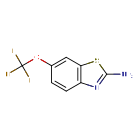
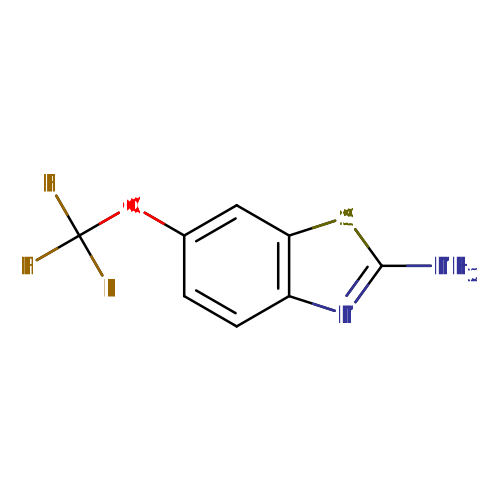
Structure for Riluzole (DB00740)
- Weight
- Average: 234.198
Monoisotopic: 234.007468097 - Chemical Formula
- C8H5F3N2OS
- Synonyms
- Riluzol
- Riluzole
- Riluzolum
- External IDs
- PK 26124
- RP 54274
- RPR 202

Pharmacology
- Indication
For the treatment of amyotrophic lateral sclerosis (ALS, Lou Gehrig's Disease)
 Reduce drug development failure ratesBuild, train, & validate machine-learning modelswith evidence-based and structured datasets.Build, train, & validate predictive machine-learning models with structured datasets.
- Associated Conditions
Indication Type Indication Combined Product Details Approval Level Age Group Patient Characteristics Dose Form Management of Amyotrophic lateral sclerosis •••••••••••• - Contraindications & Blackbox Warnings
 Prevent Adverse Drug Events TodayTap into our Clinical API for life-saving information on contraindications & blackbox warnings, population restrictions, harmful risks, & more.Avoid life-threatening adverse drug events with our Clinical API
- Pharmacodynamics
Riluzole, a member of the benzothiazole class, is indicated for the treatment of patients with amyotrophic lateral sclerosis (ALS). Riluzole extends survival and/or time to tracheostomy. It is also neuroprotective in various in vivo experimental models of neuronal injury involving excitotoxic mechanisms. The etiology and pathogenesis of amyotrophic lateral sclerosis (ALS) are not known, although a number of hypotheses have been advanced. One hypothesis is that motor neurons, made vulnerable through either genetic predisposition or environmental factors, are injured by glutamate. In some cases of familial ALS the enzyme superoxide dismutase has been found to be defective.
- Mechanism of action
The mode of action of riluzole is unknown. Its pharmacological properties include the following, some of which may be related to its effect: 1) an inhibitory effect on glutamate release (activation of glutamate reuptake), 2) inactivation of voltage-dependent sodium channels, and 3) ability to interfere with intracellular events that follow transmitter binding at excitatory amino acid receptors.
Target Actions Organism ASodium channel protein type 5 subunit alpha inhibitorHumans ACystine/glutamate transporter inducerHumans - Absorption
Riluzole is well-absorbed (approximately 90%), with average absolute oral bioavailability of about 60% (CV=30%). A high fat meal decreases absorption, reducing AUC by about 20% and peak blood levels by about 45%.
- Volume of distribution
Not Available
- Protein binding
96% bound to plasma proteins, mainly to albumin and lipoprotein over the clinical concentration range.
- Metabolism
Riluzole is extensively metabolized to six major and a number of minor metabolites, which have not all been identified to date. Metabolism is mostly hepatic, consisting of cytochrome P450–dependent hydroxylation and glucuronidation. CYP1A2 is the primary isozyme involved in N-hydroxylation; CYP2D6, CYP2C19, CYP3A4, and CYP2E1 are considered unlikely to contribute significantly to riluzole metabolism in humans.
Hover over products below to view reaction partners
- Route of elimination
Not Available
- Half-life
The mean elimination half-life of riluzole is 12 hours (CV=35%) after repeated doses.
- Clearance
Not Available
- Adverse Effects
 Improve decision support & research outcomesWith structured adverse effects data, including: blackbox warnings, adverse reactions, warning & precautions, & incidence rates. View sample adverse effects data in our new Data Library!Improve decision support & research outcomes with our structured adverse effects data.
- Toxicity
Not Available
- Pathways
- Not Available
- Pharmacogenomic Effects/ADRs
- Not Available
Interactions
- Drug Interactions
- This information should not be interpreted without the help of a healthcare provider. If you believe you are experiencing an interaction, contact a healthcare provider immediately. The absence of an interaction does not necessarily mean no interactions exist.
Drug Interaction Integrate drug-drug
interactions in your software1,2-Benzodiazepine The risk or severity of CNS depression can be increased when Riluzole is combined with 1,2-Benzodiazepine. Abametapir The serum concentration of Riluzole can be increased when it is combined with Abametapir. Abatacept The metabolism of Riluzole can be increased when combined with Abatacept. Abemaciclib Abemaciclib may decrease the excretion rate of Riluzole which could result in a higher serum level. Abiraterone The serum concentration of Riluzole can be increased when it is combined with Abiraterone. - Food Interactions
- Take on an empty stomach. Take at least 1 hour before or 2 hours after meals.
Products
 Drug product information from 10+ global regionsOur datasets provide approved product information including:dosage, form, labeller, route of administration, and marketing period.Access drug product information from over 10 global regions.
- Product Ingredients
Ingredient UNII CAS InChI Key Riluzole Hydrochloride Not Available Not Available QEAOELIJQRYJJS-UHFFFAOYSA-N - Product Images


- International/Other Brands
- Fanizan (Actavis) / Laidec (Sun Pro) / Lizolorol (Actavis) / Lizorolol (ratiopharm) / Rilustad (STADA) / Sclefic (Actavis) / Xie Yi Li (Lunan Pharm) / Zolerilis (Actavis)
- Brand Name Prescription Products
Name Dosage Strength Route Labeller Marketing Start Marketing End Region Image Exservan Film 50 mg/1 Oral Aquestive Therapeutics 2019-01-24 Not applicable US 
Exservan Film 50 mg/1 Oral Mitsubishi Tanabe Pharma America, Inc. 2021-05-01 Not applicable US Exservan Film 50 mg/1 Oral Mitsubishi Tanabe Pharma America, Inc. 2021-05-01 Not applicable US Rilutek Tablet, film coated 50 mg/1 Oral sanofi-aventis U.S. LLC 1995-12-12 2015-06-30 US 
Rilutek Tablet 50 mg/1 Oral Covis Pharma US, Inc 2016-08-01 Not applicable US - Generic Prescription Products
Name Dosage Strength Route Labeller Marketing Start Marketing End Region Image Apo-riluzole Tablet 50 mg Oral Apotex Corporation 2012-09-25 Not applicable Canada 
Mylan-riluzole Tablet 50 mg Oral Mylan Pharmaceuticals 2012-10-23 Not applicable Canada Riluzole Tablet, film coated 50 mg/1 Oral Rising Pharmaceuticals, Inc. 2013-05-15 Not applicable US Riluzole Tablet, film coated 50 mg/1 Oral Impax Generics 2003-01-29 2016-11-18 US 
Riluzole Tablet, film coated 50 mg/1 Oral Quinn Pharmaceuticals 2020-01-01 Not applicable US - Unapproved/Other Products
Name Ingredients Dosage Route Labeller Marketing Start Marketing End Region Image Teglutik Riluzole (5 mg/1mL) Liquid Oral EDW PHARMA 2024-03-08 Not applicable US Teglutik Riluzole (50 mg/10mL) Liquid Oral EDW PHARMA, INC 2024-01-19 Not applicable US


Categories
- ATC Codes
- N07XX02 — Riluzole
- Drug Categories
- Anticonvulsants
- BCRP/ABCG2 Substrates
- Benzothiazoles
- Central Nervous System Agents
- Central Nervous System Depressants
- Compounds used in a research, industrial, or household setting
- Cytochrome P-450 CYP1A2 Substrates
- Cytochrome P-450 Substrates
- Excitatory Amino Acid Agents
- Excitatory Amino Acid Antagonists
- Heterocyclic Compounds, Fused-Ring
- Miscellaneous Central Nervous System Agents
- Nervous System
- Neuroprotective Agents
- Neurotransmitter Agents
- Protective Agents
- Sulfur Compounds
- Thiazoles
- Chemical TaxonomyProvided by Classyfire
- Description
- This compound belongs to the class of organic compounds known as benzothiazoles. These are organic compounds containing a benzene fused to a thiazole ring (a five-membered ring with four carbon atoms, one nitrogen atom and one sulfur atom).
- Kingdom
- Organic compounds
- Super Class
- Organoheterocyclic compounds
- Class
- Benzothiazoles
- Sub Class
- Not Available
- Direct Parent
- Benzothiazoles
- Alternative Parents
- Benzenoids / 2-amino-1,3-thiazoles / Heteroaromatic compounds / Trihalomethanes / Azacyclic compounds / Primary amines / Organopnictogen compounds / Organooxygen compounds / Organofluorides / Hydrocarbon derivatives show 1 more
- Substituents
- 1,3-benzothiazole / 1,3-thiazol-2-amine / Alkyl fluoride / Alkyl halide / Amine / Aromatic heteropolycyclic compound / Azacycle / Azole / Benzenoid / Halomethane show 12 more
- Molecular Framework
- Aromatic heteropolycyclic compounds
- External Descriptors
- benzothiazoles (CHEBI:8863)
- Affected organisms
- Humans and other mammals
Chemical Identifiers
- UNII
- 7LJ087RS6F
- CAS number
- 1744-22-5
- InChI Key
- FTALBRSUTCGOEG-UHFFFAOYSA-N
- InChI
- InChI=1S/C8H5F3N2OS/c9-8(10,11)14-4-1-2-5-6(3-4)15-7(12)13-5/h1-3H,(H2,12,13)
- IUPAC Name
- 6-(trifluoromethoxy)-1,3-benzothiazol-2-amine
- SMILES
- NC1=NC2=C(S1)C=C(OC(F)(F)F)C=C2
References
- Synthesis Reference
Pratap Padi, Madhusudhan Ganta, Satyanarayana Bollikonda, Sridhar Chaganti, Ramulu Akula, Loka Maheshwari Dommati, "PROCESS FOR PREPARING RILUZOLE." U.S. Patent US20080108827, issued May 08, 2008.
US20080108827- General References
- Song JH, Huang CS, Nagata K, Yeh JZ, Narahashi T: Differential action of riluzole on tetrodotoxin-sensitive and tetrodotoxin-resistant sodium channels. J Pharmacol Exp Ther. 1997 Aug;282(2):707-14. [Article]
- Coric V, Taskiran S, Pittenger C, Wasylink S, Mathalon DH, Valentine G, Saksa J, Wu YT, Gueorguieva R, Sanacora G, Malison RT, Krystal JH: Riluzole augmentation in treatment-resistant obsessive-compulsive disorder: an open-label trial. Biol Psychiatry. 2005 Sep 1;58(5):424-8. [Article]
- van Kan HJ, Groeneveld GJ, Kalmijn S, Spieksma M, van den Berg LH, Guchelaar HJ: Association between CYP1A2 activity and riluzole clearance in patients with amyotrophic lateral sclerosis. Br J Clin Pharmacol. 2005 Mar;59(3):310-3. [Article]
- Zarate CA Jr, Payne JL, Quiroz J, Sporn J, Denicoff KK, Luckenbaugh D, Charney DS, Manji HK: An open-label trial of riluzole in patients with treatment-resistant major depression. Am J Psychiatry. 2004 Jan;161(1):171-4. [Article]
- Mathew SJ, Manji HK, Charney DS: Novel drugs and therapeutic targets for severe mood disorders. Neuropsychopharmacology. 2008 Aug;33(9):2080-92. doi: 10.1038/sj.npp.1301652. Epub 2008 Jan 2. [Article]
- Lamanauskas N, Nistri A: Riluzole blocks persistent Na+ and Ca2+ currents and modulates release of glutamate via presynaptic NMDA receptors on neonatal rat hypoglossal motoneurons in vitro. Eur J Neurosci. 2008 May;27(10):2501-14. doi: 10.1111/j.1460-9568.2008.06211.x. Epub 2008 Apr 26. [Article]
- FDA Approved Drug Products: RILUTEK (riluzole) tablets [Link]
- FDA Approved Drug Products: EXSERVAN (riluzole) film [Link]
- FDA Approved Drug Products: TIGLUTIK (riluzole) suspension [Link]
- External Links
- Human Metabolome Database
- HMDB0014878
- KEGG Drug
- D00775
- KEGG Compound
- C07937
- PubChem Compound
- 5070
- PubChem Substance
- 46508094
- ChemSpider
- 4892
- BindingDB
- 30705
- 35623
- ChEBI
- 8863
- ChEMBL
- CHEMBL744
- ZINC
- ZINC000000006481
- Therapeutic Targets Database
- DAP000527
- PharmGKB
- PA451251
- Guide to Pharmacology
- GtP Drug Page
- PDBe Ligand
- 657
- RxList
- RxList Drug Page
- Drugs.com
- Drugs.com Drug Page
- Wikipedia
- Riluzole
- PDB Entries
- 5v02 / 7bnj / 7wdb / 8thg
- FDA label
- Download (125 KB)
- MSDS
- Download (29.5 KB)
Clinical Trials
- Clinical Trials
Phase Status Purpose Conditions Count 4 Completed Treatment Amyotrophic Lateral Sclerosis (ALS) 1 4 Completed Treatment Fatigue / Inflammation 1 4 Completed Treatment Fragile X Syndrome 1 4 Completed Treatment Gilles de la Tourette's Syndrome 1 4 Completed Treatment Major Depressive Disorder (MDD) 1
Pharmacoeconomics
- Manufacturers
- Sanofi aventis us llc
- Impax laboratories inc
- Packagers
- Inyx Usa Ltd.
- Kaiser Foundation Hospital
- Sanofi-Aventis Inc.
- Southwood Pharmaceuticals
- Dosage Forms
Form Route Strength Film Oral 50 MG Tablet Oral Film Oral 50 mg/1 Tablet Oral 50.00 mg Tablet, coated Oral 50 mg Tablet, film coated Oral 50 mg Tablet, coated Oral 5000000 mg Tablet Oral 50 mg Tablet, film coated Oral Tablet Oral 50 mg/1 Tablet, film coated Oral 50 mg/1 Liquid Oral 5 mg/1mL Suspension Oral 5 MG/ML Suspension Oral Suspension Oral 0.5 mg Liquid Oral 50 mg/10mL - Prices
Unit description Cost Unit Rilutek 50 mg tablet 18.77USD tablet DrugBank does not sell nor buy drugs. Pricing information is supplied for informational purposes only.- Patents
Patent Number Pediatric Extension Approved Expires (estimated) Region US5527814 No 1996-06-18 2013-06-18 US CA2151604 No 2005-09-20 2013-12-10 Canada CA2117466 No 2000-01-25 2012-10-22 Canada US8603514 No 2013-12-10 2024-04-03 US US8765150 No 2014-07-01 2029-03-12 US US8765167 No 2014-07-01 2024-02-20 US
Properties
- State
- Solid
- Experimental Properties
Property Value Source melting point (°C) 119 °C Not Available logP 2.3 Not Available - Predicted Properties
Property Value Source Water Solubility 0.0395 mg/mL ALOGPS logP 2.83 ALOGPS logP 3.4 Chemaxon logS -3.8 ALOGPS pKa (Strongest Acidic) 16.44 Chemaxon pKa (Strongest Basic) 4.57 Chemaxon Physiological Charge 0 Chemaxon Hydrogen Acceptor Count 3 Chemaxon Hydrogen Donor Count 1 Chemaxon Polar Surface Area 48.14 Å2 Chemaxon Rotatable Bond Count 2 Chemaxon Refractivity 44.37 m3·mol-1 Chemaxon Polarizability 18.59 Å3 Chemaxon Number of Rings 2 Chemaxon Bioavailability 1 Chemaxon Rule of Five Yes Chemaxon Ghose Filter Yes Chemaxon Veber's Rule No Chemaxon MDDR-like Rule No Chemaxon - Predicted ADMET Features
Property Value Probability Human Intestinal Absorption + 0.995 Blood Brain Barrier + 0.9799 Caco-2 permeable - 0.5377 P-glycoprotein substrate Non-substrate 0.8045 P-glycoprotein inhibitor I Non-inhibitor 0.8245 P-glycoprotein inhibitor II Non-inhibitor 0.6998 Renal organic cation transporter Non-inhibitor 0.859 CYP450 2C9 substrate Non-substrate 0.8679 CYP450 2D6 substrate Non-substrate 0.9116 CYP450 3A4 substrate Non-substrate 0.7032 CYP450 1A2 substrate Inhibitor 0.9106 CYP450 2C9 inhibitor Non-inhibitor 0.9072 CYP450 2D6 inhibitor Non-inhibitor 0.9231 CYP450 2C19 inhibitor Non-inhibitor 0.9025 CYP450 3A4 inhibitor Non-inhibitor 0.8332 CYP450 inhibitory promiscuity High CYP Inhibitory Promiscuity 0.6647 Ames test AMES toxic 0.6799 Carcinogenicity Non-carcinogens 0.9001 Biodegradation Not ready biodegradable 1.0 Rat acute toxicity 3.6843 LD50, mol/kg Not applicable hERG inhibition (predictor I) Weak inhibitor 0.9775 hERG inhibition (predictor II) Non-inhibitor 0.8734
Spectra
- Mass Spec (NIST)
- Not Available
- Spectra
- Chromatographic Properties
Collision Cross Sections (CCS)
Adduct CCS Value (Å2) Source type Source [M-H]- 137.8325092 predictedDarkChem Lite v0.1.0 [M-H]- 143.85353 predictedDeepCCS 1.0 (2019) [M+H]+ 137.5397092 predictedDarkChem Lite v0.1.0 [M+H]+ 146.21153 predictedDeepCCS 1.0 (2019) [M+Na]+ 138.5174092 predictedDarkChem Lite v0.1.0 [M+Na]+ 152.46223 predictedDeepCCS 1.0 (2019)
Targets

- Kind
- Protein
- Organism
- Humans
- Pharmacological action
- Yes
- Actions
- Inhibitor
- General Function
- Voltage-gated sodium channel activity involved in sa node cell action potential
- Specific Function
- This protein mediates the voltage-dependent sodium ion permeability of excitable membranes. Assuming opened or closed conformations in response to the voltage difference across the membrane, the pr...
- Gene Name
- SCN5A
- Uniprot ID
- Q14524
- Uniprot Name
- Sodium channel protein type 5 subunit alpha
- Molecular Weight
- 226937.475 Da
References
- Overington JP, Al-Lazikani B, Hopkins AL: How many drug targets are there? Nat Rev Drug Discov. 2006 Dec;5(12):993-6. [Article]
- Imming P, Sinning C, Meyer A: Drugs, their targets and the nature and number of drug targets. Nat Rev Drug Discov. 2006 Oct;5(10):821-34. [Article]
- Schwartz G, Fehlings MG: Secondary injury mechanisms of spinal cord trauma: a novel therapeutic approach for the management of secondary pathophysiology with the sodium channel blocker riluzole. Prog Brain Res. 2002;137:177-90. [Article]
- Song JH, Huang CS, Nagata K, Yeh JZ, Narahashi T: Differential action of riluzole on tetrodotoxin-sensitive and tetrodotoxin-resistant sodium channels. J Pharmacol Exp Ther. 1997 Aug;282(2):707-14. [Article]
- Weiss S, Benoist D, White E, Teng W, Saint DA: Riluzole protects against cardiac ischaemia and reperfusion damage via block of the persistent sodium current. Br J Pharmacol. 2010 Jul;160(5):1072-82. doi: 10.1111/j.1476-5381.2010.00766.x. [Article]
- Kind
- Protein
- Organism
- Humans
- Pharmacological action
- Yes
- Actions
- Inducer
- General Function
- Cystine:glutamate antiporter activity
- Specific Function
- Sodium-independent, high-affinity exchange of anionic amino acids with high specificity for anionic form of cystine and glutamate.
- Gene Name
- SLC7A11
- Uniprot ID
- Q9UPY5
- Uniprot Name
- Cystine/glutamate transporter
- Molecular Weight
- 55422.44 Da
References
- Wokke J: Riluzole. Lancet. 1996 Sep 21;348(9030):795-9. [Article]
- Azbill RD, Mu X, Springer JE: Riluzole increases high-affinity glutamate uptake in rat spinal cord synaptosomes. Brain Res. 2000 Jul 21;871(2):175-80. [Article]
- Dunlop J, Beal McIlvain H, She Y, Howland DS: Impaired spinal cord glutamate transport capacity and reduced sensitivity to riluzole in a transgenic superoxide dismutase mutant rat model of amyotrophic lateral sclerosis. J Neurosci. 2003 Mar 1;23(5):1688-96. [Article]
- Gosselin RD, O'Connor RM, Tramullas M, Julio-Pieper M, Dinan TG, Cryan JF: Riluzole normalizes early-life stress-induced visceral hypersensitivity in rats: role of spinal glutamate reuptake mechanisms. Gastroenterology. 2010 Jun;138(7):2418-25. doi: 10.1053/j.gastro.2010.03.003. Epub 2010 Mar 10. [Article]
- Hayashida K, Parker RA, Eisenach JC: Activation of glutamate transporters in the locus coeruleus paradoxically activates descending inhibition in rats. Brain Res. 2010 Mar 4;1317:80-6. doi: 10.1016/j.brainres.2009.12.086. Epub 2010 Jan 6. [Article]
Enzymes
- Kind
- Protein
- Organism
- Humans
- Pharmacological action
- Unknown
- Actions
- Substrate
- General Function
- Vitamin d 24-hydroxylase activity
- Specific Function
- Cytochromes P450 are a group of heme-thiolate monooxygenases. In liver microsomes, this enzyme is involved in an NADPH-dependent electron transport pathway. It oxidizes a variety of structurally un...
- Gene Name
- CYP1A1
- Uniprot ID
- P04798
- Uniprot Name
- Cytochrome P450 1A1
- Molecular Weight
- 58164.815 Da
References
- Rendic S: Summary of information on human CYP enzymes: human P450 metabolism data. Drug Metab Rev. 2002 Feb-May;34(1-2):83-448. [Article]
- Sanderink GJ, Bournique B, Stevens J, Petry M, Martinet M: Involvement of human CYP1A isoenzymes in the metabolism and drug interactions of riluzole in vitro. J Pharmacol Exp Ther. 1997 Sep;282(3):1465-72. [Article]
- Kind
- Protein
- Organism
- Humans
- Pharmacological action
- Unknown
- Actions
- Substrate
- General Function
- Oxidoreductase activity, acting on paired donors, with incorporation or reduction of molecular oxygen, reduced flavin or flavoprotein as one donor, and incorporation of one atom of oxygen
- Specific Function
- Cytochromes P450 are a group of heme-thiolate monooxygenases. In liver microsomes, this enzyme is involved in an NADPH-dependent electron transport pathway. It oxidizes a variety of structurally un...
- Gene Name
- CYP1A2
- Uniprot ID
- P05177
- Uniprot Name
- Cytochrome P450 1A2
- Molecular Weight
- 58293.76 Da
References
- Ajroud-Driss S, Saeed M, Khan H, Siddique N, Hung WY, Sufit R, Heller S, Armstrong J, Casey P, Siddique T, Lukas TJ: Riluzole metabolism and CYP1A1/2 polymorphisms in patients with ALS. Amyotroph Lateral Scler. 2007 Oct;8(5):305-9. doi: 10.1080/17482960701500650. [Article]
- van Kan HJ, Groeneveld GJ, Kalmijn S, Spieksma M, van den Berg LH, Guchelaar HJ: Association between CYP1A2 activity and riluzole clearance in patients with amyotrophic lateral sclerosis. Br J Clin Pharmacol. 2005 Mar;59(3):310-3. [Article]
- Flockhart Table of Drug Interactions [Link]
- Riluzole FDA label [File]
Transporters
- Kind
- Protein
- Organism
- Humans
- Pharmacological action
- Unknown
- Actions
- Substrate
- General Function
- Xenobiotic-transporting atpase activity
- Specific Function
- High-capacity urate exporter functioning in both renal and extrarenal urate excretion. Plays a role in porphyrin homeostasis as it is able to mediates the export of protoporhyrin IX (PPIX) both fro...
- Gene Name
- ABCG2
- Uniprot ID
- Q9UNQ0
- Uniprot Name
- ATP-binding cassette sub-family G member 2
- Molecular Weight
- 72313.47 Da
References
- Milane A, Vautier S, Chacun H, Meininger V, Bensimon G, Farinotti R, Fernandez C: Interactions between riluzole and ABCG2/BCRP transporter. Neurosci Lett. 2009 Mar 6;452(1):12-6. doi: 10.1016/j.neulet.2008.12.061. Epub 2009 Jan 6. [Article]

Drug created at June 13, 2005 13:24 / Updated at April 27, 2024 09:44