Identification
- Summary
Zileuton is a leukotriene synthesis inhibitor used in the prophylaxis and treatment of chronic asthma.
- Brand Names
- Zyflo
- Generic Name
- Zileuton
- DrugBank Accession Number
- DB00744
- Background
Leukotrienes are substances that induce numerous biological effects including augmentation of neutrophil and eosinophil migration, neutrophil and monocyte aggregation, leukocyte adhesion, increased capillary permeability, and smooth muscle contraction. These effects contribute to inflammation, edema, mucus secretion, and bronchoconstriction in the airways of asthmatic patients. Zileuton relieves such symptoms through its selective inhibition of 5-lipoxygenase, the enzyme that catalyzes the formation of leukotrienes from arachidonic acid. Specifically, it inhibits leukotriene LTB4, LTC4, LTD4, and LTE4 formation. Both the R(+) and S(-) enantiomers are pharmacologically active as 5-lipoxygenase inhibitors in in vitro systems. The immediate release tablet of Zileuton has been withdrawn from the US market.
- Type
- Small Molecule
- Groups
- Approved, Investigational, Withdrawn
- Structure
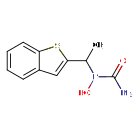
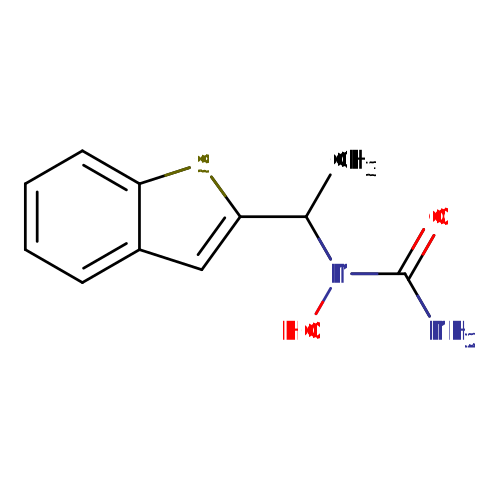
Structure for Zileuton (DB00744)
- Weight
- Average: 236.29
Monoisotopic: 236.061948328 - Chemical Formula
- C11H12N2O2S
- Synonyms
- (±)-1-(1-Benzo[b]thien-2-ylethyl)-1-hydroxyurea
- Leutrol
- N-(1-Benzo(b)thien-2-ylethyl)-N-hydroxyurea
- N-[1-(benzo[b]thiophen-2-yl)ethyl]-N-hydroxyurea
- Zileuton
- Zileutón
- Zileutonum
- External IDs
- A 64077

Pharmacology
- Indication
For the prophylaxis and chronic treatment of asthma in adults and children 12 years of age and older.
 Reduce drug development failure ratesBuild, train, & validate machine-learning modelswith evidence-based and structured datasets.Build, train, & validate predictive machine-learning models with structured datasets.
- Associated Conditions
Indication Type Indication Combined Product Details Approval Level Age Group Patient Characteristics Dose Form Prevention of Asthma •••••••••••• Management of Chronic asthma •••••••••••• - Contraindications & Blackbox Warnings
 Prevent Adverse Drug Events TodayTap into our Clinical API for life-saving information on contraindications & blackbox warnings, population restrictions, harmful risks, & more.Avoid life-threatening adverse drug events with our Clinical API
- Pharmacodynamics
Zileuton is an asthma drug that differs chemically and pharmacologically from other antiasthmatic agents. It blocks leukotriene synthesis by inhibiting 5-lipoxygenase, an enzyme of the eicosanoid synthesis pathway. Current data indicates that asthma is a chronic inflammatory disorder of the airways involving the production and activity of several endogenous inflammatory mediators, including leukotrienes. Sulfido-peptide leukotrienes (LTC4, LTD4, LTE4, also known as the slow-releasing substances of anaphylaxis) and LTB4, a chemoattractant for neutrophils and eosinophils, are derived from the initial unstable product of arachidonic acid metabolism, leukotriene A4 (LTA4), and can be measured in a number of biological fluids including bronchoalveolar lavage fluid (BALF) from asthmatic patients. In humans, pretreatment with zileuton attenuated bronchoconstriction caused by cold air challenge in patients with asthma.
- Mechanism of action
Leukotrienes are substances that induce numerous biological effects including augmentation of neutrophil and eosinophil migration, neutrophil and monocyte aggregation, leukocyte adhesion, increased capillary permeability, and smooth muscle contraction. These effects contribute to inflammation, edema, mucus secretion, and bronchoconstriction in the airways of asthmatic patients. Zileuton relieves such symptoms through its selective inhibition of 5-lipoxygenase, the enzyme that catalyzes the formation of leukotrienes from arachidonic acid. Specifically, it inhibits leukotriene LTB4, LTC4, LTD4, and LTE4 formation. Both the R(+) and S(-) enantiomers are pharmacologically active as 5-lipoxygenase inhibitors in in vitro systems. Due to the role of leukotrienes in the pathogenesis of asthma, modulation of leukotriene formation by interruption of 5-lipoxygenase activity may reduce airway symptoms, decrease bronchial smooth muscle tone, and improve asthma control.
Target Actions Organism AArachidonate 5-lipoxygenase inhibitorHumans - Absorption
Rapidly and almost completely absorbed. The absolute bioavailability is unknown.
- Volume of distribution
- 1.2 L/kg
- Protein binding
93% bound to plasma proteins, primarily to albumin.
- Metabolism
Hepatic. Zileuton and its N-dehydroxylated metabolite are oxidatively metabolized by the cytochrome P450 isoenzymes 1A2, 2C9 and 3A4.
Hover over products below to view reaction partners
- Route of elimination
Elimination of zileuton is predominantly via metabolism with a mean terminal half-life of 2.5 hours. The urinary excretion of the inactive N-dehydroxylated metabolite and unchanged zileuton each accounted for less than 0.5% of the dose.
- Half-life
2.5 hours
- Clearance
- Apparent oral cl=7 mL/min/kg
- Adverse Effects
 Improve decision support & research outcomesWith structured adverse effects data, including: blackbox warnings, adverse reactions, warning & precautions, & incidence rates. View sample adverse effects data in our new Data Library!Improve decision support & research outcomes with our structured adverse effects data.
- Toxicity
Minimum oral lethal dose of zileuton in various preparations was 500-4000 mg/kg in mice and 300-1000 mg/kg in rats (providing greater than 3 and 9 times the systemic exposure [AUC] achieved at the maximum recommended human daily oral dose, respectively).
- Pathways
- Not Available
- Pharmacogenomic Effects/ADRs
- Not Available
Interactions
- Drug Interactions
- This information should not be interpreted without the help of a healthcare provider. If you believe you are experiencing an interaction, contact a healthcare provider immediately. The absence of an interaction does not necessarily mean no interactions exist.
Drug Interaction Integrate drug-drug
interactions in your softwareAbametapir The serum concentration of Zileuton can be increased when it is combined with Abametapir. Abatacept The metabolism of Zileuton can be increased when combined with Abatacept. Abiraterone The serum concentration of Zileuton can be increased when it is combined with Abiraterone. Abrocitinib The metabolism of Abrocitinib can be decreased when combined with Zileuton. Acenocoumarol The metabolism of Acenocoumarol can be decreased when combined with Zileuton. - Food Interactions
- Avoid excessive or chronic alcohol consumption.
- Exercise caution with grapefruit products. Zileuton is partially metabolized through CYP3A4. Therefore grapefruit, a CYP3A4 inhibitor, may reduce the metabolism of zileuton.
- Exercise caution with St. John's Wort. Zileuton is partially metabolized through CYP3A4. Therefore St. John's Wort may increase the metabolism of zileuton.
- Take with food. The AUC and Cmin of zileuton extended-release tablets are increased by food, and therefore should be taken with meals.
- Take with or without food. ZYFLO (zileuton) regular release tablets can be taken with or without food.
Products
 Drug product information from 10+ global regionsOur datasets provide approved product information including:dosage, form, labeller, route of administration, and marketing period.Access drug product information from over 10 global regions.
- Brand Name Prescription Products
Name Dosage Strength Route Labeller Marketing Start Marketing End Region Image Zyflo Tablet, film coated 600 mg/1 Oral Critical Therapeutics, Inc. 1996-12-09 2010-08-31 US 
Zyflo Tablet 600 mg/1 Oral Chiesi USA, Inc. 1996-12-06 Not applicable US Zyflo CR Tablet, multilayer, extended release 600 mg/1 Oral Chiesi USA, Inc. 2007-05-30 2019-12-31 US Zyflo CR Tablet, multilayer, extended release 600 mg/1 Oral Critical Therapeutics, Inc. 2007-05-30 2010-12-01 US - Generic Prescription Products
Name Dosage Strength Route Labeller Marketing Start Marketing End Region Image Zileuton Tablet, multilayer, extended release 600 mg/1 Oral Golden State Medical Supply, Inc. 2019-12-16 Not applicable US Zileuton Tablet, multilayer, extended release 600 mg/1 Oral Dash Pharmaceutical LLC 2020-10-23 Not applicable US Zileuton Tablet, extended release 600 mg/1 Oral Prasco, Llc 2017-03-29 2023-03-01 US Zileuton Tablet, extended release 600 mg/1 Oral Aristos Phamaceuticals, Inc. 2016-11-30 2017-05-01 US Zileuton Tablet, film coated, extended release 600 mg/1 Oral Camber Pharmaceuticals, Inc. 2022-10-11 Not applicable US
Categories
- Drug Categories
- Agents to Treat Airway Disease
- Amides
- Analgesics
- Analgesics, Non-Narcotic
- Anti-Inflammatory Agents
- Cytochrome P-450 CYP1A2 Inhibitors
- Cytochrome P-450 CYP1A2 Inhibitors (strength unknown)
- Cytochrome P-450 CYP1A2 Substrates
- Cytochrome P-450 CYP2C9 Substrates
- Cytochrome P-450 CYP3A Substrates
- Cytochrome P-450 CYP3A4 Substrates
- Cytochrome P-450 Enzyme Inhibitors
- Cytochrome P-450 Substrates
- Decreased Leukotriene Production
- Enzyme Inhibitors
- Hormone Antagonists
- Hormones, Hormone Substitutes, and Hormone Antagonists
- Leukotriene Antagonists
- Lipoxygenase Inhibitors
- Peripheral Nervous System Agents
- Sensory System Agents
- UGT1A9 Substrates
- Chemical TaxonomyProvided by Classyfire
- Description
- This compound belongs to the class of organic compounds known as 1-benzothiophenes. These are aromatic heterocyclic compound containing the Benzo[b]thiophene ring system.
- Kingdom
- Organic compounds
- Super Class
- Organoheterocyclic compounds
- Class
- Benzothiophenes
- Sub Class
- 1-benzothiophenes
- Direct Parent
- 1-benzothiophenes
- Alternative Parents
- 2,3,5-trisubstituted thiophenes / Benzenoids / Heteroaromatic compounds / Organic carbonic acids and derivatives / Organopnictogen compounds / Organonitrogen compounds / Organic oxides / Hydrocarbon derivatives / Carbonyl compounds
- Substituents
- 1-benzothiophene / 2,3,5-trisubstituted thiophene / Aromatic heteropolycyclic compound / Benzenoid / Carbonic acid derivative / Carbonyl group / Heteroaromatic compound / Hydrocarbon derivative / Organic nitrogen compound / Organic oxide
- Molecular Framework
- Aromatic heteropolycyclic compounds
- External Descriptors
- ureas, 1-benzothiophenes (CHEBI:10112)
- Affected organisms
- Humans and other mammals
Chemical Identifiers
- UNII
- V1L22WVE2S
- CAS number
- 111406-87-2
- InChI Key
- MWLSOWXNZPKENC-UHFFFAOYSA-N
- InChI
- InChI=1S/C11H12N2O2S/c1-7(13(15)11(12)14)10-6-8-4-2-3-5-9(8)16-10/h2-7,15H,1H3,(H2,12,14)
- IUPAC Name
- 1-[1-(1-benzothiophen-2-yl)ethyl]-1-hydroxyurea
- SMILES
- CC(N(O)C(N)=O)C1=CC2=CC=CC=C2S1
References
- Synthesis Reference
Emanuele ATTOLINA, Gianmaria Dell'Anna, Roberto Rossi, Pietro Allegrini, Gabriele Razzetti, "PROCESS FOR THE PREPARATION OF ZILEUTON." U.S. Patent US20090286996, issued November 19, 2009.
US20090286996- General References
- Berger W, De Chandt MT, Cairns CB: Zileuton: clinical implications of 5-Lipoxygenase inhibition in severe airway disease. Int J Clin Pract. 2007 Apr;61(4):663-76. [Article]
- Wenzel SE, Kamada AK: Zileuton: the first 5-lipoxygenase inhibitor for the treatment of asthma. Ann Pharmacother. 1996 Jul-Aug;30(7-8):858-64. [Article]
- Malo PE, Bell RL, Shaughnessy TK, Summers JB, Brooks DW, Carter GW: The 5-lipoxygenase inhibitory activity of zileuton in in vitro and in vivo models of antigen-induced airway anaphylaxis. Pulm Pharmacol. 1994 Apr;7(2):73-9. [Article]
- External Links
- Human Metabolome Database
- HMDB0014882
- KEGG Drug
- D00414
- PubChem Compound
- 60490
- PubChem Substance
- 46506394
- ChemSpider
- 54531
- BindingDB
- 50000541
- 40575
- ChEBI
- 10112
- ChEMBL
- CHEMBL93
- Therapeutic Targets Database
- DAP000591
- PharmGKB
- PA451955
- RxList
- RxList Drug Page
- Drugs.com
- Drugs.com Drug Page
- Wikipedia
- Zileuton
- FDA label
- Download (129 KB)
- MSDS
- Download (14.8 KB)
Clinical Trials
- Clinical Trials
Phase Status Purpose Conditions Count 4 Completed Treatment Asthma 2 4 Recruiting Treatment Trigeminal Neuralgia (TN) 1 4 Terminated Treatment Asthma 1 3 Terminated Treatment Chronic Obstructive Pulmonary Disease (COPD) 1 2 Completed Prevention Head And Neck Cancer / Lung Cancer 1
Pharmacoeconomics
- Manufacturers
- Cornerstone therapeutics inc
- Packagers
- Cornerstone Pharmacy
- Critical Therapeutics Inc.
- Murfreesboro Pharmaceutical Nursing Supply
- Nucare Pharmaceuticals Inc.
- Patheon Inc.
- Dosage Forms
Form Route Strength Powder Not applicable 1 kg/1kg Tablet Oral 600 mg/1 Tablet, extended release Oral 600 mg/1 Tablet, extended release Oral 600 1/1 Tablet, film coated, extended release Oral 600 mg/1 Tablet, film coated Oral 600 mg/1 Tablet, multilayer, extended release Oral 600 mg/1 - Prices
Unit description Cost Unit Zyflo 600 mg tablet 6.49USD tablet Zyflo CR 600 mg 12 Hour tablet 6.23USD tablet Zyflo 600 mg filmtab 5.99USD tablet Zyflo cr 600 mg tablet 5.99USD tablet DrugBank does not sell nor buy drugs. Pricing information is supplied for informational purposes only.- Patents
Patent Number Pediatric Extension Approved Expires (estimated) Region US5422123 No 1995-06-06 2012-06-06 US US4873259 No 1989-10-10 2010-12-09 US
Properties
- State
- Solid
- Experimental Properties
Property Value Source melting point (°C) 144.2-145.2 °C Not Available water solubility Practically insoluble (0.5 mg/ml) Not Available logP 0.9 Not Available - Predicted Properties
Property Value Source Water Solubility 0.0539 mg/mL ALOGPS logP 2.01 ALOGPS logP 2.01 Chemaxon logS -3.6 ALOGPS pKa (Strongest Acidic) 8.84 Chemaxon pKa (Strongest Basic) -5.5 Chemaxon Physiological Charge 0 Chemaxon Hydrogen Acceptor Count 2 Chemaxon Hydrogen Donor Count 2 Chemaxon Polar Surface Area 66.56 Å2 Chemaxon Rotatable Bond Count 2 Chemaxon Refractivity 61.96 m3·mol-1 Chemaxon Polarizability 24.14 Å3 Chemaxon Number of Rings 2 Chemaxon Bioavailability 1 Chemaxon Rule of Five Yes Chemaxon Ghose Filter Yes Chemaxon Veber's Rule No Chemaxon MDDR-like Rule No Chemaxon - Predicted ADMET Features
Property Value Probability Human Intestinal Absorption + 0.9915 Blood Brain Barrier + 0.8846 Caco-2 permeable - 0.5793 P-glycoprotein substrate Non-substrate 0.6789 P-glycoprotein inhibitor I Non-inhibitor 0.9684 P-glycoprotein inhibitor II Non-inhibitor 0.9765 Renal organic cation transporter Non-inhibitor 0.9583 CYP450 2C9 substrate Non-substrate 0.5907 CYP450 2D6 substrate Non-substrate 0.9116 CYP450 3A4 substrate Non-substrate 0.6384 CYP450 1A2 substrate Inhibitor 0.5318 CYP450 2C9 inhibitor Non-inhibitor 0.7975 CYP450 2D6 inhibitor Non-inhibitor 0.8866 CYP450 2C19 inhibitor Non-inhibitor 0.6451 CYP450 3A4 inhibitor Non-inhibitor 0.7062 CYP450 inhibitory promiscuity Low CYP Inhibitory Promiscuity 0.5821 Ames test AMES toxic 0.5865 Carcinogenicity Non-carcinogens 0.7968 Biodegradation Not ready biodegradable 0.985 Rat acute toxicity 2.2646 LD50, mol/kg Not applicable hERG inhibition (predictor I) Weak inhibitor 0.9884 hERG inhibition (predictor II) Non-inhibitor 0.9051
Spectra
- Mass Spec (NIST)
- Not Available
- Spectra
- Chromatographic Properties
Collision Cross Sections (CCS)
Adduct CCS Value (Å2) Source type Source [M-H]- 157.852736 predictedDarkChem Lite v0.1.0 [M-H]- 141.54823 predictedDeepCCS 1.0 (2019) [M+H]+ 159.672536 predictedDarkChem Lite v0.1.0 [M+H]+ 143.90623 predictedDeepCCS 1.0 (2019) [M+Na]+ 159.011936 predictedDarkChem Lite v0.1.0 [M+Na]+ 150.59766 predictedDeepCCS 1.0 (2019)
Targets

- Kind
- Protein
- Organism
- Humans
- Pharmacological action
- Yes
- Actions
- Inhibitor
- General Function
- Iron ion binding
- Specific Function
- Catalyzes the first step in leukotriene biosynthesis, and thereby plays a role in inflammatory processes.
- Gene Name
- ALOX5
- Uniprot ID
- P09917
- Uniprot Name
- Arachidonate 5-lipoxygenase
- Molecular Weight
- 77982.595 Da
References
- Wenzel SE: Leukotriene receptor antagonists and related compounds. Can Respir J. 1999 Mar-Apr;6(2):189-93. [Article]
- Hardy DB, Pereria LE, Yang K: Prostaglandins and leukotriene B4 are potent inhibitors of 11beta-hydroxysteroid dehydrogenase type 2 activity in human choriocarcinoma JEG-3 cells. Biol Reprod. 1999 Jul;61(1):40-5. [Article]
- Yamashita M, Kushihara M, Hirasawa N, Takasaki W, Takahagi H, Takayanagi M, Ohuchi K: Inhibition by troglitazone of the antigen-induced production of leukotrienes in immunoglobulin E-sensitized RBL-2H3 cells. Br J Pharmacol. 2000 Jan;129(2):367-73. [Article]
- Qian C, Hwang SB, Libertine-Garahan L, Eckman JB, Cai X, Scannell RT, Yeh CG: Anti-inflammatory activities of LDP-392, a dual PAF receptor antagonist and 5-lipoxygenase inhibitor. Pharmacol Res. 2001 Sep;44(3):213-20. [Article]
- Coffey MJ, Phare SM, Peters-Golden M: Peroxynitrite-induced nitrotyrosination of proteins is blocked by direct 5-lipoxygenase inhibitor zileuton. J Pharmacol Exp Ther. 2001 Oct;299(1):198-203. [Article]
- Chen X, Ji ZL, Chen YZ: TTD: Therapeutic Target Database. Nucleic Acids Res. 2002 Jan 1;30(1):412-5. [Article]
- Zouboulis CC: Zileuton, a new efficient and safe systemic anti-acne drug. Dermatoendocrinol. 2009 May;1(3):188-92. [Article]
- Zouboulis CC, Seltmann H, Alestas T: Zileuton prevents the activation of the leukotriene pathway and reduces sebaceous lipogenesis. Exp Dermatol. 2010 Feb;19(2):148-50. doi: 10.1111/j.1600-0625.2009.00929.x. Epub 2009 Jul 23. [Article]
- Berger W, De Chandt MT, Cairns CB: Zileuton: clinical implications of 5-Lipoxygenase inhibition in severe airway disease. Int J Clin Pract. 2007 Apr;61(4):663-76. [Article]
- Guidot DM, Repine MJ, Westcott JY, Repine JE: Intrinsic 5-lipoxygenase activity is required for neutrophil responsivity. Proc Natl Acad Sci U S A. 1994 Aug 16;91(17):8156-9. [Article]
- Wenzel SE, Kamada AK: Zileuton: the first 5-lipoxygenase inhibitor for the treatment of asthma. Ann Pharmacother. 1996 Jul-Aug;30(7-8):858-64. [Article]
- Tanaka R: [5-lipoxygenase inhibitors in asthma therapy]. Nihon Rinsho. 1996 Nov;54(11):3040-4. [Article]
- Reques FG, Rodriguez JL: Tolerability of leukotriene modifiers in asthma: a review of clinical experience. BioDrugs. 1999 Jun;11(6):385-94. doi: 10.2165/00063030-199911060-00003. [Article]
- Chen HC, Xie J, Zhang Z, Su LT, Yue L, Runnels LW: Blockade of TRPM7 channel activity and cell death by inhibitors of 5-lipoxygenase. PLoS One. 2010 Jun 17;5(6):e11161. doi: 10.1371/journal.pone.0011161. [Article]
Enzymes
- Kind
- Protein
- Organism
- Humans
- Pharmacological action
- Unknown
- Actions
- Substrate
- General Function
- Prostaglandin-endoperoxide synthase activity
- Specific Function
- Converts arachidonate to prostaglandin H2 (PGH2), a committed step in prostanoid synthesis. Involved in the constitutive production of prostanoids in particular in the stomach and platelets. In gas...
- Gene Name
- PTGS1
- Uniprot ID
- P23219
- Uniprot Name
- Prostaglandin G/H synthase 1
- Molecular Weight
- 68685.82 Da
References
- Zhou SF, Zhou ZW, Yang LP, Cai JP: Substrates, inducers, inhibitors and structure-activity relationships of human Cytochrome P450 2C9 and implications in drug development. Curr Med Chem. 2009;16(27):3480-675. Epub 2009 Sep 1. [Article]
- Kind
- Protein
- Organism
- Humans
- Pharmacological action
- Unknown
- Actions
- Substrate
- General Function
- Retinoic acid binding
- Specific Function
- UDPGT is of major importance in the conjugation and subsequent elimination of potentially toxic xenobiotics and endogenous compounds. This isoform has specificity for phenols. Isoform 2 lacks trans...
- Gene Name
- UGT1A9
- Uniprot ID
- O60656
- Uniprot Name
- UDP-glucuronosyltransferase 1-9
- Molecular Weight
- 59940.495 Da
References
- Zhou SF, Zhou ZW, Yang LP, Cai JP: Substrates, inducers, inhibitors and structure-activity relationships of human Cytochrome P450 2C9 and implications in drug development. Curr Med Chem. 2009;16(27):3480-675. Epub 2009 Sep 1. [Article]
- Kind
- Protein
- Organism
- Humans
- Pharmacological action
- Unknown
- Actions
- Substrate
- Curator comments
- The FDA label indicates that this enzyme action is supported only by the findings of in vitro studies.
- General Function
- Steroid hydroxylase activity
- Specific Function
- Cytochromes P450 are a group of heme-thiolate monooxygenases. In liver microsomes, this enzyme is involved in an NADPH-dependent electron transport pathway. It oxidizes a variety of structurally un...
- Gene Name
- CYP2C9
- Uniprot ID
- P11712
- Uniprot Name
- Cytochrome P450 2C9
- Molecular Weight
- 55627.365 Da
References
- Kind
- Protein
- Organism
- Humans
- Pharmacological action
- Unknown
- Actions
- SubstrateInhibitor
- General Function
- Oxidoreductase activity, acting on paired donors, with incorporation or reduction of molecular oxygen, reduced flavin or flavoprotein as one donor, and incorporation of one atom of oxygen
- Specific Function
- Cytochromes P450 are a group of heme-thiolate monooxygenases. In liver microsomes, this enzyme is involved in an NADPH-dependent electron transport pathway. It oxidizes a variety of structurally un...
- Gene Name
- CYP1A2
- Uniprot ID
- P05177
- Uniprot Name
- Cytochrome P450 1A2
- Molecular Weight
- 58293.76 Da
References
- Wang B, Zhou SF: Synthetic and natural compounds that interact with human cytochrome P450 1A2 and implications in drug development. Curr Med Chem. 2009;16(31):4066-218. [Article]
- Zhou SF, Zhou ZW, Yang LP, Cai JP: Substrates, inducers, inhibitors and structure-activity relationships of human Cytochrome P450 2C9 and implications in drug development. Curr Med Chem. 2009;16(27):3480-675. Epub 2009 Sep 1. [Article]
- Machinist JM, Mayer MD, Shet MS, Ferrero JL, Rodrigues AD: Identification of the human liver cytochrome P450 enzymes involved in the metabolism of zileuton (ABT-077) and its N-dehydroxylated metabolite, Abbott-66193. Drug Metab Dispos. 1995 Oct;23(10):1163-74. [Article]
- Flockhart Table of Drug Interactions [Link]
- FDA Drug Development and Drug Interactions: Table of Substrates, Inhibitors and Inducers [Link]
- Zileuton FDA label [File]
- Kind
- Protein
- Organism
- Humans
- Pharmacological action
- Unknown
- Actions
- Substrate
- Curator comments
- The clinical significance of this drug interacting with CYP3A4 substrates is undetermined at this time, according to prescribing information.
- General Function
- Vitamin d3 25-hydroxylase activity
- Specific Function
- Cytochromes P450 are a group of heme-thiolate monooxygenases. In liver microsomes, this enzyme is involved in an NADPH-dependent electron transport pathway. It performs a variety of oxidation react...
- Gene Name
- CYP3A4
- Uniprot ID
- P08684
- Uniprot Name
- Cytochrome P450 3A4
- Molecular Weight
- 57342.67 Da
References
- Zhou SF, Zhou ZW, Yang LP, Cai JP: Substrates, inducers, inhibitors and structure-activity relationships of human Cytochrome P450 2C9 and implications in drug development. Curr Med Chem. 2009;16(27):3480-675. Epub 2009 Sep 1. [Article]
- Machinist JM, Mayer MD, Shet MS, Ferrero JL, Rodrigues AD: Identification of the human liver cytochrome P450 enzymes involved in the metabolism of zileuton (ABT-077) and its N-dehydroxylated metabolite, Abbott-66193. Drug Metab Dispos. 1995 Oct;23(10):1163-74. [Article]
- FDA Approved Drug Products: ZYFLO CR (zileuton) extended-release tablets [Link]
Carriers
- Kind
- Protein
- Organism
- Humans
- Pharmacological action
- Unknown
- General Function
- Toxic substance binding
- Specific Function
- Serum albumin, the main protein of plasma, has a good binding capacity for water, Ca(2+), Na(+), K(+), fatty acids, hormones, bilirubin and drugs. Its main function is the regulation of the colloid...
- Gene Name
- ALB
- Uniprot ID
- P02768
- Uniprot Name
- Serum albumin
- Molecular Weight
- 69365.94 Da
References
- Li F, Chordia MD, Woodling KA, Macdonald TL: Irreversible alkylation of human serum albumin by zileuton metabolite 2-acetylbenzothiophene-S-oxide: a potential model for hepatotoxicity. Chem Res Toxicol. 2007 Dec;20(12):1854-61. Epub 2007 Oct 19. [Article]

Drug created at June 13, 2005 13:24 / Updated at December 02, 2023 06:55