Identification
- Summary
Primidone is an antiepileptic used to treat grand mal, psychomotor, and focal epileptic seizures.
- Brand Names
- Mysoline
- Generic Name
- Primidone
- DrugBank Accession Number
- DB00794
- Background
Primidone is an anticonvulsant used to treat essential tremor as well as grand mal, psychomotor, and focal epileptic seizures.15 Primidone was developed by J Yule Bogue and H C Carrington in 1949.10
Primidone was granted FDA Approval on 8 March 1954.15
- Type
- Small Molecule
- Groups
- Approved, Vet approved
- Structure
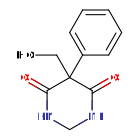
Structure for Primidone (DB00794)
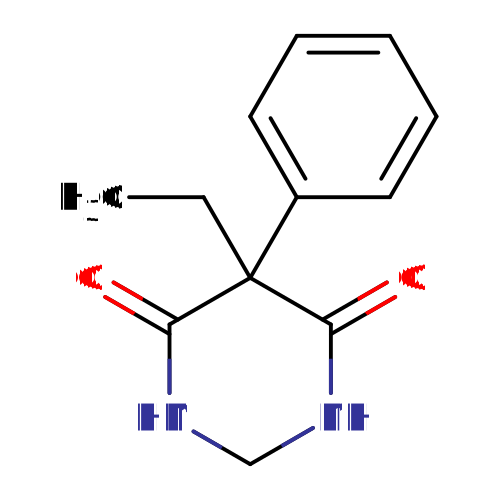
- Weight
- Average: 218.2518
Monoisotopic: 218.105527702 - Chemical Formula
- C12H14N2O2
- Synonyms
- 2-deoxyphenobarbital
- 5-Phenyl-5-ethyl-Hexahydropyrimidine-4,6-dione
- Primidon
- Primidona
- Primidone
- Primidonum
- External IDs
- NSC-41701
- Rö 101

Pharmacology
- Indication
Primidone is commonly indicated for the management of grand mal, psychomotor, and focal epileptic seizures.14,15 In addition, it has also been studied and utilized as an effective management of essential tremor.1,2,14
 Reduce drug development failure ratesBuild, train, & validate machine-learning modelswith evidence-based and structured datasets.Build, train, & validate predictive machine-learning models with structured datasets.
- Associated Conditions
Indication Type Indication Combined Product Details Approval Level Age Group Patient Characteristics Dose Form Management of Essential tremor •••••••••••• ••••••••• •••••• •••••• Management of Focal seizures •••••••••••• Management of Grand mal seizure •••••••••••• Management of Psychomotor seizures •••••••••••• - Contraindications & Blackbox Warnings
 Prevent Adverse Drug Events TodayTap into our Clinical API for life-saving information on contraindications & blackbox warnings, population restrictions, harmful risks, & more.Avoid life-threatening adverse drug events with our Clinical API
- Pharmacodynamics
Primidone alters sodium and calcium channel transport, reducing the frequency of nerve firing, which may be responsible for its effect on convulsions and essential tremor.4 Primidone has a wide therapeutic window as doses of 50-1000mg/day were effective.4 Patients should be counselled regarding the risk of status epilepticus with abrupt cessation of primidone.15
- Mechanism of action
Primidone and its metabolites, phenobarbital and phenylethylmalonamide (PEMA), are active anticonvulsants.4 Primidone does not directly interact with GABA-A receptors or chloride channels but phenobarbital does.4 Primidone alters transmembrane sodium and calcium channel transport, reducing the frequency of nerve firing, which may be responsible for the primidone’s effect on convulsions and essential tremor.4
Target Actions Organism AGamma-aminobutyric acid receptor subunit alpha-2 potentiatorHumans AGamma-aminobutyric acid receptor subunit alpha-3 potentiatorHumans AGamma-aminobutyric acid receptor subunit alpha-4 potentiatorHumans AGamma-aminobutyric acid receptor subunit alpha-5 potentiatorHumans AGamma-aminobutyric acid receptor subunit alpha-6 potentiatorHumans AGABA(A) Receptor positive allosteric modulatorHumans AGamma-aminobutyric acid receptor subunit alpha-1 potentiatorHumans UNeuronal acetylcholine receptor subunit alpha-4 antagonistHumans UNeuronal acetylcholine receptor subunit alpha-7 antagonistHumans UGlutamate receptor 2 antagonistHumans UGlutamate receptor ionotropic, kainate 2 antagonistHumans - Absorption
Oral primidone is up to 80% bioavailable with a Tmax if 2-4h.4,6 A 500mg oral dose of primidone Reaches a Cmax of 2.7±0.4µg/mL with a Tmax of 0.5-7h.7 Data regarding the AUC of primidone is not readily available.15
- Volume of distribution
- Protein binding
Primidone is 10.78-13.70% protein bound in serum.3
- Metabolism
Primidone is metabolized to phenobarbitol and phenylethylmalonamide (PEMA).11 This metabolism is largely mediated by CYP2C9,12,4,5 CYP2C19,13,12,5 and CYP2E1.12,5
Hover over products below to view reaction partners
- Route of elimination
Primidone is 72.9-80.6% recovered in urine.8
- Half-life
The half life of primidone is 7-22h in adults, 5-11h in children, and 8-80h in newborns.6
- Clearance
Primidone is cleared at a rate of 30mL/min.7
- Adverse Effects
 Improve decision support & research outcomesWith structured adverse effects data, including: blackbox warnings, adverse reactions, warning & precautions, & incidence rates. View sample adverse effects data in our new Data Library!Improve decision support & research outcomes with our structured adverse effects data.
- Toxicity
The oral LD50 in rats is 1500mg/kg and in mice is 280mg/kg.16 The intraperitoneal LD50 in rats was 240mg/kg and in mice was 332mg/kg.16
Patients experiencing a primidone overdose may present with CNS depression, coma, respiratory depression, suppressed reflexes, suppressed response to pain, hypotension, and decreased urine output.9 Overdose should be treated with symptomatic and supportive treatment, including the removal of unabsorbed drug.9
- Pathways
- Not Available
- Pharmacogenomic Effects/ADRs
- Not Available
Interactions
- Drug Interactions
- This information should not be interpreted without the help of a healthcare provider. If you believe you are experiencing an interaction, contact a healthcare provider immediately. The absence of an interaction does not necessarily mean no interactions exist.
Drug Interaction Integrate drug-drug
interactions in your software1,2-Benzodiazepine The metabolism of 1,2-Benzodiazepine can be increased when combined with Primidone. Abacavir The metabolism of Abacavir can be increased when combined with Primidone. Abaloparatide Primidone may increase the hypotensive activities of Abaloparatide. Abatacept The metabolism of Primidone can be increased when combined with Abatacept. Abemaciclib The metabolism of Abemaciclib can be increased when combined with Primidone. - Food Interactions
- Avoid alcohol.
- Avoid St. John's Wort.
Products
 Drug product information from 10+ global regionsOur datasets provide approved product information including:dosage, form, labeller, route of administration, and marketing period.Access drug product information from over 10 global regions.
- Product Images
- International/Other Brands
- Liskantin (Desitin) / Mizodin (Unia) / Mylepsinum / Pridona (Psicofarma) / Primid (Apsen) / Prysoline (Rekah) / Sertan (Alkaloida)
- Brand Name Prescription Products
Name Dosage Strength Route Labeller Marketing Start Marketing End Region Image Mysoline Tablet 250 mg/1 Oral Bausch Health US, LLC 2009-06-24 Not applicable US 
Mysoline Tablet 50 mg/1 Oral Bausch Health US, LLC 2009-06-24 Not applicable US Mysoline 250mg Tab Tablet 250 mg Oral Elan Pharmaceuticals 1994-12-31 2004-08-05 Canada 
Mysoline Pediatric Chewable Tablets 125mg Tablet 125 mg Oral Elan Pharmaceuticals 1994-12-31 2004-08-05 Canada Mysoline Tab 125mg Tablet 125 mg / tab Oral Ayerst Laboratories 1963-12-31 1996-09-10 Canada - Generic Prescription Products
Name Dosage Strength Route Labeller Marketing Start Marketing End Region Image Primidone Tablet 250 mg/1 Oral AvKARE 2022-03-22 Not applicable US Primidone Tablet 50 mg/1 Oral NCS HealthCare of KY, LLC dba Vangard Labs 2009-12-24 Not applicable US Primidone Tablet 50 mg/1 Oral Major Pharmaceuticals 2005-04-07 2022-04-30 US Primidone Tablet 250 mg/1 Oral Avera McKennan Hospital 2015-04-14 2017-05-24 US Primidone Tablet 250 mg/1 Oral AvPAK 2011-05-19 Not applicable US 


Categories
- ATC Codes
- N05CB01 — Combinations of barbiturates
- N05CB — Barbiturates, combinations
- N05C — HYPNOTICS AND SEDATIVES
- N05 — PSYCHOLEPTICS
- N — NERVOUS SYSTEM
- Drug Categories
- Anti-epileptic Agent
- Anticholinergic Agents
- Anticonvulsants
- Barbiturates
- Barbiturates and Derivatives
- Central Nervous System Agents
- Central Nervous System Depressants
- Cytochrome P-450 CYP1A2 Inducers
- Cytochrome P-450 CYP1A2 Inducers (strength unknown)
- Cytochrome P-450 CYP1A2 Inducers (strong)
- Cytochrome P-450 CYP2C19 Inducers
- Cytochrome P-450 CYP2C19 Inducers (strength unknown)
- Cytochrome P-450 CYP2C19 Substrates
- Cytochrome P-450 CYP2C9 Inducers
- Cytochrome P-450 CYP2C9 Inducers (strength unknown)
- Cytochrome P-450 CYP2C9 Substrates
- Cytochrome P-450 CYP2E1 Inducers
- Cytochrome P-450 CYP2E1 Inducers (strength unknown)
- Cytochrome P-450 CYP2E1 Substrates
- Cytochrome P-450 CYP3A Inducers
- Cytochrome P-450 CYP3A Inducers (strong)
- Cytochrome P-450 CYP3A4 Inducers
- Cytochrome P-450 CYP3A4 Inducers (strength unknown)
- Cytochrome P-450 CYP3A4 Inducers (strong)
- Cytochrome P-450 Enzyme Inducers
- Cytochrome P-450 Substrates
- Decreased Central Nervous System Disorganized Electrical Activity
- Enzyme Inducing Antiepileptic Drugs
- GABA Agents
- GABA Modulators
- Hypnotics and Sedatives
- Nervous System
- Neurotransmitter Agents
- Nicotinic Antagonists
- Phenobarbital and similars
- Psycholeptics
- Pyrimidines
- Pyrimidinones
- UGT1A1 Inducers
- Chemical TaxonomyProvided by Classyfire
- Description
- This compound belongs to the class of organic compounds known as hydropyrimidines. These are compounds containing a hydrogenated pyrimidine ring (i.e. containing less than the maximum number of double bonds.).
- Kingdom
- Organic compounds
- Super Class
- Organoheterocyclic compounds
- Class
- Diazines
- Sub Class
- Pyrimidines and pyrimidine derivatives
- Direct Parent
- Hydropyrimidines
- Alternative Parents
- Benzene and substituted derivatives / Cyclic carboximidic acids / Propargyl-type 1,3-dipolar organic compounds / Azacyclic compounds / Organopnictogen compounds / Organooxygen compounds / Organonitrogen compounds / Hydrocarbon derivatives
- Substituents
- 2,5-dihydropyrimidine / Aromatic heteromonocyclic compound / Azacycle / Benzenoid / Cyclic carboximidic acid / Hydrocarbon derivative / Hydropyrimidine / Monocyclic benzene moiety / Organic 1,3-dipolar compound / Organic nitrogen compound
- Molecular Framework
- Aromatic heteromonocyclic compounds
- External Descriptors
- pyrimidone (CHEBI:8412)
- Affected organisms
- Humans and other mammals
Chemical Identifiers
- UNII
- 13AFD7670Q
- CAS number
- 125-33-7
- InChI Key
- DQMZLTXERSFNPB-UHFFFAOYSA-N
- InChI
- InChI=1S/C12H14N2O2/c1-2-12(9-6-4-3-5-7-9)10(15)13-8-14-11(12)16/h3-7H,2,8H2,1H3,(H,13,15)(H,14,16)
- IUPAC Name
- 5-ethyl-5-phenyl-1,3-diazinane-4,6-dione
- SMILES
- CCC1(C(=O)NCNC1=O)C1=CC=CC=C1
References
- General References
- Rajput AH, Rajput A: Medical treatment of essential tremor. J Cent Nerv Syst Dis. 2014 Apr 21;6:29-39. doi: 10.4137/JCNSD.S13570. eCollection 2014. [Article]
- Schneider SA, Deuschl G: The treatment of tremor. Neurotherapeutics. 2014 Jan;11(1):128-38. doi: 10.1007/s13311-013-0230-5. [Article]
- Haidukewych D, Rodin EA: Serial free and plasma valproic acid and phenytoin monitoring and drug interactions. Ther Drug Monit. 1981;3(3):303-7. doi: 10.1097/00007691-198103000-00013. [Article]
- Hedera P, Cibulcik F, Davis TL: Pharmacotherapy of essential tremor. J Cent Nerv Syst Dis. 2013 Dec 22;5:43-55. doi: 10.4137/JCNSD.S6561. [Article]
- Marvanova M: Pharmacokinetic characteristics of antiepileptic drugs (AEDs). Ment Health Clin. 2016 Mar 8;6(1):8-20. doi: 10.9740/mhc.2015.01.008. eCollection 2016 Jan. [Article]
- Patsalos PN, Spencer EP, Berry DJ: Therapeutic Drug Monitoring of Antiepileptic Drugs in Epilepsy: A 2018 Update. Ther Drug Monit. 2018 Oct;40(5):526-548. doi: 10.1097/FTD.0000000000000546. [Article]
- Lee CS, Marbury TC, Perchalski RT, Wilder BJ: Pharmacokinetics of primidone elimination by uremic patients. J Clin Pharmacol. 1982 Jul;22(7):301-8. doi: 10.1002/j.1552-4604.1982.tb02679.x. [Article]
- Treston AM, Hooper WD: Urinary metabolites of phenobarbitone, primidone, and their N-methyl and N-ethyl derivatives in humans. Xenobiotica. 1992 Apr;22(4):385-94. doi: 10.3109/00498259209046650. [Article]
- van Heijst AN, de Jong W, Seldenrijk R, van Dijk A: Coma and crystalluria: a massive primidone intoxication treated with haemoperfusion. J Toxicol Clin Toxicol. 1983 Jun;20(4):307-18. doi: 10.3109/15563658308990598. [Article]
- HANDLEY R, STEWART AS: Mysoline; a new drug in the treatment of epilepsy. Lancet. 1952 Apr 12;1(6711):742-4. doi: 10.1016/s0140-6736(52)90500-x. [Article]
- El-Masri HA, Portier CJ: Physiologically based pharmacokinetics model of primidone and its metabolites phenobarbital and phenylethylmalonamide in humans, rats, and mice. Drug Metab Dispos. 1998 Jun;26(6):585-94. [Article]
- Zaccara G, Perucca E: Interactions between antiepileptic drugs, and between antiepileptic drugs and other drugs. Epileptic Disord. 2014 Dec;16(4):409-31. doi: 10.1684/epd.2014.0714. [Article]
- Tanaka E: Clinically significant pharmacokinetic drug interactions between antiepileptic drugs. J Clin Pharm Ther. 1999 Apr;24(2):87-92. doi: 10.1046/j.1365-2710.1999.00201.x. [Article]
- Electronic Medicines Compendium: Primidone 50 mg Tablet Monograph [Link]
- FDA Approved Drug Products: Mysoline Primidone Oral Tablets [Link]
- Cayman Chemical: Primidone MSDS [Link]
- External Links
- Human Metabolome Database
- HMDB0014932
- KEGG Drug
- D00474
- KEGG Compound
- C07371
- PubChem Compound
- 4909
- PubChem Substance
- 46507775
- ChemSpider
- 4740
- BindingDB
- 50248152
- 8691
- ChEBI
- 8412
- ChEMBL
- CHEMBL856
- ZINC
- ZINC000000001979
- Therapeutic Targets Database
- DAP000678
- PharmGKB
- PA451105
- RxList
- RxList Drug Page
- Drugs.com
- Drugs.com Drug Page
- Wikipedia
- Primidone
- FDA label
- Download (108 KB)
- MSDS
- Download (65.5 KB)
Clinical Trials
- Clinical Trials
Phase Status Purpose Conditions Count 2 Withdrawn Treatment Clopidogrel Resistance / Secondary Stroke Prevention 1 1 Completed Basic Science Therapeutic Equivalency 1 1 Completed Treatment Healthy Volunteers (HV) 1 Not Available Completed Not Available Epilepsy 1 Not Available Completed Not Available Essential Tremor 1
Pharmacoeconomics
- Manufacturers
- Xcel pharmaceuticals
- Valeant pharmaceuticals international
- Amneal pharmaceutical
- Dr reddys laboratories ltd
- Impax laboratories inc
- Lannett co inc
- Mutual pharmaceutical co inc
- Vintage pharmaceuticals inc
- Watson laboratories inc
- West ward pharmaceutical corp
- Packagers
- Amerisource Health Services Corp.
- Amneal Pharmaceuticals
- Astellas Pharma Inc.
- Atlantic Biologicals Corporation
- Avkare Incorporated
- Cardinal Health
- Comprehensive Consultant Services Inc.
- Doctor Reddys Laboratories Ltd.
- Global Pharmaceuticals
- Heartland Repack Services LLC
- Impax Laboratories Inc.
- Kaiser Foundation Hospital
- Lake Erie Medical and Surgical Supply
- Lannett Co. Inc.
- Major Pharmaceuticals
- Murfreesboro Pharmaceutical Nursing Supply
- Mutual Pharmaceutical Co.
- Patheon Inc.
- PCA LLC
- Pharmaceutical Packaging Center
- Pharmaceutical Utilization Management Program VA Inc.
- Pharmacy Service Center
- Physicians Total Care Inc.
- Prepak Systems Inc.
- Professional Co.
- Qualitest
- Remedy Repack
- Resource Optimization and Innovation LLC
- Richmond Pharmacy
- Valeant Ltd.
- Vangard Labs Inc.
- Vintage Pharmaceuticals Inc.
- Watson Pharmaceuticals
- West-Ward Pharmaceuticals
- Dosage Forms
Form Route Strength Suspension Oral 125 mg Tablet Oral 0.25 G Tablet Oral 250 mg Tablet Oral 250.000 mg Tablet Oral 125 mg Tablet Oral 125 mg/1 Tablet Oral 250 mg/1 Tablet Oral 50 mg/1 Tablet Oral 125 mg / tab Tablet Oral 250 mg / tab Tablet Oral - Prices
Unit description Cost Unit Primidone powder 10.56USD g Mysoline 250 mg tablet 6.52USD tablet Mysoline 50 mg tablet 1.26USD tablet Primidone 250 mg tablet 1.02USD tablet Primidone 50 mg tablet 0.51USD tablet Apo-Primidone 250 mg Tablet 0.09USD tablet Apo-Primidone 125 mg Tablet 0.06USD tablet DrugBank does not sell nor buy drugs. Pricing information is supplied for informational purposes only.- Patents
- Not Available
Properties
- State
- Solid
- Experimental Properties
Property Value Source melting point (°C) 281.5 °C PhysProp water solubility 500 mg/L (at 22 °C) YALKOWSKY,SH & DANNENFELSER,RM (1992) logP 0.91 HANSCH,C ET AL. (1995) logS -2.64 ADME Research, USCD - Predicted Properties
Property Value Source Water Solubility 1.04 mg/mL ALOGPS logP 0.62 ALOGPS logP 1.12 Chemaxon logS -2.3 ALOGPS pKa (Strongest Acidic) 11.5 Chemaxon pKa (Strongest Basic) -6.2 Chemaxon Physiological Charge 0 Chemaxon Hydrogen Acceptor Count 2 Chemaxon Hydrogen Donor Count 2 Chemaxon Polar Surface Area 58.2 Å2 Chemaxon Rotatable Bond Count 2 Chemaxon Refractivity 59.04 m3·mol-1 Chemaxon Polarizability 22.44 Å3 Chemaxon Number of Rings 2 Chemaxon Bioavailability 1 Chemaxon Rule of Five Yes Chemaxon Ghose Filter Yes Chemaxon Veber's Rule No Chemaxon MDDR-like Rule No Chemaxon - Predicted ADMET Features
Property Value Probability Human Intestinal Absorption + 0.9907 Blood Brain Barrier + 0.9642 Caco-2 permeable - 0.5593 P-glycoprotein substrate Substrate 0.5222 P-glycoprotein inhibitor I Non-inhibitor 0.536 P-glycoprotein inhibitor II Non-inhibitor 0.9048 Renal organic cation transporter Non-inhibitor 0.8298 CYP450 2C9 substrate Non-substrate 0.7961 CYP450 2D6 substrate Non-substrate 0.9116 CYP450 3A4 substrate Non-substrate 0.6863 CYP450 1A2 substrate Non-inhibitor 0.9045 CYP450 2C9 inhibitor Non-inhibitor 0.9071 CYP450 2D6 inhibitor Non-inhibitor 0.924 CYP450 2C19 inhibitor Non-inhibitor 0.9026 CYP450 3A4 inhibitor Non-inhibitor 0.8309 CYP450 inhibitory promiscuity Low CYP Inhibitory Promiscuity 0.8682 Ames test AMES toxic 0.9107 Carcinogenicity Non-carcinogens 0.7814 Biodegradation Not ready biodegradable 0.982 Rat acute toxicity 2.1941 LD50, mol/kg Not applicable hERG inhibition (predictor I) Weak inhibitor 0.9912 hERG inhibition (predictor II) Non-inhibitor 0.8735
Spectra
- Mass Spec (NIST)
- Download (9.01 KB)
- Spectra
- Chromatographic Properties
Collision Cross Sections (CCS)
Adduct CCS Value (Å2) Source type Source [M-H]- 152.5808268 predictedDarkChem Lite v0.1.0 [M-H]- 152.6351268 predictedDarkChem Lite v0.1.0 [M-H]- 152.5837268 predictedDarkChem Lite v0.1.0 [M-H]- 151.50157 predictedDeepCCS 1.0 (2019) [M+H]+ 153.7144268 predictedDarkChem Lite v0.1.0 [M+H]+ 153.5146268 predictedDarkChem Lite v0.1.0 [M+H]+ 153.6865268 predictedDarkChem Lite v0.1.0 [M+H]+ 153.85959 predictedDeepCCS 1.0 (2019) [M+Na]+ 153.0126268 predictedDarkChem Lite v0.1.0 [M+Na]+ 162.9773134 predictedDarkChem Lite v0.1.0 [M+Na]+ 159.95273 predictedDeepCCS 1.0 (2019)
Targets

- Kind
- Protein
- Organism
- Humans
- Pharmacological action
- Yes
- Actions
- Potentiator
- General Function
- Inhibitory extracellular ligand-gated ion channel activity
- Specific Function
- GABA, the major inhibitory neurotransmitter in the vertebrate brain, mediates neuronal inhibition by binding to the GABA/benzodiazepine receptor and opening an integral chloride channel.
- Gene Name
- GABRA2
- Uniprot ID
- P47869
- Uniprot Name
- Gamma-aminobutyric acid receptor subunit alpha-2
- Molecular Weight
- 51325.85 Da
References
- Kind
- Protein
- Organism
- Humans
- Pharmacological action
- Yes
- Actions
- Potentiator
- General Function
- Inhibitory extracellular ligand-gated ion channel activity
- Specific Function
- GABA, the major inhibitory neurotransmitter in the vertebrate brain, mediates neuronal inhibition by binding to the GABA/benzodiazepine receptor and opening an integral chloride channel.
- Gene Name
- GABRA3
- Uniprot ID
- P34903
- Uniprot Name
- Gamma-aminobutyric acid receptor subunit alpha-3
- Molecular Weight
- 55164.055 Da
References
- Kind
- Protein
- Organism
- Humans
- Pharmacological action
- Yes
- Actions
- Potentiator
- General Function
- Inhibitory extracellular ligand-gated ion channel activity
- Specific Function
- GABA, the major inhibitory neurotransmitter in the vertebrate brain, mediates neuronal inhibition by binding to the GABA/benzodiazepine receptor and opening an integral chloride channel.
- Gene Name
- GABRA4
- Uniprot ID
- P48169
- Uniprot Name
- Gamma-aminobutyric acid receptor subunit alpha-4
- Molecular Weight
- 61622.645 Da
References
- Mehta AK, Ticku MK: An update on GABAA receptors. Brain Res Brain Res Rev. 1999 Apr;29(2-3):196-217. [Article]
- Kind
- Protein
- Organism
- Humans
- Pharmacological action
- Yes
- Actions
- Potentiator
- General Function
- Transporter activity
- Specific Function
- GABA, the major inhibitory neurotransmitter in the vertebrate brain, mediates neuronal inhibition by binding to the GABA/benzodiazepine receptor and opening an integral chloride channel.
- Gene Name
- GABRA5
- Uniprot ID
- P31644
- Uniprot Name
- Gamma-aminobutyric acid receptor subunit alpha-5
- Molecular Weight
- 52145.645 Da
References
- Kind
- Protein
- Organism
- Humans
- Pharmacological action
- Yes
- Actions
- Potentiator
- General Function
- Inhibitory extracellular ligand-gated ion channel activity
- Specific Function
- GABA, the major inhibitory neurotransmitter in the vertebrate brain, mediates neuronal inhibition by binding to the GABA/benzodiazepine receptor and opening an integral chloride channel.
- Gene Name
- GABRA6
- Uniprot ID
- Q16445
- Uniprot Name
- Gamma-aminobutyric acid receptor subunit alpha-6
- Molecular Weight
- 51023.69 Da
References
- Kind
- Protein group
- Organism
- Humans
- Pharmacological action
- Yes
- Actions
- Positive allosteric modulator
- Curator comments
- This activity is performed by phenobarbital, a metabolite of primidone.
- General Function
- Inhibitory extracellular ligand-gated ion channel activity
- Specific Function
- Component of the heteropentameric receptor for GABA, the major inhibitory neurotransmitter in the vertebrate brain. Functions also as histamine receptor and mediates cellular responses to histamine...
Components:
References
- Kind
- Protein
- Organism
- Humans
- Pharmacological action
- Yes
- Actions
- Potentiator
- General Function
- Inhibitory extracellular ligand-gated ion channel activity
- Specific Function
- Component of the heteropentameric receptor for GABA, the major inhibitory neurotransmitter in the vertebrate brain. Functions also as histamine receptor and mediates cellular responses to histamine...
- Gene Name
- GABRA1
- Uniprot ID
- P14867
- Uniprot Name
- Gamma-aminobutyric acid receptor subunit alpha-1
- Molecular Weight
- 51801.395 Da
References
- Whiting PJ: The GABAA receptor gene family: new opportunities for drug development. Curr Opin Drug Discov Devel. 2003 Sep;6(5):648-57. [Article]
- Mehta AK, Ticku MK: An update on GABAA receptors. Brain Res Brain Res Rev. 1999 Apr;29(2-3):196-217. [Article]
- Yamakura T, Bertaccini E, Trudell JR, Harris RA: Anesthetics and ion channels: molecular models and sites of action. Annu Rev Pharmacol Toxicol. 2001;41:23-51. [Article]
- Krasowski MD, Harrison NL: General anaesthetic actions on ligand-gated ion channels. Cell Mol Life Sci. 1999 Aug 15;55(10):1278-303. [Article]
- Chen X, Ji ZL, Chen YZ: TTD: Therapeutic Target Database. Nucleic Acids Res. 2002 Jan 1;30(1):412-5. [Article]
- Overington JP, Al-Lazikani B, Hopkins AL: How many drug targets are there? Nat Rev Drug Discov. 2006 Dec;5(12):993-6. [Article]
- Imming P, Sinning C, Meyer A: Drugs, their targets and the nature and number of drug targets. Nat Rev Drug Discov. 2006 Oct;5(10):821-34. [Article]
- Kind
- Protein
- Organism
- Humans
- Pharmacological action
- Unknown
- Actions
- Antagonist
- General Function
- Ligand-gated ion channel activity
- Specific Function
- After binding acetylcholine, the AChR responds by an extensive change in conformation that affects all subunits and leads to opening of an ion-conducting channel across the plasma membrane permeabl...
- Gene Name
- CHRNA4
- Uniprot ID
- P43681
- Uniprot Name
- Neuronal acetylcholine receptor subunit alpha-4
- Molecular Weight
- 69956.47 Da
References
- Yamakura T, Bertaccini E, Trudell JR, Harris RA: Anesthetics and ion channels: molecular models and sites of action. Annu Rev Pharmacol Toxicol. 2001;41:23-51. [Article]
- Arias HR, Bhumireddy P: Anesthetics as chemical tools to study the structure and function of nicotinic acetylcholine receptors. Curr Protein Pept Sci. 2005 Oct;6(5):451-72. [Article]
- Krasowski MD, Harrison NL: General anaesthetic actions on ligand-gated ion channels. Cell Mol Life Sci. 1999 Aug 15;55(10):1278-303. [Article]
- Kind
- Protein
- Organism
- Humans
- Pharmacological action
- Unknown
- Actions
- Antagonist
- General Function
- Toxic substance binding
- Specific Function
- After binding acetylcholine, the AChR responds by an extensive change in conformation that affects all subunits and leads to opening of an ion-conducting channel across the plasma membrane. The cha...
- Gene Name
- CHRNA7
- Uniprot ID
- P36544
- Uniprot Name
- Neuronal acetylcholine receptor subunit alpha-7
- Molecular Weight
- 56448.925 Da
References
- Yamakura T, Bertaccini E, Trudell JR, Harris RA: Anesthetics and ion channels: molecular models and sites of action. Annu Rev Pharmacol Toxicol. 2001;41:23-51. [Article]
- Arias HR, Bhumireddy P: Anesthetics as chemical tools to study the structure and function of nicotinic acetylcholine receptors. Curr Protein Pept Sci. 2005 Oct;6(5):451-72. [Article]
- Krasowski MD, Harrison NL: General anaesthetic actions on ligand-gated ion channels. Cell Mol Life Sci. 1999 Aug 15;55(10):1278-303. [Article]
- Kind
- Protein
- Organism
- Humans
- Pharmacological action
- Unknown
- Actions
- Antagonist
- General Function
- Ionotropic glutamate receptor activity
- Specific Function
- Receptor for glutamate that functions as ligand-gated ion channel in the central nervous system and plays an important role in excitatory synaptic transmission. L-glutamate acts as an excitatory ne...
- Gene Name
- GRIA2
- Uniprot ID
- P42262
- Uniprot Name
- Glutamate receptor 2
- Molecular Weight
- 98820.32 Da
References
- Yamakura T, Bertaccini E, Trudell JR, Harris RA: Anesthetics and ion channels: molecular models and sites of action. Annu Rev Pharmacol Toxicol. 2001;41:23-51. [Article]
- Krasowski MD, Harrison NL: General anaesthetic actions on ligand-gated ion channels. Cell Mol Life Sci. 1999 Aug 15;55(10):1278-303. [Article]
- Kind
- Protein
- Organism
- Humans
- Pharmacological action
- Unknown
- Actions
- Antagonist
- General Function
- Kainate selective glutamate receptor activity
- Specific Function
- Ionotropic glutamate receptor. L-glutamate acts as an excitatory neurotransmitter at many synapses in the central nervous system. Binding of the excitatory neurotransmitter L-glutamate induces a co...
- Gene Name
- GRIK2
- Uniprot ID
- Q13002
- Uniprot Name
- Glutamate receptor ionotropic, kainate 2
- Molecular Weight
- 102582.475 Da
References
- Yamakura T, Bertaccini E, Trudell JR, Harris RA: Anesthetics and ion channels: molecular models and sites of action. Annu Rev Pharmacol Toxicol. 2001;41:23-51. [Article]
- Krasowski MD, Harrison NL: General anaesthetic actions on ligand-gated ion channels. Cell Mol Life Sci. 1999 Aug 15;55(10):1278-303. [Article]
Enzymes
- Kind
- Protein
- Organism
- Humans
- Pharmacological action
- Unknown
- Actions
- SubstrateInducer
- General Function
- Steroid hydroxylase activity
- Specific Function
- Cytochromes P450 are a group of heme-thiolate monooxygenases. In liver microsomes, this enzyme is involved in an NADPH-dependent electron transport pathway. It oxidizes a variety of structurally un...
- Gene Name
- CYP2C9
- Uniprot ID
- P11712
- Uniprot Name
- Cytochrome P450 2C9
- Molecular Weight
- 55627.365 Da
References
- Zaccara G, Perucca E: Interactions between antiepileptic drugs, and between antiepileptic drugs and other drugs. Epileptic Disord. 2014 Dec;16(4):409-31. doi: 10.1684/epd.2014.0714. [Article]
- Hedera P, Cibulcik F, Davis TL: Pharmacotherapy of essential tremor. J Cent Nerv Syst Dis. 2013 Dec 22;5:43-55. doi: 10.4137/JCNSD.S6561. [Article]
- Marvanova M: Pharmacokinetic characteristics of antiepileptic drugs (AEDs). Ment Health Clin. 2016 Mar 8;6(1):8-20. doi: 10.9740/mhc.2015.01.008. eCollection 2016 Jan. [Article]
- primidone - Drug Summary [Link]
- MONOGRAPH, Primidone [File]
- Kind
- Protein
- Organism
- Humans
- Pharmacological action
- Unknown
- Actions
- SubstrateInducer
- Curator comments
- As the major active metabolite of primidone is phenobarbital, this drug is an inducer of CYP2C19.
- General Function
- Steroid hydroxylase activity
- Specific Function
- Responsible for the metabolism of a number of therapeutic agents such as the anticonvulsant drug S-mephenytoin, omeprazole, proguanil, certain barbiturates, diazepam, propranolol, citalopram and im...
- Gene Name
- CYP2C19
- Uniprot ID
- P33261
- Uniprot Name
- Cytochrome P450 2C19
- Molecular Weight
- 55930.545 Da
References
- Tanaka E: Clinically significant pharmacokinetic drug interactions between antiepileptic drugs. J Clin Pharm Ther. 1999 Apr;24(2):87-92. doi: 10.1046/j.1365-2710.1999.00201.x. [Article]
- Zaccara G, Perucca E: Interactions between antiepileptic drugs, and between antiepileptic drugs and other drugs. Epileptic Disord. 2014 Dec;16(4):409-31. doi: 10.1684/epd.2014.0714. [Article]
- Marvanova M: Pharmacokinetic characteristics of antiepileptic drugs (AEDs). Ment Health Clin. 2016 Mar 8;6(1):8-20. doi: 10.9740/mhc.2015.01.008. eCollection 2016 Jan. [Article]
- Primidine Prescribing Information, Canada [File]
- Primidone FDA label [File]
- Kind
- Protein
- Organism
- Humans
- Pharmacological action
- Unknown
- Actions
- SubstrateInducer
- General Function
- Steroid hydroxylase activity
- Specific Function
- Metabolizes several precarcinogens, drugs, and solvents to reactive metabolites. Inactivates a number of drugs and xenobiotics and also bioactivates many xenobiotic substrates to their hepatotoxic ...
- Gene Name
- CYP2E1
- Uniprot ID
- P05181
- Uniprot Name
- Cytochrome P450 2E1
- Molecular Weight
- 56848.42 Da
References
- Zaccara G, Perucca E: Interactions between antiepileptic drugs, and between antiepileptic drugs and other drugs. Epileptic Disord. 2014 Dec;16(4):409-31. doi: 10.1684/epd.2014.0714. [Article]
- Marvanova M: Pharmacokinetic characteristics of antiepileptic drugs (AEDs). Ment Health Clin. 2016 Mar 8;6(1):8-20. doi: 10.9740/mhc.2015.01.008. eCollection 2016 Jan. [Article]
- Kind
- Protein
- Organism
- Humans
- Pharmacological action
- Unknown
- Actions
- Inducer
- General Function
- Vitamin d3 25-hydroxylase activity
- Specific Function
- Cytochromes P450 are a group of heme-thiolate monooxygenases. In liver microsomes, this enzyme is involved in an NADPH-dependent electron transport pathway. It performs a variety of oxidation react...
- Gene Name
- CYP3A4
- Uniprot ID
- P08684
- Uniprot Name
- Cytochrome P450 3A4
- Molecular Weight
- 57342.67 Da
References
- Spina E, Pisani F, Perucca E: Clinically significant pharmacokinetic drug interactions with carbamazepine. An update. Clin Pharmacokinet. 1996 Sep;31(3):198-214. doi: 10.2165/00003088-199631030-00004. [Article]
- Benit CP, Vecht CJ: Seizures and cancer: drug interactions of anticonvulsants with chemotherapeutic agents, tyrosine kinase inhibitors and glucocorticoids. Neurooncol Pract. 2016 Dec;3(4):245-260. doi: 10.1093/nop/npv038. Epub 2015 Oct 11. [Article]
- Tanaka E: Clinically significant pharmacokinetic drug interactions between antiepileptic drugs. J Clin Pharm Ther. 1999 Apr;24(2):87-92. doi: 10.1046/j.1365-2710.1999.00201.x. [Article]
- Hedera P, Cibulcik F, Davis TL: Pharmacotherapy of essential tremor. J Cent Nerv Syst Dis. 2013 Dec 22;5:43-55. doi: 10.4137/JCNSD.S6561. [Article]
- Marvanova M: Pharmacokinetic characteristics of antiepileptic drugs (AEDs). Ment Health Clin. 2016 Mar 8;6(1):8-20. doi: 10.9740/mhc.2015.01.008. eCollection 2016 Jan. [Article]
- Kind
- Protein
- Organism
- Humans
- Pharmacological action
- Unknown
- Actions
- Inducer
- General Function
- Oxidoreductase activity, acting on paired donors, with incorporation or reduction of molecular oxygen, reduced flavin or flavoprotein as one donor, and incorporation of one atom of oxygen
- Specific Function
- Cytochromes P450 are a group of heme-thiolate monooxygenases. In liver microsomes, this enzyme is involved in an NADPH-dependent electron transport pathway. It oxidizes a variety of structurally un...
- Gene Name
- CYP1A2
- Uniprot ID
- P05177
- Uniprot Name
- Cytochrome P450 1A2
- Molecular Weight
- 58293.76 Da
References
- Johannessen SI, Landmark CJ: Antiepileptic drug interactions - principles and clinical implications. Curr Neuropharmacol. 2010 Sep;8(3):254-67. doi: 10.2174/157015910792246254. [Article]
- Hedera P, Cibulcik F, Davis TL: Pharmacotherapy of essential tremor. J Cent Nerv Syst Dis. 2013 Dec 22;5:43-55. doi: 10.4137/JCNSD.S6561. [Article]
- Marvanova M: Pharmacokinetic characteristics of antiepileptic drugs (AEDs). Ment Health Clin. 2016 Mar 8;6(1):8-20. doi: 10.9740/mhc.2015.01.008. eCollection 2016 Jan. [Article]
- Kind
- Protein group
- Organism
- Humans
- Pharmacological action
- Unknown
- Actions
- Inducer
- General Function
- Steroid binding
- Specific Function
- UDPGT is of major importance in the conjugation and subsequent elimination of potentially toxic xenobiotics and endogenous compounds. This isoform glucuronidates bilirubin IX-alpha to form both the...
Components:
References
- Johannessen SI, Landmark CJ: Antiepileptic drug interactions - principles and clinical implications. Curr Neuropharmacol. 2010 Sep;8(3):254-67. doi: 10.2174/157015910792246254. [Article]
- Marvanova M: Pharmacokinetic characteristics of antiepileptic drugs (AEDs). Ment Health Clin. 2016 Mar 8;6(1):8-20. doi: 10.9740/mhc.2015.01.008. eCollection 2016 Jan. [Article]
Transporters
- Kind
- Protein
- Organism
- Humans
- Pharmacological action
- Unknown
- Actions
- Inhibitor
- General Function
- Calcium channel mediating constitutive calcium ion entry. Its activity is increased by reduction in extracellular osmolarity, by store depletion and muscarinic receptor activation.
- Specific Function
- Calcium activated cation channel activity
- Gene Name
- TRPM3
- Uniprot ID
- Q9HCF6
- Uniprot Name
- Transient receptor potential cation channel subfamily M member 3
- Molecular Weight
- 197569.225 Da
References
- Krugel U, Straub I, Beckmann H, Schaefer M: Primidone inhibits TRPM3 and attenuates thermal nociception in vivo. Pain. 2017 May;158(5):856-867. doi: 10.1097/j.pain.0000000000000846. [Article]


Drug created at June 13, 2005 13:24 / Updated at April 26, 2024 00:45